George Mandrovny
The Lake Como ferry, in one minute
The short version: three boats run the lake - the slow battello, the traghetto car ferry, and the fast aliscafo hydrofoil - and between the mid-lake towns the hop is short, about fifteen minutes from Varenna to Bellagio on the traghetto. The trip that surprises people is Como town up to Bellagio, which takes around two hours on the slow boat. That is the skeleton; here is why it matters.
There is a particular flavor of disappointment reserved for the traveler who books a hotel in Como - the town - on the reasonable assumption that this is the Lake Como of the postcards, and then discovers on arrival that the villas, the gardens, and the impossibly photogenic spit of land everyone has come to see are around two hours up the water by slow boat. Como the town is a perfectly pleasant place to begin. It is not the place in the photographs. Getting that one distinction straight - Como the town versus Lake Como the lake - before you do anything else will govern every ferry decision you make from here.
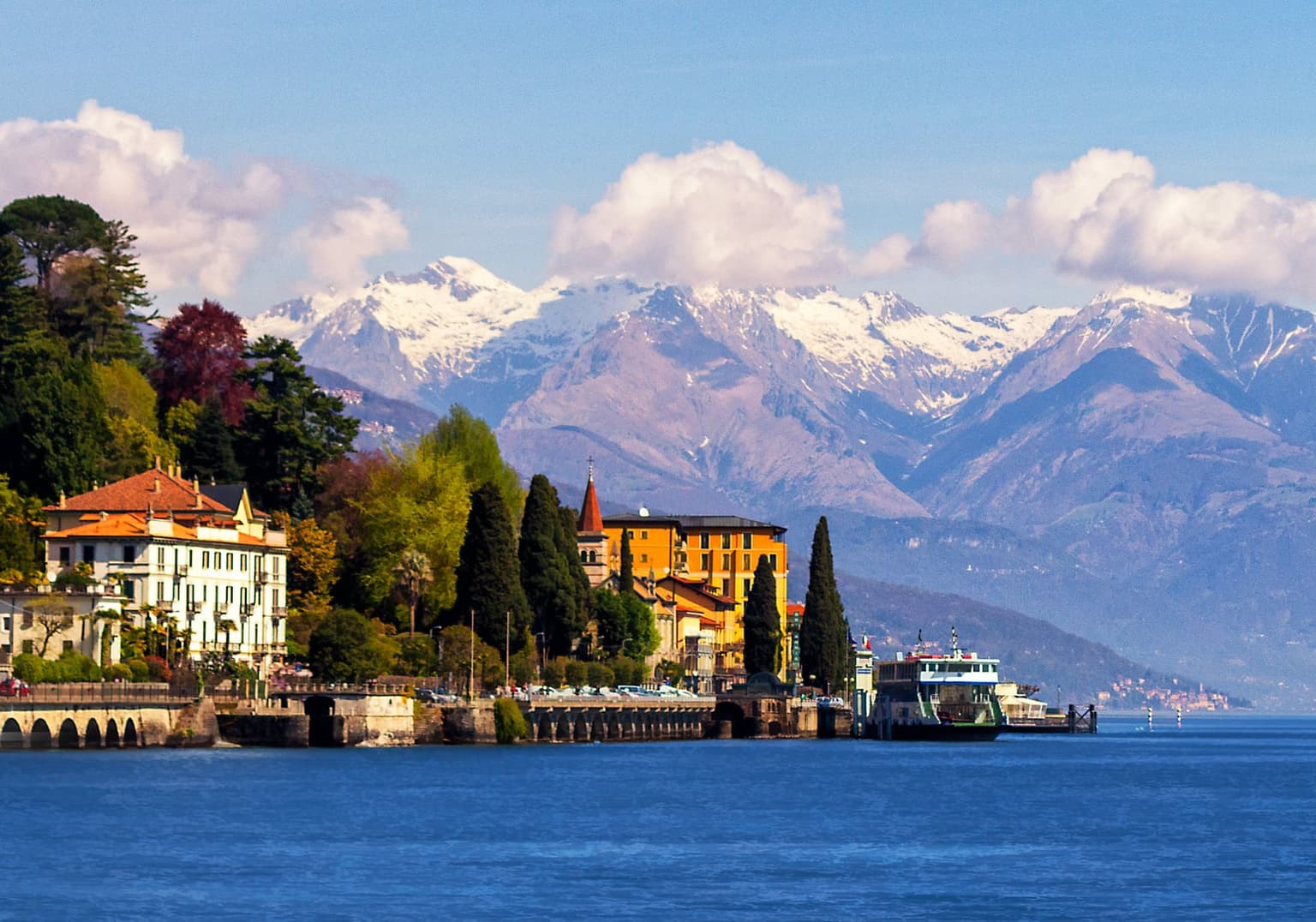
The boats are run by Navigazione Laghi, the state operator, and on a lake shaped like an upside-down Y with barely a lakeside road worth driving, they are not a scenic extra put on for tourists. They are the transport. The celebrated middle of the lake - Bellagio, Varenna, and Menaggio, sitting almost in a triangle where the two legs meet - is stitched together very nearly entirely by ferry. Miss the logic of it and you lose hours standing around; grasp it and the whole lake opens up like a well-run railroad that happens to float.
So that is what the rest of this is for. By the end you'll know which of the three boats to take and when, how to buy a ticket without accidentally joining the wrong line, and - the part that actually saves your day - how to be out on the water while everyone else is still shuffling forward on the dock.
The three boats: battello, traghetto and aliscafo
The first time you stand at a dock and look up at the departures board, Lake Como appears to be offering you the same trip three times at three different prices, which feels less like a transport network than a small test of your nerve. It isn't. There are three kinds of boat doing three different jobs, and once you know which is which the board stops being intimidating.
The battello is the slow passenger ferry, the one most people picture: open decks, all the stops, the cheapest fare, and the best seat in the house for the villas sliding past. It is also the one that turns a Como-to-Bellagio hop into the better part of two hours, because it calls at nearly every jetty on the way. Take it when the journey is the point.
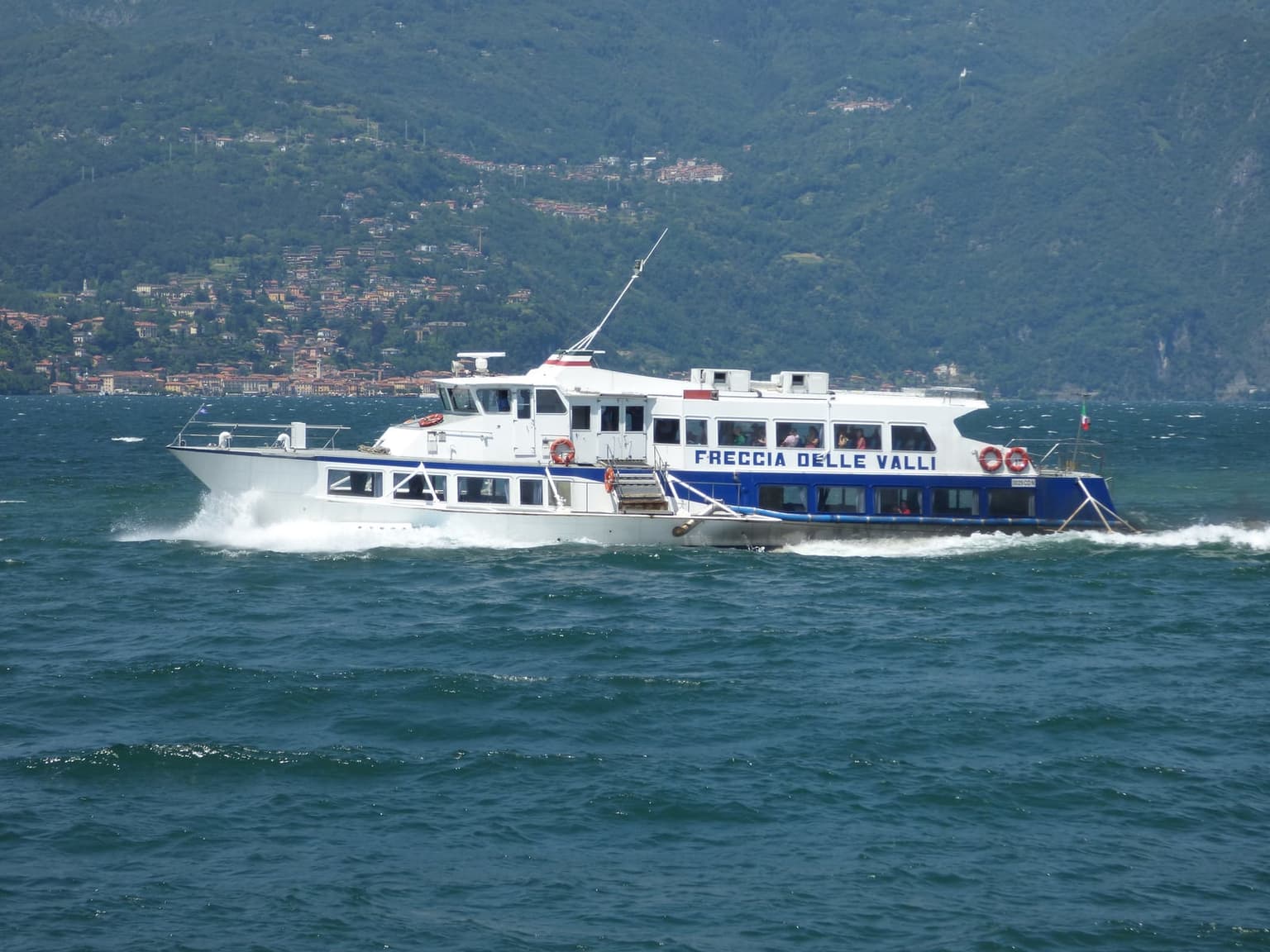
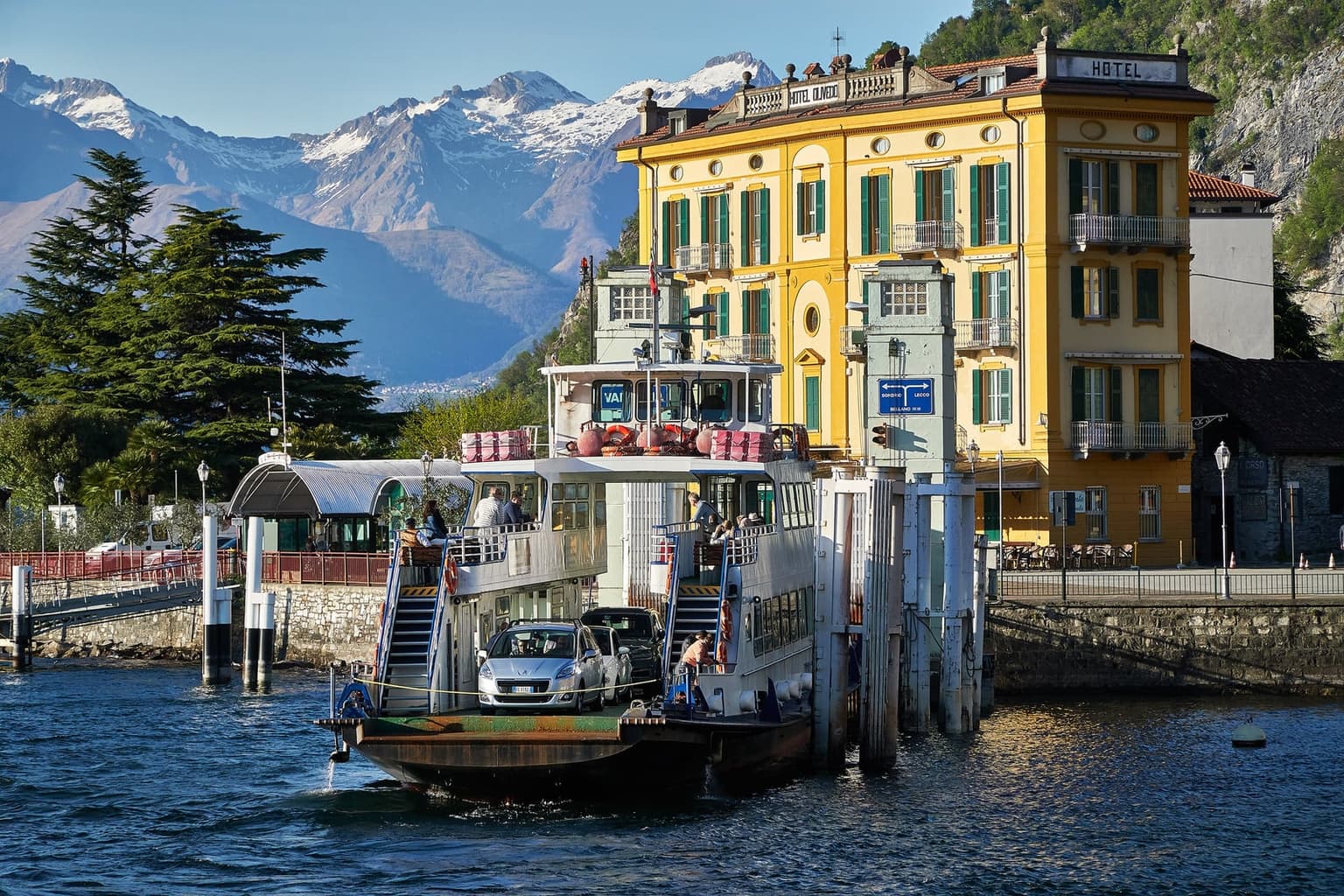
The traghetto is the car ferry - the broad, businesslike one that shuttles back and forth across the narrow middle of the lake between Bellagio, Varenna, Menaggio and Cadenabbia. You do not need a car to board it; foot passengers are welcome, and on the short Varenna - Bellagio crossing it runs often enough that it's usually your best bet for getting across without much waiting. It's also the only sensible choice if you're traveling with a car or hauling serious luggage.
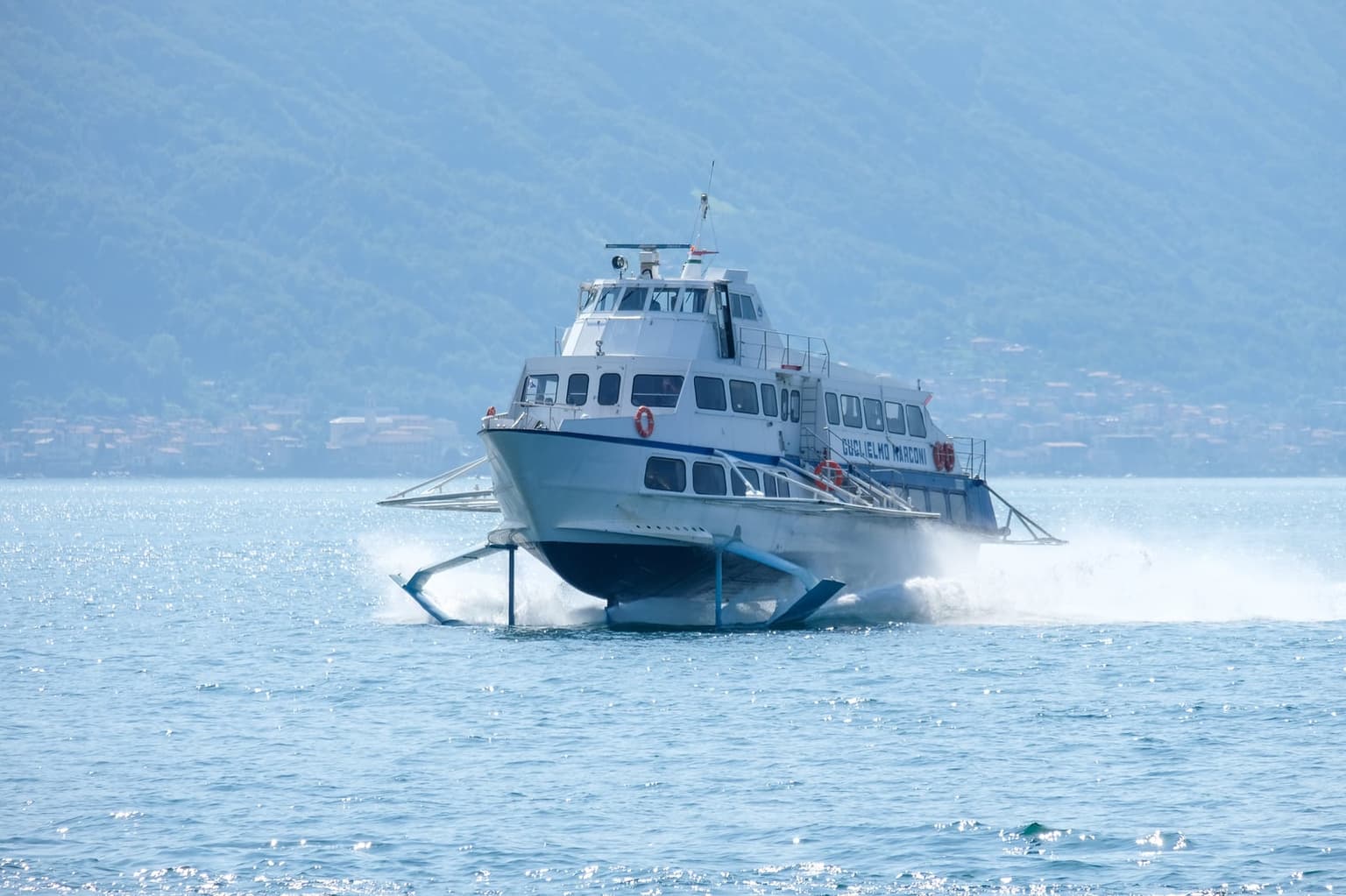
The aliscafo is the hydrofoil: fast, enclosed, glassed-in, and carrying a surcharge over the slow-boat fare. It skips most of the small stops and gets you the length of the lower lake in a fraction of the time - at the cost of the open deck, with stricter limits on bulky items, and with no contactless tap-on (more on that later). Worth it only when minutes matter.
| Boat | Speed | Fare | Luggage | Scenery | Where it runs | Contactless (NaviTap) |
|---|---|---|---|---|---|---|
| Battello (slow ferry) | Slow, all stops | Cheapest | Fine | Best (open deck) | Whole lake | Yes |
| Traghetto (car ferry) | Moderate, frequent | Mid | Best (drive/roll on) | Good | Mid-lake triangle | Yes |
| Aliscafo (hydrofoil) | Fastest | Surcharge | Limited | Enclosed | Lower lake express runs | No |
So the rule of thumb writes itself. Scenery and a tight budget: battello. A car, heavy bags, or just crossing the middle of the lake: traghetto. Racing the clock down the lower lake: aliscafo, and only then.
If you're doing the Varenna - Bellagio - Menaggio triangle in a day, take the traghetto and stop agonizing over the departures board. It's the unglamorous pick, but it gets the day right: the crossing from Varenna to Bellagio is about fifteen minutes, one shows up roughly every twenty in peak season, and there's no surcharge. The one wrinkle: its Bellagio dock sits about 300 meters south of the main pier, so walk to the right one. The battello is the prettier, cheaper ride, but Como to Bellagio is two hours of stopping at every hamlet, and in July you'll do it standing. The aliscafo I'd take only when I'm up against the clock: the surcharge - up to €5.50 a leg - buys a sealed cabin with no open deck, no NaviTap, and no room for a bike, a large dog, or bulky gear, a strange thing to pay extra for on a lake whose whole point is the view.
Routes and the central-lake map
Almost everything you'll want to do on Lake Como happens inside one small triangle. Bellagio sits on the tip of the promontory that splits the lake's two southern legs; Varenna faces it from the eastern shore; Menaggio sits across on the western one. The three are barely two or three kilometers apart across the water, and the boats between them - mostly traghetti - run back and forth all day. Get yourself to any corner of that triangle and the other two are a short hop away. This is the bit of the network you'll actually use, and it's worth burning into your mental map before anything else.
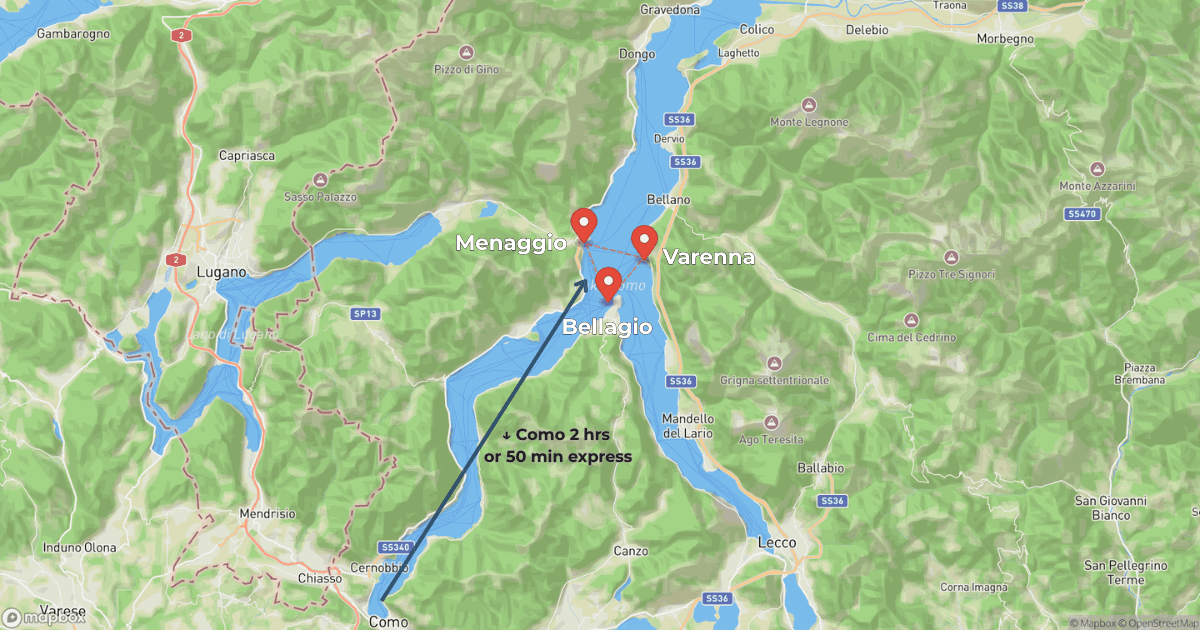
Everything else hangs off that core. To the south, the long lower legs run down to Como town on the western branch and to Lecco on the eastern; to the north, a thinner service threads all the way up to Colico at the top. Those are real routes, but they're slow and infrequent compared with the central shuttle, and treating the whole lake as if it's equally well connected is how people end up stranded somewhere scenic at six in the evening.
The journey people ask about most is Como town to Bellagio, and it has three honest answers. The slow battello is the cheapest and prettiest and takes the better part of two hours, calling at a long string of villages on the way. The aliscafo hydrofoil does the same trip in about 45 minutes for a surcharge, in exchange for the enclosed cabin. And then there's the C130 bus - the old C30, renumbered, though half the internet hasn't noticed - which grinds up the less-traveled eastern shore through Torno and Nesso: roughly seventy-five minutes and close to sixty stops, a serpentine, lurching ride that's cheap and weather-proof but no one's idea of romantic. If the lake is calm and you have the time, take the boat. The bus is the backup for when the boats aren't running or the line has beaten you.
One geography trap catches people again and again: Bellagio has no train station. None. If you're coming by rail from Milan, you do not ride to Bellagio - you ride to Varenna-Esino on the eastern shore, walk down to the dock, and take the fifteen-minute ferry across. It's a lovely arrival, the town rising out of the water in front of you, but only if you were expecting the boat leg and didn't assume the train would deliver you to the door.
That's the logic of the docks generally. They tend to sit where the towns gather rather than where the trains stop, so on Lake Como the ferry isn't the last awkward leg of the trip - it's often the whole point of how you get around. Keep the triangle in your head, treat the long legs with respect, and the rest falls into place.
Navigazione Laghi's Lake Como route map and timetables
Schedules, seasons and disruptions
The timetable - the orario - looks more forbidding than it is, mostly because it's really two timetables wearing one cover. The dense column of departures is the central-lake shuttle around the Bellagio - Varenna - Menaggio triangle, and in summer those run often enough that you can show up and travel without much planning. The thin, scattered departures are everything else: the long hauls down to Como and Lecco and up to Colico. Read the wrong column, build your afternoon around a boat that only sails twice, and you'll spend the golden hour on a jetty rather than the water.
So plan your last boat first, then work the day backward from it. The crossings that strand people are the long ones and the late ones - the final traghetto back across the middle of the lake leaves earlier than instinct suggests, especially out of high season, and missing it means a taxi the long way around or a night on the wrong shore. For the short central hops you can be looser; a boat will usually be along before you've finished your gelato. For anything longer, write the return departure on the back of your hand.
Season changes the whole picture, and winter changes it most. From early November to late March the operator runs a reduced timetable that thins the fast services to a token few, drops the long-lake runs to a handful of slow boats a day, and brings the last central departures forward into the late afternoon. Plenty of off-season visitors have built a day around a crossing that simply isn't running until spring. If that thinner winter lake has you weighing the timing of the whole trip, what each season actually gives you on Lake Como is its own guide - the closures, the Christmas lights, and the months when everything runs full.
| Season | Central-lake hops | Long-lake & fast boats | Last central boat |
|---|---|---|---|
| Summer (high season) | frequent, show up and go | regular service | later into the evening |
| Winter (early Nov - late Mar) | reduced | a token few fast boats; a handful of slow long-lake runs | pulled forward to late afternoon |
⚠️ Warning
Planning an off-season evening on the far shore? Verify the winter changeover dates and the last boat back on the current timetable before you commit - the reduced schedule starts and ends on dates that move year to year.
Two more things can rearrange your day with no notice. The first is a strike - sciopero - a periodic fact of Italian public transport; on a strike day, service drops to a couple of legally guaranteed sailings, one in the morning and one in the afternoon, and nothing in between. The second is the lake itself: after heavy weather, debris in the water can suspend or delay runs at short notice. Neither is common, but both are the kind of thing you want to learn from the operator's notices page the night before, not from a locked ticket window on the morning of.
Check Navigazione Laghi's service notices before a day that depends on one crossing
On a strike day service drops to a couple of guaranteed sailings - check the night before, not at the window
The schedule, in other words, rewards thirty seconds of forward planning more than almost anything else on the lake. Know which column you're reading, pin down the last boat back, and check the notices before a day that depends on a single crossing - and the boats will feel like the dependable thing they mostly are.
Buying tickets and the day pass
For something as simple as a boat ride, Lake Como has found a remarkable number of ways to make buying the ticket the hard part. There are three routes to a valid fare - the ticket window, the website, and tapping a contactless card on board - and each has its own way of going wrong. Knowing the failure modes in advance is most of the battle.
The ticket window at the dock is the old-fashioned, reliable option, and it is also the source of the lines you'll have heard about. The thing to understand is that you generally cannot buy from the machine or the turnstile and stroll on - for most boats you have to wait at the window for a paper ticket first, and at the busy docks in summer that line can be long enough to cost you the very sailing you're trying to catch. There's no skipping it by waving a card at the gate; the gate is not where you pay.
The website, navigazionelaghi.it, ought to be the escape hatch, and sometimes it is. But travelers keep hitting the same walls: a booking flow that only sells one ticket per transaction, so you log back in for a second passenger and the same sailing now shows as "sold out"; a confirmation that arrives as a plain PDF receipt with no QR code, leaving you genuinely unsure whether you're holding a ticket or a souvenir; and a general clunkiness that has defeated people outright in spring. If it works for you, wonderful - buy ahead and walk past the line. If it doesn't, fall back to the window and don't fight it.
Then there's the matter of the return. The classic trap: you try to buy a round trip at the start in Como, get told to buy the return at the far end instead, and then find no ticket office open at the far end when it is time to come back. Where the origin window will sell you both legs, take both. It's the single easiest way to avoid being stranded with no way to pay for the boat home.
A word on fares and the day pass. One-way fares - singles in the operator's language - rise with distance and carry a surcharge on the hydrofoil; the day pass - priced by how far along the lake it reaches - buys unlimited hops within its zone. The math is closer than it looks. Every hop around the central triangle costs the same €5.50, so the classic three-stop loop, Varenna to Bellagio to Menaggio and back, comes to €16.50 in singles - a euro under the central pass. On that day the extra euro buys convenience, not savings: one ticket, and no window line at the next two docks. Add a fourth hop, a detour to Cadenabbia or a boat back to Bellagio for dinner, and the pass pulls ahead by €4.50. A hydrofoil leg doesn't change the sums, because the pass doesn't cover the surcharge - you pay it either way.
The numbers as they stand in 2026 - and why it takes a fourth central hop to tip you into pass territory:
| Fare (adult) | Price |
|---|---|
| Single central crossing (any hop between Bellagio, Varenna, Menaggio and Cadenabbia) | €5.50 |
| Central-lake day pass (Varenna - Bellagio - Menaggio + every stop) | €17.50 |
| Day pass reaching Como (Como - Bellagio or Menaggio; €29.50 out to Varenna) | €27.00 |
| Hydrofoil supplement, per leg | €1.50 - €5.50 |
Fares rose for 2026, so check the official page before you rely on a figure rather than treating it as gospel.
💡 Tip
For a hydrofoil or any sailing where you want a guaranteed spot, buy a paper ticket at the window rather than relying on contactless - the fast boats don't take the tap-on, and the window is where a real ticket comes from.
The contactless option deserves its own warning label, which it gets next. For now: carry some cash, buy your return up front where you can, and budget line time into the summer mornings.
Navigazione Laghi's Lake Como tickets and timetables page
NaviTap contactless - and the overcharge trap
In 2025 the lake got a contactless system called NaviTap, the idea being that you tap a bank card as you board, tap again as you leave, and it works out the fare without anyone waiting in line for a paper ticket. It's a good idea that, in its current form, is also the thing I'd most want a first-time visitor to understand before they tap, because when it goes wrong it goes wrong with your money.
Start with what it can't do. NaviTap works on the slow boats only - not the hydrofoils - and it's useless to you entirely if you're carrying a bike, a pet, or large luggage, in which case you're back at the window anyway. There tend to be only a couple of readers per boat, so at busy times the tap-on becomes its own little bottleneck, and it buys you no priority and no shorter line to board. It is convenient on an uncrowded crossing where there's no ticket office, and oversold as anything more.
| NaviTap works | NaviTap does not |
|---|---|
| slow boats, quiet crossings, no ticket office | hydrofoils; with luggage, a bike or a pet; as a line-skip |
Now the part that costs people. The whole system hinges on the tap-off registering, and the on-board reader is the weak point: sometimes it misses your boarding tap - the unit reboots when the engine starts, and the timing trips people up - and sometimes it loses the thread mid-trip; forget to tap off yourself and the result is the same. Either way, instead of the couple of euros the hop should cost, you're billed the full daily network fare - in one documented July 2025 case, a seven-minute crossing came out at €56 a head against a real fare of €2.50, with two full-day charges landing on one card for a single journey. Refunds, when travelers have managed them, have taken anywhere from a month to four, and the disputes on record only moved once the traveler's own card issuer opened a pre-arbitration case - the ferry company's finance office is, by every account, slow to answer.
Two minutes of paperwork makes it survivable. Register your card at navitap.navigazionelaghi.it before you travel: the personal area shows your trip history, which is exactly the evidence you'll want if a charge looks off (they land on your statement labeled "Navlaghi ID..."). Then tap on, make a deliberate point of tapping off - watch for the confirmation, don't just wave and walk - and screenshot any charge that looks wrong before taking it to your card issuer.
Navigazione Laghi's NaviTap contactless page
None of this means avoid it outright; on the right boat it does exactly what it promises. It just isn't the frictionless skip-the-line upgrade it sounds like, and it asks you to keep an eye on your own statement.
Beating the lines and crowds
Here is the day that goes wrong, and it goes wrong by the thousand all summer. You arrive at the Como or Varenna dock mid-morning, full of intentions, and find a line already curling back from the single open ticket window. By the time you reach it the next fast boat has sold out, so you wait for the one after, which is so full you stand. People have described spending seventy percent of a day on Lake Como waiting in line in the heat - arriving forty minutes early and still only managing to buy onto the noon boat while the ten o'clock pulls away half empty because nobody could get a ticket in time. The lake is magnificent. The line for it is not.
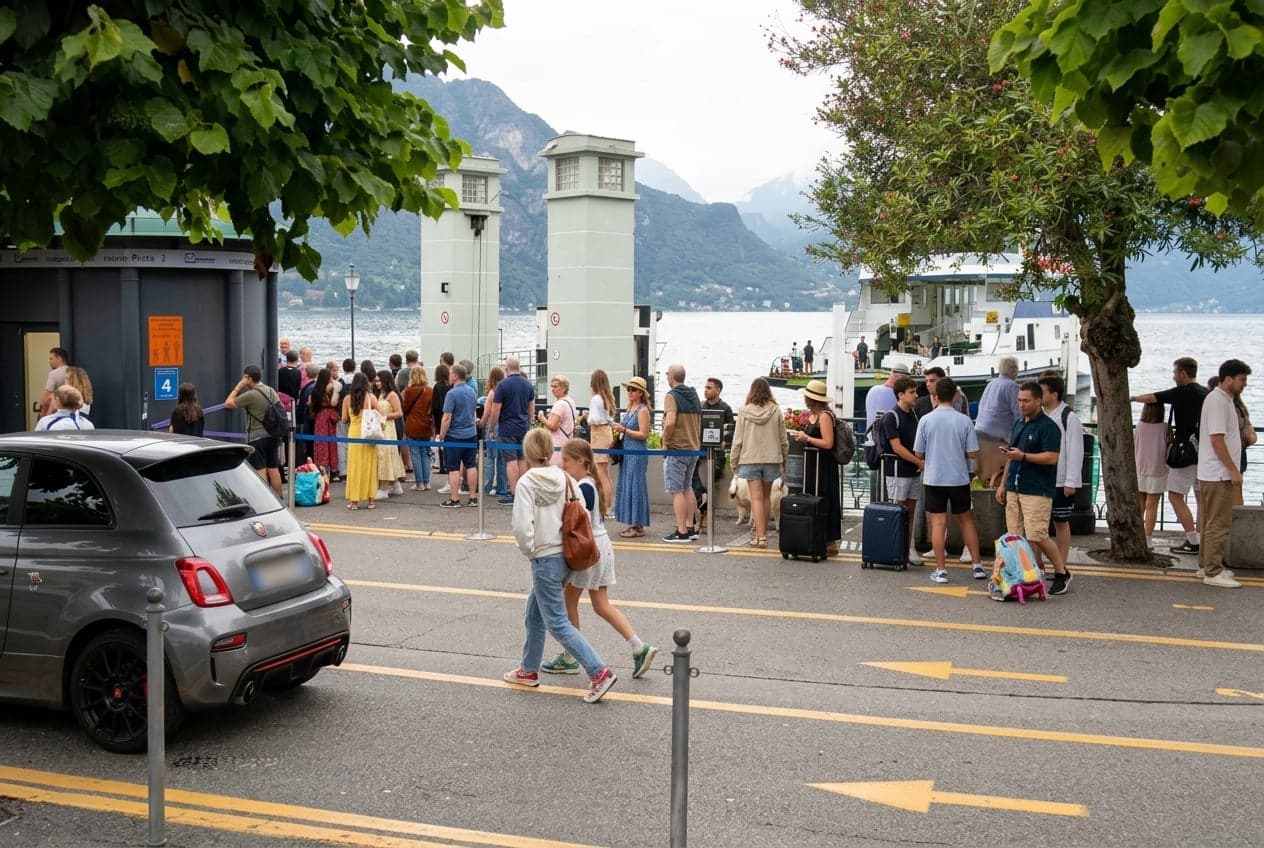
Almost all of this is solved by being early in the most literal sense. The first departures of the morning are the emptiest boats of the day, and the gap between the 8-something sailing and the 9-something one is the gap between a calm crossing and a crush. Which leads to the single best move on the whole lake: don't day-trip - sleep on it. Stay the night in Bellagio or Varenna, and you can be on the water at first light, walking an empty waterfront while the day-trippers are still an hour south in Como. The towns are a different, quieter place before the nine o'clock boats arrive, and the only way to see that is to already be there.
When the public ferry is the bottleneck rather than the transport, the honest fix is to step off it entirely. A small-group guided lake cruise boards at its own time from its own jetty, away from the ticket window altogether, and turns the hour you'd have spent in line into an hour actually on the lake, usually with someone telling you which villa belonged to whom. Look for one that leaves from the town you're staying in, states its luggage policy plainly, and quotes a real duration rather than a vague "tour."
For two people or a family, there's the option that sounds extravagant and isn't: a private or shared water taxi. Travelers who've taken one - Bellagio to Tremezzo, say, rather than fighting the chaotic midday ferries - tend to describe the cost in the same breath as the hours of nerves it bought back. Split across a family against the price of four singles plus the line, the gap narrows fast, and you go when you want from where you want. Worth pricing before you assume it's out of reach.
None of this is about spending your way past the lake. It's about not spending your day in a line for it. Be on the early boat, sleep where the first ferry leaves from, and keep the booked-boat options in your back pocket for the peak-summer days when the window simply can't keep up.
Luggage, arriving and accessibility
Luggage on Lake Como is a land problem more than a boat problem, because the towns themselves are built on the lake's steep edge. Bellagio and Varenna rise from the water on flights of stone steps and cobbled ramps, and there is a particular despair in dragging a twenty-three-kilo case up Salita Serbelloni in the heat to an apartment you can see but not yet reach.
So the move is to not carry the bags through the docks at all. Drop them at a luggage-storage point near the pier, ride the lake unencumbered, and collect them when you're ready to move on - it costs a few euros and removes the single most miserable variable from a ferry day. Look for a location actually beside the dock or station rather than halfway up the hill, which defeats the purpose.
Book a bag drop near the ferry docks
A few euros a bag - drop it by the pier, collect it when you move on
Getting to the right dock in the first place is half the battle won. If you're coming from Milan for Bellagio, remember it has no station and aim for Varenna-Esino, then the short crossing. For Como itself, the train from Milano Cadorna to Como Nord Lago drops you almost opposite the ferry dock - a far gentler arrival with bags than the trek from the mainline station. From Malpensa, the train via Saronno works, but after a long-haul flight with a cart-load of luggage, a door-to-door private transfer to the lake is the thing that's worth its price - pre-booked, because grabbing a willing taxi at the airport for a lakeside run is its own ordeal.
Pre-book a door-to-door transfer from Malpensa
Door to door with your bags - no hunting for a willing taxi at the airport
That's the arrival leg in brief. How the Malpensa routes compare - costs, passport lines and the return-trip math - is a separate guide. Which Milan station to leave from, which train to catch and the paper-ticket validation fine that catches first-timers all get the full treatment in the guide to getting from Milan to the lake.
A note for anyone traveling with reduced mobility or simply weary knees: the broad traghetti and the short central crossings are the kindest part of the network, with level boarding and little fuss. It's the approaches that punish you - the stairs down to the Varenna dock, the climb up from Bellagio's. Plan the boat legs freely; plan the walking ends with the gradient in mind, and stash the heavy bags before you start.
On the boats' own limits, the practice is gentler than the rulebook suggests. Recent guidance has each passenger bringing one suitcase plus a piece of hand luggage free on both slow and fast boats, and in practice nobody so much as glances at a standard roller bag as it comes aboard. What the fast hydrofoils actually turn away is bulk, not your case - bicycles and large dogs are the real exclusions, along with genuinely oversized items like sports gear in peak hours. Since there is no storage area, your bag rides at your seat, so the smaller you travel the happier the trip.
Lake Como ferry questions, answered
- How much does the Lake Como ferry cost, and is the day pass worth it?
- One-way fares run on distance, so a central hop like Bellagio to Varenna is €5.50, while the hydrofoil adds an express surcharge of up to €5.50 per leg on top. The day pass buys unlimited hops within its zone, but at €17.50 for the central lake it only pays for itself from the fourth central hop: the classic three-stop Varenna-Bellagio-Menaggio loop costs €16.50 in singles, so there the pass mostly buys you out of the window line at every dock after the first. A pass reaching down to Como from Bellagio or Menaggio is €27.00 - fares were raised this year, so confirm the current figure on [the official Lake Como fares page](https://www.navigazionelaghi.it/en/tickets-and-timetables-lake-como/rates-lake-como/) before you go.
- Do I need to book Lake Como ferry tickets in advance?
- For the frequent central-lake crossings, no - you buy at the window or tap on and travel. Advance online booking can let you skip the summer line, but the site is clunky and sells one ticket per transaction, so don't count on it for a group. The real advance move is being there for an early boat, not pre-booking a late one.
- How long is the ferry from Como to Bellagio?
- The slow battello takes about two hours, calling at villages all the way up the western shore. The hydrofoil does it in well under that for a surcharge. If the journey's the point, take the slow one; if you're racing the clock, pay for the fast one.
- What's the difference between the slow ferry, the car ferry and the hydrofoil?
- The battello is the slow, cheap, scenic passenger boat that stops everywhere. The traghetto is the car ferry shuttling the middle of the lake - frequent, takes foot passengers and luggage easily. The aliscafo is the fast enclosed hydrofoil: quickest, pricier, with limited luggage and no contactless tap-on.
- Do the Lake Como ferries run in winter?
- Yes - a thinner version of the summer service. Once the main season ends, the fast services thin right out to a token few, the long run down to Como and up to Colico shrinks to a handful of slow boats a day, and the last central-lake departures pull noticeably earlier into the afternoon. The awkward part is the timing: the changeover lands somewhere around November and runs to late March, but it shifts year to year, and Navigazione Laghi only posts the exact dates on their timetables page a few weeks before each switch, never far ahead. So don't trust a date you half-remember - if a winter day hinges on a single crossing, check [the official timetables page](https://www.navigazionelaghi.it/en/tickets-and-timetables-lake-como/) close to the day and read the last sailing off it.
Get the boat right and the rest of the lake arranges itself around it. The day I'd wish on you is the early one: on the water before nine, a paper ticket in your pocket, your bag left behind at the dock, watching the first villas come up out of the haze while the line you skipped is still forming somewhere behind you.