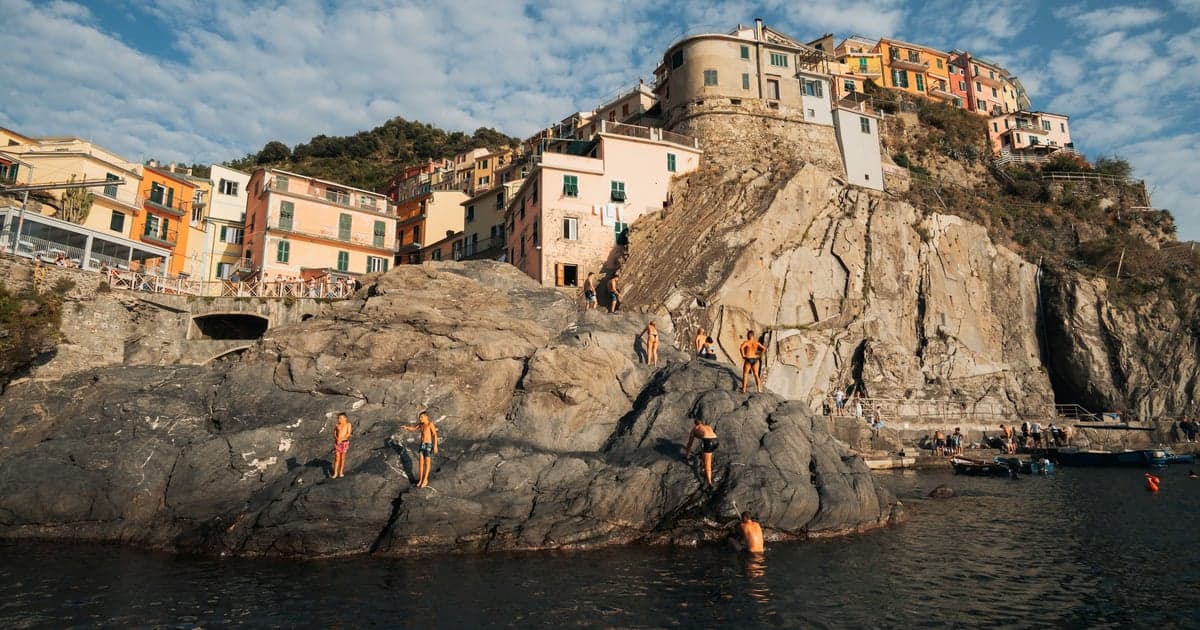
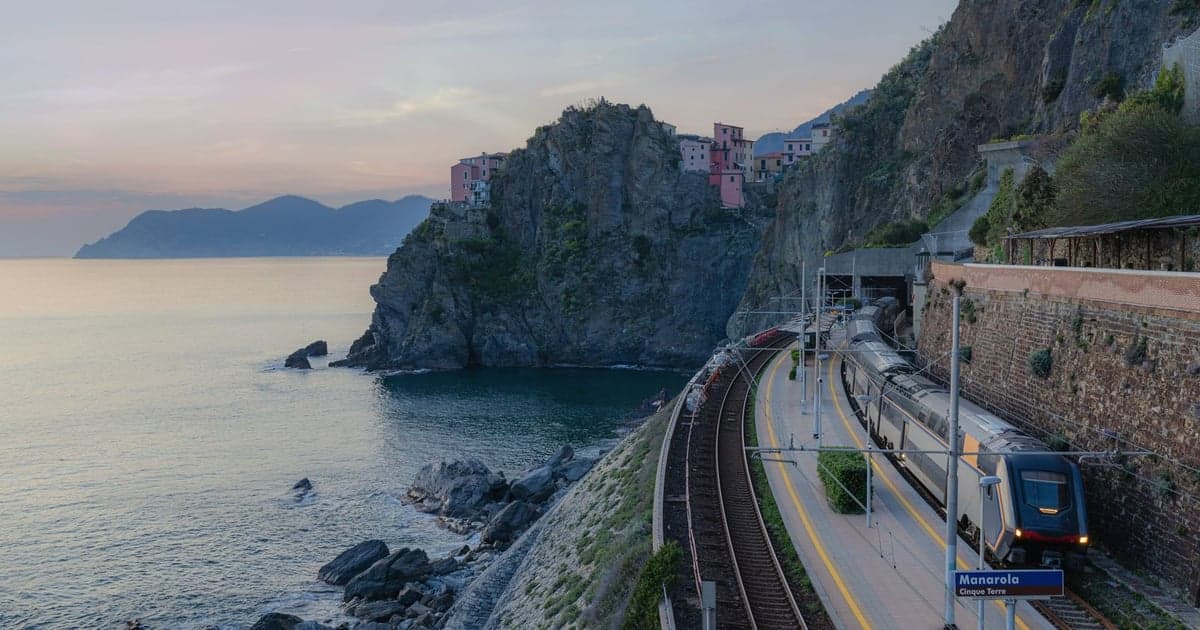
George Mandrovny
How Many Days in the Cinque Terre? Count the Nights
Two nights in the Cinque Terre is the floor for seeing all five villages without a rush, three to four suit walkers, and even one night beats a day trip.
- A day trip: you meet the villages in their crowded hours, then leave with everyone else who came for the day.
- One night: the minimum that buys an evening and an early morning, the two things a day trip never sees.
- Two nights: enough for all five villages without rushing any of them.
- Three to four nights: the sweet spot if you walk. If you don't, the third day can drag, unless the sunsets are the point.
- The trap: counting villages, not evenings. End to end, the five are about 20 minutes apart by train, so fitting them in is easy. Having them without the crowd is not.
Levanto to La Spezia is one short railway with the five villages strung along it like stops on a commuter line, which is more or less what they are.
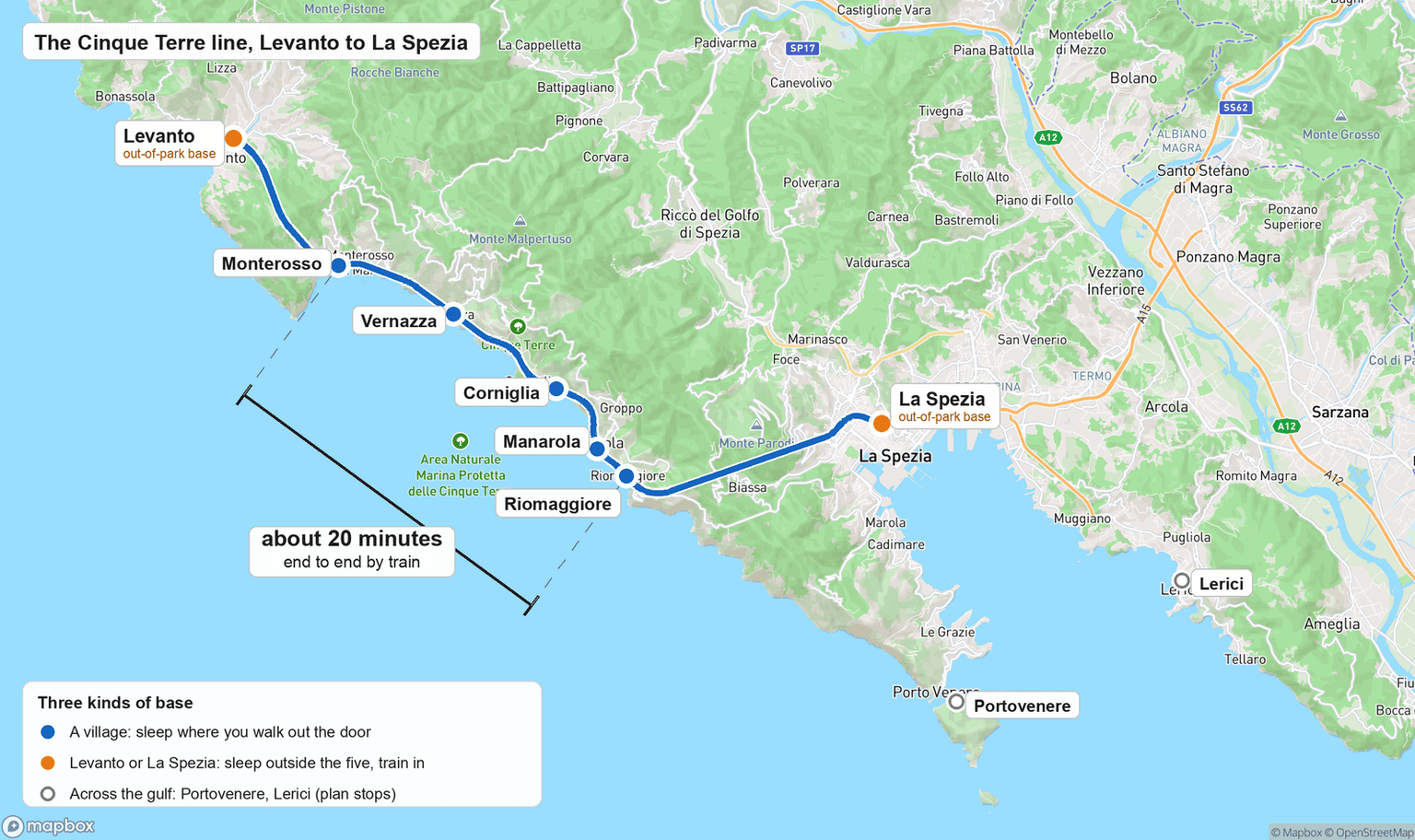
The hard part is the clock. The daytime belongs to the day-trippers, and they fill the lanes and the trains between the villages. The Cinque Terre worth crossing an ocean for, the lanes gone quiet and the harbor catching the sunset, happens before they arrive and after they leave, and the only way to be around for it is to stay the night. So the plan starts with the nights.
On a short Italy trip where the only way in is one rushed day squeezed between two cities, I'd call skipping the Cinque Terre a legitimate choice rather than a failure of nerve. From the third night on, the plan below makes room for a day away.
Where to Sleep: A Village, Levanto or La Spezia
Sleep in a Cinque Terre village if you want the evening at your door and can carry your bag up the stairs. Pick Levanto or La Spezia for flat streets and a short train ride in.
| Base | The evening | The cost | Suits |
|---|---|---|---|
| A village | The harbor after the day-trippers leave | Stairs with your bags: 377 from Corniglia's station, or the station shuttle | Two nights or more, light luggage |
| Levanto | Calm, flat beach town, nice restaurants | One stop past Monterosso: a train into every village | Bad knees, heavy bags, a beach |
| La Spezia | Flat old town, very good restaurants | Workaday, not the Italy you came for, and a train each way | A real town over village charm |
What that evening looks like in practice: late, you wander down to the bottom of the village and find a bench by the water nearly to yourself, facing the view that was shoulder to shoulder at noon. If crowds are the worry, Monterosso is the village to know about. It comes in two separate parts, which spreads the crowd out, and its station sits steps from the sand.
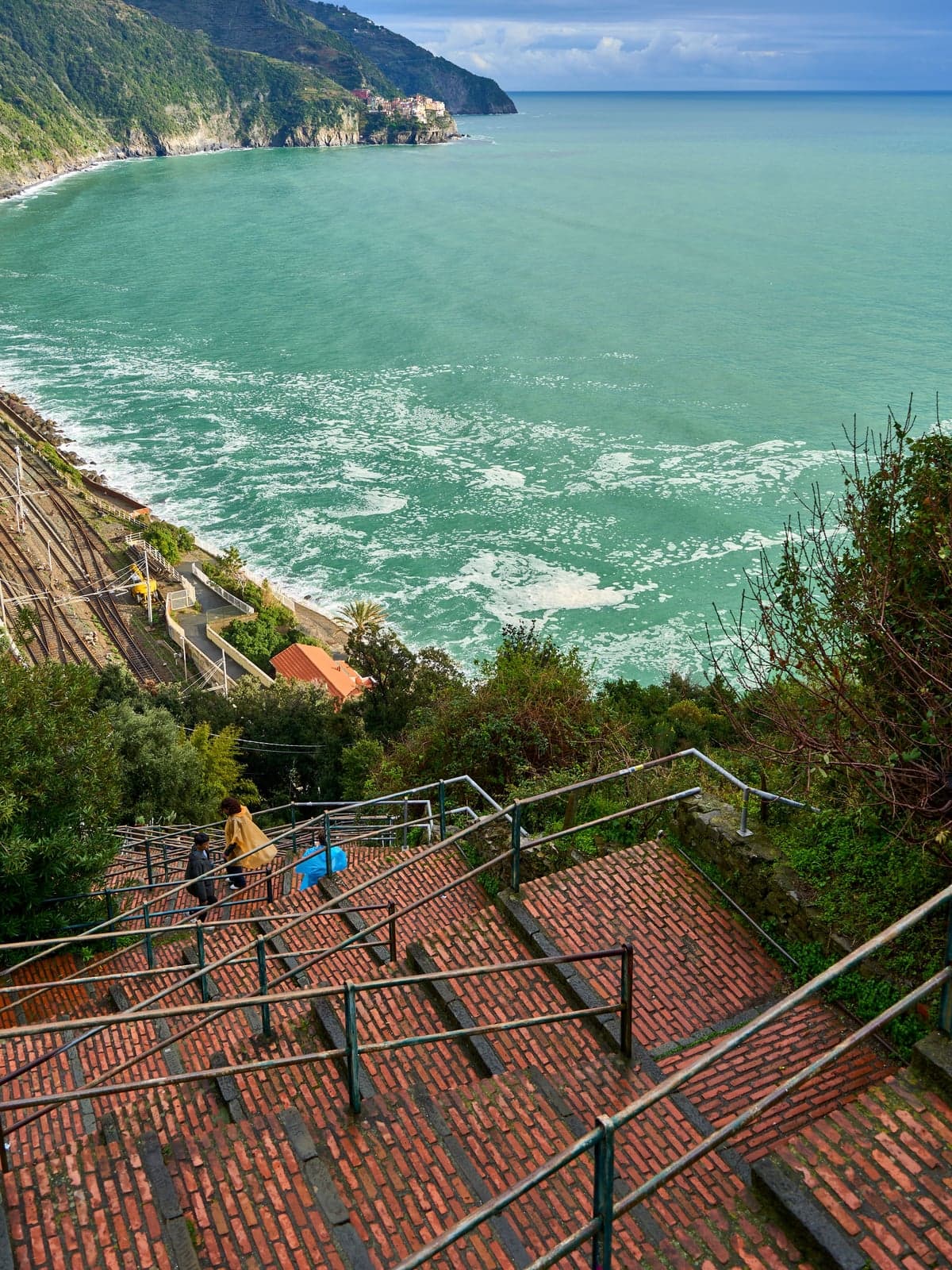
Levanto and La Spezia sit at the two ends of the stretch the 5 Terre Express serves: in season, extra trains about every half hour on top of the ordinary regional service (dates in the calendar below). The cost of sleeping outside the villages falls on the evening: each one ends with a train home.
If you're driving, the car decides the base, because it stays parked the whole stay. Riomaggiore and Manarola are closed to cars without a permit, and the park advises against driving to the other three, so sleep where the car can sleep too: Levanto or La Spezia, in a room with parking. La Spezia's Park & Ride is free for 12 hours, then €2 an hour, which suits a day trip, not a week. The La Spezia guide covers where to leave the car and how to reach the train.
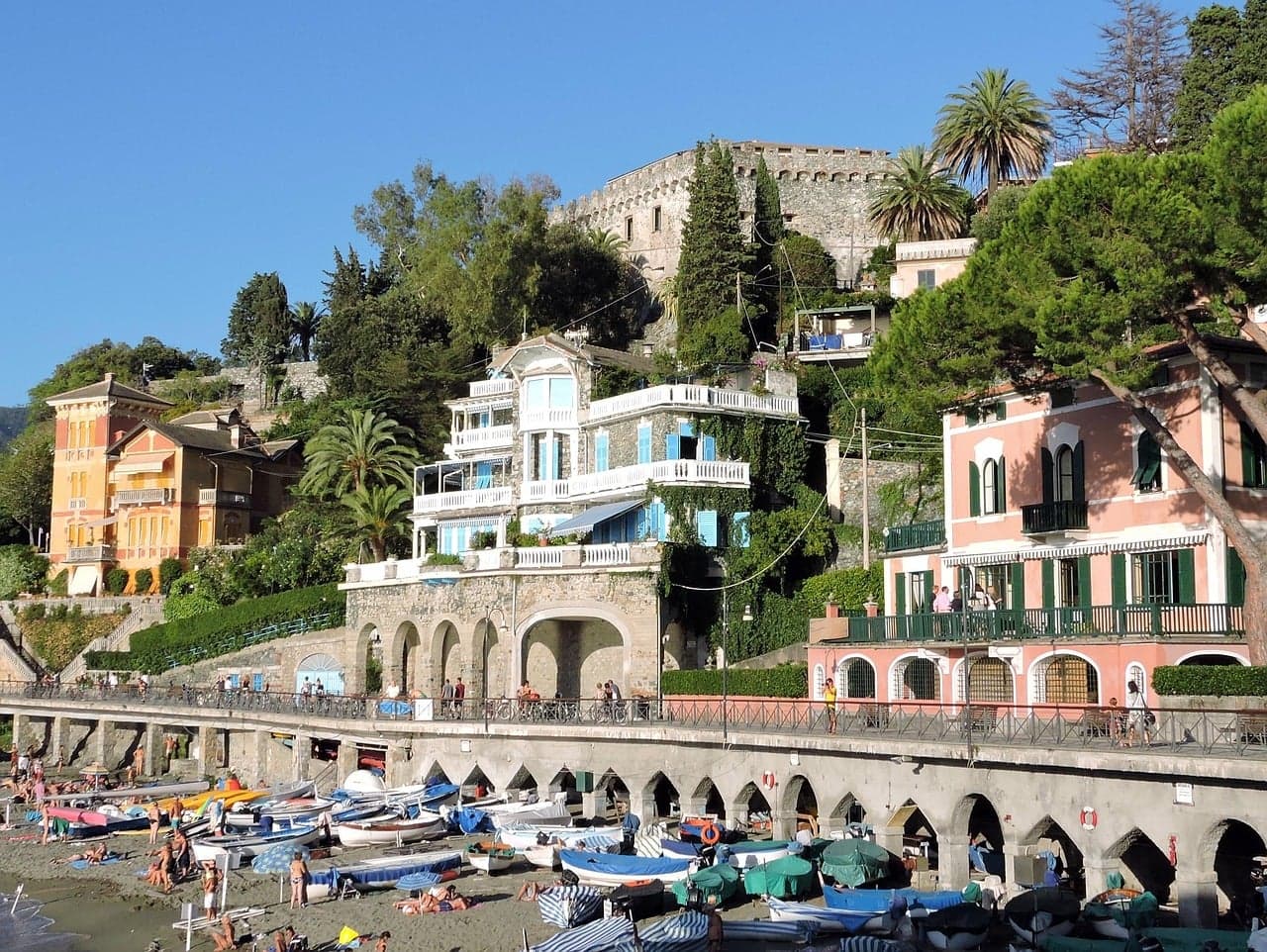
The table settles most people. The one real tie is a light packer who wants a beach. Monterosso puts a village evening at your door. Levanto is calmer and flat, and it can still lose to Monterosso once you've slept in both.
I've slept in both, and for a light packer who wants to swim I pick Monterosso, no contest. Levanto is easier on logistics: good supermarkets, a train into every village. But you stay a visitor there, and every evening ends with a glance at the departure board. In Monterosso the day-trippers' trains leave and the long Fegina beach empties out. You walk out of the water at sunset and into the old town, where the narrow lanes fill with the smell of garlic and fresh seafood from the small trattorias. Levanto gives you a comfortable night in a quiet Italian town. Monterosso lets you fall asleep to the waves inside the postcard people come to this coast for.
One base or two? A split costs a luggage move up and down the stairs and buys a second village's evening. For a week with light bags, that trade pays. For two or three nights, it mostly buys stairs. (Which of the five villages to pick is a longer question of its own.)
Whichever base wins, book the room first, before the train or anything else: the well-known small hotels fill early. Before you pay, check how far the room is from the station and whether the last stretch is stairs, because five minutes from the station can mean five minutes straight up. Then take a free-cancellation rate while the plan is still moving.
The Shape of a Cinque Terre Day: Walk Early, Villages Late
A Cinque Terre day works best walked early, rested at midday and spent in the villages from late afternoon on, because the daytime crowd packs the middle of the day and thins out by evening.
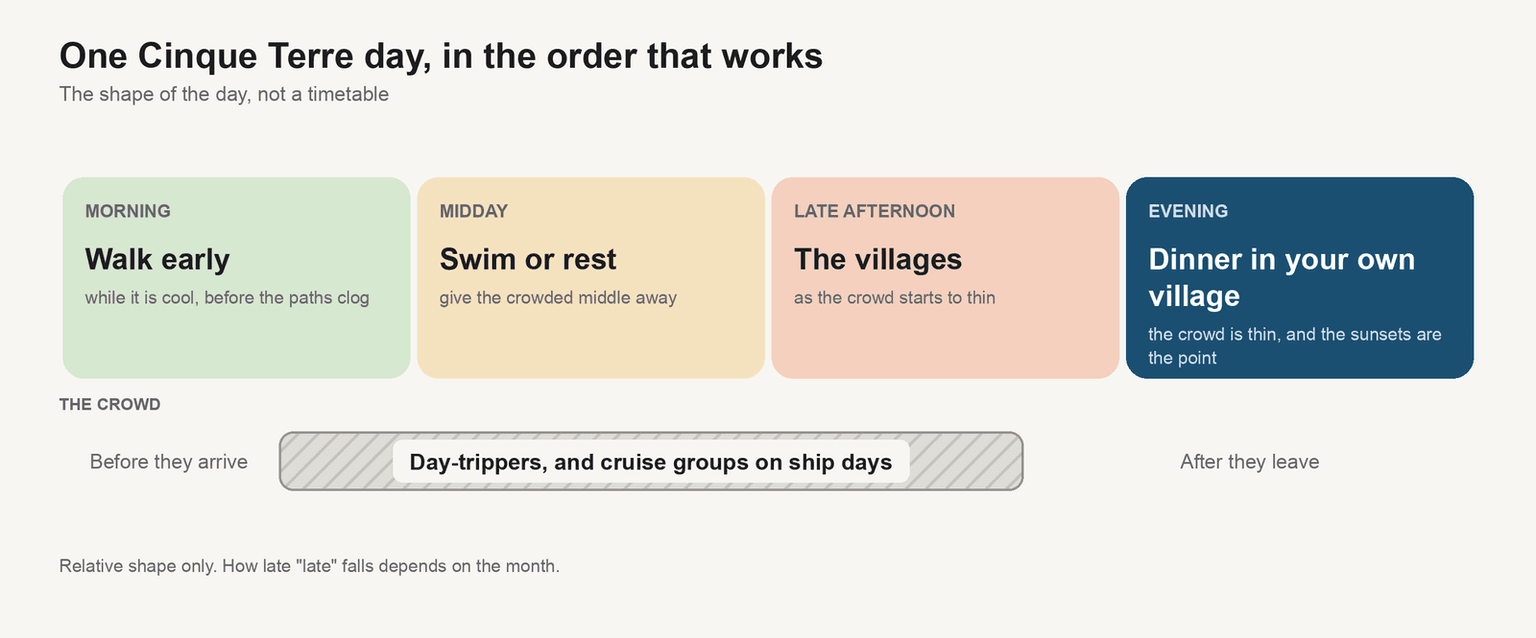
The walk goes first, while it's cool and before the paths clog. A long hike on a hot summer day is brutal, and the coastal walks are harder than they sound: much of the way is vertical, and much of it is steps. The hiking guide covers which walk suits your legs, and whether it's open.
Then give the crowded middle of the day away: a swim, a long lunch, a nap. It's the worst slot for hopping between villages and the right one for doing nothing, and nothing is a perfectly respectable Cinque Terre plan, because the villages were never a list of sights to tick. The village-by-village swimming guide sorts out where to get into the water.
My rule of thumb is two villages a day, not five: one early, before the day-trippers arrive, and one in the evening. After a full day of hopping, the villages start to run together. The stairs add up faster than the map suggests, too: two and a half days here can run past 200 flights, and a slow walk through the villages can beat the hike itself.
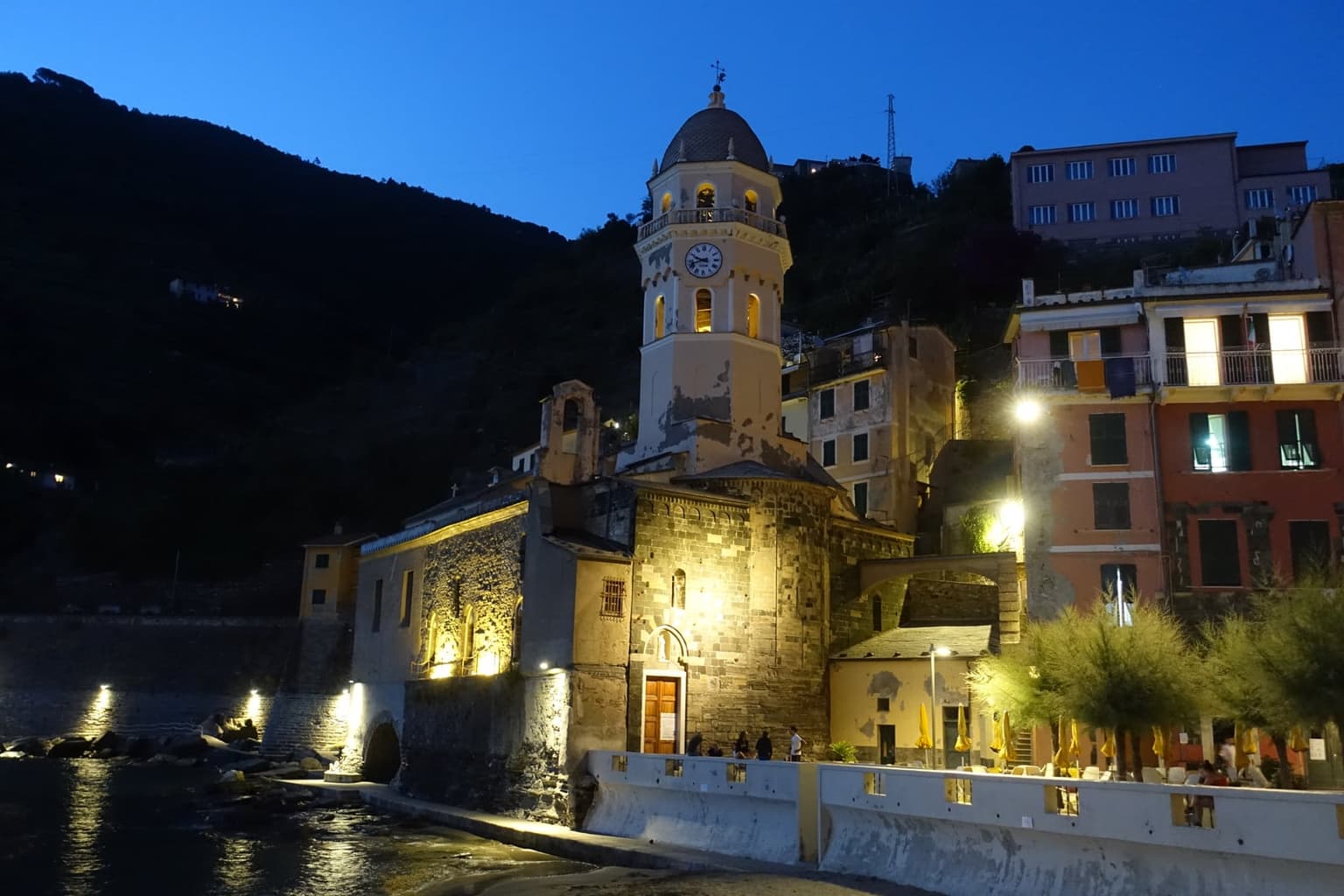
By evening the day flips. The farther into a village you walk, the thinner the crowd gets, and the sunsets are the kind people plan the whole trip around. From a Levanto or La Spezia base, the trains run until close to midnight, so dinner in a village needs no stopwatch, just a glance at the departure board before dessert. How late "late" falls depends on the month: the calendar below has the sunset times.
A One- or Two-Night Cinque Terre Itinerary
A one- or two-night Cinque Terre itinerary starts with arriving by early afternoon, spends the first evening in your own village and saves the walk for the next morning.
Where day 1 starts depends on where you arrive from, and it's worth letting that decide, because the first afternoon is short. The train from Florence takes about two and a half hours to La Spezia at the south end, which makes Riomaggiore and Manarola the first villages you reach. The trip up from Rome ends at that same southern door, about three hours on the fastest trains.
The north flips it. Down from Milan, a direct train reaches Monterosso in about three hours, so Levanto and Monterosso are the natural first stops. The shorter ride from Genoa arrives the same way, in just over an hour to two and a half, depending on the train.
From Venice, count on five to six and a half hours with a change, and the village you've booked decides which way you come across Italy.
Day 1: Arrive, Then Stay for the Evening
- Early afternoon: arrive, drop the bags.
- Late afternoon: one neighboring village. From Manarola, make it Riomaggiore; from Corniglia, Vernazza.
- Sunset: at the south end, be in Manarola. Its sunsets alone can carry a stay for someone who never sets foot on a trail.
- Evening: home, in your own village.
- One night only? The next morning is the payoff: an early village or the walk before the trains fill, then leave around midday, as the day crowd comes in.
Day 2: The Other Villages, Then Corniglia at Sunset
- Early morning: Vernazza or Riomaggiore, whichever you haven't seen, before the day-trippers arrive. If you walk, the walk takes this slot and the village comes after it.
- Midday: Monterosso for the swim.
- Late afternoon: the bus from Manarola up to Volastra, about ten minutes, with buses running into the evening. If the park lists the path as open that day, walk down to Corniglia.
- Sunset: a snack on Corniglia's headland, then the steps down to the station and the train home.
If I had to build two nights around one afternoon, it would be this one. From a village base, those two days take in all five villages, the swim stop included.
Checkout Day: Lose the Bag First
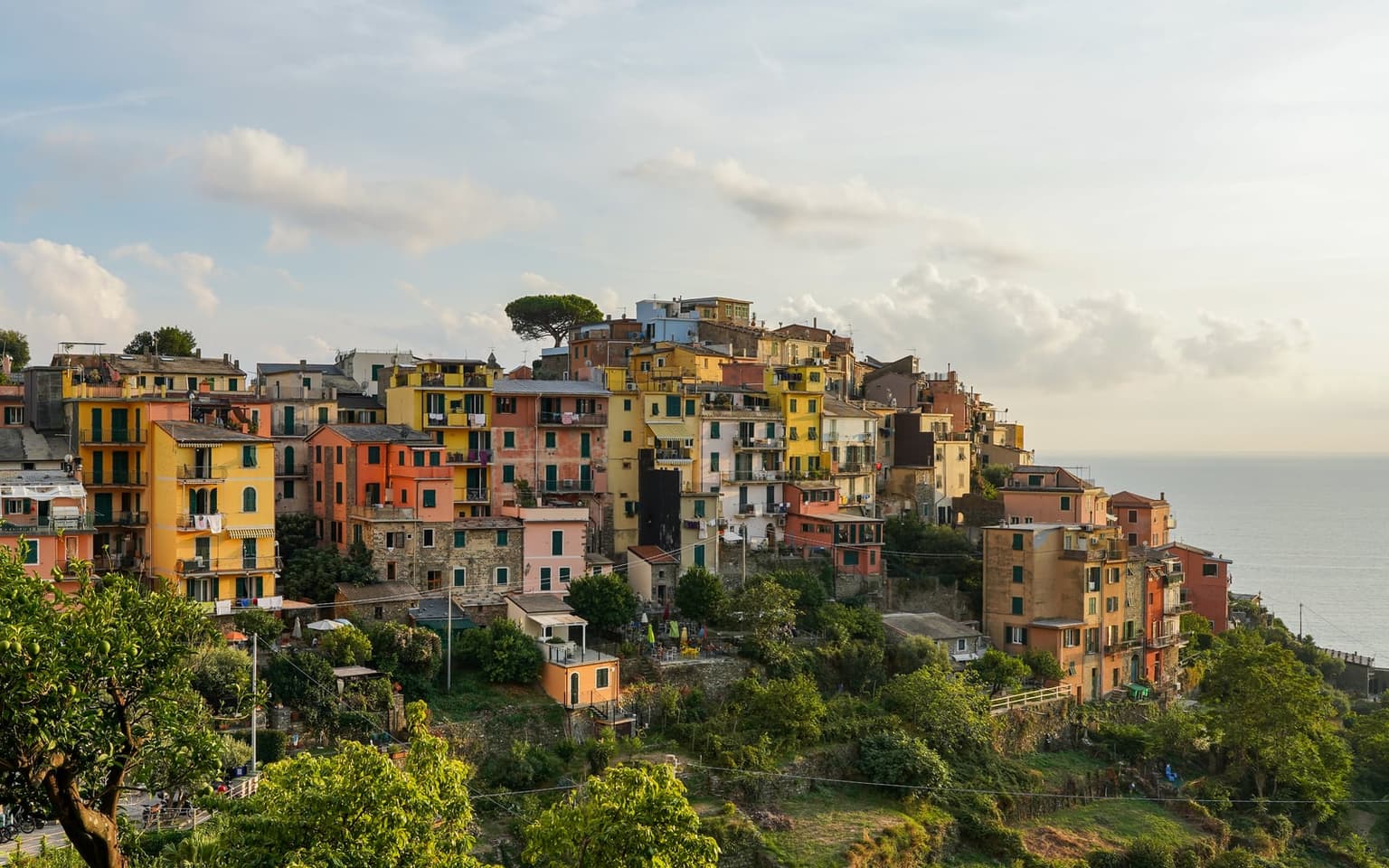
In a stairs village, the last morning goes better without the suitcase. Check out, drop the bag, and spend the hours before the train on the village rather than on the luggage. Leave it near the station your train leaves from, so the morning ends at the platform instead of back up the stairs, and check the drop point's closing time against your train before you hand the bag over.
Three Nights or More: Add a Day Away
A third night in the Cinque Terre buys a day away from the five villages, by boat to Portovenere or across the gulf to Lerici.
Three or four nights. For walkers, this is the sweet spot, time for the trails and the villages with nothing going stale. Without the walking, day three is where it drags. The villages are seen, and what's left is mostly eating, unless the evenings were the reason you came. If that sounds like your third day, or you want to see the coast from the water, where it looks best, spend it away from the five. Portovenere is the first outing to try, and it can beat the far better-known Portofino.
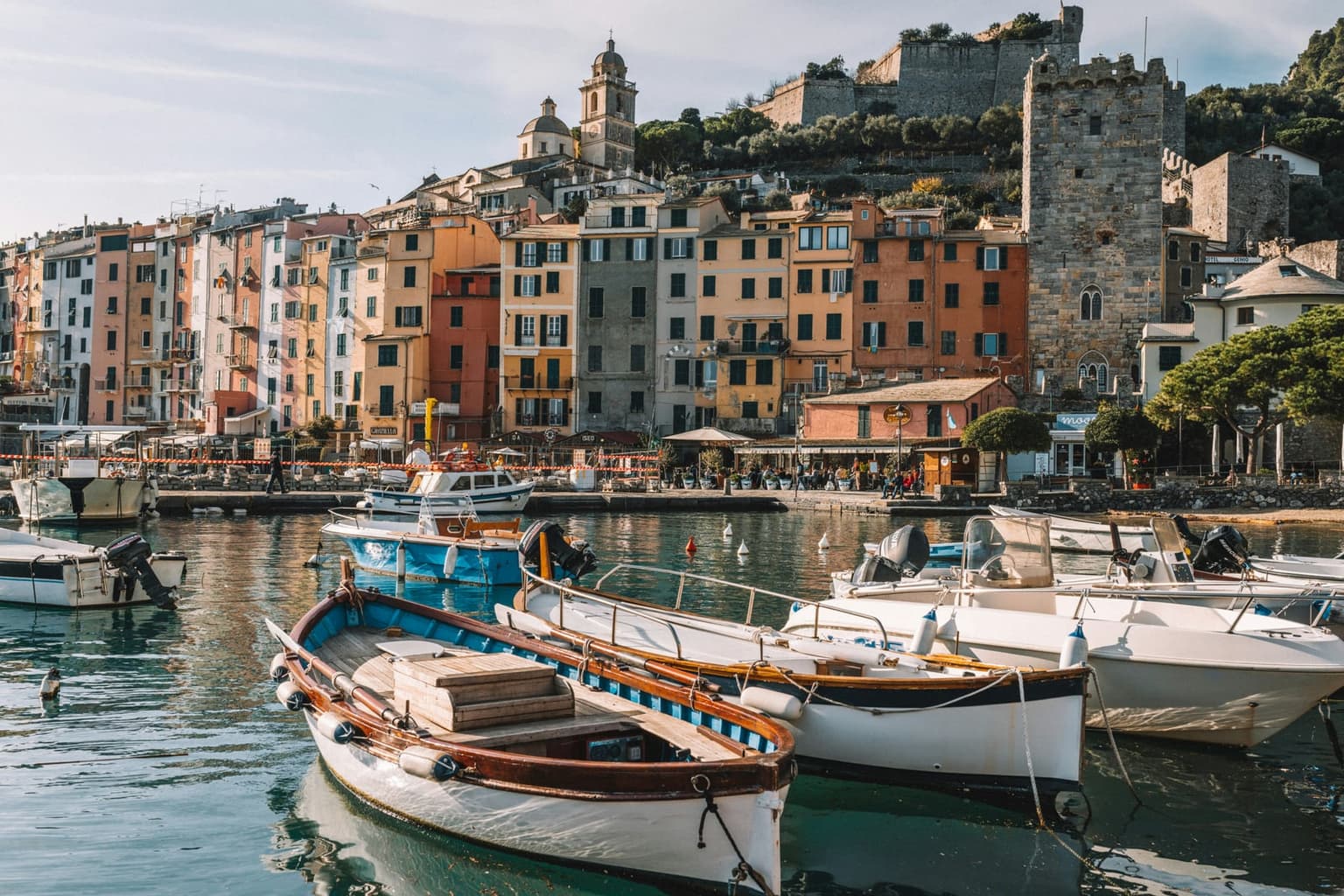
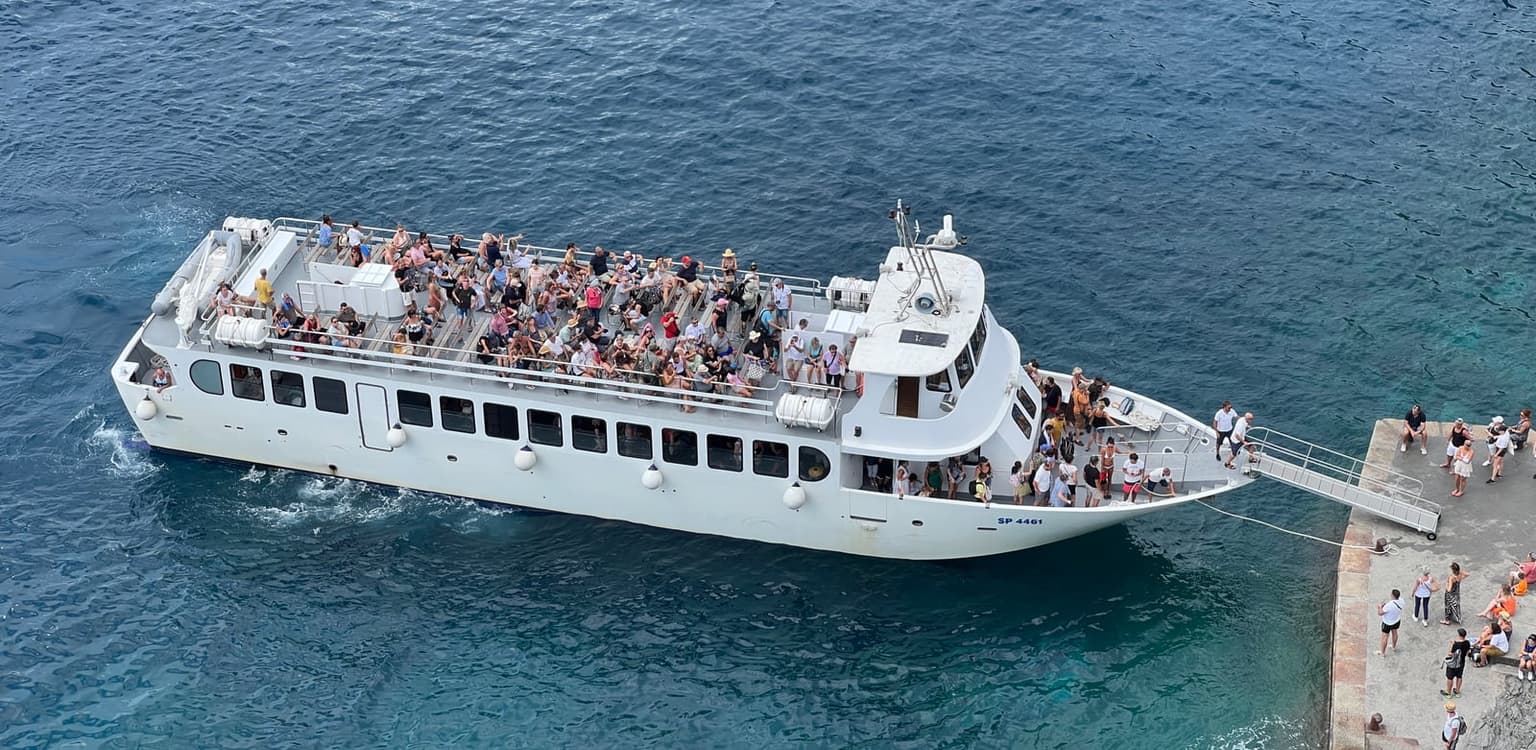
In season, the public Line 02 boat calls at every village except Corniglia, at Portovenere too, and on some runs at Lerici. A day ticket runs about €42 (2026, adult), and the trip fills the whole day. The season's dates are in the calendar below, and the La Spezia guide linked above covers the pier, the stops and the tickets. Lerici is the other escape, a day away from the Cinque Terre altogether, which by then can be the point.
For the coast from a smaller boat, or at sunset, book a tour. Look for a small group and a departure from the landing nearest your base, or from La Spezia. Before you pay, read the cancellation terms: you want a refund or a new date, not a voucher.
Five nights or more. Past four nights, add days out of the Cinque Terre, not more of it. My advice for a week: put the effort into one good room (or a split, if you travel light enough to move), then take a couple of days somewhere different. Six nights among the same five villages is already a long stay, and the days away are what keep the last evenings as good as the first.
Best Time to Visit the Cinque Terre: Seasons and Cruise Days
For this plan to work as written, the best time to visit the Cinque Terre is between late March and November 1, while the extra trains and the village boat are running. Spring and fall stopped being an escape from the daytime crowd a few years ago, so the days you pick matter more than the month. Pick them against the crowd column below and the cruise calendar, and read the sunset column for how late "late" gets.
| Season | What runs (2026) | Sunset | Crowd peaks |
|---|---|---|---|
| Mar - May | Extra trains daily from March 14, the village boat from March 28 (winter boat March 1 - 27) | 20:06 (April 15) | Easter week (late March or April), late April, May 1, most May weekends |
| Jun - Aug | Extra trains, the village boat | 21:09 (June 21) | July cruise peak, early June |
| Sep - Oct | Extra trains and the village boat to November 1 | 18:39 (October 15) | September cruise peak, September weekends |
| Nov - Feb | Winter boat November 2 - December 8 | 16:45 (December 15) | Quiet, many places closed |
Cruise ships call at La Spezia most of the year, and in 2026 Tuesday is the port's busiest day. A ship day adds the cruise groups to the daytime crowd, so on a ship day do the village-hopping early and late, or make it your day away from the five. Before you fix which day goes where, check the terminal's own calendar for your dates.
The terminal's La Spezia cruise calendar, every ship call by date (speziacarrara.cruises)
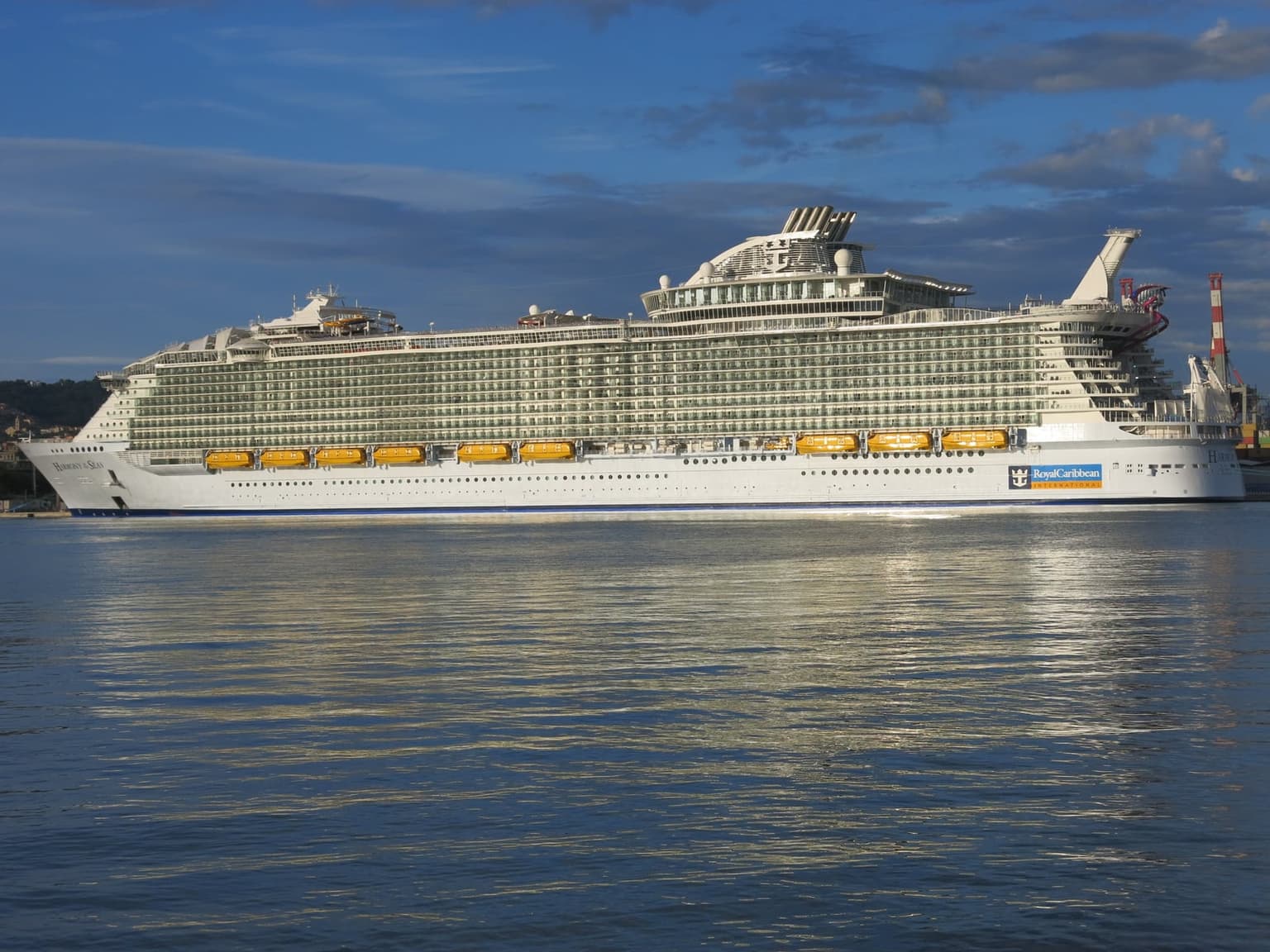
Out of season, the closures run from November into March, when businesses are only just reopening. The surprise is the boat. On either side of the regular boat's season, a winter boat called the Cinque Terre Trip runs the table's two windows, every day, out of La Spezia. It leaves at 10:00 and is back by 17:00, for €37 round trip, and those seven hours are already planned for you: about three on the water, then an hour in Vernazza, two in Monterosso (the only two villages it lands at) and an hour at Portovenere on the way back.
The Cinque Terre Trip winter boat's timetable and fare, PDF (navigazionegolfodeipoeti.it)
In the short off-season light, a day covers a couple of villages and a meal, so I'd plan fewer villages a day, not fewer nights. The trade can pay off. Late October can already feel quiet, and March can bring fine weather without the crowds. From early December to mid-January, Manarola's Nativity scene is lit, if your dates land there.
Cinque Terre on a Rainy Day: Keep a Spare
In the Cinque Terre, an orange or red weather alert closes the park's trails, and a rough sea can cancel the public boat, so a plan that hangs on the walk or the boat needs a spare day.
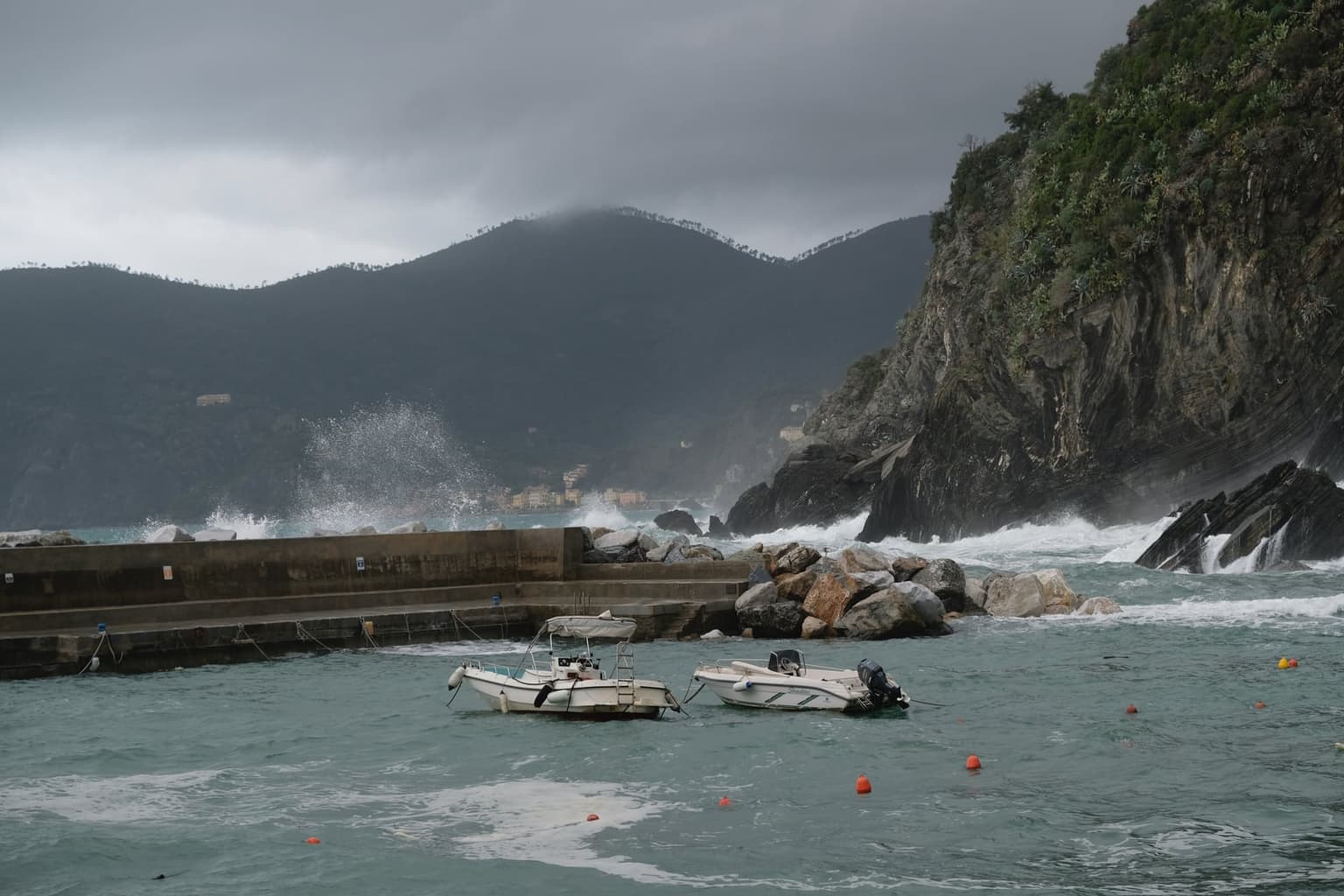
The fix is in the order, not the forecast. Put the walk and the boat early in the stay, never on the last day, so a wet day can trade places with a dry one later on. With two nights there is one full day, and if it rains, the walk is simply gone. With three, it moves. That's the practical case for a third night: booked for the evenings, it doubles as the rain spare, and it's the only insurance I know of that pays out even when nothing goes wrong.
A wet morning isn't a wet day, either. Rain can pour all morning and clear by noon, and waiting it out can pay off. The villages don't stop being beautiful when the sky goes gray. But bad weather can also shrink a stay to a single village, and then the day that needs no trail is spent in the one you slept in, over a slow lunch with the rough sea to watch. That adds one criterion to the base question above: pick a place you wouldn't mind being stuck in.
On the morning of any walk, check the park's own trail status page first. It lists each path as open or closed for the day, and the hiking guide above covers what to do with the answer.
The park's trail status list, in Italian, where chiuso means closed (parconazionale5terre.it)
Planning the Cinque Terre: Common Questions
- How many days do you need in the Cinque Terre?
- Two nights is enough to see all five villages without rushing any of them, and three to four nights suit walkers. Even one night beats a day trip, because it buys the evening and the early morning, the hours the day crowd never sees.
- What is the best time to visit the Cinque Terre?
- For the plan to work as written, go between late March and November 1, while the extra trains and the village boat run. Spring and fall no longer escape the daytime crowd, so pick your days against the cruise calendar (Tuesdays are busiest in 2026) and the park's peak weekends.
- Is the Cinque Terre worth visiting in one day?
- Yes, if one day is all your trip allows, but you'll meet the villages in their crowded hours and leave with everyone else. One night changes that, because the evening, the part most worth coming for, belongs to the people who stay.
- Is it better to stay in a village, Levanto or La Spezia?
- A village, if you want the evening at your door and can carry your bag up the stairs. Levanto or La Spezia if the bags are heavy or the knees complain: flat streets and a short train ride in, with every evening ending on a train home.
- Can you visit the Cinque Terre in November or winter?
- Yes, and it's far quieter, but many shops, hotels and restaurants close, and by mid-December the sun sets around 16:45. The village boat stops after November 1, yet a daily winter boat from La Spezia reaches Vernazza and Monterosso until December 8 (2026 dates).
The line is short enough that the villages take care of themselves. What no timetable delivers is the hour after the day-trippers leave, and that hour is only sold by the night. Count the evenings first, and the rest of the plan falls in behind them.