George Mandrovny
What Cortina d'Ampezzo is - and how to use it
Cortina d'Ampezzo is a small, walkable Dolomites town that makes a superb summer hiking base: you settle into the pedestrian center and radiate out to a ring of day-hikes you pick by crowd and by cost. Base in or near the center to cut your dependence on a car, book July and August lodging early, and plan around the lift and rifugio season, which mostly opens early-to-mid June. The one trap is treating Cortina as a ski-only stop or a checklist of famous names - and don't hike to Lago di Sorapis before roughly late June, when the high, exposed route still holds snow.
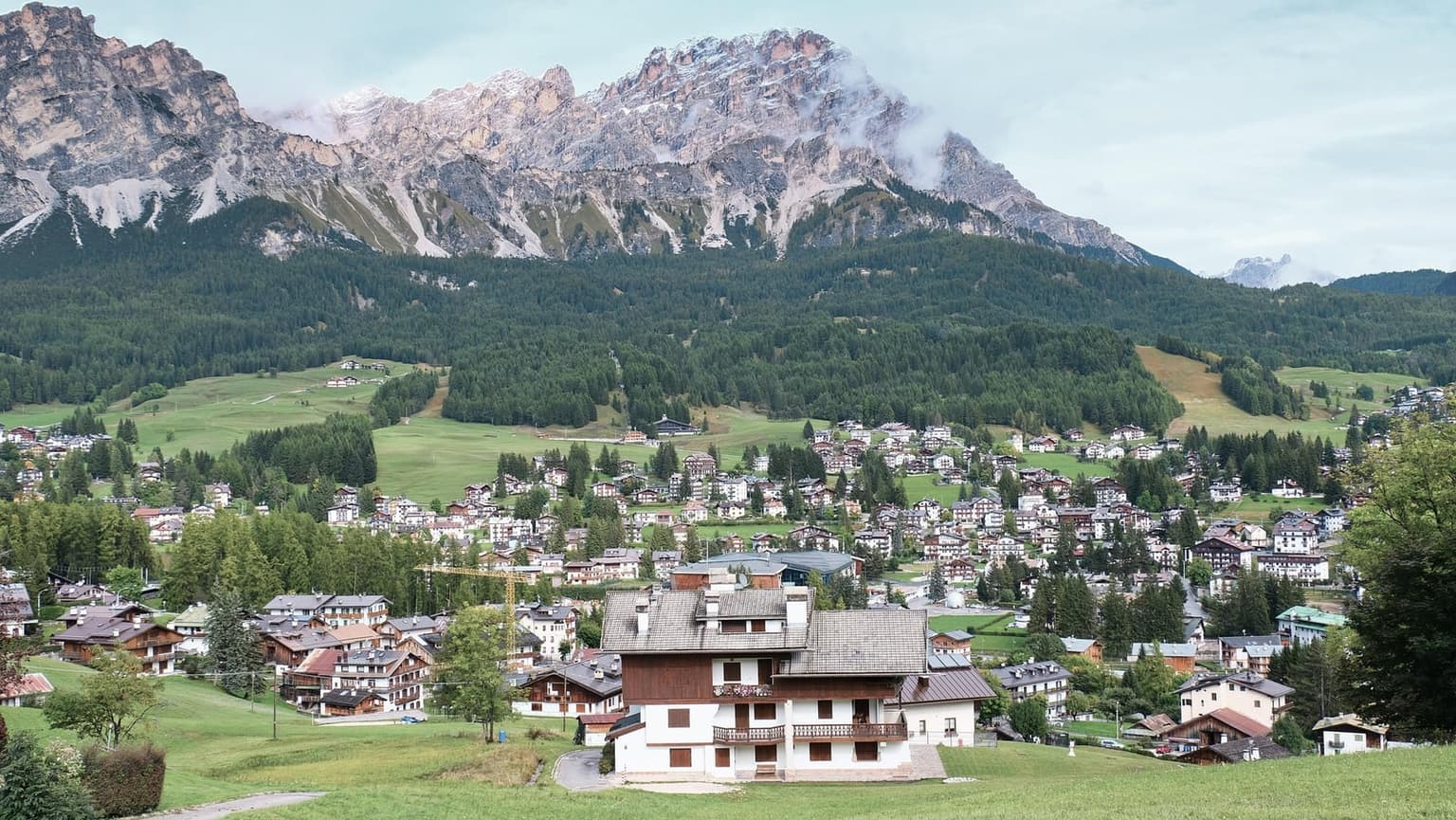
The town sits in the Ampezzo basin, ringed by some of the most recognizable walls in the Dolomites - the Tofane, Cristallo, and the Sorapis massif. What makes it a base rather than a trailhead is that it is an actual town: the pedestrianized Corso Italia runs through the middle, with restaurants, groceries, and shops you can walk to between hikes, instead of a parking lot with a nice view.
Yes, it is a famous ski resort, and it co-hosted the 2026 Winter Games, so a good deal of what you'll read about the place is written for a snow season you aren't traveling in. In summer the whole calculation changes. The hiking is the reward, and the crowds and the lift prices people complain about are real. Half the skill of a good week here is not muscling onto the single most-photographed trail on the busiest morning of the year, but choosing the equally beautiful day next to it that most of the tour buses skip.
That choice - which hike, which lift, which day trip you hand off entirely - is what the rest of this guide sorts out. It starts with the one day almost everyone gets right.
Cinque Torri: the iconic, accessible Cortina day
If you do only one big-name day from Cortina, make it Cinque Torri. Five blunt rock towers stand alone on an open meadow, and the ground around them is a restored World War I open-air museum: real trenches and tunnels, dug into the front line that once ran through here, that you can walk straight through. The war history around Cinque Torri and neighboring Lagazuoi is the genuinely special kind, the sort you can stand inside. And unlike the marquee trails that punish a late start, this is a day you can do without much risk as long as you stay inside the marked area, with the scenery of Passo Giau right next door.
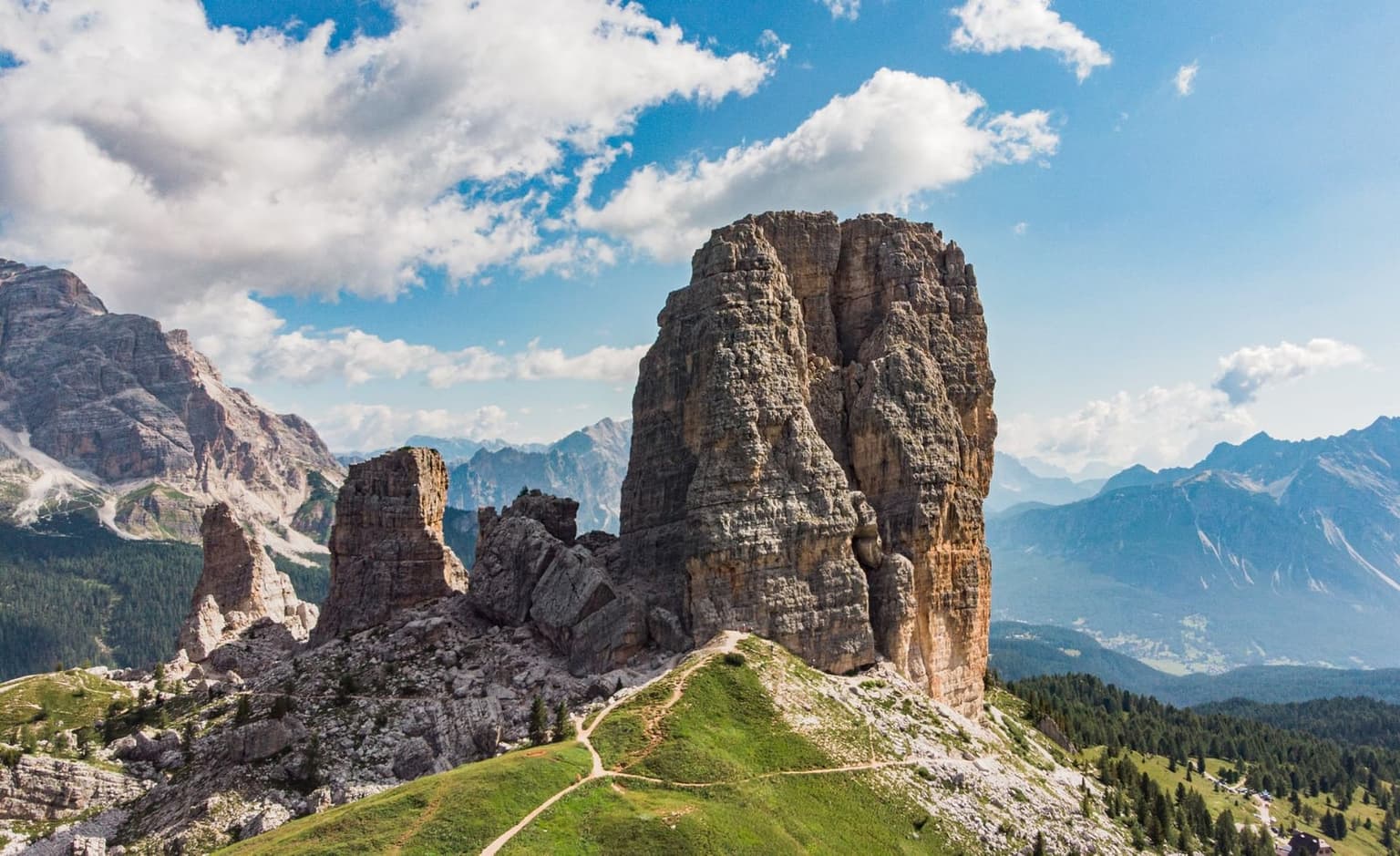
Getting up there is easy. The 5 Torri chairlift climbs from Bai de Dones and runs from June 6 to October 11, 2026, daily 09:00 - 17:00, with a round-trip ticket at €27.50; the ten-minute ride sets you down beside Rifugio Scoiattoli, a few minutes' walk from the towers. You can also walk up from the valley. The loop around the base of the towers is short and mostly gentle, an easy hour or two on foot, which is exactly why it suits almost everyone. Rifugio Scoiattoli sits at the top of the lift, and Rifugio Averau (open from June 8) and Rifugio Nuvolau (June 15) hold the ridge above.
I've done it both ways. The chairlift is the fast, no-fuss option; walking up from the valley is slower by design - you sit with the approach instead of skipping past it. My family preferred the lift. As for the trenches and the bunker, I wouldn't really call it a museum - it reads more like one big open-air exhibit you walk straight through than a curated collection - but it's a genuine change of pace in the middle of a hiking day.
If you would rather have the route and the history handled for you, a guided walk is the way to do it. A good one puts a local guide on the open-air museum loop with you, sorting the navigation and telling you what you are looking at, or starts you on a beginner via ferrata if you want a first taste of cabled climbing. Book a specific, well-reviewed tour that names Cinque Torri or the open-air museum and includes the war-history walk, not a generic "Dolomites highlights" coach day that photographs the towers from the parking lot and moves on.
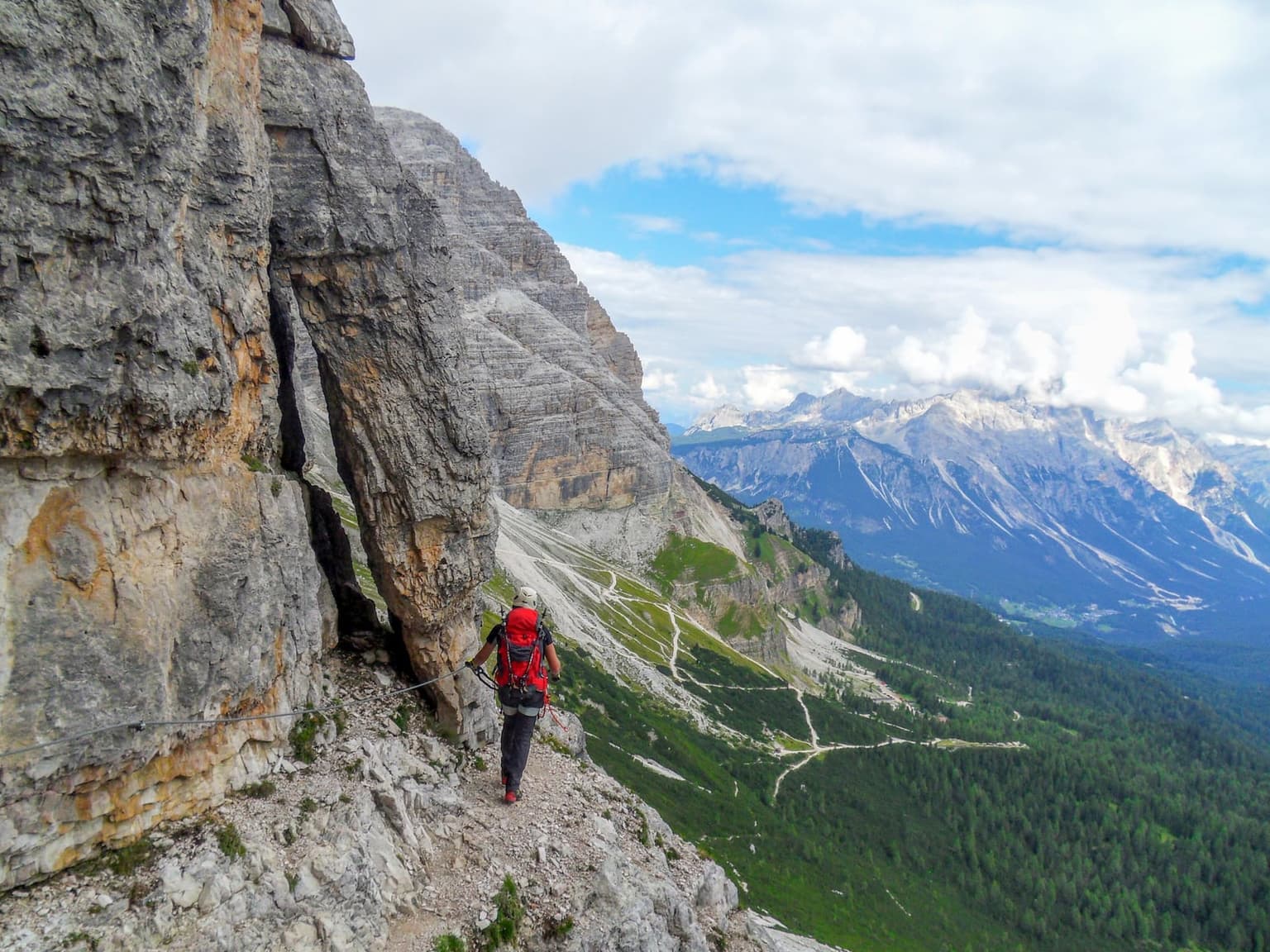
Don't come up here expecting a gourmet lunch. At midday the flagship Rifugio Scoiattoli runs like an assembly line: food on the table in under ten minutes, simple rather than elaborate. I'd push back on "bland," though - after a few hours on the trail, hungry and hiked-out, it hit the spot every time. The kitchen itself is standard rifugio fare, and you're paying mountain prices for the view, not the ambition.
The lake hikes: Lago di Sorapis and Croda da Lago
Cortina's two great lake days are where the base-camp idea earns its keep. Both are long half-days on foot, not lift-and-look outings, and both end at water you walk a couple of hours to reach. Pick your day by how much crowd, climb, and exposure you want:
| Hike | Distance | Gain | Time | Trailhead | Difficulty |
|---|---|---|---|---|---|
| Cinque Torri ring | 2 - 2.5 km | Minimal | 1 - 2 h | Bai de Dones (chairlift) | Easy |
| Lago di Sorapis (trail 215) | 12.6 km | 630 m | 5 - 6 h | Passo Tre Croci | Hard: exposed, cabled |
| Croda da Lago (Lago Federa) | 12.8 km | 885 m | ~6 h | Ponte di Rocurto | Moderate |
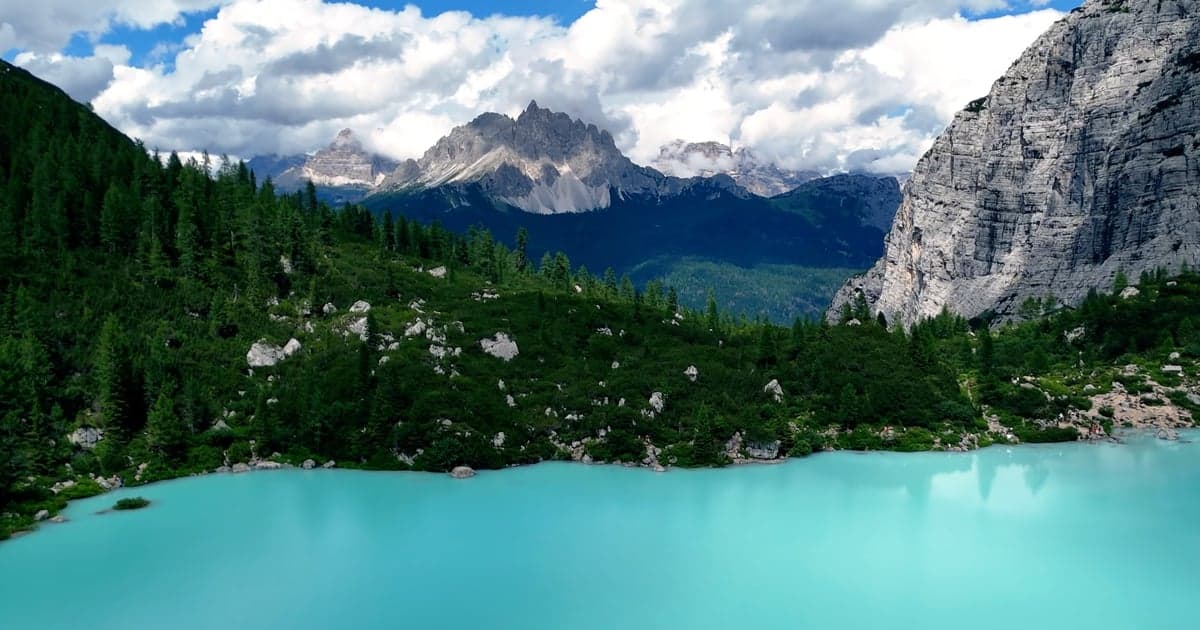
Lago di Sorapis, on trail 215, is the turquoise showpiece and the harder of the pair. The last stretch narrows to ledges cut into the rock and strung with fixed cables, hand-over-hand in a couple of places. It is not a route for anyone uneasy with heights.
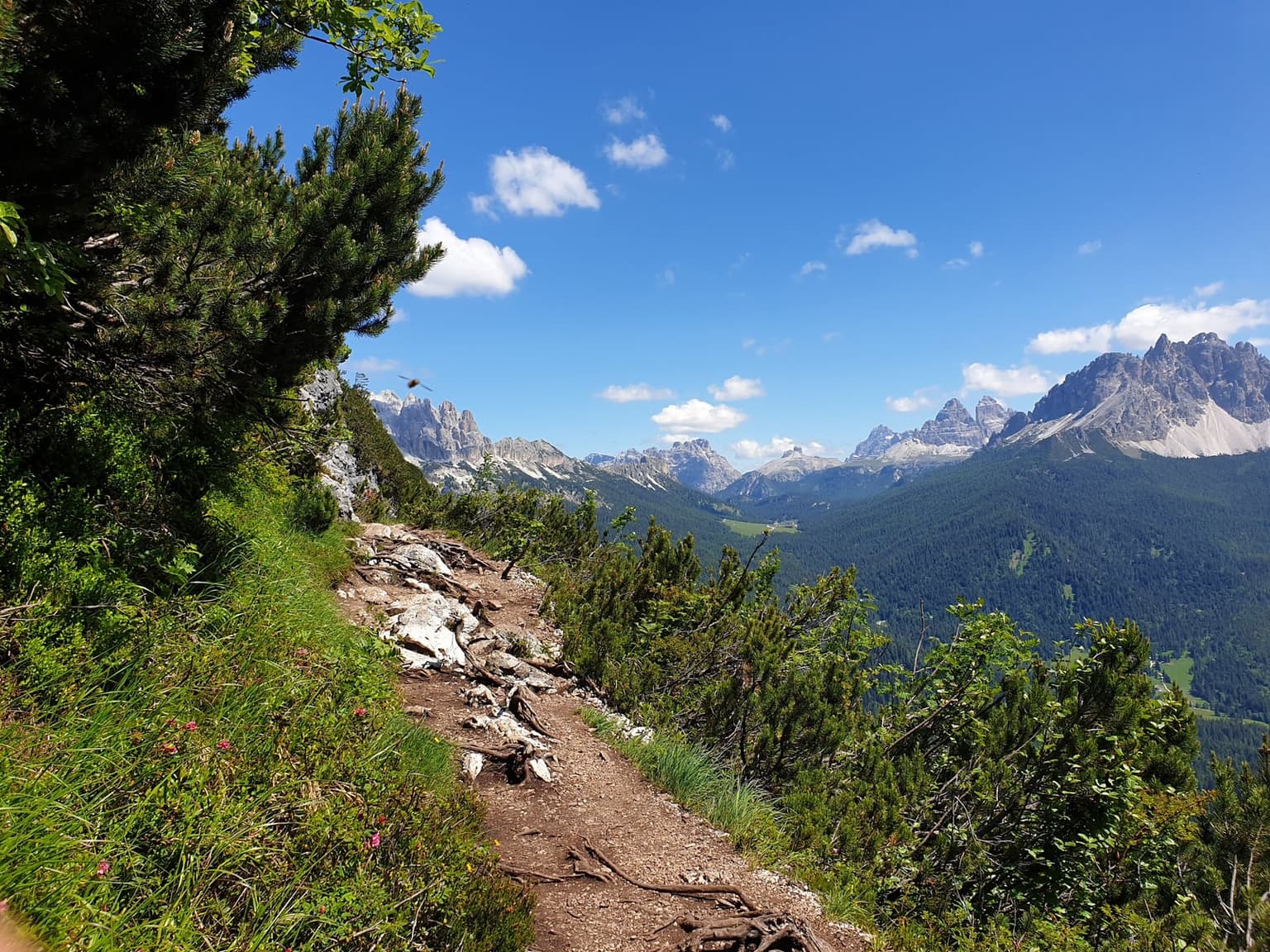
What waits at the end is water the flat, opaque turquoise of antifreeze, under one unbroken sweep of pale rock. It is worth giving a day of its own rather than a slot in a busy week - the parking, the one bus that actually serves the trailhead, and how long those ledges really take are all in the Lago di Sorapis guide.
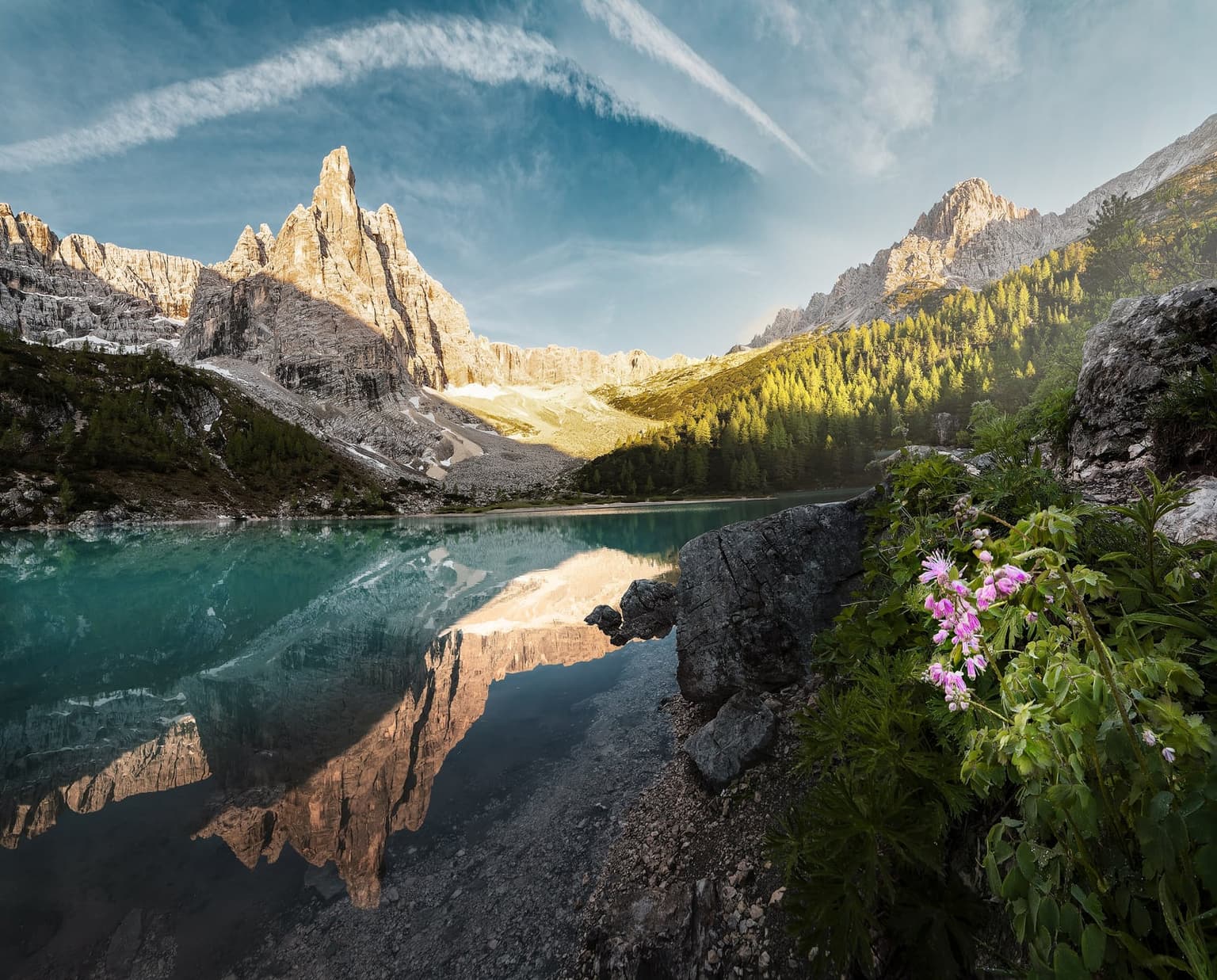
One caution I'll flag here and come back to: don't attempt Sorapis early in the season - the full season-and-safety picture is a few sections down.
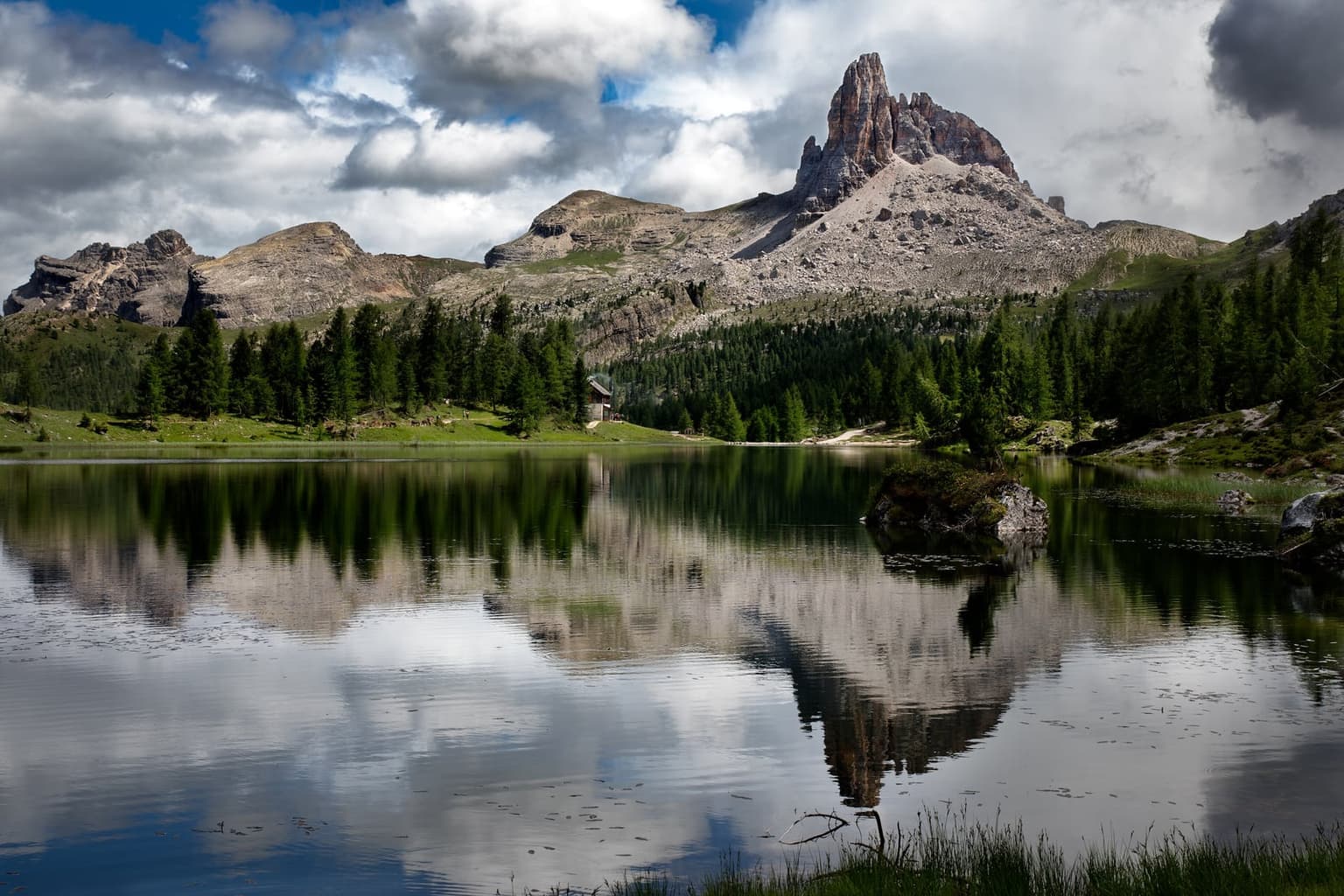
Croda da Lago is the calmer big day, and the one to choose when Sorapis is mobbed. Its loop runs 12.8 km with 885 m of gain, roughly six hours at an easy-to-moderate grade from the Ponte di Rocurto trailhead, and it circles Lago Federa, a lake ringed with larches that turn gold in autumn and stand doubled in the still water. Rifugio Croda da Lago, the Palmieri, sits on the shore and opens in mid-June if you want lunch or a bunk. Neither lake is a secret, but both are the equal-beauty days the checklist tourist skips on the way to the famous names - which is exactly why they are worth the miles.
Three practical things before either. Break your boots in at home, not on the twelve-plus kilometers to Sorapis, which is precisely the distance that turns a stiff new heel into a trip-ending blister. Carry the paper Tabacco 1:25,000 map, sheet 03 for Cortina; phone signal drops in these valleys and AllTrails on its own is not enough. And if long descents are hard on your knees, Cortina's outdoor shops rent trekking poles for €10 - €15 a day.
The cable-car peaks and the lift-pass math
The other way up a Dolomite peak is to let a cable do the climbing. Three lifts run straight out of the Cortina valley to viewpoints you would otherwise earn with a full day on foot, and on a clear morning that trade - twenty minutes in a cabin for a horizon of pale rock stacked to the skyline - is the easiest good decision you will make all week.
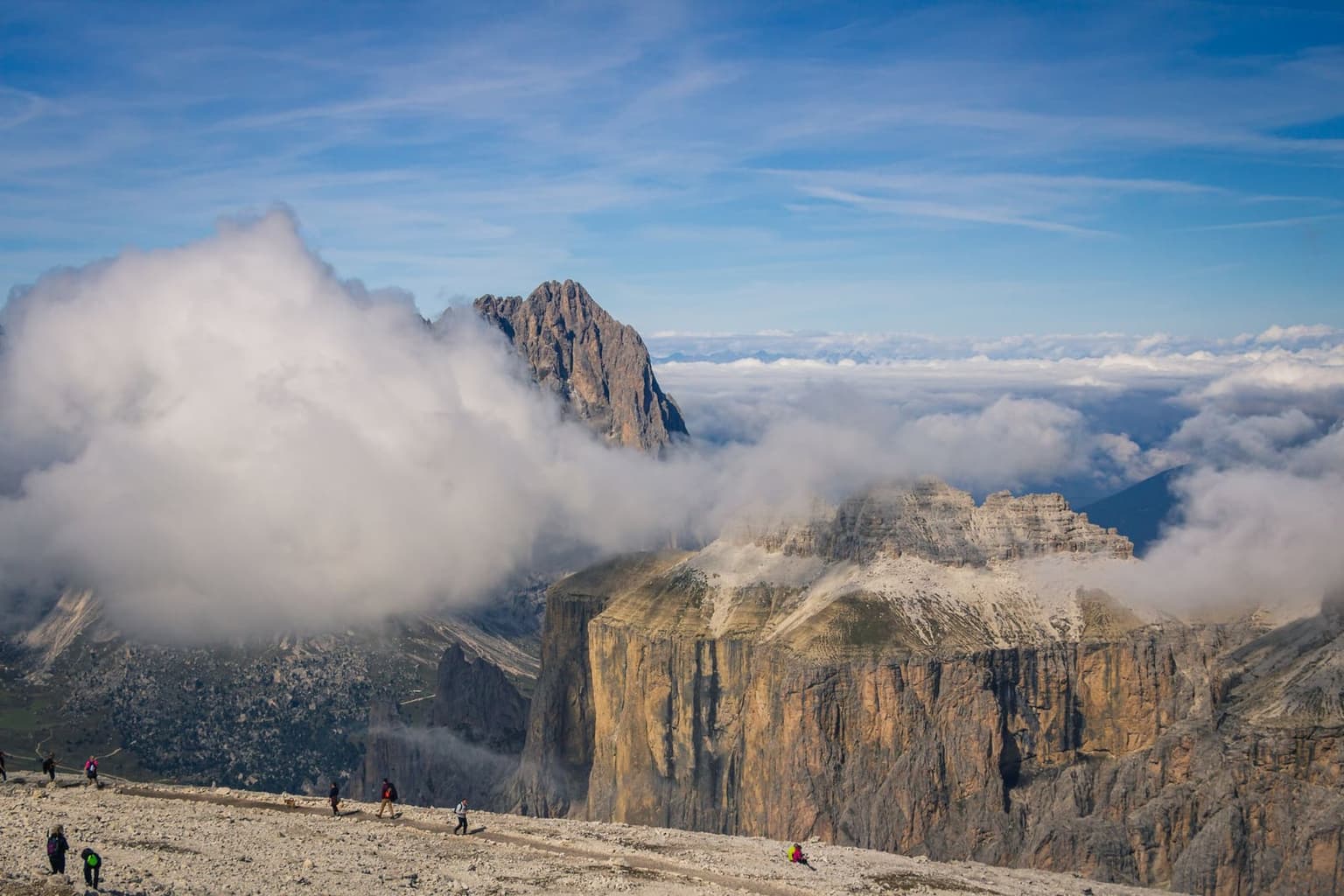
Freccia nel Cielo, the "arrow in the sky," climbs in three stages toward Cima Tofana, which at 3,244 m is the highest summit above the town. You can stop lower at Col Drusciè, go on to Ra Valles, or ride the whole way to the top station under the summit, and it runs from June 13 to September 27, 2026. Faloria goes up the opposite side of the basin, a shorter hop to a terrace that looks back over the rooftops to the Cristallo, open from July 11, 2026, and planned to run through about September 20, daily 08:30 to 16:20.
Lagazuoi is the one to ride if you only ride one. The cable car lifts you to a ridge-top rifugio, and the mountain beneath it is hollow: World War I tunnel galleries, drilled by hand through the rock during the same front-line fighting you walk over at Cinque Torri, run down inside the peak, and the Alta Via 1, the classic Dolomites high traverse, crosses right over the top. The appeal is plain - the way up is a steady grind, and the moment the ridge opens out, the view pays for the whole thing. The cable car runs May 30 to October 18, 2026, and the rifugio opens June 8.
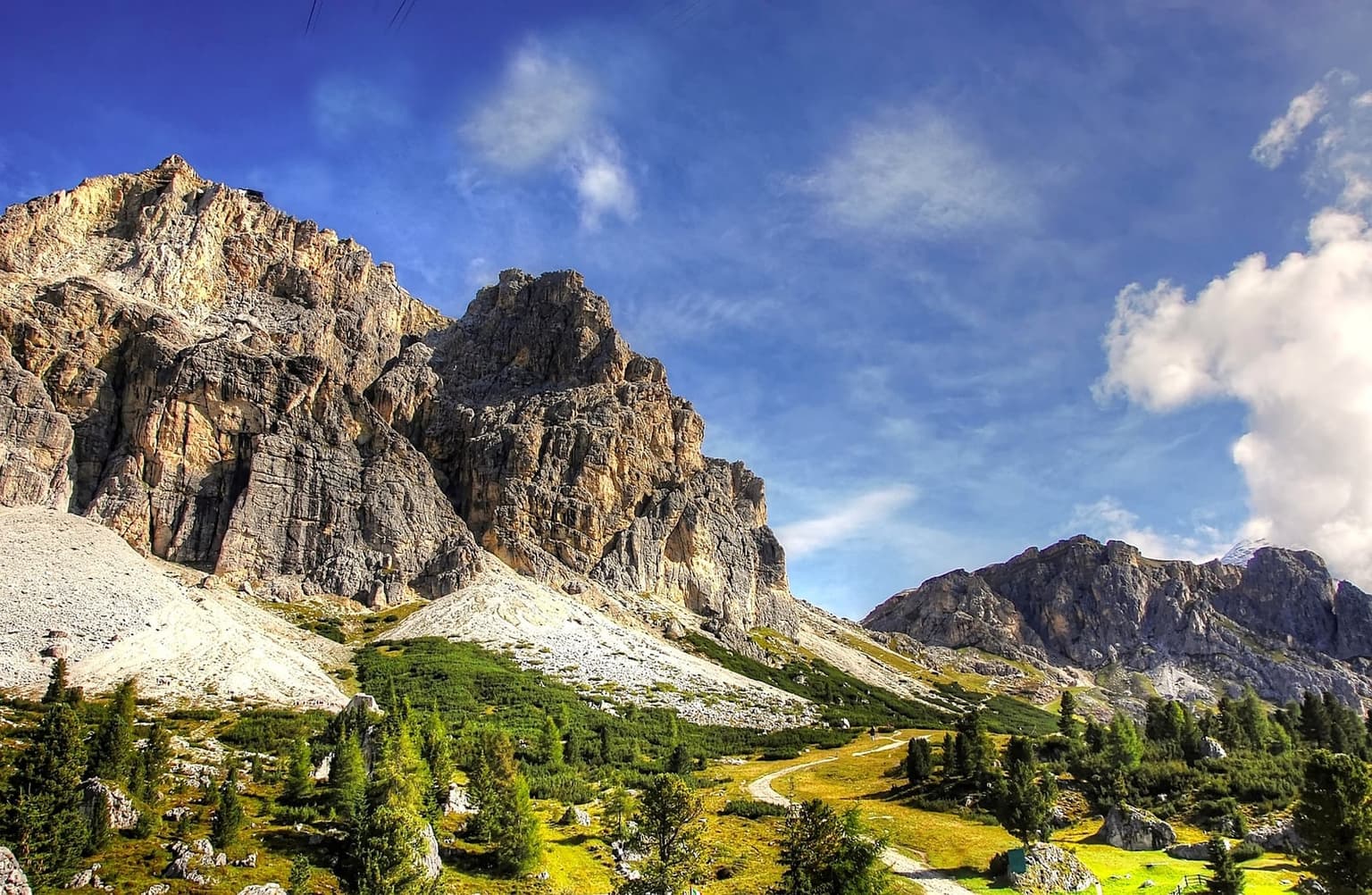
The catch is the arithmetic. Single return tickets are steep and they stack up fast - even riding the Lagazuoi cable car down one-way, a few minutes in the cabin after a morning of hiking up, costs €21 - €24 depending on the season - so anyone planning more than a ride or two should price a pass instead. Two of them cover Cortina. The Cortina Vertical Pass covers every lift open on the Cortina side - the four big names, Faloria, the 5 Torri chairlift, Lagazuoi, and Freccia nel Cielo, plus the smaller feeders - on a one-, three-, five-, or seven-day ticket, and the days don't have to be consecutive, so a rest day doesn't waste one. It pays for itself about the moment you would otherwise buy a third separate return. The wider Dolomiti SuperSummer card opens more than a hundred lifts across twelve valleys, which only earns its keep if you are roaming well beyond Cortina. One caveat on the Vertical Pass: the operator still posts its rates as the 2025 summer season, so treat that row as a guide and confirm when you buy - the other tickets below are posted 2026 rates.
| Ticket | Covers | Return / pass rate |
|---|---|---|
| Freccia nel Cielo | Col Drusciè, Ra Valles, or Cima Tofana | €25, €35, €45 |
| Faloria | Faloria return | €27 |
| Cortina Vertical Pass | All Cortina lifts (non-consecutive days allowed) | ~€54 (1 day), ~€130 (3 days), ~€187 (5 days) |
| Dolomiti SuperSummer | 100+ lifts, 12 valleys | €145 (3 of 4 days), €185 (5 of 7 days) |
Check the current-season rates and pass rules on the operator's own page before you buy: Skipass Cortina.
The town itself, and where to base
Between the hikes, Cortina is a place you actually stay in rather than sleep beside. The pedestrianized Corso Italia is the spine of it, a walkable run of the center where you can pick up groceries for tomorrow's picnic, sit down to a proper dinner, and grab poles or a map without touching the car. That is the quiet case for basing here: after a day on a cabled ledge, the last thing you want is to drive somewhere for supper.
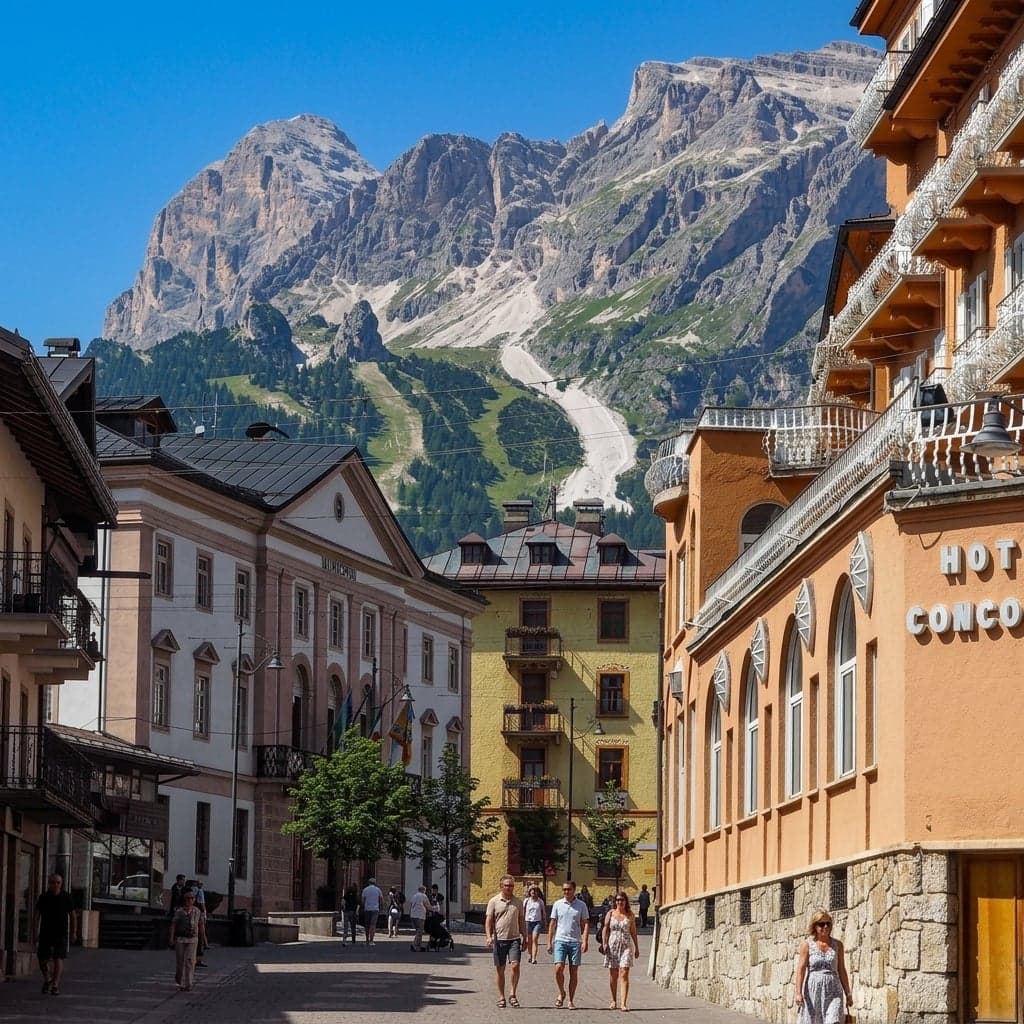
Where you sleep in Cortina comes down to one decision: how close to that center you want to be. Stay in or near the pedestrian core and you can walk to dinner and the shops and leave the car parked on hiking days; take a cheaper place out along the valley and you are driving for everything. Either way, budget honestly - there is no cheap bed in the Dolomites in summer, and the July-and-August peak fills early, so book well ahead rather than gambling on a late opening.
When you book, look for somewhere inside easy walking distance of Corso Italia, confirm it has its own parking so you are not circling for a space, and check how it handles the town's restricted-traffic zone - the good ones arrange your access before you arrive. Those three practicalities matter more here than the star rating.
That restricted zone is Cortina's own, separate from the wider Dolomites driving rules: the historic center is a camera-enforced ZTL, and a car that crosses the line without authorization gets photographed and billed later, often weeks later, once the rental company hands over your details. It is easy to avoid but you have to arrange it in advance - so don't nose into the pedestrian streets hoping a parking space will appear.
⚠️ Warning
Cortina's historic center is a camera-enforced ZTL - driving in unauthorized runs around €100 - €115 once fees land. If you're staying inside the zone, ask the hotel to register your license plate before you arrive, which is the standard way guests are let in.
The two day trips you'll delegate: Tre Cime and Lago di Braies
Two of the Dolomites' most famous sights sit close enough to reach from Cortina in a day, and both are worth the outing. Neither, though, is a reason to pack up and move your base. You drive out in the morning, you stand in front of the thing, and you're back in the same walkable town for dinner, which is exactly what a base camp is for. The catch they share is that both now run on timed, reserve-ahead access, so they reward an early start and quietly punish a lazy one.
Tre Cime di Lavaredo is the big wow-factor day and Cortina's single most-requested hike: three sheer stone monoliths standing in a row, with a loop trail that keeps swinging you around to a fresh angle on them. It is also the most managed corner of the range, with a booked-ahead vehicle gate that fills, so the play is to reserve your slot and go early. The gate and which direction you walk the loop are both worth sorting before you drive, so I've put the whole playbook in my Tre Cime di Lavaredo guide.
Lago di Braies is the other postcard: a still green lake under sheer walls, with a hundred-year-old wooden boathouse on the shore and traditional rowboats lined up at the water. It runs on the same dawn-or-crowds rhythm, and the parking and the timed-entry rules are the part people get wrong. Those live in the guide to the closure, the lots and the boats, so you can settle them before you set out and arrive already knowing where to leave the car.
When to come: season, safety, and storms
Everything so far is what to do in Cortina. The other half of the plan is when, and up here the honest unit is the season phase rather than the calendar date - the mountains run on snow and weather, not on the first of the month.
| Phase | Lifts and rifugios | Crowds | Weather |
|---|---|---|---|
| Early summer (June) | Opening early-to-mid June; high routes may still hold snow | Thin | Cool and unsettled, snow lingering up high |
| Peak (July, August) | All open | Heaviest and priciest | Hottest and wettest, frequent afternoon storms |
| Early fall (September) | Winding down; many close late September into October | Thinning fast | Steadier and clearer, first color in the larches |
Early summer is the trade-off phase: the lifts and huts are only coming online through the first half of June and the trails are gloriously quiet, but the high routes can still be under snow. That last point is not a small caveat. The Sorapis traverse is exposed and strung with fixed cables, and in early season it collects lingering snow with real avalanche danger on the steep slopes below - this simply isn't hiking season in the high Alps yet, whatever your training and gear say. Even at midsummer, those cabled ledges are no place for anyone uneasy with heights.
The second hazard comes from the sky. July is the hottest and wettest month here, though up at this altitude that means pleasant rather than truly hot: highs around 73°F (23°C), lows around 46°F (8°C), and cooler still on the high trails. The rain comes mostly as afternoon thunderstorms that pile up over the peaks with little warning. Wave off the start-early advice in mid-August and a 15:00 storm can catch you on open ground with nowhere to shelter. The rule I hold to is simple: be off the high and exposed sections by early afternoon, when you do not want to be the tallest thing on the ridge.
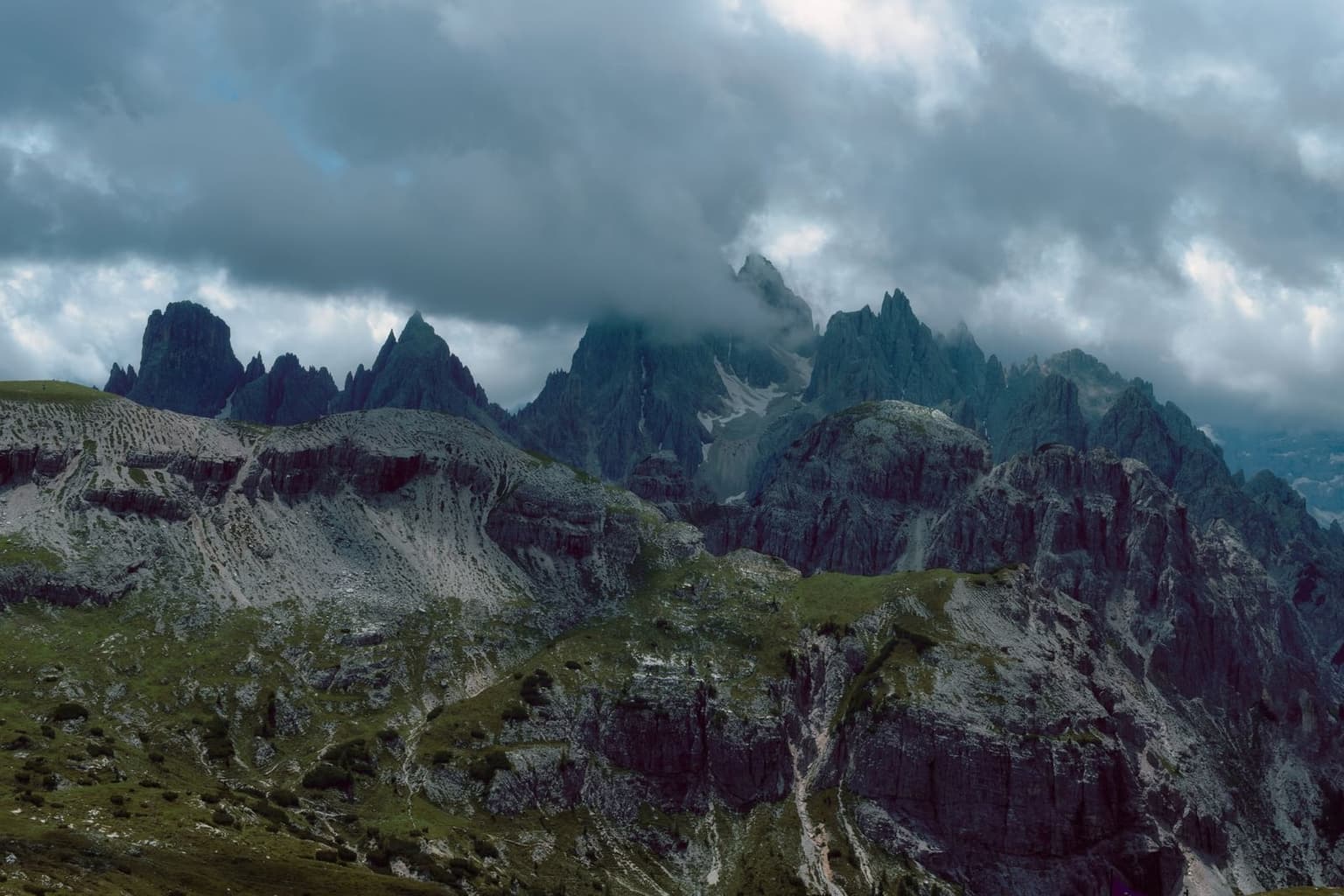
If you can pick your week, early September is the quiet reward - the crowds thin, the light sharpens, and the afternoon storms lose some of their menace. The catch is that the lifts start winding down, so check each one's last day before you build a route around it.
One last note. This is the kind of trip where travel insurance that genuinely covers mountain rescue earns its place - the ledges are exposed, and a helicopter off a Dolomite face is not a cheap afternoon.
Getting to Cortina and reaching the trailheads
Cortina sits deep in the mountains, and how you get to it is genuinely its own project - which airport to fly into, whether to rent a car or lean on the regional transit network, how the regional passes and the long-distance buses fit together. All of that belongs to a guide of its own, so rather than half-answer it here I've laid out getting to the Dolomites and picking your gateway airport in full. What this section handles is the part specific to a Cortina hiking week: once you're here, how do you actually reach the trailheads?
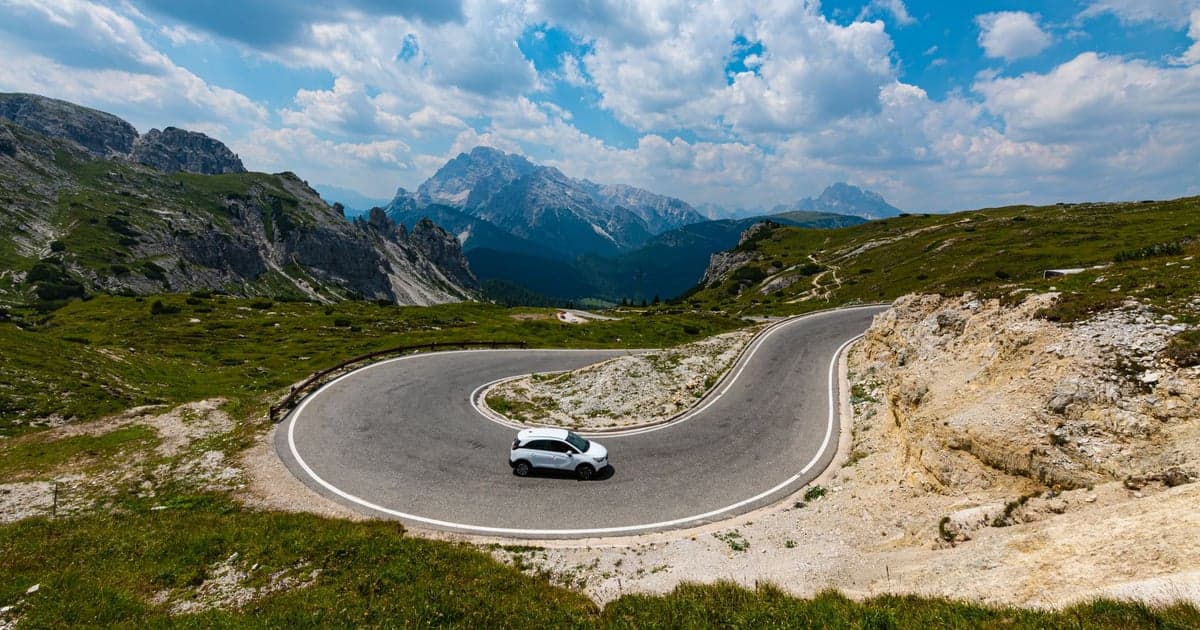
That question is where the car-or-no-car decision really bites. Your best days start from three scattered trailheads - Bai de Dones for Cinque Torri, Passo Tre Croci for Sorapis, Ponte di Rocurto for Croda da Lago - and the timing is the trap. Renting a car only to leave it in a lot for a multi-day hike feels like money wasted; but come off the trail at the far end and the bus relay back to Cortina can eat something like three hours of your afternoon. There's no clean answer here. A car buys freedom over those trailheads and your own schedule; going car-free spares you the parked-car waste but leaves you at the mercy of a thin bus timetable.
| Trailhead | Public bus | Getting there |
|---|---|---|
| Bai de Dones (Cinque Torri) | Poorly served | Drive; the chairlift climbs from here |
| Passo Tre Croci (Sorapis) | Dolomiti Bus 51, daily June 8 - September 9 | Bus in summer; otherwise drive |
| Ponte di Rocurto (Croda da Lago) | Poorly served | Drive |
This is also the one honest case against basing in Cortina at all. If you're set on going car-free, hikers routinely base instead in Val Gardena - Ortisei, Santa Cristina, Selva - where the buses run often enough to string a hiking week together without a rental. Cortina rewards a car; Val Gardena forgives the lack of one.
If you land on driving, most people pick up the car at Venice, the closest big gateway, about two hours away by road, and it's worth reserving ahead for the July and August peak.
Rent a car at Venice Marco Polo
Take the smallest car that clears the mountain hairpins and still fits a tight hotel lot
If you'd rather not drive but still want to skip the airport bus relay, there's a middle option: a fixed-price car with a driver straight from the airport to your hotel door.
Book a private airport transfer
Skip the bus relay - a pre-booked transfer runs straight from the airport to your hotel door
Whichever way you arrive, sort your maps before you lose signal. Download offline maps and the Suedtirolmobil transit app over Wi-Fi before you set out - phone coverage drops in these valleys and Google Maps is unreliable across the eastern Dolomites, which is exactly where a wrong turn costs you a bus.
💡 Tip
Rent the smallest car that fits your group and luggage - mountain hairpins and hotel lots are tight, and a big SUV is a liability up here. If you're going car-free, weigh basing in Val Gardena instead, where the buses run more often.
Frequently asked questions
- Is Cortina d'Ampezzo worth visiting in summer, or is it just a ski resort?
- Worth it, easily. The ski resort is only half of Cortina's year; in summer it turns into one of the best hiking bases in the Dolomites, with named day-hikes and cable-car viewpoints in every direction from town. The winter fame just means a lot of what you read about the place was written for a season you aren't traveling in.
- How many days do you need in Cortina?
- Plan on roughly three or four. That is enough to spread the big days out - Cinque Torri, one of the lake hikes, a cable-car peak, and a day trip to Tre Cime or Braies - instead of cramming two long walks into one afternoon and enjoying neither.
- What are the best hikes based in Cortina?
- Cinque Torri for the iconic towers and the walk-through World War I trenches, Lago di Sorapis for the turquoise glacial lake (long and exposed, not for anyone uneasy with heights), and the quieter Croda da Lago loop around Lago Federa for when the famous names are mobbed. Between them they cover an easy half-day, a hard full day, and a calm one - most weeks want all three.
- Can you hike around Cortina without a car?
- You can, but it fights you. Outside the summer bus windows the trailhead connections are thin, and a missed departure can cost you hours of your afternoon. Car-free hikers tend to end up happier based in Val Gardena, whose bus network is dense enough for a full hiking week - worth weighing before you book a Cortina bed.
- When do the Cortina lifts and rifugios open for summer?
- Most come online early-to-mid June and run into late September or October, though each lift and mountain hut sets its own dates. Early summer means quiet trails but lingering snow up high, so check the exact 2026 opening and closing days before you build a route around any single one.
That is the whole trick to Cortina in summer: treat it as a place to settle into rather than a checklist to clear. Do that and the mountains stop being a logistics problem and go back to being the reason you came - a ring of pale rock around a small town you can walk home across for dinner.