George Mandrovny
Quick answer: Bellagio sits at the crossing-point of Lake Como's three arms, and two decisions make or break a visit. Come by boat, not by car. And either sleep in town or arrive early and leave late, because from mid-morning the day-trip ferries land and the lanes fill to a shuffle. The one trap to avoid: do not drive into the historic center. The ZTL cameras will mail you a fine of around €90, and there is almost nowhere to park anyway.
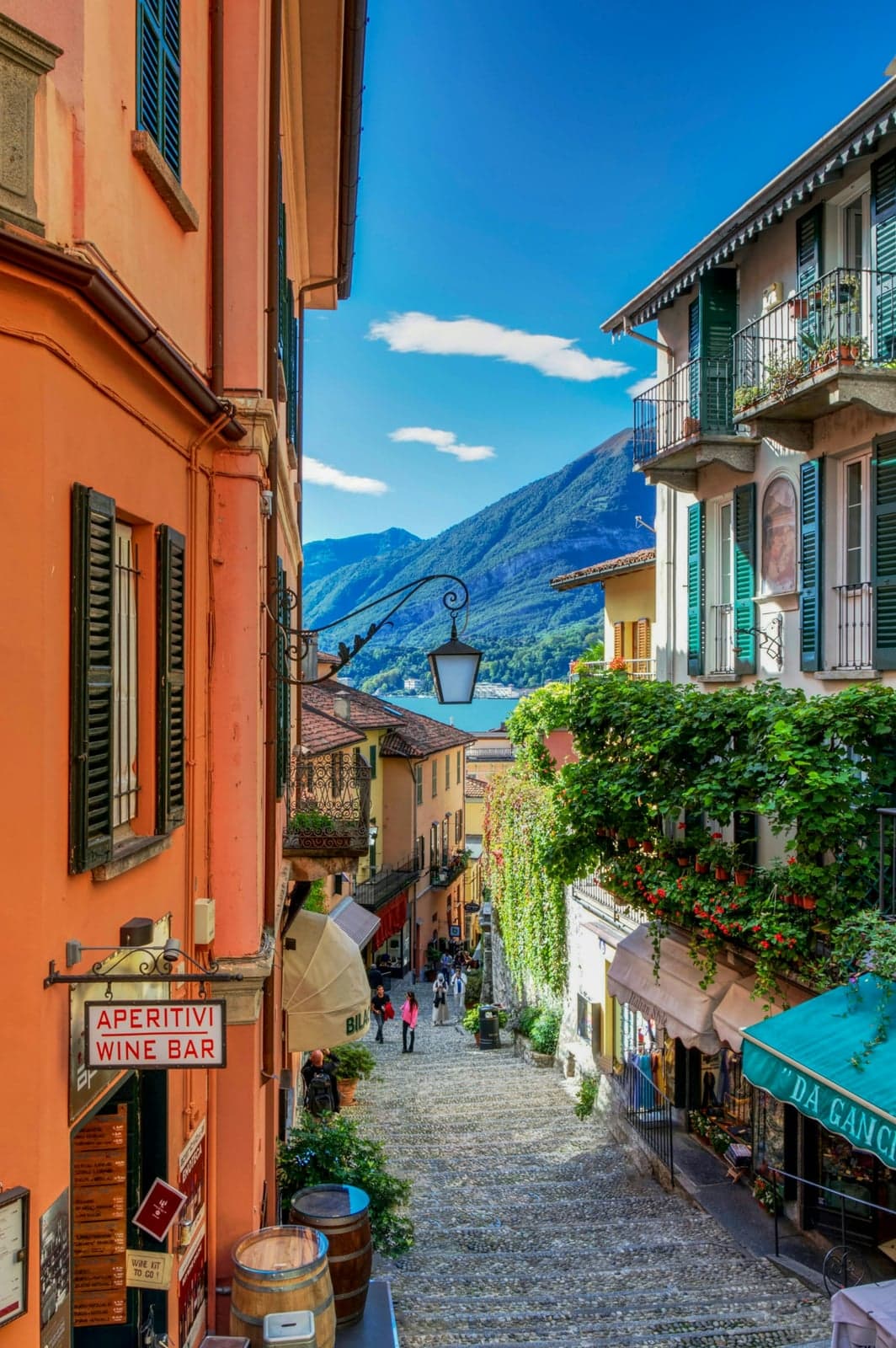
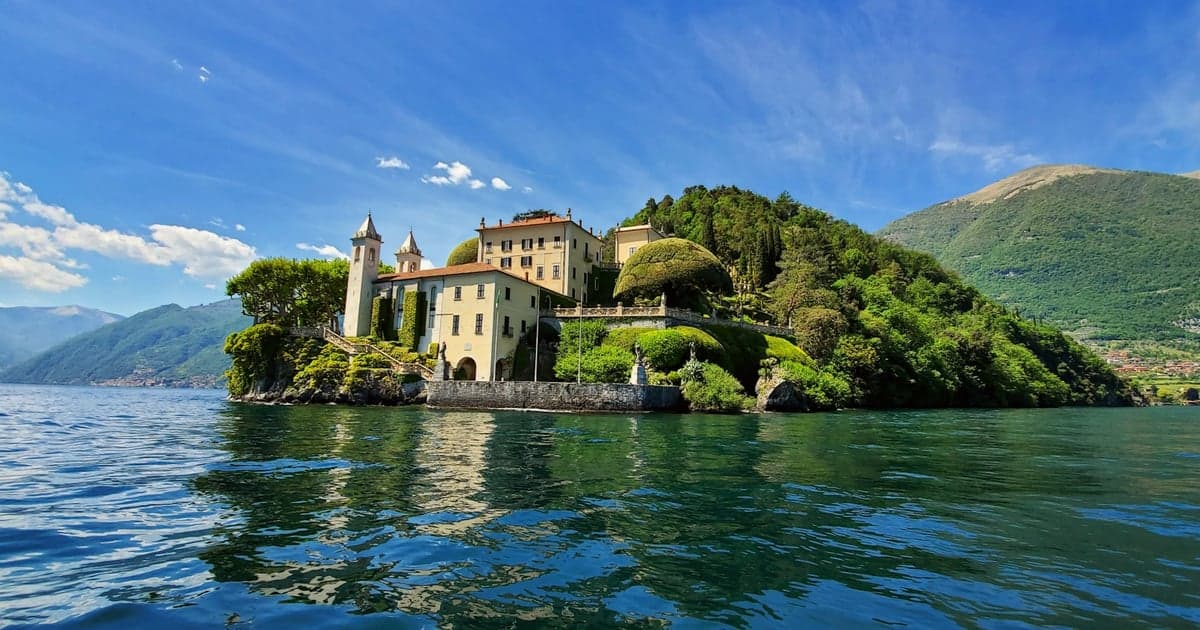
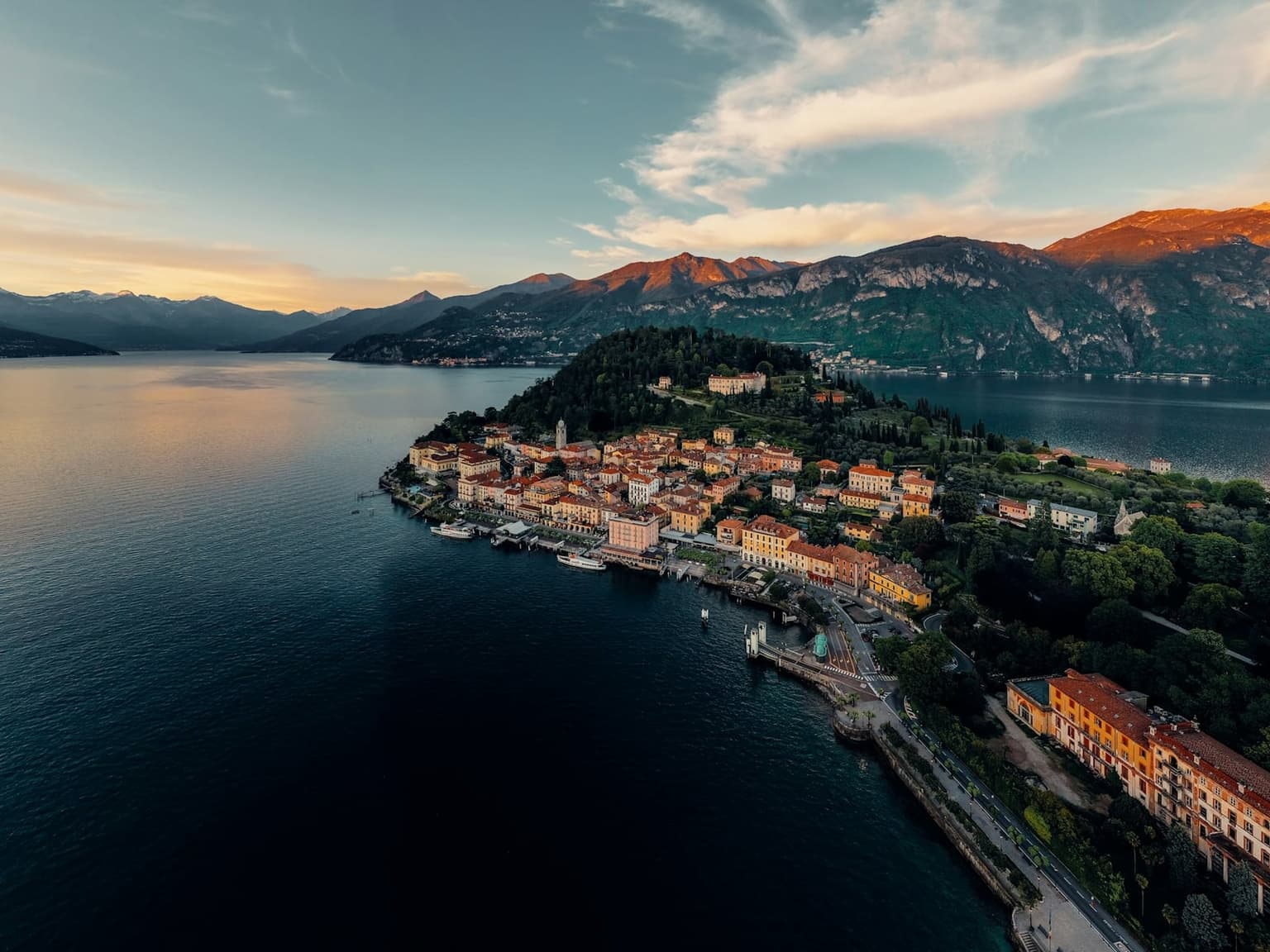
People call Bellagio the Pearl of Lake Como, which is usually the kind of phrase that means a place has a good publicist. In this case it is roughly accurate. The town stacks itself up the headland where the lake splits in two, pastel houses and stepped stone alleys climbing away from the water, gardens spilling down to it. It is genuinely lovely, and it knows it, and so does everyone else.
Which is the whole problem, and the reason this guide exists. Get the logistics right and Bellagio lives up to the postcard. Get them wrong and you spend the best hours of the day standing in line in the sun.
Getting to Bellagio
Bellagio has no train station. None - you cannot buy a ticket to Bellagio, a fact that tends to surface while you are standing in Milano Centrale squinting at a departures board. The town sits on a headland in the middle of the lake with no rail line near it, so however you arrive, the last leg is a boat or a bus.
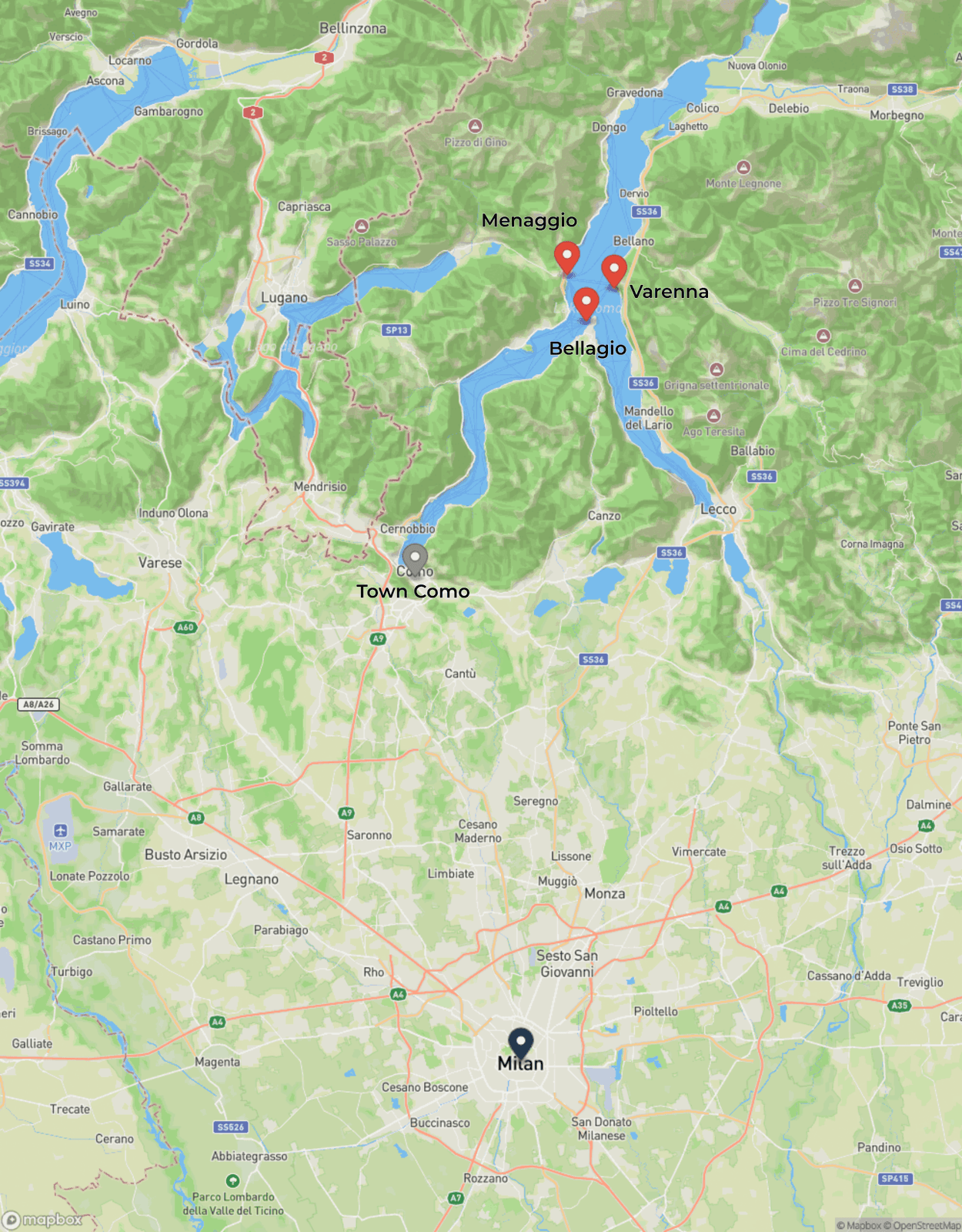
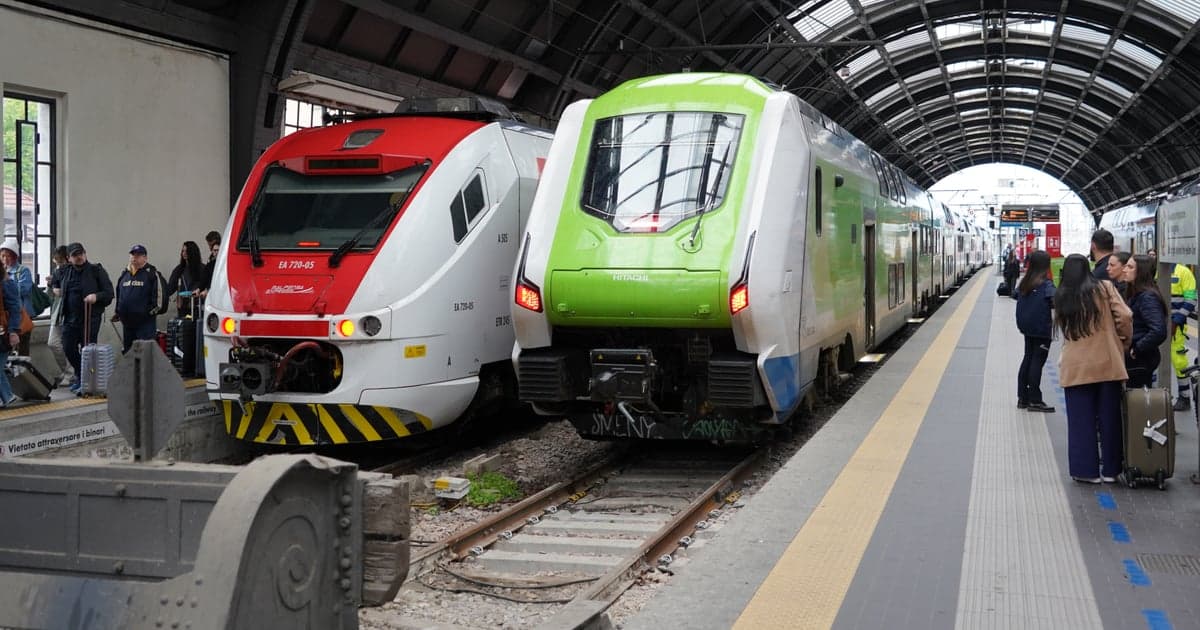
That leaves three ways in. Most people ride the train up the eastern shore to Varenna-Esino and take the short ferry across - the quickest and simplest. You can also go via Como and continue by ferry or the C130 bus (numbered C30 until ASF renumbered its network - older guides still call it that), or, straight off a flight, book a private transfer. Which train, which station, the paper-ticket validation fine, and why a car is a mistake are all covered in reaching Lake Como from Milan - sort that out before you book anything.
One word on that airport transfer. A private car straight from Malpensa to Bellagio is genuinely restful after a long-haul flight, and booked ahead at a fixed price it runs €166 - €207 - the €250 in the horror stories is what a walk-up quote at the curb looks like. So book the fixed fare before you fly: a driver is waiting and the price is settled rather than argued at the airport curb. Whether that price beats the train for your party - and the passport-hall timing that decides when to buy any onward ticket - is exactly what the Malpensa arrival guide weighs for you.
And bus tickets are the usual small trap: buy them before you board, at a tabaccheria, a newsstand, or in the app - not from the driver expecting exact change.
Check current C130 times and fares on the ASF timetable finder
Buy the ticket before you board - tabaccheria, newsstand or the app, not from the driver
However you arrive, learn the pier ritual: regular battello tickets can now be bought online, but the fast hydrofoil and the car ferry still sell only at the ticket window, and in high summer that window's line is what most often eats a visitor's morning. Buying on board costs a €1 surcharge unless the ticket office was closed. For the short hops around the central lake, don't overthink the boat: take whatever leaves next. Boat types, routes, day passes and the tactics for dodging that line all live in the full Lake Como ferry guide. Current schedules and fares are on the official Navigazione Laghi page.
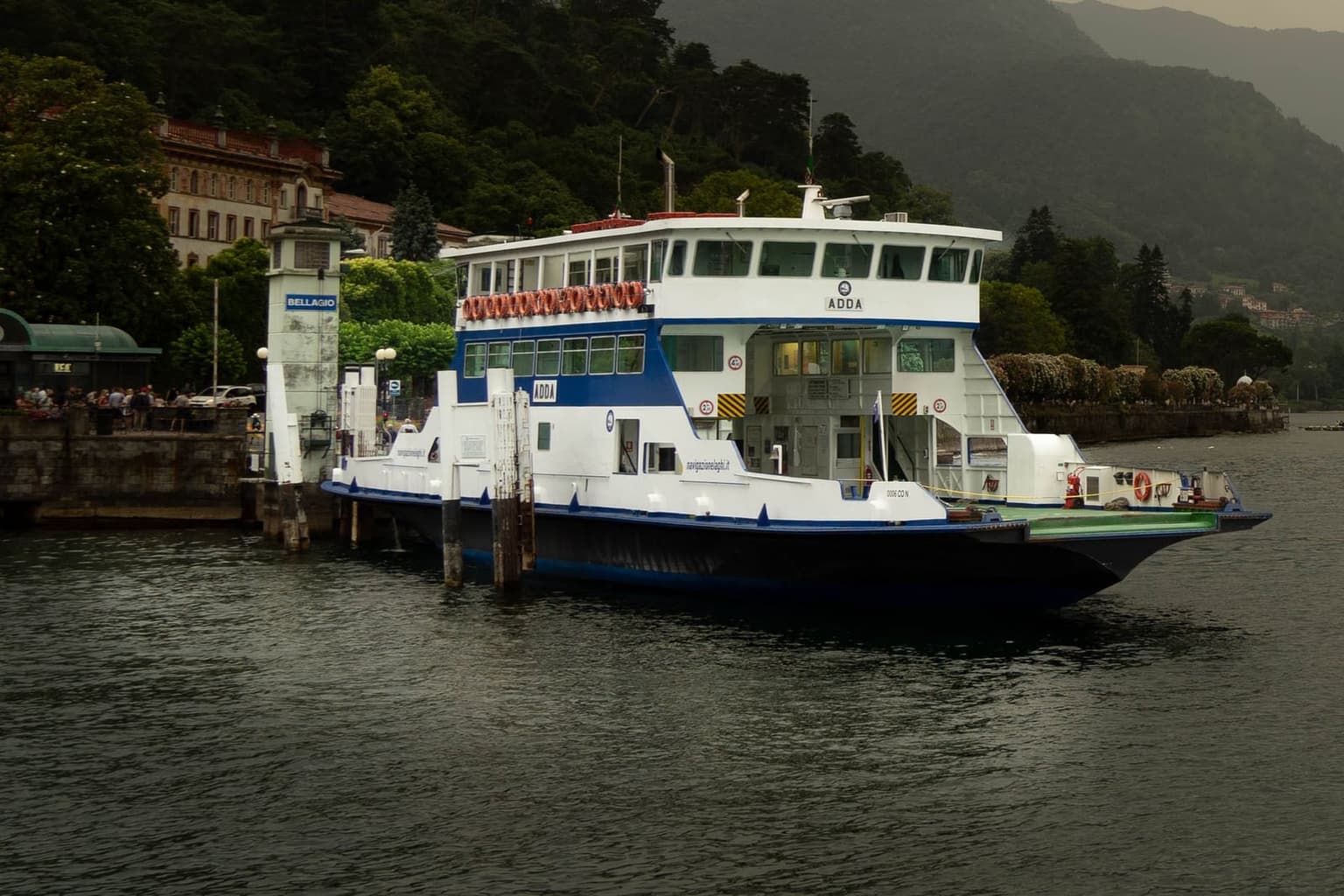
There is also a way to sidestep the whole business. A guided boat tour of the central-lake villages - Bellagio, Varenna, Menaggio - costs only a little more than buying the crossings yourself, and in return someone else handles the tickets, the times and the line while you just get on the boat. Decide by temperament: if standing in a ticket line reads to you as part of the trip, do it yourself; if it reads as the thing you came here to escape, hand it off.
Beating the crowds
Whether to come for the day or stay the night - and why the day-trip ferries turn a lovely town into a shuffling line by noon - is the same calculation for the whole lake, so I work it through, train times and all, in the day-trip-versus-overnight verdict. The short version: come early or stay over, and don't try to cram three towns into one afternoon. What matters here is how Bellagio in particular rewards it.
💡 Tip
If you stay the night, walk out to Punta Spartivento at about 6:30, before the first ferries. You get the very tip of the peninsula, where the lake splits into its three arms, entirely to yourself - Bellagio at its best, and almost nobody bothers.
Even on a busy day you can duck the crush. The crowd stays on the waterfront and the two or three photogenic lanes just above it; five minutes uphill into the back streets it thins to nothing. Better still, take the fifteen-minute path over the headland to Pescallo, a quiet fishing cove on the far side of the peninsula with no ferry crowd at all - because no ferry goes there.
And if you are day-tripping, watch the last boat back: in shoulder season the last car ferry from Bellagio to Varenna leaves around 20:45, earlier than you would guess. Miss it and you are stranded on the wrong shore until morning.
Or skip the schedule entirely: a guided day trip from Milan hands the whole trains-and-ferries chain to someone else. Just know most tours land you here at the busy midday - the quiet town still belongs to the people who came early on their own.
Where to stay
Everything in the last section points one way: if you can, sleep here. A night in Bellagio buys you the empty morning and the long evening, and it turns the ferries into your private shuttle - quick hops over to Varenna or Menaggio for dinner and back, for a few euros.
Where you stay within the town matters more than it looks on a map, because Bellagio is vertical.
| Where | Feel | Price | Watch for |
|---|---|---|---|
| Waterfront & old town | Lively, walkable, the postcard | €€€ | Priciest; some rooms are up the stepped lanes |
| Up the hill / Pescallo side | Quiet, residential, the big views | €€ | The climb, and a longer walk to the pier |
| Near the ferry pier | Handy for day trips out | €€ | Busy by day, calmer at night |
The waterfront and the old town are what you picture, and you pay for it; the streets behind and above are quieter and often better value, at the cost of a climb. If your plan is to use Bellagio as a base for trips out across the lake, a place near the pier wins - first onto the morning boats, last off the evening ones, no hike either way. If it's the town itself you came for, the old-town lanes put you in the middle of everything.
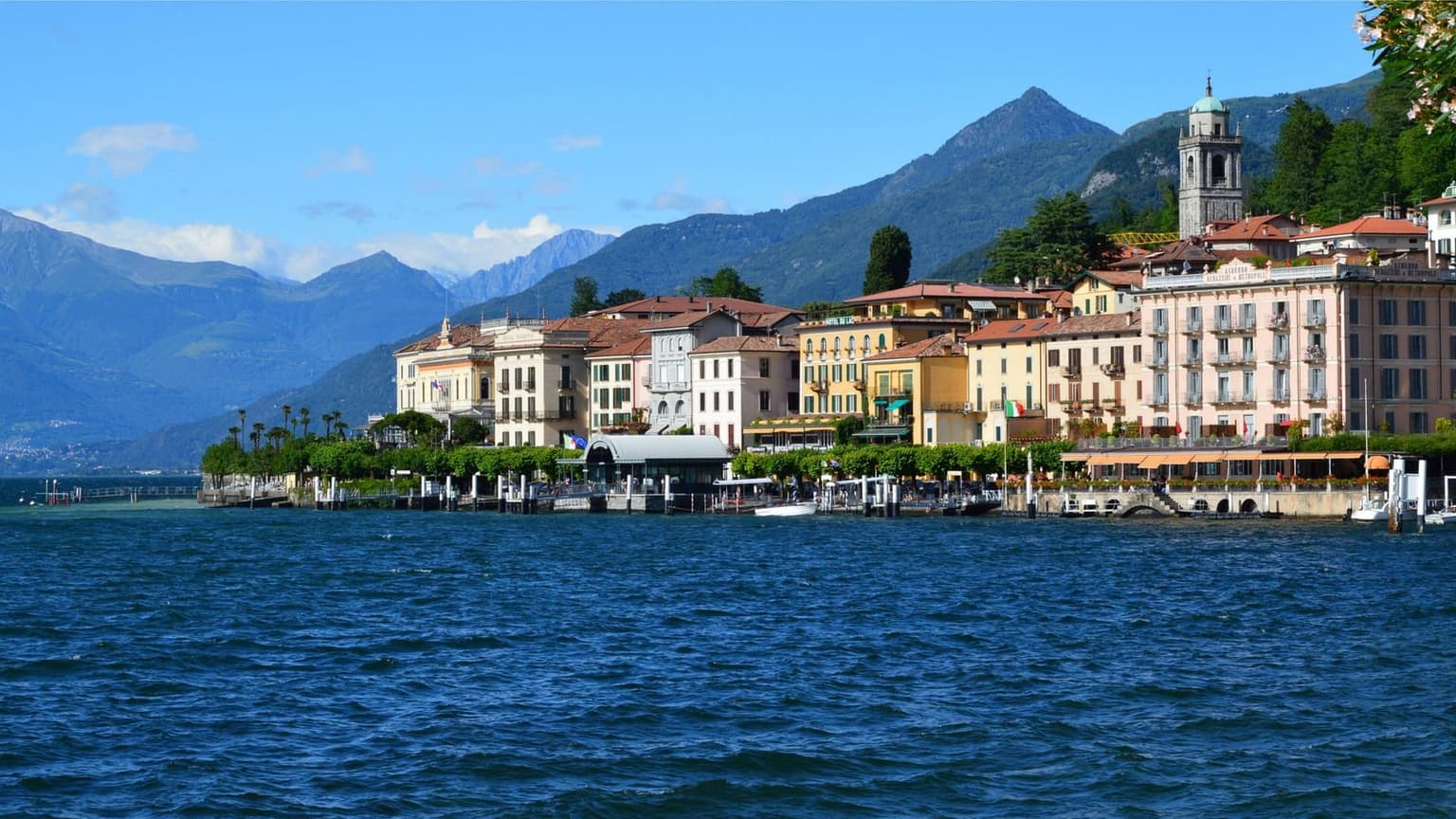
Wherever you land, two rules hold. Book early - Bellagio is tiny and sells out through the summer, and the good-value rooms go first. And filter for free cancellation, because plans on the lake shift with the weather and the ferry schedule more than you'd expect. The one detail that saves your shoulders is checking exactly how far the room sits from the water, and how many steps stand between.
⚠️ Warning
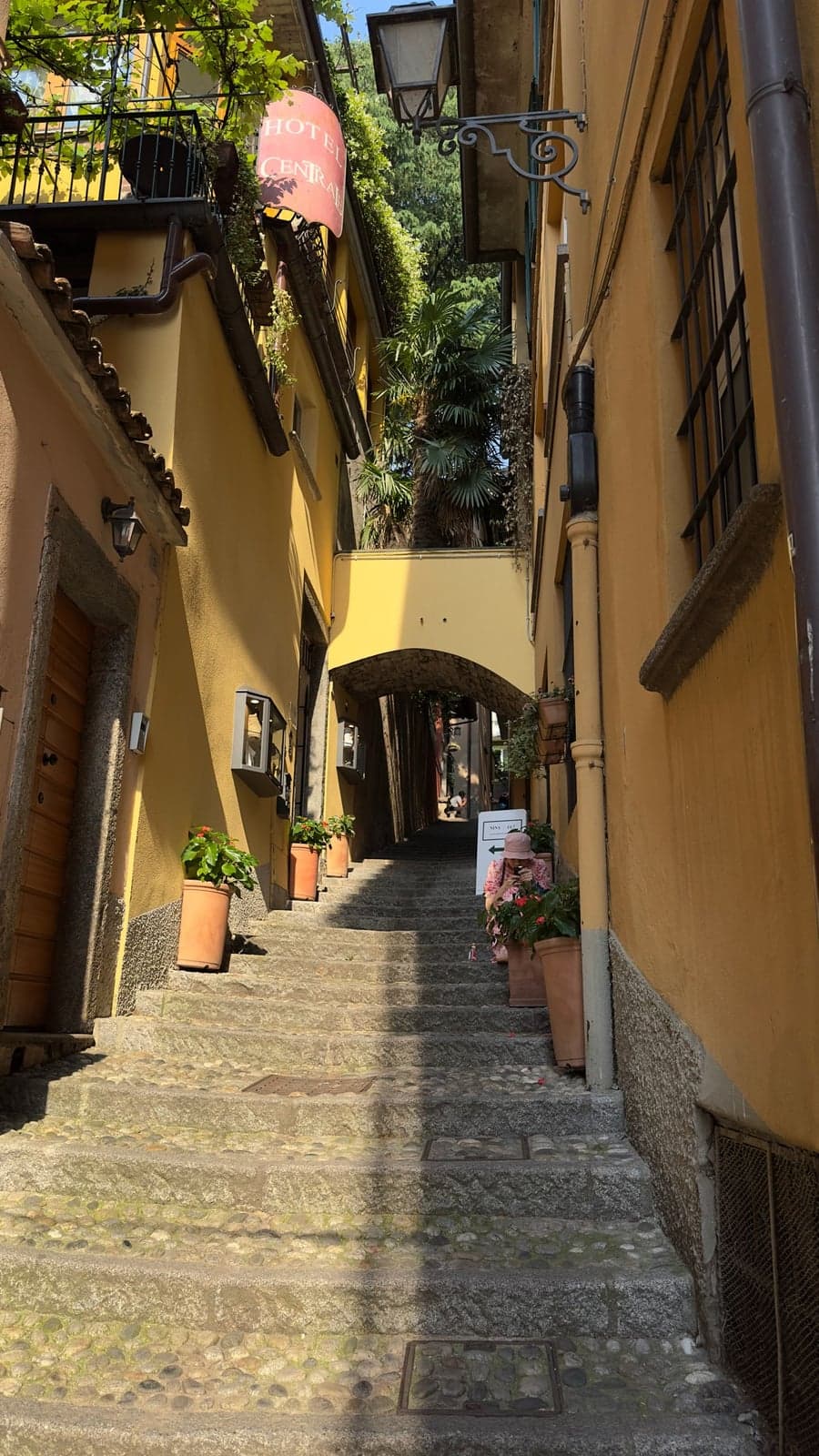
Bellagio is built on steep stone stairways, and Salita Serbelloni is the famous one - a genuine staircase, not a figure of speech. Dragging a 23-kilo suitcase up to a room three flights above the lake is a sweaty, undignified way to begin a vacation. Either book somewhere reachable without the big climb, or plan to drop your bags before you tackle it.
If you arrive with luggage before you can check in - that usual afternoon gap - leave the bags rather than haul them up and down twice. A day's storage near the pier costs a fraction of the misery it spares you, and it beats dragging a suitcase up the steps only to bring it back down at checkout.
Things to do
Bellagio is small enough that its highlights fit comfortably into a day, and good enough that you'll wish you had given them two. These are the things that actually earn your time, roughly in the order most people enjoy them.
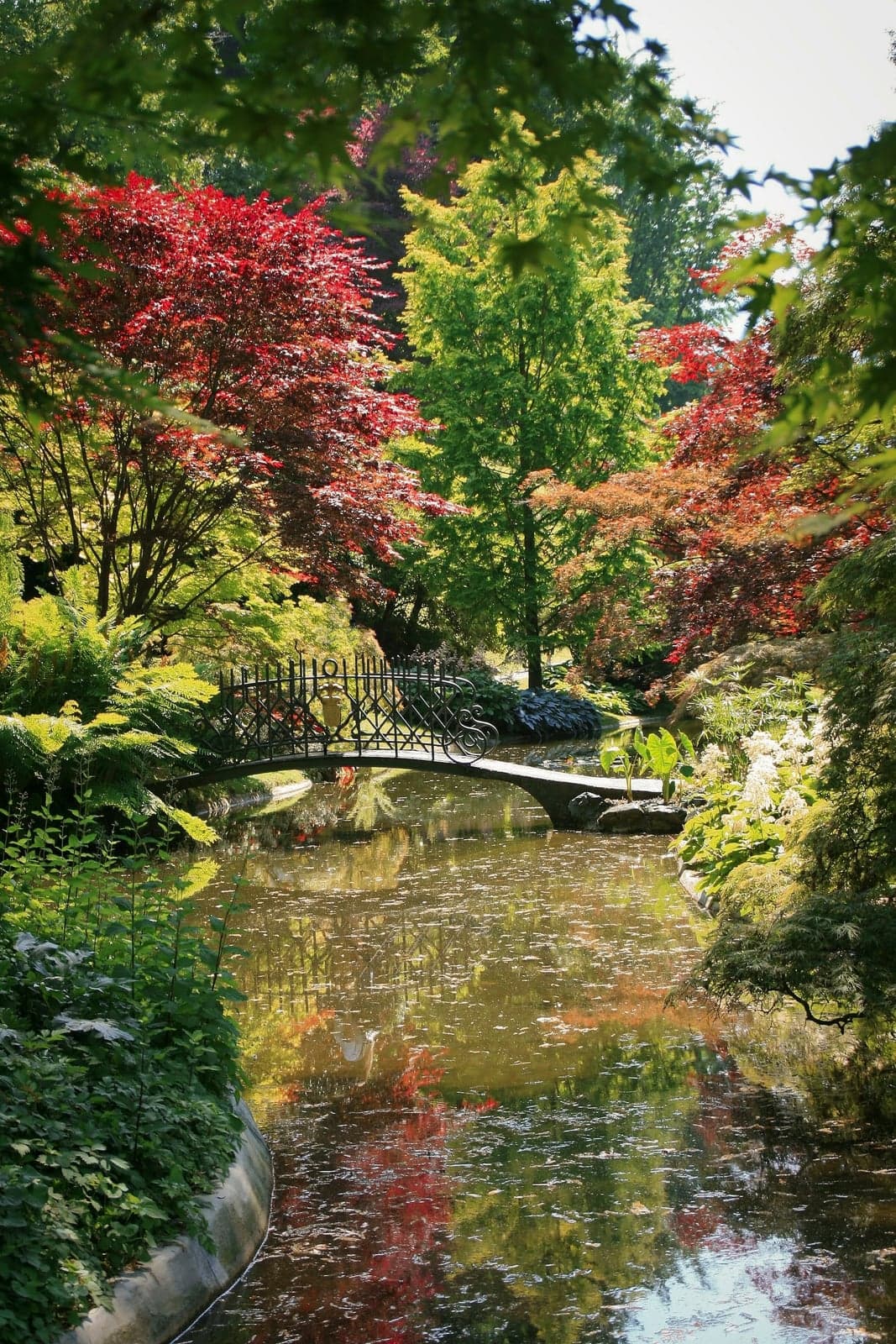
Start with the gardens, because they are half the reason the villas here exist. Villa Melzi is the one you can simply walk into: a long lakeside botanical garden below a neoclassical villa, laid out in the early 1800s, with a path that runs right along the water past cypresses, a Japanese pond, and statuary the Melzi family clearly did not skimp on. Entry is €10, the season runs from late March to the end of October (daily, 10:00 - 19:00), and an unhurried circuit takes about an hour and a half - worth every cent and minute of it. Its grander neighbor, the Villa Serbelloni park on the headland above town - not the hotel that borrowed the name - can only be seen on a guided walk: two departures a day, about two hours (the first of them uphill), €13, and thirty people per slot. Book at the PromoBellagio office in the medieval tower by the church, or online before you come, rather than assuming you can drift in later.
Then just walk the old town. Salita Serbelloni is the stepped lane you've seen in every photograph, climbing between shops under stone arches, and it earns the attention. But the real pleasure is the quieter parallel lanes, where the silk shops and small workrooms are and where the crowd isn't.
For the view that justifies the whole trip, walk out to Punta Spartivento, the northern tip of the peninsula and a flat ten minutes from the center. This is where Lake Como splits into its three arms, and standing there with water reaching away in three directions and mountains stacked behind it is one of the great free views in northern Italy. There's a small bar and a little harbor if you want to sit with it a while.
If you want a proper excursion, the obvious one is Villa del Balbianello, the cinematic villa on its own wooded point down toward Lenno (you may recognize it from Casino Royale - or from the lakeside wedding in Star Wars Episode II). Set your expectations before you set off: you take a ferry to Lenno, then walk twenty to thirty minutes to the gate along gravel and cobbles, uphill - the boats do not drop you at the door, whatever the photos led you to believe. Check its opening days too, because they trip people up: it closes Mondays and Wednesdays, the park alone is €15, and the villa's interiors - guided tour only - bring it to €25. Budget half a day for the whole outing.
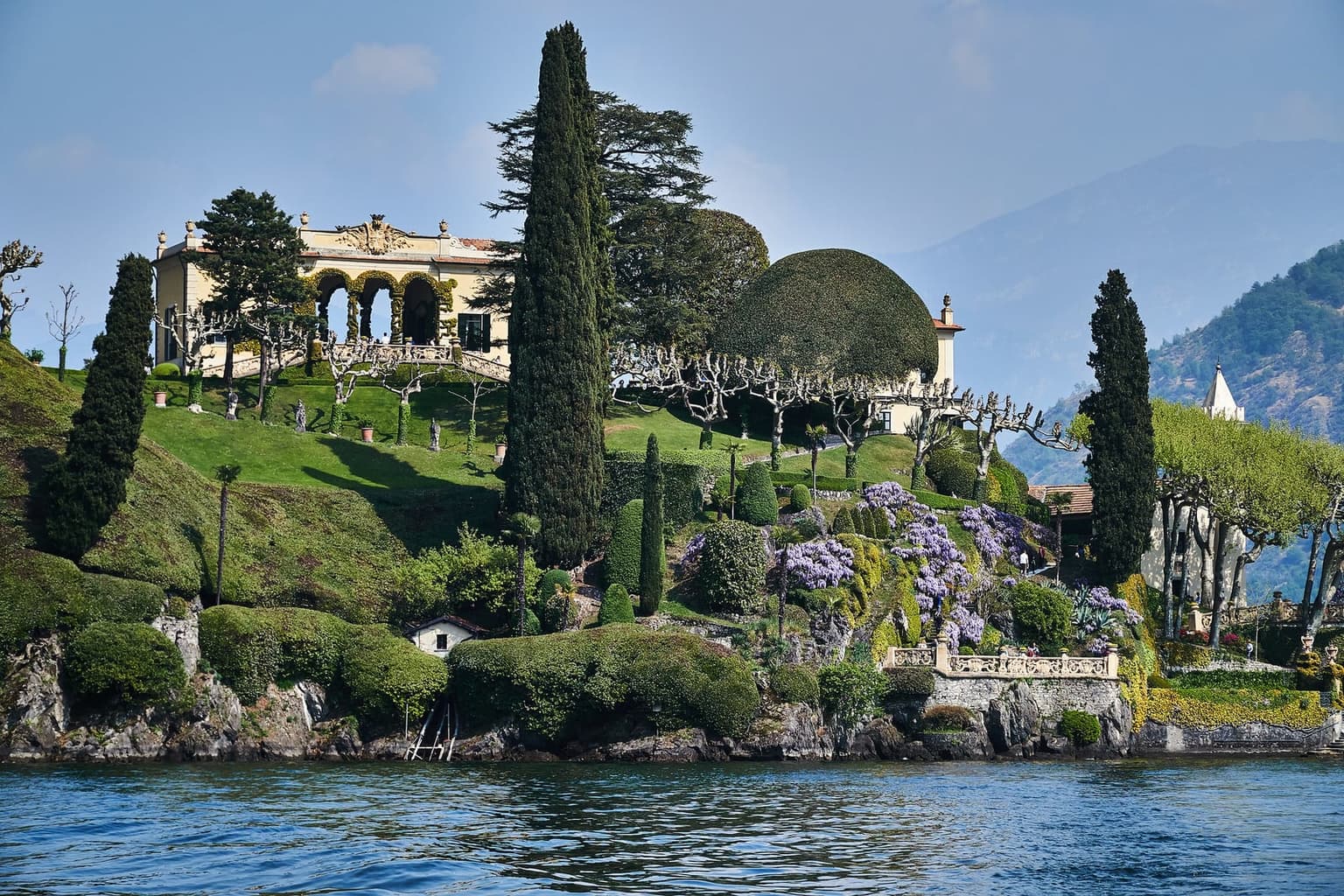
In peak season the timed entries to the big villas fill up - Balbianello especially - so if your day has no slack, a booked skip-the-line ticket earns its keep.
Confirm opening days and book Villa del Balbianello ahead
Closed Mondays and Wednesdays - park €15, villa interiors by guided tour €25
As for swimming: Bellagio has no town beach, so don't arrive planning to wade in off the promenade. The swimming happens at the lido - the Lido di Bellagio runs roughly mid-May to September - and at the few hotels with their own water access; by midsummer the water sits around 73°F (23°C), a real swim rather than a dare.
Which brings me to my favorite thing to do here that isn't a villa or a viewpoint: get out on the water on your own terms. The scheduled ferries show you the shore in a crowd and on their schedule; a small boat, rented with or without a skipper, lets you drift the villa-lined coast, cut the engine somewhere quiet, and see Bellagio from where it looks best, which is the middle of the lake. No license is needed up to 40 horsepower - the rental fleets sit exactly at that limit for that reason - and the Bellagio operators start at roughly €75 - €100 an hour for a boat seating up to six, fuel and insurance usually included. In July and August the morning slots go first, so book a day or two ahead rather than strolling up at noon. It is also the graceful way to reach a spot like Tremezzo without handing more than €150 to a one-off water taxi for the privilege.
If you have exactly one full day, here is the shape that works:
| When | What |
|---|---|
| 06:30 | Punta Spartivento and the empty lanes, before the first ferries land |
| 08:30 | Breakfast, then the back lanes and silk shops while the light is still low |
| 10:00 | Villa Melzi as it opens, the quietest ninety minutes it gets |
| 12:30 | Lunch up the stepped lanes, away from the waterfront |
| 14:30 | An hour on the water: a boat rental, or a crossing to see the town from the lake |
| 16:30 | The fifteen-minute path over the headland to Pescallo |
| 18:30 | Aperitivo on the steps as the day boats empty out |
Miss pieces of it cheerfully; the times that do the real work are the first and the last.
Across the water: easy trips out of Bellagio
Bellagio's other great luxury is that the pier works both ways. The central-lake crossings take about fifteen minutes and cost around €5.50, which turns three very different shores into one neighborhood - dinner somewhere else entirely is a genuine option here, not an expedition.
Varenna, straight across, is the one to add if you add only one: smaller and steeper than Bellagio, with a lakefront walkway hugging the cliff, the gardens of Villa Monastero, and the Castello di Vezio on the ridge above it - plus a calmer dinner scene once the day boats stop running.
Menaggio is the quiet corner of the triangle: a proper town promenade rather than a postcard, a lido for the swim Bellagio can't really give you, and noticeably fewer people pointing cameras at each other.
And for garden people the best single outing is Villa Carlotta, on the Tremezzo-Cadenabbia shore: €17.50, open 10:00 to 19:00 through the main season, with terraced botanical gardens that in late April and May, when the azaleas peak, put even Villa Melzi in the shade.
Which boat to take, the schedules and the day pass are the ferry guide's department - the one heuristic worth carrying is that the central-lake day pass starts paying for itself from about the second hop.
Driving, ZTL and parking
I'll be blunt: don't drive into Bellagio. The approach is a narrow lakeside road that clenches to a single lane through the village, parking is scarce to the point of comedy in summer, and the historic center is a camera-enforced ZTL. If you can arrive by boat or bus, do.
If you must bring a car, learn the paint. Bellagio marks its curbs by color, and the color is the rule.
| Line color | What it means | Cost |
|---|---|---|
| White | Free parking | Free |
| Blue | Paid meter | €2.50/hr, 08:00 - 20:00 daily |
| Yellow | Residents and Telepass only | Not for you (common near Villa Melzi) |
The practical answer for most drivers is to not park in the center at all. Leave the car at San Giovanni, a little south of the old town, where there's a lot outside the ZTL and a walk of fifteen minutes or so into the center. Or do the clever thing a lot of people do: leave the car across the lake in Varenna, in the parking garage by the station, and cross as a foot passenger. That turns the parking problem into a short ferry ride. In July and August even those fallback lots fill early, so if you are set on driving, come in the morning or accept that you may circle for a while and burn the time you came to spend by the water.
⚠️ Warning
Crossing into the Bellagio ZTL without a hotel booking inside the zone triggers an automatic fine of around €90, and it climbs if you're slow to pay. The cameras don't care that you were lost or only turning around. If your accommodation is inside the zone, it must register your plate in advance - confirm that with them before you drive in, not after.
The wider question of driving in Italy - how the ZTL system works in general, the tolls, and why a car is a liability rather than an asset for reaching the lake - belongs with the arrival routes. If you're still weighing whether to rent at all, read whether to drive to Lake Como and how the ZTL zones work.
When to visit
If you have a choice, come in spring or early fall. The gardens are open, the town is running at full tilt, and the crowds have not yet reached the density they hit in high summer. Here is the year at a glance.
| Season | Crowds | What's open | Feel |
|---|---|---|---|
| Spring (Apr - Jun) | Building, still manageable | Gardens open, everything running | The sweet spot; flowers, gentler light |
| Summer (Jul - Aug) | Peak, heaviest | Everything, ferries busiest | Hot and crowded; the midday crush at its worst |
| Fall (Sep - Oct) | Thinning out | Most open, tapering late October | Mild, mellow, far fewer people |
| Winter (Nov - Mar) | Sparse | Many hotels, restaurants and some gardens closed | Quiet and lovely, but much of the town is shut |
The short version: spring is the pick, with the villa gardens at their best and the ferries not yet mobbed. Summer is glorious and packed in equal measure - if July or August is your only window, spend the middle of the day where the crowd can't follow, inside a villa's timed entry or out on a rented boat, and keep the lanes for morning and evening. Fall keeps most of the good weather and sheds most of the people, which is a fine trade. Winter rewards low expectations: beautiful, empty, and with a good share of the place closed for the season. That is the Bellagio version; for the whole lake - weather and swimming water month by month, how the crowds move, what closes when - see my guide to the best time to visit Lake Como.
One practical note whatever the month. The rail line up the eastern shore toward Varenna occasionally shuts for track maintenance in summer, with slower replacement buses filling in and an extra hour or so added to your trip. It has happened in recent years and can happen again, so check your specific train is genuinely running before you build a whole day around catching it.
Where and what to eat
The rule for eating in Bellagio is the rule for enjoying it: get off the waterfront. The restaurants with the best lake views and the laminated photo-menus in four languages are, almost without exception, charging the most for the least. They don't need repeat customers; the ferry delivers a fresh crowd every hour. Climb the stepped lanes a few minutes and the ratio flips - smaller rooms, shorter menus, and prices set as if you might come back tomorrow. A trattoria up the steps, like San Giacomo, is the type to aim for.
💡 Tip
The quickest tell for a tourist trap here is a photo menu with English at the top and a host outside waving you in. The quickest tell for the opposite is a short menu, in Italian, that changes with what the lake and the season are giving.
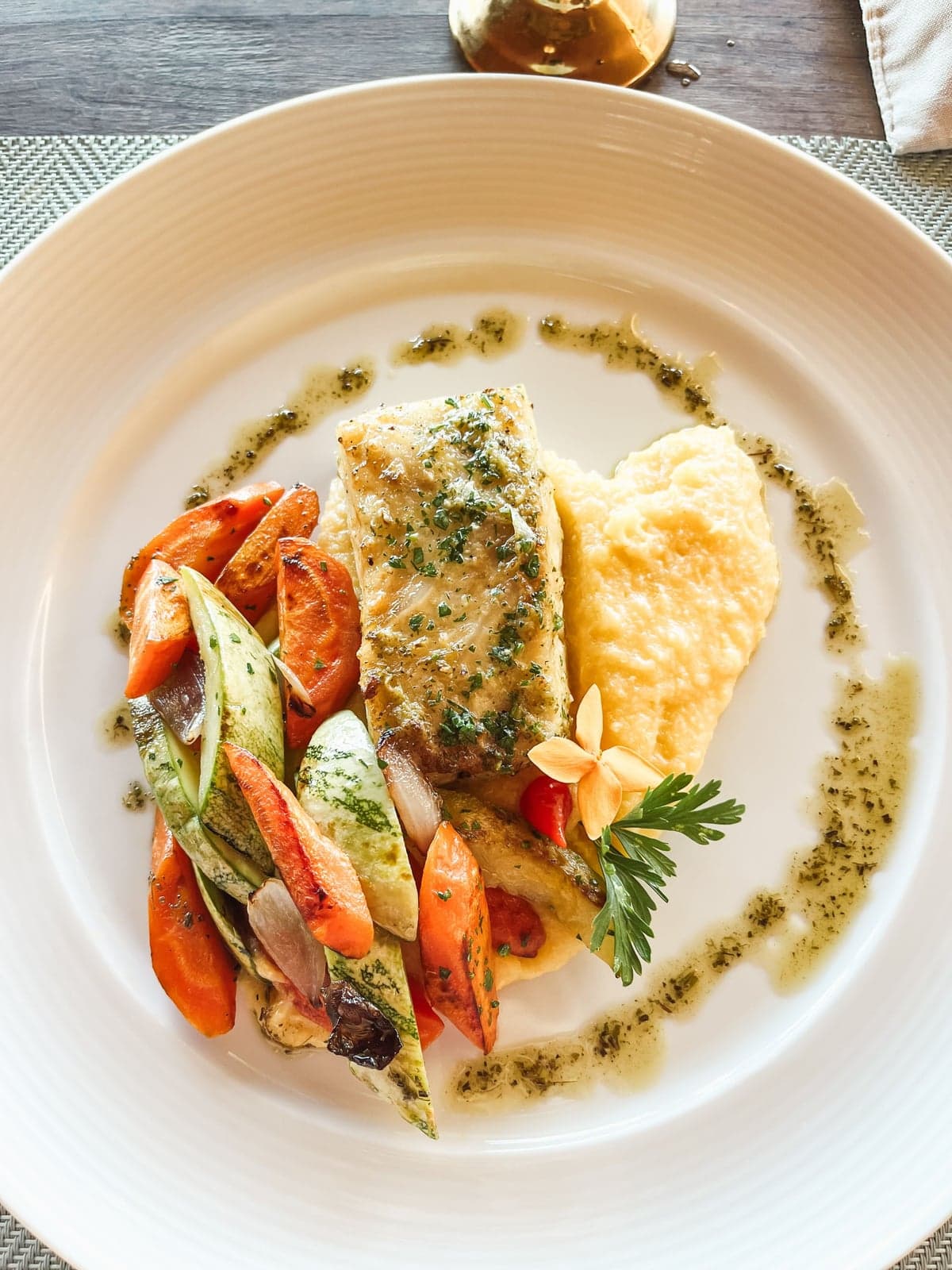
Order what the lake grows up to, because Como is freshwater and this is not the coast. The local specialties are lake fish: look for missoltini, the sun-dried, salted agoni served with polenta, alongside lavarello and the risottos that Lombardy does properly. It is honest, quiet food rather than fireworks, and it suits the town.
Gelato is better off the front too; the good places sit a street or two back from the piers, same as the food.
Then save one evening for the thing Bellagio does better than almost anywhere: an aperitivo as the day boats pull out and the light turns gold on the water, taken on a set of stone steps with a spritz and something to pick at. It is the reward for timing the day right - the crowds gone, the town handed back to you, and the last ferry, if you're not staying, still comfortably ahead of you.
Frequently asked questions
- Is Bellagio worth visiting, or is it too crowded?
- Worth it, with one condition: don't judge it by the midday crowd. See it early or late, or stay the night, and it's one of the loveliest towns on the lake. Step off the noon ferry in August and you'll wonder what everyone sees in it.
- Does Bellagio have a train station?
- No. There is no rail line to Bellagio at all. You take a train to Varenna-Esino or Como and finish the trip by ferry or bus.
- How much time do you need in Bellagio?
- One unhurried day covers the town, Villa Melzi and Punta Spartivento. Stay a night if you can - the empty early morning and the golden evening are the best of Bellagio, and day-trippers see neither.
- Can you swim in Bellagio?
- Yes, at the lido rather than off a beach - Bellagio has none. The Lido di Bellagio runs roughly mid-May to September; for a proper swimming afternoon, the lido across the water in Menaggio is the better pick, fifteen ferry minutes away.
- Do you need a car in Bellagio?
- No, and one is more hindrance than help - the center is a ZTL with automatic fines and almost nowhere to park. Come by ferry and get around the mid-lake towns by boat.
So: come by boat, sleep in town or arrive early and leave late, order the lake fish up a back lane, and give Bellagio the hours when the day-trippers aren't there. Do that and the Pearl of Lake Como turns out to earn the name - which, given how rarely that kind of phrase means anything, is quietly worth the trip in itself.