George Mandrovny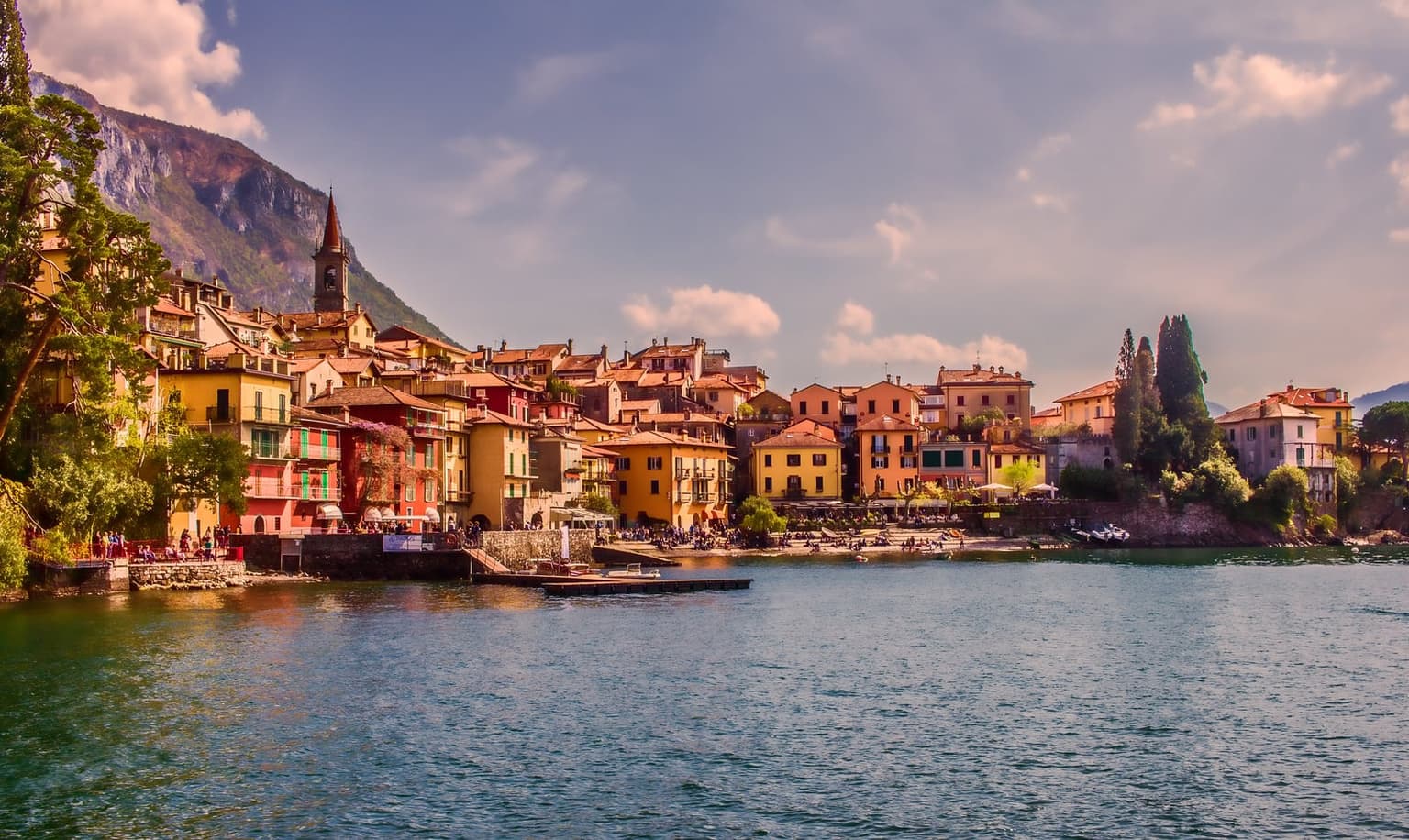
Varenna is the village people picture when they picture Lake Como, usually without knowing its name. Pastel houses stacked up a near-vertical hillside, a ferry dock at the bottom, and a lakeside path that someone, with a completely straight face, named the Walk of Lovers. It's the prettiest base on the lake and one of the easiest to reach by train, which is a rarer combination than it sounds.
It's also built almost entirely on stairs, routinely confused with a different place called Como, and busy enough now that showing up without a plan can mean an hour in the sun waiting for a boat while someone in an evening gown rearranges herself for a photo beside you. (I'm not inflating that last part for comic effect. We'll come back to it.)
So this is the plan. How to get there without the classic mistakes, how to work the ferries, where to stay so you're not dragging a suitcase up forty steps, and what's actually worth your time once you arrive. Get the logistics right and Varenna is a genuine joy. Get them wrong and, as ever, the most beautiful sunset in Italy can do nothing for you at all.
First, get the geography right
The single most expensive mistake on Lake Como is made at the hotel-booking screen: "Lake Como" and the town called Como aren't the same place, and you almost certainly want the lake. Como the town sits at the southern tip; the scenery everyone comes for is the middle, where the lake forks - Varenna on the eastern shore, Bellagio on the central headland, Menaggio to the west, all a short ferry hop apart. Book "Como" by mistake and you weld a two-hour round-trip commute onto every single day.
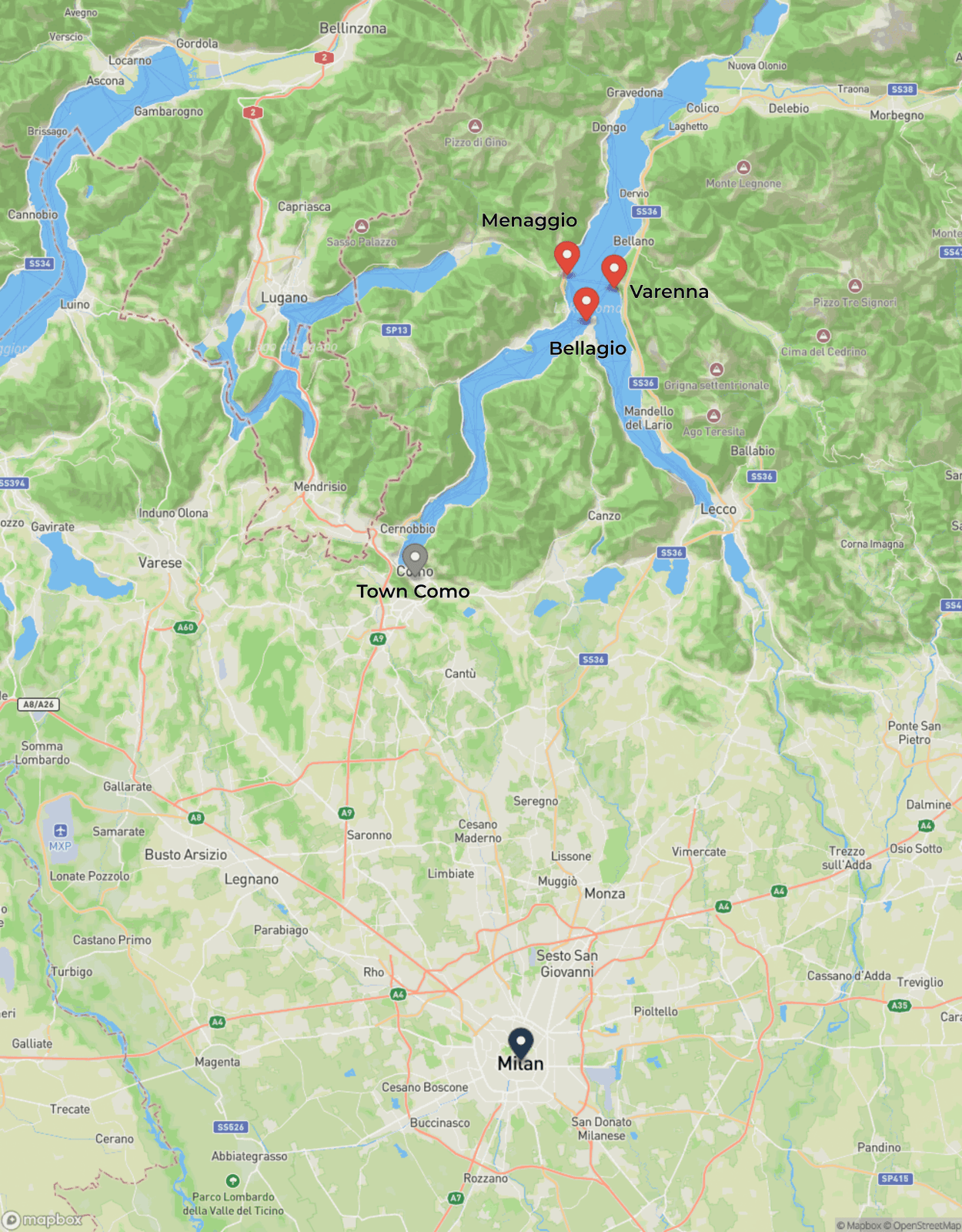
Varenna's quiet edge is that it's on the rail line - Bellagio, for all its fame, has no station at all - which is why a village this small keeps such a busy dock, and why the rest of this guide quietly assumes you will arrive by train.
Getting there and around
Reaching Varenna is one of the easiest trips on the lake, and moving around once you arrive is easier still. Both have their own full guides, so here is only the part you need.
From Milan, take the Trenord regional train from Milano Centrale to Varenna-Esino: roughly hourly, about 65 minutes, around €7.40 in second class. The station sits above the village, a five-minute walk down to the water. From the airport, ride the Malpensa Express into Milan first, then catch that same train - which Malpensa route fits which town walks you through that choice, including the passport-line timing that decides when to buy tickets. Platforms, departure boards and the rest are in the full guide to getting to Lake Como from Milan.
Once you're here, the boat is your car. The dock is the center of village life, and the mid-lake triangle of Varenna, Bellagio and Menaggio is all short crossings, about fifteen minutes apiece and frequent enough that you can largely show up and go. The boat types, the fares and the day pass that pays for itself are all laid out in how the Lake Como ferries work. And if you arrive by car anyway, leave it in the parking garage by the station for the duration - down in the village it has nowhere to go, and the boats do everything it would.
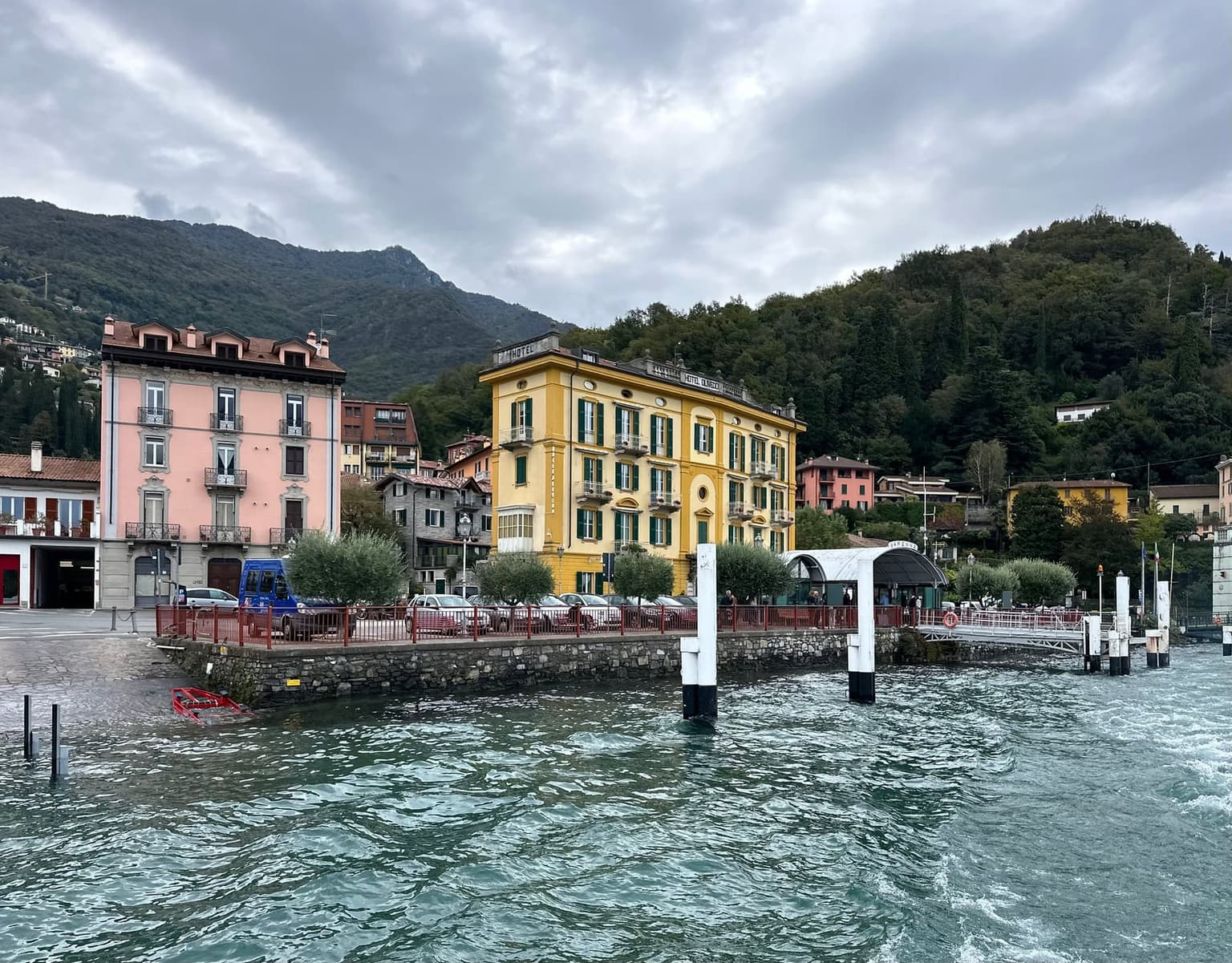
Two Varenna-specific things are worth carrying with you. The walk from the station down to your lodging is stairs and old cobblestones, often plenty of them, so pack light or your first half hour in paradise goes on sweating a suitcase down them one wheel at a time. And the regional train ticket has a rule that trips people up:
💡 Tip
Do not pre-book the regional Milan-Varenna train for a specific departure. The fare is fixed, the seats are unreserved, and it never sells out, so a delayed flight just turns a pre-booked ticket into wasted money. Buy it day-of in the Trenord app or at the red machines, and if it's a paper ticket, validate it before boarding or you risk a fine.
Where to stay in Varenna
The first rule of sleeping in Varenna is one you already half know from the luggage warning: stay near the dock. The village climbs steeply, and the difference between a room two minutes from the waterfront and one near the top is the difference between a vacation and a daily stair-climbing event with bags. If anyone in your party has balky knees or you're traveling with real luggage, treat proximity to the dock as the single most important filter, ahead of view, ahead of price, ahead of almost everything.
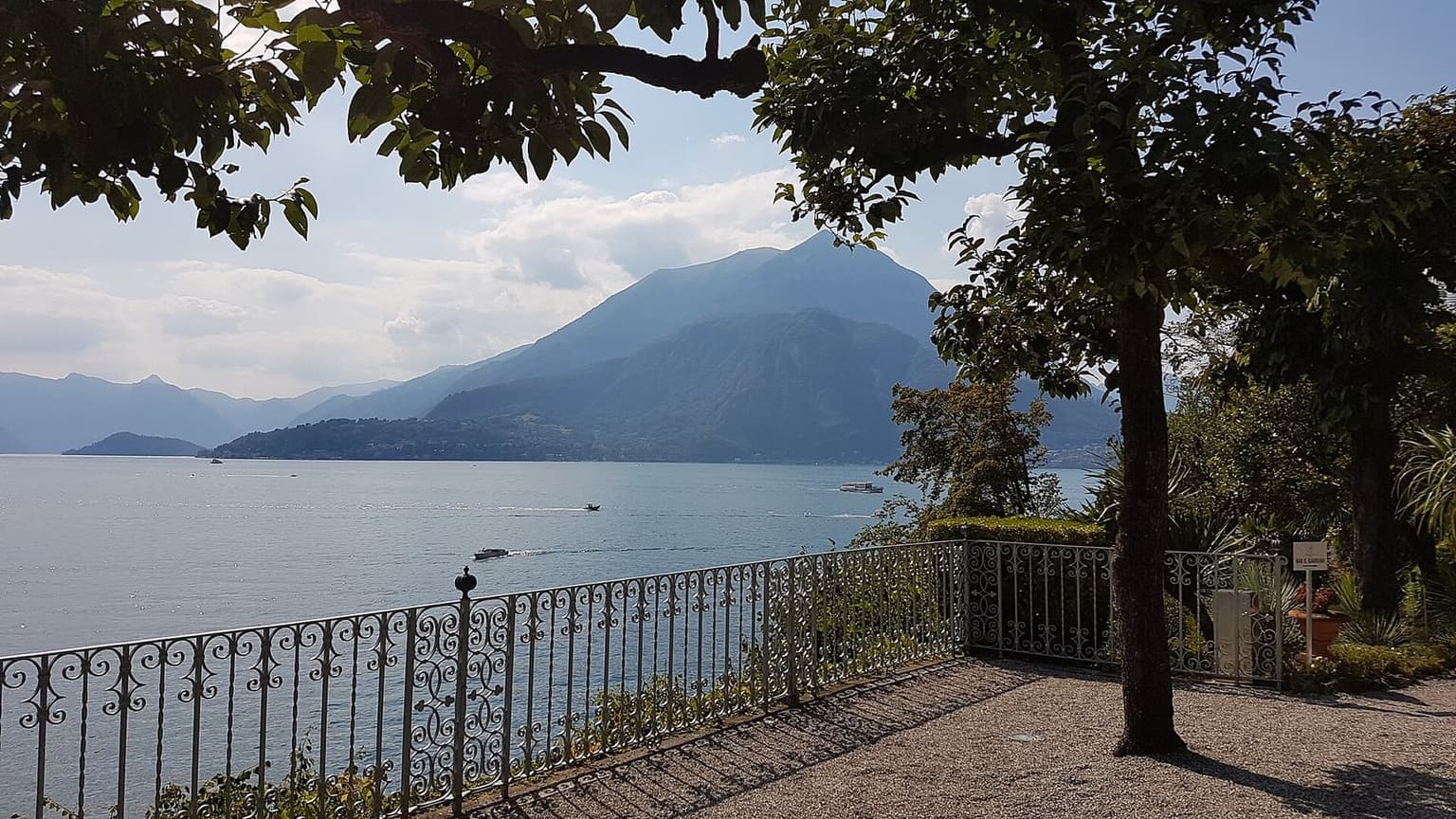
After that it is the familiar trade-off. The lake-view rooms are wonderful and priced as though everyone has worked that out, which they have. The rooms a lane or two back, facing the village rather than the water, cost noticeably less and are often quieter, because the waterfront promenade has a way of staying lively well into the evening. Decide honestly whether you will spend enough waking time in the room to pay for the view, or whether you would rather have it as a place to sleep and spend the difference on dinner.
Now the part nobody enjoys hearing. Varenna has been thoroughly discovered, and prices have followed: if you knew the lake a few years ago, brace yourself, because around €280 a night is now the reasonable middle, not the splurge. Two things follow from that. Book early, because the good-value rooms near the dock go first and some properties don't even open their calendars until late in the year. And read the cancellation terms before you commit, because full free-cancellation is harder to find here than almost anywhere else I book in Italy, and "non-refundable" on a trip this far ahead is a real gamble.
When you search, set the map to Varenna itself and filter hard: distance to the dock, then free cancellation, then your honest budget. A simple value B&B near the station can be all you need; it lets you hop the public ferries for a few euros instead of paying for a private water taxi, which can run well over €150.
If stairs are a genuine problem and nothing suitable comes up near the Varenna dock, consider flatter, more spread-out Menaggio across the water instead. It's less postcard-perfect, but your knees will write you a thank-you note.
Now some specific names, each with its catch. Right by the water, Hotel du Lac has the location, lake-view terraces, and, helpfully given all those steps, staff who will carry your bags up; it's a splurge and books out early. For something gentler on the wallet, Albergo Beretta sits close to both the train and the ferry with lake views, and Villa Varenna, up near the station, still earns its strong reviews and good-value rooms (no elevator, so be ready to haul bags up a flight or two). One to weigh carefully: the dock-front Hotel Olivedo couldn't be more convenient, but it isn't quiet - ferry horns and waterfront traffic start around 7am.
My own pick, if you can stretch to it, is Hotel du Lac for the balcony straight over the water; on a tighter budget I book Villa Varenna and simply make peace with the stairs. The Olivedo I'd only take if noise never wakes you - that first ferry horn lands right under the window.
The village: old town, churches and the Walk of Lovers
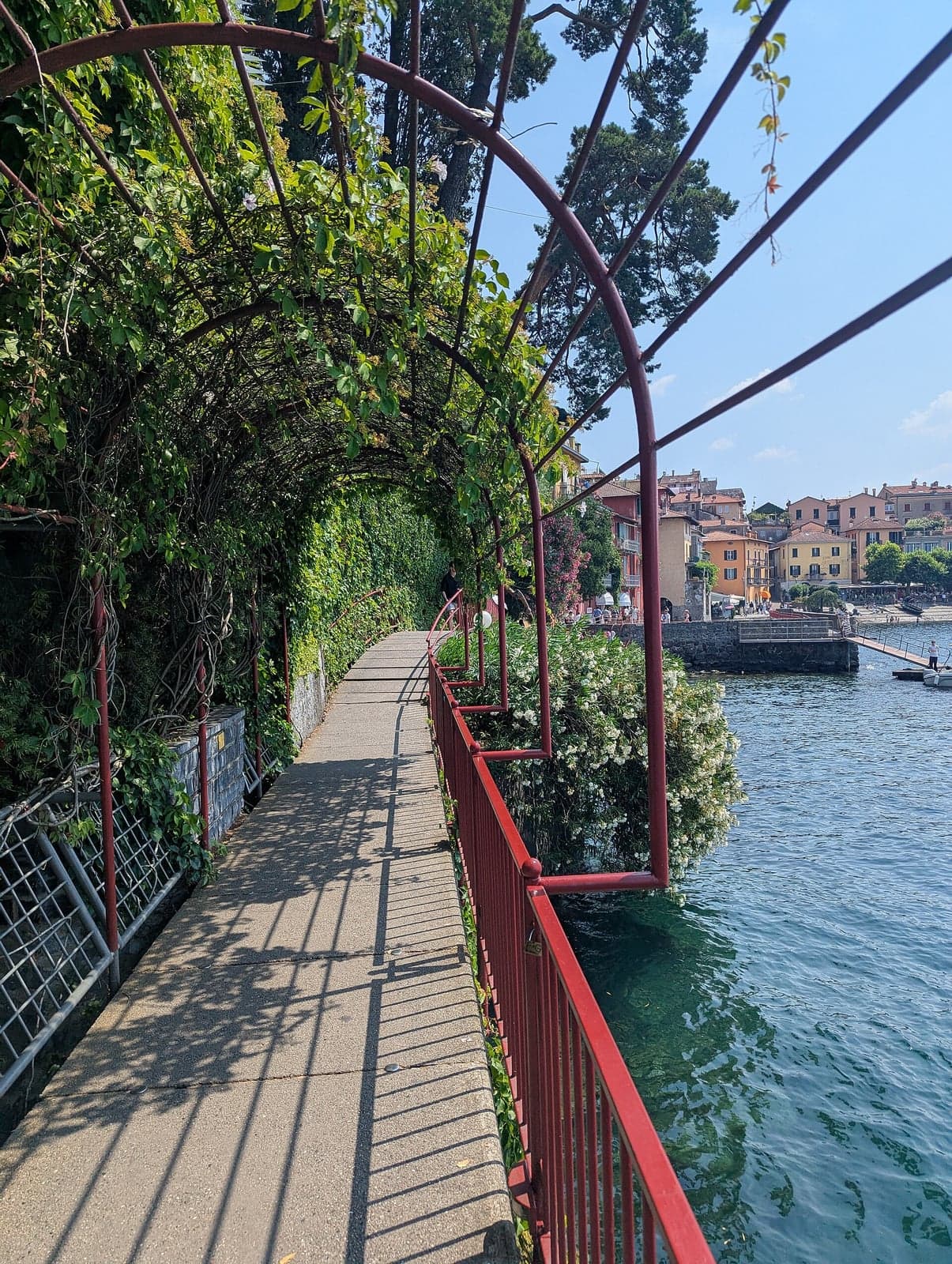
The first thing to do in Varenna is, gloriously, almost nothing. The village is small enough to absorb in a slow afternoon, and the centerpiece is the Passeggiata degli Innamorati, the Walk of Lovers, a footpath pinned to the cliff just above the water that connects the ferry dock to the old center. It's short, it's faintly absurd in its romance, and it's genuinely lovely, especially in the low light of early evening when the day-trippers have started thinning out.
Beyond it, the village itself is the attraction. Wander up into the contrade, the steep stepped lanes between tall, color-washed houses, and down to Riva Grande, the pebble strand and little harbor where the fishing boats still pull up. There's no single sight to check off here; the pleasure is letting the village be a village for an hour.
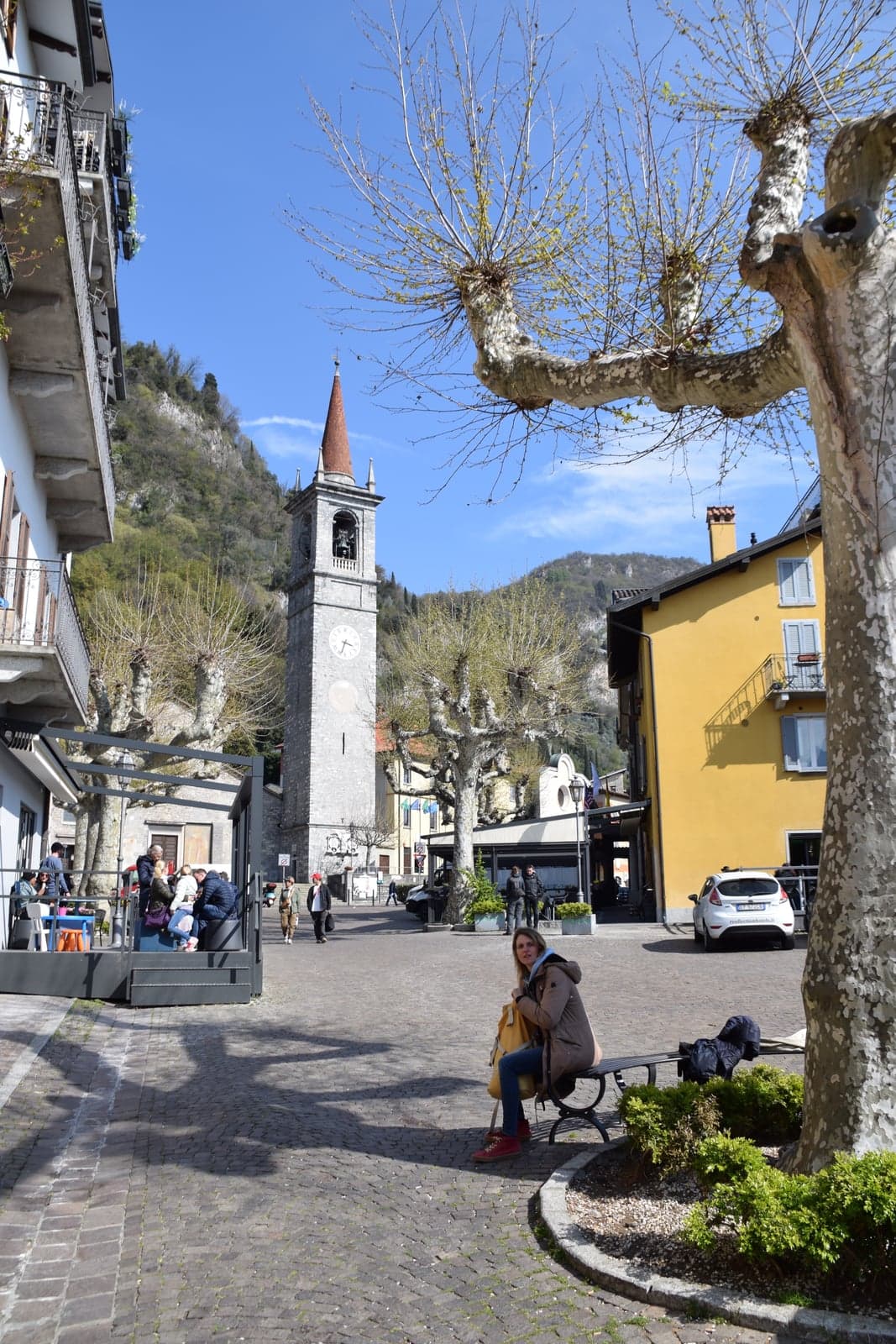
The heart of it is Piazza San Giorgio, the square set back a little above the water. The Church of San Giorgio on it dates from the fourteenth century, a fusion of Romanesque and Gothic with a set of late-medieval paintings inside; across the square, the much smaller Church of San Giovanni Battista is older still and keeps faded Byzantine frescoes. Ten quiet minutes well spent between the two.
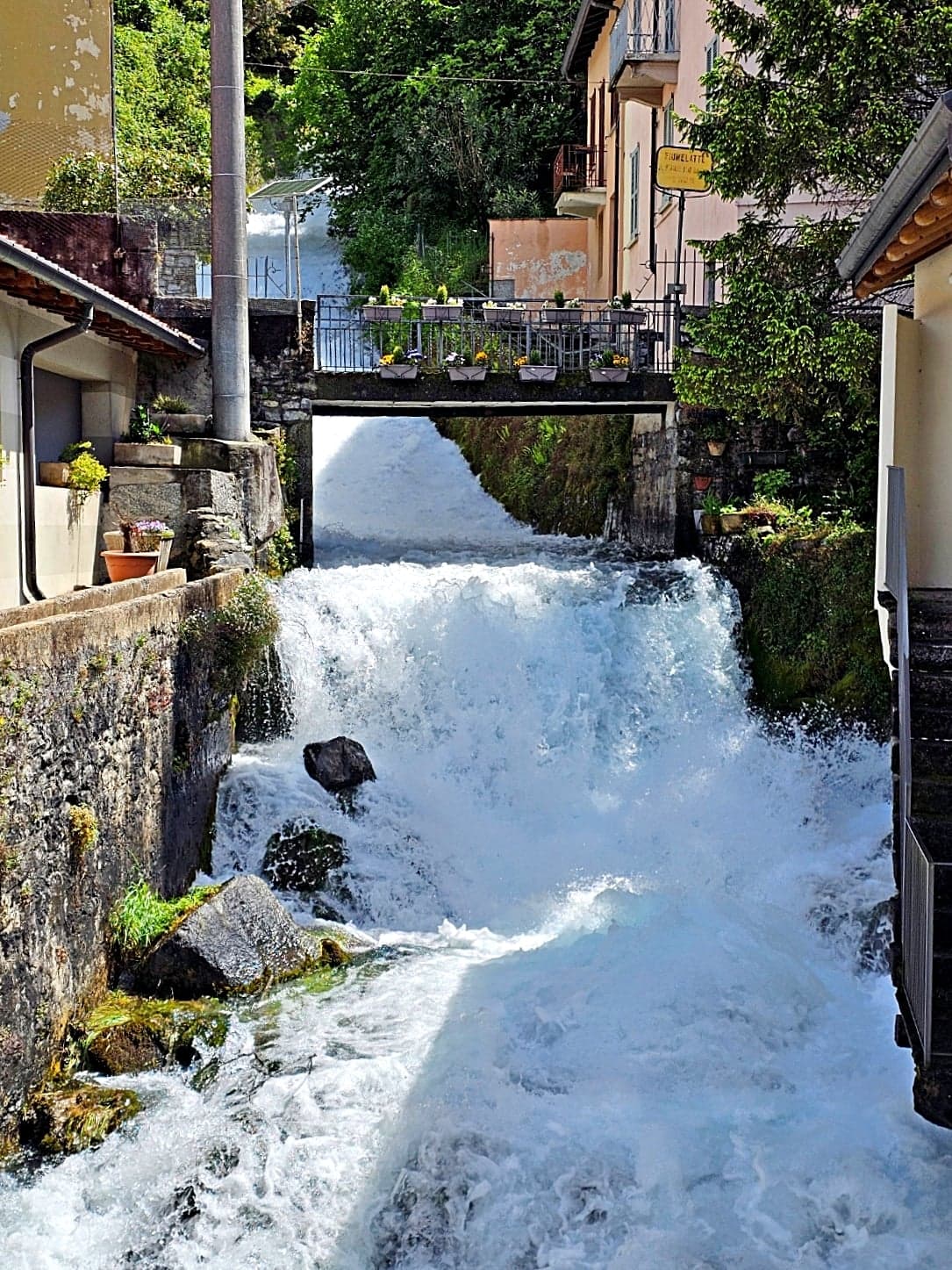
And when the day-trippers thicken on the waterfront, walk away from them. A kilometer south lies Fiumelatte, a hamlet named for what's said to be one of the shortest rivers in Italy: a short, milky-white torrent that runs only from roughly late March to October and lies dry the rest of the year. A twenty-minute climb reaches its source and a view straight down the lake to the Bellagio promontory; Leonardo da Vinci himself came to puzzle over where the water went. You can string it together with Castello di Vezio along the Sentiero del Viandante, the old lakeside path that has linked these villages for centuries, into an easy half-day on foot.
The villas, the castle and the water
Side by side at the southern end of the village stand two villas. Villa Monastero is the one to prioritize: a former monastery turned house museum with a long, narrow botanical garden running right along the lakefront, and you can pay just for the garden or add the house. The garden ticket is around €13, the combined garden-and-house ticket around €15, with cheaper rates for under-25s and free entry for young children. The catch is hours: it keeps generous summer hours but cuts back sharply off-season, sometimes to weekends only, so check before you build a day around it.
Check current hours and tickets on the official Villa Monastero site
Garden around €13, garden and house around €15 - hours cut back sharply off-season
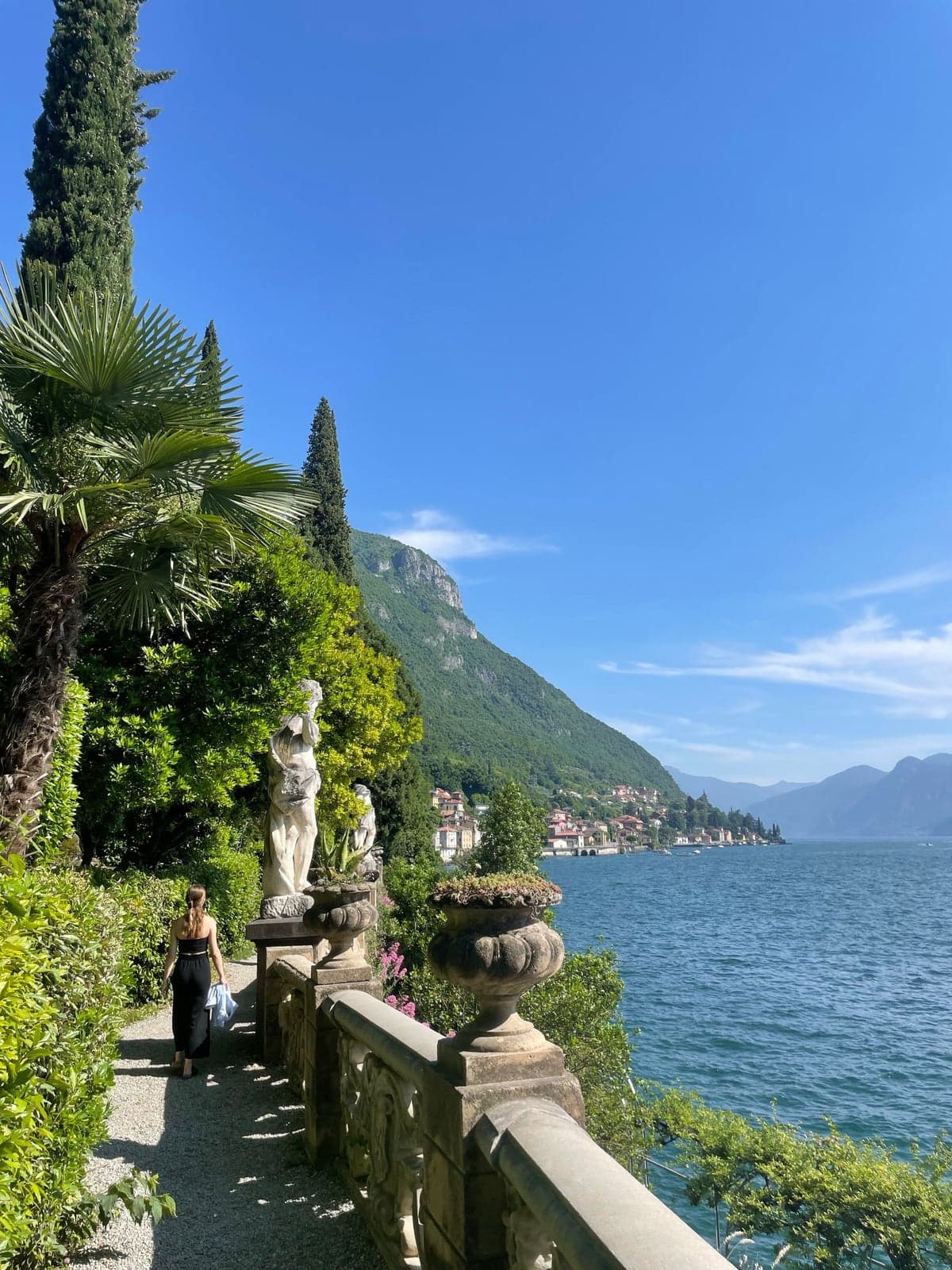
Next door, Villa Cipressi has its own terraced gardens tumbling down to the water, smaller and quieter, and a pleasant pairing if you have the appetite for a second one. The garden runs about €13 (€7 for under-25s, free for children), and there is a combined ticket covering both Villa Cipressi and Villa Monastero's gardens for around €25, sold only on the days the Villa Monastero garden is open.
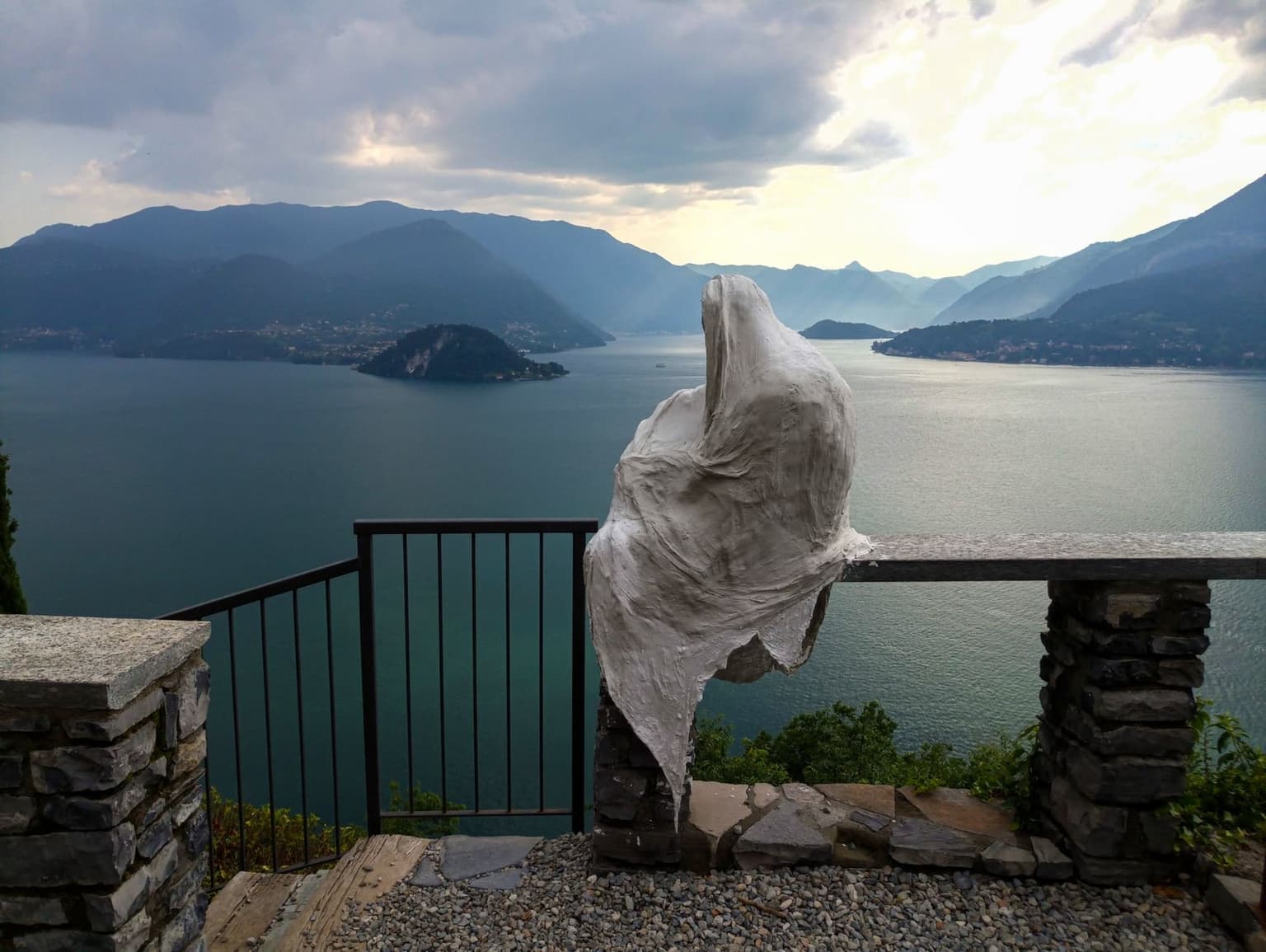
For the best view on this stretch of the lake, climb to Castello di Vezio, the ruined tower on the hillside above the village. It's about thirty minutes up on steep, uneven cobblestones, so wear actual shoes and not the sandals you packed for the promenade. Entry is €7, or €4 reduced, open daily from March 1 to December 1 and weekends through the winter when the weather cooperates. At the top you get a panorama over the whole middle of the lake and a scattering of ghostly plaster figures in the garden that are either charming or unsettling depending on your mood. The old underground chambers have been restored and are open to walk through. One thing older guides still promise that you won't find is the falconry display, which closed for good in October 2022. It earns the sweat anyway.
And if all that has you wanting the water rather than a view of it, you don't need a hotel pool. A few minutes north of the dock there's a small free pebble beach where locals swim, modest but real, and a fine place to cool off when the afternoon heat settles into the stone.
It's where I go to cool off - no ticket, no sunbeds, just the lake and a handful of locals who have known about it for years.
Day trips: Bellagio and Menaggio
This is where basing yourself in Varenna pays off: the rest of the mid-lake is a short ferry ride, not a day's expedition. The classic loop is Varenna to Bellagio to Menaggio and back, three short hops you can stitch into an afternoon on a day pass (the ferry guide has the times). Your one advantage over the day-trippers is simple: you're already here, so cross early or late and skip the midday crush. What to actually do once you land, and where the great villas really are, is all in the Bellagio guide.
⚠️ Warning
Check the last evening ferry from Bellagio back to Varenna before you settle in for dinner over there. In high summer the final car ferry runs late, around 22:00, but in shoulder season and winter it can leave as early as roughly 20:30 - miss it and you face an expensive taxi around the lake or a night on the wrong shore. Confirm the exact time on the day's schedule at the dock.
If juggling ferry schedules on the fly isn't your idea of a vacation, this is the one part of a Varenna stay where a guided day genuinely earns its keep: someone else owns the logistics, and you just show up and look at the lake.
When to visit (and what is closed when)
Varenna has two lovely stretches, late spring and early fall, and a couple of traps dressed up as them. Late April through June gives you gardens in full flower and a lake freshly woken for the season, at the cost of crowds that build steadily toward summer. September is the one people get wrong. It looks like the quiet shoulder, the clever traveler's secret, and it simply is not: the lake stays busy well into the month, there are harvest festivals, and track work on the rail line has a habit of appearing just when you want the train. Treat September as high season with better weather, and don't assume mid-July is early enough to be sorting a mid-September room. And those are lake-wide patterns, not Varenna quirks - the month-by-month trade-offs between weather, crowds and what is open are worked through in when to visit Lake Como, season by season.
Go the other way, into mid-November, and you hit the opposite problem. The crowds vanish, which sounds perfect, but so does much of the village: a good share of Varenna's restaurants and hotels close for the winter, and a romantic off-season break can turn into a chilly walk past shuttered doors. If you go late, check that your hotel and a couple of restaurants are actually open before you commit.
The crowds, when they come, are now a thing in themselves. On a busy day Varenna can feel less like a village and more like a film set, complete with people lining up to photograph each other in outfits chosen for exactly that - the evening gown by the ferry dock, as promised, and she is rarely alone. The honest fix is unglamorous: come on weekdays, be out early, and stay overnight so you get the village in the soft hours after the boats have gone.
Whichever season you pick, you'll be checking things on the move - the day's ferry board, the last boat back, whether a restaurant has reopened for the season. Set up an eSIM before you arrive so you have data the moment you land; buying tickets and checking live schedules isn't fun while hunting for a signal at a dock.
Set up an Italy eSIM before you arrive
For the ticket apps and live schedules - not something to sort out while hunting for signal at a dock
Where and what to eat
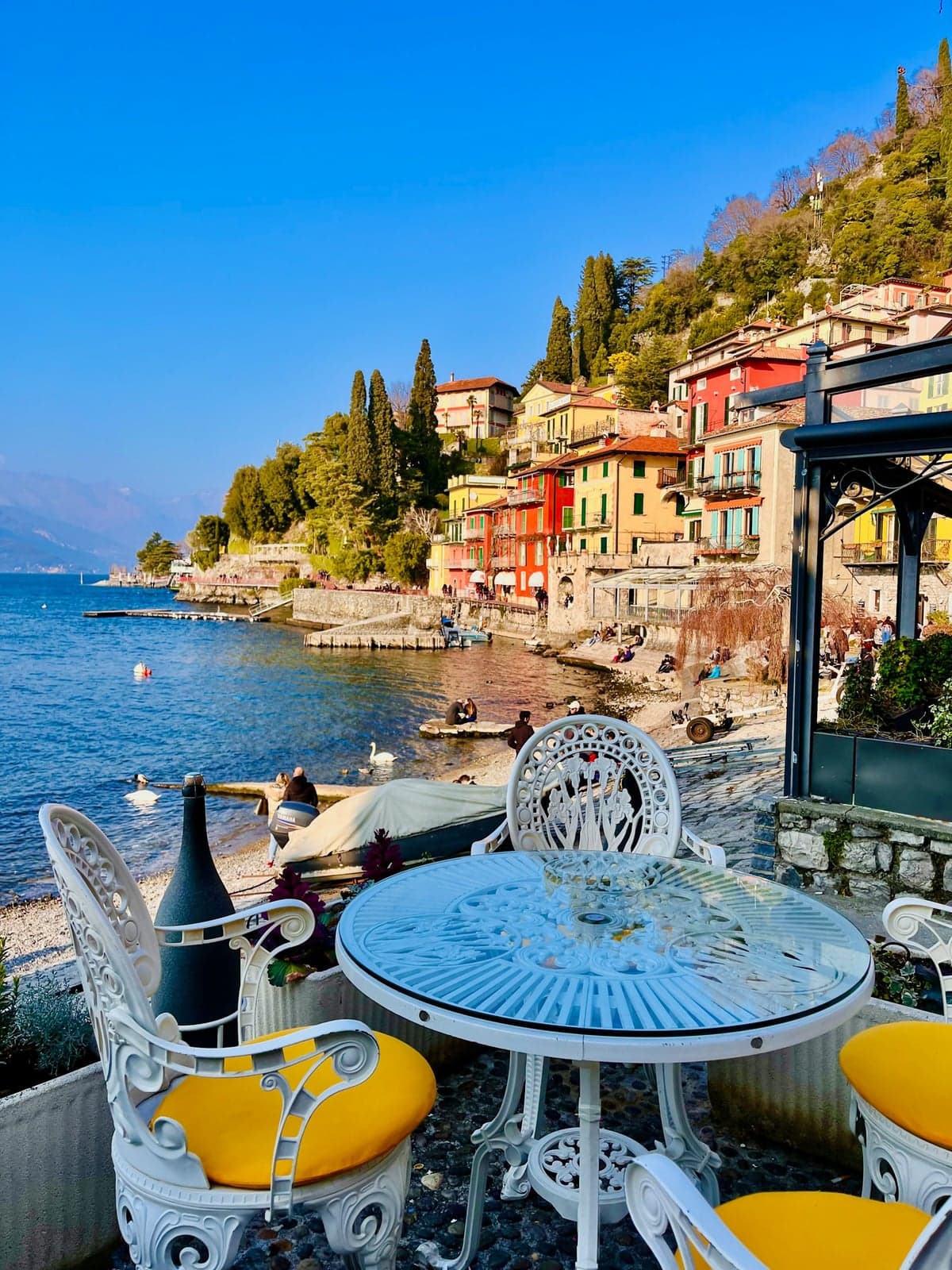
The rule for eating well in Varenna is the same as in most beautiful small places: the closer a restaurant sits to the dock, and the more its menu is printed in four languages with photographs of the food, the less you should expect of it. Those places exist to feed people who have ninety minutes off a boat and will never return. You are not them. Walk up into the lanes instead, where the cooking is for people who might actually come back.
What to order is lake, not sea. The Larian kitchen runs on freshwater fish: missoltini, sun-dried salted shad laid on polenta with oil and vinegar; lavarello, the lake whitefish; risotto con pesce persico, the local perch risotto; and pesce in carpione, fish kept in a wine-and-vinegar marinade. For the full ritual, a few places still do the toc - a communal cauldron of polenta everyone digs into together.
A few that come up again and again from people who know the village. Il Cavatappi is a true hole-in-the-wall, a handful of tables and a short seasonal menu, exactly the kind of place that doesn't survive being treated as a tourist conveyor belt, so reserve. Osteria Quatro Pass, tucked into the back lanes, is the spot for a seafood lunch away from the waterfront shuffle. For the ritual that matters most, an aperitivo before dinner, Aperitivo Et Al lets you sit out on the stone steps with a spritz and watch the village go by. And the best gelato isn't at the dock at all; walk into the village to La Passerella or Bon Bon, where it's in a different league.
One small thing that catches first-timers: most Italian restaurants add a coperto, a small per-person cover charge, to the bill. It's normal, it's not a scam, and it's not a tip. Tipping on top is appreciated but modest, nothing like the percentages you may be used to at home.
💡 Tip
The small, good restaurants in Varenna have only a handful of tables and fill up days ahead in season. Decide where you want to eat and book it before you arrive, not the night of.
If you make me choose: Il Cavatappi for dinner - book it, it really is that small - and Osteria Quatro Pass for a seafood lunch out of the crowds. And I walk up for the gelato every single time.
Frequently asked questions
- How do you get from Milan to Varenna?
- The Trenord regional train from Milano Centrale to Varenna-Esino, running about once an hour. Seats are unreserved and it doesn't sell out, so buy the ticket the day you travel rather than pre-booking a fixed departure.
- Is Varenna a better base than Bellagio?
- For most people, yes. Varenna is smaller, more walkable, and quieter in the evening once the day-trippers leave - and the train brings you straight to it, no car or ferry transfer needed. Bellagio is grander and busier, and reaching it always means a boat.
- Do you need a car in Varenna?
- No, and you're better off without one. The train gets you in and the ferries get you around. Driving means contending with Lake Como's narrow lakeside roads, scarce parking, and the ZTL restricted-traffic zones that quietly issue fines to tourists who wander into them. If you do arrive by car, leave it in the parking garage in Varenna rather than trying to take it onto a ferry.
- How many days do you need in Varenna?
- Two nights is the sweet spot. That gives you one unhurried day in the village itself, the villas and the climb to Vezio, and a second day to ferry over to Bellagio and Menaggio without racing the last boat home. Anything less and you're effectively just another day-tripper.
Varenna is one of those places that punishes the rushed and rewards the patient. Get the train right, respect the ferry schedule, sleep near the dock, and go out into the village in the early light before the boats arrive, and it gives you the lake almost everyone else only photographs. The rest is just standing on the Walk of Lovers with a gelato that is better than it has any right to be, watching the water, in no hurry at all.