George Mandrovny
Is Naples worth staying in, or just a day?
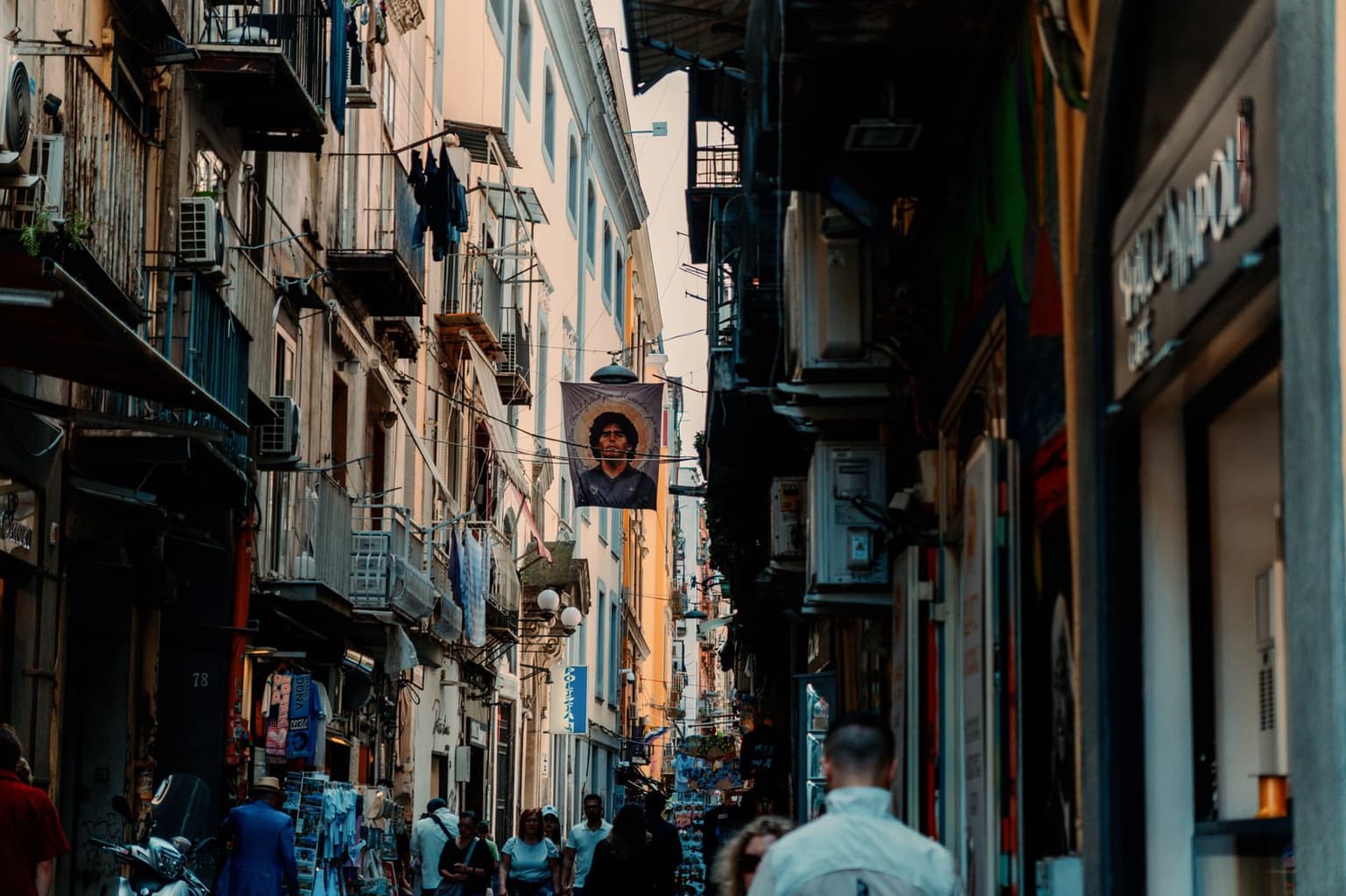
Give Naples two or three nights if you like a loud, lived-in city whose life happens on the street; if that sounds like an ordeal, one well-planned day covers the essentials. Either way, the best things to do in Naples, Italy, run on a calendar:
- Book the Veiled Christ first. Booking at the Cappella Sansevero is mandatory for every visitor, and the box office sells only what is left online. The catacombs and the Bourbon Tunnel need booking too.
- Two weekly closing days. Tuesday: the Veiled Christ chapel, MANN (the archaeological museum), the Certosa di San Martino and the Castel Sant'Elmo museum. Wednesday: the Palazzo Reale, the Capodimonte museum and the catacombs.
- The Montesanto funicular is out. It has been closed for an overhaul since May 15, 2026, with no reopening date; the Centrale and Chiaia funiculars still run up to the Vomero.
The case against Naples is real, and it is a case about grit, not about the sights. The chapel, the museum and the catacombs would headline any city. Naples is a city you take to or you don't, and the street decides it: life here happens in public, at full volume, and mostly in your way. Whether it is safe is its own question, answered further down with where to sleep.
I gave Naples three nights, and two full nights is the least I would give it. One day ticks off the essentials, but in this city it mostly leaves you tired from the noise. Two nights give you time to get used to the pace, and to fit in Vesuvius without rushing it.
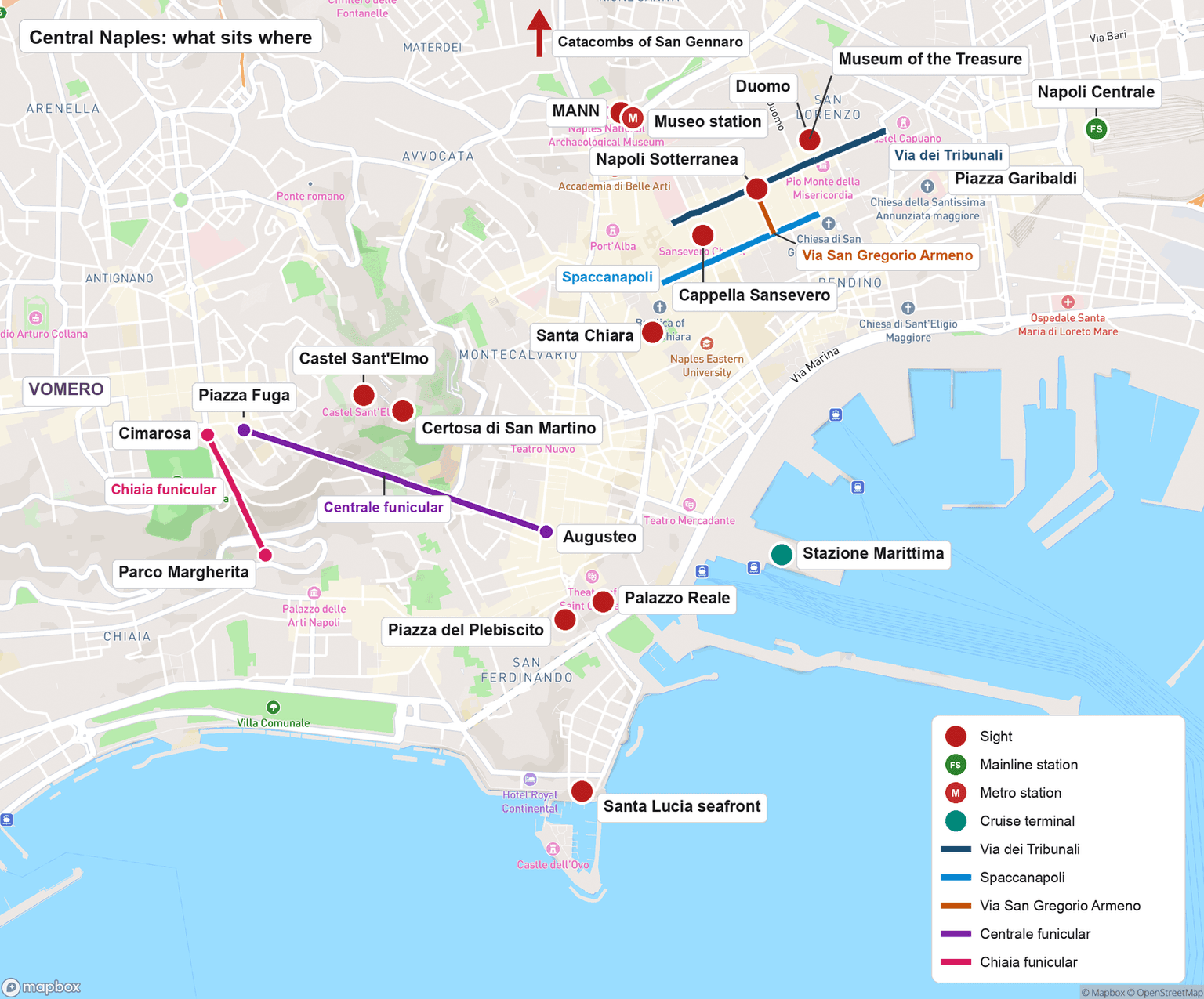
On the map, the old center, MANN and the Veiled Christ sit close together, and they are. But Naples is hilly, so check any walk on a maps app before promising it to your feet. The Vomero sits above it all, a funicular ride up.
| Your time | Spend it on |
|---|---|
| One day | Spaccanapoli and Via dei Tribunali, the Veiled Christ, a pizza |
| Two days | Add MANN and one way underground |
| Three or four days | Add the Vomero, the waterfront after dark, a day at Pompeii or Herculaneum |
The rest of this article is that table, argued: the streets first, then what to book, then where to sleep.
Spaccanapoli and Via dei Tribunali: the street life that decides it
The free things to do in Naples, Italy, start with Spaccanapoli and Via dei Tribunali, the center's two old streets. The attraction is not a building: it is the city's business, done in the street and the alleys instead of behind doors. Walk both slowly, at least once with nowhere to be. This is where you find out which side of the argument you are on.
Between them runs Via San Gregorio Armeno, the street of workshops selling handmade figures for the presepe, the nativity scene. In the run-up to Christmas it is at its fullest: last season the city made it one-way for pedestrians on the busiest days, and those dates are in my guide to Christmas markets in Italy.

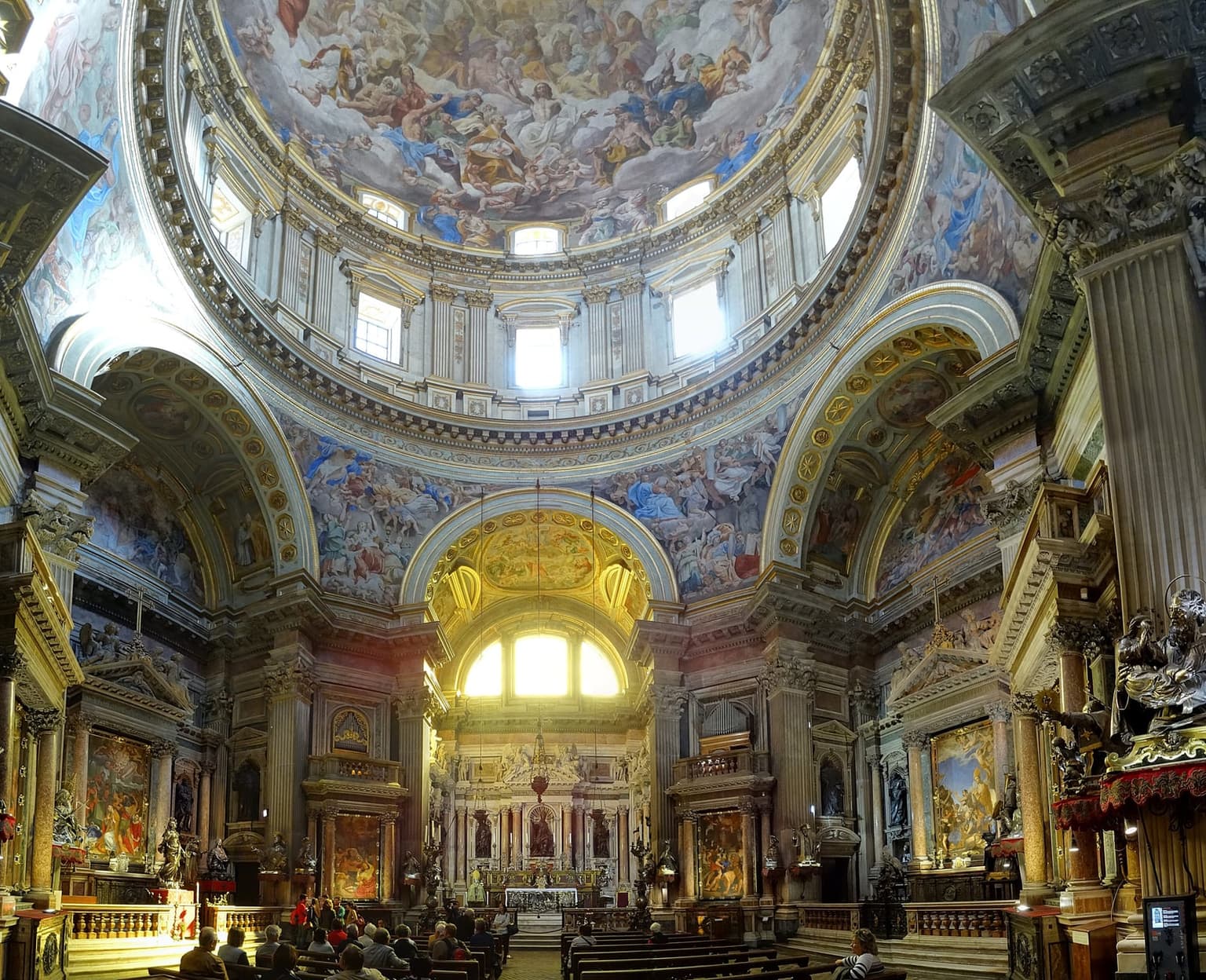
At the Duomo, the trap is paying for the wrong thing. You reach the Chapel of the Treasure of San Gennaro, the city's patron saint, inside the Duomo, and despite the ticket desk by its entrance, it is free. It closes for a midday break, with hours that vary by day, so check before you go. The Museum of the Treasure is separate, with its own door under the porticoes on Via Duomo, to the right of the cathedral's main entrance: €15 for an adult with the audio guide, daily 9:30 - 18:00, last entry 17:00, and the museum recommends buying online.
When the street has had enough of you, Santa Chiara is the counterweight: a cloister of painted majolica tiles at Via Santa Chiara 49c, with the noise left on the other side of the wall.
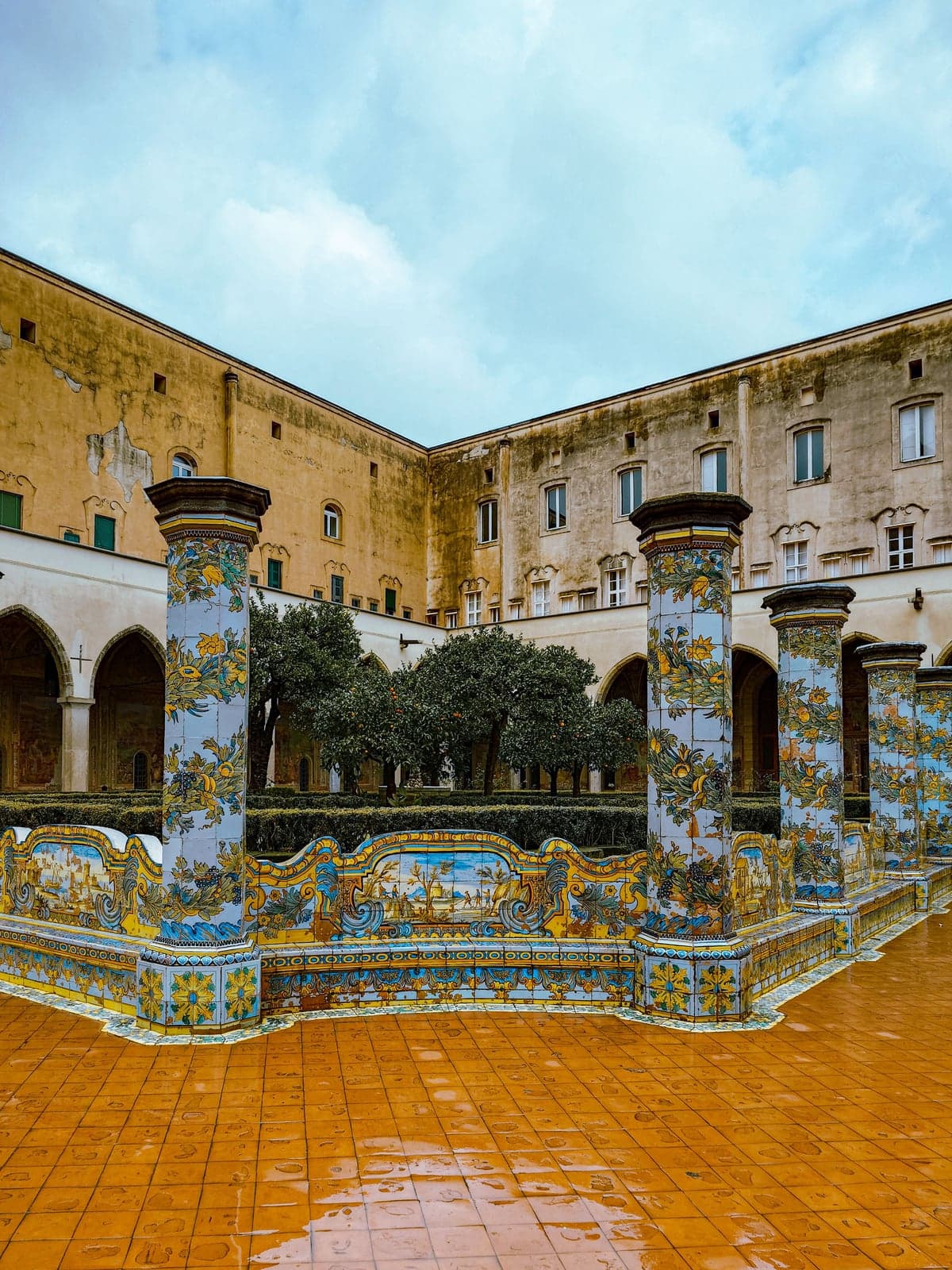
One ticket covers the cloister, the museum and the archaeological area: €7, or €5 reduced (over 65, university students under 30, teachers, with proof); €4 for ages 7 - 17; free under 7. The cloister opens Monday to Saturday 9:30 - 17:00 but Sunday only 10:00 - 14:00, so a Sunday-afternoon plan finds it closed. For now, tickets are sold only at the complex's own ticket office, so a voucher bought anywhere else is just paper.
The Veiled Christ and MANN: book one, and skip Tuesday for both
The Veiled Christ in the Cappella Sansevero is the first booking to make in Naples, and my pick for the one sight to plan a Naples day around. It earns every bit of the fuss. Look down as well as up: the floor is tiled in a maze Escher could have drawn, and it is part of the show. The door is at Via Francesco De Sanctis 19/21.
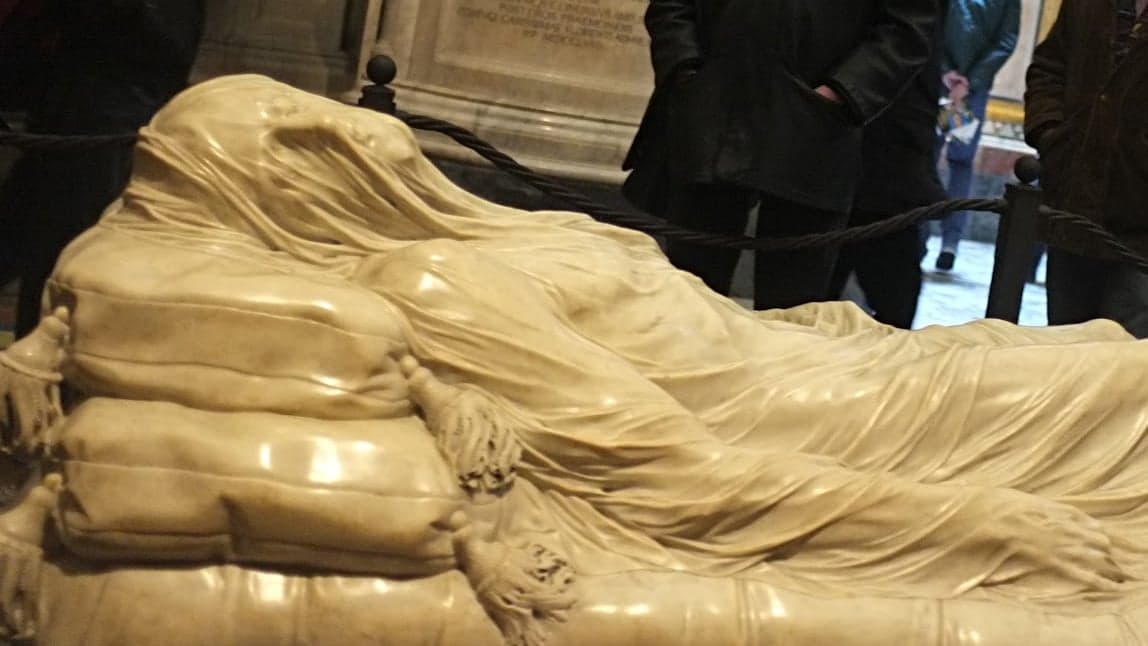
Booking is mandatory for every visitor. You pick a date and a time slot online, and the booking holds for 10 minutes past it. Online tickets open 60 days ahead, with a further batch released two days before each date, so a sold-out day deserves a second look then. Anyone in a party of up to 9 can also book at the box office, but only for the next 7 days and only from what is still unsold online. Tickets are €12, €8 for ages 18 - 26, €6 for ages 10 - 17 and free up to 9; the chapel is open 9:00 - 19:00, last entry 18:30. No photos or video inside, so the picture you came for stays in your head. There is no set visit length; the audio guide (€3.50, five languages) runs about 25 minutes. The nave is wheelchair-accessible, the underground Cavea is not.
The chapel's own online ticket shop, in English (ticket.museosansevero.it)
If your date is gone online, the desk will not save you. A guided walk through the historic center that includes Sansevero entry may still have it. Before you buy, check that the listing names entry to the chapel, not a walk past its door; check the date and the time; and prefer a small group.
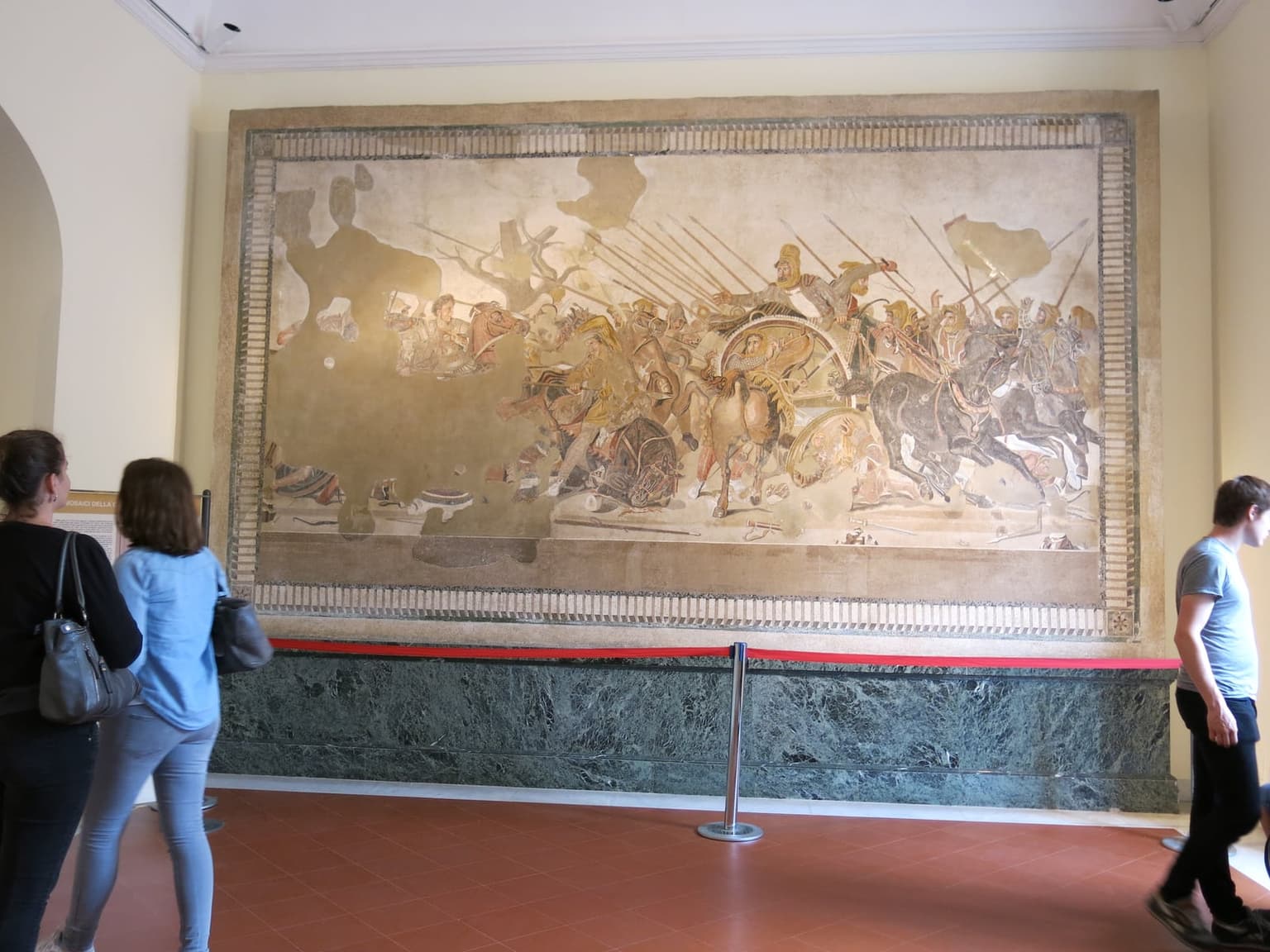
MANN is about 900 m from the chapel, about 12 minutes on foot by a route planner. Tickets are €20, free under 18; it is open 9:00 - 19:30, and the ticket office closes at 18:30. You can buy online, and the museum requires booking only for groups and schools. Entry is free on the first Sunday of the month, but on free days tickets can't be bought ahead, and the Egyptian collection, the Secret Cabinet and the Magna Grecia section stay shut. The museum's standing notice says some sections are temporarily closed. Metro Line 1's Museo station is on the museum's square.
Pair MANN with Pompeii or Herculaneum, but not on the same day: a full day tramping the ruins and then a few hours in these rooms is more than one set of legs wants. Both sites are on the train line to Sorrento.
Tuesday catches more sights than these two, and Wednesday keeps its own list. Here is the week:
| Sight | Closed |
|---|---|
| Cappella Sansevero | Tuesday |
| MANN | Tuesday (a holiday Tuesday moves it to Wednesday) |
| Certosa di San Martino | Tuesday |
| Castel Sant'Elmo | Tuesday (the museum only; the castle stays open) |
| Palazzo Reale | Wednesday |
| Museo di Capodimonte | Wednesday |
| Catacombs of San Gennaro | Wednesday |
Underground Naples: three ways down, and which ones need booking
For the unusual things to do in Naples, Italy, go down. The city has a basement, and the way back up can be the strangest part: one route out surfaces through a shopping center built into the caves, which is as surreal as it sounds and a better ending than most museums manage. My three ways down are Napoli Sotterranea, the Bourbon Tunnel and the catacombs, and only one of them needs no booking.
Napoli Sotterranea is a guided tour about 40 m down, about an hour long. Meet at Piazza San Gaetano, on Via dei Tribunali, next to the Basilica of San Paolo Maggiore, and look for the white and blue flags. Typed into Google Maps, the address leads to the wrong place, the operator warns, so use the map link on its own site. Individuals and small groups, a couple or a family, don't book, and those tours run in Italian and English; the Thursday 21:00 evening tour is by reservation only. Tickets are €18, €15 for ages 11 - 17, €10 for 5 - 10 and free up to 4, and the ticket includes about 20 minutes at the remains of the Roman theater. Wear flat shoes, and in the warm months pack a sweatshirt anyway.
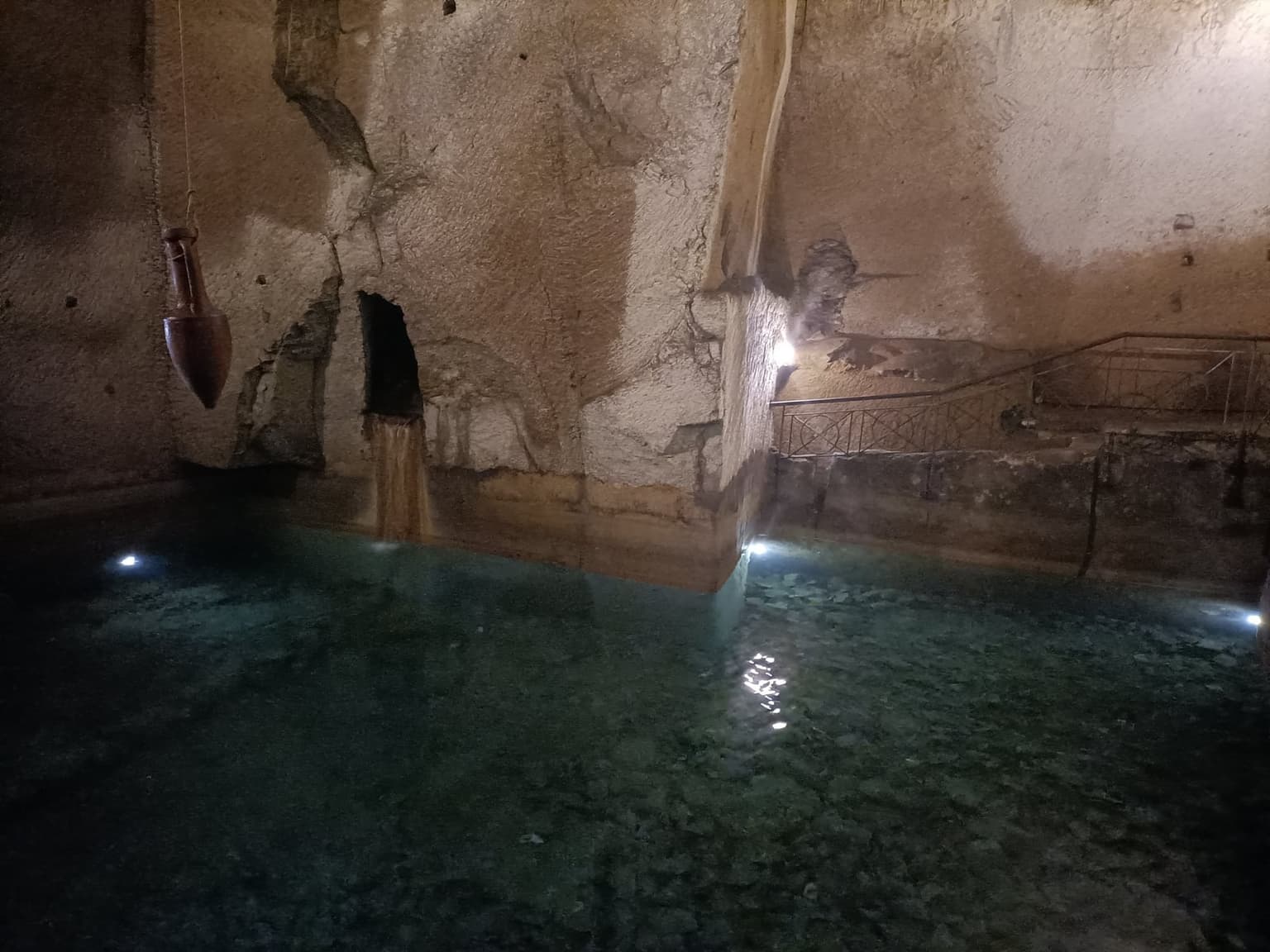
The Bourbon Tunnel (Galleria Borbonica) runs its Standard route from Vico del Grottone 4, about 100 m from Piazza del Plebiscito, or the Parcheggio Morelli garage's pedestrian entrance: about an hour, €15, €10 for ages 6 - 18. The public routes run Friday, Saturday, Sunday and holidays, booking mandatory. On other days, the Via delle Memorie route also opens on booking, from its own entrance, and a private guided tour can be arranged any day 9:00 - 18:00, priced by quote.
The Catacombs of San Gennaro began, probably, as a family tomb: the core dates to the 2nd century AD, and the family later gave the space to the Christian community. The upper catacomb keeps some of the earliest Christian paintings in southern Italy.
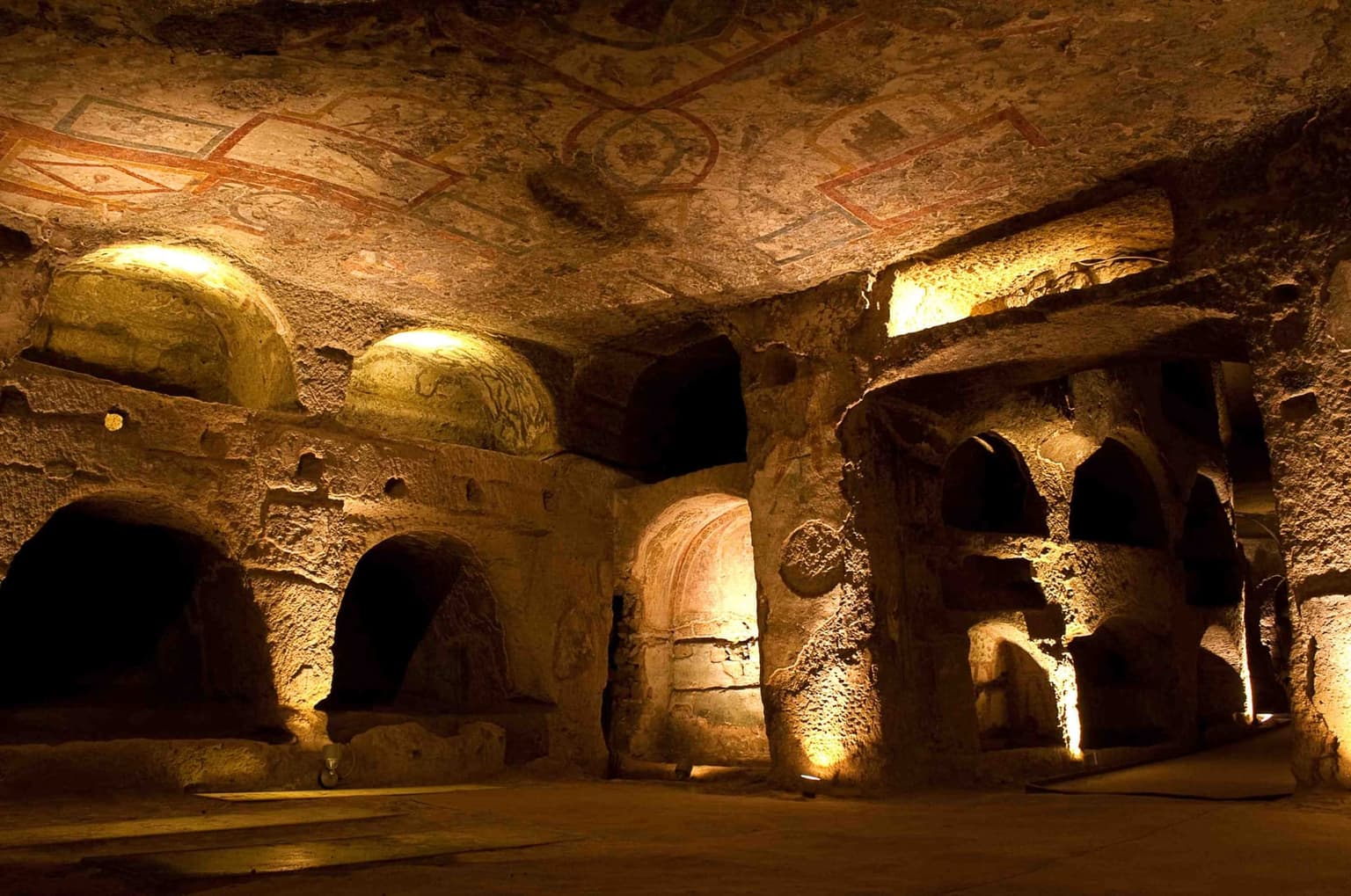
Booking is always required. Guided visits leave every hour, 10:00 - 17:00, in Italian and English, and last about an hour; the site shuts on the closing day in the table above and on December 25. Tickets are €13, €9 for students, over-65s and law enforcement, €6 under 18, free under 6. The entrance is next to the Basilica del Buon Consiglio, Via Capodimonte 13. Keep the ticket: it is valid for 12 months at the Catacombs of San Gaudioso, whose desk is on Via Sanità.
⚠️ Warning
Napoli Sotterranea is about 136 steps down and the same back up, with no elevator, and it is not for wheelchairs or walkers. The one narrow tunnel is optional: skip it and you wait about 10 minutes. At the catacombs, step-free access is currently barred.
Which one? In the center with nothing planned, Napoli Sotterranea; near Plebiscito, the tunnel; for early Christian Naples, the catacombs.
Up to the Vomero: Castel Sant'Elmo, the Certosa and the closed funicular
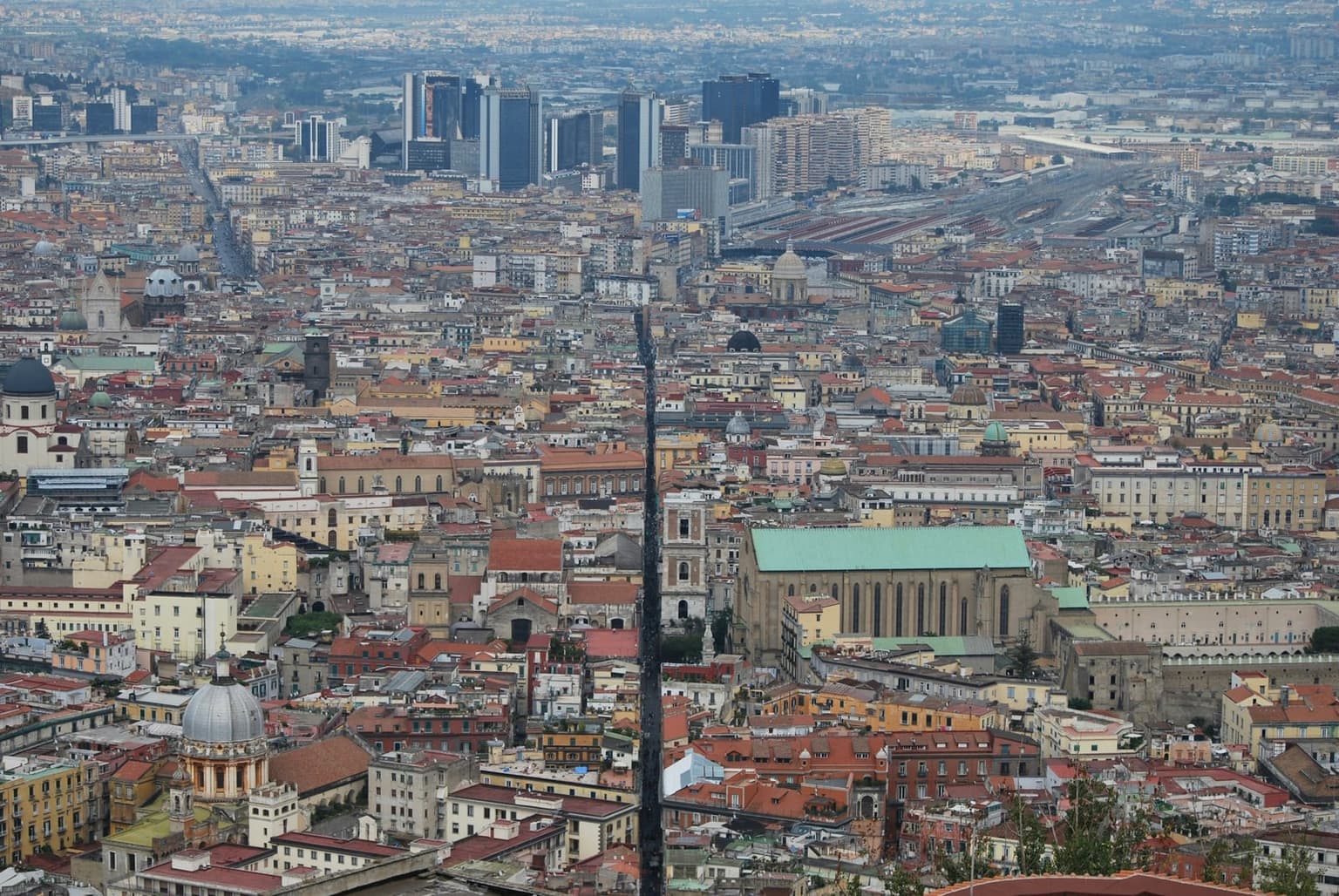
The Vomero, the hill above the old center, is where Naples finally lets you see it whole. At the top stand Castel Sant'Elmo and, right beside it, the Certosa di San Martino, a charterhouse turned museum. The part that takes the most planning is the ride up.
Take the Centrale funicular from Augusteo, its lower station, to Piazza Fuga at the top; from there Castel Sant'Elmo is about 850 m, about 11 minutes on foot by a route planner. Or take the Chiaia funicular, from Parco Margherita up to Via Cimarosa. Both run about every 10 minutes, but the first and last runs change with the day of the week, so check the ANM line status on the day, and again before you count on a late ride down.
⚠️ Warning
The Montesanto funicular, a third way up, has been closed for an overhaul since May 15, 2026, with no reopening date. Any directions that send you up on the Montesanto funicular are out of date: take the Centrale or the Chiaia.
Castel Sant'Elmo charges €5; the castle is open 8:30 - 19:30, its museum 9:30 - 18:30, and the site may close in bad weather. The ticket buys you the city laid out below the walls, all the roofs the lanes kept from you, the street noise thinned to a hum. There is a castle too, which by then feels like a bonus.
The Certosa shares the hilltop panorama and charges €6, free under 18; it is open 8:30 - 18:30, last entry 17:30. Some sections open only at 9:30, and the gardens close an hour earlier than the rest.
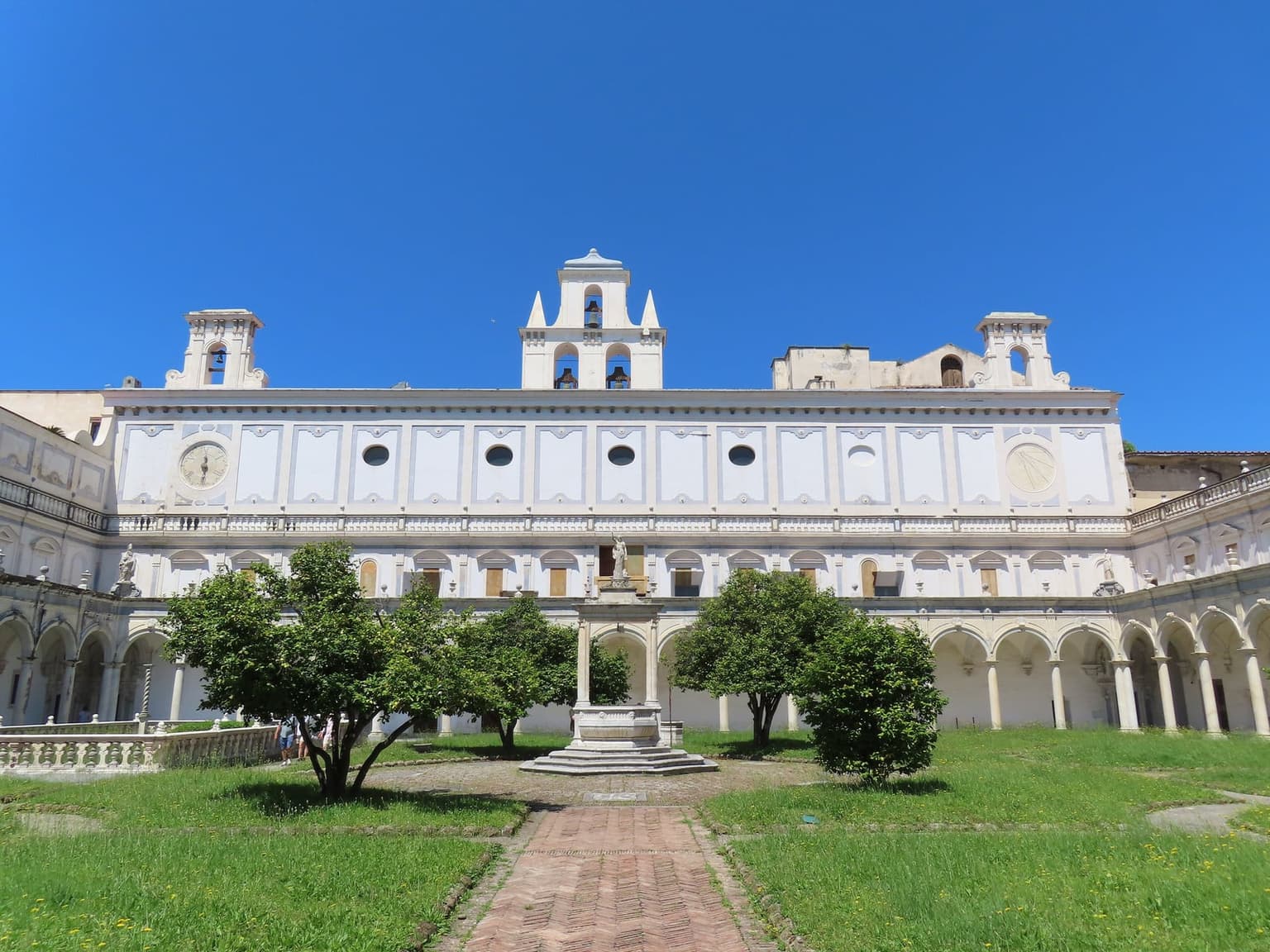
Do both in one trip, on a day the closing-days table above leaves open, and if the waterfront is next, ride the Chiaia funicular down to Chiaia.
The waterfront after dark: Plebiscito, the royal palace and Santa Lucia
Then there is the Naples that dresses for company: Piazza del Plebiscito, the Palazzo Reale, the Galleria Umberto I arcade under its glass roof and the Santa Lucia seafront, as grand as the old center is gritty. The square, the arcade and the seafront ask for no ticket and no time slot, a rare thing in this article. Give the square and the palace the daylight, and keep the seafront for the end of the day.
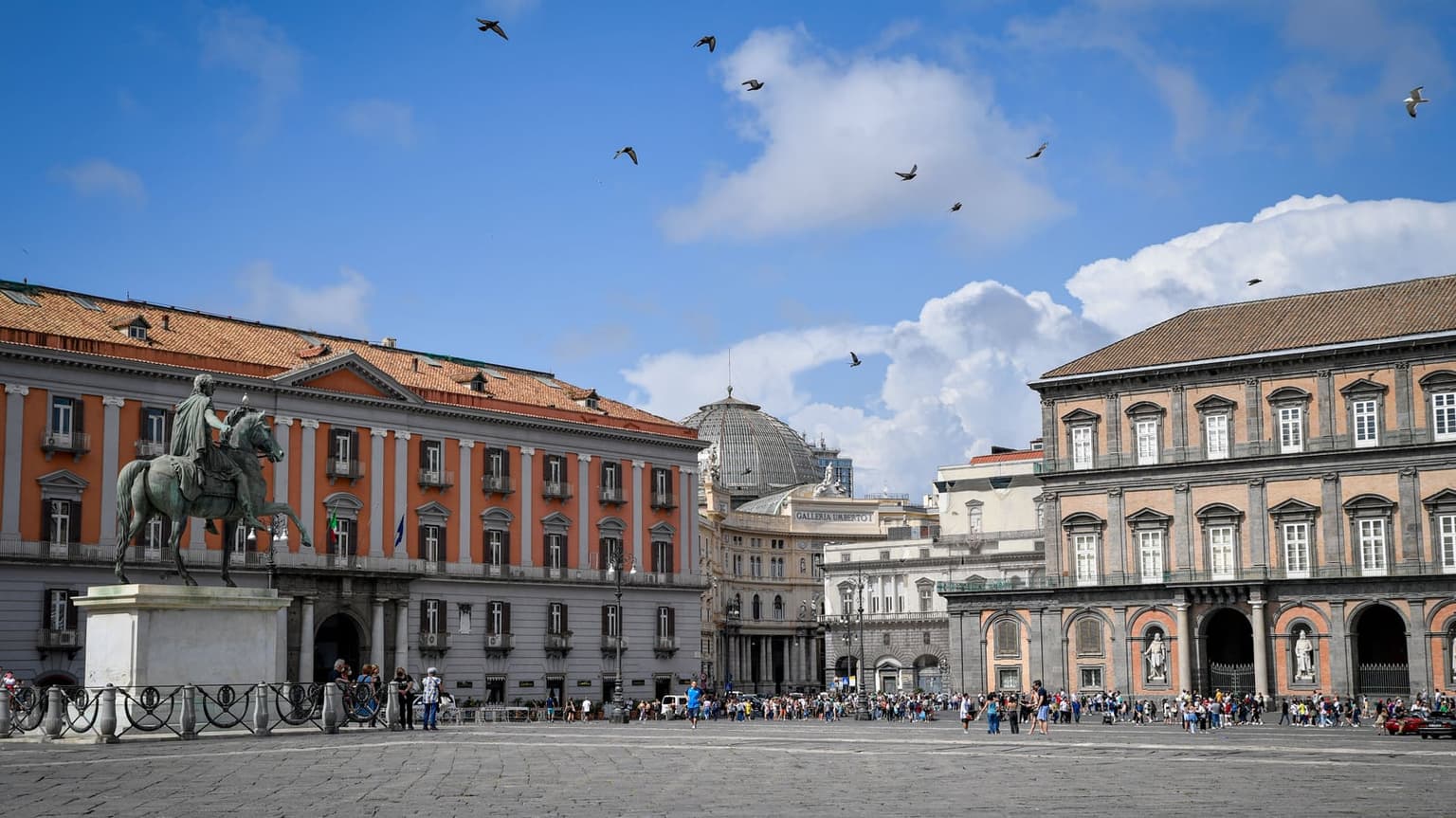
The Palazzo Reale's ticket is €15, free under 18, and covers the Appartamento di Etichetta, the royal state rooms, plus the Museo Caruso, the Museo della Fabbrica and any temporary shows. The Appartamento is open 9:00 - 20:00, last entry 19:00, and closes January 1 and December 25 besides its weekly closing day. Buy online or at the box office, no booking needed. Allow about an hour for the Appartamento, and ask at the ticket office whether any rooms are temporarily shut. The Giardino Romantico, the palace garden, is free, daily 9:00 - 19:00.
After the palace comes the Santa Lucia seafront, with Castel dell'Ovo squatting opposite. Treat the castle as scenery: here, the scenery is the point.
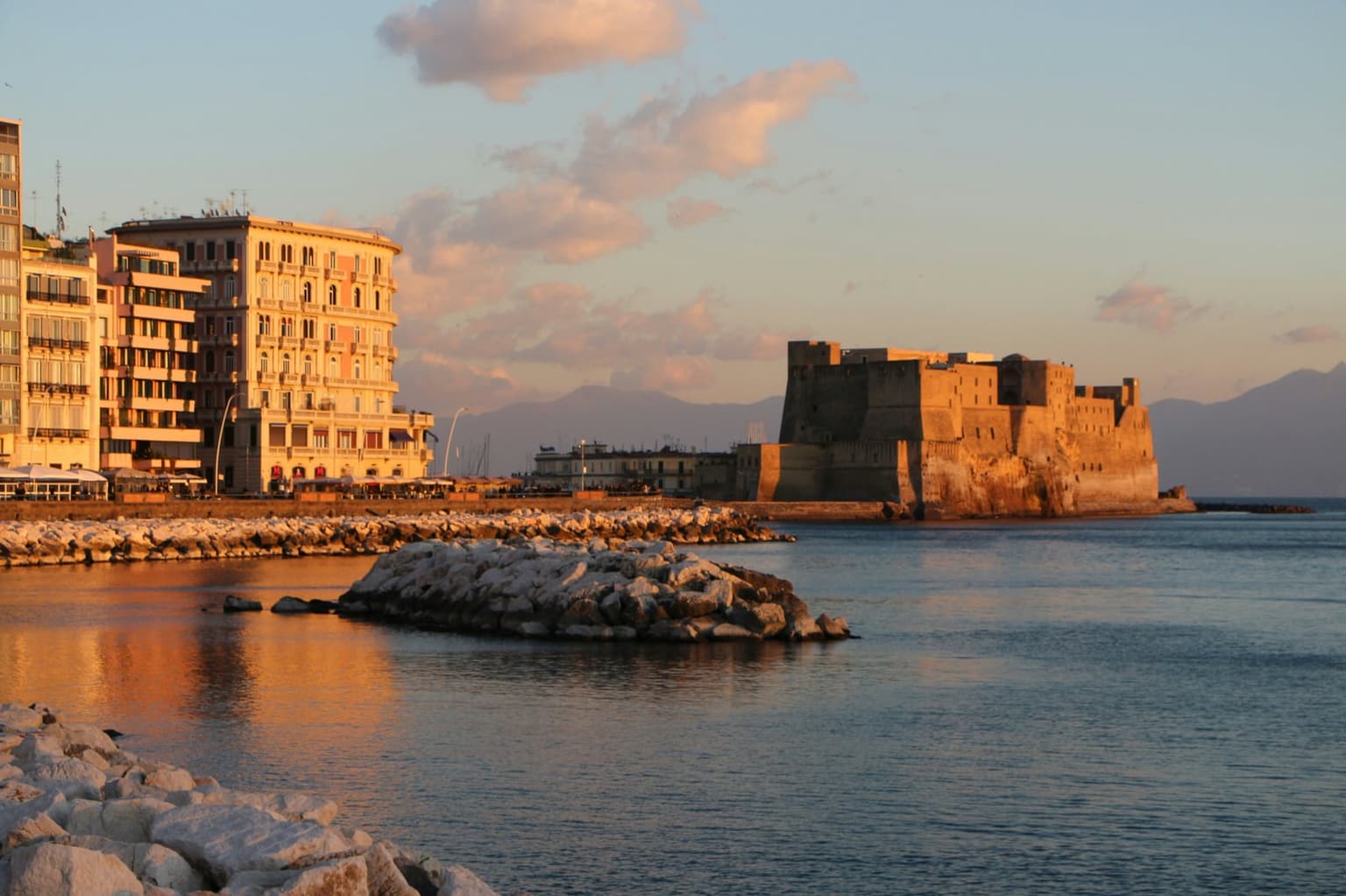
As the light goes, the castle turns into a dark bulk on the water, and across the bay Vesuvius holds on as a long gray shape until the sky lets it go. Then the seafront is lit with fairy lights, the noise of the old center stays somewhere behind you, and the phone stays in your pocket. If you're lucky, a Naples night throws in fireworks too, unannounced, somewhere over the city.
That hour is the one a day trip tends to miss. A one-day Naples is usually on its way out of town by now, which makes for a perfectly good day that stops one chapter short.
Pizza and sfogliatelle: are the famous names worth the line?
Pizza is half the reason a Naples day exists. Neapolitan pizza is its own style, not worth the trip by itself but well worth it on the same day as the Veiled Christ and the Duomo. On the famous names, the honest answer comes in two halves.

L'Antica Pizzeria da Michele has been in its present room at Via Cesare Sersale 1, on the station side of the old center, since 1930, and its menu holds only four pizzas, which settles the menu question before you sit down. It is open every day 11:00 - 23:00 and takes no reservations. At a Naples pizzeria, the wait for a seat at lunch can run to an hour, so go at 11:00, when the doors open, not at the lunch hour. The pizza lives up to the name, which is more than most famous names manage.
The other half: Da Michele and Sorbillo, the famous two, may no longer be the best pizza in Naples. Gino Sorbillo's historic pizzeria is on Via dei Tribunali, so it sits on the walk either way. Worth the line, then? A short one, yes. A long one, no: treat the pair as the benchmark rather than the pilgrimage, and judge the next margherita against them.
The pizzeria I send friends to is Starita, at Via Materdei 27/28, and the line there is mostly Neapolitans. The one that stuck with me is the montanara, the house pizza: the dough goes into the fryer first, then into the oven.
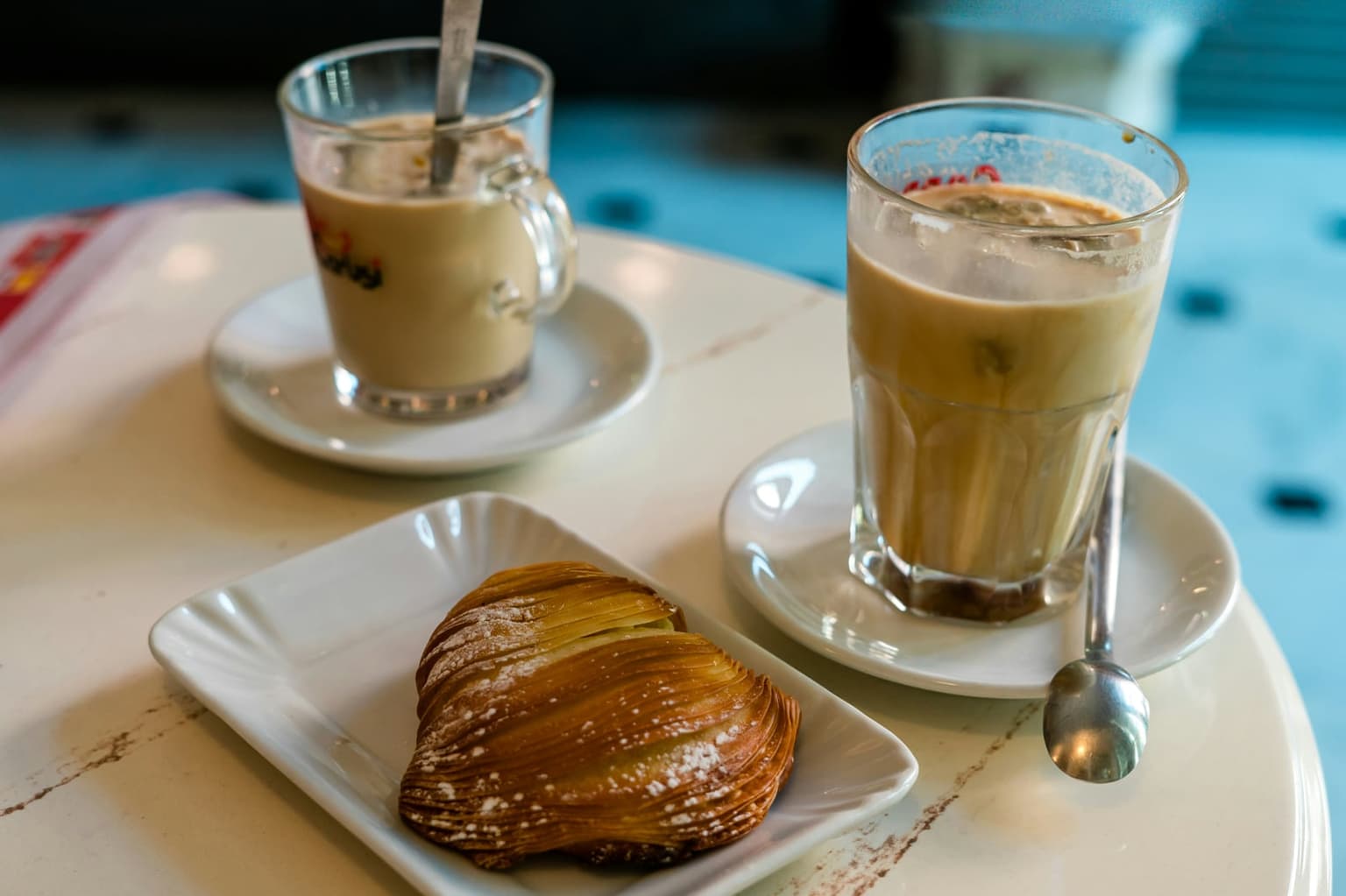
Save room for the sfogliatella riccia: flaky layers around a cream sweetened just enough, and so flaky that some of it leaves with you on your shirt. Eat it standing up, over the street, where the flakes belong.
If you would rather have the choosing done for you, a small-group street-food walk in the historic center does it. Look for one that includes a pizzeria and a pastry stop and stays inside the old center, and skip any "food tour" that turns out to be one long sit-down meal.
Where to stay in Naples: the center, the waterfront or the station
Where to stay in Naples comes down to three real choices, and each wins on something different: the historic center for the streets, the waterfront, Santa Lucia and Chiaia, for the sea, the station area for a train from Napoli Centrale. Pick by how your days will be spent, not by a ranking, because there isn't one.
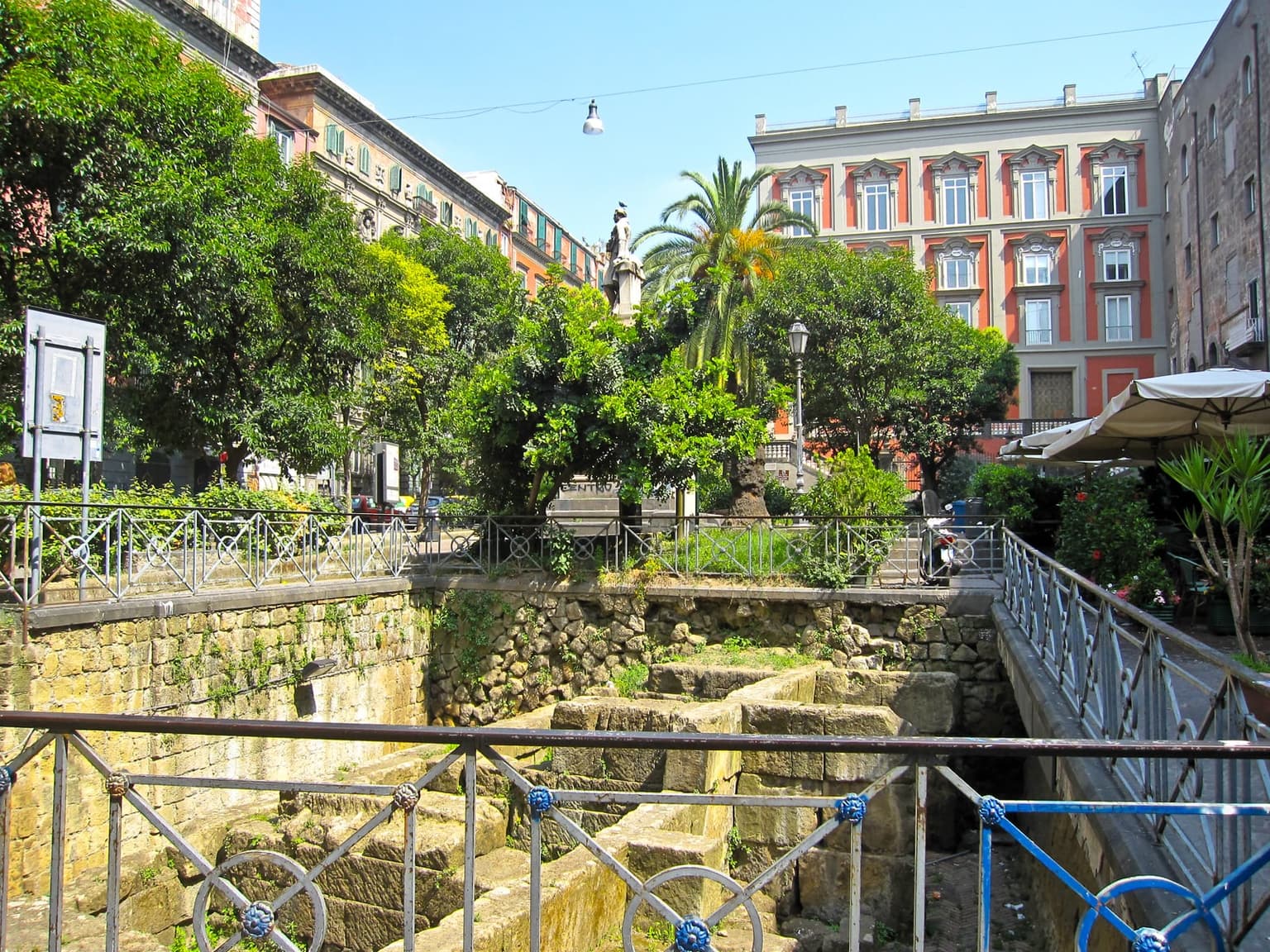
Sleep in the center and you sleep inside the argument, around Piazza Bellini or along Via dei Tribunali. From Piazza Bellini you can walk to the Veiled Christ, MANN and Napoli Sotterranea; on Via dei Tribunali, Napoli Sotterranea starts on your own street. The price is volume: these are the loud lanes this whole article turns on.
The waterfront means two neighbors, not one. Santa Lucia is a pleasant area with plenty of restaurants, away from the crush of the center, and its seafront feels safe at night. Chiaia is on the seafront too, and stays open late. The cost is distance: from Via Partenope, the seafront street, the Veiled Christ is about 3 km, about 40 minutes on foot by a route planner, so the old center becomes an outing.
By the station is the convenient choice if Napoli Centrale is your station, and the obvious one if Naples is a night between trains. The area around the station on Piazza Garibaldi looks rough and works fine as a base all the same; if that look would bother you every evening, pick the center or the waterfront. From Piazza Garibaldi the Veiled Christ is about 2 km, about 27 minutes on foot by a route planner.
Is Naples safe? Run-down is not the same as dangerous. Parts of the city look neglected or vandalized and are simply lived in. Stay alert and watch who is around you. Mind the motorbikes in the lanes: you share the paving with them, and they are not waiting for an invitation. Late at night, walk in company if that sits easier with you.
I stayed in the Quartieri Spagnoli, the Spanish Quarter, and by day it is all atmosphere, with laundry drying over your head. After dark, the narrow back lanes away from Via Toledo frankly made me uneasy: the light was dim, and scooters passed a hair from my feet.
Once the area is chosen, book inside it. Filter the map by that area instead of searching all of Naples, and check the street the property actually sits on against the choice above: in this city a "central" label covers a lot of ground.
Getting in and around: the airport, the station, the port and the metro
From the airport, the Alibus runs to Piazza Garibaldi, home of the Central Station, Napoli Centrale, and on to the port. Metro Line 1 connects with the national and high-speed railways at its Garibaldi station, so if the Alibus or a train into Napoli Centrale brought you in, that is where the metro starts doing the work.
For the sights, Metro Line 1 runs Garibaldi, Duomo, Università, Municipio, Toledo, Dante and Museo, in that order, and it keeps going later on Friday and Saturday nights than the rest of the week. Anything uphill is the funiculars' job.
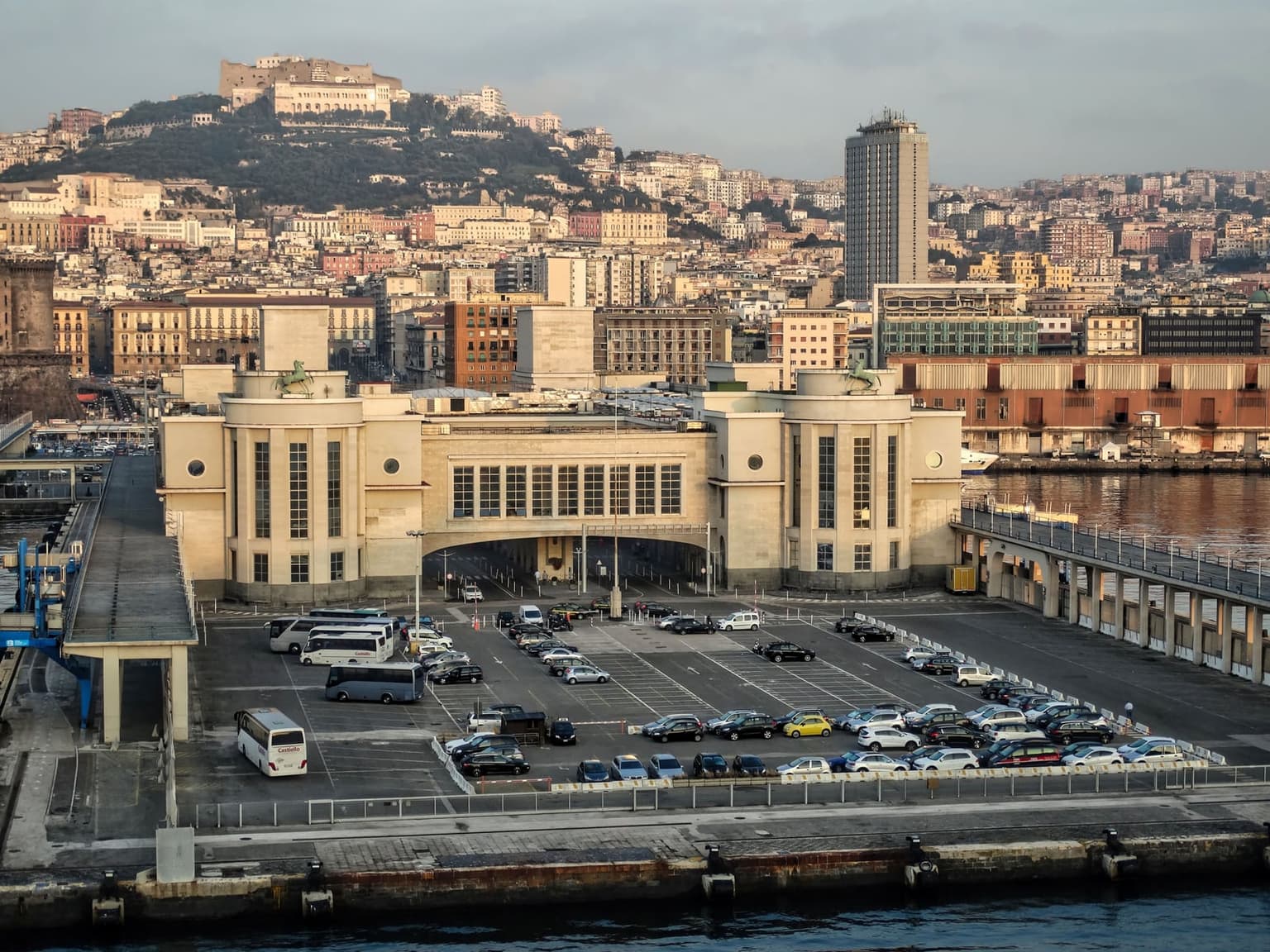
Inside the center, walk; the map at the top shows what sits near what. If your ship's terminal is the Stazione Marittima on the Molo Angioino, the old center at Piazza del Gesù Nuovo is about 1.35 km, about 18 minutes on foot by a route planner. Coming back, an underpass links the port to Municipio metro station, but on those late Friday and Saturday nights its PORTO exit corridor closes at 22:00. Before any late ride, check the ANM line status.
If Sorrento is next, I've weighed the Naples to Sorrento train against the ferry on a page of its own, airport bus and port included. Positano and the Amalfi Coast are a different trip from here, and Capri and the islands each want a day to themselves.
On a day in Naples between trains, a suitcase is the last thing the lanes need. Leave it at a drop-point near Napoli Centrale if that is the station you leave from, and check its closing time against your train before you hand it over.
Naples FAQ
- How many days do you need in Naples?
- One well-planned day covers the Veiled Christ, booked ahead, the old center and a pizza. Two or three nights let the city work on you, with a separate day for Pompeii or Herculaneum.
- Is Naples safe for tourists?
- Gritty, yes, but run-down is not the same as dangerous. The station area looks rough but works fine as a base if Napoli Centrale is your station; if the look would bother you, stay in the center or on the waterfront. Stay alert and mind the motorbikes in the lanes, and late at night walk in company if you prefer.
- Do you need to book the Veiled Christ in advance?
- Yes: booking is mandatory for every visitor. Parties of up to 9 can also book at the box office, but only for the next 7 days and only from what is left online, so the desk is no backup.
- Which Naples museums are closed on Tuesday?
- The Cappella Sansevero, MANN, the Certosa di San Martino and the Castel Sant'Elmo museum. When a Tuesday is a holiday, MANN opens and closes the next Wednesday instead. Wednesday shuts the Palazzo Reale, the Capodimonte museum and the catacombs.
- Can you see Naples in a day from a cruise ship?
- The highlights, yes. If your ship's terminal is the Stazione Marittima, the old center at Piazza del Gesù Nuovo is about 1.35 km on foot by a route planner. Pick the Veiled Christ, booked ahead, or MANN, then the old streets and a pizza.
Naples tells you fast whether it is your city. Give it one evening before you take its word for it.