George Mandrovny
The short answer: start from the pass you hold
The best ski resorts in Italy sort themselves by the pass in your wallet. On an Ikon or Ikon Base pass, skiing in Italy means the Dolomiti Superski valleys or five Aosta Valley mountains; an Epic Pass gets you Skirama Dolomiti, eight resorts including Madonna di Campiglio and Passo Tonale; with neither, the big names are Livigno, Bormio and the Via Lattea, which sell their own tickets. The one trap: every skier in Italy needs third-party liability insurance, and it is not included in the ski pass.
- Big days - Cervinia over the border into Zermatt, passport in your pocket; the Vallée Blanche from Courmayeur with a guide; the Marmolada's 12 km run.
- Learning - Pila, Passo Tonale and Alta Badia's Val Stella Alpina.
- Kids - Livigno, Bormio, La Thuile and Kronplatz give some children a free pass, each tied to paid passes bought at the same time, on terms that differ by resort.
- Season from October - Breuil-Cervinia opens October 24.
So the order below follows the decision: the pass first, then the mountain that suits the way you ski (and the kids you bring). The best skiing in Italy was half decided the day you bought, or didn't buy, a pass back home.
My own pick for a first ski week in Italy is Val Gardena, where I've skied: most of the day runs on lifts and skis, and you can join the Sellaronda right from the valley.
Ikon, Epic or neither: which Italian resorts your pass covers
Ikon covers two destinations among the best ski areas in Italy, Dolomiti Superski and five Aosta Valley mountains; Epic covers one, Skirama Dolomiti; Mountain Collective has none for 2026-27. Anywhere else, you buy the resort's own ticket.
| Pass | Italian destination | Days | Window | Getting on |
|---|---|---|---|---|
| Ikon / Ikon Base | Dolomiti Superski | 7 Ikon, 5 Base | 2026-27: Nov 15 - Apr 15 | Direct to the lifts |
| Ikon / Ikon Base | Aosta Valley: Cervinia, Courmayeur, La Thuile, Monterosa, Pila | 7 Ikon, 5 Base | Nov 1, 2026 - May 31, 2027, from each resort's opening | Direct to the lifts at Cervinia; elsewhere, check with the resort |
| Epic (season passes) | Skirama Dolomiti, 8 resorts | 7 consecutive | See Epic's page | Physical card and photo ID at a Skirama ticket office |
| Mountain Collective | None |
Ikon Base comes with small print: Northern Hemisphere blackouts on December 26 - 30, January 16 - 17 and February 13 - 14. If your week lands on one, you want the full Ikon Pass.
Ikon's 2026-27 pass comparison, with the Dolomiti Superski and Aosta Valley days (ikonpass.com)
Epic Local and Epic Day passes don't include Skirama. The ticket office issues a Key-Card for a €5 deposit, refunded when you return it; the My Epic app is proof of your pass, not a lift ticket. After all seven days, extra days cost half the window price.
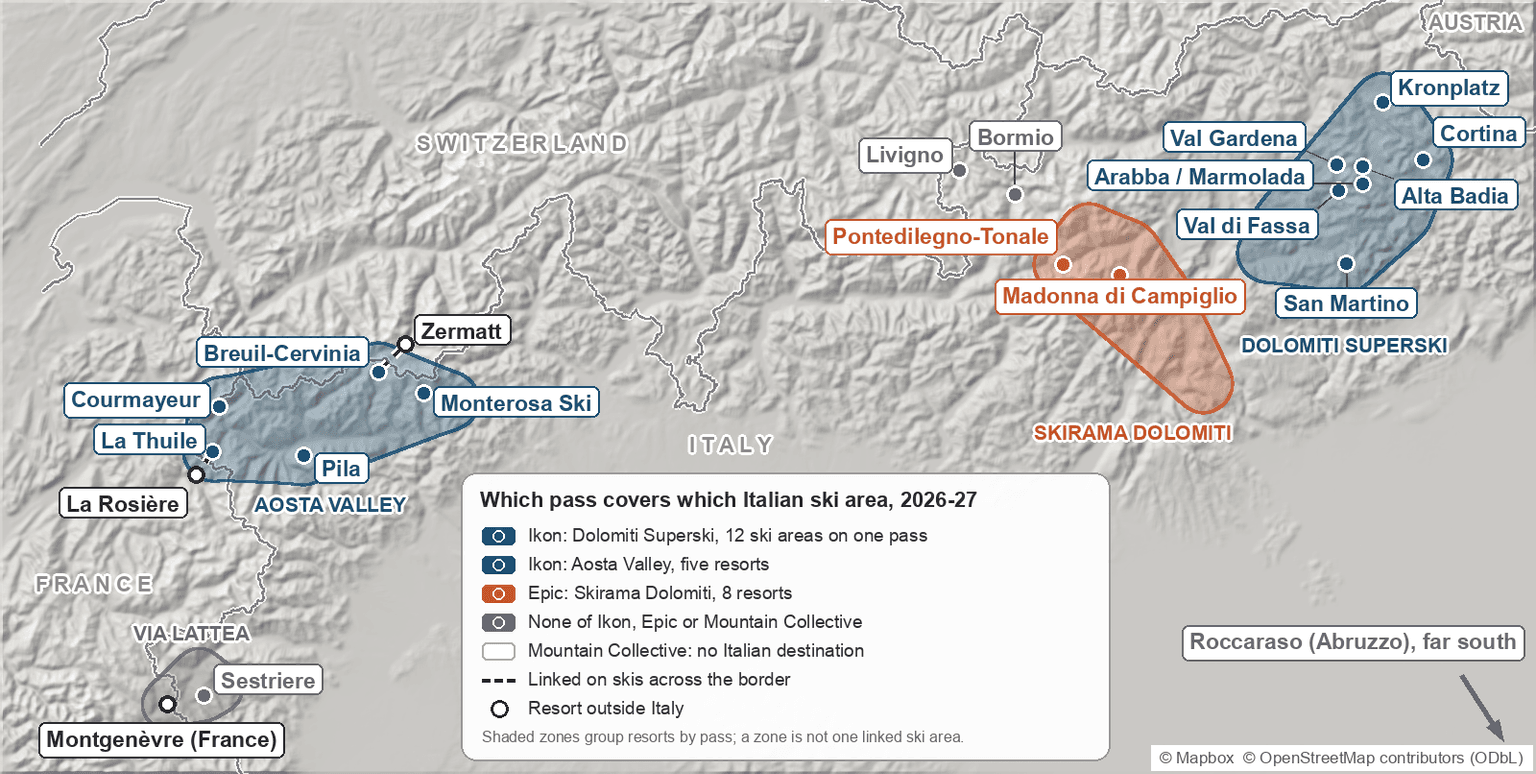
Livigno, Bormio and the Via Lattea sit on none of Ikon, Epic or Mountain Collective. With no pass, six days cost what the resort charges, and the published rates spread wide:
| Area | Six days | Note |
|---|---|---|
| Dolomiti Superski | €407 / €453 | 2026-27, adult, by week |
| Kronplatz only | €378 / €421 | 2026-27, adult, by week |
| Breuil-Cervinia + Valtournenche | €338 | 2026-27, adult, consecutive, one rate all season; also the Torgnon and Chamois lifts, not the Buisson-Chamois cable car; €464.50 with Zermatt |
| La Thuile | €322 | 2026-27, adult, consecutive, in the Espace San Bernardo with each day's first lift at La Thuile |
| Pila | €312 | 2026-27, the tourist board's listed rate |
| Livigno | €258.50 / €331 / €374.50 | 2026-27, adult, consecutive; promo, season, high weeks |
| Bormio (3 areas) | €226 / €275 / €342 | 2026-27, adult, consecutive; promo, low, high weeks |
| Via Lattea, six Italian resorts | €261 / €305 / €312 | Current online rate, consecutive; low, high, peak; plus €3.50 a day insurance; resorts named below |
Bormio's pass bought online in advance can cost up to 25% less than at the ticket office on the day, while the limited discounted passes last. Cervinia may adjust its rates in-season. The cheapest weeks are the promos: Bormio's at the very start of the season, Livigno's at both ends.
⚠️ Warning
Every skier in Italy needs third-party liability insurance for each day on the mountain (Ikon's FAQ tells its holders the same), and it is not included in the ski pass. And from the 2025-26 season: a helmet at every age.
Before you fly, ask your insurer whether your policy covers third-party liability on the slopes. If it doesn't, my Val Gardena guide explains how to buy liability cover online before day one.
On Ikon in the Dolomites: the Superski valleys beyond Val Gardena and Cortina
Dolomiti Superski is a great deal of mountain for one card: over 1,200 km of slopes in 12 ski areas on a single ski pass, the longer of Ikon's two lists of ski areas in Italy. If Val Gardena is your pick, start with the three Val Gardena villages and the Sellaronda. If it's Cortina, read up on skiing in Cortina before you book. Below are five more, with some of the best ski slopes in Italy among them; Civetta and Val di Fiemme/Obereggen are on the list as well.
I've skied four of these valleys. Val Gardena is for a group that wants a lot of mileage with no fuss, wide and comfortable runs, and skiing that starts a short walk from the hotel. Cortina is for confident, technical skiers who will put up with the town buses in return for quiet slopes and steep runs between rock walls. Alta Badia is for unhurried cruising on wide blue runs, with the best food on the slopes I found anywhere in the region. Arabba and the Marmolada are for fast, hard carving on steep terrain, and the long run down from the Marmolada glacier was the strongest skiing of that trip.
Alta Badia: Ladin huts and the Gran Risa
Alta Badia has 54 lifts and 130 km of slopes, and takes in a high plateau that stretches between Corvara, La Villa and San Cassiano and up to the Pralongià. Its fixture for strong skiers is the Gran Risa, the slope of the Ski World Cup. The food makes its own case: Ladin cooking in the alpine huts of the Gardenaccia. The lifts are modern and quick, which tends to keep the waits short, and the prices run high to match. If it's Christmas week you're after, book early. Alta Badia is one of the four valleys the Sellaronda joins on skis, Val Gardena among them. Which village to sleep in is a separate decision, and how to pick the village for a winter base walks through it.
Kronplatz: one mountain, four villages, the Black Five
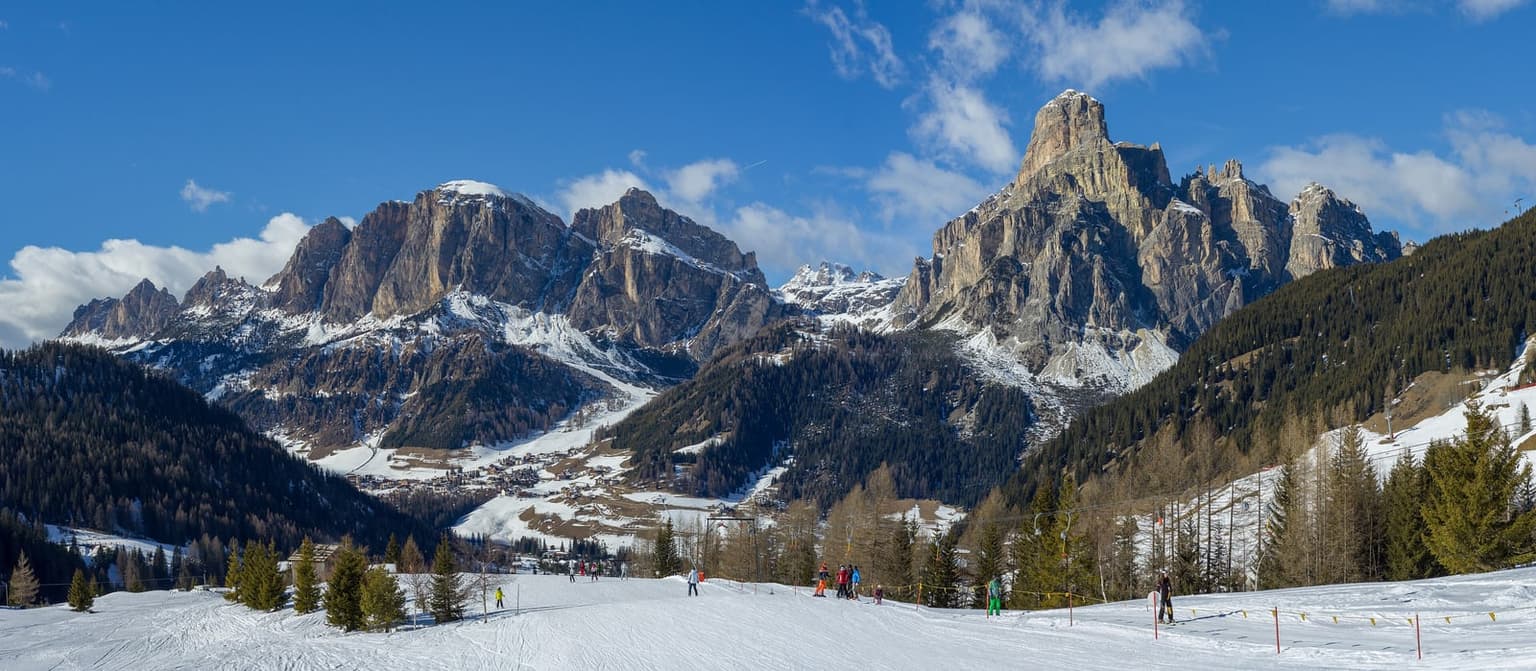
Kronplatz (Plan de Corones) is a single mountain, 2,275 m high, with 32 lifts and valley stations in San Vigilio di Marebbe, Riscone, Valdaora and Perca, which the tourist board calls easily reachable by train. For experts there is the Black Five: the Sylvester (7.6 km) and the Herrnegg (7.8 km), plus Pre da Peres, Erta and Piculin. The long valley runs are the mountain's best feature, and it suits beginners and advanced skiers alike. If you won't leave it all week, a Kronplatz-only pass undercuts Superski: six adult days in 2026-27 cost €378 or €421 there, against €407 or €453 for Superski, depending on the week.
Arabba and the Marmolada: steep blacks, a glacier run
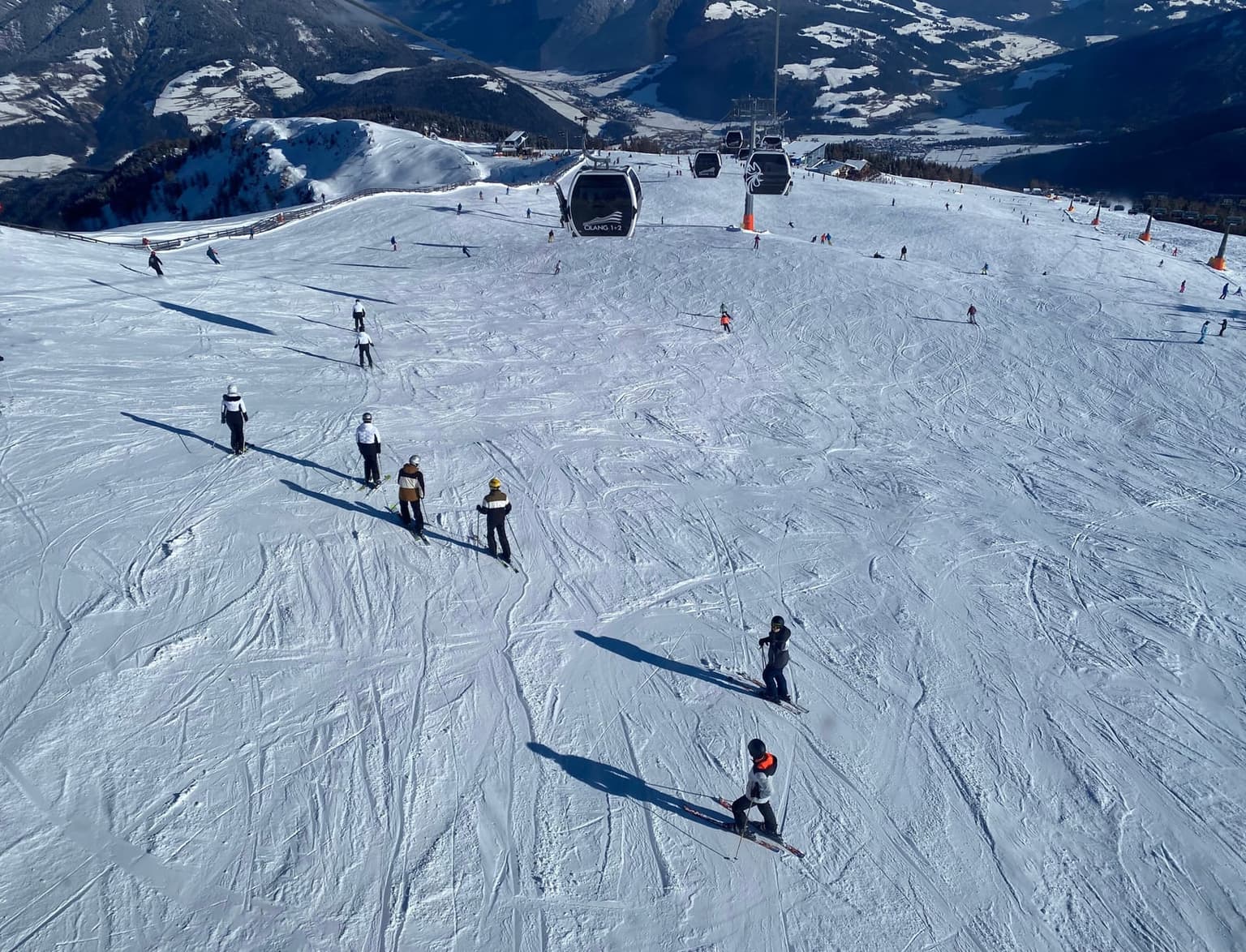
Arabba is for skiers who read "black" as an invitation. The Fodoma runs 3.6 km with 804 m of vertical, and its lift company counts it among the hardest blacks in the whole Superski; the Sourasass is 3.3 km and 749 m. Arabba is also one of the Sellaronda's four valleys.
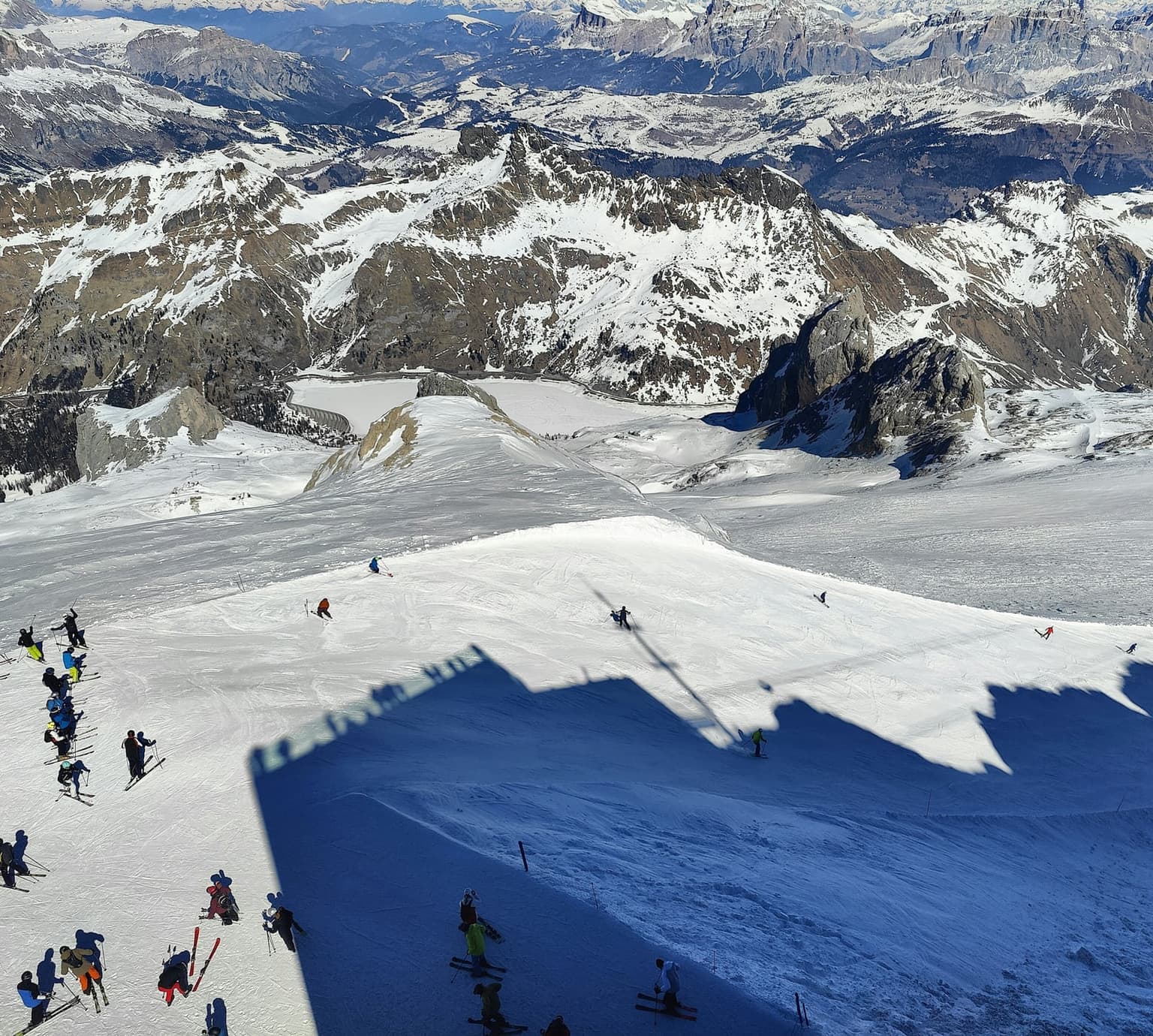
The Marmolada is the glacier half of the name. From Malga Ciapela the cable car reaches the slopes in 12 minutes, and La Bellunese runs 12 km from Punta Rocca (3,265 m) over the glacier and the Fedaia Pass, back down to Malga Ciapela. On a good day the snow is excellent and the land lies almost entirely under it, white to the farthest ridges, a view that holds you until someone skis past and reminds you that you've stopped mid-piste. Tickets and winter hours are on the operator's site.
Funivie Marmolada's cable-car hours and ticket prices (funiviemarmolada.com)
Val di Fassa and San Martino
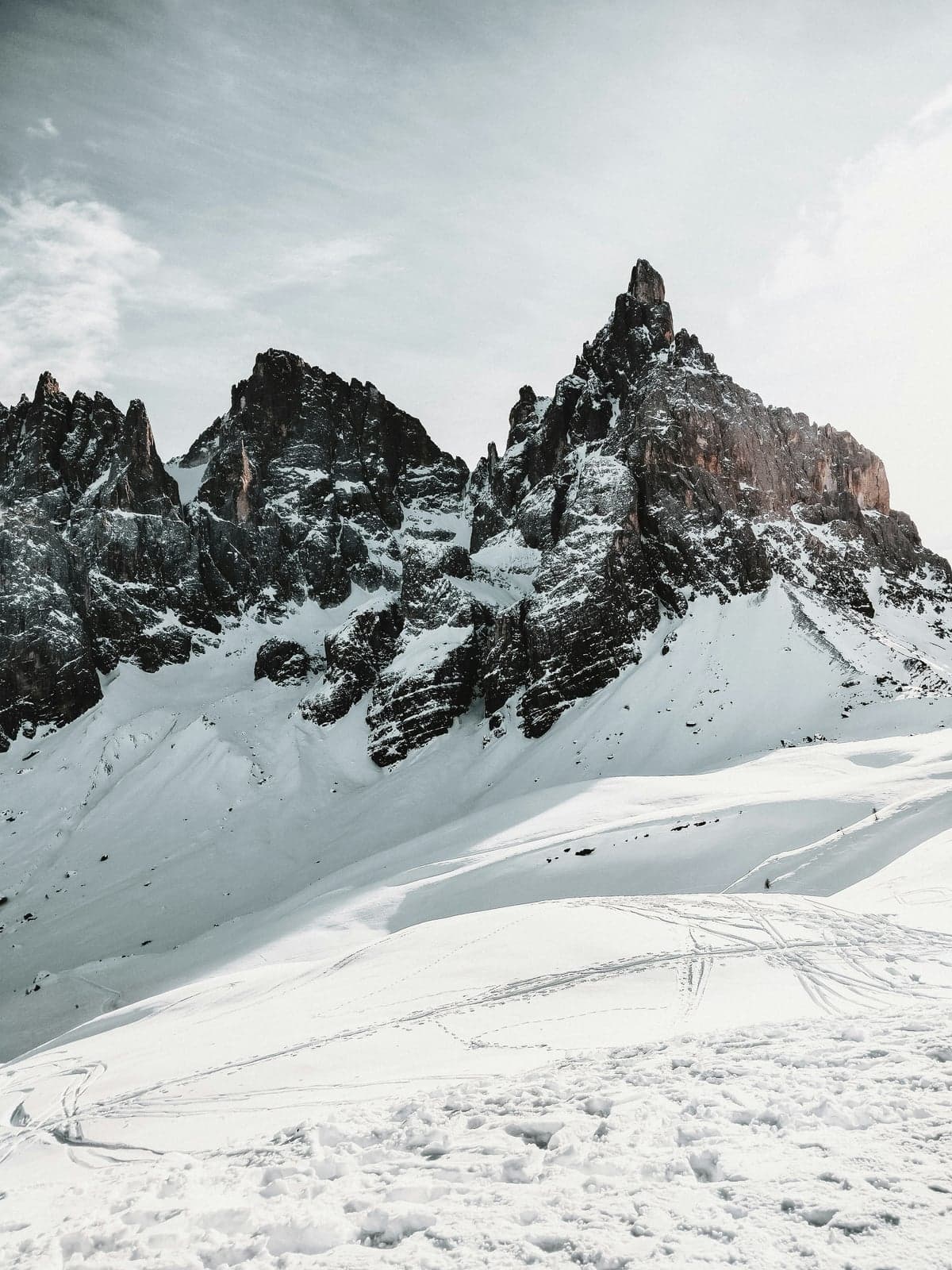
Val di Fassa is the Sellaronda's valley in Trentino. You can join the loop from Canazei or Alba via Col dei Rossi, from Campitello by the cable car up to Col Rodella, or from Pozza on a slightly longer route through the Buffaure and Ciampac areas. Among the valley's ski tours is the First World War Tour, open from mid-January to the end of March 2027.
San Martino di Castrozza - Passo Rolle has 60 km of slopes, and its tourist board calls it the "southern gem of Dolomiti Superski." Tourist boards are not known for modesty.
On Ikon in the Aosta Valley: Cervinia, Courmayeur and three more
Of all the ski resorts in Italy, 19 are in the Aosta Valley, with 800 km of runs; five of them follow. Courmayeur, La Thuile and Pila all run November 28 - April 11. The rough sort: Cervinia and Courmayeur for bigger, more advanced skiing, Pila for an intermediate who wants to get better.
Breuil-Cervinia: high skiing, and over the border to Zermatt
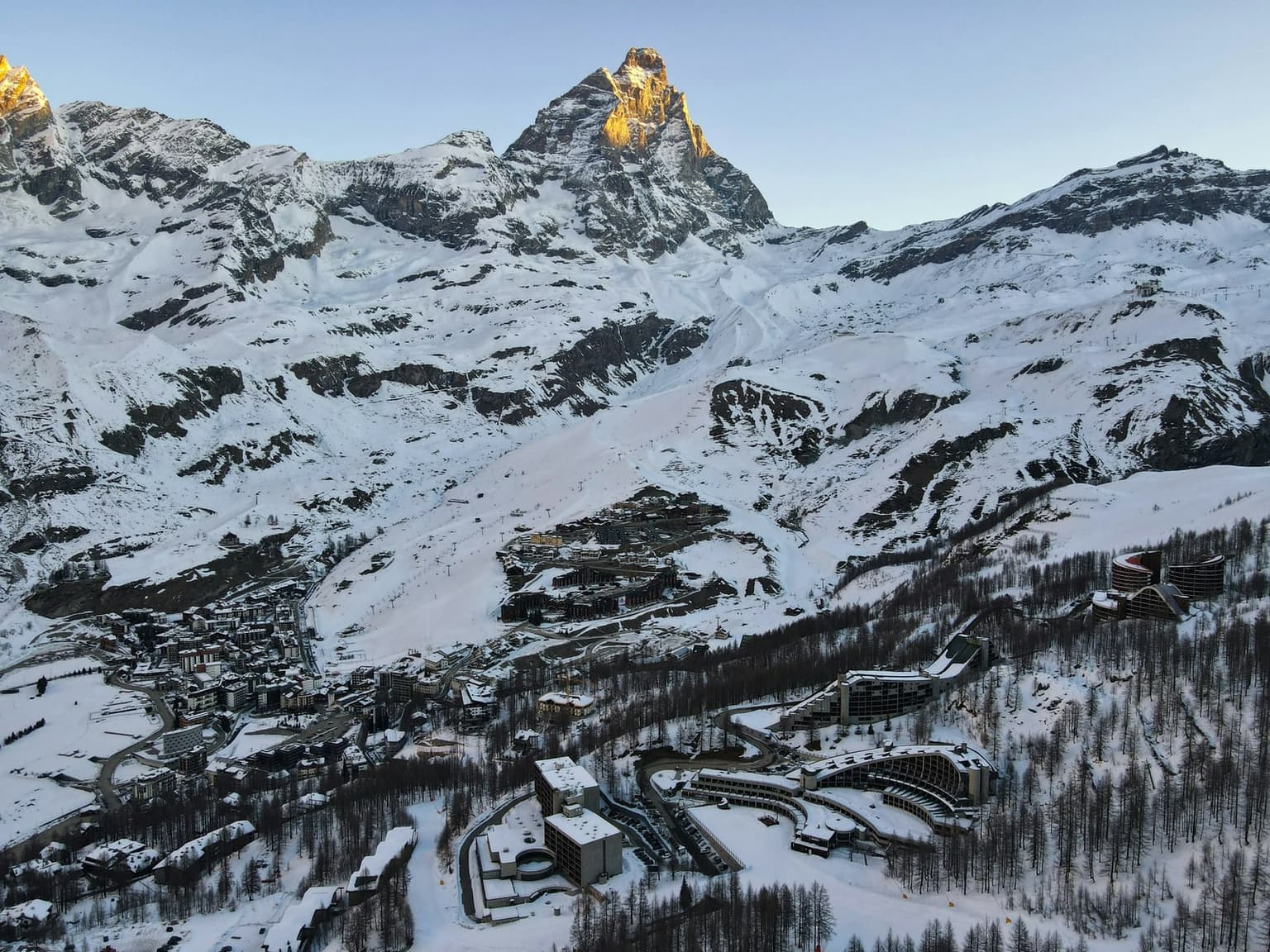
The Plateau Rosà cable car arrives at 3,480 m, where the Ventina run starts its 11 km down to Cervinia at 2,050 m. The ski link into Switzerland runs on the Cime Bianche Laghi - Plateau Rosà cableway and the Bontadini chairlift, and with Zermatt the area has 352 km of runs. Going up to Plateau Rosà or into Switzerland, you must carry a valid document for international travel; for an American, that means the passport. Breuil-Cervinia's season runs October 24 to May 2.
There are runs at every level, whatever the altitude suggests, and the Aosta Valley cooking is worth coming down for. It can also blow for days up here: lift times hold only when weather, snow and slope conditions allow, and the pass costs the same however many lifts are running.
Cervinia is the cheaper side of the Matterhorn, which makes it the side to sleep on and ski into Zermatt from. Six consecutive adult days cost €338 for Breuil-Cervinia and Valtournenche, a pass that also covers the Torgnon and Chamois lifts (not the Buisson-Chamois cable car), or €464.50 with Zermatt. On Ikon, Zermatt is a separate destination: a cross-border day counts against both your Aosta Valley and Zermatt days, and Ikon works there only through April 30.
Breuil-Cervinia's 2026-27 winter tariffs, the PDF its lift company links from cervinia.it
Courmayeur: Mont Blanc, the Skyway and the Vallée Blanche
Courmayeur sits at 1,224 m in a basin overlooked by the Mont Blanc chain. Its 33 runs (11 blue, 17 red, 5 black) cover two sides, Val Vény and Plan Chécrouit, and reach up to Cresta d'Arp at 2,755 m; two cableways and the Dolonne gondola take you up, and the Courmayeur cableway in the town center runs every night until midnight. The scenery is the reason to come, which is lucky, because the lifts and the grooming feel dated next to South Tyrol's.
The Skyway Monte Bianco goes up to Punta Helbronner. On Ikon it costs a day, but only one in total if you also ski one of the five Aosta Valley mountains that day.
Skyway Monte Bianco's ticket prices at its operator, Funivie Monte Bianco (montebianco.com)
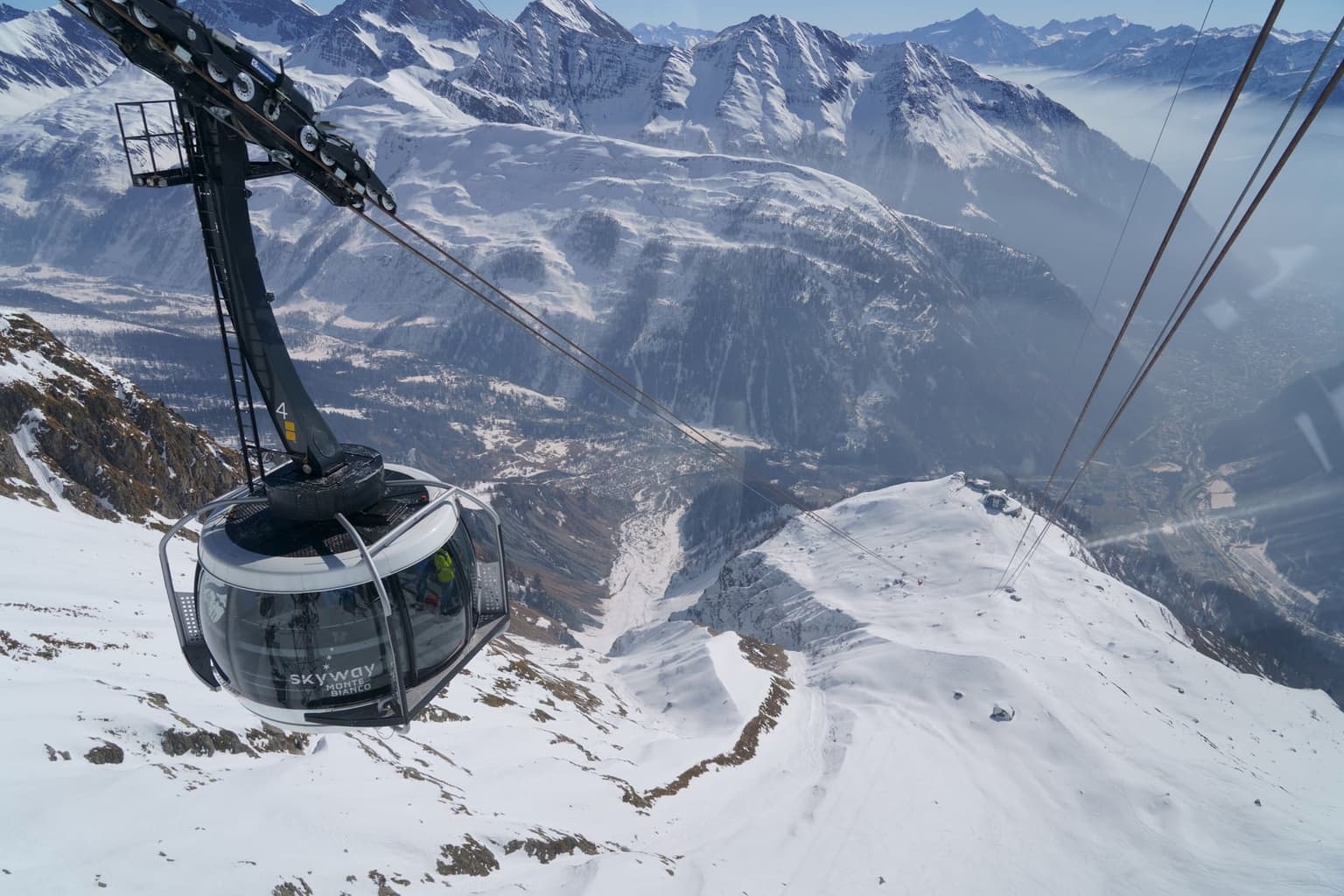
From Punta Helbronner (3,466 m), the Vallée Blanche descends 24 km to Chamonix, 18 of them on a glacier, and finishes in another country. The Aosta Valley tourist board gives its window as December 25 - May 1.
⚠️ Warning
The board's own warning: these high mountain routes are neither signposted nor controlled, and if you ski them without mountain guides, you do so at your own risk.
If you book a guided day, ask whether the guide brings the glacier kit, whether the Skyway ride is included, how you get back from Chamonix, and what happens if conditions close the descent that morning.
La Thuile: skiing into France
La Thuile is linked on skis to La Rosière in France, and together they make the Espace San Bernardo: 156 km of slopes and 37 lifts, topped by Mont Valaisan at 2,800 m. The Franco Berthod reaches a 76% maximum gradient, and the Aosta Valley tourist board calls it the steepest in Italy. Six consecutive adult days cost €322 in the Espace, with each day's first lift always at La Thuile, so base yourself on the Italian side; some lifts may not run early and late in the season. February can bring big, beautiful slopes close to empty. The catch is old, slow lifts and a village that goes quiet after dark.
Monterosa Ski: three valleys and the freeride lift
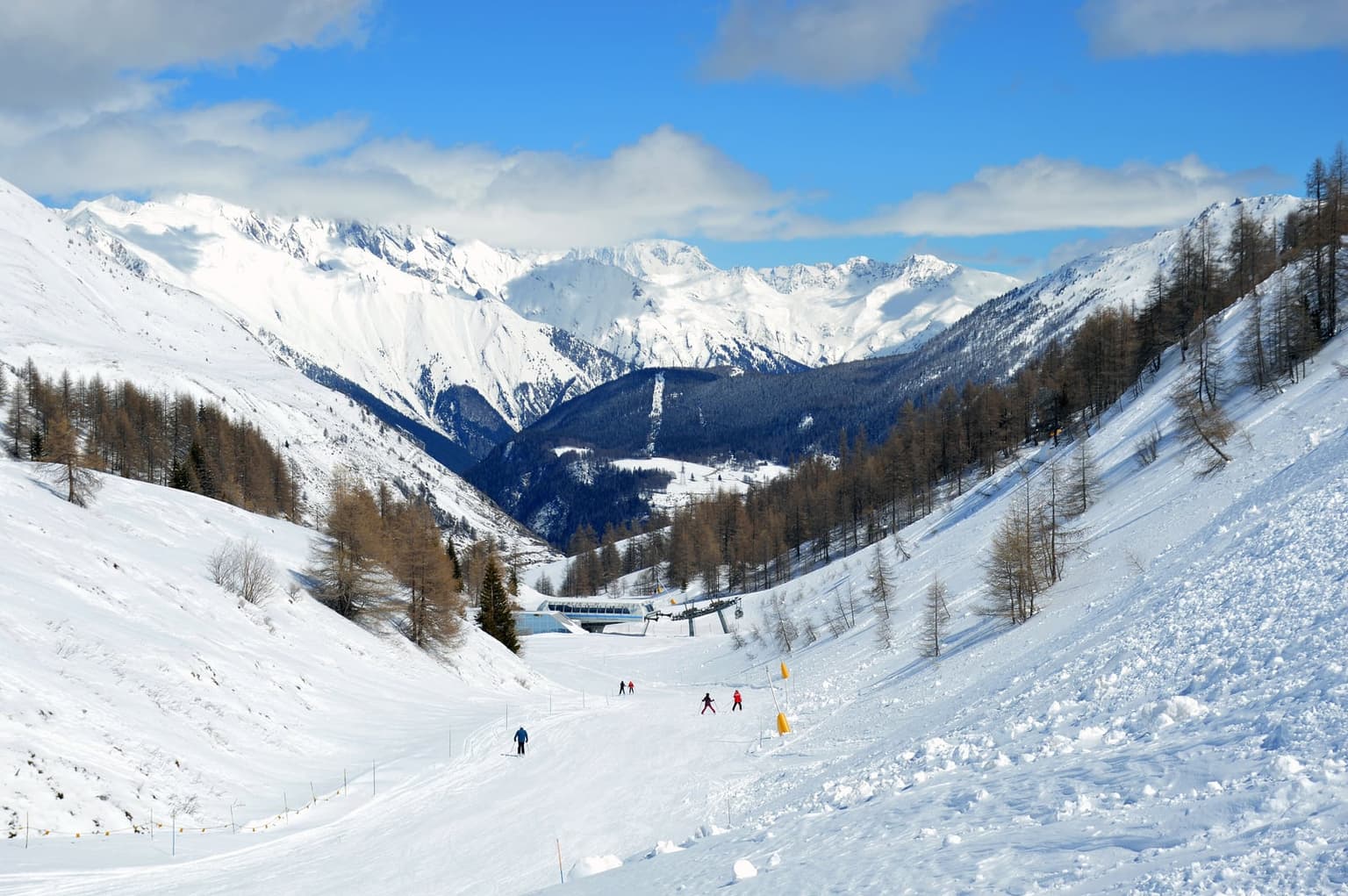
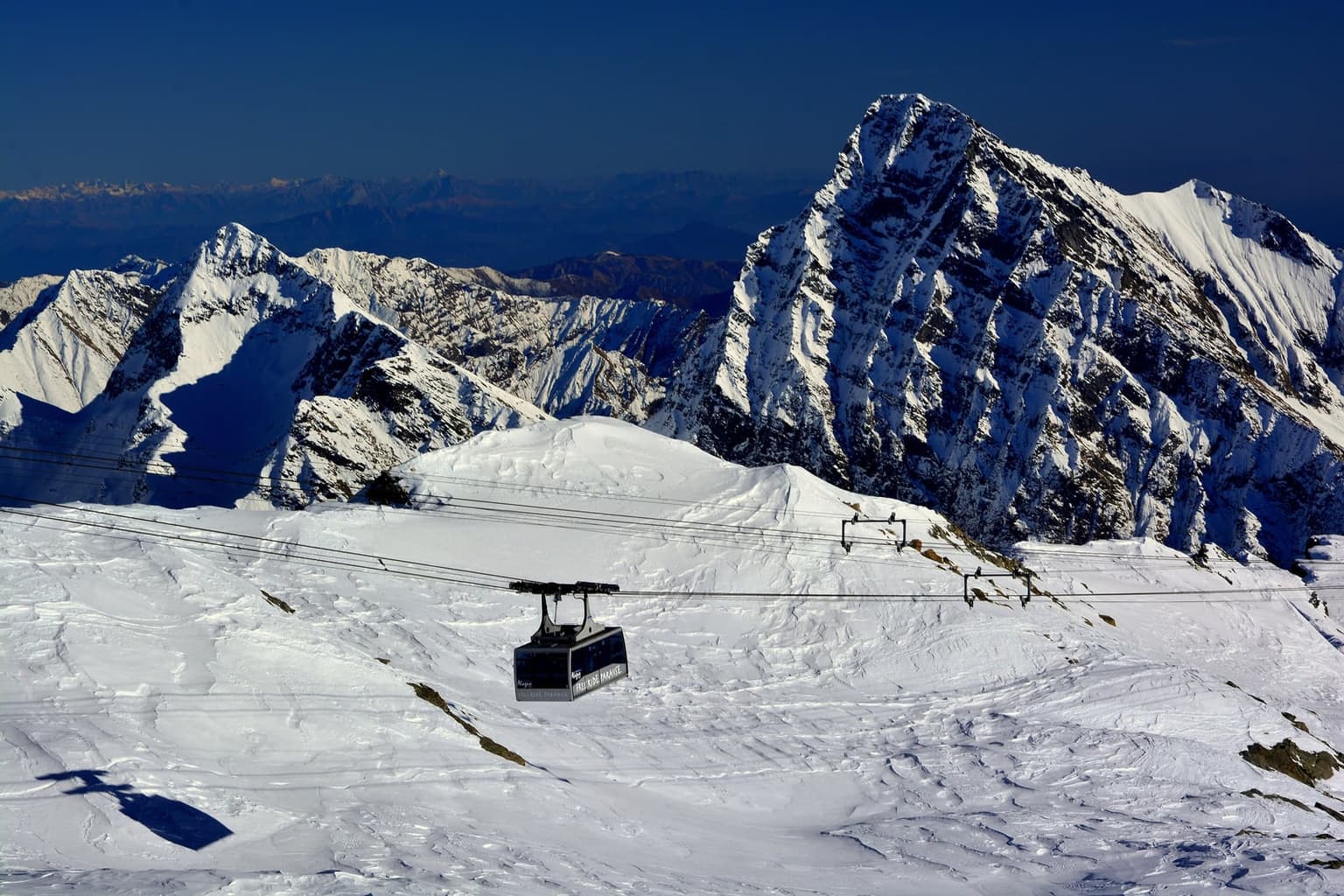
Monterosa Ski joins three alpine valleys into one ski area in sight of the Monte Rosa massif, between the Aosta Valley and Piedmont, with 100 km of runs by the tourist board's count. Its towns include Champoluc, Gressoney-La-Trinité and Alagna, which stays low-rise and quiet. The Funifor lift from Passo dei Salati to the Indren glacier opens the Monterosa Freeride Paradise, off-piste terrain to ski with a guide. The standard Monterosa Ski season pass doesn't include that lift (the Freeride Paradise season pass does), so check which ticket gets you on before you plan the day.
Pila: the learner's mountain above Aosta
An eight-person gondola links Pila to the city of Aosta in 18 minutes, says the tourist board, which also lists a six-day pass at €312. Its 70 km of slopes run from Plan Praz (1,540 m) to Couis 1 (2,750 m).
Of these five, I've skied three. Cervinia is for intermediates who want long, gentle runs, a lot of wide and comfortable blues, and snow you can count on high up. On my March week there, the wind shut the high lifts over to Zermatt for several days. Courmayeur rewards confident experts looking for off-piste terrain in the trees, and the food on the mountain is good, but the end of the day meant a packed cable car down to town. La Thuile is for strong, technical skiers who want empty red and black runs away from the crowds; the catch is the long flat stretches on the way over to La Rosière, where I spent a lot of time pushing with my poles.
On Epic: Madonna di Campiglio and Passo Tonale
Skirama Dolomiti takes in Madonna di Campiglio, Pinzolo, Folgarida-Marilleva, Pontedilegno-Tonale, Pejo3000, Paganella, Monte Bondone and Alpe Cimbra (Folgaria-Lavarone), with 150 lifts and 380 km of slopes in all. That is a lot of names for one week, so narrow it to two, Campiglio or Tonale, and let the way you ski choose between them.
Madonna di Campiglio: one ski pass, three linked areas in the Brenta
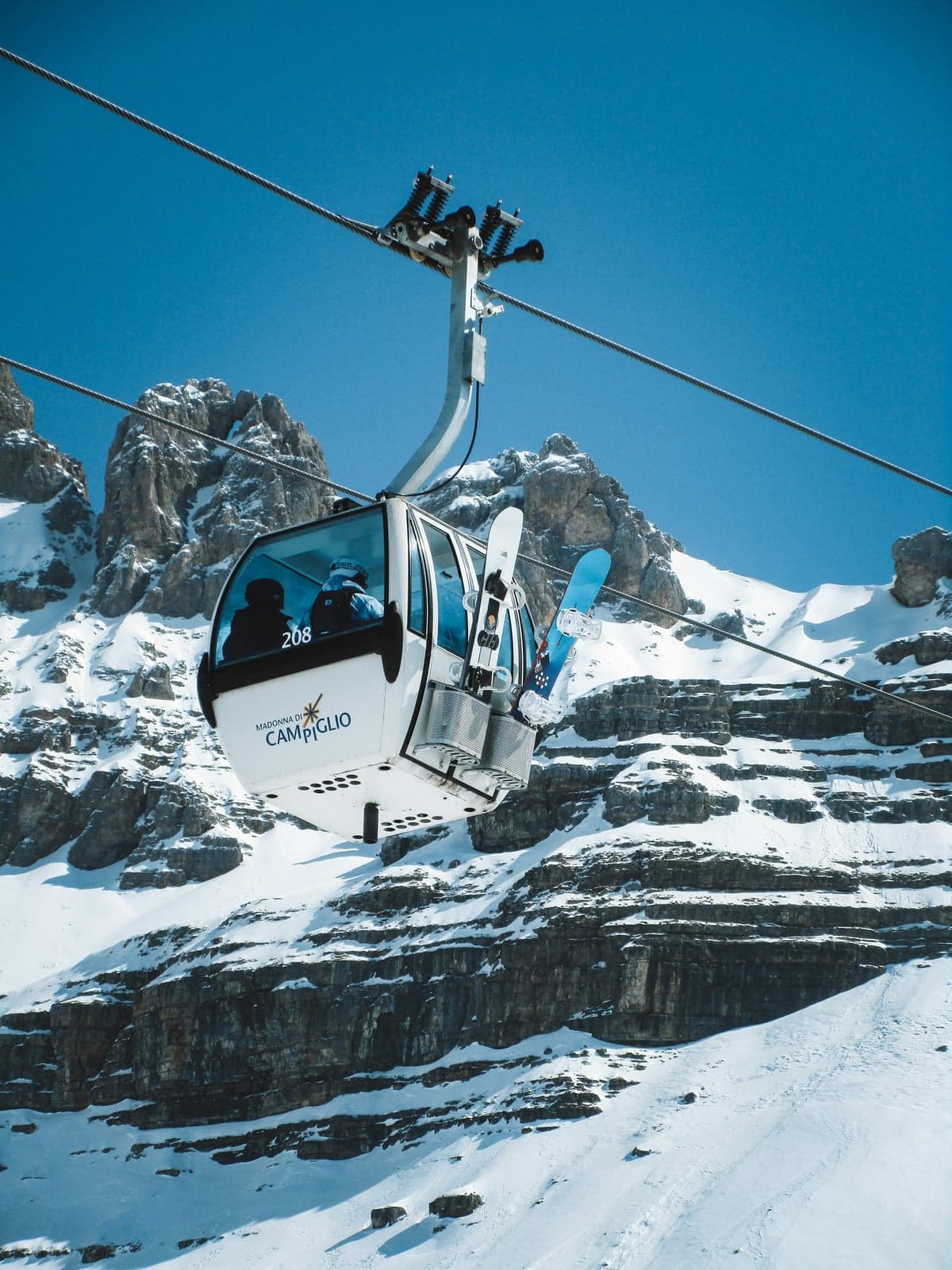
One ski pass covers Madonna di Campiglio, Pinzolo and Folgarida-Marilleva: about 150 km of linked slopes and 58 lifts, right in the heart of the Brenta Dolomites, with 1,600 snow cannons behind them. It is a large resort and skis like one, with plenty of slopes and plenty of skiers on them, which makes it the pick if mileage is the point and you want a different way down every day of the week. The weak joint is the link itself: the four-seat chairlifts between Folgarida-Marilleva and Campiglio weren't built for that many people, and the wait at them can run long on a busy day. Campiglio also has a reputation for being expensive, the kind of reputation a resort rarely works hard to shake.
Passo Tonale: built for learning, with a glacier
The ski area, Pontedilegno-Tonale, has 100 km of slopes, glacier skiing on the Presena at over 3,000 m, and a non-stop run of nearly 12 km down to Ponte di Legno. Its real talent, though, is teaching. Tonale is close to purpose-built for learning and progressing: its south-facing slopes get steeper a step at a time, so a first-timer's Tuesday is a little harder than Monday, and the whole week comes with a staircase built in. Skiers past the beginner stage still get plenty of good terrain, so the friend who already skis won't spend the week on the bunny hill with you.
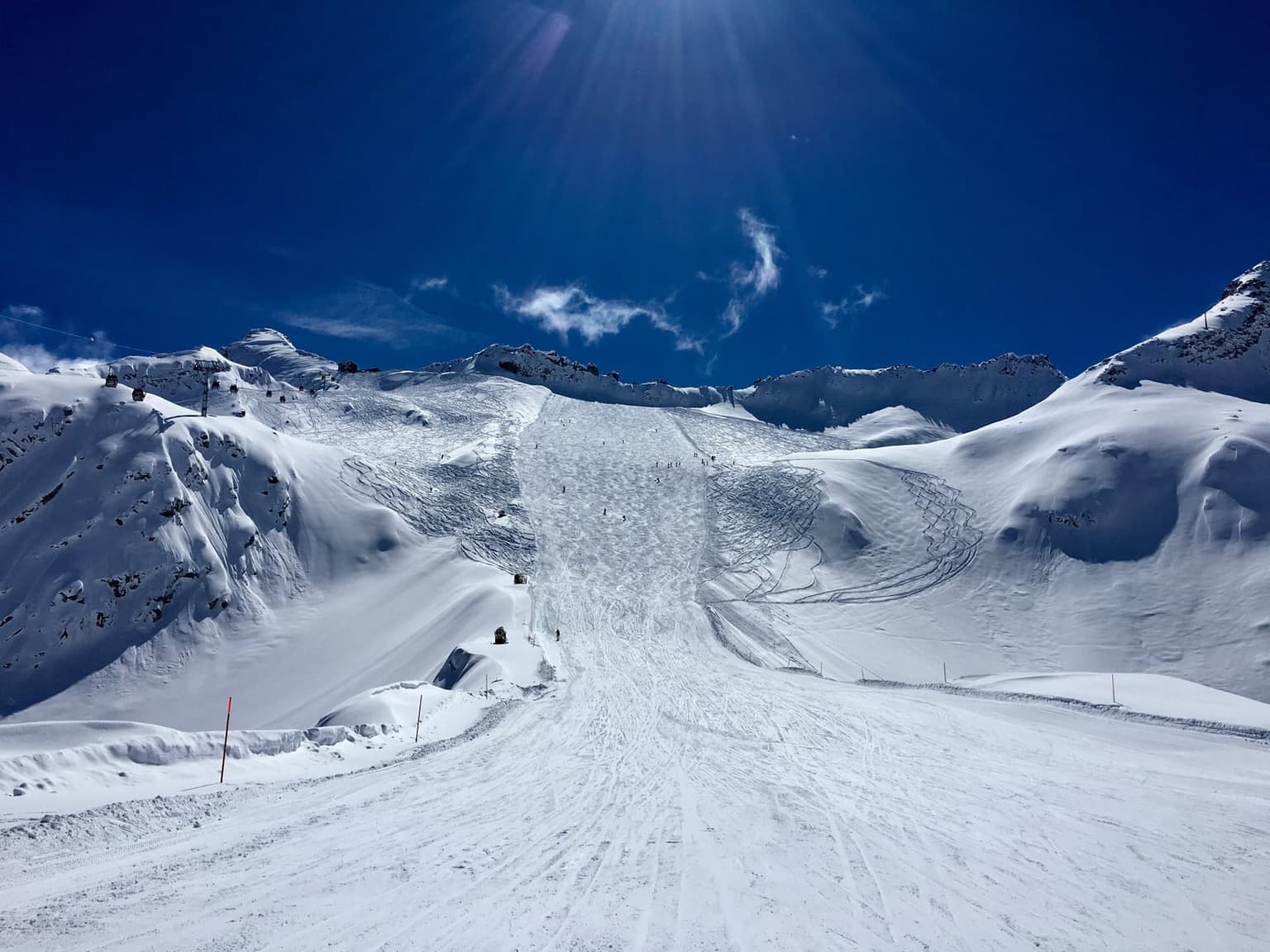
I've skied both. Madonna di Campiglio suits intermediates who want a big linked area, good lifts, perfect corduroy and the Brenta views, though the narrow connecting runs between the valleys got crowded. Passo Tonale is for beginners, with very wide, sunny open slopes, and for anyone chasing high snow on the Presena glacier. What it lacks is tree skiing and interesting terrain on the main south-facing plateau.
Not on Ikon or Epic: Livigno, Bormio and the Via Lattea
With no pass steering the choice, the mountain has to earn it on its own: the kind of skiing, and the week you can get. Six-day prices for Bormio and the Via Lattea are in the table above. Much farther south, Roccaraso, in Abruzzo's Alto Sangro, has 140 km of slopes and sits on none of the three passes either.
Livigno: high, duty-free and far
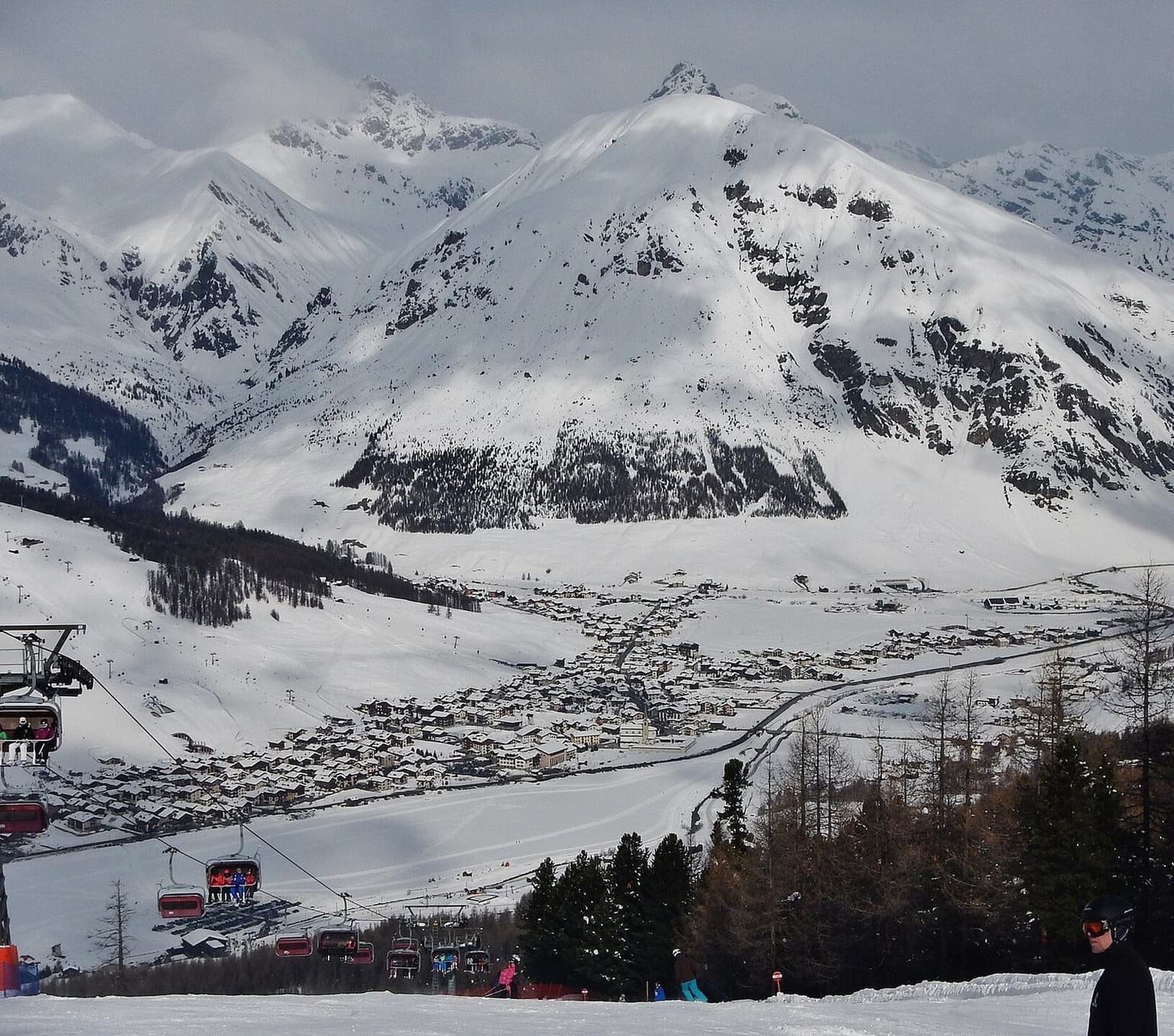
Livigno has 115 km of slopes reaching almost 3,000 m, spread over both sides of the valley, and the resort says you can "easily" move between them. The whole place is a non-customs, duty-free zone. The slopes are well groomed, the instructors good and the food better than it needs to be; the town is a pleasant one to come down to, and with kids it makes an easy week, though a full week can start to feel long.
Livigno's ski-pass price calendar starts November 28, and six consecutive adult days cost €258.50 in the promo weeks, €331 in season weeks and €374.50 in high season. November 28 is a price band, though, not a promise of open lifts: an early-December week can find only a few slopes and lifts running, even with plenty of snow on the ground. Then there's getting there, which is a chore; the route is in the arrival section below.
Bormio: the Olympic downhill and three areas on one pass
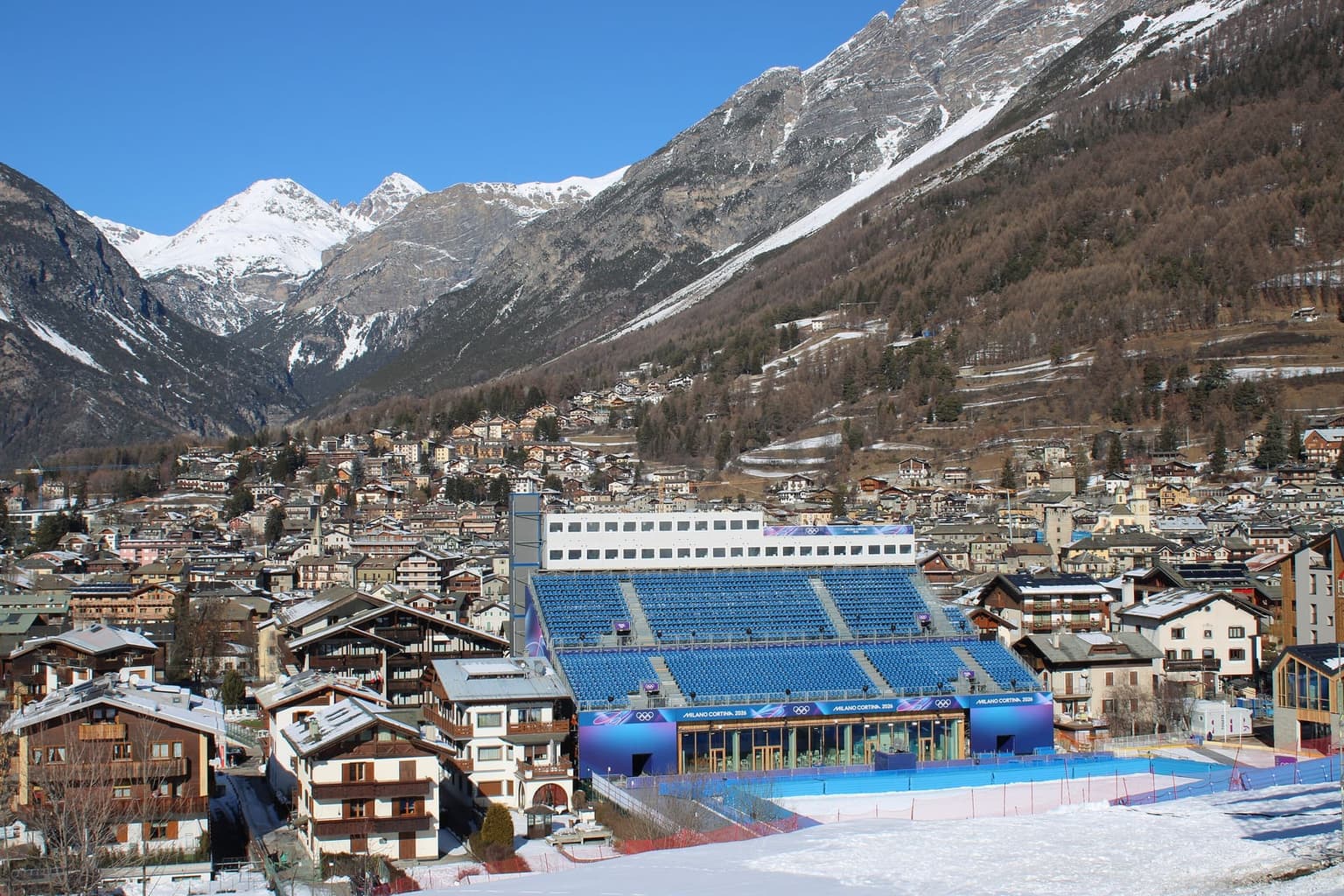
The Stelvio is Bormio's calling card: the World Cup races on it every year, and the men's downhill of the 2026 Olympics was run there on February 7, 2026. It has 1,000 m of vertical and gradients over 50% in places. Separately, the ski area drops 1,800 m from Cima Bianca down to Bormio. Ski that drop from the top on a clear day and you can have it nearly to yourself, the views opening wider with every turn while the town comes up to meet you, more slowly than your thighs would like.
The multi-day pass covers three areas, Bormio (50 km), Santa Caterina (35 km) and Cima Piazzi-San Colombano (25 km), and they aren't linked on skis: a ski bus joins them, free if you show the driver a pass of two days or more. Bormio-Santa Caterina runs December 4 to April 11. The home area alone is on the small side, and spring can run warm enough here that sunbathing gives the skiing real competition.
Via Lattea: Sestriere and the 2006 Olympic slopes
The Via Lattea combines Sestriere, Sauze d'Oulx, Claviere, Cesana, Sansicario, Pragelato, Oulx and the French resort of Montgenèvre: 400 km of runs up to 2,800 m, from the steep slopes of the Banchetta to Sansicario's winding runs. Sestriere and Sansicario held the races of the 2006 Torino Olympics. The area's lifts open December 5 and close April 11. From Claviere, expert skiers can reach Montgenèvre's French slopes and come back into Italy on the demanding Colletto Verde run.
The six-day Vialattea Italia pass covers Sestriere, Pragelato, Sauze d'Oulx, Sansicario, Cesana and Claviere; Montgenèvre takes an extension whose terms the operator doesn't spell out. The area is big enough to fill the whole week. At Sestriere, though, the opening and closing times can be hard to find, which matters most on the connecting lifts.
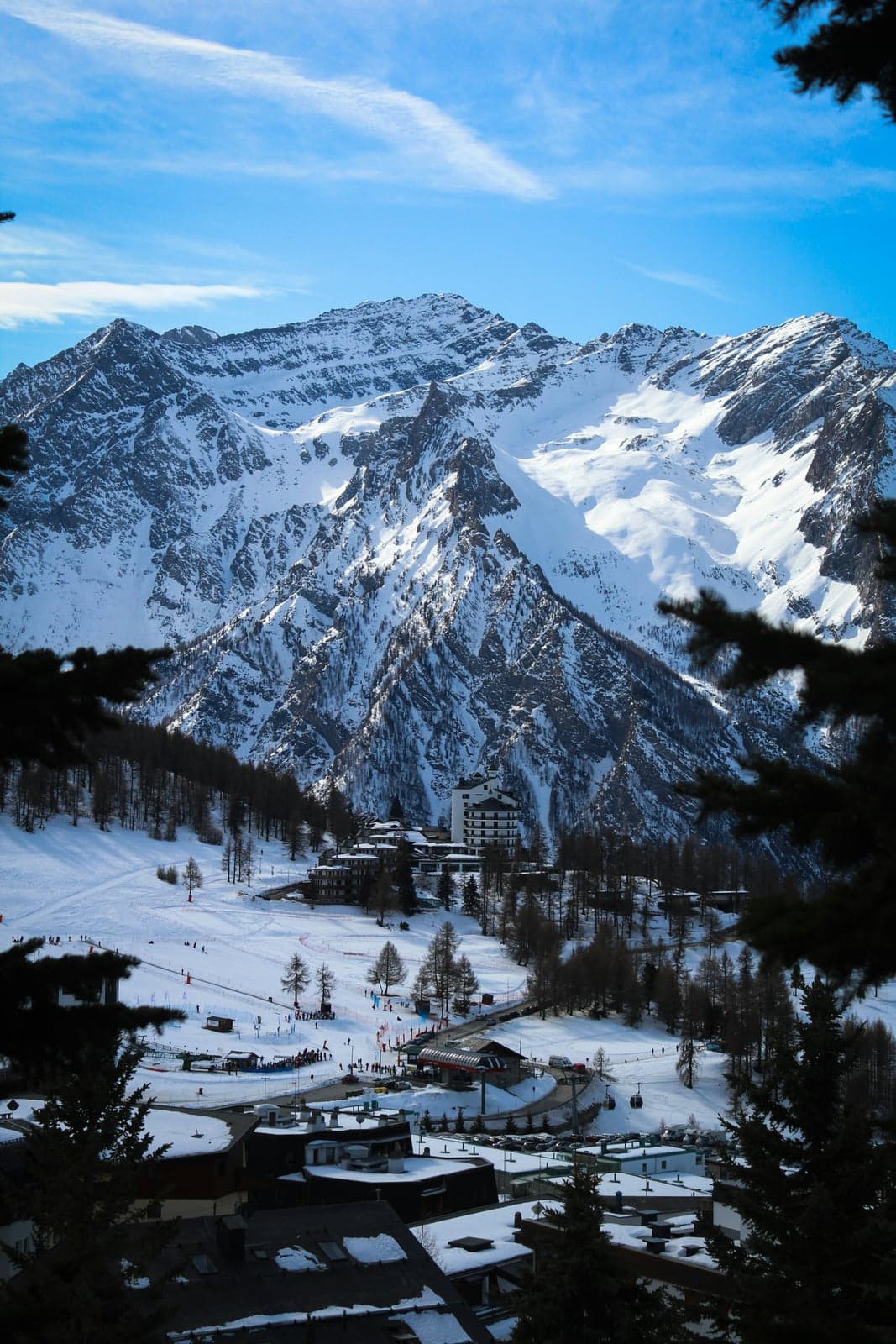
I've skied all three. Livigno is for intermediates who want wide, sunny runs, steady snow, good snowparks and the duty-free shopping, but the long, lonely drive in over narrow high passes wore me out. Bormio is for fit experts who want long, fast runs with a big vertical and hard carving on the Stelvio; the wet, heavy snow on the lowest stretch back to town spoiled it for me. The Via Lattea suits a ski safari, dozens of new kilometers every day at a fair price, if you can forgive the old, slow chairlifts and the confusing signs where the valleys meet.
Which Italian ski resorts suit kids and beginners?
Among the best family ski resorts in Italy, the free child pass comes with strings: at the four below, it rides on paid passes bought at the same time, and the age, the count and the qualifying pass all differ by resort.
| Resort | Who skis free | Condition |
|---|---|---|
| Livigno | Small children | One per adult, with a same-length adult pass bought with theirs |
| Bormio | Children born 2019 or later | One per paying adult, with an adult-price pass of the same length bought at the same time |
| La Thuile | Under 8 | Only with an adult or Young ticket bought together |
| Kronplatz | A third Junior child and any further Junior or Kid | Multi-day passes for two parents and three Junior children bought together, ticket office only, proof of the same address and surname |
A good learner mountain is less about size than about slopes that stay gentle long enough to practice on, and a ski school that knows what to do with a four-year-old. Alta Badia's Val Stella Alpina, the valley a cable car reaches from Colfosco's valley floor, has 5.5 km of slopes suited to families with little children, and it makes a fine classroom. La Thuile has over 13 km of easy slopes. Passo Tonale, back in the Epic section, belongs on this list too. On the Via Lattea, a complete beginner is likely better off at Claviere or Montgenèvre than at Sestriere, and Montgenèvre has some very long green runs. For the smallest skiers, Pila's ski school comes with play facilities and a magic carpet for children 4 and up.
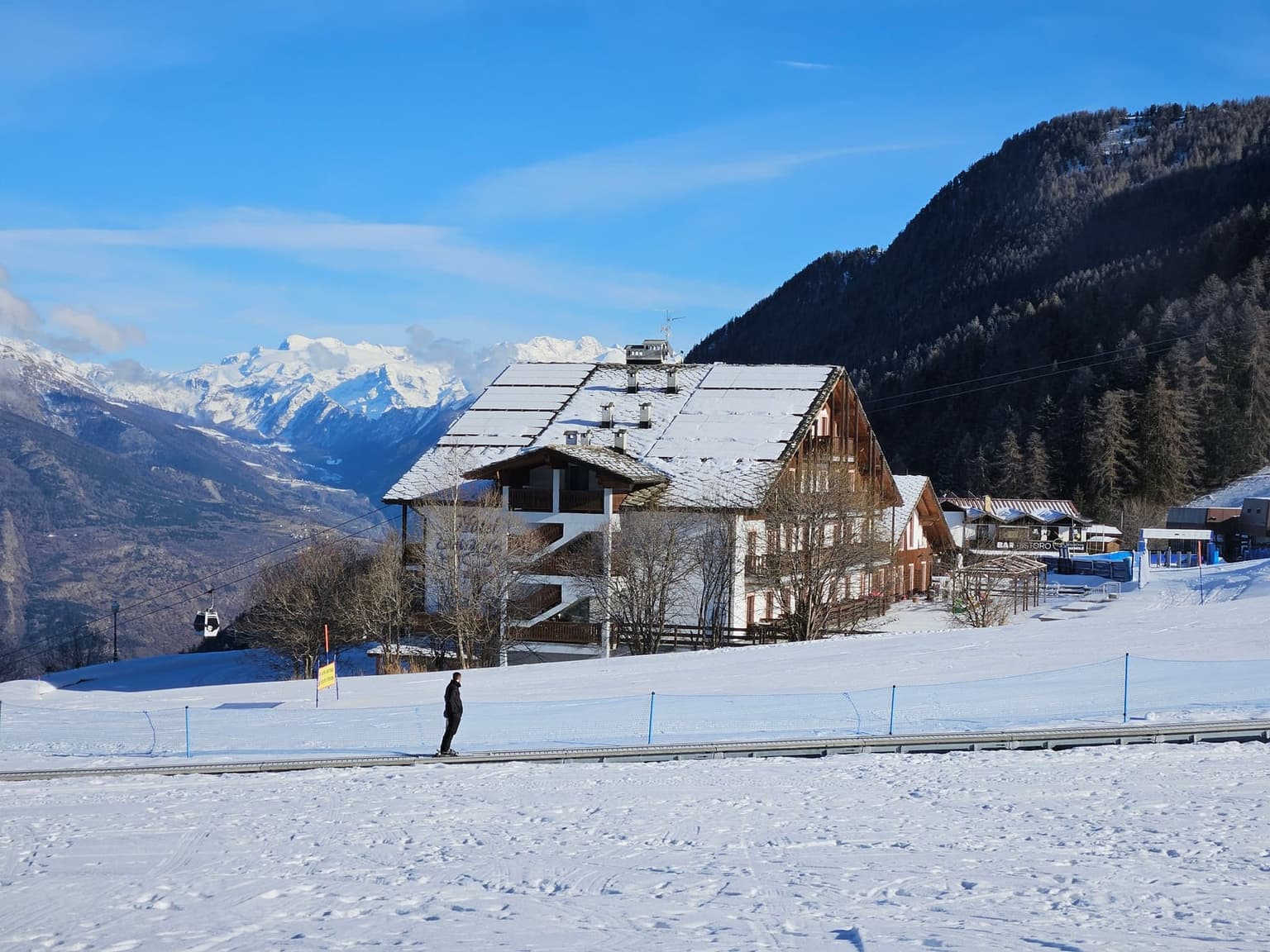
With kids, the bed decides the week. I'd pick it by the walk to the lift and to the ski-school meeting point (ten minutes in ski boots with a five-year-old is a long ten minutes), then ask whether there's a ski or boot room and read the minimum-stay terms before you book.
Getting to Italy's ski resorts from the airport
The Dolomites have an airport-by-airport arrival guide of their own.
For the Aosta Valley, Arriva runs a bus from Malpensa (Terminal 1 exit 5, Terminal 2 stop 4) to Aosta bus station for €25, booked at least 24 hours ahead with your skis added in the booking. It runs on set days only, not daily, and its timetable is published only through December 31, 2026, so check the days before you book flights, not after. It also stops at Chatillon, Verrès and Pont-Saint-Martin, but it doesn't reach Breuil-Cervinia or Courmayeur.
Arriva's Malpensa - Aosta Valley bus page, with the set-days timetable and booking (aosta.arriva.it)
Livigno and Bormio share a way in: the train from Milano Centrale to Tirano, then the Perego bus on the Tirano-Bormio-Livigno route. Livigno also lists the Livigno Express, a daily airport shuttle in the winter season. For Livigno, carry a valid document for foreign travel, and check when the Alpine passes and the Munt La Schera tunnel are open before you drive in.
Livigno's page on arriving by train, bus or plane, the Livigno Express included (livigno.eu)
Visit Trentino's FlySki Shuttle connects Verona, Bergamo, Malpensa, Linate, Venice and Treviso airports, plus Milano Centrale, Venezia Mestre and Trento stations, with Val di Sole, Val di Fassa, Val di Fiemme, San Martino di Castrozza and the Madonna di Campiglio-Pinzolo-Folgarida area. It runs every Saturday and Sunday from December 19, 2026, to March 29, 2027, plus a special run on Wednesday, January 6, 2027. Plan a weekend arrival around it, not a Tuesday one.
Visit Trentino's FlySki Shuttle page, with the 2026-27 dates and airports (visittrentino.info)
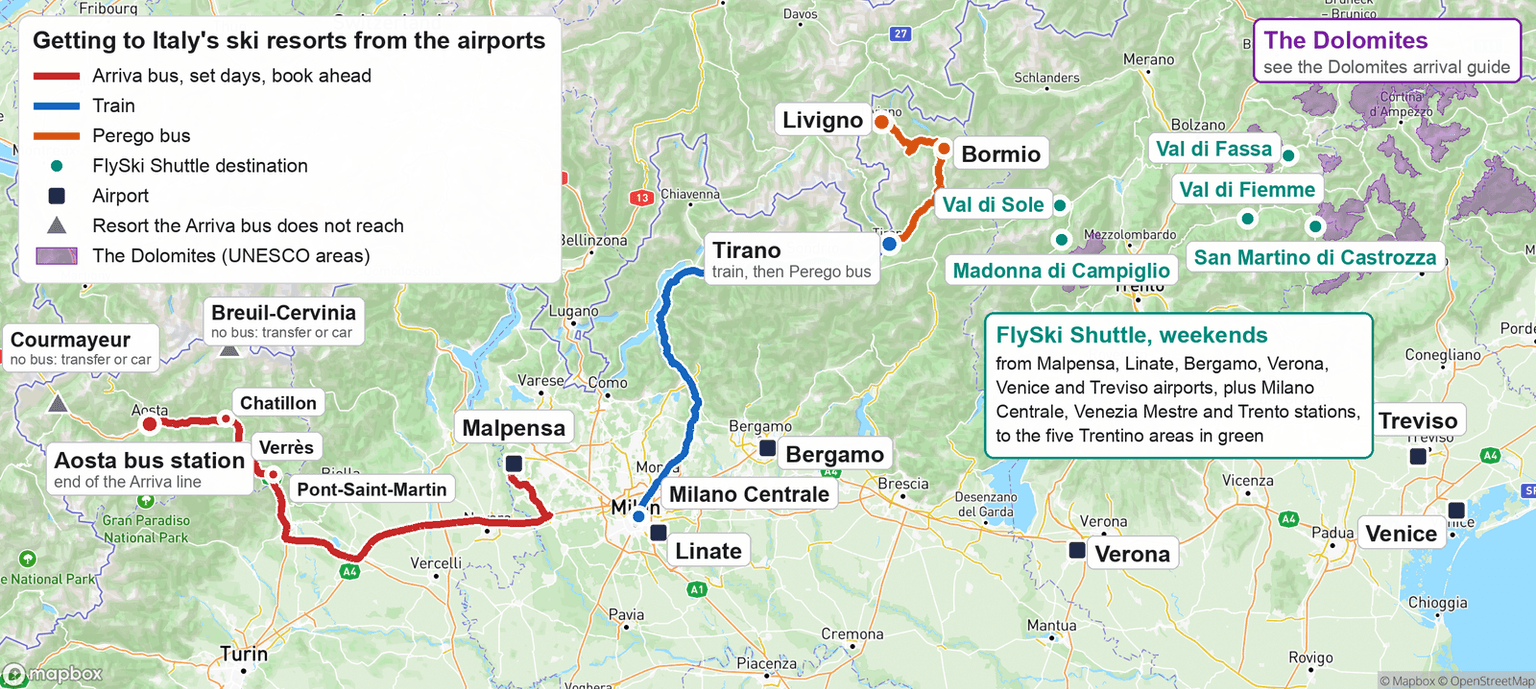
For Cervinia or Courmayeur with ski bags, I'd book a door-to-door transfer from Malpensa and let it close the gap the Arriva bus leaves. Pick a vehicle with room for the bags, give the company your flight number, and ask what a late landing costs before you pay.
Driving instead? Rent at Malpensa for the Aosta Valley, Bormio or Livigno, and ask for winter tires or snow chains when you book.
FAQ
- Can I use my Ikon or Epic pass in Italy?
- Yes. Ikon: seven days in Dolomiti Superski and seven across five Aosta Valley mountains (five each on Ikon Base); Epic season passes: seven consecutive days at Skirama Dolomiti's eight resorts; Mountain Collective: none for 2026-27.
- Which Italian ski resort is best for beginners?
- Passo Tonale, whose slopes steepen a step at a time; Alta Badia's Val Stella Alpina; and Pila, whose ski school has a magic carpet for children 4 and up. On the Via Lattea, a first-timer is likely better off at Claviere or Montgenèvre than Sestriere.
- Do kids ski free in Italy?
- At some resorts, with a paid pass bought at the same time. Bormio: children born 2019 or later, one per paying adult with a same-length adult-price pass; Livigno: small children, one per adult with a same-length adult pass; La Thuile: under 8, with an adult or Young ticket.
- Can you ski from Italy into Switzerland or France?
- Yes. From Cervinia the ski link runs into Zermatt: carry your passport, and on Ikon that day counts against your days at both. La Thuile is linked on skis to La Rosière in France; from Claviere, on the Via Lattea, expert skiers can reach Montgenèvre's French slopes and come back into Italy on the Colletto Verde run.
- When does the ski season start in Italy?
- Resort by resort. For 2026-27, Breuil-Cervinia opens October 24; Courmayeur, La Thuile and Pila November 28; Bormio-Santa Caterina December 4; the Via Lattea's lifts December 5. Ikon starts November 15 in Superski and, in the Aosta Valley, at each resort's opening from November 1.
Check which Italian resorts your pass covers before you price a hotel; after that, the mountain is a short list.