George Mandrovny
The short answer: winter here runs on its lifts
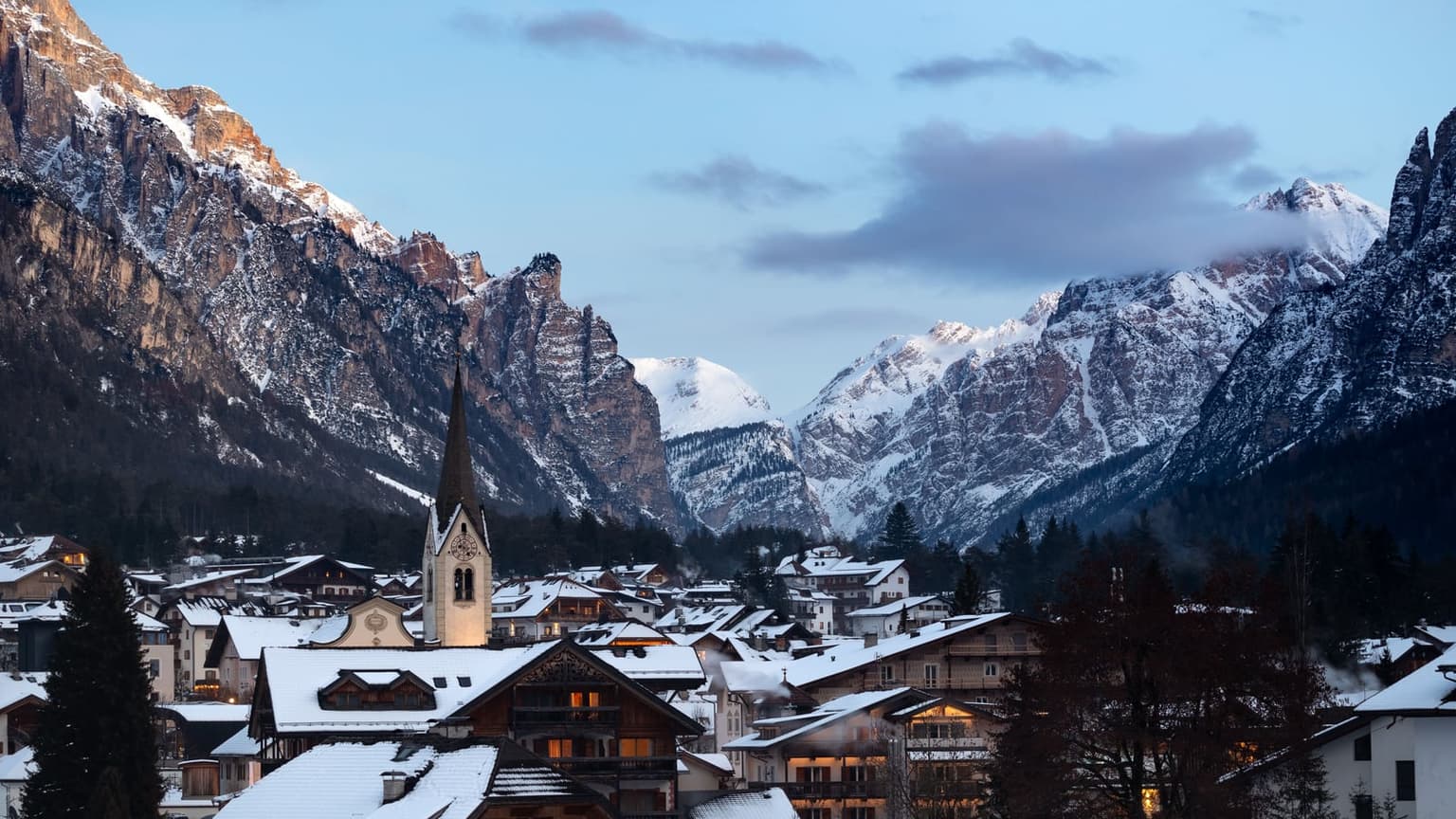
Yes, the Dolomites in winter work for skiers and non-skiers alike, on two conditions: come while the lifts run, roughly early December to early April, and sleep in a village where a lift sells walkers a ride up. The trap is most of November and mid-April. They look like cheap, quiet weeks, and they are the weeks when the lifts are shut and much of the town has closed with them.
- Non-skiers - a base whose lifts carry walkers up to huts and sled runs. Val Gardena has the deepest menu.
- Mixed group - a village where the walkers' lift and the skiers' lifts leave from the same place.
- Cheaper and quieter - mid-January or late March. Christmas week means holiday prices and week-long minimum stays.
- A car - only if you already drive mountain roads in snow. Otherwise, base on a daily bus line.
Winter here is a lift trip, not the summer trip with snow on it. Most of the summer trail network sits under snow, and the mountain you can reach is the mountain the lifts reach. So every choice below comes in the same order: first the weeks the lifts run, then a village with a lift that takes walkers. Get those two right and a group where only half of you ski gets one trip instead of two. Get either wrong and you have paid for a snowy valley with nothing open, which is scenic for about a morning.
Dolomites in winter for non-skiers, skiers and mixed groups
The Dolomites in winter suit non-skiers as well as skiers, provided the base has lifts that sell walkers a ride. What changes from one group to the next is the shape of the day.
Non-skiers get a trip built on lifts. Ride up, walk a groomed path to a mountain hut, eat lunch on its deck, then ride or sled back down, with the Christmas markets in the valley towns as December's bonus. Walking here means groomed and marked winter routes, and the snow decides how many of those there are. A thin early December can leave more open to boots than you'd expect. A heavy one leaves you the groomed paths and nothing else. A base without a walker lift of its own leaves you in the valley, reading bus schedules to reach someone else's.
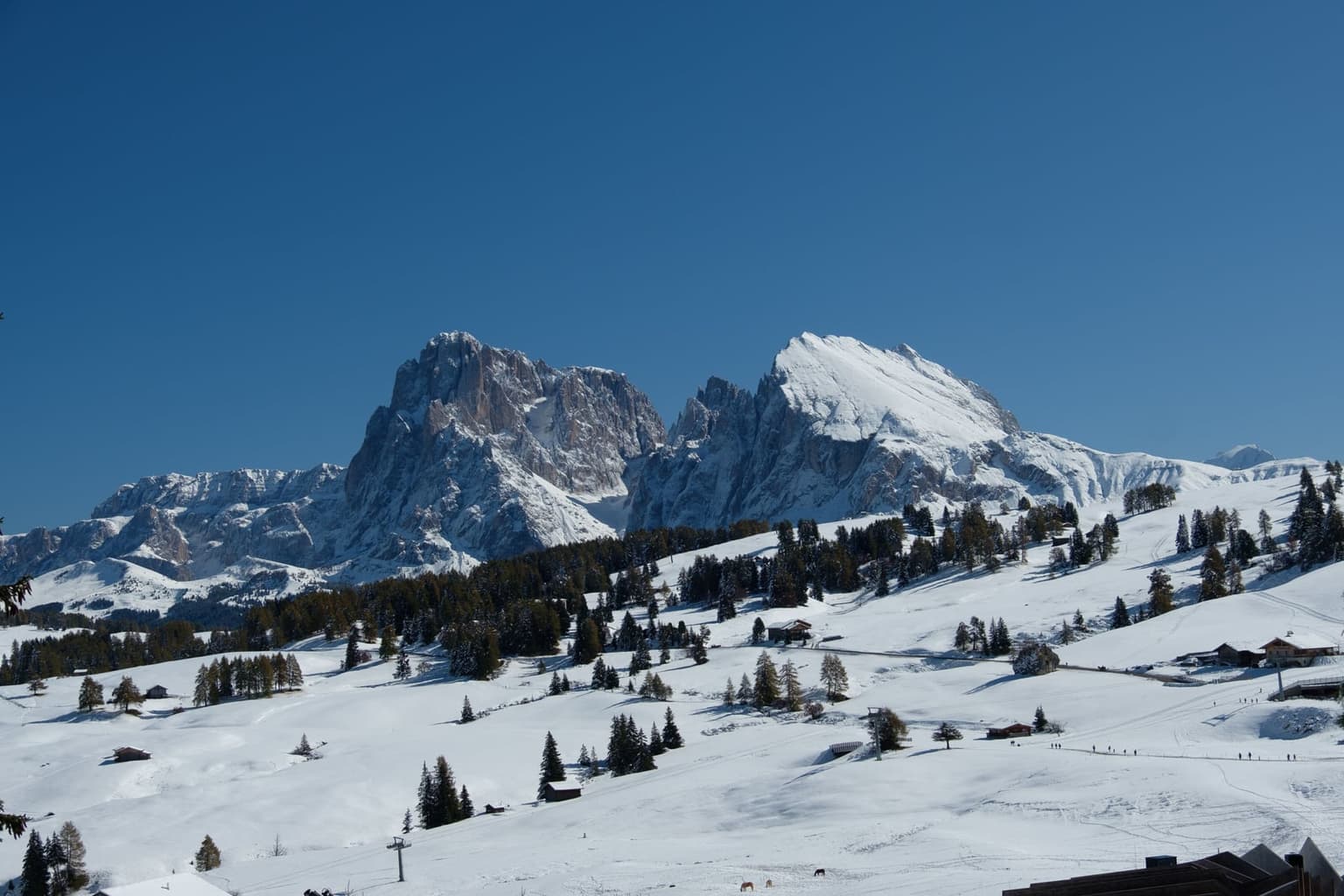
Mixed groups are the real puzzle, and the answer is geography. Pick the village where the walkers' lift and the skiers' lifts start from the same place, so nobody's day begins with a bus ride the others skipped. Then I'd settle lunch before anything else: one hut that both halves can reach, the skiers on skis, the walkers on a groomed path. The open plateau of Alpe di Siusi is where that works best, because the two groups share the same snow there. Early in the season, watch for skiers still finding their legs, who cut across the walking paths without much warning.
Skiers have the easiest call. One Dolomiti Superski pass covers the whole circuit, so yes, you can ski the Dolomites, and on far more than one mountain. The price follows the week you pick, and the table in the next section has the bands. Ikon Pass holders get up to seven days here with no blackout dates. Ikon Base gives up to five, blacked out December 26 - 30, January 16 - 17 and February 13 - 14. The pass mostly buys reach: the ski circuit links valleys on skis that the road does not, so a skier can ski two valleys in a day while a non-skier would spend that day on a bus.
And if the trails are the point, winter is the wrong trip. Hiking season here runs June to September, and that trip has its own plan, built around trails rather than lifts.
When to go: the weeks the lifts actually run
The Dolomites' ski lifts run from late November or early December to early April. For 2026-27, Val Gardena and Alta Badia run December 4 to April 4, and Kronplatz and the 3 Zinnen Dolomites ski area open on November 28.
⚠️ Warning
Between the end of the summer lift season in early November and your valley's ski opening, and again after early April, the lifts stop and many hotels and restaurants close with them. Late November is not a cheap version of winter. It is the off-season.
Inside the lift window, the weeks differ by price, crowd and light, and the ski operators have already drawn the lines. Their own price calendar splits the season into bands, which make a better planning calendar than the months do.
| Window | 2026-27 dates | What it buys | What it costs |
|---|---|---|---|
| Early December | Dec 4 - Dec 19 | Lifts newly open, markets running, adult Superski pass at the pre-season €80 a day | Snow is a lottery; the shortest days of the year |
| Christmas to Epiphany | Dec 20 - Jan 9 | The markets and the holiday atmosphere | High-season pass at €89 a day; week-long Saturday-to-Saturday minimum stays |
| Mid-January | Jan 10 - Jan 30 | The €80 pass price again, after the holidays | Cold, still-short days |
| February to mid-March | Jan 31 - Mar 20 | The full season, with longer days by March | High-season pass at €89 a day; February is the busiest month in the ski towns |
| Late March to early April | Mar 21 - Apr 4 | The €80 price again and the season's longest days | Spring snow; lifts close from Apr 4 (Kronplatz Apr 11) |
A six-day pass costs €407 in the €80 bands and €453 in the €89 ones.
Christmas is market season. Bolzano, Bressanone, Brunico and Vipiteno run their markets from November 27, 2026 to January 6, 2027, and Merano opens a day earlier. Two dates to plan around: Bolzano, Bressanone and Brunico close on December 25, and Brunico and Vipiteno close early on the 24th. I'd build a week around a few markets only if the snow half of the trip is set too. On their own, they are a long flight for a few evenings of shopping.
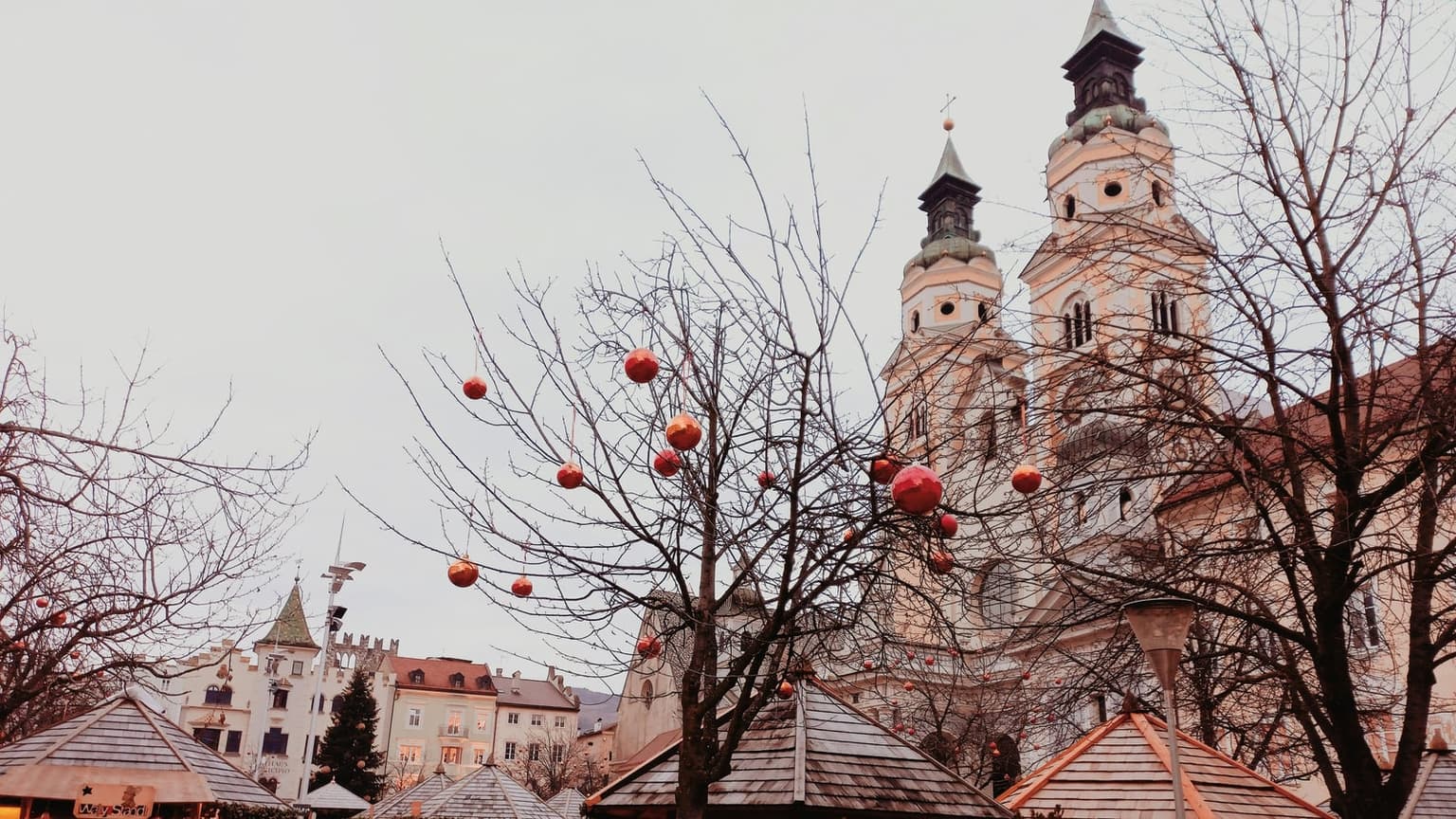
Light is the other limit. In Bolzano, December 21 gets about eight and a half hours of daylight, with sunrise around 07:55 and sunset around 16:29, and March 1 gets about 11. Plan outdoor hours, not stops: a December day holds one lift, one walk and one long lunch, and March hands you an afternoon back. The minimum stays in the table set the trip length too, and a three- or four-night break fits the €80 windows far more easily.
Where to stay: pick the village by its lifts
The best places to stay in the Dolomites in winter are villages with three things: a lift within walking distance that sells walkers a ticket, a daily bus line, and a guest pass that covers the ski buses.
The walkable lift is the non-skiers' whole trip: a lift you have to be driven to becomes a lift you use twice a week. The bus line lets the car stay parked, or never get rented. The guest pass decides whether the skiers' ride to the lifts is included or one more ticket.
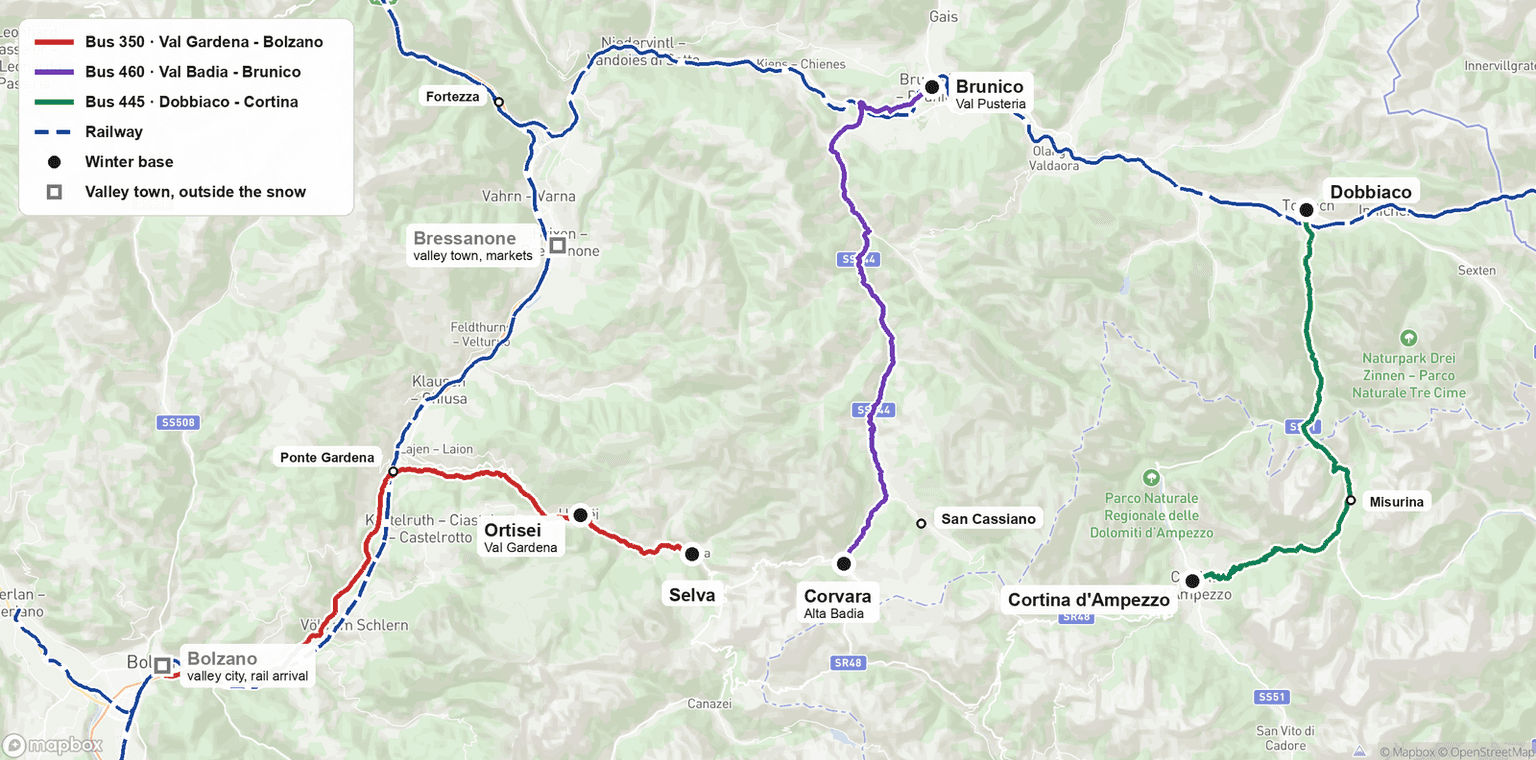
Val Gardena (Ortisei, Santa Cristina, Selva): the Seceda cable cars and the Resciesa funicular both leave from Ortisei. Bus 350 runs daily down to Bolzano, and the Val Gardena Guest Pass covers the valley and local ski buses for guests of member accommodations, except the Saltria-Monte Pana line and the Night Bus.
Alta Badia (Corvara, San Cassiano) has the Piz Sorega gondola, which also carries sledders to the top of the valley's long toboggan run. Bus 460 runs daily to Brunico, and from December 19 to March 28 a direct winter bus links Colfosco and Corvara with Venice.
Cortina d'Ampezzo has Freccia nel Cielo, which sells walkers a ride up to the Tofane terraces, and the Cortina Express bus runs to Venice all winter.
Val Pusteria (Brunico, Dobbiaco) has the Kronplatz ski area and the valley rail line, which stops at both towns. Dobbiaco is also the door to bus 445 over to Cortina, and to Lago di Dobbiaco.
For a mixed group without a car, it comes down to what matters more. The most walker lifts plus ski buses you know are covered: Val Gardena. A direct bus from Venice with no changes: Alta Badia or Cortina.
In practice, for a group where some of you don't ski, I always send people to Val Gardena, and to Ortisei in particular. From the pedestrian center I could ride straight up to Seceda or Alpe di Siusi, walk the plateau and meet the skiers on the mountain. In Alta Badia without a car, the walking half of the trip was frankly boring: the villages are much smaller and built entirely around the pistes, and a direct bus from Venice doesn't make up for that.
Bolzano is the rail arrival and a market city, but it sits in the valley, not the snow: every morning would start with a commute to winter. Castelrotto, pretty as it is, has no lift of its own. Ask any hotel away from the lifts how often its shuttle really runs. The one winter split worth making is a night or two in Bressanone or Bolzano for the markets, then up to the snow. Otherwise, one base: the non-skiers pay for every move in bus hours.
For Christmas or February, book the moment your dates are fixed, and read the minimum-stay rule before you fall for a listing. Ask the two questions the photos never answer: how long is the walk to the lift, and is the property in the guest-pass scheme? For early December, take free cancellation until the snow picture is clear.
Driving in snow, or leaving the car at home
Driving the Dolomites in winter makes sense only if you already drive mountain roads in snow and your plan needs the side valleys. Everyone else does better at a base on a daily bus line. These roads are hard work in good weather, and the last climb into a valley, narrow and exposed, is the wrong place to learn how a rental car handles ice.
None of the main passes has a scheduled winter closure, but any of them can shut for the day without warning, so a drive between valleys can end at a barrier with your hotel on the far side. How the valleys and their passes fit together shows whether your plan needs a crossing at all.
If you do drive, winter equipment is compulsory for the whole ski season, so the question is never whether you need it, only what the rental company hands you. Which airport to fly into, and the rule in full, are covered in the arrival guide, airport by airport.
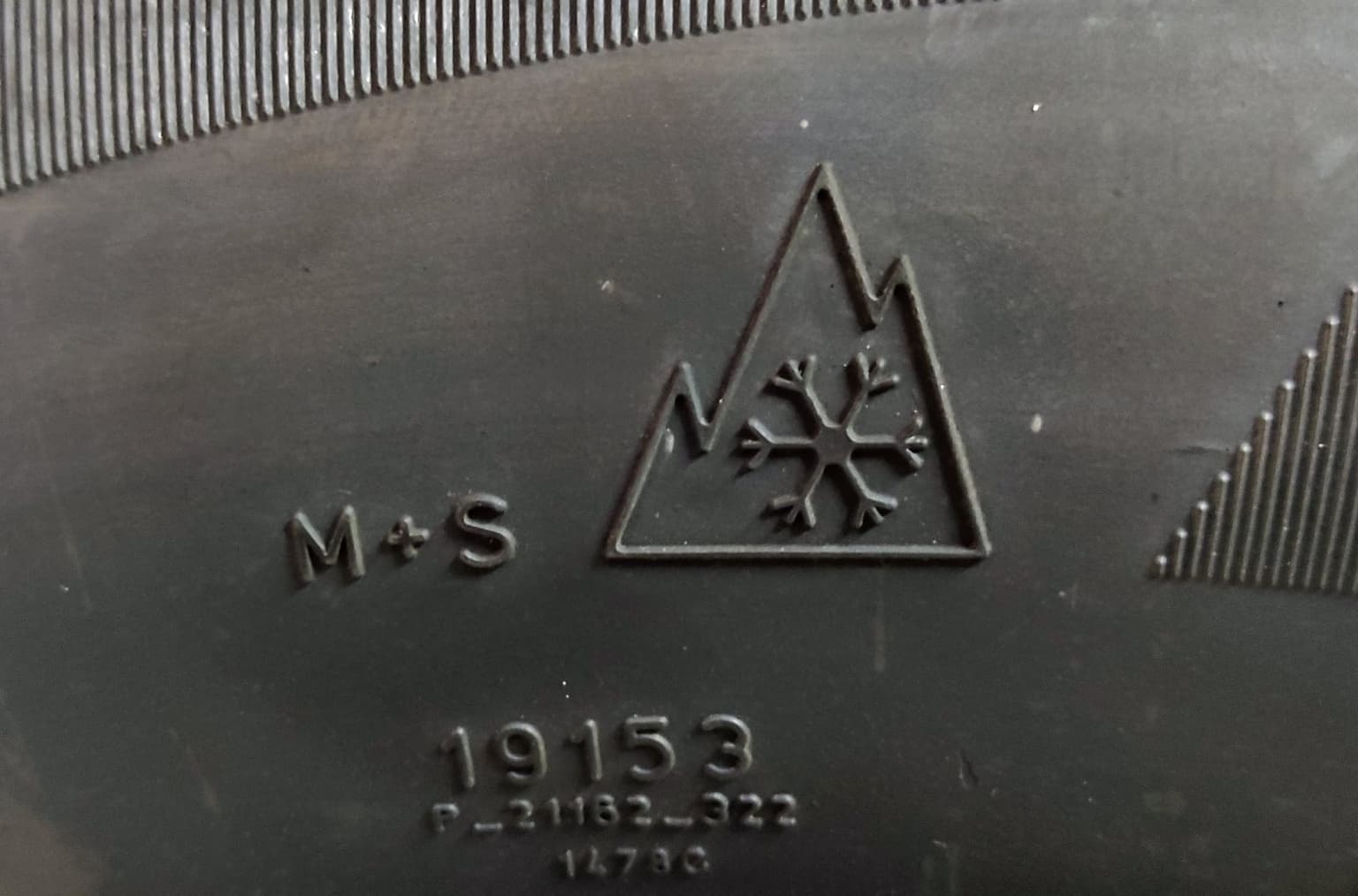
What the rental company hands you depends on the pick-up office, not on where you're headed. Hertz fits snow chains or fabric snow socks by default at offices in Veneto, Lombardy and Trentino-Alto Adige, for €2.93 - €3.66 a day, which you can decline at the counter by signing a release, and charges €73.20 if they don't come back. Winter tires are not standard there. Avis has to supply winter tires where the law at the pick-up office requires them, and otherwise fits them on request at least 24 hours ahead. So I'd ask for winter tires in the booking, find the three-peak mountain-snowflake symbol (3PMSF) on the sidewall before you sign, and try the chains on in the rental lot, not at the foot of a pass. Comparing cars out of Venice Marco Polo, read each supplier's winter-equipment line before its price.
Without a car, the bus lines and Venice express buses that qualified the bases above carry the whole trip. The valley lines run daily on the current timetable, which ends December 12, and the winter one replacing it in mid-December isn't published yet, so check your first bus once it is. What you give up is the whim: a side valley becomes a planned morning, not a detour on the way home. For the leg from the airport, a private transfer goes door to door. Book it at a fixed price for the whole car, give the hotel's street address rather than just the village, and declare skis and luggage up front.
A non-skier's winter day: lift up, walk, lunch, sled down
A non-skier's winter day in the Dolomites is built around a lift: up to a groomed path, along it to a mountain hut for lunch, and back to the village by lift or sled.
Lunch is the anchor of the day, not a pause in it. Everything before it is the way up to the hut, everything after it the way down. Pick the hut first, then the lift that reaches it.

From Ortisei, the Resciesa funicular is the gentle start, with an easy path out from the top to a hut. Seceda's cable cars, the town's other door, get their own line below. In Cortina, Freccia nel Cielo charged walkers €22 round trip to Col Druscié or €35 round trip to Ra Valles last winter, when it ran December 5 to April 12. One side trip belongs to no base at all: the Sass Pordoi cable car, which climbs from Passo Pordoi itself to a terrace on top in four minutes. A round trip costs €30, it runs 09:00 to 16:30, and it opens only on December 22, so an early-December trip goes without it.
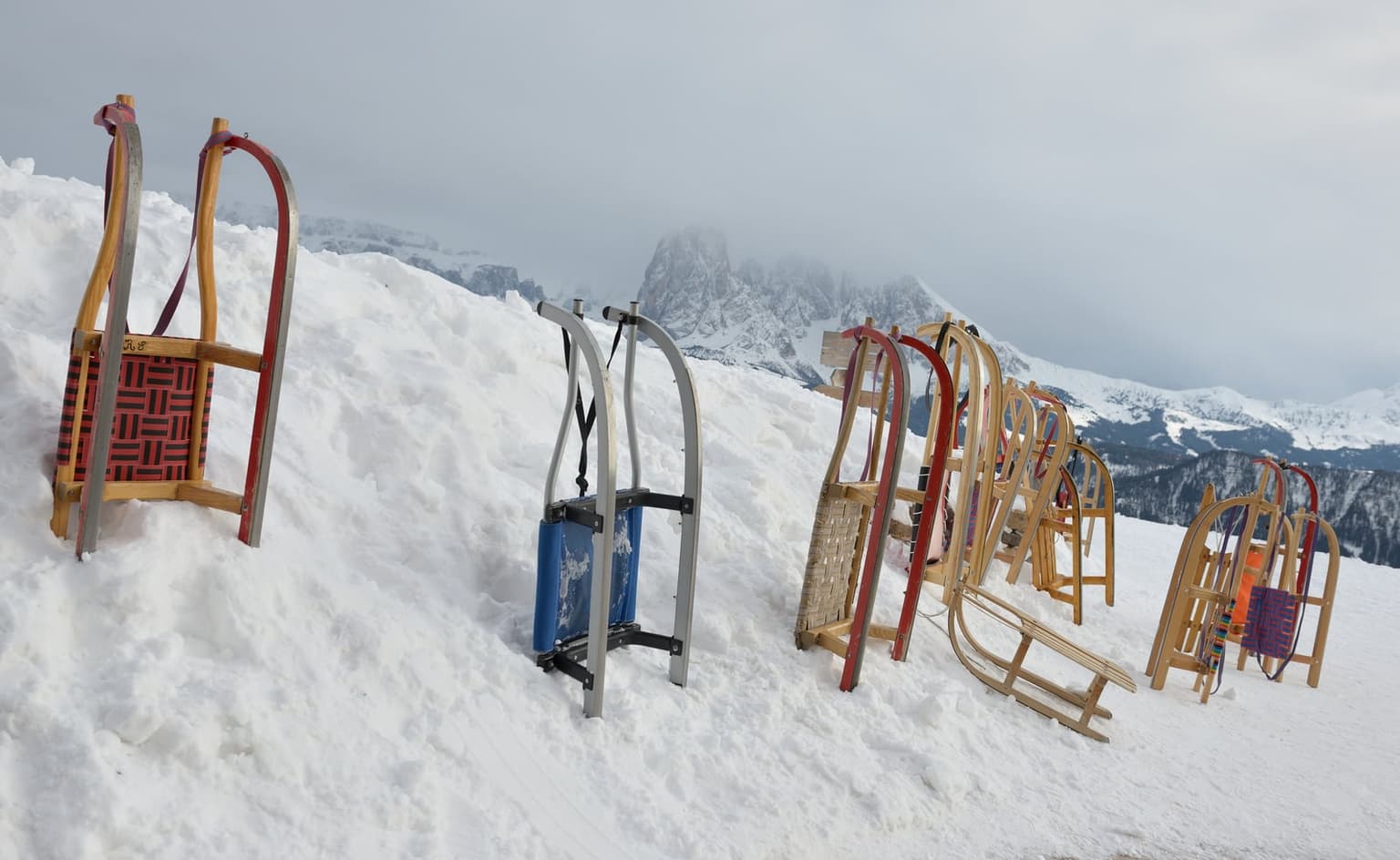
Sledding turns the way down into the best part of the day. From the top of the Resciesa funicular, a 3 km run drops to the middle station, and it has evening runs as well. On Alpe di Siusi, a 1.7 km run goes from Hotel Icaro to Hotel Monte Piz. Alta Badia's Tru dla liösa Foram runs roughly three to four kilometers from the top of Piz Sorega down to San Cassiano. Three kilometers is a long way to learn how a sled behaves, so I'd start on the Alpe di Siusi run.
Snowshoes open up the quieter ground. The Alpe di Siusi plateau is the obvious place, with a hut deck to aim for. Val Fiscalina and Lago di Dobbiaco are at their best in the morning light. For a first try with someone else navigating, Val Gardena's Special Dolomites Nights ran a guided evening snowshoe walk with dinner on Wednesdays last winter, from December 31 to March 13, at €78 with snowshoe and headlamp rental extra. This winter's edition isn't published yet.
Whatever the plan, put traction on your boots, spikes or crampons (you can buy them in Ortisei if you arrive without), and keep to groomed or marked winter paths. The avalanche bulletin for South Tyrol, Trentino and Tyrol comes out every day at 17:00. Around Cortina and Arabba, on the Veneto side, read ARPAV's Dolomiti Neve e Valanghe bulletin instead.
⚠️ Warning
Off the groomed and marked paths, a snowshoe walk is avalanche terrain. Read the bulletin the evening before, and if you can't judge what it says, go with a guide.
For a guided day, look for a certified mountain guide, snowshoes and poles included, a small group, and a route set by that day's bulletin. Skip any tour that can't tell you, even the evening before, which area it's heading for.
The famous summer places in winter: open, changed or shut
In winter the Dolomites' famous summer places split three ways. Lago di Braies stays open, Alpe di Siusi and Seceda change what you do there, and the road to Tre Cime shuts to cars.
Tre Cime di Lavaredo is the one that shuts. The road up to Rifugio Auronzo is closed to cars all winter, and the mountain huts around the towers are shut. The towers are still reachable on foot with snowshoes, or by a snowmobile service from Rifugio Antorno when it's running. Plan a guided snowshoe day, not a drive-up with a view at the end.

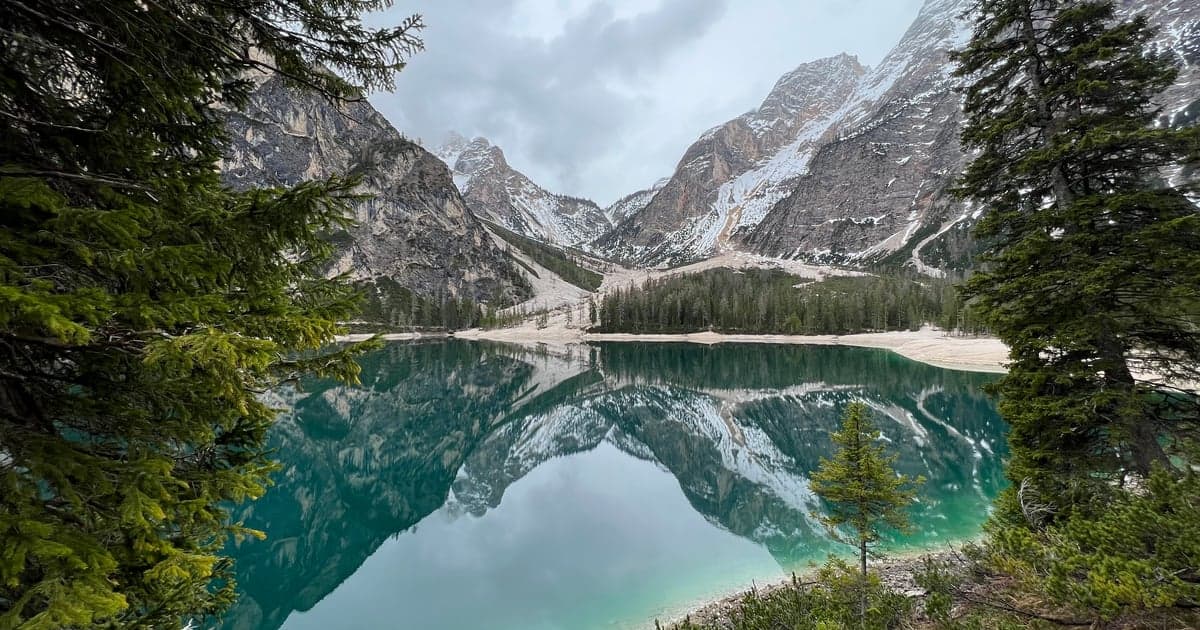
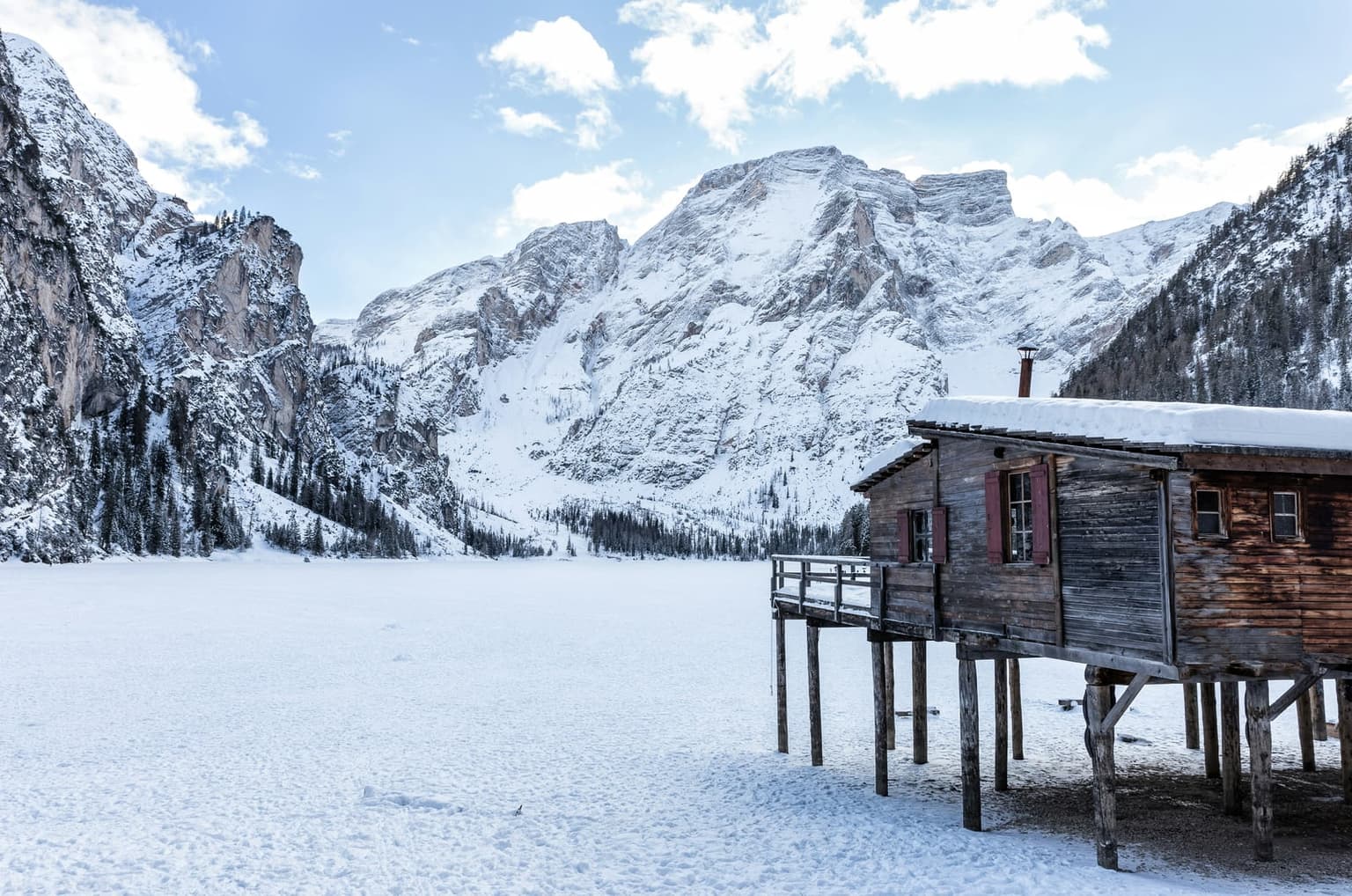
Lago di Braies stays open, and outside the summer weeks you need no reservation to visit. One rule matters in winter: walking on the frozen lake is forbidden, however solid it looks, so the lake is a view from the shore. Summer is a different lake, with road rules, parking lots and a bus of its own.
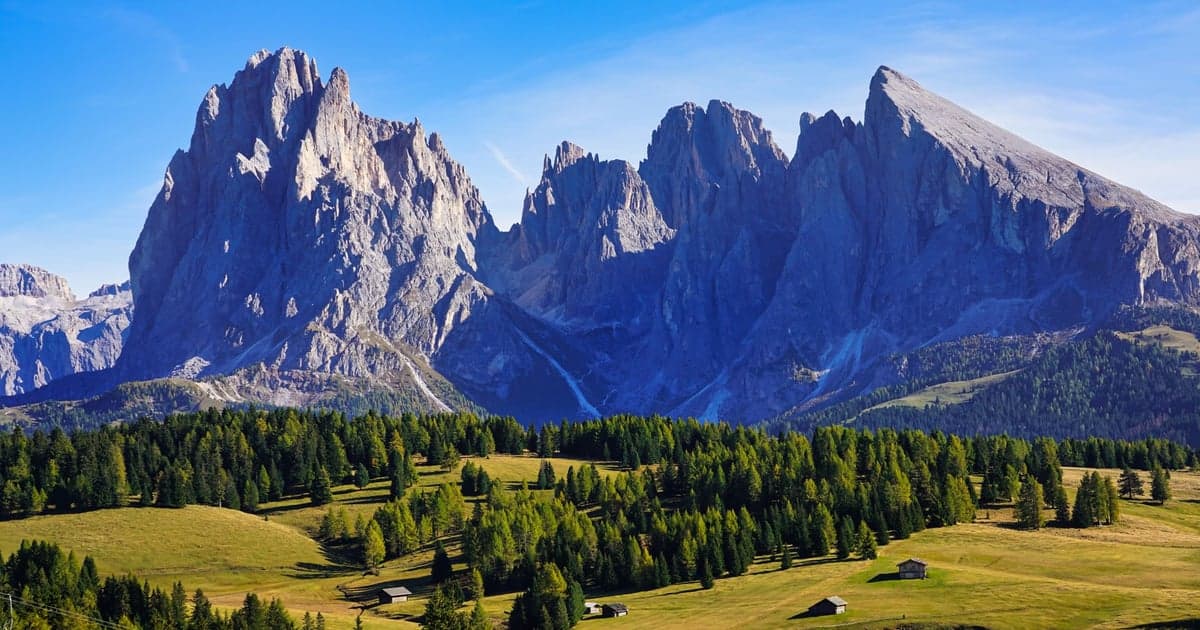
Alpe di Siusi keeps its road ban in winter: while the cable car runs, the road onto the plateau is closed to private cars from 09:00 to 17:00. So you ride up, on the cable car from Siusi to Compatsch. It runs December 4 to April 4, daily 08:00 to 18:00, and a walker's round trip cost €30 last winter. On top, the summer trails give way to groomed paths, snowshoes and sleds. If you're driving, read how the plateau's road ban works before you set off.
Seceda becomes a lift ride for the whole group, skis or not. The two cable cars from Ortisei, via Furnes, run December 4 to April 4, and walkers can buy single rides at any ticket window.
Val di Funes makes a quieter winter day: groomed paths through the Puez-Odle nature park or across the Lüsner Alm pastures, and seven natural sled runs down into the valley. Its huts open for winter only after Christmas, so this is a day for late December onward. The valley's full hut calendar covers the rest of the year.
Lago di Sorapis is the odd one out. Its summer route is rated for experts, with exposed stretches along a ledge fitted with fixed cables, and under snow that is not a walk I'd send you on without a guide.
FAQ
- Are the Dolomites worth visiting in winter if you don't ski?
- Yes, if your base has lifts that sell walkers a ride. Then the days fill with hut lunches, groomed paths, sled runs and snowshoe valleys, and nobody spends them waiting at the bottom for the skiers. If trails are what you came for, come in summer instead.
- When does the ski season start and end in the Dolomites?
- For 2026-27, Kronplatz and the 3 Zinnen Dolomites ski area open on November 28, and Val Gardena and Alta Badia on December 4. The season runs to early April. The weeks on either side are the off-season, when much of each town shuts along with the lifts.
- Can you visit Lago di Braies, Tre Cime or Seceda in winter?
- Yes, all three. Lago di Braies stays open with no reservation needed, but never step onto the frozen lake. Seceda's cable cars run all season and sell walkers single rides. Tre Cime is a snowshoe trip: the road is closed to cars and the huts are shut.
- Can you go snowshoeing or sledding in the Dolomites without a guide?
- On groomed sled runs and marked winter paths, yes, with traction on your boots. Off them, a snowshoe walk is avalanche terrain: read the daily avalanche bulletin the evening before, and if the bulletin means nothing to you, go with a guide.
- Do you need a car in the Dolomites in winter?
- No, if you base in a village on a daily bus line, ideally one whose guest pass covers the ski buses. A car only helps drivers who already know mountain roads in snow and whose plan needs the side valleys.
Pick the weeks the lifts run, then a village where walkers can ride one up, and by lunchtime the skiers and the walkers are at the same hut table.