George Mandrovny
How many days on Ischia: an island to soak in, not to rush
- Give Ischia at least two nights, three if you can. It is a hot-water island to slow down on, and a day trip from Naples is rushed.
- Stay in Forio or Ischia Ponte, the old town, near a bus stop. The buses do the driving, so you don't need a car.
- From Naples, hydrofoils leave Molo Beverello: under an hour to Casamicciola on SNAV, about 50 minutes to Ischia on Alilauro. Caremar's car ferries use the Porta di Massa pier and take about an hour and 45 minutes.
- The trap is the boat home: departures can be canceled, so never plan on the last one. And the big thermal parks close for the winter.
Ischia, Italy, is worth more than a day: it is an island to stay on and slow down, and its hot water is the reason. A day-tripper sees the ferry, one town and then the ferry again. The island is everything else, and it is in no hurry.
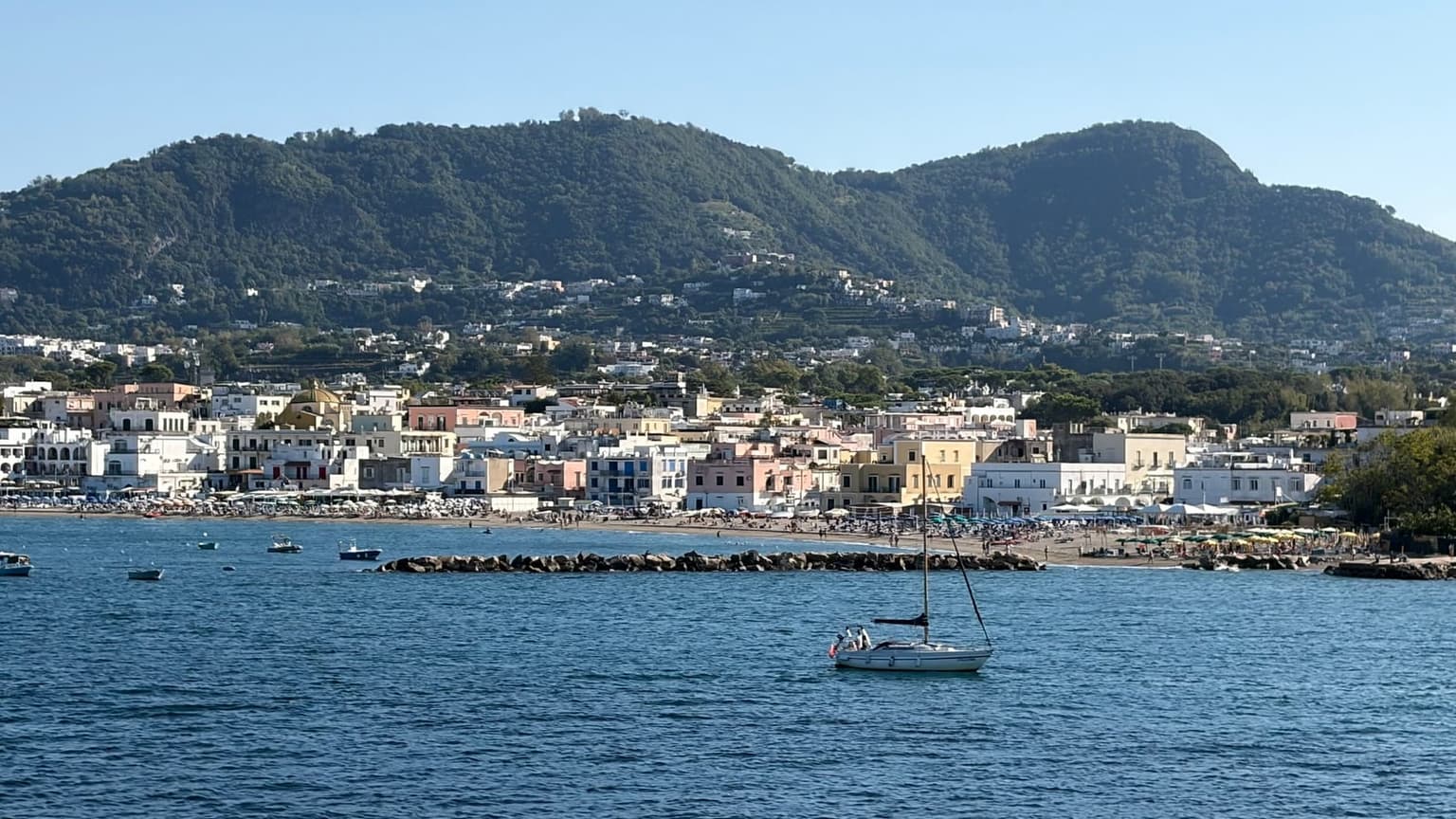
Two or three nights fill Ischia well, and a week still leaves things unseen. It can feel unhurried and local, with gardens, thermal baths and coastline to spend the days on. The fair objection: if you came for sights, the island can feel a little worn, and its list of things to see runs out fast. What settles it is what you came for: a vacation, or a list of sights to get through.
A day trip is possible, since the hydrofoils make the crossing short, but the island is big and its towns spread out, so one day sees little and feels rushed. It cuts both ways: base yourself on Ischia and every other day trip starts with a ferry back to the mainland. With a Naples base, a day out here is the honest plan, and there are enough things to do in Naples to fill the rest. Plan that day backward from the boat home.
Ischia or Capri comes down to a day or a stay. Capri is the island of sights, and they suit a day trip to Capri. Ischia, more than four times Capri's size, is the island to stay on, and with nights to spare I'd spend them here.
Two nights cover a day in the hot water and an afternoon at the castle. Three or more add Forio's garden and its sunset, and the south coast or the summit of Mount Epomeo. A week is for slowing right down, which is what Ischia does best. Whatever the count, choose the base first, because the rest of the trip hangs off it.
The hot water: Poseidon, Negombo, or Sorgeto for free
The best things to do in Ischia start with the hot water. The island is known for its thermal parks, and it also has a free hot spring in the sea. A day at a park, or a soak in the sea after dark: Ischia offers both, and the free one is the better story.
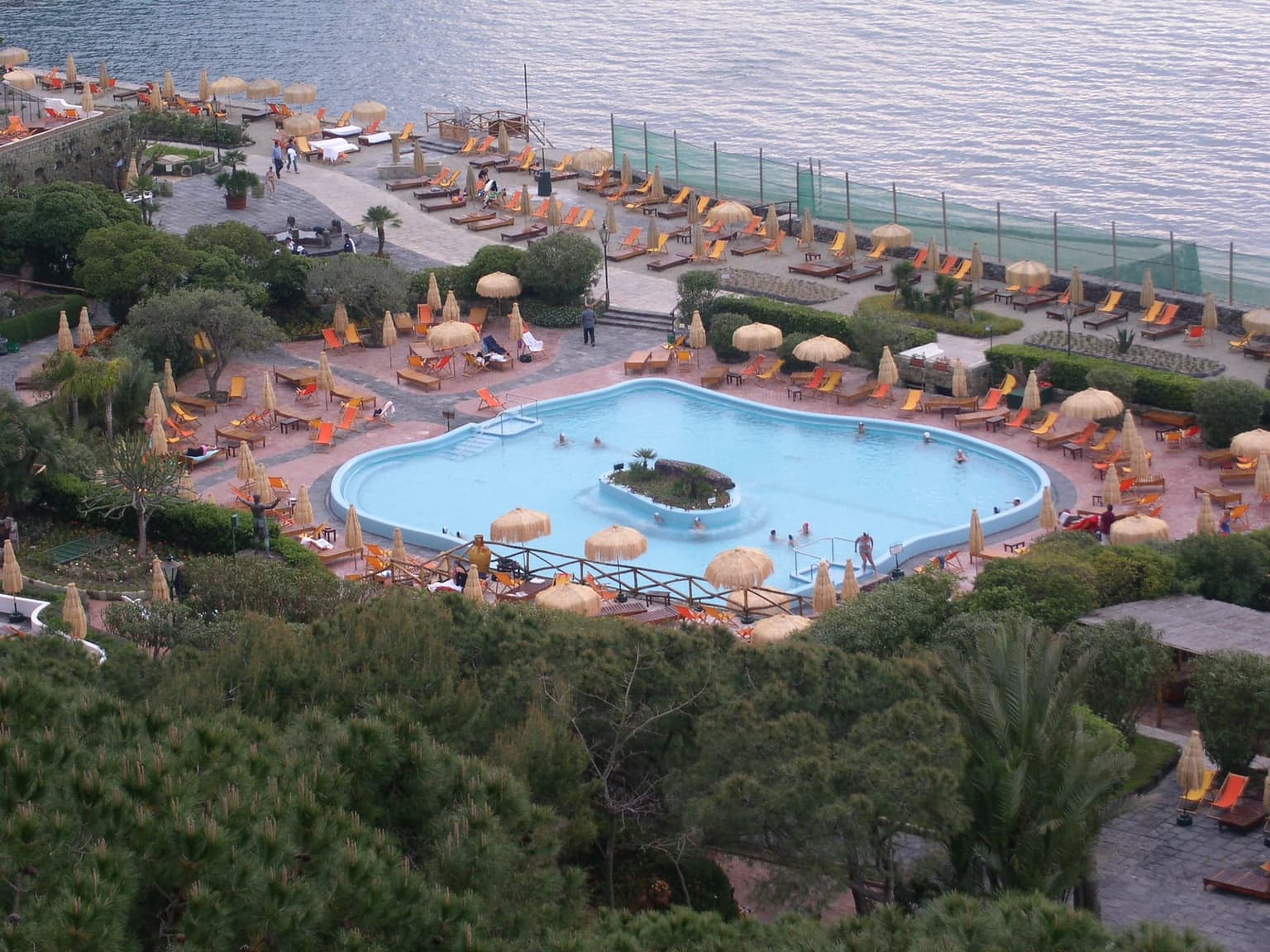
Both big parks keep a season and shut for the winter, so check their dates before you build a day around one. Poseidon's season, hours and both admissions are on its prices page. The spring in the sea never closes.
| Where | Entry | Open in 2026 | Know |
|---|---|---|---|
| Giardini Poseidon, Citara beach (Forio) | €50 a day; €45 from 13:00 (12:30 from October 1) | April 18 - October 31, 9:00 - 19:00 (18:00 from October 1) | Swim cap required; no children under 12 in the thermal area; entry can't be booked |
| Negombo, San Montano bay (Lacco Ameno) | Check its site | Until October 13 | Pools in a garden |
| Sorgeto, Panza (Forio) | Free | All year | About 200 steps down, and back up |
Poseidon bills itself as Ischia's largest wellness park: 20 pools on terraced grounds, with its own stretch of Citara beach. Admission covers the pools, the sauna, the beach, the lounge chairs and the umbrellas. Children kept out of the thermal area still get two swimming pools, plus the outdoor seawater pool. It is the classic choice, and it is a whole day rather than a dip on the way somewhere else, so give it one.
Negombo sits in San Montano bay at Lacco Ameno, its pools set in a large garden, and it is roughly the younger crowd's pick. Its 2026 season is already over; for the next season's dates and hours, check its own site.
Sorgeto is a crescent-shaped cove at Panza, a hamlet of Forio, under vertical rock walls, where hot water rises through the rocks and mixes with the sea. Getting there is a bus ride and then the steps down, and at the end the same steps back up, wet and warm, which rules it out for anyone who can't manage stairs.
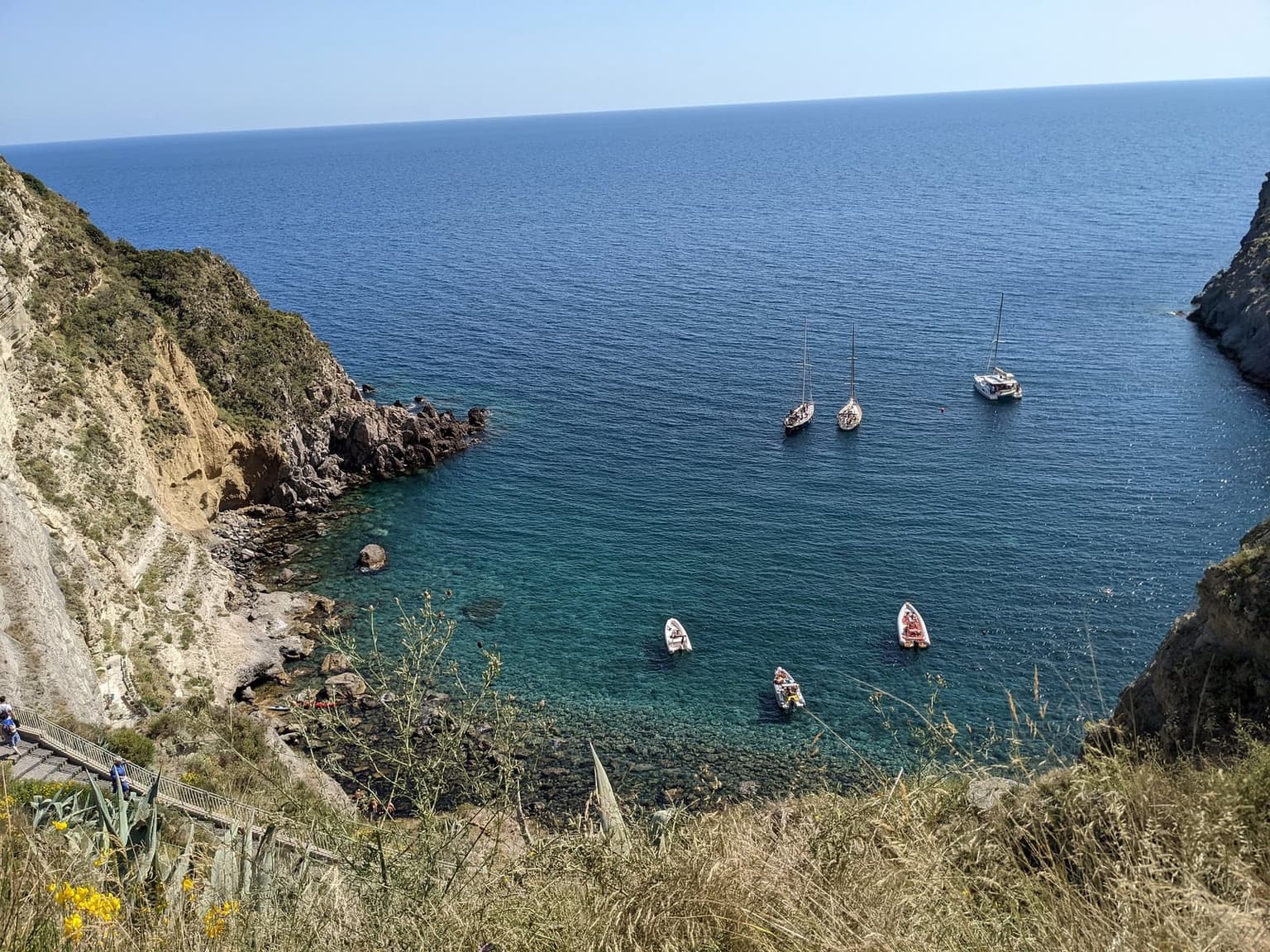
After dark the cliff behind you turns black. You sit in a pool ringed with stones at the waterline, hot water coming up through the rocks beneath you, and the open sea, cool, an arm's length away. Reach out and you cross from one to the other. When it rains, the rain lands cold on your face and the rest of you stays warm.
The parks keep a season and a price list. The spring keeps neither, which is why it is the one to come back for out of season.
Ischia Ponte and the Castello Aragonese
The Castello Aragonese, the Aragonese Castle, stands on its own rock off Ischia Ponte, the old end of the town of Ischia, and the castle and the old town facing it are the reason to come this way. It is a long visit, not a photo stop, however small the rock looks from the shore.
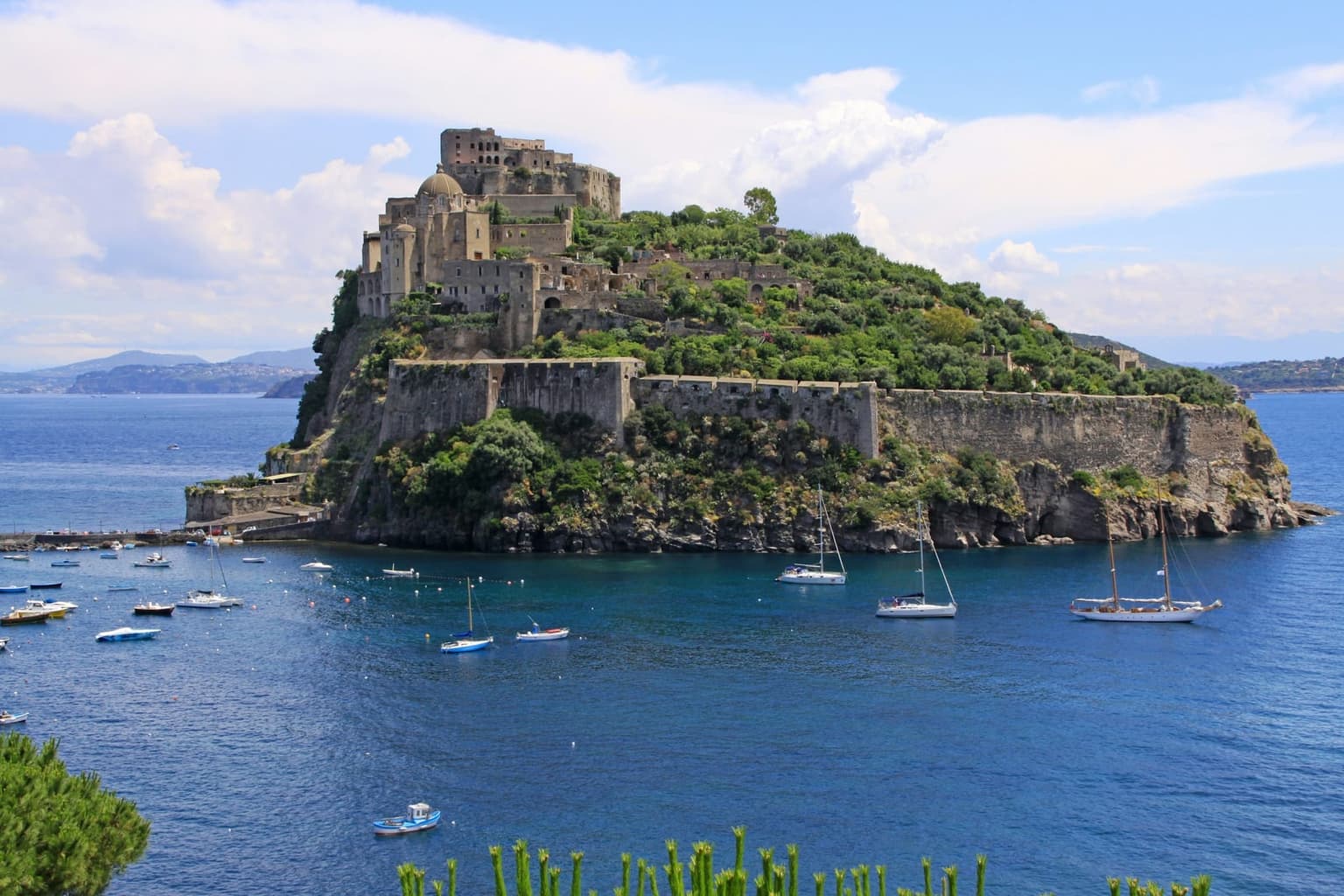
Entry is €15, and the castle opens every day from 9:00 until sunset, so the closing hour moves with the season. The castle's visit page posts the day's closing time. Allow about an hour and a half, which is also the last-ticket margin: tickets stop 90 minutes before closing, so the last one buys the whole visit with nothing to spare. The route inside the castle runs nearly 2 km, mostly outdoors, and you go up by elevator or on foot; dress for a walk, not a museum. Wheelchair users can reach only some points, with staff assistance booked at least 24 hours ahead. From January 7 to early March, it shuts for annual maintenance.
From Ischia Porto, the port end of the same town, bus 177 gets you there in 15 minutes and a taxi in 5 - 10. On foot it is 20 - 30 minutes, a fair warm-up for all the walking inside.
For a lazy hour before you go in, Ischia Ponte has a beach with a view of the castle, a fine way to size up a fortress you are about to walk all over. The castle closes at sunset and hands the evening back to the town, which is the right order anyway: the rock by day, the old town by night. Come down and stay on instead of hurrying back to the port.
I spent a warm evening there walking the causeway toward the floodlit castle walls, past the small wooden boats tied up along the water, and the old fishing quarter was as quiet as the main port is loud. For dinner, Auras sits on the Lungomare Aragonese right at the water, with its terrace facing the castle head-on; book a table at the railing for dusk.
Forio: La Mortella and the sunset on the west coast
Forio, on the west coast, holds three of the island's draws: Poseidon, La Mortella's garden near the town, and the sunset. Poseidon is in the hot-water section above. The other two keep their own hours, a garden open four days a week and a sun that sets when it sets, so plan Forio around them.
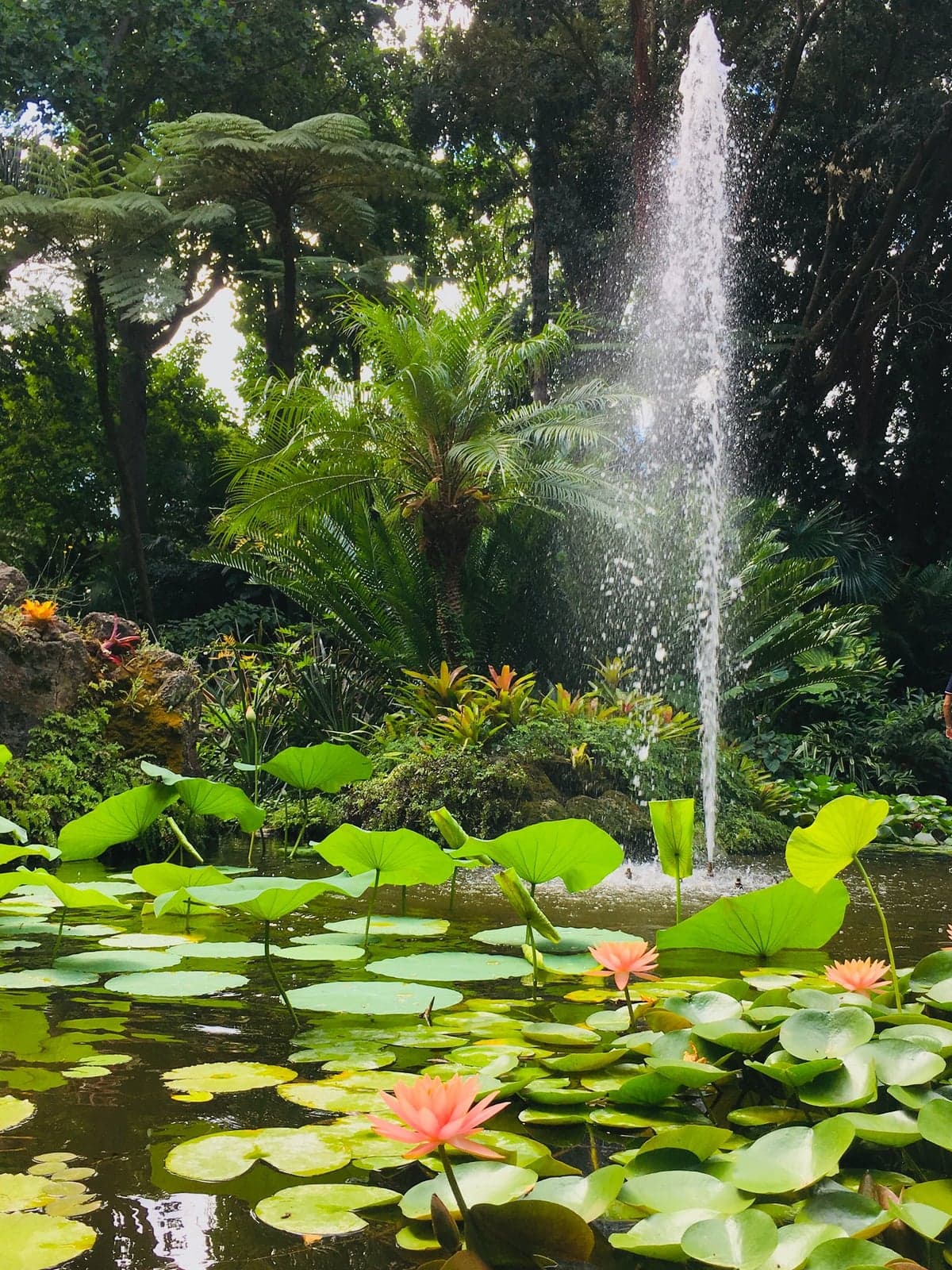
La Mortella is the subtropical and Mediterranean garden Susana Walton developed from 1956, home of the William Walton foundation: a valley garden and a hill garden, laid out to use the landscape's openings toward the sea. It is one place on the island not to miss. Entry is €15, and in 2026 it is open April 2 to November 1, on Tuesday, Thursday, Saturday and Sunday only, 9:00 - 19:00, last entry 18:00. A Monday, Wednesday or Friday finds it shut, and the garden's visit page lists the current days and hours. Allow at least two hours. The CS and CD, the island's two loop buses, both stop at Mortella.
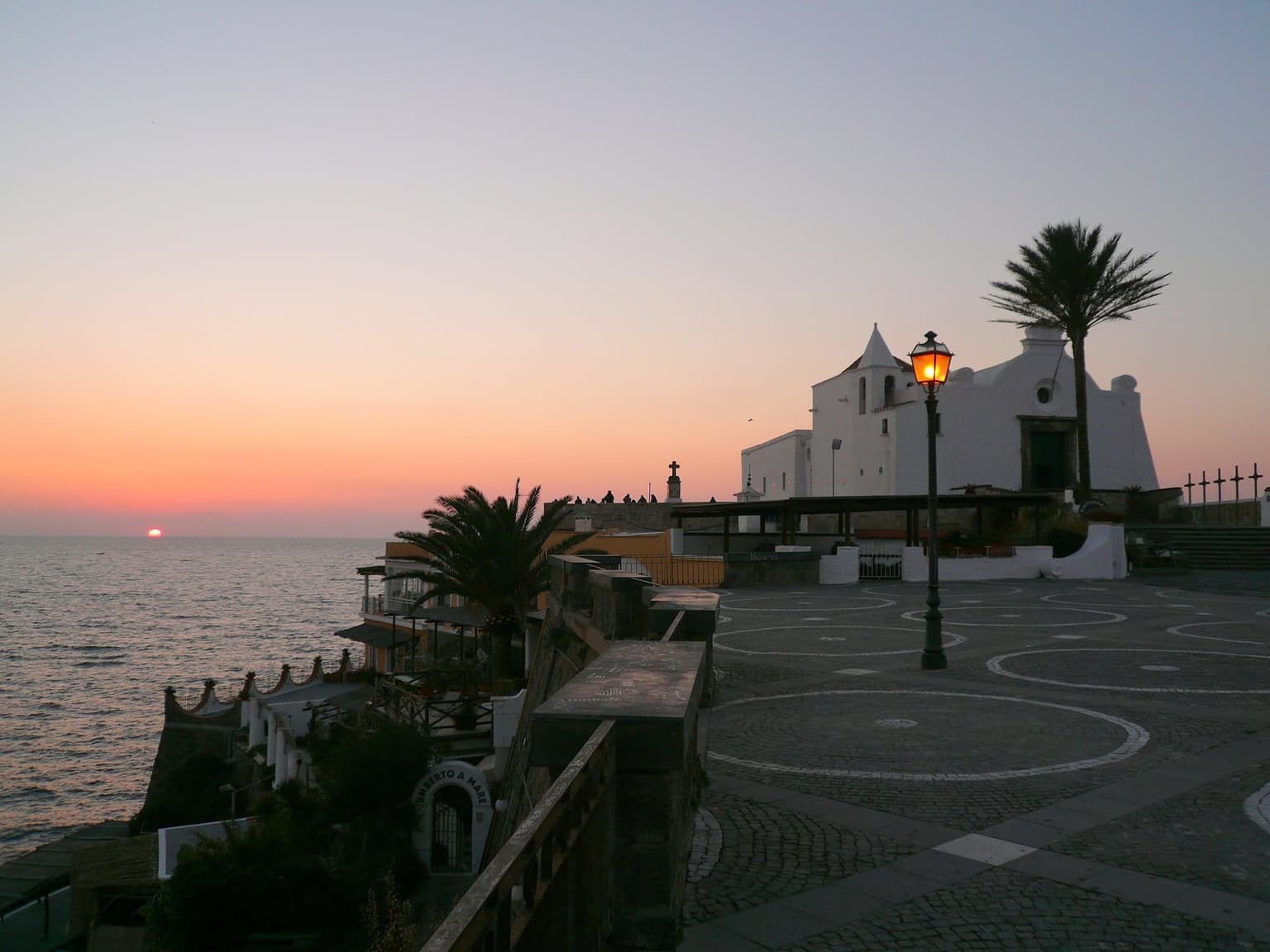
Time Forio for the end of the day. The town faces the open sea to the west, and the place to watch from is the Chiesa del Soccorso, a small church on a point just outside the town, above a sheer drop to the sea. The sun goes down into the water, not behind a hill, and for its last few minutes the sea under it turns from blue to the sun's own color. I came up half an hour early and took a glass of cold local wine from the little bar by the steps to the square; on a clear evening the parapet around the church fills up well before the sun touches the water. Dinner can wait until it's over; afterward, La Romantica down by the marina does fish and pasta.
Whether to sleep in Forio is a trade-off of its own, weighed below with the other towns. For the way back, take the CD: it gets you from Forio to Ischia Porto in about 25 minutes, and it keeps running after midnight. The CS leaves Forio heading south through Panza and Fontana, the long way around.
The south coast and the summit: Sant'Angelo, Maronti, Epomeo, and a day on the water
Sant'Angelo, an old fishing village on the south coast, is joined to its own islet by a strip of land, with the long Maronti beach to the east. It has grown far more touristy than it used to be and is still worth an evening, which tells you how good it was to begin with.
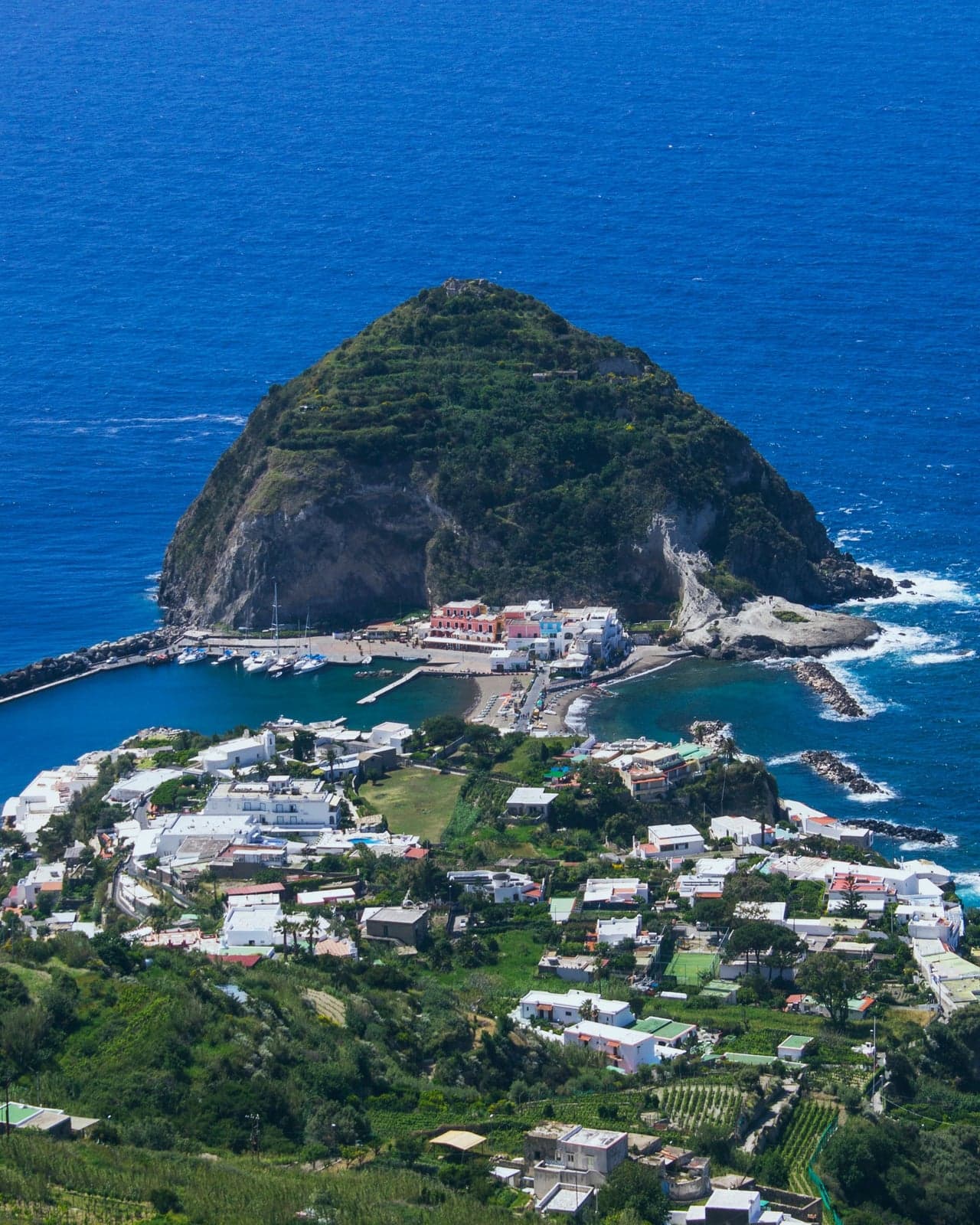
The Maronti is 3 km of beach sheltered by a bay. The Fumarole beach is a 10-minute walk from Sant'Angelo on the footpath toward the Maronti, and it has free stretches as well as beach clubs, so a towel will do. The name is the warning: steam vents along this coast heat the sand and the rocks. Keep your shoes on near the rocks; the beach is happy to explain why to anyone who doesn't.
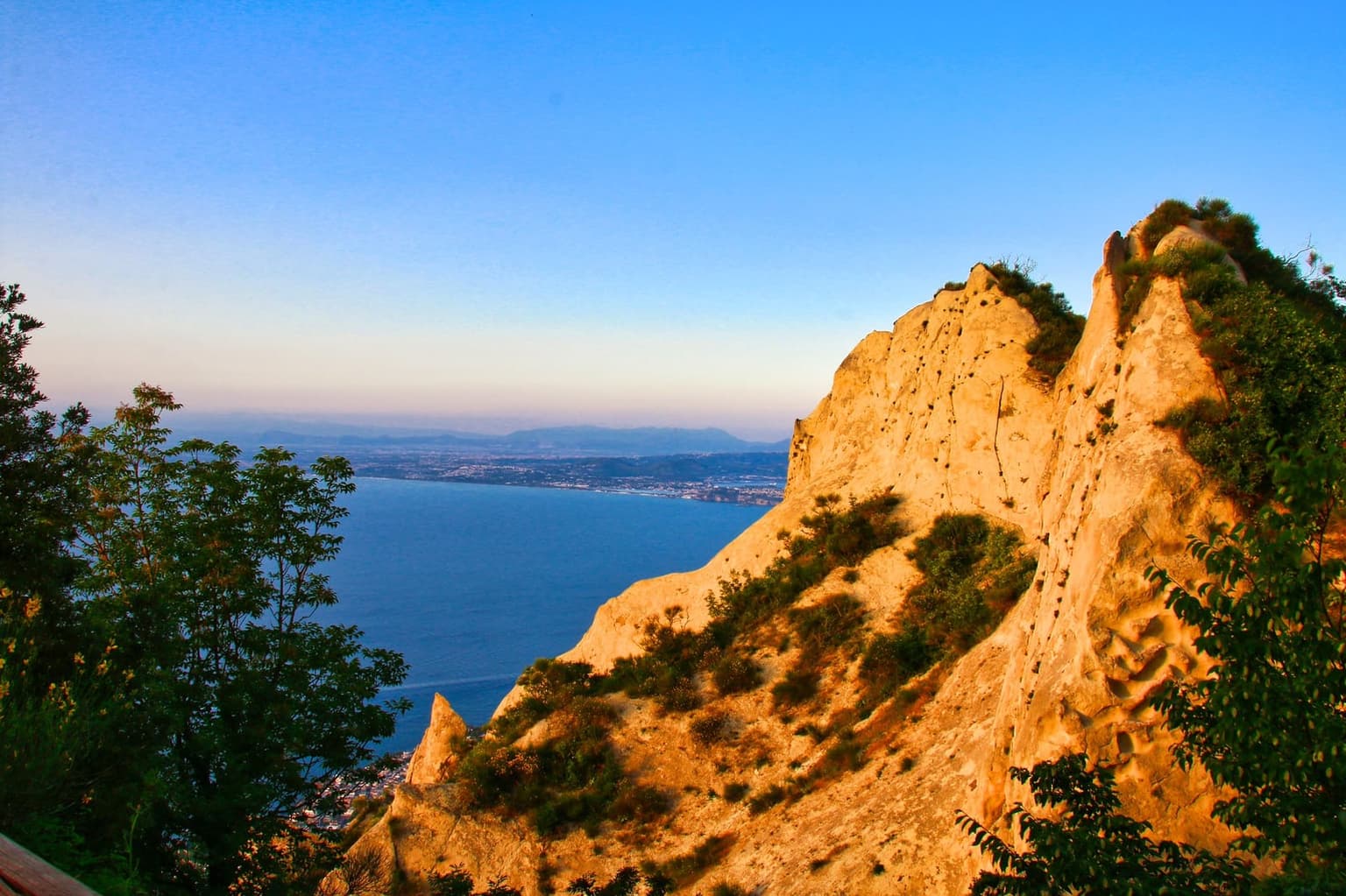
Mount Epomeo, the island's highest point at nearly 800 meters, is about an hour on foot from the Fontana area, and both loop buses stop at Fontana. From the top, the view runs over the island and out to Capri, the Sorrento peninsula and Vesuvius, most of the bay's famous names lined up from a single rock. I set off from the little square in Fontana, kept a brisk pace and was on top in that hour, and it was worth every step: the last stretch climbs a deep, narrow cut in the soft greenish tuff, and just below the summit the small church of San Nicola is carved into the rock itself.
Ischia is at its best from the water, so if you can fit in a boat day, do. A boat you steer yourself is the other way to see it, and Italian law makes that simpler than it sounds: no license is needed for a small motorboat within six miles of the coast with an engine of no more than 30 kW (40.8 hp). A jet ski always needs one, and the minimum age is 16. If you rent a boat, what the firm asks of you beyond that is the firm's call, so check before you book.
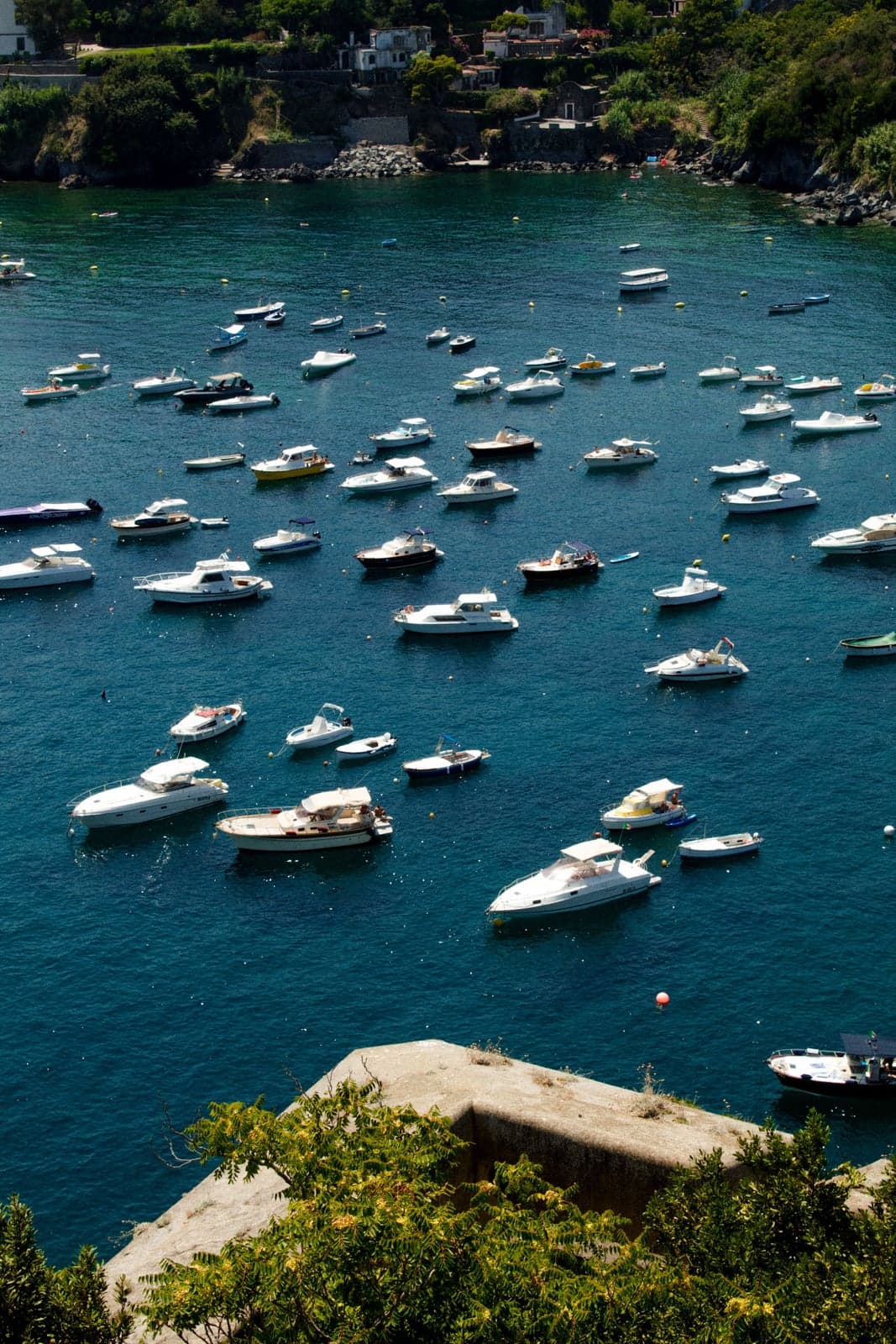
For a day someone else steers, look for a small group or a private boat with swim stops around the island, and check what the price includes, where it leaves from and what happens if the sea is rough that day.
Where to stay on Ischia, and getting around without a car
Where to stay on Ischia comes down to two things: what the town is like after dark, and how easily you can leave it. The island has six towns and one bus loop running through them. Each town takes a couple of hours to walk, so the one you sleep in is where you'll spend your evenings.
Forio is a good base without a car: Poseidon, La Mortella and Sorgeto are all in or near it. It can feel more resort than town, though, at least on a short stay. Ischia Ponte, by the castle, has the most local feel of the towns; its bus is the 177 to Ischia Porto, where the loop buses start. Lacco Ameno and Casamicciola are popular too. In any of them, look for a room within walking distance of restaurants and a bus stop. I stayed between Ischia Porto and Ischia Ponte and would base there again: the ferry terminal and the bus terminus were a walk away, and the quiet restaurants on the water at Ponte were close enough on foot that the night bus never came into it.
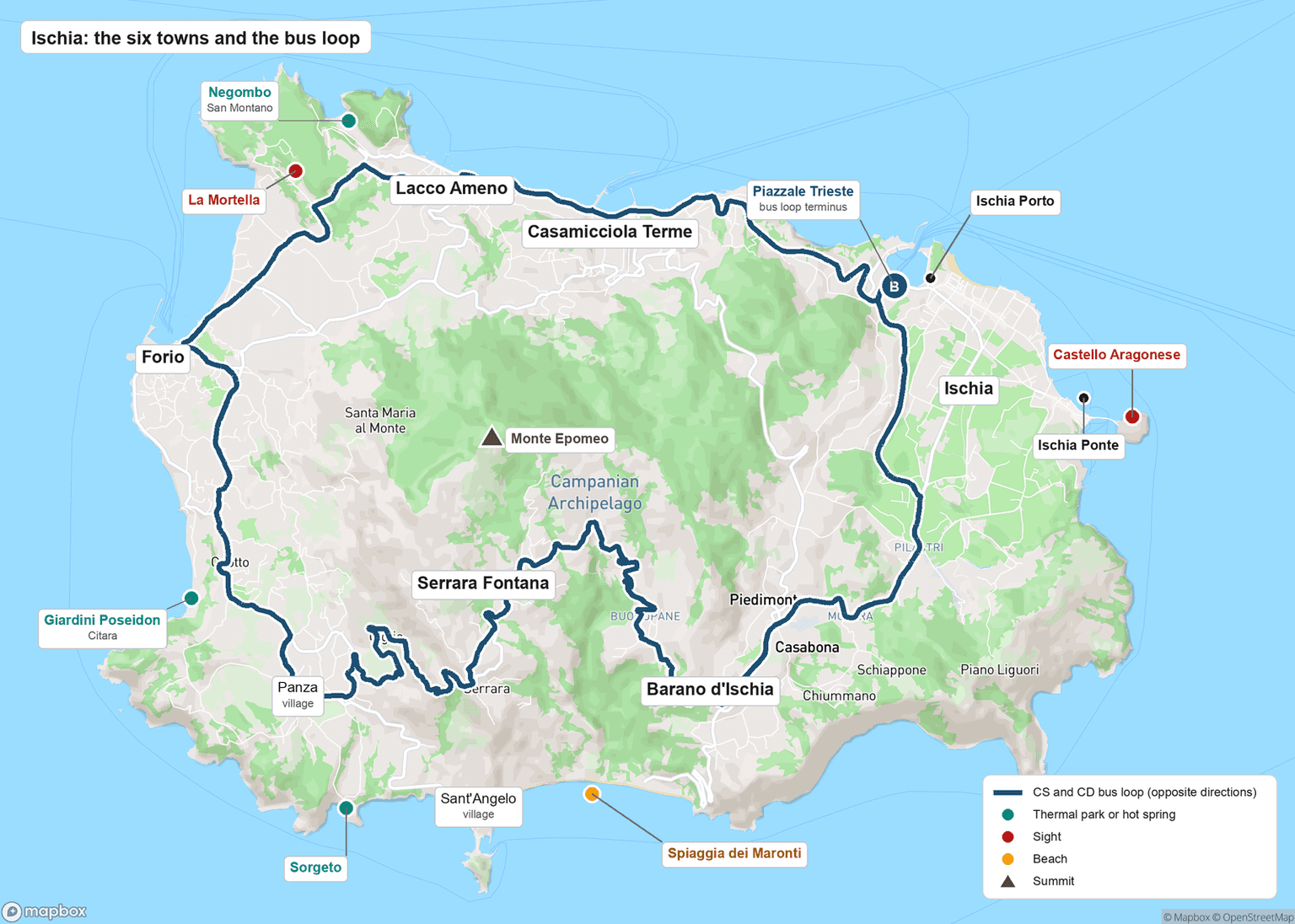
The CS and CD, short for Circolare Sinistra and Circolare Destra, circle the island in opposite directions from the terminus at Piazzale Trieste in Ischia Porto. Both run daily, every 15 to 30 minutes for most of the day, with runs after midnight. But EAV, the bus company, warns that runs can be canceled when it is short of buses, and posts the day's cancellations, in Italian, on its canceled-runs page.
Taxis are expensive, so agree on the fare before you get in. A scooter is the other way to get around the island, if you already ride one. You can skip the car. For 2026, a regional decree in force from April 3 to October 31 bars cars, motorbikes and mopeds from the island if they are owned by residents or companies of Campania, the region around Naples, or driven by its residents; islanders are excepted, and foreign plates are exempt unless a Campania resident drives. Before shipping a Naples rental across, ask the firm whether its cars count.
In the town of Ischia, Porto or Ponte, the tourist tax from April to October is €4 per person a night at most hotels, B&Bs and vacation apartments, €5 at four- and five-star hotels, for up to seven nights. Under-18s pay none.
Book the town first and the room second. Outside the parks' season, a hotel with its own thermal pool keeps the hot water in the trip, if the hotel and its pool are open when you come.
Naples to Ischia by ferry: which pier, and the boat home
The ferry from Naples to Ischia leaves from different piers for different boats: hydrofoils from Molo Beverello, Caremar's car ferries from Porta di Massa, and more ferries from Pozzuoli, a separate port. Getting there is the easy half; the boat home is the one to plan.
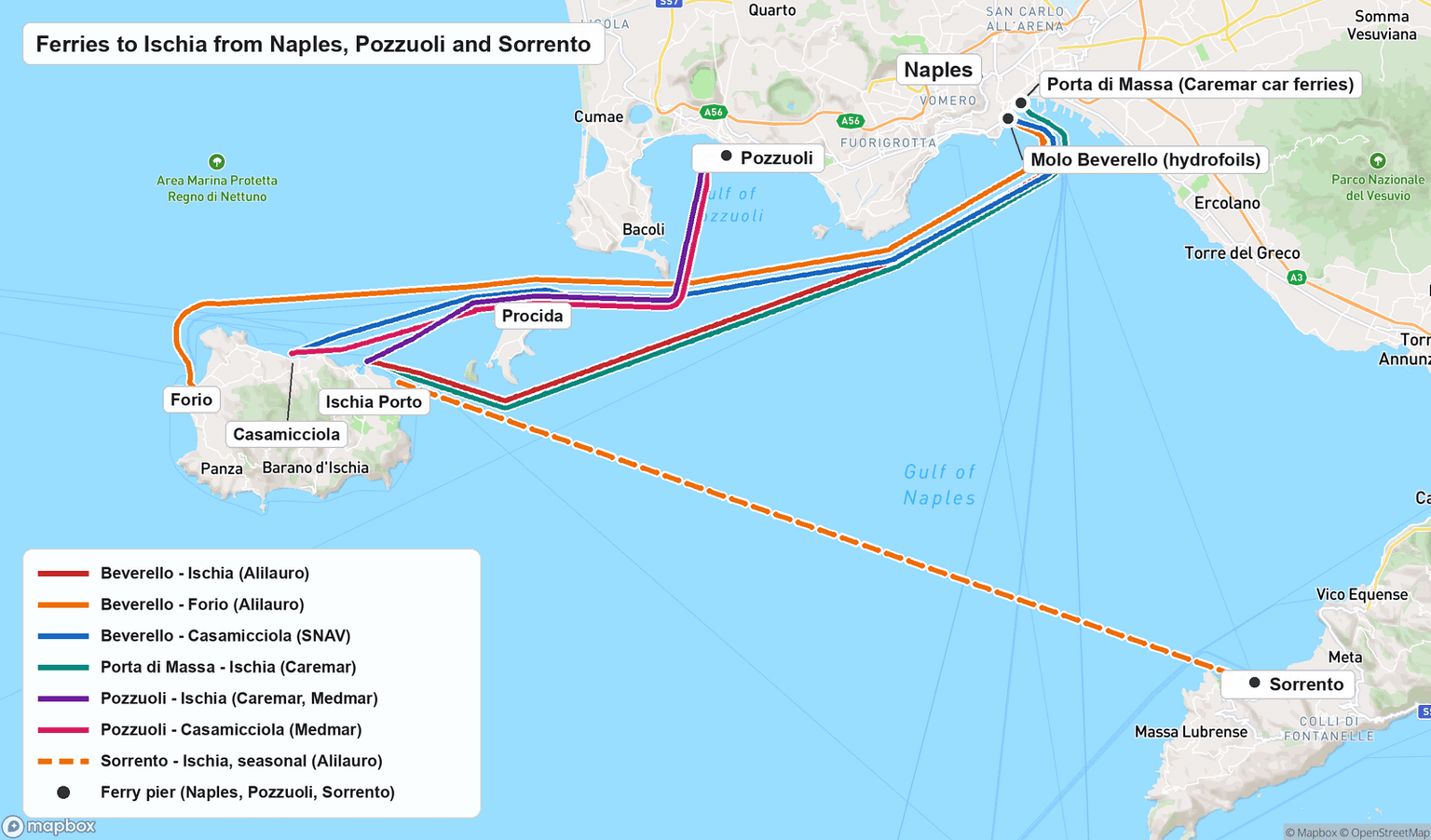
In Naples the boat decides the pier, so pick the boat first, then check which pier its ticket names. Medmar also sails to Ischia from Naples and from Pozzuoli. The crossing times below come from the operators' pages and one October day's live listings.
| From | Boat | To | Crossing |
|---|---|---|---|
| Molo Beverello, Naples | SNAV hydrofoil, daily, all year | Casamicciola | Under an hour |
| Molo Beverello, Naples | Alilauro hydrofoil | Ischia; also Forio | About 50 minutes to Ischia |
| Porta di Massa, Naples | Caremar car ferry | Ischia | About 1 h 45 |
| Pozzuoli | Caremar ferry; Medmar ferry | Ischia; Medmar also Casamicciola | About 1 h 10 on Caremar's Ischia to Pozzuoli run |
With Caremar, buy at the port the day you sail. Its ferry is €14.80 from Naples and €11.20 from Pozzuoli; a ticket bought before that day costs 12% more (at least €1), and one bought online €1 more.
Alilauro sells online until an hour before departure from April to October (its port ticket office sells until boarding), and until 30 minutes before from November to March. The day's sailings are on its next departures page. Be at the quay at least 30 minutes ahead. Its free allowance is one bag up to 50 x 35 x 20 cm and 9 kg; each extra bag, or one over those limits, costs €3.50 at a ticket office, or €5.50 if it is ticketed at the quay during boarding.
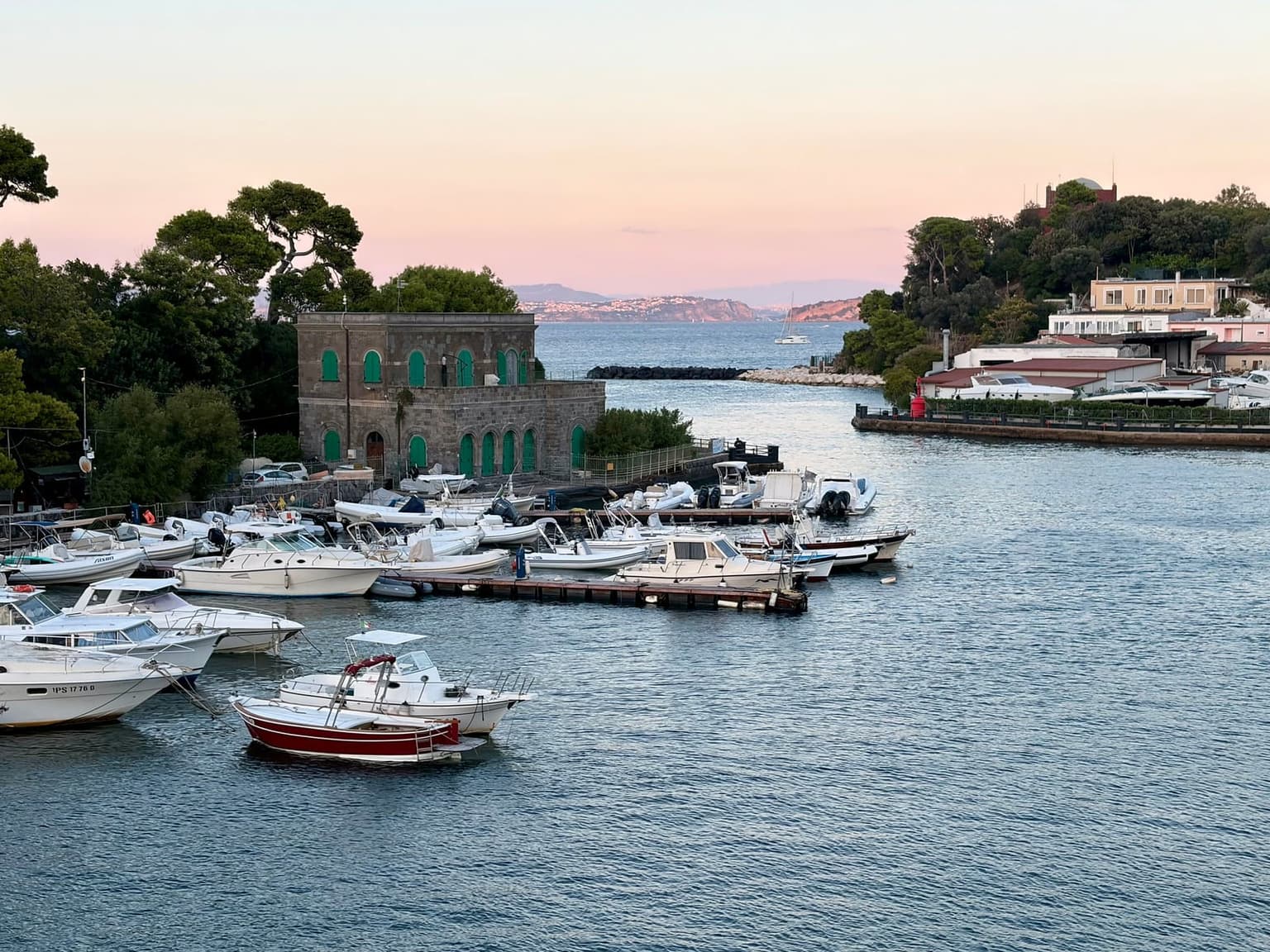
On the ferry from Ischia to Naples, the end of your day is not entirely yours to set. Caremar warns that its scheduled departures can be canceled, and Alilauro's conditions say every crossing depends on the weather and the sea. On a rough day the hydrofoils can be the first to stop and the car ferry the way home; when it is all that runs, its tickets can sell out, so get yours early. A late boat can leave a crowd waiting at the Ischia terminal with nobody from the company to ask. Caremar's live departures page shows each boat's status.
⚠️ Warning
Never plan on the last boat back. Take an earlier one, and when the sea is rough, check the live departures before you leave for the port, not once you are on the quay.
For the hydrofoils, my Naples to Sorrento guide walks through the station-to-Beverello leg, from Napoli Centrale to the pier. Porta di Massa is a different pier, and Caremar's car ferry from Ischia lands there, not at Molo Beverello.
From Sorrento, Alilauro runs a seasonal boat to Ischia, listed for April to October, so check the day's departures. Procida, a much smaller island, sits on the same lines: Caremar sells tickets between Ischia and Procida, Medmar sails between Casamicciola and Procida, and Procida makes the easier day trip of the two.
When to go to Ischia: inside the season, outside August
The best time to visit Ischia is inside the season, from spring to fall, while Poseidon's thermal park and La Mortella's garden are open - and outside August.
August is the month to skip: the island is packed, and that is not Ischia at its best. Early summer is another island, and on a weekday it can be genuinely calm.
Either side of summer, the weather is the gamble. Ischia in sunshine is a pleasure, and in a run of gray days much less of one. A cold day makes a fine excuse for a thermal bath, but only while the parks are open. In the shoulder months, September included, a rough sea can take the hydrofoils out of the day.
Out of season the hot water stays on: Sorgeto never closes, and a hotel whose thermal pool is still open is the other way in.
Ischia FAQ
- How many days do you need on Ischia?
- Two or three nights, from one base, cover a day in the hot water and an afternoon at the castle. Give it a week if you want to slow right down.
- Can you do Ischia as a day trip from Naples?
- Yes: from Molo Beverello, SNAV's hydrofoils reach Casamicciola in under an hour, and Alilauro's reach Ischia in about 50 minutes. The island is big, though, so a day is rushed. Never plan on the last boat back.
- Ischia or Capri?
- Capri for a day of sights, Ischia for a stay built around hot water. Ischia is more than four times Capri's size, and a day there runs out long before the island does.
- Are Ischia's thermal parks open in October or winter?
- In 2026, Poseidon is open until October 31, and Negombo's last open day was October 13; both shut for the winter. The free hot spring at Sorgeto is open all year, and some hotels have thermal pools of their own: check that the hotel and its pool are open when you come.