George Mandrovny
How Many Days in Venice Is Enough?
Three nights in Venice buy two full days: enough for San Marco, the neighborhoods, and the evenings after the day-trippers leave. Two nights suit a trip that's about the look of the place.
- A day trip: one San Marco slot booked ahead, the neighborhoods at midday, dinner before the train. This is Venice at its most crowded.
- One night: the evening and the early morning, the hours a day trip never sees.
- Two nights: one full day, room for San Marco and one neighborhood.
- Three nights: two full days, the right length for a first visit.
- Four nights or more: time for the lagoon islands or a day somewhere else.
- The trap: counting days instead of nights. The afternoon you land after a long-haul flight is half a day at best, and a day trip spends its hours on the city's busiest path.
The city is small enough that nowhere in the center is far from the main sights, so the map never decides a Venice plan. The clock does.
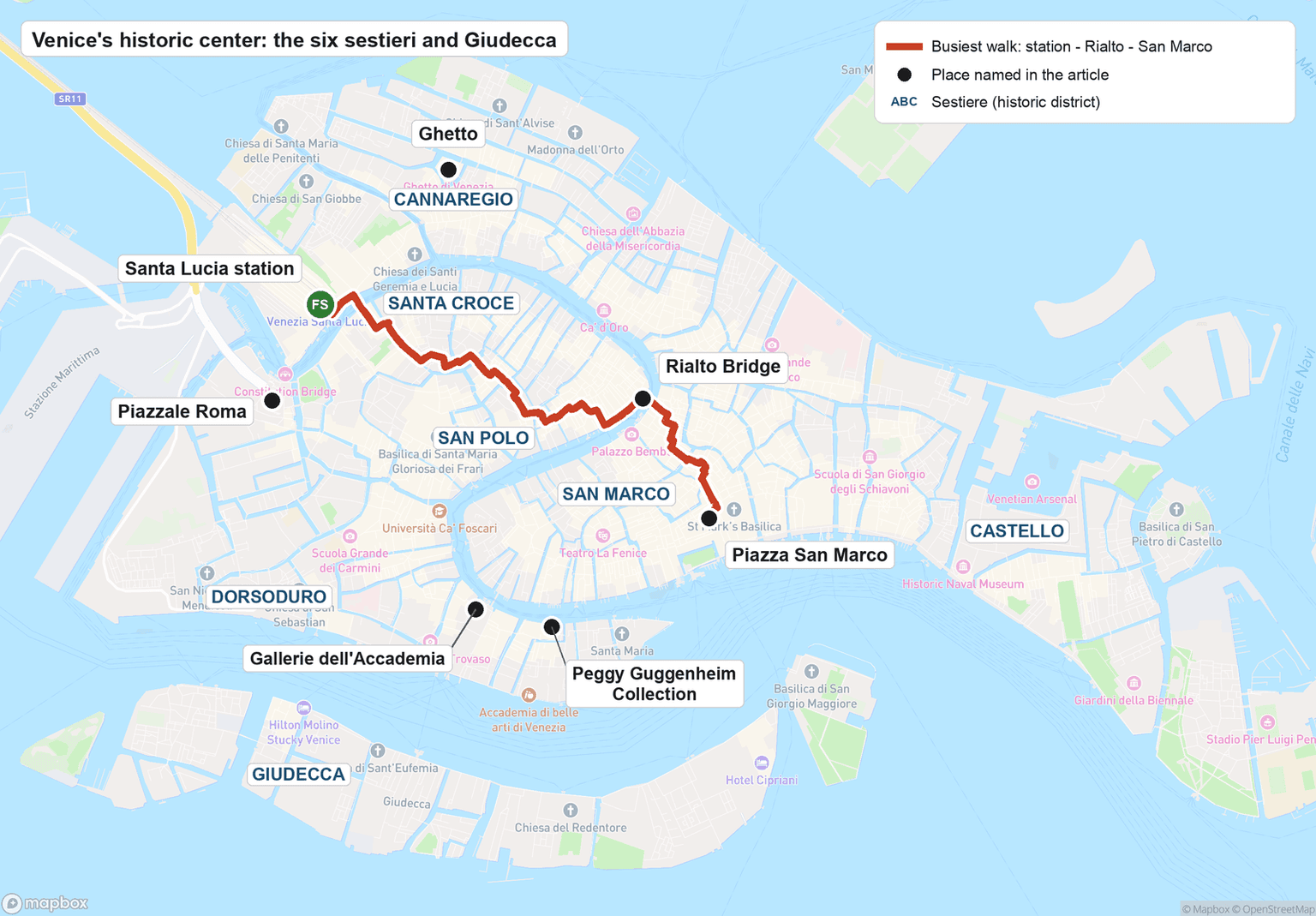
That line on the map is where the day-trippers spend the middle of the day, and while they're on it, it is about as relaxing as a stadium exit. So the question is not how many days but how many nights: a night buys the early morning before they arrive and the evening after they've gone.
Flying in from North America, count the arrival day as half a day, and a tired half at that. That is why three nights is the length for a first visit with the museums and churches on the list, and on that kind of visit a fourth night is rarely wasted. If you came for the look of the place rather than the inside of it, two nights can be enough and three can feel long.
Venice's Day-Tripper Hours: Where to Be When
Venice's crowd keeps day-trip hours: thick on the path from Santa Lucia station over the Rialto to Piazza San Marco through the middle of the day, thin early in the morning and again in the evening.
So the day has three slots. San Marco takes the start. The middle of the day goes to the neighborhoods a few bridges off that path, in Cannaregio, Castello, or Dorsoduro: pick one, wander, and eat wherever you happen to be when hunger wins the argument. The evening goes back to the water and the squares.
| Stop | Open | Where it fits |
|---|---|---|
| St. Mark's Basilica | Mon - Sat 9:30 - 17:15 (last entry 16:45); Sun, national holy days 14:00 - 17:15 | First booked slot of the day |
| Doge's Palace | Apr 1 - Oct 31: 9:00 - 19:00 (last entry 18:00); Nov 1 - Mar 31: 9:00 - 18:00 (last entry 17:00) | After the basilica; late afternoon in summer |
| Campanile (bell tower) | From 9:30; until 21:15 in the summer period | Last of the three in summer |
| Gallerie dell'Accademia | Tue - Sun 9:00 - 19:00 (tickets until 18:00) | A Dorsoduro afternoon |
| Peggy Guggenheim Collection | 10:00 - 18:00 (last entry 17:00); closed Tuesdays and Dec 25 | A Dorsoduro afternoon, not a Tuesday |
Holy days and special occasions can shift these hours, so check before you go.
The basilica is never the evening stop, so it takes the morning and the Doge's Palace follows. Sunday flips that: the basilica opens only in the afternoon, so Sunday morning belongs to the palace. In summer the Campanile stays open hours past both, which makes it the one to leave for last.
Late fall and winter trade warmth for a quieter city, with fog over the bridges on some days. In those months, check the city's tide forecast for high water (acqua alta) before you go.
The tide forecast from the City of Venice's tide center, in Italian (comune.venezia.it)
San Marco: What to Book, and in Which Order
At San Marco, book the basilica's timed slot first, then the Doge's Palace far enough ahead for the online price, and buy both from the official sites.
| Ticket | Price | How to get it |
|---|---|---|
| Basilica entry | €10 | Named ticket, timed slot, official basilica shop |
| Basilica, full | €30 | Adds the Pala d'Oro, the museum, and the Horses Loggia |
| Doge's Palace | €30 online at least 30 days ahead; €35 otherwise | St. Mark's Square Museums ticket (palace, Museum Correr, and two more); time slot, or untimed entry from 12:00 |
| Secret Itineraries | €40 | Guided tour, palace included; reservation only, limited places |
| Campanile | €15 | Booked slot, official basilica shop |
The slot is binding. Entry is only at the time you booked, and a mismatch can get you turned away. The line for tickets on the day is long enough to make the slot feel like the bargain of the trip. Tickets from sellers the basilica hasn't authorized are not valid for entry, which settles where to buy.
The basilica's official online ticket office, for the timed slots (tickets.basilicasanmarco.it)
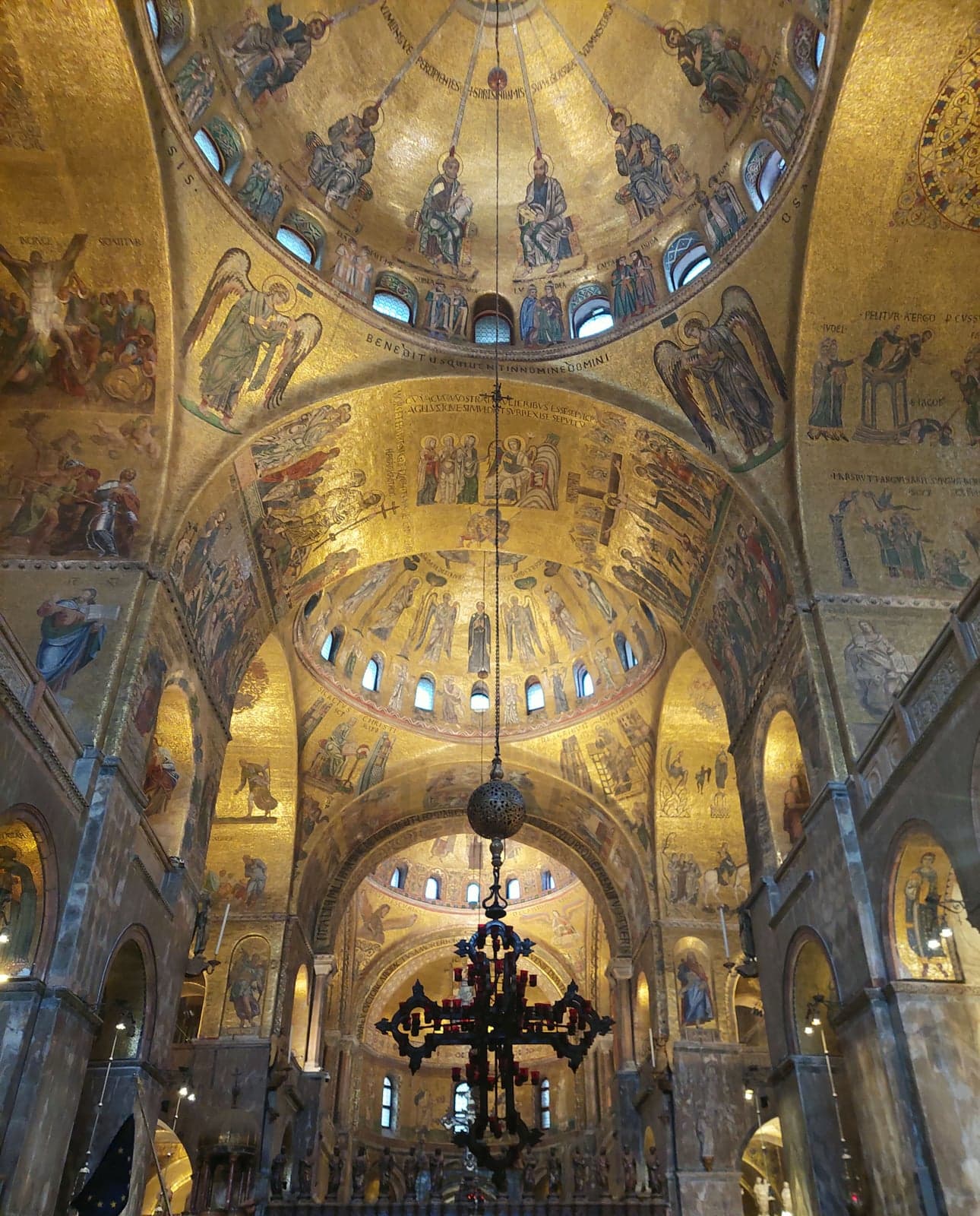
The visit itself is short by rule: 20 minutes at most in the basilica, plus up to 10 at the Pala d'Oro. Spend them looking up; the mosaics are what the slot is for, and your neck will forgive you by dinner.
⚠️ Warning
St. Mark's Basilica: no backpack or bag over 40 x 30 x 20 cm, never a rolling bag, shoulders and knees covered, and a valid ID matching the name on the ticket.
Doge's Palace: no suitcases, rolling bags, or bulky bags; medium bags and backpacks go to the free cloakroom.
Take a palace time slot too, since an untimed ticket won't let you walk from a morning basilica slot straight into the palace. The Secret Itineraries tour adds a guided walk through the rooms where, in the palace's own words, some of the Republic's most important bodies did their "delicate work." In an hour and a quarter it goes through a hidden door into the cramped wooden archives and the interrogation room, then up under the lead roof to the cell Casanova escaped from, and afterward lets you into the main palace route with no second line. The plain palace took me about an hour and a half; with the tour, nearly three. The plain ticket shows the Republic's showroom and the tour its back office, and for me the back office was worth the premium. Take it instead of the plain palace ticket if how Venice actually ran interests you; if not, skip it without guilt.
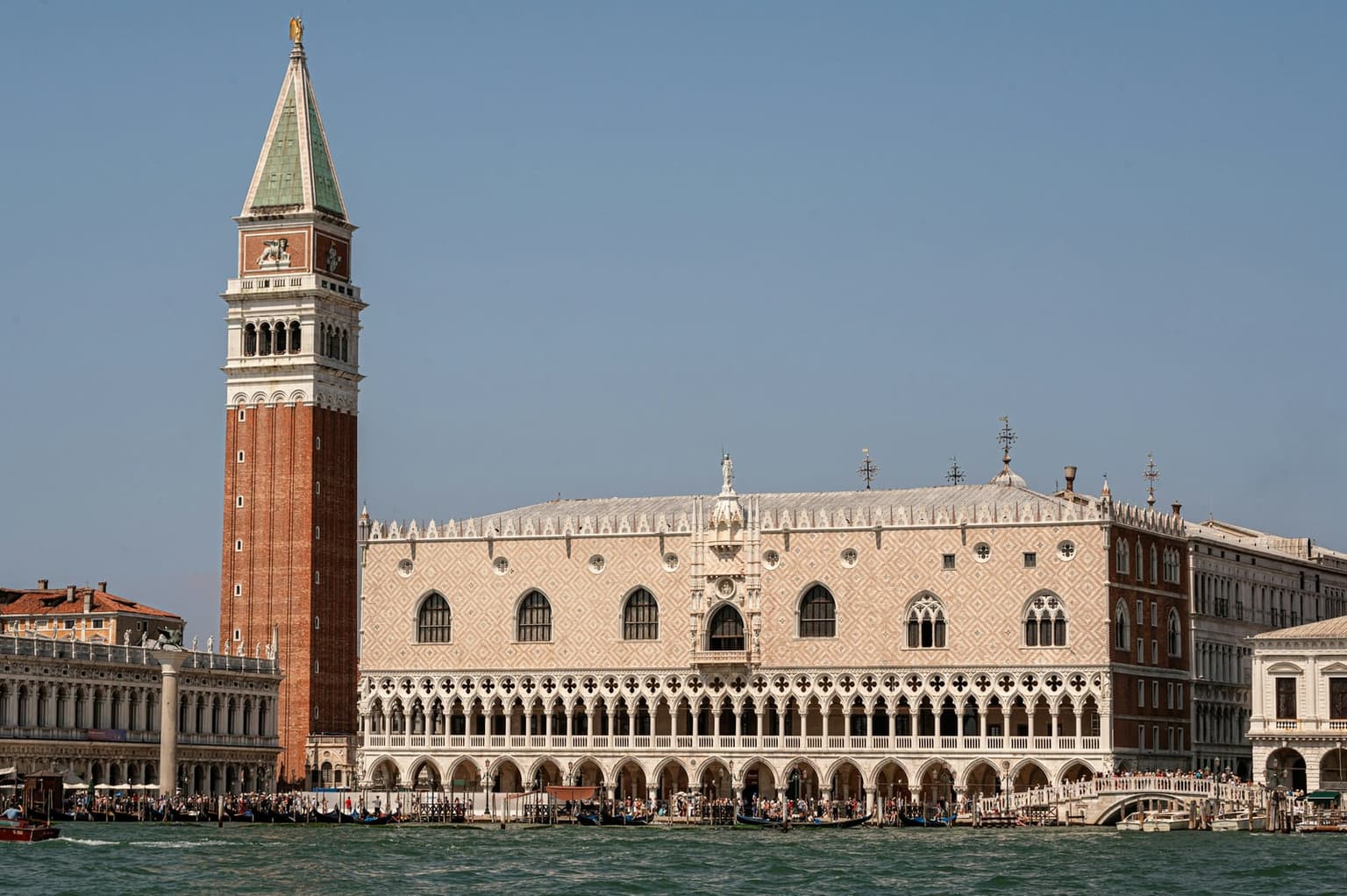
The Campanile is the simple one: book the slot, and let the hours above pick the time. Even with a slot, it took me about 45 minutes from the foot of the tower back to the piazza: ten in the line for the security check and the elevator, half a minute going up, twenty at the top, and the wait for a car down. The top is small and wrapped in wire mesh, but twenty minutes is enough to walk all the way around. If the bells ring while you're up there, they ring right over your head.
If you'd rather hear the story than read it off the walls, book a guided visit of the basilica and the palace. Before paying, get one thing in writing: basilica entry included, on your date. Look for a small group, and avoid a bare basilica ticket from an unauthorized seller.
Where to Stay in Venice, and Why Not Mestre
Sleep in Venice's historic center, away from San Marco itself. The room is there for the evening and the early morning, so put it where those hours are quiet.
- The quiet: deeper into Cannaregio, Dorsoduro, or Castello, the lanes are calmer than around San Marco, and your morning starts without an audience.
- The bags: Venice has many bridges, many of them with steps, so heavy bags argue for a room near the station or a waterbus (vaporetto) stop, or a hotel with its own water entrance. With a small child, a carrier beats a stroller on the bridges.
- The stairs: if steps are hard for you, choose the room by its waterbus stop and ride rather than walk.
- The night: whichever neighborhood wins, keep it in the historic center, not on the mainland.
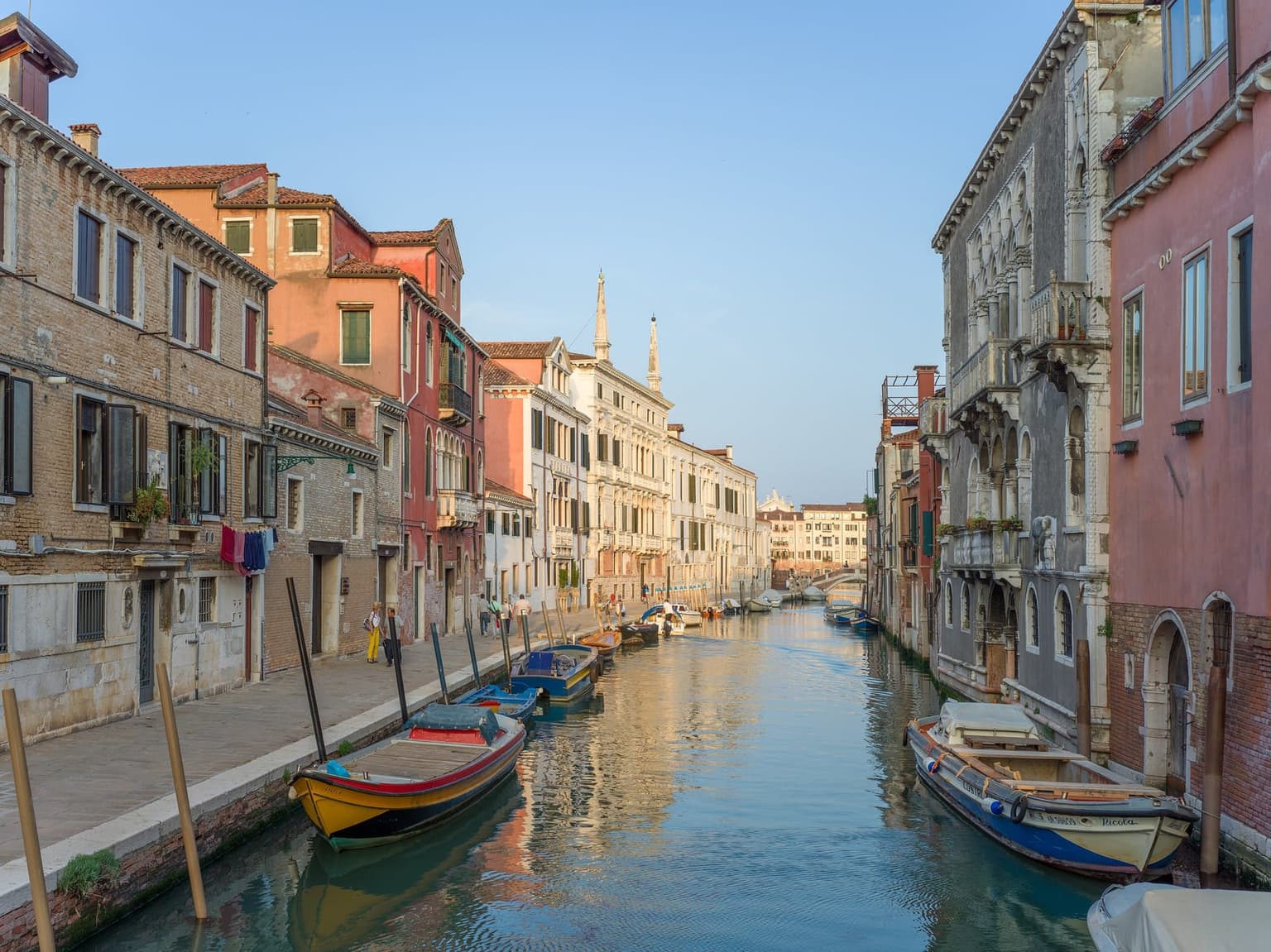
With two or three nights, light bags, and no trouble with stairs, nothing above decides it: Cannaregio for wandering, or Dorsoduro for the Accademia and the Guggenheim on its doorstep and the sunset off its south edge. My own pick for a first stay is Cannaregio, along the wider canals away from the Strada Nova, the main street through from the station. You walk in from the station without crossing the Grand Canal, and in the evening Venetians stroll the Fondamenta della Misericordia, past what I'd call the city's best run of wine bars and trattorias. Dorsoduro has the museums and the sunny Zattere waterfront, but noticeably fewer sit-down restaurants once evening comes.
Mestre, on the mainland, has a case. Regional trains from Venezia Mestre reach Venezia Santa Lucia in 10 to 13 minutes, several an hour, for €1.50 one way at the time of writing, and the 24-hour waterbus pass covers them too. Hotels there sit in a lower city-tax tier than the historic center (tourist rentals get no such reduction). Against that, every evening ends at a station, just when the city empties out. Choose Mestre only if the short ride and the lower tax tier outweigh that.
Wherever you sleep, the city tax is set by zone, season, and type of lodging; children under 10 are exempt, and nights past the fifth are not taxed.
Once the neighborhood is settled, book a room you can cancel. If your bags are heavy, check two things before you pay: the nearest vaporetto stop, and how many bridges stand between it and the door. If the answer is several bridges with a suitcase, keep looking.
Vaporetto Pass or Walking: Getting Around Venice
Walk most of Venice, and buy a waterbus pass only for the days you'll ride two or three times. Single tickets are priced like souvenirs.
A single costs €9.50 and lasts 75 minutes from the first validation. Validate at the reader on the pier every time you board and every time you change boats, pass or no pass.
| Ticket | Price | Beats singles from |
|---|---|---|
| 24 hours | €25 | The 3rd ride |
| 48 hours | €35 | The 4th ride (two a day) |
| 72 hours | €45 | The 5th ride |
| 7 days | €65 | The 7th ride |
Passes run in hours from the first validation, not calendar days.
Travelers aged 6 to 29 get the 72-hour Rolling Venice pass for €27, once they've bought the €6 Rolling Venice card at a Venezia Unica ticket office. If you fly into Marco Polo airport, no pass covers the trip to or from it; the airport-bus add-on, €7 one way or €13 round trip, must be bought with the pass.
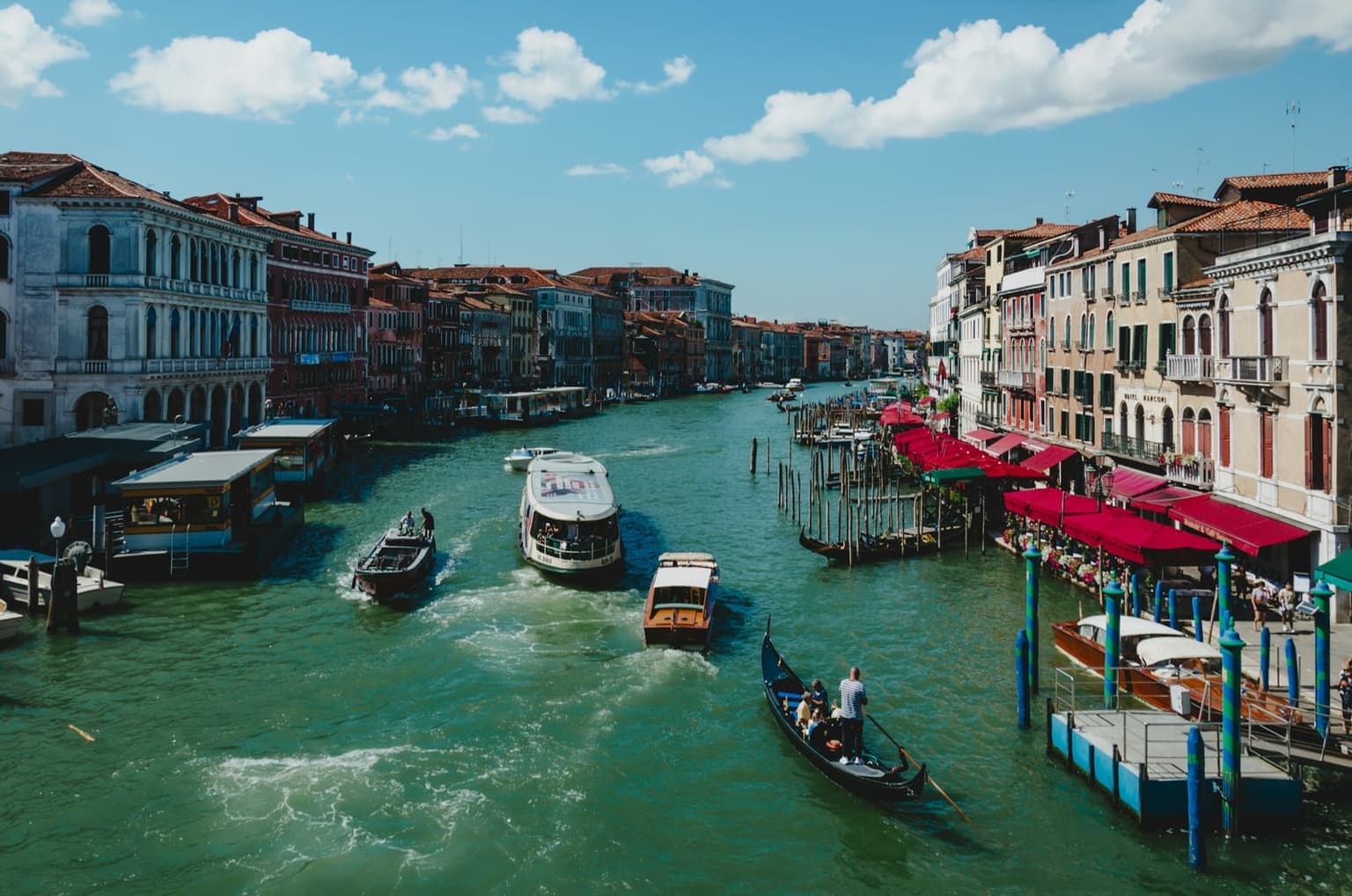
Every first visit owes itself the whole Grand Canal on Line 1, once by day and once in the evening. It takes about 40 minutes from San Marco Vallaresso up to the station, calling at 13 piers in between, which makes it a palazzo tour on what is, technically, the city bus. For speed, Line 2 runs from Rialto to the station in 11 minutes against Line 1's 19, and in the daytime Line 2 also reaches San Marco, at the Giardinetti pier. So the pass belongs to the days with a boat in them, and a neighborhood day is a walking day.
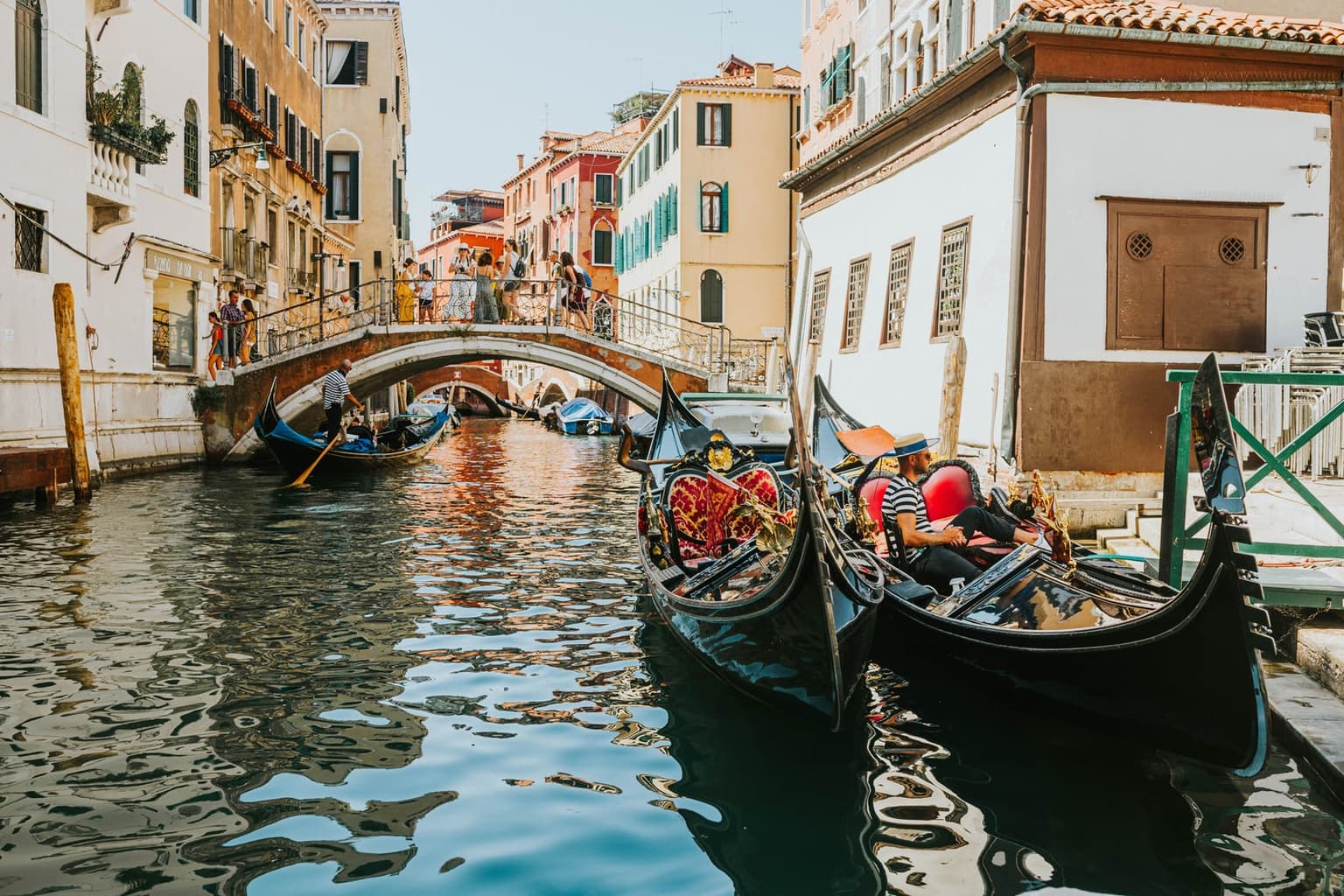
The gondola is a different boat with a different job. It's for the memory, not for getting around, and it can feel like not much in the moment and still turn out to be the trip's best pictures and the story that gets told at home.
A Day Trip or One Night: What the Night Buys
A day trip shows you Venice at its most crowded, and one night adds the evening and the early morning, when the city clears. If one day is all you have, take it anyway.
Make the day a long one. Arrive early, hold one booked San Marco slot, spend the middle of the day off the station-Rialto-San Marco path, and stay for dinner before the train back. Coming by train, check that your ticket runs to Venezia Santa Lucia, on the island, and not only to Mestre on the mainland. From Milan, the bags on the waterbus and the last direct train back are the rest of the small print.
Venice's access fee is not in effect right now. Its 2026 trial has ended, and since July 27 you can visit without paying or asking for an exemption. Later years are the city's call. Under the 2024 and 2025 rules, overnight guests were excluded because they pay the city tax, but they needed a free voucher, which the lodging could issue or the guest could get. Check cda.ve.it before you go.
The City of Venice's access-fee site, in English, with the current status (cda.ve.it)
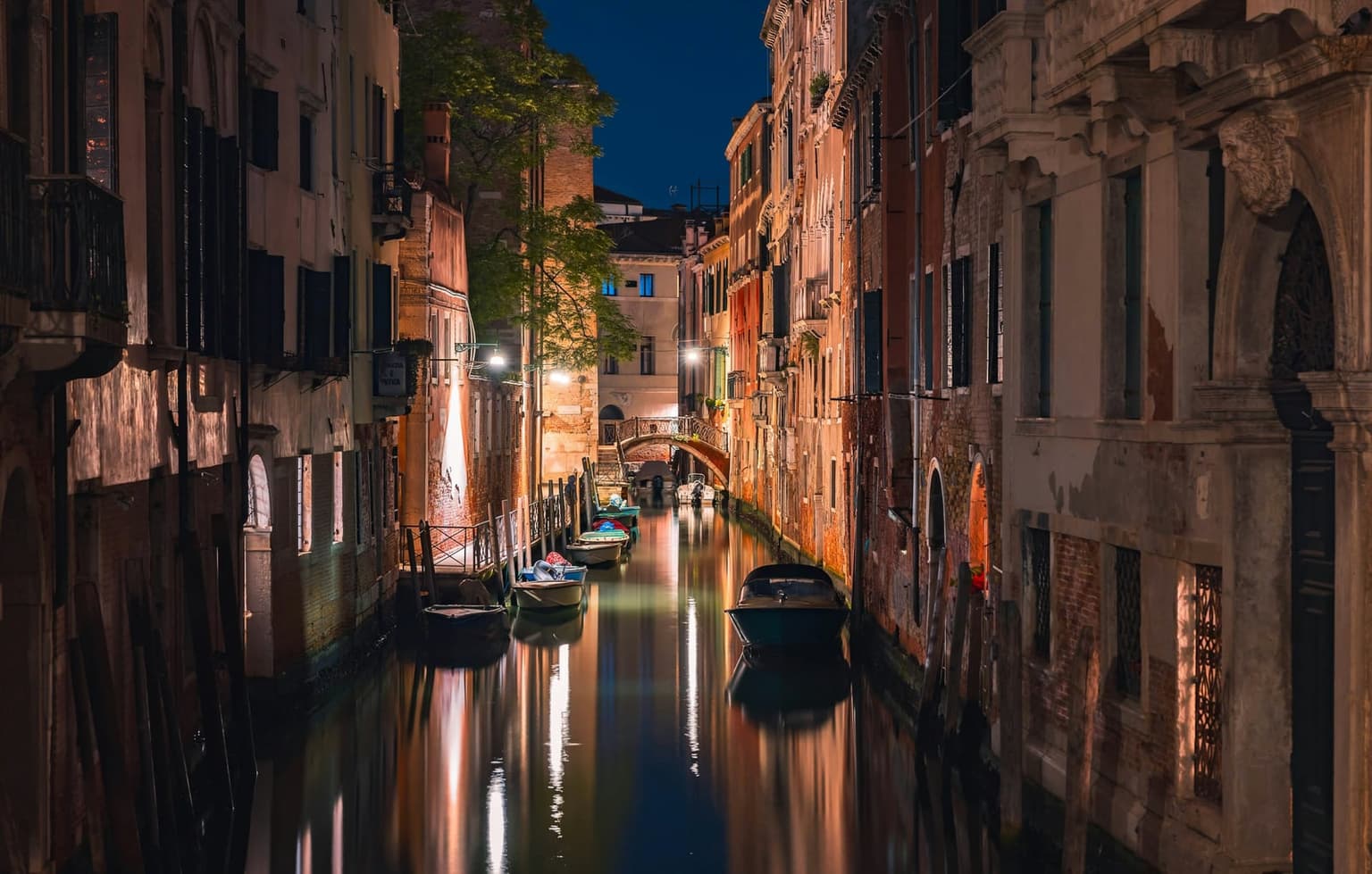
With one night, arrive by early afternoon, leave the bags at the room, and let the day-trippers go home. By dinner the lanes have started to empty. Eat wherever the walk has taken you, then keep walking. Each bridge away from the main path leads somewhere quieter than the last, until the only footsteps in the lane are your own. Getting lost is the plan now.
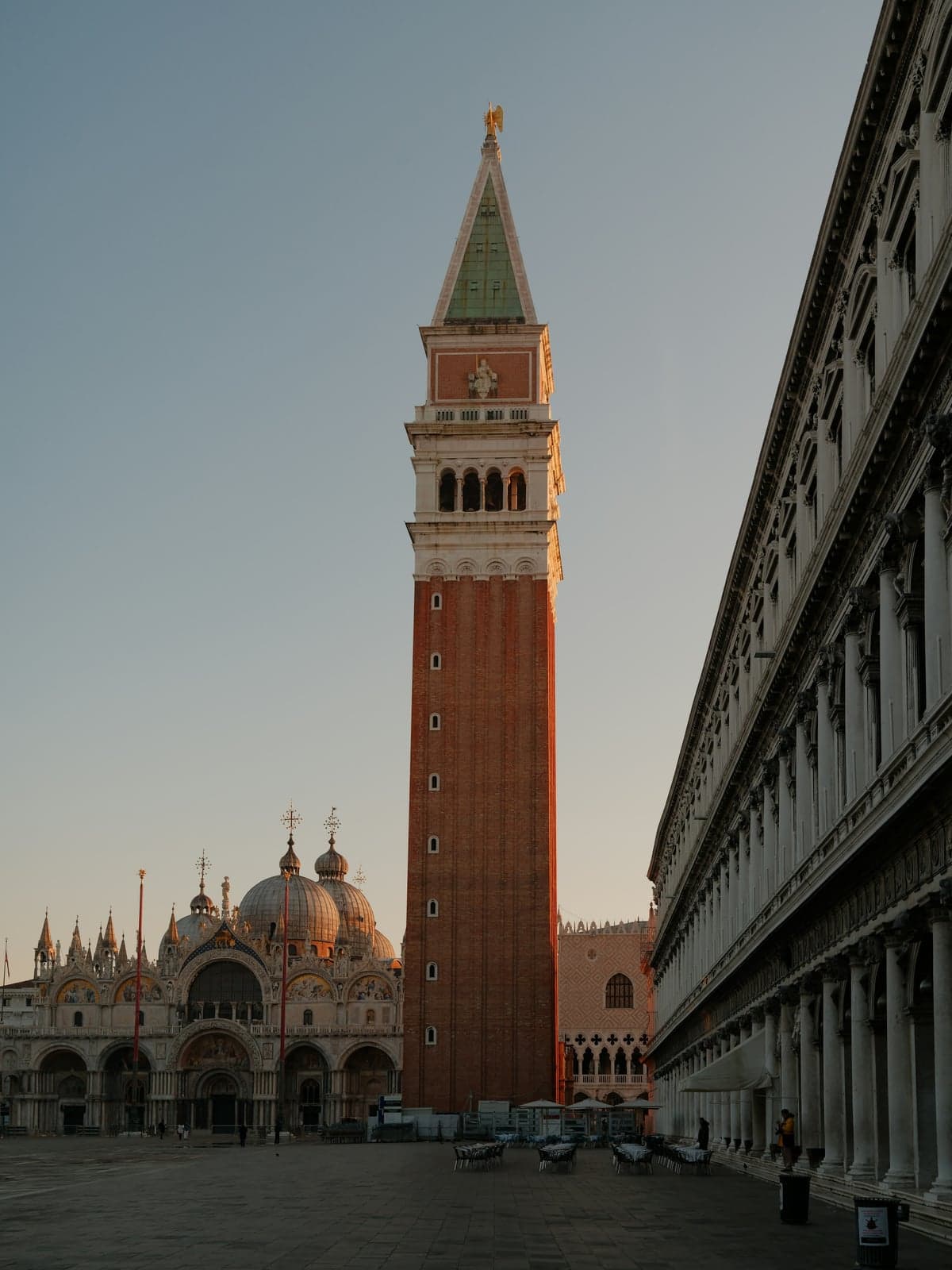
The next morning, Piazza San Marco is at its emptiest before the basilica opens, so be there early, take the first basilica slot, go on to the Doge's Palace, and leave after lunch. On a Sunday or a national holy day, the palace goes first.
Two or Three Nights: How to Fill the Full Days
On a three-night stay, split the two full days by neighborhood, with San Marco and Dorsoduro on the first and Cannaregio, the Rialto, and Castello on the second. With two nights, the plan shrinks to Day 1 plus two half days.
Day 1: San Marco and Dorsoduro
Start with the basilica's first slot, then the Doge's Palace on the slot after it. In the afternoon, cross to Dorsoduro and pick one museum by the day of the week: on a Monday the Guggenheim, on a Tuesday the Accademia, any other day, your call. The Accademia costs €20, buying online skips the ticket-office line, and it has its own waterbus stop. The Guggenheim costs €17; book a timed entry slot online before they sell out. The Accademia took me two hours: the collection is huge, the Titians, Veroneses, and Tintorettos are vast, and all that gold and detail wears the eyes out fast. The Guggenheim took an hour and a quarter. It's a one-story palazzo opening onto the Grand Canal, with a shaded sculpture garden, and it goes by without museum fatigue, which makes it the easier pick on a short day.
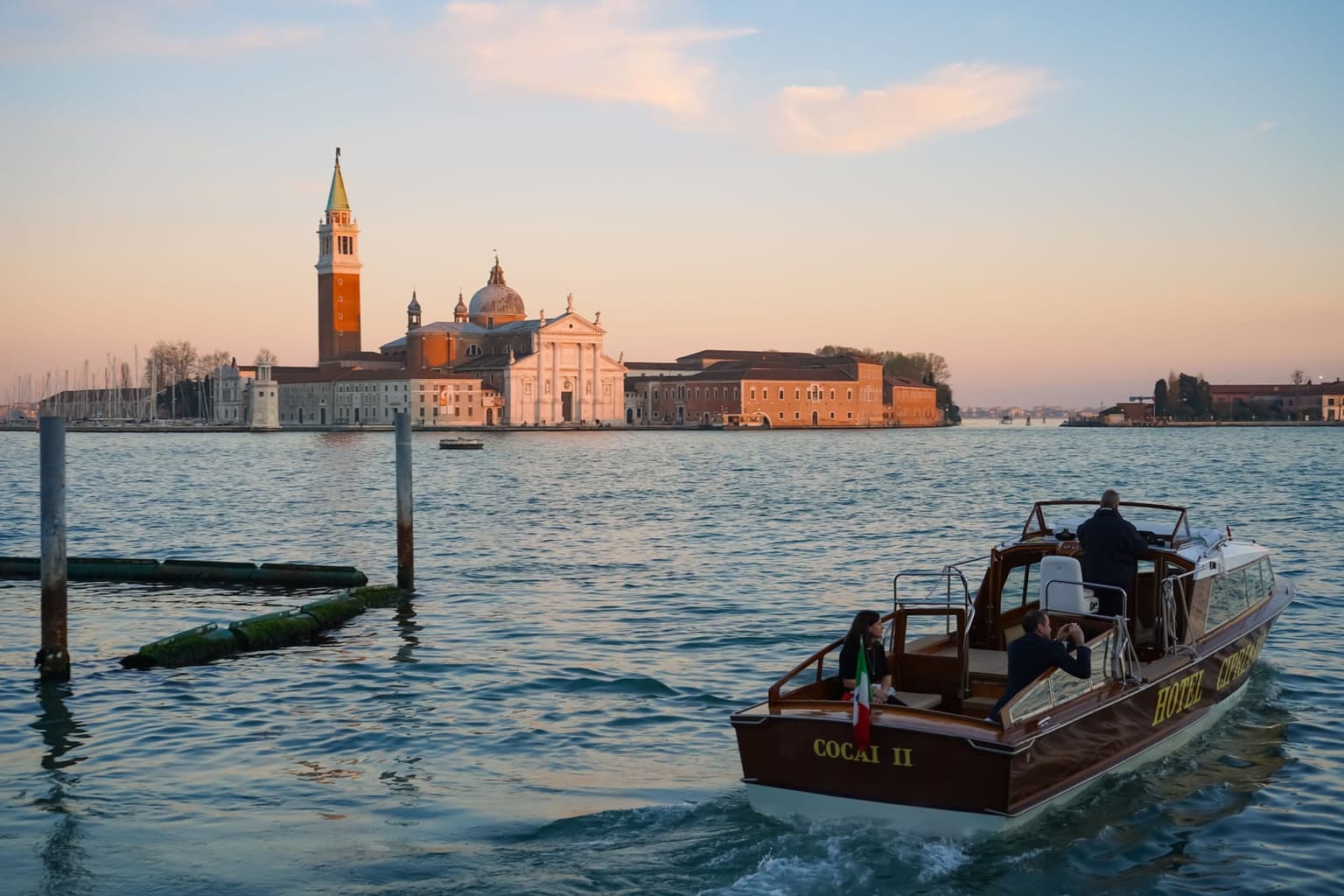
End the day with the sunset off Dorsoduro's south edge, San Giorgio Maggiore lit gold across the water. If Day 1 is a Sunday or a national holy day, run San Marco backward, palace in the morning and basilica in the afternoon, then cross to Dorsoduro.
Day 2: Cannaregio, the Rialto, and Castello
Start on the water, with Line 1 up the Grand Canal, then walk into Cannaregio. The Ghetto there is worth the stop, a place of real significance the crowds mostly leave alone. Work back toward the Rialto, knowing the market may already be shut by the time you wander in. Give Castello the afternoon, and step into any church that isn't San Marco; you'll rarely have to share it, which after the basilica feels like a clerical error in your favor.
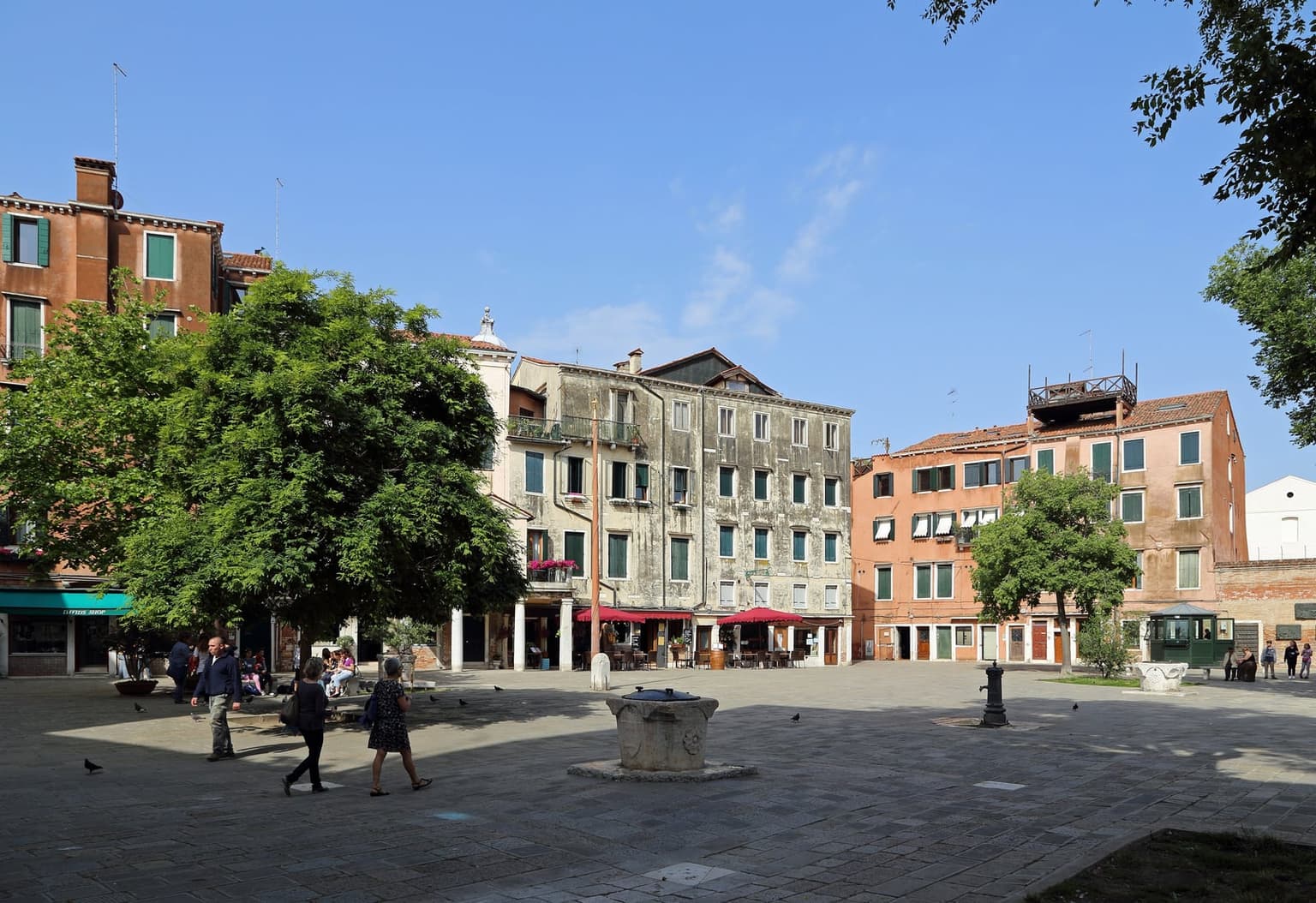
On the two-night version, the arrival evening and the departure morning go to Cannaregio, and the Dorsoduro museum and the Secret Itineraries become extras on the full day, to take or leave. Skip the lagoon islands on a two-night stay, and on a three-night stay, consider saving them for another trip.
Give one evening to a crawl through the bacari, Venice's small wine bars. Have a few cicchetti (the local bar snacks) and a glass at each. Treat cicchetti as a snack rather than dinner, since plenty are merely fine, and keep walking past any menu that leads with carbonara or pizza. For a first crawl, my pick is Cantine del Vino già Schiavi in Dorsoduro, a few minutes' walk from the Accademia Bridge. There isn't a single table. Bottles climb the walls to the ceiling, and behind a long glass case the crostini get made as fast as people order them: whipped salt cod (baccalà mantecato), tuna, gorgonzola, zucchini flowers. Take a couple on a paper napkin and a glass of the plain house wine, an ombra, for a few euros, and eat standing at the stone wall of the canal outside. Across the water is the Squero di San Trovaso, a yard where gondolas are still built and repaired by hand.
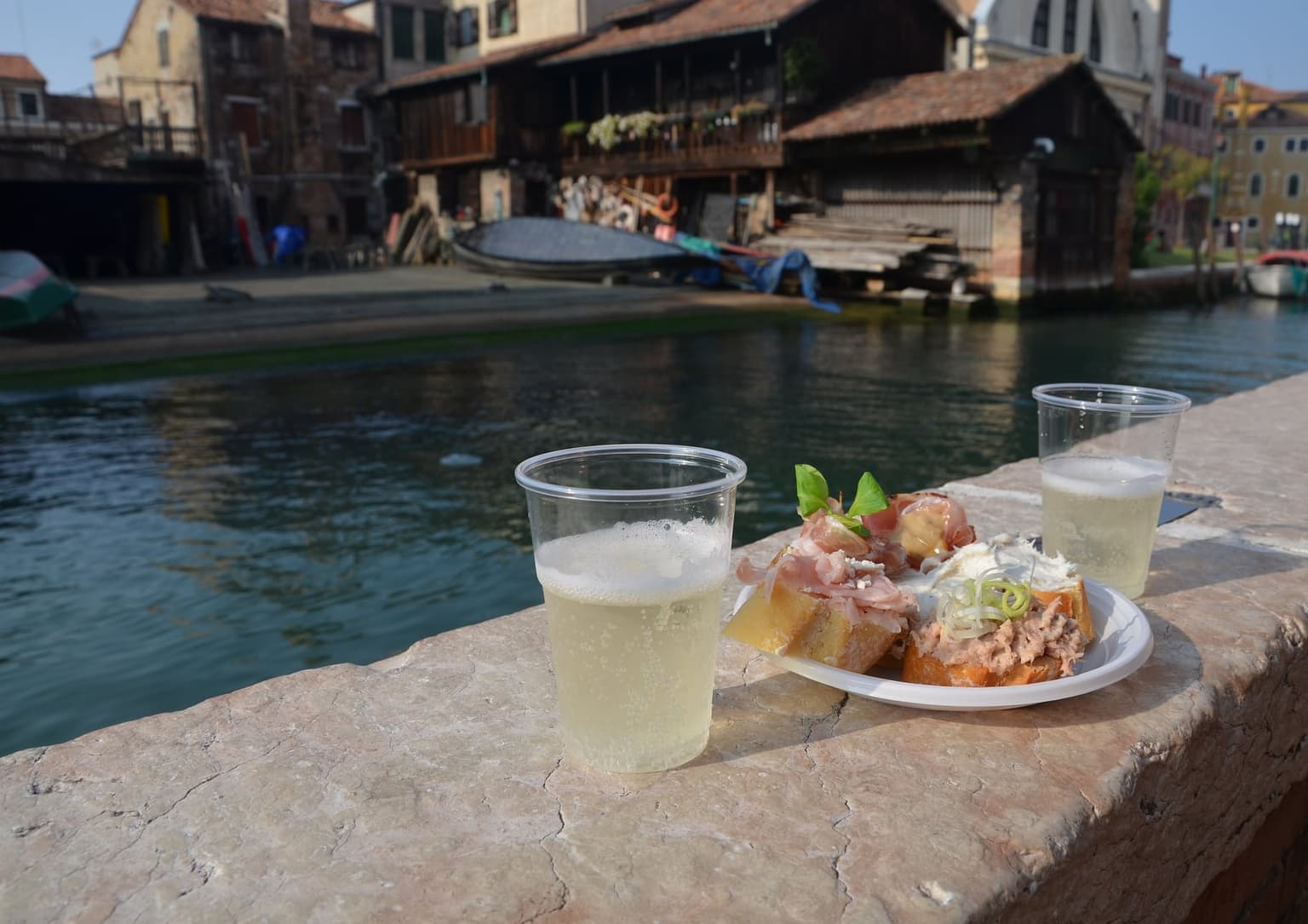
If you'd rather let someone else pick the bars, a guided evening cicchetti walk does the crawl for you. Before booking, check for a small group, several bacari rather than one, and the food and wine included in the price. Skip any tour that turns out to be a sit-down dinner by another name.
Four Nights or More: The Lagoon and a Day Away
With four nights or more, keep the same room and give the extra day to the lagoon islands or to a day out of Venice. For once you're the day-tripper, and the city you come home to in the evening has just emptied out.
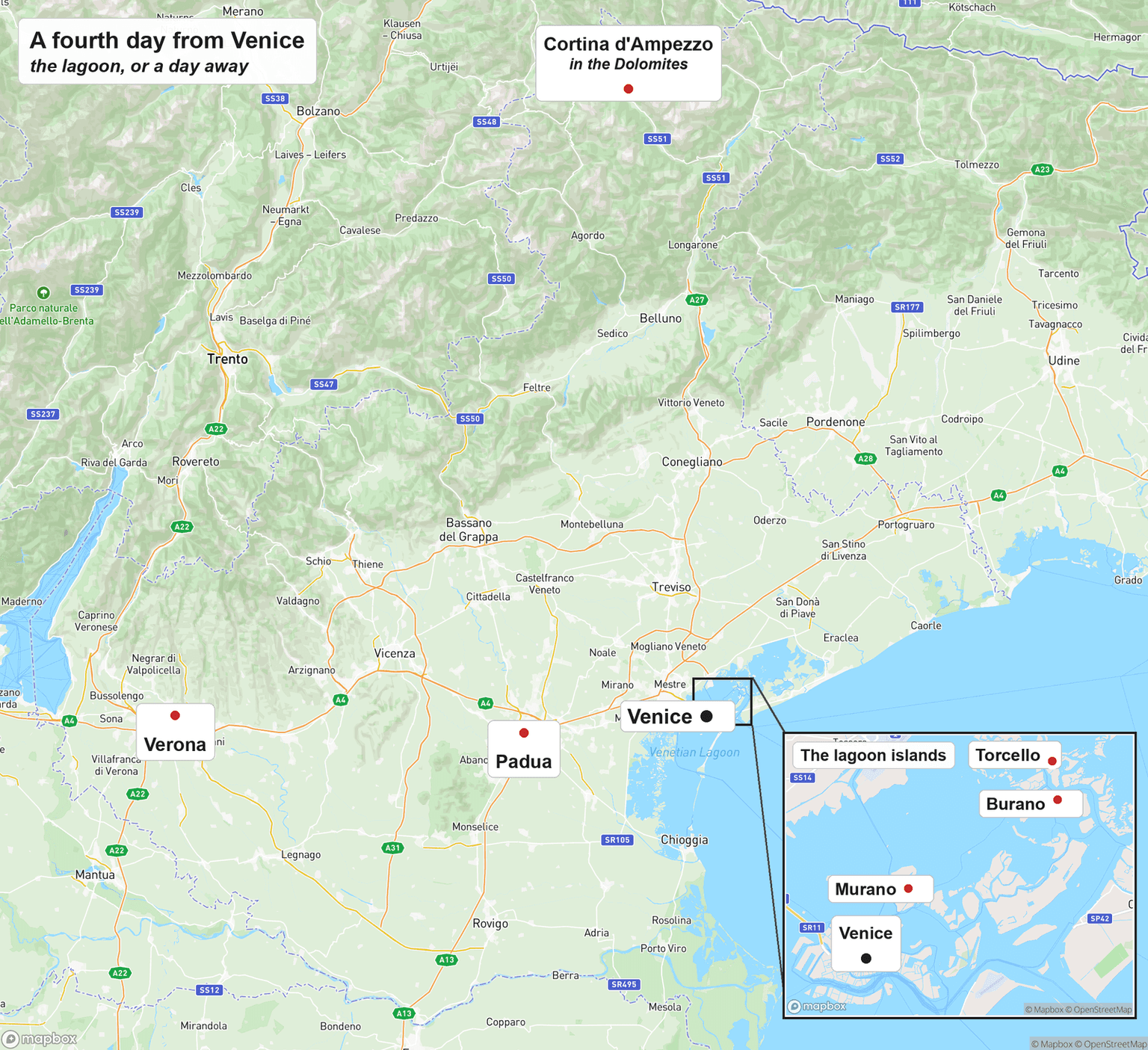
The lagoon is the natural fourth day, and the one shorter stays save for later. It's also the boat day the waterbus pass was made for. The real choice is Murano or Burano, and how to get between them. If Torcello makes the list, get there early in the day, when you may have its church and bell tower to yourself.
Verona works two ways, as a day trip or as the city that takes one of the trip's nights, and which of the two cities gets the night comes down to how you want to spend the evening. Padua is the other city day trip.
The Dolomites are the ambitious one. Out and back from Venice they make a long day, and a single night in the mountains turns that forced march into an actual trip. My straight verdict on the mountain day trip also covers the drive and the car-free ways in.
How Many Days in Venice: Common Questions
- How many days do you need in Venice?
- Three nights, which give two full days, for a first visit with San Marco and the museums. Two can be enough if you came for the look of the place. Flying in from North America, count the arrival day as half a day.
- Is Venice worth a day trip, or should you stay the night?
- Yes, if one day is all you have, but make it a long one, with one booked San Marco slot and dinner before the train. One night adds the evening and the early morning, the hours when the city clears.
- Do you have to pay to enter Venice?
- Not right now: the 2026 trial of the access fee is over, and since July 27 no fee applies. Under the 2024 and 2025 rules, overnight guests didn't pay the fee because they pay the city tax, but they needed a free voucher, which the lodging could issue or the guest could get. Later years are the city's call, so check cda.ve.it before you go.
- Is the vaporetto pass worth it?
- Yes, on the days you ride. The 48- and 72-hour passes beat single tickets at about two rides a day, and a lone 24-hour pass from the third ride. If you mostly walk, singles for the odd ride cost less.
- Should you stay in Mestre or in Venice?
- In Venice, if the evenings matter. Mestre is 10 to 13 minutes from Santa Lucia by regional train, and its hotels sit in a lower city-tax tier, but every evening ends with a train back to the mainland.
Count the nights, book the mornings, and keep one evening for a walk with no plan. By the time the last day-trippers head for the station, the city is the quietest it's been since breakfast.