George Mandrovny
The short answer: the beds come first
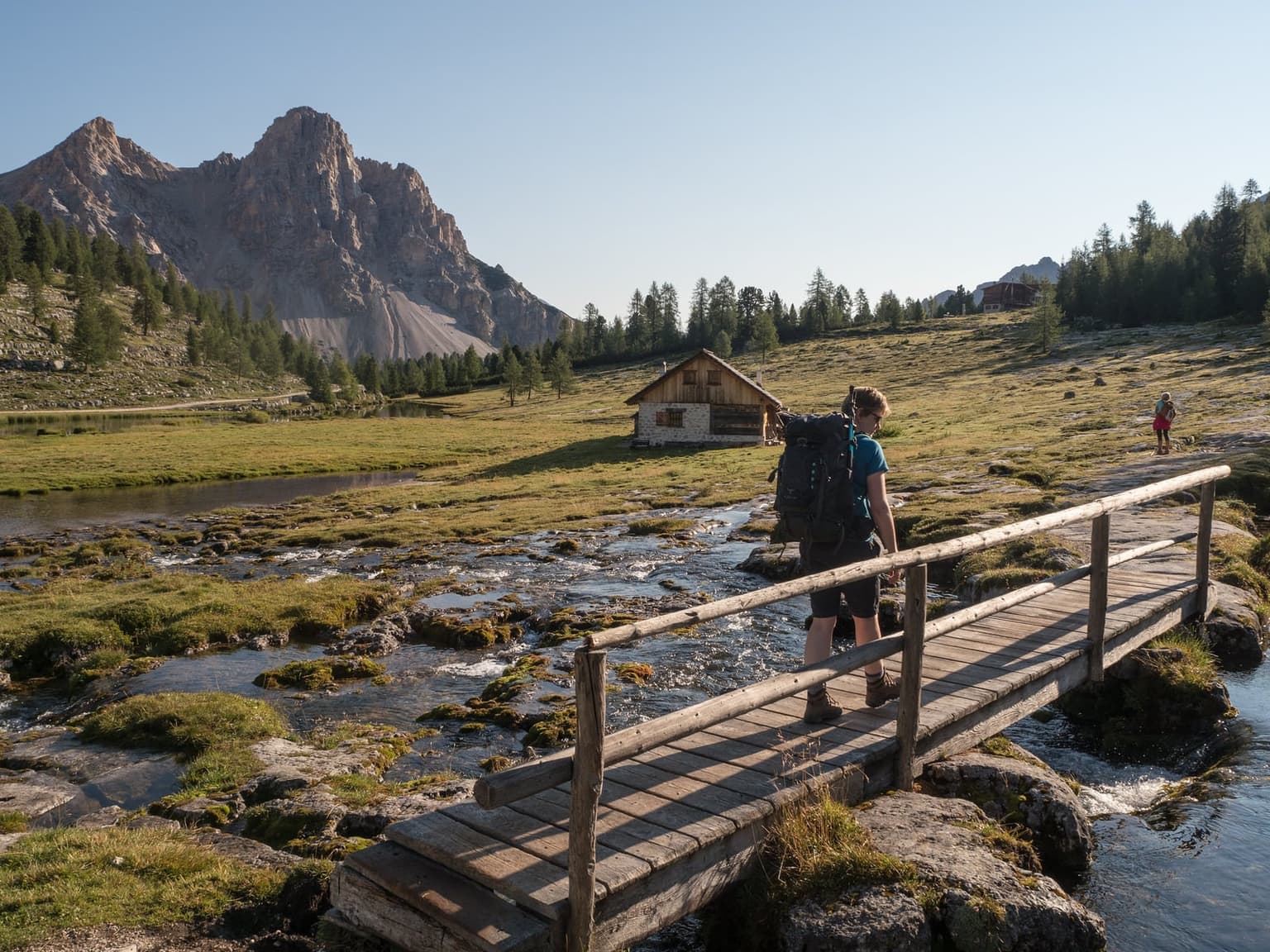
The Alta Via 1 in the Dolomites runs about 125 km north to south, from Lago di Braies to Belluno, in 12 stages as CAI, the Italian Alpine Club, splits it, on trails CAI calls not particularly demanding for a good hiker. The hard part is the beds. The huts run independently, with no single booking system, and the popular ones fill months ahead. Book the big huts that fill first, Lagazuoi among them, and build the chain around those nights. One trap: some huts keep the deposit if you cancel - at Lagazuoi, half the booking.
- Days - 12 stages to Belluno, and plenty of people walk only part of it.
- Season - each hut sets its own dates: Croda da Lago opened June 15 in 2026, Nuvolau lists June 20 to September 20, so check each one.
- Storms - start early and be off exposed ground and ridges by early afternoon.
- Package - someone else holds the beds, for noticeably more money.
- Start - from July 1 to September 15, 2026, the buses to the lake need an online reservation.
The walking asks for fitness. The booking asks for a plan made months before summer, on the day each hut opens its book, and that is where most trips are won or lost.
The Alta Via 1 in twelve stages, Lago di Braies to Belluno
The Alta Via 1 in the Dolomites runs about 125 km from Lago di Braies south to Belluno, with about 7,300 m of climbing - a number best read once and then put somewhere you won't see it. CAI splits it into 12 legs. Eleven end at a hut; the twelfth ends in Belluno itself.
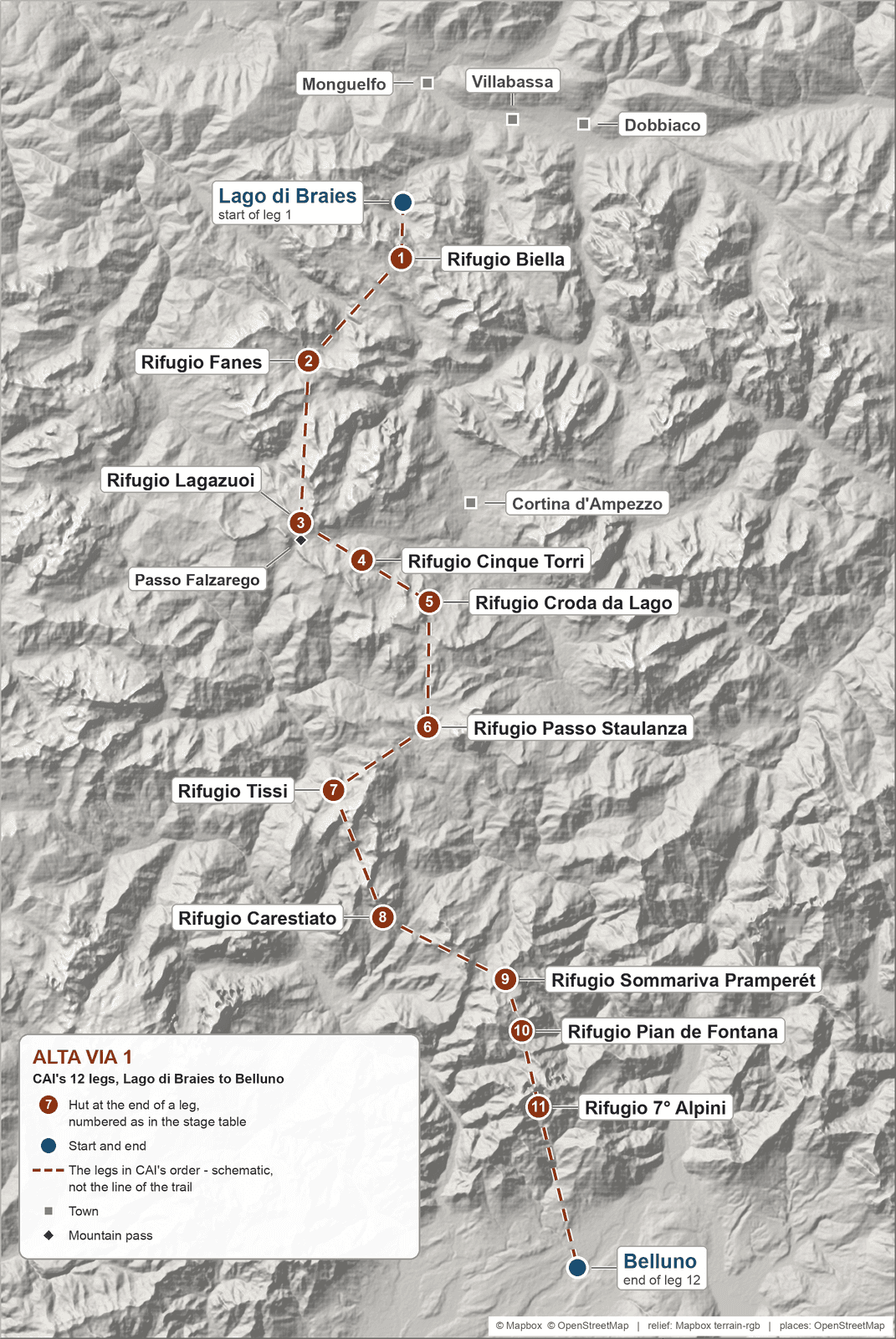
The table gives CAI's walking time per leg, with no distance or climb. Other publishers cut the route at different huts, so take the stages and the times from one source - mixing them is how a short day on paper turns into a long one.
| Stage | From - to | Walking time |
|---|---|---|
| 1 | Lago di Braies - Rifugio Biella | 3 h 30 min |
| 2 | Rifugio Biella - Rifugio Fanes | 4 h 30 min - 5 h |
| 3 | Rifugio Fanes - Rifugio Lagazuoi | 5 h |
| 4 | Rifugio Lagazuoi - Rifugio Cinque Torri | 5 h |
| 5 | Rifugio Cinque Torri - Rifugio Croda da Lago | 3 h |
| 6 | Rifugio Croda da Lago - Rifugio Passo Staulanza | 3 h 30 min |
| 7 | Rifugio Passo Staulanza - Rifugio Tissi | 4 h - 4 h 30 min |
| 8 | Rifugio Tissi - Rifugio Carestiato | 5 h 30 min - 6 h |
| 9 | Rifugio Carestiato - Rifugio Sommariva Pramperét | 5 h - 6 h |
| 10 | Rifugio Sommariva Pramperét - Rifugio Pian de Fontana | 3 h - 3 h 30 min |
| 11 | Rifugio Pian de Fontana - Rifugio 7° Alpini | 7 h - 8 h |
| 12 | Rifugio 7° Alpini - Belluno | 4 h - 4 h 30 min |
That makes 12 walking days on CAI's split, before any rest day. Lago di Braies to Rifugio Fanes can look like one afternoon on a map; it is two legs. Short legs can double up, 5 and 6 most obviously. Walking only part of the route is common, and no lesser trip for it.
CAI runs it north to south, as the table reads. The reverse, Belluno to the lake, is a real option when the hut dates fit better that way, and the booking section comes back to it.
What you walk through: Fanes, Lagazuoi, Croda da Lago, and the Civetta
Some Alta Via 1 days are a grind, though not as bad as their reputation, and the ground changes more often than the stage table lets on. After leg 1 climbs from the lake to Rifugio Biella, leg 2 crosses the grazing plateau of the Alpe di Sénnes to Rifugio Fanes, and leg 3 leaves Fanes onto what the tourist board calls a lunar plateau, toward Passo di Limo.
Then the leg climbs to Rifugio Lagazuoi, at about 2,750 m, and the climb ends several times before it actually does. Each crest looks like the last one, and the hut stays where it was, somewhere above you.
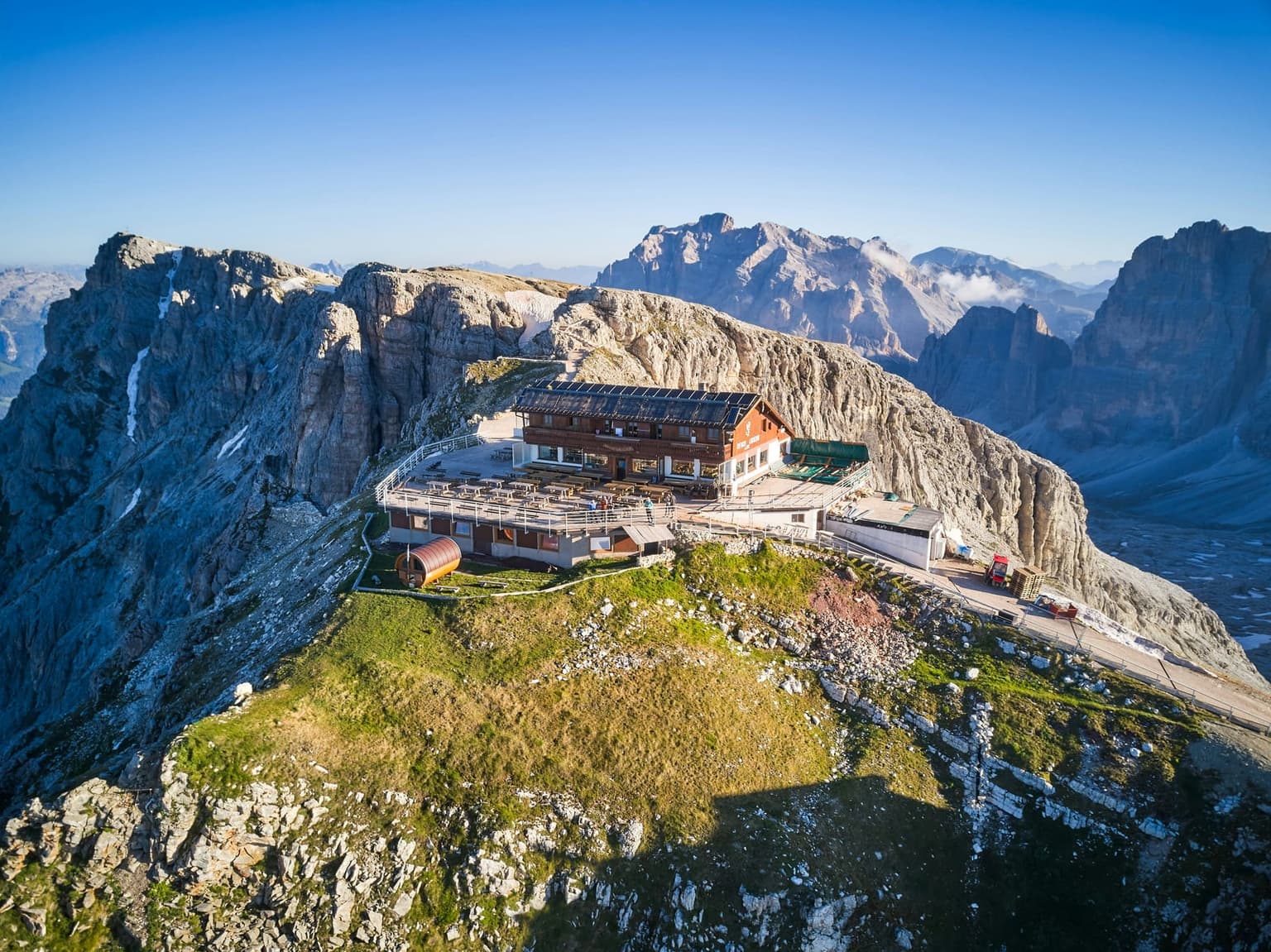
And then it really is over. The ground levels onto the ridge, the terrace is right there, and the pack comes off before you have decided to take it off. Everything you climbed since Fanes sits below you now, and the ridge hands you the rest: rock, sky, and ranges folding away past anything you could name. For a few minutes, tomorrow's leg does not exist.
Lagazuoi is also an open-air First World War museum, with paths and tunnels you can walk. After Lagazuoi, the two publishers end their next stage at different huts. The tourist board's stage reaches Rifugio Averau, near Forcella Nuvolau, where the morning views keep opening up, then climbs to the summit hut, Rifugio Nuvolau. CAI ends its leg 4 at Rifugio Cinque Torri instead.
I walked this stretch in early September. I came up to Lagazuoi on foot, by the classic trail past Lago di Lagazuoi, and reached the hut toward evening. What stayed with me is the wind on the terrace, ice-cold and straight through every layer, and how fast the temperature fell once the sun was gone. Next morning I took the war tunnels down to Passo Falzarego: about two hours in total darkness, on wet, slick stone, so a headlamp is not optional, and under a full pack the tall, uneven steps punish the knees. From the pass I walked up through the First World War trenches at the Cinque Torri, crowded with people the chairlift brings up, then took the steep climb to Averau and on to the top at Nuvolau.
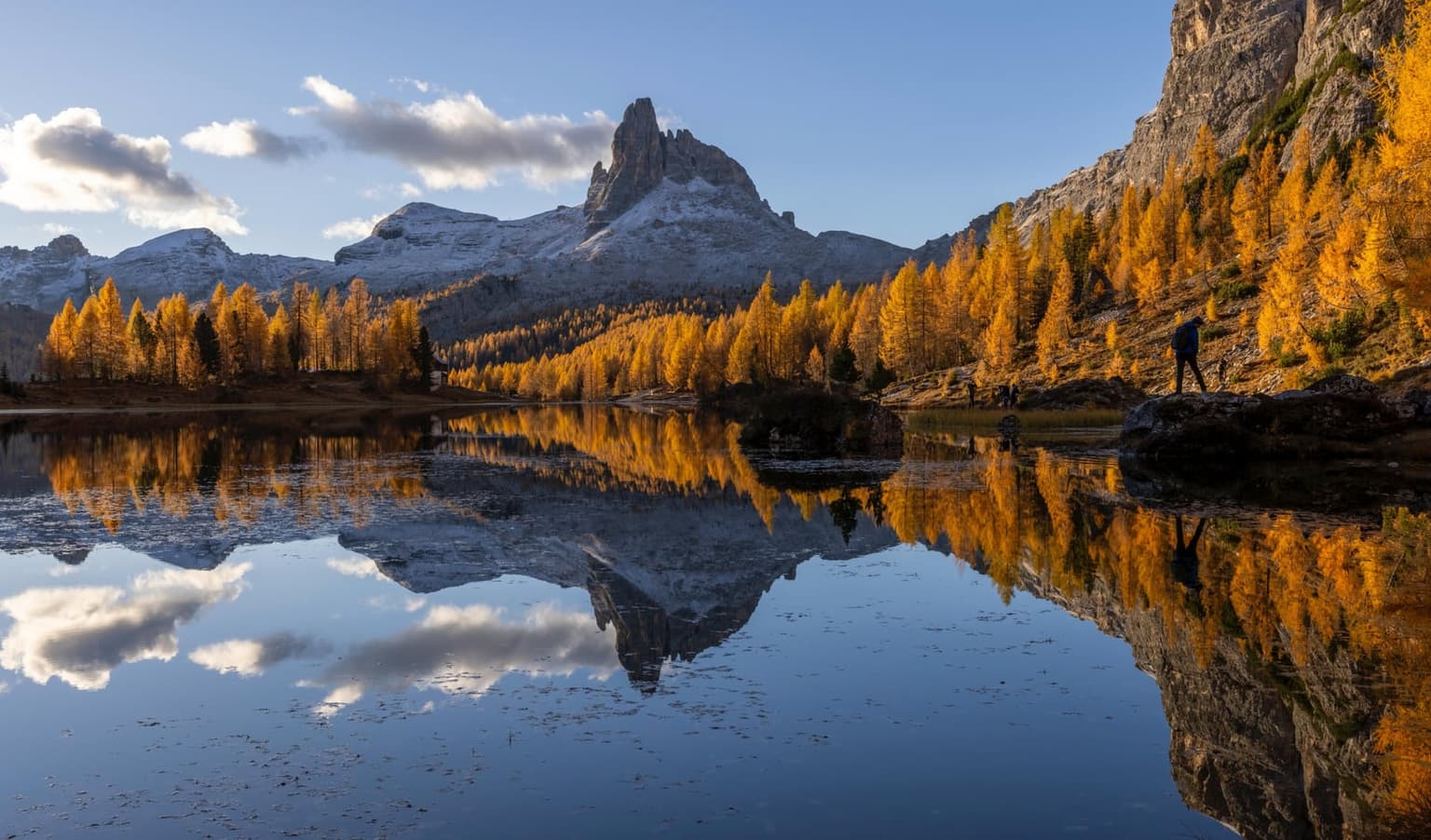
CAI's leg 5 ends at Rifugio Croda da Lago, at the foot of the Croda da Lago itself, with the Becco di Mezzodì reflected in Lago Federa a stone's throw from the hut. That picture is no secret: the lake is a Cortina day hike in its own right, and on a summer day its shore can be packed.
Farther south, the tourist board's stages go around the Pelmo massif and pass Rifugio Tissi, where CAI ends leg 7. From Tissi you look down on Lago di Alleghe to the northwest and across at the Civetta to the east, a wall so big the hut feels like a front-row seat.
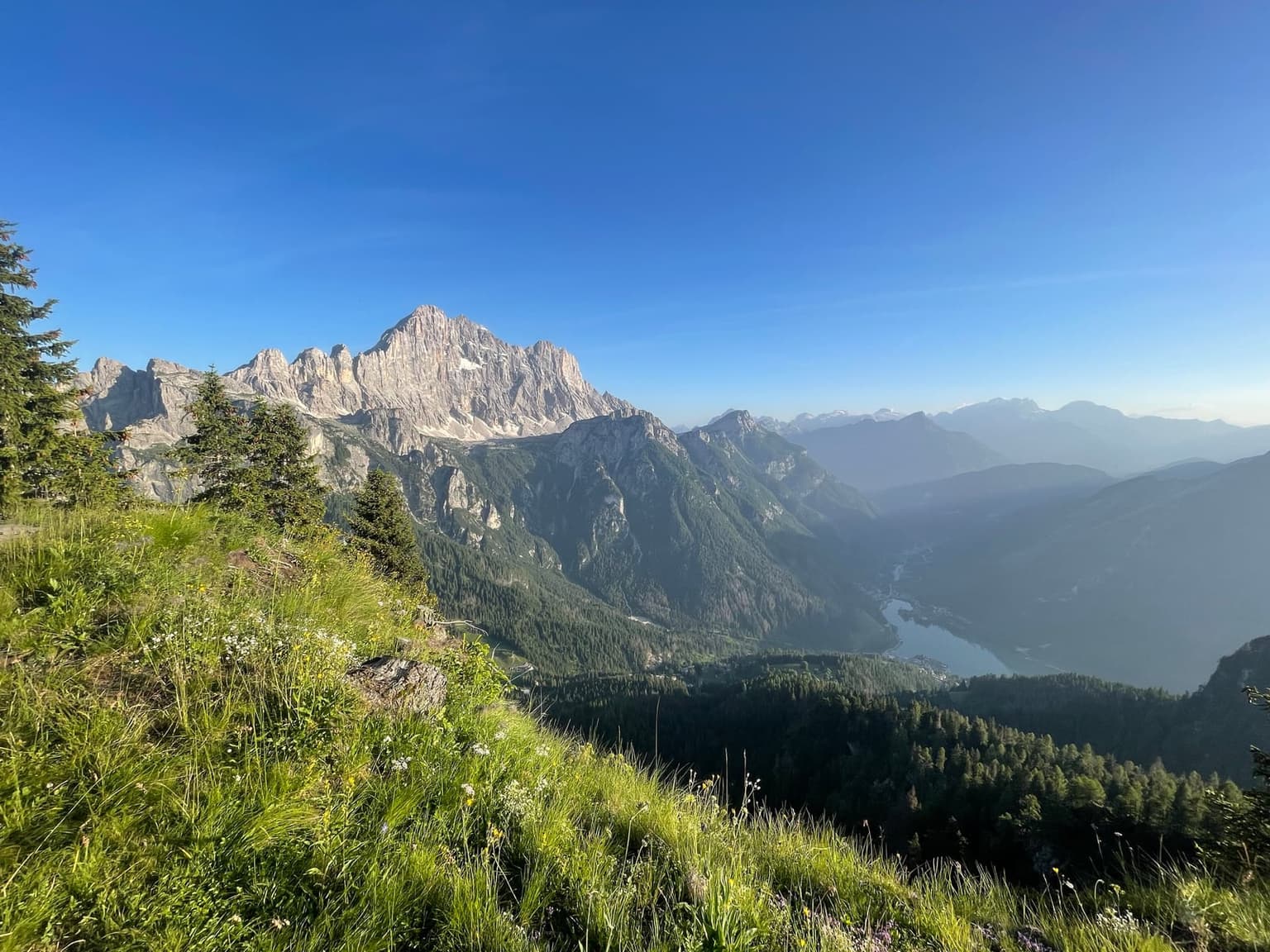
The four legs from Tissi to Rifugio 7° Alpini are the wild south. CAI ends them, in turn, at Rifugio Carestiato, Rifugio Sommariva Pramperét, Rifugio Pian de Fontana, and 7° Alpini, the last of its leg-end huts. On the tourist board's stage from Rifugio Pian de Fontana to that hut, the way from Forcella del Marmol goes by a route of fixed metal ropes and ladders that you clip into with a harness kit, called a via ferrata, to the Schiara's south face; the board's walkers' variant leaves from Pian de Fontana itself, not from Forcella del Marmol. More on both below. The farther south you go, the fewer people share the trail, and the AV1 never passes the Tre Cime or Seceda.
How to book the Alta Via 1 huts: which first, and when
Booking the Alta Via 1 huts means booking each one separately: no single system covers the route. CAI's Prenota Rifugi portal lists the AV1 with a search for the huts along it, and Nuvolau, for one, takes bookings there while pointing to its own site as well. Fanes publishes its own booking terms. Eleven nights on CAI's split can mean eleven separate bookings, each with its own rules.
Book the scarcest huts first. The big, popular huts fill before the rest, Lagazuoi among them. A few huts are among the last to open their books, and anyone who waits for those before booking anything finds the big ones already full. So secure the hard nights first and build the chain outward from them; the beds you get will decide the direction, the stage splits, and the rest days. Lagazuoi books on its own site, with a credit card for the deposit.
Book each hut the day it opens. Each hut opens bookings on its own date. Some were already taking bookings for 2027 by September 2026, the year before the walk. Rifugio Croda da Lago opens bookings for the 2027 summer season on December 1. By late winter, the best-known beds can be gone. Book on the day, not a week later: at the busy huts, that week is the difference between choosing your beds and taking what's left.
Groups of six to eight have it hardest. Dorm space is limited, and a group needs that many beds free on the same night at every hut. Book the huts directly rather than through an agency, which may block beds early.
If Lagazuoi is full on your date, drop down for a night in Cortina and pick the route up again, a proper shower and bed included.
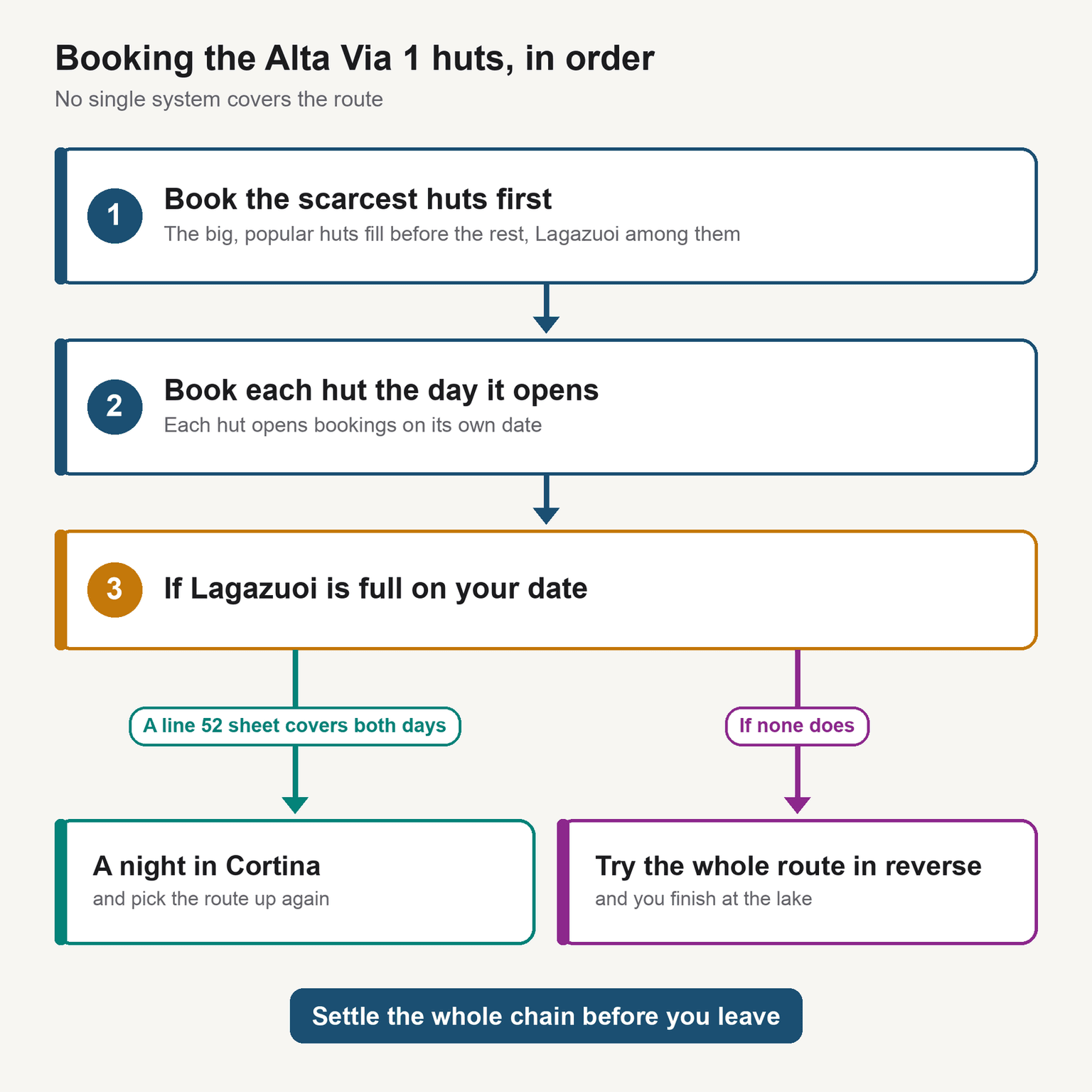
From Lagazuoi, the cable car runs down to Passo Falzarego (watch the last ride down, given below), and Dolomiti Bus's seasonal line 52 goes on to Cortina when it is running: check that a line 52 sheet's "valid from ... to ..." header (printed "VALIDO DAL ... AL ...") covers both days, the ride down and the ride back up the same way. If none does, treat the 52 as not running. Then, as with a full hut anywhere else, try the whole route in reverse: the same huts on different nights may line up when the original order doesn't, and you finish at the lake. Settle the whole chain before you leave, not by phone from the trail.
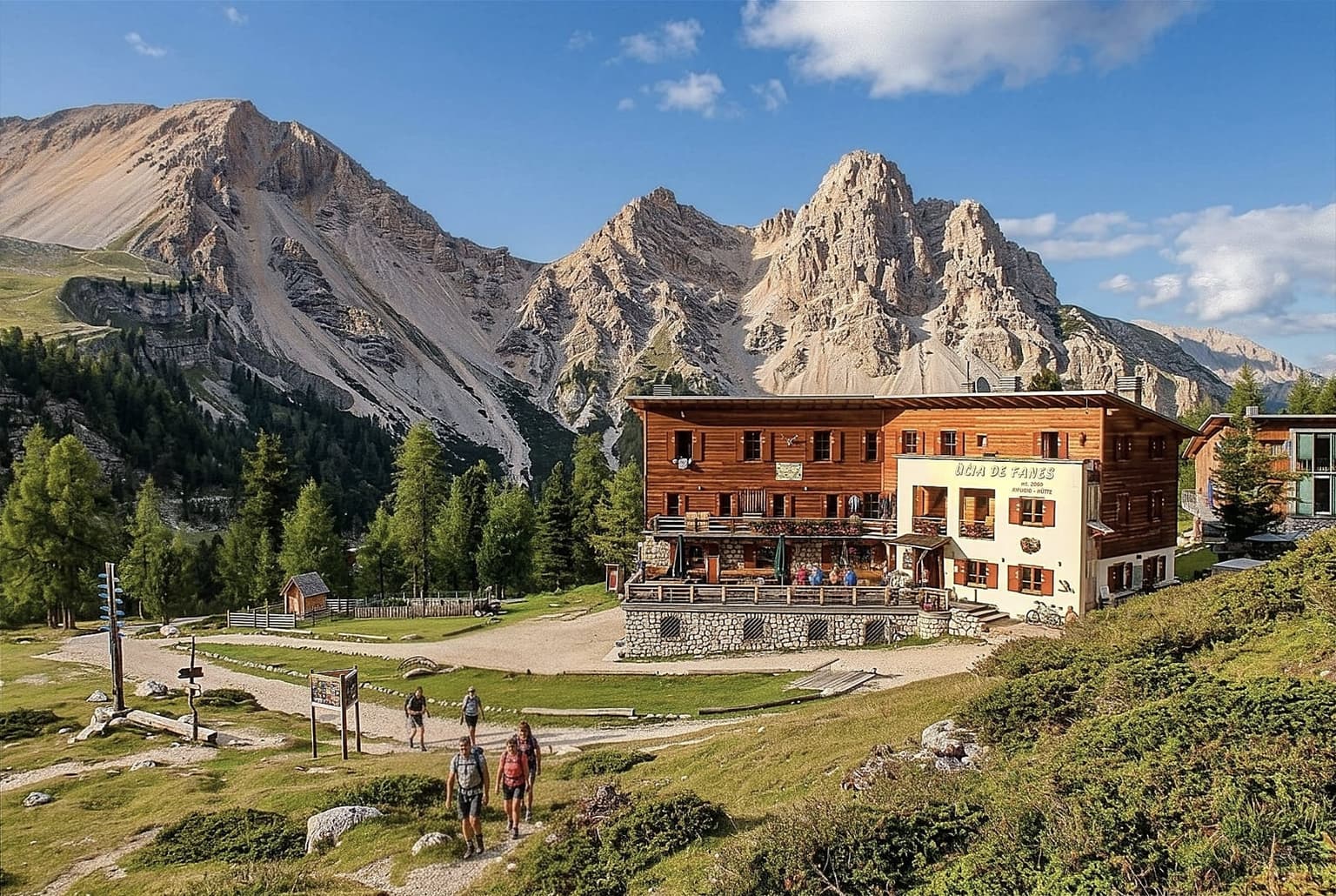
Every hut sets its own terms, so read them before you pay. Three huts' terms, as each publishes them, are below; at CAI huts, CAI's 2026 tariff caps any deposit at the overnight rate.
| Hut | Deposit | If you cancel |
|---|---|---|
| Rifugio Lagazuoi | 50%, never refunded | Within 3 days of arrival, or a no-show: the whole booking, minus extra services |
| Rifugio Fanes | 50%, kept on any cancellation (usable within a year if the beds are rebooked) | 5 days or less ahead, a no-show, or leaving early: 100% charged |
| Rifugio Nuvolau | Share not stated on its page | Deposit refunded at 90% if you cancel at least 10 days ahead, minus the online payment fee |
Fanes' own terms suggest trip-cancellation insurance, which is fair warning from the people holding your deposit. If you buy it, pick a policy whose cancellation coverage pays out on non-refundable hut deposits, with hiking and mountain rescue named in writing. Don't assume a credit card's travel coverage stretches to a hut trek.
Self-guided or a package: who holds the beds
The real difference between an Alta Via 1 hike with a company and one without is who holds the chain of beds: you, booking hut by hut, or a company that books them for you. Going through a company costs noticeably more than booking the huts yourself, and what the difference mostly buys is time: someone else sits through the opening days.
Booking it yourself is worth it if you have time for the routine laid out above, each hut on its own opening day, and a group has one more reason to book direct, set out in that section. In return you choose every stage and every rest day, and nobody else's itinerary decides where you sleep on the day your knees file their complaint.
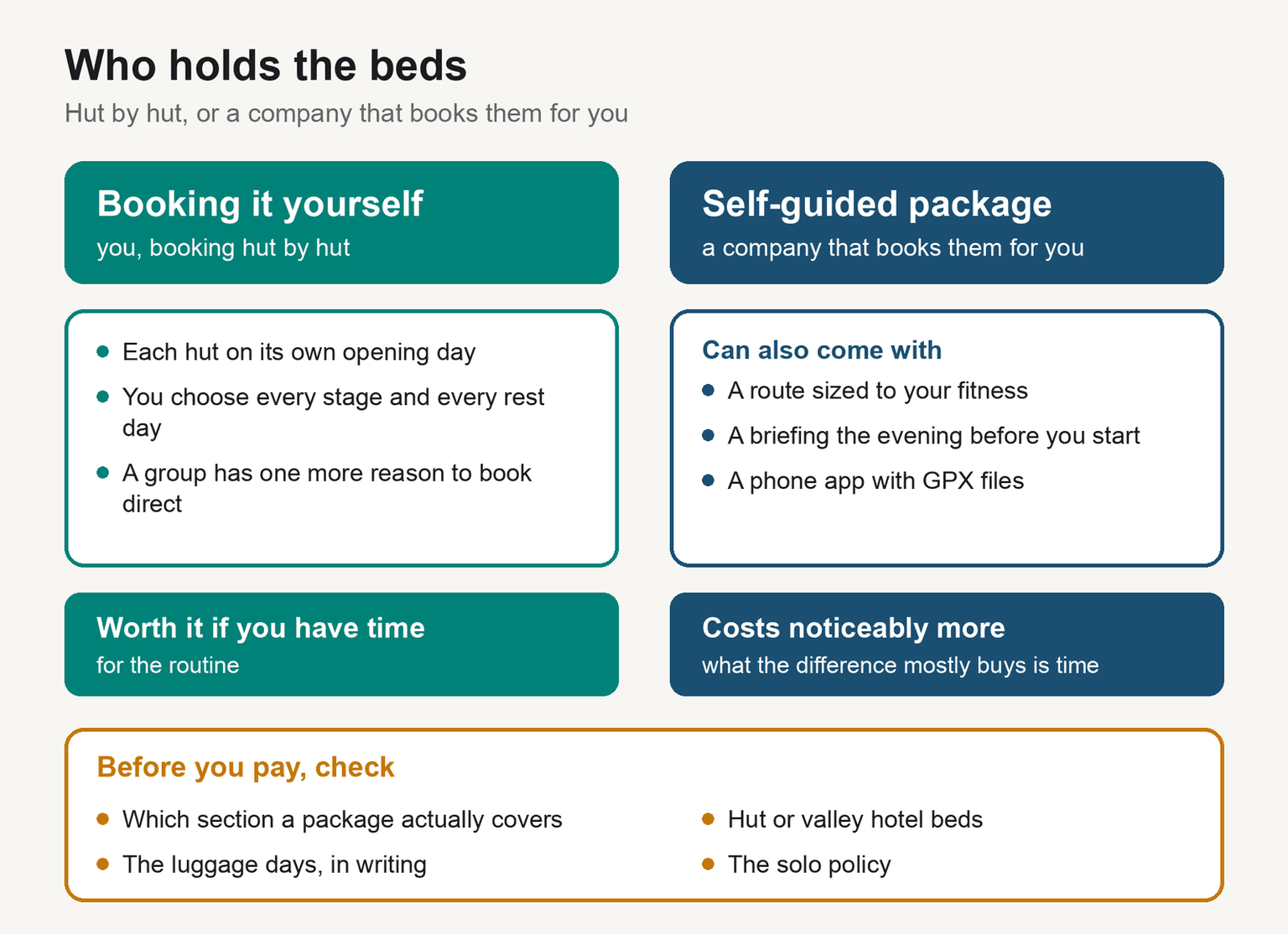
One seven-day self-guided package on the market shows what you get for it. It covers a section, not the route: Pocol, near Cortina, to Dont. It includes six nights, five in a small dorm and one in a double room; breakfasts and dinners; a phone app with GPX files; and luggage moved on most days, but not all. It takes a minimum of two people, and solo walkers can't join. A self-guided package can also come with a route sized to your fitness and a briefing the evening before you start.
Before you pay, check which section a package actually covers (the one above reaches neither the lake nor Belluno), and whether the beds are huts or valley hotels: a hotel-based package can be a good trip, just a different one. Get the luggage days in writing, check the solo policy, and see whether the listing warns of snow in June and September, as that one does.
How hard is the Alta Via 1? Long days and the way down
CAI calls the base route not particularly demanding for a good hiker, with fixed aids on its harder stretches and the via ferrata lines left as variants for the more expert. The Cortina tourist board grades its own stages "For Experts." Both are true, and what reconciles them is the length of the days.
What wears you down on the base route is less any single hard move than the repetition, and the days run harder than a confident hiker expects. If you have walked the O Circuit in Chile's Torres del Paine, expect more up and down than that, though if you finished the O, you can finish this. My rule for a trek like this is to plan every leg slower than my usual pace.
The way down is where it hurts, in both senses. By the last day it is knees and toes that feel the route, and the slip to watch for is the step down off a rock. Poles earn their weight on the descents. Break in your footwear before the trip, and pick soles that grip.
⚠️ Warning
Off Rifugio Nuvolau, the descent toward Passo Giau has a ladder and metal ropes, and the tourist board recommends a via ferrata kit; without one, take the board's walkers' line back north to Forcella Nuvolau and on to Rifugio Cinque Torri. Near the end, the board's stage line goes on from Forcella del Marmol by via ferrata to the Schiara's south face (the Via Ferrata del Marmol, as the Dolomiti Bellunesi national park names it). Decide at Rifugio Pian de Fontana, before you set out. Without the kit and the experience, take the board's walkers' variant, which leaves from that hut; at Forcella del Marmol there is only the ferrata.
The walkers' variant runs from Pian de Fontana toward Casere Grisol di Dentro, over Forcella Caneva and Forcella Pis Pilon, and down to Rifugio 7° Alpini. The board puts it at 13 km and 8 hours, so it is no day for a late breakfast.
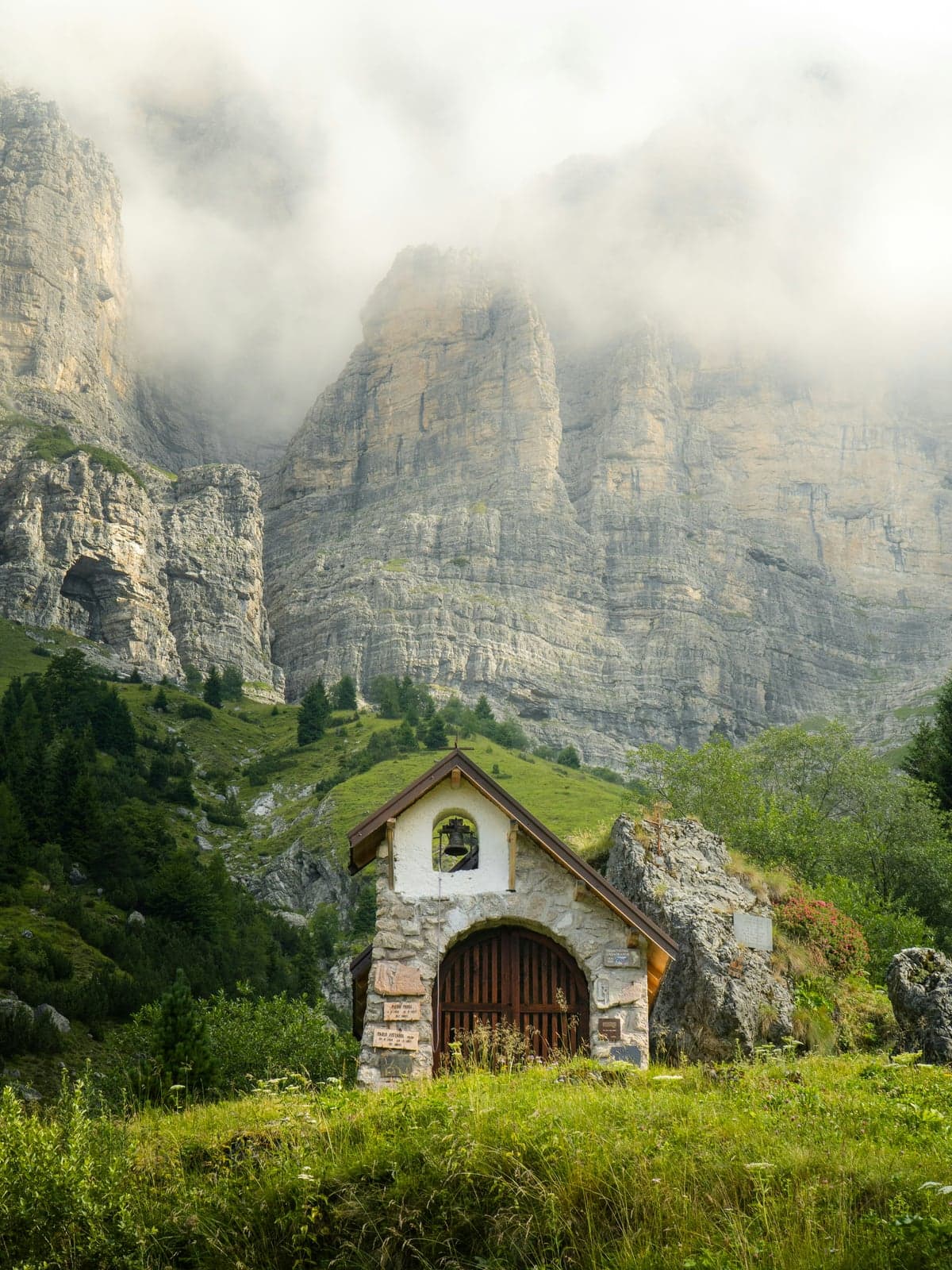
If all this reads like more than you want to carry day after day, a hut chain may not be your trip. The base-camp version of hiking the Dolomites keeps the mountains and drops the full pack.
When to walk it: the hut season and the afternoon storms
The huts set their own seasons. Rifugio Nuvolau lists its summer opening as June 20 to September 20. Rifugio Croda da Lago opened June 15 in 2026, with overnight stays to the night of October 16. Check every other hut on your list the same way: the window that fits a full chain sits inside summer, where all of them overlap.
Snow and ice can reach the trails at both edges of the season, June and September included, sometimes early and unexpected. A shoulder-season walk still works, but packing warmer is only half of it: snow on the trail itself is a real risk then, so ask at each hut about the stretch ahead, above all where it has fixed aids.
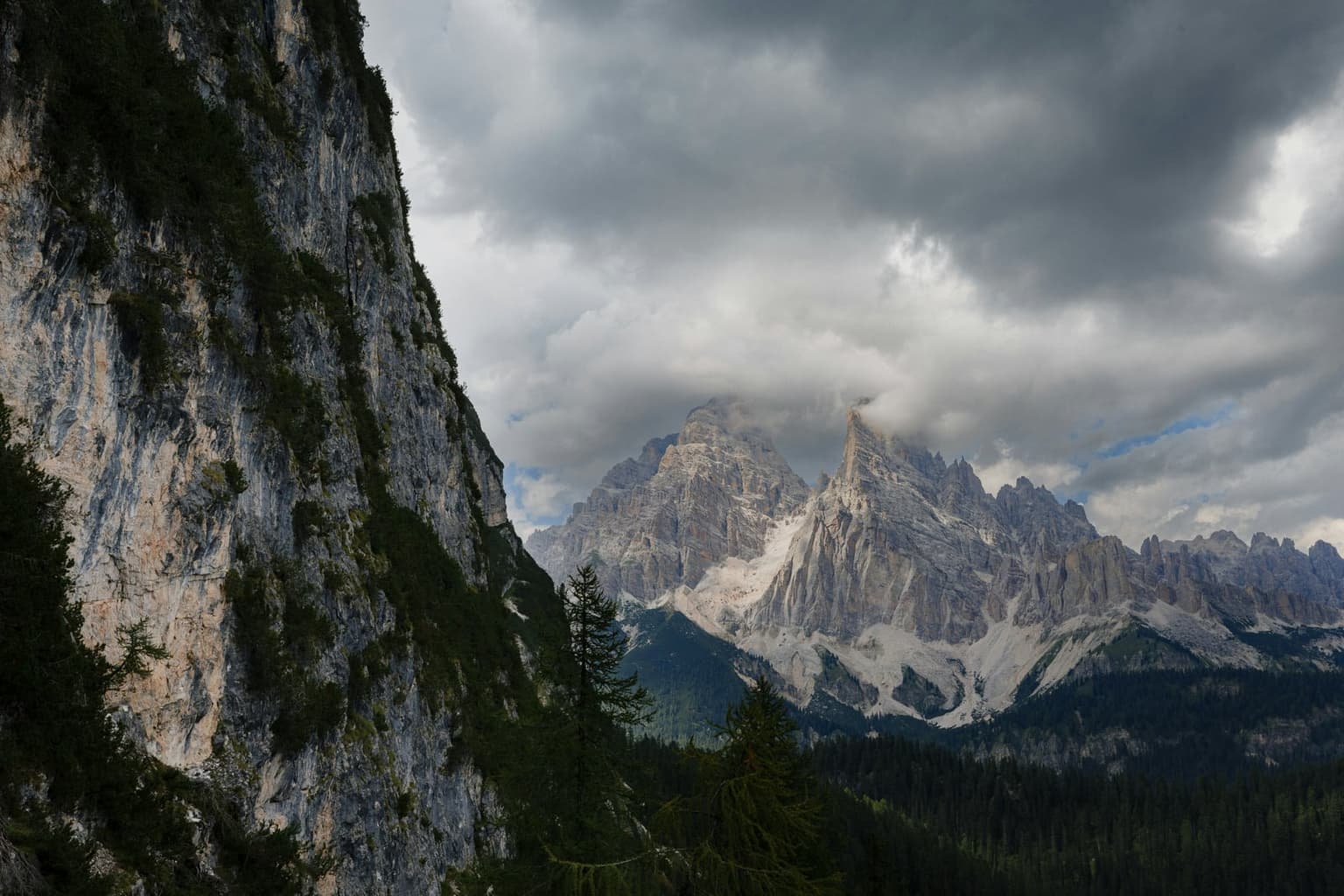
The bigger weather problem is the afternoon. In high summer, storms can build afternoon after afternoon, forecast or no forecast, and a gloomy forecast can still leave the morning dry. I wouldn't cancel a trip over a stormy outlook; I'd move the start earlier. What matters is where you are when it breaks: start late and the weather can turn while you are still out on an open plateau. So start early, and be off exposed ground and ridges by early afternoon.
When tomorrow's exposed stretch would land in the late afternoon, work out a lower Plan B the night before, at the hut, not on the ridge with the clouds already building. The detour can even turn up something you would otherwise have walked past. And sometimes the rain simply wins: days of it can end a trek outright.
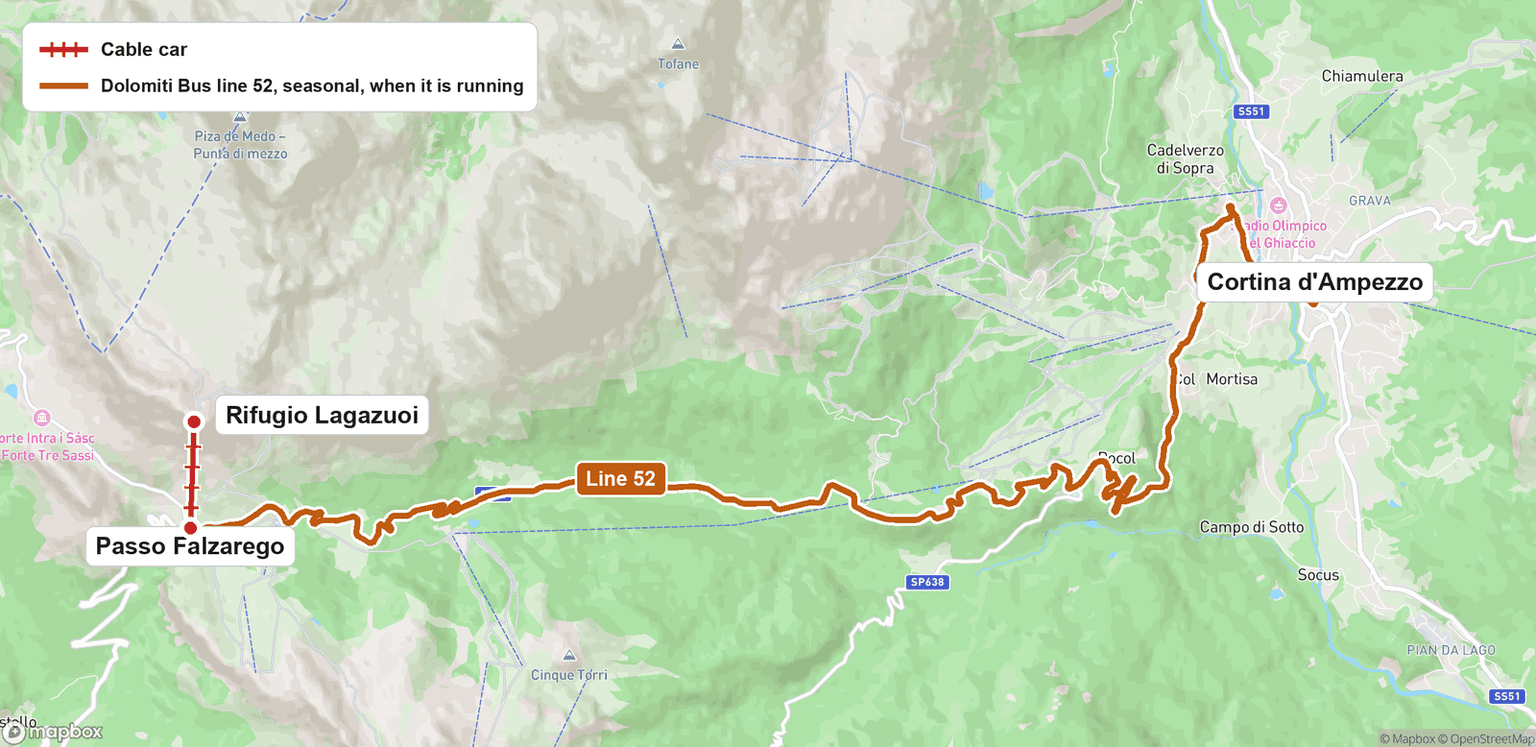
If a day has to end early at Lagazuoi, the cable car runs down to Passo Falzarego, a car every 15 minutes, with the last ride down at 17:00 in summer 2026. From the pass, Dolomiti Bus's seasonal line 52 goes on to Cortina when it is running. Dolomiti Bus posts the line 52 sheet on its seasonal-lines page, Linee stagionali. Only a sheet whose "VALIDO DAL ... AL ..." header covers the day you ride down counts. If none does, treat the 52 as not running: the cable car then only gets you to the pass road, so decide at Rifugio Lagazuoi, before you ride down. Elsewhere, a taxi can skip a day where both the hut you leave and the next one sit on a paved road. In a real emergency, call 112, Europe's 911.
A night in an Alta Via 1 hut: what it costs, what to bring
A hut night is a dorm bed, dinner, and breakfast - half board, in hut terms. It is also the social half of the trek. Walk alone and dinner is where you find other solo walkers happy to share a stretch the next day, which beats a week of talking to your poles.
| Hut | Dorm bed | Half board or dinner |
|---|---|---|
| CAI huts, 2026 caps | Non-members €30.00 - €39.00 by hut category; members of CAI and reciprocal clubs €24.00 - €31.20 | Set by each hut; members at least 20% off |
| Rifugio Nuvolau | €32.00; CAI members €25.50 | Half board €73.00; CAI members €58.50 |
| Rifugio Lagazuoi, summer 2026 | €85.00 with breakfast; no CAI or other discount | Dinner €35.00 |
The CAI figures are ceilings, not set prices, and they bind CAI huts only. Each CAI hut must post its tariff where every guest can read it, so check it before you order. Don't assume the member rate works everywhere on the route; the Lagazuoi row shows why. Bottled water is capped too, at €6.00 - €8.50 for 1.5 liters for non-members in 2026.
American Alpine Club members can buy a UIAA hut stamp: at mountain huts operated by alpine clubs, it gets them the rate the hut's own club charges its members. Stamps are good through the calendar year, so buy the one for the year you walk (the 2026 stamp cost $75; the price varies yearly). By the club's own estimate, members staying more than four or five nights at a participating hut should recoup the cost.
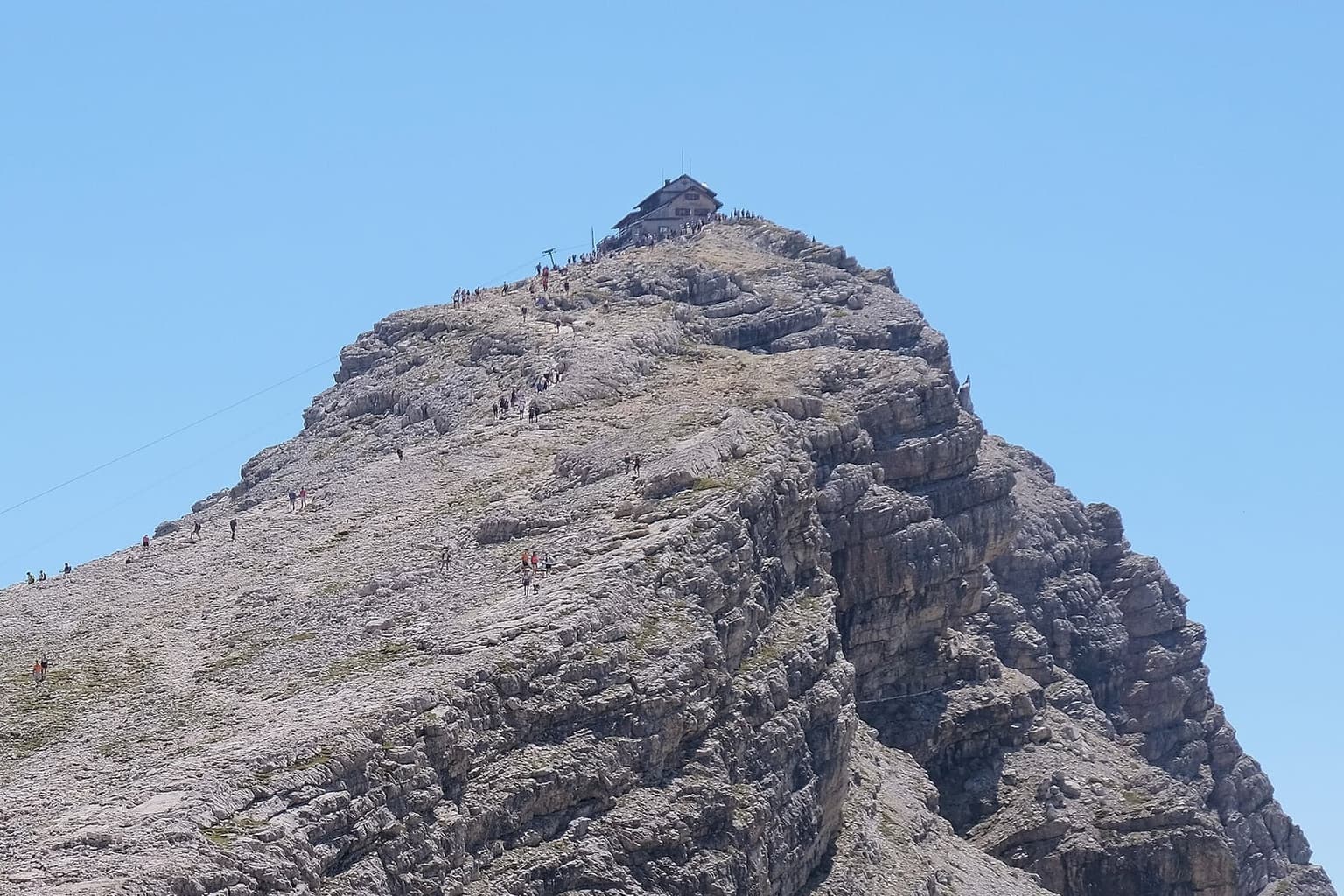
At CAI huts a personal sleeping-bag liner, the sacco lenzuolo, is compulsory, and Nuvolau sells them if you arrive without one. Lagazuoi provides bedding and changes it daily. Nuvolau has showers; at Lagazuoi a hot shower costs extra, because water is scarce on the summit. Nuvolau takes cards; Lagazuoi takes credit cards, but not Amex. I'd carry some cash anyway: a card reader on a mountaintop is one bad connection away from cash only.
On top of your usual Dolomites hiking gear, the hut list is short: the liner, toiletries, any pills you rely on, earplugs, and light hut shoes, Crocs or flip-flops, for the dorms, showers and bathrooms, whose floors you won't want to meet barefoot. Boots stay downstairs in the boot room; nobody wears them up to the beds. Download an offline map to your phone before you leave the valley, and carry a battery pack to keep it alive.
Two things my own hut nights taught me. The earplugs matter most: the walls are thin wood, and they keep out neither a neighbor packing up early nor anyone's snoring. And leave every hut in the morning with at least two liters of water. Open streams and springs are rare on the route, because the porous rock sends the water underground, so don't count on refilling along the way.
Getting to Lago di Braies, and home from Belluno
Day one starts at the lake, and so does the paperwork. From July 1 to September 15, 2026, the buses there - the 439 from Monguelfo station and the 442 from Dobbiaco and Villabassa - need an online reservation with prepayment, and the South Tyrol Guest Pass is not valid on them. Book your seat when you book the bed for the night before. Fares and the valley's other summer rules are in the guide to reaching Lago di Braies in summer. The Braies tourist office takes the bookings on its own ticket page.
Getting to Dobbiaco or Monguelfo from Venice or Milan is a trip of its own, so weigh the airport and train options into the Dolomites before you book that bed.
I'd sleep in one of the bus towns - Dobbiaco, Villabassa, or Monguelfo - so day one starts with a short ride, not a connection. Look for a place within walking distance of the 439 or 442 stop, with breakfast early enough for the bus you booked.
If you fly into Venice the day before, a pre-booked transfer to Dobbiaco or Villabassa turns a multi-leg trip into one ride. Look for a fixed price agreed up front and room for a trekking pack.
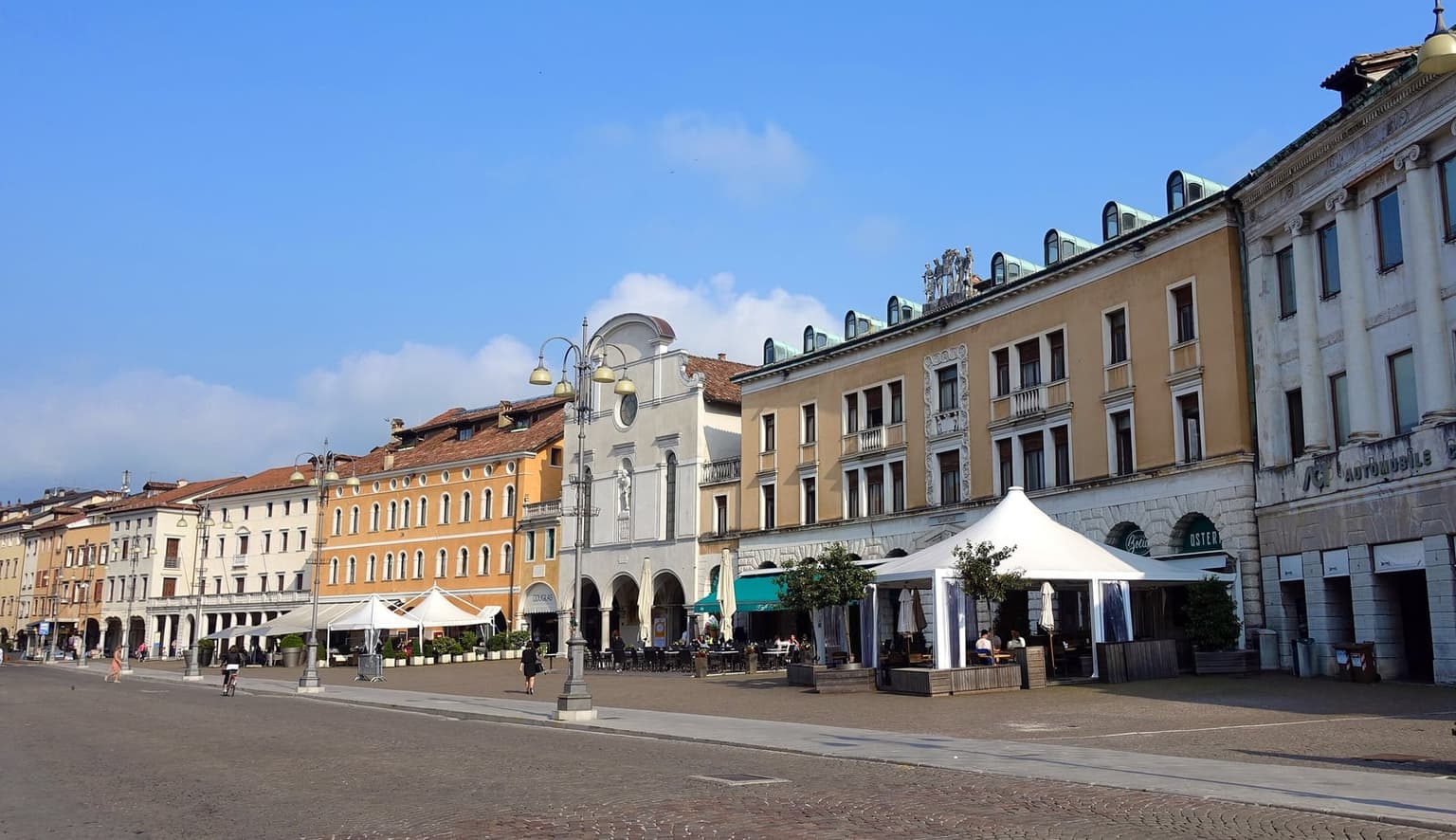
From Belluno, where CAI's route ends, regional trains reach Venice in about two hours. After eleven hut nights, even a train seat passes for luxury.
Alta Via 1 FAQ
- How many days does the Alta Via 1 take?
- Twelve walking days on CAI's 12-stage split, Lago di Braies to Belluno, plus any rest days. Plenty of people walk only part of it.
- When do you need to book the Alta Via 1 huts?
- Months ahead, hut by hut, the big ones first, each on the day it opens its book. Some huts were already taking 2027 bookings by September 2026; Croda da Lago opens bookings for the 2027 summer season on December 1.
- Should you hike the Alta Via 1 or the Alta Via 2?
- The Alta Via 2 runs from Bressanone to Feltre. It is longer, more technical, and usually far less crowded, so you trade company for harder ground.
- Is there via ferrata on the Alta Via 1?
- CAI's base route is for a good hiker, with fixed aids on its harder stretches; its via ferrata lines are variants for the more expert. From Rifugio Nuvolau, the descent toward Passo Giau has a ladder and metal ropes, and the tourist board recommends a via ferrata kit; without one, walk back north to Forcella Nuvolau and on to Rifugio Cinque Torri. Near the end, the tourist board's stage line reaches the Schiara's south face by via ferrata; its walkers' variant leaves from Rifugio Pian de Fontana, so decide at that hut, not at Forcella del Marmol.
- Can you camp on the Alta Via 1?
- Plan on huts end to end: this is a hut-to-hut walk, with a bed booked for every night. South Tyrol's nature parks, the Fanes-Sennes-Braies park among them, allow no camping except alpine bivouacking, a temporary stay in extraordinary, unforeseeable circumstances.
Book the chain from its scarcest bed outward, then walk it.