George Mandrovny
The short answer: your days and the cables pick the trek
For hut-to-hut hiking in the Dolomites, pick the trek by your days and how much fixed cable you will stand on. Four days: the Catinaccio (Rosengarten) loop, which its tourism board says has no fixed rope routes and grades difficult, or the Palaronda Trek, without via ferrata, one of the four- to six-day tours its board says you can walk on your own with proper training and equipment, or with an Alpine Guide. More days, or a big loop cut short: the Curona or the Brenta. The trap: a hut on the map can be an unstaffed bivouac.
- Days - on the Curona, four on its hut version, five for average hikers, two or three cut short; at least six on the whole Brenta; 12 and 13 stages on the Alta Via 1 and 2.
- Cables - steel ropes on parts of the Curona, the hardest on the Sella; equipped paths on the Brenta; fixed aids on both Alta Via routes.
- When - each hut sets its own season; the three dated below run from June to late September or October.
- Booking - hut by hut by portal, form, email or phone, or a package that holds the beds.
Everyone arrives knowing the Alta Via 1; the Alta Via 2 is more technical and quieter. Fame makes a trek familiar, not yours.
Dolomites hut-to-hut treks side by side: days, huts and cables
Dolomite hut-to-hut hiking has no single front door. The Alta Via 1 and 2 run end to end across the range; the other four treks here are loops in different parts of it, so where a trek sits is part of the choice. Flights and trains into those valleys are covered in the ways into the Dolomites.
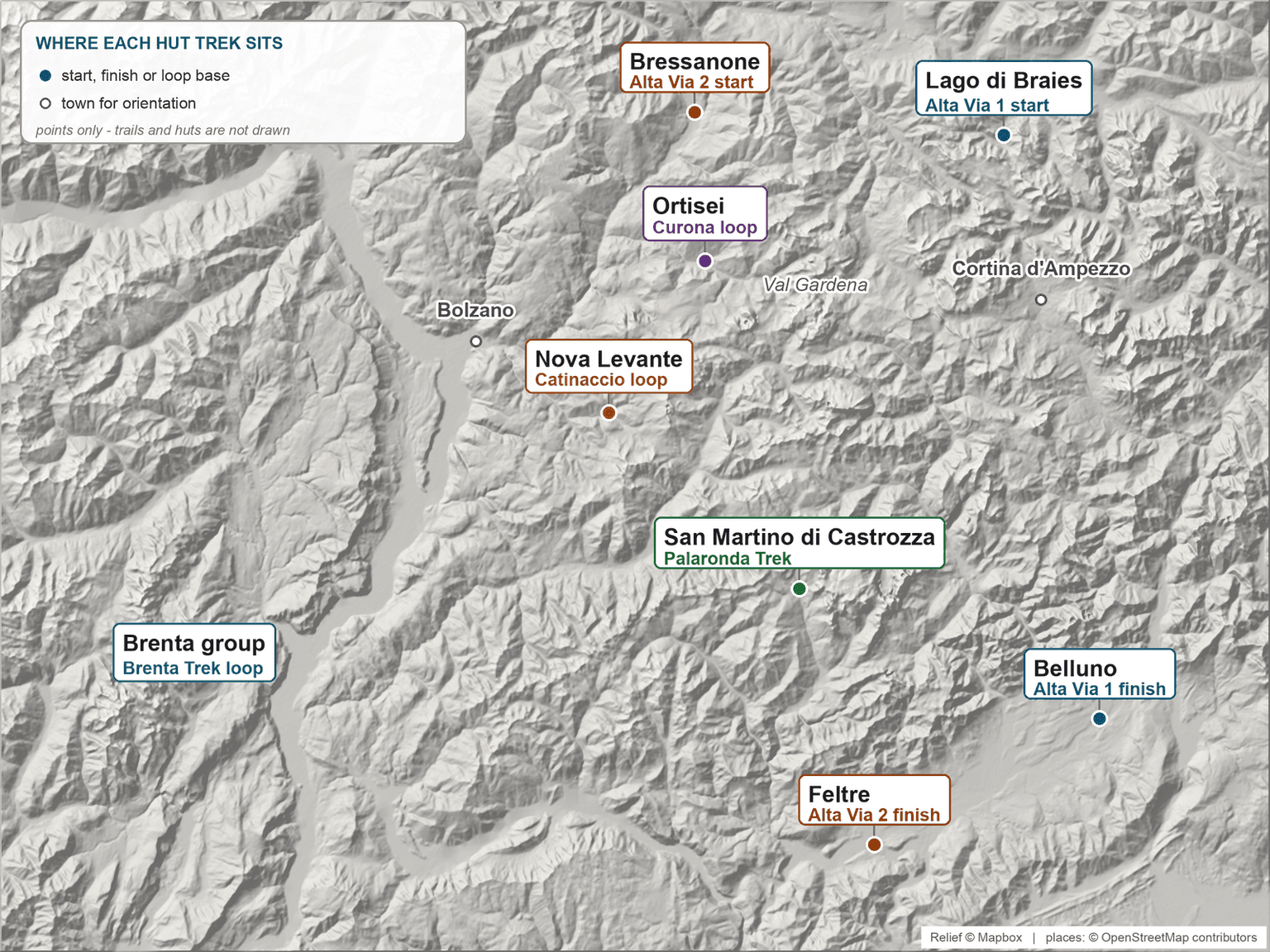
Two columns do the choosing: days, and what the official pages say about cables or via ferrata. Then read the official wording, because "no fixed rope routes" is not the same claim as "easy," and "without via ferrata" is a cable line, not a grade. The Alta Via stage counts come from CAI, the Italian Alpine Club.
| Trek | Days | Start and finish | Cables or via ferrata | Official wording |
|---|---|---|---|---|
| Alta Via 1 | 12 stages (CAI) | Lago di Braies - Belluno | fixed aids on harder stretches; ferrata variants | for a good hiker |
| Alta Via 2 | 13 stages (CAI) | Bressanone - Feltre | several cabled sections | mostly rocky ground |
| Catinaccio loop | 4 days, 3 huts | Nova Levante, loop | no fixed rope routes; a day-one branch "slightly more exposed, but very well secured" | "Difficult" |
| Palaronda Trek | 4 days, 3 huts | San Martino di Castrozza, loop | without via ferrata | independently "with proper training and equipment," or with an Alpine Guide |
| Curona | 4 days (hut version); 5 for average hikers; 2 - 3 shortened | Resciesa pastures - Ortisei (hut version) | steel ropes on some sections, the hardest on the Sella plateau | black on the Sella, blue to red elsewhere |
| Brenta Trek | 6+ days, 11 stages | loop around the Brenta group | equipped paths; variants let you avoid via ferrata | "skilled hikers" |
For a first hut trip, I would pick the Catinaccio loop. I walked it from Nova Levante in mid-September: clear, dry days, cold mornings, every hut full. After the Alta Via 1, what surprised me was how close together its huts sit, close enough to change the plan on the way or drop down to the valley if the weather turns.
If you had a Tre Cime hut trek in mind, the loop the Sexten tourist office calls "The Three-hut-hike" is one day, from the Dolomitenhof past the Zsigmondy, Büllelejoch and Dreizinnen huts. A hut night on it is your own split, not the route as published.
If consecutive hut nights are not for you, a base with day hikes is a different trip, and an honest one. Val Gardena Active, the valley's guest program, runs guided hikes free or at reduced rates depending on where you stay; the base-camp way of hiking the Dolomites covers the rest.
Alta Via 1 or Alta Via 2: the famous one, or the more technical, quieter one
The Alta Via 1 is the one you share, busiest near the start and thinning as the days go on. I have walked it, about 125 km end to end, and planning it is a project of its own, which is what my guide to the Alta Via 1 in the Dolomites is for.
The Alta Via 2 starts, according to CAI, at the cable-car station in S. Andrea. Most of it is the rocky ground the table names, with gentler stretches over high pastures and through woods in between. Fewer people walk it, and the ground asks more of you. That is the trade. The club's stage table runs only as far as Rifugio Castiglioni (rifugio is Italian for mountain hut), at the Marmolada: the Alta Via 2 stage table, in Italian.
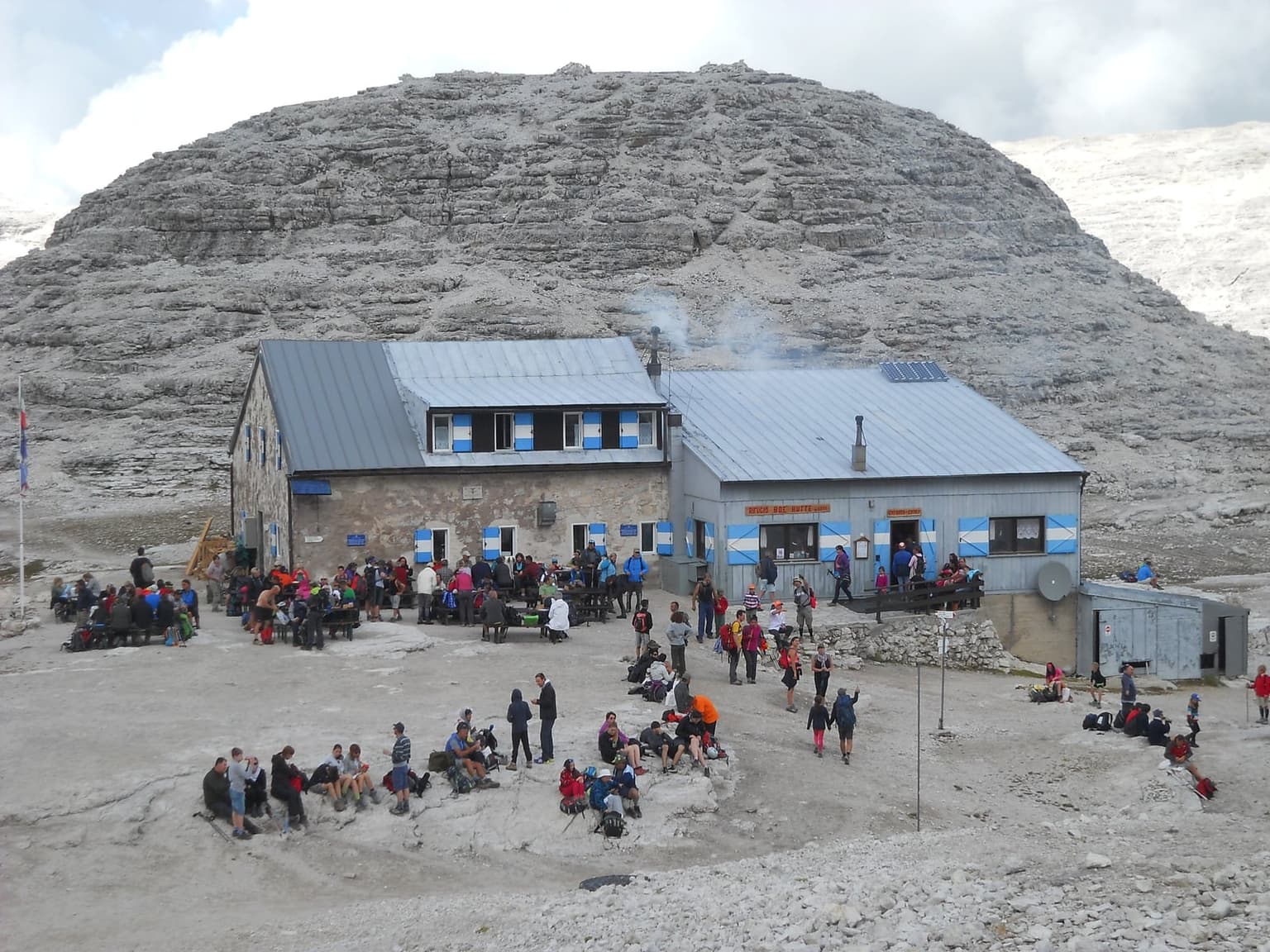
CAI's stage text names equipped stretches on the Puez and Sella stages. On the way to Rifugio Puez, a few fixed metal cables ease a stretch CAI calls delicate but not difficult. The climb toward Rifugio Cavazza al Pisciadù has a cabled section and leaves the Ferrata Tridentina aside. Above the Val de Tita, on the way to Rifugio Boè, you choose between easy rock and a cabled stretch, and the cable is the safer choice either way. Shortly before Boè, an equipped path to the right skirts the Antersass summit, though CAI says a look from the top is worth it in good weather. If cables are what worry you, read the Catinaccio loop in the next section, its day-one fork included.
⚠️ Warning
Early in the season there may be hard snow in the gully on the stage to Rifugio Puez, and CAI says an ice axe, or at least half-crampons, would help. Walking it early? Ask at Rifugio Genova, where that stage begins, the night before.
The club's route page sits on Prenota Rifugi, its booking portal, and lists the huts along the way; the Alta Via 1 has one too. You can also book a whole Alta Via 2 the plain way: choose your stages, then email each hut or use its website's contact form. And the route crosses the same Puez and Sella country the Curona loops through: with fewer days, walk that ground on the Curona, below.
Four days, three huts: the Catinaccio loop and the Palaronda
Two four-day loops, each with its three huts named on its tourist board's own page.
The Catinaccio loop is the Val d'Ega tourist board's multi-day hike from the Catinaccio to the Sciliar: nights at Rifugio Roda di Vael, Rifugio Vajolet and Rifugio Bolzano, about 52 km and about 4,200 m of climbing. Its two table cells, no fixed rope routes and "Difficult," sound like an argument, and both are true. On day one the path forks: the branch that stays on the trail is the exposed one the table quotes, with caution on wet ground, and the alternative goes by the Paolina hut. The board asks for good stamina, alpine experience, a head for heights and appropriate equipment, and does not recommend the hike in bad-weather periods. Start from its overview: the four-day, three-hut hike.
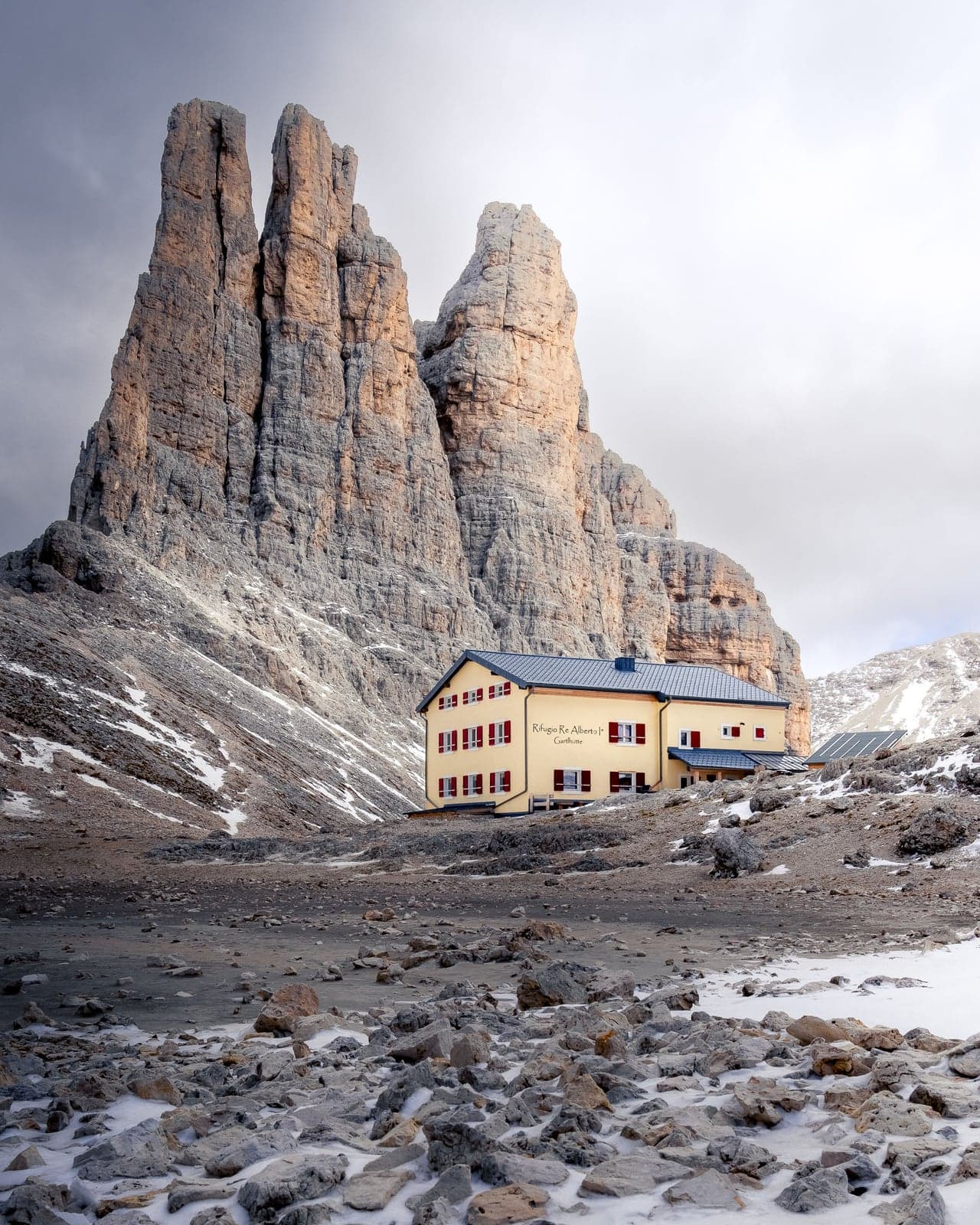
Day two crosses Passo Cigolade to the Vajolet hut, and after check-in an optional climb runs up the Valle del Vajolet, past the world-famous Torri di Vajolet, to Passo Santner and back the same way. An extra, not the route, and worth the legs: the towers close enough to fill the view, tonight's bed already waiting below. For rock that famous, the Catinaccio can be oddly short of people. Fame, it turns out, does not always come with a line. Day three crosses Passo Principe and Passo Molignon, past Rifugio Alpe di Tires, to Rifugio Bolzano, where Monte Petz, the Sciliar's flat summit, is a there-and-back the board calls an absolute must.
Over on the Pale di San Martino, a group with a stone plateau for a roof, the San Martino tourist board's Palaronda Trek loops about 36 km: on foot from the Colverde-Rosetta lifts up to Rifugio Rosetta, over Cima Fradusta to Rifugio Pradidali, through Val Pradidali and Val Canali to Rifugio Treviso, back to Rosetta, and down by cable car. Its "without via ferrata" says what the route leaves out, not what it asks of you. The asking is in the board's line for its four- to six-day tours: they can be tackled independently with proper training and equipment, or with an Alpine Guide. The route is on the board's Palaronda page: the Dolomiti Palaronda Trek.
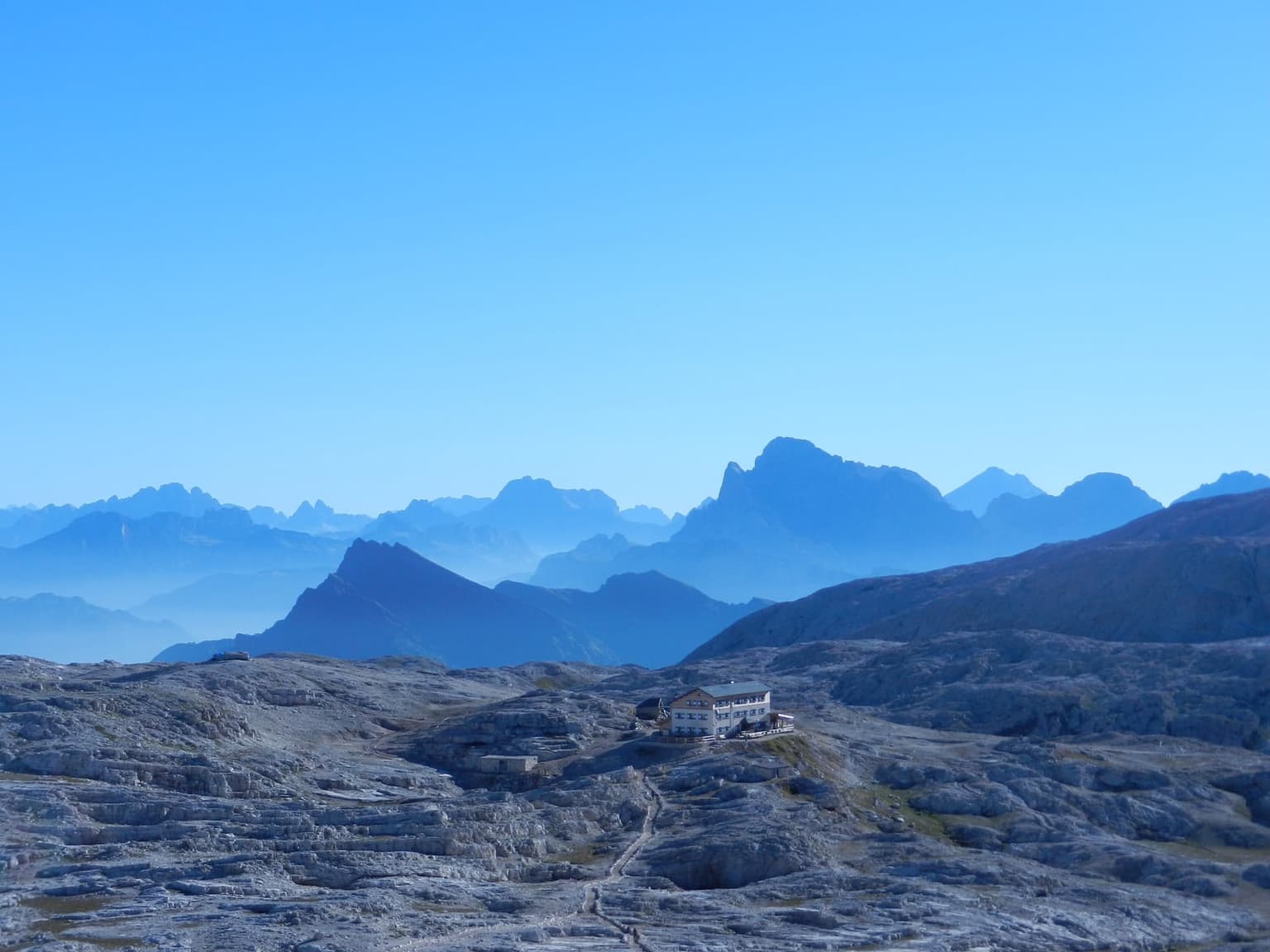
Check the name before you book, because Palaronda is a family. The same board offers a Palaronda Trek Nord from Passo Rolle via Rifugio Mulaz, Rifugio Rosetta and Rifugio Velo della Madonna, which it pitches as ideal for experienced hikers, and four Palaronda Ferrata routes with equipped sections and via ferratas. One word on every package, three kinds of trip.
The Curona and the Brenta: big loops you can cut short
The Curona de Gherdëina is Val Gardena's own loop: about 60 km around the valley, from the Puez-Odle Nature Park across the Sella plateau. The valley's tourist board is plain about its hut version: you book it yourself, it is not a guided tour, so every bed is your job, and an early one. South Tyrol's tourism site puts the whole loop at four days for very well trained hikers walking about 8 hours a day. The Sella stretch the table marks black, the scale's difficult grade, is a partly suspended rocky path crossed on a steel rope. The board's page sets out the hut version: four days, three nights in huts.
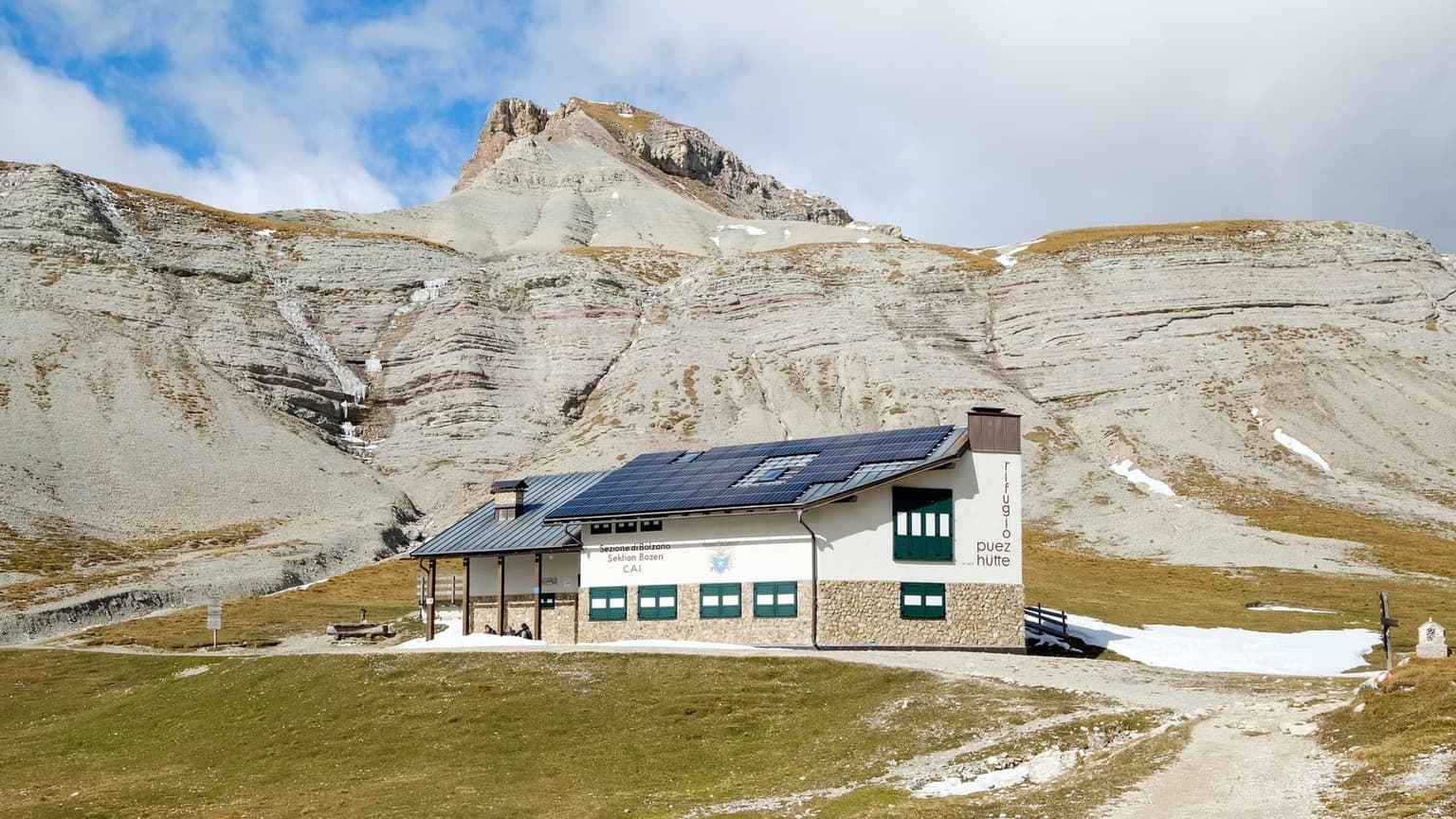
The shorter versions start from Ortisei, S. Cristina or Selva Gardena and skip the hardest parts, such as the Sella plateau, and parts of the route can be done by lift. South Tyrol's Curona page also carries an undated notice that the Forcella Pana is closed, with the Forcella Mezdi as the alternative; the valley board's page linked above does not mention it. Believe the stricter one and plan on the Mezdi while that notice stands. Any version asks the same of you: be comfortable walking on rocky terrain.
The Dolomiti di Brenta Trek runs on about 96 km of SAT trails (the SAT is Trentino's alpinists' society), at an average altitude of about 2,000 m. Its seven variants can also shorten the tour, and you choose where to start and how many stages to walk each day. The nights follow the ground: rifugi in the busier south, malghe (summer pasture farms) or bivouacs in the wilder, less-known north. Trentino's tourism site covers the full loop: the 11-stage Dolomiti di Brenta Trek.
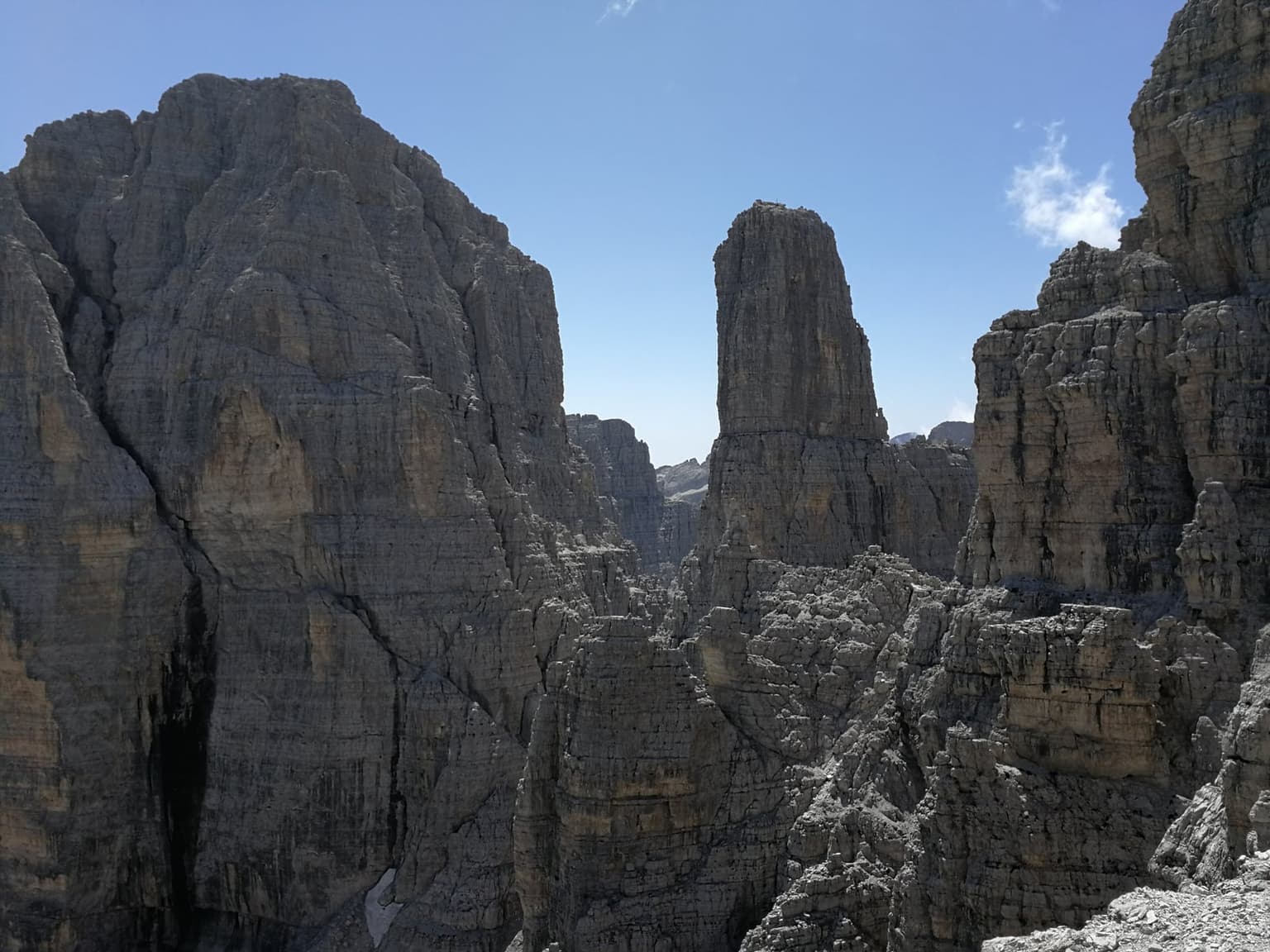
The trek's own site posts notices; read them before you fix your stages. Two of its 2026 notices show why: one of March 30, 2026, that Malga Tuena, a stage end on the loop, would stay closed for the whole 2026 summer season, and one of August 2026 that small glaciers and permanent snowfields on some high routes, particularly in the Brenta, were changing fast.
When the huts open, and the hour to start walking
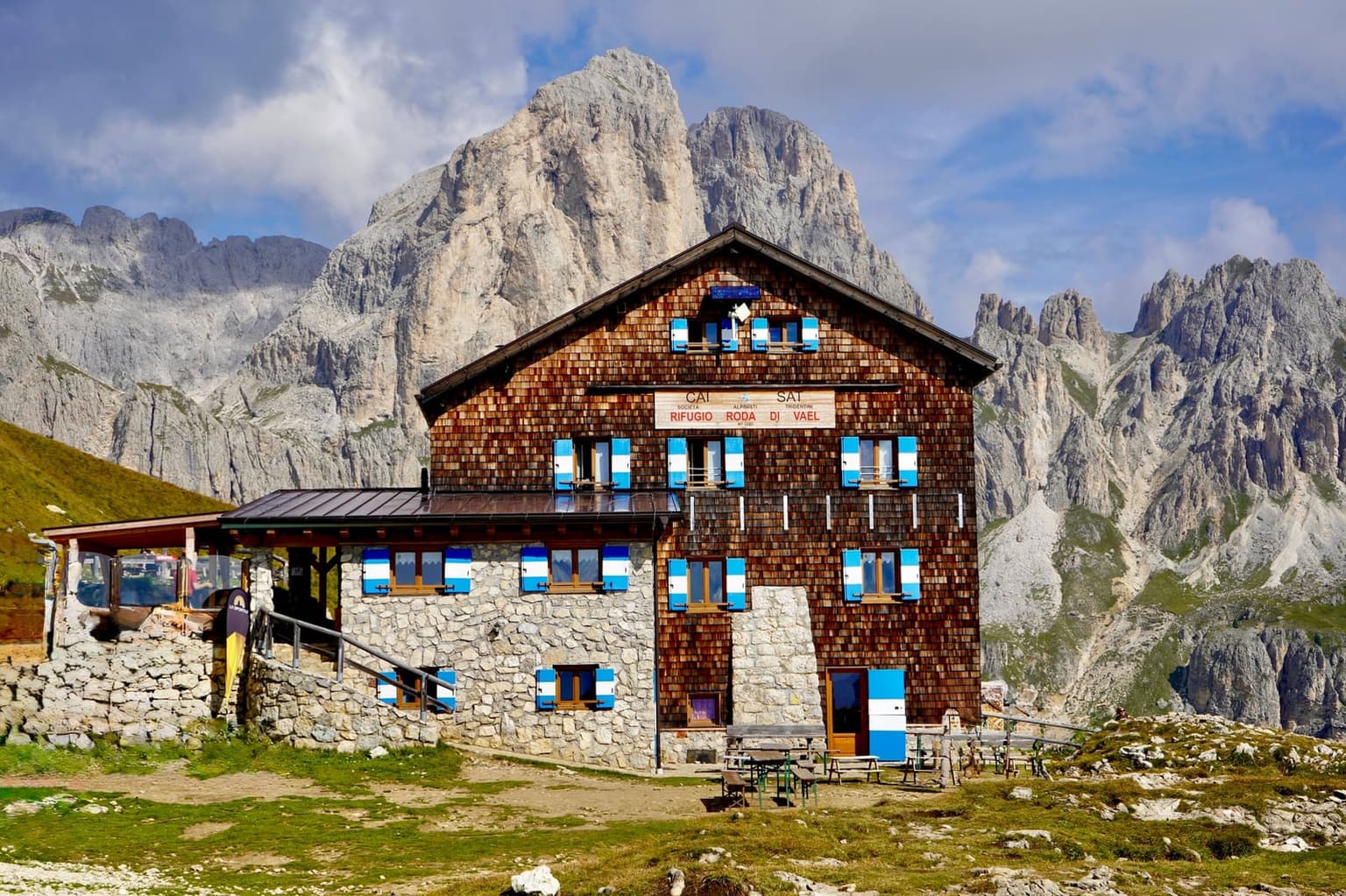
Each hut sets its own season, as three huts on the two four-day loops above show. Rifugio Bolzano, on the Sciliar, has already posted summer 2027: June 8 to October 10, with the warning that snow and weather set those dates and can change them at short notice. Rifugio Roda di Vael stays open in summer from June to October. Rifugio Rosetta opened on June 20 in 2026 and closes in late September; near either edge of its season, call before you count on it.
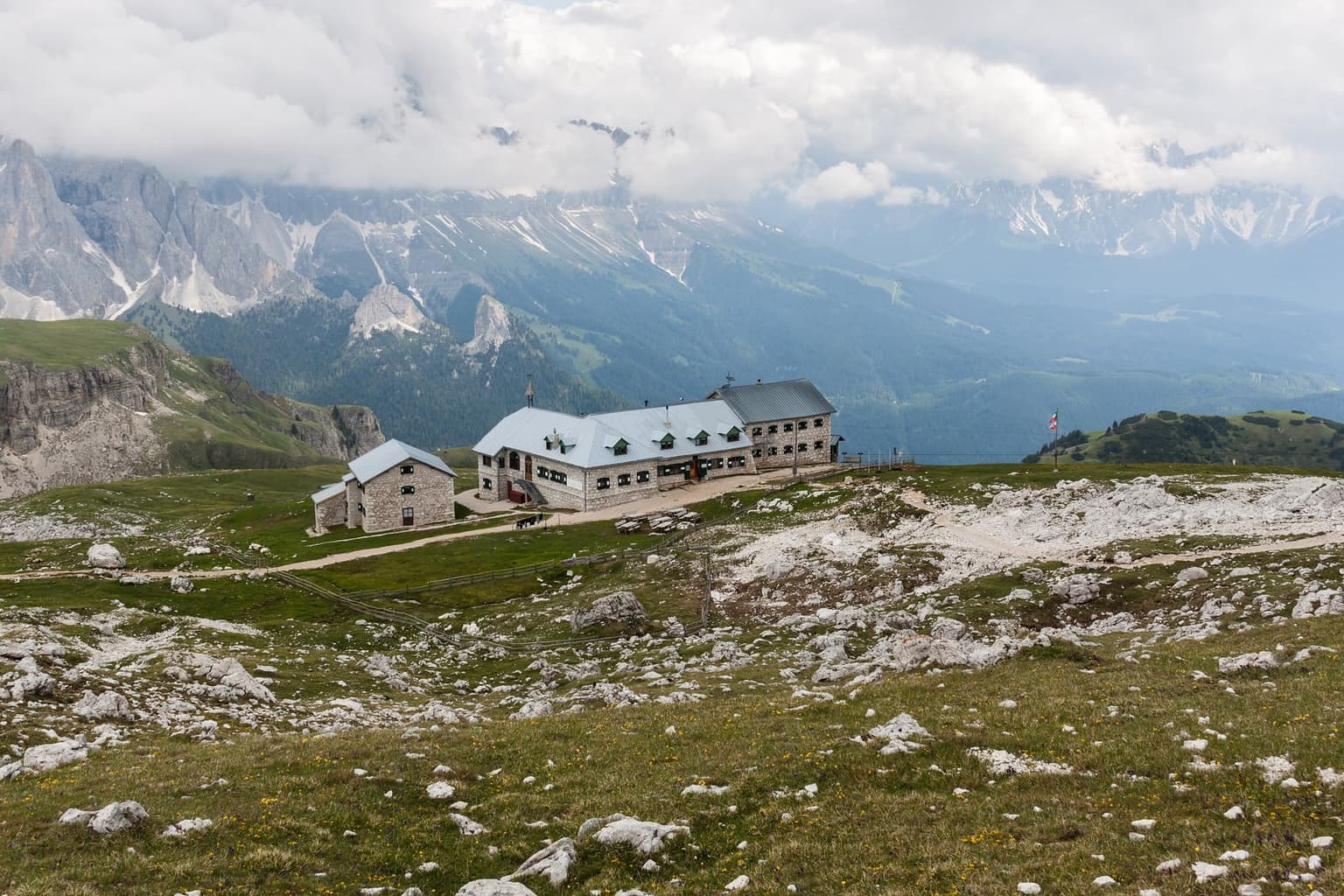
July and August are high summer, and the months to plan for a typical afternoon thunderstorm whatever the morning looks like. Start walking by 08:00 and cover most of the day's distance before lunch, so you are off the open plateaus and passes before the afternoon builds. A forecast of real bad weather is a different decision, and the Catinaccio board's warning above already makes it for that loop.
On day one, an 08:00 start means sleeping in the start town: Nova Levante for the Catinaccio loop, San Martino di Castrozza for the Palaronda. Pick a room within walking distance of the Nova Levante cable car or the Colverde-Rosetta lifts, where the walks begin, ask for an early breakfast, and make the booking free to cancel until every hut has confirmed.
Booking a hut trek: by email, by portal, or by package
There is no single booking desk for a hut trek; each hut keeps its own book. On the Alta Via 1 and 2, start from the CAI route pages above. On the loops, use each hut's own channel: form, email or phone, whichever it accepts.
Settle your stages, then book the night you cannot move first: the famous beds go early. Rifugio Rosetta takes bookings online only, and a booking stands only once the hut has confirmed it and the deposit is paid; it asks for at least four or five days' notice, opens bookings for 2027 on November 20, and wants late cancellations made by phone. Its request form: the Rosetta booking request. Rifugio Roda di Vael wants online requests at least a week ahead, because its email is not read every day in season, and would rather you call for anything immediate.
Where a hut asks for a deposit, check its cancellation terms before you pay. Then look for travel insurance whose trip cancellation covers hut deposits and whose medical cover includes mountain rescue. Read both clauses before you buy, the rescue one twice: the weather behind the Catinaccio board's warning above does not stop at that loop.
A package does the emailing: it books the huts and can bundle half board (dinner and breakfast) and an offline GPS app. What it leaves out can include getting to and from the start, taxis, buses and cable cars, lunch and insurance. A package may also book you into dorms by default, with a private room at extra cost on request. A privately guided version of the same trek costs more than the self-guided one. And a package that sleeps you in valley hotels can be a fine trip, but it is not a hut trek.
Before you pay anyone for beds, make sure the beds exist. Pay by credit card, not bank transfer, so you can dispute the charge if the beds turn out never to have been booked. Ask the operator which huts it booked, then email one of them yourself and ask whether your dates are in its system. The hut's answer settles it.
A night in a rifugio, and the shelter that isn't one
At a CAI hut, the tariff, posted where everyone can read it, spells out the night: a bed with a mattress and blankets in a dorm, or a pricier one in a small room for up to four, plus half board, whose price the CAI section sets with the hut's manager. Rifugio Bolzano, the Catinaccio loop's third night, is one. A personal sleeping-bag liner is compulsory. In 2026, CAI capped a dorm bed at €30 - €39 a night for non-members, with members of CAI and its reciprocal clubs paying less.
The evening is the part of a hut trek nobody photographs. People who walked in separately, each at their own pace, sit down at one long table as strangers and get up with company for tomorrow's stretch. The cold stays on the other side of the door. I met it on the terrace at Rifugio Lagazuoi in early September: an icy wind, and the door behind me.
Three hut lessons of my own. Earplugs, above everything. Boots stay in the boot room and hut shoes go upstairs. And leave every hut with two liters of water or more. Carry some cash for the day, too, and treat the 08:00 start as a plan rather than a promise: hut breakfasts can run late.
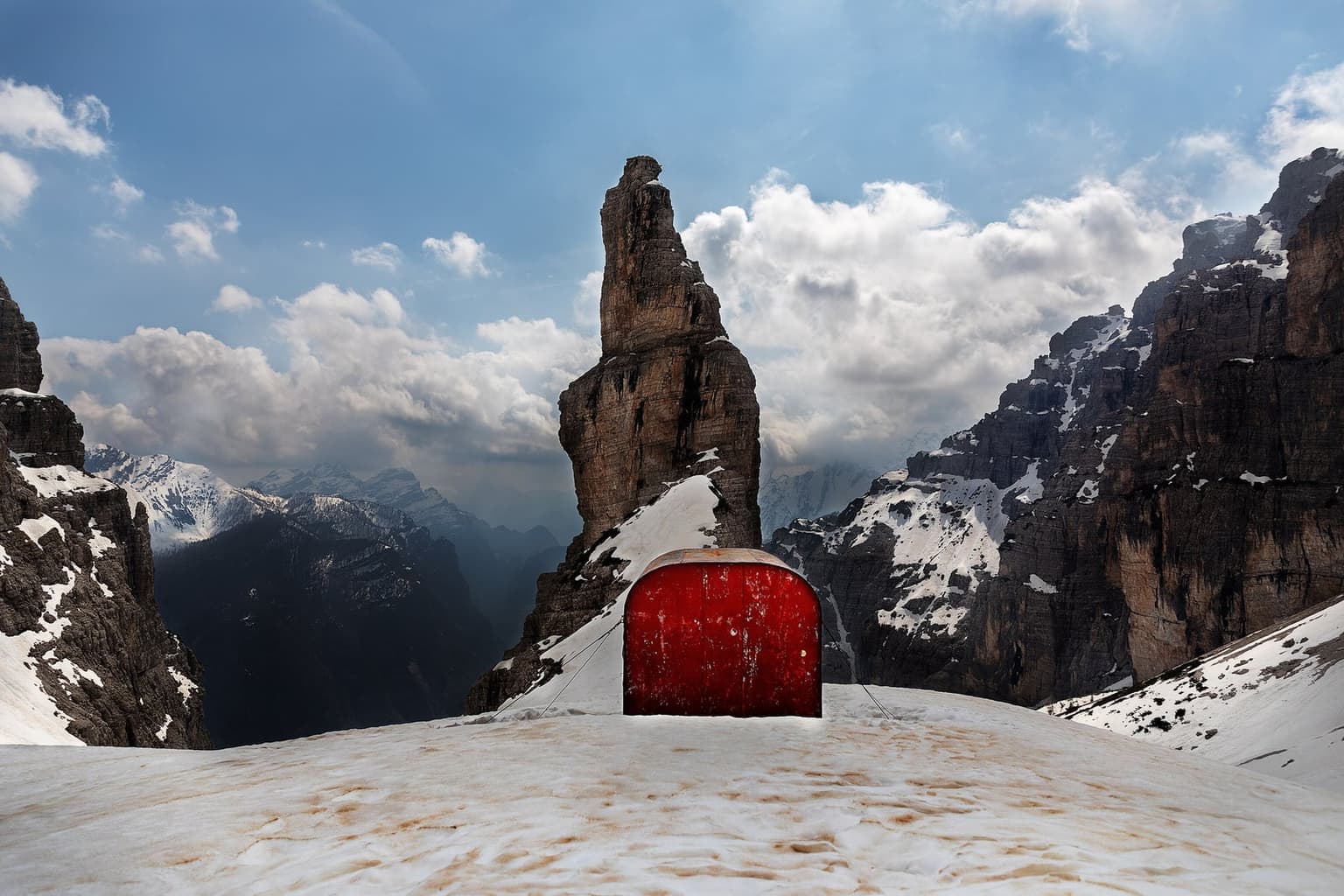
On the map, a bivacco (a bivouac shelter) can look like one more hut. It is not. In Trentino's definition, bivouacs are public shelters in isolated mountain spots, neither run nor kept, fitted with the bare essentials as a makeshift refuge for climbers. Nobody cooks there and nobody expects you, so a night you are counting on belongs in a staffed hut. As the Brenta's northern nights above show, check what each night of your plan actually is before you book it.
Dolomites hut-to-hut FAQ
- Which Dolomites hut-to-hut trek is best for a first-timer?
- If via ferrata worries you, two four-day loops answer it; neither board's cable wording is a difficulty grade. The Catinaccio loop's board says it has no fixed rope routes, grades it "Difficult" and asks for alpine experience and a head for heights; the San Martino board bills its Palaronda Trek as "without via ferrata" and says its four- to six-day tours ask for proper training and equipment, or an Alpine Guide. With two or three days and sure feet on rocky terrain, try the Curona's short versions.
- How many days do you need to hike hut to hut in the Dolomites?
- You need four days for the Catinaccio loop or the Palaronda Trek. The Curona takes four on its hut version, five for average hikers, and two or three cut short. The whole Brenta loop takes six or more, and CAI splits the Alta Via 1 and 2 into 12 and 13 stages.
- Which Dolomites hut-to-hut treks have fixed cables or via ferrata?
- The Catinaccio loop's board says it has no fixed rope routes, though its day-one page has a branch it calls "slightly more exposed, but very well secured"; the San Martino board bills its Palaronda Trek as "without via ferrata." The Curona has steel ropes on some sections, the hardest on the Sella, which the short versions skip. The Brenta has equipped paths, with variants that let you avoid via ferrata. The Alta Via 1 has fixed aids on its harder stretches, plus ferrata variants; the Alta Via 2 has cabled sections and leaves the Ferrata Tridentina aside.
- What is the difference between a rifugio and a bivacco?
- A rifugio is staffed, with beds, dinner and breakfast; a bivacco, in Trentino's definition, is a public shelter, neither run nor kept, with the bare essentials.
- Can you do a Dolomites hut-to-hut trek without a guide?
- Yes. The Curona's hut version is self-booked, not a guided tour, and the Palaronda's four- to six-day tours can be tackled independently with proper training and equipment. Or let a package hold the beds.
Count your days, settle the cables, then pick the trek.