George Mandrovny
Masseria or town: afternoons on the estate, and who drives back from dinner
- Masseria or town: a masseria for afternoons on the estate and quiet evenings, a town if your evening is a walk to dinner with wine.
- The car: you'll need one, so decide dinner first: on the estate on the nights it serves, or a driver who skips the wine. Italy's limit is 0.5 g/l (0.05% blood alcohol); zero for drivers under 21, and zero for drivers in their first three years with a car license.
- Nights: two or three, as one stay inside a split trip.
- The trap: the word "masseria" doesn't tell you what you're booking. Read the property type on the listing.
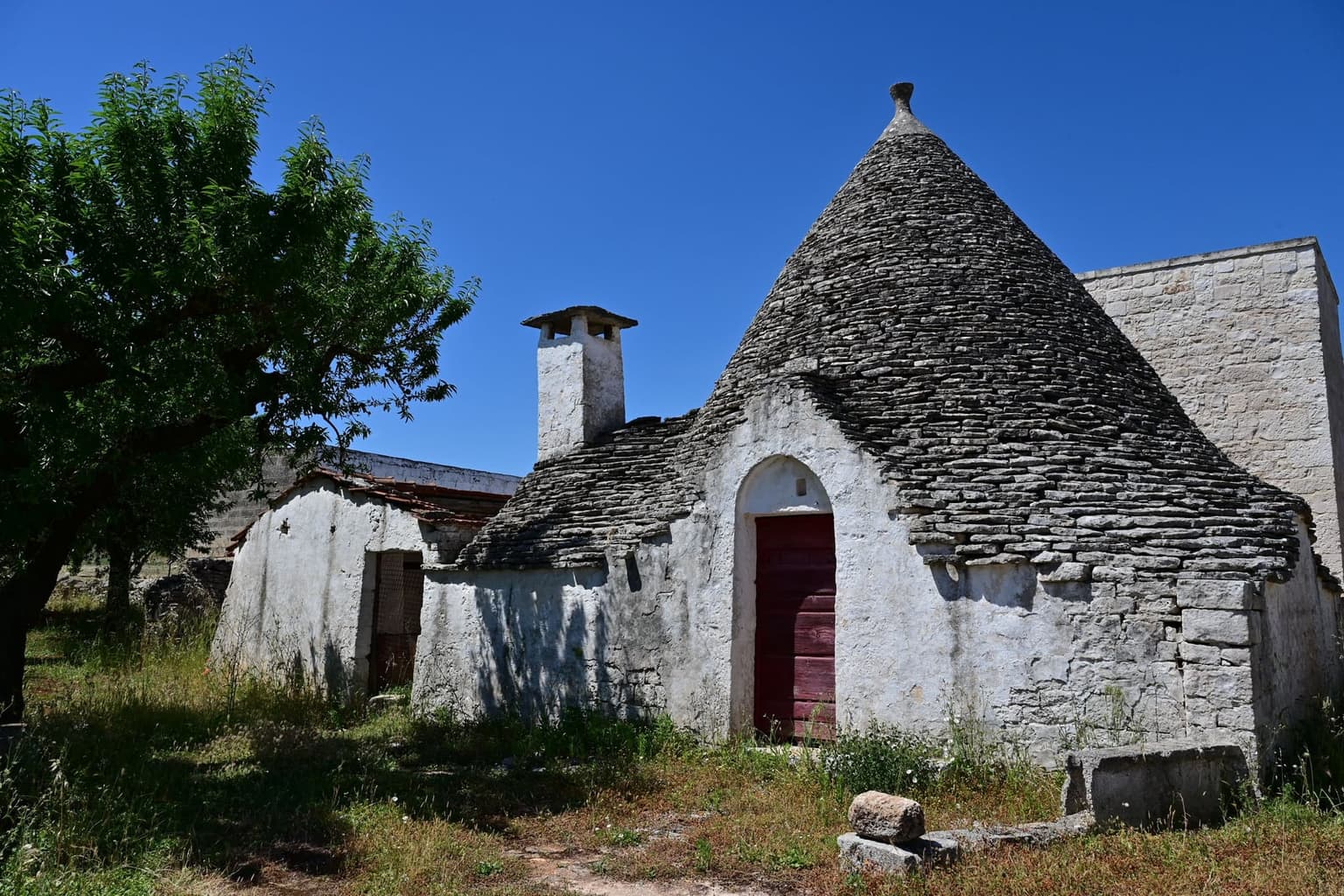
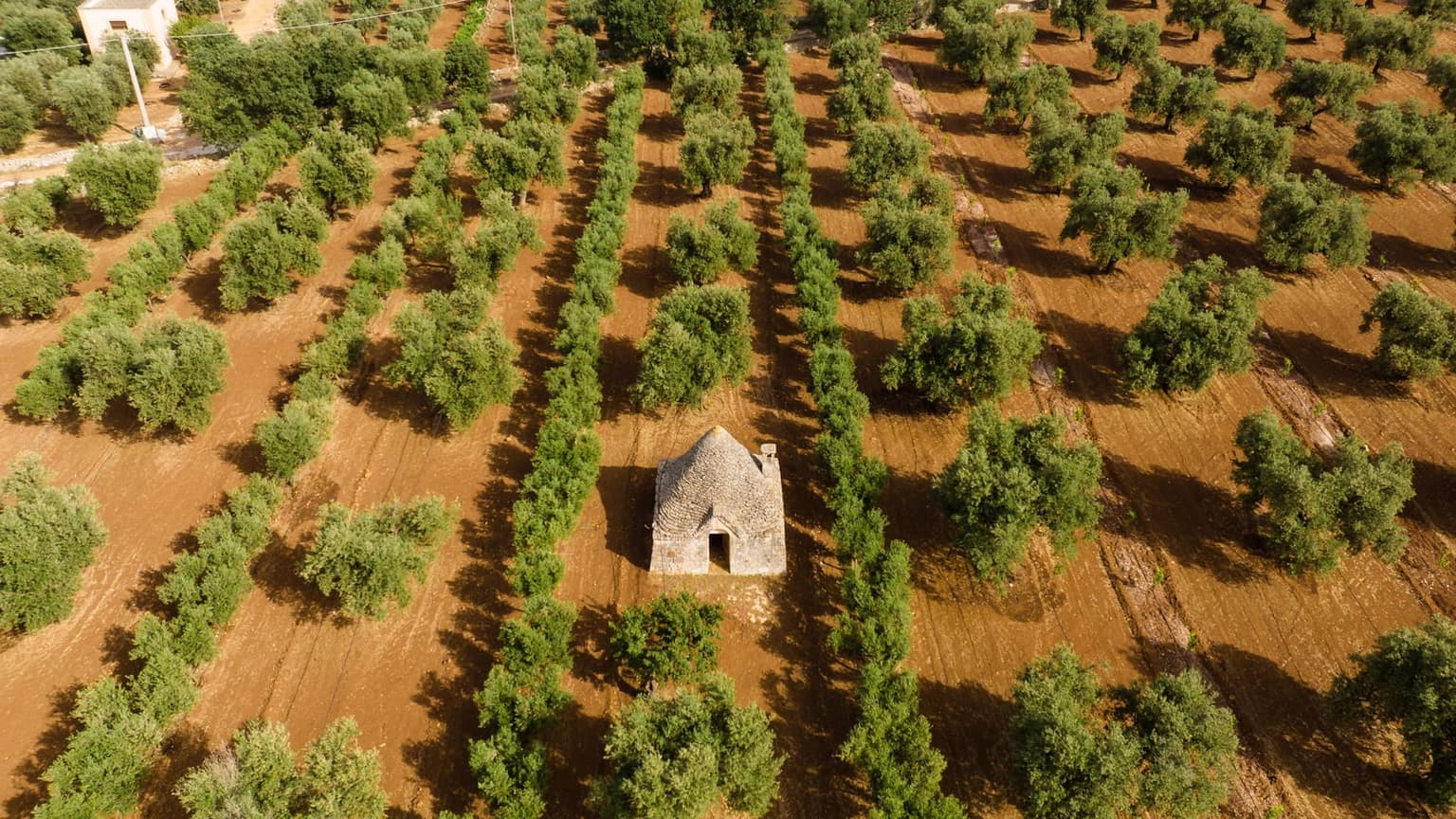
Masseria is the Italian word for a farm estate, and a masseria in Puglia trades the walk to dinner for afternoons in the countryside: the grounds, the quiet, sometimes a pool or a trullo room (a trullo is a dry-stone building with a conical or pyramid-shaped roof). Which masseria matters less than you'd think. Where you eat dinner, and who drives back, matters more. Decide that before you book.
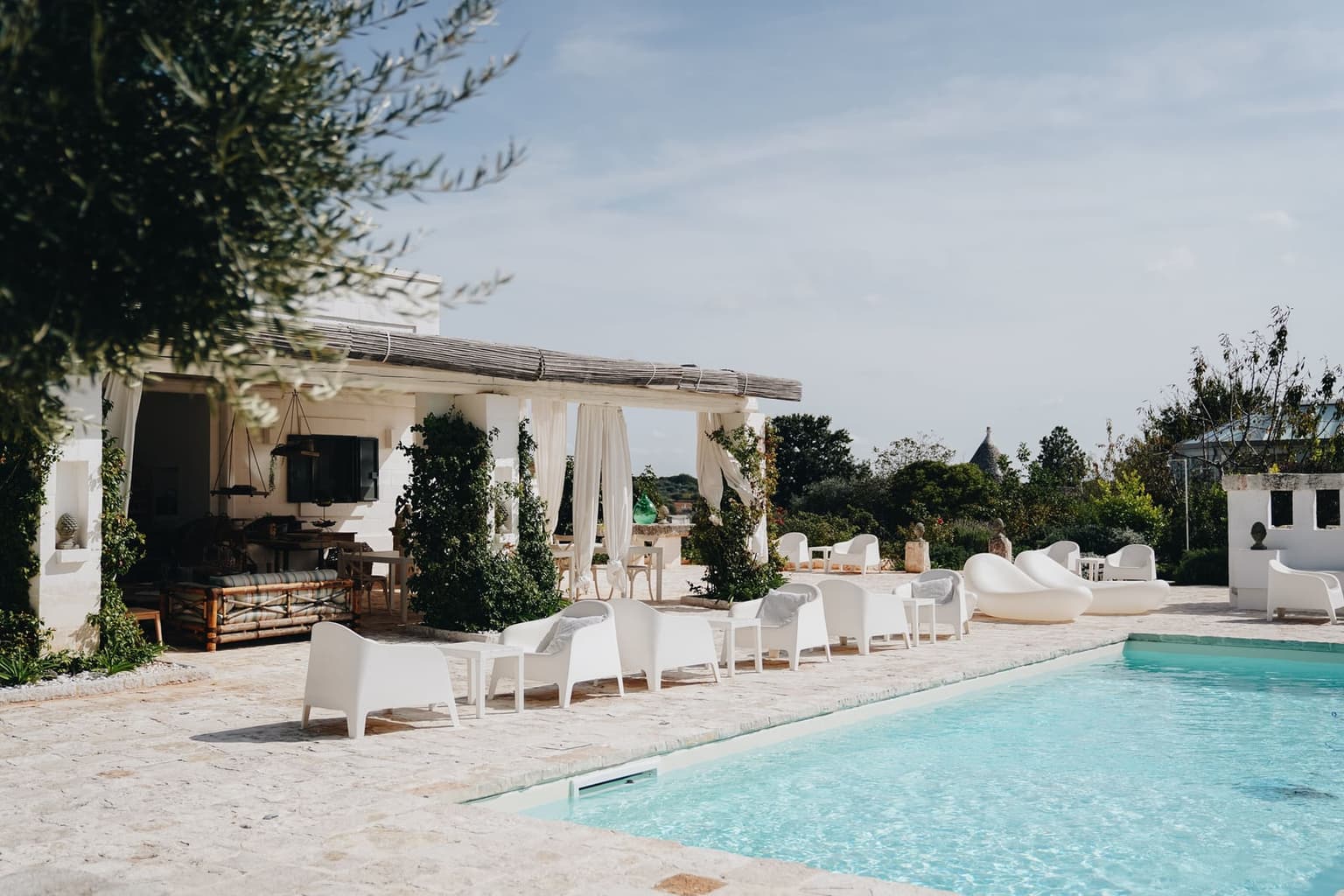
The reason to choose one at all is the estate. Done well, the grounds and a room in a trullo can beat a good suite in a city, and that is the right comparison, since a city is what you give up to have them. You wake up in the countryside, which is the whole idea, and in the evening it goes quiet in a way no piazza manages: either the point of the trip or the first sign you booked the wrong place.
The other side is the evening. If dinner, for you, is a walk through town with a bottle of wine at the end of it, a masseria works against you: getting back means arranging a ride or driving after the wine, and the second isn't an option. If you drink with dinner, that alone is a good reason to sleep in a town. So is wanting a livelier evening than the countryside keeps.
I spent three nights at a rural masseria between Ostuni, Ceglie Messapica and the coast near Fasano. It gave me what no town would: the car a few steps from the room, olive groves on every side and a pool with no traffic within earshot. What it took away was the walk to a late dinner, a bottle of primitivo (the local red) and the evening stroll through a busy piazza afterward. One night we ate on the estate so we could both drink; the other two we drove to the towns nearby and agreed before leaving who was driving.
So book a masseria if you'll have a car and will either eat on the estate or have a driver who skips the wine. Stay in a town if every evening is a walk to dinner. Or do both: one masseria stay inside a split trip.
What a masseria is: a farm with rooms, or a hotel that took the name
The best masseria in Puglia for you starts with which kind you book, because the word covers working farms with rooms to rent and estate hotels with beaches for their guests. Book a Puglia masseria expecting a farmhouse and you may find a resort, which is a nice problem to have unless you came for the farm.
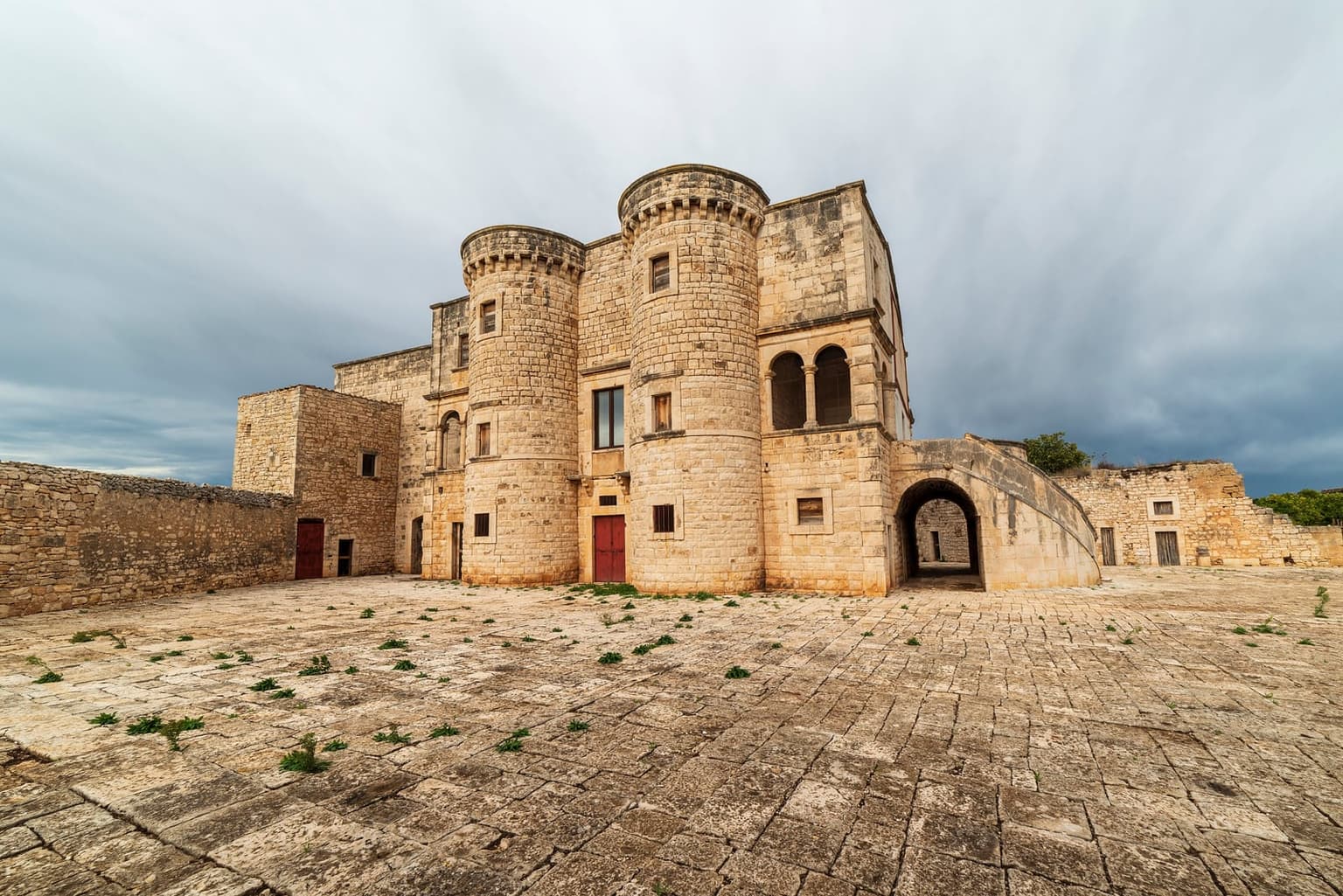
By its history, a masseria is a group of farm buildings, typical of southern Italy and above all of Puglia, and the masserie of Puglia, to use the plural, were not all modest. Some, owned by the nobler and richer families, were fortified with walls and defensive towers. At Masseria San Domenico, the main core is a watchtower that belonged to the Knights of Malta.
Italian law reserves the word agriturismo for farms that run one, and defines it as hospitality offered by farmers through their own farm, in connection with growing crops, forestry or raising animals. "Masseria" can also be what a property chooses to call its hotel: Masseria Cervarolo's own site signs off as Masseria Cervarolo Boutique Hotel. So the name alone won't tell you which kind you're booking. Here is the range:
| Kind | Example | What its own site shows |
|---|---|---|
| Farm business with rooms | Masseria Salamina, Pezze di Greco (Fasano) | An azienda agricola: olive groves, vineyards, almond orchards, its own olive oil; 20 rooms |
| Agriturismo with trulli rooms | Agriturismo Masseria Aprile, Locorotondo | Eight units, six of them trulli rooms; the owner writes that she is the twelfth generation to own it |
| Small house | Masseria Moroseta, Ostuni | Six double rooms, each with a private garden |
| Estate hotel | Masseria San Domenico, Savelletri di Fasano | A large saltwater pool in a Mediterranean garden |
If the masseria is the trip rather than a bed between towns, book one where you sleep in a trullo (trulli in the plural). Sleeping in one is the reward; photographing a few from the pool is not. Masseria Cervarolo, near Ostuni, calls itself a masseria with trulli.
Where to stay: a masseria near the inland towns, or near the sea
A masseria near Ostuni or Locorotondo puts your days in the inland towns; one near the coast, at Savelletri or Torre Canne, puts the sea in them. Neither is wrong, but they make different trips.
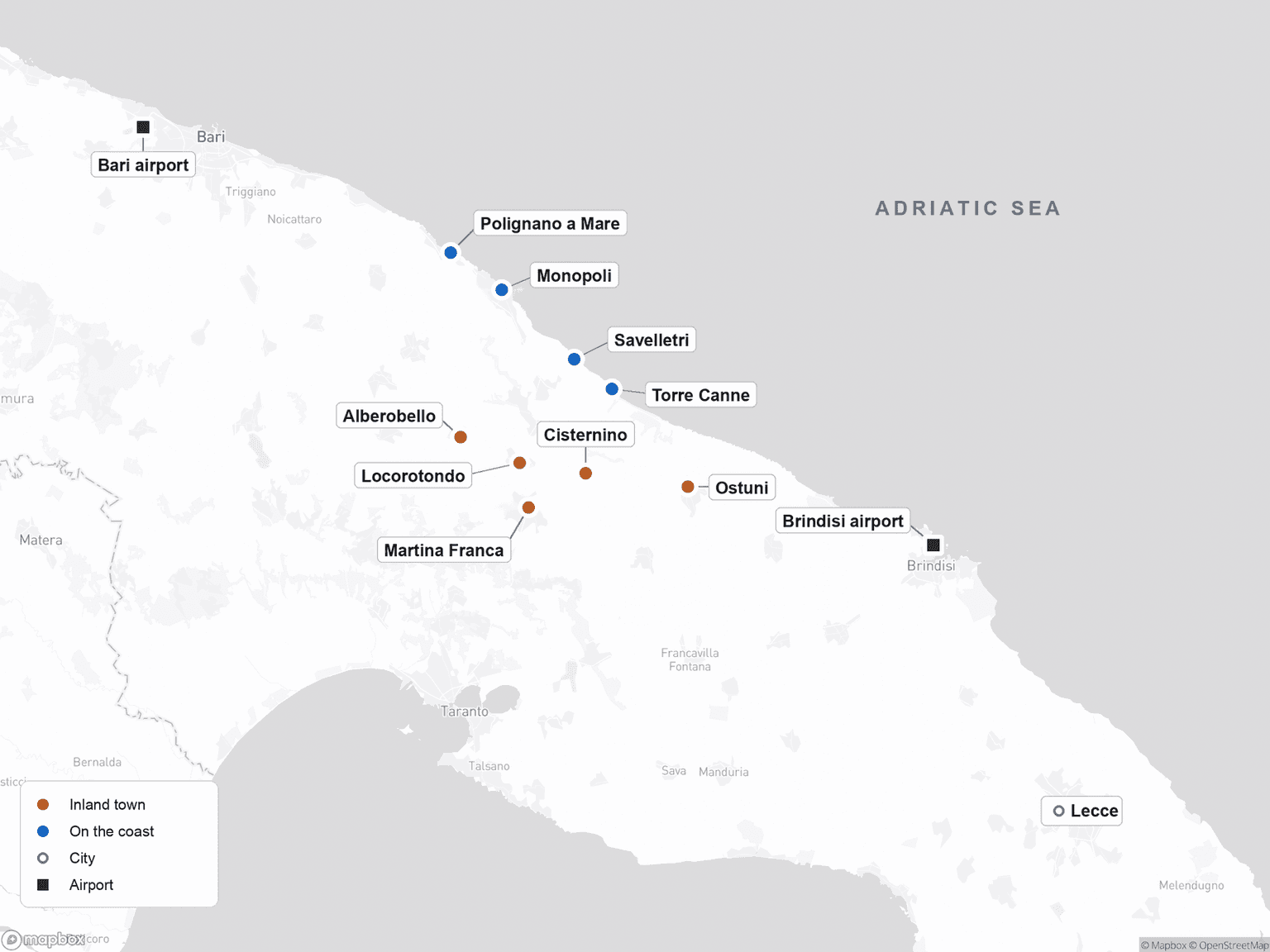
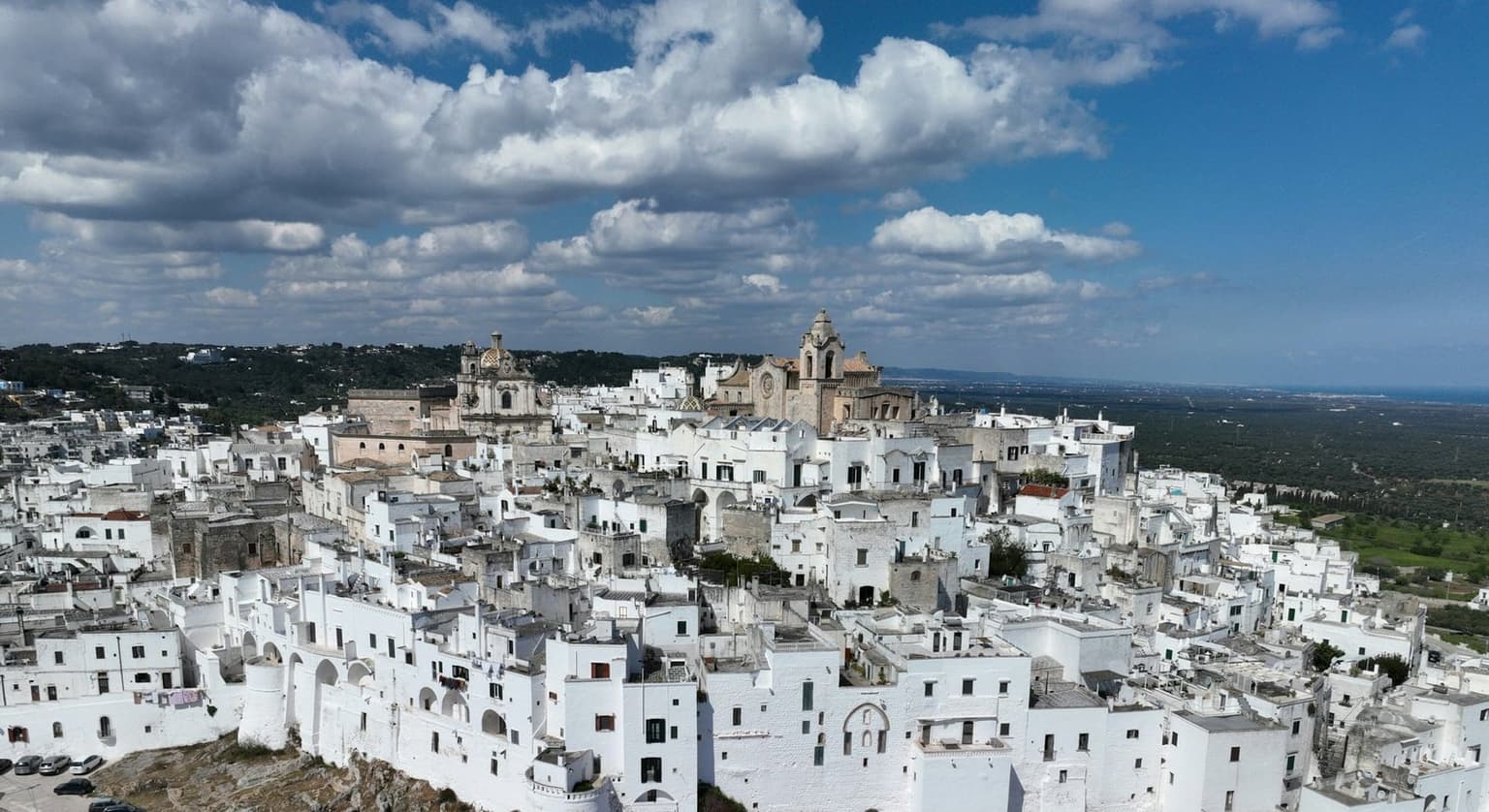
An Ostuni masseria, for example, can be Masseria Cervarolo, 6 km from Ostuni by its own site; Masseria Il Frantoio, on the SS 16 road with an Ostuni address; or Masseria Moroseta, at Contrada Lamacavallo. Aprile, from the table, is the one near Locorotondo. By car, any two of Ostuni, Locorotondo, Cisternino, Martina Franca, Alberobello and, on the coast, Polignano a Mare and Monopoli sit under an hour apart, so one base reaches all of them, Alberobello and the other trulli villages included.
At Savelletri di Fasano, for example, Masseria San Domenico sits 500 m from the Adriatic, with a private beach for its guests and a second private one 1 km away at San Domenico a mare, reached by the hotel's shuttle. Masseria Torre Coccaro, also at Savelletri, gives its guests a choice of two beach clubs. A masseria near Torre Canne has a small, pretty seaside village for a neighbor. If the sea is the point of the day, which beach on this coast suits it is a separate decision from where you sleep.
In July the towns are busy, so take them before noon, be back before the afternoon heat, and save the evening for dinner, on the estate or in a town. It sounds lazy and is simply good timing: the towns are best early, the estate is best when everything else is too hot. Then the afternoon belongs to the estate: a walk on the paths between olive trees, a pool in the worst of the heat, hours with nothing in them but the next swim. The towns will keep.
We were back on the estate before lunch, when the stone streets in town were already too hot to walk and the shops had closed for the afternoon. The heat hung thick over the grounds, and the cicadas in the olive trees kept up one unbroken roar. The light came off the whitewashed walls and the pale stone around the pool hard enough to make me squint. I spent the afternoon dragging a lounger after the shade of the old olives, getting in the water and out again, and listening to a hot, dry wind move through the stiff leaves.
Dinner at a masseria: on the estate, in a town, or breakfast only
Dinner at a masseria in Puglia comes three ways: a restaurant on the estate, breakfast only with dinner in a town, or a masseria restaurant you visit for the evening from somewhere else. Which one you get decides the stay more than the room does.
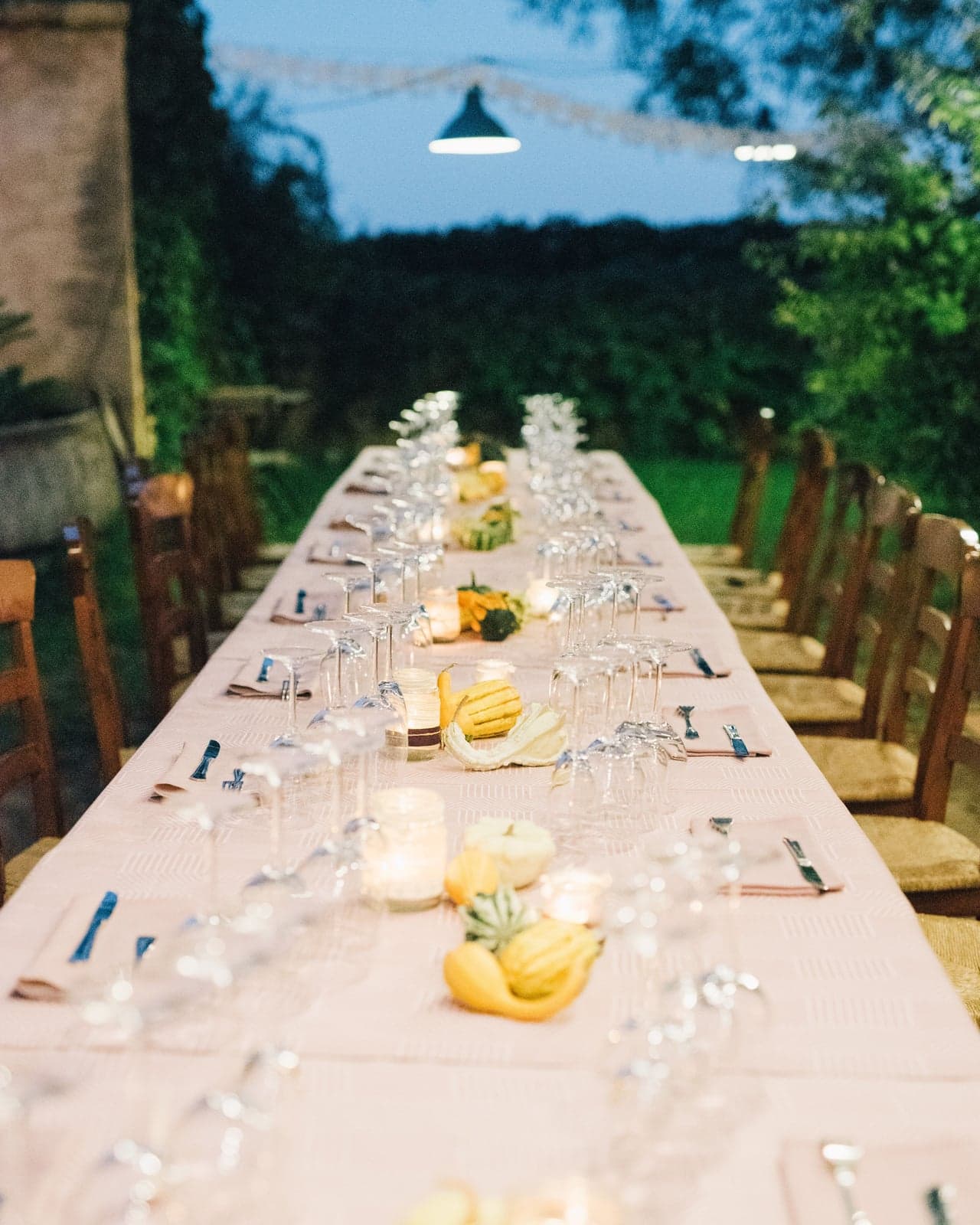
Some masserie run a restaurant on the estate. Masseria Cervarolo's is led by Chef Salvatore Cannalire, and Masseria Francescani, at Torre Chianca, Lecce, has its own restaurant and cocktail bar, Fràn. The case for eating in is plain: a good meal, then a relaxing evening with no drive at the end of it.
Before you book one for its restaurant, ask which nights the kitchen serves. A restaurant on the estate isn't a promise of dinner every night, and the night it's closed is the night you drive.
Others serve breakfast only, and dinner is in town. That is less of a sacrifice than it sounds: driving into a seaside village or one of the inland towns is a plan, not a problem, as long as you know before you leave who drives back. It also puts a different town on the table each night, which no estate kitchen can match.
If you sleep in a town, you can still have the masseria evening: Masseria Il Frantoio, near Ostuni, opens its restaurant to guests from outside, and in the summer months moves it outdoors into the central courtyard. To book a table, start from its restaurant page, which lists the reservation contacts.
Or book the evening as an outing: a masseria dinner, a cooking class or a farm tasting. Pick one listing that says where it happens and whether the ride there and back is included.
The car: you will need one, and dinner decides who drives
A masseria stay in Puglia comes with a car: most masserie sit out in the countryside, and the car is how you reach the towns, the beaches and, on the nights you eat out, dinner. Renting it is the easy part.
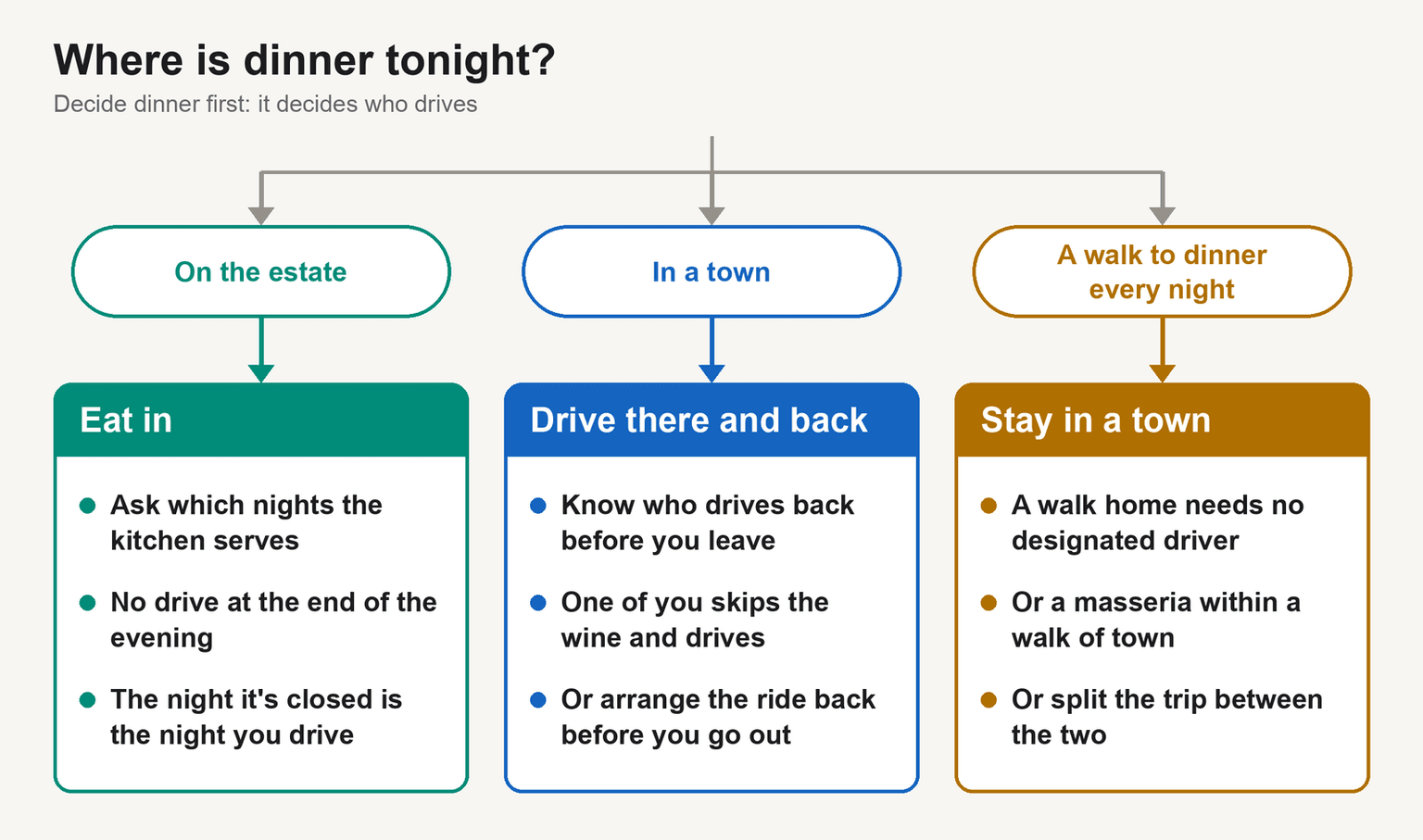
Check the distance to the nearest town before you decide: Masseria Aprile, for one, puts itself 1 km from Locorotondo, a 15-minute walk by its own count, and a walk home from dinner needs no designated driver.
⚠️ Warning
Italy's limit is 0.5 g/l (0.05% blood alcohol). Above 0.5 and up to 0.8 g/l: a fine, currently €543 - €2,170, and a license suspension of three to six months. Above 0.8 and up to 1.5 g/l: a criminal offense, with a fine of €800 - €3,200, up to six months' arrest and a suspension of six months to a year. The limit is zero for drivers under 21, and zero for drivers in their first three years with a category B (car) license: above zero and up to 0.5 g/l, the fine is €168 - €672, doubled if they cause an accident.
So decide dinner first: eat on the estate on the nights it serves, let one of you skip the wine and drive, or arrange the ride back before you go out, not after the second bottle.
Pick the car up at the airport you fly into, Bari or Brindisi, rather than in Bari itself, which is a poor first drive in a rental car; from the airport you can head straight out to the estate.
At a countryside masseria, parking tends to be free and easy, not a hunt for a space in a town. Of everything the car asks of you here, parking costs the least.
The one case for skipping the car: you fly in, the estate's kitchen serves every night you're there, and you plan to stay put. Then let a transfer do the driving, and know the trade: the towns are out of reach without a ride.
How many nights at a masseria: one stay inside a split trip
Two or three nights at a masseria in Puglia works best as one stay inside a split trip, with town nights before or after it. Changing bases costs a morning of packing and pays it back: the drive from one to the next becomes a day of stops along the way.
The simplest split pairs the masseria with a town on the coast, Polignano a Mare or Monopoli: the sea and the evenings on foot in one base, the countryside in the other. With Monopoli as the town half, the masseria can sit outside it and take the quiet nights.
For city nights, make it Lecce, and sleep inside the walls so dinner ends with a walk home instead of a drive. Lecce after dark is everything a masseria evening isn't, which is the point of pairing them: the masseria first, then the city, is an order that works.
If the masseria is the trip, stay longer. Short stays and a hotel change every other day turn a vacation into a series of checkouts, and since one base reaches the towns, nothing forces you to move: choose one really special place and stay as many days as you like.
Booking a masseria: what to check before you pay
Before you book a masseria in Puglia, check four things the photos skip: the property type, the walk from the car to your room, the age of the rooms, and your dates. The photos sell the pool; the listing has to tell you the rest.
- The property type. An agriturismo, a farm business (azienda agricola) or a hotel: the listing should say which, since the name won't.
- The walk. How far, and how many stairs, from the parking lot to your room, and whether anyone helps with the bags. In the August heat, with a suitcase each, this is the detail that decides your first hour.
- The rooms and the staff. When the rooms were last redone, and whether a large estate has the staff for its size. A beautiful estate and a dated room can be the same booking.
- Your dates and the price. Check both on the property's own booking page: whether it's open when you want to come, and what it charges for those nights.
If you want the farm, filter for an agriturismo or a farm business, then look at what it actually grows or makes: olive groves, vineyards, its own oil. A farm that bottles its own oil is a farm; a lawn with three olive trees on it is landscaping.
If you want the estate hotel, ask two other questions before you pay: how the beach works for guests, if the estate is near the coast, and which nights the kitchen serves. Those two answers decide more of the stay than the room upgrade will.
Masseria in Puglia FAQ
- What is a masseria in Puglia?
- The Italian word for a farm estate: historically a group of farm buildings, typical of southern Italy and above all Puglia, and sometimes fortified. Today it covers anything from a farm with rooms to an estate hotel.
- Is a masseria worth it, or should I stay in a town?
- Yes, for afternoons on the estate and quiet evenings, if you'll have a car. If dinner is a walk with wine every night, stay in a town, or split the trip between the two.
- Do you need a car to stay at a masseria?
- Yes, in practice, so decide dinner first: on the estate on the nights it serves, or in a town with a driver who skips the wine. Italy's limit is 0.5 g/l (0.05% blood alcohol); it is zero for drivers under 21, and zero for drivers in their first three years with a car license.
- What is the difference between a masseria and an agriturismo?
- Italian law reserves the word agriturismo for farmers who host guests through their own farm. Masseria is the word for the estate, and the name alone won't tell you whether it's an agriturismo, a farm business or a hotel.
- How many nights should I stay at a masseria?
- Two or three, as one stay inside a split trip with town nights around it. If the masseria is the trip, stay longer.