George Mandrovny
The Piazza and the Tonnara: Marzamemi's One Real Draw
Marzamemi earns a genuine one to two hours, not a full day. What you're actually coming for is Piazza Regina Margherita: one square, wrapped around an Arab-era tuna fishery, and about as photogenic as Sicily gets. The trap is that the postcard is exactly that one square - the village around it is something else entirely.
The cottages ringing the square date to the 1600s, built for the families who worked the tonnara, the tuna fishery that gave Marzamemi its reason to exist. The Villadorata family bought the tonnara in 1630 and, over a century later, added the palace and the church that anchor the piazza's far end, both finished in 1752. Come at the right hour and the whole scene composes itself into one frame: cottage facades pastel-washed by the afternoon light, bougainvillea spilling over the restaurant awnings, the tonnara's dark stone bulk anchoring the far end.
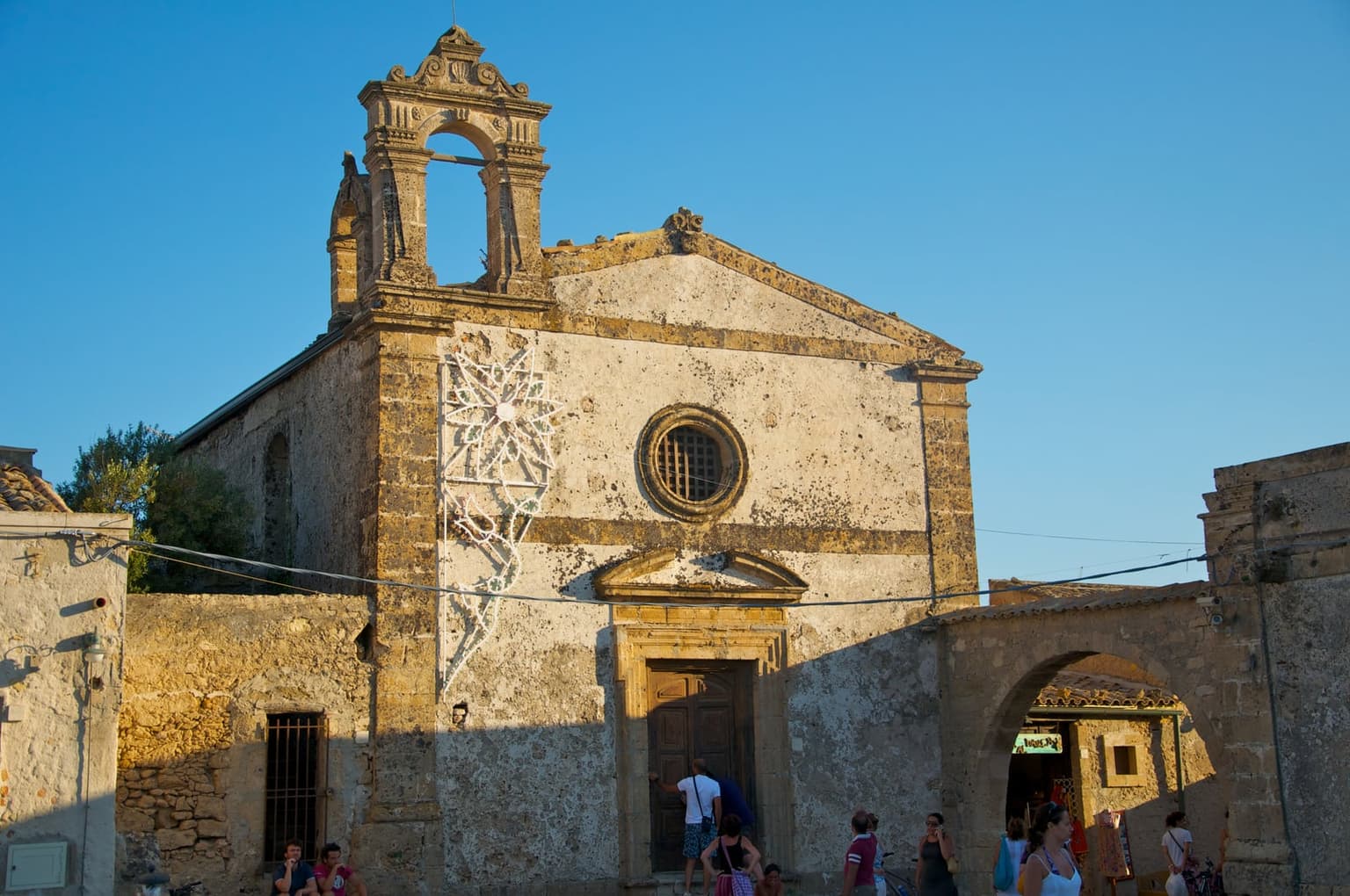
The tonnara building itself now functions as a cultural space built around the village's tuna-processing history - in practice, the old boat-storage arches were rebuilt into the Loggia degli Scieri, a 750-square-meter hall rented out for weddings, receptions and private events rather than run as a walk-in museum, so there's no set visiting hours or entry ticket to check before you go.
The exterior alone, weathered stone set against whitewashed cottages, tells you what this village used to be for. Walking the piazza and the historic center itself costs nothing, and the ground is flat and wheelchair accessible, which is not something you can say about most towns worth visiting two hours down this coast.
ℹ️ Info
This is a one-square town. The postcard is real, but it is exactly that one square - the rest is quiet, ordinary Sicilian outskirts.
Walk even a block off the square, though, and the postcard stops. The streets behind the piazza are built up with vacation homes, plenty of them in the flat, forgettable style that shows up wherever a small fishing village gets discovered - nothing that earns a special trip of its own. Nothing wrong with that, exactly - most fishing villages Marzamemi's size don't get even one perfect square, let alone build a reputation on it. I'd budget the whole visit around the one square and stop there rather than go looking for a second act the village doesn't have.
One more thing before you plan around this square: it has stood in for the movies twice, doubling as a filming location for Giuseppe Tornatore's L'uomo delle stelle in 1995 and Giuseppe Fiorello's Stranizza d'amuri in 2023. Nice trivia for the walk, not a reason on its own to detour here. If you recognize the square from a screen before you recognize it from a postcard, that's why.
Where to Eat: The Piazza Tables vs. the Real Kitchens
Every table on the square belongs to a restaurant that knows exactly why you sat down there, and the menu is priced for the view as much as for the food. That's less a scandal than basic math: one photogenic piazza has room for exactly one photogenic piazza's worth of tables, and the demand for those seats never really lets up. Take one if you want the tonnara lit up behind your plate. Just know what you're paying for.
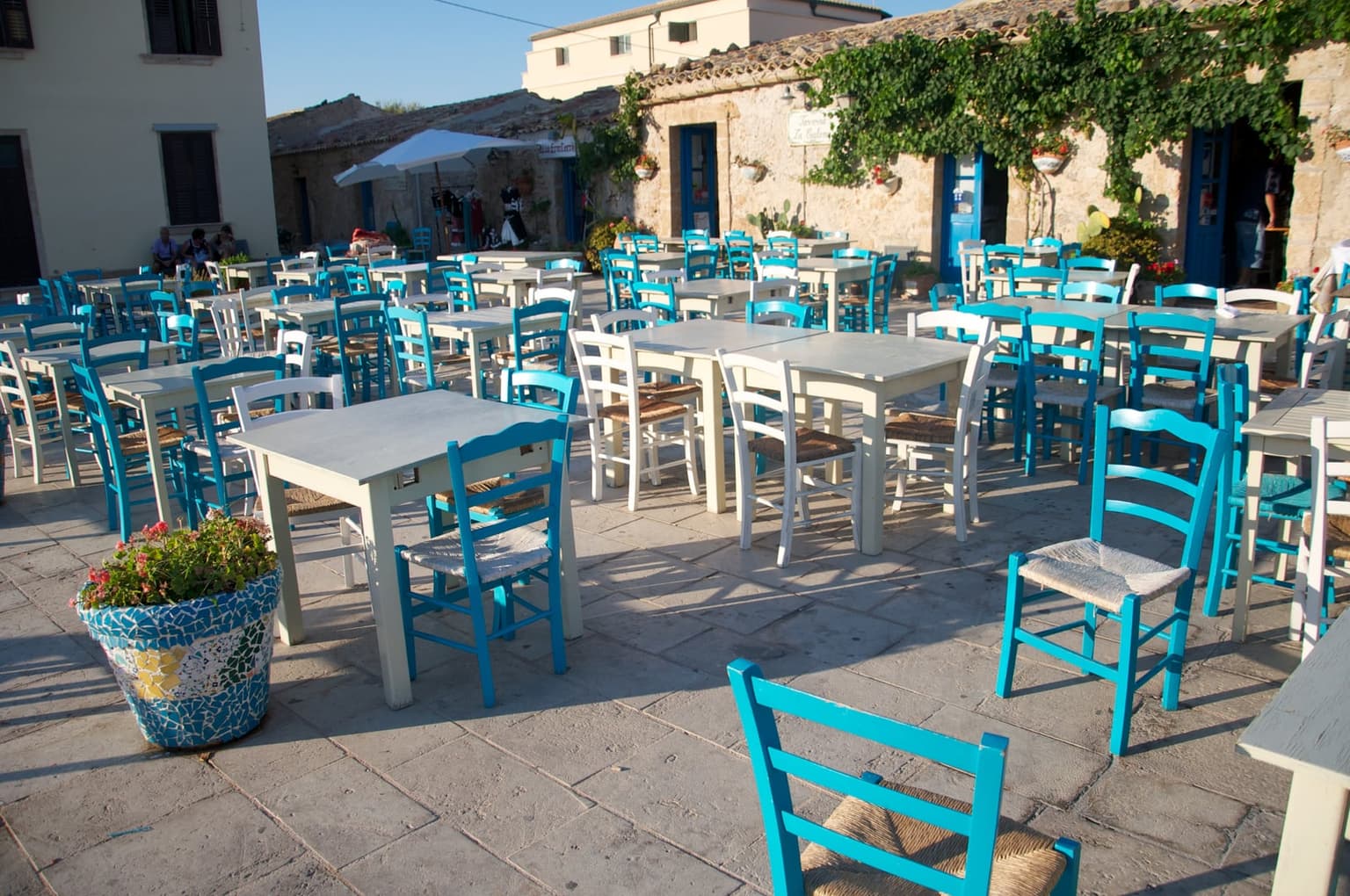
Two kitchens are worth seeking out for the food itself, not just the seat. Taverna la Cialoma sits right on the piazza, at Piazza Regina Margherita 23, and carries a current Michelin Guide listing for its seafood and traditional Sicilian cooking.
A few streets back, Ristorante Campisi belongs to the Campisi family, who have been processing tuna and bottarga in Marzamemi since 1854 and still run the kitchen as an extension of that same business - the bottarga on your plate is about as close to the source as bottarga gets.
Neither restaurant publishes a price list worth quoting here, so budget for a proper seafood dinner and expect the piazza-front tables to sit at the top of that range. Both kitchens draw on the same waters and the same tomatoes as everyone else on the square: Pomodoro di Pachino carries IGP protection, Indicazione Geografica Protetta, across the plain running from Pachino, Portopalo, Noto and Ispica, which is why a plate of tomatoes and oil here tastes like more than a garnish. What you're paying extra for at the piazza tables is the view, not the ingredients.
If the piazza itself feels more like a photo op than a meal, Porto Palo di Capo Passero is a ten-minute drive south, where Scala draws a genuinely local crowd instead of a tour-bus one. I'd make that drive myself before settling for a table that sells the view harder than the plate.
My own pick, for what it's worth: I skip the piazza tables when the village is busy - too many people photographing the same view I'd be paying for. Campisi's shop earns a stop on its own merits, even if you don't eat there - a couple of tins of their tuna are worth carrying home. And if the drive to Portopalo isn't in the cards and you still want a table with a sea view instead of a piazza view, Cortile Arabo, on Piazza Villa Dorata a few steps off the main square, carries its own Michelin listing and a terrace built out over the rocks, close enough to hear the waves.
Isola delle Correnti and Portopalo: The Half-Day Pairing
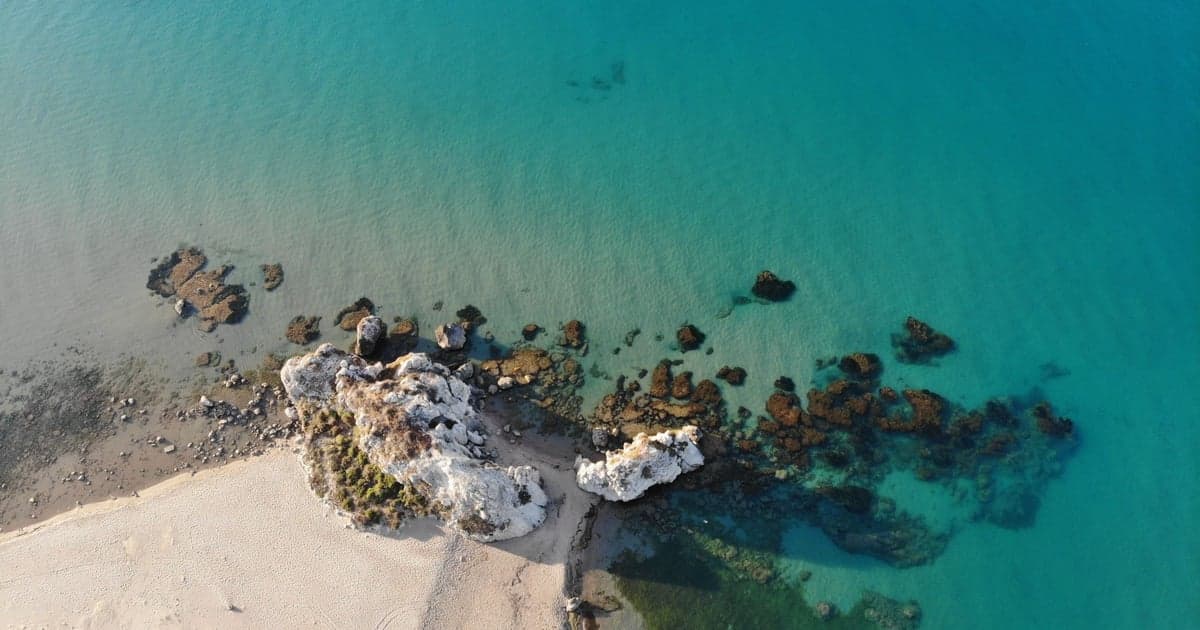
A short drive past Marzamemi, or a straight run by boat from the harbor, sits the actual southernmost point of Sicily: Isola delle Correnti, where the Ionian and the Mediterranean meet. Stand at the point and the horizon runs open on three sides, with nothing between you and open water. A lighthouse marks the spot, an 11-meter tower the Genio Civile built in 1865, now fully automated and kept running by the Marina Militare. Whether the tower itself opens to visitors, I never managed to find out - treat it as a landmark to look at, not one to climb.
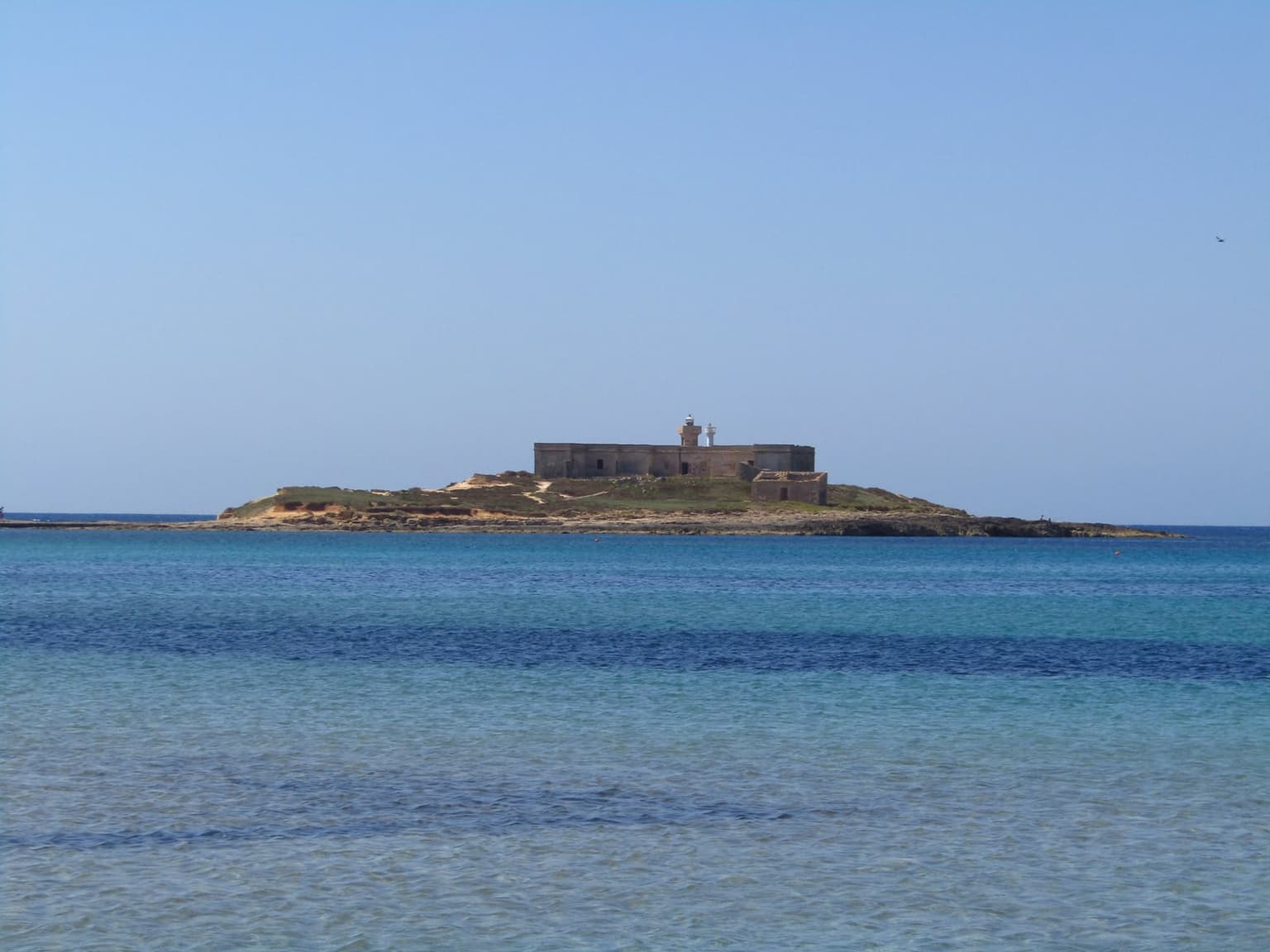
Two ways in: a boat excursion straight out of Marzamemi's harbor, which several operators run as exactly this route, or a short drive to Portopalo di Capo Passero and a walk from there, which also puts the ruined Castello Tafuri on the same stretch of coastline within reach.
If you'd rather not drive it, book the boat instead - it covers the run and usually a stretch of the Vendicari coast along the way.
Skip the picnic blanket, though - there's no shade and no facilities once you're at the point itself, and "Correnti" is not a decorative name. Bring water and something for your head, not a cooler and an umbrella. That doesn't stop people from swimming near it, but it's not the spot to let kids wade in unsupervised. The currents that meet there make this a place to look at and swim near, not a sheltered spot to camp out in for the afternoon.
A few minutes north toward Noto, the coast turns into the beaches at Vendicari and Calamosche - already covered in the rundown of Sicily's best beaches, and worth folding into the same half-day if you're not stopping at Isola delle Correnti alone.
Getting to Marzamemi and Where to Park
Marzamemi used to have a train. A station here ran on the Noto-Pachino line from 1935 until the line was suspended in 1986 and the tracks came up in 2002 - about five trips a day each way in its working years. The ruin survives, and Fondazione FS has an active restoration project aimed at tourism, but there's nothing to ride yet. The bus situation, meanwhile, is murkier than it should be. Interbus's own stop page lists Marzamemi on its network but publishes no actual timetable there, just the fact that the route exists. AST and Interbus reportedly both run buses through here, one line linking Portopalo, Marzamemi and Pachino, a longer one running the whole southeast coast from Catania through Siracusa, Avola, Noto and Pachino, but neither company's site hands you a schedule to plan around. Confirm the times locally, or through a current transit app, before you build a day around a bus that might not show up when you expect it.
For most visitors that makes a rental car the honest default, whether you land at Catania, roughly a two-hour drive up the coast, or the smaller Comiso airport further south. I'd book the car ahead of arrival rather than gamble on availability at the counter, and check the return-location fee before you commit: dropping the car at a different airport than you picked it up from can cost more than the rental itself, and pickup options in this corner of the southeast thin out fast compared with Catania or Taormina.
compare rental cars at Catania airport
Book ahead rather than gamble on counter availability in this corner of the southeast
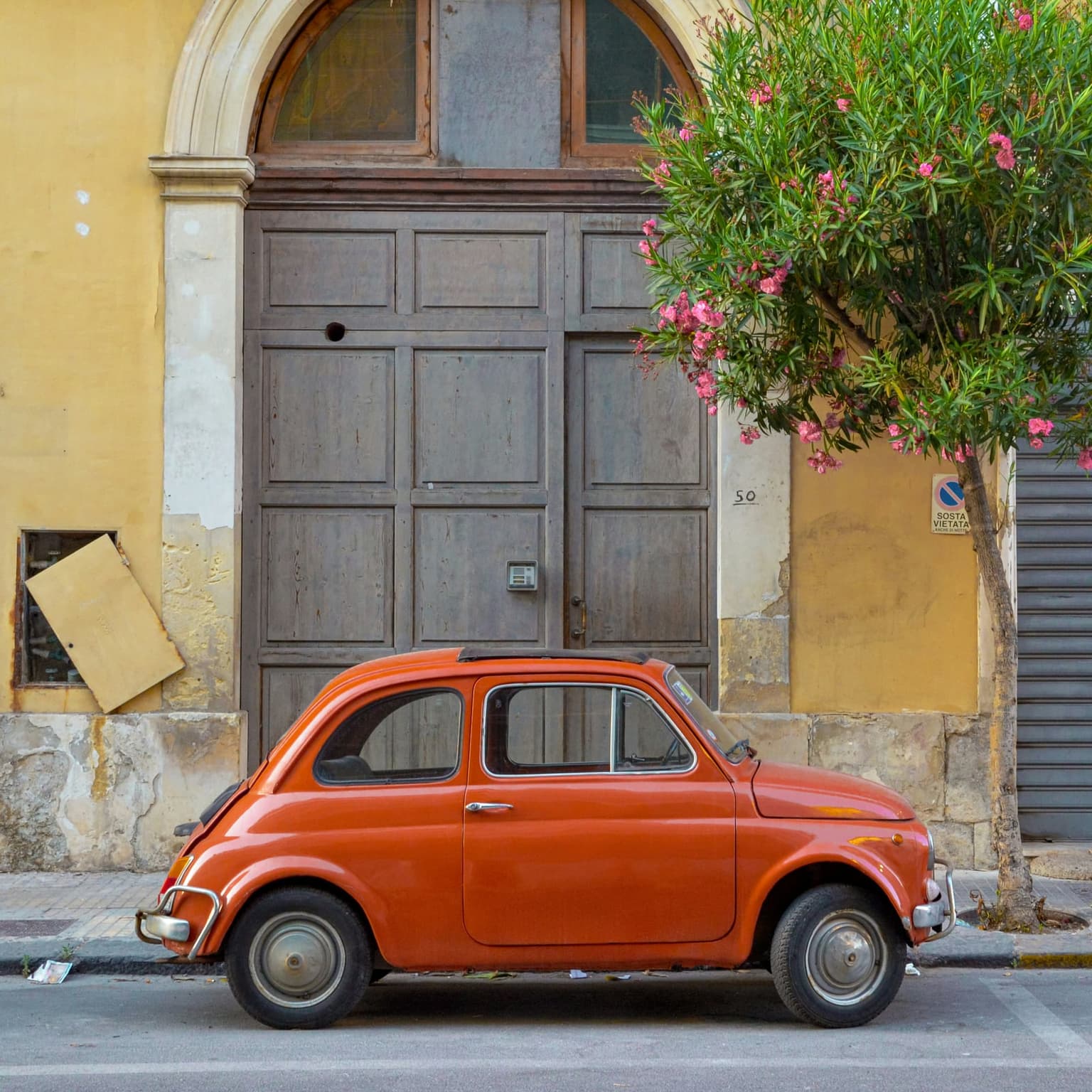
Once you're here, two paid lots serve the center, Parcheggio La Diga and Parcheggio Marzamemi Centro, both running on a token-and-time machine. The daytime rate is genuinely cheap, around €3 for twelve hours, and it's easy to assume that number holds no matter how long the car sits there. It doesn't: leave it overnight in the same spot and the total can climb closer to €10, a jump the machine never bothers to explain.
Keep some cash on hand too - the card reader at Marzamemi Centro has been reported dead more than once, and there's no attendant standing by to sort you out when it happens.
None of that matters much once you're parked, though: the whole village is walkable in well under thirty minutes end to end, and both lots sit close enough to the piazza that circling for a marginally nearer spot buys you nothing. The car's job is getting you here, not getting you around.
When to Visit: Day-Trip or Stay the Night
Timing decides more of this visit than the drive does. Marzamemi runs almost entirely on the piazza being open, lit up and full of people at the tables around it, and that isn't a given every day of the week. Come through midweek in the shoulder season, especially March, and you can catch the square with half its shutters down: most of the places around the piazza and in the wider village closed for the day, the postcard scene reduced to empty chairs and a quiet church front. Weekend afternoons and the high season are the safer bet if seeing the place actually working matters to you. It isn't unique to Marzamemi, small piazza-front businesses everywhere run on a similar rhythm, but it catches visitors who assume a square this photogenic must be staffed and lit every day of the year.
Get the timing right in the other direction, though, and you trade the empty-square problem for the crowded one. On a summer evening the piazza fills fast, every table taken, string lights on, the tonnara lit up behind a wall of diners thick enough that finding a clear line of sight to it takes real patience. Neither hour is wrong, exactly, just a different version of the square: quiet and possibly closed, or alive and shoulder to shoulder.
Worth it, in my experience, but only in doses. I've stood in the summer-Saturday crush the paragraph above describes: the photos really are as cinematic as the postcards promise, string lights and all, but parking is nonexistent, the noise doesn't let up, and getting a clear line on the tonnara or a relaxed glass of wine takes more patience than it should. I wouldn't plan a trip around catching that exact crowd. What I'd chase instead is the transition - arrive in late afternoon in May, June or September, watch the square go from golden light to lit-up dusk before the tour groups show up, and treat the full evening crush as something to dip into briefly rather than the whole night.
The way around picking one or the other, and what I'd do myself, is to stay the night nearby, in Marzamemi itself or a short drive off in Pachino or Noto. A single overnight buys you the square twice: once in the crowded evening version everyone else came for, and again the next morning, before the tables are even set, when it's just you, the cottages and the tonnara. Booking a room ahead is the practical way to arrange that second pass without overthinking where to sleep.
For most visitors, this is still the same one to two hours this guide opened with. Making it worth a full evening comes down to one decision: whether you booked a table ahead at one of the two kitchens worth the trip.
Frequently asked questions
- Is Marzamemi worth visiting, and how much time do you actually need?
- Yes, but treat it as a stop rather than a full day. Piazza Regina Margherita and the old tonnara behind it are the real draw, and one to two hours is enough to see them properly, eat something, and move on.
- Can you get to Marzamemi without a car?
- Not reliably. Buses reportedly run through the village, but neither AST nor Interbus publishes a timetable for the stop, so a rental car is the honest way to plan an arrival you can actually count on.
- Is there a real beach at Marzamemi?
- Not right in the village. The closest open water is Isola delle Correnti, a headland with no shade or facilities. For real sand, head to the beaches at Vendicari and Calamosche, a few minutes north.
- Does it matter which day you visit?
- Yes. Midweek and off-season, plenty of the shops and tables around the piazza can be closed. Weekend afternoons and the high season keep it alive, though noticeably busier by evening.
- Is Marzamemi expensive to eat in?
- The piazza-front tables price for the view as much as the food. A short drive to Porto Palo di Capo Passero gets you a more local crowd and better value without losing the coastal setting.
Marzamemi asks little of your itinerary, and rewards exactly the planning you put into the timing. Get the day and the hour right, and the one square does the rest.