George Mandrovny
The short answer: which beach, and how you are getting there
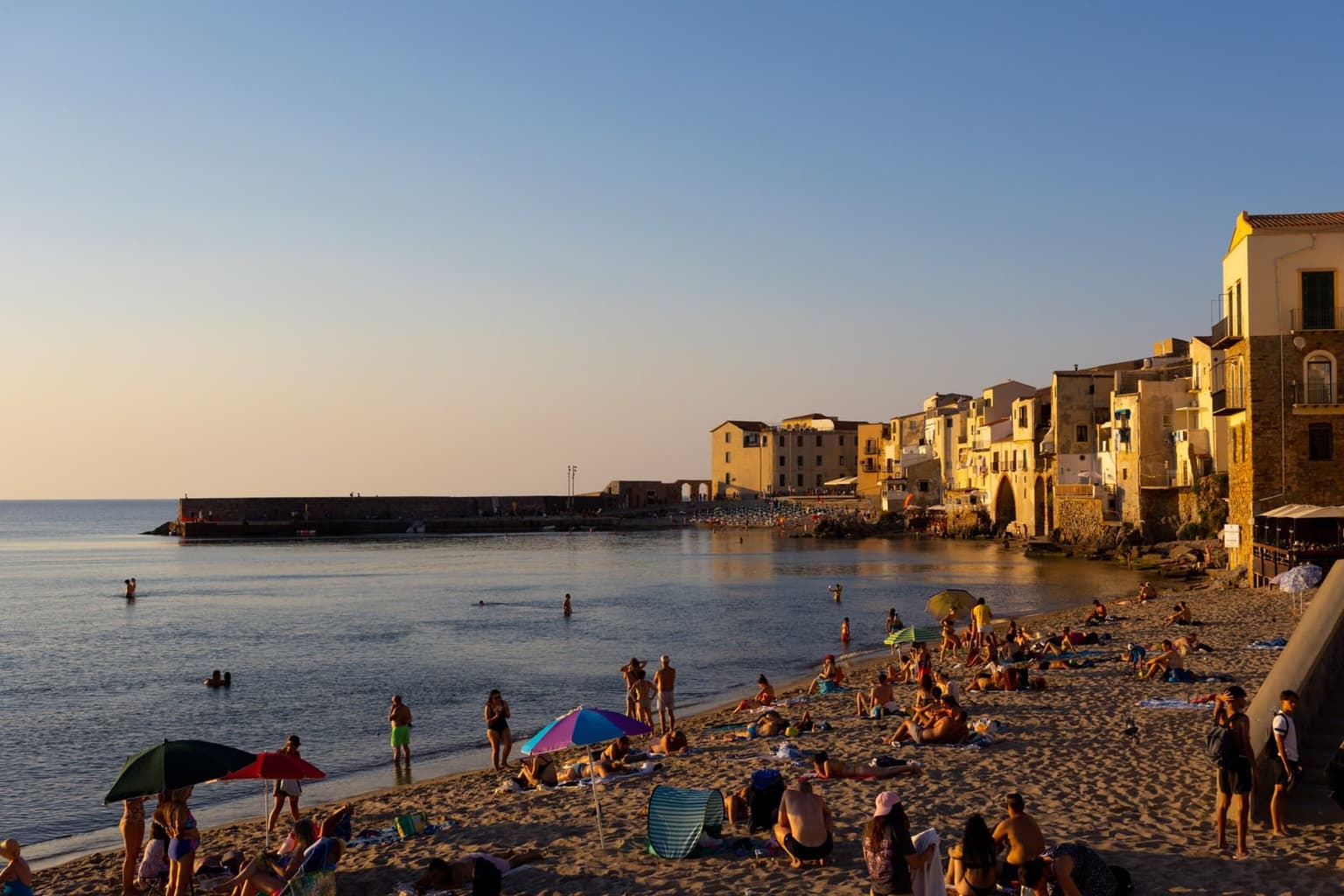
The best sand and the clearest water in Sicily are on the southeast coast, and the practical answer for reaching them is a car. If you are not driving, Cefalù is the one famous Sicilian beach you can actually get to: a direct train from Palermo Centrale, under an hour, all day. And at almost any beach with a town or a club behind it, the usable middle is rented by the day - the wild ones have nothing to rent at all.
- No car: not the famous names. Cefalù by train from Palermo, Mondello on Palermo's seasonal summer city bus (line 806), Letojanni by train from Taormina-Giardini, and Fontane Bianche from a Siracusa base.
- What it costs: the free stretches are the margins, not the middle. At a Mondello beach club, a day with a chair and umbrella runs €18 - €22 a head, €6 with no equipment.
- The one that is not a swim: Scala dei Turchi is a ticketed cliff. €6, twenty minutes, and it shuts on rain, high wind or heat.
There is usually a bus. It runs a handful of times on a working day, thins out on the weekend, and leaves you in the nearest town rather than at the sand.
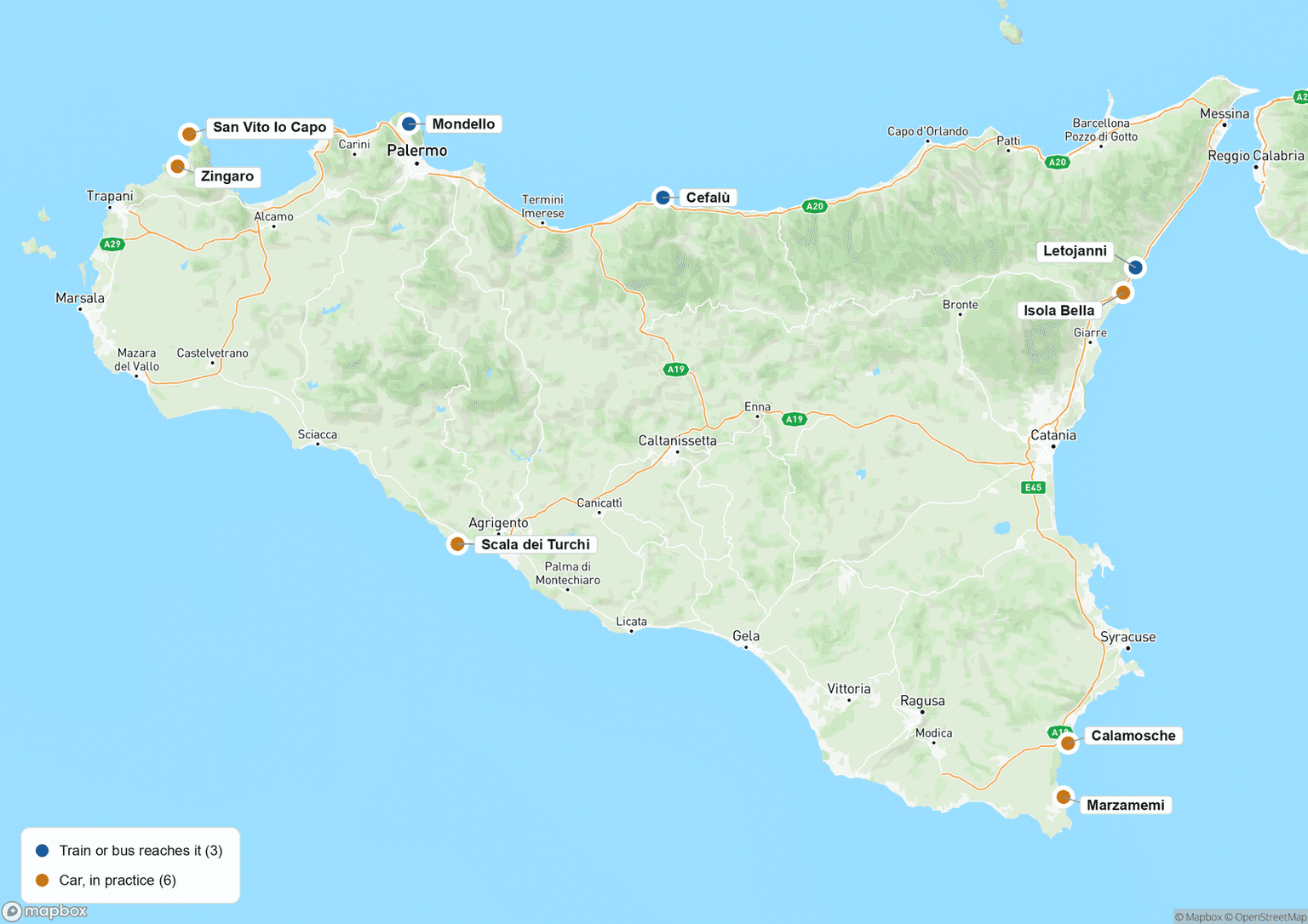
The famous names cluster where the trains do not go. That is the whole tension of a Sicilian beach trip.
| Beach | The sand | Without a car? | The catch |
|---|---|---|---|
| Mondello (Palermo) | Fine, shallow, urban | City bus from central Palermo | Paid rows own the good middle |
| Cefalù | Real sand, a town behind it | Direct train from Palermo Centrale | The free strip is narrow and fills early |
| San Vito lo Capo | The island's best-known sand | Car, in practice | Famous, and it gets busy |
| Zingaro coves | Pebble coves under cliffs | Car, then on foot | A walk in a reserve, not a beach day |
| Scala dei Turchi | White marl cliff, not a beach | Bus reaches Realmonte town, not the rock | Ticketed, twenty minutes, closes often |
| Calamosche (Vendicari) | White sand, clear water | Car, in practice | No shade, and a walk in from the lot |
| Marzamemi | Fine sand, free stretches beside paid rows | Bus serves the village, car in practice | Tiny village, outsized evening crowd |
| Letojanni | Wide, coarse sand to fine pebble | Train from Taormina-Giardini | Coarse, not the powder you pictured |
| Isola Bella (Taormina) | Pebble and rock | Yes, from Taormina | Tiny and saturated; Letojanni is the swim |
Everything below is the argument behind those rows, starting with what a day on that sand costs.
What a day on Sicilian sand actually costs
Most of a good Sicilian beach is leased, stretch by stretch, to beach clubs - stabilimenti on the signs - which rent you an umbrella and a lounger for the day. The free public sand, the spiaggia libera, is whatever is left over at the edges. That word "good" is doing real work: the wild bays further down this page have no club, no kiosk and nothing to rent at all. The day rate is posted on a board at the kiosk, so you can read what a day costs before you commit to it.
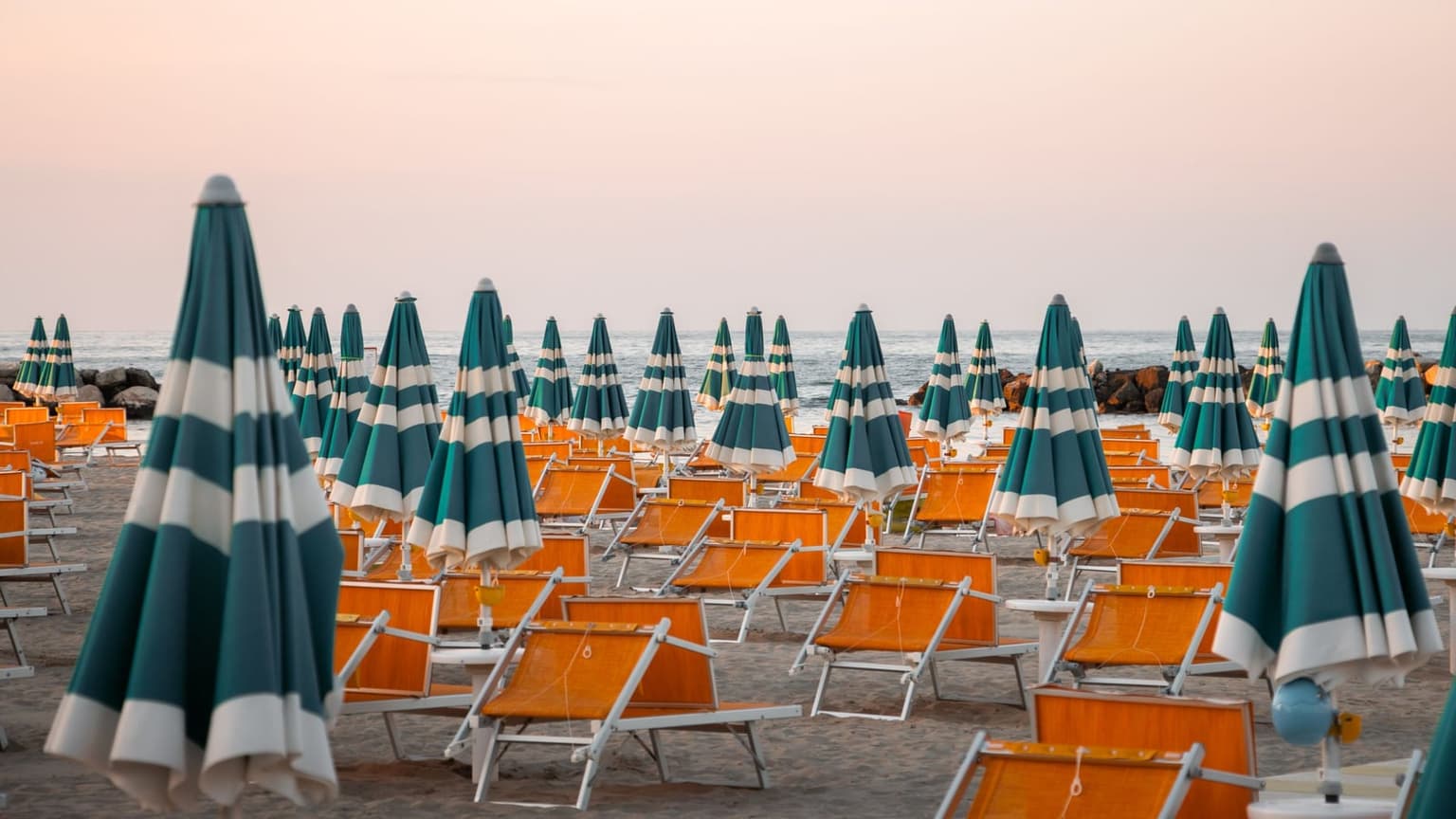
For an actual number, take Italo Belga at Mondello, Palermo's beach, which publishes its 2026 day rates: €18 a person on a weekday, €22 on the weekend, and €22 every day from July 1 through August 31. Two people together pay €30, €34, and €35 across those same three cases. The same club sells a cheaper corner called Bassa Marea at €6 a person, which buys a spot on the sand and nothing else: no umbrella, no lounger. That is one club's published list at one beach, not a national rate. What transfers is the shape: a weekday price, a higher weekend price, and a high season in which every day is priced like a Saturday.
The free sand is narrow, and it sits at the edges rather than the middle. It also does not hold its size through the day: the clubs keep setting rows out, and the open stretch gets eaten from the inside. In season it is there first thing and gone by mid-morning. The fix is the hour, not the beach. Which is what the club money actually buys. Not the umbrella - the right to show up at eleven and still have somewhere to sit.
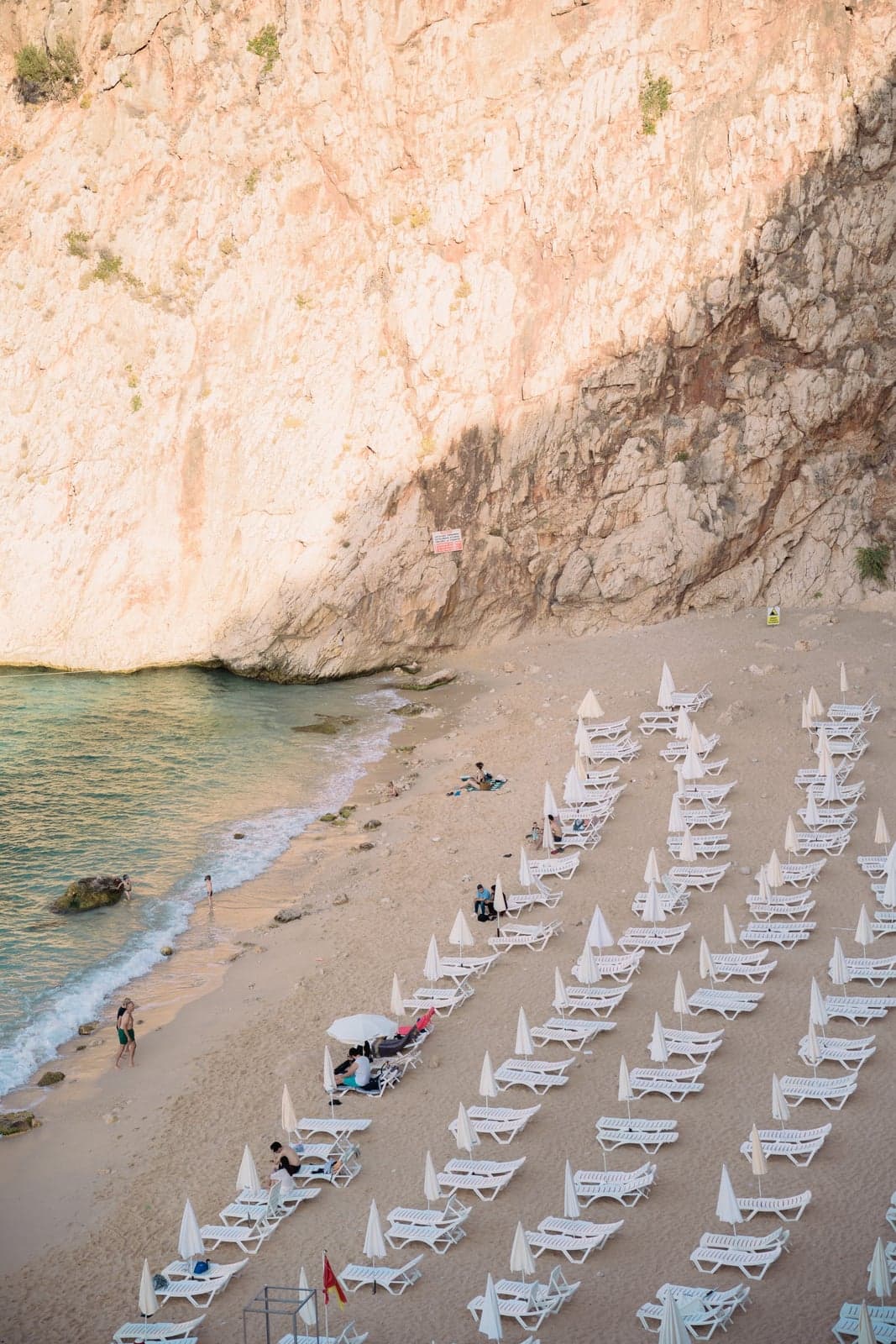
One more thing about the money: it does not line up. Prices on the same front swing widely for the same setup, and you find that out afterward. My rule is to walk the front before I put a towel down anywhere: read the boards, see what each rate actually includes, then pick. That costs ten minutes at the start of a day you are giving to that beach anyway.
Mondello: Palermo's own beach, and the bus that gets you there
Mondello is the only genuinely urban beach in this comparison, and that is both the appeal and the problem. It sits at the end of a bay closed off by Monte Pellegrino, a city bus ride from the middle of Palermo: fine sand, a gradual shallow entry, restaurants at its back, and a city that treats the whole curve as its own front yard. Among the beaches on this list you can reach without a car, this is the one you get to on a city bus rather than a train.
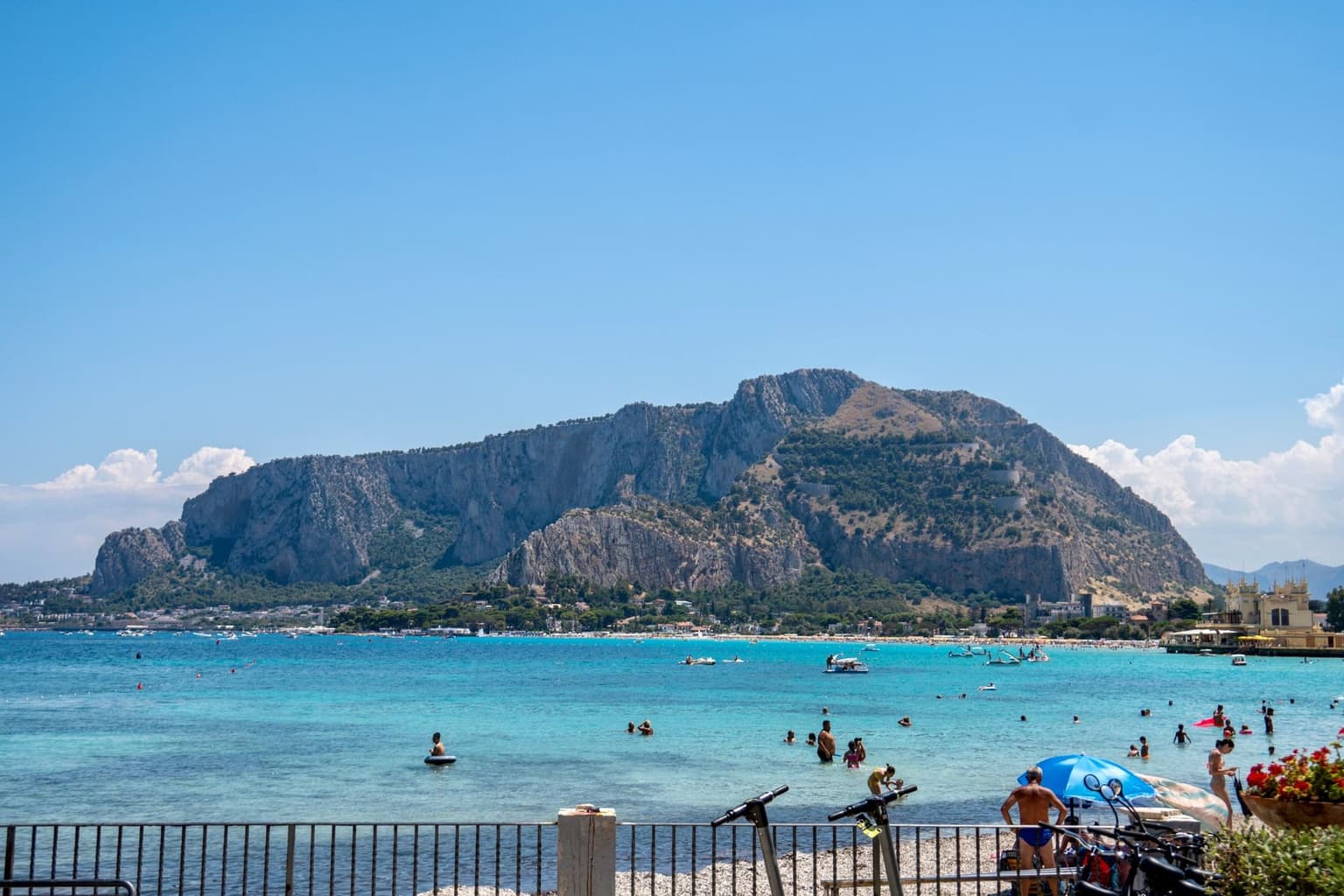
The bus is AMAT line 806, the seasonal summer run out to Mondello, between piazza Don Sturzo and Mondello via Teti. Seasonal is the word to plan around: weekends first in spring, then daily once the summer is properly underway. In the shoulder weeks on either side, check it is running before you build an afternoon on it.
AMAT's own bus service notices, each one dated, and where a change to the 806 shows up (amat.pa.it)
The picture people arrive with is a free city beach at the end of a bus line. What it is, is a club beach: the umbrella rows sit on the best part of the curve, and what is left for a towel is out at the ends. It has also been moving in one direction. Stretches that were public sand not long ago carry paid rows now, recently enough that regulars still talk about the change. The tariff I quoted in the last section belongs to a club on this sand, so you turn up here already knowing roughly what a chair costs.
One thing Mondello is not is the island's best-known sand. That is out at the cape at the far western end of the island, where the sand is finer and whiter and the water stays shallow longer, and it is busy for exactly that reason. Getting out there takes a car, which makes it a different kind of day than a bus ride to the end of Palermo, not an upgrade of the same one.
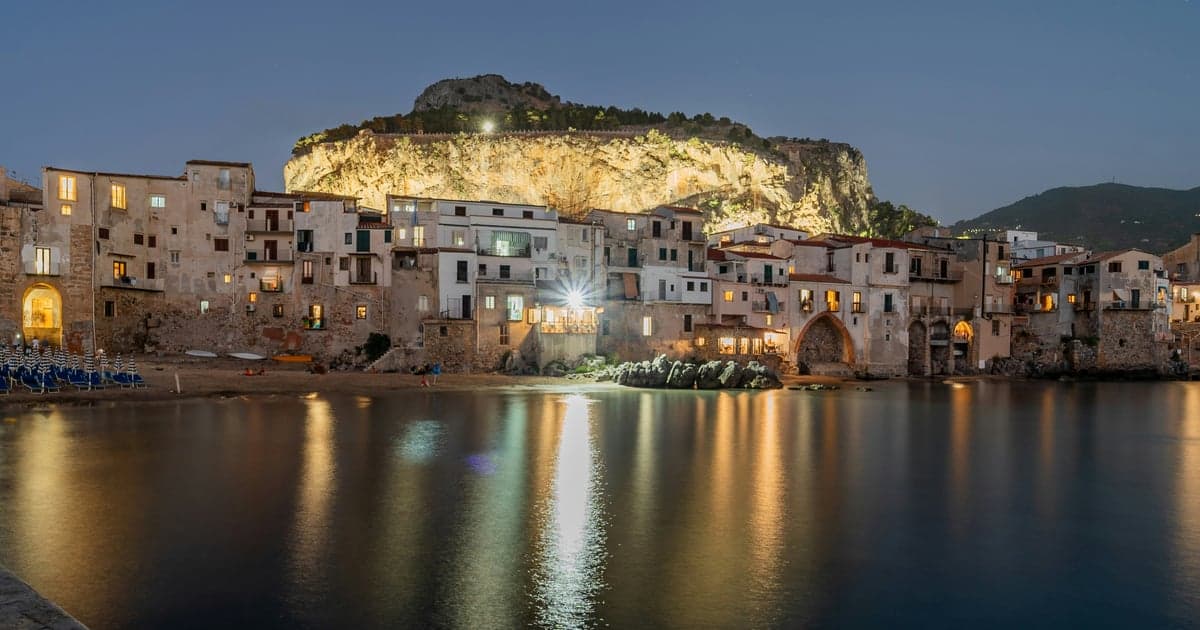
Cefalù: the one famous beach you can reach by train
Cefalù is the one Sicilian beach people flatly disagree about. One camp comes home calling the town unwelcoming, the food ordinary, and the beach nothing to write about. The other describes broad flat sand with enough water depth to swim properly, and counts the day among the best of the trip. Same crescent, same rock behind it. Both verdicts are honest, and they are not describing the same day out. Here is where I come down.
The sand is real sand. That sounds like a low bar until you have stood on Taormina's pebbles, or gone looking for a beach in Ortigia and found gravel patches between rocks. A long, walkable stretch of actual sand with a medieval town and a Norman cathedral at its back is not a common thing on this island. The catch is who holds it: the widest and best-kept sand along the town front belongs to the clubs, and what is open to a towel is narrow and goes early.
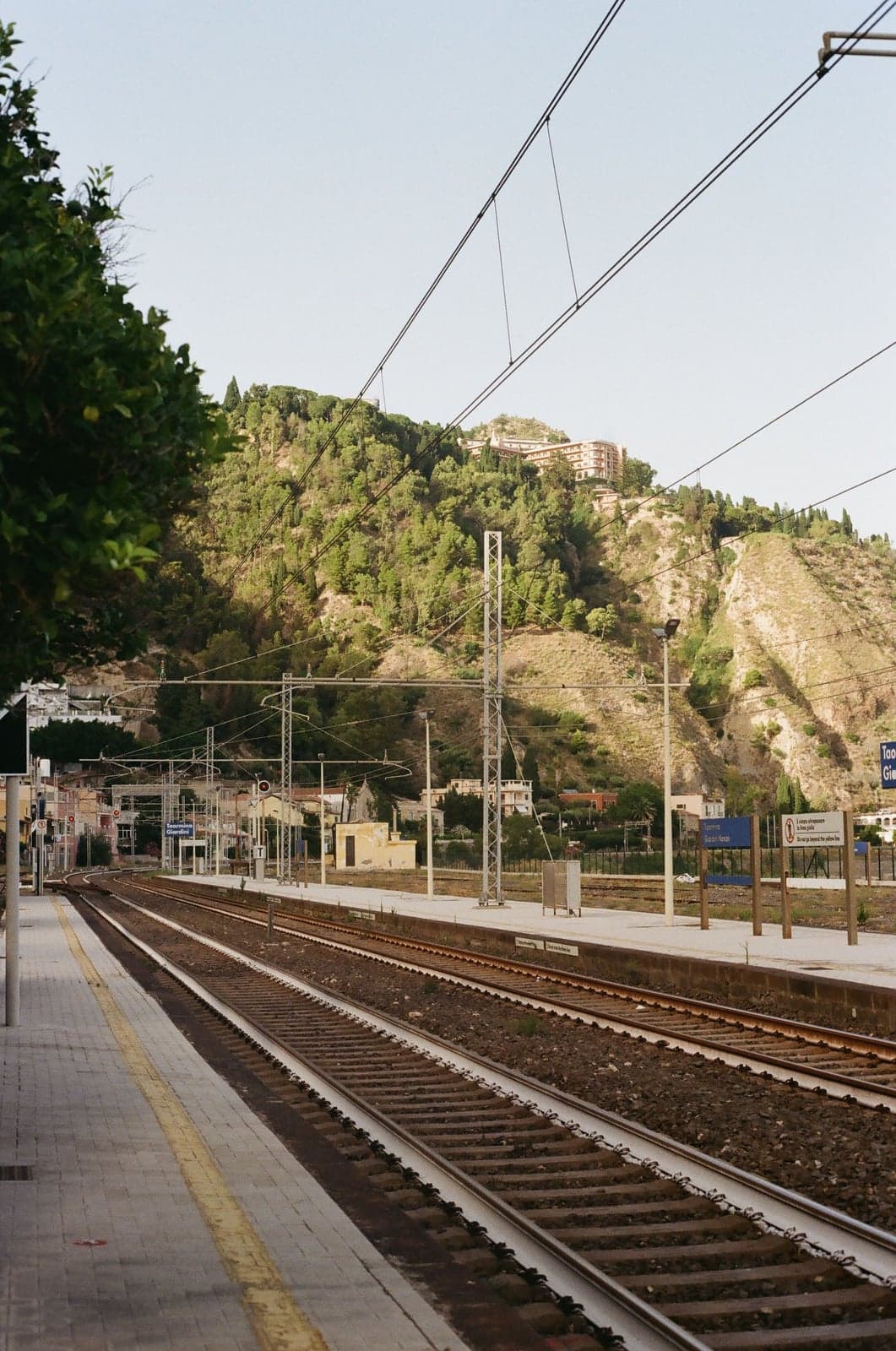
Getting here is the easy part, which is exactly why Cefalù keeps coming up. A direct regional train, the Trenitalia regionale, runs from Palermo Centrale in under an hour, all day long. No car, no connection, no particular planning.
The town's own swimming does not happen on the sand. It happens off the pier at the end of town, where people who live here spend the afternoon getting in and out of the water and nobody treats it as an event. It is shallow and slack out there, nothing in it pulling at you, so you stop thinking about the water and start noticing the rock standing over the roofs behind you. Half a day goes on that pier without anyone deciding to give it. It is the closest this coast comes to being let into somebody else's ordinary summer.
That sizes the visit. The town is small enough to see in a few hours, so Cefalù is one night, or a day out of Palermo and back the same evening - two nights only if you want a morning swim before the day-trippers land. If you got to Sicily without a car and you want one real beach day, this is the one.
Scala dei Turchi: the bus leaves you in the town, not at the rock
Scala dei Turchi is the most photographed single thing in Sicily, and it is not a beach. It is a staircase of white marl at Realmonte, stepping down into the sea in soft terraces the color of chalk. People build a whole day around it and turn up expecting to swim under it. You are going to look at a cliff. Knowing that before you set out is the whole difference.
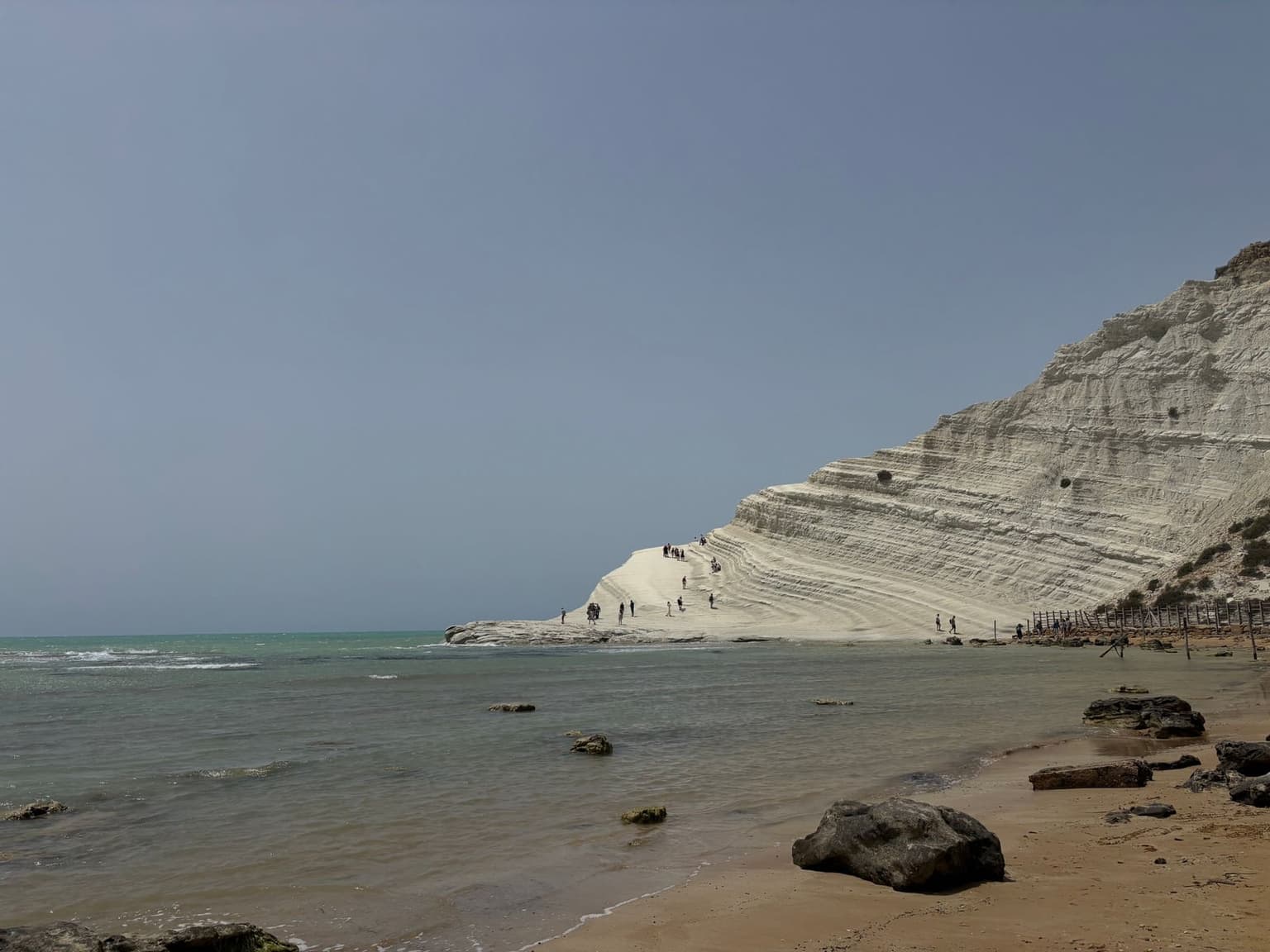
Access is ticketed, and the booking is its own small piece of bureaucracy. It costs €6 a person, the visit is capped at 20 minutes, and the gate runs 08:00 to 19:40, last entry, every day. Booking is by email only, to settore5.realmonte@gmail.com, with the number of people, the date and the hour you want; you pay by card at the entrance. I would write that email in Italian. The same request in English has a way of going unanswered.
⚠️ Warning
It closes, and it closes often: any yellow, orange or red weather alert, rain, high wind, rough sea, temperatures past 95°F (35°C), seismic activity above magnitude 2.5, and rapid warming over ground still saturated from rain. A heat wave in July shuts the gate as reliably as a storm does.
There is a bus, and it is still the wrong tool for a fixed beach day. Autolinee Salvatore Lumia runs the Agrigento to Realmonte line, a handful of times on a working day, with several of those runs weekday-only, and on Ferragosto, August 15, the busiest beach day of the Italian year, the operator runs nothing at all. And it puts you down in Realmonte town, not at the rock; the last leg is yours to solve. The practical answer here is a car.
If you want those cliffs without a ticket and a clock running, two places do the job. From the beach at Lido Rossello you get a straight look at the same white formation, and nobody is timing you.
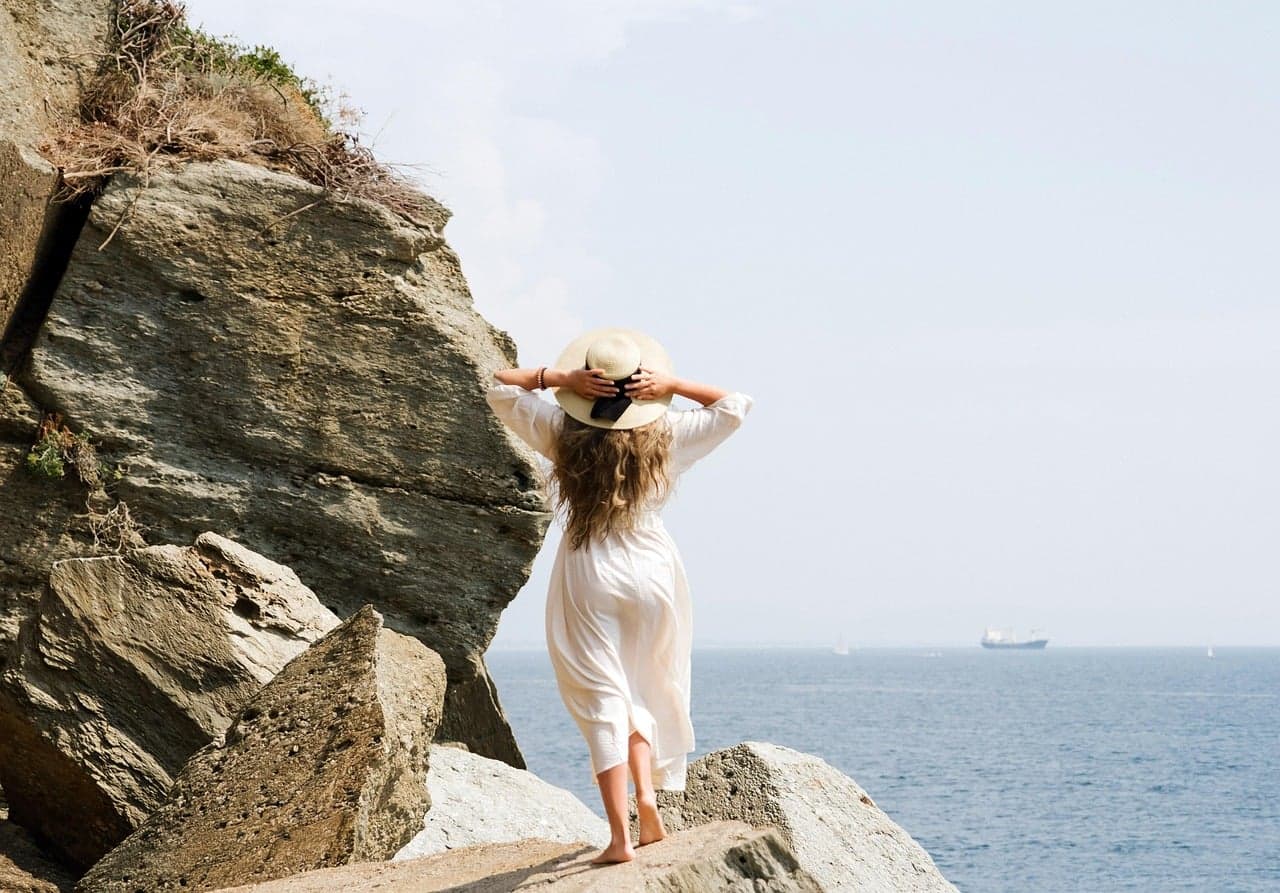
Punta Bianca is the quieter one, and the better of the two if the crowd is the thing you are escaping, with one caveat: the access track is a track, it eats low cars, and after rain the problem is not getting down but getting back up the hill.
The southeast: the best sand on the island, and the hardest to reach
The southeast corner sits on different rock from the rest of the island - the Malta Plateau, with its Globigerina limestone and biocalcarenites - and you can see the difference in the water. The sand here is white and calcareous, heavy enough to settle instead of clouding, so the water reads clear, and the bottom shallows gradually rather than dropping away.
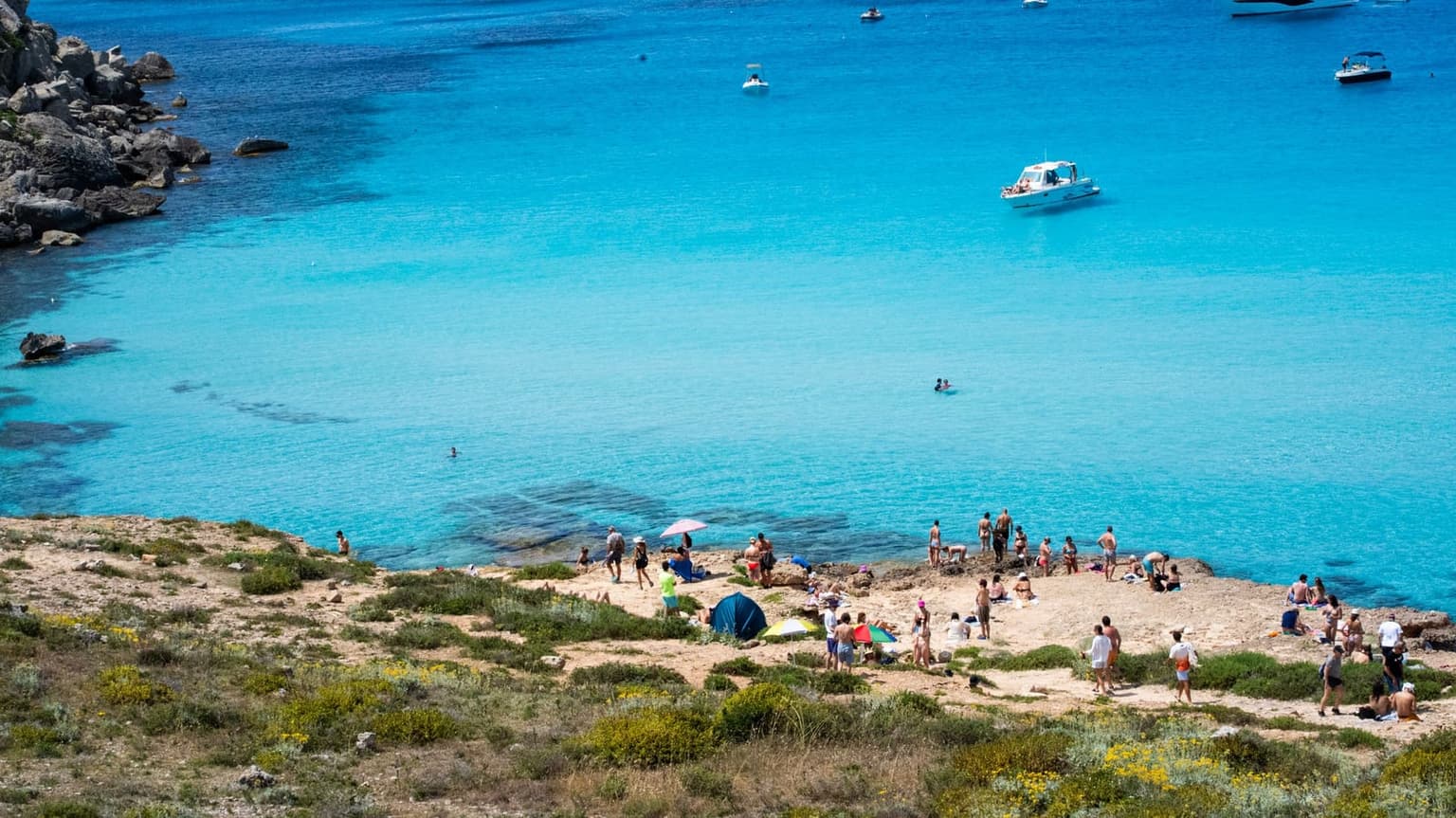
Calamosche is the payoff, and it asks for something in return. It is a small bay held between two rock headlands inside the Vendicari reserve, and you walk in: about twenty minutes from the parking lot, in full sun, with no shade at the far end either. No bar, no kiosk, nothing to rent, no towels, nowhere to change. Everything this page has said about paid rows and free margins stops applying here, because there is nothing to lease. Carry water in, carry the trash out.
How busy that sand gets is decided by the parking lot, and the lot is informal: it wants cash and posts no rate. Neither the reserve's own tariff page nor the Comune di Noto publishes a figure for it. The money is real, the number is nobody's. Go early, as much for a space in the lot as for the sand.
Reserve entry is published and cheap: €3.50 full, €1.50 reduced, €7 for a family, free under 8, and the ticket is good all day at any entrance, Calamosche among them. The reserve is open through the day in season, and the entrances close an hour before it does.
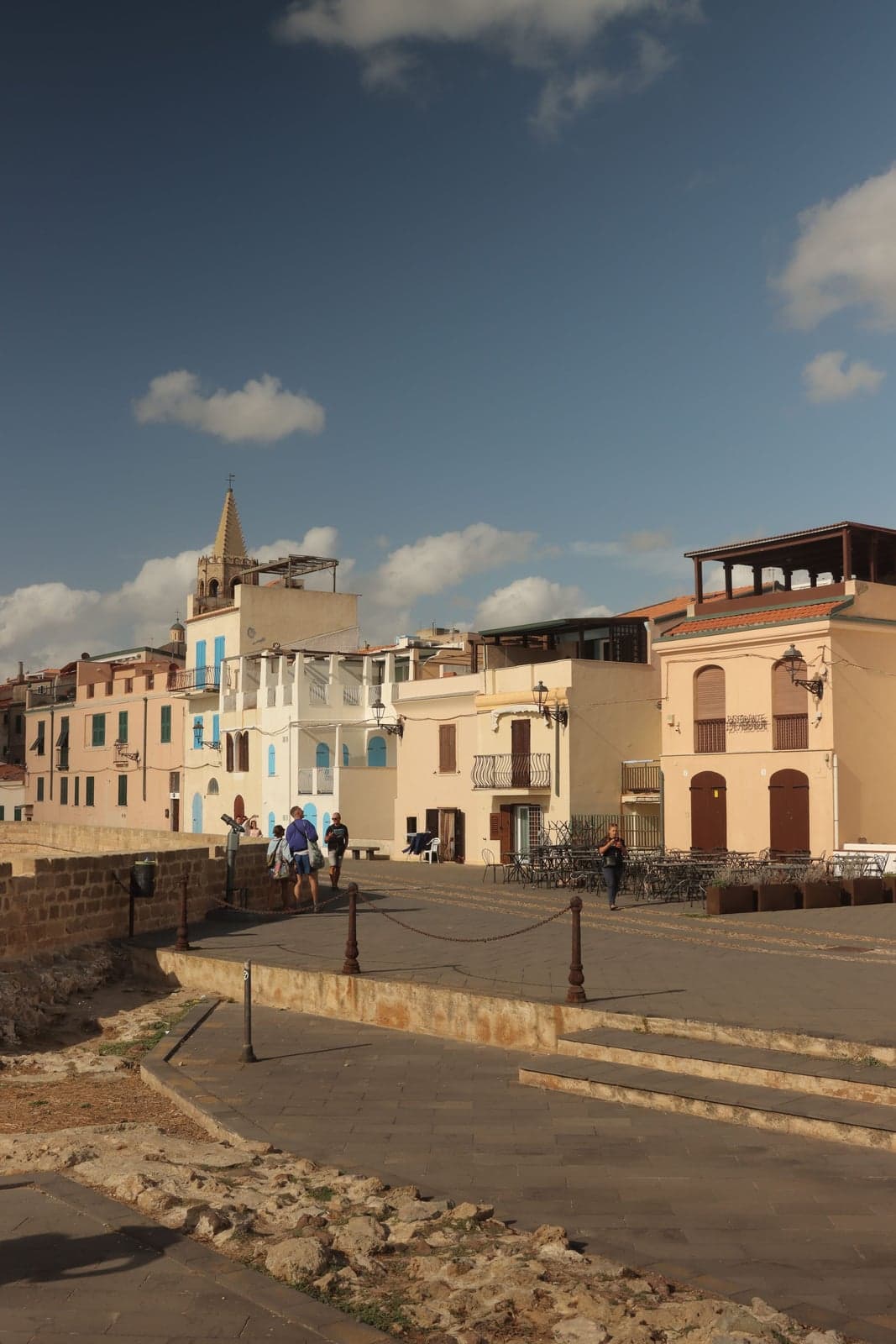
Marzamemi is the softer landing: fine sand with genuinely free stretches beside the paid rows, and a fishing village behind them, worth timing right. Getting there takes a car, like everywhere else on this stretch.
I treat those two as one half-day out of Noto or Siracusa, not two separate outings. If what the family wants is a boardwalk, restaurants and somewhere to walk in the evening rather than an empty bay, go to Marina di Ragusa instead. And if you are in Siracusa without a car, Fontane Bianche is sand you can reach by train.
Taormina has no real beach. Letojanni does
Taormina's pebbles have already come up on this page. Isola Bella is where they are: a cove of rock and stone, hard underfoot, small, and in season filled to its edges. None of that is a mark against the place. It is a fact about where you decided to sleep, and that is a different question from which beach on this island is best.
So keep the two apart. Taormina is a town you walk around, and what a day up there is actually for is its own subject. The swim is a separate decision, and the cove is not the answer to it. You are on the wrong stretch of this coast for sand, and the fix is a short move up it rather than a different trip.
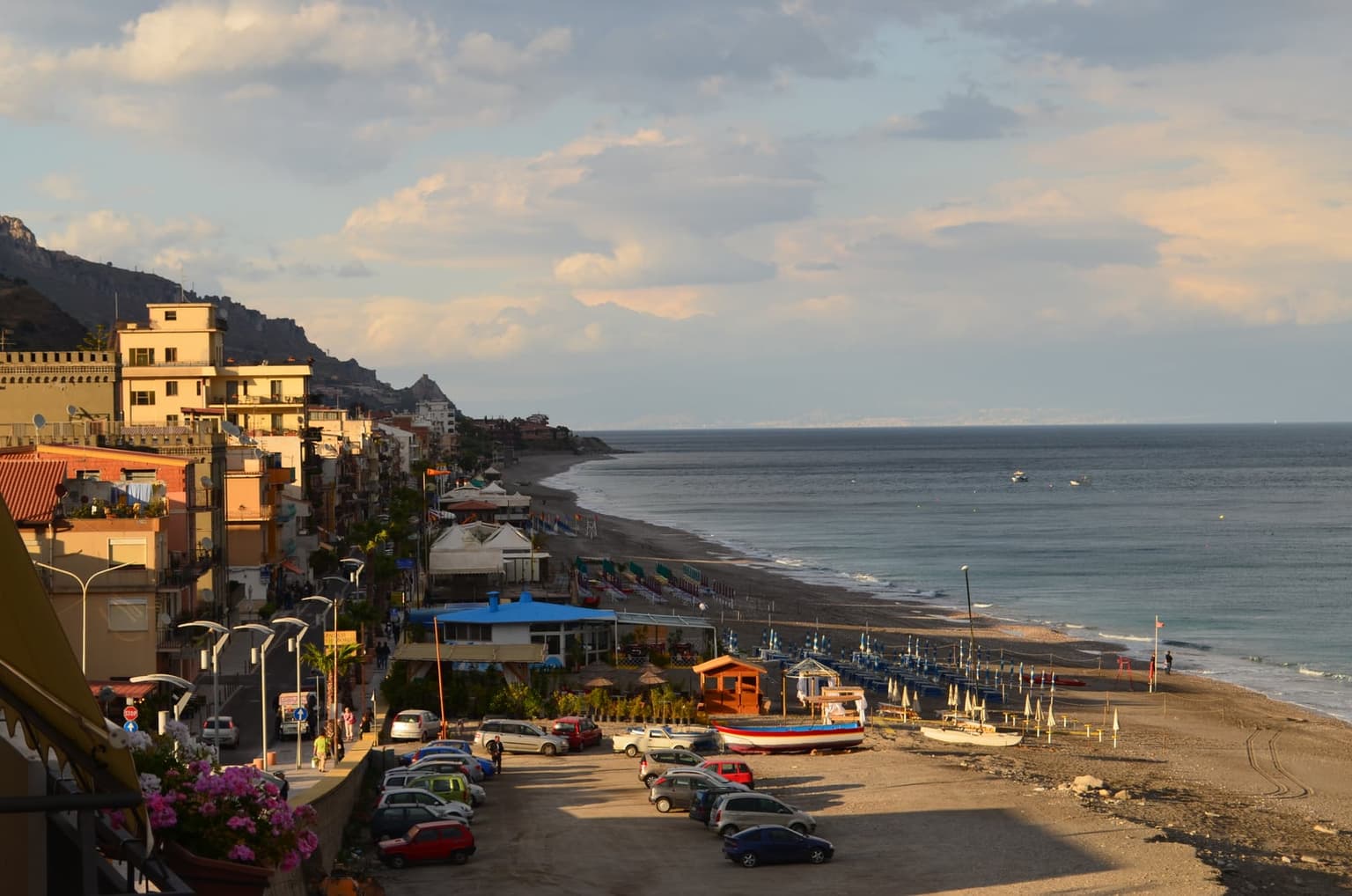
Letojanni is that move. It has its own railway station, a few minutes up the coast by train from Taormina-Giardini, and the sand is wide in a way the cove is not. There are beach clubs along the front here too, but the open stretches beside them are generous by the standards of everything else on this page: not a thin margin at the ends, but sand you can put a towel down on without doing math about it.
There is usually a breeze on it, which on this coast in August counts for more than it sounds like, and the people who have the sand to themselves first thing are the ones who live along here. It is an unremarkable beach, and that is the entire appeal. The catch is what the sand is made of: coarse grains shading into fine pebble, not the powder the southeast has. If that is a dealbreaker, Giardini Naxos is the other sandy option on this stretch.
When the sea is warm, and what closes a beach on a clear day
The calendar lies about the water. The sea here runs roughly a season behind the air: June looks like swimming weather and is not. October is the month people underestimate - it holds more warmth than May does.
The other half is what shuts a beach, and Sicily will shut one under a cloudless sky. Different things do it, decided by different people, and only some warn you.
| What closes it | What you see | Who decides | Check ahead? |
|---|---|---|---|
| Toxic algae | A posted swimming ban | The mayor, by ordinance | No, only afterward |
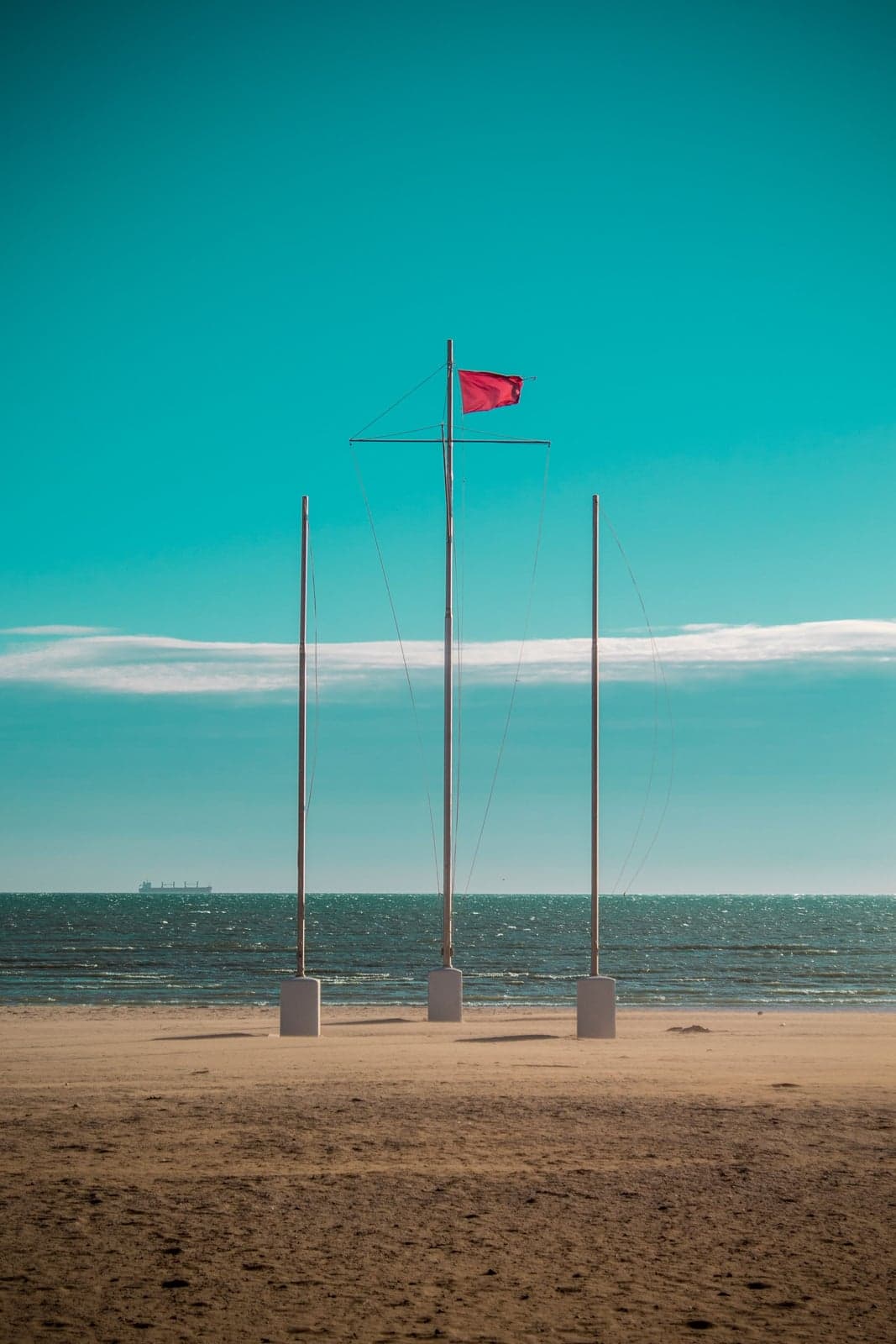
| Red flag | The flag, over a calm sea | You see the flag, not the call | On the day only |
| Heat, ticketed sites | A closed gate, cloudless sky | The site operator | Yes, by forecast |
| Rough sea or wind | Entry suspended, sea looks fine from the road | The site operator | Partly, by forecast |
The algae one catches people out. Through the summer ARPA, the regional environmental agency, samples the coast for Ostreopsis ovata, a toxic microalga. When a stretch reads over the legal limit, ARPA notifies the coast guard, the health authorities and the town's own mayor - and the mayor is the one who signs the order closing the water. You do not have to swim in it to feel it: the toxin carries in the spray, and what it gives you is flu-like - a cough, a sore throat - and worst for anyone with asthma.
That last column is the problem. ARPA publishes its monitoring as reports after the fact, not as a live map you can open in the car, so ARPA will not tell you at nine in the morning that the bay two hours away is shut. I build a beach day around a stretch of coast with a fallback on it, not around one bay.
One thing that looks like a ruined beach and is not: a brown wall of weed along the waterline is usually posidonia, dead seagrass off the underwater meadows, banked up by weather.
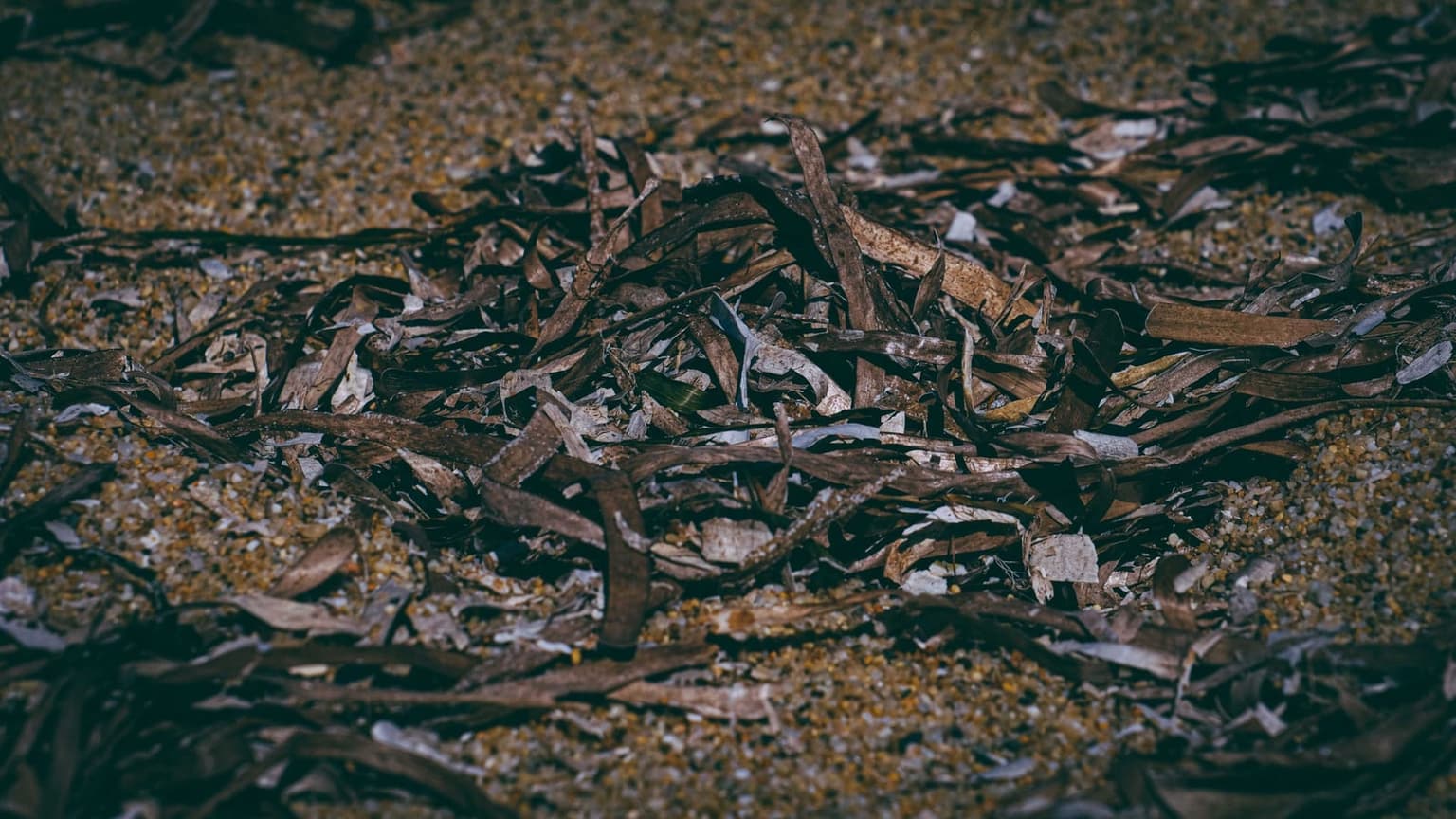
It is a sign of a healthy sea bed, not a dirty one. Walking through it is unpleasant and sometimes you do have to move fifty meters along the sand to find a clean way in, but it is not pollution and it is not a reason to leave.
Where to base, and whether you need a car
Sicily does not work as day trips from one base. A beach three hours out means the day is the drive and the swim is the intermission. I plan around a ceiling: no beach day costing more than two to three hours of driving round trip, and a new base rather than a longer day when the map argues.
Pick the coast first. Palermo or Cefalù, and the trip works without a car. Taormina or Giardini, and your swim is Letojanni, up the coast. Noto or Siracusa, and you are next to the white sand and driving to all of it. Trapani, and the sand answer is San Giuliano. Catania, and it is the free sand on the Playa, with the caveat below. Wanting both the southeast sand and the northwest names is two bases and a long leg between them, and moving between the two ends of the island is its own piece of planning. In August, sleeping at the beach rather than in the middle of Palermo is a heat decision as much as a beach one.
Now that the coast is settled, what to look for in a base: walking distance to a free stretch rather than the listing's "near the beach"; a place open in the month you are booking and not only in the month the photos were taken; and a town with an evening rather than one that empties at six.
For the south coast, the southeast and the coves, the practical answer is a car. The cost of that is less the driving than the parking: beaches with nothing built on them have nothing built for parking either.
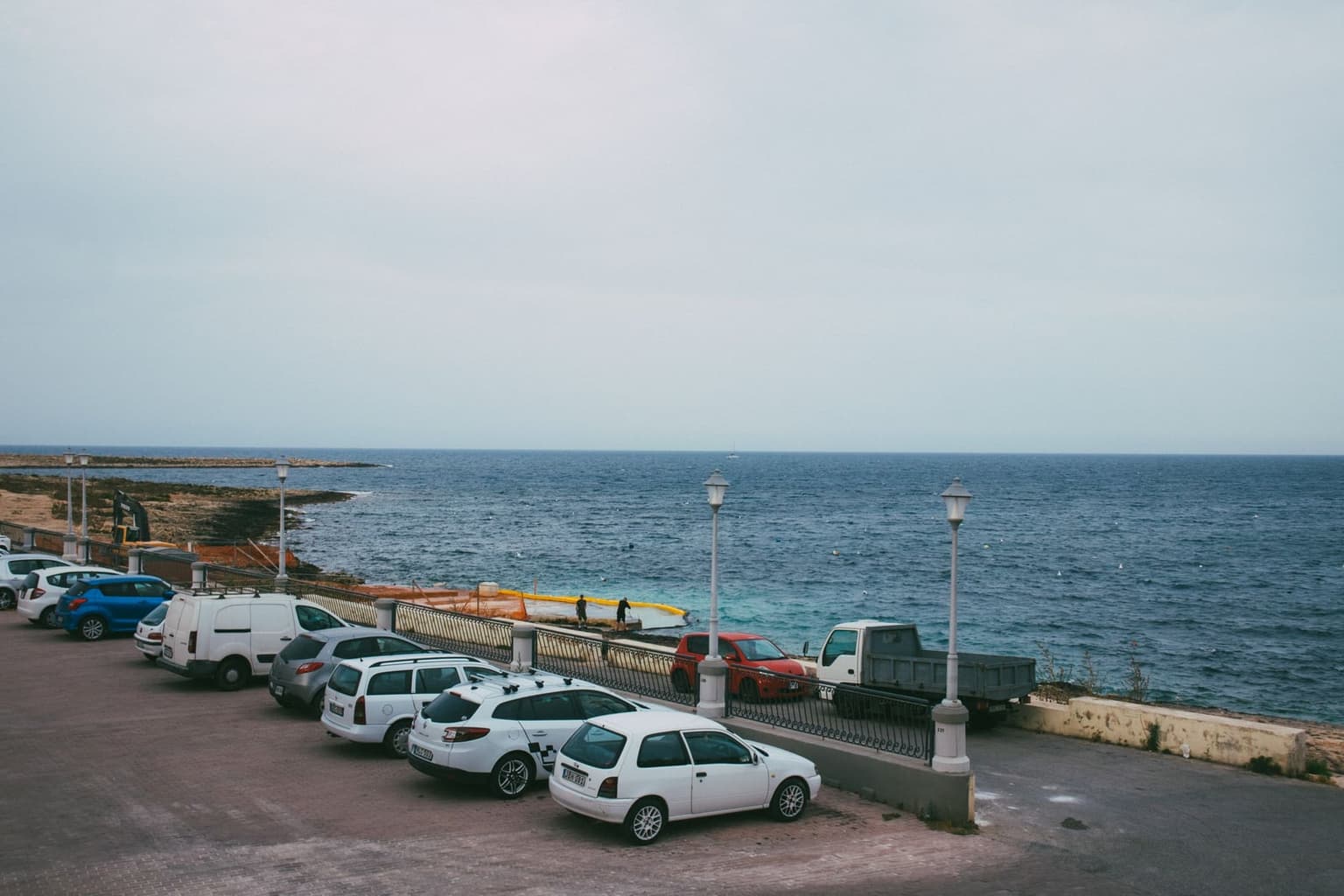
Bring cash for the lot, and look at the road in before you commit to it.
⚠️ Warning
A car parked at a free beach with bags in it is an easy target, and it does not take an afternoon. Twenty minutes has been enough. Take what matters with you rather than leaving it in the car.
The counter is the other half of renting and its own subject: the airport pickup, deposit and damage photos included is written out separately. Book before you fly rather than turning up at the desk; the line at Catania is an event in its own right.
Rent at the airport you land at, and that follows the coast: Catania for the east and southeast, Palermo for the northwest. An office in town is one more leg before you have a car. And take a car you would be willing to put down a gravel lane.
Reserve a rental car at the airport
Pick up at Catania or Palermo, whichever matches your coast, and book before you fly - the airport counter line is real.
FAQ
- Which Sicilian beaches can you reach without a car?
- Not the famous names. Cefalù is a direct regionale from Palermo Centrale, under an hour, all day. Mondello sits at the end of Palermo's seasonal summer city bus, and Letojanni is a few minutes up the coast by train from Taormina-Giardini. From a Siracusa base, Fontane Bianche is sand you can reach by train.
- Do you have to pay to go to the beach in Sicily?
- Not always, but at almost any beach with a town or a club behind it the good middle is leased, and the free sand is the leftover at the edges. A day at the Mondello club, umbrella and loungers included, runs €18 - €22 a head, or €6 in the no-equipment corner.
- When is the sea warm enough to swim?
- Later than you think, and longer. The water lags the air by roughly a season: June looks like swimming weather before it is, and October holds more warmth than May.
- Is Scala dei Turchi worth the drive if you cannot swim there?
- It is €6, the visit is capped at twenty minutes, and it shuts on rain, wind, rough sea or heat past 95°F (35°C). Go for the cliff, not for a beach day, and if the gate is shut, Lido Rossello looks at the same formation from the sand.
- Which coast should you base on if the beach is the point of the trip?
- Southeast for the best sand, and you will be driving to it. Northwest for the famous names. Not both from one base.
Pick the coast first and the beach second. If you are not driving, take the train to Cefalù and get there early enough that the free sand is still sand.