George Mandrovny
Marsala in Two Halves
Marsala is a working Sicilian city with a walkable old town, a Punic warship in its museum, and three wine cellars you have to book ahead. One full day covers the town; the lagoon wants a second. The trap: the postcard is not in the town. The salt pans, the windmills, and the island of Mozia sit north of it along the SP21, a separate trip. In summer the municipal bus, Linea 4, runs out there. Outside summer the crossing is on you - a car, or a licensed metered taxi - because the city publishes a summer bus timetable and I could not find a winter one.
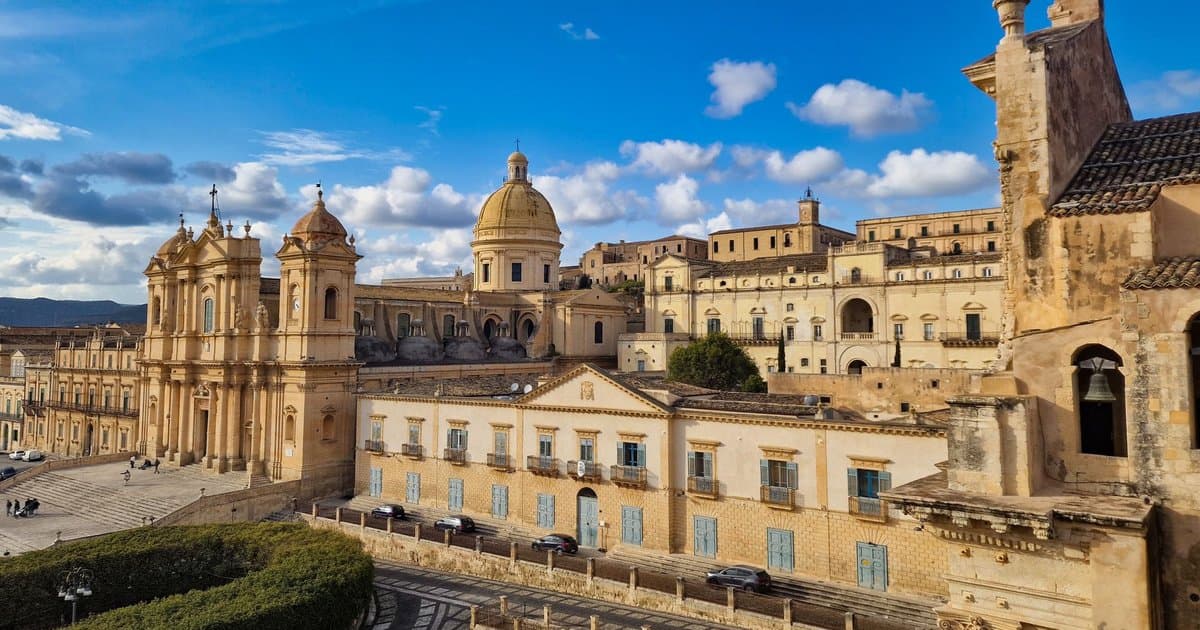
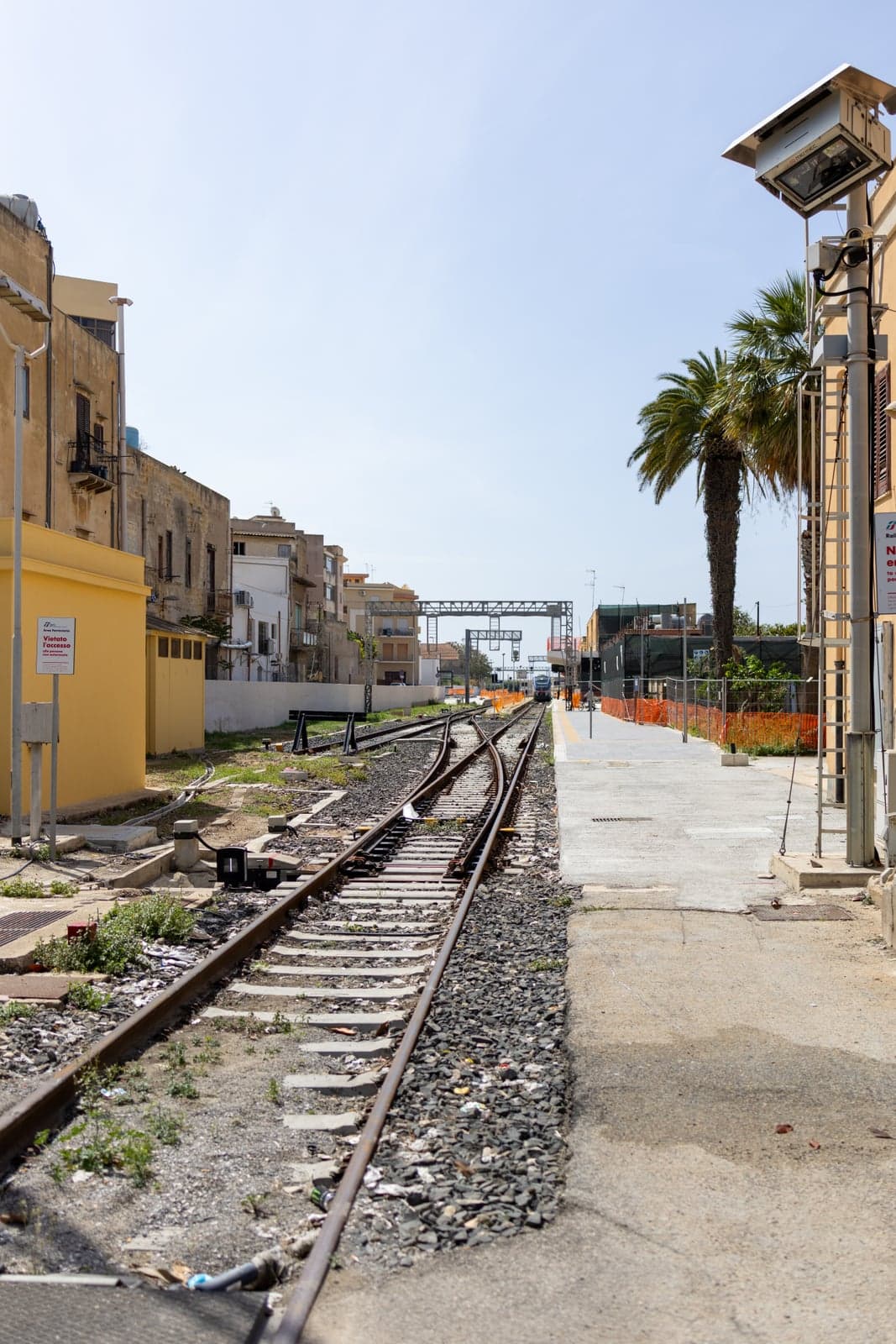
What you walk out of the station into is an ordinary working city of about 80,000: Porta Garibaldi, the long pedestrian run of Via XI Maggio, the cafe tables on Piazza della Repubblica. It is small, good-looking, and not especially touristy, and that is both the reason to come and the reason some people leave disappointed. Marsala is somebody's hometown before it is anybody's destination.
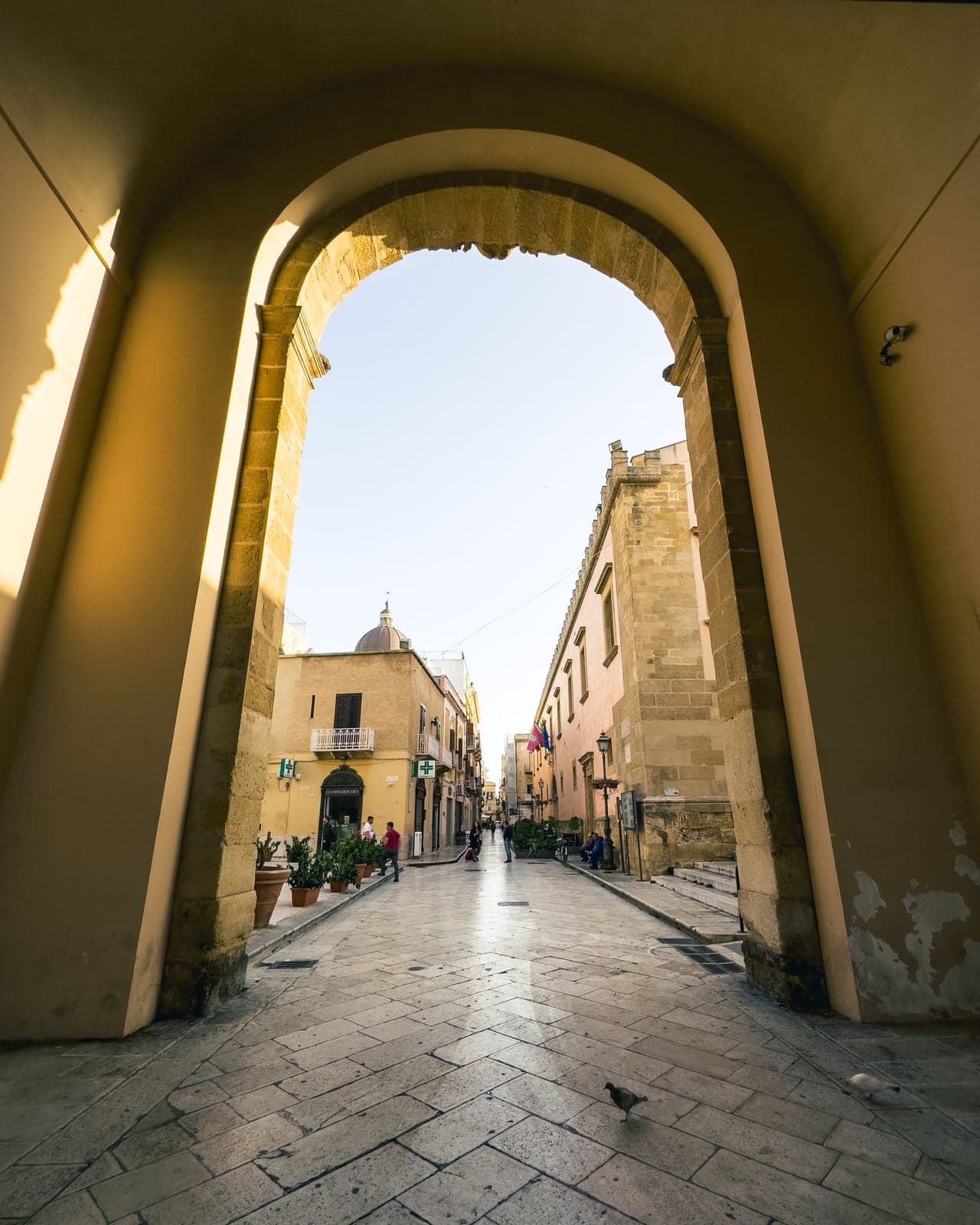
Build one habit before you get here: check that a place is open before you walk across town for it. On a Sunday afternoon in September, peak season, tour groups in the streets, the Antico Mercato, the atrium of the Palazzo Comunale, and the San Pietro complex were all shut at once. That is not a scandal, it is the operating temperature of a city that runs on its own business rather than on yours. It does mean the market or the church complex you built the afternoon around is worth a check at the door before it costs you the walk.
Marsala keeps its two halves apart. The old town, the museum, and the cellars are one compact walking day. The lagoon - the salt pans, the windmills, Mozia, the shallow water the kites work over - is the other, several kilometers north along the SP21, and crossing between them is the one decision this town genuinely asks you to make.
The Old Town and the Punic Ship
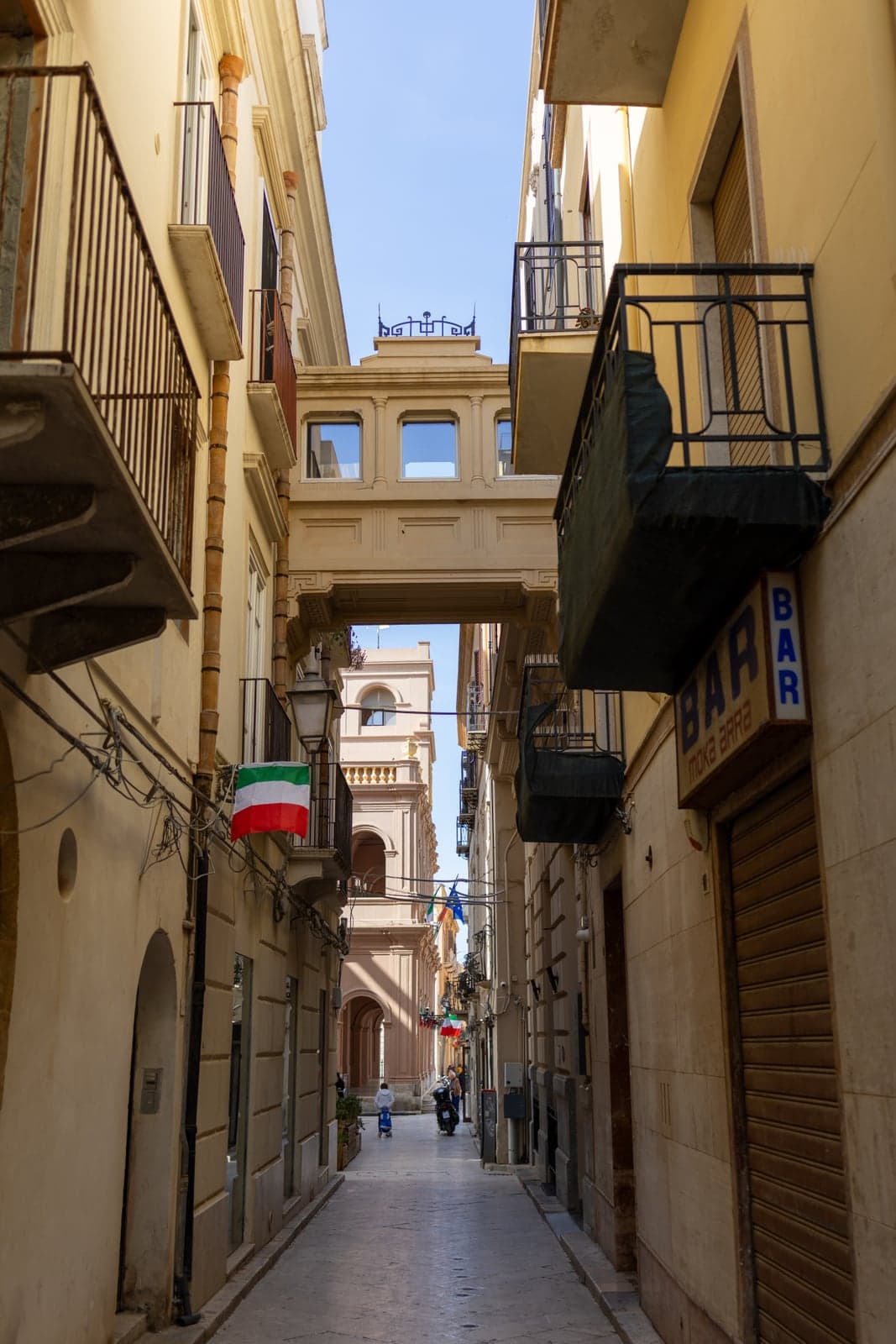
The old town costs nothing and never closes, which makes it the one part of Marsala you cannot plan wrong. Walk it early. Before nine, half the shutters on Via XI Maggio are still down and the street belongs to people going to work rather than to anybody's itinerary. An hour of that tells you more about the town than any afternoon of it will.
The thing you cannot see anywhere else is in the Museo Archeologico Lilibeo, which you will still find listed under its former name, Baglio Anselmi: the raised wreck of a Carthaginian warship from the third century BC. Not a model and not a reconstruction, but the actual timbers, pulled out of the sea off Marsala. Stand close and you can pick out the nails that held the hull together, which is the detail nobody arrives expecting and the one that turns the thing from an idea into a boat. There are two ships here, not one. It is a small museum, the warship on one side and the local finds on the other, and it is where I would send someone who says flatly that they do not do museums.
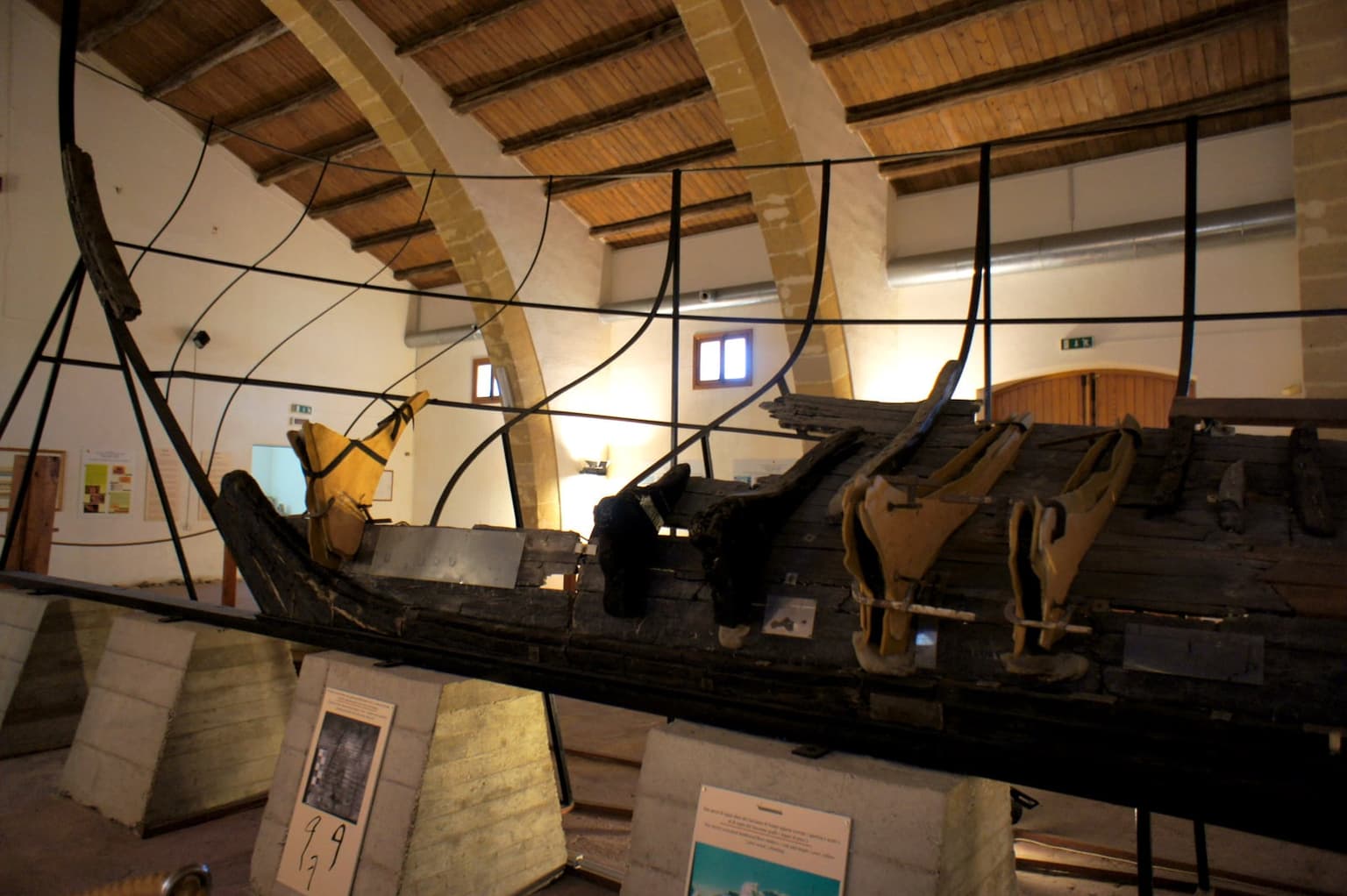
Entry is €10.00 full and €5.00 reduced, and reduced here means ages 6 to 18 or a university student under 26. That ticket also covers the Chiesa di San Giovanni, the church that comes with it. A cumulative ticket at €12.00 full, €6.00 reduced, adds the Capo Boeo excavations and the Teatro Impero mosaics. If you turn up a lower price on the city's own pages, it is out of date: the regional park authority issues these tickets, and it is the one to believe.
Heat is an indoor problem in Marsala, not only a street one. The San Pietro complex in August gets hot enough inside, with fans roaring away and nothing much moving, that a visit can be over a few minutes after it starts. Plan the indoor hours for the ends of the day in high summer and give the middle of it away.
⚠️ Warning
The museum is closed Mondays - except in spring, when it is not. From April 1 to May 30 it runs seven days a week. And from June 1 to September 30 it stays open to midnight, last admission 23:00, which is the single best use of a hot day in this town. The rest of the year, October 1 to March 31, it closes at 19:30.
The Cellars: You Cannot Walk In and Taste
There is no walk-in tasting room in Marsala. Not at Florio, not at Donnafugata, not at Pellegrino. What you can walk into is a shop, a beautiful one, and then walk back out of it without having tasted anything, which is how a fair number of afternoons here get spent. The three big cellars sell booked events rather than counter pours: everything is prepaid online, none of them publishes a walk-in price anywhere on its own site, and Donnafugata states plainly that reservations are required.
| Cellar | What a visit is | Price band | How booking works |
|---|---|---|---|
| Donnafugata | Six tastings, 60 to 100 minutes | €35 - €65 | Slots at 11:00, 13:00, 16:30 and 17:00, set per experience |
| Florio | The longest list in town, 90 minutes to three hours | €35 - €160; €5 for ages 6 - 17 | Prepaid, non-refundable; form in Italian or English; arrive 10 minutes early |
| Pellegrino | The short, cheap way in | €25 or €45 | Prepaid; the middle tiers usually show as unavailable |
Winter is not the constraint here: Donnafugata works year-round and publishes a short list of dates it closes, around New Year, Easter, and Christmas. Which cellar matters less than booking one at all. If this is your first real Marsala and you have room for exactly one, I would take the entry-level format at whichever cellar has a slot that fits the shape of your day; the long tiers are for people who already know they like the wine.
What is in the glass, if your only Marsala so far arrived in a kitchen: a dry Grillo first, then two Marsalas, with small bites chosen to carry the flavors. An hour gets you the cellar and the pour; the long end of the list is where the food arrives, up to a lunch or a cooking class in July and August. And if you land in a tour running in Italian, the story mostly survives the gap anyway.
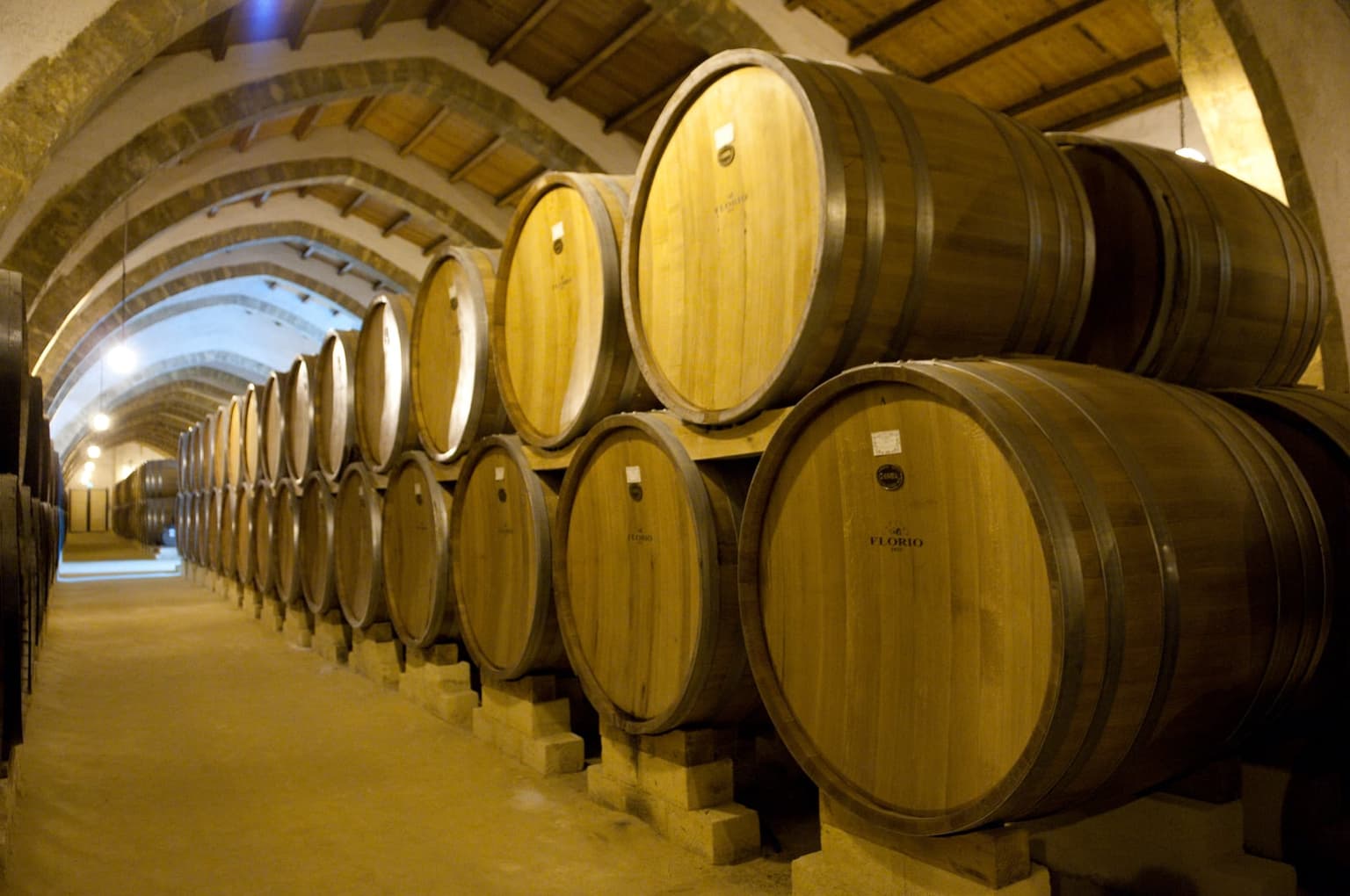
Inside it's cool, but it's Sicily's ordinary indoor cool, not cave-cold, and the light is kept low on purpose. At Pellegrino I walked out of a bright, modern tasting room down a curving corridor, and the light dropped so fast my eyes needed a second before the rows of huge old oak barrels resolved. The smell outlasts the visit: not the damp earth and limestone of a typical wine cellar, but old wood, the vapor off aging fortified wine, dried fig, bitter almond, and a thread of sea salt - almost no stone-damp at all. It's quiet in a way you don't expect, too: street noise cuts out completely once you're standing among the vats. Florio keeps real weapons from Garibaldi's landing, carried on ships the Florio family supplied; Pellegrino's older cellars display casts of the Punic ship pulled from the sea just offshore.
Groups on the standard tours run big, 30 to 40 people, and at that size the back of the group stops hearing the guide. The capped small-group formats are the expensive end of the list, which is the trade: pay up only if you came to ask questions rather than to be shown around.
If you would rather have the whole thing arranged, or want the cellar bundled with the ride out to it, book it as an experience. Three things to check before you pay: which cellar the tour actually enters, what group size it promises, and whether your slot is confirmed at purchase or only requested.
Donnafugata's own booking page, tasting by tasting and slot by slot (visit.donnafugata.it)
Eating in Marsala
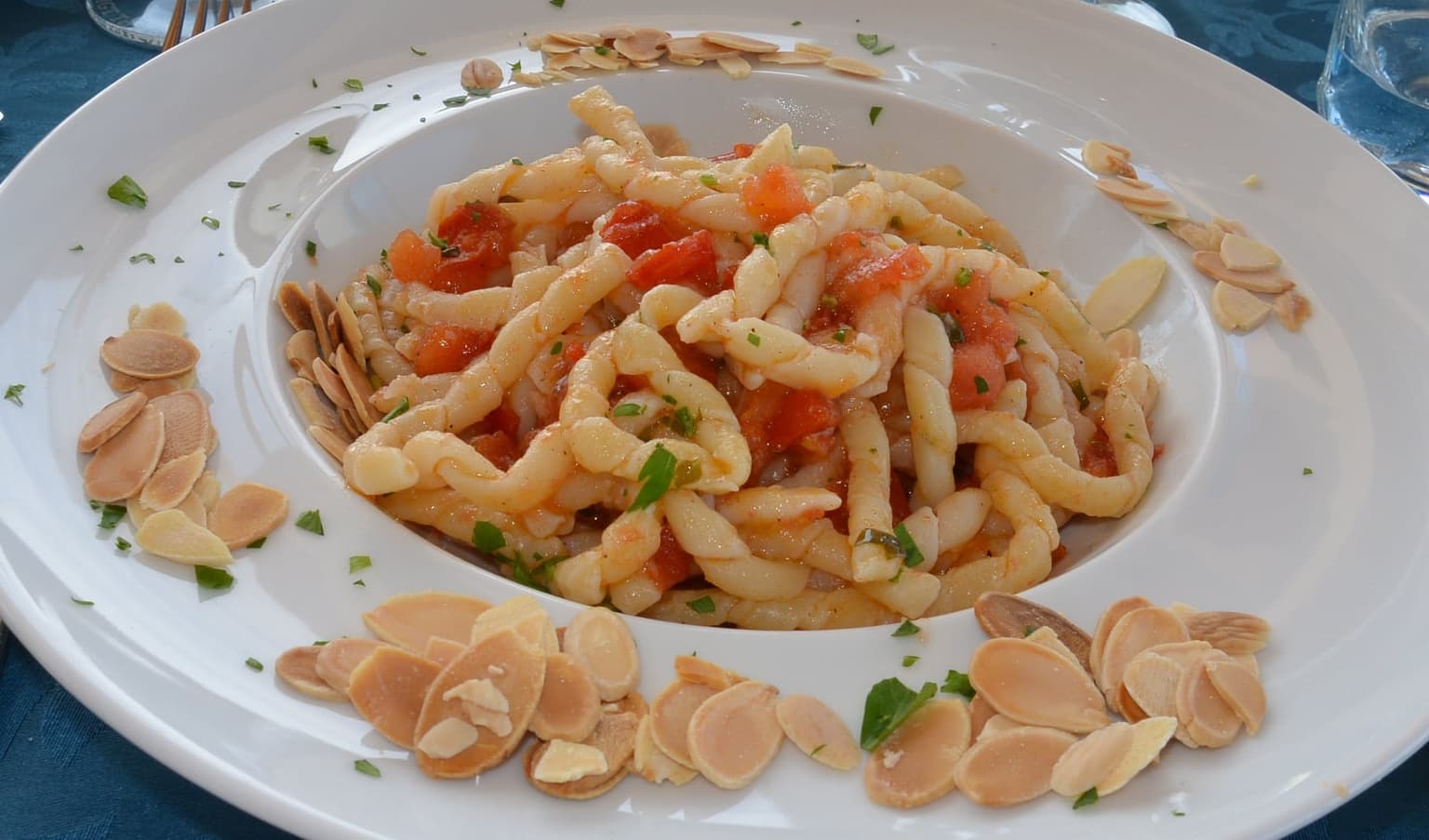
The kitchen here belongs to western Sicily, which looks toward Tunisia at least as much as toward Rome. Couscous arrives with seafood and is not a tourist novelty. It is what people eat. Busiate, the local pasta twisted into long corkscrews, turns up under whatever the boats landed, and if you order one plate in this town, make it the busiate with crab. Where a kitchen does a swordfish antipasto, order that before you finish reading the menu.
Breakfast is the easy meal: coffee and a pastry standing at a cafe counter on Via XI Maggio, one of the few things in this town that works as well in December as in July. Dinner is the meal with a rule attached, and the rule is not a price, it is a rhythm. Service fills in a rush - a room still half empty thirty minutes after it opens can be full thirty minutes later, and most of the people filling it called ahead. So book, or eat at the hour the kitchen opens rather than the hour you would eat at home. Turning up at nine without a reservation is how you end up at the third place you tried, eating what was left.
Where you eat splits the same way the town does. In the center you walk to dinner and walk home from it: no car, no parking, no drive back in the dark. Out at the pans you get the wine in the cooking, a risotto made with Marsala, and a windmill in the sightline while you eat, and then a way home to arrange after sunset. I would save that evening for a night when the ride back is already settled.
The Stagnone: Salt Pans, Windmills, and Kites
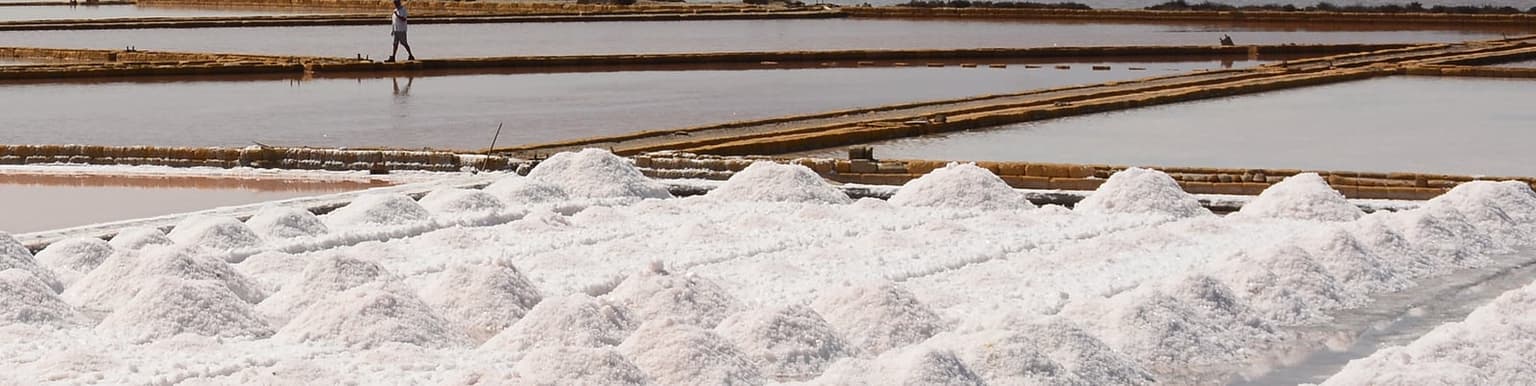
North of town the coast flattens into the Stagnone, a lagoon that stays ankle-deep a long way out, where sea salt is still worked in rectangular pans laid edge to edge with restored stone windmills standing in them. Nothing else in Sicily looks like this. You see it on foot, along a paved road that runs one way past the pans.
And here is the trap the photographs set: the famous windmill is not the working saltworks. Both belong to the same operator, and past that they share almost nothing - one a mill and museum on the shore road, the other a working saltworks on an island out in the lagoon.
| What it is | When it runs | What it costs | What else you need |
|---|---|---|---|
| Mill and salt museum, Marsala | Year-round, hours set by month (Jun - Sep 09:00 - 20:00; January 7 to end of February by booking) | Not published; only on the operator's booking page | Nothing: it is on the lagoon road |
| Working saltworks, Isola Lunga | About eleven weeks: late June to mid-September, closed Tuesdays, 10:00 - 17:00 | Programs from €20; the €27 salt bath is a wellness course, not admission | Boat out to the island, €8.00 adult and €4.00 child |
If you would rather buy the day whole, a guided outing does that, and three things decide whether it is worth the money: which of the two salt-pan products it actually enters, whether the boat to Mozia is included or bought again at the jetty, and whether it runs on a Tuesday.
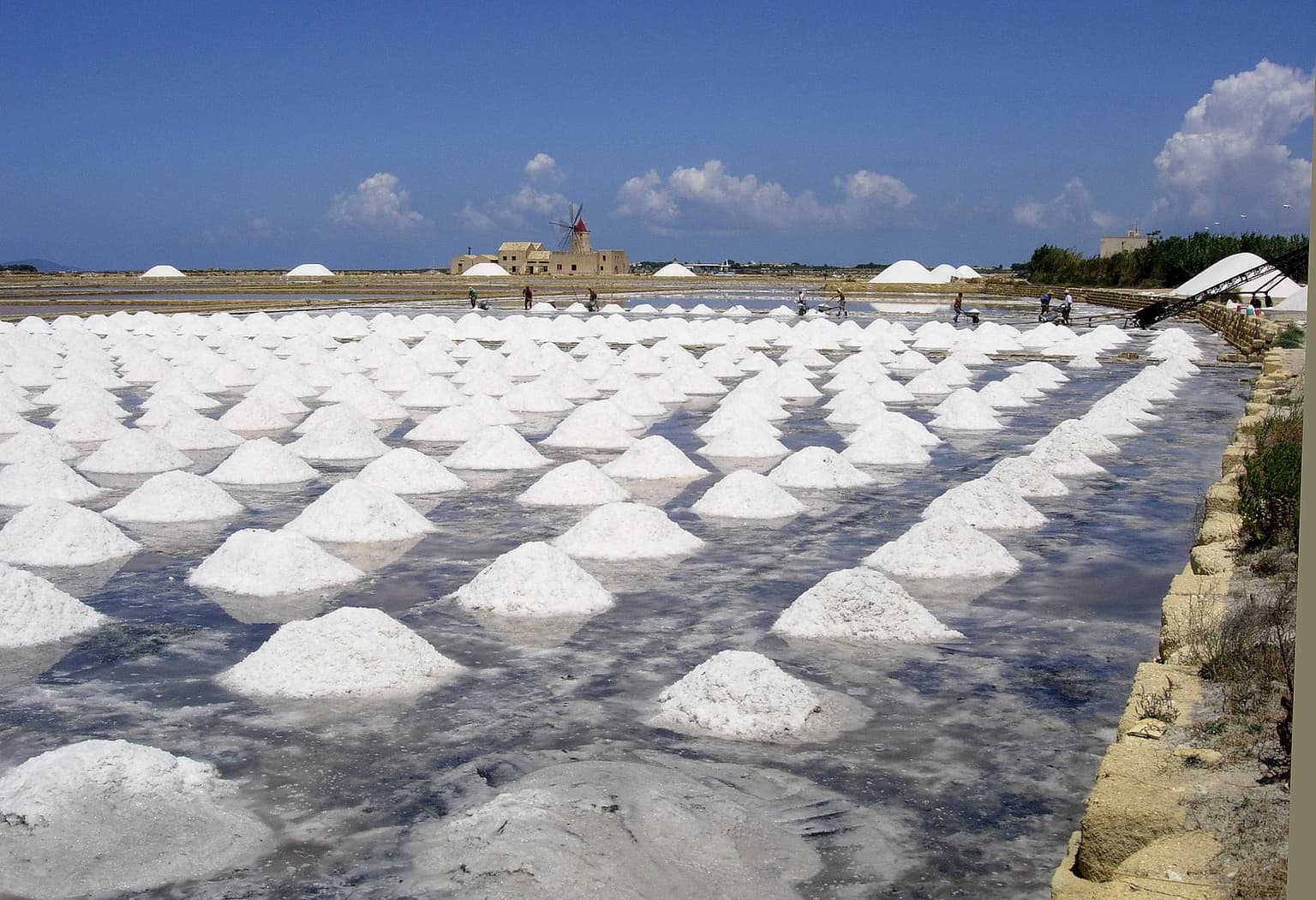
Salt here is not made to a calendar you can book against: the first harvest usually falls in July, the last is done by September, and each cycle runs its own forty to ninety days, weather permitting. Two smaller warnings. The sunset viewpoint collects a crowd in August, fifty-odd people standing exactly where the view was. And the road along the pans is potholed and, in stretches, treated as a dump.
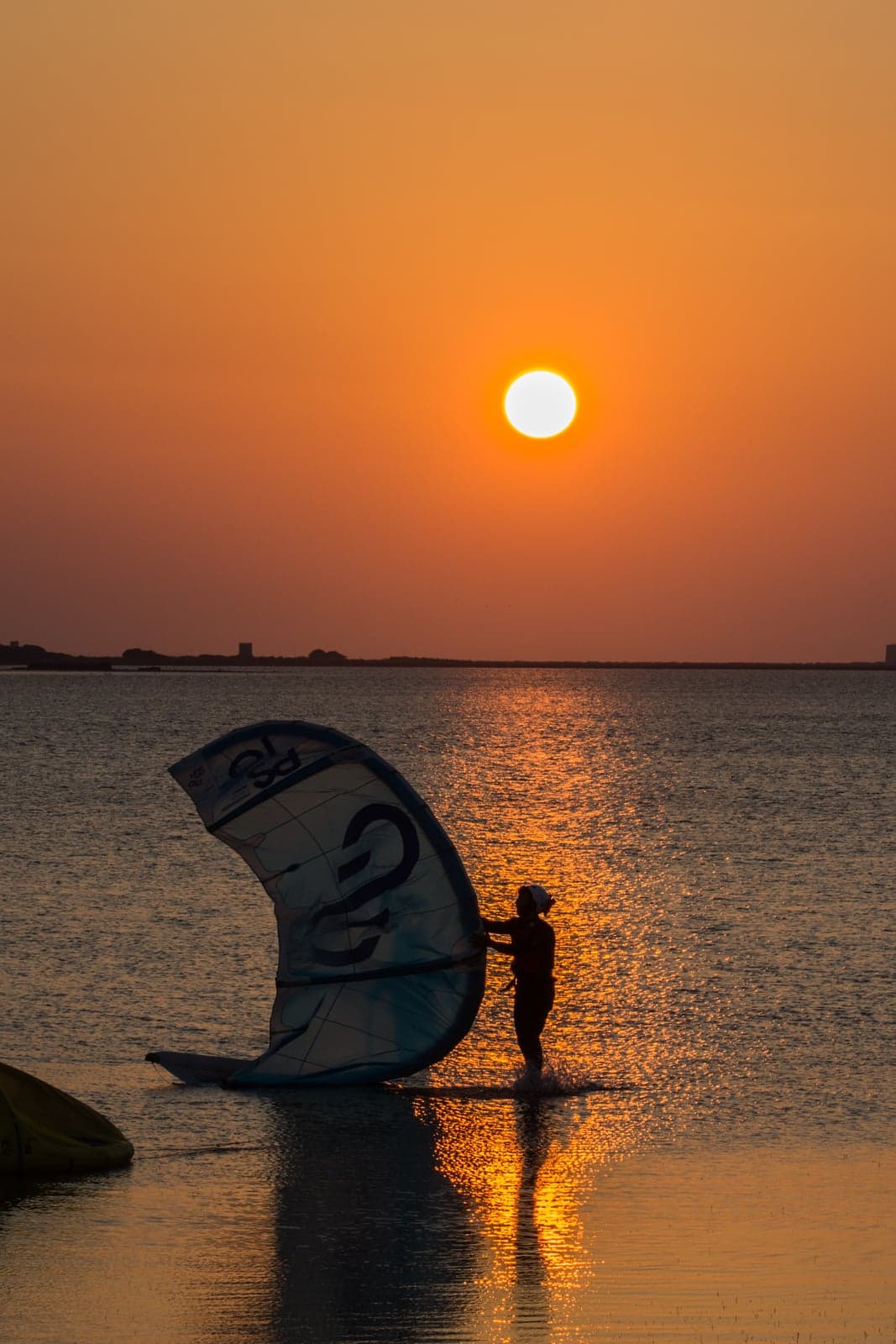
The other economy out here is wind. The water is warm, flat and shallow, the wind is dependable, and the schools along the SP21 have made this one of the places Europe learns to kitesurf. Plan on hours rather than days - three of them is enough for some people to ride away on their own - and plan on waiting too, because the wind sets the schedule. The lagoon itself has no gate and no ticket. What is unsettled is how the schools themselves are regulated. In season the lagoon-side places run music late, which matters because kite visitors are exactly the people who book lagoon-side rooms.
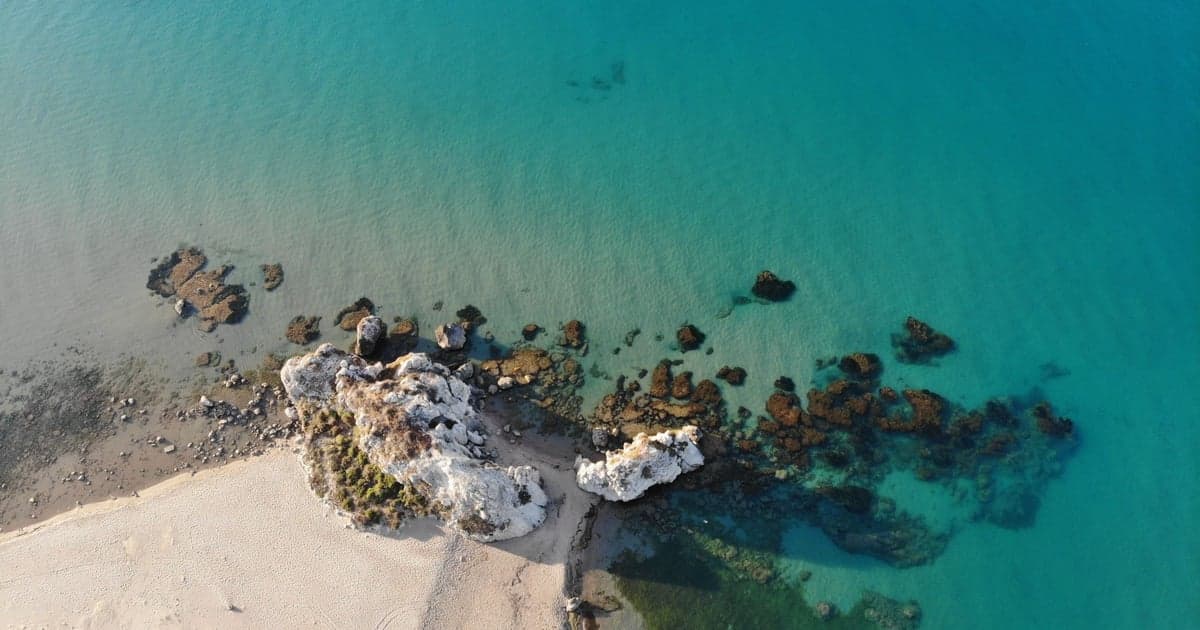
One expectation to put down before you come: this is not a beach town. Marsala's own shoreline is working coast, posidonia, the dried seagrass, banked on the sand through the summer and signs on the free beaches telling you there is no lifeguard. The sand on this side of the island is somewhere else, and which stretch of the west coast is worth the drive is its own question.
Mozia: Two Tickets, Two Docks
The other thing out in the lagoon is Mozia: a Phoenician island small enough to walk around, with the Whitaker Museum on it and the marble Youth of Motya inside the museum. Minutes offshore, about 2,500 years back, and the one attraction here that charges you twice.
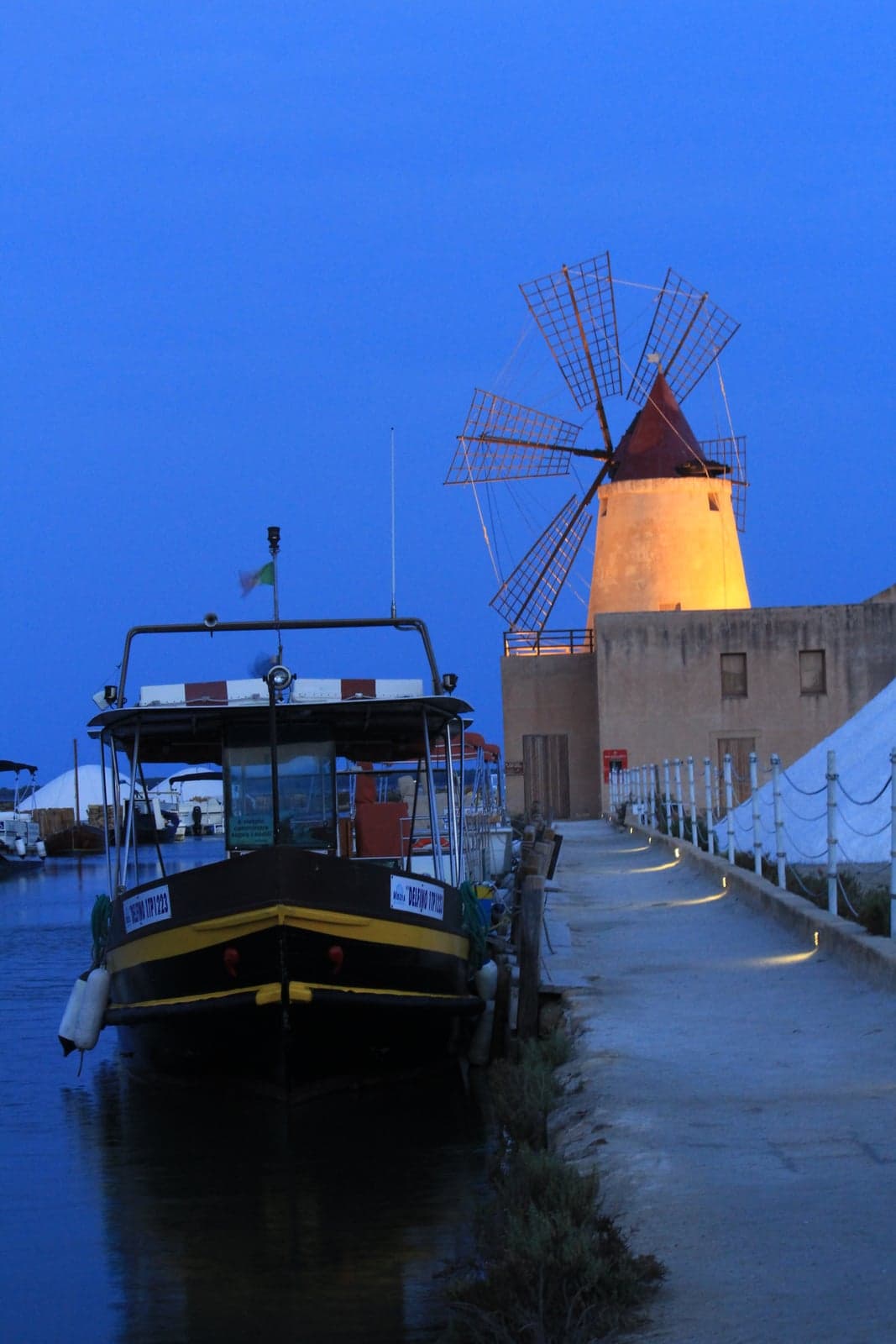
Figure on €18 a head minimum, and know why it arrives in two pieces. The boat is €6.00 round trip. The island and its museum are €12.00 for an adult, €6.00 for a student, free under five, and that one goes to the Whitaker foundation, which does not sell boat tickets. Nothing bundles them, so the second ticket surprises anyone who budgeted only the crossing. The island and museum run 09:30 to 18:30 April through October, and 09:00 to 15:00 from November through March, which makes an off-season Mozia a morning rather than a day.
Which dock you head for decides the day. Two operators cross to Mozia from two docks several kilometers apart, at exactly the same fare. Get that wrong and you have not missed a boat, you have lost the morning to the gap between two jetties. Any page quoting one operator cheaper than the other is out of date.
| Operator | Dock | Fare | Season and hours | Crossing |
|---|---|---|---|---|
| Arini e Pugliese | Imbarcadero Storico, contrada Spagnola | €6.00 adult round trip, €4.00 ages 6 - 12 | Apr - Oct 09:15 - 18:30, every 30 min; Nov - Mar 09:00 - 15:00 | 8 - 10 min |
| Mozia Line | Mamma Caura, at the Saline Ettore e Infersa salt mill | €6.00 adult, €4.00 ages 4 - 12 | Apr - Oct 09:45 - 18:30; Nov - Mar 09:15 - 15:00 | 15 min |
Arini e Pugliese's own fares and timetable, for the Imbarcadero Storico dock (ariniepugliese.com)
Mozia Line's own crossing page, for the dock up at the salt mill (mozialine.com)
The €6.00 boat ticket buys the direct hop and nothing else. The loop around the island is a separate ticket, Arini e Pugliese's Tour Laguna: €13.00 adult, €8.00 for ages 6 - 12, an hour on the water. There is no fixed departure time - the operator sets it by the sea conditions that day. That loop is where most of the sense of the place comes from, so decide which boat you want before you are standing on the jetty.
And there is no shade on Mozia worth the name. Two in the afternoon in mid-July out there is how a visit gets cut short. Take one of the first boats, or one of the last.
The Youth of Motya is why art historians make this crossing at all. Marble, standing with his weight on one leg and the hip carried out over it - the contrapposto - wrapped in drapery cut so fine that it reads as wet cloth pressed against the body underneath.
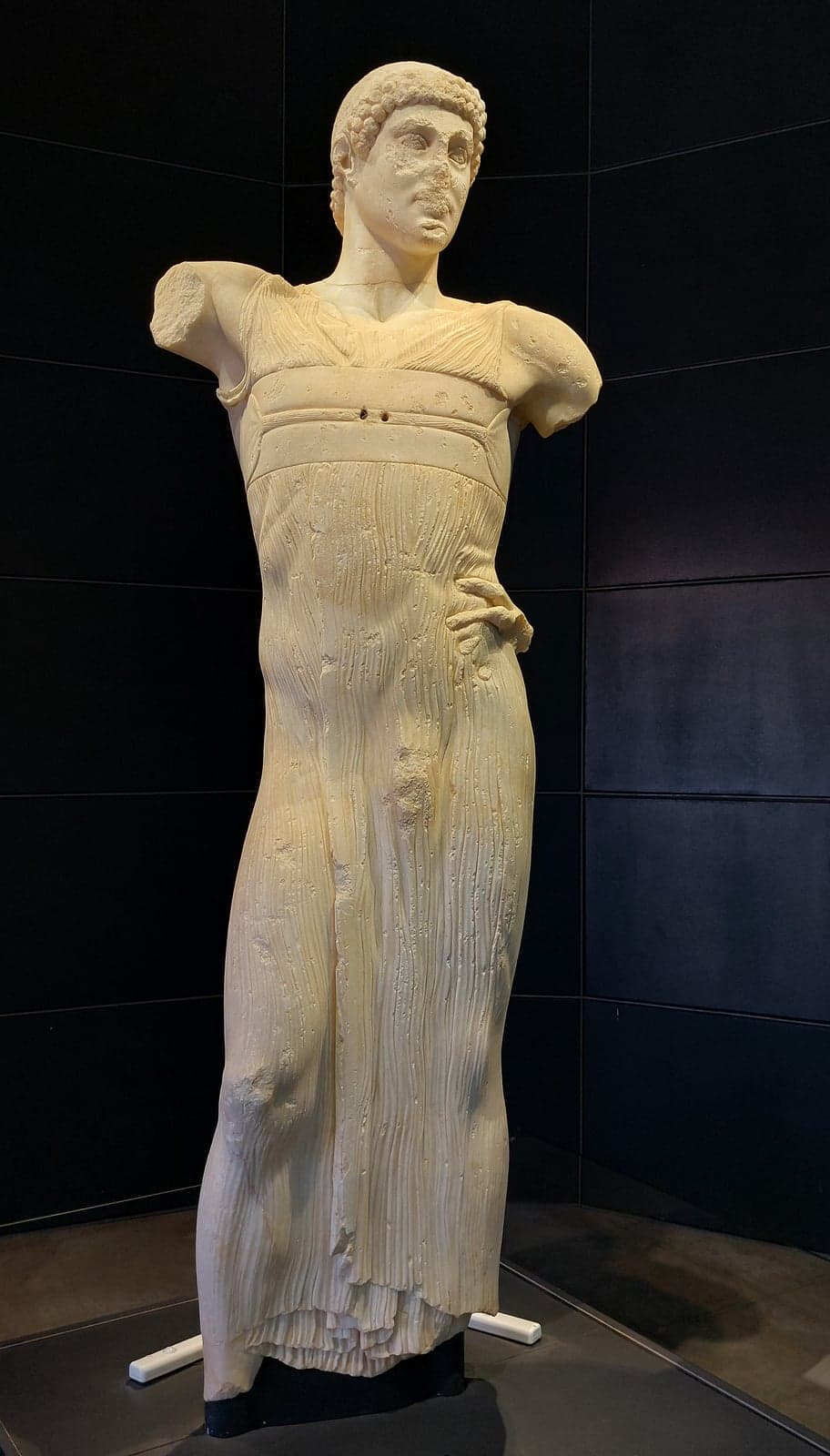
What hits first is the sheer swagger of the thing. You brace for staid antique classicism and instead get a young man radiating the confidence of a local who just won a race: left hand planted on his hip, chest pushed forward, weight thrown onto one leg. Stand close and the marble stops looking like stone - the tunic clings to every muscle so tightly it reads as wet, soaked-through silk rather than carved rock, and it's hard to square that with a statue two and a half thousand years old. Other visitors circle it the same way I did, smiling a little uneasily, like the swagger is still working on them.
Whichever dock you pick, it is out on the SP21, and how you get there is the last thing left to settle.
Do You Need a Car in Marsala?
Getting to Town
There is no through train from Palermo to Marsala. Every Marsala service on the line starts at Castelvetrano, so by rail you are changing trains and hoping the connection holds. The bus does it in one piece in about two and a half hours: Autoservizi Salemi runs some 27 weekday departures from the Via Fazello terminal beside Palermo's central station, twelve on Sundays and holidays, and 35 back the other way.
| Option | How long | How often | The catch |
|---|---|---|---|
| Bus from Palermo | 2h15 - 2h55, usually 2h25 | ~27 weekday departures | Times are indicative; some runs go set days only |
| Train | Marsala - Trapani 30 - 42 min | 12 - 16 regional trains a day | Change at Castelvetrano from Palermo; the problem is cancellations, not speed |
| Fly into Birgi (TPS) | 40 min by bus into town, 20 - 30 min back | 9 weekday runs in, 18 out | The flight has to fit the bus |
Palermo or Trapani to Marsala on your own date, run through Trenitalia's own search (trenitalia.com)
Palermo is the realistic gateway from most of Europe; Trapani-Birgi is the close one. Which of the two is easier to escape, and which shuttle routes are suspended while booking sites still sell them, is worked out in the western cape guide rather than here. And these Palermo buses may not be used as a shuttle between Punta Raisi airport and Palermo city.
Without a car the first problem is your bags, and this town solves it: two drop points, one at the train station and one at Porta Garibaldi in the old town, €5 a day. Bags down, old town in the morning, lagoon after lunch. The catch is in the hours - both close over the middle of the day, the station 13:00 to 15:00 and Porta Garibaldi 13:00 to 17:00 - so a bag left at 12:30 is not coming out at 14:00.
Getting Out to the Salt Pans
In summer the city does the crossing for you. Linea 4 leaves Piazza del Popolo and runs the SP21 past Mothia to the Santa Maria jetty and San Teodoro: the salt pans, the Mozia boats, the kite water. Nine departures on a weekday, six on Sunday, and the city says the Sunday runs exist for those jetties. If you plan to eat out at the pans, the number that matters is the last bus back into town, 21:40 on a weekday. On a Sunday it is 20:40, the 20:00 run turning back from the far end.
That is the summer sheet, valid from mid-June; no winter version turned up on the city's transport pages, which is not the same as none existing. The city calls its own timetable provisional and warns it can change inside a single working day, so the sheet at the stop beats any list.
Off-season, that leaves two ways out to the lagoon: a rented car, or a licensed taxi. Fares here are set by the city and run on a meter, one price for the trip rather than per head, and it splits up to four people, which makes the jetty run fine for two couples and steep on your own. A fixed price named outside that meter means the cab is not licensed.
If You Drive
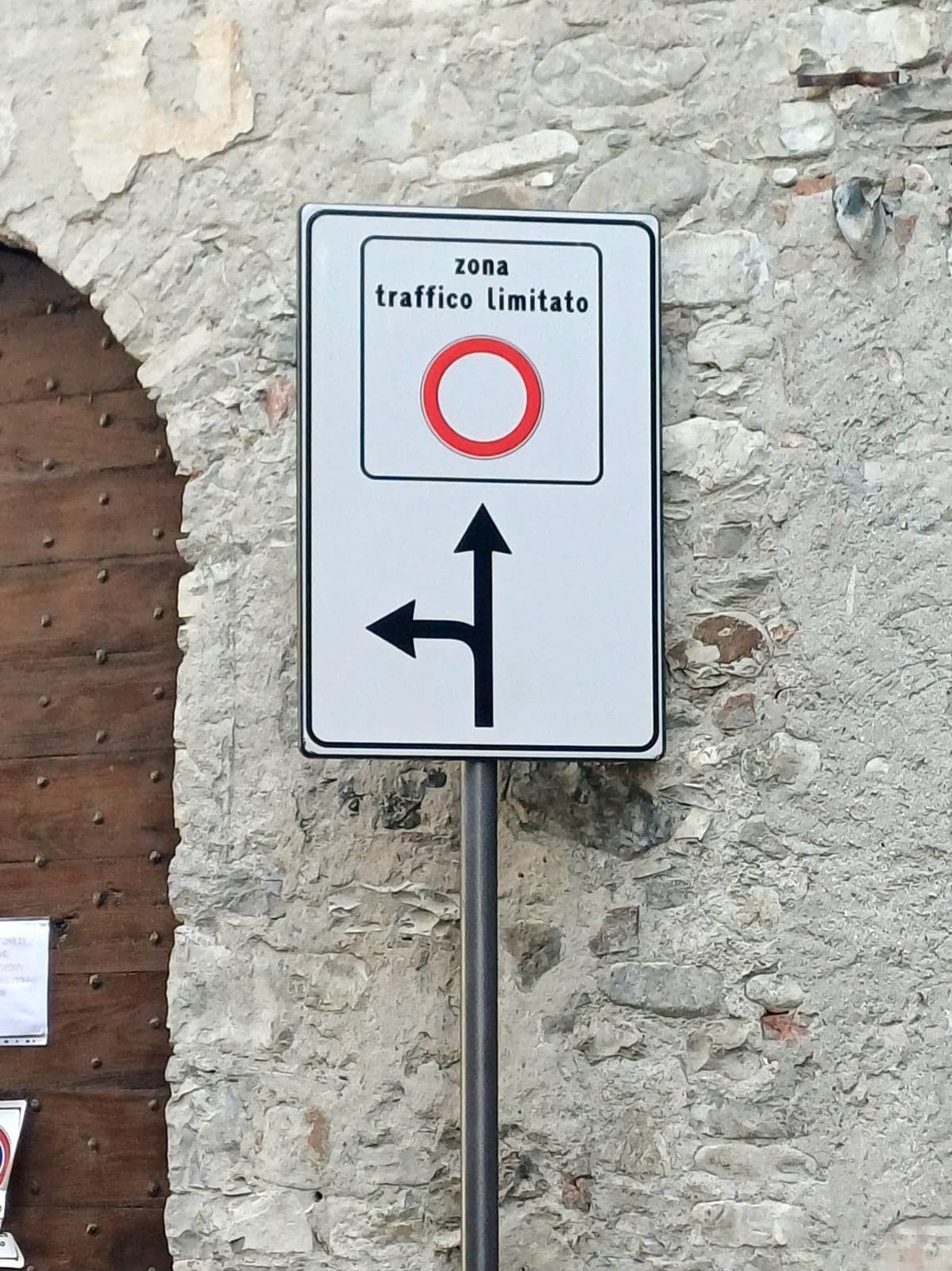
Marsala's ZTL, its limited-traffic zone, has five cameras on it: via Garibaldi at the Porta Garibaldi entrance and again at the via Garraffa junction, Piazza Matteotti where via Bilardello meets it, and Via XI Maggio at its junctions with via L. Anselmi Correale and via Caturca. The city publishes where they are and nothing at all about when the zone is enforced. That silence is the fact - there is no published window to be safely outside of.
⚠️ Warning
A ZTL fine does not arrive at the gate. It reaches you by mail months later, with an administration fee from the rental company for passing on your address. Nobody has talked their way out of one by not seeing the sign, which is why the camera streets are worth learning before you drive in.
Two habits keep you out of it: never follow the navigation app into the center, which will route you to the hotel door straight through the zone, and book a room with its own parking or a garage that registers your plate. There is paid street parking in the center and lots outside the zone. No rate from me: the only figure the city ever published is old enough to vote. In high summer the beach approaches jam solid and the municipal police write fines by the hundred, one more reason to leave the car outside town.
So: summer and the town only, no car. Outside the summer timetable, or a day that wants the pans at sunset and Mozia in the morning, a car.
Collect it at the airport, not in town: Palermo or Trapani-Birgi. Book an automatic early if you need one - they are the scarce class here, and the desk's answer to scarcity is a bigger car than you booked, on roads that do not want one.
compare rental cars at Trapani-Birgi airport
Trapani-Birgi is the close airport for Marsala
Decided against driving altogether? A fixed-price transfer from either airport gets you in with no ZTL question attached. Read the cancellation terms first: if the company cancels on its side, the refund is capped rather than full.
Pre-book a transfer from Palermo airport to Marsala
From Palermo, the realistic gateway from most of Europe
Marsala or Trapani, and the Season You're Planning For
Marsala and Trapani solve different problems. Marsala keeps its town half inside a walk and its scenery out on the SP21. Trapani is a departure point: the hydrofoils to the Egadi islands go from there, and the cable car up to Erice starts there. Which of those two shapes you want is the whole decision.
| Base | On foot | Easy to reach | Off-season | Suits |
|---|---|---|---|---|
| Marsala | Old town, museum, cellars | The lagoon strip: salt pans, Mozia, kite water (summer bus) | Cellars and museum keep working; the lagoon thins out | Wine, ruins, a town not performing for you |
| Trapani | A port town, and not the reason to pick it | Hydrofoils to the Egadi islands; the cable car to Erice | Hollows out when the season ends | Island days, a base you leave each morning |
Read it by your mornings: if most of them begin with a boat, sleep where the boats leave from; if most of them are one town and one lagoon, Marsala is the better room.
My own money's on Marsala. Most people pick Trapani for the ferries, and that's a real reason - but evenings are where the two towns split for me. Outside the summer hydrofoil rush, Trapani's streets can feel thinned out; Marsala keeps its own rhythm regardless of who's visiting. Wine bars spill onto the pavement after dark, locals sit outside with a glass and talk loudly, and mornings put you twenty minutes from the Stagnone and its flamingos. Trapani earns its keep as a launchpad. Marsala feels like showing up at a friend's place.
Hold the calendar against that, because the season decides more here than the town does. Marsala earns its year essentially from May through September and pays for twelve months out of those five, which is why so much of this article is a summer arrangement: the working saltworks, the bus out to the lagoon, the museum's late evenings. The cellars are the exception, open through the winter with their closed dates published. Spring and fall buy quiet and cost openings.
One fear you can drop: Marsala is loud at night, not dead. The music runs late across the center rather than in one square, so what you book is a street as much as a room.
The west is a separate half of Sicily, not a day trip from the east, and Marsala is a one-day stop inside it, two if you want the lagoon. How many days the west earns against everything east of it is a decision you make when you plan the island as a whole.
The other half of a western week is usually Palermo, the airport you already fly into and the far end of the bus ride in. Pairing them costs no extra travel, and what two days in Palermo should actually contain is its own guide.
When you book the room, the filters that matter are not the ones at the top of the page. Driving: a place with its own parking. Not driving: the quiet side of the block over the extra star. Either way, expect small and independent rather than chains.
Frequently asked questions
- Is Marsala worth visiting?
- Yes, if you want a working city with a Punic warship, cellars you book ahead, and salt pans north of town. No, if you pictured a beach resort.
- How many days do you need in Marsala?
- The town fills a day: old town early, the museum, a booked cellar after. The lagoon adds the second, so settle how you will cross to it before you count on it.
- Can you visit Marsala without a car?
- In summer, yes: a municipal bus runs out to the lagoon jetties, and licensed taxis are metered and priced per trip. That timetable is a summer sheet, so off-season plan on a taxi or a car.
- Do you have to book the wine cellars in advance?
- Yes. None of the three big cellars keeps a walk-in tasting room; visits are booked and paid online, one of them without refunds. Unbooked, you get a shop, not a glass.
- What is the difference between the windmill museum and the working saltworks?
- The windmill and its salt museum sit on the lagoon road, open year-round. The working saltworks is a separate visit on an island out in the lagoon, high summer only, with its own boat ticket.
The season first, then the wheels. Which cellar and which dock are bookings you make from home; the crossing between Marsala's two halves is the one thing that does not sort itself out after you land.