George Mandrovny
How many days Palermo is worth, and how not to waste them
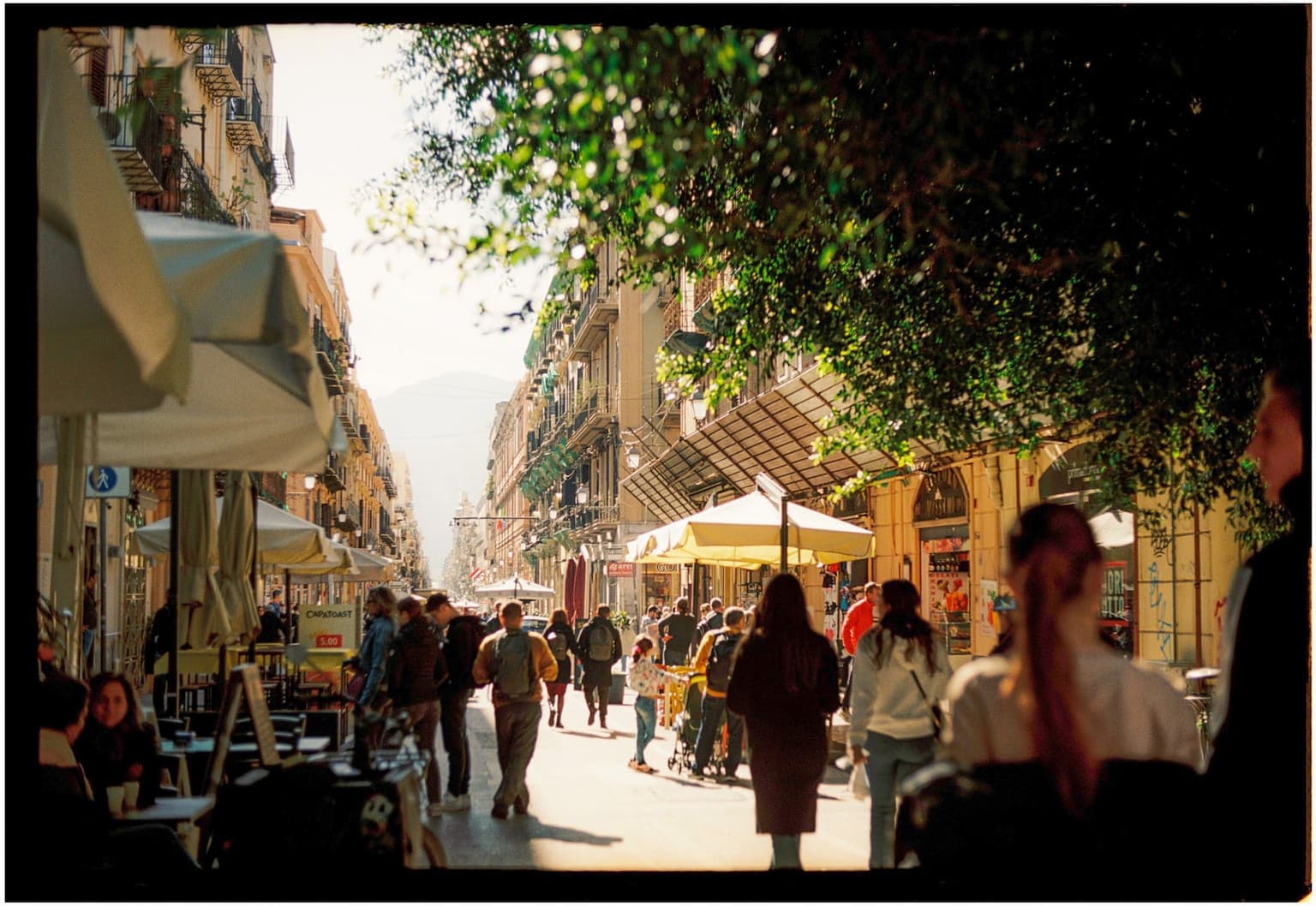
Palermo is worth two full days on the ground, three if you want Monreale without rushing, and none of them in a car. The city you were warned about is not the problem. What ruins a Palermo trip is the clock: half of what you came for shuts at lunchtime or on Sunday, and the two buses everyone needs are the two that fail.
- The one unmissable room is the Cappella Palatina, and it sits inside a working parliament that can close in whole or in part without notice. See it early in the trip, never on the last morning.
- The one thing that is not a walk is the Capuchin Catacombs, open 09:00 - 12:30 and 15:00 - 17:30, which makes 13:00, exactly when a morning of sightseeing ends, the worst hour to arrive.
- Do not bring a car. The core is pedestrian, the center sits inside a restricted traffic zone, and the station to the Quattro Canti is about ten minutes on foot.
Three days can read as one too many or as the bare minimum, and the difference is never the city; it is what you tried to do with the time. Two nights buys exactly one full day. The reputation you arrive holding will not shape that day either; the opening hours will. In July and August the mornings are the day: the observatory on the roof of the Palazzo dei Normanni recorded 117°F (47°C) on July 24, 2023, the highest in its digitized series back to 1865. Mid-July also brings the Festino di Santa Rosalia, around the 14th and 15th, with its program published only days ahead.
| Your time here | Spend it on | The trap |
|---|---|---|
| One day | The Palatina and the cathedral in the morning, a market at lunch, the core on foot | The catacombs, across town and shut at midday |
| Two days | The above, plus the catacombs and one long evening | Landing both days on a Sunday and a Monday |
| Three days | The above, plus Monreale as a half day | Treating day three as spare, then losing it to a beach bus |
| More | A day out to Cefalù or Agrigento | Assuming a car makes any of it easier |
Where these days sit in a whole-island plan is a separate question - Palermo is one base of the two or three a Sicily trip carries, and how many bases the island really needs is where I settle it.
Is Palermo safe? What the city's own numbers say
Palermo is safe, with one exception, and the exception is your pockets rather than the street. Among Italy's big cities, Palermo reports the lowest rate of street robbery and the lowest rate of intentional homicide; what it does have, in volume, is pickpocketing. Those are not a tourist board's numbers. They come out of the city's own statistical yearbook, where city hall publishes them to make exactly this point.
| Per 100,000 residents (2023) | Palermo | Against the other big cities |
|---|---|---|
| Street robbery | 44.8 | The lowest; Florence 250.8, Milan 166.5, Naples 136.0 |
| Intentional homicide | 0.5 | The lowest |
| Pickpocketing | 246.4 | Third lowest, behind Bari and Catania |
| Bag snatching | 42.7 | Second lowest, behind Verona |
| Robbery in shops | 12.9 | Turin 33.4, Verona 29.7 |
Two things travel with that table, or it flatters the place. The first is city hall's own caution: how readily a crime gets reported differs from one part of Italy to another, so a low rate partly measures who bothers to report it. The second is the direction of travel. Both theft categories climbed sharply in 2023, pickpocketing by about 17% and bag snatching by 29% on the year, while robberies of shops fell. The level is low and the trend is up, and saying only one of those would be picking a side.
Where that leaves you is a question about crowds rather than neighborhoods: the exposure concentrates wherever you cannot move your arms. Two places do that reliably. The first is the 389 up to Monreale, two buses on a 40-minute headway and therefore jammed in both directions; it has been delayed before now by a pickpocket incident on board. The second is the market lanes at their busiest, where the press of people is both the experience and the risk. On either, the rule I use is dull enough to fit in a line: nothing in an outside pocket, and nothing worth losing in a bag behind you.
What gets repeated about Palermo before you go and what the city actually asks of you once you are there are two different lists, and the shorter one is the second.
The Cappella Palatina and the cathedral: Palermo's Norman core
The Cappella Palatina sits inside the Palazzo dei Normanni, open daily except December 25 and January 1, with the last ticket issued at 16:30 Monday through Saturday and at 12:30 on Sundays and holidays. That Sunday cutoff is the quiet trap: a plan built around a Sunday afternoon here does not fail loudly, it just fails. Inside is a Norman king's chapel: a Byzantine mosaic program under an Arab honeycomb ceiling, three cultures in about twelve meters of room. You turn slowly on the spot in there, because there is no one place to look. Part of it is boarded off for restoration, and has been for a while now.
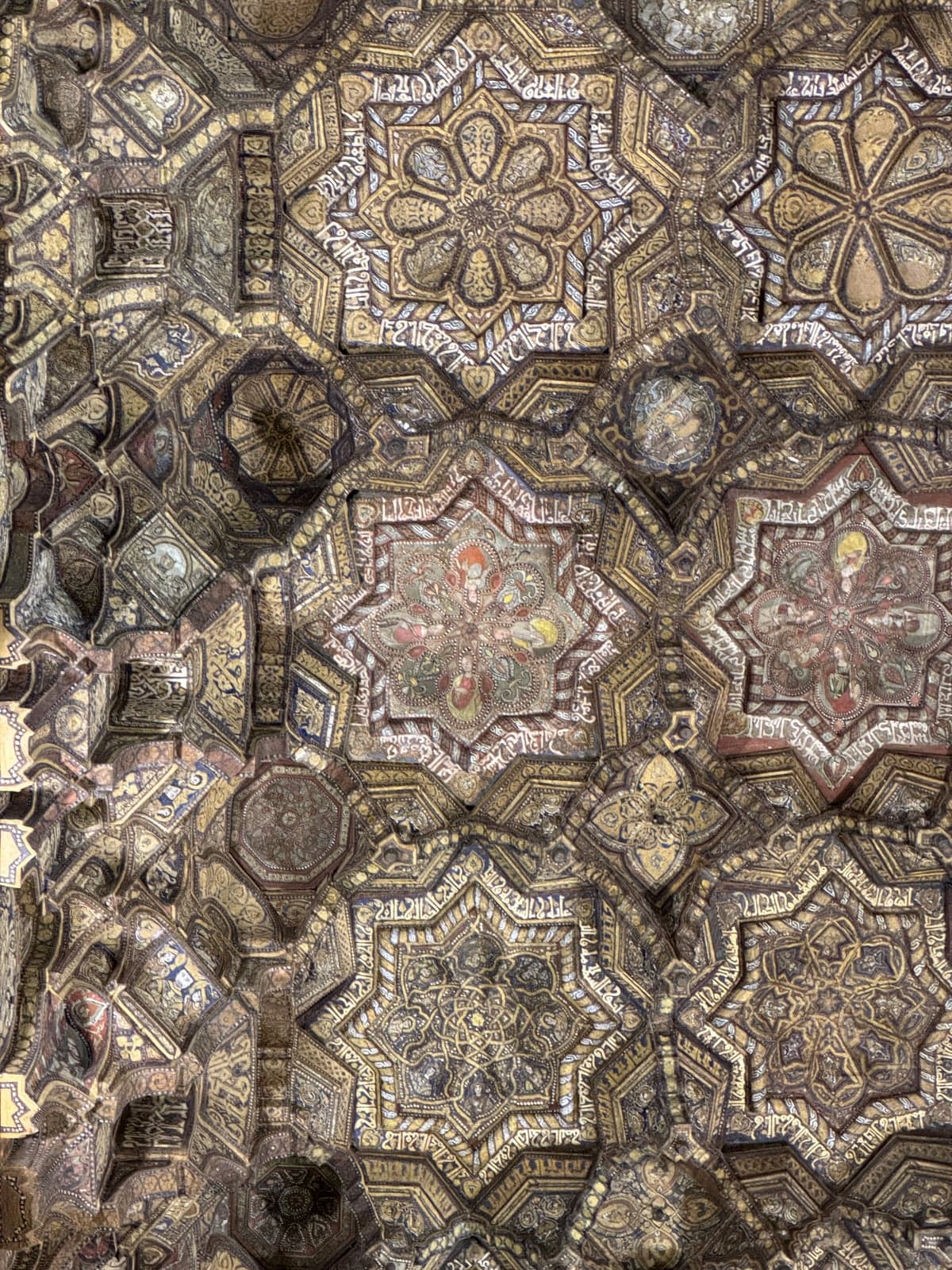
One ticket covers the chapel and the rest of the complex, priced in tiers, and the palace sells it for one dated window at a time, with the contents changing from one window to the next. So check what today's version includes before you buy it, and allow about 90 minutes inside. It is a working church: cover your shoulders, or expect a paper cover-up in July.
⚠️ Warning
The Palazzo dei Normanni is the seat of the Sicilian Parliament, and the palace says so itself: it can close in whole or in part, or change its hours, without notice, for institutional or religious reasons. The restoration moves the timetable around on top of that. See it in the first half of your trip, and check the palace's own page the day before. A closed door is survivable on day one and fatal on the morning you fly out.
Hours, tickets and the closure warning, on the palace's own page (federicosecondo.org)
The cathedral, downhill along Corso Vittorio Emanuele, splits the other way: the nave is free, 07:00 - 19:00 and from 08:00 on Sundays, and the money goes on the Area Monumentale, which is the roofs plus the Pozzo della Maddalena, the crypt, the apses and the treasury, at €13. The roofs alone are €7, and that is the version I would buy: 09:30 - 18:00 Monday to Saturday, from 10:00 on Sunday, last entry 35 minutes before closing, and no timed slot to book. The climb is a narrow spiral staircase, and the descent is the part your legs remember the next day.
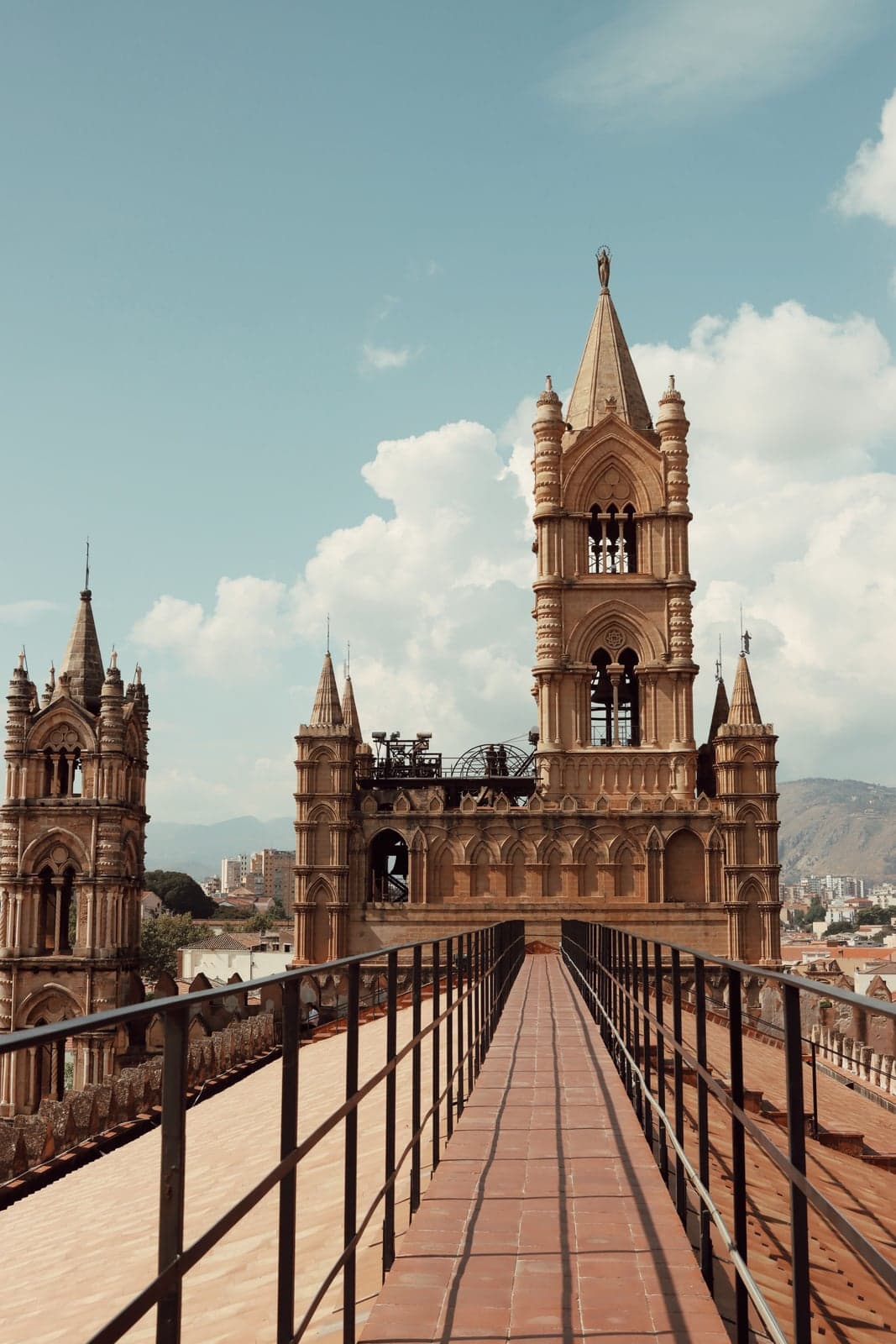
The cathedral also puts something in writing that most sights leave you to find out: it sells through no intermediaries, no agencies and no third-party platforms, and it warns that unofficial sellers mean extra cost, wrong information, or a ticket that fails at the door. Buy at its own counter or on its own site.
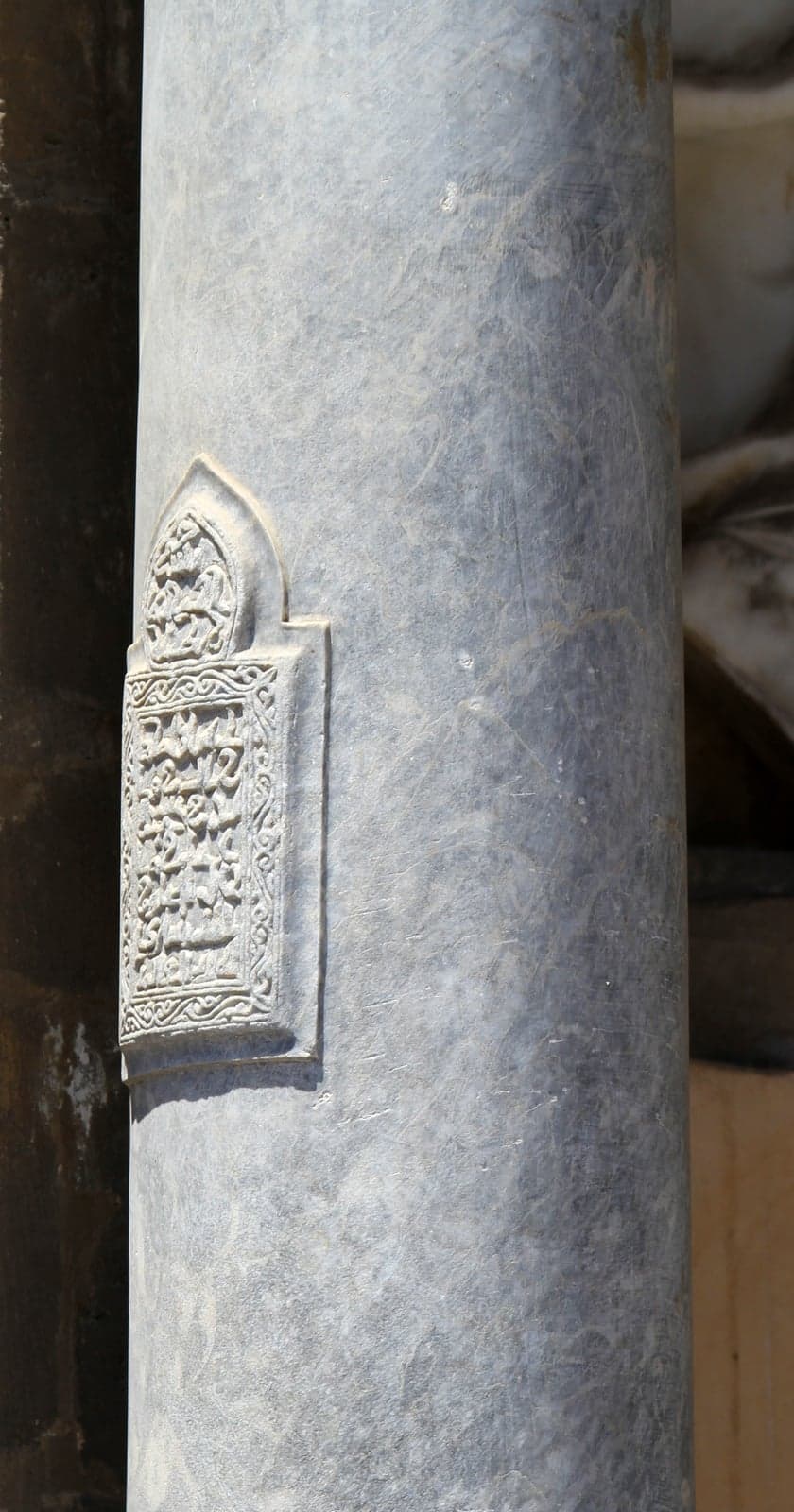
The best argument the building makes is free and outdoors: a Norman body, a Catalan Gothic porch, a neoclassical dome, and on one column of that porch an Arabic inscription from the Qur'an, the layered city in a single object, and nobody checks a ticket for it.
The Capuchin Catacombs: the one sight that is not a walk
The Capuchin Catacombs open every day, cost €5 (€3 reduced), and run on two windows: 09:00 - 12:30, with the last ticket at 12:10, and 15:00 - 17:30, with the last at 17:10. There is no need to book ahead unless you are a group.
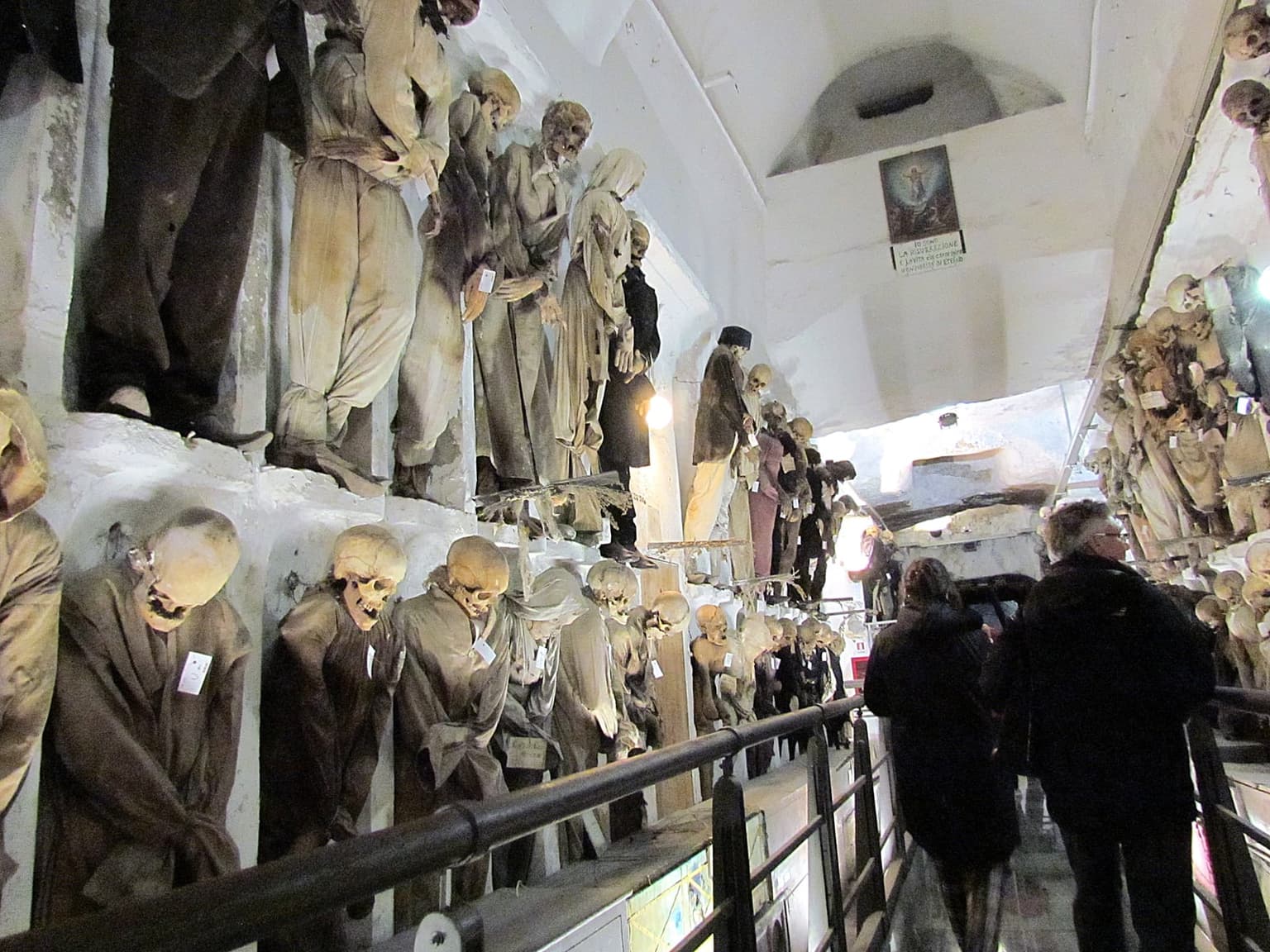
What waits down there is about eight thousand dressed, mummified bodies standing in corridors beneath a Capuchin monastery. Most people have made up their minds about that long before they open a Palermo guide, so what follows is not an argument either way, just what the place is actually like now. It is dusty. The dust lies thick on the clothing and the faces, whitewash comes down in clumps, and the color has drained out of the fabric. The place is visibly degrading, and nobody should pretend otherwise.
The one body most people come for is the one they are least likely to see. Rosalia Lombardo, the child in the glass case, sits in a larger case now with the lights off, and the photograph everyone knows is no longer a view you can have.
⚠️ Warning
Turn up at 13:00, exactly when a morning of sightseeing runs out, and you will find the doors shut for two and a half hours. The catacombs also sit west of the historic center, away from everything else in this article, so they want a half morning or a late afternoon of their own rather than a gap between two other things.
Expect little interpretation: there is not much on the walls about who these people were or how they got here. Expect not to photograph any of it either - the site publishes no rule in either direction, but visitors report being stopped. Whether the place is for you is genuinely your call, and it is not one I will make for you.
Ballarò, Capo and the Vucciria: Palermo's markets today
Ballarò and Capo are still food markets - people who live here buy dinner in them - and both are free to walk into. Mornings are when they work best. Go later and you are there for lunch rather than for the shopping, which is a fine reason to go too. The Vucciria is the one that has changed.
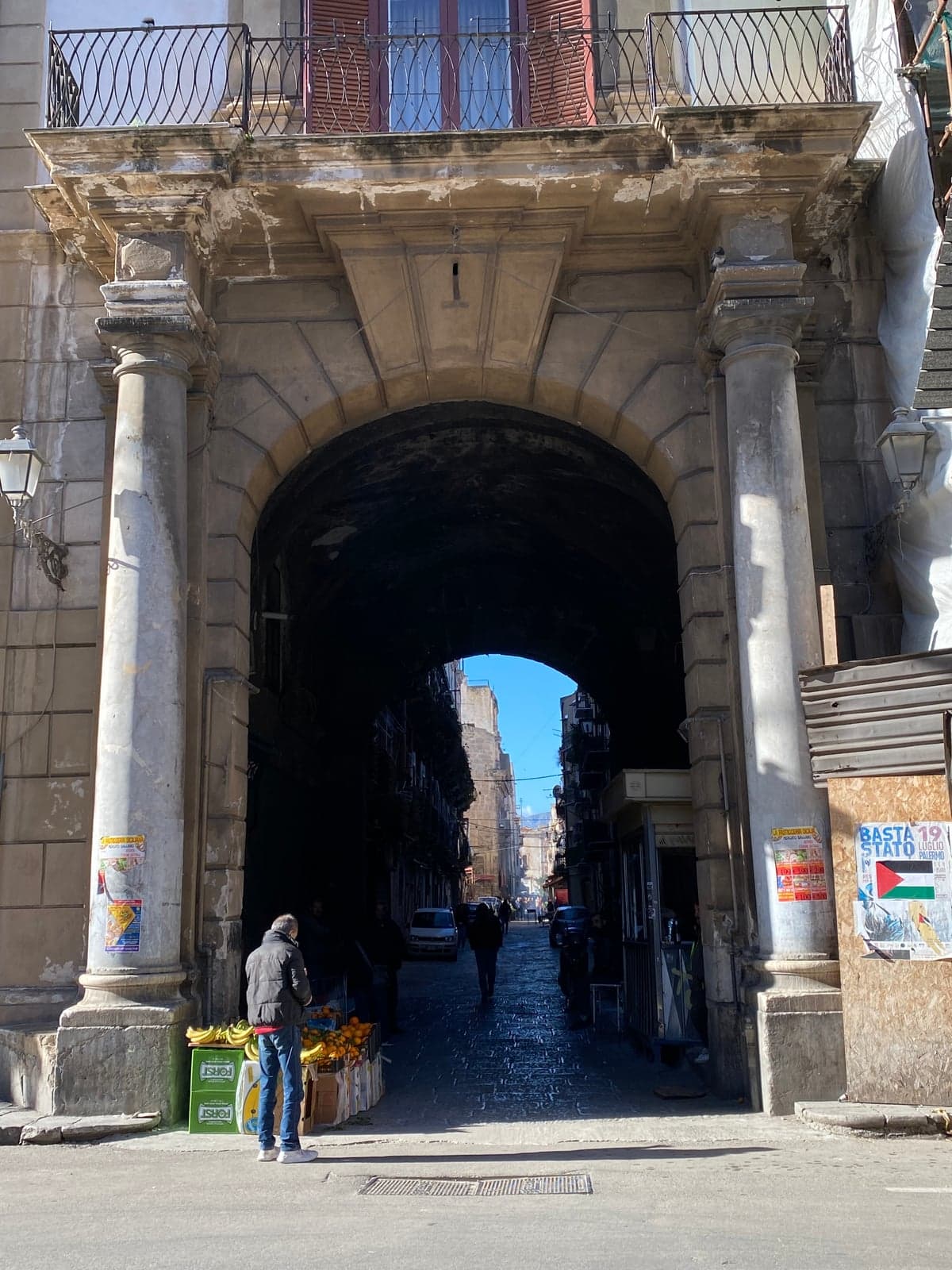
You come into Ballarò through the Arco di Cutò, and the lane beyond it, Via Chiappara al Carmine, is barely wide enough for two people to pass. The first stall is piled with intestines. The grill beside it fills the arch with smoke, and people keep walking out of the smoke chewing stigghiole, grilled intestine straight off the fire. The calling goes over your head as much as to you: men shouting in dialect from the stalls, fishmongers yelling back and forth at each other over the morning's catch. Then a Vespa comes through the middle of all of it, and the crowd folds sideways to let it by.
Nothing is marked, and the price is quoted per customer, which means it depends on who is asking. Ask what a thing costs before it is weighed, bagged or handed to you. I have no yardstick to give you here - there is no honest going rate to print for a scoop of anything - so the defense is the habit, not the number.
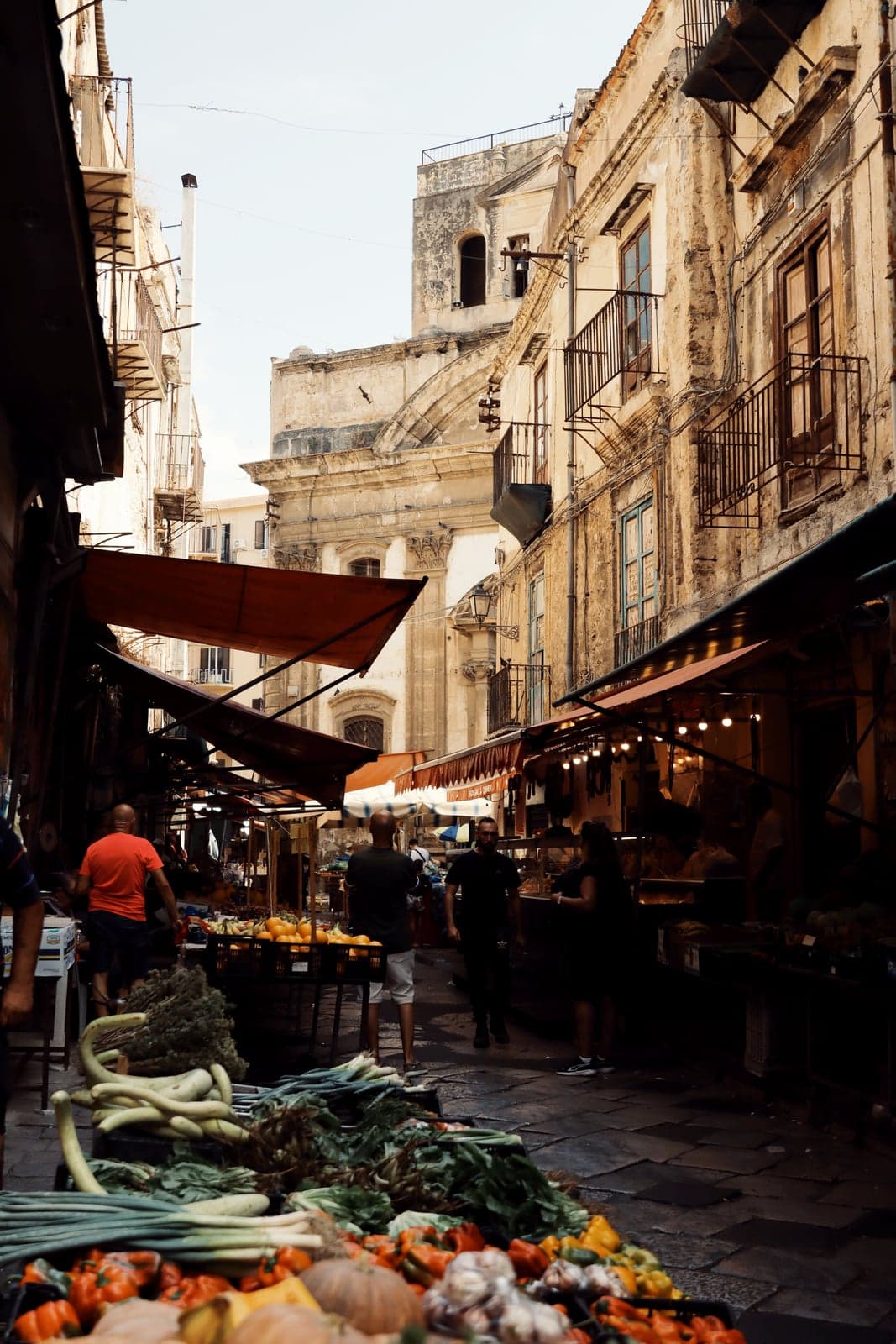
The Vucciria is the one that gets described wrong. Palermo's historic markets are not dead; they have turned into something else, with less fish and vegetables and more tables, street food and souvenir stalls. The Vucciria has gone furthest down that road: the last historic produce vendor there closed his stall in the first months of 2026, and nobody took his place. The streets are still busy and dense, and at night the square fills up around the drinking. What is gone is the market in Guttuso's painting, and nothing standing there now stands in for it.
One thing about August, since half the reason to come is the fish: in that heat it is laid out uncovered, and the flies find it a long time before you do.
What to eat in Palermo, and what to call it
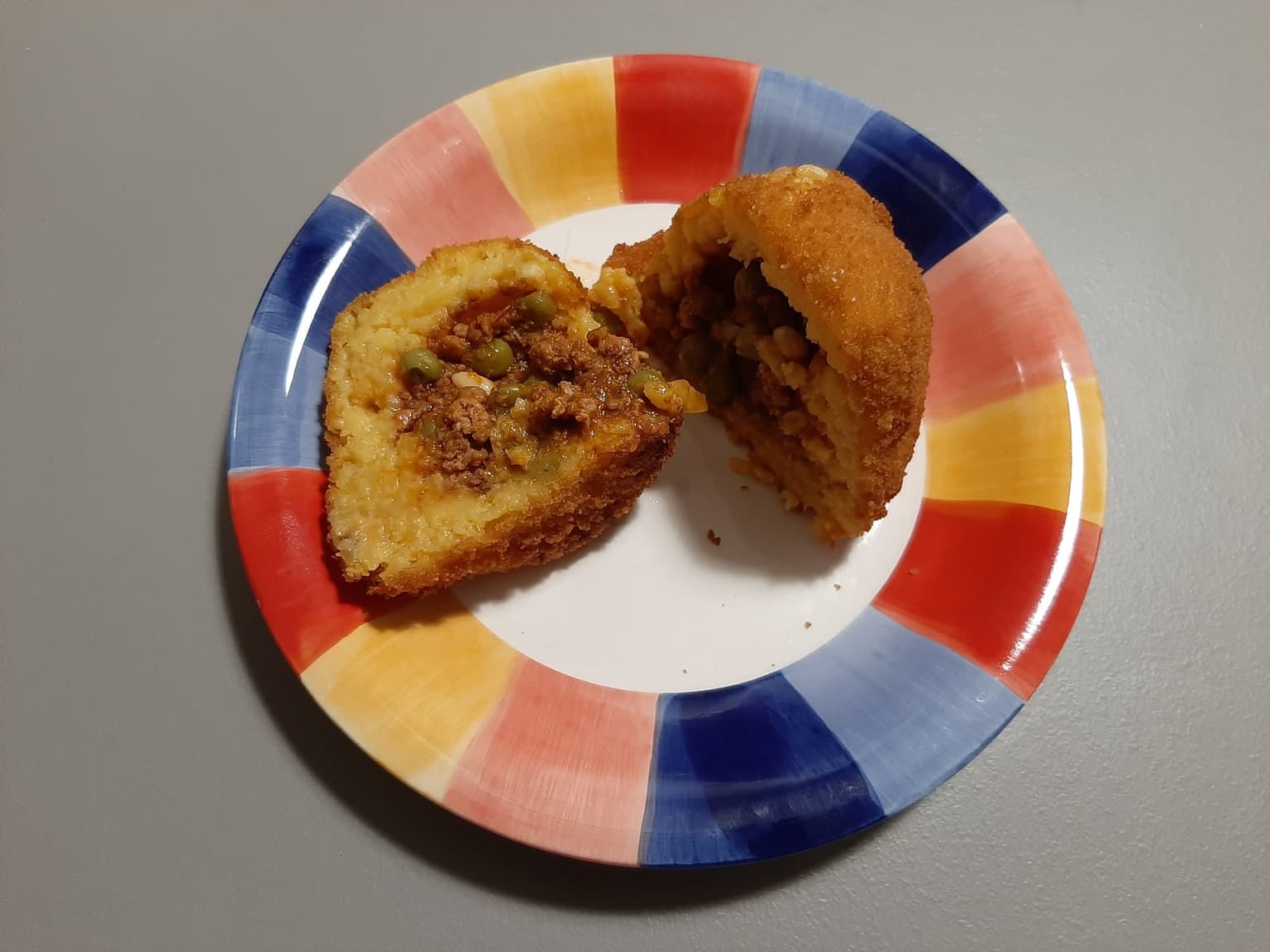
Palermo's street food is eaten standing up, and the first thing worth learning is what to call it. Here the rice ball is an arancina: feminine, round. In the east of the island it is an arancino, often pointed, a shape people like to say echoes Etna. Asked to settle which is correct, the Accademia della Crusca declined, and described instead a split running west to east across Sicily. The refusal is the better answer: the word changes because the island under it changes, and this guide and the Catania one disagree about a noun. Get the one with ragù and peas.
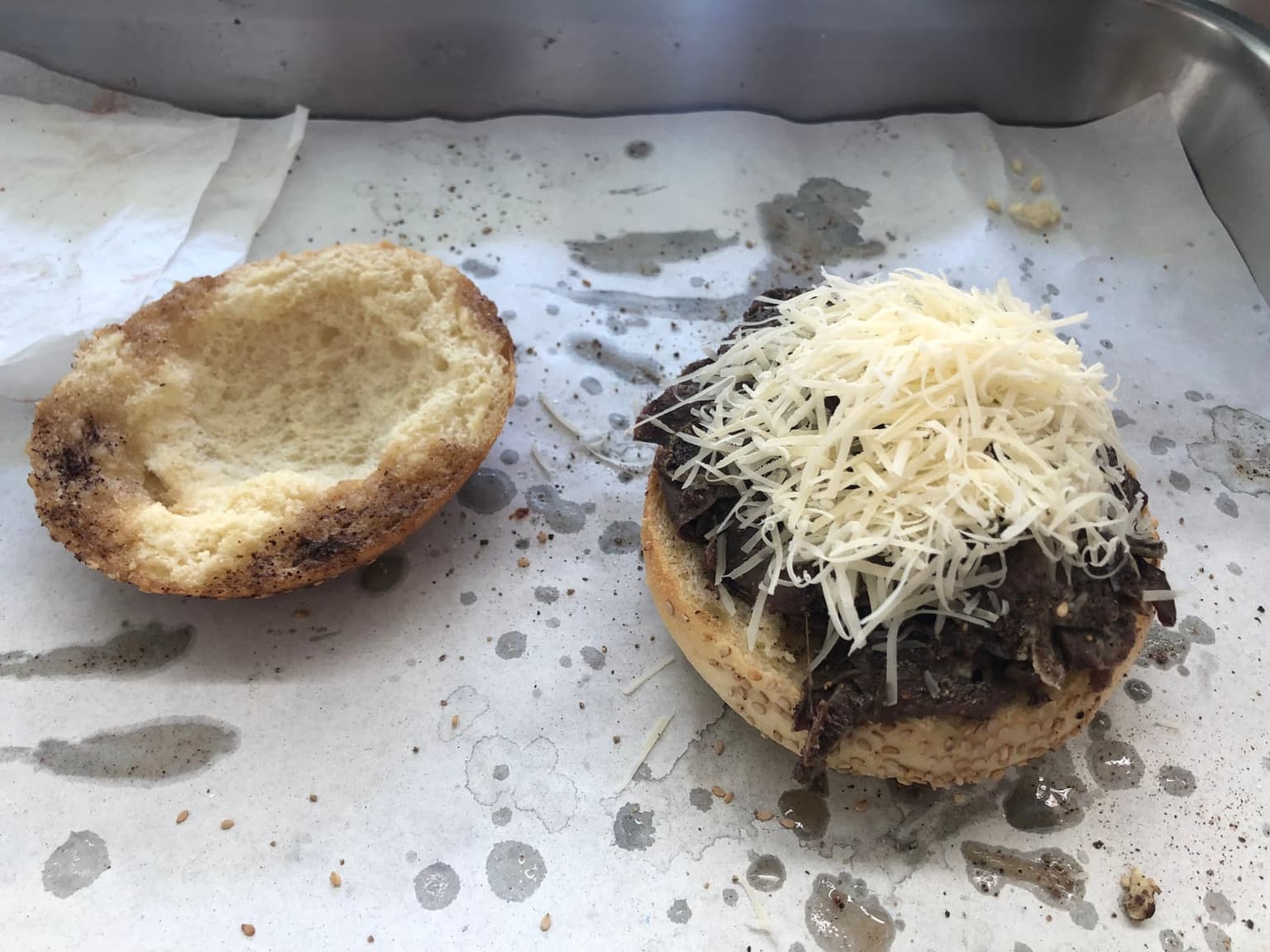
The spleen sandwich, pane con la milza, is the one people treat as a dare, and it is really a decision. A soft roll, the spleen and lung cooked in lard, and one choice at the counter: a squeeze of lemon, or cheese over the top. It tastes like liver, a little earthier and more complex, with more chew. That is the sentence you need to decide on, and I would rather give you that than a dare.
The rest is a fryer and a grill. Chickpea fritters - panelle - come out piping hot, barely crisp outside and creamy in the middle, with potato croquettes, crocchè, in the same paper cone. Sfincione is thick and soft under tomato, onion, anchovy and breadcrumbs, nearer to bread than to pizza. The stigghiola at that grill is wound around green onion and garlic and spritzed with lemon, and for all the offal in it, it tastes nothing like tripe.
If you would rather not do the ordering yourself, a market food walk runs about three hours, and it takes the unmarked-price problem off your hands. Look for one that goes into a working market at its working hour, stops at a milza counter, and puts an arancina, and a granita if it is hot, in your hand. Skip the ones that are really restaurant crawls, and the ones that start after the markets have packed up.
Walking the core: Quattro Canti, Piazza Pretoria, Teatro Massimo
Palermo's two pedestrian axes, Via Maqueda and Corso Vittorio Emanuele, cross at the Quattro Canti, four curved facades turned in on one junction. Almost everything in this article sits in the square of streets around that crossing, which is what makes two days on foot a plan rather than a slogan. Pedestrian is not sealed, though: a lane down the middle stays clear for emergency and authorized vehicles, and service traffic uses it.
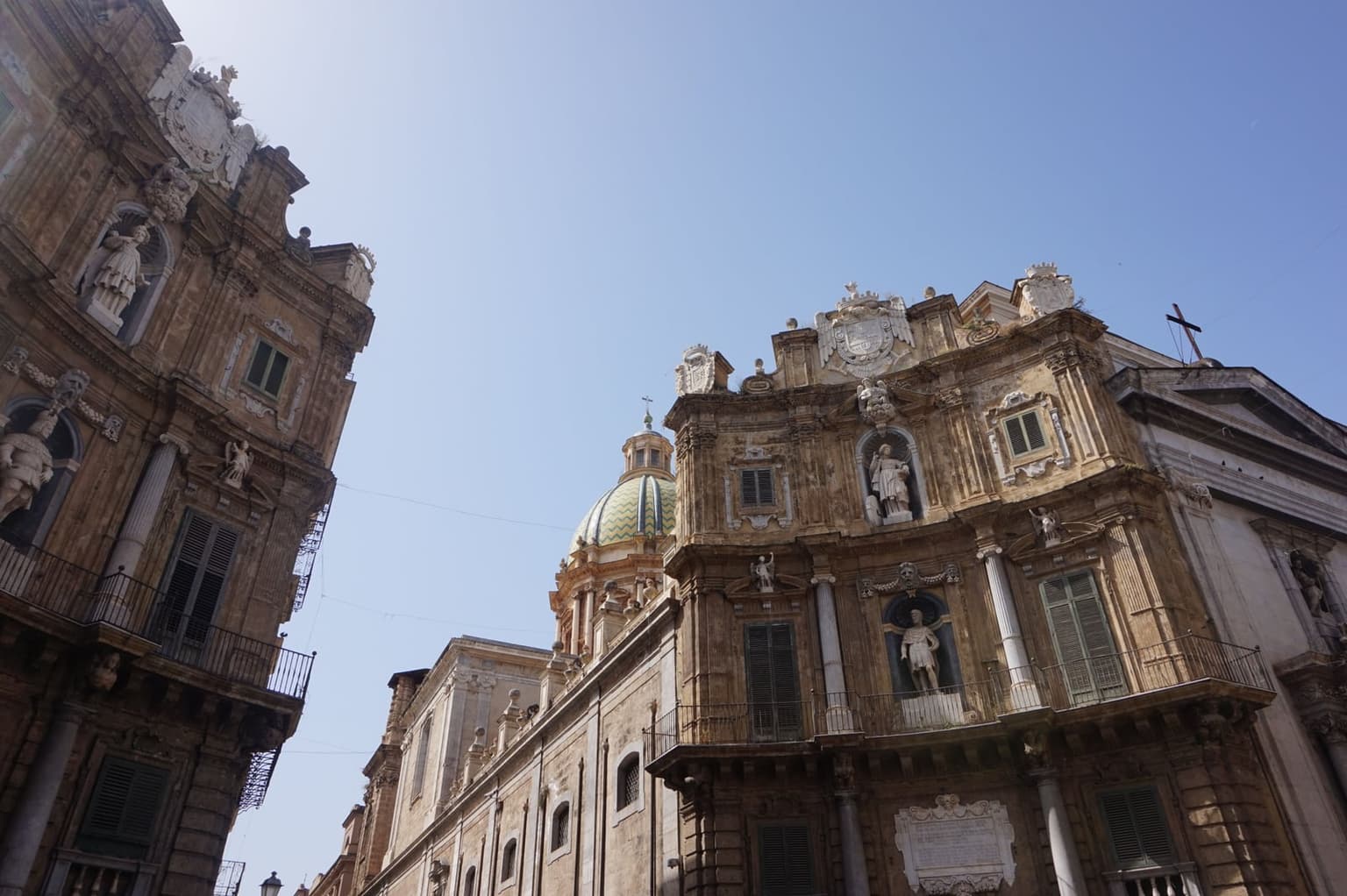
A few steps off the crossroads, Piazza Pretoria opens up around a fountain of marble nudes, and the two small churches beside it, La Martorana and San Cataldo, are worth going into if the doors are open. Both keep short, unpredictable hours and shut for services, so treat them as luck rather than as items on the morning's list. What lies between all of this is the actual attraction: decrepit palazzi under scaffolding, crumbling masonry, vacant lots dropped between grand facades, laundry strung across a lane. The decay is part of the view rather than an interruption of it, and the least promising doors open onto the best rooms. No city in Italy feels further east than this one.
Teatro Massimo is one indoor stop in the center that runs on a clock you can trust. Guided visits go daily, 09:30 - 19:00, last visit 18:20, about 40 minutes, €14 or €7 under 26, backstage another €5. Two things the theater does not publish are worth expecting anyway. The first is language: a tour can arrive half in English and half in Spanish with no warning, and half a tour is not what €14 implies. The second is rehearsals. On a rehearsal day the auditorium can be dark and rooms get skipped, and that same rehearsal is the best thing that can happen in there, because it can also mean a ballet company working on the stage below while you stand in a box. Best outcome and worst, one event.
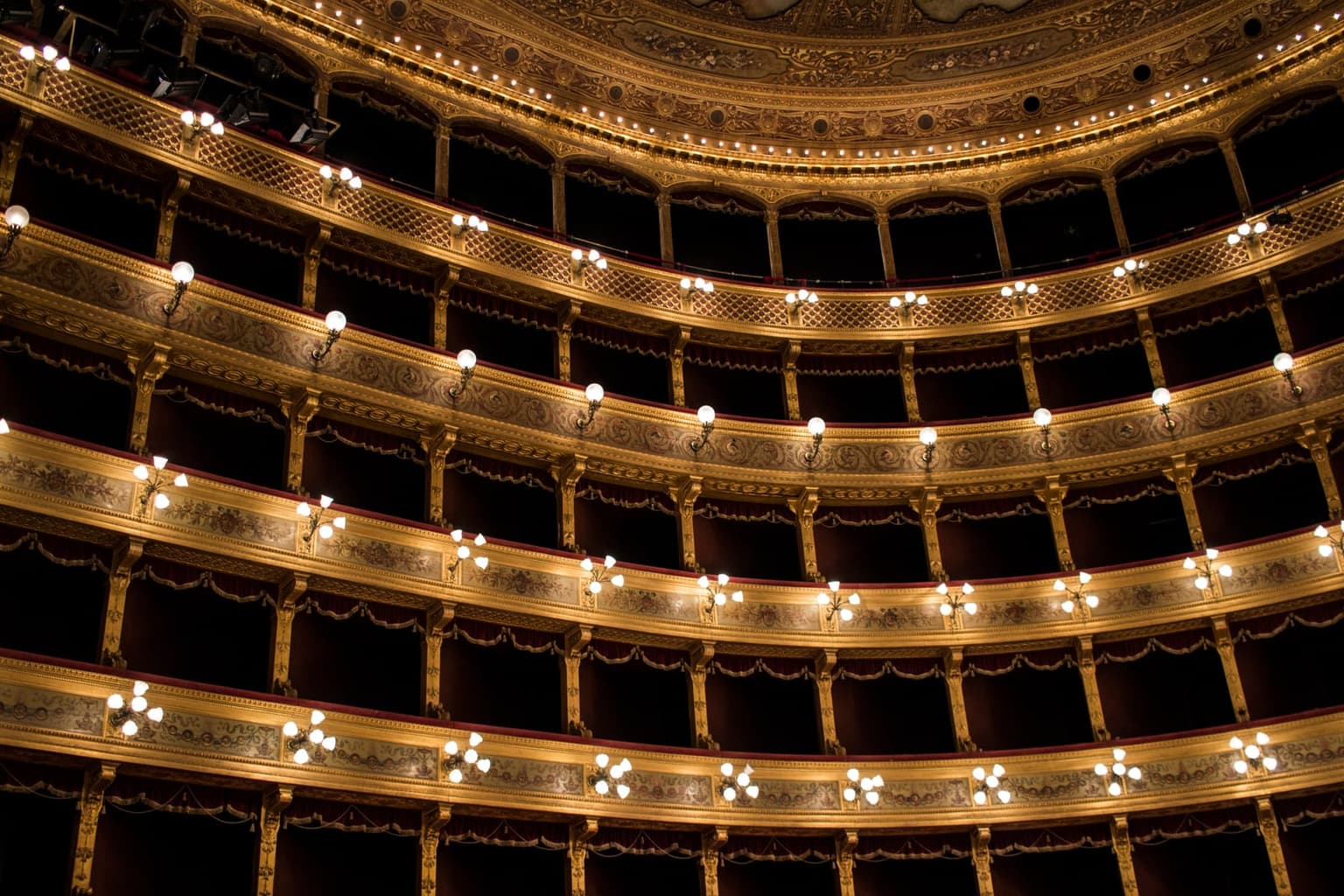
The other half of a third day, or a fourth if you have it, is what I would spend on Palazzo Abatellis and the Orto Botanico - the two stops that reward the time once the streets have stopped being new.
Monreale, Mondello and the trips worth leaving the city for
Monreale is half a day, about 10 km inland, on AMAT's line 389 from Piazza Indipendenza, by the Palazzo dei Normanni - daily, first out at 05:25, last back at 20:25. Go early, before it fills both ways. You go up for the apse Christ and the gold Bible scenes: the Cappella Palatina is a jewel box, this is the same idea at the size of a church.
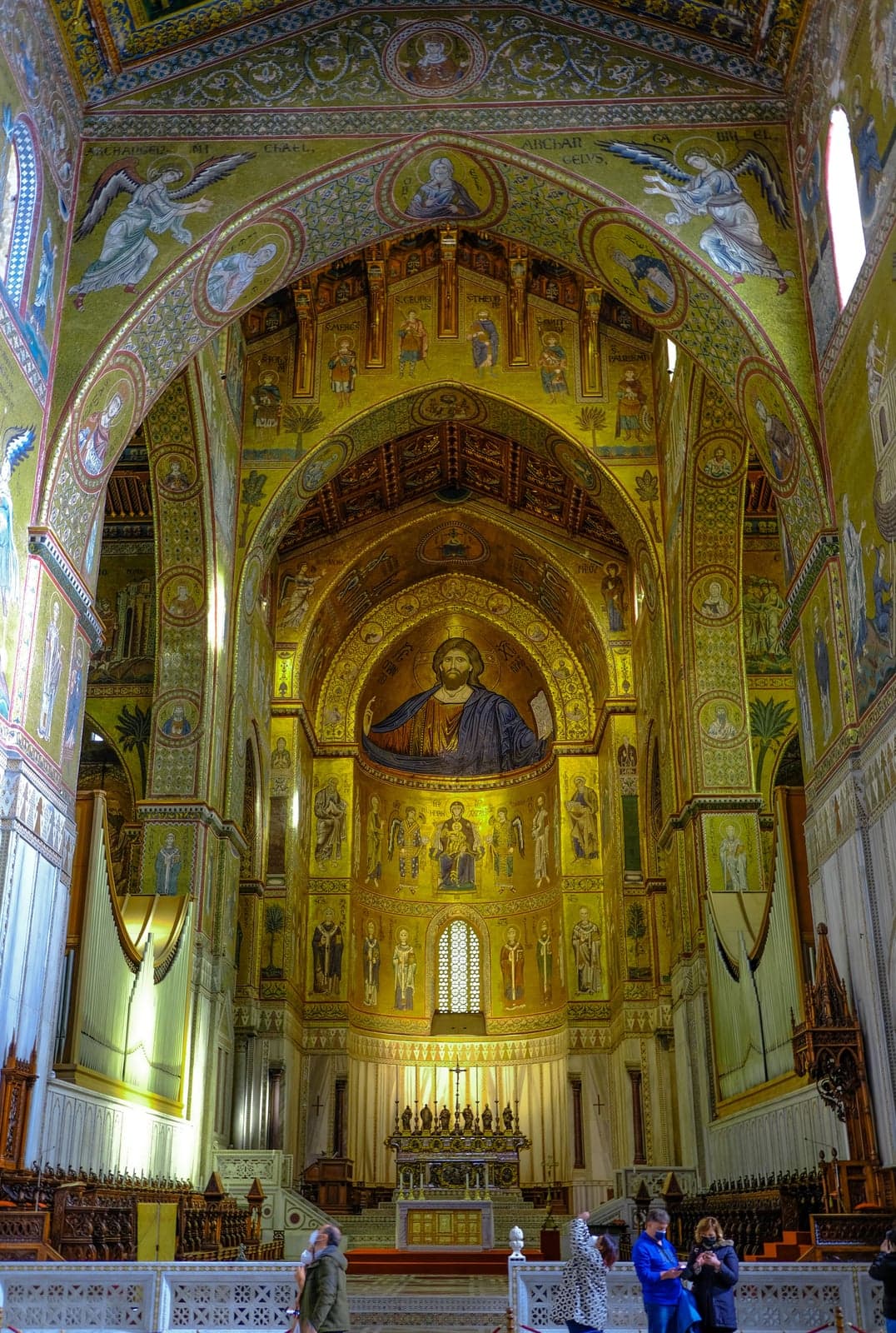
The church and the cloister are separate institutions with separate tickets and separate clocks. The cloister is state-run - €8, €4 reduced, free on the first Sunday of the month - and it stays open through the church's midday closure, which makes it the quiet half, and the place to start. Inside the church, a few things run on coins. Sunday inverts that: the morning is Mass only, the church opens at 14:00, and the cloister has shut by then.
| Trip | What it is | Time | The catch |
|---|---|---|---|
| Monreale | The mosaic cathedral above the city | Half a day | Two tickets, two clocks |
| Mondello | The city's beach, no car needed | An afternoon | The last bus back; July and August sand |
| Cefalù | A cathedral town on a beach | A full day | Deserves the day, not a rushed afternoon |
| Agrigento | The Valley of the Temples | A long day | Two hours each way by train, then a local bus to the temples |
Mondello is Palermo's own beach, reachable on a city bus. The water is startlingly clear in the quiet months, four or five meters down to white sand, and cloudy over weed and litter in July and August. Same beach, different season. Do not build an evening on the last bus back: a published last run once failed to appear, and about ten people paid €50 - €60 for taxis. If you drive, the parking inverts the city rule - zone D runs May 1 - October 31, 08:00 - 24:00, Sundays included. Which sand on this island is worth a whole day, and what one costs, belongs to the Sicily beach comparison.
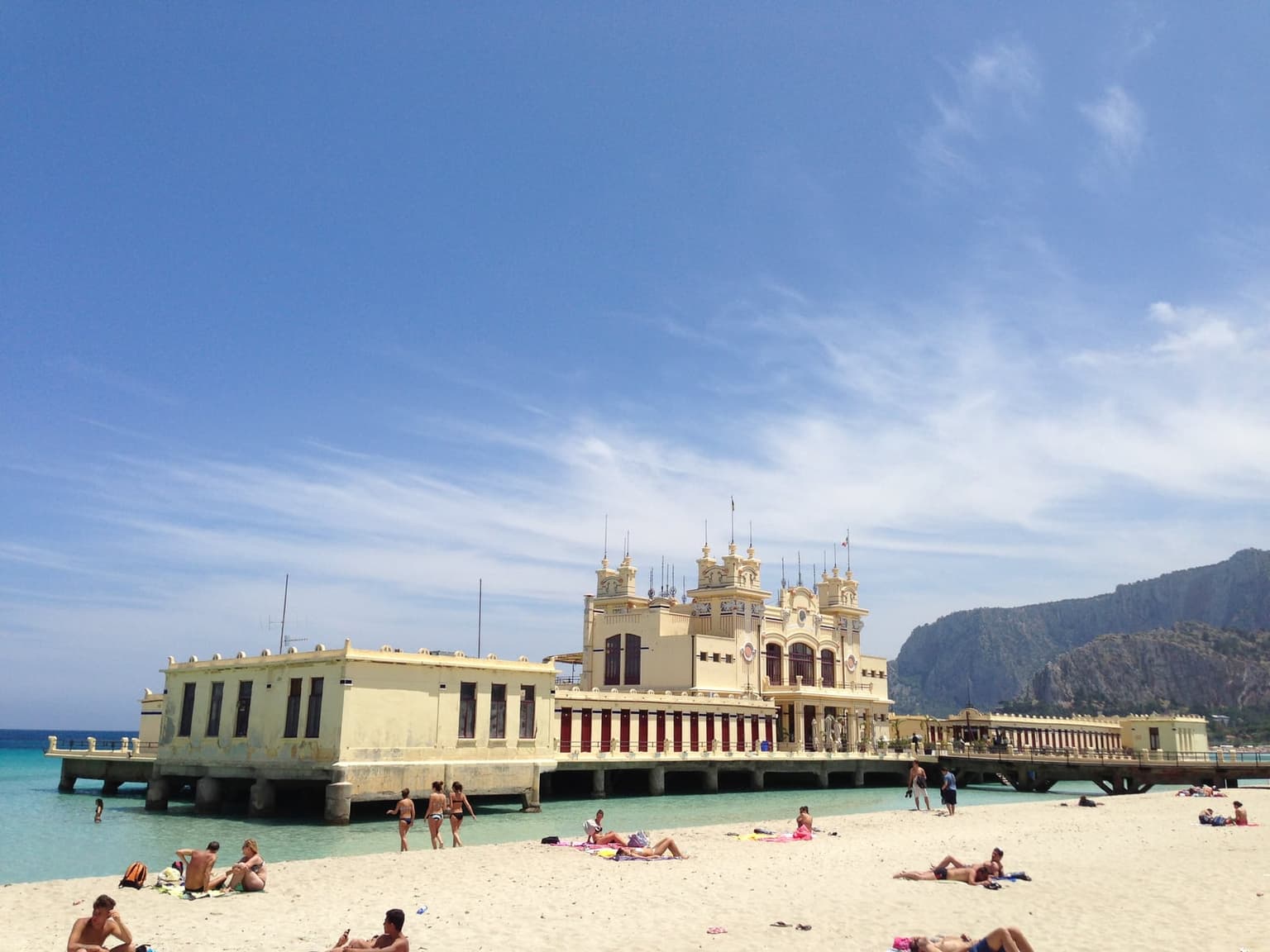
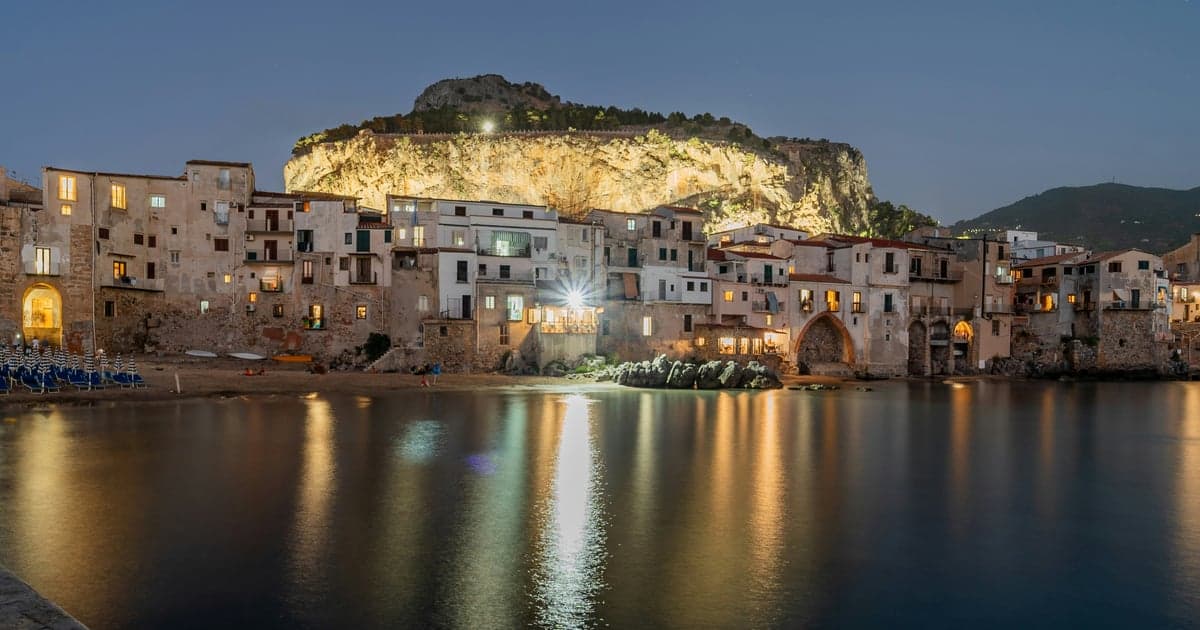
Two more earn a whole day rather than an afternoon. Cefalù is the easy one: direct from Palermo Centrale, under an hour on most departures, €7.10 in second class - and the things to do in Cefalù fit in one day if you catch an early train. Agrigento is the longer one. The rebuilt line reopened all the way to Agrigento Centrale on October 1, 2026, with no more replacement bus on part of the run: direct regional trains take about two hours, leave Palermo Centrale roughly every hour from early morning into the evening, and cost €11.40. Some trains run retimed until December 12, so check what your own date returns before you commit to it.
Trenitalia's own search: Palermo Centrale to Agrigento Centrale, on your date (trenitalia.com)
San Vito lo Capo, the cape beach in the photographs, is the one I would not day-trip from here: far enough west that the day becomes the drive, and sleeping out there instead is the honest answer.
What an organized day trip removes is the last mile, which is where both of these fail: the 389 at one end, the local bus out to the temples at the other. Look for one that includes site entry and does not spend half the day collecting people from hotels.
Where to stay in Palermo, and which streets read wrong after dark
Sleep inside Palermo's historic core, between the Quattro Canti and Teatro Massimo, and almost everything in this article is on foot from your door. That is the entire case for it, and the bill arrives at night: the streets that make the days easy do not go quiet. What you are picking here is not a rating out of ten but a direction - how deep into the old city you sleep, and how far you are willing to walk home in the dark.
The Kalsa is the quarter the advice falls apart on. Inside three weeks one spring it read as faintly intimidating after dark and as far from a hidden treasure, overrun with visitors and bachelor parties. Both of those are recent and neither is a mistake, which is the useful part: a quarter that reads two opposite ways inside a month is telling you the unit is wrong. In Palermo the block is the unit, and it can turn over at a single corner. So I will not tell you to stay in the Kalsa.
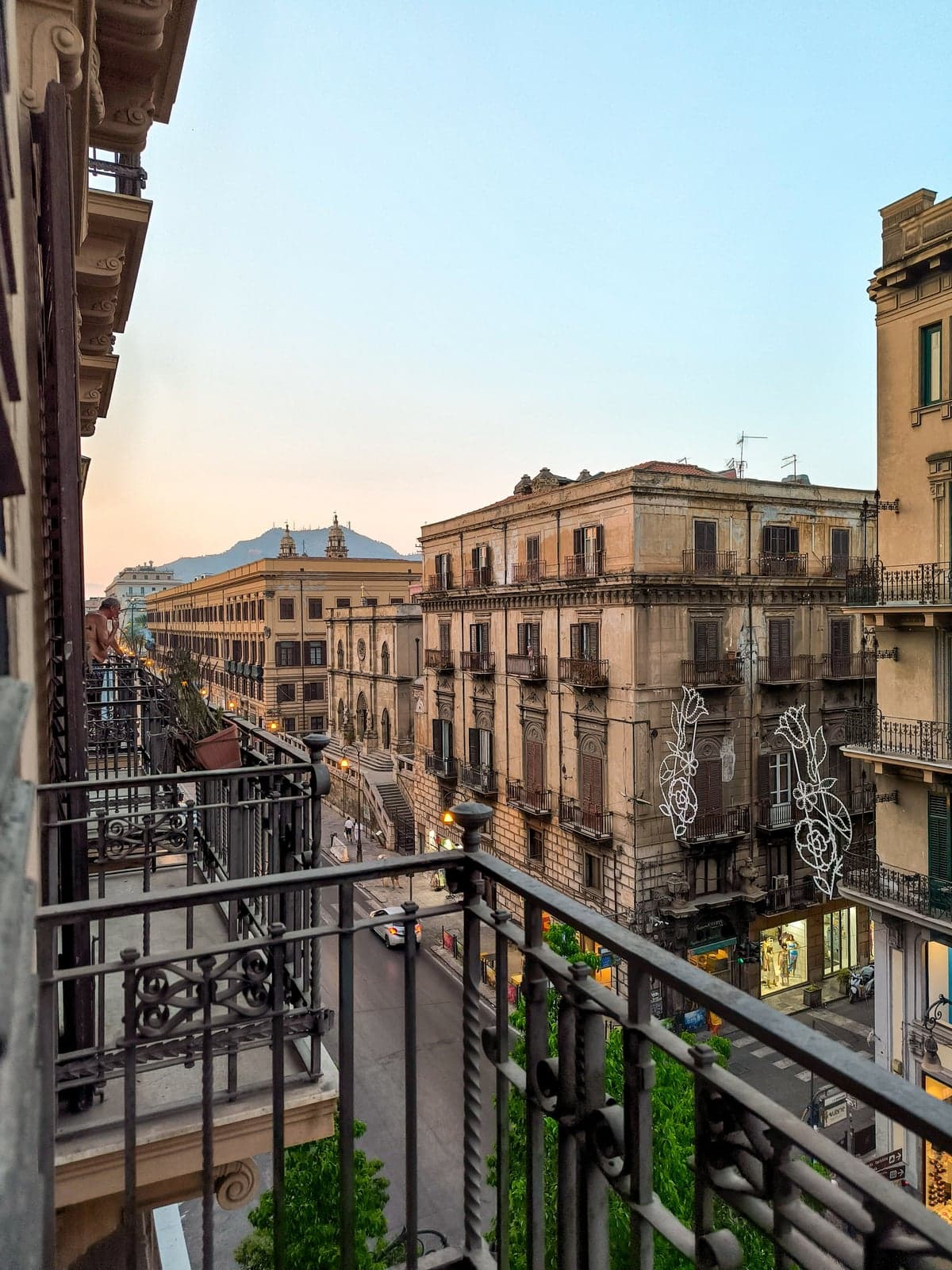
The trouble is not a quarter anyway, it is the last two turns. Come back late from the opera and the way in past Via Bara all'Olivella, toward Via di Lampedusa and Via Valverde, goes narrow, unlit and empty around midnight. So the rule is about the route rather than the address: stay on the lit boulevards, Via Roma, Via Maqueda, Via Cavour, for as long as they will carry you, and cut in toward your door at the last possible corner.
That turns a booking into two questions worth asking before you pay. Ask for a room off the lane rather than over it: the difference between a courtyard side and a street side is a night's sleep. And trace the walk home from dinner on a map first, because an address is only central if it is central to a lit street, and plenty of them are central to nothing but a delivery van.
Getting in from the airport, and getting around without a car
The airport is west of the city, and both cheap ways in start at the terminal itself: a train from the station underneath it, Palermo Aeroporto (Punta Raisi), and the Prestia e Comandè bus.
| From the airport | Fare | How often | Where it leaves you |
|---|---|---|---|
| Train (Trenitalia) | €6.80 adult, €3.50 ages 4 to under-12 | Two an hour, fewer in some bands | Notarbartolo first, Palermo Centrale at the end of the line |
| Airport bus (Prestia e Comandè) | €6 one way, €6.50 on board | Every 30 minutes, all year | The Centrale station area, 50 minutes |
Two things that table cannot tell you. The half hour you will see quoted for the train is the time to Notarbartolo, not to Centrale, which sits at the far end of the line, so allow more if the main station is your stop. And the airport bus sells out, even on a Sunday in early March, so buy ahead if you land at a busy hour.
Once you are in, walk. Out of Palermo Centrale onto Piazza Giulio Cesare, then straight up Via Maqueda, and the Quattro Canti is about ten minutes away, all of it inside the pedestrian area.
If you do need a bus, an AMAT ticket is €1.40 and runs 90 minutes, or €1.80 bought from the driver, and a day ticket is €3.50. Validate it on the first vehicle you board, because the 90 minutes run from the stamp and not from the purchase.
The car is the one thing here I will be blunt about: do not have one. A rental spends a Palermo visit parked somewhere you then have to walk back from, and the center is a restricted zone with its own rules about who may drive in and when. If you are coming from the island's other end, the Catania to Palermo train carries both the crossing and what that zone asks of a driver.
There is a case for booking a door-to-door transfer, and it is worth saying how narrow it is: a flight that lands in the middle of the night, more bags than you want to wrestle onto a train, or a bus that sold out while you were at the baggage belt. Outside those three, the cheap way in is also the good one.
Pre-book a fixed-price airport transfer
Worth it for a late landing, heavy bags, or a sold-out bus - a fixed price, door to door from the airport
FAQ
- How many days do you need in Palermo?
- Two full days on the ground for the city, three if Monreale is on your list. Book by nights rather than days: two nights buys exactly one full day.
- Is Palermo safe?
- Yes, with one exception: your pockets. Of Italy's big cities, Palermo reports the lowest rates of street robbery and of intentional homicide; what it has in volume is pickpocketing, concentrated wherever you cannot move your arms - a packed bus, a market lane at its busiest. City hall's own caveat: reporting habits differ across Italy.
- Is Palermo worth visiting?
- Yes. It is the Sicilian city people put on the list out of duty and come back talking about. The reputation describes a surface, not a day, and the visit turns on whether you planned around the closures.
- Do you need a car in Palermo?
- No. The core is pedestrian, the center sits inside a restricted zone, and the sights in this guide sit close enough together to walk between. The ones that do not - the catacombs, Monreale, Mondello - are still no reason to keep a car.
- Is the Monreale day trip worth it, and how do you get there?
- Yes, as a half day, and go early. AMAT's 389 goes up from Piazza Indipendenza. Up there, the church and the cloister are separate institutions with separate tickets and separate clocks, and Sunday morning belongs to Mass.
See the chapel early rather than on the last morning, keep one morning free of any plan but a market, and let the city be as untidy as it is.