George Mandrovny
How to get from Rome to Sicily: the short answer
Fly, unless the night is doing a job for you. The flight is the short, dull, sensible answer for almost everyone, and the night train earns its hours only when it replaces a hotel night and sets you down in the center of a Sicilian city in the morning, with bags you would otherwise pay to check.
- You do not change trains at Villa San Giovanni. The train is shunted onto a ferry with you still aboard, and Trenitalia puts the ferrying itself at about 30 minutes.
- The train splits at Messina. One half runs up the Tyrrhenian coast to Cefalù and Palermo, the other down the Ionian coast to Taormina, Catania, and Siracusa. Where you are going decides which half you need to be sitting in.
- Whatever you pick, it is one long day or one whole night. There is no fast way to the bottom of Italy.
| Way | What it really costs you | Where it puts you | Best for |
|---|---|---|---|
| Flight | About an hour in the air, more than a dozen departures a day | Palermo or Catania airport | Most trips, most dates |
| Night train | A night on board | Palermo, or Taormina, Catania, and Siracusa, depending on your half | A night you would otherwise pay for |
| Day train | Most of a day, in daylight | The same four arrival points | The view, and being awake for the crossing |
| Drive and car ferry | A full day at the wheel, then €43.20 for a standard car | Wherever you like, with a car to park | A road trip that continues in Sicily |
| Overnight ferry | 13h30 from Civitavecchia (from €52), about 11 hours from Naples (from €43) | Palermo | A cabin, a car, and a night you sleep through |
| Long-distance bus | Rome to Catania 9h55, Rome to Palermo 13h55 | City to city | Travelers the hours do not frighten |
The hours in that table are the whole case against the bus, and a long-distance bus in the south is a reliability bet as much as a booking. That is why I spend the rest of this article on the other five.
Where in Sicily you land changes the answer
A Rome train to Sicily is really two trains traveling joined, and at Messina they come apart. One portion runs the Tyrrhenian coast: Milazzo, Patti, Barcellona, Capo d'Orlando, S. Agata di Militello, Cefalù, Termini Imerese, Palermo. The other turns down the Ionian: Taormina, Giarre, Riposto, Acireale, Catania, Lentini, Augusta, Siracusa. Messina is where the two halves part company, and for most travelers that is the whole of what Messina is.
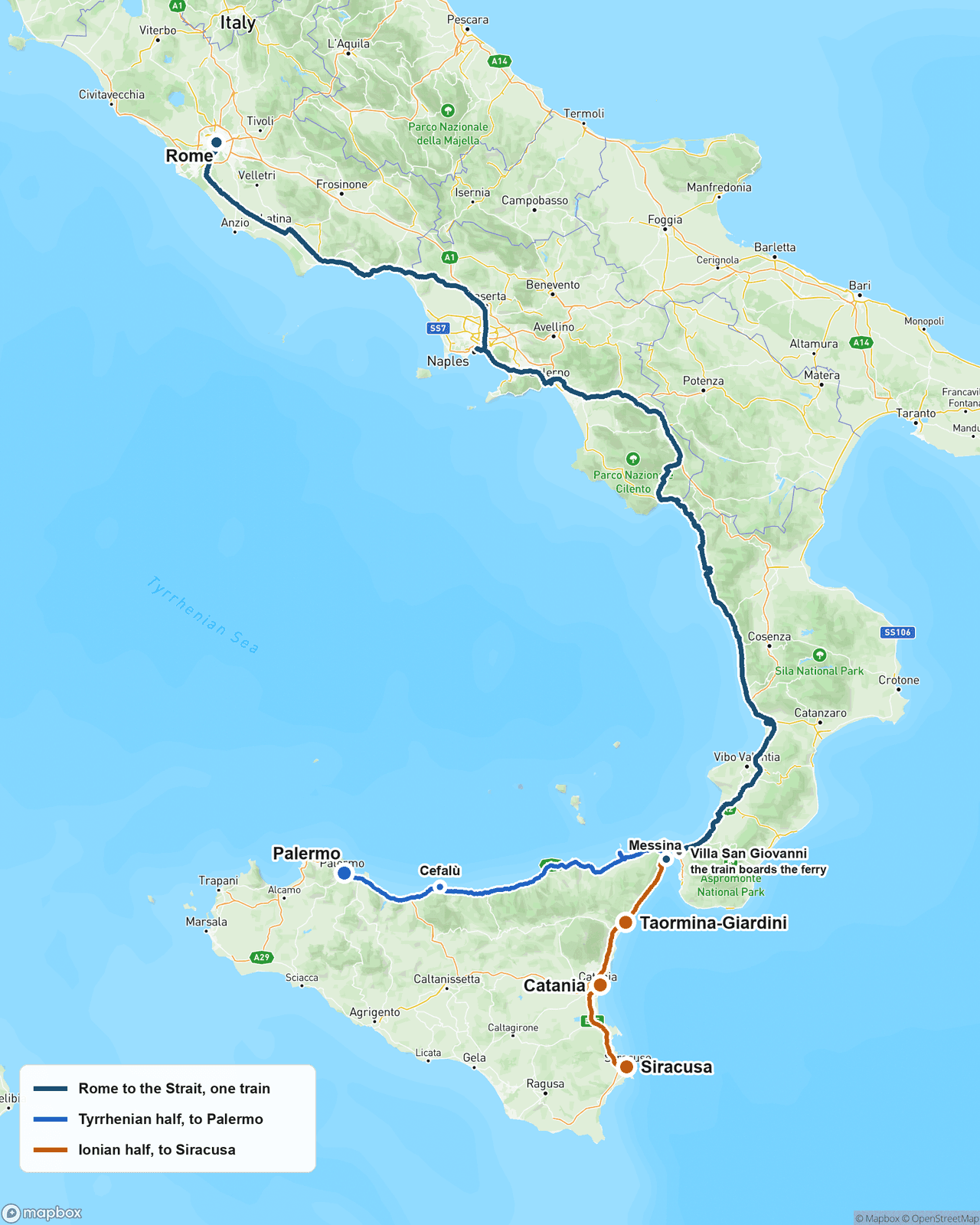
So Sicily, from Rome, is not one destination but four arrival points, and each of them is for something different:
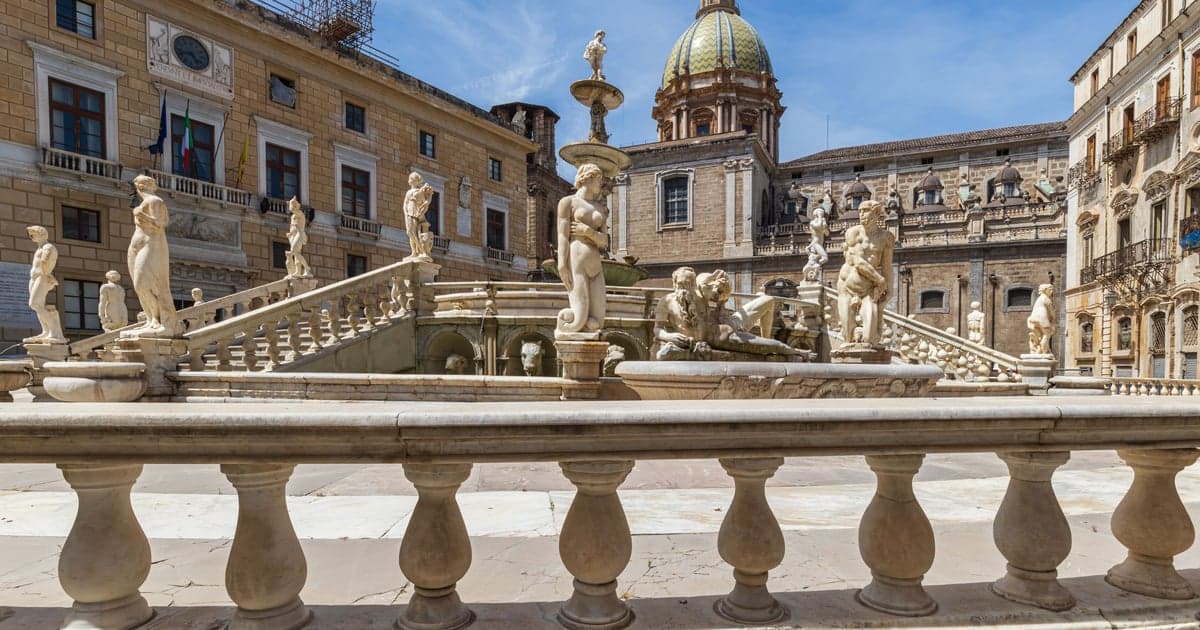
- Palermo. The western half of the island: the capital, its own airport, and where the overnight boats from Rome's own port and from Naples come in. Cefalù sits on the same branch a couple of stops short of the city.
- Taormina-Giardini. The east coast resort strip, and the Ionian branch's first stop after the split.
- Catania. The eastern airport, the usual base for Etna, and the way into the southeast.
- Siracusa. The far southeastern corner, where the Ionian branch ends.
Flights reach only two of those four. That is the whole reason the train is not simply a slower way of doing the same thing: if your Sicily is Taormina or Siracusa, the plane stops well short of it and hands you a ground leg to plan and pay for, while the train goes there.
Picking the gateway pair is a bigger decision than any one travel day, and it belongs with the itinerary rather than here: which pair of airports a Sicily trip should be built around. The rule I keep coming back to is to fly into one end of the island and out of the other, because doubling back across Sicily costs a day.
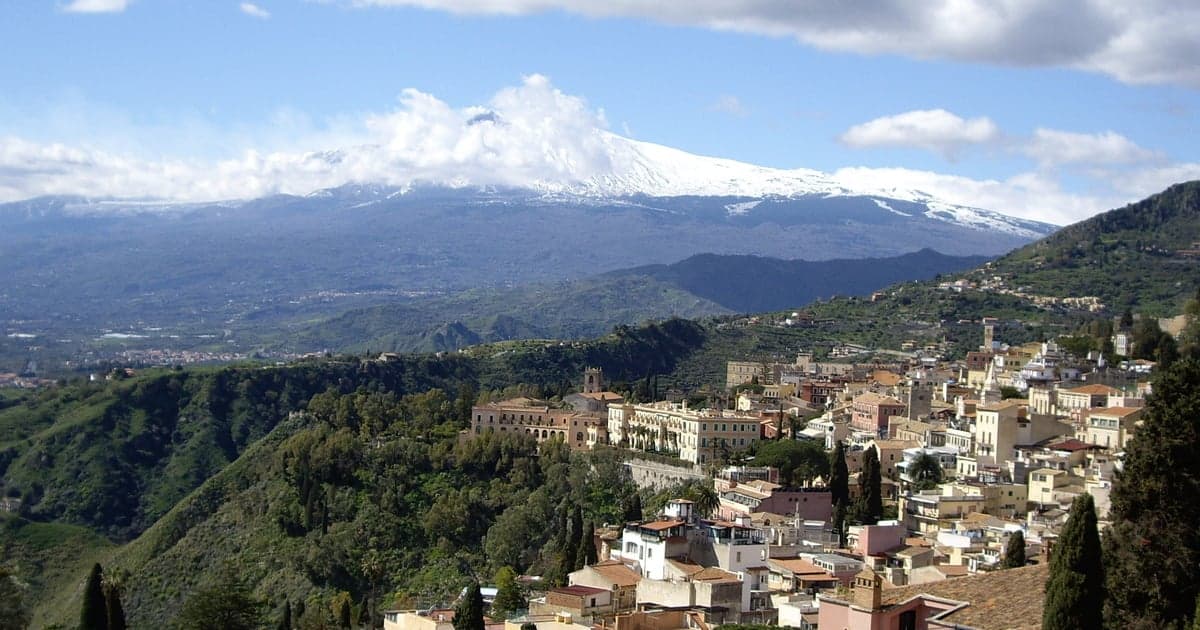
One warning before you pick that Ionian stop: Taormina-Giardini station is not in Taormina. The town sits well above the platform, and closing that gap with luggage is a small operation of its own - what arriving at Taormina-Giardini actually involves is worth five minutes before you book.
Flying: an hour in the air, most of a day door to door
Fiumicino flies nonstop to Palermo and to Catania, more than a dozen times a day to each, so the timetable is not the constraint here. You pick a departure that suits the rest of the day instead of building the day around it.
The hour in the air is the smallest part of the day:
- Getting out to Fiumicino. A trip of its own from central Rome, taken before you are anywhere near a gate.
- Bag drop and security. Quick on a good morning, and you never know which kind you have until you are in the line.
- The cushion. You leave enough slack that one delay does not end the day, time you spend whether you need it or not.
- The ground leg at the far end. The airport is not where you are going, and closing that gap is a leg to plan and pay for.
Add those up and the flight is not an hour, it is most of a day with an hour of flying inside it. That is why the argument never settles: the flight wins, and by much less than the hour suggests.
One worry you can drop: the hop to Sicily is a domestic flight. Whatever border formalities your trip involves happen in Rome, not again on the way into Palermo or Catania.
When you search, price Palermo and Catania on the same dates rather than fixing on one first: a cheaper seat into the wrong end of the island hands the saving back in ground transport. Then check two things: whether the fare includes the bag you are actually carrying, and what an early departure buys you at the Sicilian end.
Your flight ends at somebody else's front door. Landing at Catania you still have the coast to cover, and the services that do it keep their own hours: the onward legs out of Catania airport, and the hour they stop running is the piece to read before booking a late arrival.
The train that boards a ferry: why you don't change at Villa San Giovanni
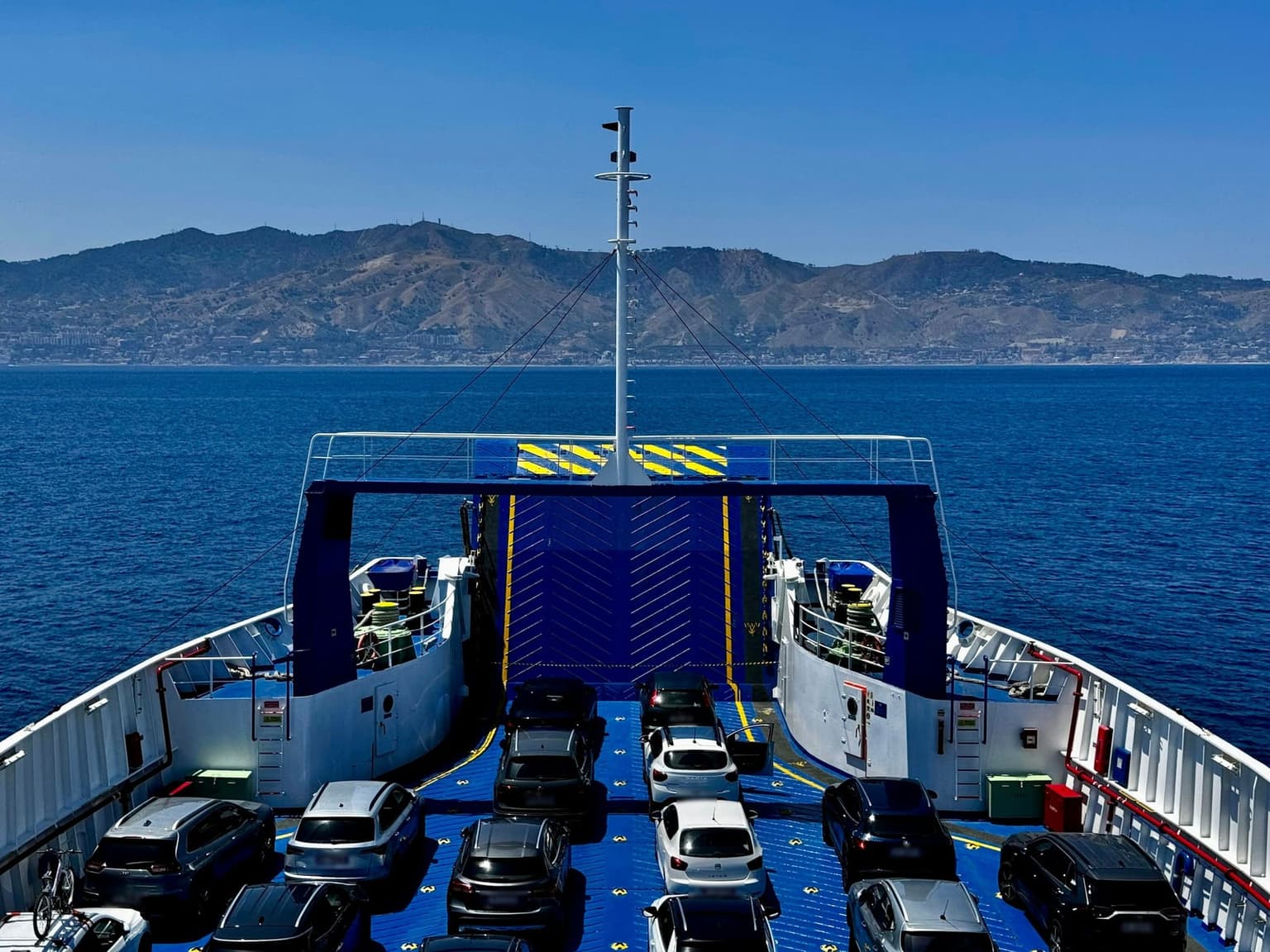
Trenitalia runs ten Intercity connections a day into Sicily, six of them Intercity Notte. None of them stops at the Strait to hand you over to something else. At Villa San Giovanni, on the Calabrian shore, the train's cars are run aboard a ferry with the passengers still inside them, and Trenitalia puts that ferrying at about 30 minutes. Half an hour of your journey is the train being handled as freight, and you are inside the freight.
The half hour is the ferrying alone. On my crossing the whole stop at Villa San Giovanni ran closer to an hour, because the shunting comes first: a small switching engine splits the train into two or three pieces and pushes them, slowly, along the rails into the dark hold of the ship. Down there it smells of diesel and the sea, and the wheels bang over every steel joint. You do not have to sit through the crossing itself. Once the ship is moving you can leave the car, climb the narrow metal stairs to the open deck, and drink an espresso from the bar while Sicily comes up, with the gilded statue of the Madonna della Lettera, Messina's patron, standing on its column at the harbor mouth. Nobody locks the car doors and people leave their heavy bags aboard, but keep your passport and wallet on you. Before Messina an announcement calls everyone back down, and on the Sicilian side a fresh engine pulls the pieces ashore and puts the train back together.
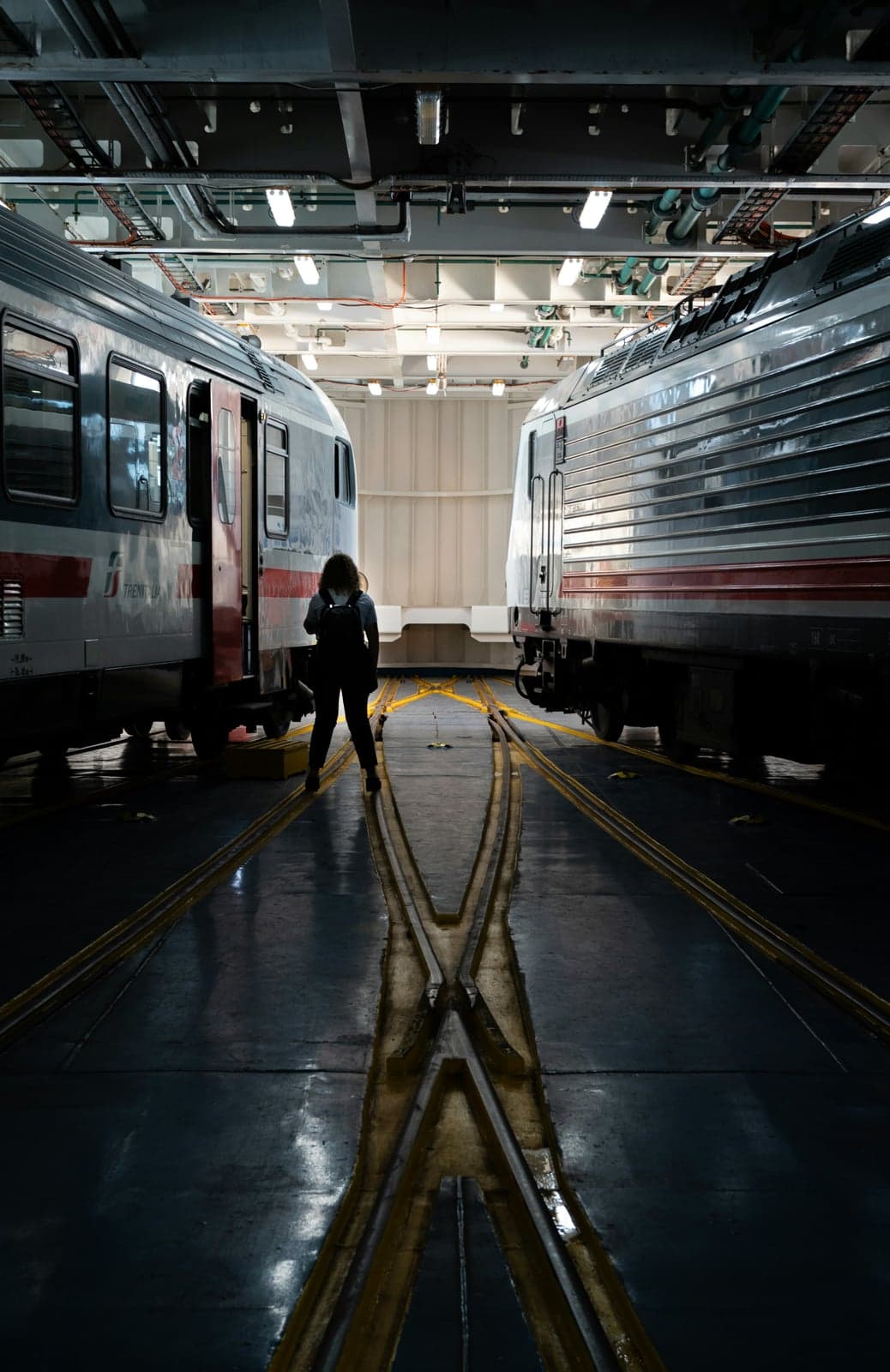
You do not change trains at Villa San Giovanni. It gets its own line because it is the most common way this trip gets planned wrong: the name turns up in a timetable, people read it as a connection, and they start building a transfer nobody asked them to make - a boat ticket to buy, a walk with the bags, a margin to leave in case the first train is late. None of it exists. You stay where you are, in the seat you booked.
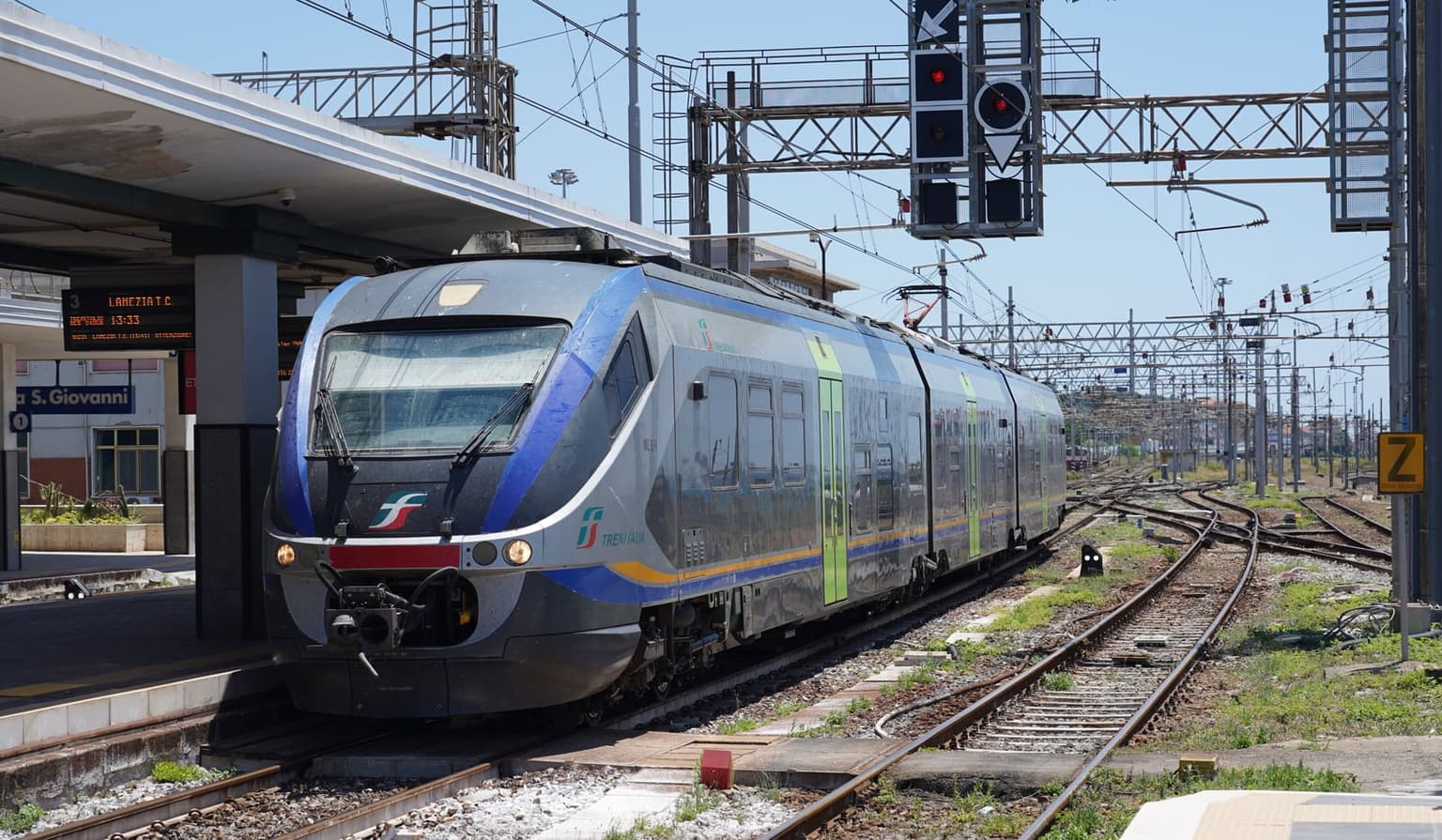
The mistake that actually costs money is quieter. Which towns your train serves is not a property of the route, it is a property of your service: the two halves call at different places, and a town you assumed was on the way may not be on your train at all. So read the stop list of the exact service you are booking, and not a map of the coast. The same caution covers the clock - third-party ticket sites quote journey times that do not match Trenitalia's own, so build your onward connections off the operator's result rather than a reseller's. And if you find out too late that your half of the train is landing you at the wrong end of the island, it is recoverable: crossing the island from one gateway to the other is a solved problem, just not one you want to solve on your first morning.
One ticket is one train. If you want to break the run rather than do the whole length in a sitting, book the legs separately, and Naples is the sane place to do it - far enough south to shorten what is left, and big enough to be worth the night.
Night train or day train: what you actually get
Trenitalia sells four levels of accommodation on its Intercity Notte trains: Easy Seat, Comfort couchette, Relax sleeping car (cabins in single, double, and triple layout), and Superior cabin. Snacks and drinks come through on a cart at every level.
What those names buy you, in plain terms:
- Easy Seat. A seat, and a night spent sitting up in it.
- Comfort couchette. A bunk in a compartment you share with strangers.
- Relax sleeping car. A cabin with real beds, sold as a single, a double, or a triple.
- Superior cabin. The same idea, one grade up.
Then check what your own train offers before you get attached to any of them. The fleet is also changing: Trenitalia has 70 new cars on order for the Sicily night trains, couchettes among them with four beds to a cabin and climate control you set per cabin, scheduled for service from mid-2026, so depending on your date you may ride an old car or a new one.
The cabins in the videos and the older guides are not a promise about the service you are booking; the booking page for your date is the only thing that settles it. And if the point of the night is sleep, the seat is not the way to buy it.
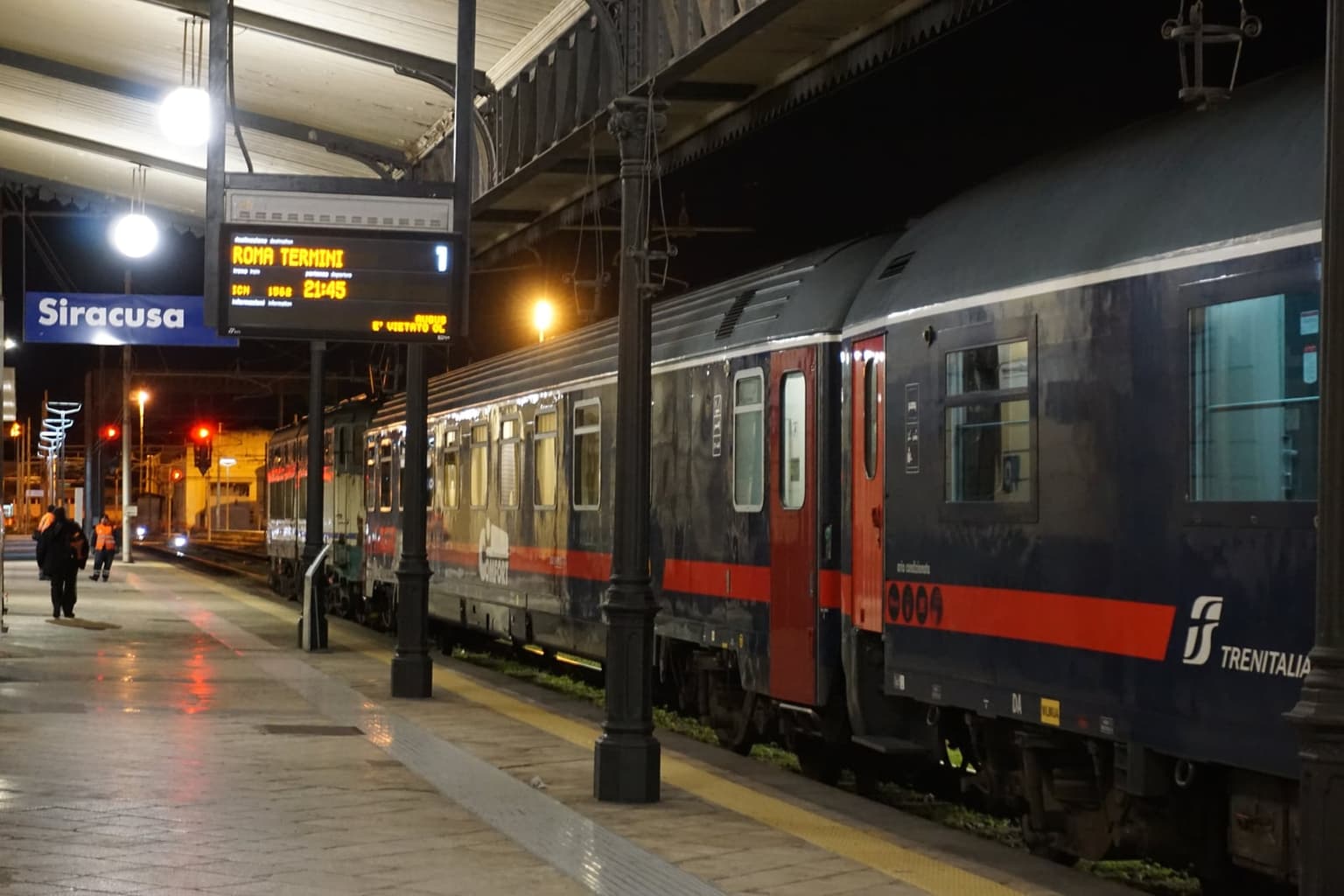
Now the part the photographs leave out. A night train is transport, not an evening out. A couchette moves all night, side to side, and you can arrive with the kind of tiredness that takes the next morning with it. There are regulars on this route who simply fly, and I would not argue with them - which is not the same as talking you out of doing it once.
So here is the test, and it is a strict one. The night earns its place when it does three jobs at once: it replaces a hotel night, it puts you down in the middle of a city rather than at an airport, and it carries bags you would otherwise pay to check. Two out of three and the flight is the better buy. The day train's case is smaller and entirely different: you spend most of a day, in daylight, and you are awake for the crossing, which is the only honest reason to choose it.
The night train's sting is the arrival. You step onto a platform early in the morning with your bags and hours to go before any room is ready. If you pre-book a car to meet the train, check four things: that the quote is fixed rather than metered, that the meeting point is a named spot rather than "arrivals", that the drop-off is your actual address, and that the driver waits if the train runs late.
Booking a Rome to Sicily train: when seats appear, and the strike check
Italy rewrites its national timetable once a year, in the middle of December, and the Sicilian legs are usually among the last to settle into the new one. So a search for a date next spring can come back empty, which reads like bad news and rarely is. A date past the end of the published timetable is not a day without a train; it is a day that is not on sale yet.
Three checks before you buy:
- Ask the operator, not the first search box you find. Trenitalia's own booking page is what decides whether your date is on sale; if it returns nothing, note the December change in your calendar and search again then.
- Look for strikes on your date before you commit. They are called ahead of time rather than sprung on the day, and this corridor is not exempt.
- If the results look like another day's, look again. A weekend date that answers with a weekday pattern is worth re-running on the day view before you believe it.
Two things to know at the buy button. Super Economy, the cheap advance fare, is valid on Intercity Notte as well as the daytime Intercity trains, so the sleeper is not shut out of the discount. And where a fare is otherwise non-refundable, Trenitalia sells tiRimborso, a paid add-on that buys back the right to a refund - worth pricing on a date you are not sure of.
Search your own date here: Trenitalia's journey search
And I would not buy a non-refundable fare on this corridor without checking my date against Italy's official strike register first. It is in Italian, but the dates and the rail sector (ferroviario) read easily enough: the Transport Ministry's list of announced strikes
Driving from Rome: a day at the wheel before you cross
Driving to Sicily begins with a full day at the wheel and ends with you still on the mainland. The highway down the peninsula does the whole job, and when it stops it stops at the water, with the crossing still ahead of you.
What that day actually costs you:
- The day itself. A whole day given to the road, and nothing along it you would have stopped for.
- The crossing on top of it. Another ticket and another line, after the driving is done.
- The car at the other end. Sicilian towns were not built around parking, and the car has to sleep somewhere every night.
The real argument is not about driving at all: the car has a job in Sicily and no job on the way to it. Arriving without one and renting where you land is what kills most drive-down plans once people price the days.
Pick up at whichever airport your route actually uses, and check three things before you sign: that the car is an automatic if you cannot drive a manual, what the fuel policy expects back, and whether the desk is in the terminal or a shuttle ride away.
Compare rental cars at the Sicilian airports
Palermo or Catania airport: check the transmission, the fuel policy, and where the desk is before you sign
If you drive anyway, the car boat is Caronte & Tourist's, Villa San Giovanni to Messina: a daytime crossing is €43.20 one way for a car carrying up to five people, with the fuel surcharge and the ETS/FuelEU charge included. Departures run every 40 minutes, guaranteed around the clock, seven days a week, so missing one costs well under an hour. Keep the booking confirmation, with your vehicle's details on it, where you can produce it in the lane: the fare is priced by what you are driving, and which class your car falls into is not a question to answer from memory with a line of trucks behind you.
⚠️ Warning
The sailing is rarely the problem; finding the lanes is. The entrance is poorly signed, and a pin dropped on a Messina ferry can put you a long way from where cars load, so open the operator's port-entry map before you are committed to a lane. Get there earlier than you think, too: there is no shade and no restroom where you wait, and sailings have been known to leave ahead of the posted time.
Open this before you go: Caronte & Tourist's port directions and boarding map for Villa San Giovanni
Which boat is yours: the three operators at the Strait
Three company names come up for the same short crossing, which is how travelers reach Messina unsure what they are supposed to buy. Sort them by what each one carries and the question answers itself.
| Operator | Carries | Route | What that means for you |
|---|---|---|---|
| The train ferry | Your train, with you inside it | The Strait, from Villa San Giovanni | Nothing to buy, nothing to do |
| Blu Jet | Foot passengers | Messina Porto Storico to Villa San Giovanni | The boat to look for if you are crossing on your own |
| Caronte & Tourist | Cars and other vehicles | Villa San Giovanni to Messina | You cross in the car, through the vehicle lanes |
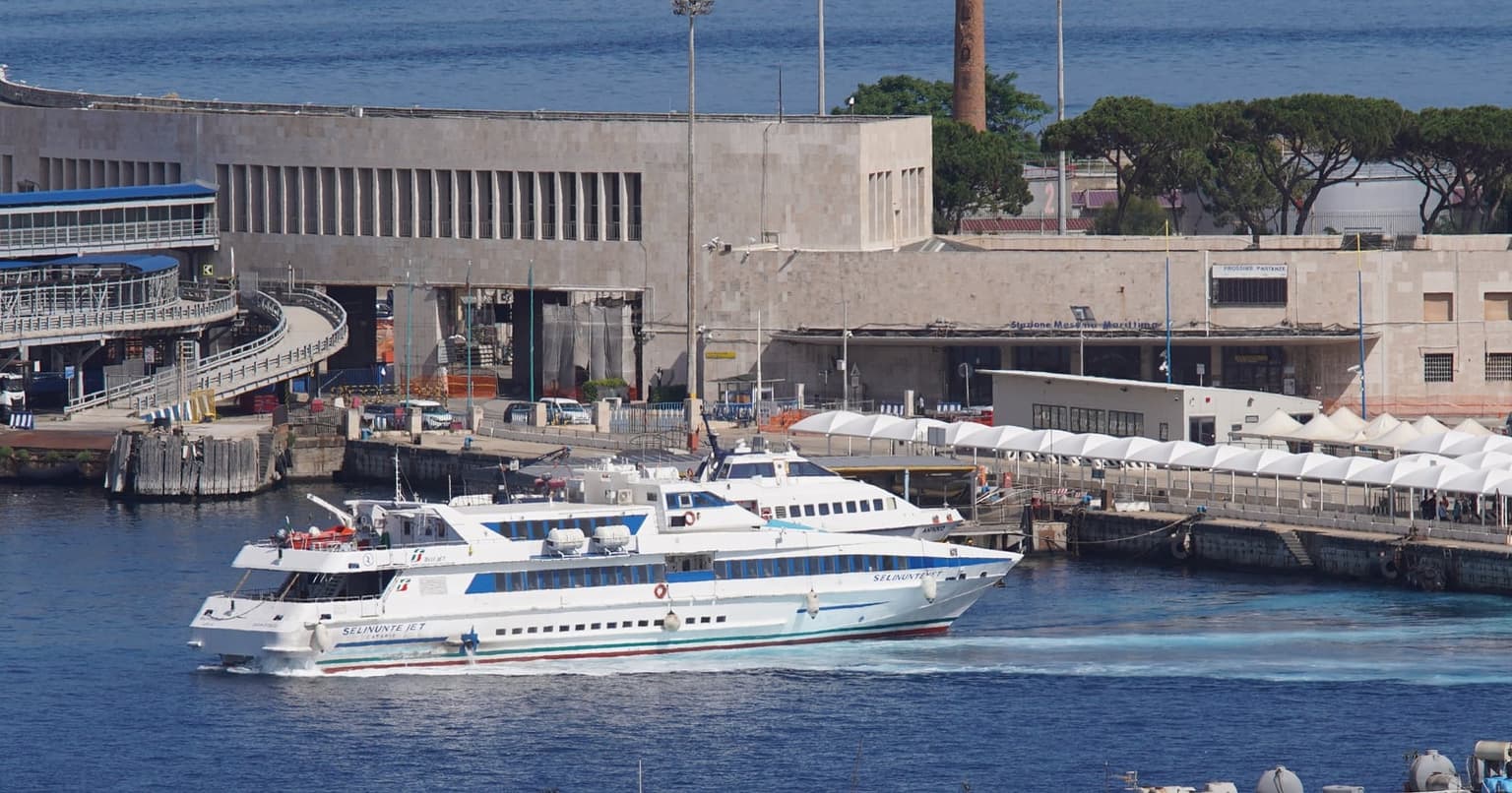
Blu Jet is the one most travelers on foot need. It runs 16 crossings in each direction: first out of Messina at 05:20, last at 23:50; first back from the Calabrian side at 05:45, last at 00:25, with 20 minutes on the water. Many runs are built around Trenitalia and Italo connections, so check the sailing against your own train rather than assuming they meet. If anyone with you needs help getting aboard, the operator asks for 90 minutes' notice before departure. And the last sailing matters more than the first: it is the end of Blu Jet's day, not the start, that decides whether the boat is still running when your train gets in.
⚠️ Warning
If you are on foot with luggage, do not follow the route the cars take. Vehicles load through lanes shared with heavy trucks, and hauling a suitcase along that road is the one genuinely dangerous way to cross the Strait. The passenger boat exists so that you never have to.
Sailing times move for weather, port traffic, and whatever else the day brings, so look at the current timetable before you build a connection around one: Blu Jet's passenger timetable for the Strait
The overnight ferry from Naples or Civitavecchia
Civitavecchia is Rome's own port, which makes this the one crossing to Sicily that begins where you already are. GNV sails it to Palermo overnight. Naples is the shorter version, with evening departures daily all year, and it earns its place only if you were passing through anyway.
| Port | Crossing | From | Lands at |
|---|---|---|---|
| Civitavecchia | 13h30 (13h45 returning) | €52 | Palermo |
| Naples | About 11 hours | €43 (€42 returning) | Palermo |
Check the sailing calendar against your own date: GNV's departures calendar for Civitavecchia to Palermo
The cabin is not the upsell, it is the product. Both of these sailings sell deck passage, a reclining seat, cabins and suites, and pet-friendly cabins; out of Naples the cabins also come as inside or sea-view. The seat is the choice people regret around two in the morning, upright among strangers with a bag against one leg. If the boat is saving you a hotel night, buy the bed you are saving.
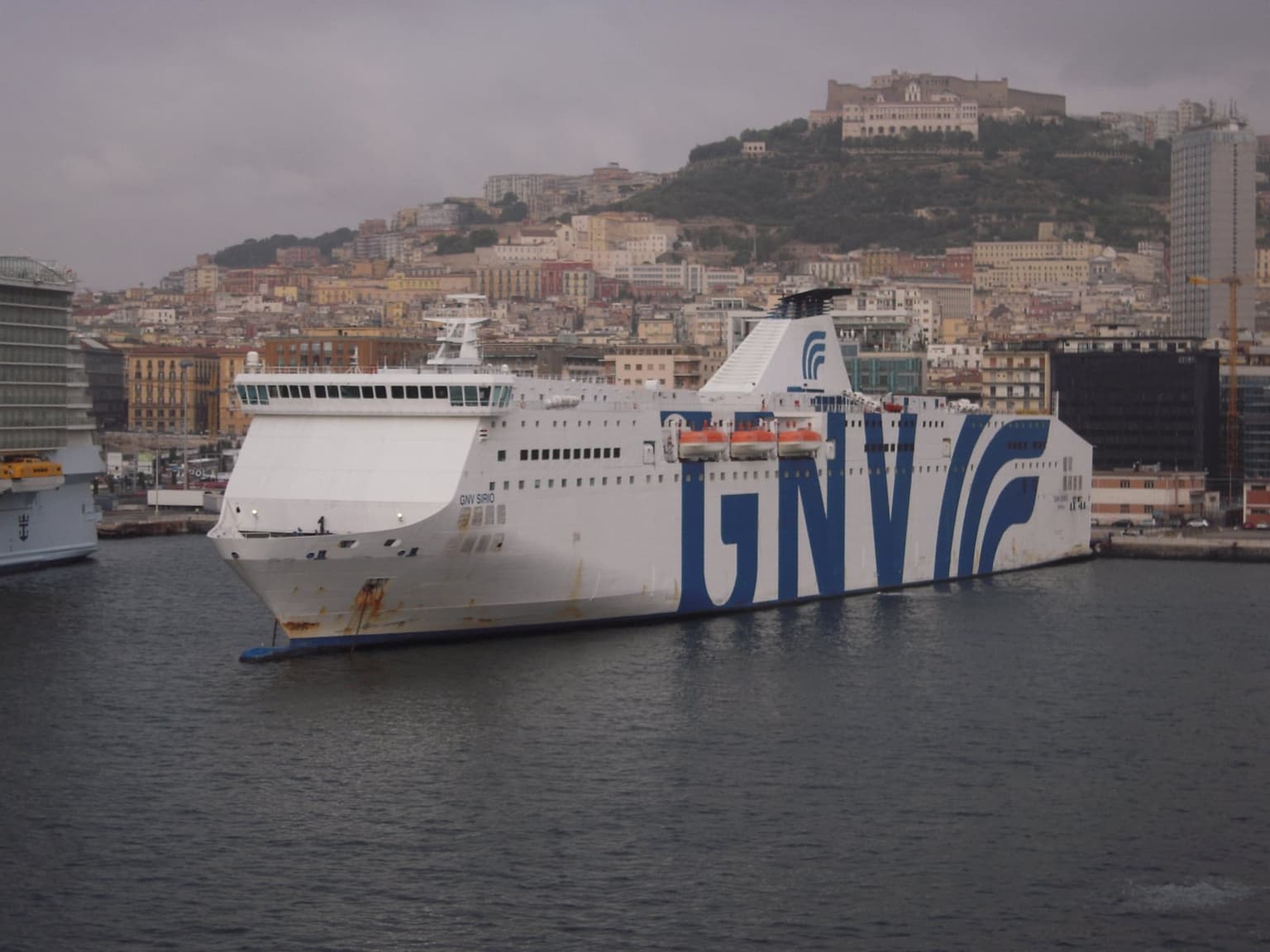
⚠️ Warning
A ferry chain has no slack. Sailings get canceled, boarding times move, and getting off at the other end can take longer than anyone plans for. Don't book a train out of Palermo that depends on the boat running to the minute, and don't cross the night before something you cannot miss.
You come ashore in the morning with the day already started and a room that isn't ready until afternoon, which is a gift rather than a gap: a morning in Palermo before your room is ready.
Drop the bags first. Check that the place is open at the hour your boat actually lands, that it prices per bag per day rather than by the hour, and that it is a walk from where you come ashore rather than a ride.
Find luggage storage in Palermo
Open when your boat lands, priced per bag per day, a walk from where you come ashore
Naples is also where people split the trip: a night there turns the crossing into an evening boarding instead of a second travel day.
FAQ
- Does the train really go onto a ferry, and do you change at Villa San Giovanni?
- Yes to the first, no to the second. The train's cars are run aboard the ferry with the passengers still inside them, and Trenitalia puts that ferrying at about 30 minutes. You stay in your seat.
- Is the overnight train to Sicily worth it, or should you fly?
- Fly, unless the night is doing a job for you. The flight is about an hour in the air. The train earns its hours only when it replaces a hotel night and lands you in a city center.
- Is there a bridge to Sicily yet?
- No, and no construction site has opened. Italy's audit court, the Corte dei Conti, is expected to rule in October or November 2026, and a green light would open a construction site, not a bridge. Nothing about a 2026 or 2027 trip changes.
- Can you drive from Rome to Sicily, and what does the ferry cost?
- Yes, and it is a full day at the wheel before you reach the Strait. The car boat is €43.20 one way at the daytime rate for a car with up to five people, and it sails every 40 minutes around the clock.
- Is there a ferry to Sicily from Rome?
- Yes, from Civitavecchia, Rome's own port: GNV sails to Palermo in 13h30, from €52. Naples is the shorter crossing, about 11 hours from €43, and worth it only if you were stopping there anyway.
Decide where in Sicily you are actually going, and the way there mostly decides itself. The train is a fine thing to have done and the wrong answer on most nights; both are true.