George Mandrovny
The short answer: two days at the end of the road
Give San Vito lo Capo two days and a car: one for the sand, one for the Zingaro reserve or the boat that reaches the same coves. Sleep here rather than driving out from Palermo and back the same day.
Three things settle everything else:
- The trap first. Western Sicily is where a car-free plan comes apart, and this cape is the sharp end of it: no railway reaches San Vito, and the airport shuttle that booking sites still sell is suspended at both Palermo and Trapani on the operator's own pages. Settle the car or a booked transfer before you fly, not in the arrivals hall.
- The reserve is a walk, not a beach day. The gate takes cards only, inadequate footwear is refused at the entrance, and the coastal trail runs two hours one way and does not loop back. People drive out for a swim in flip-flops and get turned around at the gate.
- The water outlasts the season. October still averages around 73°F (23°C), which is a real swim weeks after the umbrella rows thin out, and the town does not board itself up the moment the crowds leave.
San Vito sits at the tip of the cape, and the road ends here: it gives out where the reserve starts and a footpath takes over. You come out on purpose or you do not come at all, and past the last umbrella everything worth the drive is on foot or from the water. Two days is what that costs: one where the sand does the work, and one where you do.
The beach: which sand is free, and which row you are paying for
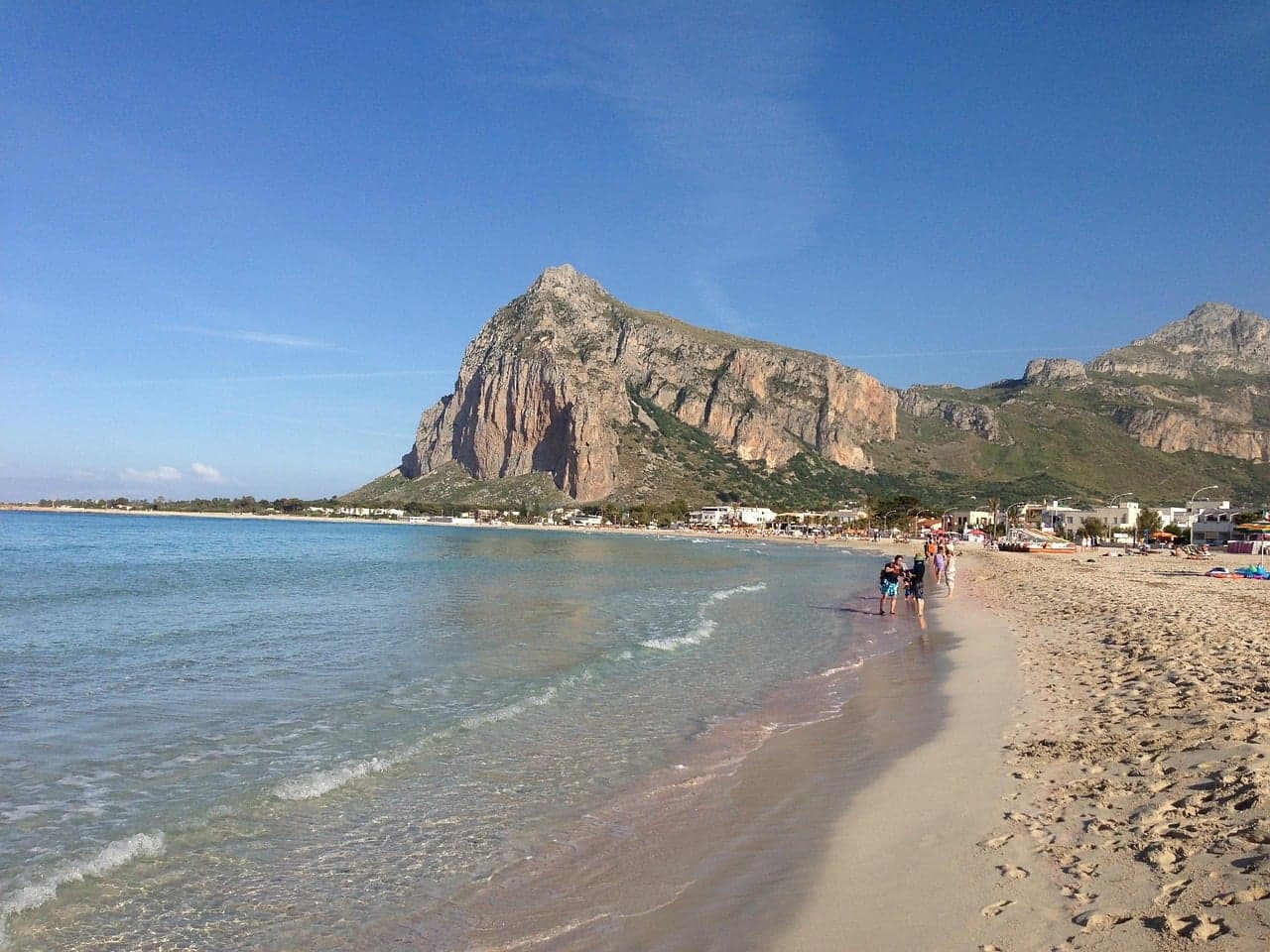
San Vito's beach is a wide crescent of fine white sand under the gray cliff of Monte Monaco, and it shelves so gently that the turquoise runs a long way out. That is the town's whole product, and everything else here is arranged around it.
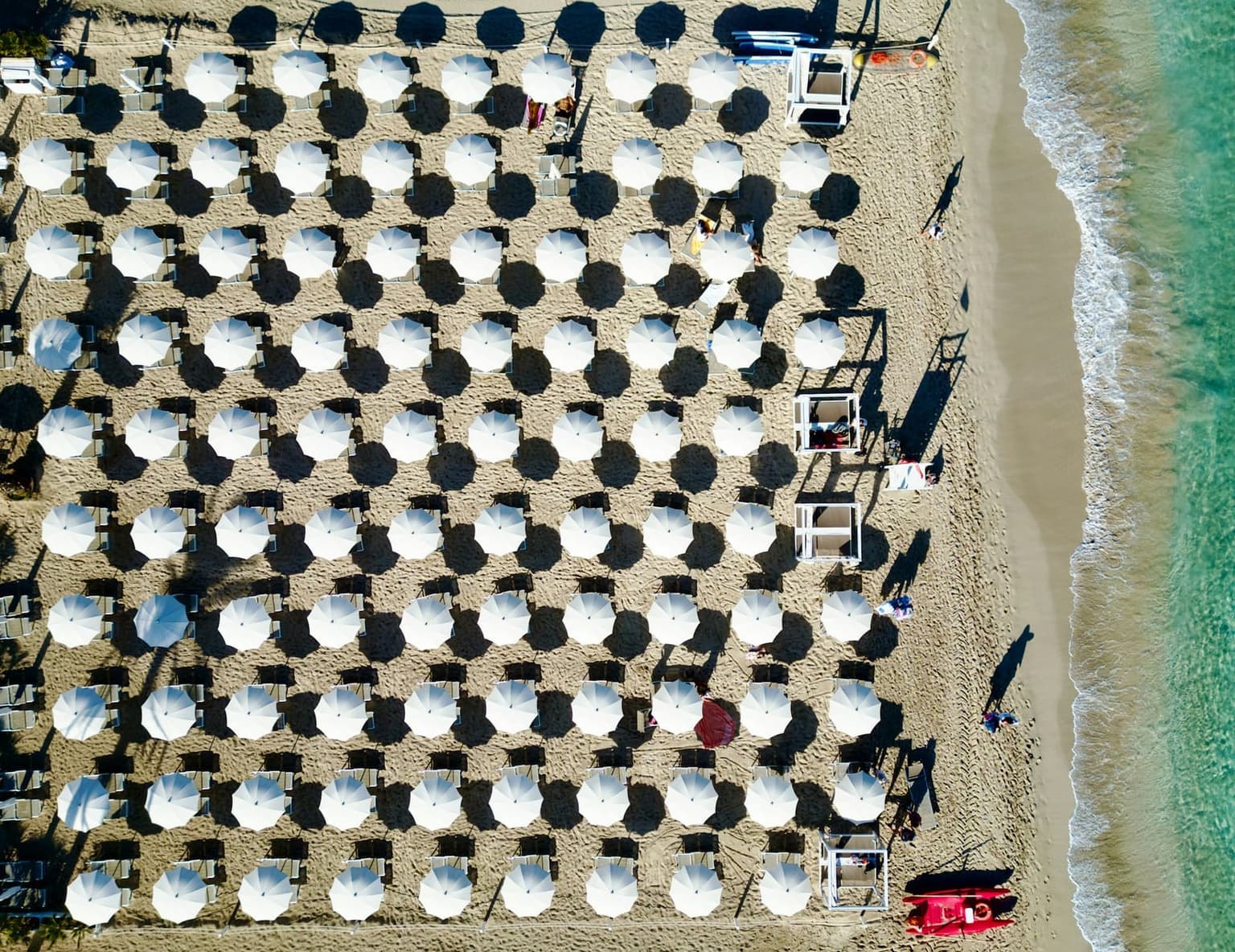
Part of that sand is rented out by the beach clubs, the lidos, and they price it by row. An umbrella and two sunbeds run roughly €20 - €40 a day: cheaper the further back you sit, steeper in July and August. Those figures come off an operator's own published list for last season, so read them as the shape of the market rather than this year's quote. The row is the price. If it were my money I would sit in a back row and keep the difference, because you walk to the water either way.
The rest is free sand, and no one publishes a map of which stretch is which, so do not look for a line on the ground. What settles the question is enforcement. In August 2026 the Coast Guard and the finance police worked the free sand - the spiaggia libera - and found six of the thirteen licensed rental businesses had crept their equipment past the permit lines: 51 umbrellas and 102 sunbeds seized, €6,160 in fines, under the national campaign Mare e Laghi Sicuri 2026. The principle it established is the useful part. A license to rent umbrellas is not a license to convert public beach into a lido, and if your towel is on free sand you do not have to move.
Off the sand, cover up - but only away from the water. The beach itself and the seafront promenade do not care what you are wearing. Walk a few streets back into town, though, and a supermarket or a bar will ask you to put a shirt on before you come in. That is a word from whoever is working the counter, not a police matter, and no one gets a ticket for it.
Walk to the north end and the sand simply stops. What takes over is bare limestone with open sea on both sides and a lighthouse at the tip, about 1.5 km north of the town. It is a working navigational light and not a visitor attraction: there are no visiting hours for it, and access is limited to the people who work on it. The walk out and the view back are why you go.
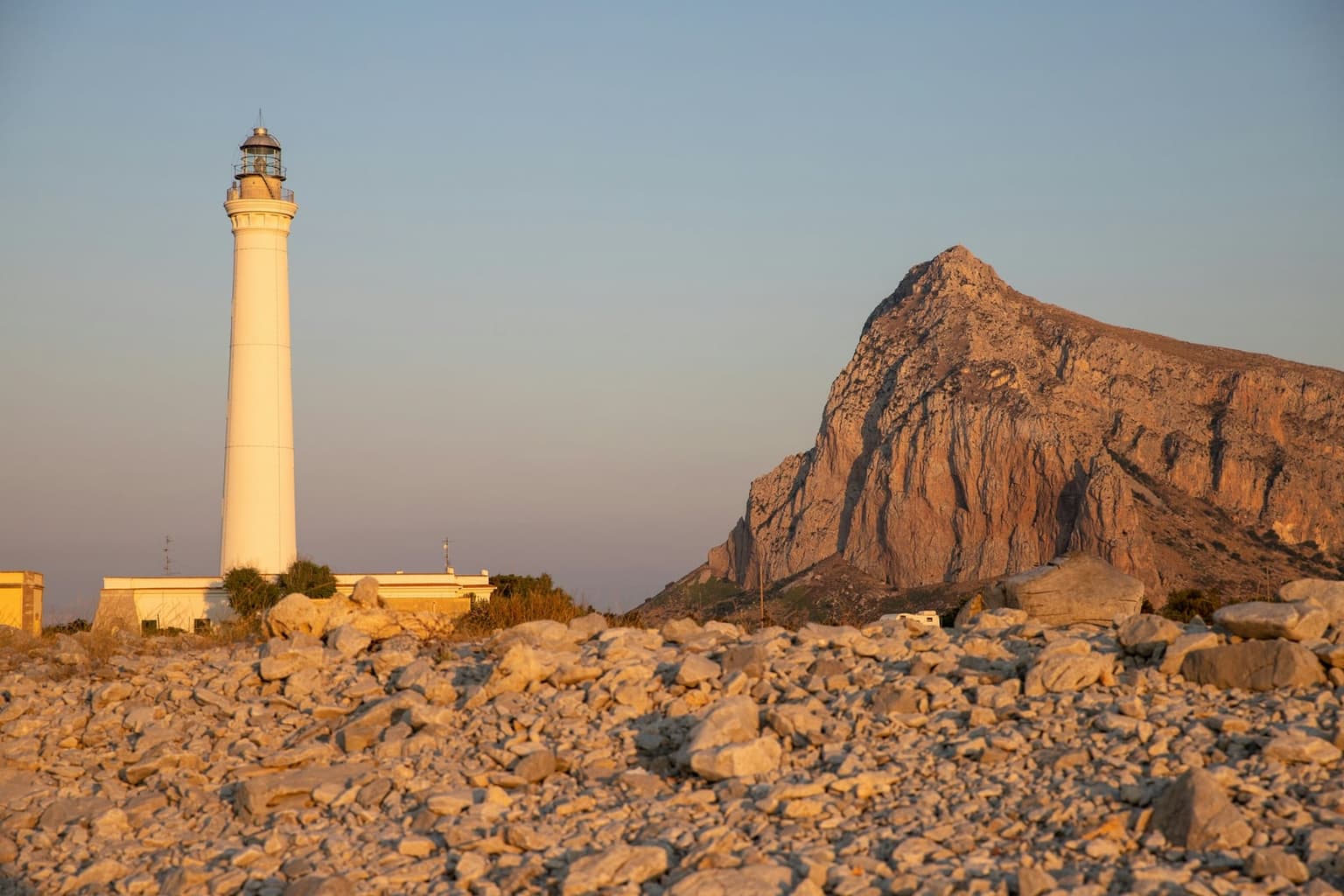
And behind the town, a path climbs the mountain that fills the background of every photograph anyone takes here: start at the southern edge of town, where Via Mondello turns to a dirt track and a wooden signboard marks the trailhead. Red-and-white CAI markers painted on the rock lead from there, though the lower slopes braid into several goat tracks through scrub, so an offline track on your phone is worth having. The climb gains about 500 m in an hour to an hour and a half, more with stops, over loose scree and sharp limestone - sandals or smooth soles are a real hazard here. There is no shade at all on the way up, which makes it a first-light walk in summer and a genuinely bad mid-morning one in July.
Zingaro: where the road stops and the footpath starts
Somewhere past the last houses the road along this coast simply ends, and a footpath takes over. That is the Riserva Naturale dello Zingaro: a run of shoreline with seven pebble coves strung along it, Tonnarella dell'Uzzo, Torre dell'Uzzo, Marinella, Beretta, Disa, del Varo and Capreria, and not one of them reachable on wheels. Two gates open it. The north gate at Tonnarella dell'Uzzo is the San Vito side and the one you use from here; the south gate is at Scopello, at the other end.
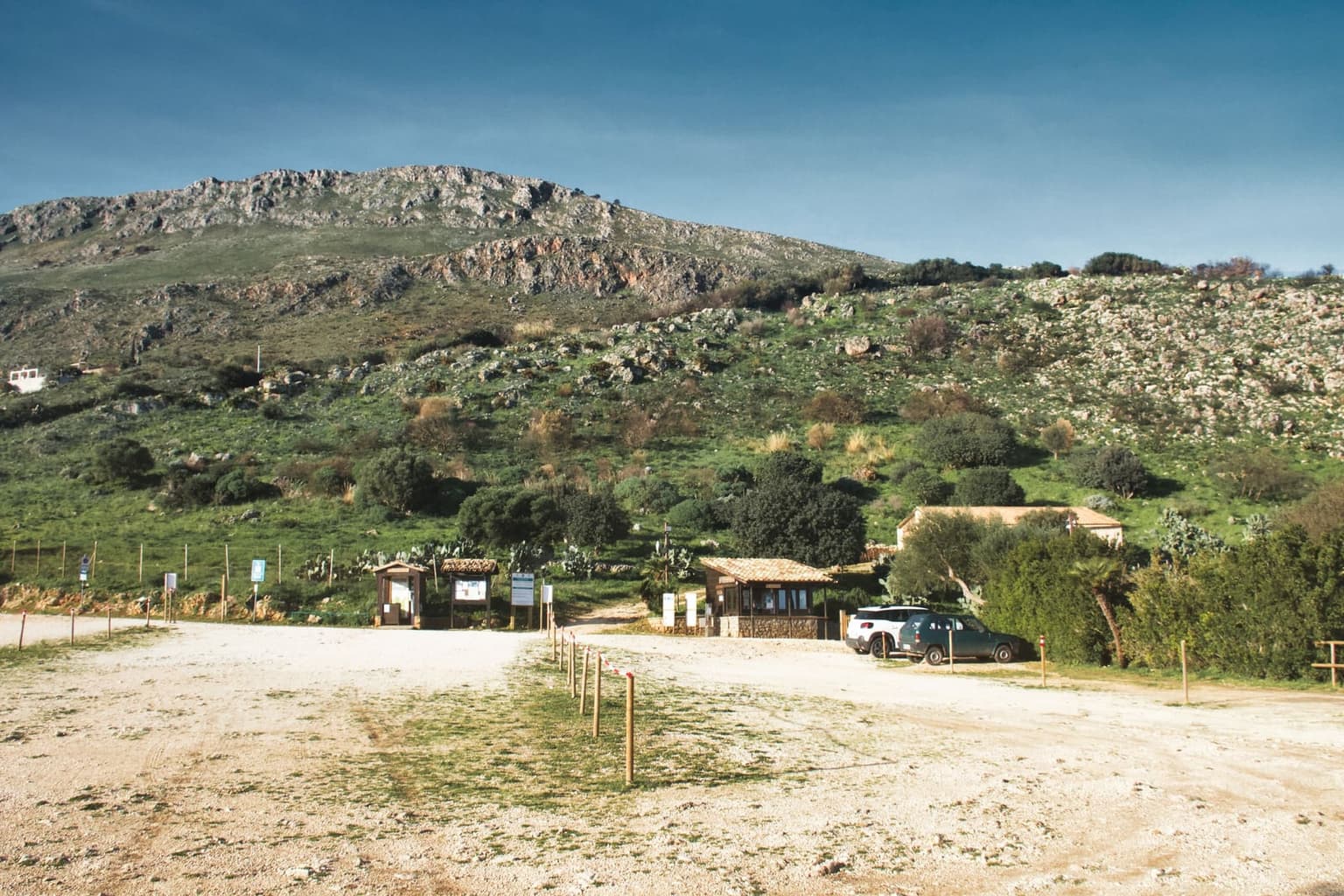
Entry is €5, or €3 reduced, and free for children under 8. The gate opens at 07:00 and closes at 19:00. That is what the reserve publishes now, and all it publishes: no seasonal schedule is posted, so do not assume those hours hold in November. Keep the ticket on you for the whole visit.
⚠️ Warning
Two rules turn people away here. It takes cards only, and cash gets you nowhere at the gate, whatever older guides still say. And inadequate footwear is refused at the entrance: the reserve bans "infradito, ciabatte, scarpe con zeppe" in its own words, meaning flip-flops, slides and anything with a wedge.
The shape of the walk is what trips people up. The coastal trail is about 7 km and two hours one way, and it is not a loop: end to end and back is a four-hour day on bare limestone in full sun. Drinking water exists at two points on the entire path, Cala del Varo in the summer months and the Museo della Civiltà Contadina, with no bar and no kiosk anywhere in the reserve. What you carry in is what you have. The honest plan for most people is the second or third cove and back. If you want the whole coast, take a boat one way or run two cars between the gates.
What the walking buys is a stretch of coast with nothing built on it. The path holds the line of the coast the whole way with the sea underneath you, and every so often the limestone falls open and there is another cove down there: white stone, and water, and no road anywhere near it. Down at the shore it is clear straight to the bottom, and the swim is the part you carry home, not the walking. It is hot work and it is honest, and it gives back more than it asks.
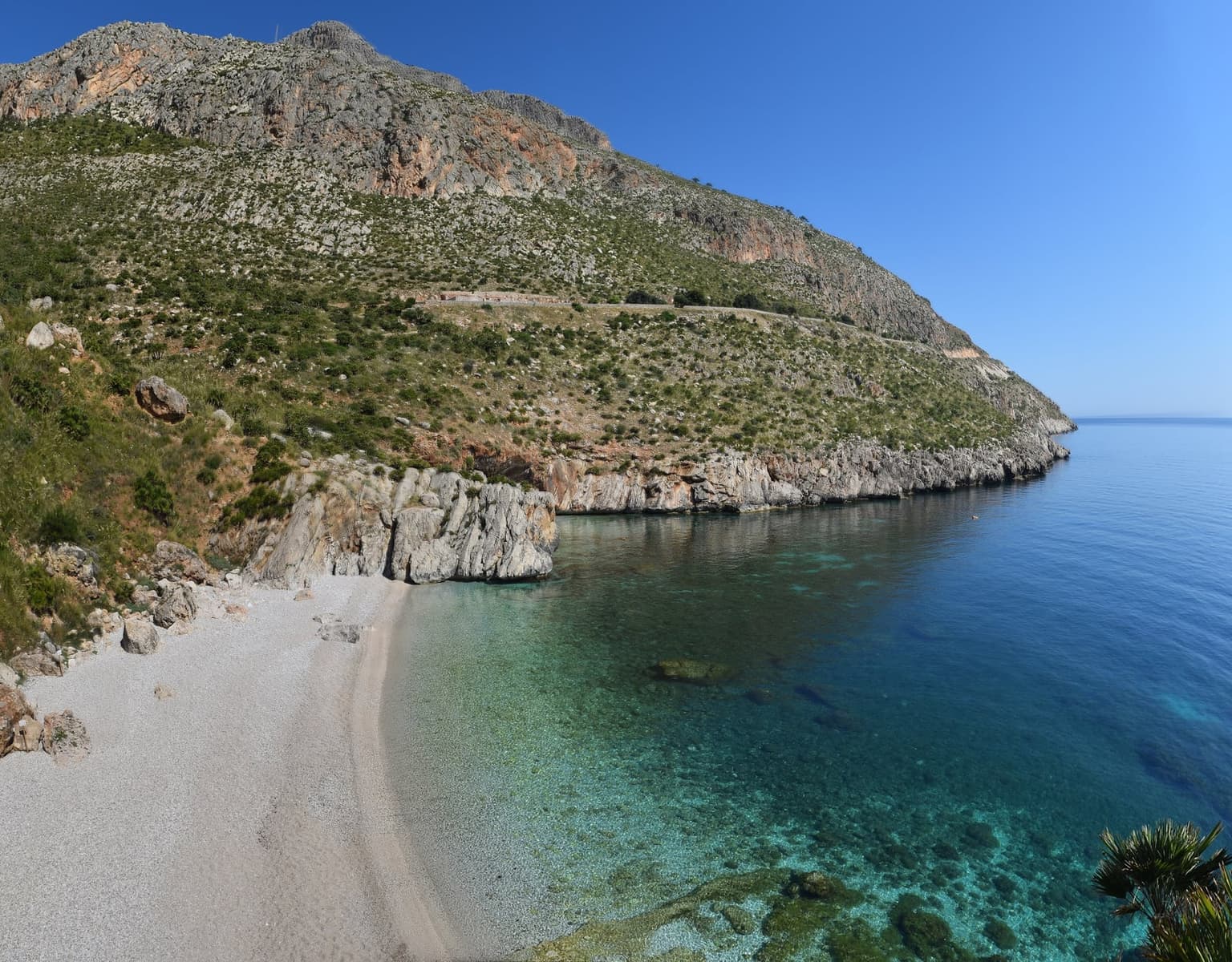
One expectation to reset: this is not San Vito's sand. The coves are white pebble at the foot of cliffs, which is beautiful and unkind to bare feet, and it is the other half of the reason for the footwear rule. Bring shoes that pass the gate and still let you swim, bring more water than you think, and come early - the parking lot at the north gate fills on any good day, and the first hours are the cool ones.
The gate rules and the fees sit on the reserve's own information page, which is worth a look the night before you drive out.
The boat: the same coves without the four-hour walk
The Zingaro trail goes out and comes back the same way, which is the whole problem with it: whatever you spend getting in, you spend again getting out. A boat is the other approach to that coast. It reaches the same coves from the water and carries on past them to the sea stacks at the far end, the Scopello faraglioni.
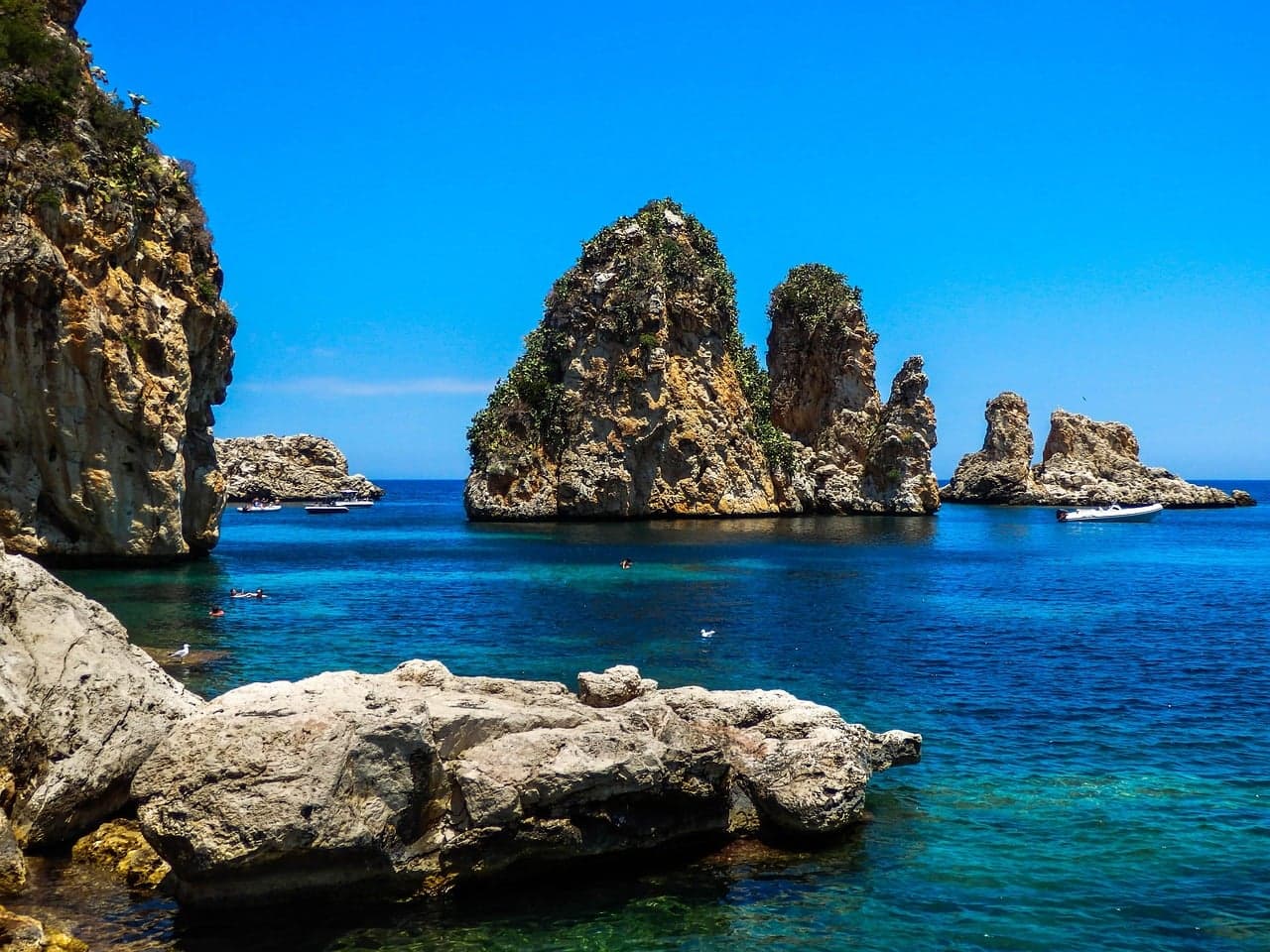
Trips leave from San Vito's port, usually between 09:00 and 10:00, and run four to six hours, or eight to ten for a full day. The season is May through September. The usual stops are Tonnarella dell'Uzzo, Marinella and Beretta, then the faraglioni themselves.
A four-hour Zingaro trip starts around €29 per person and more often runs €40 - €60. A full day is €80 - €110, and a private boat for half a day is €500 - €700. Treat all of that as indicative. No San Vito operator publishes a price list on its own site, and every local boat quotes on request, so a marketplace figure is a floor, not a fare.
One thing to be clear about before you book: a boat trip and a walk in the reserve are two different products. Take the boat and you have seen this coast. You have not walked the reserve, and if that was the plan, it is still a separate day.
Four things to check on any listing: how long the trip runs, whether that price is per person or per boat, how many stops it makes, and how much of the day you actually spend in the water rather than under way. The last one is what separates two trips at the same price.
Day trips: three that earn the drive, one that does not
Two days covers the cape itself. Anything past that, or a windy day that writes off the beach, and these are the three worth the drive.
| Day out | What it costs | The catch |
|---|---|---|
| Tonnara di Scopello | €25.00 full, €15.00 reduced | Booked in advance, a daily cap on entries, closed for winter |
| Erice, by cable car from Trapani | €9.00 one way, €15.00 round trip (reduced €2.50/€4.00) | Mondays it opens only at 14:00; closed November 3 - December 4; the cable car is in Trapani, not here |
| Segesta | €14.00 full, €7.00 reduced (€16.00/€9.00 during a temporary exhibition) | Ticket office 09:00 - 18:00 to September 30 (park closes 19:30), 09:00 - 15:30 in winter |
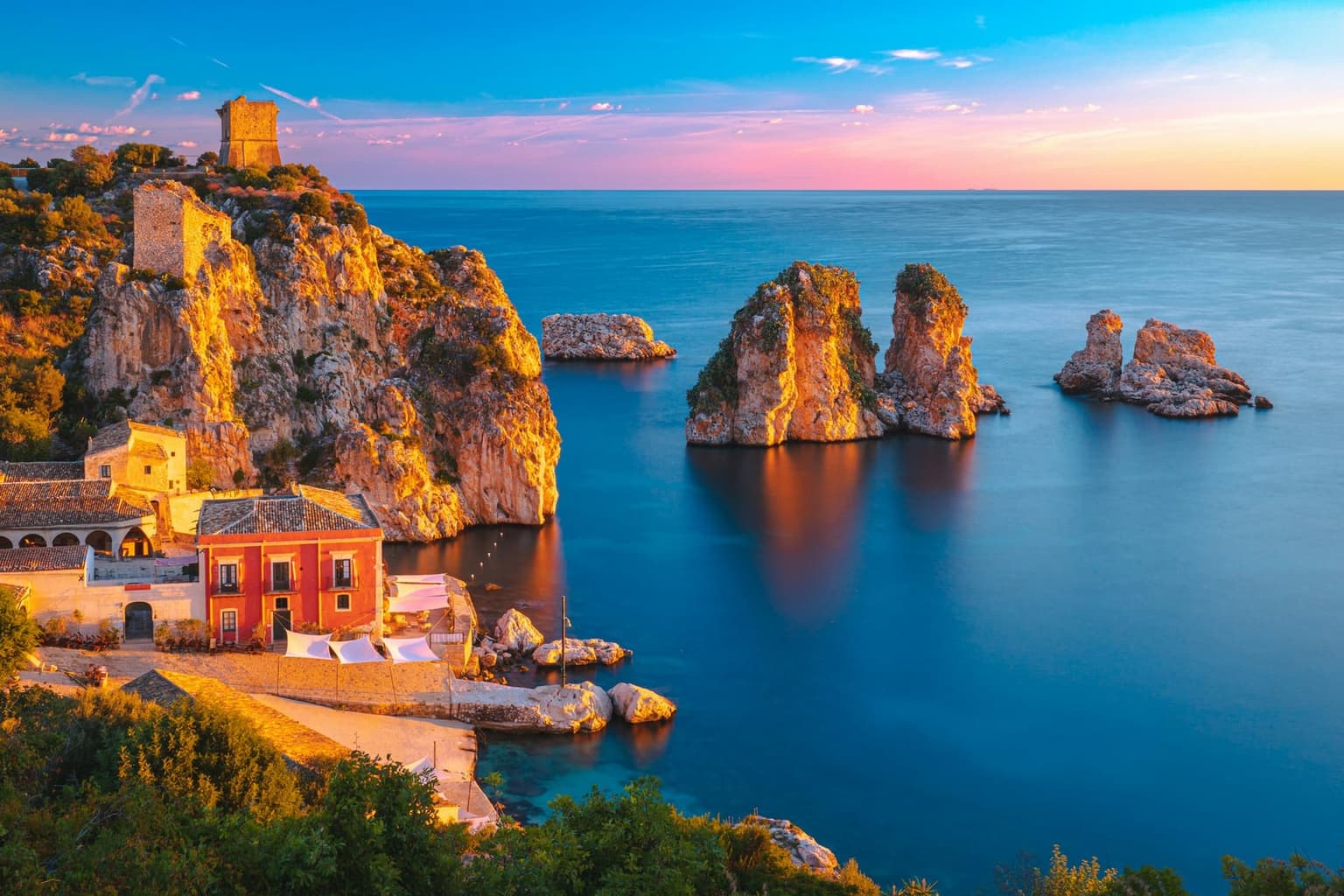
Scopello is a disused tuna trap wedged into a cove between two sea stacks, and the most photographed thing on this coast that is not a beach. The trap catches people every August: this is not a public cove you drive to and swim at. It is a private complex: you book a ticket ahead, it takes you around the museum with a guide and into the tonnara's common areas, only so many people are let in a day, and the whole place shuts for the winter. It opens at 10:30 and closes at 19:00, some days earlier. Turn up without a booking and you are looking at it from the road above. Pair it with a walk in from the reserve's southern end rather than driving out for the tonnara alone.
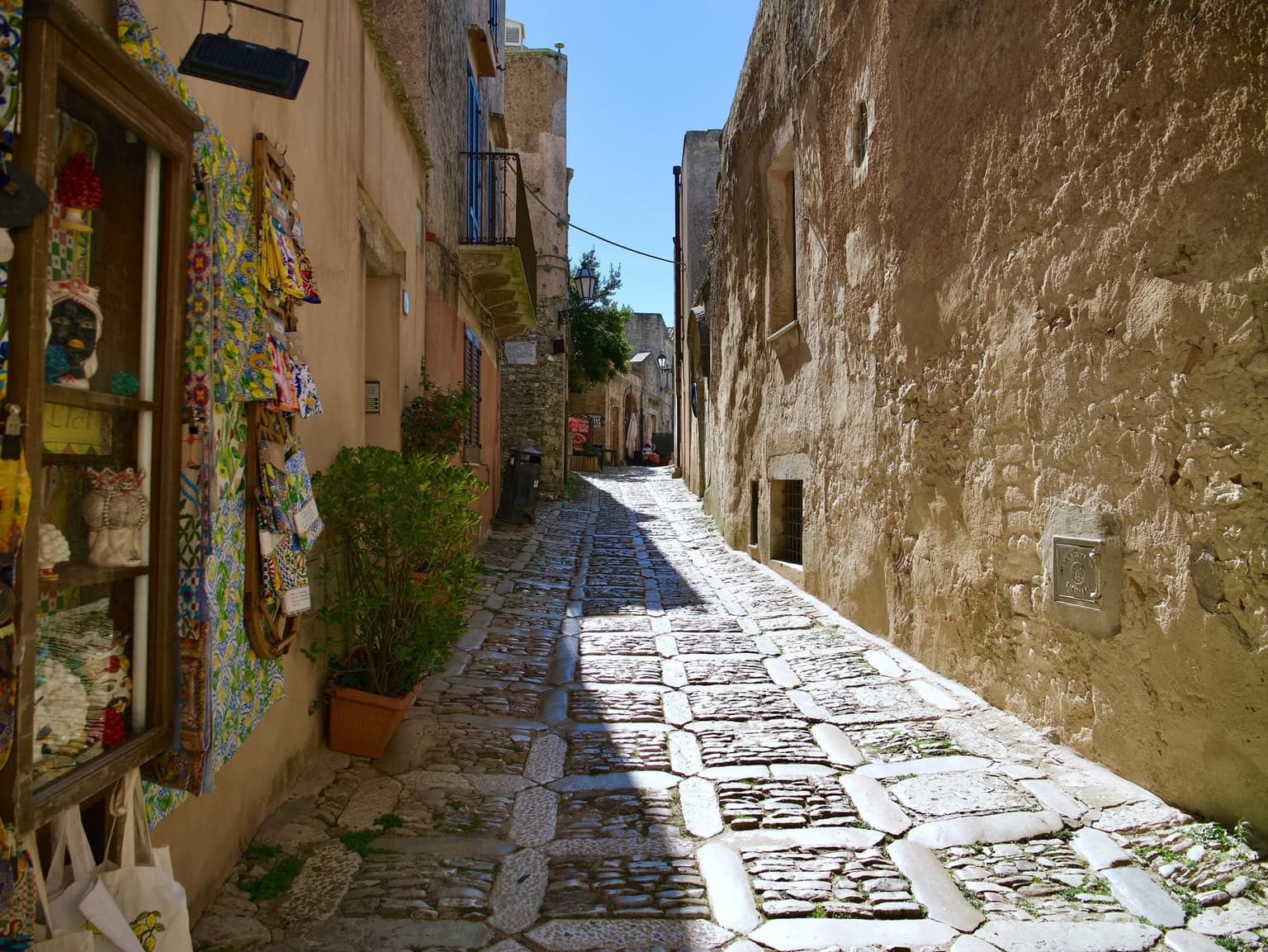
Erice is the antidote to a beach week: a walled medieval town high on a crag that often sits inside cloud, and noticeably cooler than the coast. The cable car, the funivia, goes up from Trapani rather than from here, off the SP 31 per Erice at the corner of Via Capua, so this is a two-leg day rather than a stop on the way to anywhere. It also depends on the weather and can simply not be running when you arrive, so know the road up before you commit to the ride.
The Monday opening and the November closure are both on the funivia's own hours page.
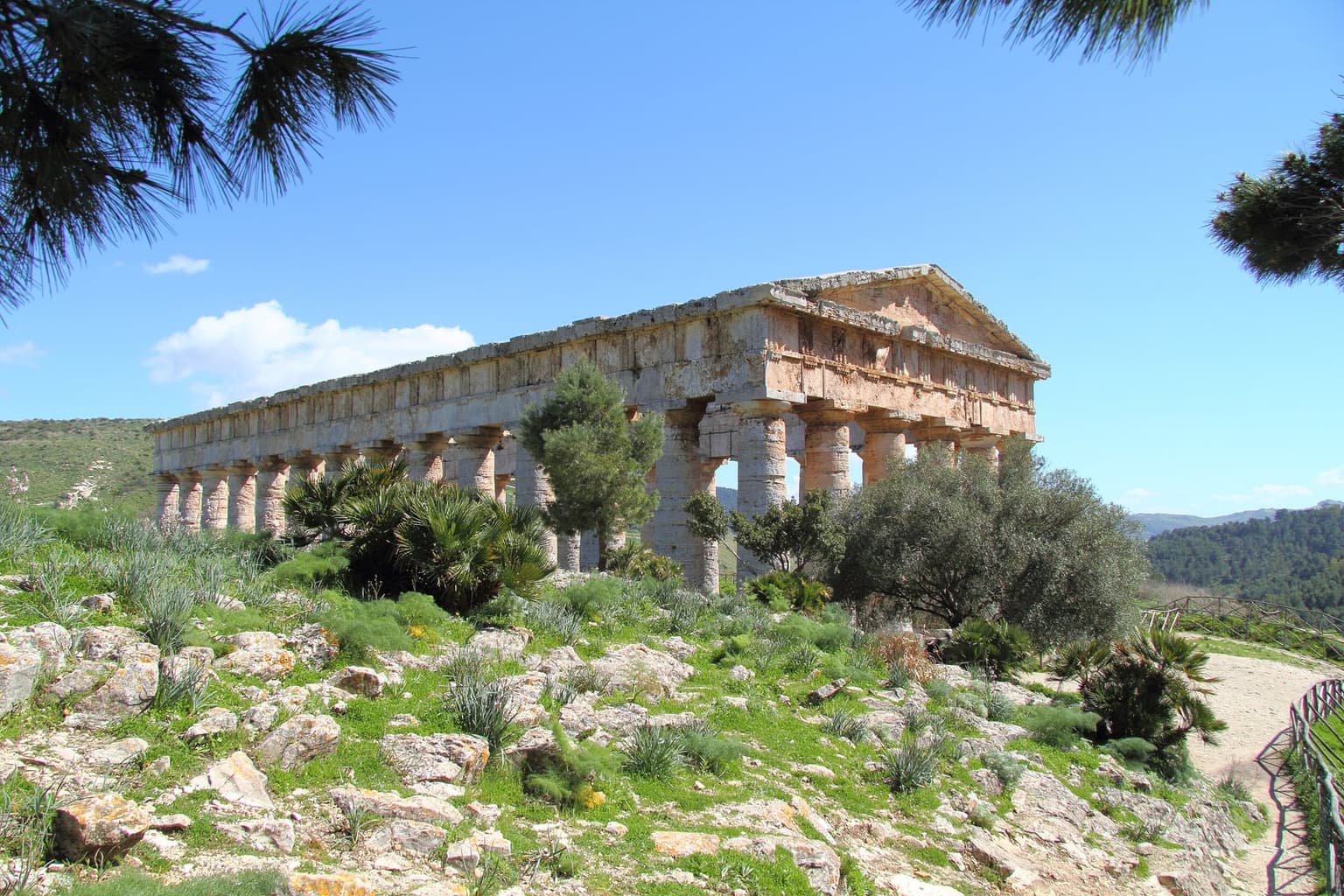
Segesta is the one I would not skip: a complete unfinished Doric temple standing by itself in an empty valley, one of the rare Greek sites you get to see the way the Greeks sited it. It sits on the same inland loop as Erice, so plan the two as one day out rather than two. The ticket has moved well past what older guidebooks quote, so plan around the figure above. The temple sits barely 300 m from the ticket booth, five flat minutes on foot. The theater is the real walk: it is on top of the hill, 1.5 to 1.7 km away with about 100 m of climbing, 25 to 35 minutes uphill with no shade. A shuttle bus runs between the two year-round, every 15 to 30 minutes, for €2.50 round trip - buy it at the booth alongside your entry ticket if you would rather ride up and walk down.
The one that does not earn the drive is Agrigento. The Valley of the Temples is the classic western-Sicily overreach: from this coast it is too far to be a day trip, and finding that out costs you the day.
Couscous, and the ten days the town argues about it
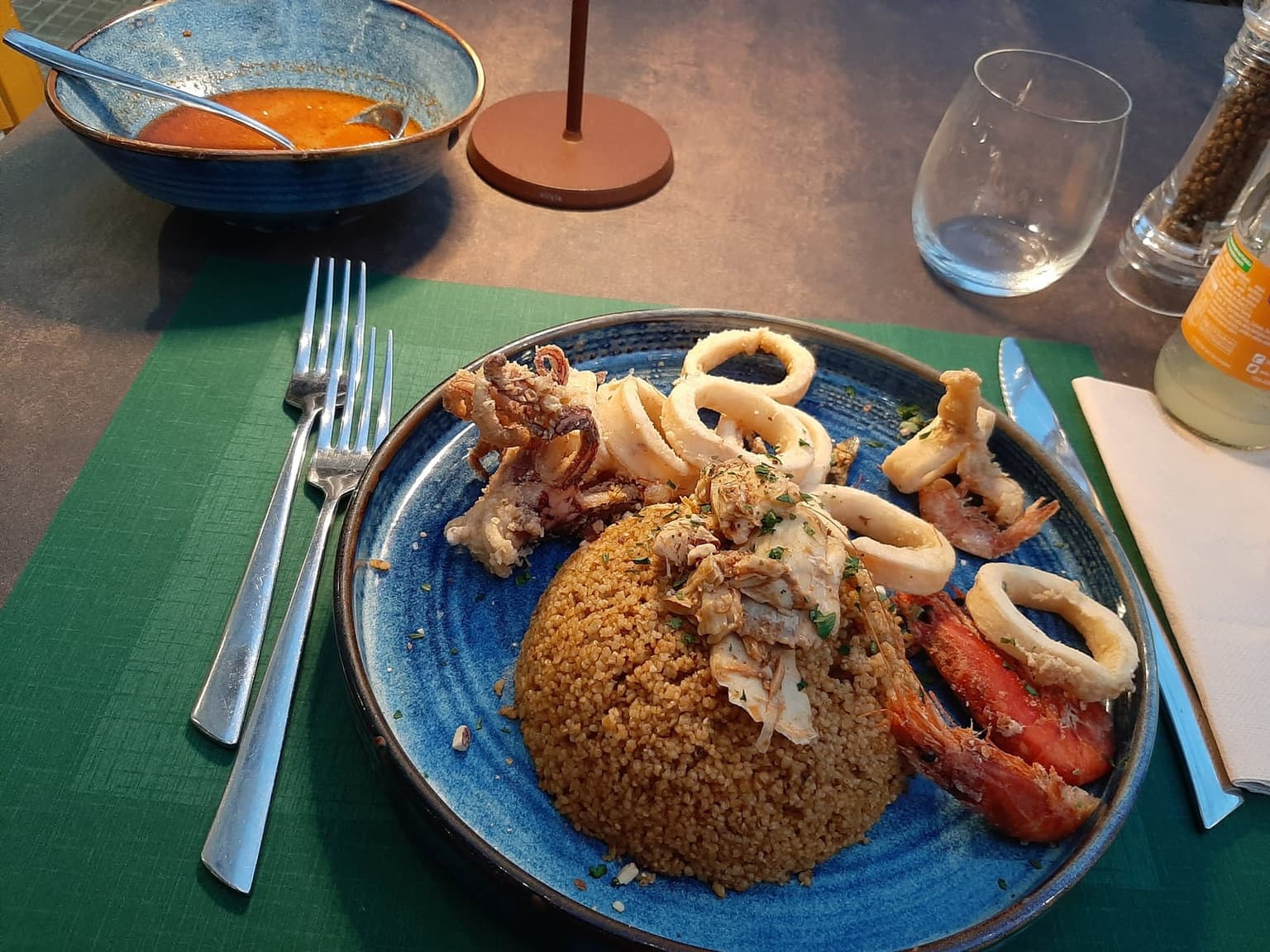
Couscous here is a fish dish, and it is what you order: semolina, a broth made from fish poured over it, and the fish in there too. Ordering something else in San Vito is a decision you have to make on purpose.
Then for ten days in September the town turns into an argument about who makes it best. The Cous Cous Fest runs September 18 - 27 in 2026, and it splits cleanly down the middle. The concerts on the beach stage are free every night, listed as ingresso libero. The eating is ticketed: the Case del Cous Cous tasting houses open daily from 12:00 to midnight with more than twenty recipes going, and the Bia Theatre runs cooking shows, talks, lessons and wine tastings. Twelve hours a day at the tasting houses means there is no wrong time to turn up hungry, but a tasting, a cooking show and a championship final are three separate tickets at three different prices, so read the program before you plan a day around it. Eight nations cook off for a world title while all this goes on, and the expo village fills the waterfront and the old center, which is the point: the festival is not somewhere you go, it is what the town becomes.
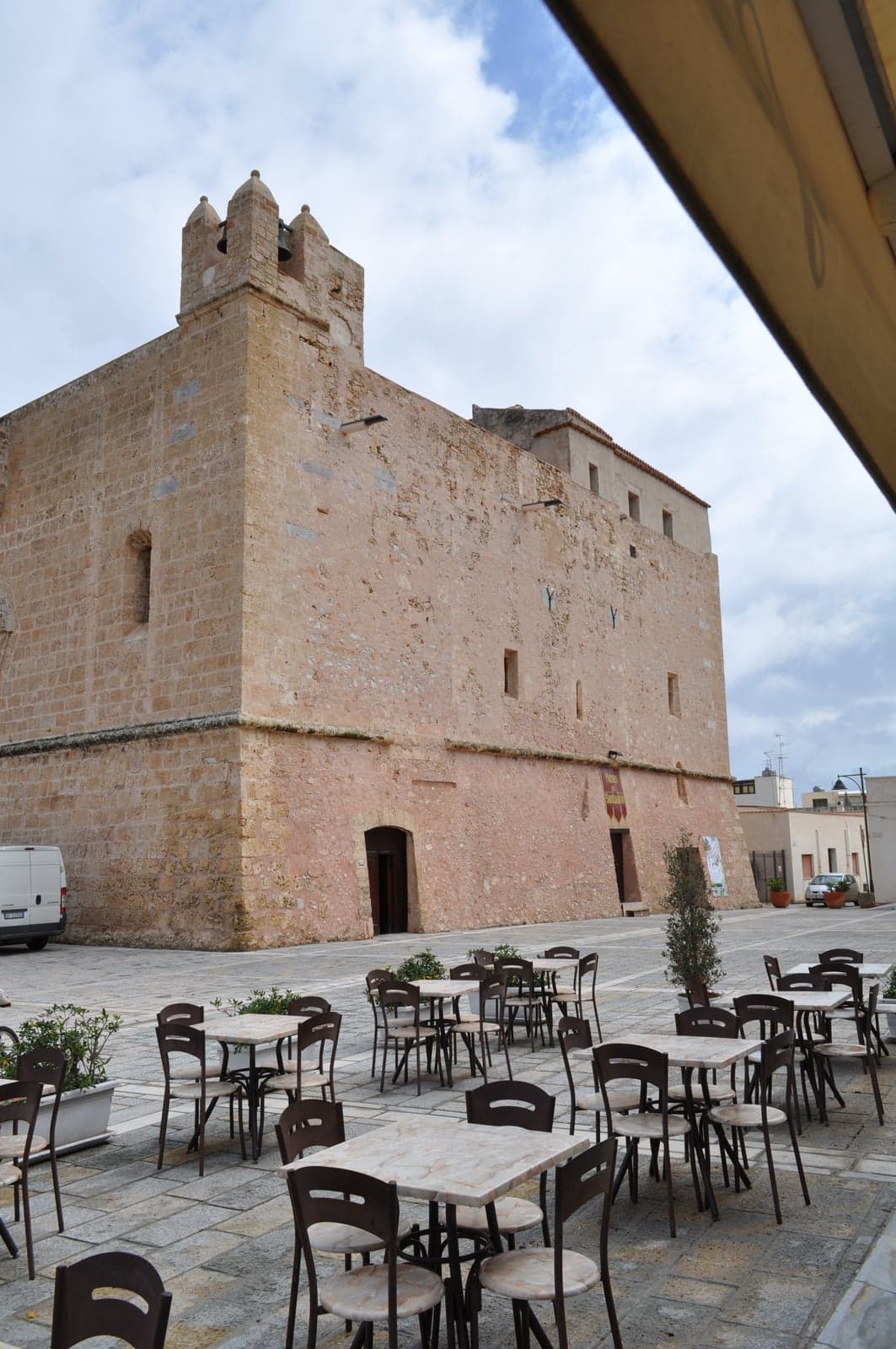
One thing to plan around. The festival lands while the sea is still around 78°F (26°C) and the town is at its busiest, and the extra summer runs on the Palermo bus stop on September 15, three days before the first tasting house opens. The town fills up exactly as the service thins. If you are coming for these ten days, settle the car or the transfer before anything else.
Night by night, the ten days are laid out on the official program.
When to come: the water outlasts the season
The swimming season here runs longer than the crowd season. The sea runs about a month behind the calendar: the water in mid-October is a shade warmer than it was in June, when everyone treats the season as just starting. What thins out in the shoulder months is not the swimming. It is the transport.
| Month | Sea temperature | What is running |
|---|---|---|
| June | 72°F (22°C) | Car-free ZTL season on; extra Palermo buses start July 1 |
| July - August | around 79°F (26°C) | Everything open, the busiest weeks of the year |
| September | 78°F (26°C) | Cous Cous Fest September 18 - 27; extra buses stop September 15 |
| October | 73°F (23°C) | ZTL runs through October 31; boat season over |
| November | 68°F (20°C) | ZTL season closed; Palermo bus back to its single published daily run (indicative) |
No one publishes the date this town closes for the winter, and a percentage of shuttered restaurants would be an invention. Three calendars do get published, though, and not one of them exists to describe a tourist season: the town's traffic zone, the festival program, and the bus operator's summer window. They agree on the shape. The operating season runs roughly May through October and peaks July through September. That is inferred from three sets of dates rather than from an occupancy figure, and it is the honest version of the answer.
The other half of it: a season ending is not the same as a town shutting. In November you can still sit down to couscous and an octopus salad at a fair price, from someone glad you came in. The place is smaller then, not closed. Outside the summer window, though, the car stops being a convenience and becomes the plan.
The one thing a shoulder-season plan cannot settle in advance is the Zingaro gate. It does not close for winter: the north gate at Tonnarella dell'Uzzo runs year-round, with a ranger checking tickets and footwear every day at both entrances, but the hours shrink to roughly 08:00 to 16:00 from October through March, against 07:00 to 19:00 in summer, because the trails have no lighting and the gate has to stop letting people in early enough that everyone is back at the parking area before dark. What no schedule will warn you about is a scirocco day: in a strong southerly wind, or after heavy rain, the reserve can shut the gate on short notice for rockfall and fire risk, sometimes for a day or two while a slide gets cleared. Check it before you build a day around it, and keep the beach as the fallback.
August is the month to plan around rather than into: the coast is the livable part of Sicily then, and anything inland, Palermo included, is a short raid taken early and abandoned by the afternoon. If the choice were mine I would come in the first half of October instead, while the traffic zone is still on and the water is still a swim.
Getting there: no train, one long-distance bus line, and a shuttle that stopped running
No railway reaches this cape: no station in San Vito, and no line that comes out this far. Every arrival here is by road.
⚠️ Warning
The airport shuttle you found online is not running. Terravision's own pages carry "Temporarily suspended" for both the Palermo and the Trapani airport routes, while booking sites still sell a Palermo-airport-to-San-Vito bus at €12 - €25, hourly from 08:30 to 20:30. Check the operator's own page before you count on any bus.
That page is Terravision's own Palermo airport route.
| Without your own car | What it costs | When it runs | Where it leaves you |
|---|---|---|---|
| Russo bus from Palermo | About €9 one way, indicative (no published tariff) | Outside July 1 - September 15, the published shape is a single daily run, as indicative as the fare; the extra summer runs in that window are timetabled nowhere, and Russo publishes no schedule at all, so phone | Palermo end is Stazione Centrale (Piazza Cairoli), not the airport; San Vito end is the last stop (capolinea) on Via P. Mattarella |
| Bus from Trapani town | €4.60 one way, €7.50 round trip | Ten departures a day from Trapani | Stops on this line are on request, so flag the bus down |
| Shared shuttle (private operator) | €30 per person, minimum 2 passengers | Palermo departures 08:30, 12:30, 17:00 | Door to door; private cars cost more, quoted by group size |
From Trapani-Birgi, the routing that works is the airport bus into Trapani town, €4.90 and roughly hourly, then the change.
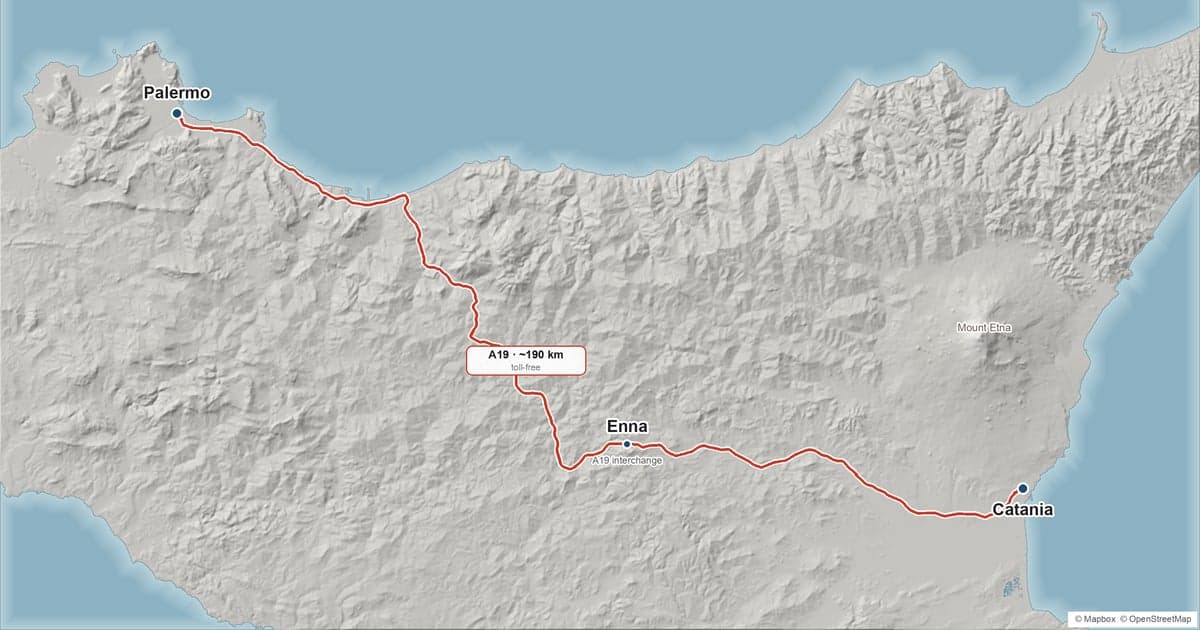
Most people drive. Figure on an hour to an hour and a half from either airport, longer in August; treat that as a band, because no official page publishes a distance for this road. And mapping apps flatter this coast: a two-hour leg on the screen comes out as a four-to-five-hour round trip in practice. That answers the day-trip question. Come out from Palermo for the day only if you leave early and accept that the drive is the day. Otherwise sleep here.
If you are renting, two things stop people at the desk. The International Driving Permit has to be the paper document, because a digital one gets refused at the counter. A deposit is held on your card even when you bought third-party insurance at booking, so leave room on the limit. Book an automatic explicitly and early: it is scarce inventory here, not a checkbox. The rest of the ritual is the same island-wide, and I go through it in the full rental walk-through, Palermo airport's desks included.
One timing call before you book: rent around Palermo, not around the trip. If the city is on your itinerary, see it without a car and pick one up on your way out to this coast. Book the pickup for the day you leave.
compare rental cars at Palermo airport
Rent around Palermo, not around the trip - book the pickup for the day you leave the city
If you are not driving and the Palermo bus's published shape does not fit your flight, book a door-to-door transfer. Book it against your flight number rather than a clock time, check whether the quote is per car or per person before you compare it with the shared run above, and give the exact address of your room, because the drop point depends on it.
Pre-book a transfer from Palermo airport to San Vito lo Capo
Book it against your flight number, and give the exact address of your room
The car has a second act in town. From May 1 through October 31 the middle of San Vito becomes a limited-traffic zone, the ZTL, and the streets inside it are closed to anyone without a pass: the strictest of them around the clock, the rest in the evening. If your room is inside the zone, your host obtains the pass, not you, so ask when you book.
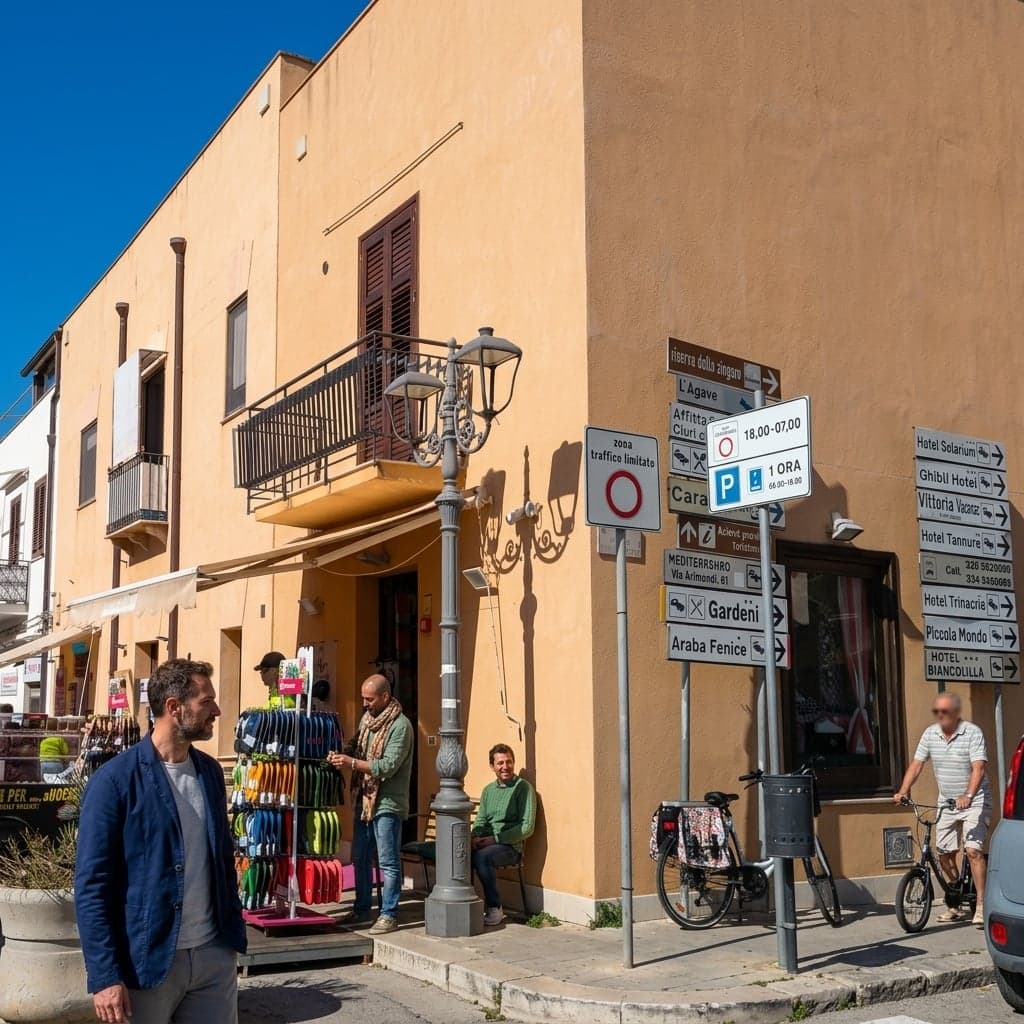
Outside the zone, blue lines mean paid parking from 08:00 to midnight, and the free municipal lot on Via la Goulette is a 10 to 15 minute walk from the center. Seafront spaces are free out of season and metered in summer, and the tickets are checked. The overflow lot out at Macari fills by noon, and that is late September talking, never mind August.
FAQ
- Do you have to pay for the beach in San Vito lo Capo?
- No. The lidos rent part of the sand, roughly €20 - €40 a day for an umbrella and two sunbeds, and the rest is free public beach. On the free stretch you do not have to move for anyone.
- When is the sea warm enough to swim, and how late does it stay that way?
- It peaks around 80°F (27°C) in August, holds 78°F (26°C) through September, and is still about 73°F (23°C) in October. The swimming outlasts the crowd season.
- How long does the Zingaro coastal trail take, and can you walk just part of it?
- About 7 km and two hours one way, and it does not loop: end to end and back is a four-hour day. Walking to the second or third cove and turning back is the normal visit. Cards only at the gate, and flip-flops are turned away.
- Can you visit San Vito lo Capo without a car?
- Yes, from the right places. The airport shuttles are suspended, and the Palermo bus leaves from Stazione Centrale rather than the airport, with extra runs only July 1 - September 15. From Trapani town, a bus runs ten times a day for €4.60 one way.
- Is San Vito lo Capo worth a day trip from Palermo, or should you sleep there?
- Sleep here. The cape earns two days, and the drive out from Palermo and back eats most of one on its own.
Book the car or the transfer before you fly, give the cape two days, and walk into the reserve with shoes and a card in your pocket. The sand takes care of itself.