George Mandrovny
Siracusa in a day, or nights of its own?
Siracusa earns a full day if your trip is the east coast, and two or three nights if the southeast - Noto, Ragusa, the coast below them - is in the plan. One night is the wrong number either way. Every day trip from an Ortigia base is subtracted from the town, not added to the trip. Not on a Monday: the Paolo Orsi museum is closed and Castello Maniace shuts at 13:30. Walking the island costs nothing and it has no gate; the two big ticketed sights, the Neapolis park and the Paolo Orsi, are on the mainland.
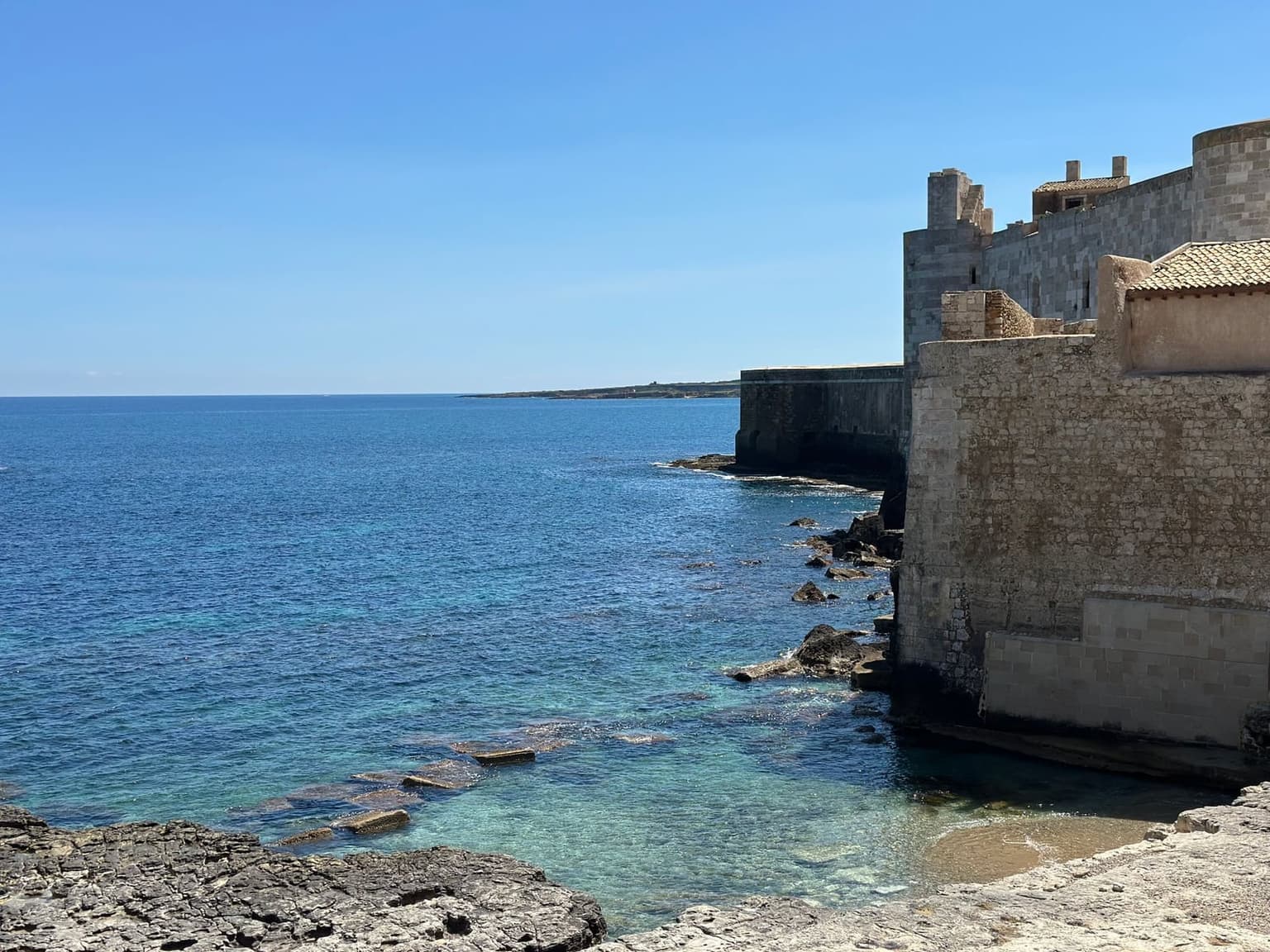
Opposite answers are both honest, because they are answers to different trips. Ortigia, the old town, is an island about a kilometer end to end, joined to the mainland by two short bridges, and an afternoon is enough to walk all of it (Siracusa is Syracuse, if your map is in English). Spend an afternoon here and a day looks like plenty. Run a week of the southeast out of here and three nights look thin. Both readings are about your trip, not about the town.
One night is the version I would not book: it fails in both directions. You pay for the room, arrive in the late afternoon with the day already spent, and go again the next morning on somebody else's schedule. The stay costs you a night and returns you a day trip. Two nights buy the town plus one day out; three buy the town plus two, and past that the southeast starts running your days for you.
| Your trip shape | How long Siracusa gets | What decides it |
|---|---|---|
| East coast only | A full day, arriving early | Nothing on the island needs a second morning |
| The southeast in the plan | Two or three nights | Noto, Ragusa and the coast are planned outward from here |
| One night, either way | The wrong number | Neither the town nor a day out gets a full day |
If your trip is the east coast - Catania, Etna, Taormina - come for the day and go back at night. Catania is about an hour and a quarter away by train and keeps its own mornings; what two days in Catania actually buy is the other half of this decision.
If you are still moving whole days around - how many bases the trip can carry - that is an island question, not a Siracusa one. Dividing Sicily into bases and days comes first; this corner takes its share of what is left.
What a night in Ortigia buys: the two hours a day trip misses
What a second night buys is not a sight. The sights fit in the afternoon that is already on the table, so no list of ten things can settle this question one way or the other. A day trip is shaped by its return leg: you arrive once the morning is well under way, and you leave with enough evening left to get back. Those two limits bracket the hours everybody gets.
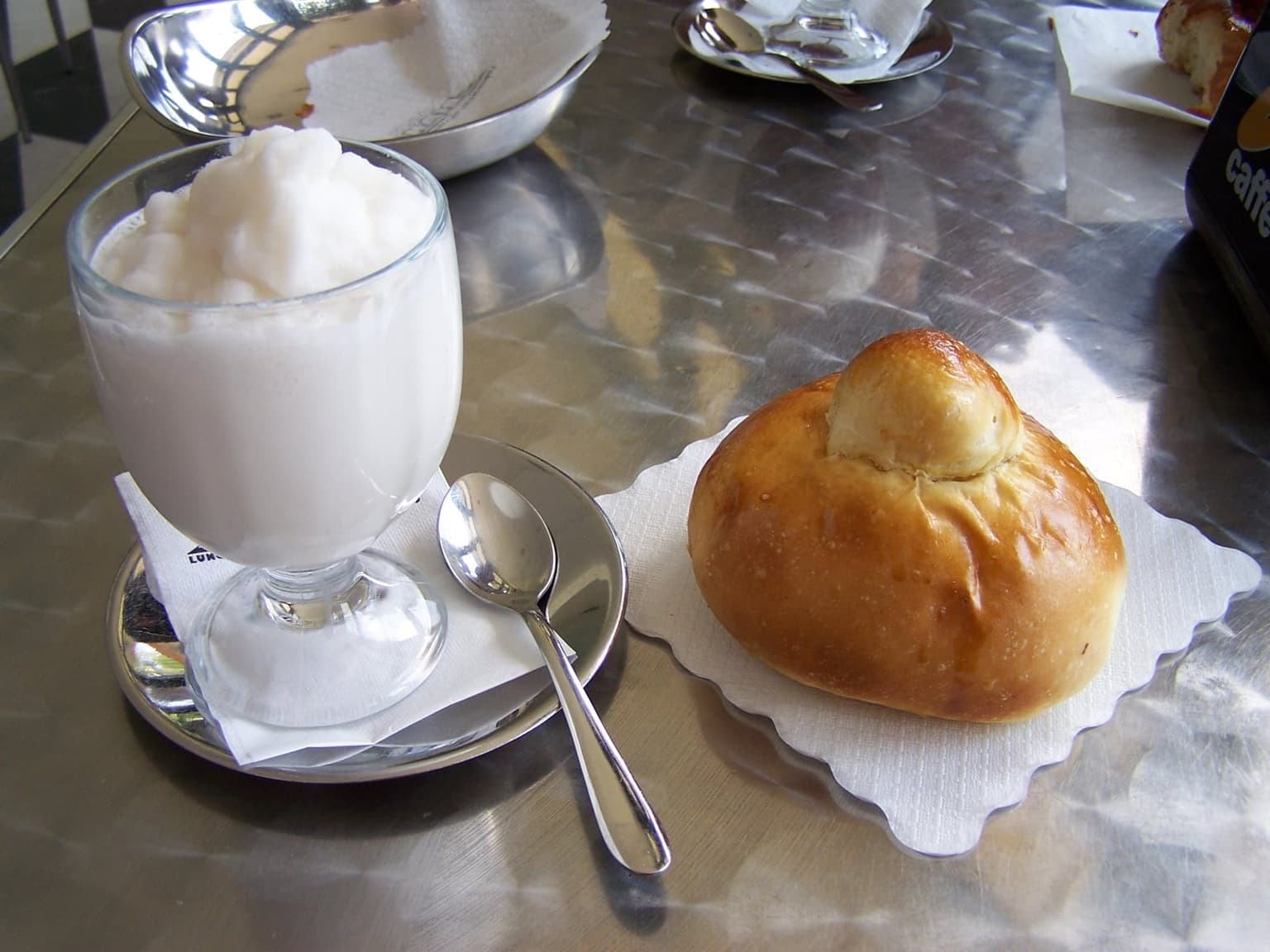
The early hour is yours for the simple reason that you do not have to travel to reach it. Granita and brioche are breakfast in this part of Sicily, eaten standing at a counter, and you have to be on the island in the morning to have them where they belong.
After that the middle of the day is stone and shade, since the lanes are too narrow for the sun to reach the bottom of them at noon. Pleasant, and entirely available to somebody who came in on a train.
The late hour is the better of the two. The evening happens on the Lungomare di Levante, the seafront walk, and it is the town's own event rather than a scheduled one. Nobody opens it and nobody charges for it.
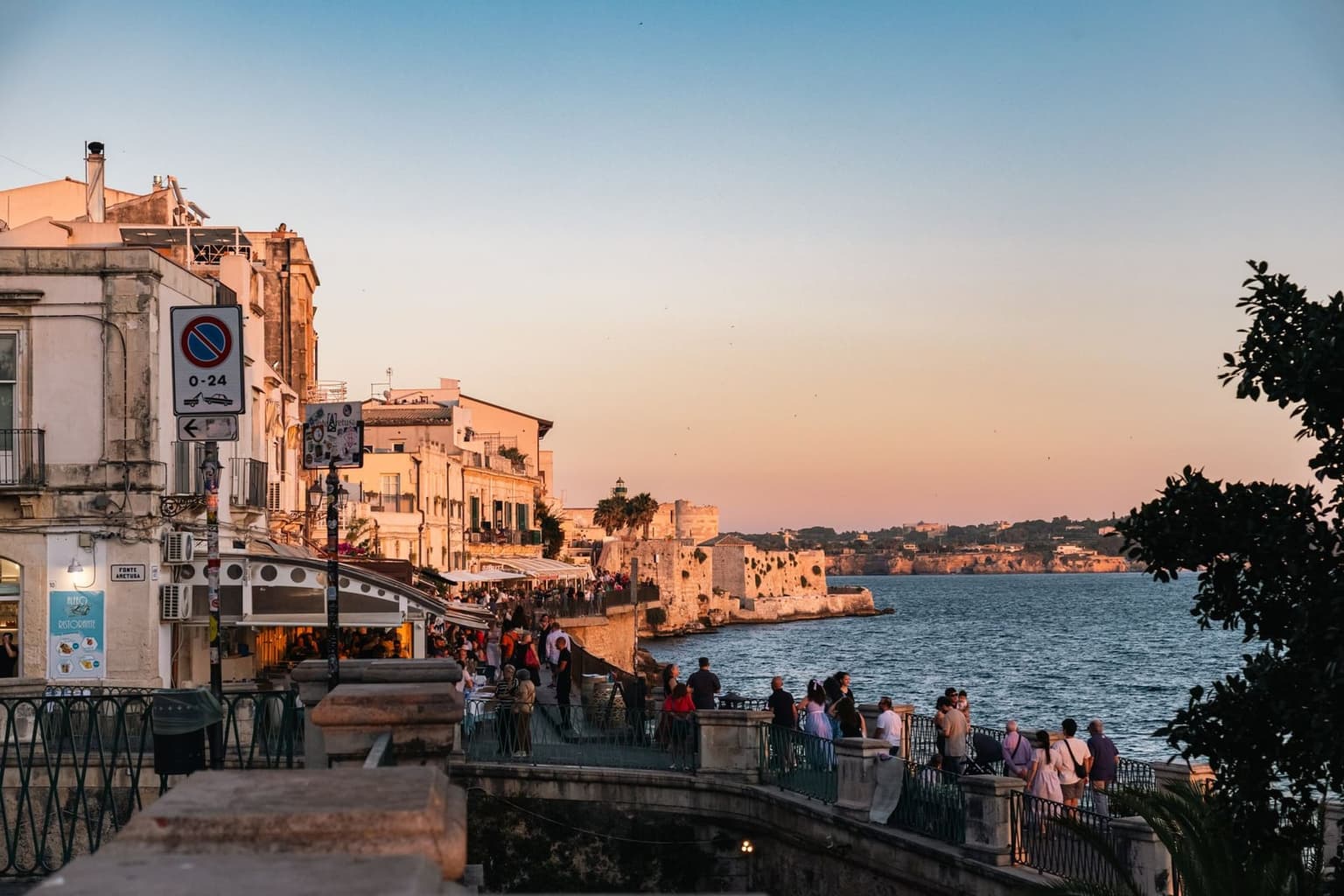
Sleep here and you walk out into it after dinner. Come for the day and you are on the road by then.
I would not oversell the rest of it. Ortigia is busy, and in the hours it shares with everybody it can read as polished, arranged for the people who came to look at it. That is fair, and it is the reason the other two are worth paying for.
At eight in the morning, at a bar by the market, I stood at the metal counter shoulder to shoulder with the stallholders, dunking warm brioche into almond granita cold enough to ache, an old espresso machine hammering away behind the counter the whole time. In the evening on the Lungomare di Levante, the tourist crowd and the foreign languages are just gone. What is left is generations of the town itself: old couples walking arm in arm, teenagers claiming the stone parapets, salt and wet stone thick in the air over the water.
Ortigia on foot: the market, Piazza Duomo, the Fonte and the castle
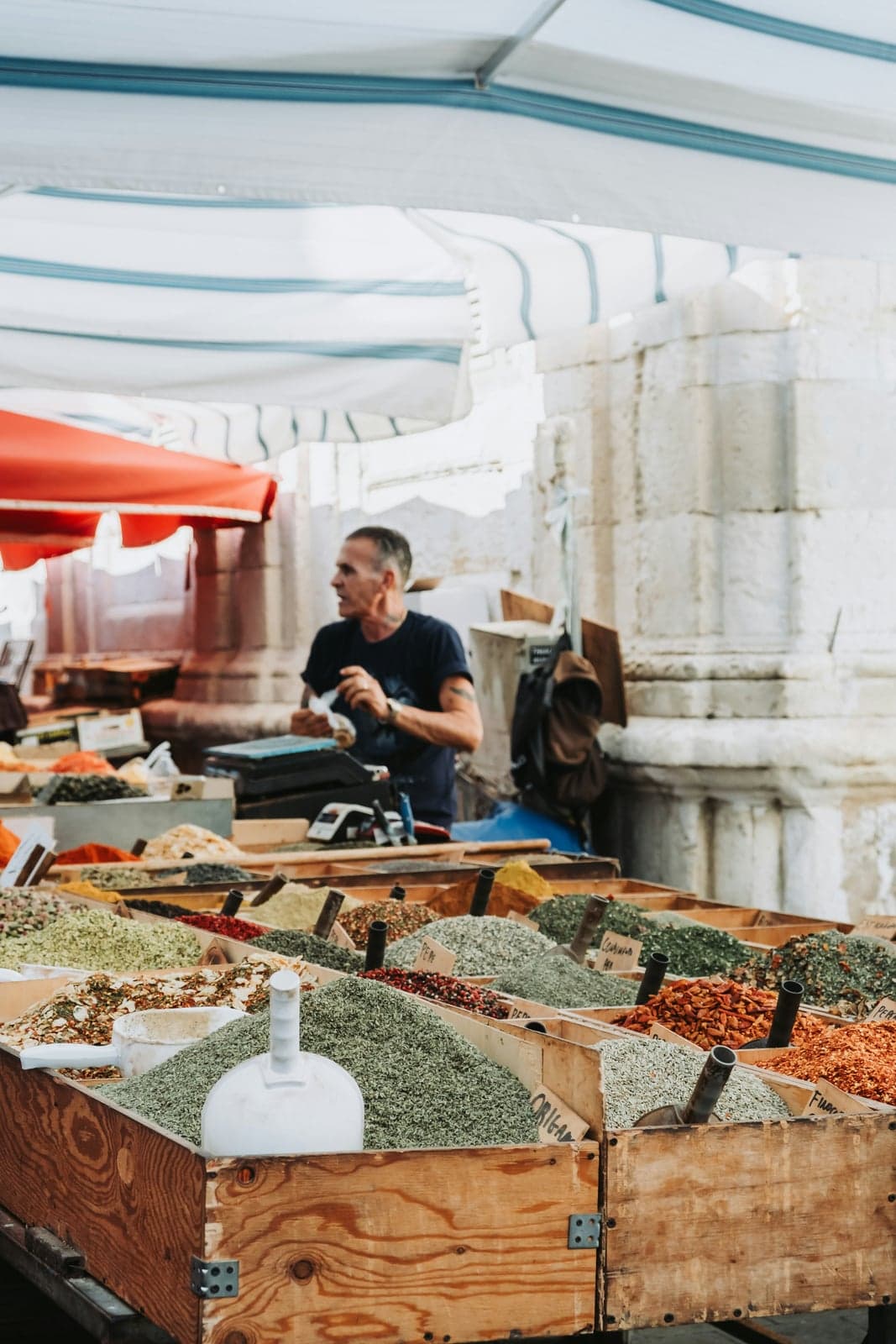
There is one right order for this walk, and it is not the one the lists give you. The market sits at the island's mouth and the castle at its tip, so the two ends of this walk are the two ends of Ortigia; do it backwards and you do it twice. Start at the market, because the market is a morning. Produce, fish, cheese, and the sandwich counters that are now the reason half the line is standing there. It runs along Via Emanuele De Benedictis, the wider lane behind the old covered market hall on Via Trento, a few steps in from the bridges and hard against the Temple of Apollo, which sits sunk below street level like a basement nobody filled in. It is finished by early afternoon. That is the sentence no list of eighteen things carries, and it is why a day-tripper who does the ruins first walks into swept stone.
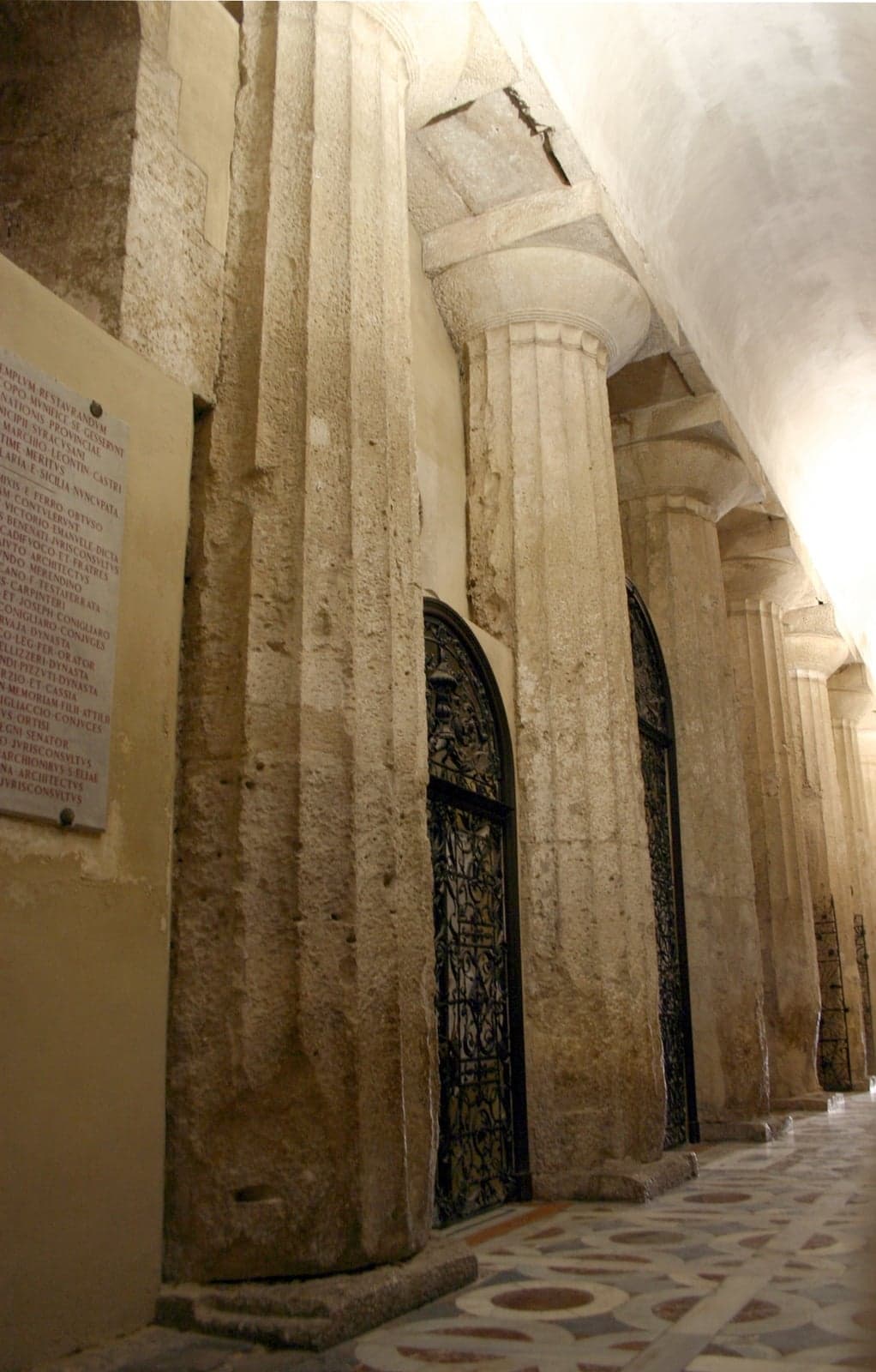
Piazza Duomo comes next, a closed oval of white baroque that photographs well and explains nothing about itself. The cathedral is the point, and not for its front. It was built straight around a Greek temple to Athena from the 5th century BC, and the Doric columns are still in the walls, standing where they were, holding up a church that arrived long after them. The cathedral charges for entry and sells add-on visits on top of that; the columns are what you are paying to stand next to.
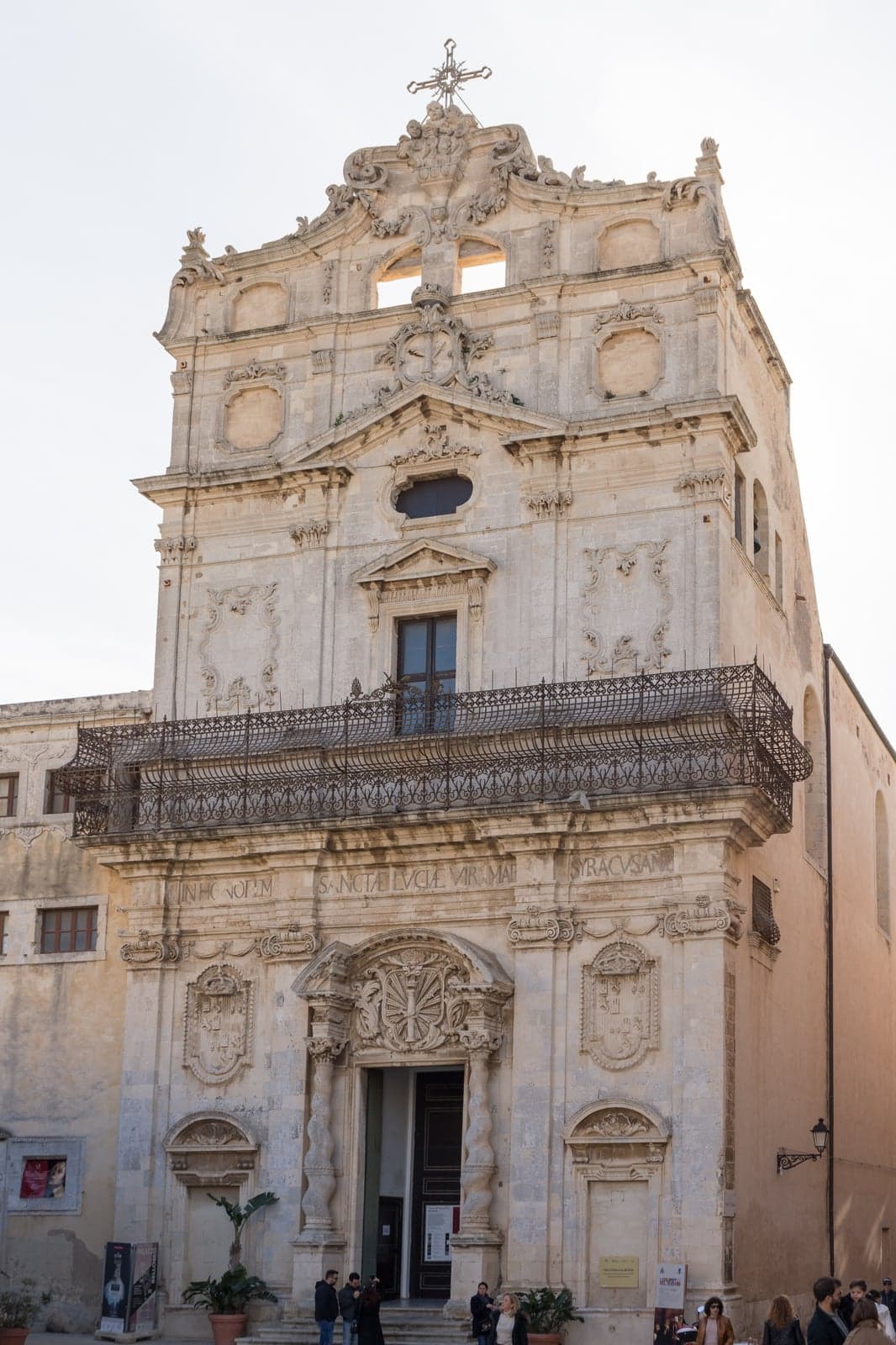
One correction while you are on this square. Santa Lucia alla Badia, the church on it, is not where the Caravaggio is. There are two Santa Lucia churches here with nearly the same name, in two different parts of the city, and this is the wrong one - the painting hung here for years, which is why guidebooks and blog posts still send people to this square, and the distance between standing here and being wrong is about thirty seconds. Where it actually hangs comes with the mainland half, below.
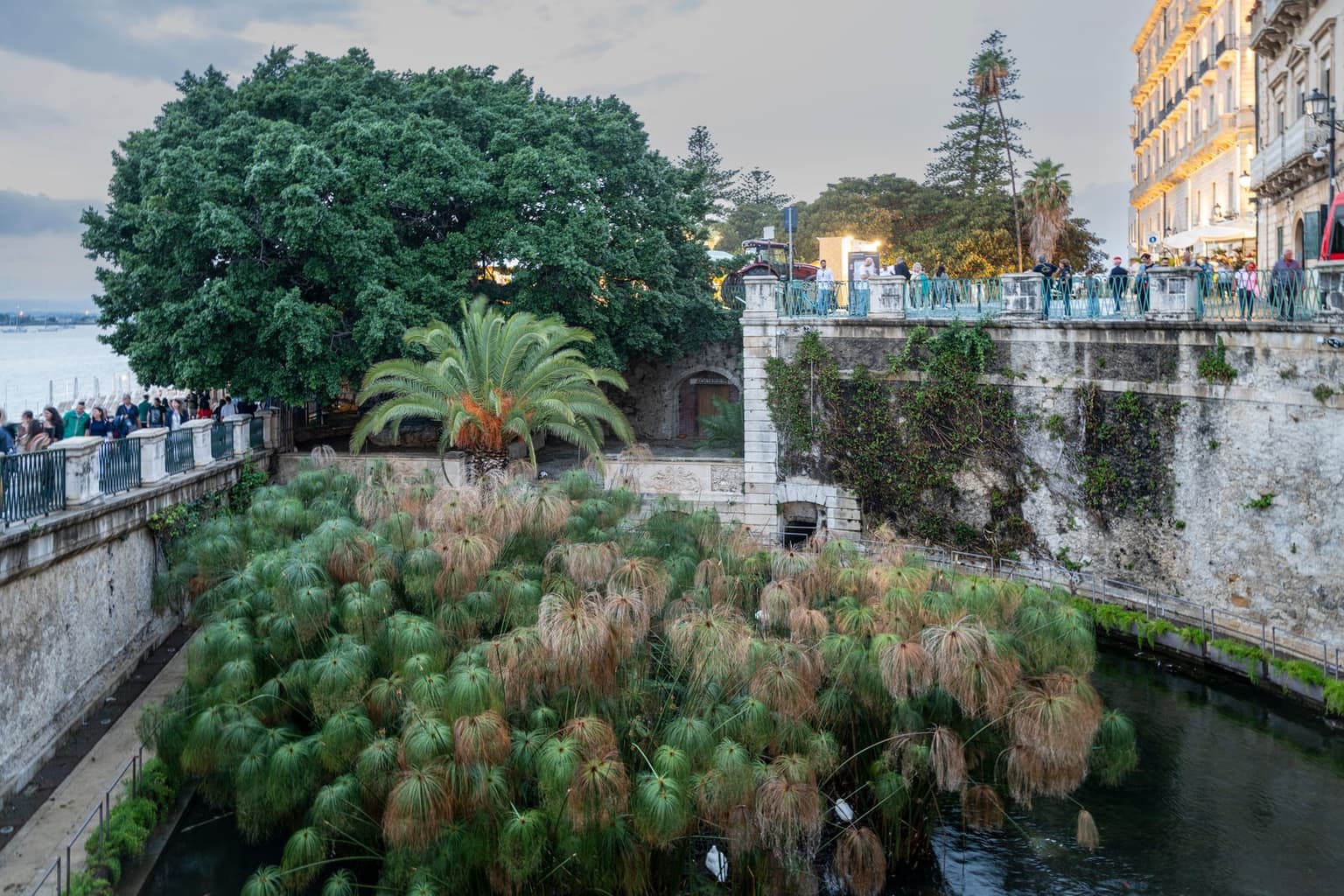
Fonte Aretusa is a few steps below the square: a freshwater spring walled into a round basin on the seafront, papyrus growing out of it, the harbor immediately behind. Every list puts it third, and people arrive expecting a sight and find a pond. It is a pond. It is also fresh water sitting at the lip of the sea, it takes ten minutes, and its job is the walk it sits on rather than itself.
Castello Maniace seals the tip, sea on three sides, about ten minutes on from Piazza Duomo along the water. It is the longest walk on the island and it dead-ends: there is nothing past the castle, so the walk back is part of what it costs you.
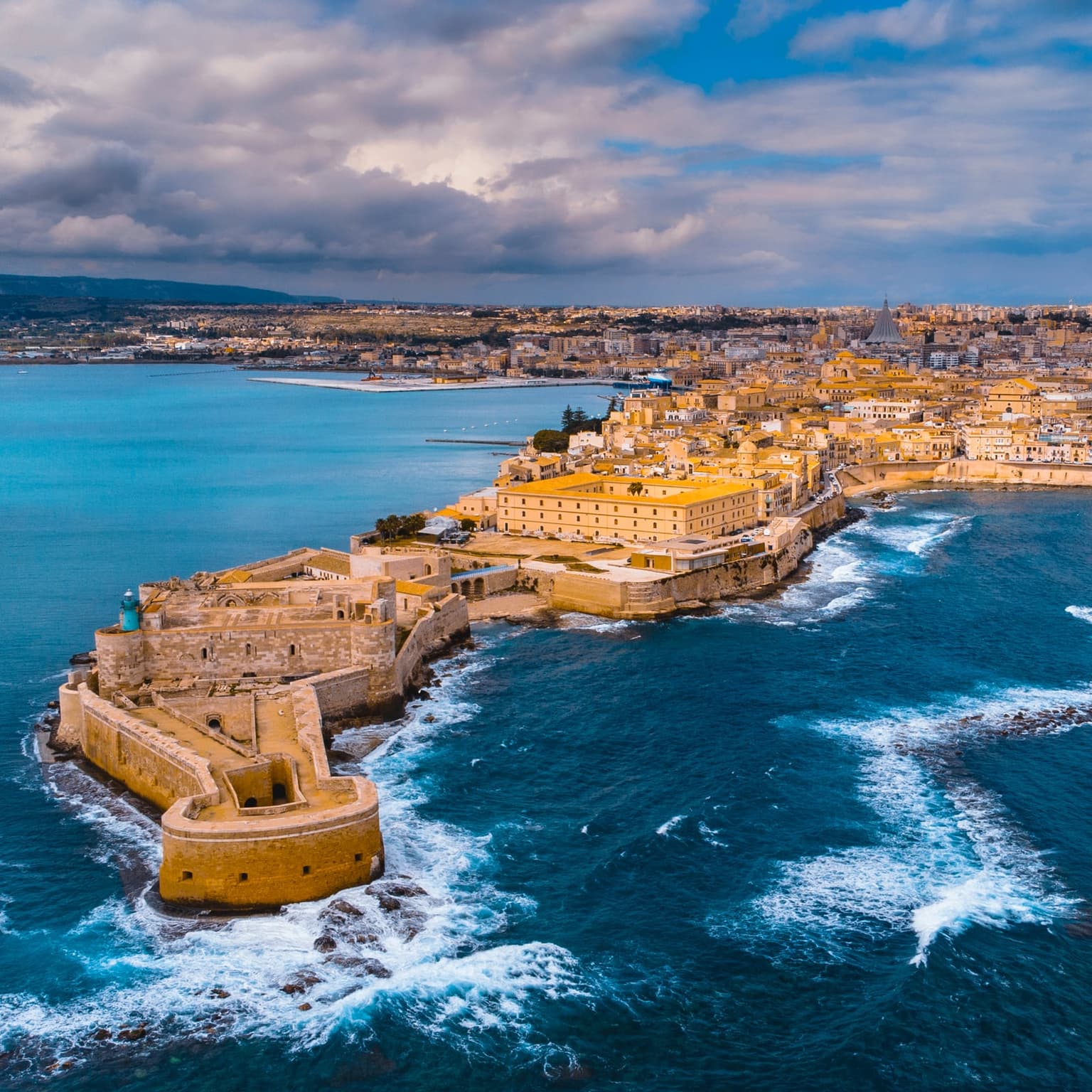
The half day is not only a Monday. Sundays it also shuts at 13:30, last entry 12:45. So the version of this walk that starts after lunch on a Sunday ends with the length of the island behind you and a closed gate in front.
The mainland half: the Neapolis park, the Paolo Orsi, and the order to do them in
The two biggest things to see in Siracusa are not on the island at all. The Neapolis archaeological park and the Museo Archeologico Regionale Paolo Orsi both stand on the mainland, north of the bridges, a walk or a city bus away, and both sell a ticket and keep hours that decide when you can go. Miss that and the day gets planned inside out.
Do the museum first and the park second, which is backwards from the way the lists run it. No taxis wait at the park exit. A day that ends there ends on foot whether you planned it that way or not, and on foot from the park is a walk back down into town rather than a wait at a gate for a car that is not coming.
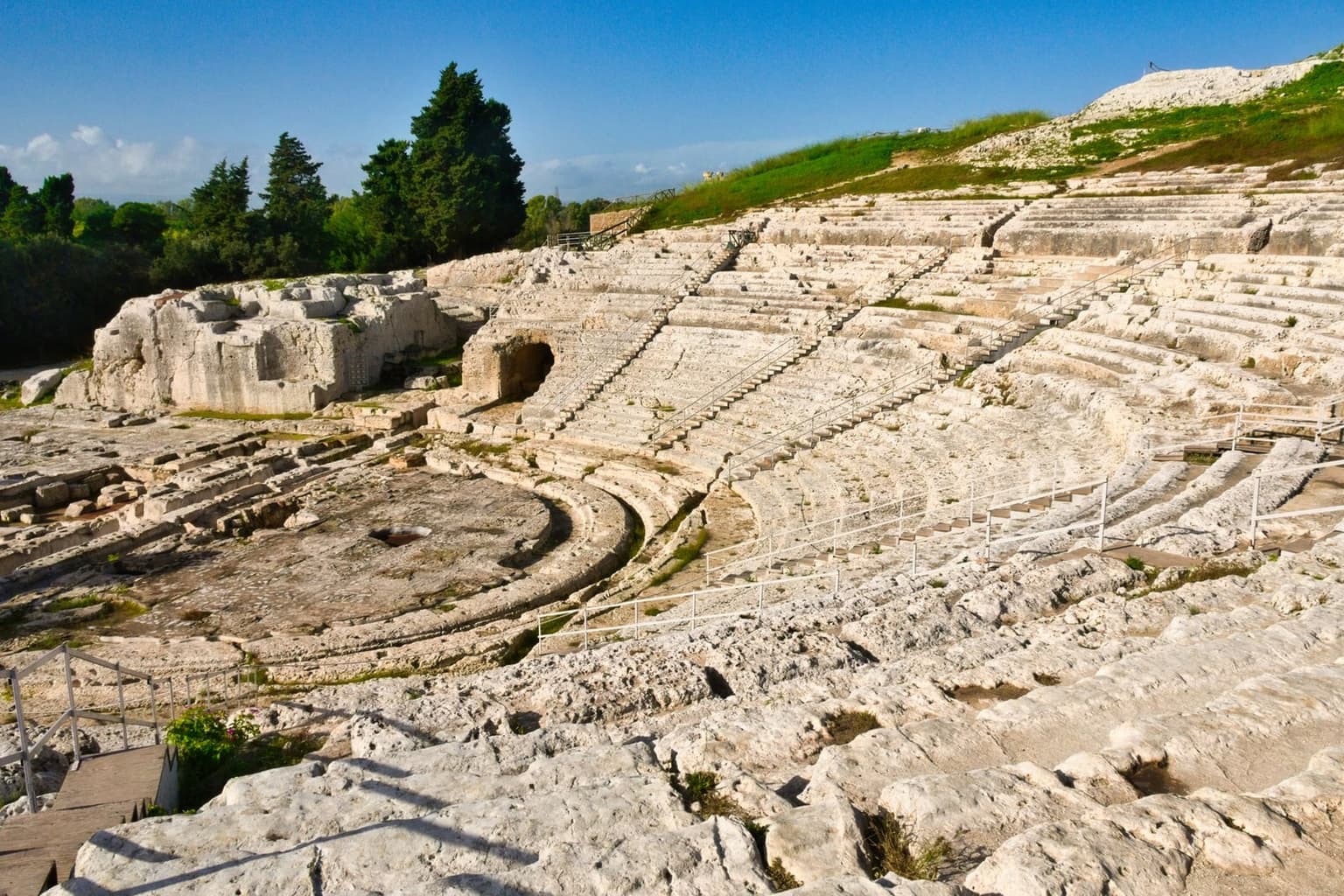
Neapolis is the Greek theater cut into the hillside above the town, the Roman amphitheater, the quarries, and the Ear of Dionysius. Allow two to three hours. There is no shade in any of it, open hillside and quarry floor, so the hour you arrive matters as much as the ticket, and in the hot months that outranks the order above: go at opening and keep the museum for the afternoon.
The theater is a working venue in spring, and the park republishes its opening times every couple of weeks rather than by season, so there is no year-round hour to quote you. The hours live on the park's own page, which is the one to read for the dates you are coming.
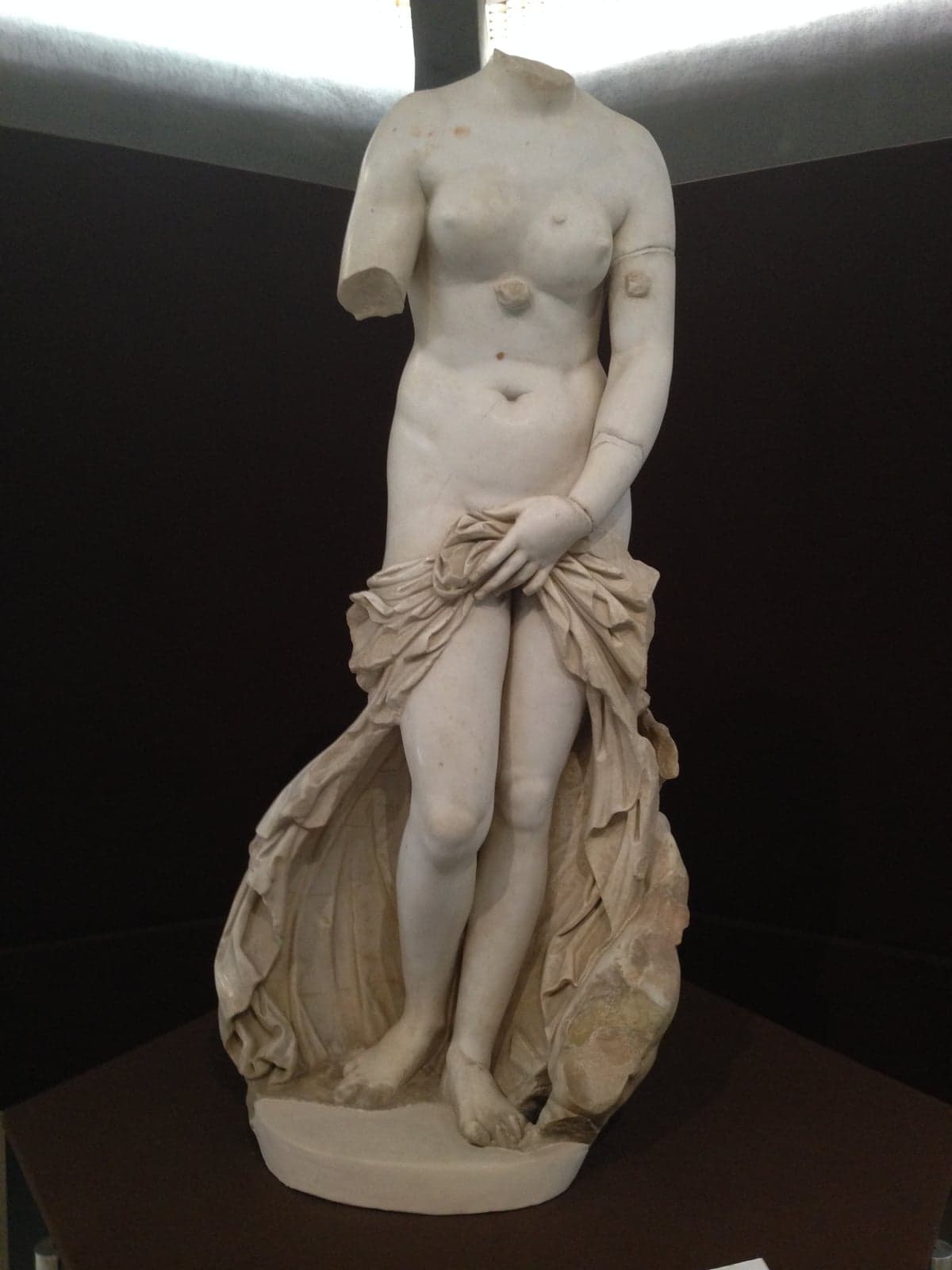
The museum takes about an hour and a half and runs 09:00 - 19:00 Tuesday to Saturday, with the ticket desk shutting at 18:00; holidays are a half day, to 13:45. The park does the same trick at its own gate, by a margin that moves when the hours do, so on both sides the time on the sign is the gate, not the ticket desk.
The day that breaks all of it is Monday, and what it breaks is the arithmetic.
| Ticket | Full, reduced | Time to allow |
|---|---|---|
| Neapolis park | €14, €7 | Two to three hours |
| Paolo Orsi museum | €10, €5 | About an hour and a half |
| Both, combined | €18, €9 (saves €6 on the full fare) | Half a day for the pair |
| On a Monday | €14, the park alone | The museum is closed |
⚠️ Warning
Monday is the day to keep off this side of the water: the combined ticket is stranded, the park charges full price alone, and back on the island the castle is on its half day. If Monday is your only full day here, give it to the island.
Where the Caravaggio actually is, and how the catacombs work
Caravaggio's Seppellimento di Santa Lucia hangs in the Basilica Santuario Santa Lucia al Sepolcro, Via Bignami 1. The address is the correction: put that into your map rather than the church's name, which is the thing that sends people to the wrong square. The basilica is on the mainland, north of the old town, far enough out to be a trip of its own rather than a detour off Piazza Duomo: a walk, or a short ride on a city bus.
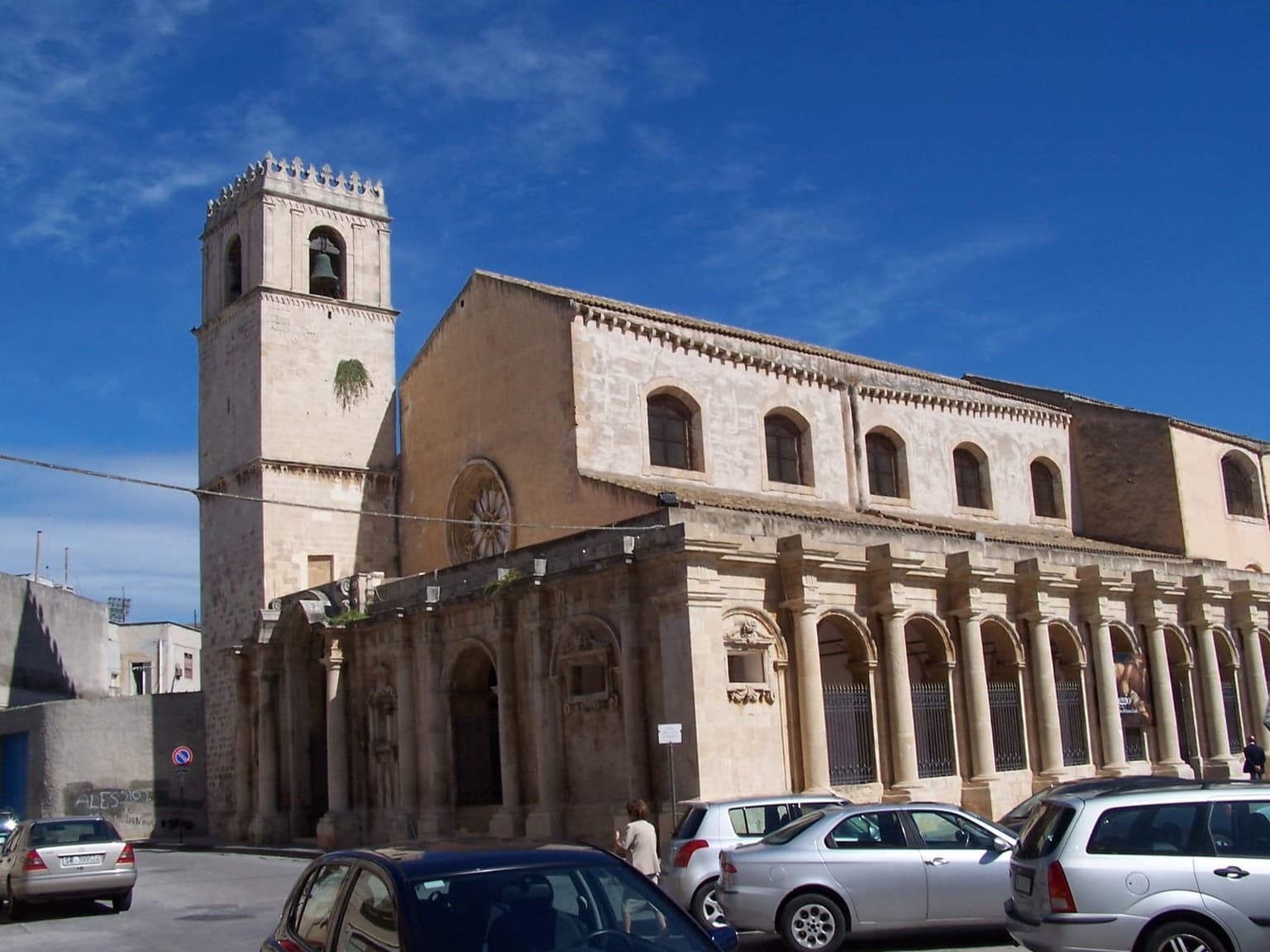
It is a very large, very late Caravaggio, painted here in 1608 while he was on the run, and it hangs in the church it was painted for, which is most of the reason to go out there. Entry is free, every day, 09:00 - 19:00, and it is on display to the end of 2026.
The Catacombe di San Giovanni are on the same side of the water, at Largo San Marciano 3, so the two make one errand: an early-Christian burial network under the mainland, entered through a ruined Norman basilica above it. You do not wander it. The visit is guided, in Italian or English, by reservation, and the group only sets off once it has filled to its minimum size, so a quiet hour buys a wait, not a private tour.
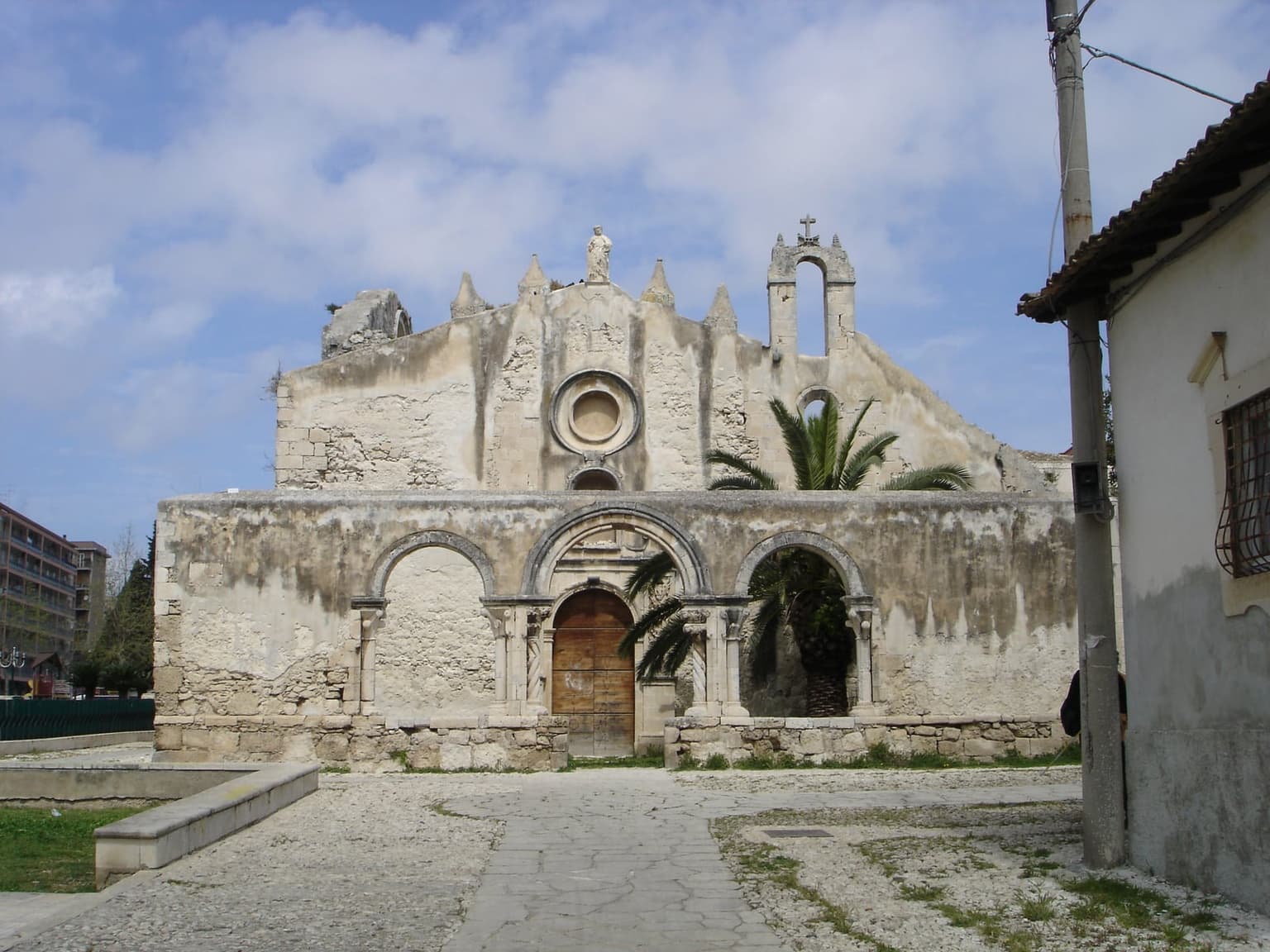
The ticket is €12 plus a €2 service fee, so €14 in practice, and a VR reconstruction comes with it whether you want one or not. Right now the online desk is down and tickets are sold on site only, so the reservation is made in person and turning up early is the whole strategy.
It closes from January 7 to January 31, reopens in February on half days, and shuts on Mondays until the end of March; April through October it opens every day, Mondays included, and breaks for the middle of each one. That break is what sets the order of the half day: the painting keeps its hours straight through, and the catacomb does not.
Swimming in Ortigia: rock and ladders, no sand
There is no beach on the island. Water is on every side of you here, which is exactly why the absence lands as a surprise. You get into it off the rock along Ortigia's eastern edge, down a ladder, with the old town's stone behind you, and what passes for sand is gravel wedged in patches between the rocks. People arrive with a towel expecting a swimmable town and go looking for a beach that is not there.
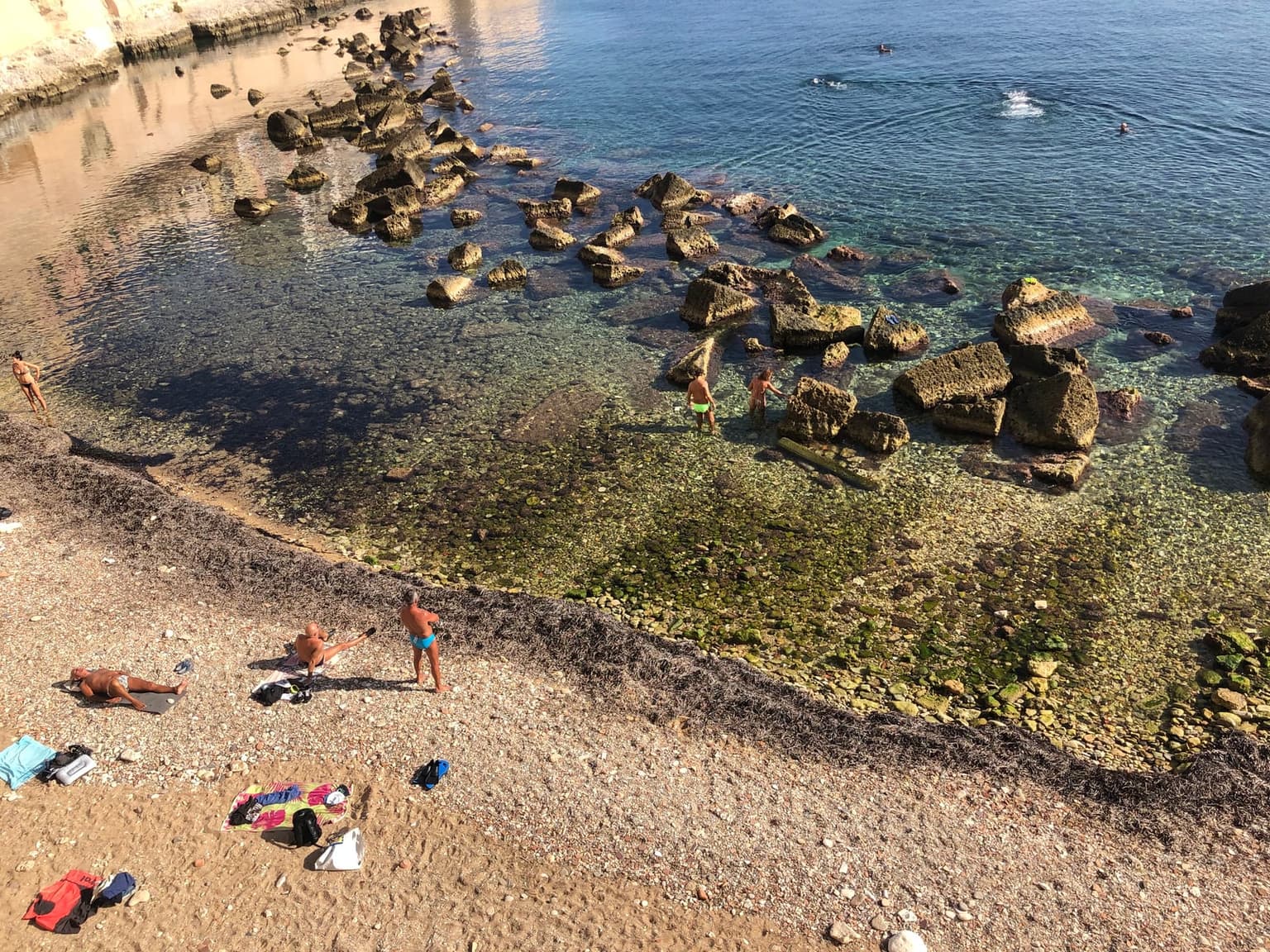
Know that before you come and it stops being a disappointment. Climbing down a ladder into open water in the middle of a baroque city is its own thing, and not many places can offer it at all: you swim out far enough to see the seafront in one piece, then come back up into the same lanes you were walking an hour earlier. It is a swim, not a beach day. I would not plan an afternoon around it with small children and an inflatable; a ladder is not a shore, and that afternoon belongs off the island.
The sand is elsewhere on this coast, and it splits on whether you have a car. Fontane Bianche works without one; Vendicari and the wilder stretches do not, which catches the car-free traveler who assumed the whole coastline was open to them. Which one deserves your day is a comparison in itself, and it belongs with the other beaches worth reaching from here.
Catania to Siracusa: the train, the bus, and which stop you want
Catania Centrale to Siracusa is a regionale train, somewhere between 1h05 and 1h30 depending on which one you catch, and for most people it is the answer. What nobody can honestly tell you is how many run a day: the operator's table splits one service across several columns by validity code, and some columns run only on certain days or in certain seasons. Look up your own date.
Catania to Siracusa on your own date, in the operator's own search (trenitalia.com)
The detail that changes a trip is that Catania Aeroporto Fontanarossa is a station on this same line, the first stop out of Catania Centrale. Some Siracusa services call there and some run straight past it. Land, and you can be in Ortigia without ever setting foot in Catania, which also disposes of the end-of-trip night people book by the airport and subtract from here. Getting from the terminal to that station is its own small operation, and it is in my Catania airport guide.
The bus is the other way in, and it hides a decision: which stop yours uses. Interbus lists ten in Siracusa, and three of them decide how the arrival goes - Corso Umberto, 196, the main terminal, and two more the operator itself labels Corso Gelone, 50 (Ortigia) and Corso Gelone (Parco Archeologico). Whether you step off where you are staying or a walk away from it is decided by that one line on the board, which you can read before you book.
Interbus's own stop board, with the Siracusa stops under the operator's own names (interbus.it)
A late landing is where both of those stop being answers and a fixed price bought in advance starts looking cheap.
Book it against your flight number so the driver is tracking the arrival and not a clock, give the exact street address rather than "Ortigia", and check whether the quoted price is for the car or per person before you compare it with anything.
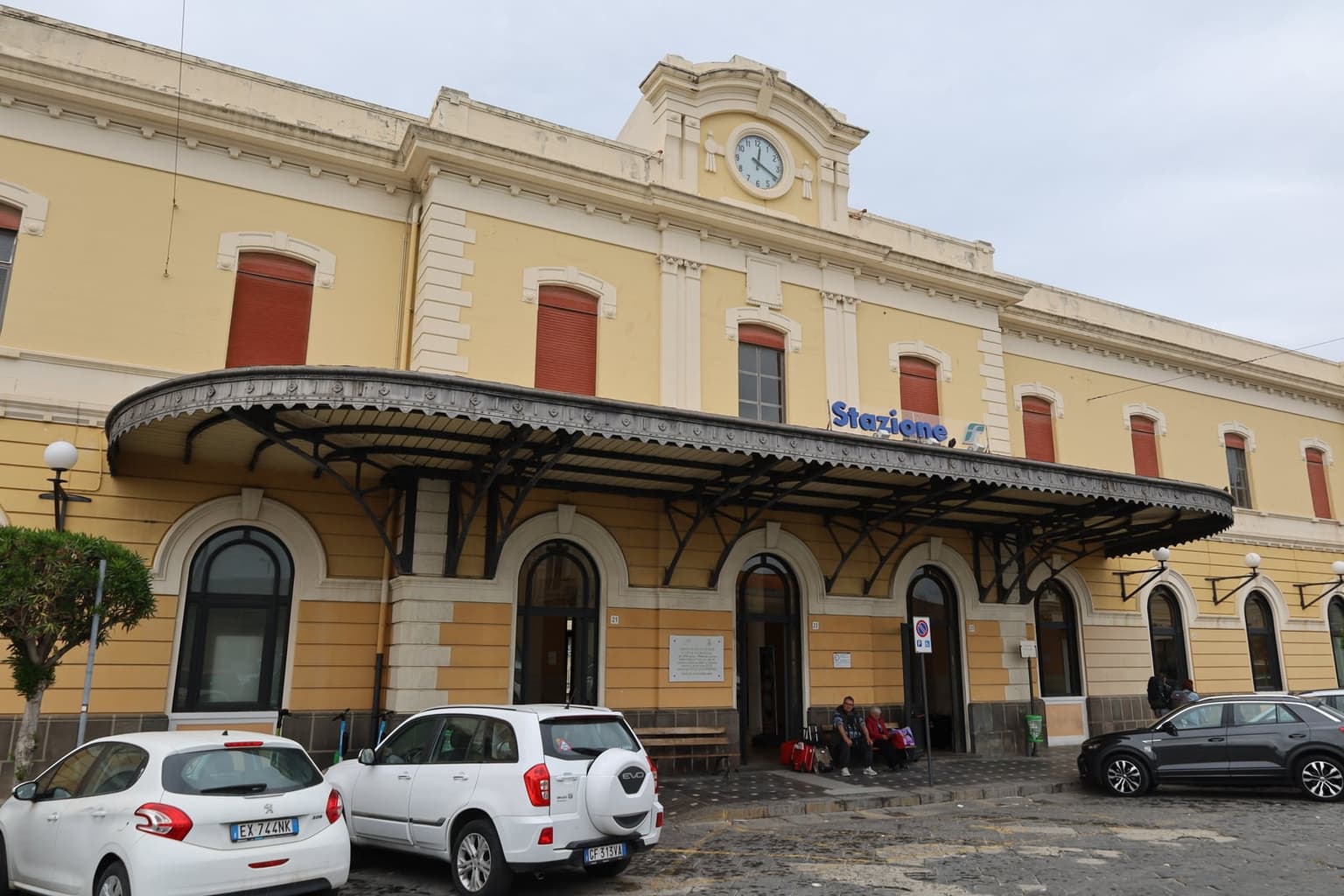
Arriving in daylight, the one thing to know is that the station is not in the old town. It is 1.2 km to the Ponte Umbertino, the bridge onto the island, about fifteen minutes with a bag, and about 2 km, twenty-five minutes, on to Piazza Duomo. It is level the whole way, which matters more than the distance does.
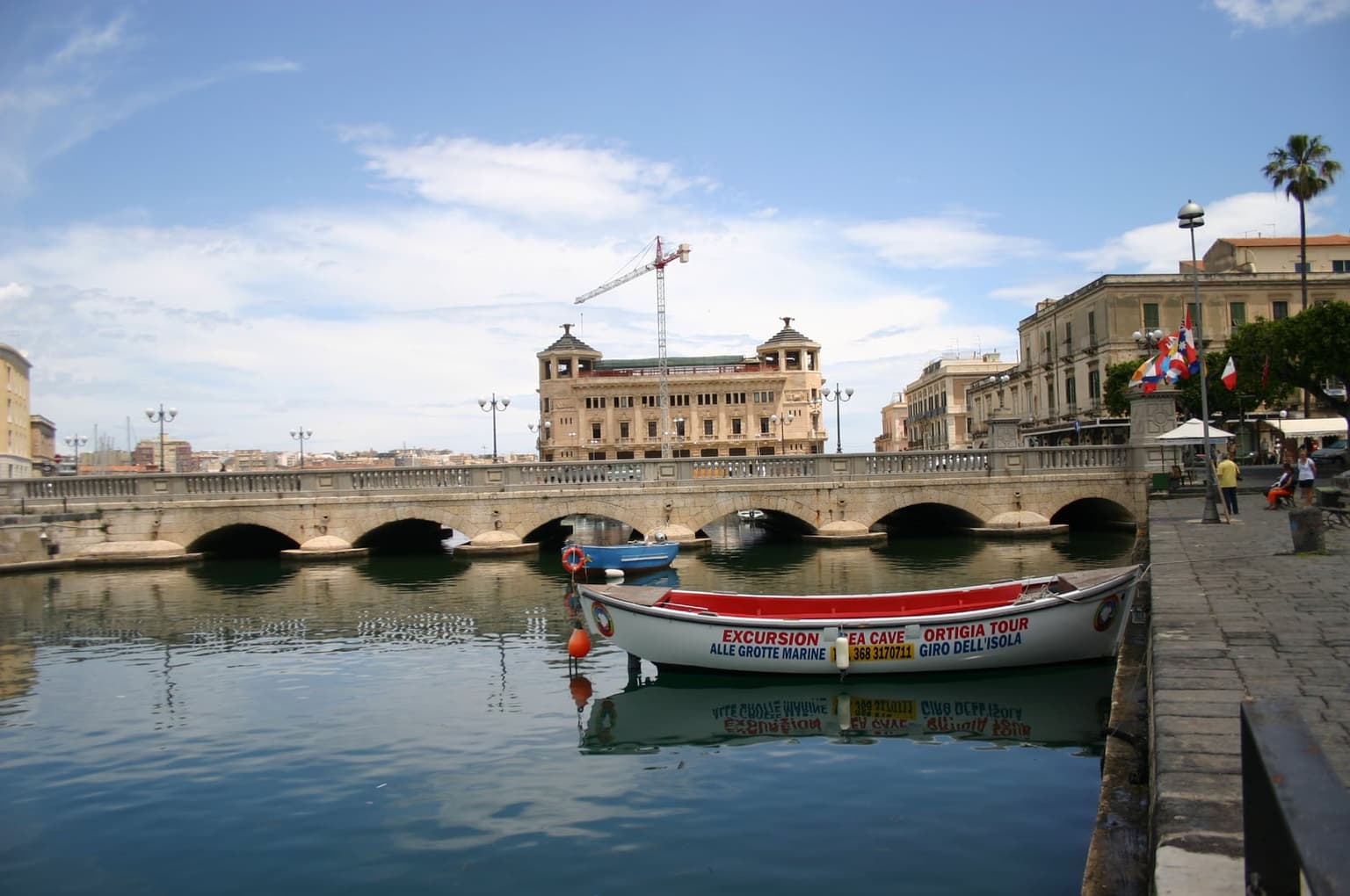
Not walking it costs almost nothing. SAIS runs the city buses, and one ride is €1.20, a ninety-minute ticket €1.50, a day €3.
Where the SAIS city buses go in Siracusa, and what each ticket costs (saisautolinee.it)
The walk turns from fine to grim on the two days nobody plans for: the morning you arrive before the room is ready, and the afternoon you check out with hours still to fill.
book luggage storage in Siracusa
Pick the drop point on the side of the water you will actually spend the day on
Pick a drop point on the side of the water you will actually spend the day on, not the cheapest one, and check its closing time against your departure: a bag behind a shutter is worse than a bag you carried.
Driving in Siracusa: the Ortigia ZTL, and what a car actually costs you
You do not need a car for Siracusa itself. The car question here is really the day-trip question: if the southeast is on your list, yes; if it is not, no.
The island itself is a limited traffic zone, and that is what settles it. There is no version of a day here in which a car parked on Ortigia is convenient: the closure takes the middle of the day and the whole of the evening six days a week, and on Sundays and holidays it runs unbroken from mid-morning to the small hours. Two 2026 ordinances hold it, 189 from March and 292 from May.
⚠️ Warning
The ZTL runs Monday to Saturday 11:00 - 15:30 and 17:00 - 02:00, and Sundays and holidays 10:00 - 02:00 without a break. A property registering your plate buys you transit through it. It does not buy you anywhere to leave the car.
Since June 11, 2026 your hotel or apartment can register your plate on the city's own Connect Pass platform, signing in with an Italian digital ID. Ask for it, then read it properly: the misunderstanding starts one step later, when "the hotel will handle the ZTL" gets heard as "the hotel will handle the car".
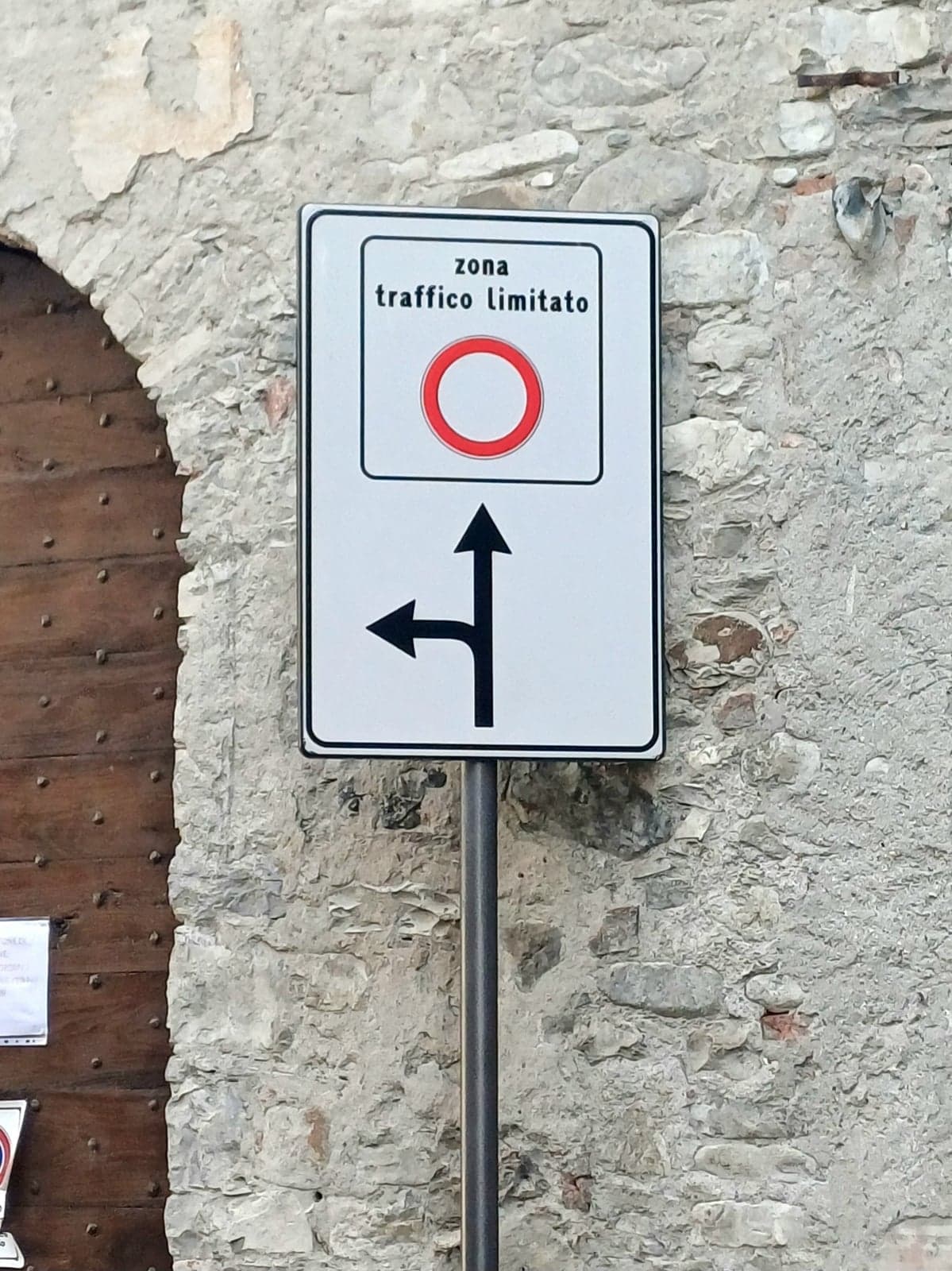
That turns a room in Ortigia from a mood into a logistics question, and it is one to settle before you book.
What decides it: how far the door stands from the nearest lane a car can enter, whether that gap gets crossed with your bags, and whether the property will register your plate and say where the car can legally sit overnight - which will not be on the island. The mainland side answers all three, and costs you the hours that were the reason to sleep here.
I will not point you at a place to park, and that is deliberate. The rules were rewritten in 2026 and are still moving, and the city's own parking pages predate the change, so even the municipal listing can send you to a barrier. Read the city's page for the day you are actually driving in.
The city's own ZTL page, with the hours in force and the ordinances behind them (comune.siracusa.it)
If the answer is yes, the timing matters more than the desk: collect the car when you leave Siracusa, not when you land.
compare rental cars at Catania airport
Collect the car when you leave Siracusa, not when you land - Ortigia has nowhere for it to sit
Book the transmission you actually want rather than finding out at the counter what the cheap rate assumed, and size the car down for lanes that were laid out before cars. Do not end an evening with the car back on the island; it has nowhere to sit while you eat.
Day trips from an Ortigia base, and what each one costs the town
A day out of Siracusa is not added to the trip. It comes out of the town, and out of exactly the hours a night here was bought for: you leave before the island's morning, and you get the evening back only if the return leg is kind. Three towns in one day is the version people regret - the driving gets done, the towns do not.
Without a car it is one town a day, and Noto is the one that works. The move most plans miss is to take it on the day you change bases rather than as an out-and-back from here: when the next base sits further into the southeast, Noto is on the way, and it costs a travel morning you were spending anyway. What Noto gives back for that day makes the case for going at all.
A car makes it two, and two is where I stop. It also opens the far end: Ragusa is where the rental earns itself, and which part of Ragusa your day should go to is its own question. Modica and Scicli are the same baroque family: one properly, two if you push it, three as a blur.
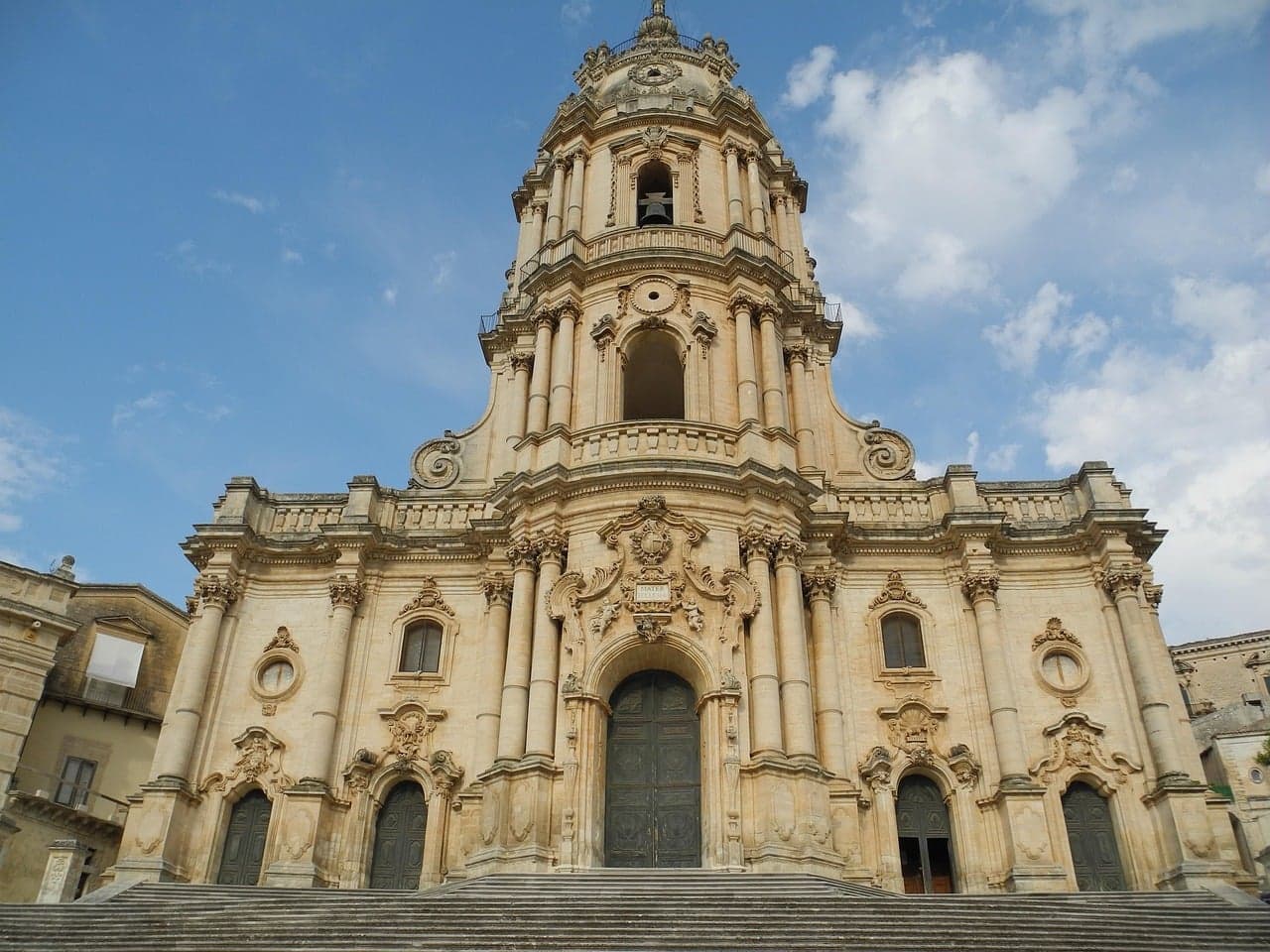
Marzamemi is the other shape of day out and it costs you the evening rather than the morning - the coast rather than another baroque square.
If you are not driving and still want the southeast, a guided day is the purchase that answers it.
Read the itinerary for ground time rather than town count: three names means three short walks and a lot of road between them. Book a specific departure with recent reviews rather than whatever the platform ranks first, and check what it does about lunch - an hour you did not choose is an hour off the ground.
Frequently asked questions
- How many days do you need in Siracusa?
- A full day if your trip is the east coast, two or three nights if the southeast is in the plan. One night is the wrong number either way: you pay for the room and still get the day-tripper's hours. Two nights carry the town plus one day out; three carry two.
- Is the Neapolis archaeological park worth the ticket?
- Yes at €14, if you go at the right hour. Allow two to three hours for the theater, the amphitheater and the quarries, and expect no shade in any of it. On a mild day take the museum first and finish at the park; when it is hot, reverse that and be at the gate when it opens.
- Can you swim in Ortigia?
- Yes, but off the rock along the island's eastern edge, down a ladder, with the old town behind you. There is no sand here and no beach, only gravel in patches between the rocks. The sand is out on the coast, and some of those stretches need a car.
- Do you need a car in Siracusa?
- Not for the town: the island is walkable end to end, and the mainland half is a walk or a city bus. Ortigia is a limited traffic zone, shut to traffic through the middle of the day and all evening, and parking inside it is prohibited. Rent a car only if the southeast is in the plan, and collect it on the way out.
Book the nights first and the day trips second. A day in Noto or Ragusa is subtracted from Ortigia, not added to Sicily, and what it takes is the morning and the evening the room was bought for. Leave one evening with nothing to catch.