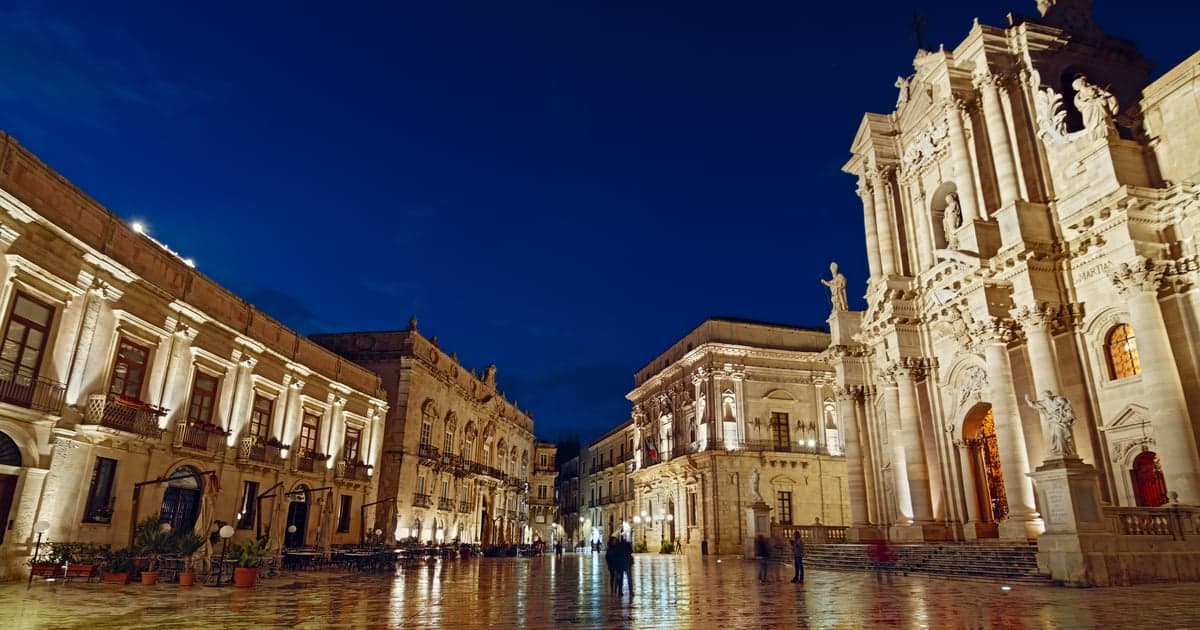
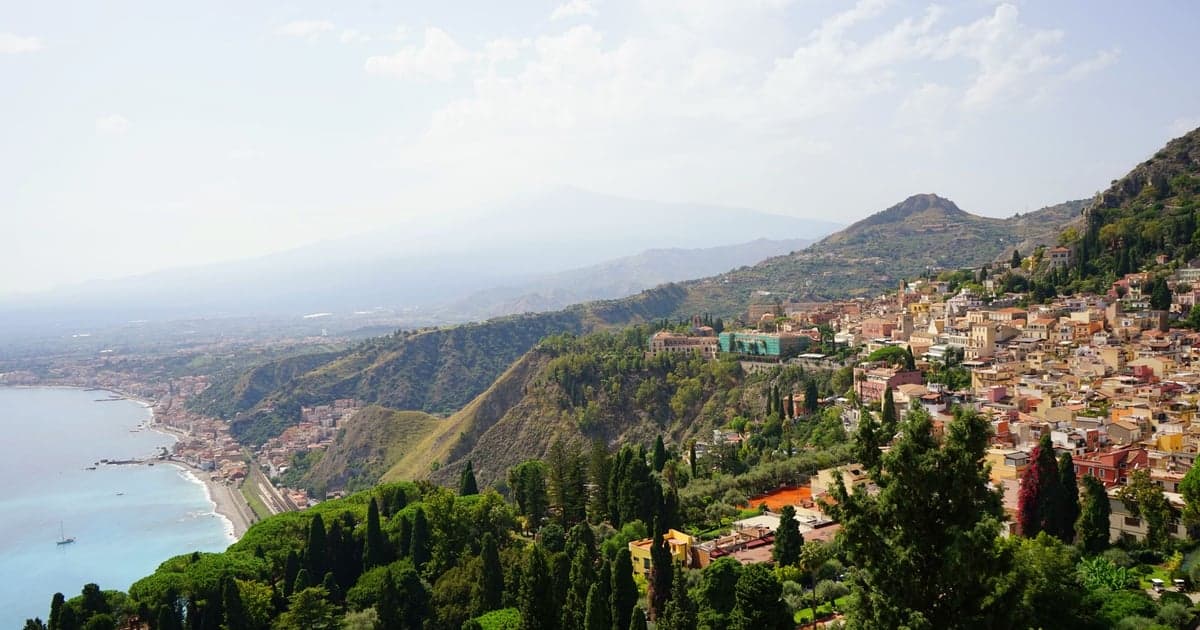
George Mandrovny
How many days Catania is worth, and what they buy you
Catania is worth two days, and only if you spend them the way the city is actually built: mornings at the market, a food capital's hours, and the shortest reach in Sicily to Etna, Ortigia, and Taormina. It is not worth a view, a quiet dinner, or an afternoon of wandering hoping to be charmed. That is why so many itineraries delete it.
- The one unmissable thing is La Pescheria, and it is a morning. The fish market runs six days a week, closes on Sunday, and is over by around lunchtime. A Sunday in Catania needs a different plan.
- The one you have to book is the Monastero dei Benedettini. It is guided tour only, spots are limited, and turning up without one gets you the university corridors and nothing else.
- Do not rent a car for the city. The center walks end to end. The car is for the day you leave.
The case against Catania is real, and it is almost entirely a case against the wrong two days. Spend them looking, and the city hands you traffic, dirt, and a lot of black stone; on those terms I would skip it too. Catania does not reward looking; it rewards eating, mornings, and how close everything else in eastern Sicily is.
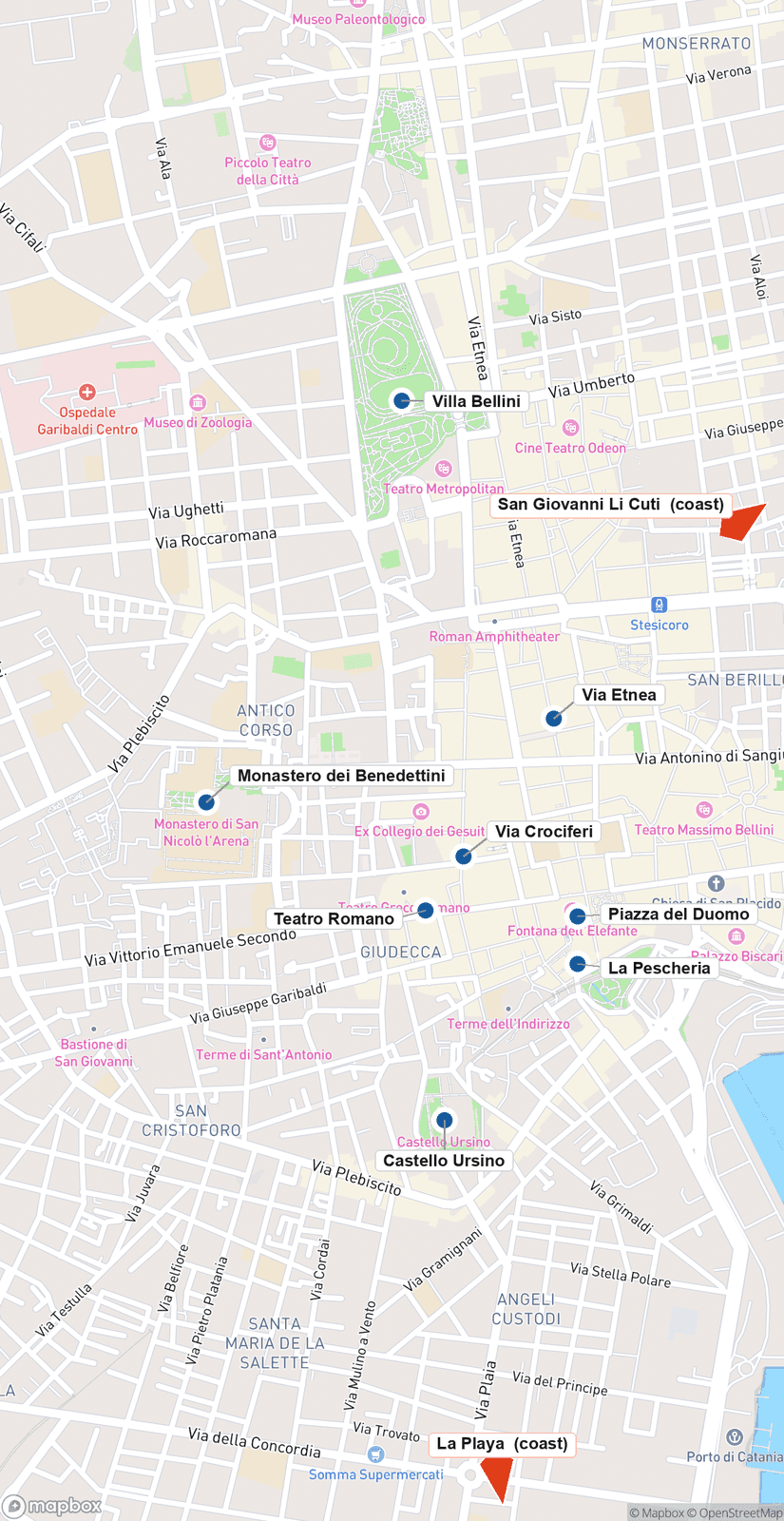
The market, Piazza del Duomo, the Monastero, the Teatro Romano, Via Crociferi, and Villa Bellini all sit inside the one core on that map, and only the two beaches fall outside it. You cross the whole thing on foot, which is the real reason a car in Catania is a liability rather than an asset: you would spend both days parking it.
| Your time here | Spend it on | The trap |
|---|---|---|
| Half a day | The market before lunch, Piazza del Duomo, a granita | Arriving in the afternoon, when the case for the city has already closed |
| One day | All of that, plus the Monastero (booked ahead) and Via Crociferi | Trying to fit a day trip in as well |
| Two days | One day in the city, one day out to Ortigia, Etna, or Taormina | Two day trips, which turns the city into a dormitory |
| Three or more | A second day trip, plus a swim inside the city | Assuming you need a car for any of it |
The rest of this article is the argument behind that table.
La Pescheria and Piazza del Duomo: the morning that makes the case
La Pescheria runs six mornings a week under the Carlo V walls beside Piazza del Duomo, it is closed on Sunday, and it is finished by around lunchtime. Most of Catania can move around inside your two days; this one cannot, and it is the reason the two days work at all.
It is not a restored market hall or a food court with a fish theme: it is where the city buys dinner, on wet stone, at volume.
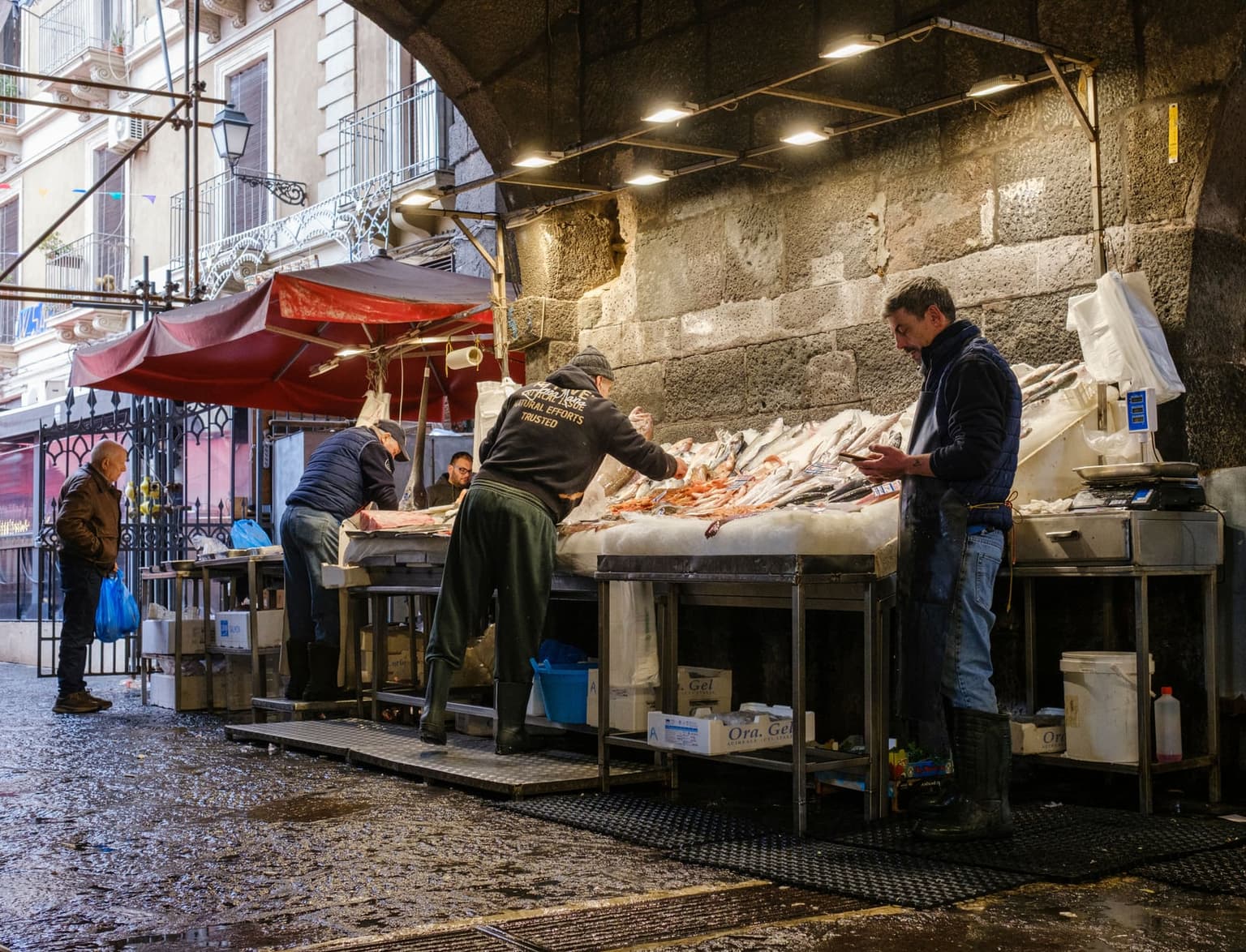
The noise reaches you before the market does: prices shouted flat out over the top of one another, none of it aimed at you. Water runs off the stone counters all morning and stands on the paving, so you walk the whole thing wet. A swordfish lies out full length along a slab with its bill hanging over the end, and the Carlo V walls go up behind all of it, indifferent. Nothing here has been arranged for you to look at. The city is buying its dinner, and it lets you stand in the middle of that.
⚠️ Warning
Sunday is the trap. The market does not run, and a day trip that lands here on a Sunday sees Catania with its best hour missing. Judge the city on that day and you will get it wrong. If Sunday is the day you have, give it to Piazza del Duomo, the baroque streets, and a long lunch, and go in knowing you are seeing the second-best version.
Walk through the Carlo V arch and you are in Piazza del Duomo. The market and the square are immediately adjacent, which is why the morning holds together as one thing instead of two stops.
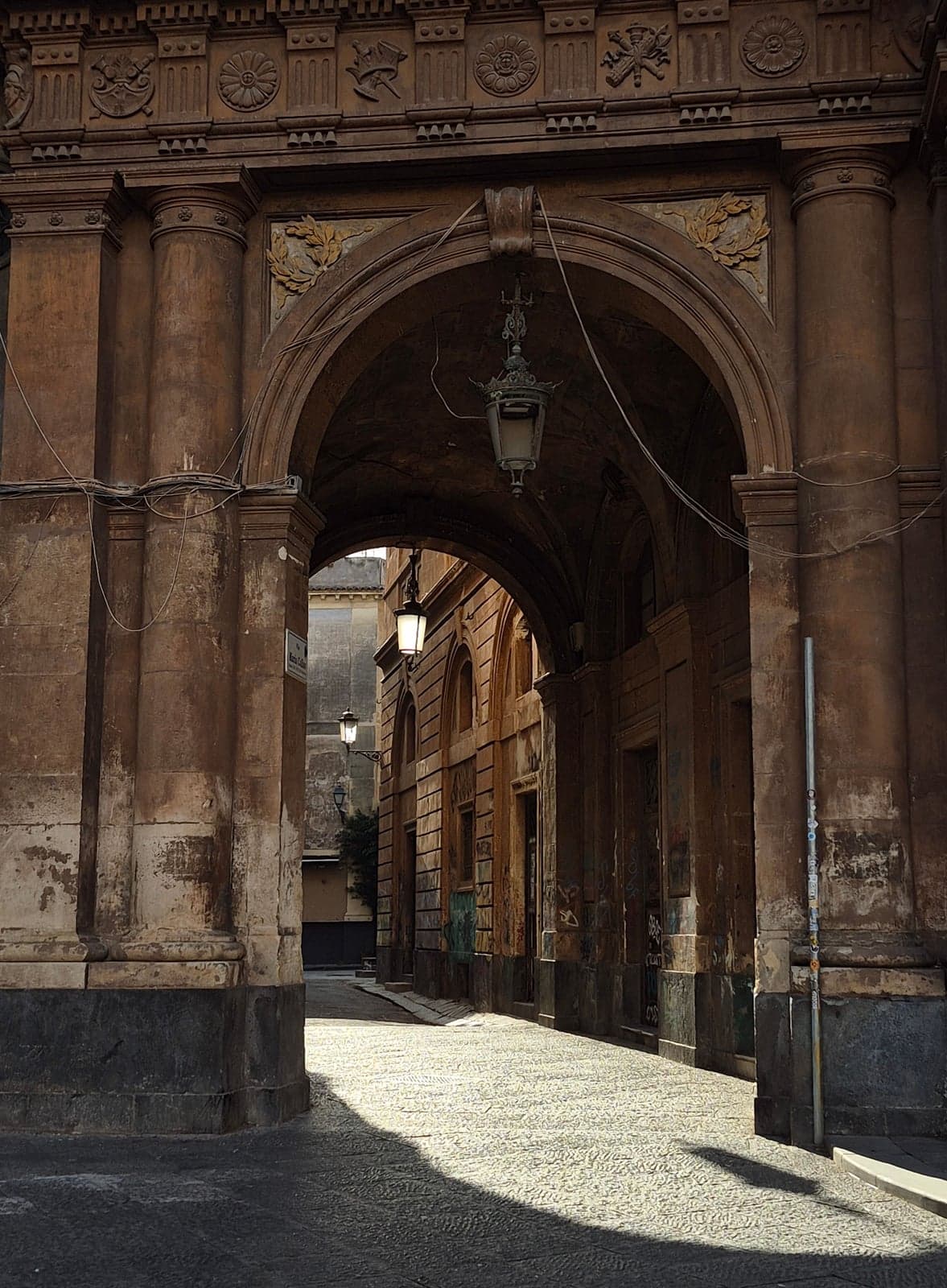
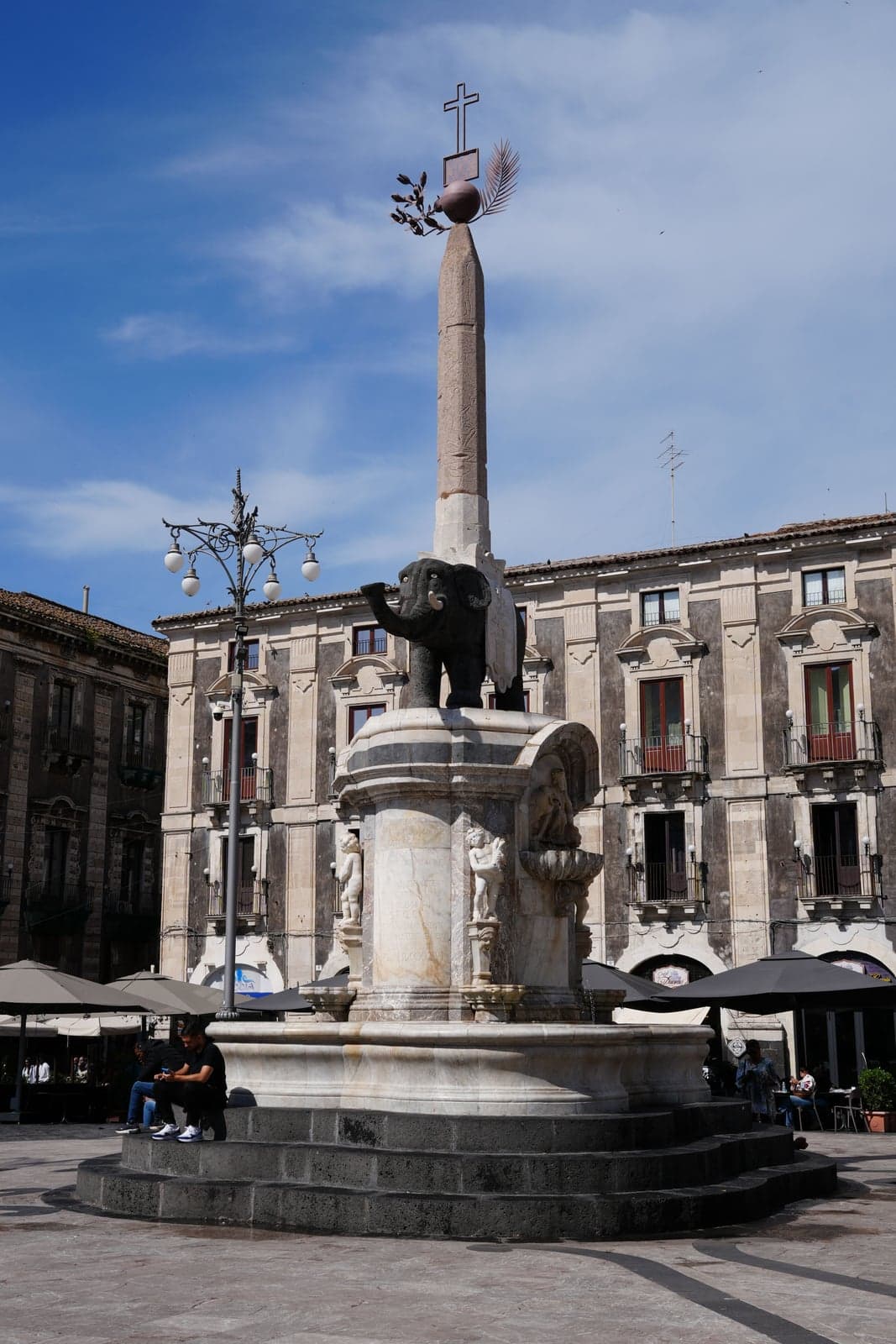
The square is black and white, and it is built out of the two things the city is made of: lava paving underfoot, pale limestone in the facades above it. In the middle stands u Liotru, an elephant cut from lava with an obelisk on its back, and it tells you inside ten seconds what city you are in. The square is free and always open, so it still works on the day the market does not.
Early February overrides all of this. For a few days the square belongs to the Festa di Sant'Agata, and the city goes with it: extraordinary if that is what you came for, and close to impassable if it is not. Either way it is not a thing to walk into by accident, so check your dates against it before you book a room rather than after.
Eating in Catania: granita, arancini, and the hour each one happens
The problem with eating in Catania is not finding food, it is sorting it. There are more places than anyone can filter on a short trip, and three nights is not long enough to learn which ones the city actually uses. My rule here is to stop choosing places and start choosing hours: in Catania the meal is decided by the time of day, and once the hours are right, which address you pick matters far less than it seems like it should.
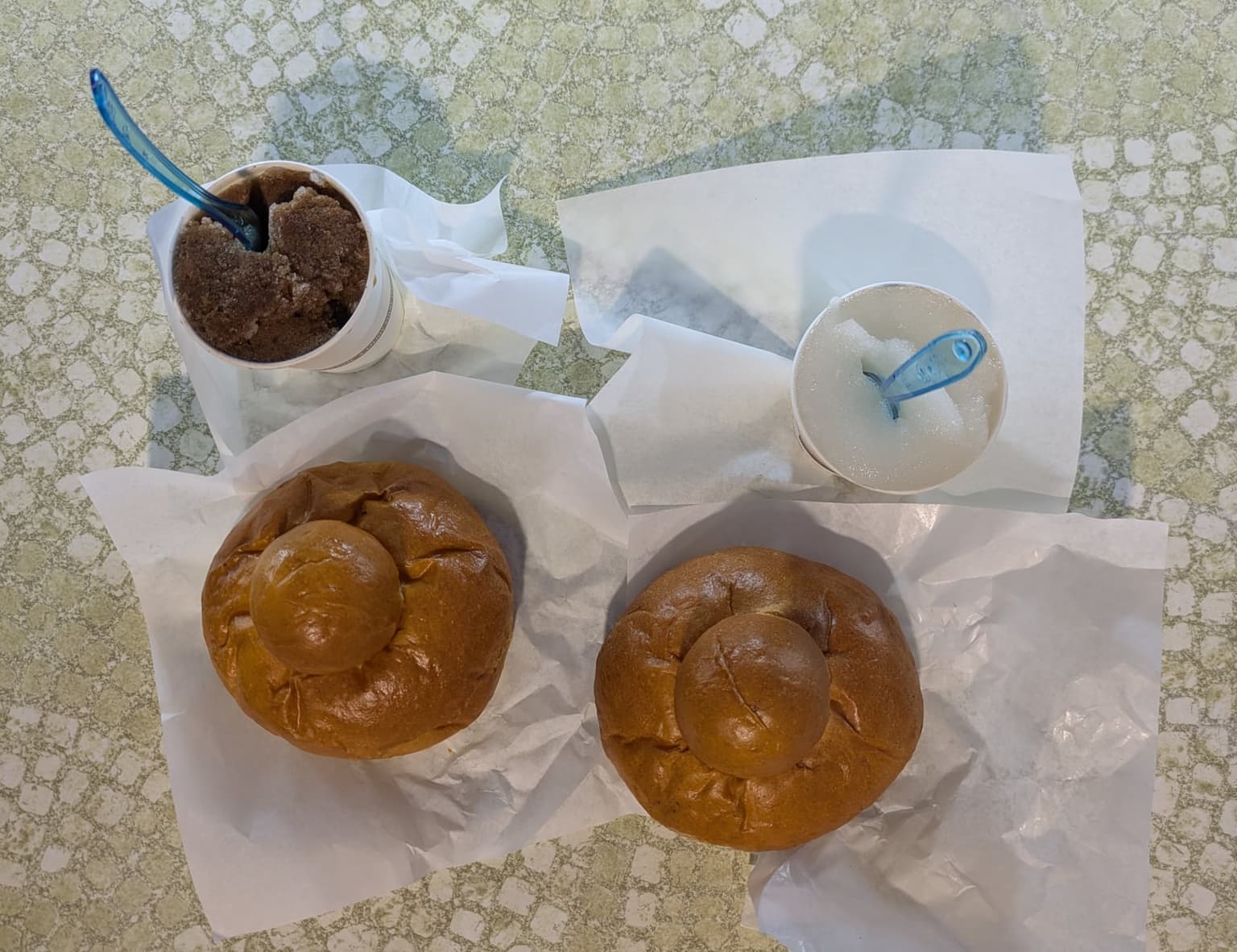
Breakfast is a granita with a brioche. The granita is shaved ice, nearer to a sorbet than to the syrupy slush the word suggests in English, and the brioche is a plain sweet bun; the two arrive together, and they are the meal rather than the dessert after one. It is easy to get this backwards - granita ordered at the end of dinner, which in Catania is roughly like asking for cereal with the check.
Then the arancino. In Catania the fried rice ball is masculine and pointed, a cone; in Palermo it is the round arancina. The shape is the whole distinction, and it is the fastest way to tell which half of the island you are standing in. (Which version is correct is not a question with an answer, and asking it out loud is how you lose an afternoon.)
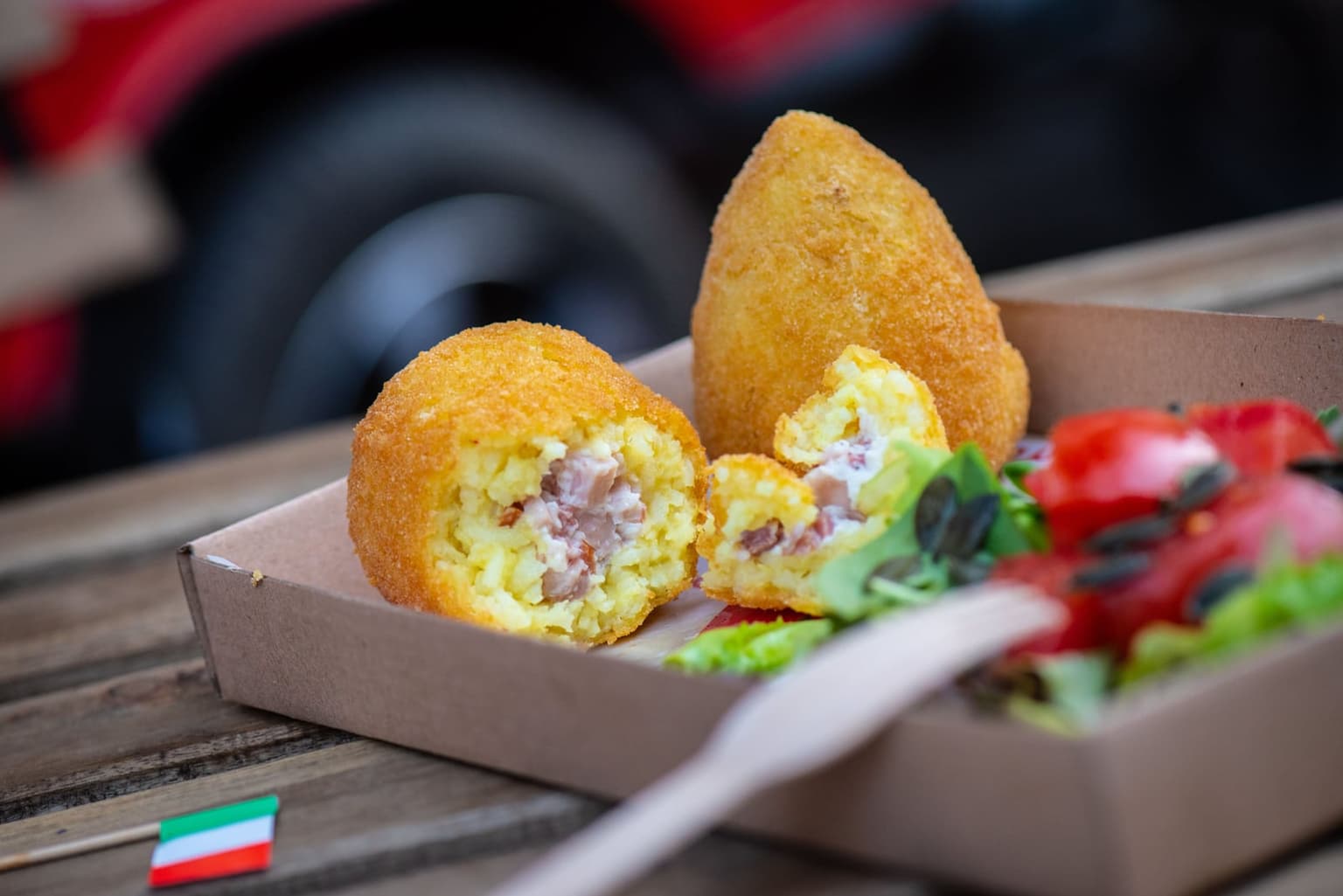
Lunch is the meal the city arranges for you. The lanes around the Pescheria are full of places to eat one, and lunch there is a fixed thing rather than a decision. Dinner is the same principle at the other end of the day: it starts late, later than feels reasonable on a first night, so build the day around a real lunch rather than an early dinner you will eat alone. Get the hours right and the city stops being something you have to crack.
Put clock times on it: granita and brioche around 8:00 - 9:30, while the market outside is still at full volume; the arancino as a stand-up snack near 11:30, or again in the 16:30 - 18:00 stretch once Via Etnea fills with its evening walk; lunch inside the 13:00 - 14:30 window, while the kitchens are still working the morning's catch; dinner never before 20:30, and the room does not really fill until closer to 21:30.
If you would rather have the sorting done for you, the first morning is where that pays off. A guided street-food walk works the Pescheria while the market is still trading, covers granita and the arancino in the order the city eats them, and puts one thing in your hand you would never have ordered on your own, which is the part you are actually paying for. What to avoid is the version that is really a restaurant crawl: three seated stops and a long lunch is a meal with commentary, not a walk through the food.
Catania's ticketed sights, and the one you cannot just walk into
The Monastero dei Benedettini can only be seen on a guided tour, and that is a rule rather than a recommendation. The building is a working university faculty, so anyone who walks in unaccompanied gets academic corridors and nothing else: bulletin boards, lecture rooms, students on their way to class. Booked onto a tour you get the other building, an enormous baroque monastery with a university living inside it: two rebuilt cloisters, the remains of a Roman house under the floor, an eighteenth-century kitchen, and a garden planted straight onto the cooled lava. It is the best interior in Catania. Before or after the tour, look up at the church next door, San Nicolò l'Arena: the facade was never finished, and the columns meant to carry it simply stop in mid-air, still cut with the holes for marble that was never hung.
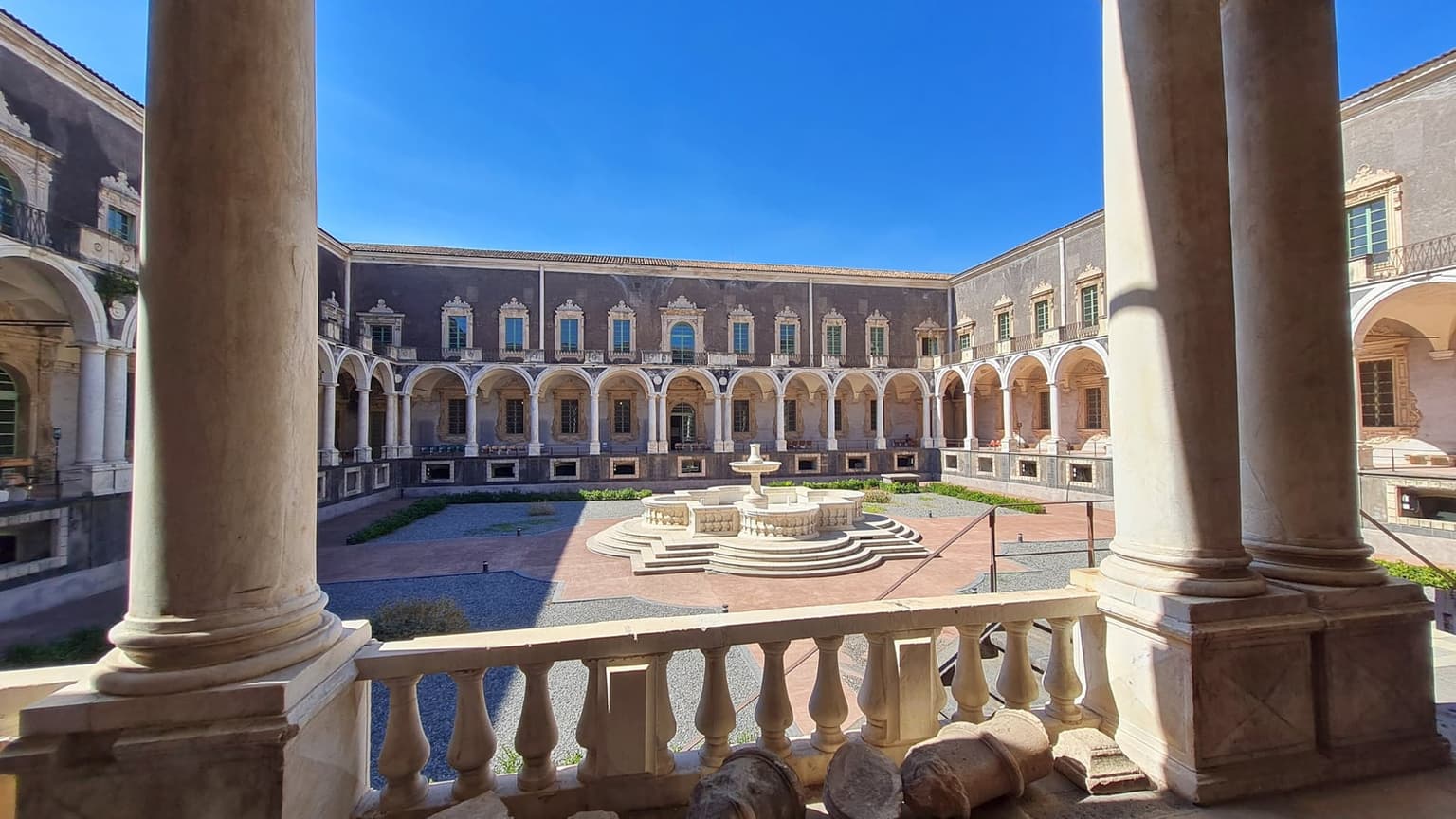
Tours run in Italian and in English, spots on each are limited, and the monastery opens every day 10:00 - 17:00, stretching to 18:00 from August 1. The site's own instruction is to check the hour and the spots available for the day you want to visit, which is a polite way of saying that what you are booking is the tour, not the building. Pick your day, then book it, because English is only some of the day's departures rather than all of them.
Roman Catania is the other thing here with a turnstile, and the only decision that matters is which ticket you buy. Buy the combined one: it adds the two Terme to the Teatro Romano, and the theater-only ticket is the one I would not buy.
| Sight | Full | Reduced | The catch |
|---|---|---|---|
| Monastero dei Benedettini | €10 | €7.50 over 65, €6 university students, €3 under 19 | Guided tour only, limited spots, book ahead |
| Teatro Romano e Odeon | €8 | €4 | On its own, the worse buy |
| Same plus Terme della Rotonda and Terme dell'Indirizzo | €10 | €5 | €2 more for three sites |
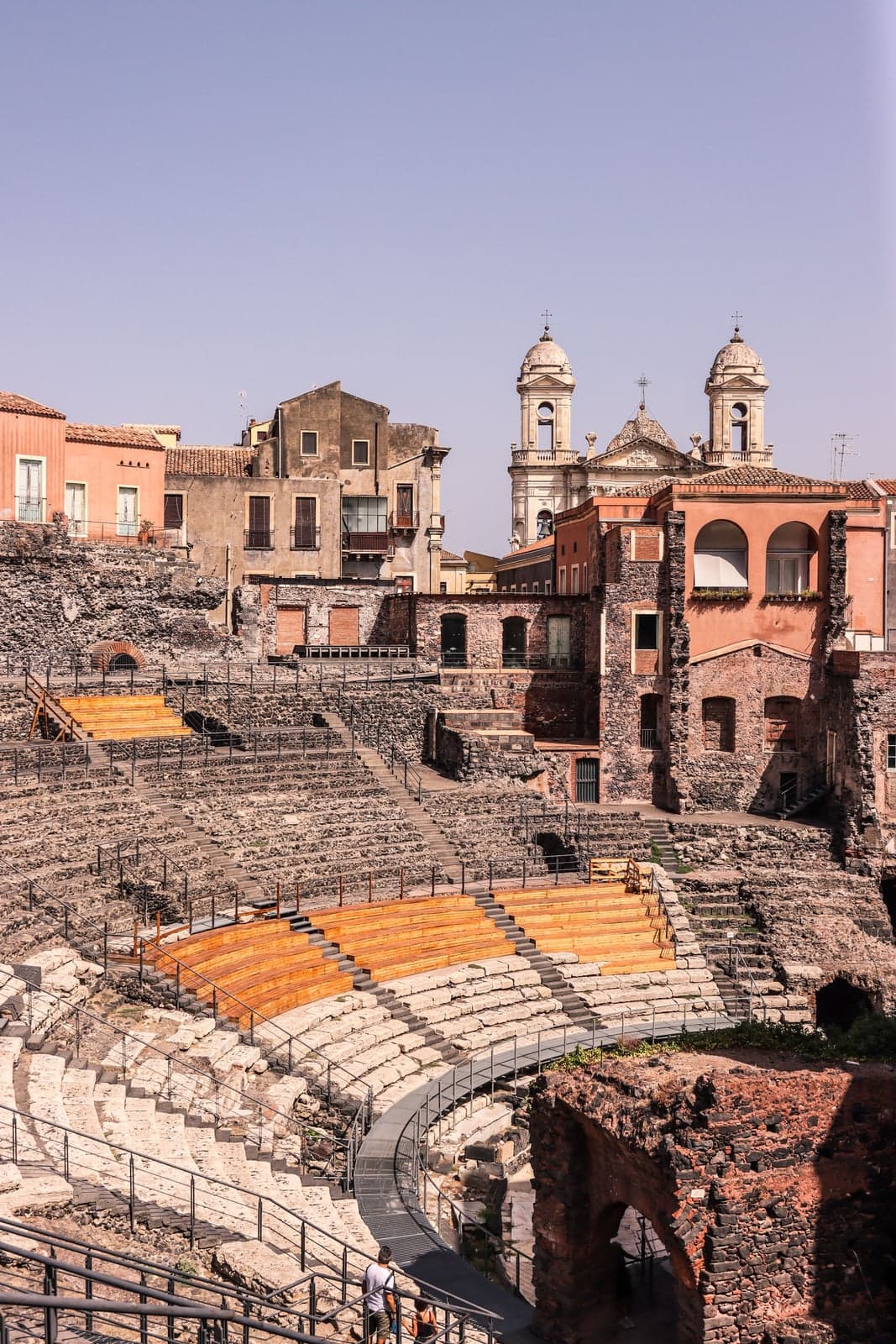
The Teatro Romano is the one you actually go for. It is a Roman theater with the city grown into and over it, apartment balconies rising directly behind the top row of seats: nobody ever drew a line between the ruin and the apartment block, so the city simply kept building upward through it. It opens 365 days a year, 09:00 - 19:00, with last entry at 18:30, which makes it one of the few things in Catania without a closed day.
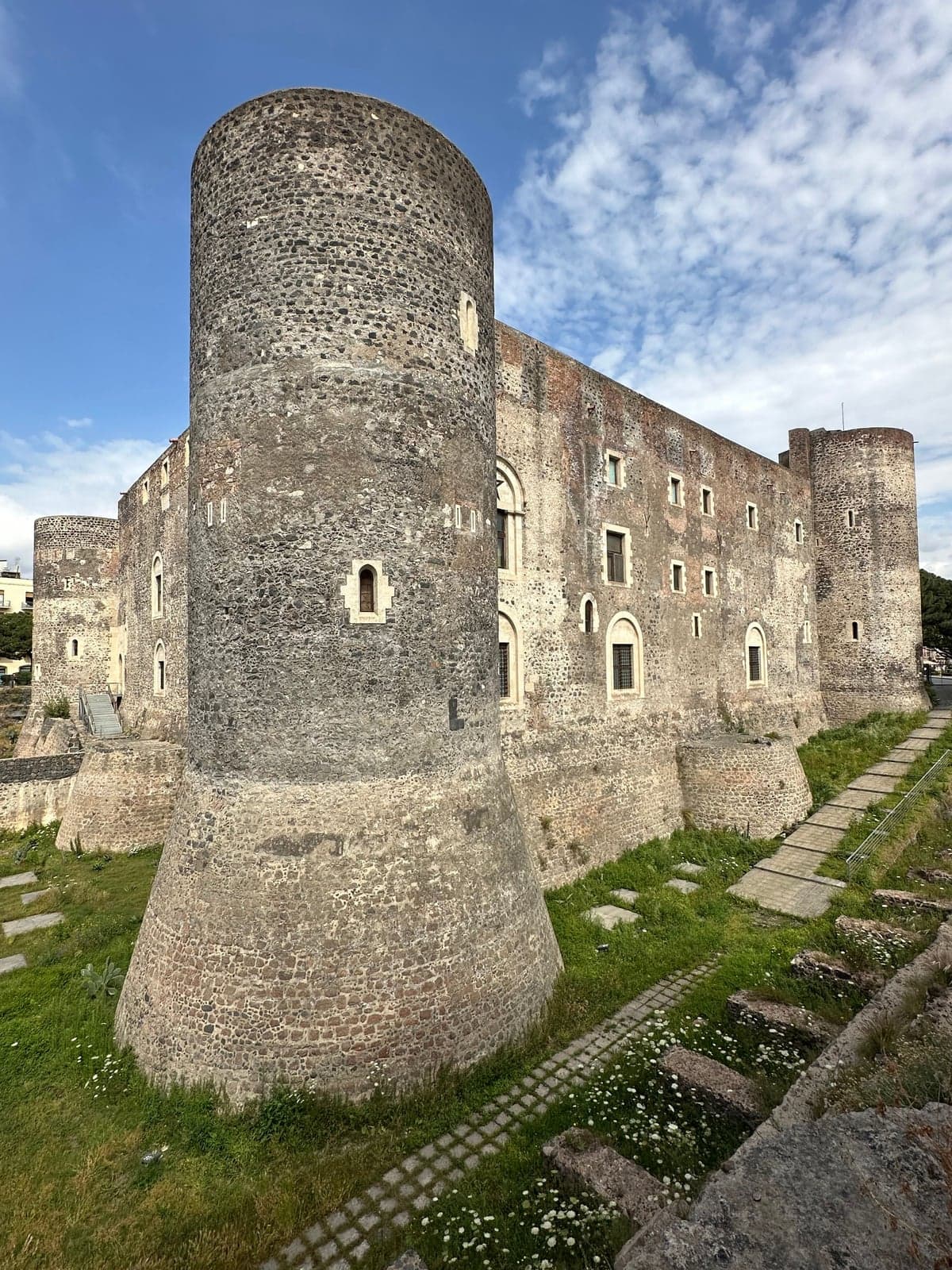
Castello Ursino is the odd one, and where it stands is most of the story: a squat Swabian castle that a seventeenth-century lava flow stranded inland when it rebuilt the coastline in front of it. The geology is the exhibit, which matters more than it used to: the castle has been closed to visitors since February 7, 2025, partway through a two-year, €4 million restoration - new elevator, rebuilt systems, a restored roof. The art collection that used to fill its rooms has moved a few hundred meters away to the Pinacoteca di Santa Chiara, and that is where you go to see it while the work continues. Back at the castle itself, only the moat is open, newly restored, with its own walking path around the base of the walls.
Those are the two tickets worth buying in Catania. The free half of the city is next, and it is the better half.
The free city: Via Etnea, Via Crociferi, and Villa Bellini
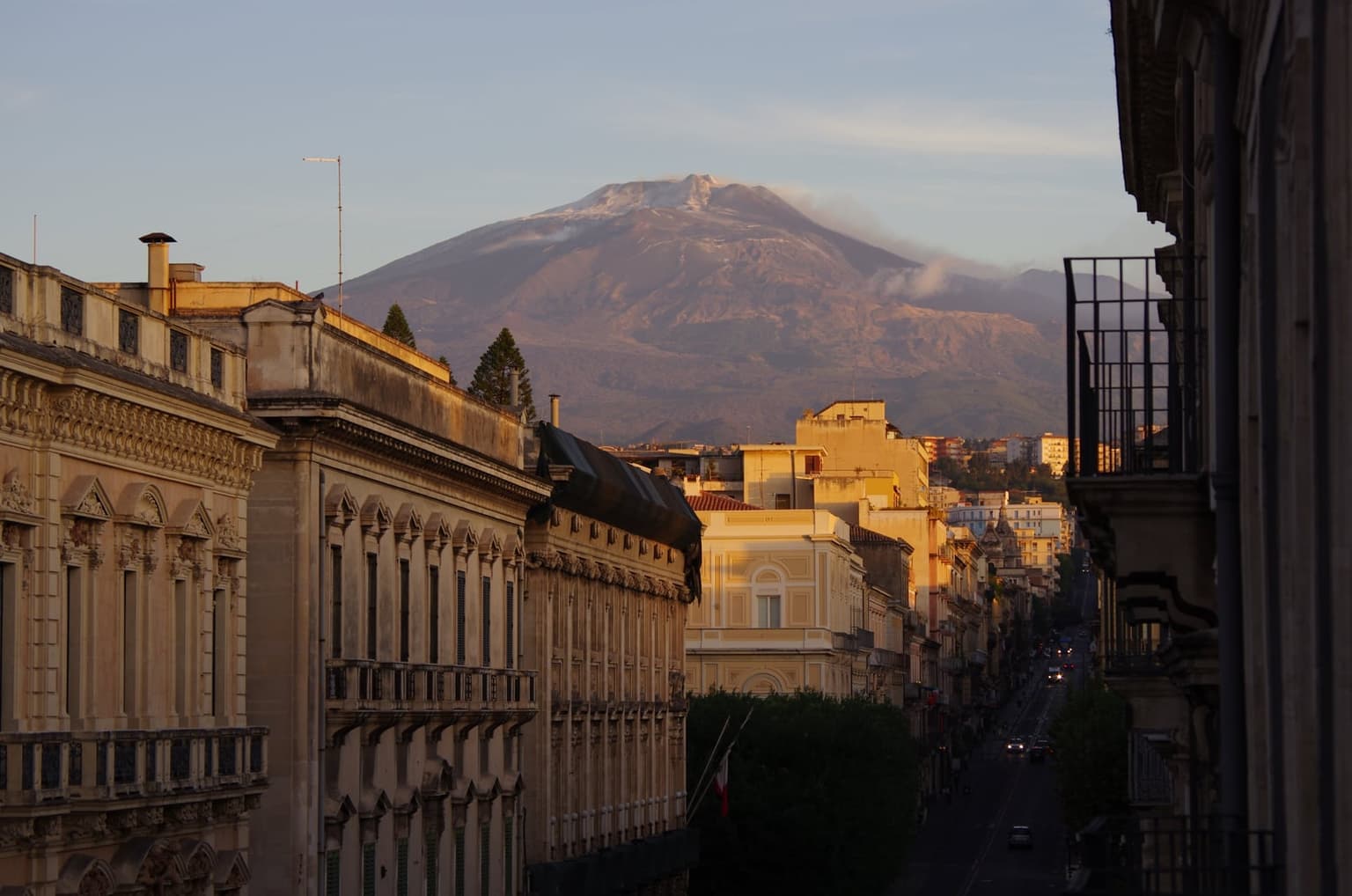
Via Etnea is the spine of the city, and it is free the way a street is free: you walk it, and Catania arranges itself along both sides of you. On a clear day it does more than that. The street runs dead straight north, and at the end of it, above the shop signs and the traffic, stands the volcano. It is the background of an ordinary working street, and the people on that street do not look up at it. Which is fair; they live here. That sightline is the free, unpaid image of Catania, and it costs nothing but facing the right way.
The volcano is not there on demand. Cloud sits on it for days at a time, summer haze can erase the whole horizon, and nothing about your plan changes that: you look up the street, and either it is there or it is not.
Via Crociferi is the other kind of free: a short baroque street of church facades, stepped and quiet, and the quietest good thing in a loud city. The churches keep their own irregular hours, and plenty of the time you will find their doors shut. Walk it anyway. The street is what you came for, not a consolation prize for a locked door.
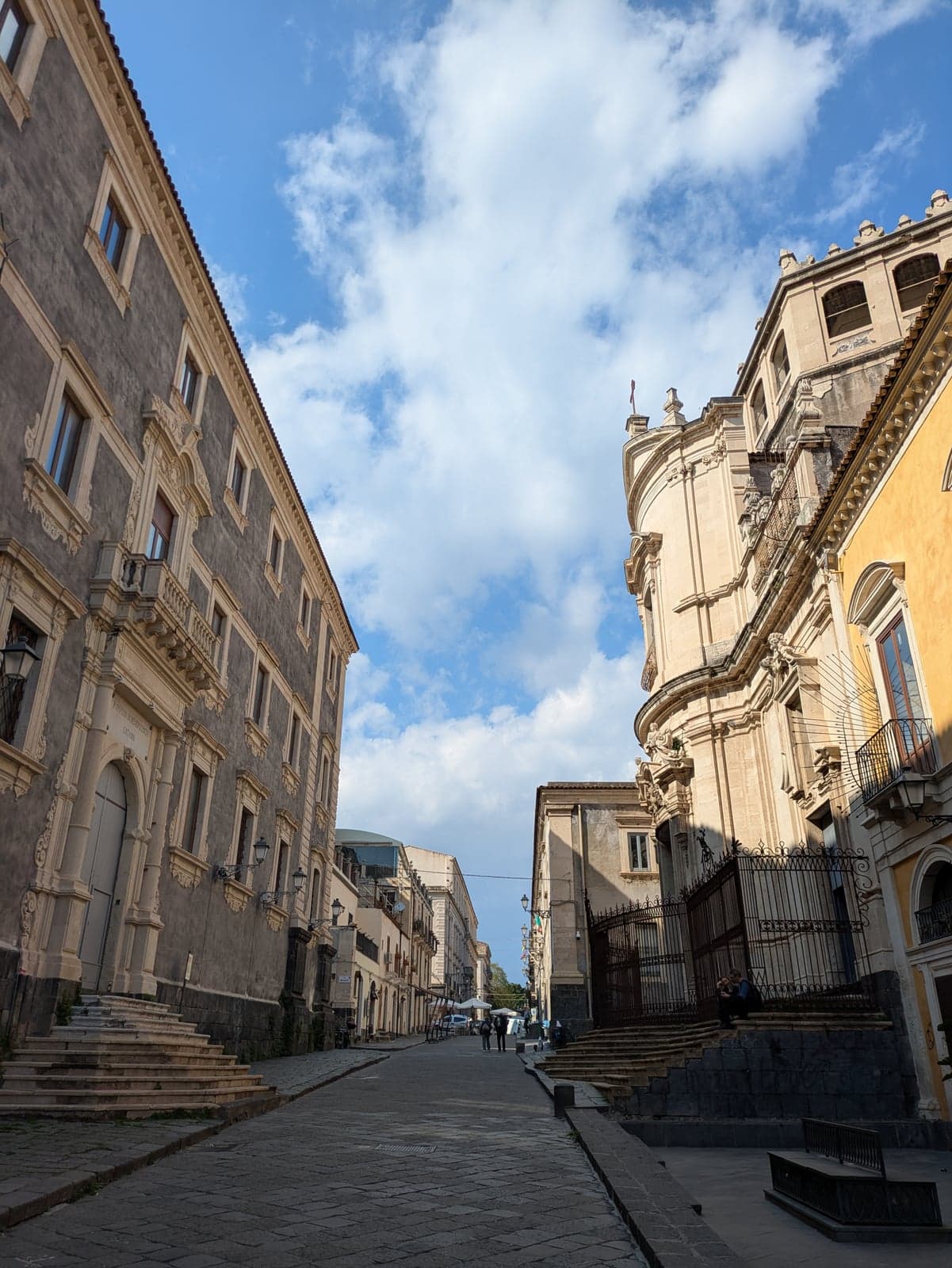
Villa Bellini is the city's big public garden, up above Via Etnea behind its terrace and its palms, and it costs nothing to walk into. It is where the evening walk happens, the passeggiata, the slow loop a Sicilian city makes before it sits down to eat, and it is the honest answer to what there is to do in Catania in the evening, and to the hours before dinner.
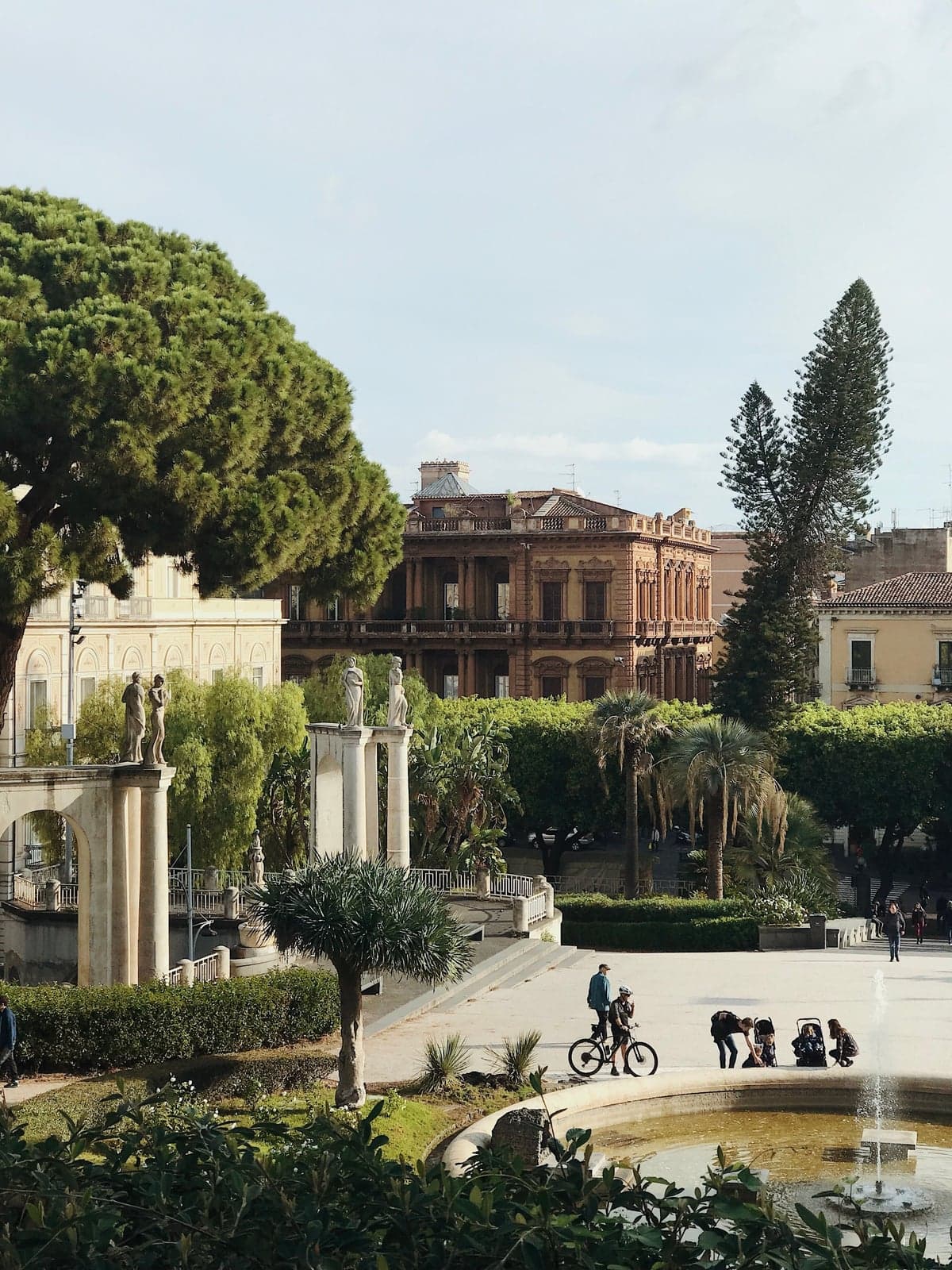
None of it needs a ticket or a time slot, which is why it is the half of the city that survives a day going wrong.
Where to stay in Catania, and which blocks read wrong after dark
Asked where to stay in Catania, I would give a direction rather than a name: the spine the city itself uses in the evening, Via Etnea, Piazza del Duomo, and the streets around Villa Bellini. The further you drift behind the station, the less the city does for a visitor, and it is worth being specific about what that means. What you run into is petty and street-level rather than violent: catcalling, traffic that speeds and honks at everything, streets dirtier than anyone's photographs of them. Rough around the edges is the honest description, and rough around the edges is not the same thing as unsafe.
What goes wrong in Catania is usually the room rather than the neighborhood, and three things decide it before you ever arrive. The first is what the room faces, which in this city is not a question about the view. The second is heat, because a July room here without working air conditioning is not a room you sleep in. The third is stairs, and the time to learn that the building has no elevator is not while you are standing outside it with a suitcase.
⚠️ Warning
If the listing's photos show you the market, the room hears the market. The Pescheria streets are loud from early morning, six mornings a week, so a market view is a market-noise room. Ask for something courtyard-facing, and confirm the elevator exists before you book a summer stay on an upper floor.
After dark, what changes is where rather than whether. Via Etnea, the Duomo square, and the streets around them are lit and busy late. Villa Bellini's own paths are a different matter once the park empties out - treat the garden itself as a daylight place - and the streets behind the station are the same daylight-only category. So sleep near the first and save the other two for daylight, which is less a safety rule than the way you would treat any working city you had just met.
Piazza Teatro Massimo and Via Gisira are the best argument that the reputation oversells the danger: a slick, working fish market by day, and by night the same ground turns into one of the livelier corners of the city, bars and live music and enough people out that it reads as calm rather than edgy. The actual risk in Catania is not a neighborhood measured in kilometers from the center, it is a single wrong turn: step off a lit street like Via Etnea into a narrow, unlit lane in San Berillo, somewhere like Via Pistone, and the lighting and the crowd both disappear within a few meters. Stay on the lit main streets and the city is calm. Cut through a dark side alley to save two minutes and that is the one mistake that matters.
Once the direction is settled, the rest is what you look for. Air conditioning written into the listing rather than inferred from the season. An elevator if you will be above the second floor, and the Italian primo piano is one flight up, the American second floor, so a listing's floor number runs one below the American count. A street that is not one of the market's. What to avoid is the listing that sells you the view and says nothing about the room.
Swimming in Catania: San Giovanni Li Cuti and La Playa
Nothing in Catania's reputation suggests a swim, and the city has two of them inside its own limits, in forms different enough that they barely answer the same question. Which one you want depends on whether you have an afternoon or an hour, and the mistake is showing up at the wrong one.
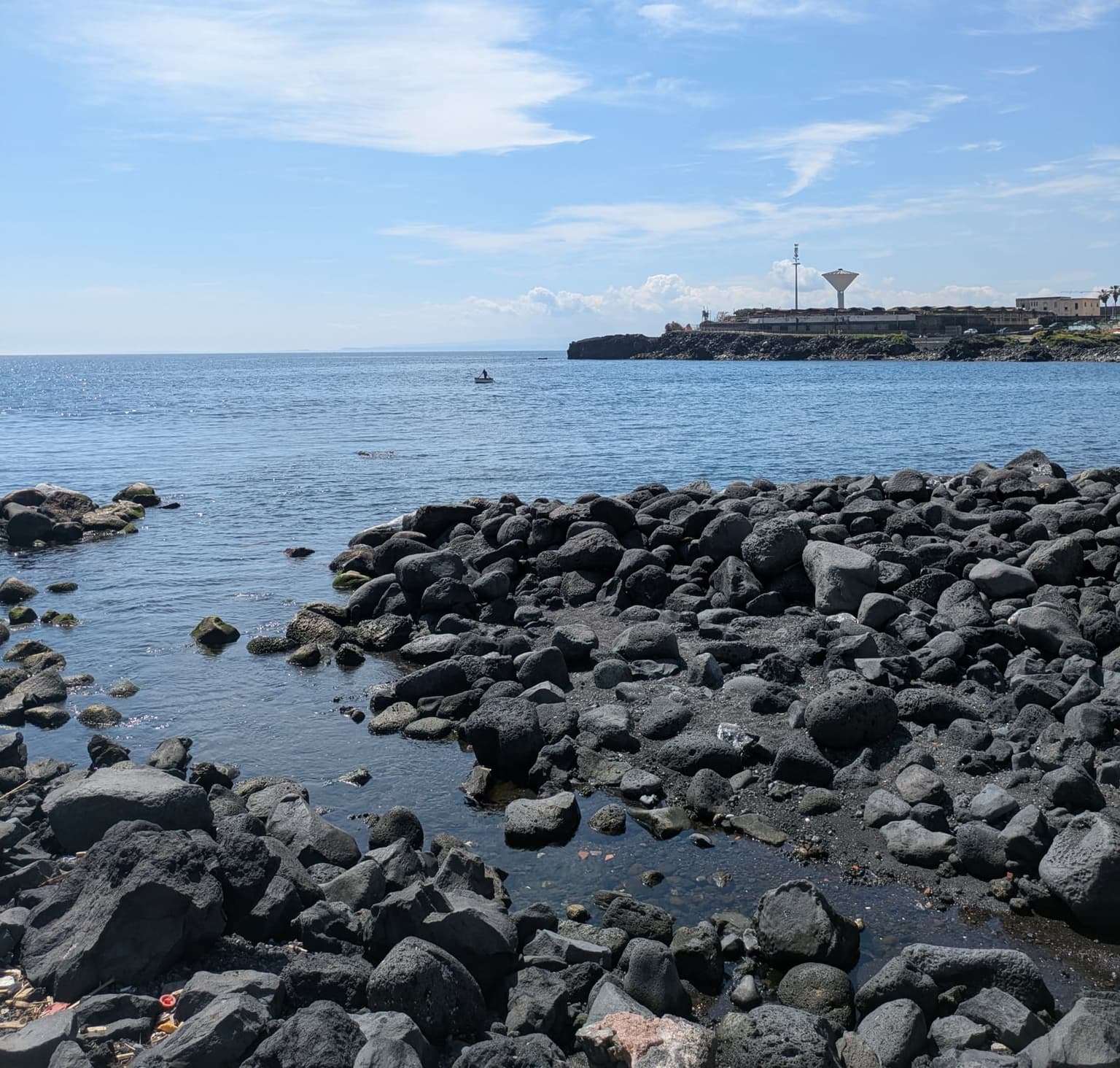
San Giovanni Li Cuti is the hour. A free cove 3 km north of the Duomo, black volcanic sand and lava rock, with a working fishing harbor at one end of it. It is small, and it is more rock than sand, so anyone arriving with a beach day in mind will know inside a minute that this is not one. Anyone who wants to be in the sea before dinner and back in the city afterward will not care about any of that.
La Playa is the afternoon. Fine golden sand along Viale Kennedy, water that stays shallow a long way out, which is the argument for it if you are swimming with children. More than twenty beach clubs, the lidos, hold the front, with free stretches mixed in among them and a generous free section at the northern end. That free end is where I would put the towel down.
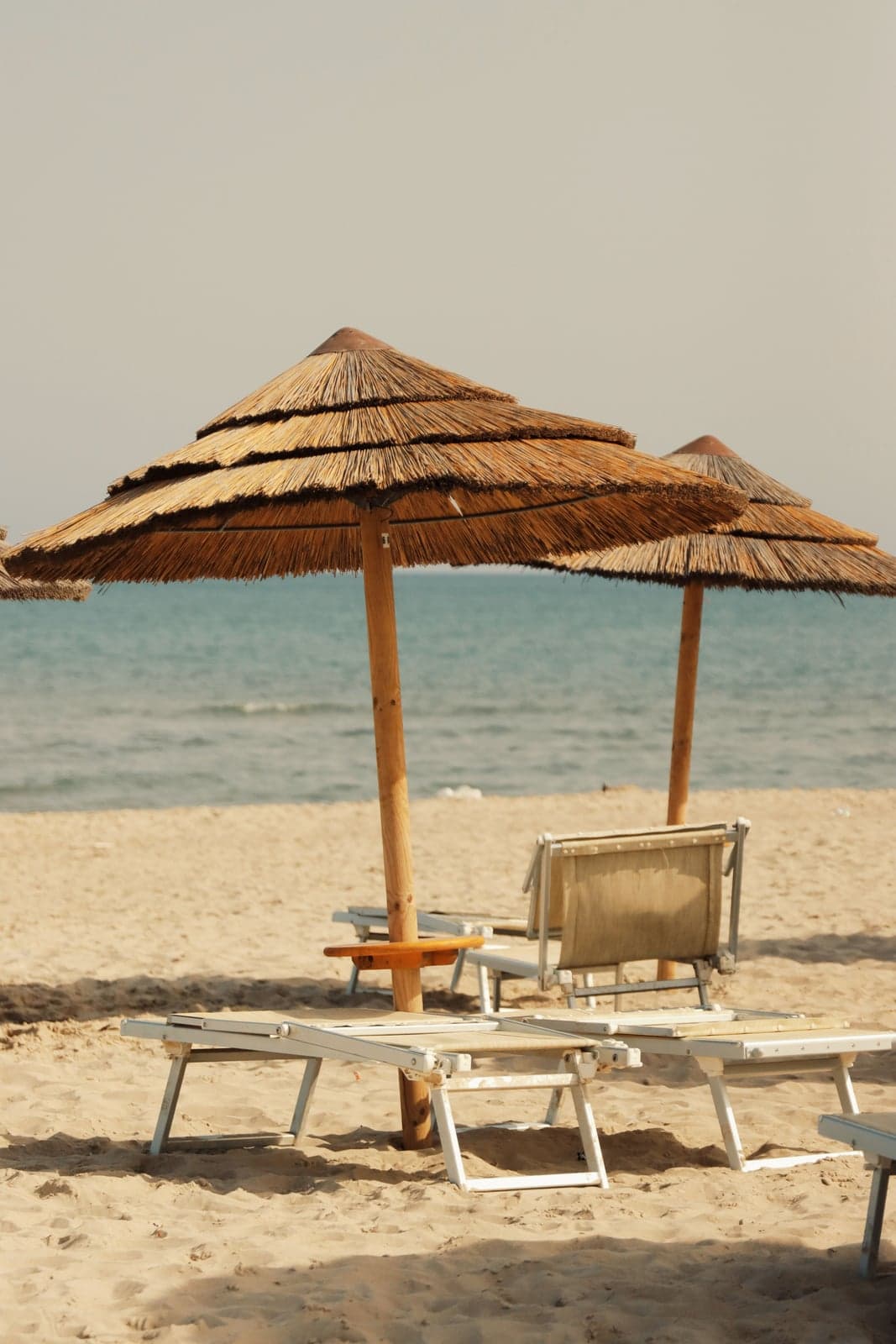
Both of these are city swims, fitted between other things rather than planned around. If the sea is the reason you chose Sicily at all, that is a different day in a different place, and it is worth building properly: start from the best beaches in Sicily and give one of them a whole day, rather than asking Catania's coves to be something they are not.
Day trips from Catania: which one earns a whole day
On two days in Catania, the second one leaves town. That is the reach half of the argument for the city: the things worth coming to eastern Sicily for are all a day out from here, and you sleep in the same bed twice. Which day you take is the only real decision here, and it has a wrong answer.
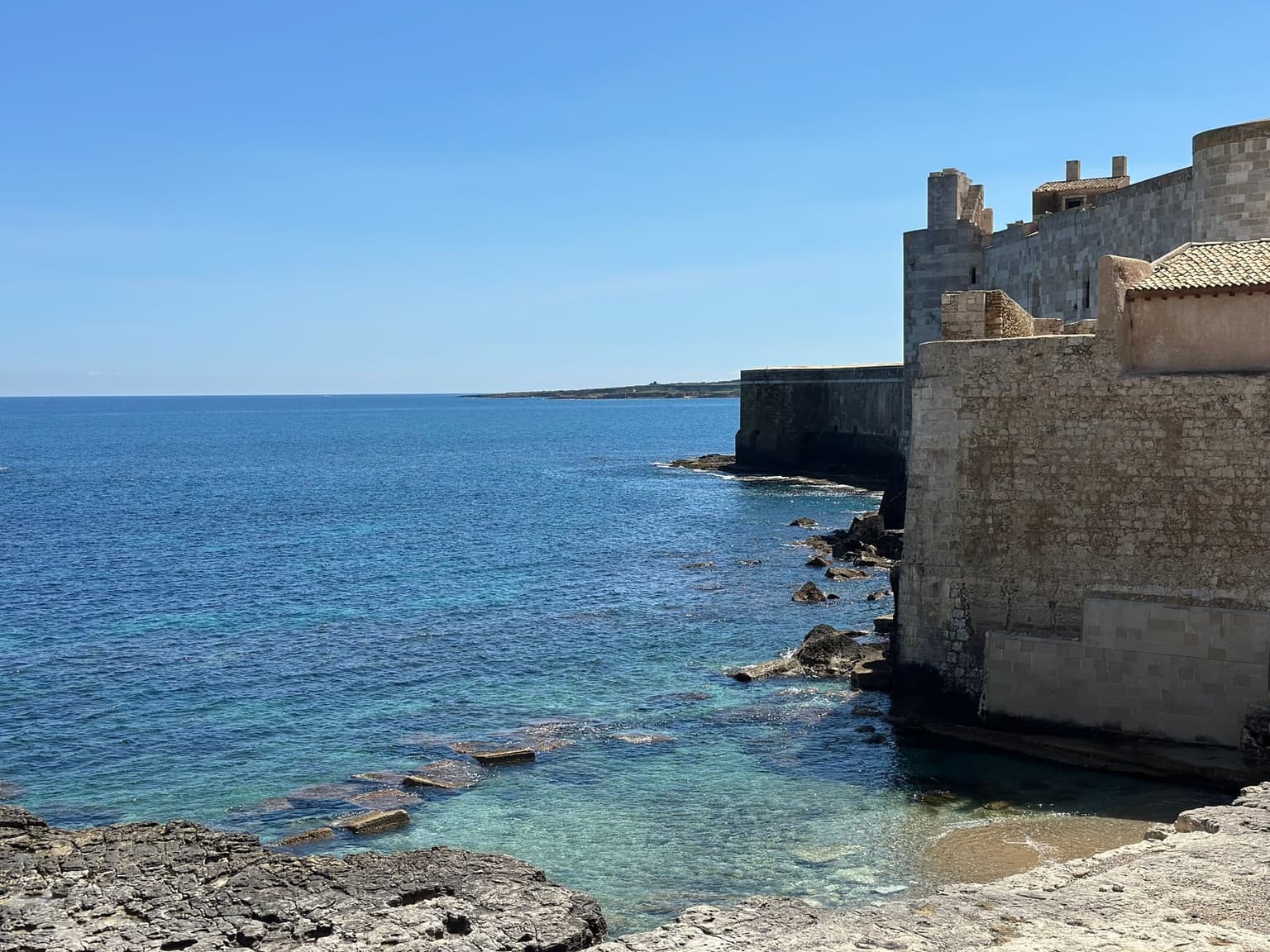
Ortigia is the one to take first. It is Siracusa's old town, an island of honey-colored baroque on the end of the city with the water right up against it, and it is the strongest day out you can do from Catania without a car. It is reached by train. If Catania is your only east-coast base, keep it a day trip: give Ortigia a day and it pays you back in full, and nights spent there instead of here just mean two mornings you are not at the market. The exception is a plan that also takes in the southeast - Noto, Ragusa, Modica - where Ortigia earns two or three nights of its own as the base you work that whole corner from.
Etna takes the whole day and does not negotiate about it. It is also the one trip out of Catania that genuinely wants either a booked tour or a car, which is where a car-free traveler finally hits a wall after finding everything else here so easy. If the volcano is what put Sicily on your list, give it a day of its own and settle its shape before you go, because how you actually get up the mountain is a bigger decision than it looks from down here.
Taormina is the other standard day out of here, close, up the coast, and it settles a question worth settling early: you do not need to sleep in both towns. One base covers the pair, and the base with the market and the food in it is this one. Go for the day, come back for dinner, and look at the practical side of a Taormina day before you do, because Taormina asks more of a plan than Catania does.
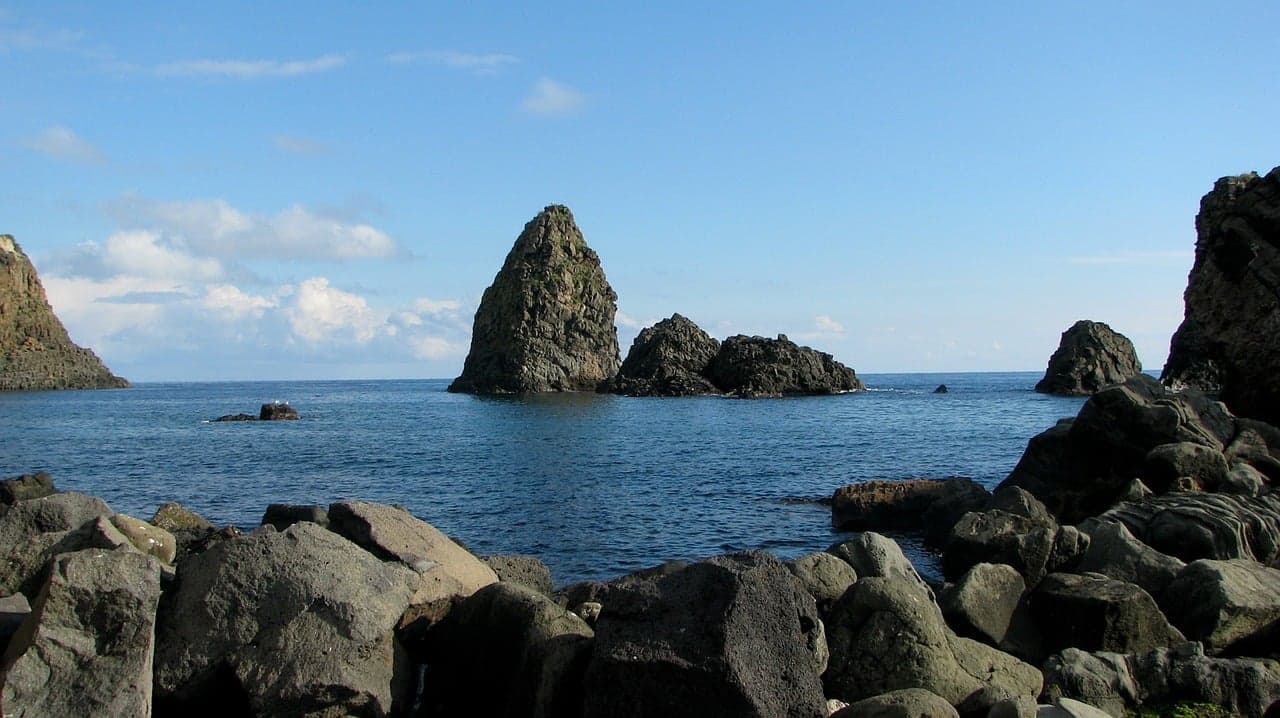
Aci Trezza and Aci Castello are the cheap version, close to the city and reachable without a car. What you go for is the faraglioni: black basalt stacks standing out of the water off a harbor full of fishing boats. It is a half day rather than a whole one, which is its use: it fits a day that already has a morning in it.
Two more sit at the edge of the list, and both are honestly car trips: the Alcantara gorge, and Caltagirone, which is a ceramics town. Neither is a day I would trade for one of the trips above.
Getting in from the airport, and getting around without a car
From Catania-Fontanarossa, the bus into town is the Alibus, and the ticket is €4 for 90 minutes that also cover every other AMTS city line inside the window. That makes it the first thing to buy in Sicily and the last argument you need against taking a taxi: the ride in, and then the rest of the hour and a half to use on anything else. Buy it on board in cash or by card, or in the AMT app beforehand. The route is signed "Aeroporto - Centro", so there is nothing to decode at the curb. What the airport otherwise asks of you, rental desks included, is a different problem with a longer answer: the full set of ways out of Fontanarossa.
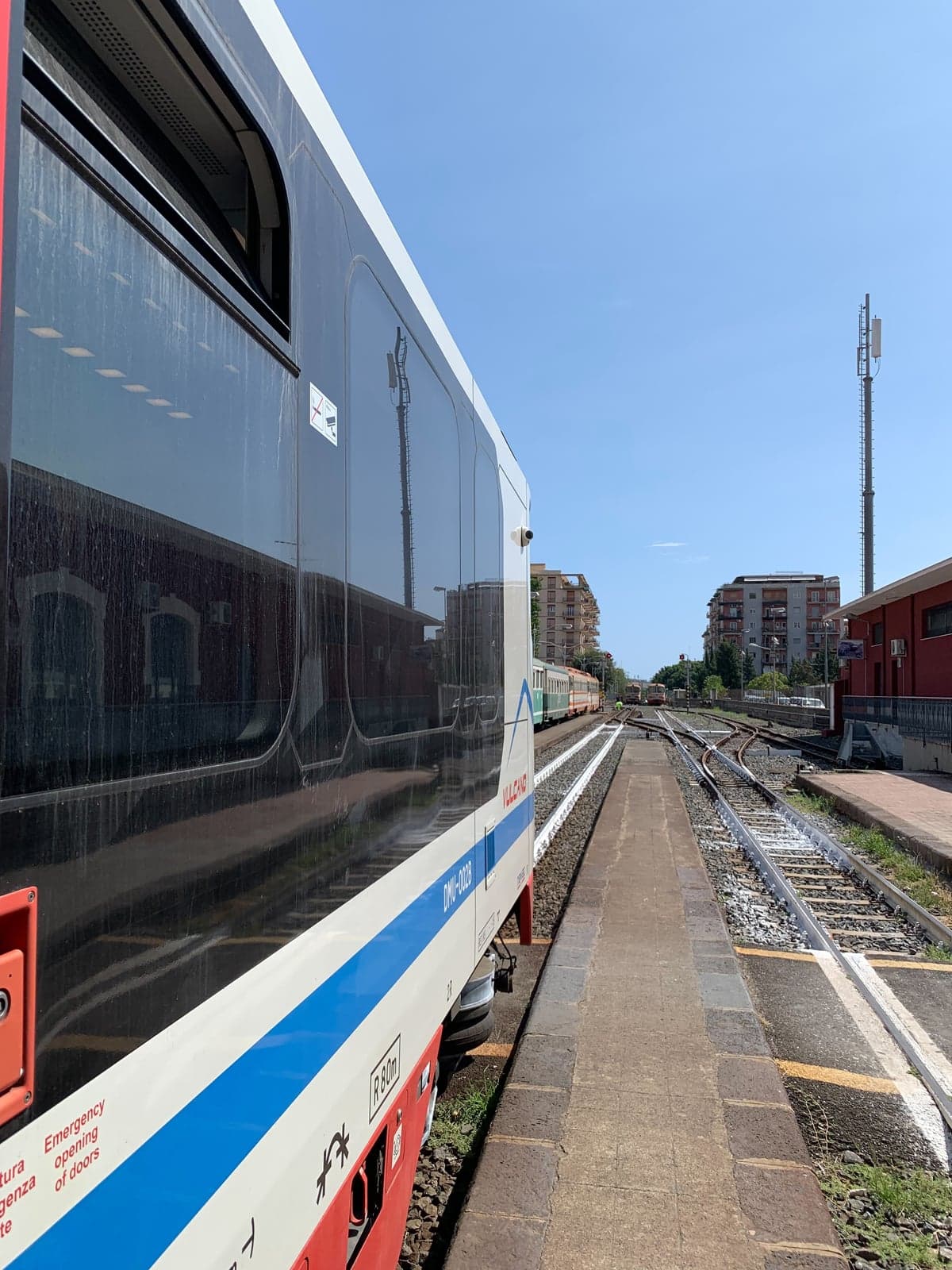
Once you are here, the answer to getting around is that you walk. The center crosses on foot, and driving in Catania is the one decision I would take off the table before you arrive. It is not a question of nerve or skill. A car here converts a walkable city into a sequence of errands performed on its behalf, and none of those errands are why you came.
When you do need a ride, the fares are simple. A city bus ticket is €1.40 and runs 90 minutes from the moment you validate it; a day ticket is €3.50 and lasts until 23:59, which only pays off on a day you have already decided to spend riding. Neither is valid on the Alibus, which keeps its own fare. The metro is a separate operator on a separate fare, €1 a journey, and an AMTS bus ticket does not cover it. That is the one genuinely counterintuitive thing about moving around Catania, and it is worth knowing before you are standing at a barrier with the wrong ticket in your hand.
The car has a place in this trip, and it is the day you leave. Pick it up on the way out to somewhere else, and let the city days run on foot.
FAQ
- How many days do you need in Catania?
- Two: one day for the city, one for a trip out of it. One day works if you are disciplined about the morning - at the market early, the Monastero already booked.
- Is Catania worth visiting, or should I base in Taormina or Ortigia instead?
- Base here if you want a working city, its food, and the shortest reach to the rest of eastern Sicily. Base in Taormina if you came for a view and a quiet dinner. Ortigia is a day trip from a Catania base - unless the southeast (Noto, Ragusa, Modica) is also on your list, in which case Ortigia itself is worth two or three nights instead.
- Is Catania safe to walk at night?
- Yes, on the streets the city itself uses after dark: Via Etnea, Piazza del Duomo, and the streets around them, lit and busy late. Keep Villa Bellini's own paths and the blocks behind the station for daylight, and treat any unlit side alley the same way, even one step off a busy street. The trouble here is petty and street-level rather than violent, and scruffy is not the same as dangerous.
- What is there to do in Catania in the evening?
- The passeggiata: the evening loop through Villa Bellini and down Via Etnea, which is what the city does before it eats. Then dinner, which starts later than you expect on a first night. Plan around a late table rather than an early one.
- What is open in Catania on a Sunday?
- Not La Pescheria, which is the trap: the market takes Sunday off, and a Sunday visit misses the best hour the city has. Open and free: Piazza del Duomo and the squares, Via Etnea, Via Crociferi, Villa Bellini. Build a Sunday around those.
Be at the market on a morning that is not Sunday, book the Monastero before you arrive, and give your second day to a train rather than a car.