George Mandrovny
How Long Noto Actually Needs
Half a day is the honest allowance for Noto, and it should be the back half: be on the Corso for the last two hours of light. The trap is the midday arrival in high summer, when the stone glares white, the street is at its fullest, and the town makes its worst case for itself.
The advice on how long to give Noto contradicts itself at every turn: a lunch stop on the way to Ragusa, half a day, a full day, and a blunt warning that a day trip here in August is barely worth the drive. The spread is not noise. It tracks when people went and what they arrived expecting. Come looking for a headline sight and you will be done quickly and quietly let down, because Noto does not have one. The town itself is the sight: a single limestone composition you walk through rather than tick off. About three hours covers it properly, and three hours is my number too - spent late rather than early.
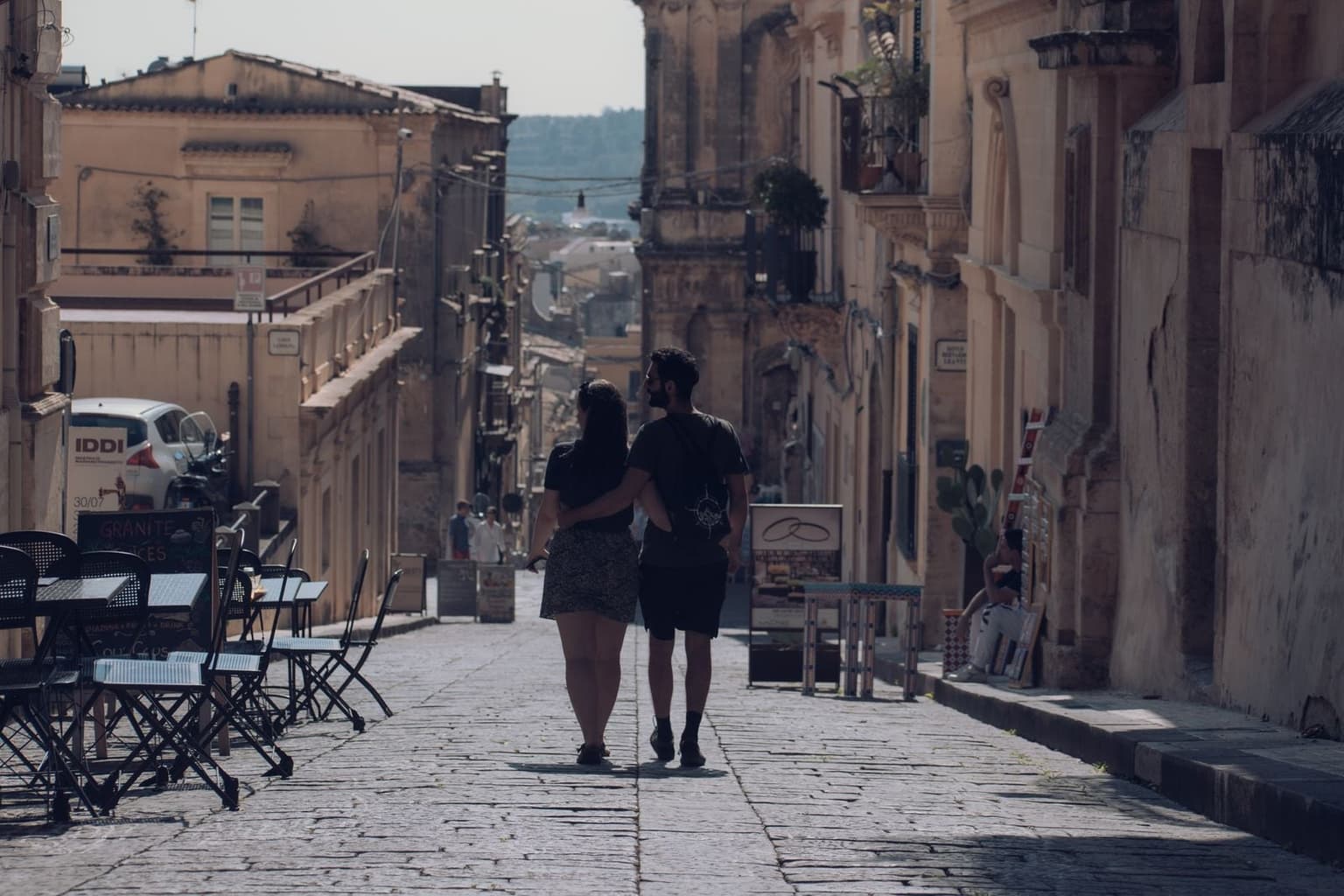
Whether Noto earns a night is the harder question, and it has an answer on both sides. A night buys the two hours the day-trippers are never here for, and the empty morning before the next ones arrive. Against that, the town is genuinely small, and it gets smaller without a car: walk the Corso in both directions, go up somewhere for the view, and you have seen the inventory. So: one night, not a base. With the southeast in the plan, the usual base is Siracusa, and what a night in Ortigia buys is the other half of this decision. The exception is the driving trip - if the Val di Noto is on your list, sleeping here and starting from here beats commuting in from somewhere else every morning.
Where a stop this size sits in a whole Sicily route is a trip-shape question rather than a Noto one: it depends on how many bases you take and which of them absorbs the southeast. That gets settled at the level of the Sicily route plan, where the days and bases get divided up, not on the Corso with a coffee in your hand.
What You Actually Walk: the Corso, the Steps, the Balconies
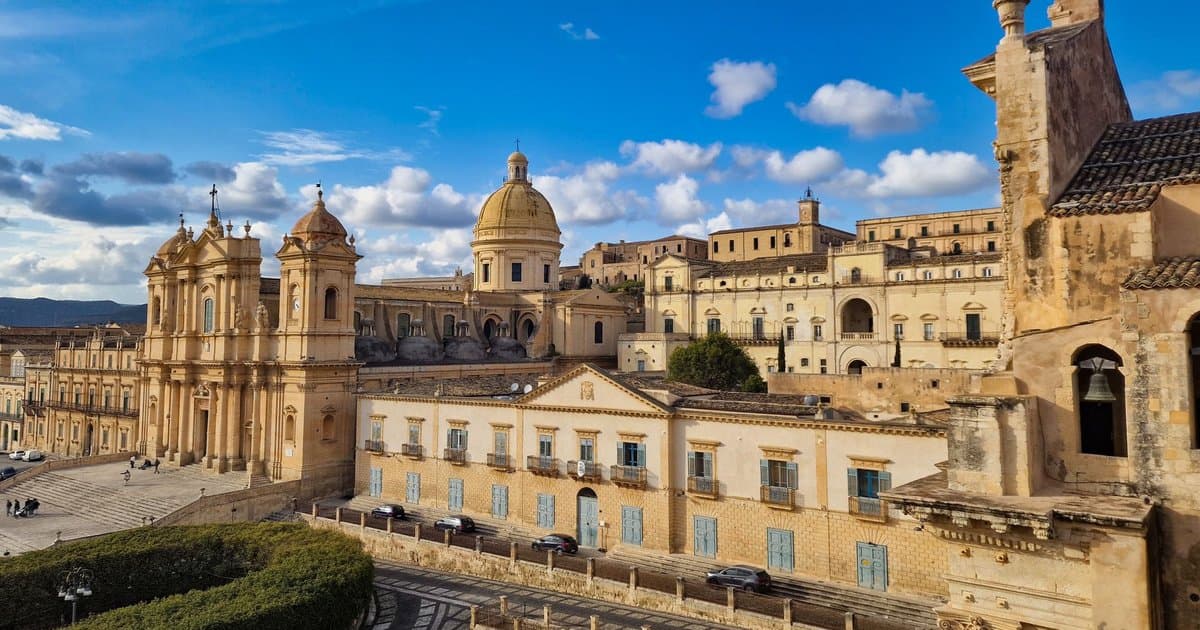
Noto was not repaired after the 1693 earthquake. It was replaced: the survivors left the old hilltop and laid the town out again lower down, all at once, to one plan and in one stone. That is the unusual part, and it is what makes the Corso work - three piazzas stepping downhill in sequence, each with its own facades, none of them shouting over the others. Walking it costs nothing, and there is nothing to close.
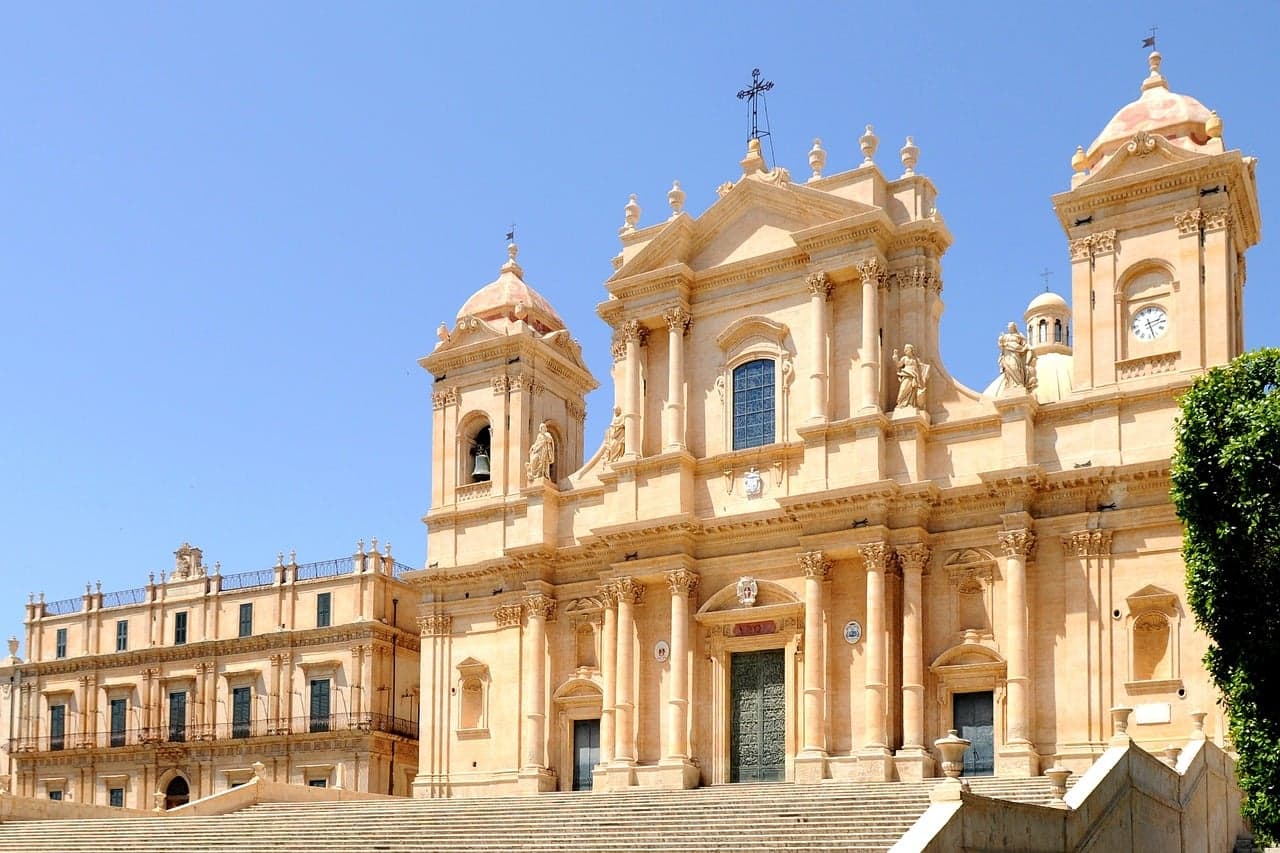
The cathedral is where that composition turns into theater. San Nicolò stands at the top of a four-flight staircase completed in the first half of the 19th century to a design by Bernardo Labisi, and the flights do what no facade could do alone: the church keeps rising as you climb toward it. It has only been a cathedral since 1844, when the Diocese of Noto was founded. Then you go in, and it stops. The right and central naves collapsed on March 13, 1996, and the church that reopened for worship on June 18, 2007, is pale, calm, and much plainer than the front of it promises. Knowing that in advance helps; people walk back out of there deflated. The steps are the better show anyway. They are the town's stage, and if you catch a wedding coming down them, that is what you will remember about Noto, not the nave.
Via Corrado Nicolaci runs uphill off the Corso, balconies down both sides, and if you only stop under one thing in Noto, make it these.
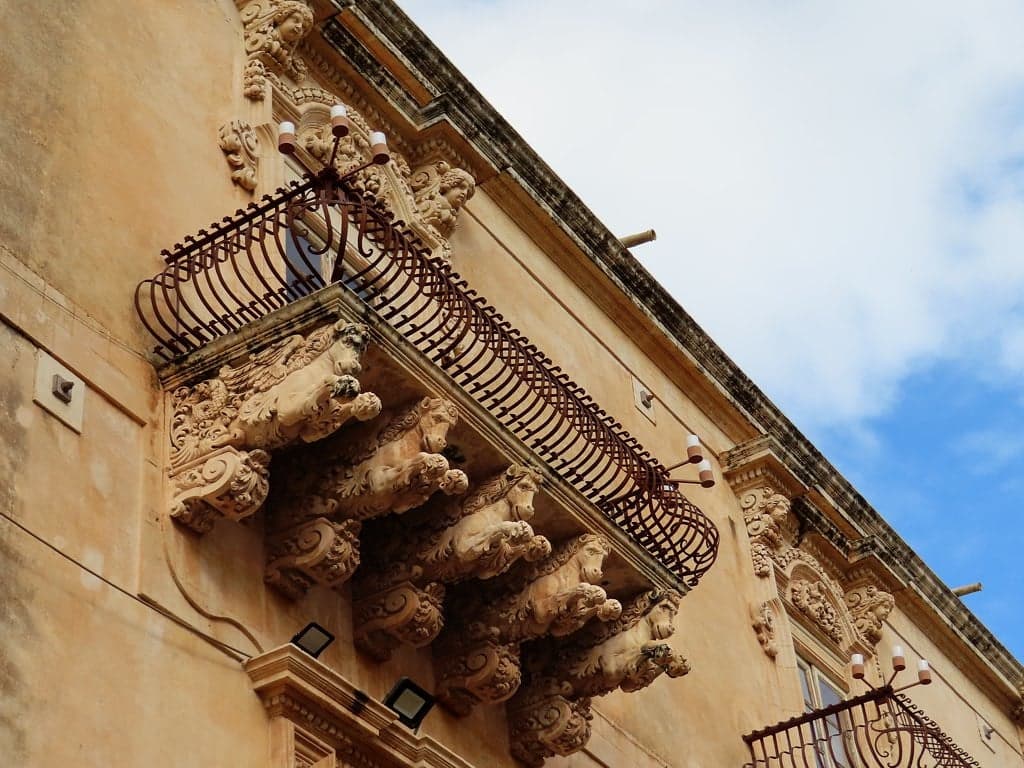
The railings rest on carved corbels - sirens, lions, sphinxes, hippogriffs, winged horses, angels - and from directly underneath they read as faces rather than as decoration. Number 20 is Palazzo Nicolaci di Villadorata, and you can go in: the piano nobile, the grand floor one flight up, with its tea room, ballroom, and furnished period rooms, plus the municipal library. There are 90 rooms in the building, and part of it is a hotel now, which is not what most people expect to walk into. The visit is ticketed and cheap, and it opens in blocks around the midday break, so check what is running on the day you go rather than trusting a guidebook.
Admission and opening blocks on Noto's own palace page (comune.noto.sr.it)
Then the half of Noto that nobody plans for, and it is the free half: walk two blocks off the Corso in either direction and the crowd simply stops. Same limestone, same balconies, and nobody in front of them.
Which Tower to Climb, and What You See From the Top
From the street you get Noto one facade at a time. From above you get Noto: tiled roofs stacked down the slope, and the sea out past the last of them. That is what a climb buys, and a second and a third only buy it again from a different corner - so pay for the stairs once and spend the rest of the afternoon back down on the Corso. It is also the cheapest answer to the doubt people carry around at street level here, that Noto is one handsome street and not much else.
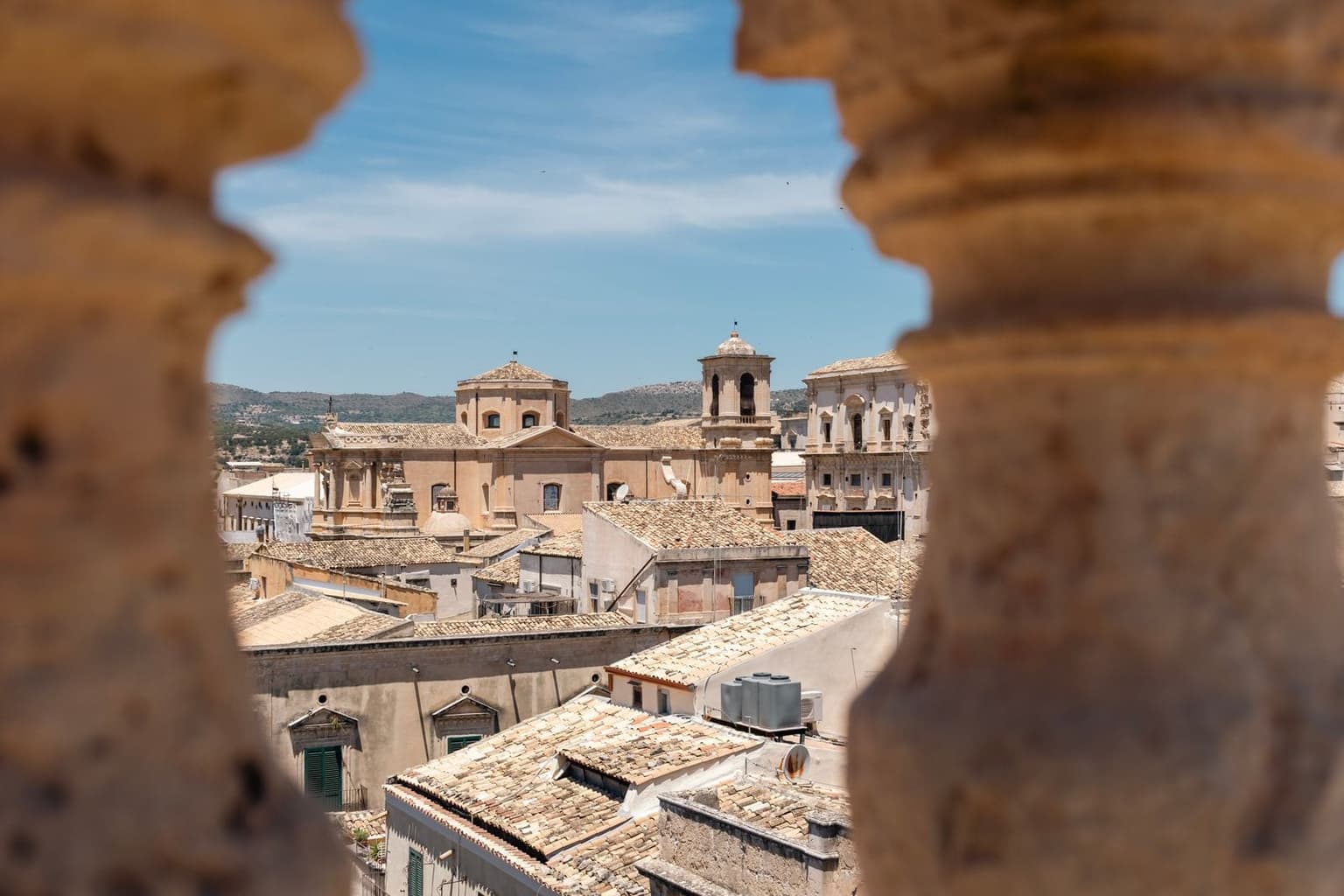
There are two obvious candidates. San Carlo al Corso stands on the main street at number 121, an 18th-century church with a three-tier facade and a bell tower whose spiral stair comes out on the roof. Santa Chiara has two terraces, and the late afternoon is when they earn the climb: from its highest point the view goes the whole way around, and the monuments you walked past an hour ago rearrange themselves into a plan.
Both climbs are ticketed and both are cheap, small change rather than a headline attraction. What nobody publishes is when they are open - not the town, not the churches - so there is no schedule to plan the day around. Treat it as something you confirm at the door on the day.
I have climbed both. San Carlo gives the closest, most postcard-perfect angle on the cathedral and Palazzo Ducezio, the town hall, almost directly over the main square. Santa Chiara trades that closeness for scale, and on a clear day the sea shows up as a distinct blue line past the rooftops, glinting against the gold limestone. Pick San Carlo for the cathedral shot, Santa Chiara for the sea or if tight spaces bother you. One climb, chosen well, is enough.
⚠️ Warning
The jam on San Carlo's stair is real: the spiral is narrow enough that people coming down flatten into wall niches to let you pass, and by midday it turns stuffy and crowded too. Go close to sunset instead - the crowd thins, and the light is best.
The Pastry Stop, and What the Bill Does
Somewhere in the middle of a Noto afternoon you run out of facades and want to sit down. That is not the visit failing; that is the visit. Looking at buildings and stopping for a pastry is the honest description of a good day here, and the second half of it is doing as much work as the first.
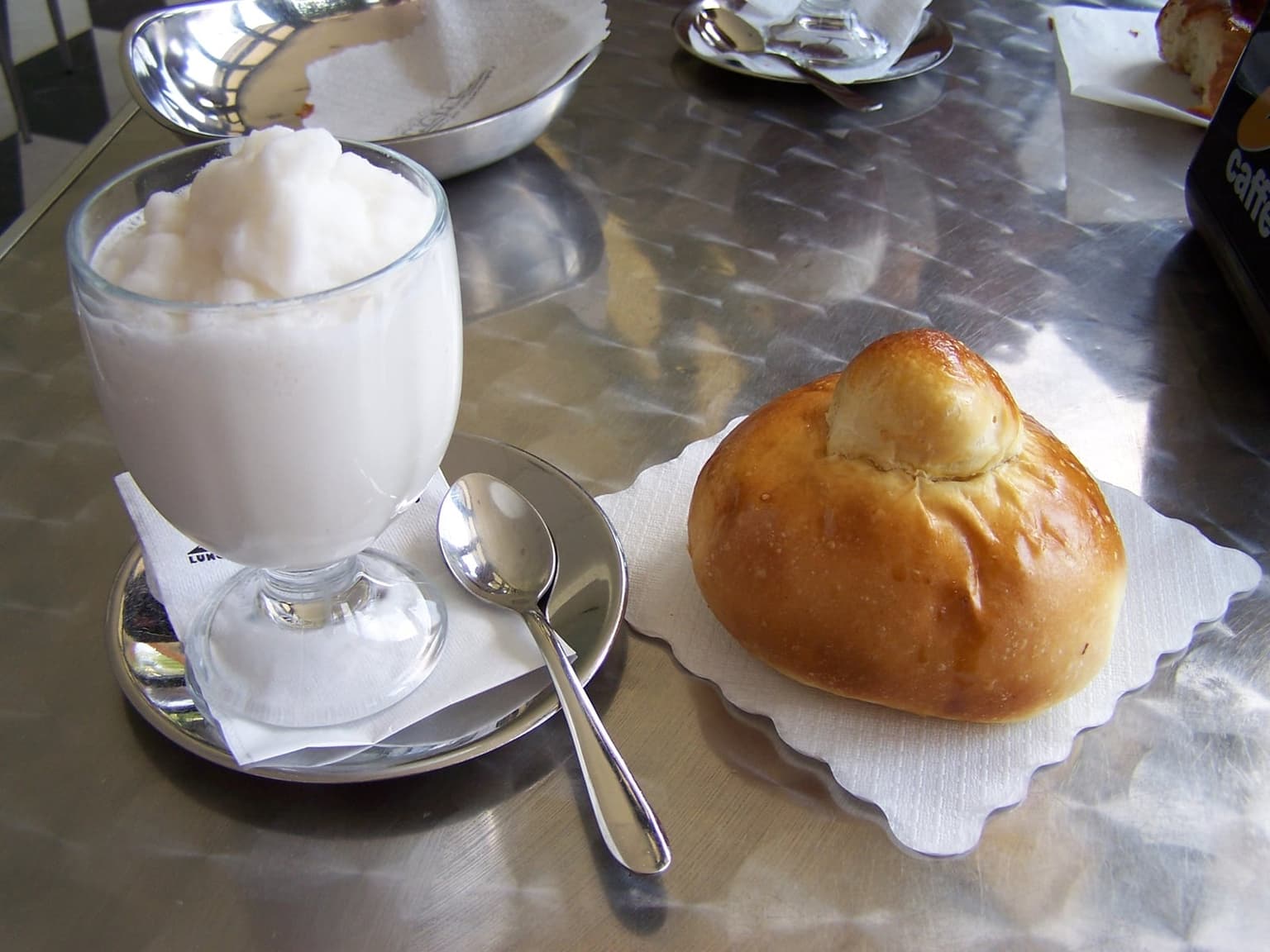
The famous address is Caffè Sicilia, at Corso Vittorio Emanuele 125 - not 127, which is what a surprising number of guidebooks print - open every day, 08:00 - 24:00, under a sign that says NOTO DAL 1892. Corrado Assenza, the pastry chef behind it, was the subject of an episode in the 2018 pastry season of Chef's Table, and that is the moment a good local counter became a destination.
So expect to wait, and expect the prices to feel high against what actually lands in front of you - the portions are small, and the coffee granita, which is what most people come for, is the item most likely to fall short of the reputation that brought them there. Go anyway if the name is part of the trip. It is a real counter with a real pedigree, not a museum of itself. But if what you want is a granita and twenty minutes out of the sun, I would take any other counter on the Corso and not stand in line for the privilege.
⚠️ Warning
Read the bill before you pay. A service charge can appear at the end that was nowhere on the menu, and it is easier to ask about it at the table than at the register.
When to Come: the Hour, the Season, and the One Date That Changes Everything
Noto is a light problem before it is anything else. Under a vertical midday sun the limestone reads white and flat and the carving goes missing - the town doing its worst impression of itself at the hour most people see it. Give it until the last two hours of daylight and the same stone turns warm yellow, with shadows long enough to put the facades back into relief. The crowd does not thin at that hour so much as gather onto the Corso, which is when two blocks off the axis stops being a curiosity and becomes the plan: same light, same limestone, nobody in front of it.
Season works the same way, coarser. The whole attraction here is walking a stone street in the open, which makes a July afternoon in southeastern Sicily a bad bet on principle. On July 21, 2026, the station at Noto recorded 116°F (46.5°C), the highest reading anywhere in the island's network that month. That is an extreme and not a normal July day, but it tells you which way the month leans. August I would not day-trip at all. Shoulder season is the honest answer; in summer, only the end of the day works.
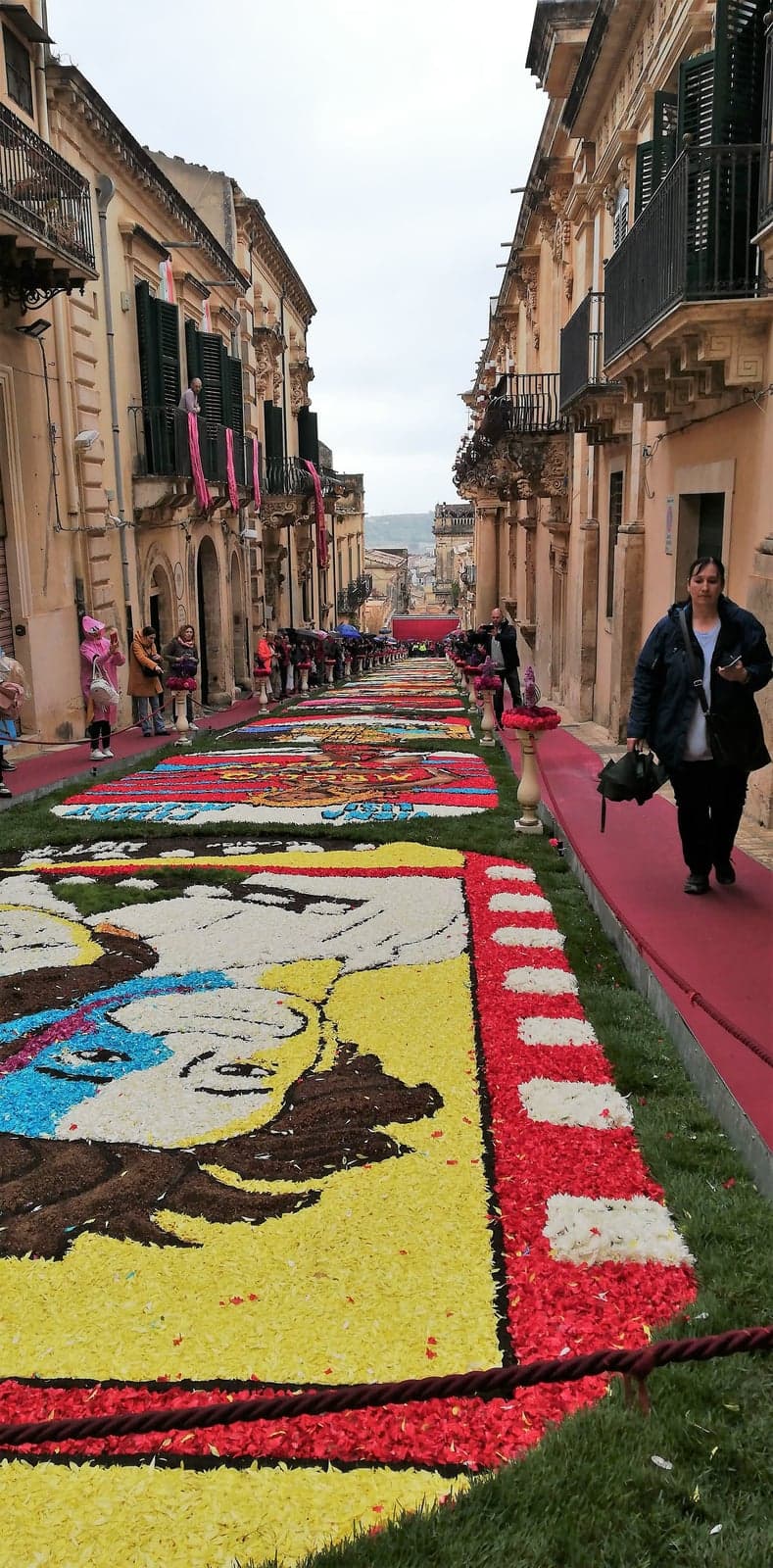
One weekend a year none of that applies. For the Infiorata, Via Corrado Nicolaci is carpeted end to end in cut flowers. The last edition ran May 16 - 19, 2026, open from 09:00 Saturday to 23:00 Tuesday, for €5. The 2027 dates are not out yet.
The town's events calendar, where the next Infiorata gets posted (comune.noto.sr.it)
The hour argument tilts hardest in summer, which is when a night here stops being a luxury: the hours worth being outside sit at the two ends of the day, and a day trip gets neither - you arrive into the heat and leave before the light. Book inside the historic center, within walking distance of the Corso (the stock is mostly small restored-palazzo rooms), and both ends of the day are a walk instead of a drive.
Getting to Noto, and Where the Station Leaves You
Getting here is where plans break. There is no through train from Catania to Noto: Catania sits on the coastal line into Siracusa, Noto on the inland line that starts there, so every rail trip from the airport city is two trains and a change.
There is no honest trains-a-day figure to quote for the Siracusa leg either: the official table shows more than a dozen columns each way, but many are one service split by validity code, and many run only on certain days or in certain seasons.
And some of those services are not trains. When the line runs a replacement bus, the Noto stop is Via Pola, not the railway station - so the obvious move, walking to the station, is the wrong one that day. Which dates those are shifts through the year.
Siracusa to Noto departures for your own date (trenitalia.com)
Catania's airport names both Interbus and AST as running to Noto, and landing without a car I would take the bus over the train: this corner of Sicily works better on buses than on rails. Interbus's stop finder lists two stops in Noto: Via Confalonieri 8 in the town, and Viale Principe di Piemonte out at the station. Timetables and fares only exist inside its booking engine, one date at a time. Tickets in town come from Lauretta Tabacchi at Via Napoli 1, open 08:00 - 13:00 and 16:00 - 20:00, an outlet and not a stop.
Interbus routes, times and fares for Noto (booking.interbus.it)
| Way in | Where it leaves you | What it costs you | When it makes sense |
|---|---|---|---|
| Train (change at Siracusa) | Below the town | 32 - 35 min from Siracusa | Light bags, Siracusa base |
| Bus | Nearer the center | Fare shown only at booking | No car, from the airport |
| Rental car | Outside the limited-traffic zone | Parking roulette in summer | Doing the Val di Noto |
| Transfer | Your door | Fixed price, booked ahead | Landing with luggage |
The train station is not in Noto, though. It sits below the town on Viale Principe di Piemonte, the way up is a climb on foot, and no local bus connects the two - which is why the bus, whose town stop is far closer to the center, keeps winning this argument. The station is two platforms with a step-free route to one of them, and no elevator, no tactile route and no assistance for passengers with reduced mobility.
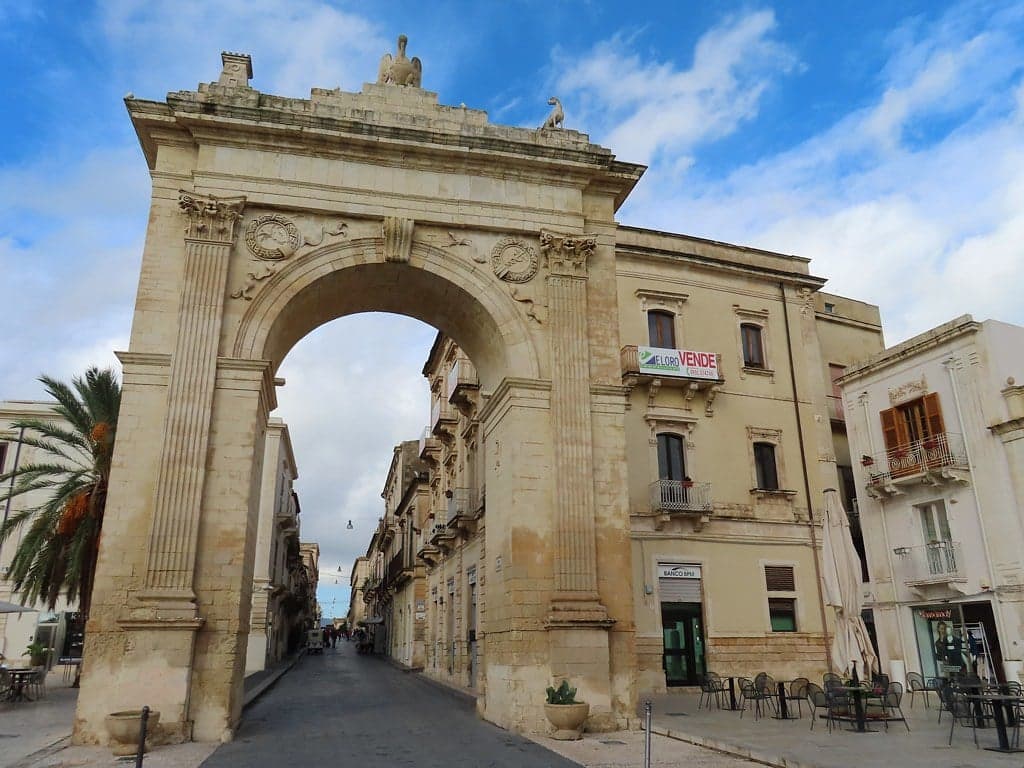
I have walked it: station to Porta Reale, straight up Viale Principe di Piemonte, is 15 to 20 minutes - a long, gentle climb without a bag. With one, it is different: the sidewalks are uneven, there is no shade, and the historic center's cobblestones finish what the sun starts. A light bag on sturdy wheels survives it; a full-size wheeled suitcase does not, and you will be carrying it by hand before you have even left the platform. Book a taxi ahead for real luggage, since cars do not reliably wait there, or leave the bags at the Radical Storage locker near the station.
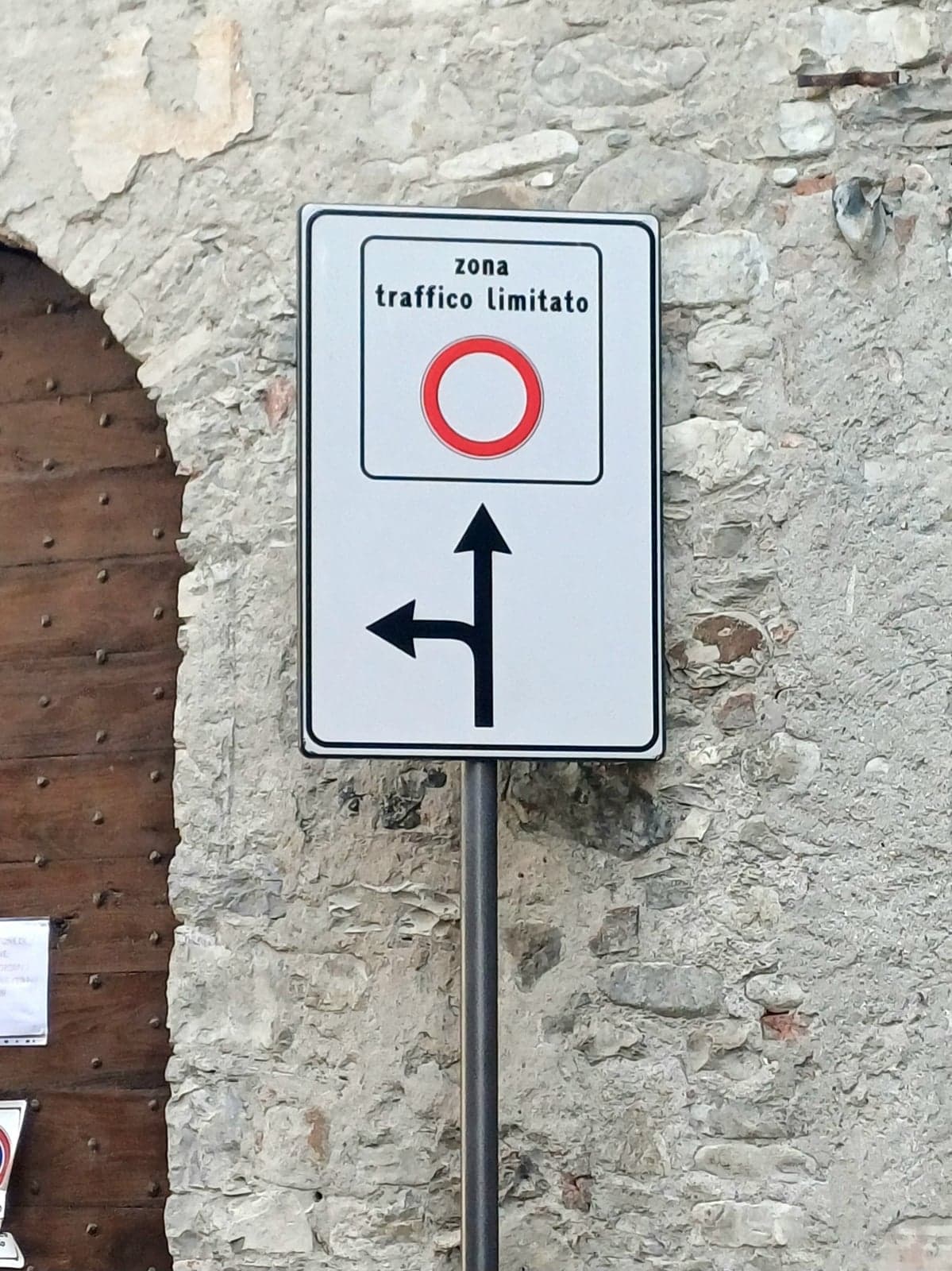
Coming by car, park outside the center and walk in. Noto has a ZTL (a limited-traffic zone), and the town publishes no map, no streets, no hours - so assume the good streets are shut to you, and don't trust an app to know where the line runs. Parking is the same story: no list of municipal lots exists, because much of what fills up in summer is private land licensed season by season, and no rates are published anywhere official.
The counter at Fontanarossa is its own small ordeal, and the line at arrivals is the known friction. What to book, what the desk asks for, and what it will try to hand you instead are worked through in car rental in Sicily, from the card deposit to the paper permit.
For the Val di Noto and the coast below it the car is the honest answer, and the booking has two traps. Book an automatic early - they are scarce here, and a counter that has run out hands you something bigger than you reserved. And find out what deposit the company blocks on your card before you fly, not at the desk.
Reserve a rental car at Catania airport
Book an automatic ahead of the trip - they run scarce here - and check what deposit the company holds on your card before you fly.
Not driving at all? The missing through train has a paid solution: a door-to-door transfer booked before you land, at a fixed price, which buys you out of the change at Siracusa with your bags. It earns its money on a late arrival, when the last bus out is what decides your evening.
Pre-book a transfer from Catania airport to Noto
Fixed price, booked before you land - no change at Siracusa with your bags
What to Bolt On: the Ruins, the Reserve, and the Next Baroque Town
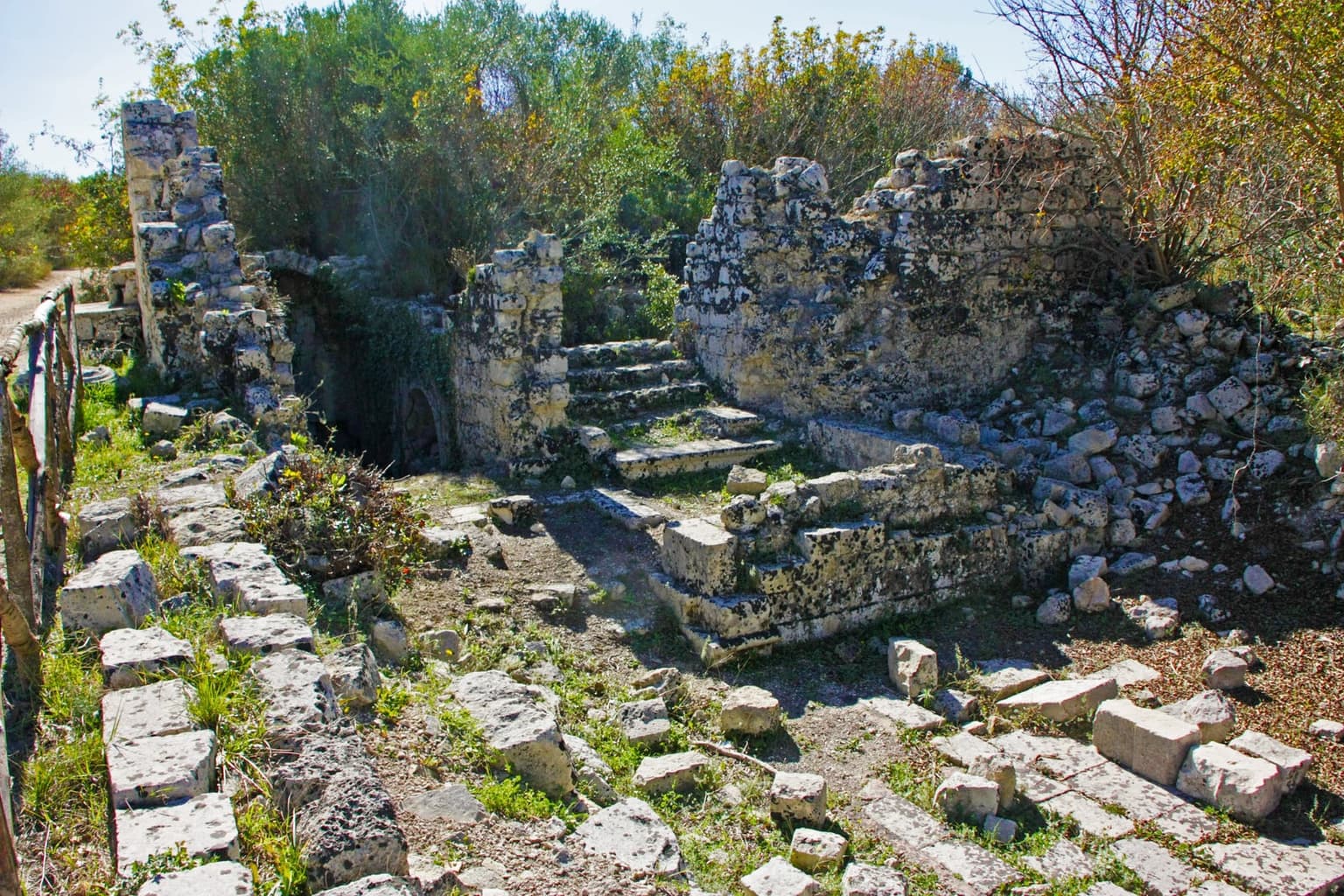
The first Noto is still up there: Monte Alveria, 8 km north of town, the hilltop the survivors walked away from. What is left is a ruin field under scrub, Bronze Age through Norman, with essentially nothing standing - either the point or a wasted hour, and you know which of those you are. Empty the car before you walk up; the parking area gets worked over while everyone is out in the ruins.
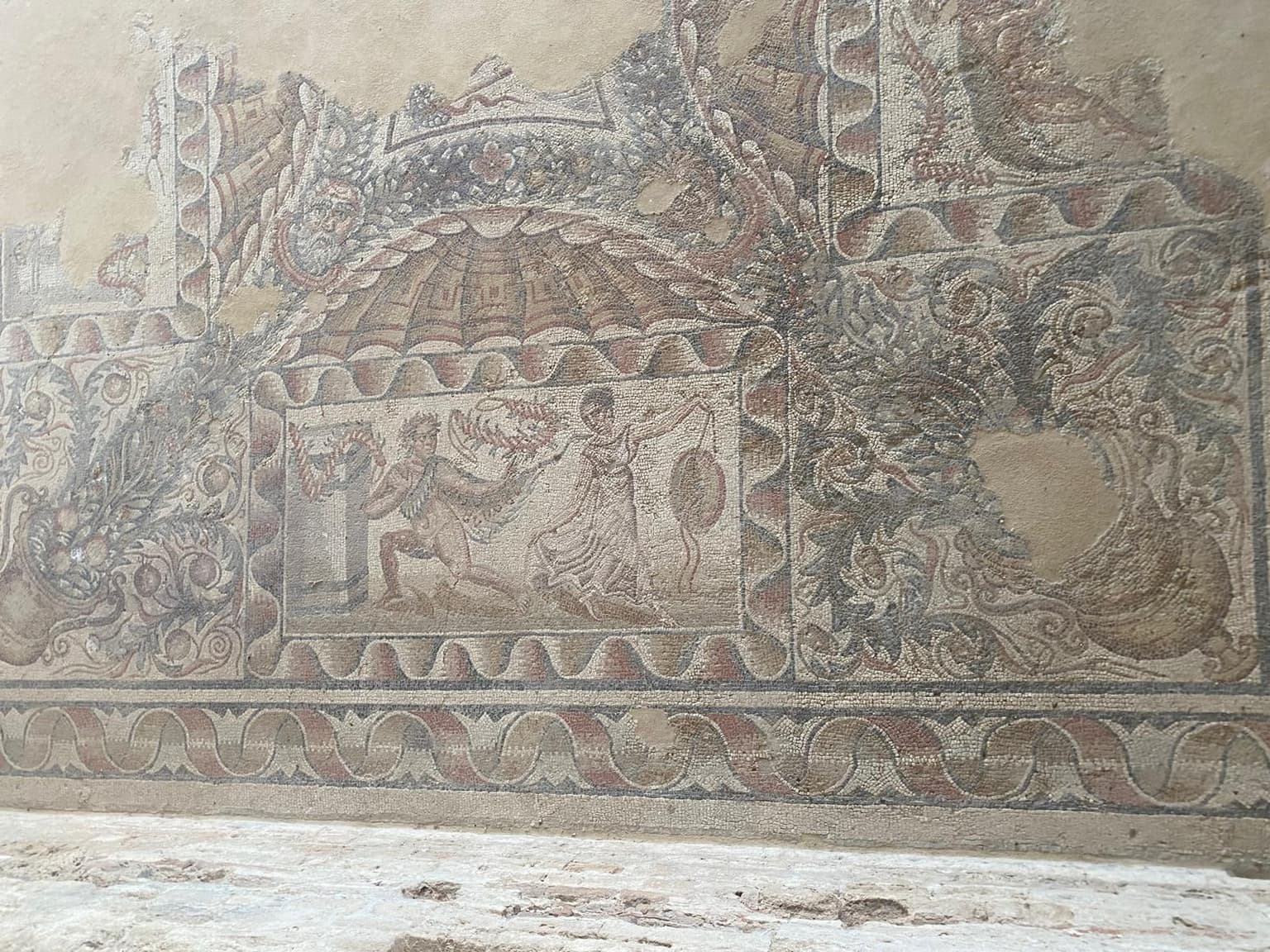
Also in Noto's territory, on the right bank of the Tellaro river, the Villa Romana del Tellaro at Contrada Vaddedi has late-Roman floor mosaics - hunting scenes, the ransom of Hector's body - and opening hours worth checking before you commit the drive.
The villa's current hours, from the town hall's own page (comune.noto.sr.it)
South of town the SP19 runs down to Vendicari, a coast that is a nature reserve rather than a beach club: you pay at a gate that takes cards and not cash, then walk in. Entrances close an hour before the reserve does, so a long lunch can lock you out of the drive you just made, and Calamosche caps how many people it admits - in high summer that means being turned away at the gate. Which one earns the drive is a beach question, and it belongs with the rest of Sicily's coast, cove by cove.
Further south again, Marzamemi is a fishing village built around one square, and it works as an evening rather than a day: arrive as the light goes, eat, drive back. Before you trade an evening for it, read what the fishing village gets you after dark.
The rest of the Val di Noto is the real decision. Noto is the easy one: smaller than Ragusa and Modica, and simpler to reach. Ragusa Ibla, Modica, and Scicli are a different proposition - from Siracusa they are enough of a haul that people plan all three and then cut two. If one has to go, I would drop Ragusa before Noto.
Without a car, one version of that day still works: a guided run out of Noto or Siracusa that takes all three. Book a specific, well-reviewed departure rather than whatever the platform lists first, and check what the price covers before you pay - transport and guiding are the product, and meals and entrance tickets are the line items to look for.
Frequently asked questions
- How long do you actually need in Noto?
- Half a day, and it works best as the back half of one: about three hours covers the town at walking pace, and those hours are worth spending in late light.
- Noto, Ragusa or Modica: which one if you only have a day?
- Noto, especially without a car: it is the smallest of the three and the easiest to reach. Ragusa Ibla and Modica are the bigger outing, and from a Siracusa base the pair of them eat the whole day.
- Can you visit Noto without a car?
- Yes, for Noto itself. The bus beats the train here: the station sits below the town, a climb up with no local bus linking the two, while buses stop much nearer the center.
- Is Caffè Sicilia worth the wait and the bill?
- If the name matters to you, yes. Expect a line, small portions for the money, and a service charge that can appear at the end. Any other counter on the Corso serves a granita without the line.
- When is the Infiorata, and is it worth planning around?
- The last edition ran May 16 - 19, 2026. Not a date to pencil in a year ahead: 2027 has not been announced, and the town's events page is where it will appear. Worth planning around only if the flower carpet is the point.
The churches keep their opening hours to themselves, so build the day around the light and treat an open door as the bonus it is.