 George Mandrovny
Things to do in Verona: what one day covers, and what one night adds
- One full day covers the Arena, Piazza delle Erbe, and a viewpoint. A night buys the lit streets and, in season, the opera.
- An opera evening means a night in Verona: the 2027 operas run June 12 to September 11 and end around midnight or later.
- Juliet's House is a booked ticket or nothing, since there is no ticket desk on site. I would spend the hour on Castel San Pietro instead.
- The trap: on Mondays the Arena and the civic museums are shut. Monday, December 7, 2026 is an extra opening at the Arena, Castelvecchio, and the Roman Theater. Festival days limit Arena access too; check your date.
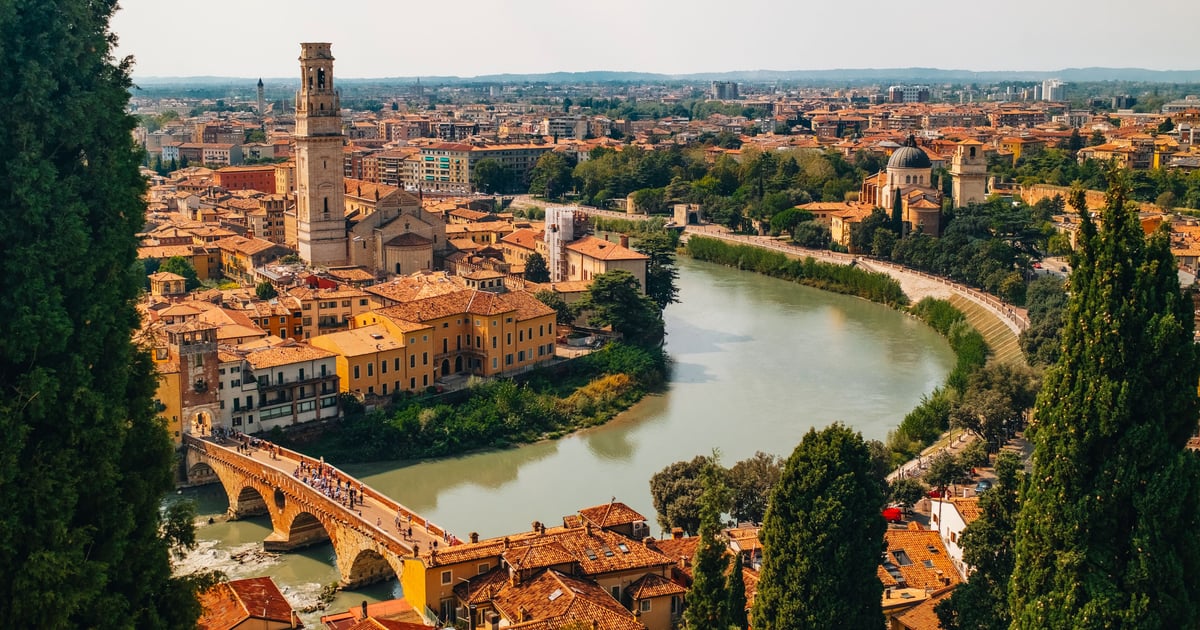
The best things to do in Verona fit into one full day: the Arena, Piazza delle Erbe, and a viewpoint, with the opera and the lit streets the reasons to stay the night. Verona is easy to oversell and easy to underrate, sometimes by the same person on the same afternoon.
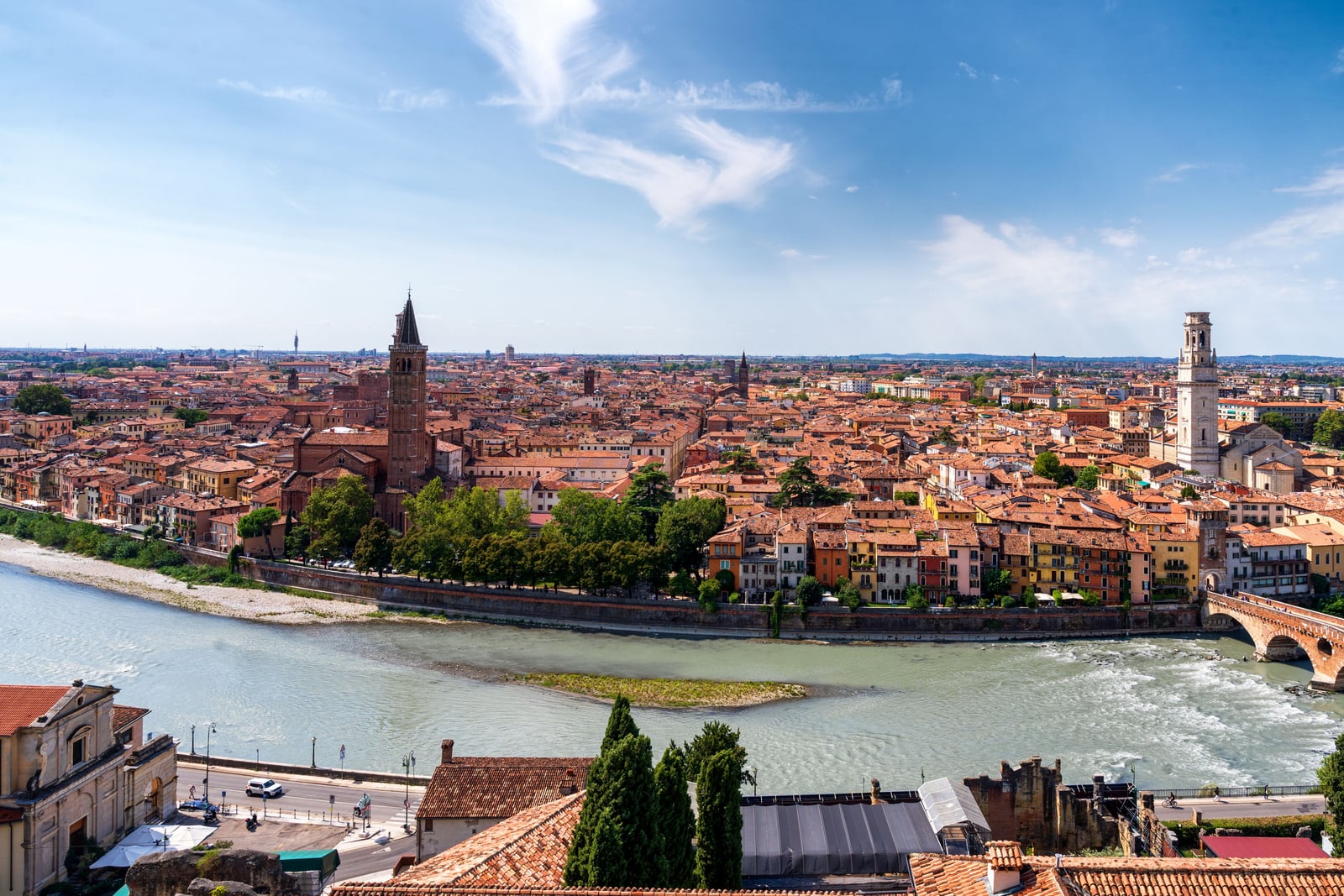
Is Verona worth visiting? On the right trip, yes. It is not Rome or Florence: beyond the Arena, and maybe the Roman Theater, it has few big-name sights, and it can feel busy and a little too neat. A second or third trip to Italy suits it best, and a first short trip can skip it. It can also, annoyingly, turn out to be the highlight of the whole trip.
How long to spend in Verona depends on what you came for, and each of the four answers buys something different:
| How long | What it buys | Worth it if |
|---|---|---|
| One day | The Arena, the two squares, one viewpoint | You are passing through or move fast |
| One night | The lit streets, the river, a slow morning | You want the city after dark, though an evening and a morning can feel rushed |
| Two nights | Adds Castelvecchio, San Zeno, a wine day | You like walking a city and want it unhurried |
| An opera, in season | The evening itself; plan on a night | The opera is why you came |
One day is the default, and a good one. Take the night for the opera, or if an evening walk is what you came to Italy for. With no opera ticket and Venice on the same trip, give Verona the day and Venice the nights. Below: the day, then the opera and bed, the seat, the night.
The Arena, Piazza delle Erbe, and Piazza dei Signori: what the one day is for
The Arena di Verona is the sight to build a day around, open Tuesday to Sunday from 9:00 to 19:00, except on days when performances are scheduled, for €12, with Piazza delle Erbe and Piazza dei Signori next. It is Roman and it still has a night job, which is the catch for a day visitor: from April to October it hosts shows and is not entirely open, and on festival days access is limited, so check your date before you count on it.
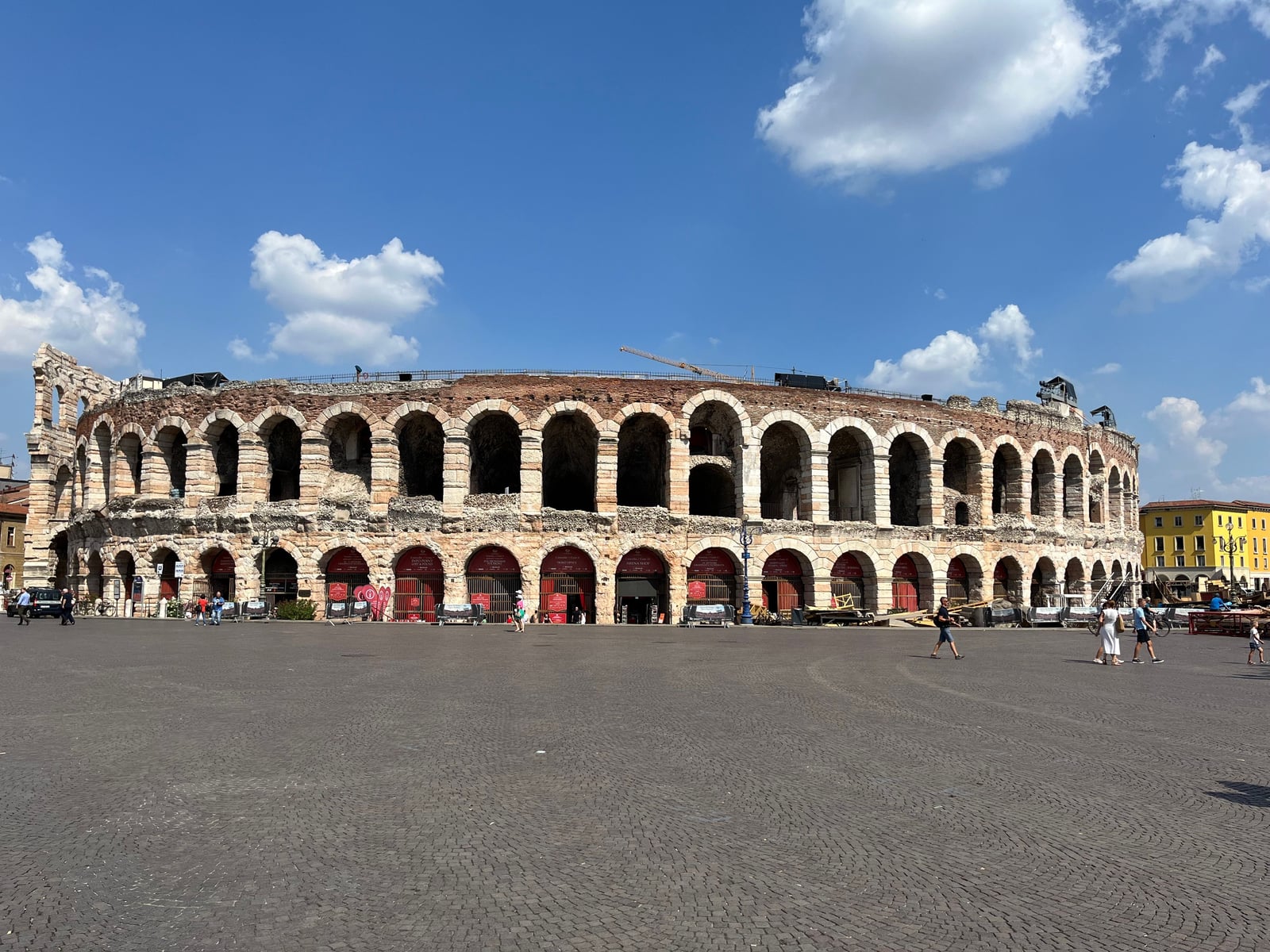
Built in the middle of the 1st century AD for about 30,000 spectators, it took up opera in 1913. Last entry is 18:30; closed December 25 and January 1. The ticket is named, so bring ID that matches it; a mismatch means no entry and no refund. Book through CoopCulture's listing: the Arena's daytime ticket.
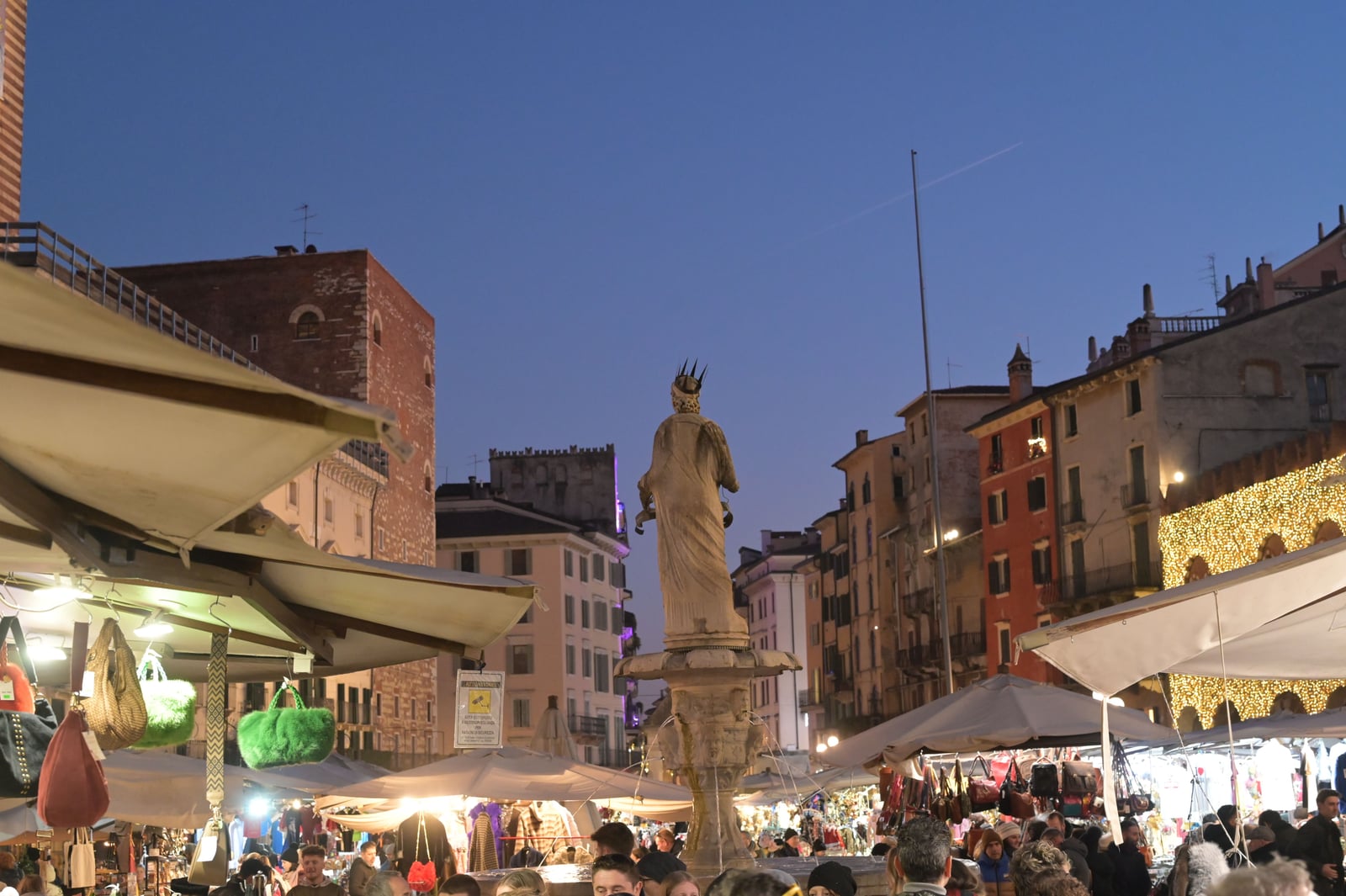
Piazza delle Erbe is the town's commercial center, surrounded by medieval buildings, and once you look past the stalls it is one of the prettiest squares in Italy. Look up, as everywhere in Verona: frescoes on the facades, statues on the roofs. Dinner here is the trap; the food section explains.
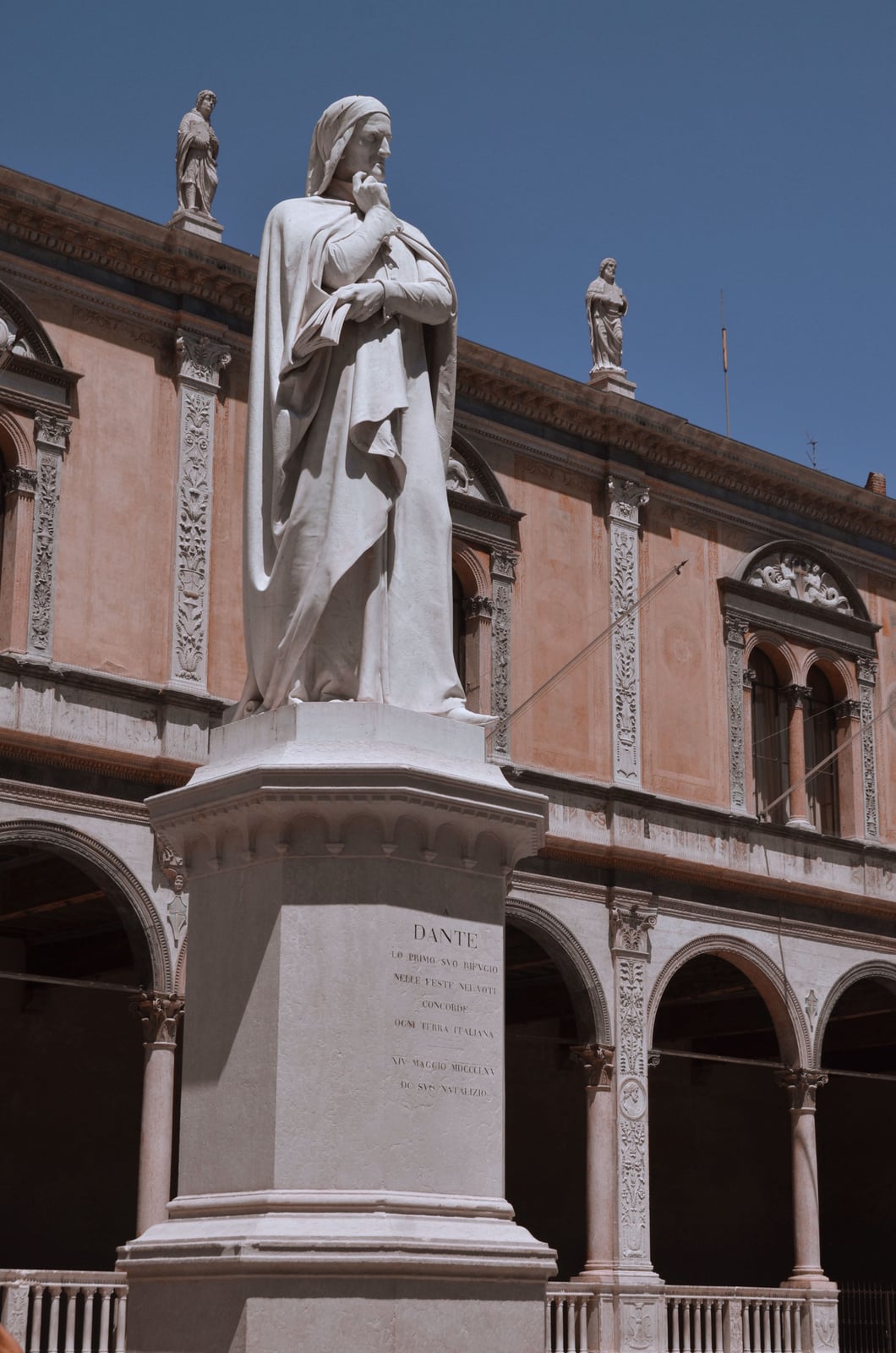
Through the Arco della Costa arch, Piazza dei Signori, the heart of the Scaligeri's Verona (its medieval rulers), is much less touristy, with the Loggia del Consiglio and a statue of Dante the tourist board calls inscrutable, the rare brochure adjective worth keeping. In the courtyard of the little church of Santa Maria Antica stand the Arche Scaligere, the Scaliger Tombs, the soldier-politician Cangrande I's among them. You see them from outside, through the wrought iron fence; the courtyard opens only in season, so do not plan on going in.
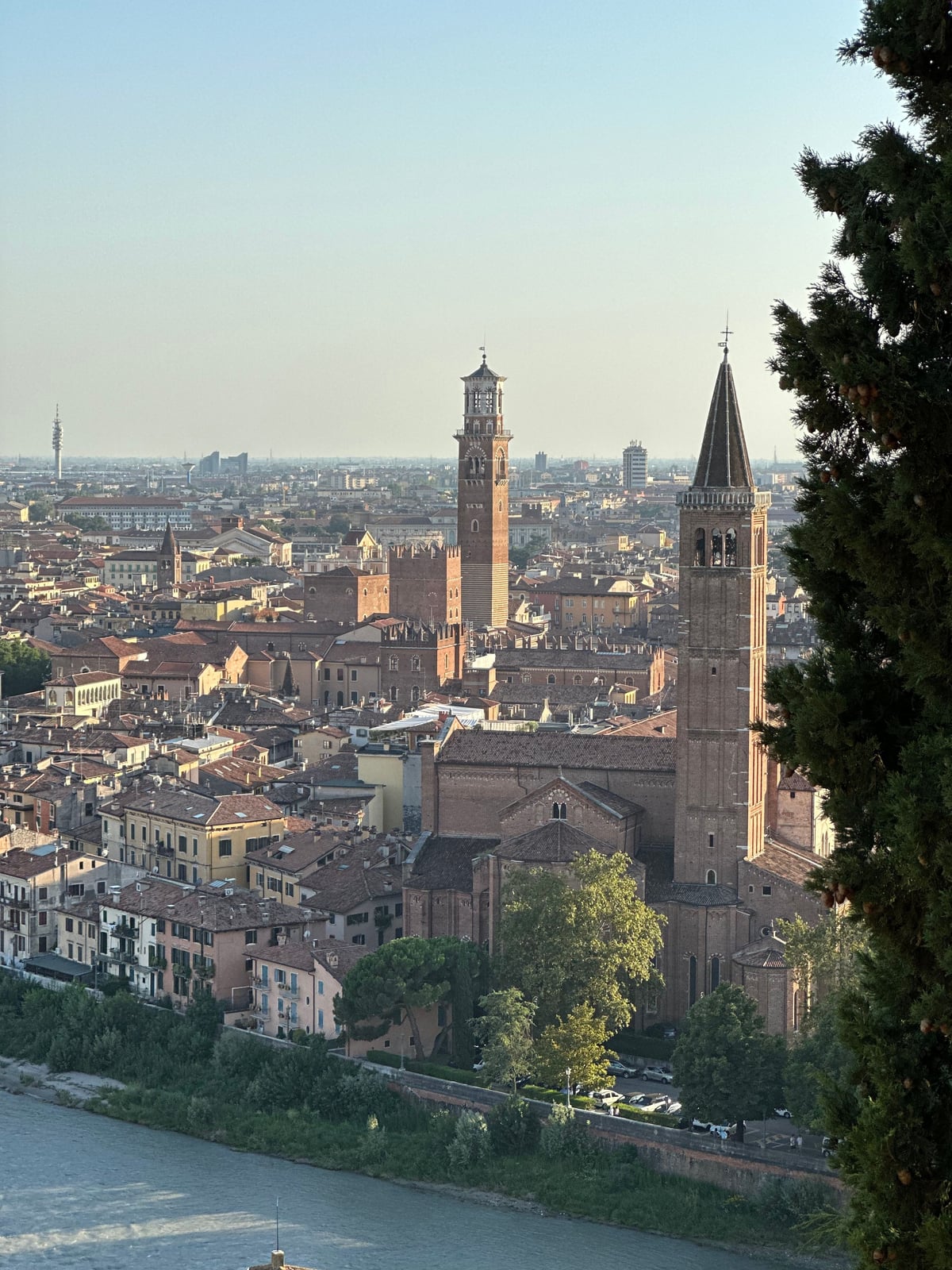
Torre dei Lamberti, 84 m high, gives a panorama of the town for €6: Monday to Friday 10:00 - 18:00, Saturday and Sunday 10:30 - 19:00, last admission 20 minutes before closing, with reservations recommended by email or phone. With one hour for a view, take Castel San Pietro instead, the last stop below.
A half-day guided walk suits a single day: someone else has worked out the order. See how it handles Arena entry and how long it runs, and if it promises Juliet's House, check that entry is a booked time.
Book a small-group guided walk with Arena entry
The Arena opens Tuesday to Sunday - on a Monday, check what the walk does instead
Juliet's House: book a time, or spend the hour on the hill
Juliet's House in Verona has taken booked tickets only since April 1, 2026: €5 for the courtyard, €12 with the house, and no ticket desk on site. Turning up on impulse gets you nothing, which is at least faithful to the play.
Buy online or by call center, for a set entry time. The ticket is named: no matching ID, no entry and no refund. Enter from the Teatro Nuovo on Piazzetta Navona, leave by Via Cappello. Hours run Tuesday to Sunday from 9:00 to 19:00, with entry by 18:35 (Mondays differ; see below), closed December 25 and January 1. Children up to 5 are free. Only the courtyard is accessible to people with disabilities; no strollers. CoopCulture sells both tickets; this is the courtyard: book an entry time.
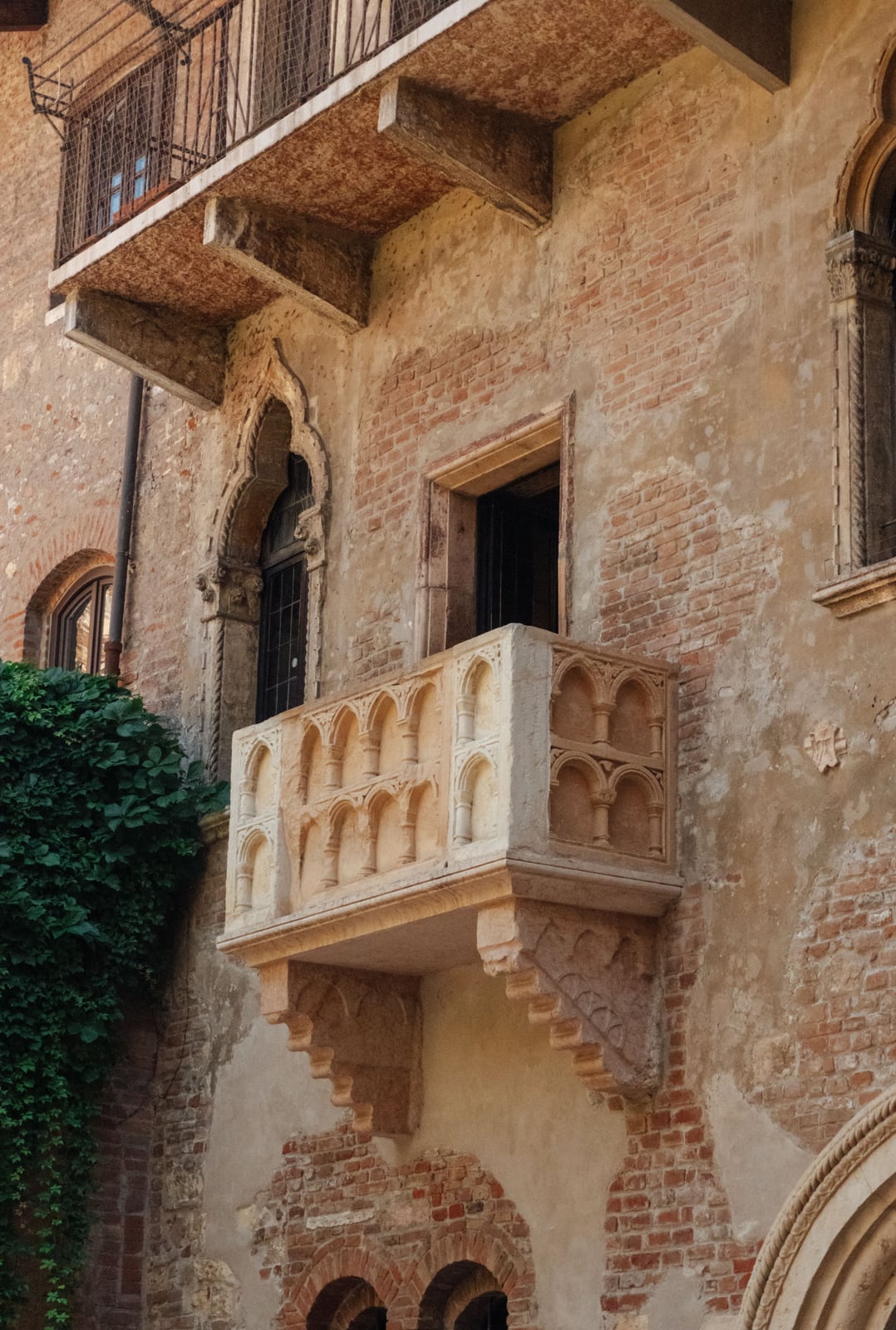
The balcony was added to the facade in 1939/1940, and that is the history. A fan of the play loses little at €5. Everyone else should skip it.
That courtyard was packed when I went through it, back when it cost nothing, and I came out unimpressed; paying €5 would not improve my opinion. I would give the hour to the climb up Castel San Pietro, covered below. Nobody added that view in 1939.
Castelvecchio, San Zeno, and the churches: if you have a second half day
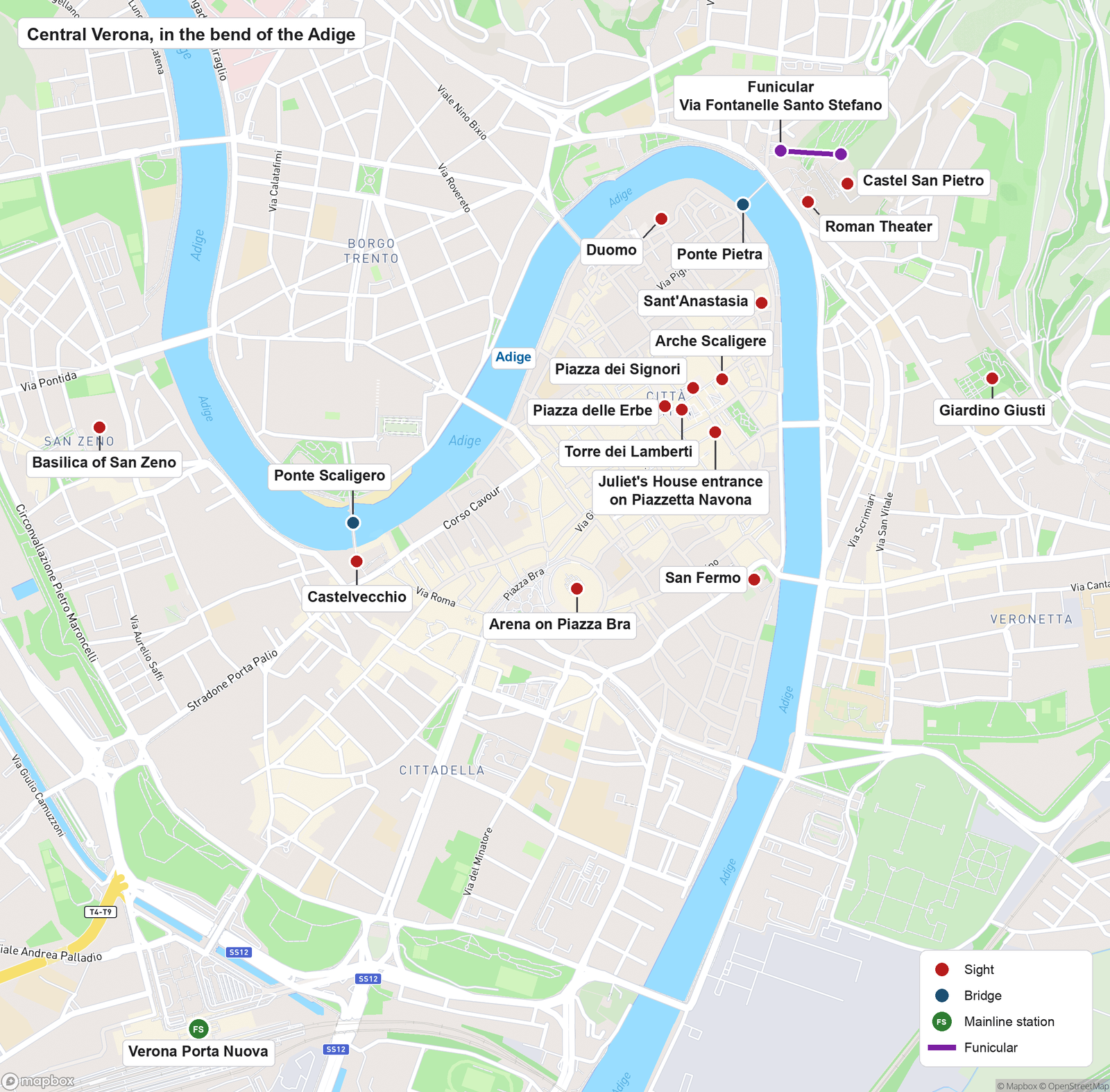
Castelvecchio and the Basilica of San Zeno are the best reasons to give Verona a second half day, about 1 km apart on foot, with San Zeno to the west. Neither is on the one-day list, which is the list's loss and your excuse.
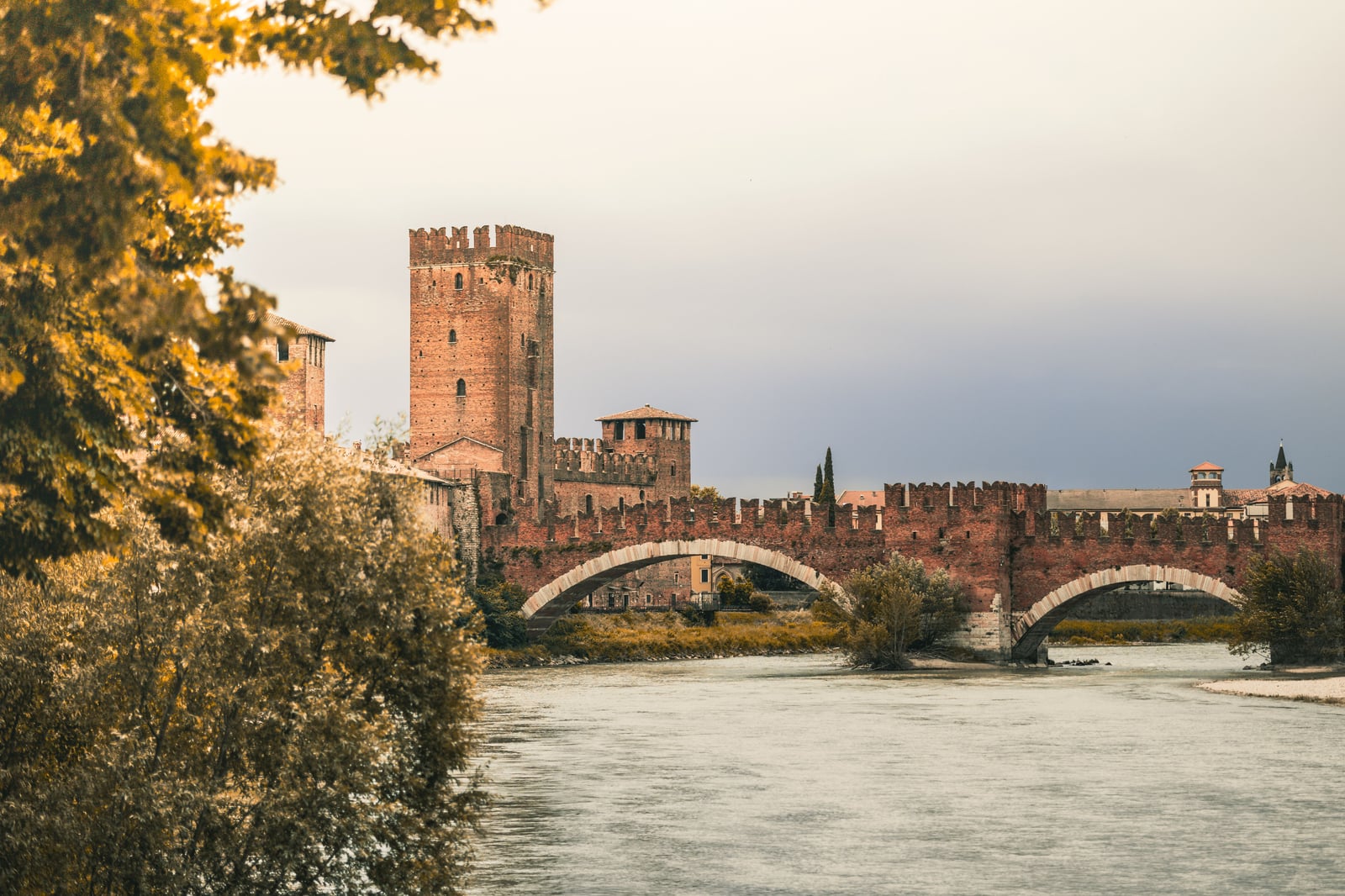
Castelvecchio is a castle holding an art museum in 29 rooms, and the ticket also covers the walkway of the walls. It opens Tuesday to Sunday, 10:00 - 18:00, last entry 17:15, closed December 25 and January 1, and the ticket is named. For the price, see what CoopCulture lists: the Castelvecchio ticket. A Titian show runs October 31, 2026 to January 31, 2027. Then walk the Ponte Scaligero bridge, along its brick battlements over the Adige, with the hills beyond.
From Castelvecchio, San Zeno is about 15 minutes, in the neighborhood where Veronese actually live. It has a Mantegna triptych, a crypt, and a cloister. Entry is €4 per church at its ticket office, or €8 for the four-church pass, valid 90 days, online or at the desk. Through February 28, 2027, San Zeno opens weekdays 10:00 - 17:00, and not before 13:00 on Sundays and holidays. The pass is on Chiese Vive's ticket page.
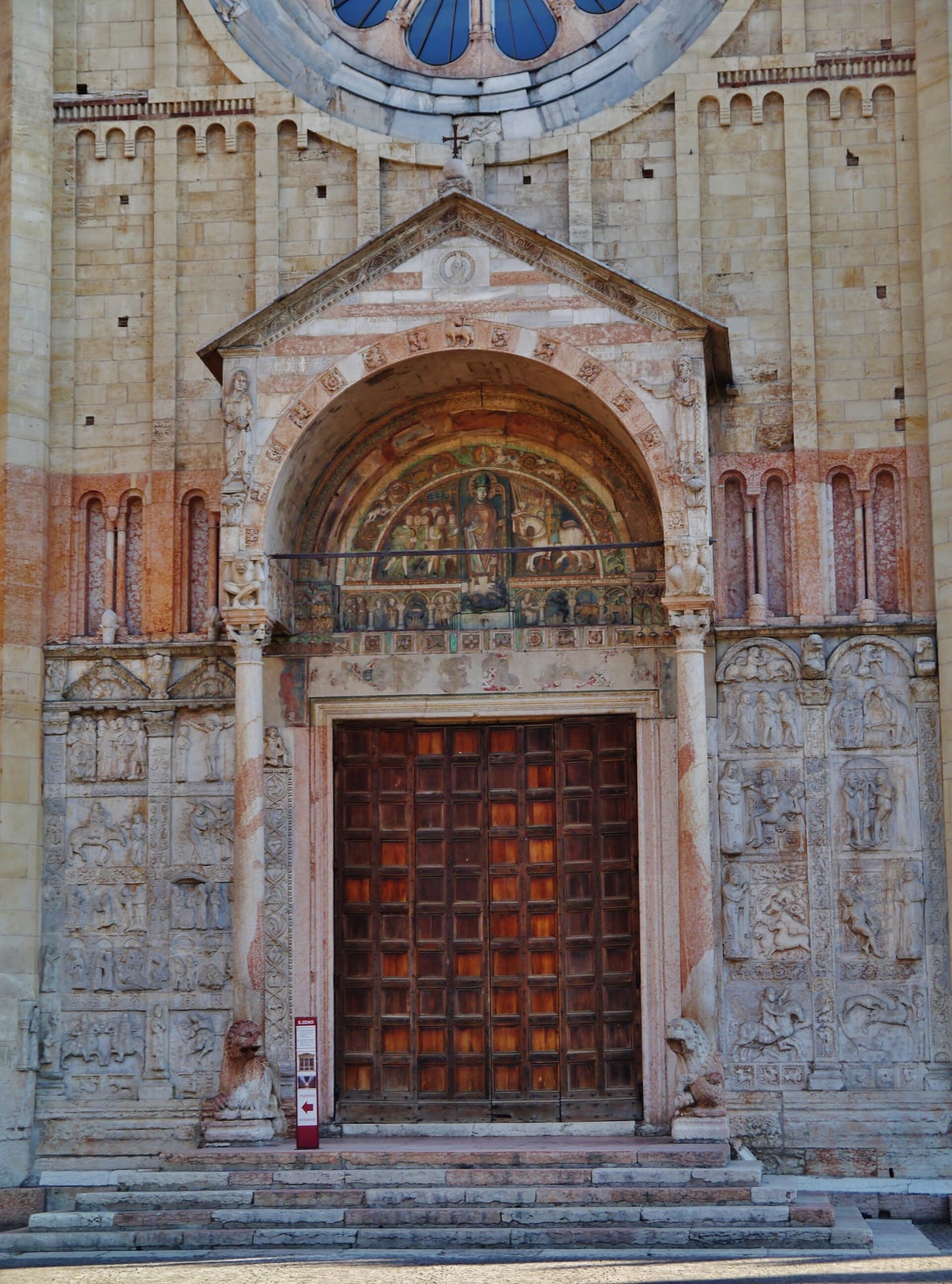
The portal earns the walk by itself: high-relief stone figures around it, medieval bronze doors in it. Give them longer than the balcony.
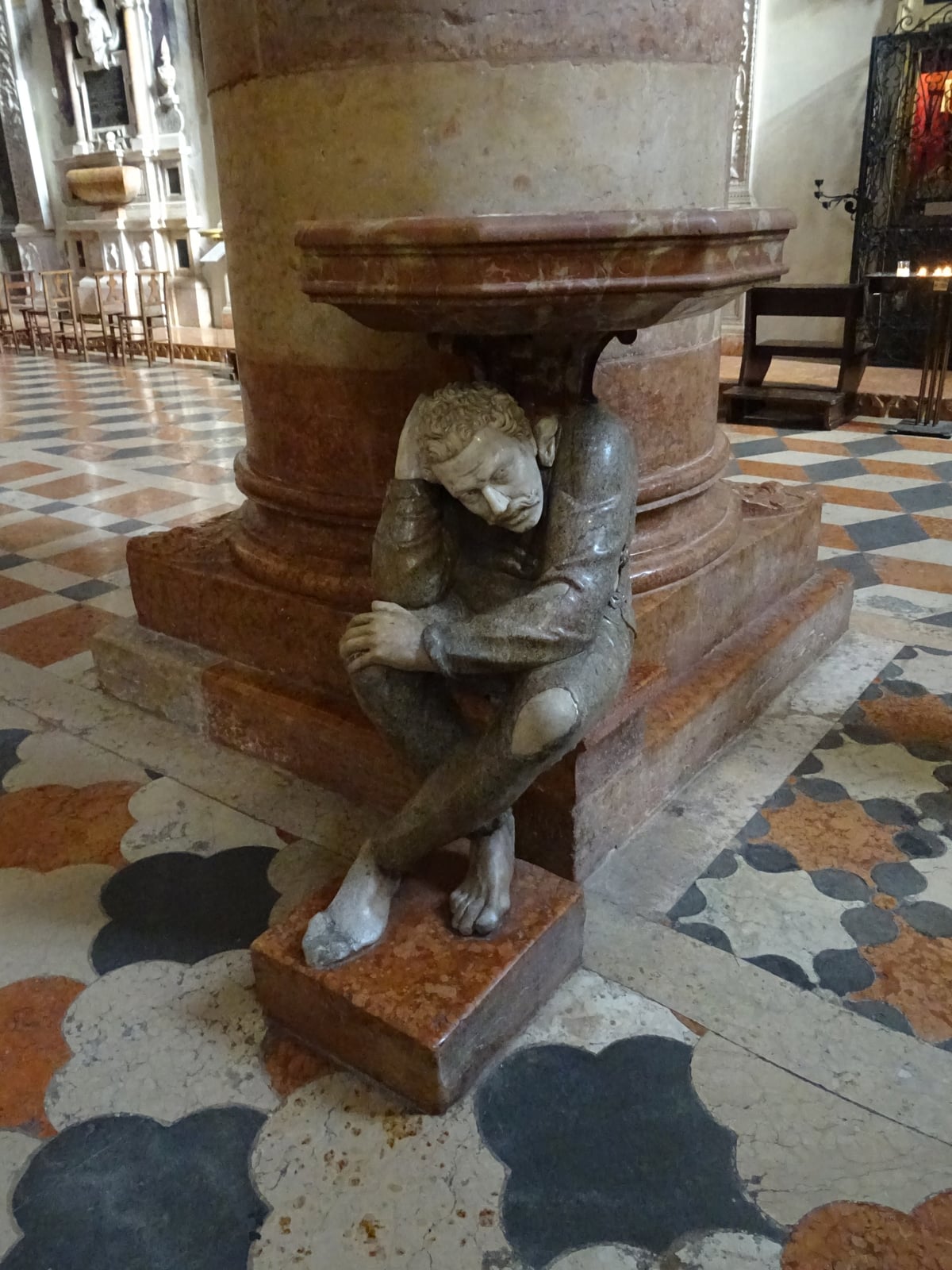
The pass also covers Sant'Anastasia and San Fermo, on those hours through February 28, 2027, and the Duomo complex, which until then closes at 15:30 on Saturdays and opens at 13:30 on Sundays. Sant'Anastasia, "a masterly example of Italian Gothic style" by the account of the people selling the tickets, has the hunchback holy-water stoups and Pisanello's fresco Saint George and the Princess. This is a pass for church people, not a must: old churches are not where Verona beats Venice or Padua.
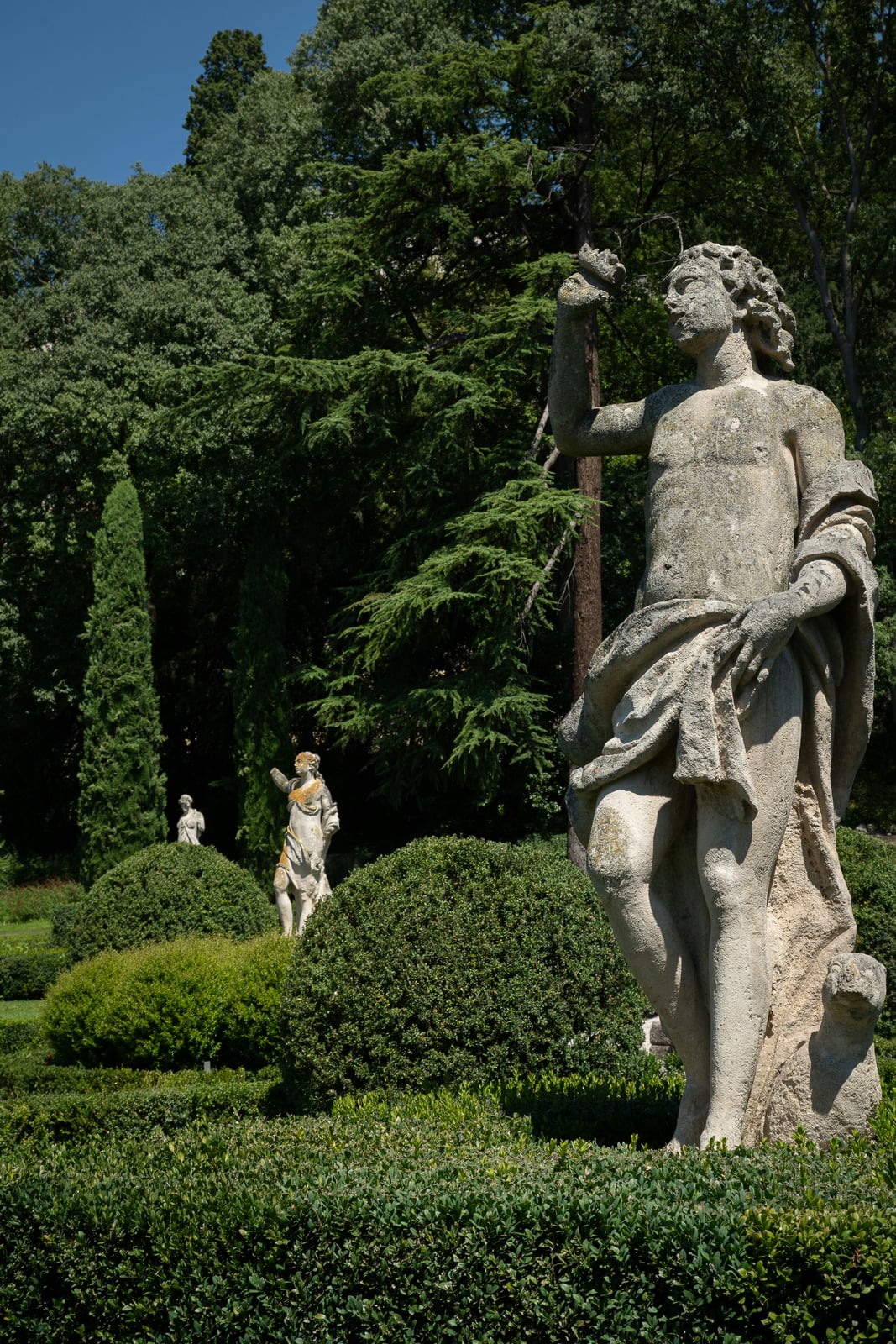
Giardino Giusti is for a slow morning: citrus in vases, mythological statues, fountains, cedars, grottoes, and a belvedere. At €14 it is steep next to the rest of the day. It opens daily except December 25; read today's hours on the garden's own page.
What is open in Verona on a Monday, and when the Verona Card pays
On a Monday in Verona, the Arena and the civic museums are shut all day, but the four pass churches, the Torre dei Lamberti, the funicular, and the Giusti garden stay open. That makes it a day for the hill and San Zeno, lost only if you find out at the Arena's gate.
By name, Monday shuts the Arena, Castelvecchio, and the Roman Theater. Juliet's House opens only from 14:00 to 19:00. The one exception listed so far is Monday, December 7, 2026: an extra opening at all three, with Juliet's House on its full 9:00 to 19:00.
The Verona Card has cost €33 for 24 hours or €38 for 48, ATV city buses included, since September 1, 2026. The Arena, the tower, and Juliet's full ticket add up to €30, €3 short of the 24-hour card; add the €8 church pass and it pays. A courtyard-only Juliet's makes the sum worse. Juliet's still needs a booked time, and you validate the card on every bus. The funicular is not included, and the Giusti garden is only reduced. The city sells the card on its Verona Card page.
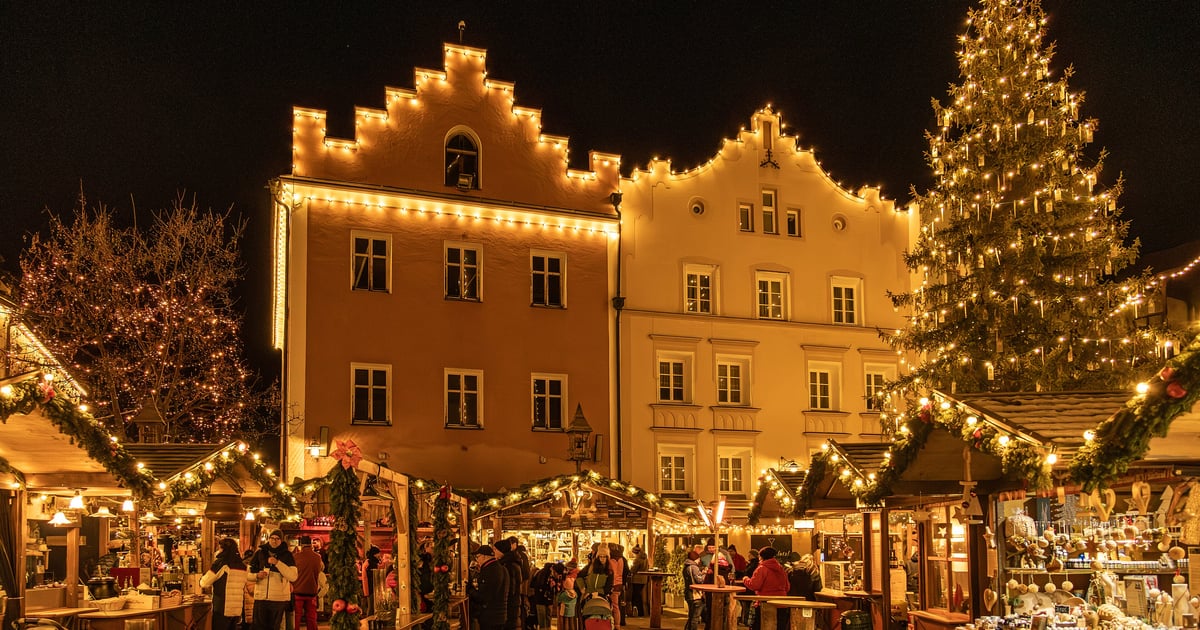
Coming in December for the Christmas market is a separate decision, and my roundup of Italy's markets shows how Verona's Christmas market compares before you make it.
What to eat in Verona: read the menu, leave the piazza
The food to look for in Verona is bigoli, risotto all'Amarone, and pearà, in an osteria (halfway between a restaurant and a bar) off the big squares, with two menu words to learn first: pastissada is horse and musso is donkey. Neither is a nickname.
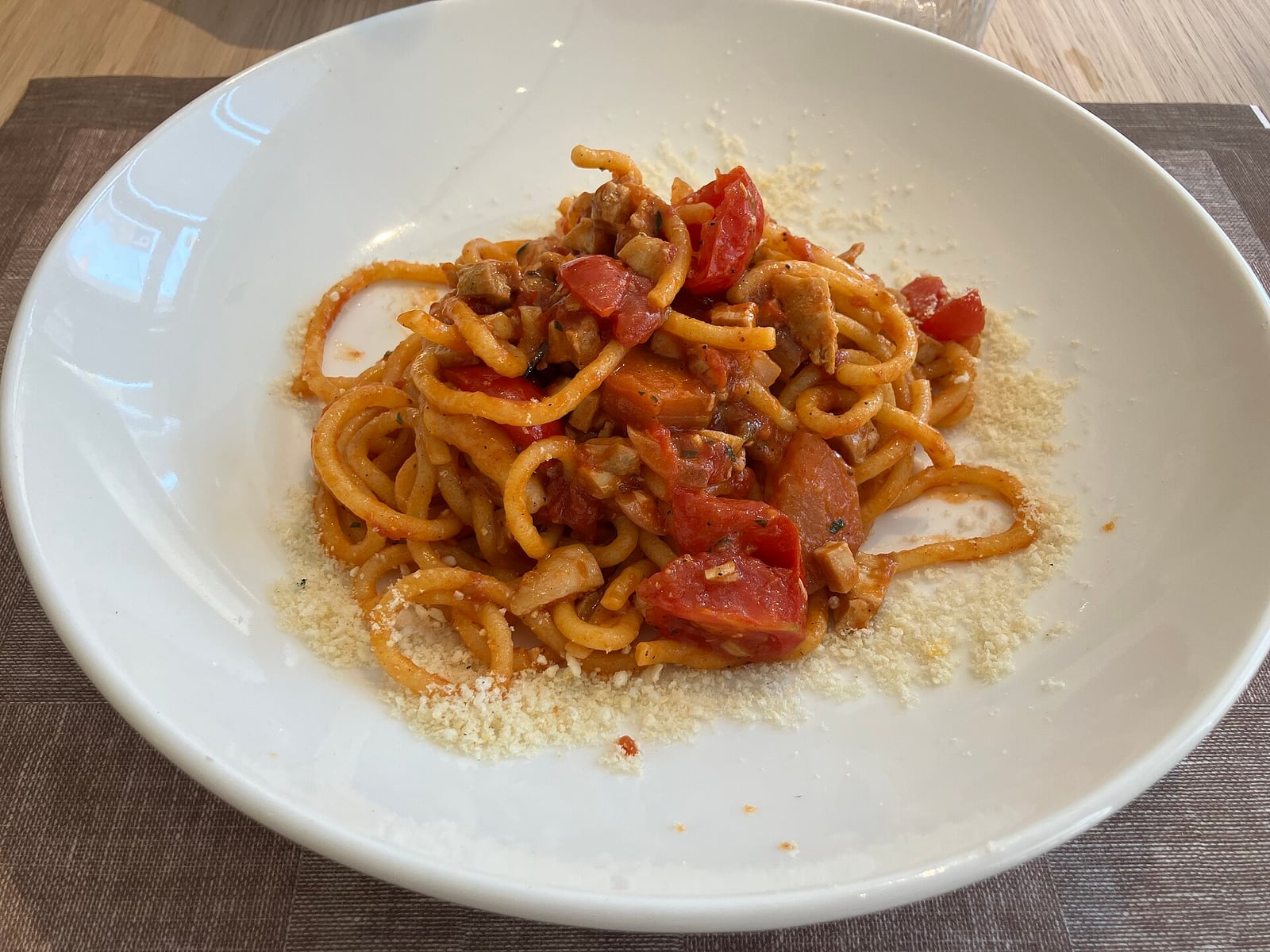
Pastissada is a horse stew marinated in red wine. Bigoli are thicker and coarser than spaghetti; with ragù di musso, they are the donkey version. Risotto all'Amarone, named for the local red, needs no warning. Pearà is a thick sauce of meat broth, stale bread, bone marrow, and a lot of black pepper. If you will not eat horse or donkey, ask. Duck ragu with a glass of Valpolicella is the easy way in. Past that first glass, go no lower on the wine list than Ripasso, a Valpolicella refermented on grape skins from the local Amarone or Recioto wines.
The trap is dinner on the big piazzas. Have the spritz on the square if you want the scene, since the scene is what the square serves, then eat in the cobblestone streets behind it.
The table I send people to is Osteria Il Bertoldo, at Vicolo Cadrega 2a, a narrow lane near Piazza delle Erbe where the square's noise does not follow you in. We shared a pot of risotto all'Amarone finished with Monte Veronese, the local cheese, then bigoli with duck ragu and the pastissada, dark from hours in red wine and black pepper, on grilled polenta. Locals at the next tables, fair prices, nothing adjusted for visitors. For an older, plainer room, cross the river into Veronetta to Osteria da Morandin, at Via XX Settembre 144, for pastissada with polenta or bigoli with the donkey ragu, if you have made your peace with it.
If you would rather be walked to the right tables, choose a small group and a full meal, not a tasting, and check what is included and where it starts.
Book a small-group food and wine walk with a full meal
Pastissada is horse and musso is donkey - if you will not eat either, ask
A wine day goes to Valpolicella, Amarone's home and the heart of Venetian red wine, or to the Soave hills east of the city with their vineyards of Garganega grapes. It takes the day, so it belongs to a stay of two nights or more, and the keys go to whoever is not tasting.
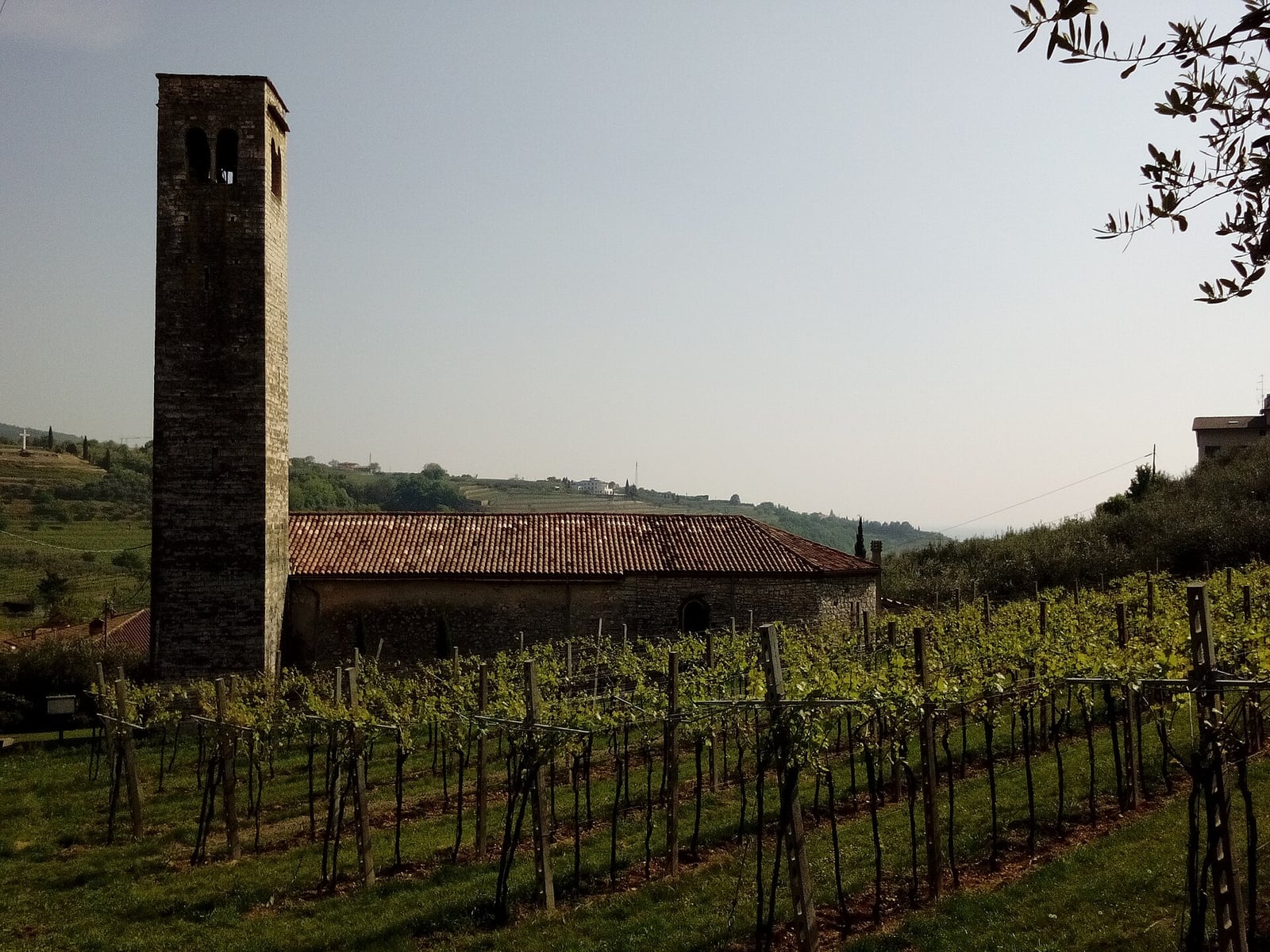
Without a car, or with one and no volunteer, take a tour with the driving handled, and check which area it visits.
Book a small-group Valpolicella wine tour from Verona
A day in Valpolicella, Amarone's home, with the keys left to someone else
Is the Arena opera worth a night for a first-timer?
The Arena opera is worth a night for a first-timer who wants the evening as much as the music. The 2027 operas start at 21:00 to 21:30 by date. You may learn that you dislike opera, but you will learn it inside a Roman amphitheater.
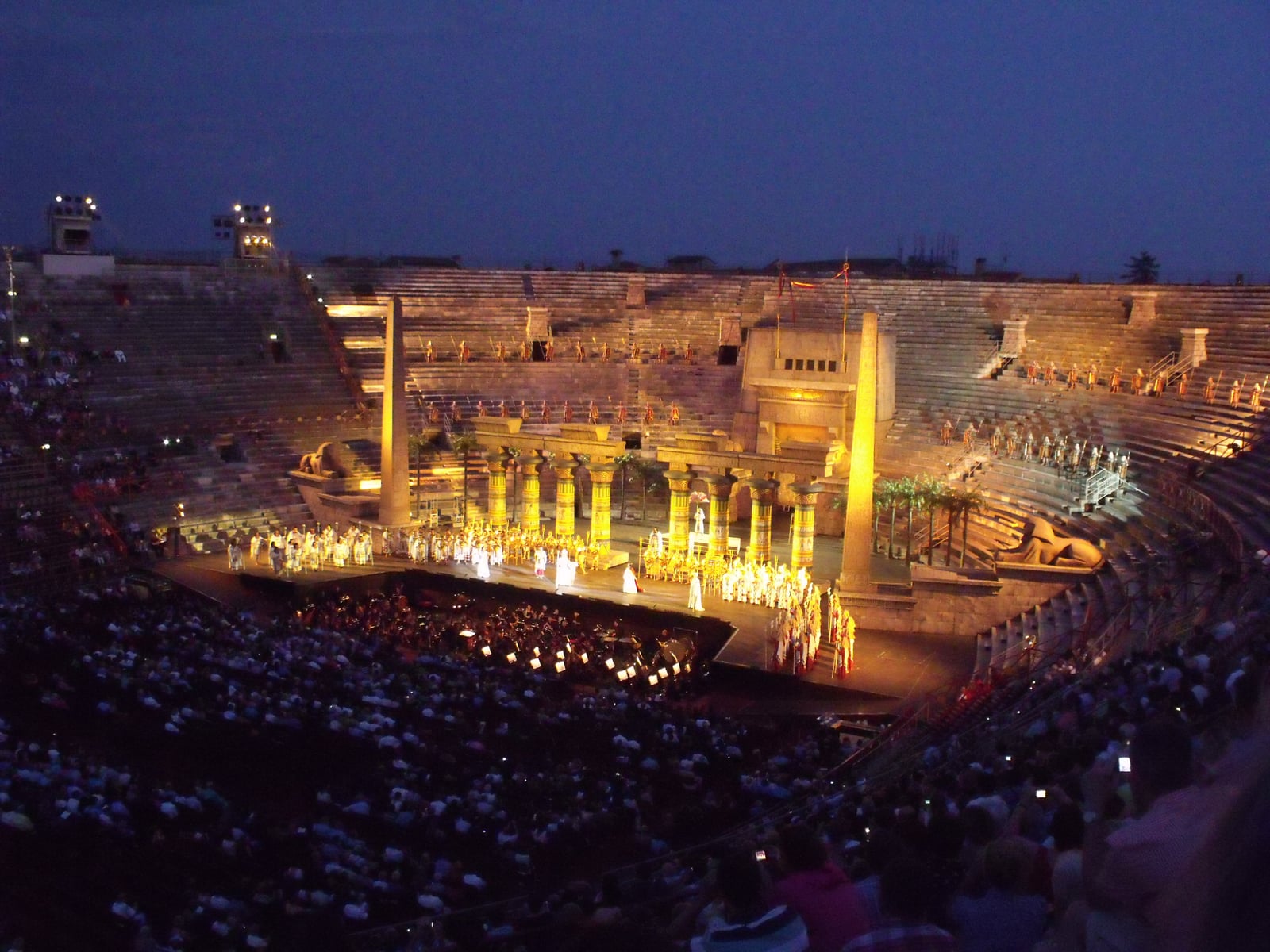
When the sky over Verona finally went dark, the floodlights dropped and small candles came alight along the steps, row after row, all the way around the bowl. The orchestra's first chord went into the stone and stayed there. Then the voices came in over it, and the hair on my arms stood up before I had decided anything about opera.
That was Aida, in the summer of 2026, and at its best this is the evening of the trip, the one you keep after the rest of Italy has blurred. It is also more an occasion than a performance: come to follow every note and you will probably be annoyed. It is long and hard to follow for children, and the plot can lose adults too.
Five operas share the season, playing on and off between these dates ("ed." marks Aida's two editions):
| Opera | First and last date, 2027 | Length, intermissions included |
|---|---|---|
| Aida ed. 1913 | June 12 to August 7 | About 3 h 40 |
| La Traviata | June 25 to September 11 | About 3 h |
| Carmen (sung in French) | July 2 to September 10 | About 3 h 45 |
| Nabucco | July 29 to September 9 | About 2 h 45 |
| Aida ed. Stefano Poda | August 12 to September 8 | About 3 h 10 |
The other four are sung in Italian, and all five list Italian and English subtitles, so the plot is at least available in writing. Children under 14 need an adult, and under-4s get in only through the Family sector.
A 21:00 Nabucco ends about 23:45, a 21:00 Carmen about 00:45. On the current timetable, valid to December 12, 2026, the last evening regional from Verona Porta Nuova to Venice leaves at 22:22, not on Saturdays from November 21; the last evening train Trenitalia's Triveneto regional timetable lists from there with a Milan arrival leaves at 21:43. Both go before any opera ends. When my Aida let out after 00:30, Piazza Bra was humming and there was not a free taxi anywhere; we walked back to the hotel through the center with the whole dressed-up crowd. The current timetable does not reach the 2027 season, but unless the new one says otherwise, an opera means a bed, which is next.
Where to stay in Verona if you take the night, and the way in
Where to stay in Verona comes down to how you arrive: by train, the historic center near the walk from Porta Nuova station to the Arena; by car, inside the historic-center ZTL (zona a traffico limitato, a limited-traffic zone) only if the hotel registers your plate. The room is the easy part; your license plate is what Verona checks.
Short-term rentals do not count as hotels inside the historic-center ZTL. Ask the hotel about parking before you arrive. Opera dates push room prices up, so check the Arena's calendar before you pick your dates.
With the dates set, check the room against the walk on the map below.
Find a hotel in Verona's historic center
Driving in? Inside the historic-center ZTL only if the hotel registers your plate
Porta Nuova is the station, for Venice and Milan alike. The walk to the Arena is about 1.8 km, about 25 minutes, few of them scenic, and city buses run to Piazza Bra, the Arena's square. The Venice trains, bus lines, and the bed choice among Verona, Venice, and Padua are on the Verona to Venice page.
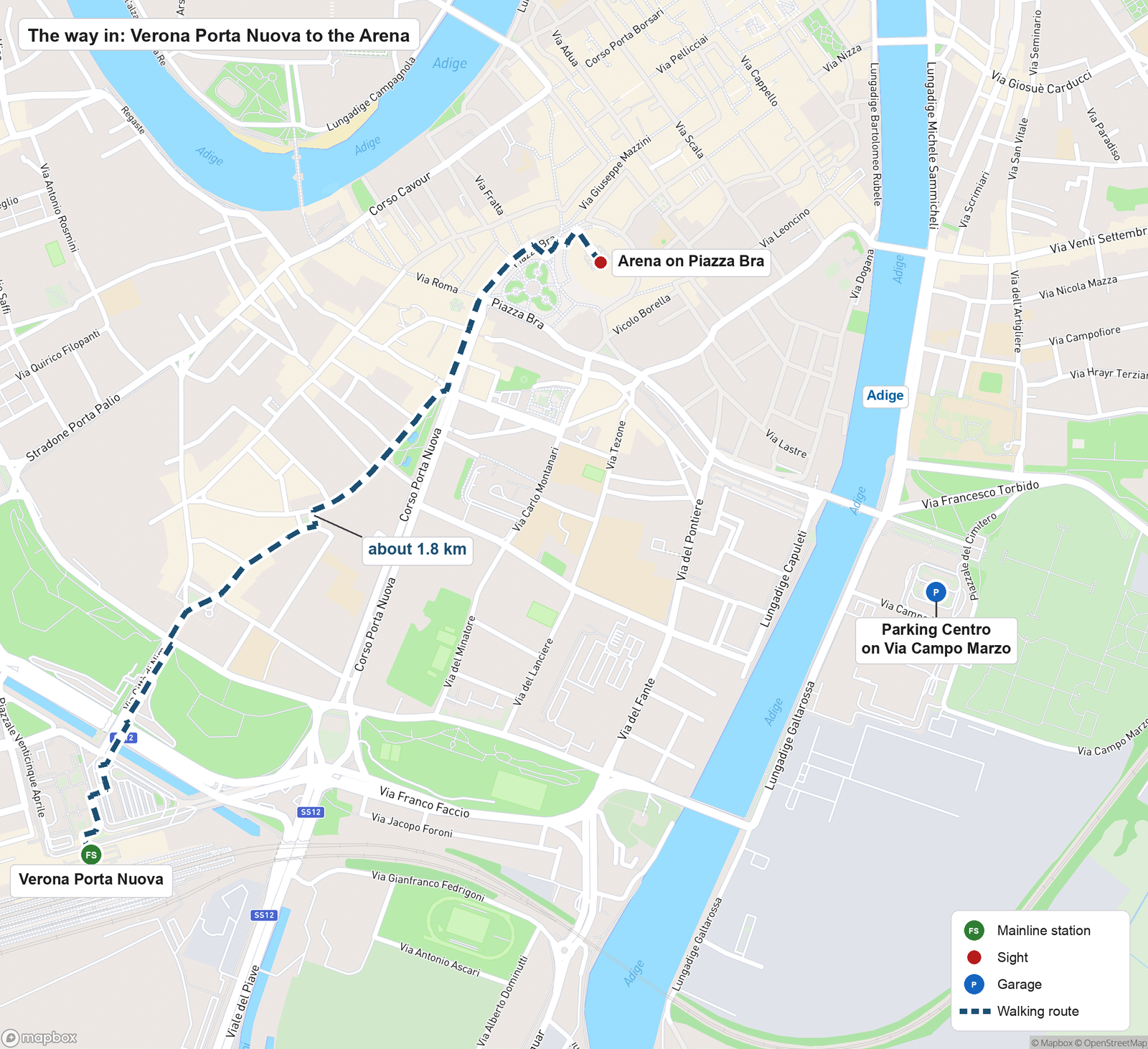
The historic-center ZTL lets cars in by booking only for residents of Verona and its province, not you. Unless your hotel registers it, a plate without a permit gets fined. Piazza Bra has its own cameras, running all day, every day, holidays included, and cars need a specific authorization there, so ask the hotel how to reach it before driving in. Another ZTL, at Santo Stefano, fines from November 9, 2026. Use a garage instead: Parking Centro on Via Campo Marzo, outside the historic-center ZTL and across the Adige from it, is listed at €1.20 an hour and €12 for 24 hours after 10 hours of parking. In the center, walk.
Only passing through, with bags? A drop point near the station frees the day; check its opening days against your train.
Book luggage storage near Verona Porta Nuova
Near Porta Nuova, the station for Venice and Milan alike
From a Verona bed the next question is Lake Garda, starting with which end of the lake to aim for.
Arena opera tickets: which seat, what to bring, what rain does
Arena opera seats on ordinary 2027 dates cost €35 to €63 on the numbered stone steps and start at €80 for a chair with a back, full rate as listed in November 2026. The top seat costs about ten times the bottom one, and both get the same weather.
| Seat | What you sit on | Full rate |
|---|---|---|
| 6th, 5th, 4th Sector | A numbered stone step | €35, €45, €63 |
| 3rd Sector Rossini, 2nd Sector Puccini, 1st Sector Verdi | A numbered chair with a back, not upholstered | €80, €105, €130 |
| Sector Tribune, 2nd Sector Stalls, 1st Sector Stalls grades | A numbered padded chair; Stalls are the floor seats | €135, €150, €180 - €345 |
The cheap seats have a fair claim to the best view in the Arena. I saw Nabucco from the steps up top and Aida from a chair low down, and the steps won: from up there the whole lit bowl and the size of the staging fit in one look, while down low I spent the night with my head tipped back. In the heat, a little more for a chair is still well spent.
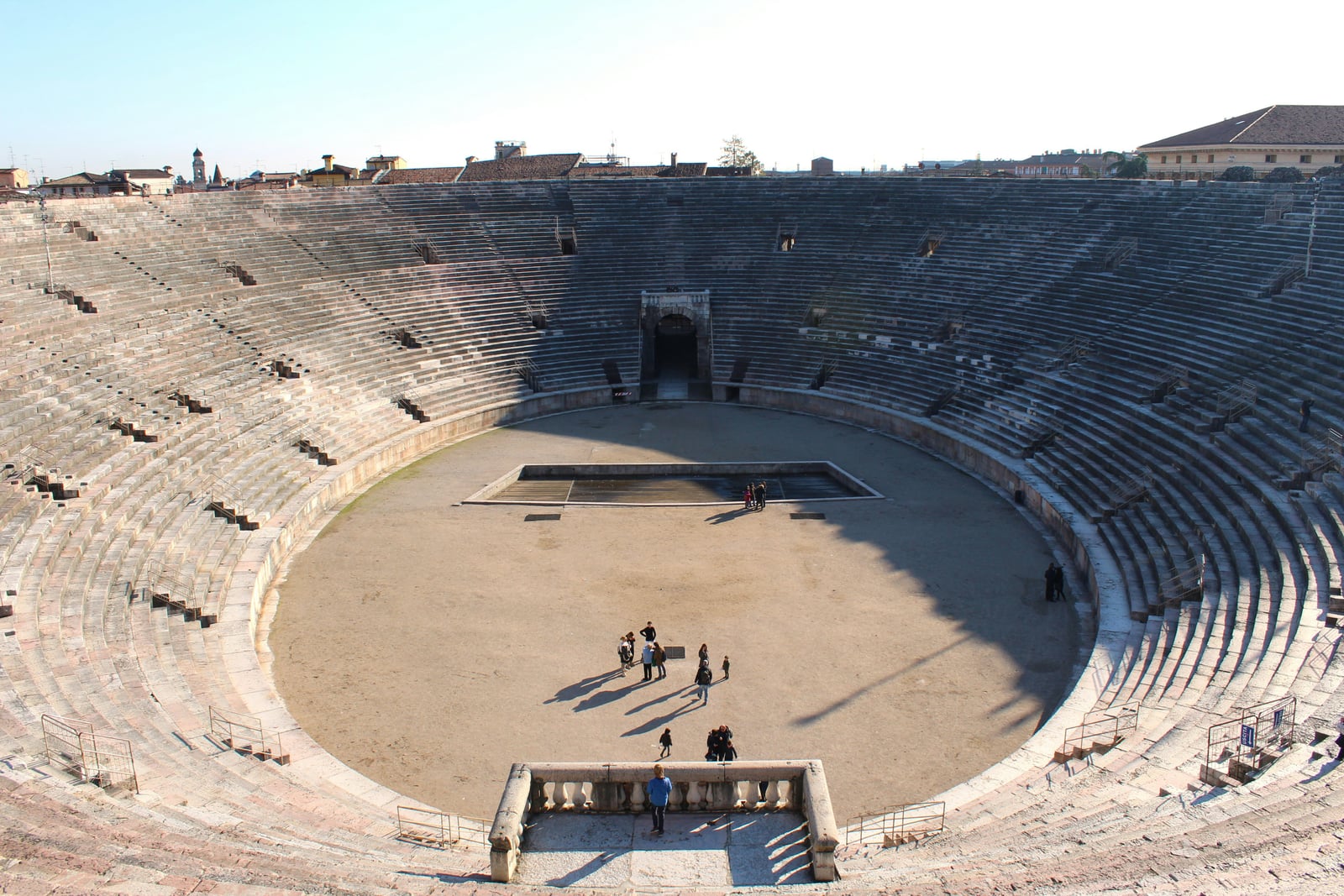
On the steps, bring a cushion from home or buy one inside. My chair down low was thin bare metal, so it earned one too. The reduced 6th-sector rate is €25, for under-30s and over-65s among others, and the June 12 opera costs more.
⚠️ Warning
Stone holds the day's heat after dark, and on hot nights people have fainted. Take a hand fan. A bar service runs inside, with consumption only during the intermissions and in the bar areas.
A small backpack and a small or folding umbrella get in; a long umbrella with no sharp point is up to the gate staff. Suitcases and bags over 17 L stay out, along with food, plastic bottles over 0.5 L, any other bottle, and flasks. So do video, professional, and semi-professional cameras and tripods, and nobody photographs or records the show without authorization, phones included. Binoculars must be small folding theater ones. There is no coat check, so what gets in stays on your knees.
The Arena has no compulsory dress code, and elegant dress is preferred in the platea, the Stalls. There, no tank tops, shorts, or beach or pool sandals, and no refund if turned away; for men there, the minimum is long pants and a shirt or polo.
Gates open two hours before the start, and the Arena wants you there at least an hour before. Arrive late or leave your seat during the show, and you wait for the first intermission to get back to it.
Once bought, a ticket is neither refunded nor changed, and the weather has its own rules:
| What happens | What you get |
|---|---|
| Start delayed | A wait of up to 150 minutes, and a later end |
| Stopped for good before the first act ends | No refund; a €2.50 ticket to another show of this Festival that the Arena selects, no higher in category or price |
| Stopped for good after the first act | No refund; 30% off tickets to other shows of this Festival that the Arena selects, no higher in category or price |
| Canceled for bad weather, never before the scheduled start | Refund on request: through the channel that sold the ticket, by the procedure arena.it publishes then, within 14 days at face price; a request reaching the Fondazione Arena (the festival's organizer) later, by October 31 of the Festival year, minus taxes and charges |
| Canceled, with a recovery date | A refund only if that second night is canceled too |
| Carnet seat or Open Ticket (the open-date ticket), canceled | Moves to later dates of the season; a refund only if the canceled show is the season's last |
Buy online, or during the festival at the box offices on Via Dietro Anfiteatro 6/b and Via Roma 1; the first opens on show days from 9:00 until the start. Choose your sector first on the Arena's 2027 rates and floor plan.
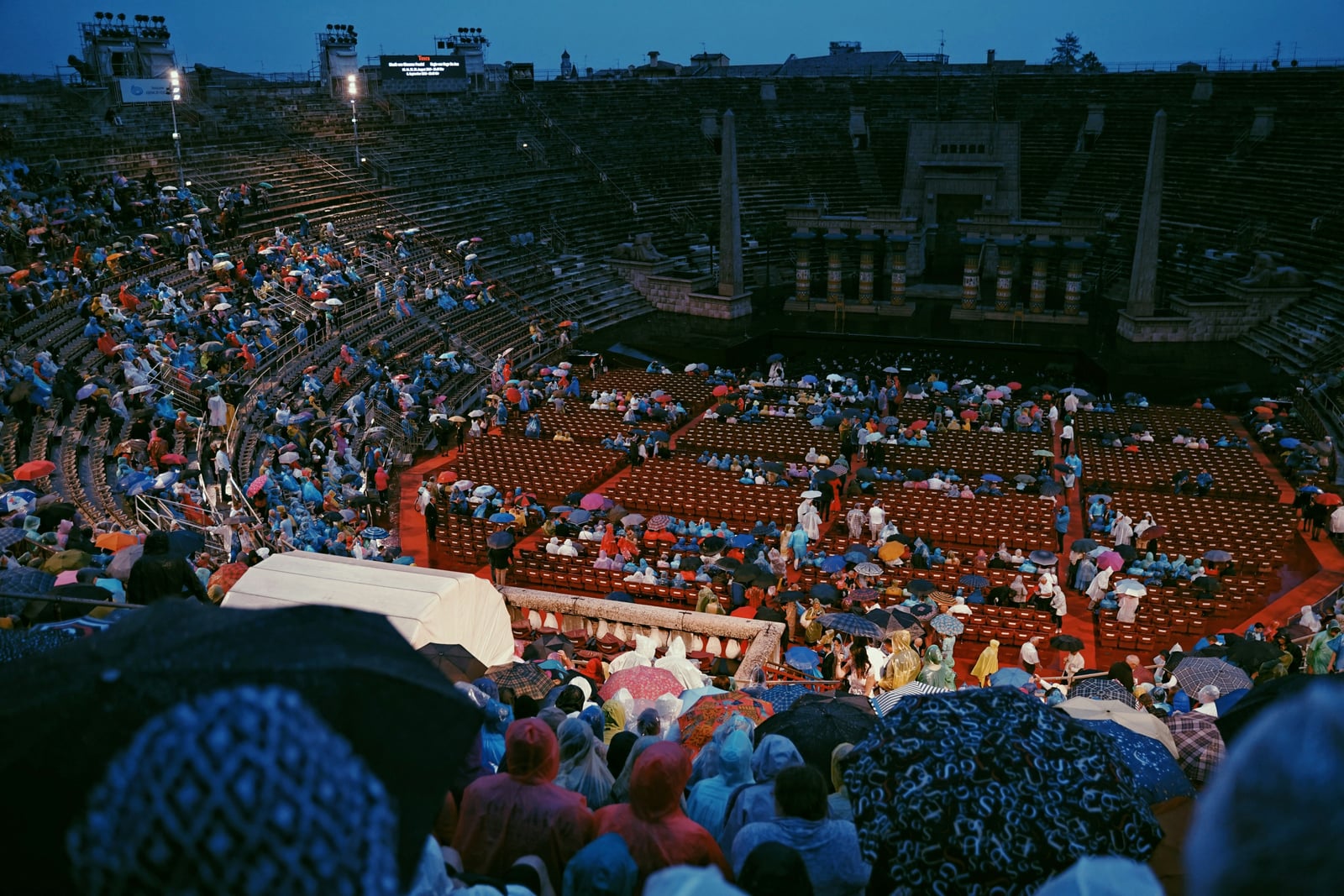
An hour early sounds like a long time on a step. Then the steps fill around you, row by numbered row, the stone still giving back the day's heat through the cushion, and the wait starts to feel like the reason you took the room. It is still a step, so keep the fan out.
Castel San Pietro, the Roman Theater, and Verona after dark
Castel San Pietro is the view to take if you have one hour: the fortress is not open, but the terrace above the Ponte Pietra bridge is reached by the steps or a €3 round-trip funicular. This is where the balcony's hour goes, and the fortress is behind you anyway.
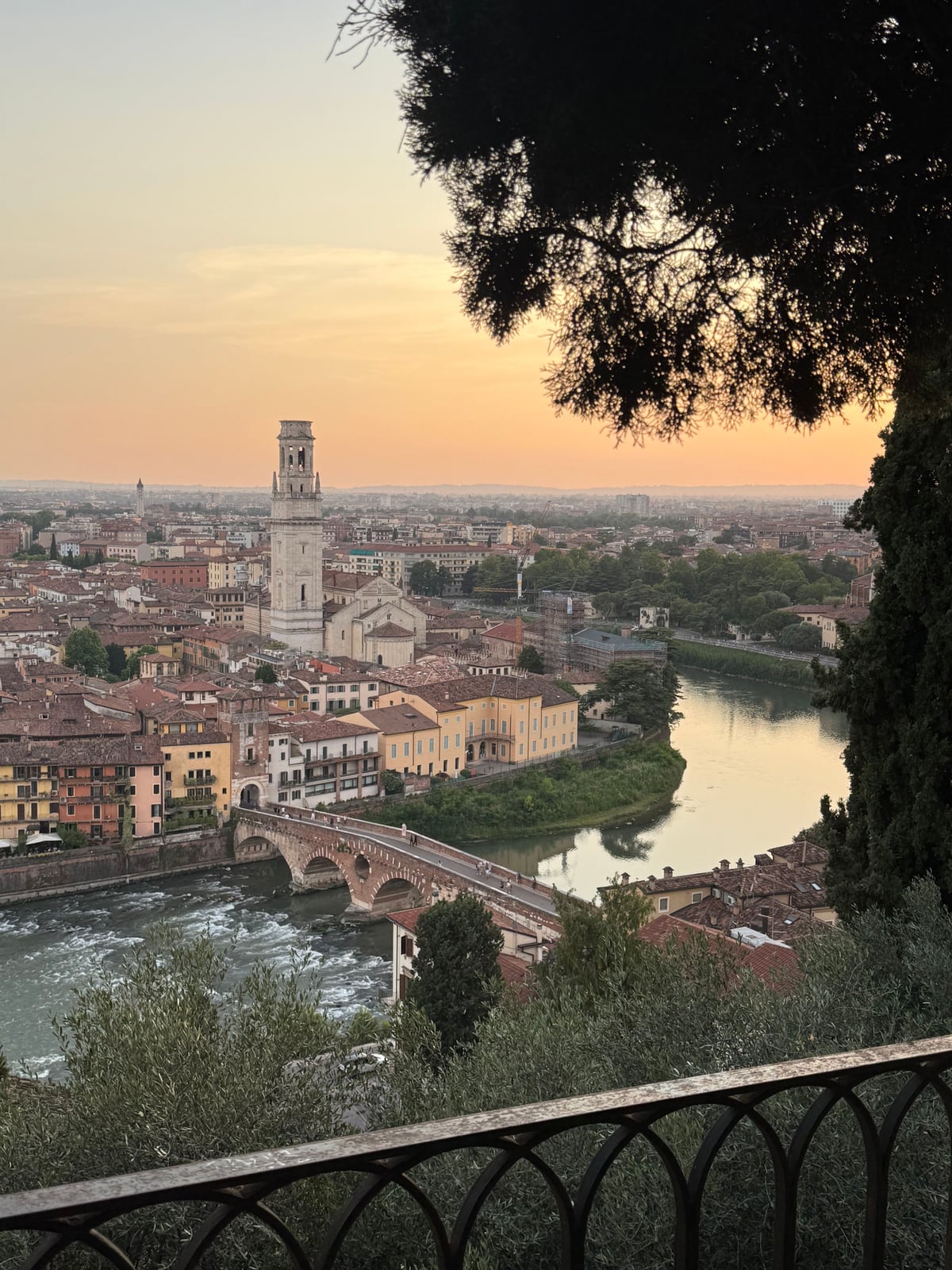
The steps start in front of Ponte Pietra. The funicular leaves from Via Fontanelle Santo Stefano and takes just over a minute, €2 one way, running daily except December 25 and January 1: 10:00 - 21:00 from April to October, 10:00 - 17:00 from November to March. So a winter sunset up there may mean the steps down. A restaurant serves okay food; the view is the reason.
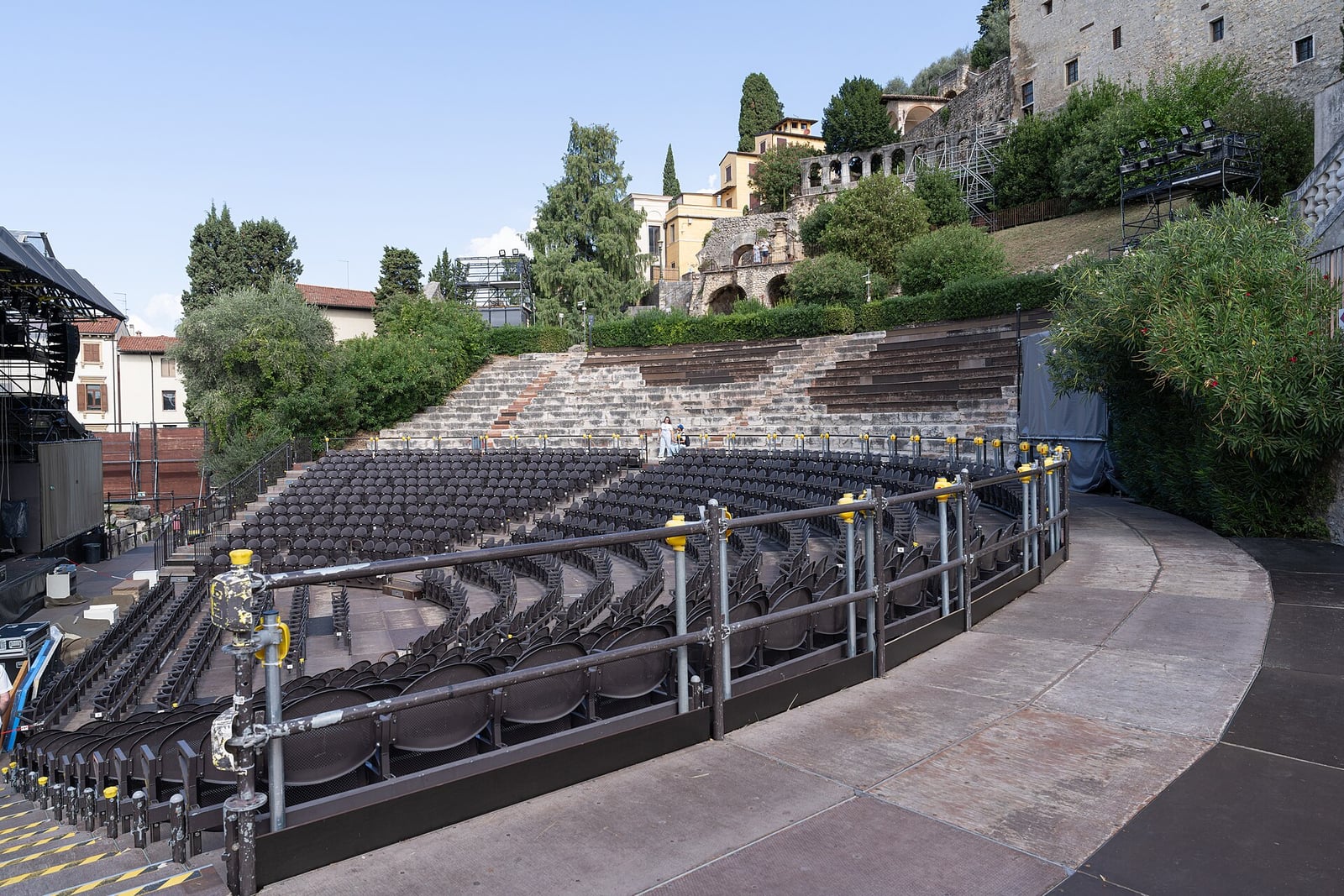
The Roman Theater runs second to the Arena, which is no insult. Built on the same hill's slopes toward the end of the 1st century BC, it has its own view of the city and river from the terrace. It opens Tuesday to Sunday, 10:00 - 18:00, last entry 17:30, closed December 25 and January 1, for €9 on a named ticket. The setup for summer shows changed the visiting route from March 31, 2026; nothing is stated for 2027, so check before a summer visit.
What the night buys comes on foot, whichever night you have it: most of the center is a restricted traffic area, which settles the transportation question.
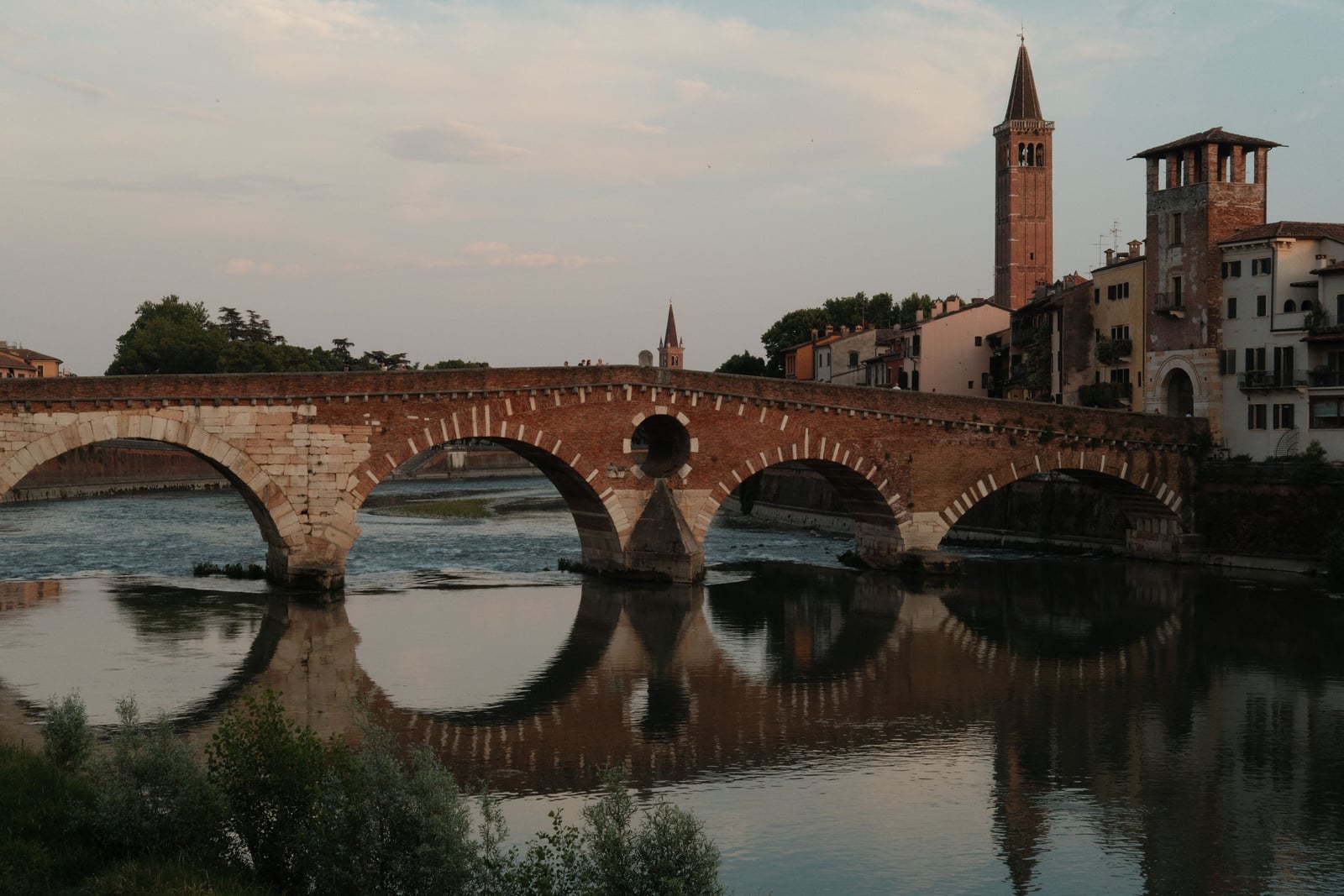
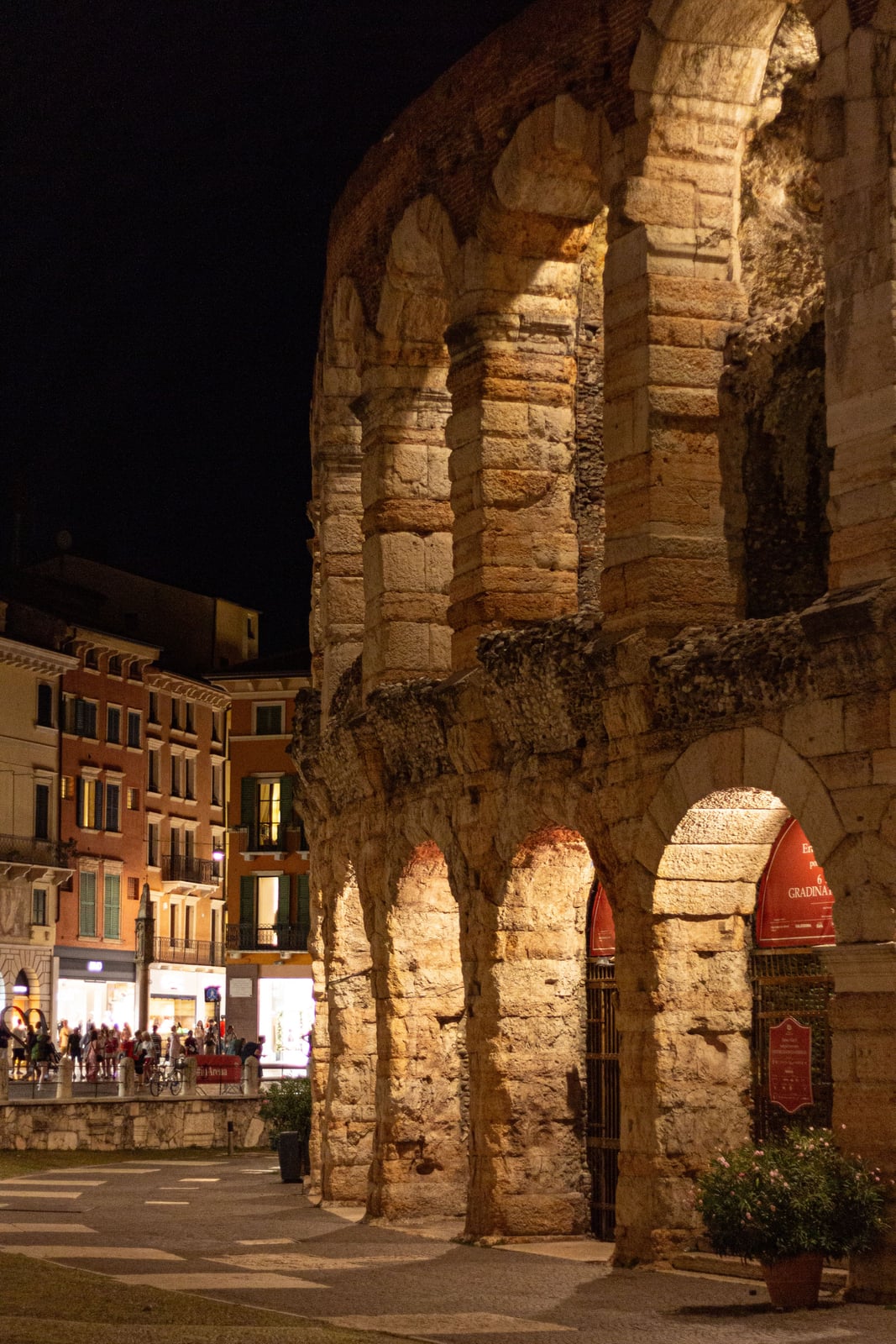
You come down to the river at the end of the light. The Adige winds under the old bridges, going dark, and you cross on foot into the city. The lights are on in the streets now, frescoes on the housefronts and statues along the roofs above you, your head tipped back. Then the streets let you out onto the Liston, Piazza Bra's promenade, red marble underfoot, the Arena's own stone.
A day trip spends this hour watching the clock for the last train. A night lets the walk run on, and the train will still be there in the morning.
Verona FAQ
- How many days do you need in Verona?
- One full day for the Arena, the squares, and a viewpoint; a night for the opera or the lit streets; two if you like walking a city.
- Is Verona worth visiting?
- Yes for a day, and more if the opera or a slow walk appeals. It is not Rome or Florence, and a first short trip can skip it.
- Is the Arena opera worth it for a first-timer, and can you follow it?
- Yes, if you want the evening as much as the music. The five 2027 operas list Italian and English subtitles. They end around midnight or later, so plan on a night: on the current timetable, valid to December 12, 2026, the last evening regional to Venice leaves earlier, and that timetable does not reach the 2027 season.
- Do you need to book Juliet's House, and is it worth it?
- Yes, online or by call center: there is no ticket desk on site. €5 for the courtyard, €12 with the house. I would climb Castel San Pietro instead.
- What is open in Verona on a Monday?
- Not the Arena or the civic museums, though December 7, 2026 is an extra opening at the Arena, Castelvecchio, and the Roman Theater. Juliet's House opens from 14:00, and the four pass churches, the Torre dei Lamberti, the funicular, and the Giusti garden stay open.
One day is enough for Verona, and at noon you will agree. Ask again when the lights come on.