 George Mandrovny
Things to Do in Milan: A Day or Two, Last Supper or Not
- Two days. The Duomo (the cathedral) and its roof, the Galleria (a glass-roofed arcade) and the Castello Sforzesco (the Sforza castle) on the first; Brera and the Ambrosiana (two picture galleries) and the canals at night on the second. One for a stopover.
- Book the Last Supper first. Booking is mandatory for everyone; tickets come out in batches, announced on the museum's news page. Without one, Milan still holds two good days.
- The Duomo's roof elevator goes partway. It reaches only the first level; the second level and the way down are stairs, on every ticket.
- Monday is the trap. The Last Supper, Brera and the Castello museums close; the Duomo, the Ambrosiana and La Scala's opera museum stay open.
The top things to do in Milan, Italy, are the Duomo and its roof, the Last Supper, the Castello and a couple of picture galleries, and the trick is the order you take them in. Around them, Milan gets on with its workweek and barely looks up, which is most of its charm.
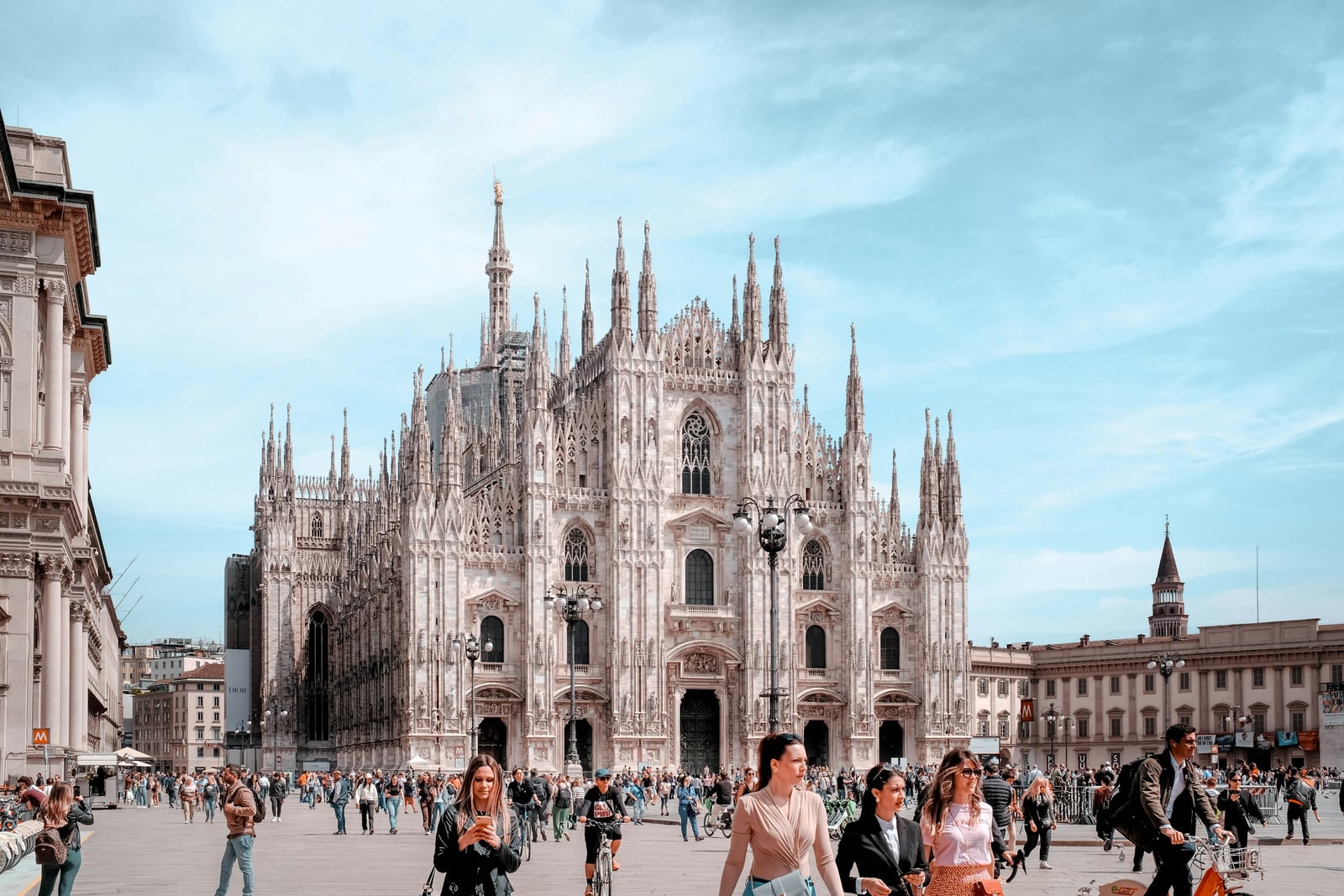
Milan is a working city, run for the people who live in it rather than arranged for visitors. If you came to Italy for an old town, it can feel like any large city, and a short first trip loses little by passing through. If you like big cities, art and food, it gives more than you expect: the Last Supper, the Duomo, and a run of smaller museums and churches to fill the hours between them.
So how many days in Milan, Italy? That depends on how much of the list you want:
| How long | What it covers | Right if |
|---|---|---|
| Half a day | The Duomo, its roof and the Galleria | You're between trains |
| One day | Add the Castello and San Maurizio (a frescoed church), plus the Last Supper if you hold a ticket | You move fast |
| Two days | Add Brera, the Ambrosiana, La Scala's museum and an evening on the canals | You like art, food and walking a city |
| Three or more | Modern Milan, the Monumentale cemetery, a night at San Siro (the stadium), or a day out of town | You read every museum label, or walk everywhere |
Give it two days unless Milan is a stopover, in which case one covers the cathedral and the castle without leaving you short. The Last Supper is the one thing to do in Milan to book before anything else, because the day your ticket names decides where everything else goes. If all this adds up to a night or two, my guide on where to sleep once Milan gets a night weighs the neighborhoods against your trains.
The Last Supper: Getting a Ticket, and the Plan When It's Sold Out
Leonardo's Last Supper, on a refectory wall at Santa Maria delle Grazie, is seen only with a booked ticket: €15 at full price, 15 minutes for up to 40 people at a time, Tuesday to Sunday, and the official dates go fast. The short visit is a conservation rule, so no amount of charm buys a sixteenth minute.
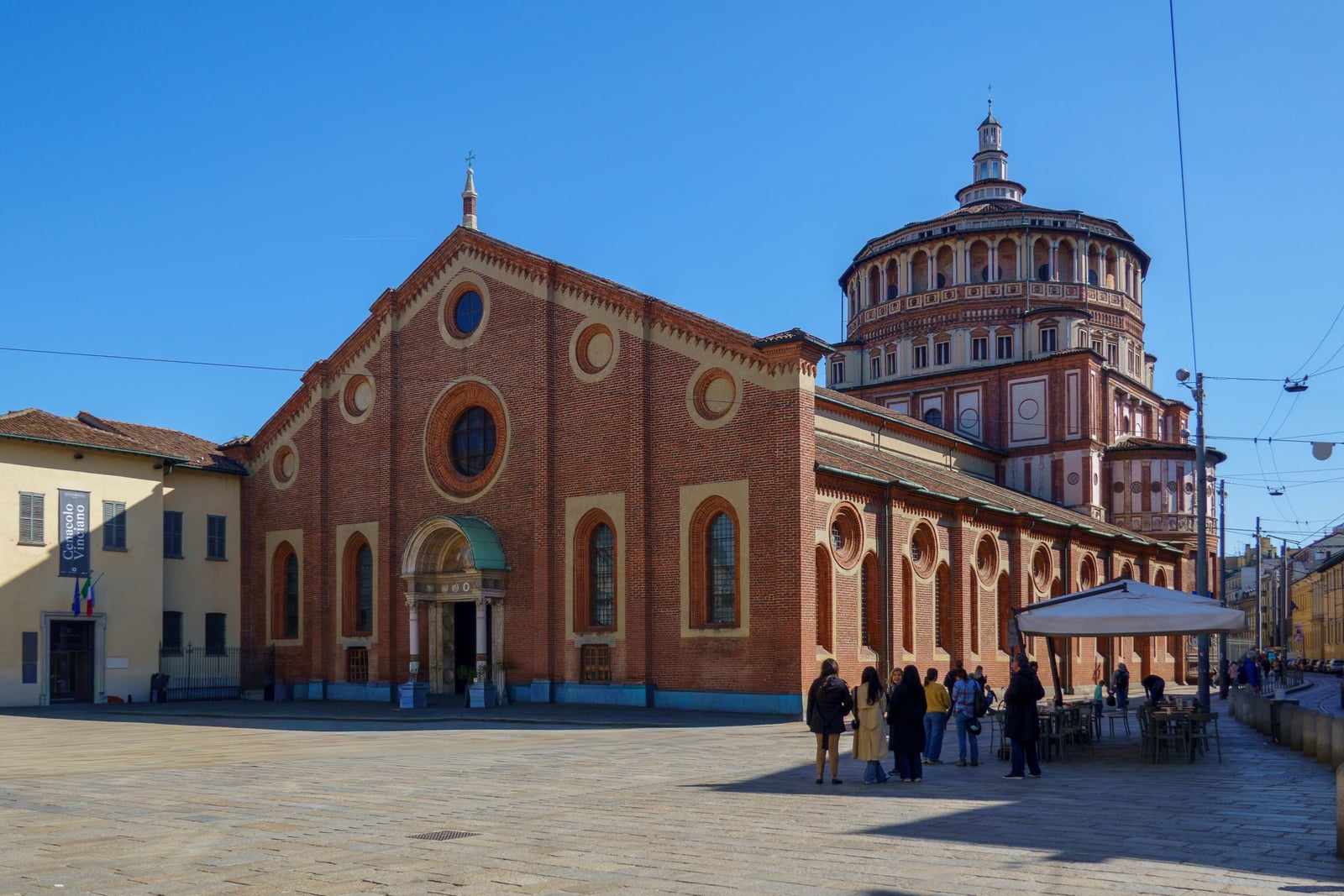
Book through the museum's own ticket shop, run by its concessionaire. Online you can book up to 5 tickets, the call center up to 9, and the museum says you can buy at most 5 tickets in a calendar year. Ages 18 to 25 pay €2 and anyone under 18 pays nothing, but babies and free tickets need a booking too. Your name goes on the ticket and can't be changed after an online or call-center purchase of single tickets. Neither the date nor the time can be changed, and there are no refunds. The museum is open 8:15 - 19:00, last entry 18:45.
Tickets come out in batches of a few months, announced on the museum's news page and released at noon Italian time. As of November 2026, nothing past December 2026 is on sale, so a winter trip may find its dates not out yet. The same page posts short closures for strikes and staff meetings, so check it the day before.
⚠️ Warning
Be at the ticket office beside the museum's entrance at least 30 minutes before your slot, with ID, or you lose your entry. No bags, food or drink go inside; the lockers are free but for emergencies only, while they last, for up to 60 minutes. Once you're out, you're out.
Date sold out? Start with the weekly release: at 12:00 every Wednesday, extra tickets for the following week go on sale, online only, for single visitors, up to 5, and availability may refresh daily. Next is the museum's own English tour, when places remain: €10 on top of the ticket, so €25 with a full one, for 45 minutes (15 in the room, 30 after), at 9:30, 11:30, 12:30, 15:00, 17:00 and 17:30. The bilingual workshop version costs €16 on top and runs 60 minutes, and in a tight week nobody is too proud for a turn at red-chalk drawing.
Only after those comes a third-party guided tour. What it really buys you is the way in, not the commentary, in a room that small. Pick one whose listing says the entry ticket is included, and check that its meeting point leaves time for the 30-minute pickup.
Book a guided Last Supper tour with the entry ticket included
For a sold-out date, after the Wednesday release and the museum's own tour
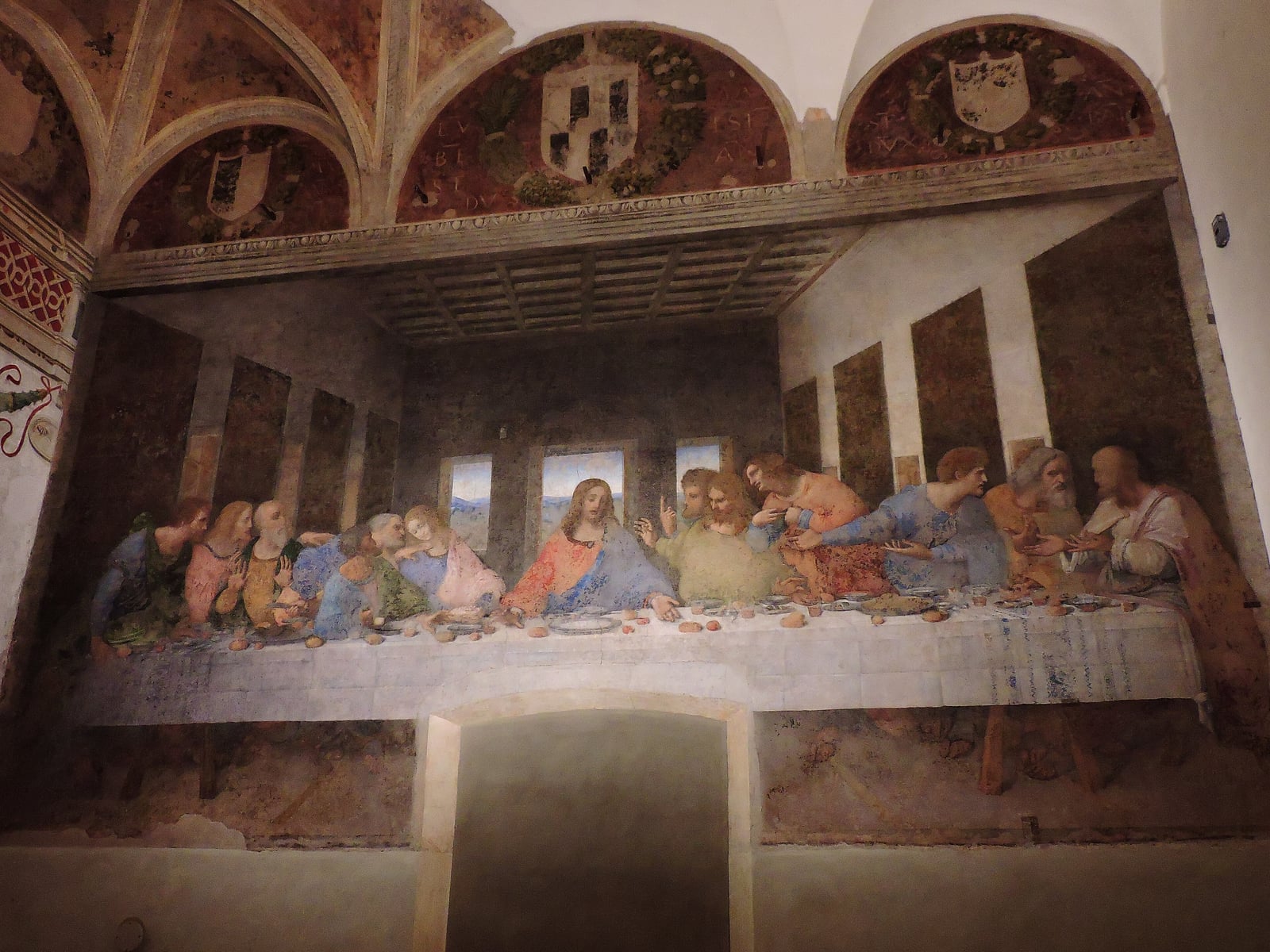
I missed the big batch myself and got in on a Wednesday release, at noon, a week before the trip. Fifteen minutes sounds short, and it is enough. The group walks in through glass chambers that filter the air, into a cool, dim hall where nobody talks. The painting is bigger than any reproduction had led me to expect, filling the end wall, and its paint looks thin and matte, as if it were coming through the stone. Then I turned around. On the opposite wall, Montorfano's Crucifixion, dated 1495, still glows in full color, and the two walls side by side show exactly what Leonardo's experiment with the wall cost him. At fifteen minutes the guards walk the whole group out, politely and without appeal. It was worth every step of the hunt, and that is the odd thing about the Last Supper: the hard part is the ticket, never the painting.
If none of it lands, Milan still fills two good days without the Last Supper, and the half day it would have taken still belongs to the churches and the castle near Santa Maria delle Grazie.
The Duomo and Its Roof: Elevator or Stairs, Then the Galleria
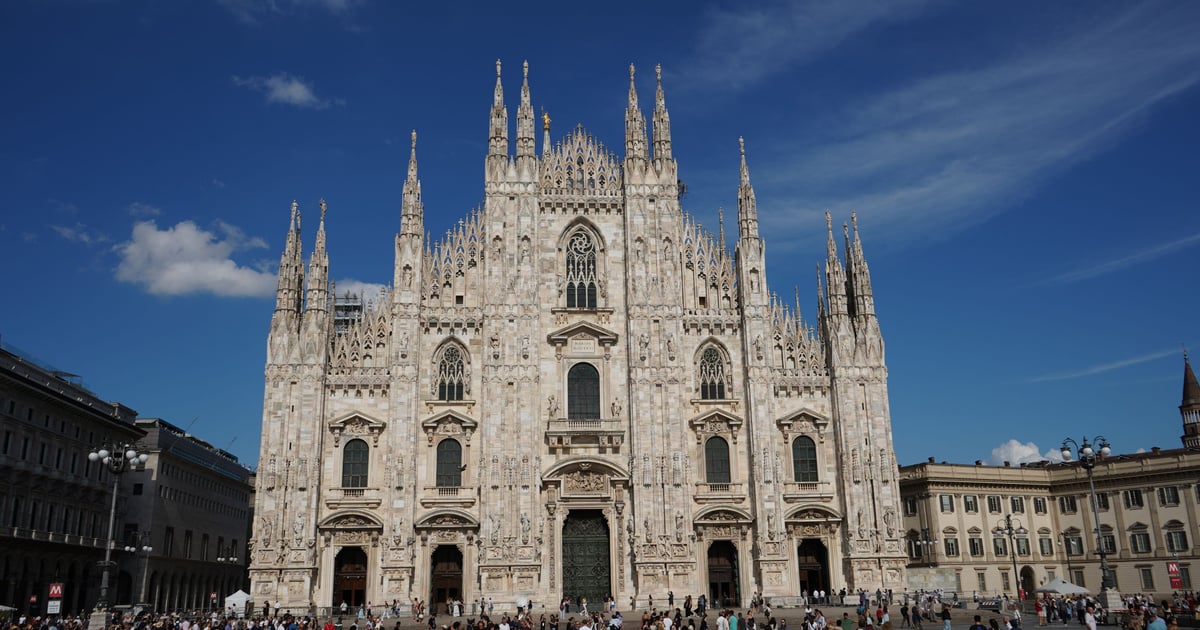
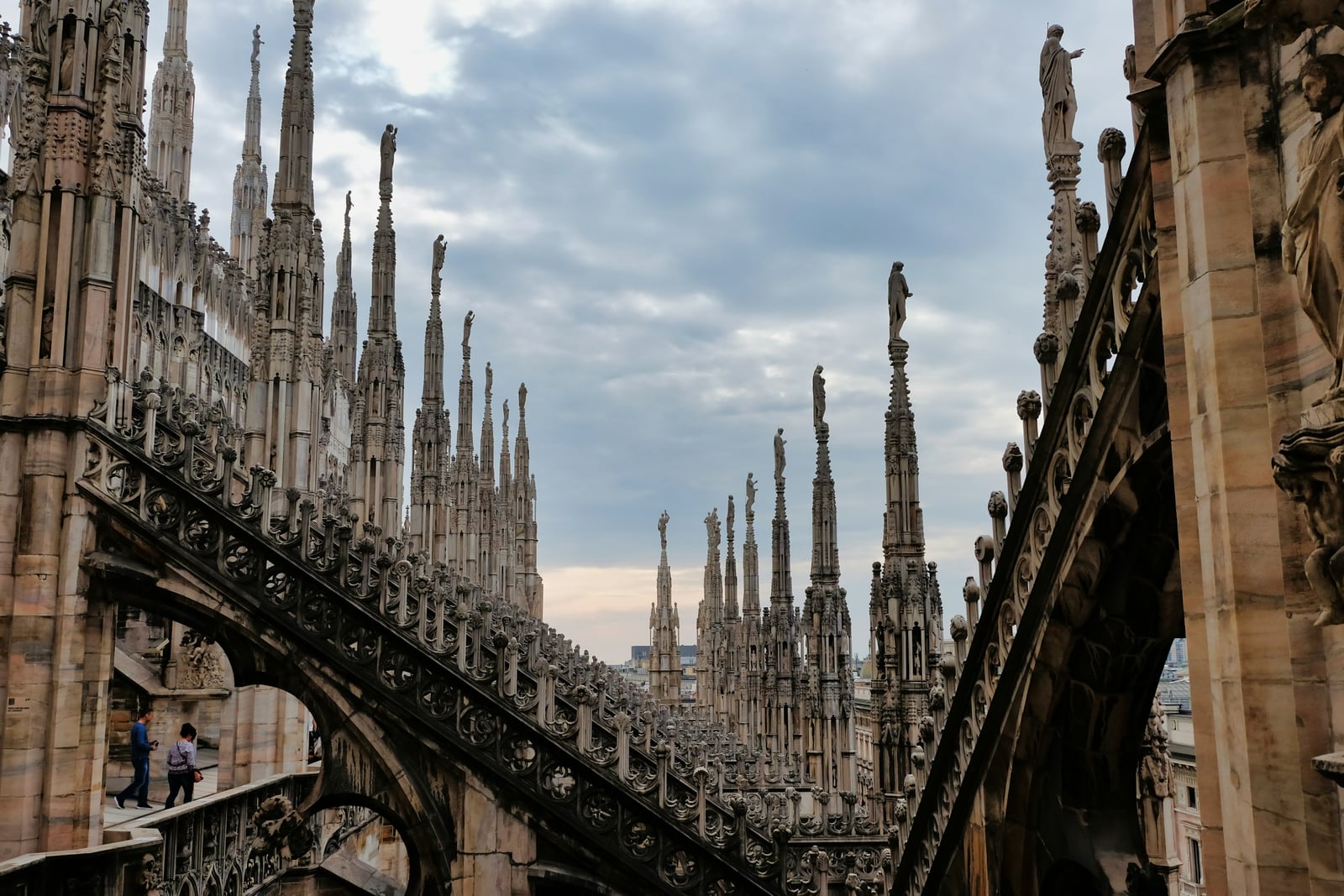
The Duomo di Milano's roof terraces cost €16 by stairs or €18 by elevator on the cathedral's March 2026 list, and the elevator only reaches the first level: the second level and the way down are stairs, for every ticket. The roof is the part not to skip, the one place you walk among the spires instead of craning at them.
The combos add the cathedral, the museum and the church of San Gottardo to the terraces, and stay valid two days, one entry per area. The cathedral and museum alone cost €10; reduced tickets run about half. The cathedral warns that unaffiliated sites can't guarantee their tickets are valid, so buy on its own portal or from a seller on its authorized list.
The real choice is stairs or elevator (the portal's "lift"), terraces alone or the combo.
| On the March 2026 list | By stairs | By elevator |
|---|---|---|
| Terraces only | €16 | €18 |
| Combo | €22 | €26 |
For bad knees, that elevator saves you the first 31 m or so of climbing and none of the descent. Two steep staircases then climb to the second level, at 45 m. Wheelchair users reach the first terrace (the back-choir area only) by the South Elevator, 10:00 - 17:00.
I took the stairs, about 250 steps on a wide stone spiral, and with sound knees that's the way to go. What stayed with me wasn't the view over the city but what sits an arm's length away and underfoot: you walk on sloping slabs of pinkish-white Candoglia marble through a forest of 135 spires, and every pinnacle that nobody down in the piazza will ever see up close is carved like lace and topped with a full-size statue. Above it all, the gilded Madonnina burns in the sun.
Inside the cathedral, shoulders and legs stay covered and hats come off; large bags and luggage stay out. On the roof, high heels aren't allowed, and on those stairs you'll want shoes you can climb in.
The complex is open every day 9:00 - 19:00, the museum 10:00 - 19:00 and closed Wednesdays. Closing operations start at 18:30 and admissions stop before that, so check the last entry for your date on the portal. A roof visit a little before sunset works only when sunset comes well before the last entry. The cathedral posts admission changes on its notice calendar, so look before you go.
A guided visit is worth it when you want the building explained, not just entered. Book one from an authorized seller, and check whether it goes up by elevator or by stairs; your knees will notice the difference.
Book a guided Duomo tour with the roof terraces
The elevator reaches only the first level; the rest, up and down, is stairs
From Piazza del Duomo, the Galleria Vittorio Emanuele II runs about 200 m to Piazza della Scala under a roof of glass and metal. You'll cross it on the way to something else, probably more than once, and that is the right way to see it: a shortcut that happens to be a landmark.
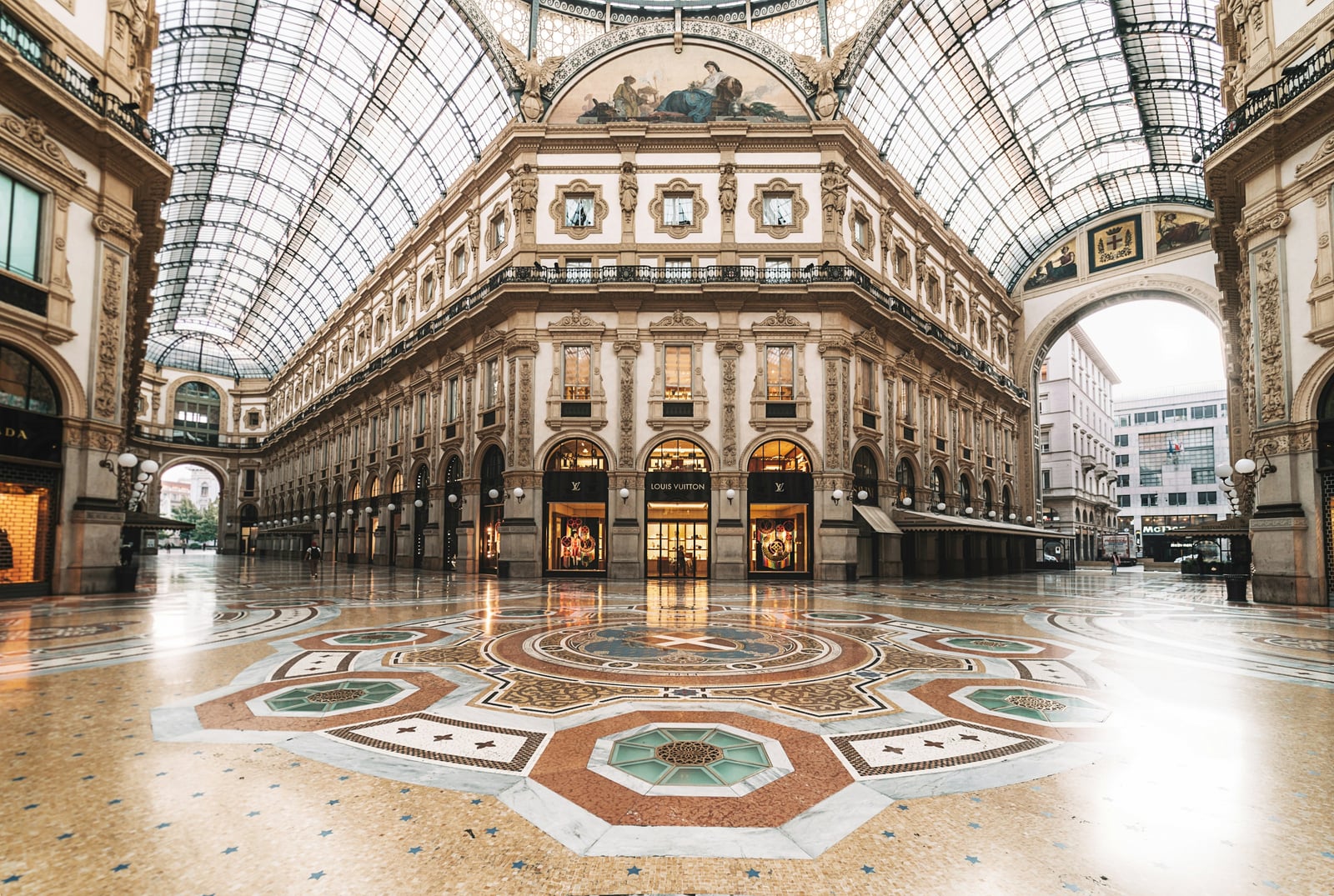
The Highline is a walk on the Galleria's roofs, on a separate ticket from the Duomo's terraces: €15 full price, free under 6, Tuesday to Sunday 10:00 - 18:00, last entry 17:30. The entrance is at Galleria 11/12, on the Piazza della Scala side, and there are stairs on the route. In light rain it stays open and keeps your money.
Around Your Last Supper Slot: San Maurizio, Sant'Ambrogio and the Castello
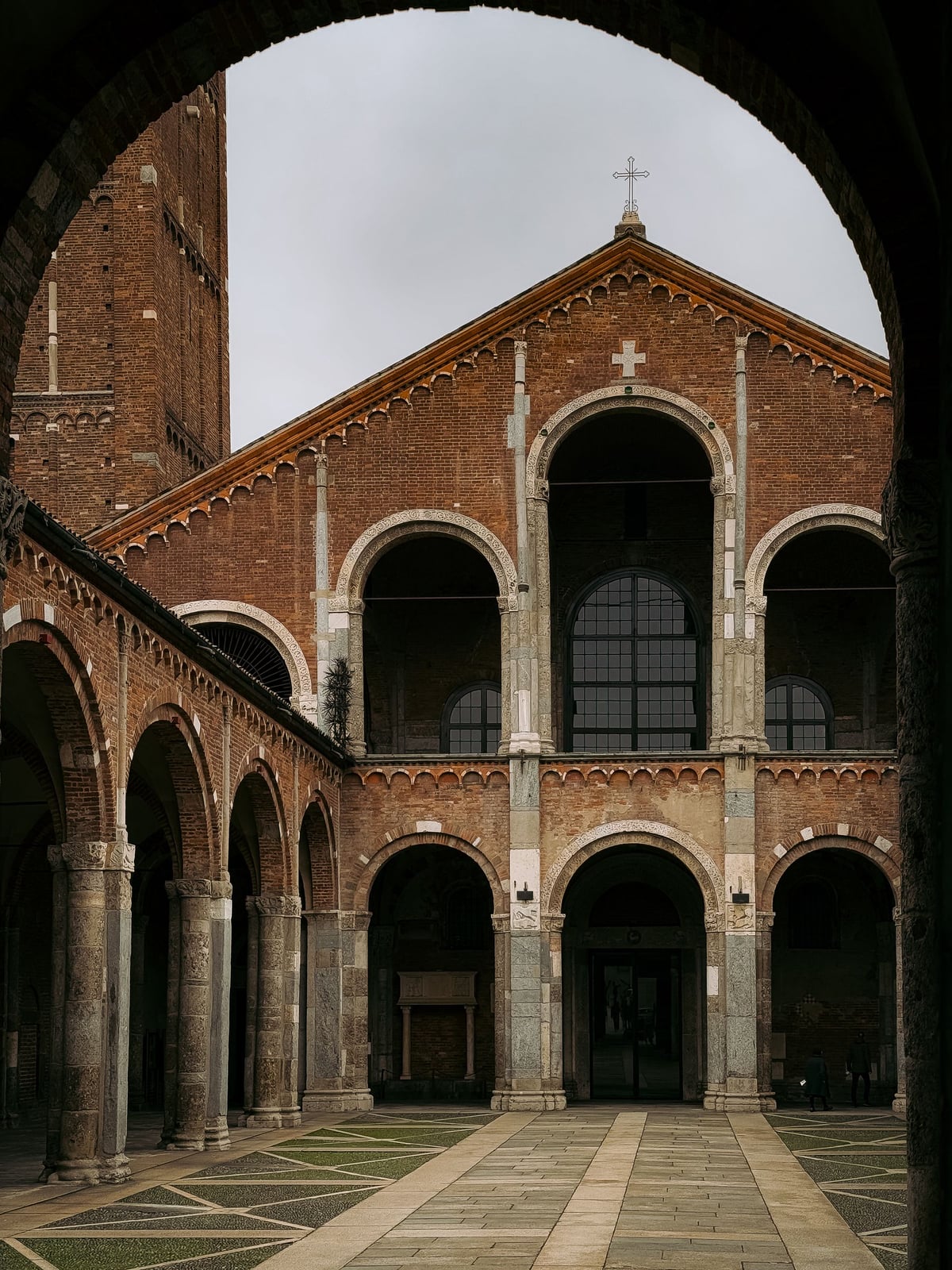
San Maurizio al Monastero Maggiore, the Basilica di Sant'Ambrogio and the Castello Sforzesco are each about 10 to 14 minutes on foot from the Last Supper, so they make the half day around your slot. The ticket fixes the hour; the neighborhood is glad to take the rest.
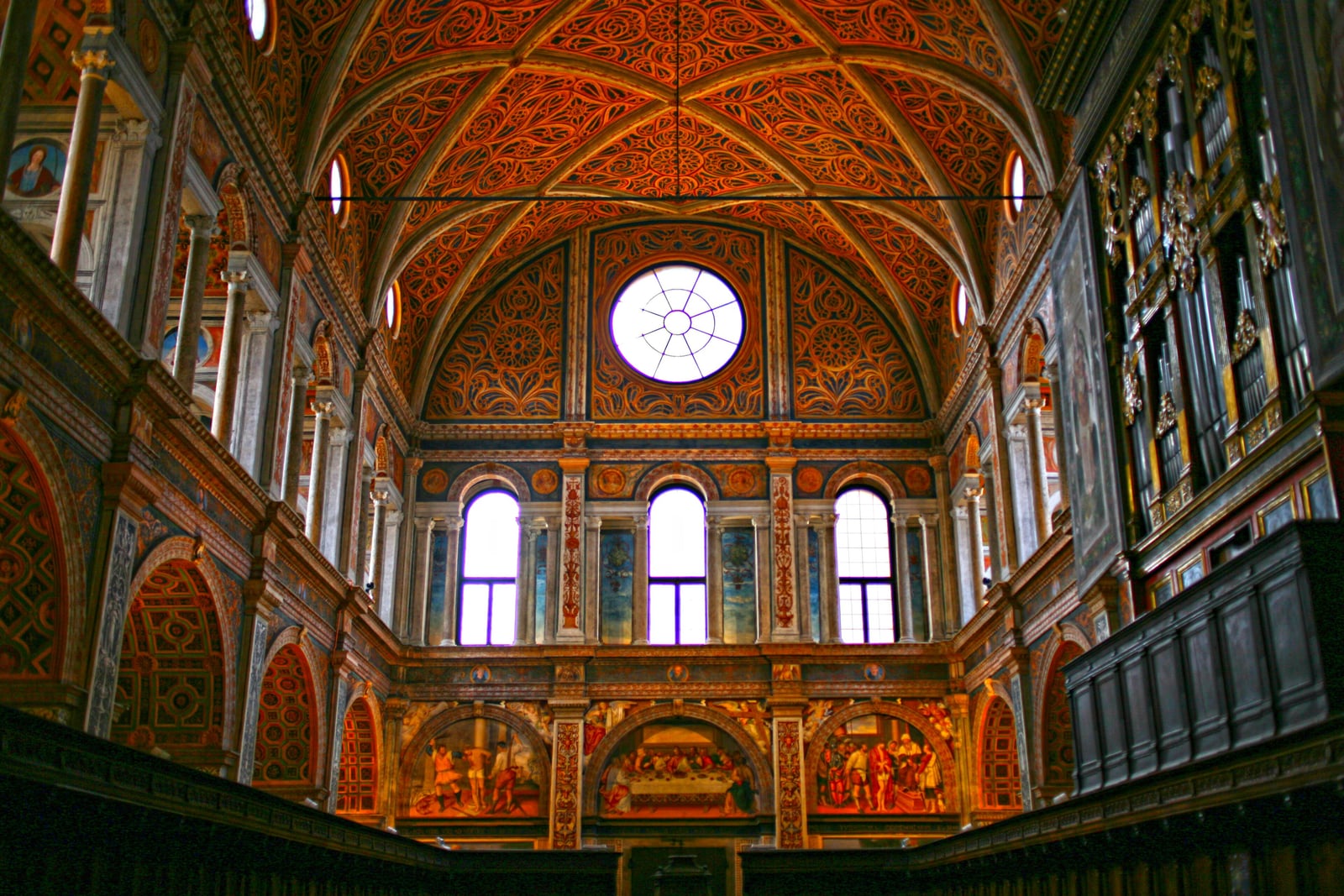
San Maurizio is a church with frescoes and a nuns' choir, on Corso Magenta beside the Archaeological Museum, about 10 minutes from the Last Supper. Of the churches on this walk, it is the one to keep if you only fit one. Entry is free and needs no booking for individuals, Tuesday to Sunday 10:00 - 17:30, last entry 17:00. Volunteers keep it open, and it can close at short notice, so check its notices page the day before. With reduced mobility, you can reach only the nuns' hall, through the museum.
The Basilica di Sant'Ambrogio, about 14 minutes from the Last Supper, is a second church worth the walk. Visits run Monday to Saturday 10:00 - 12:00 and 14:30 - 18:00, and Sundays and public holidays 15:00 - 17:00, as long as no service is under way. Plan your Last Supper slot around the midday break and the Mass times.
The Castello Sforzesco is about 14 minutes from the Last Supper. Its courtyards are open free every day, 07:00 - 19:30. The civic museums inside run Tuesday to Sunday 10:00 - 17:30, last entry 16:30, for €10, free under 18. The battlements walk (the Merlate) is a separate €10, with entries Tuesday to Sunday 10:00 - 17:00 in groups of up to 25 every 20 minutes. I stayed a block off Via Dante, near the castle, and this end of the center suited me well.
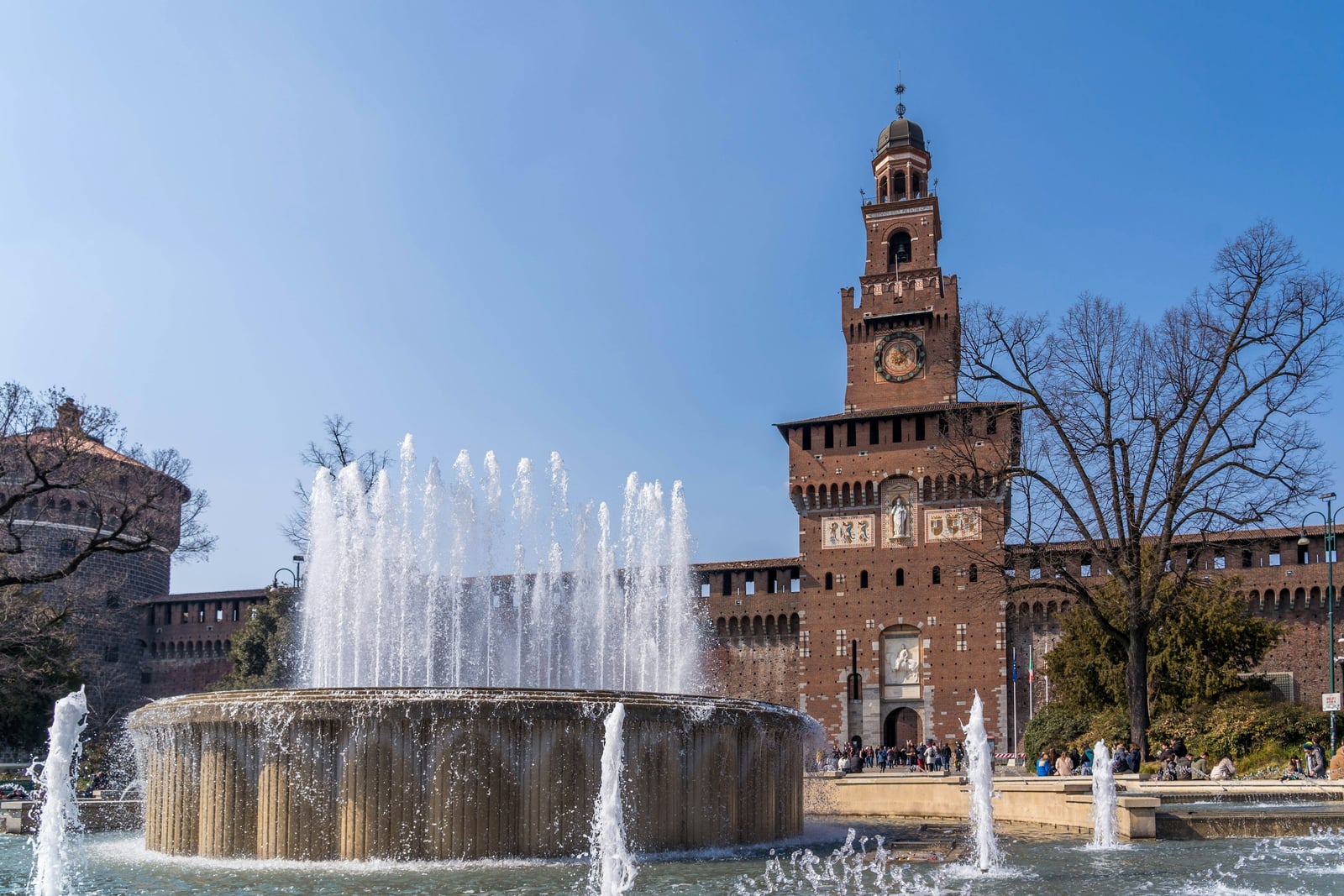
The park behind the Castello is where the half day can end, ticket or no ticket, once your feet have had their say.
Brera, the Ambrosiana and La Scala's Museum: the Second Day
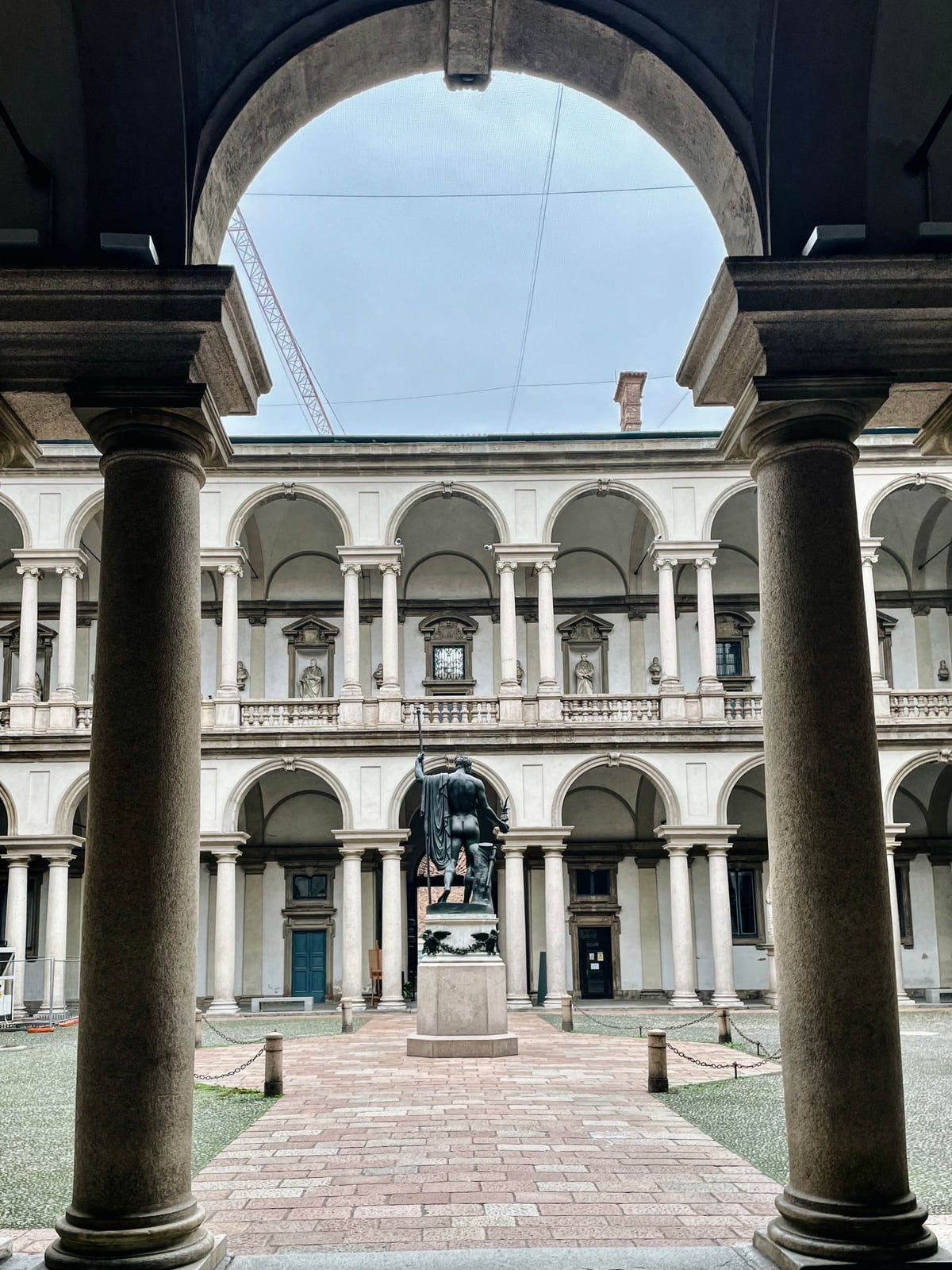
Two picture galleries, the Pinacoteca di Brera and the Pinacoteca Ambrosiana, plus La Scala's museum, fill a second day in Milan. Neither gallery wants the whole day, big as Brera is. After a day of cathedral stairs, this one goes at your own pace.
Brera's full ticket costs €20 and covers Palazzo Citterio's collection too, the same day or any of the next six days, which is more patience than most tickets show. Some visitors aged 18 to 25 pay a reduced €4 (bring a valid document), and anyone under 18 goes free. It opens Tuesday to Sunday 8:30 - 19:15, last entrance 18:00. Save time for the streets around it, a handsome, arty neighborhood that earns a slow walk even if you never go inside.
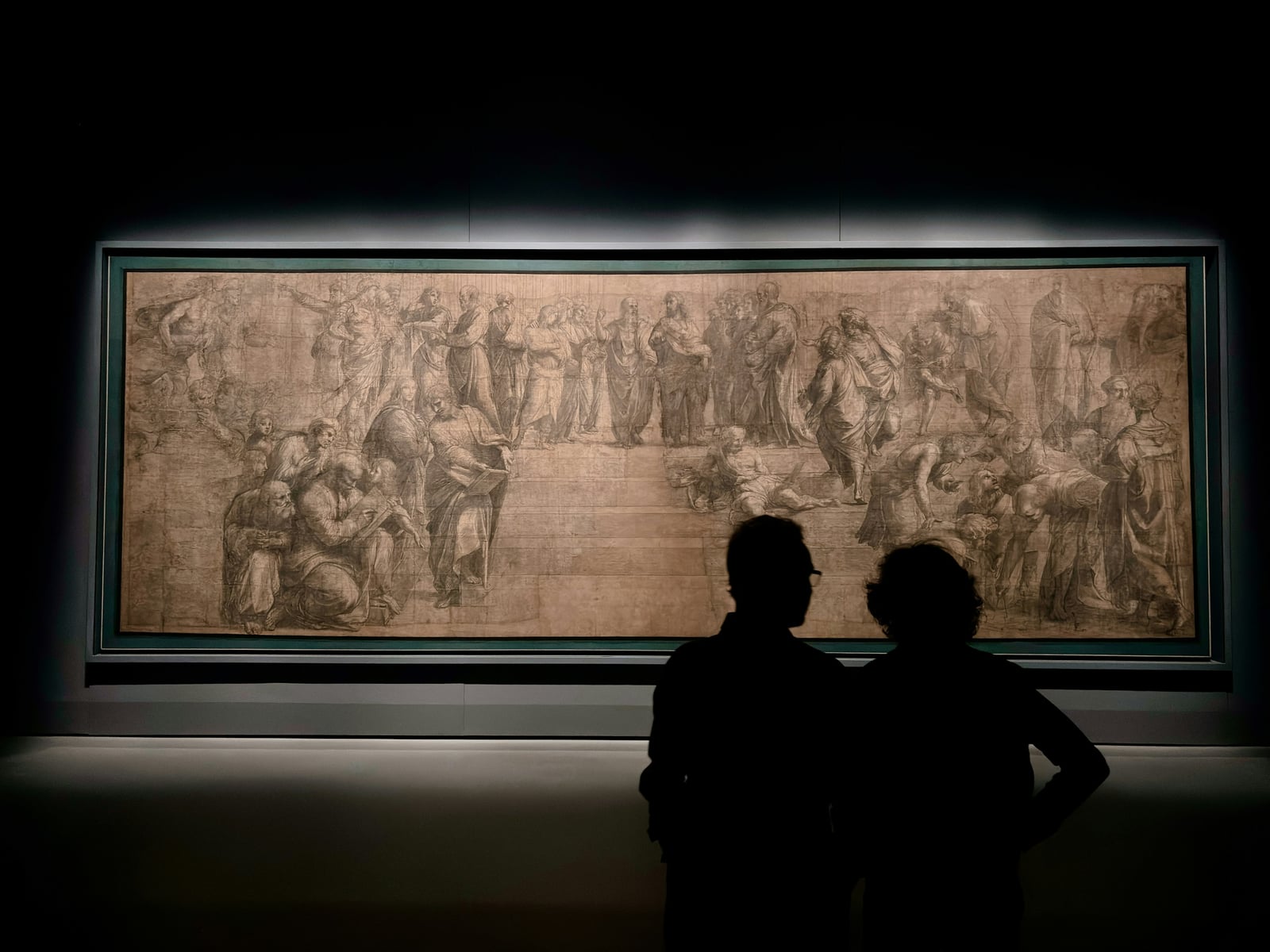
The Ambrosiana, about 7 minutes on foot from the Duomo, is small and an easy yes. It holds Caravaggio's Basket of Fruit, Raphael's preparatory cartoon for The School of Athens, Leonardo's Portrait of a Musician and drawings from the Codex Atlanticus, so a Last Supper sellout still leaves you a Leonardo. One ticket now covers the gallery and the crypt of San Sepolcro: €20, reduced from €5. It opens 10:00 - 18:00, the ticket office shuts at 17:15, and its day off is Wednesday, not Monday. Small is not the same as quick, though: it can swallow a whole afternoon.
The museum of La Scala, Milan's opera house, opens every day 9:30 - 17:30, last entry 17:00. A full ticket is €12 and an open-date one €15, good through December 31, 2026; the reduced rate is €8, children under 6 go free, and every price is before the online fee. The draw is the look into the hall from a box, which happens only when no rehearsal, show or public event is on, so treat it as a bonus. It closes December 7, 25 and 26, January 1, Easter, May 1 and August 15. On December 24 and 31 it shuts early, at 15:00 (last entry 14:30).
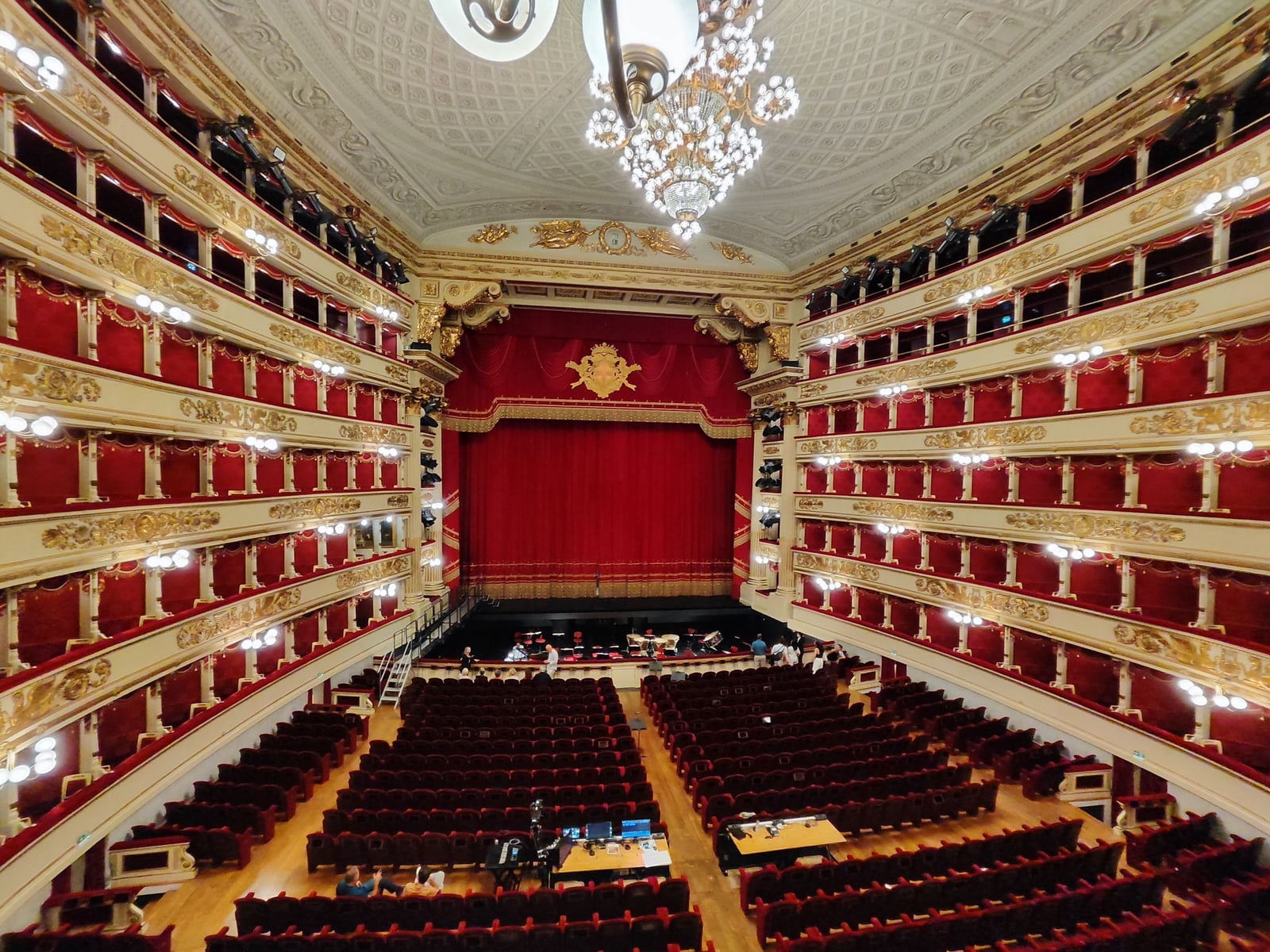
If you only have the energy for one, pick by appetite. Paintings in depth: Brera. A Leonardo and a Caravaggio in a small museum: the Ambrosiana. Opera people: La Scala, box view or not.
What's Open in Milan on a Monday, and the Free Sundays to Plan Around
On a Monday in Milan, the Duomo, its museum, the Ambrosiana, La Scala's museum and Fondazione Prada's main venue at Largo Isarco stay open, while the Last Supper, Brera and the Castello museums close. That makes Monday a Duomo-and-La-Scala day rather than a lost one, and the Castello's courtyards, open every day, never got the memo.
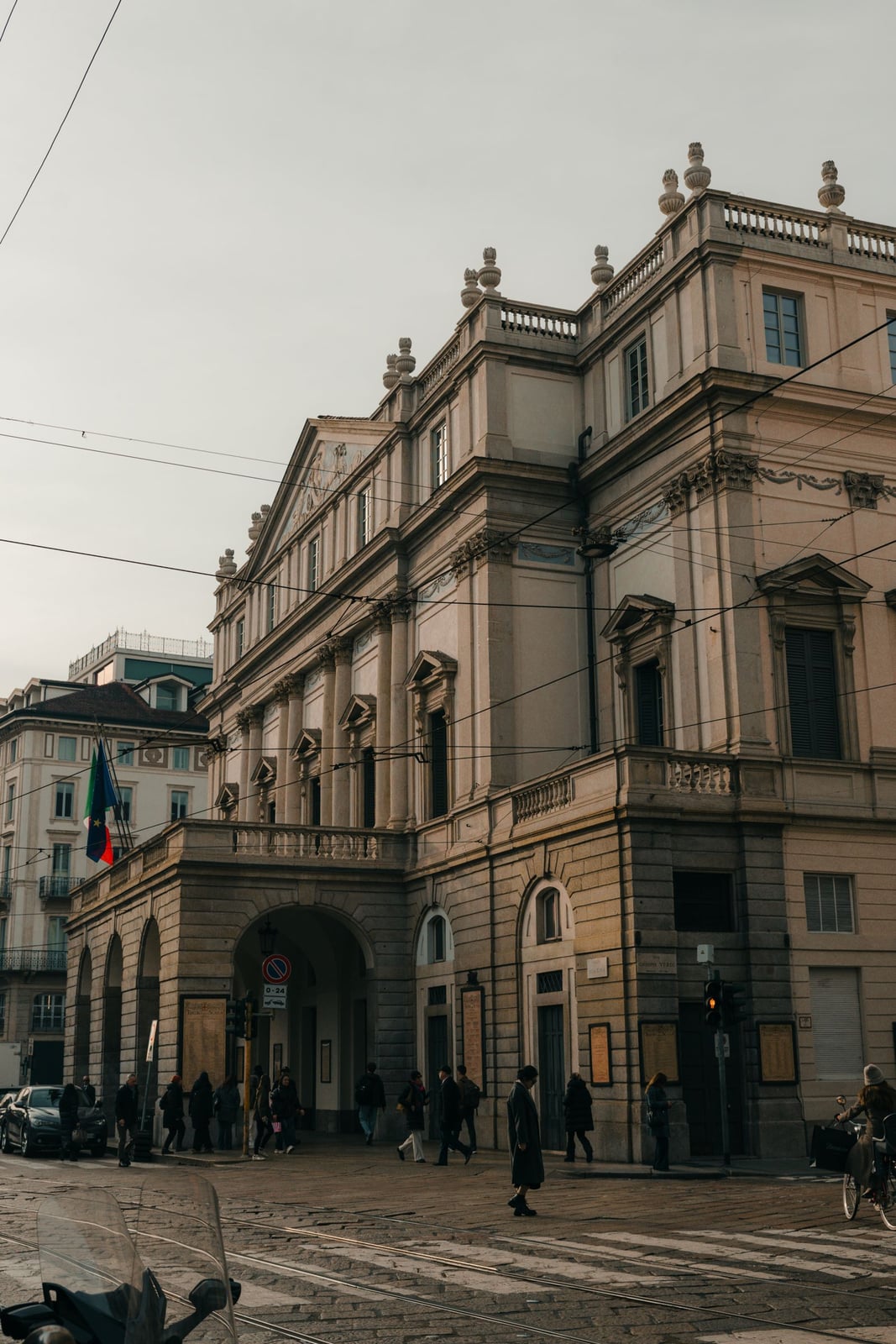
Wednesday is the other trap: the Duomo's museum and the Ambrosiana close, and the cathedral sells a Duomo-only ticket that day. Day by day, the closures run like this:
| Day | Closed |
|---|---|
| Monday | The Last Supper, Brera, the Castello museums, San Maurizio, the Highline, Villa Necchi (a 1930s villa), the HangarBicocca exhibition space, the Monumentale (except on public holidays) |
| Tuesday | Fondazione Prada, Villa Necchi, HangarBicocca |
| Wednesday | The Duomo's museum, the Ambrosiana, HangarBicocca |
On the first Sunday of the month, entry is free at the Last Supper, Brera and the Castello's museums. The Last Supper's free entry is online only, from 12:00 the Wednesday before, up to 5 tickets, with no groups and no guided tours. Brera's needs a booking too, and the free places can be gone before you think to look. The Castello's is free for everyone, and the castle adds a free second Tuesday for visitors up to 25. The Duomo's museum goes free on the last Sunday of the month from September 27, 2026, subject to change, booked from the Tuesday before. The cathedral goes free on February 2, 2027 (book from January 26) and March 18, 2027 (book from March 11), and its museum is free those days too, subject to availability at the museum's ticket office on the day. Grab a free day if one falls on your dates; build the plan on the paid ones.
If your trip lands in December, read how Milan's Christmas markets compare with the rest of Italy's before you give one of your days to them.
A Third Day: Porta Nuova, Prada, the Monumentale and San Siro
A third day in Milan belongs to the city as it lives now: Porta Nuova's towers, Fondazione Prada, Pirelli HangarBicocca, the Cimitero Monumentale or a night at San Siro, unless you'd rather spend it out of town. The first two days were old rooms; this one is the city that came after.
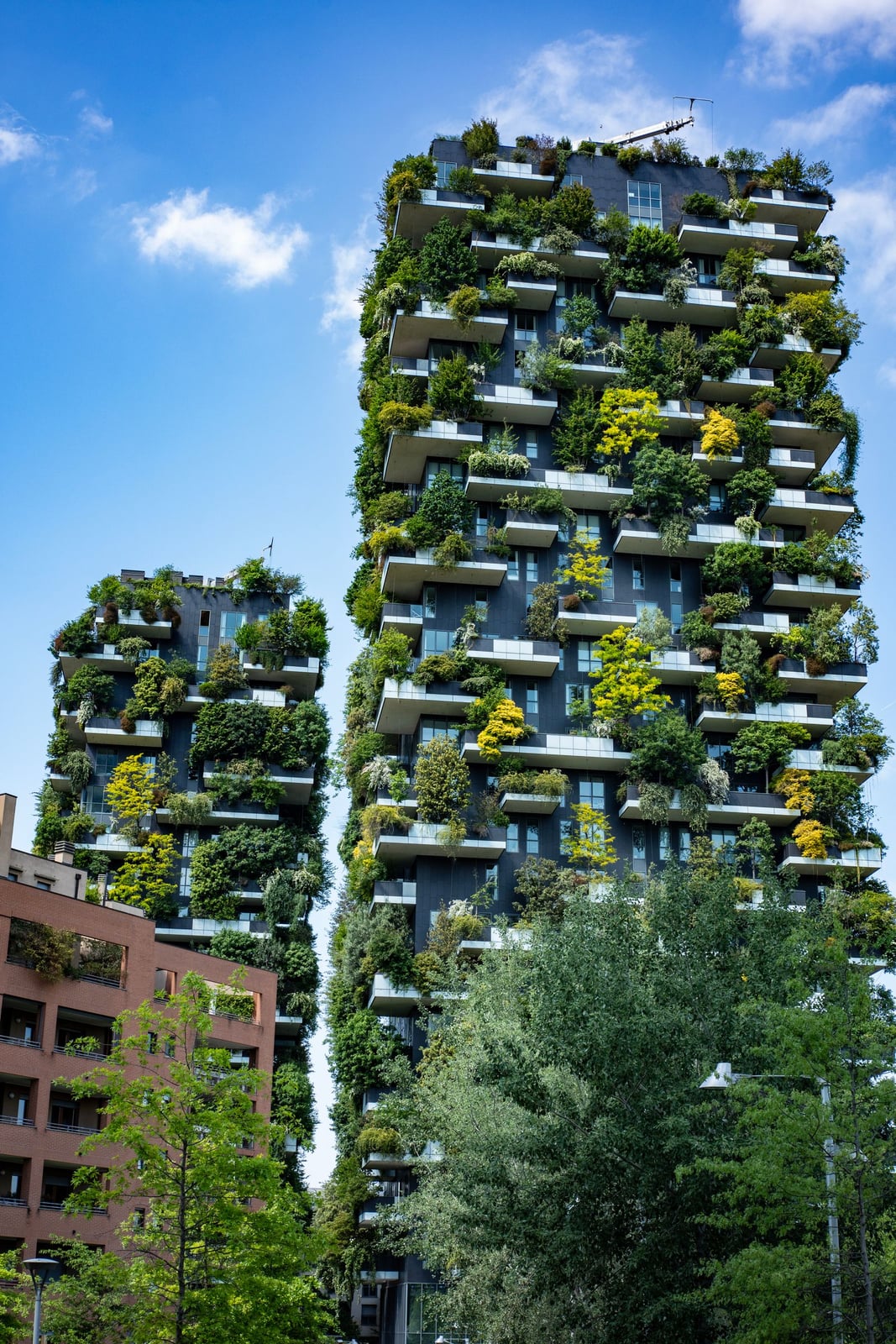
Porta Nuova is the district around the Bosco Verticale, two residential towers planted with trees. Walk over and look up at them.
Fondazione Prada's main venue, at Largo Isarco 2, opens 10:00 - 19:00 every day except Tuesday. Its €15 ticket is good there for 30 days. The Osservatorio, the foundation's second venue in the Galleria, closes between shows, most recently until December 3, 2026, and keeps hours of its own, so check that it's open and what your ticket covers there. At either venue, sales stop an hour before closing. Pirelli HangarBicocca is free to enter, open Thursday to Sunday 10:30 - 20:30, last admission 19:30. A free online reservation is suggested, not required, and gets you priority in your time slot.
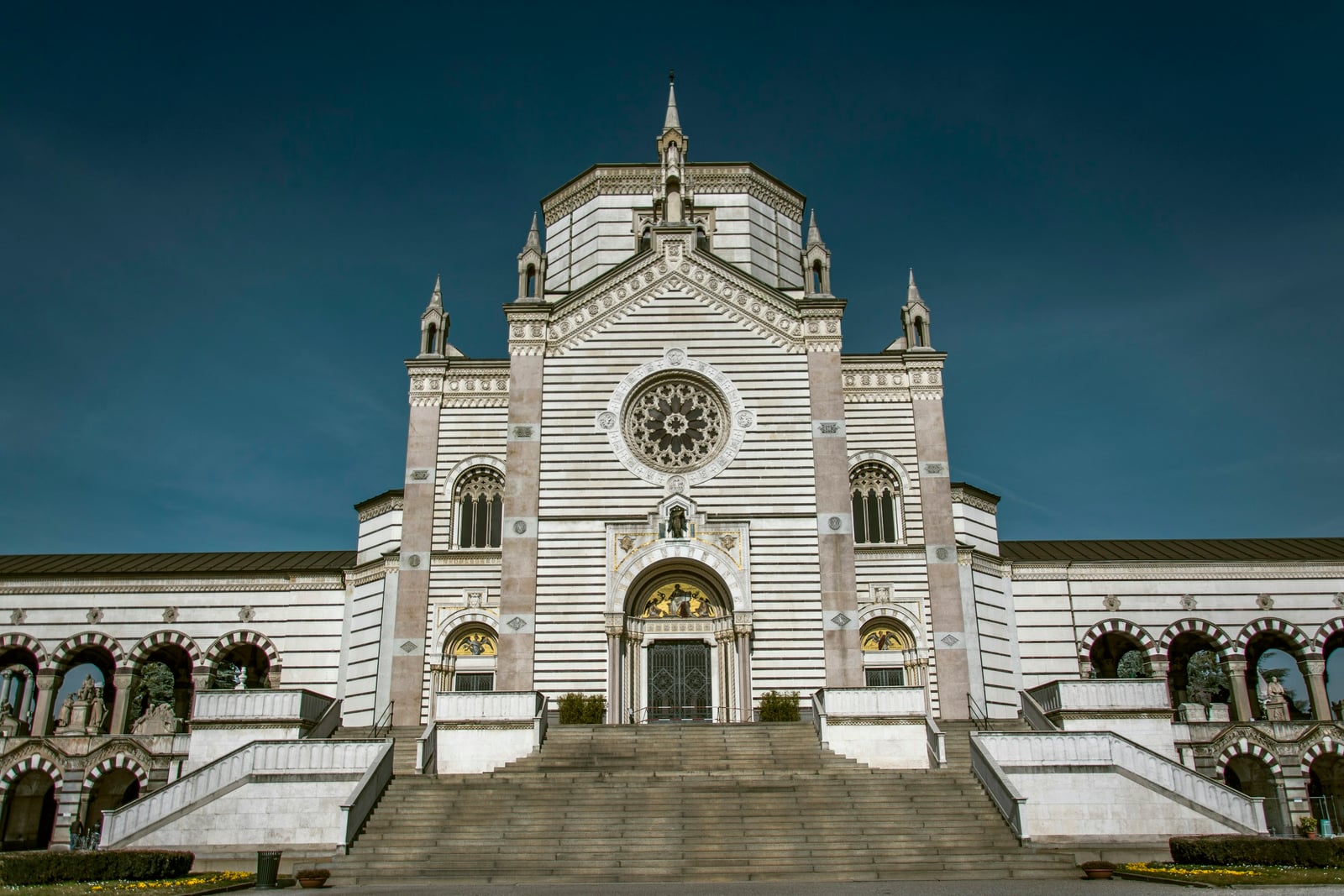
The Cimitero Monumentale, about 37 minutes on foot from the Duomo, is a cemetery worth the walk out, and a better use of a dry afternoon than another museum. Check its opening hours first.
Villa Necchi Campiglio, a 1930s villa with its garden in the heart of Milan, is the stop for the design-minded. It opens Wednesday to Sunday 10:00 - 18:00, last entry 17:00. Tickets are €15, €18 with free cancellation up to 24 hours ahead, or €22 with an hour's guided visit of the interiors.
San Siro is for a derby night, when Milan's two clubs play each other, or for the museum and tour by day. The tour runs daily 9:30 - 17:00 November to March and 9:30 - 18:00 April to October, and match days change the hours or close it. The M5 runs to San Siro Stadio. Tickets and prices are on the stadium's official ticket site.
Or leave town: Bergamo and the lakes are among the day trips from Milan; check which ones fit a day and which want a night.
Getting Around Milan: Walk the Center, Ride the Metro, Leave the Bag
Getting around Milan's center is mostly a walk: from Piazza del Duomo, Brera is about 15 minutes on foot, the Castello about 20 and the Last Supper about 24, and the metro covers the rest. Bring shoes you would happily walk in all day, because in Milan you will.
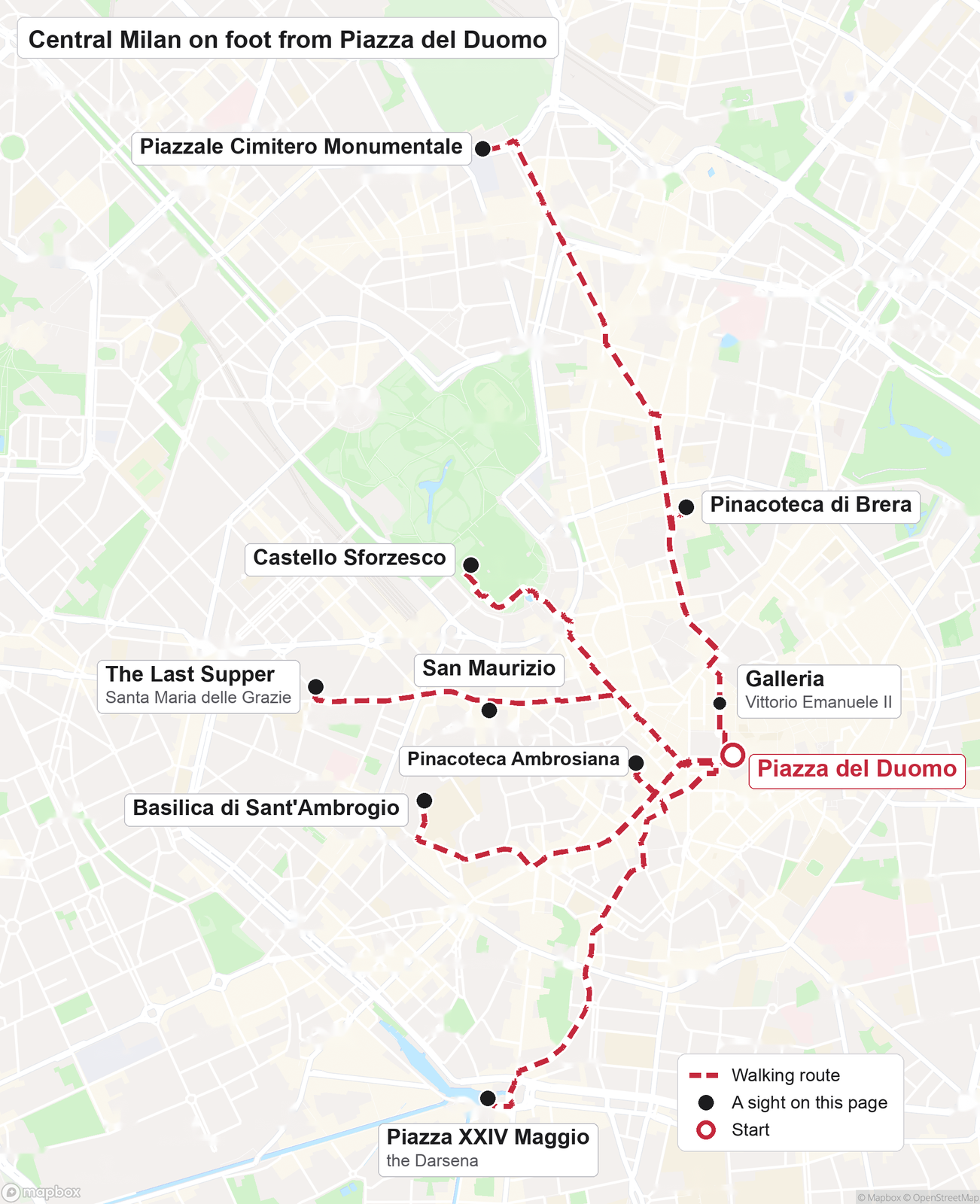
For anything farther, the metro is quick and well kept. A single ticket costs €2.20 and lasts 90 minutes; a day ticket is €7.60 for 24 hours from the first validation; a three-day ticket is €15.50, good to the end of service on the third consecutive day. All three are the fares labeled Mi1-Mi3, the three-zone tickets that cover all of Milan, and they're valid on every metro line. Duomo station sits on two of those lines, M1 and M3.
⚠️ Warning
Pickpockets work Milan's metro cars. Keep your bag in front of you, not on your back, and once you're aboard, move away from the doors toward the middle of the car. Do it on every ride, the short ones included.
If you arrive late morning and leave on an afternoon train, drop the suitcase in storage near Milano Centrale, the main station, before the sights. Neither the Last Supper nor the cathedral lets it in, and towing it between them is nobody's idea of sightseeing.
The storage points around the station keep their own hours, and some shut early, so check the drop point's closing time against your train before you book.
Book luggage storage near Milano Centrale
At the main station: drop the bag before the sights, pick it up for the train
Landing at Malpensa or Linate? The airport trains and the late check-in trap sit with the hotel advice.
Evenings in Milan: the Navigli, Aperitivo and the Long Walk Back
Evenings in Milan run to the Navigli, the canal district around the Darsena (the basin at the head of the canals), about 25 minutes on foot from the Duomo, for dinner, a drink or a walk along the water. It is the obvious evening, and obvious comes with company: the canal can get more crowded than is pleasant.
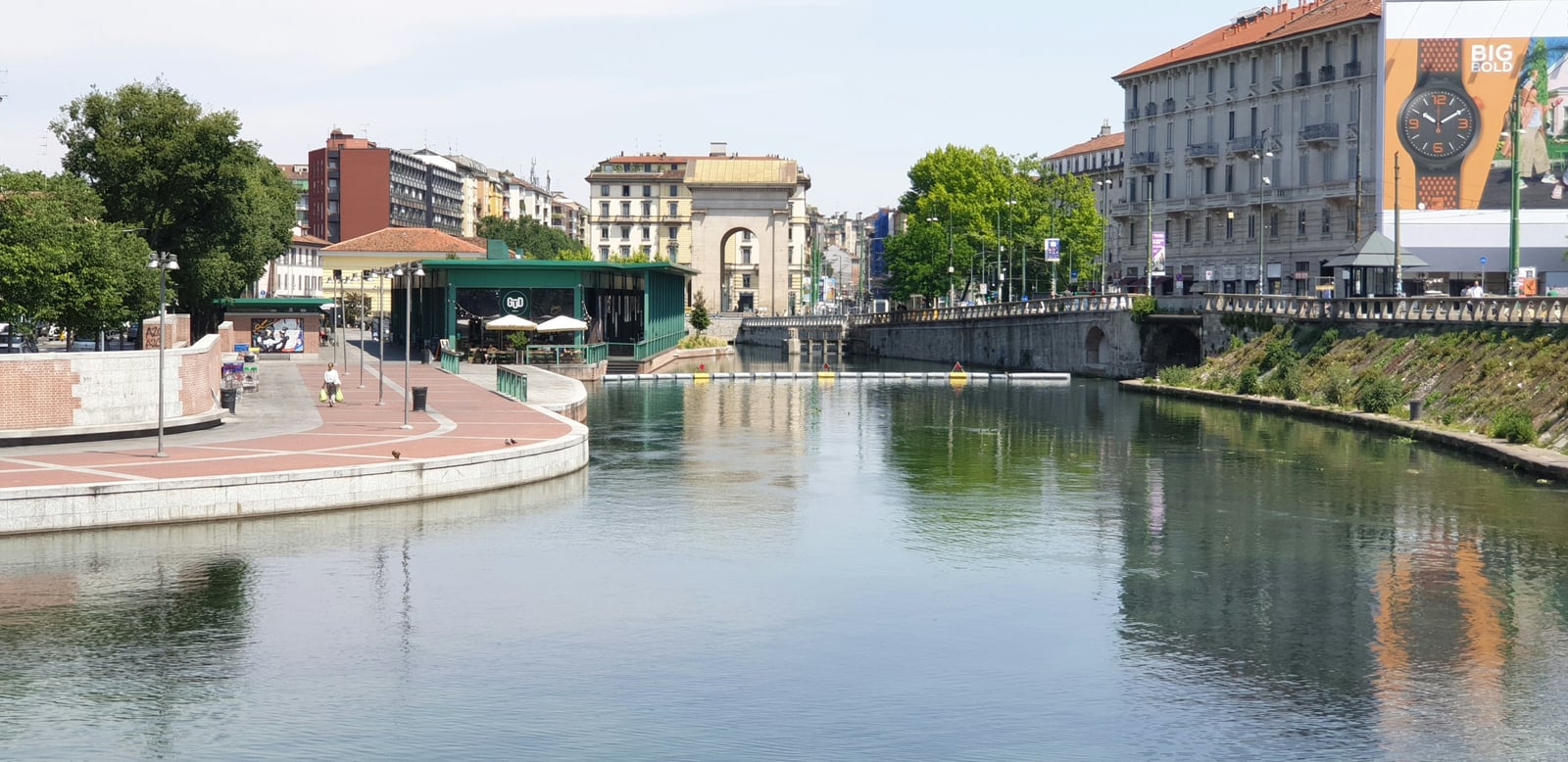
Milan's bars and restaurants are excellent, and they charge like it, so decide what the evening costs before the menu decides for you. The aperitivo hour, for an early-evening drink, is the time to be out, and the canal has restaurants enough along the water for whatever comes after.
The evenings I'd send a friend to are off the canal. For a drink, N'Ombra de Vin at Via San Marco 2 in Brera, a wine bar under the vaults of an old monastery refectory: half the crowd stands at high tables out on the street with a glass of Franciacorta (Lombardy's sparkling wine), the other half heads down the stone stairs to the shelves of bottles, where a plate of aged Parmigiano turns the glass into supper. For dinner, Trattoria Milanese at Via Santa Marta 11, in the old lanes west of the Duomo: wood paneling, white tablecloths, saffron risotto with ossobuco (braised veal shank) and a breaded veal cotoletta on the bone, and Milanese families three generations to a table. It's loud and full and not the least bit touristy, so book ahead.
The best of the evening, though, is the way home: walk back from the canal by a route you didn't plan, past Chinatown, the Porta Nuova towers or Brera, whichever lie between you and your bed.
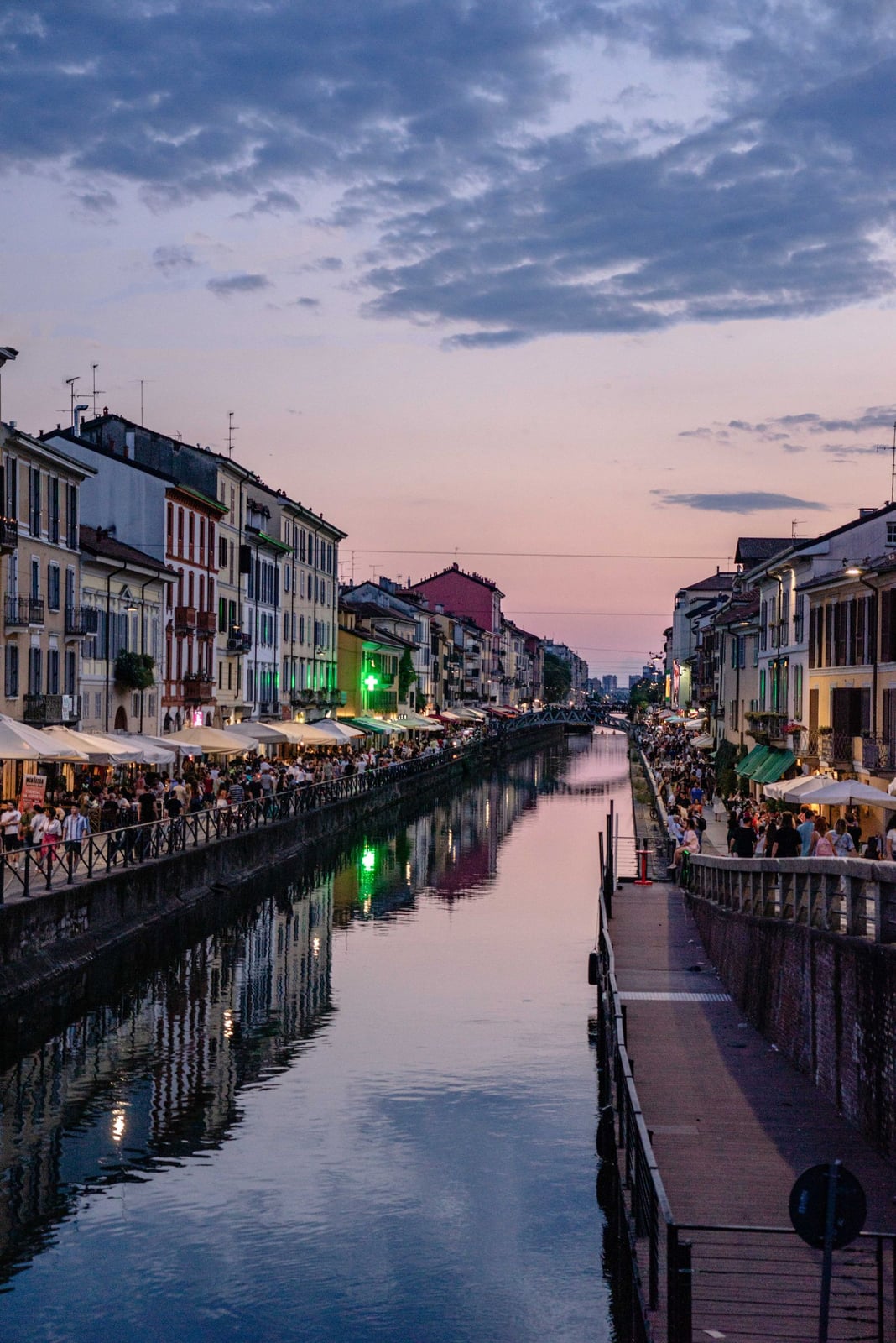
Dinner done, the canal shoulder to shoulder, you leave it on foot by whichever street comes next. The people around you are busy with their own evening, and none of them is busy with yours. Nothing is being shown to you. The city is just being lived in, and you walk through the middle of it in the right shoes without once thinking about them. Then a corner you never planned turns out to be yours, and you are back where you sleep.
It is an odd sales pitch for a city - it ignores you, so come anyway - but it is the one Milan makes, and on foot it works.
Things to Do in Milan: Common Questions
- How many days do you need in Milan?
- Two for most first visits: the Duomo, its roof and the Castello on one day; Brera, the Ambrosiana and the canals on the other. One day covers a stopover, and a third suits museum readers and slow walkers.
- Is Milan worth visiting?
- Yes, if you come for what it is: a working city with the Last Supper, the Duomo and a run of small museums. Even without a Last Supper ticket it fills two good days. If you want an old town, a short trip can pass it by.
- How do you get Last Supper tickets if they're sold out?
- Watch the museum's news page for the next batch of dates, then the Wednesday 12:00 release of tickets for the following week, online, for single visitors. Next, the museum's own tour, when places remain, and only then a tour that includes the ticket. A ticket of your own needs no tour.
- What is open in Milan on a Monday?
- The Duomo and its museum, the Ambrosiana, La Scala's museum, Fondazione Prada's main venue at Largo Isarco and the Castello's courtyards. The Last Supper, Brera and the Castello's museums are closed, and so is the Monumentale cemetery unless the Monday is a public holiday.
- Is the Duomo rooftop worth it, and is there a dress code?
- Yes: the roof is the part of the Duomo not to skip. The elevator reaches only the first level; the rest of the climb and the whole way down are stairs. Inside the cathedral, shoulders and legs stay covered and hats come off.
Get the Last Supper ticket if the dates allow, and let its slot pin down one half day. The rest of Milan asks less of your calendar and more of your feet.