 George Mandrovny
Is Pompeii Worth Visiting? Yes, If the Clock Plans the Day
Is Pompeii worth visiting? Yes, for nearly everyone who plans the day by the clock: be at the gate for the 9:00 opening, give it about four hours, and know that in winter most of the houses inside shut before the gates do.
- The hours: in at 9:00, ahead of the noon crowd and the heat. About four hours suits most visitors; the keen give it the whole day.
- The ticket: a day ticket carries your name and lets you in once. The park has announced a single €26 ticket for all its sites from January 1, 2027, valid 30 days.
- The trap: in winter the last entry is 15:30, and most houses let their last visitors in at 16:00.
- Bags: nothing larger than 30x30x15 cm goes in.
- The calmer alternative: Herculaneum, smaller and done in a few hours, on the same train line.
Pompeii is worth a visit if you want a whole Roman town to walk rather than one monument to stand in front of: the shops, the streets and the houses still read as a place where people lived. The catch is size. The town is bigger than anyone's day, so the clock, not the map, decides what you see.
The honest no comes first. Walk in at midday with no plan and nobody to tell you what you're looking at, shuffle through the crowds and the lines, and it can shrink to piles of old rock; some come away preferring Paestum. The yes is the rest of it. Someone who explains the ruins as you walk can win over even the person in your party who dreaded the whole idea, and a day given to Pompeii pays you back.
How Many Hours at Pompeii, and Which Ones
Pompeii takes about four hours for most visitors, and the best four start at the 9:00 opening, before the noon crowd and the worst of the heat. The number of hours matters; which hours matters more.
Four hours is the common mark: the floor for some, and for others about where sightseeing stamina gives out, a break included. Archaeology lovers stretch it to four to six to fit in the Villa of the Mysteries and the House of the Vettii, since four can leave you wanting two more. Half a day suits others perfectly. The one plan I'd skip is two hours on your own; the site warrants a full day if you mean to understand it rather than check it off. Your feet end the visit long before the city does.
I walked in at the 9:00 opening on an autumn morning, through Piazza Esedra rather than the crowded Porta Marina. For the first hour and a half I dutifully followed the numbered stops in the park's MyPompeii app, then put the phone away: waiting in a crowd at every narrow doorway for a faded fresco wore me out faster than turning off into the empty side streets, and next time I'll go on my own again. My legs gave out almost exactly four hours in, around 13:00, once the noon sun on streets without a single tree and the uneven lava paving had done their work. My head wanted to stay; my feet didn't.
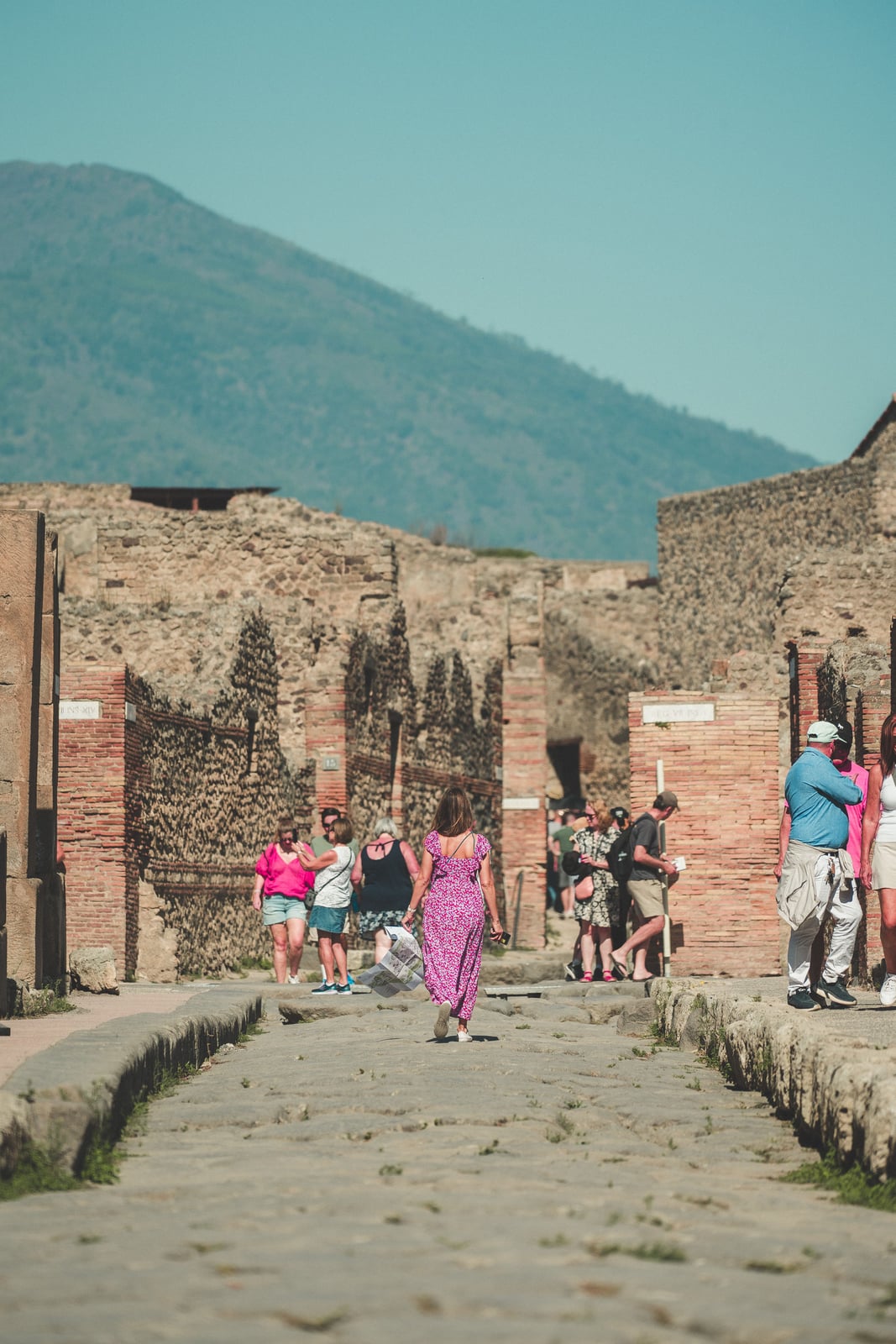
The park caps the day at 20,000 entries, a ceiling rather than a forecast, but the streets still fill by noon, even in late December. There is little shade anywhere, in peak summer the heat is the heat-exhaustion kind, and September still gets to people who normally shrug heat off. Bring water, a hat, sunscreen and your own shade, which in practice means a small umbrella.
The park keeps two timetables a year, and most of the houses inside keep a shorter one of their own in winter:
| Season | Opens | Last entry | Gates close | Most houses inside |
|---|---|---|---|---|
| Winter (October 15 - March 15) | 9:00 | 15:30 | 17:00 | Last access 16:00 |
| Summer (March 16 - October 14) | 9:00 | 17:30 | 19:00 | Not on the current (winter) list |
Three rules follow. In winter, arriving after 15:00 leaves at most half an hour to get through the gate, with most houses shutting soon after: a lot of ticket for a short visit. In summer, a late-afternoon entry is the other way around the heat, but the park's current list gives no summer hours for the houses, so don't count on them staying open until the gates close. And avoid Sundays, above all the free first Sunday of the month. The park closes on December 25 and January 1, and on any other day it announces.
The Ancient City: Shops, Streets and the Houses That Close First
Of all the things to do in Pompeii, nearly every one is a walk: down the streets past the shops, across the Forum, and into the houses, where frescoes and courtyards turn ruins back into rooms. What shapes the day is the order you take them in.
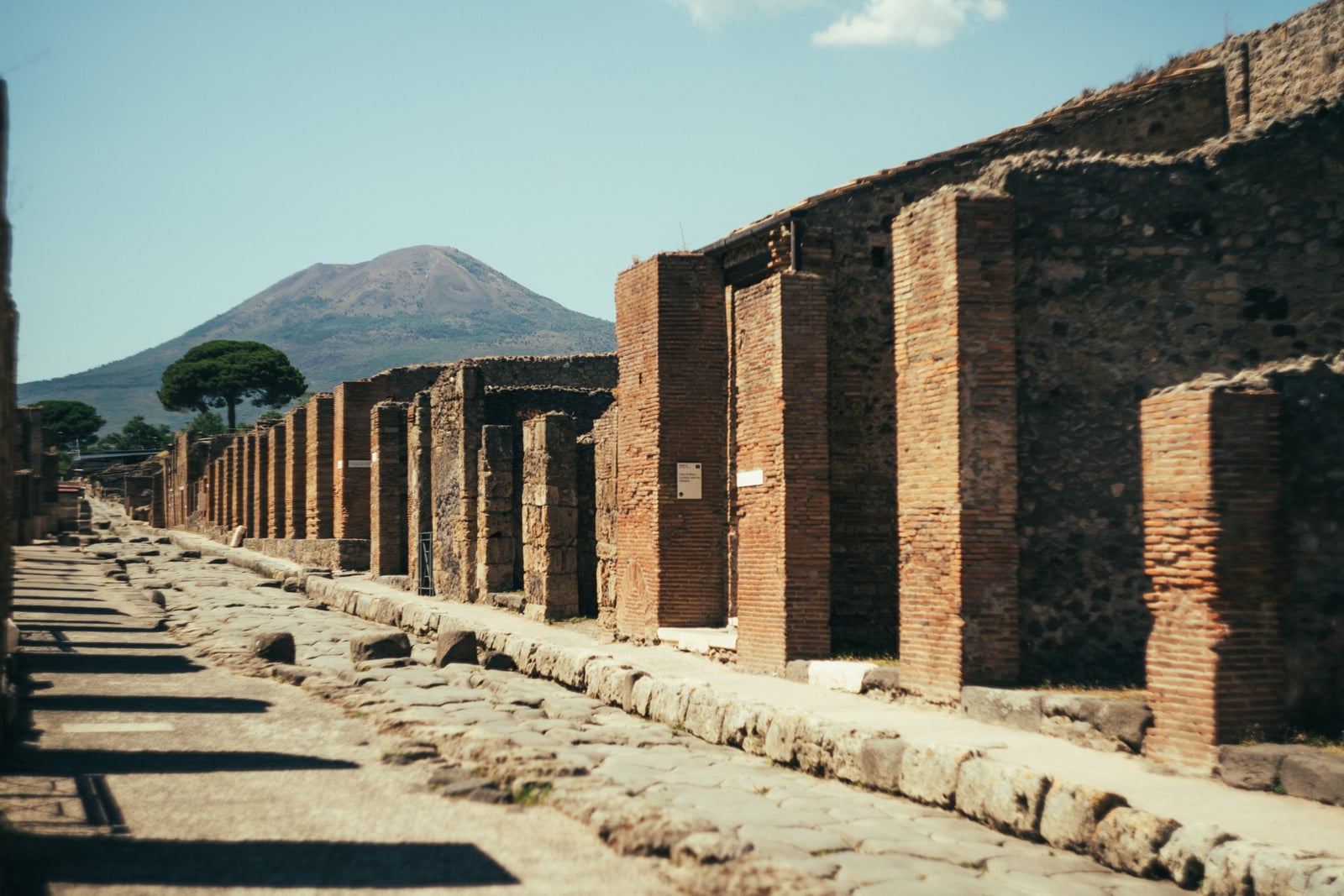
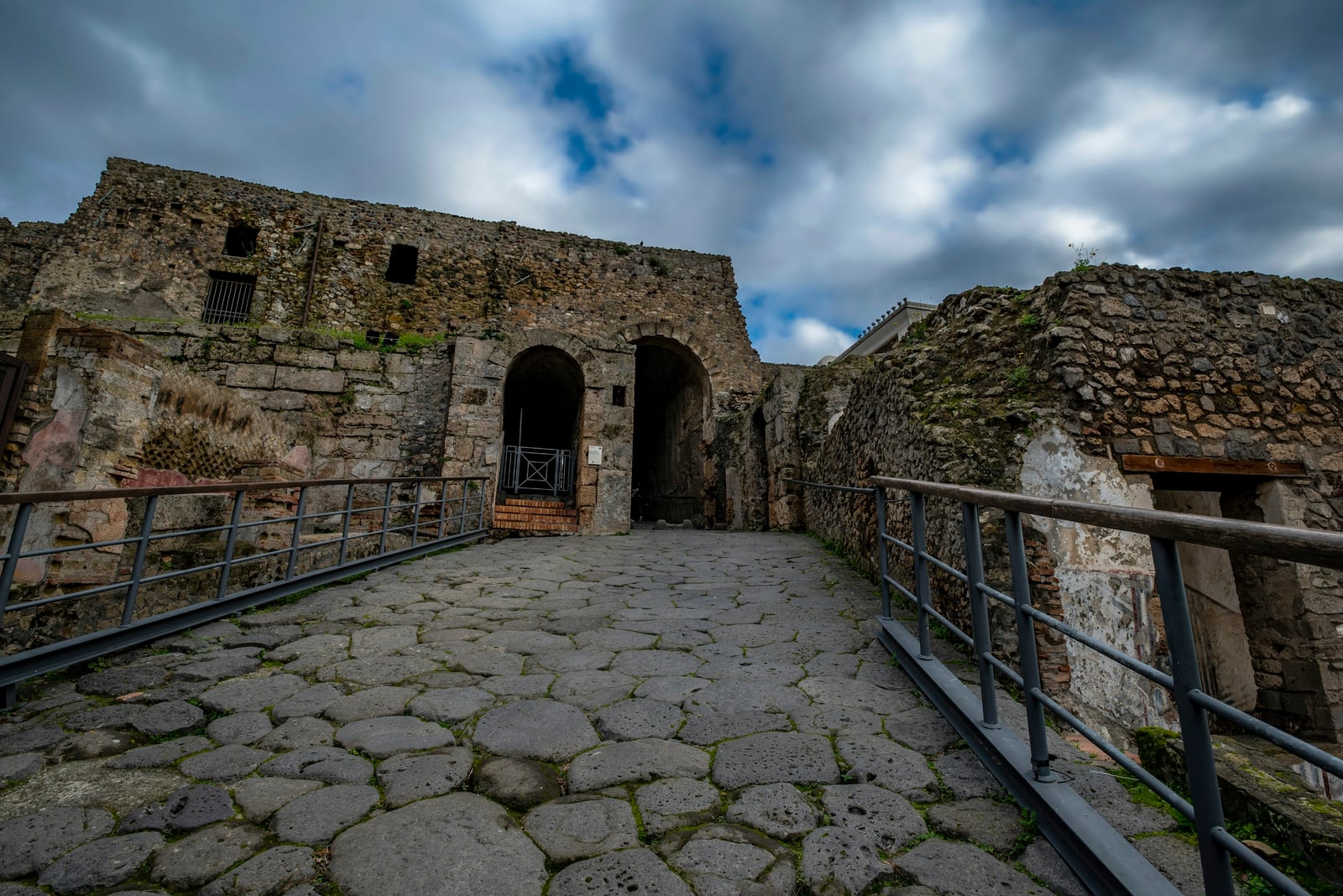
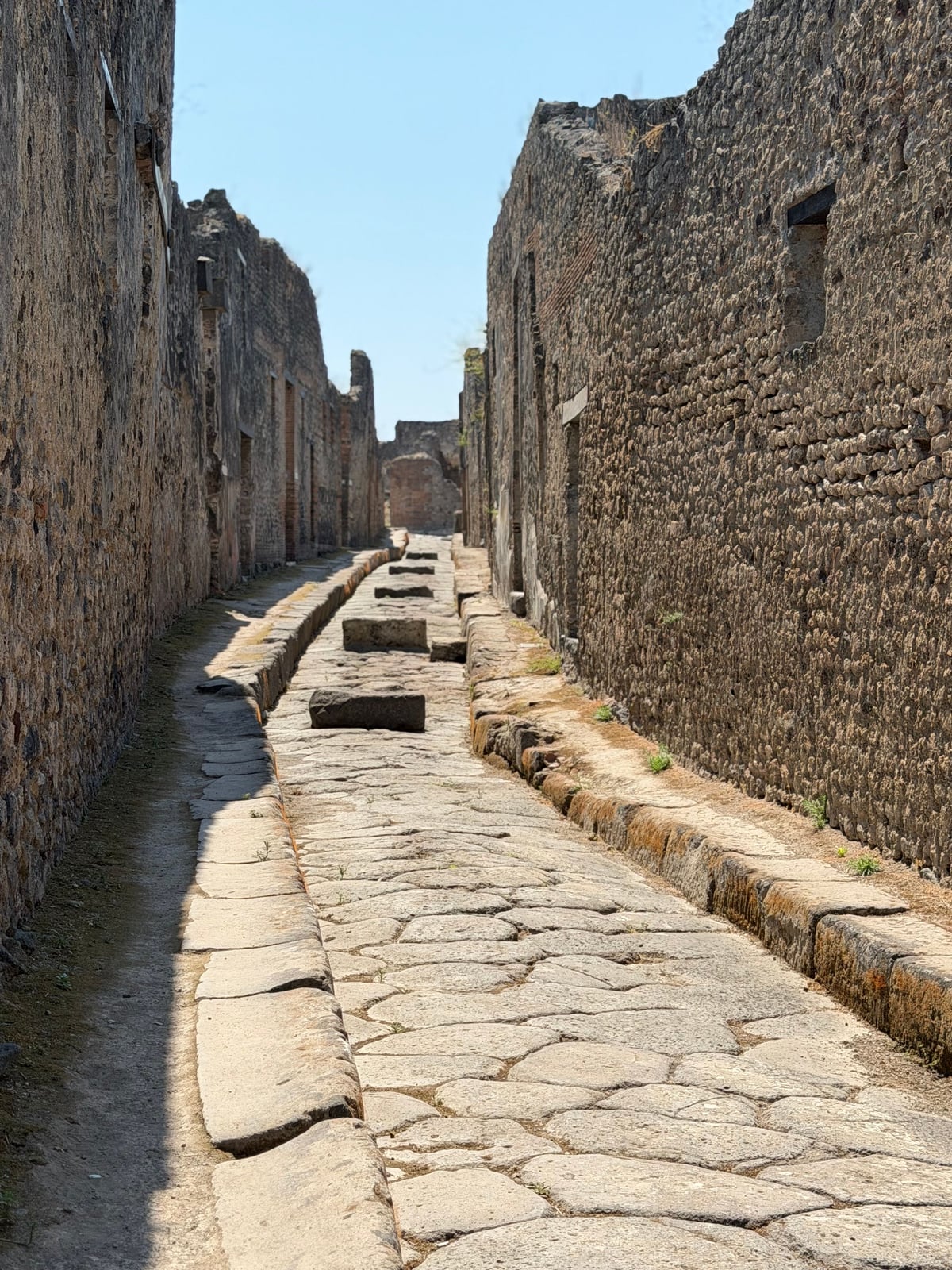
Walk in, and the street takes over. Shop after shop opens onto it, so alike after a while that you stop seeing ruins and start seeing an ordinary weekday: a doorway where somebody sold something, a corner people turned without thinking. It was a working town one day and under ash the next, and walking it feels like turning up a day late. Vesuvius looms in the distance over all of it.
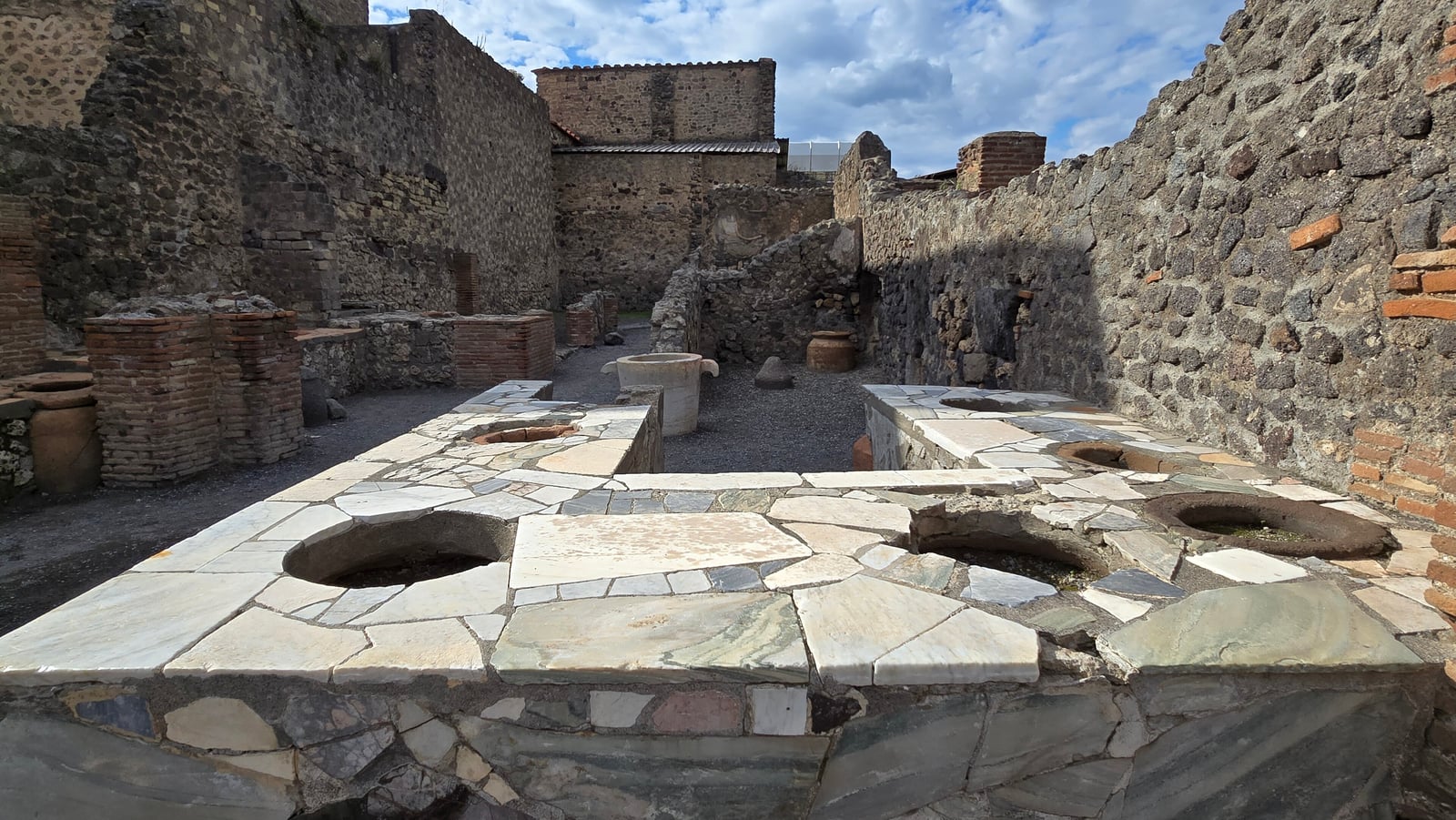
The houses are where the visit slows down, and where the clock bites. In winter most of them, the House of the Vettii included, open at 9:15, a quarter hour after the gates, and so do the men's sections of the Stabian and Forum baths; the House of the Faun keeps 9:00 - 17:00, the gates' own hours. Some houses are temporarily closed and the list of open ones changes, so check the park's list, and the service notices it points to, the morning you go. On a winter afternoon that settles the order: houses first, streets after, because most houses stop letting people in well before the gates close, and the streets stay yours until they do.
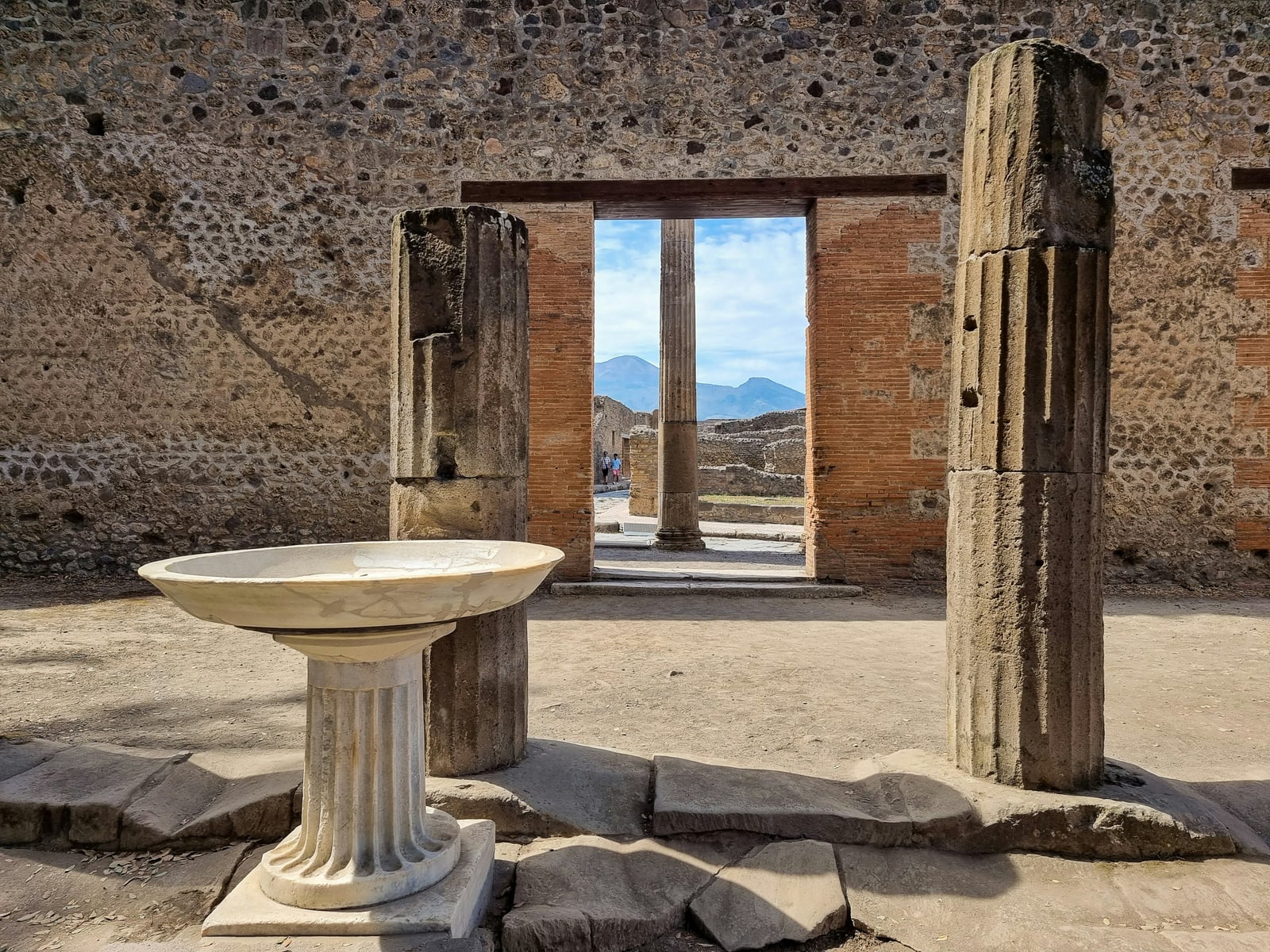
Pompeii is huge, but the best of it sits close together, and a good deal of the rest is streets of empty dwellings. That is why four hours works: the best part fits inside them, and the empty streets are what you can trim without missing much. A full day is for those who want those streets too, and the amphitheater.
If you can, see the archaeological museum in Naples before Pompeii rather than after. It gives the sites a context the ruins can't supply on their own, and you walk in already knowing what you're looking at.
The Villa of the Mysteries and the Amphitheater: Worth the Detour?
The Villa of the Mysteries is reason enough to pick Pompeii over Herculaneum: a frescoed villa outside the city walls, with its own gate and a winter clock shorter than the main gates'. I stood a long time in the cool of its red hall, unable to look away from one young woman in the frieze, her anxious glance completely alive.
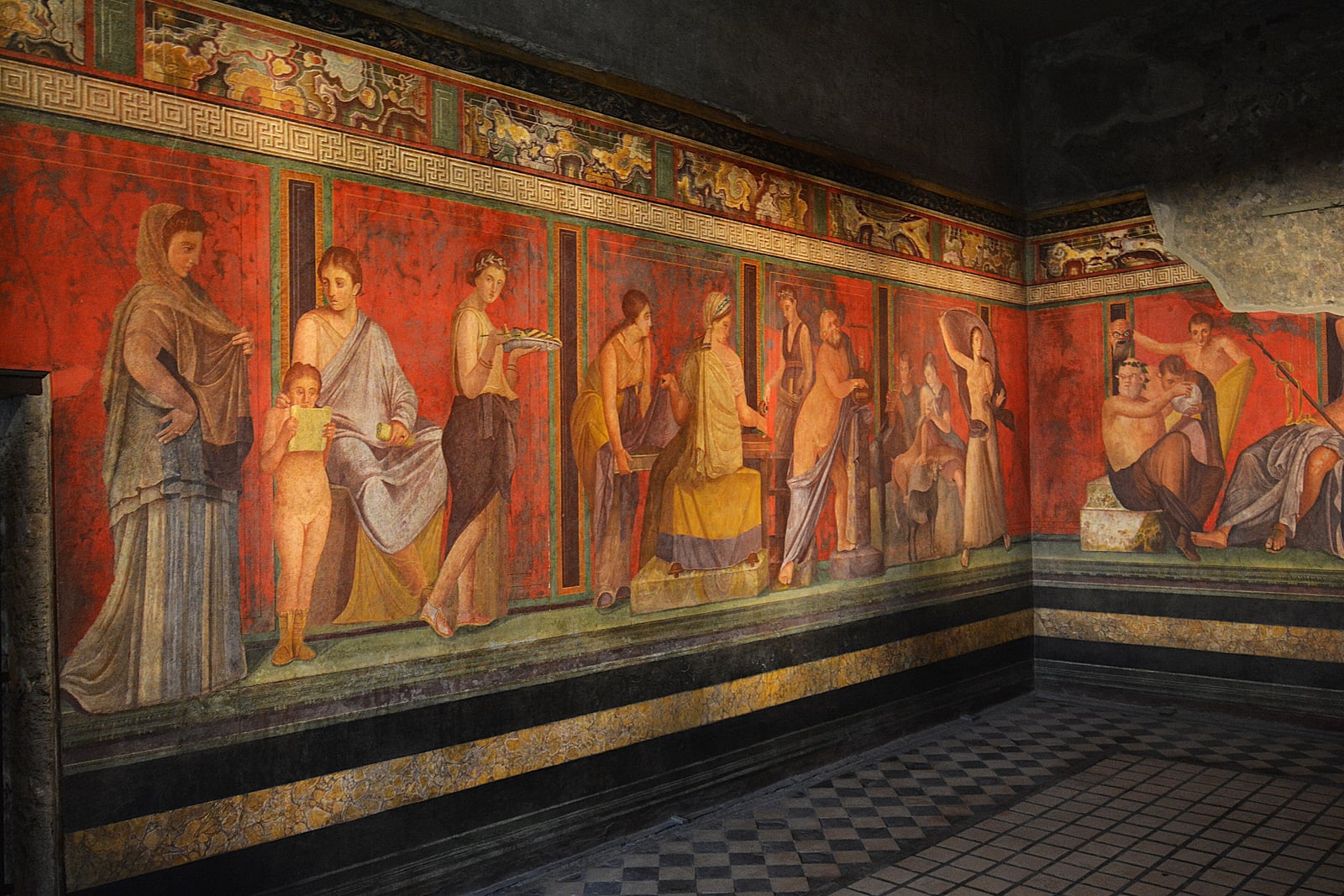
In winter the villa keeps 9:15 - 16:30, last access 16:15, and the Porta Ercolano entrance takes its last visitors at 15:30 (17:30 in summer). Put the villa first or last in your day before you walk in. If it's last, reach Porta Ercolano by its 15:30 last entry in winter, not the villa's 16:15, or the villa is the part of the day you lose.
For visits through December 31, 2026, the two one-day Pompeii tickets differ on exactly this: the €20 Pompeii Express leaves the villa out, the €25 Pompeii+ includes it, and an Express holder can add the villas outside the walls, the Villa of the Mysteries among them, for €8 at the Porta Ercolano entrance, card only, so bring one. For a visit from January 1, 2027, check what the park's new ticket covers when you book.
The amphitheater is the other detour: at the far east end, a long walk in from Porta Marina, the busy main gate. Tacked onto the end of a long day it tends to be a letdown; it works better as the focus of a second day. It has a gate of its own, Piazza Anfiteatro, with a stop on a different line of the Circumvesuviana (the local train network out of Naples), which the train section sorts out. Before setting off, read the amphitheater's line in the park's current list of open buildings, linked above (Anfiteatro on the Italian page, "Amphitheater" on the English one): it carries a notice about seeing the arena from the overlook at its south gate.
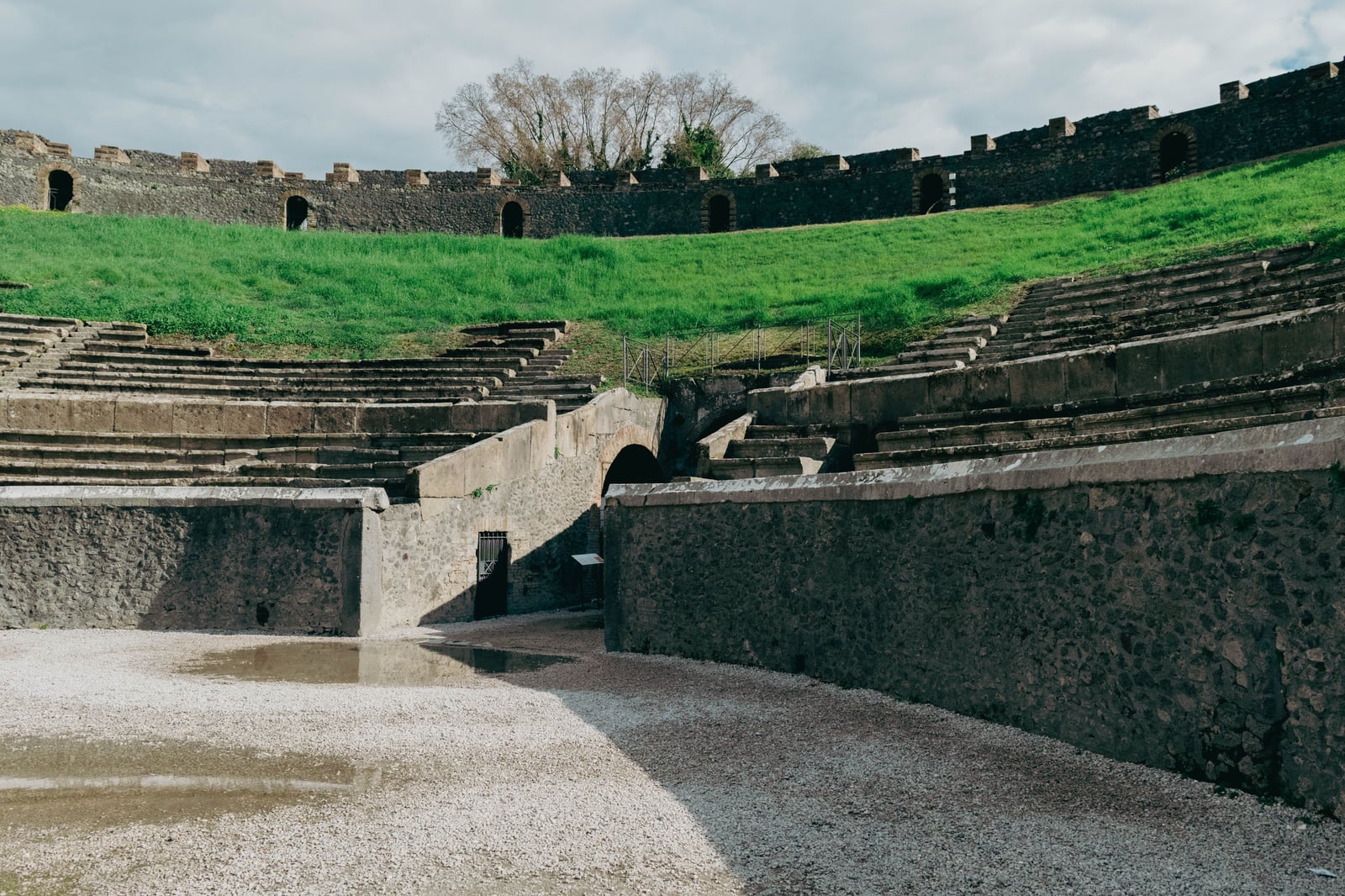
The villa earns its detour if the frescoes are why you came and you give it the first or the last slot of the day, inside its winter clock. The east end earns its place only with energy to spare, or as your starting point if you come in at Piazza Anfiteatro, and only once that notice has told you how much of the arena you'll actually see.
A Guide, the Audioguide, or Your Own Pace
A guide at Pompeii is worth it if you want every street and house put in context as you reach it; the park's official audioguide, rented at any of its three gates, is the cheaper middle way.
A good guide keeps you in the shade while other tours bake, and a well-versed archaeologist at the front changes what you take home. What a group costs you is pace: it moves at its own speed, you listen instead of looking, and you get walked past the corner that might have fascinated you because it isn't on the route. A private guide beats a big group on exactly that, and you may find guides offering their services at the entrance. Skip any tour that gives the site two hours before hurrying you off to something else; two hours here only shows you what you missed.
The audioguide explains without setting the pace, so the corner that caught your eye can keep you as long as it likes. You rent it at Porta Marina, Piazza Esedra or Piazza Anfiteatro, and you show an ID to rent one. The park allows only its own official audioguides on site, and prints that rule in capital letters.
If you book a guide, pick a small group that starts at the 9:00 opening, includes the entry ticket issued in your name, spells out the hours on site, and leaves Vesuvius for another day. A listing vague about whose name goes on the ticket is the one to pass over.
Book a small-group guided visit of Pompeii
Pick the 9:00 start, and check that the ticket carries your name
At the Gate: A Ticket in Your Name, Bags, and One Way In
The park sells Pompeii's official day tickets in its own online shop, and each carries your name and lets you in once: walk out, and the same ticket won't take you back in. For visits from January 1, 2027, the park has announced a single €26 ticket for all its sites, valid 30 days with one entry at each, still issued in your name.
Pompeii's official online ticket shop (pompeii.vivaticket.it)
⚠️ Warning
The name and the date on a Pompeii ticket can't be changed, and there's no refund unless the park makes an unscheduled closure. A name that doesn't match keeps you out, with no refund. Staff may ask for ID, so carry your passport, and book each ticket for the exact person and day.
Besides the free first Sunday, entry is free for under-18s at Italian state sites like this one, under-12s with an adult; check how the park issues their ticket when you book. The €2 reduced ticket is for EU citizens aged 18 to 24, so an American adult pays full.
One entry also means no stepping out for lunch. Water is the easy part: the park has many drinking fountains inside, so carry a refillable bottle and top it up as you go. Eat inside at the "Pizza, Pasta & More" self-service restaurant at Casina dell'Aquila, or bring food and eat it only where the park has set places aside for it. Wear comfortable shoes, which is advice the park bothered to write into its own rules.
Nothing bigger than 30x30x15 cm goes in, and that is a small bag: a carry-on suitcase is far over it. The park runs a paid bag deposit at the Porta Marina and Piazza Anfiteatro entrances and doesn't publish the fee, so with anything bigger, walk in at one of those two.
On a moving day between Rome and Sorrento, suitcases and a train to make turn this into a different problem, and I've planned the Pompeii stop with luggage in tow on its own.
Checked out of a Naples hotel with a train later in the day? Leave the suitcases at Napoli Centrale, the station with the Circumvesuviana's Napoli P. Garibaldi stop, and come to Pompeii light. Check the drop point's opening hours against your last train back, and the price per bag per day.
Find luggage storage near Napoli Centrale
Nothing bigger than 30x30x15 cm goes into the site
From Naples or Sorrento to Pompeii by Train, and Which Gate
For the train from Naples to Pompeii, take the Circumvesuviana's Napoli-Sorrento line. It runs every 30 minutes to Pompei Scavi Villa dei Misteri (Pompei is the Italian spelling, and scavi means excavations), the stop for the Porta Marina and Piazza Esedra gates, 36 minutes from Napoli P. Garibaldi; from Sorrento it's 35 minutes the other way.
From Naples, you board at Napoli P. Garibaldi, or at Porta Nolana, the stop before it. Tickets, the tap-in option and which of the two stations suits you are covered in my guide to riding the Circumvesuviana.
It's cheap, and it rides cheap: old cars, frequent delays, often standing room only, hot in summer, and the kind of crush where your hand stays on your wallet. The stairs down to the platform in Naples are hard going with a suitcase. Thousands still ride it every day and get there fine.
If the train is what you dread, swap it for a guided tour from Naples with transport, timed for the 9:00 opening. Check that the entry is included and in your name, and how many hours you get on site.
Book a guided Pompeii tour from Naples with transport
The ride from Naples comes with the tour, so there's no Circumvesuviana to face
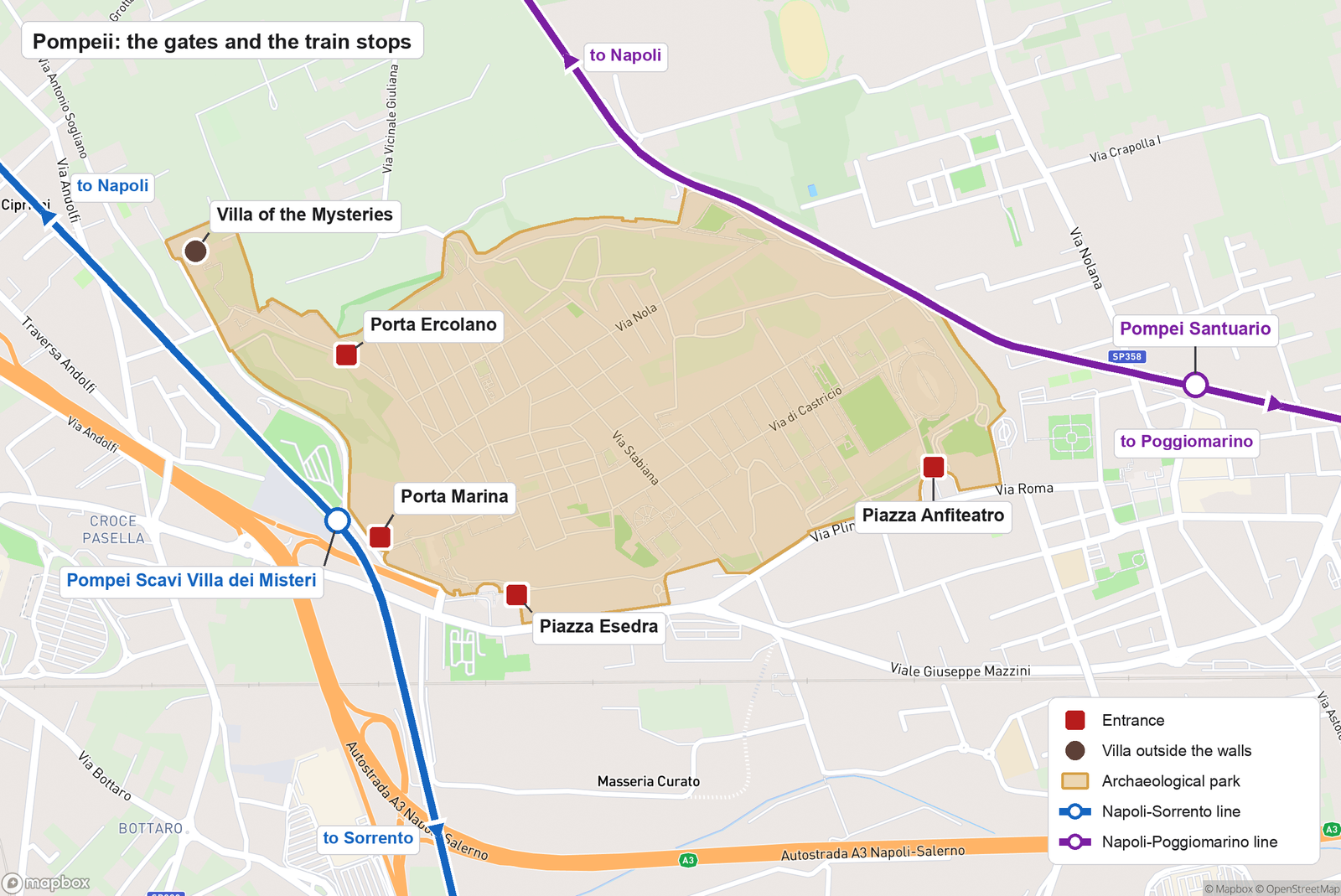
Porta Marina and Piazza Esedra are the site's main side, and Porta Marina is the busy gate. The quieter way in is Piazza Anfiteatro, whose stop is Pompei Santuario on the Napoli-Poggiomarino line, 47 minutes from Garibaldi. Unless you mean to start at the amphitheater end, get off at Pompei Scavi Villa dei Misteri.
Plan the way out too. Rather than walk back across the site in the heat, I crossed it west to east, left by Piazza Anfiteatro onto Via Roma, and rode home from a half-empty Pompei Santuario.
⚠️ Warning
The last Napoli-Sorrento train toward Naples leaves Pompei Scavi Villa dei Misteri at 22:35 (Napoli P. Garibaldi 23:13), but the Poggiomarino line's last from Pompei Santuario is 20:06. On strike days, only the runs EAV's timetable marks as guaranteed are sure to run: early morning and late afternoon, the last toward Naples leaving Pompei Scavi at 20:05.
For one site, there's no need to sleep in the modern town of Pompei. Split Pompeii and Herculaneum over two days, though, and a night by the site is quiet, with dinner on foot.
Giving Pompeii and Herculaneum two days? Pick a stay at the end of the site you'll walk in from, the main side or Piazza Anfiteatro, leave the suitcases in the room, and you're at the 9:00 opening without a train.
Find a hotel near the Pompeii site
For Pompeii and Herculaneum over two days, with dinner on foot
Pompeii From Rome
From Rome it's a long day. Every Sunday, per Trenitalia, a direct Frecciarossa (its high-speed train) runs from Roma Termini to Pompei's mainline station, not the Circumvesuviana stop that serves the main gates; check the date when you book, and expect the site's Sunday crowds. Other days mean a change in Naples. You're back late either way, which is why some give Pompeii a night. The trains and the timing are in the long Pompeii day out of Rome.
Herculaneum Instead, or on Another Day
Herculaneum or Pompeii comes down to size and time. Herculaneum is smaller, better preserved and calmer; Pompeii is the whole city, plus the Villa of the Mysteries. Either way, there's no wrong choice, and Herculaneum alone is a win, not a consolation prize.
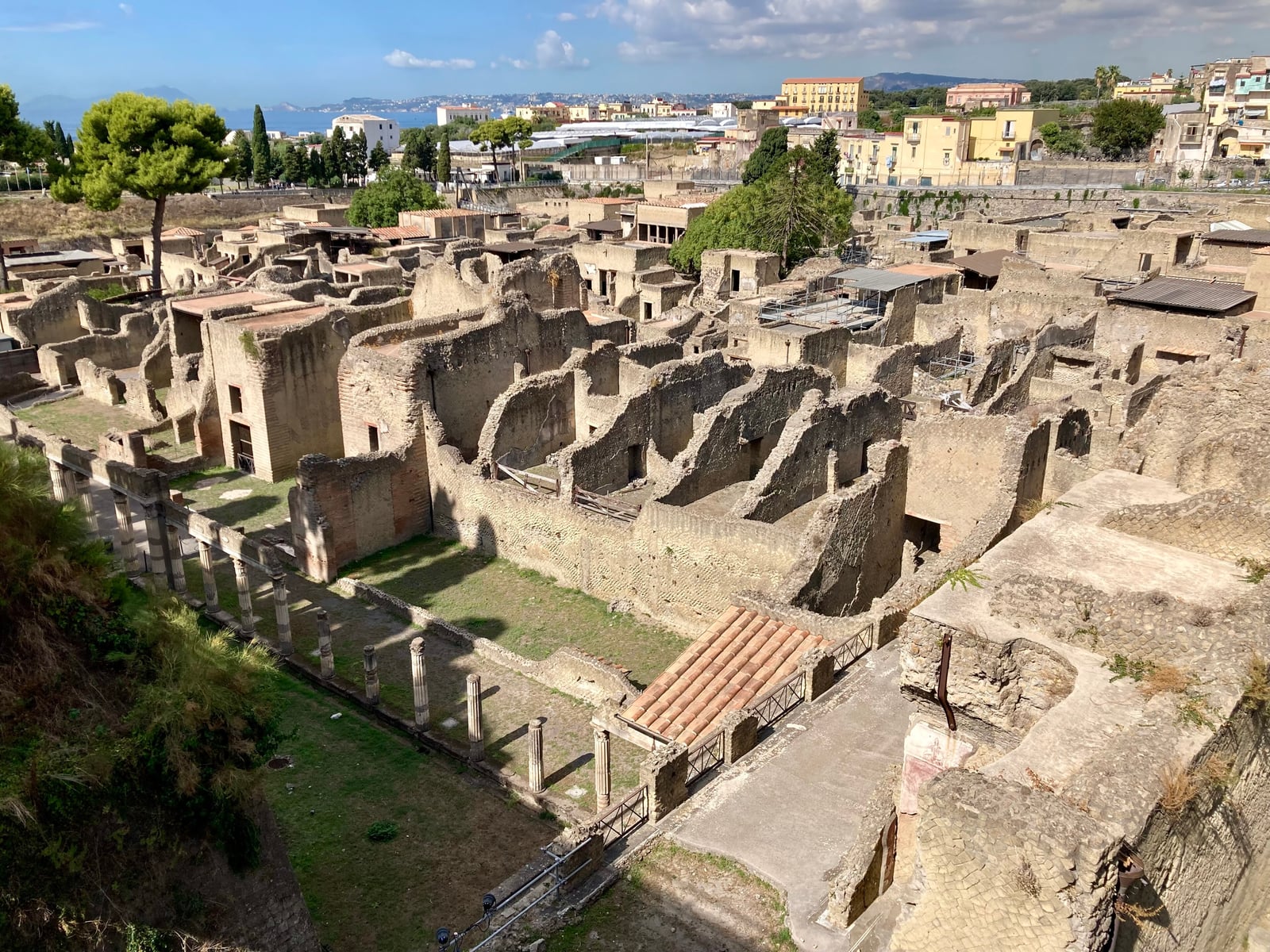
What sets Herculaneum apart is the wood. Furniture, wooden balconies and the upper floors of houses survived in place, the pottery with them. It isn't empty, but the crowd stays manageable, in October at least. A couple of hours covers it for some; others spend four there happily. It just isn't a full-day site, which is the point for anyone Pompeii's clock has beaten.
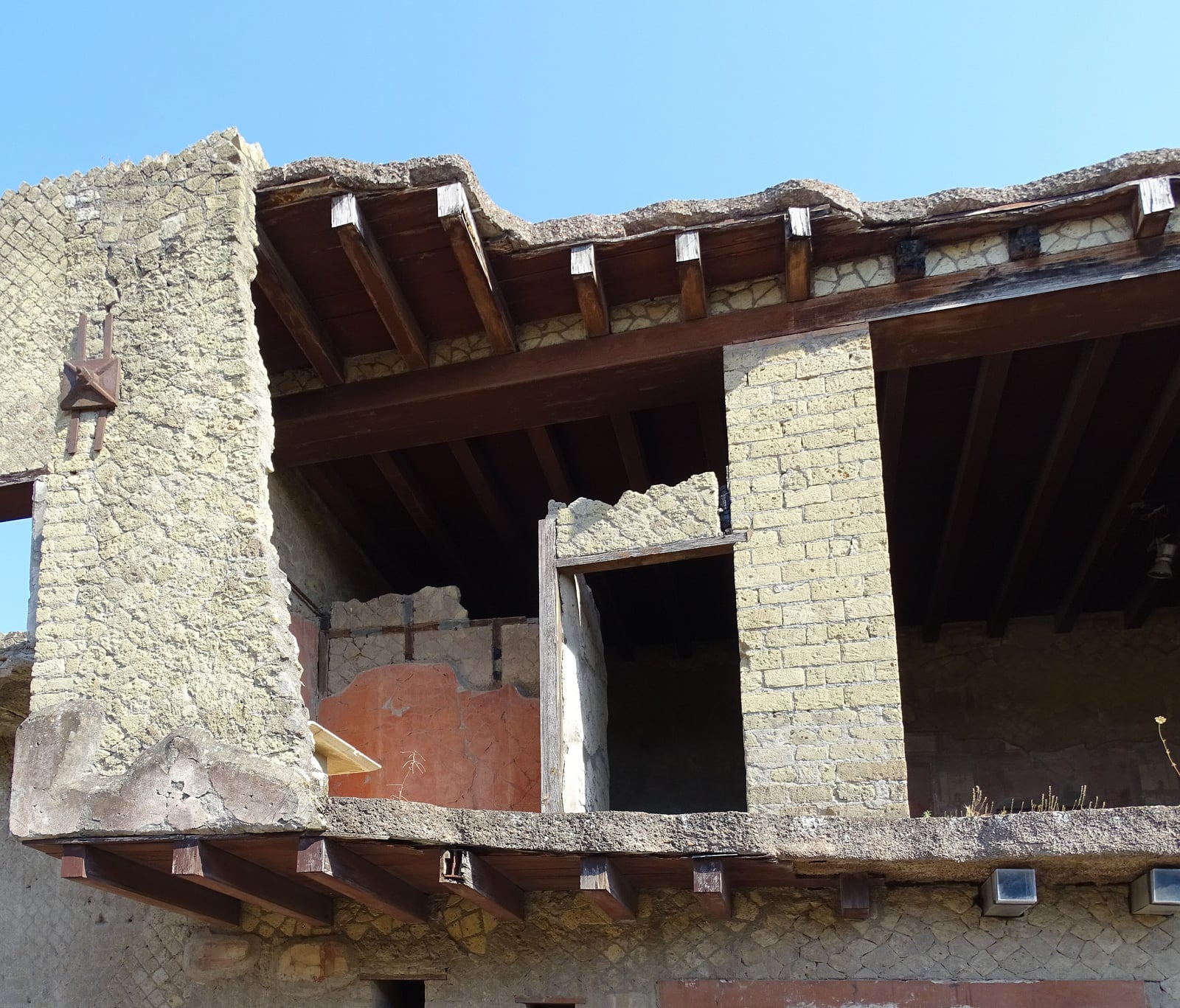
Both in one day is doable but tight. The two sit on the same Napoli-Sorrento line: Ercolano Scavi (Ercolano is Herculaneum's Italian name) is 15 minutes from Napoli P. Garibaldi and 21 from Pompei Scavi, then a 6-minute walk to the entrance at Corso Resina 187. EAV marks Ercolano Scavi as not wheelchair-accessible. The squeeze comes in winter: both sites let their last visitors in at 15:30, so whichever comes second has to be reached by then.
Herculaneum costs €16, with the same rules for under-25s as Pompeii, and opens at 8:30, Monday to Sunday. In winter the last entry is 15:30 and you have to be out of the archaeological area by 16:40, with the gates closing at 17:00; in summer the same three times are 18:00, 19:00 and 19:30. It closes on December 25, and January 1 is not a day to count on: check its page before planning that day. Entry is free every first Sunday and on April 25, June 2 and November 4, with no booking: you collect the ticket at the office on the day. The Villa dei Papiri (the Villa of the Papyri) and the Ancient Theater are closed indefinitely.
If Herculaneum is your day and you want it explained, book a small group with the entry included and the time on site spelled out in the listing.
Book a small-group guided visit of Herculaneum
It opens at 8:30, and the winter last entry is 15:30
Pompeii Day Trip: Common Questions
- Is Pompeii worth visiting?
- Yes, for most people, with a plan for the hours and a guide or audioguide to explain what you're looking at. Without either, it can shrink to old rock and other people's elbows.
- How many hours do you need at Pompeii, and when should you go?
- About four hours, starting at the 9:00 opening. Avoid Sundays, above all the free first Sunday of the month, and in winter remember that the last entry is 15:30.
- Pompeii or Herculaneum, or both in one day?
- Herculaneum is smaller, calmer and better preserved; Pompeii has the whole city and the Villa of the Mysteries. Both in one day is doable but tight: their stations sit 21 minutes apart on the same line, and in winter the second site has to be reached by mid-afternoon.
- Do you need a guide at Pompeii?
- Not to get in, but an explanation changes the visit. A small-group guide tells the story at the group's pace; the park's own audioguide tells it at yours.
- Can you bring luggage into Pompeii?
- Nothing larger than 30x30x15 cm goes in. Anything bigger goes to the park's paid bag deposit at the Porta Marina or Piazza Anfiteatro entrance.
Nobody walks all of Pompeii in a day, and nobody needs to. Choose your four hours, and let the city keep the rest.