 George Mandrovny
Pick the Winter Trip First, Then the Place
- Pick the trip, then the place. Winter Italy is four trips: the mountains at their peak (Val Gardena's lifts open December 4), the art cities from Christmas to Carnival, the mild south of Naples and Sicily, and hot water, with Saturnia's falls free all year and Merano's covered thermal baths open every day.
- The trap: Christmas into early January is not the quiet season, and December 25 and January 1 close the Colosseum, the Vatican Museums, the Uffizi and Pompeii.
- Less shuts than you've heard: Travelmar's Salerno boat to Amalfi and Positano runs all year, though rough seas can delay it, and Caremar's Naples-Capri boats run all winter. What stops is NLG's and Positano Jet's direct Naples-Positano boats and Navigazione Golfo dei Poeti's Cinque Terre village line.
- The real cost is the dark: in late December the sun sets about 4:45 p.m. in Milan, Rome and Palermo.
Italy in winter is not one quiet season but four different trips, and the first decision is which one; the place follows.
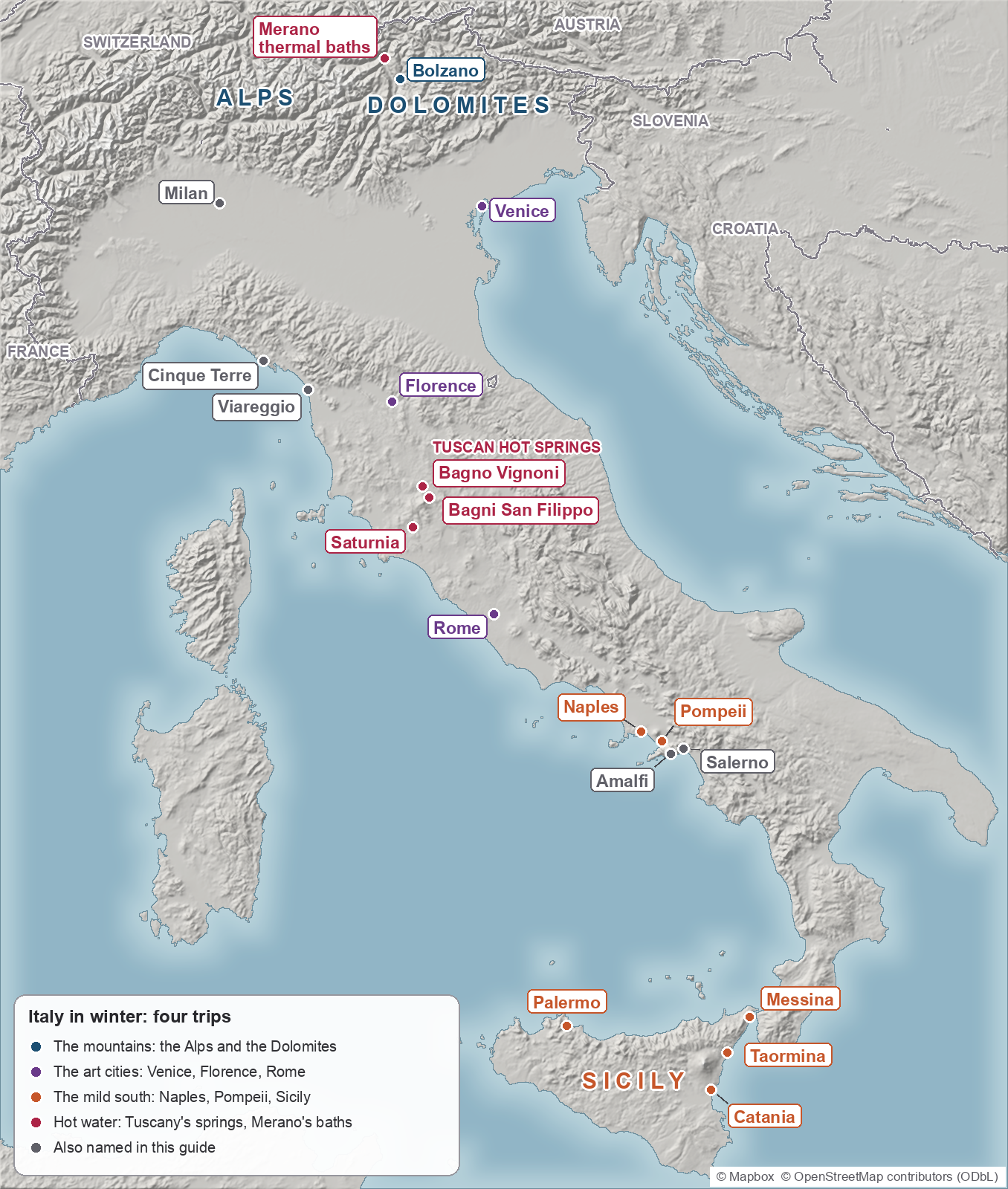
The test is what you want from the cold. Skis or snow: the mountains. Museums without the crowds: the art cities, outside Christmas week. The mildest days in the table below: Naples or Sicily. Hot water on a cold day: Tuscany's springs or Merano's covered baths, the one trip on the list the cold improves.
What winter in Italy feels like: January averages, 1991-2020, at each row's station.
| Area (station) | Typical January day | Typical January night |
|---|---|---|
| Dolomites valley floor (Dobbiaco) | 33°F (1°C) | 18°F (-8°C) |
| Milan (Linate) | 45°F (7°C) | 31°F (0°C) |
| Florence (Peretola) | 52°F (11°C) | 36°F (2°C) |
| Rome (Ciampino) | 54°F (12°C) | 38°F (3°C) |
| Naples (Capodichino) | 56°F (13°C) | 41°F (5°C) |
| Sicily, east coast (Messina) | 59°F (15°C) | 50°F (10°C) |
| Sicily, inland outside Catania (Sigonella) | 61°F (16°C) | 41°F (5°C) |
Mild, never warm: even Sicily's best row is sweater weather. The contrast worth packing for is up north, where January nights sit at freezing in Milan and well below it on the Dolomites valley floor.
When in Winter: Christmas Week, After Epiphany, Carnival
Inside winter, the calendar does the sorting. Christmas into the first days of January is the busy stretch, the quiet comes after Epiphany (January 6), and in Venice and Viareggio, Carnival runs from late January into February.
In Christmas week the buses fill to the point of comedy. On the national holidays most businesses stop, but bars, pastry shops, gelato shops and restaurants stay open. Some museums and sites close on certain holidays, so check yours before planning the day. When 2025 turned into 2026, the fireworks in the modern town of Pompei went on for about three quarters of an hour, long enough to stop being a show and start being weather.
| Dates (2026-27) | Event | What it means |
|---|---|---|
| November 27 - January 6 | Bolzano's Christmas market | closed December 25 |
| December 8 (Tue), December 26 (Sat), January 6 (Wed) | national holidays: Immacolata (Immaculate Conception), Santo Stefano (St. Stephen's Day), Epiphany | Vatican Museums closed |
| December 25 (Fri), January 1 (Fri) | Christmas Day, New Year's Day | Colosseum, Vatican Museums, Uffizi and Pompeii closed |
| Christmas into early January | the holiday rush | crowds, mostly on the main routes |
| January 23 - February 9 | Venice Carnival | see Venice, below |
| January 30; February 4, 7, 9, 14, 20 | Viareggio Carnival, six parades | pick a parade day |
| February 10 (Wed) | Ash Wednesday | Venice is done; Viareggio parades twice more |
The markets are the December reason to go north, and Bolzano's is only one. Settle which markets earn the trip before you book anything.
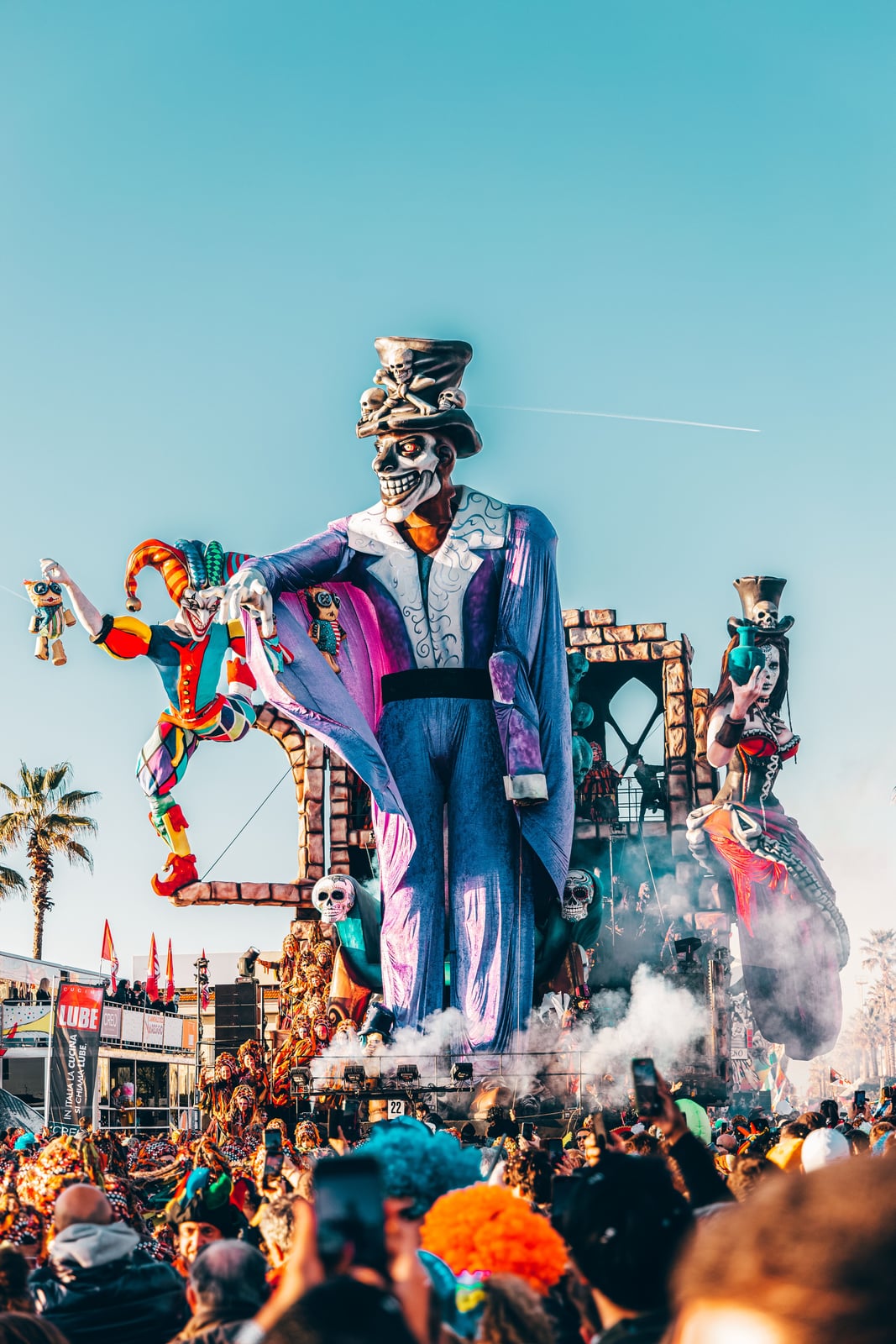
Viareggio, on the Tuscan coast, does Carnival with papier-mâché floats, paraded along a seafront route a little over 3 kilometers long. The opening Saturday, January 30, starts at 16:00 with fireworks after, and the night parade is Thursday, February 4, at 17:00.
All six 2027 parades, with their start times, are on the Carnival foundation's own site.
If you're still choosing the month rather than the winter trip, start with how the months compare.
The Mountain Trip: When the Lifts Run, and Who It Suits
In winter the mountains are at their peak. In the Dolomites, the Dolomiti Superski pass prices its 2026-27 season from November 28 to April 11, and Val Gardena's ski lifts open December 4 and run to April 4, "subject to change." The Christmas holidays, December 20 to January 9, are one of Superski's two high-season blocks, and January 10 to 30 is a cheaper block, falling in the cities' quiet weeks after Epiphany.
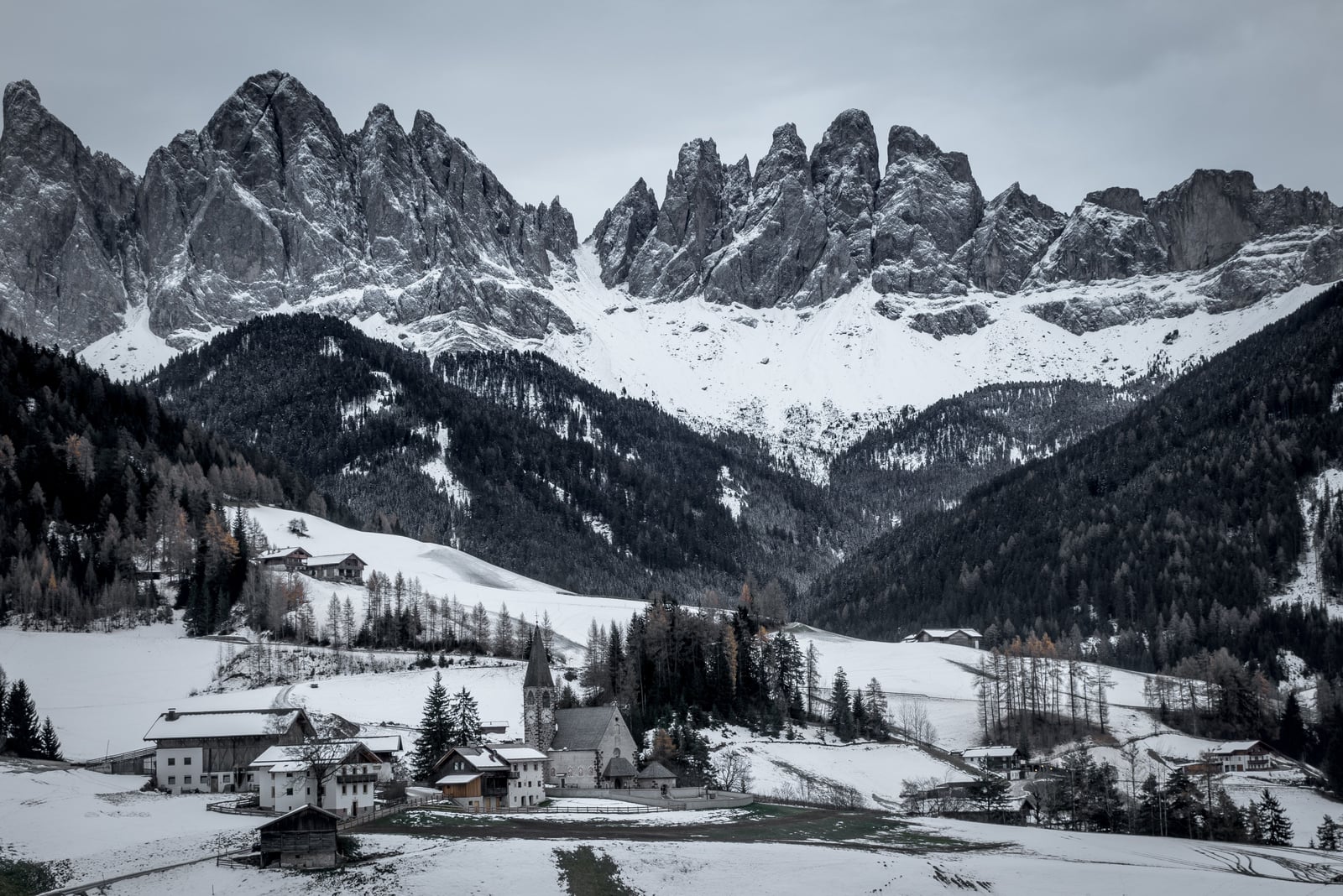
If you ski, choose the ski resort that fits your trip first. If it's on the Dolomiti Superski pass, aim the week at that January block: the pass costs less then.
You don't need skis at all. A few days of snowshoeing on the Alpe di Siusi, then a glass of Lagrein, South Tyrol's full-bodied red, on a hut's outdoor deck: that's a whole winter trip, and by the end the heaviest thing you lift is the glass. What's left to decide is where to base yourself if you don't ski.
In December the mountain trip can start in a market town, at Bolzano's Christmas market (dated in the calendar above). A night at the market before the mountains beats a first evening spent unpacking.
Rome, Florence and Venice: Hours to Plan Around
Outside Christmas week, the art cities are winter's easy, quiet trip. The catch is the clock: the Colosseum runs a winter schedule, and the Vatican Museums and the Uffizi each close one day a week.
In Rome, the Colosseum's winter schedule runs October 25 to February 28, and the Forum-Palatine opens at 9:00. Colosseum entry needs a booked time slot, on sale 30 days ahead. The Christmas decorations stay up until Epiphany, and you can take most days as they come. The exceptions are that Colosseum slot and the Christmas Eve and Christmas Day dinners, which book out, so reserve early. For the rest of Rome, check which tickets to book and how far ahead. A rain day is a museum day, which in Rome is hardly a demotion.
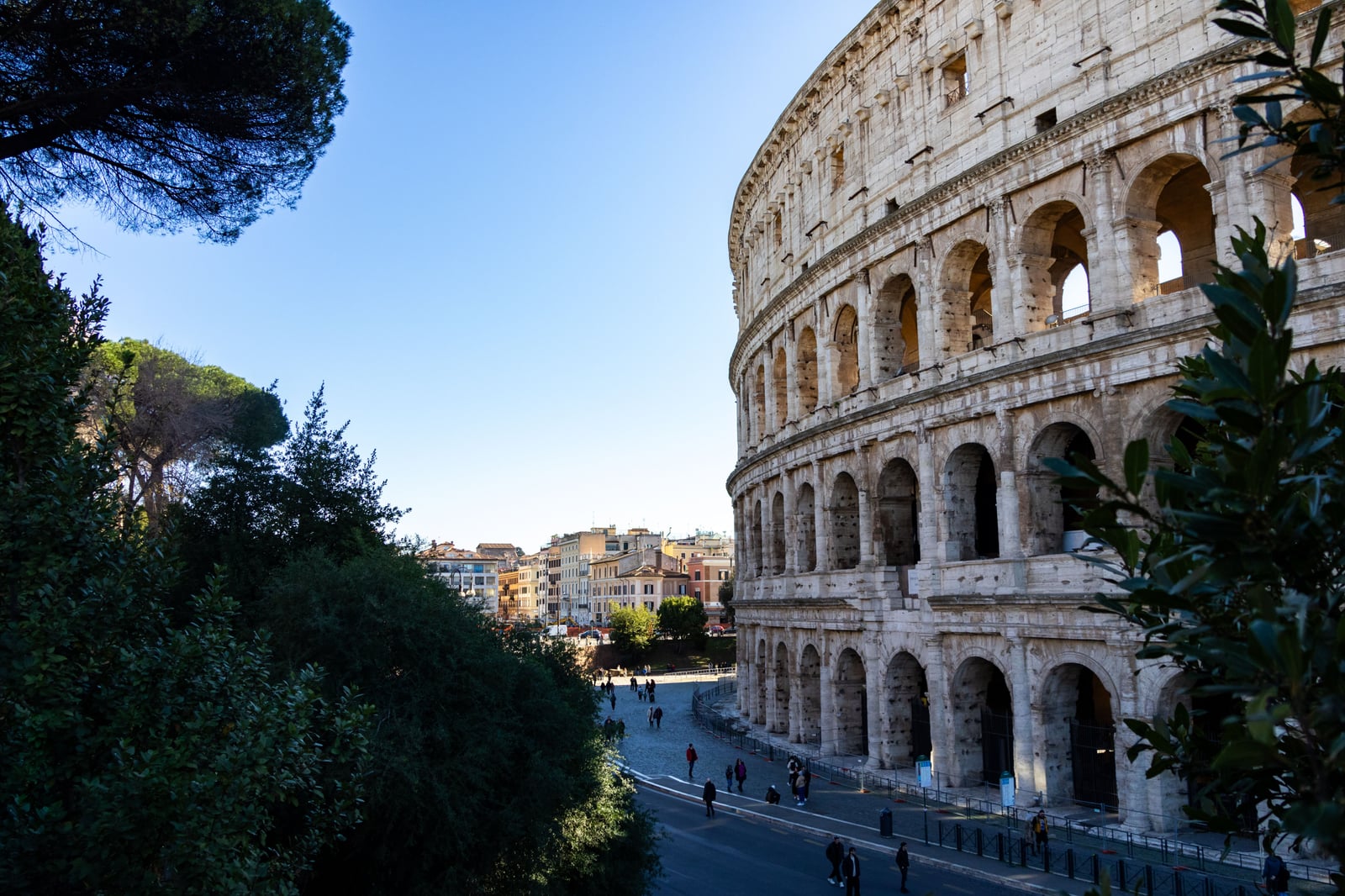
For Christmas week in Rome, fix the dates first, then book a room with free cancellation straight away. Pick one you can walk back to after a late Christmas dinner.
| Site | Hours | Also closed, December - February |
|---|---|---|
| Colosseum (winter schedule) | 8:30 - 16:30, last admission 15:30 | none |
| Vatican Museums | doors 8:00 - 18:00, galleries close 20:00; December 24 and 31: doors 8:00 - 13:00, close 15:00 | Sundays, except free mornings December 27, January 31, February 28; also February 11 |
| Uffizi | Tuesday - Sunday 8:15 - 18:30, ticket office closes 17:30 | Mondays |
Plus the holiday closures in the calendar above.
Every closure day and free Sunday is marked on the Vatican Museums' own opening calendar, a PDF that covers 2026 and 2027.
Florence in January could be the city at its best: no big crowds, and the stores start their sales early in the month. Rooms run cheaper too, so if a Tuscan town is on your list, sleep there rather than day-tripping, and choose it by what each hill town keeps open in winter. Then settle how many days Florence needs and what to book first.
Venice in December belongs largely to Venetians: cool, sometimes gray and wet, with a wind that waits for you in the open spaces. Before you pick dates, read how Venice's winter runs, Carnival week included.
The Mild South: Naples, Pompeii and Sicily
The south is where winter Italy goes soft, though soft is not warm: Naples and Sicily sit at the mild end of the table up top.
Over the Christmas holidays, Naples can be even more chaotic than Rome, which takes some doing. Even on a mild day a brisk breeze can make a winter jacket the right call, so pack the real one, not the optimistic one. Then work out what to fill the Naples days with.
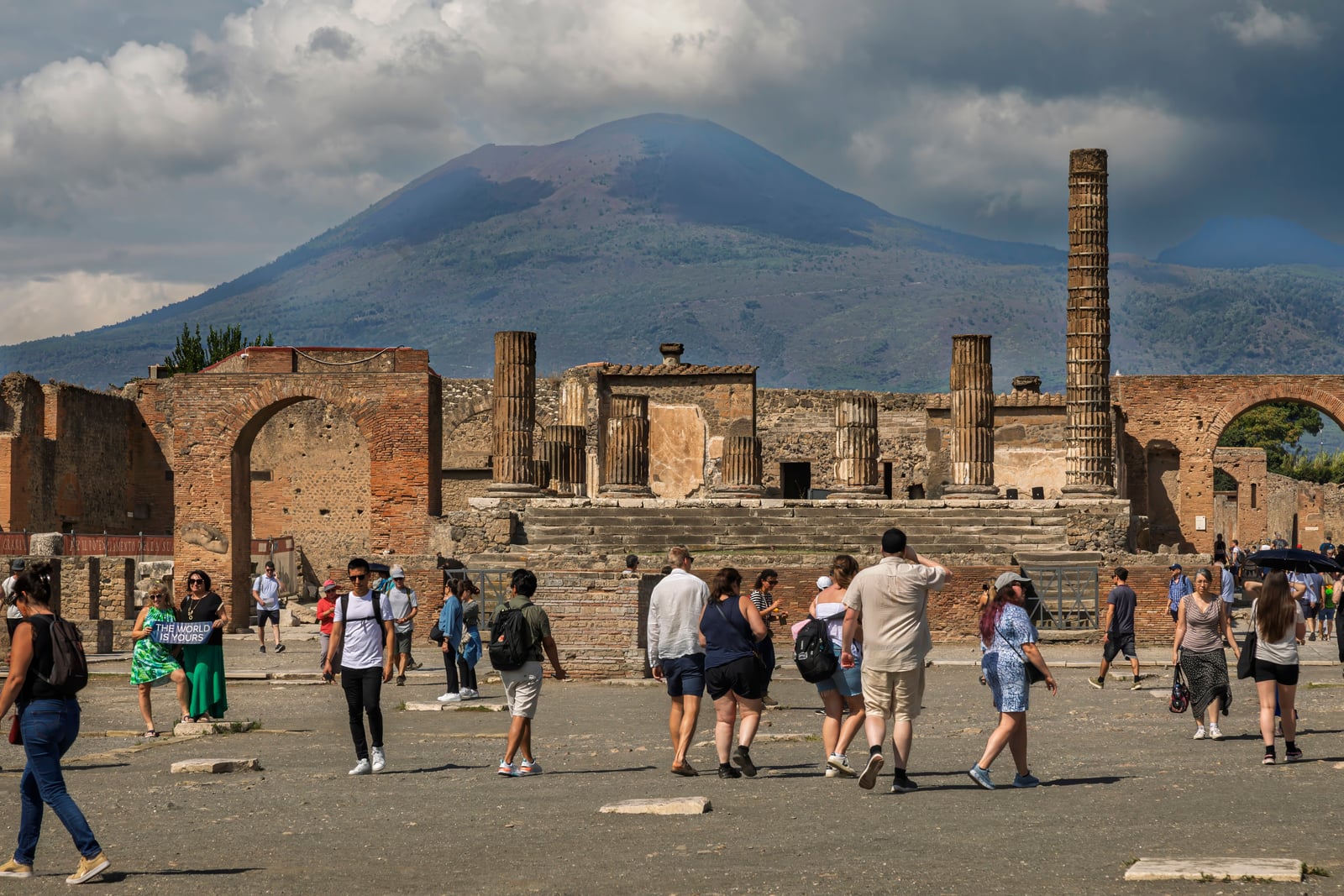
Pompeii's winter hours run October 15 to March 15: open at 9:00, last entry 15:30, closing at 17:00, and free on the first Sunday of the month. In the holiday week the site can be crowded by noon, yet even a January Saturday afternoon can be uncrowded. From Rome it is a long winter day racing that 15:30 deadline, so settle the Rome end of the plan first.
Staying in Naples instead? Go early, for both reasons above: book one guided tour from Naples timed to the 9:00 opening, and check it runs on your date against the calendar above.
Sicily holds the table's mildest days, but its nights split: by the sea in Messina they stay mild, while inland, outside Catania, they turn cold. Taormina goes quiet after dark, though plenty of restaurants stay open; Catania carries on at full volume. For the rest of the island's year, weigh the trade-offs in Sicily's seasons.
The Coasts in Winter: Which Boats Run, Which Stop
The Amalfi Coast goes quiet in winter rather than shut, and the boats to it and to Capri keep running: Travelmar's Salerno boat and Caremar's Naples-Capri boats. What stops or shuts: NLG's and Positano Jet's direct Naples-Positano boats, Navigazione Golfo dei Poeti's Cinque Terre village line, and Ischia's Poseidon and Negombo thermal parks. On the Amalfi Coast, tourist services shrink and some hotels, restaurants and shops close. The coast road runs light, nearly free of tour buses, which in August would be fiction.
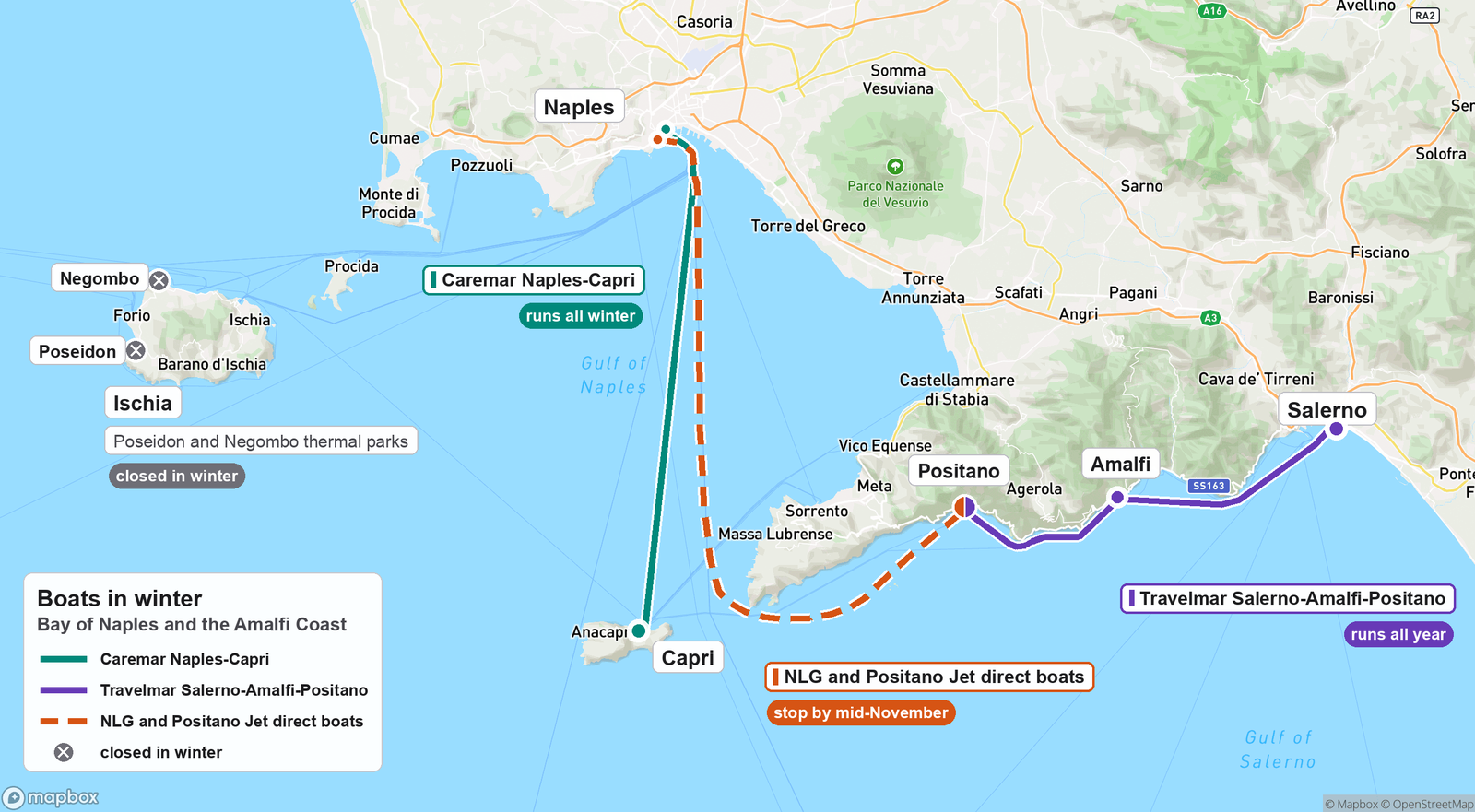
Travelmar's boat boards at Salerno's Piazza Concordia, and some departures call at Cetara and Maiori. On the winter sheet the last boats back leave Positano at 15:30 and Amalfi at 16:30; fares are €12 to Amalfi, €17 to Positano. The operator warns of delays in bad sea conditions, so don't pin a same-day flight on the last boat.
The first half of November runs on week-long sheets of its own before the winter one starts on the 16th, so read the sheet for your dates on Travelmar's timetable page.
If you'd planned on NLG's or Positano Jet's direct boat from Naples, work out the other ways in once it stops.
To sleep on the coast, stay in Amalfi, on the Salerno boat's line, and book only a hotel with rooms on sale for your dates: availability is your open-or-shut test. Time the arrival: the last boat from Salerno leaves at 14:10.
| Where | In winter | What changes |
|---|---|---|
| Amalfi Coast from Salerno (Travelmar) | runs all year | three or four boats a day, November 16 - February 28 |
| Naples-Positano direct (NLG, Positano Jet) | stops | NLG: most runs to November 3, one daily round trip to November 15; Positano Jet: to October 31 |
| Capri from Naples (Caremar) | runs | ferries and fast ferries, all winter |
| Ischia: Poseidon and Negombo thermal parks | closed | Poseidon after October 31, Negombo after October 13 |
| Cinque Terre by boat (Navigazione Golfo dei Poeti) | thins, then stops | village line to November 1; daily boat to Vernazza and Monterosso to December 8 |
| Aeolian Islands from Palermo (Liberty Lines) | thins | one departure, Mondays and Fridays only |
On the Cinque Terre, the operator says landings depend on the season and the sea, so a winter boat day is a plan with a weather clause. For the rest, map out the Cinque Terre's off-season days.
Hot Springs and Thermal Baths: Tuscany's Springs, Merano's Covered Baths
Hot water in cold air is winter's own draw. Saturnia's falls are free all year, San Filippo's water is hot enough to bathe in out of season, and Merano's covered baths open every day. Rome and Tuscany's springs make one winter trip.
The Cascate del Mulino at Saturnia are open-air pools, and winter is the season they suit best. The sulfur water comes out at about 100°F (38°C), which on a January morning is the whole argument.
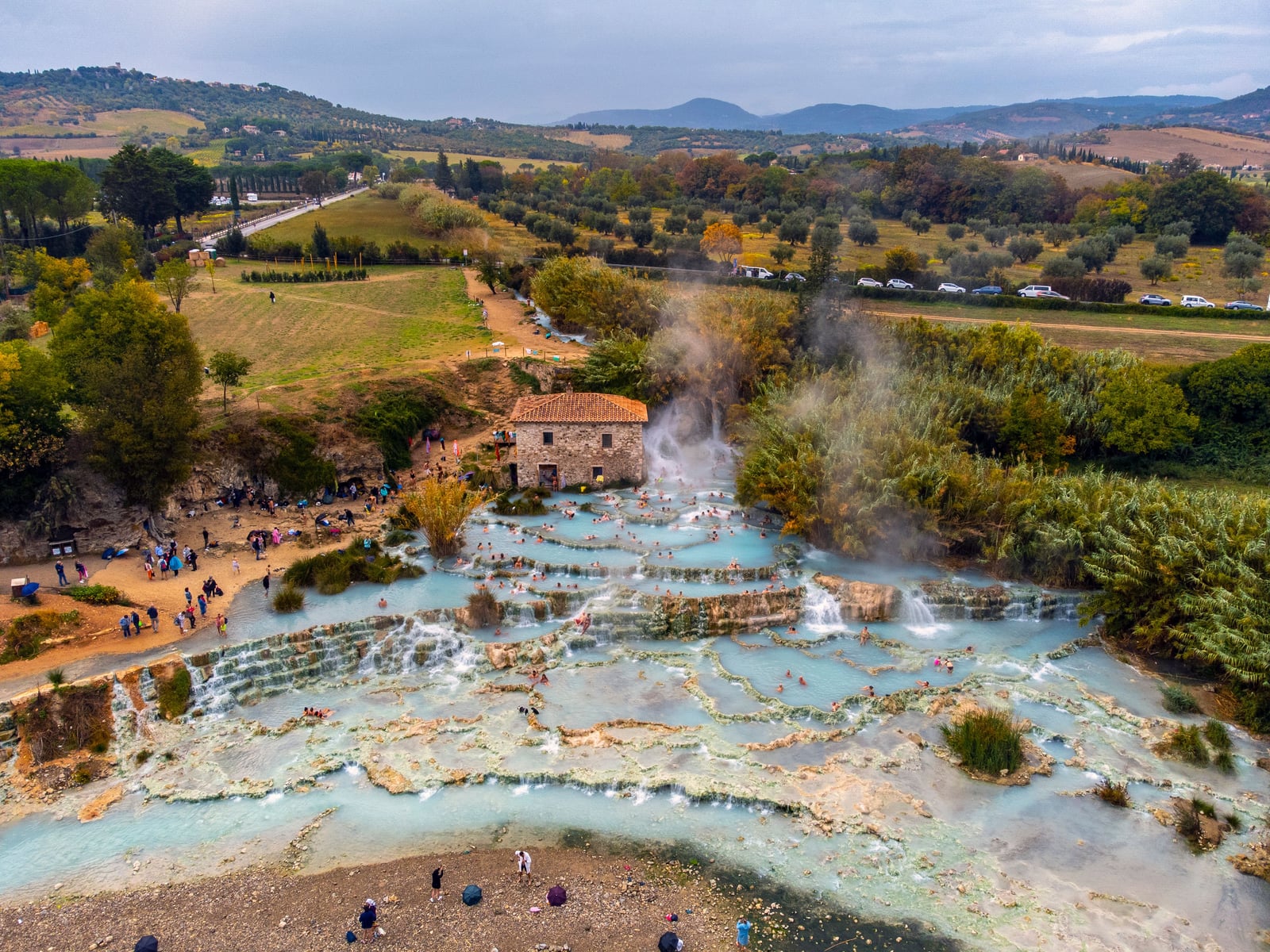
Bagni San Filippo's pools are free too, with plenty of them to bathe in quietly. The hottest water leaves the source at about 118°F (48°C). Its white formation, the Balena Bianca waterfall, is off limits: no touching it, no walking on it, no bathing near it.
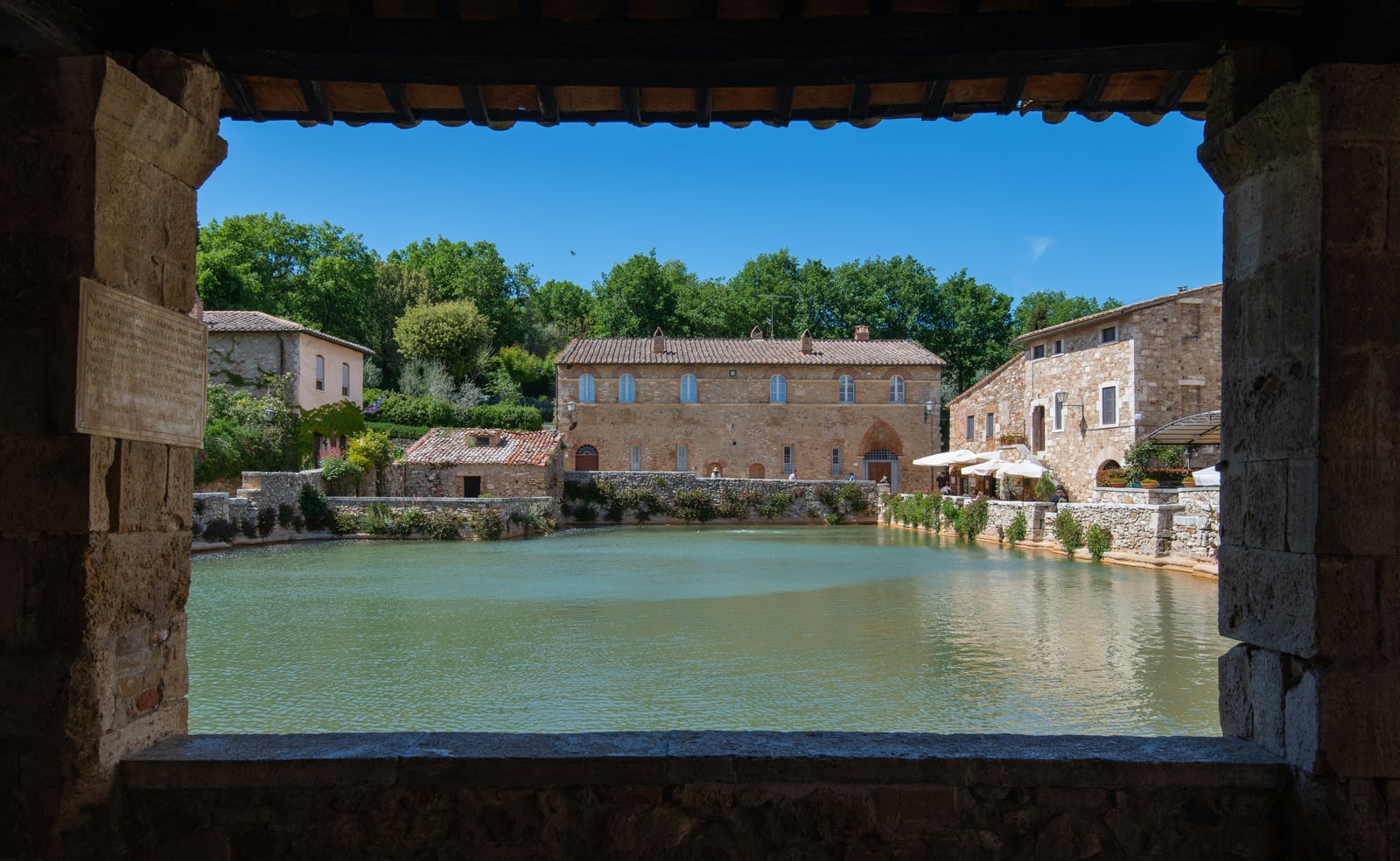
In Bagno Vignoni, a pool of thermal water fills the village square. It's for looking, not bathing, and in midwinter that takes discipline. Three hotel spas in the village draw on the same water.
Terme Merano is a covered thermal bath in central Merano. Two of its indoor pools hold thermal water, one at about 91°F (33°C). The outdoor park opens only mid-May to mid-September, so winter's open-air swim is the swim-out from the main indoor pool. The pools open 9:00 to 20:40, with last entry at 19:00. An adult winter day ticket for the pools is €27 on weekdays, €29 on weekends and holidays. From December 5 to 8 and December 26 to January 5, a separate Christmas price list applies, and booking is mandatory.
Plan the Day Around the Dark and the Cold
The cold you can dress for. The dark costs more. In late December the sun sets about 4:45 p.m. in Milan, Rome and Palermo, and it is dark about half an hour later. Rome gets about nine hours of daylight at the solstice, about ten and a half by mid-February.
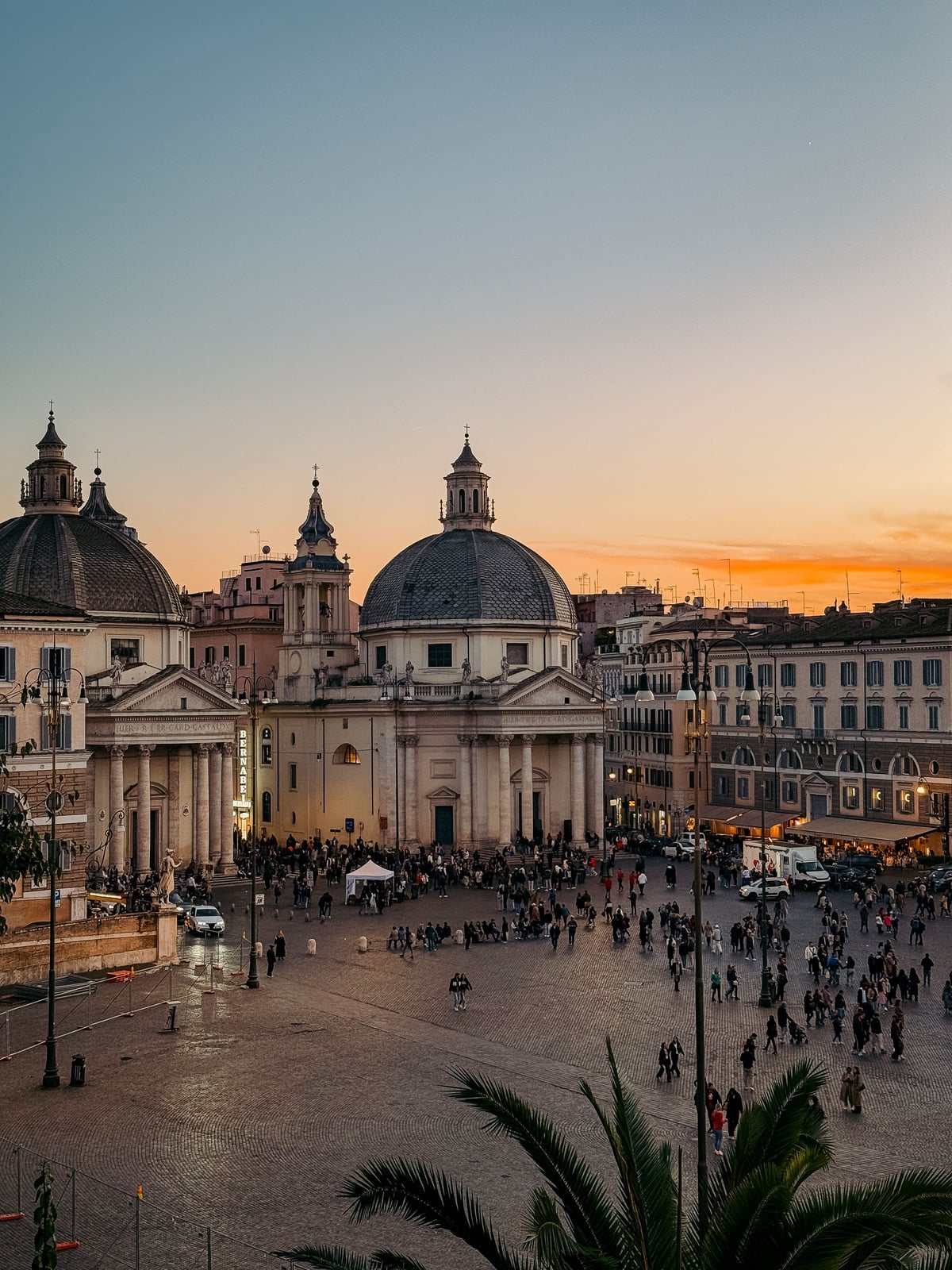
Put outdoor and gated sights in the morning and early afternoon, ahead of the last entries above. After dark, switch to indoor sights and the evening walk: main squares and streets stay lit and busy. Venice's residential lanes are lit too, but by ten or eleven at night they may be almost empty. What actually trips you is the half-step curb, easy to miss in the dark while you're looking up at the architecture.
Choose the room for its heating: Italian buildings tend to have less insulation and less heat than American ones, and a room you can't warm up in turns every evening into a siege. Wet stone can turn slick as ice, so pack grippy shoes, warm layers and a packable down jacket. Then check what else earns a place in the bag.
Pare the trip to one or two bases, not five. A winter day is too short to lose to a train and a hotel hunt in the dark.
⚠️ Warning
Driving in winter: roads signed for it require winter tires (marked M+S) fitted or chains on board, usually from November 15 to April 15. Some mountain and northern roads start earlier or end later. The South lists fewer roads, often for a shorter window: December 1 to March 31 on a stretch of Sicily's SS 117. Most of these rules apply even without snow, a few only in snow or ice. Ask the rental desk which your car has.
Every road under the rule this season, in Italian: Viabilità Italia's list of roads with a winter tires or chains ordinance.
Italy in Winter FAQ
- Is Italy worth visiting in winter?
- Yes, for the right trip: art cities without crowds, mountains at their peak, a mild south, hot springs and thermal baths. The one catch is crowds: Christmas into early January is not the quiet season.
- Where is it warm in Italy in winter?
- In the table above, Messina, on Sicily's east coast: January days of about 59°F (15°C), nights of 50°F (10°C). Inland Sigonella's days run warmer, its nights colder; Naples gets about 56°F (13°C) by day. Mild, not warm.
- Is everything closed on the Amalfi Coast in winter?
- No. Travelmar's boat from Salerno's Piazza Concordia to Amalfi and Positano runs all year, three or four a day from November 16 to February 28; rough seas can delay it. NLG's and Positano Jet's direct Naples-Positano boats stop by mid-November. Some hotels, restaurants and shops close; confirm your hotel is open.
- What's open on Christmas Day and New Year's Day in Italy?
- Bars, pastry shops, gelato shops and restaurants. The Colosseum, the Vatican Museums, the Uffizi and Pompeii close both days; the Vatican Museums also close December 8, 26 and January 6.
- Do I need snow tires or chains to drive in Italy in winter?
- On signed roads, yes: winter tires or chains on board, usually from November 15 to April 15 and on most of those roads even without snow. Some mountain and northern roads start earlier.
Pick the trip, then the place. Less shuts than you'd think; what shuts early is the day, with the sun down before five in late December.