 George Mandrovny
Car or No Car: Which Tuscany You Get
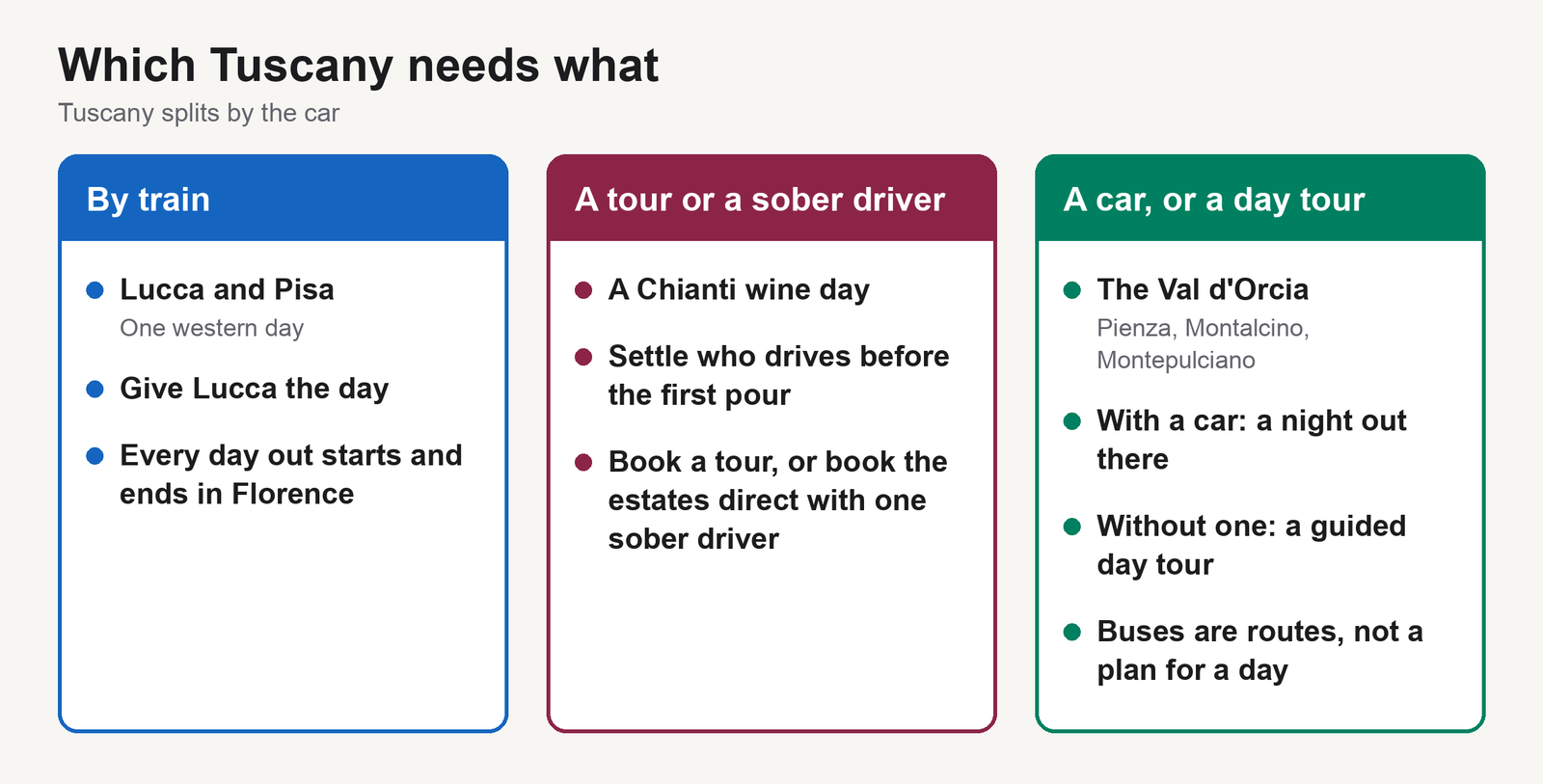
- Tuscany splits by the car. Lucca and Pisa work by train. The hill towns of the Val d'Orcia area, like Pienza, Montalcino, and Montepulciano, want a car and a night, or a guided day tour without one.
- A Chianti wine day turns that around: if you taste, someone else drives, either a tour or a sober driver.
- Pick fewer places, and sleep at least one night in the countryside if you can.
- The trap: drive into a walled town's center past a ZTL sign, which marks a limited-traffic zone, and a fine of €83 - €332 can arrive by letter months later.
The best things to do in Tuscany, Italy, sort by one question: will you have a car? Answer it before the sights. The half of Tuscany you pick hands you its sights, and a list built the other way around tends to fall apart the first morning it meets a rural bus timetable.
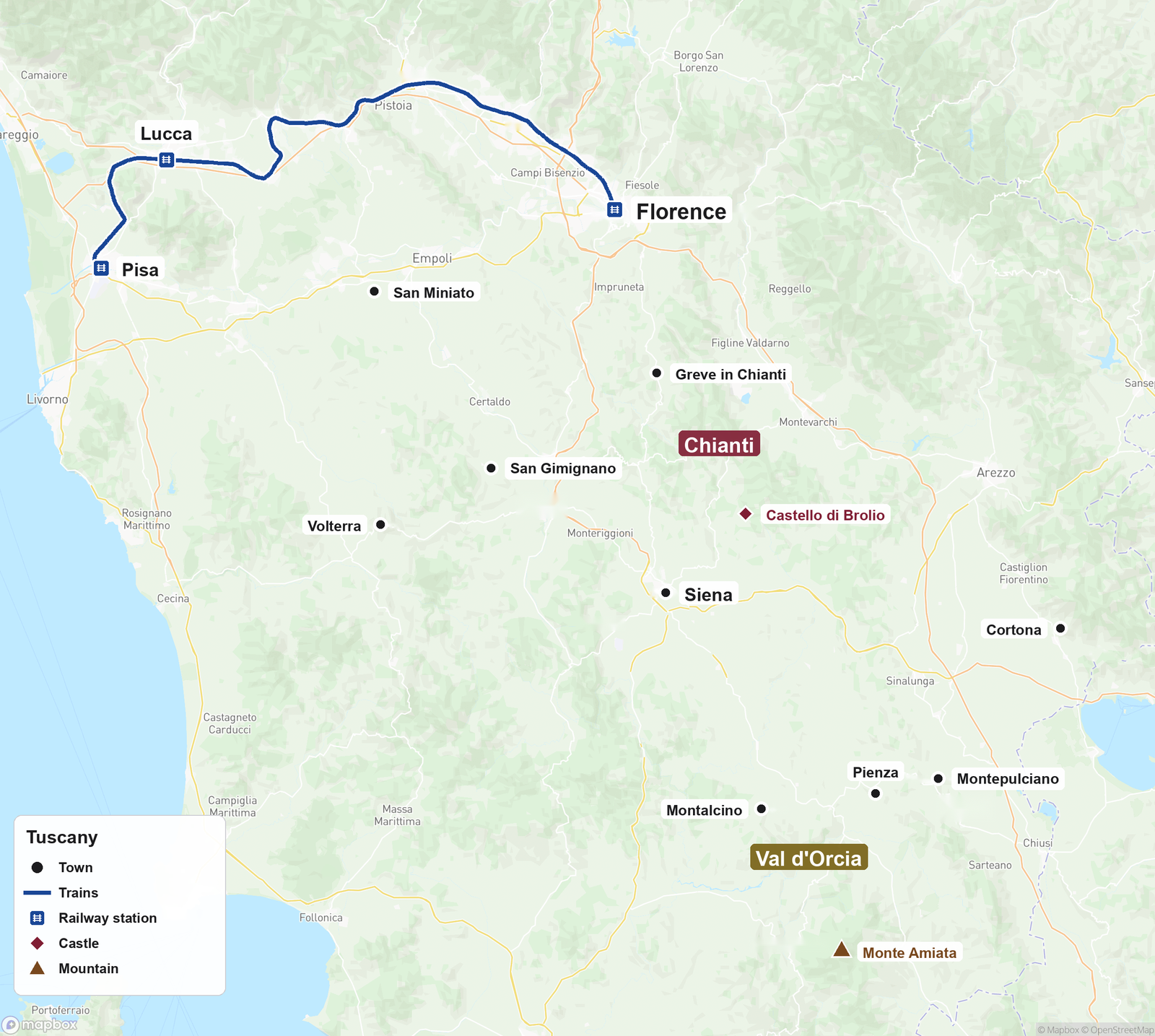
The simplest answer to where to stay in Tuscany without a car is Florence. Every day out starts there and ends there, which suits the train to Lucca and on to Pisa, or a guided wine day, and with some planning a car-free Tuscany is doable. What Florence can't give you is the freedom to wander: without a car, the countryside comes to you on someone else's schedule. Before you count Tuscany's days, work out how many days Florence itself needs, because the city takes its share first.
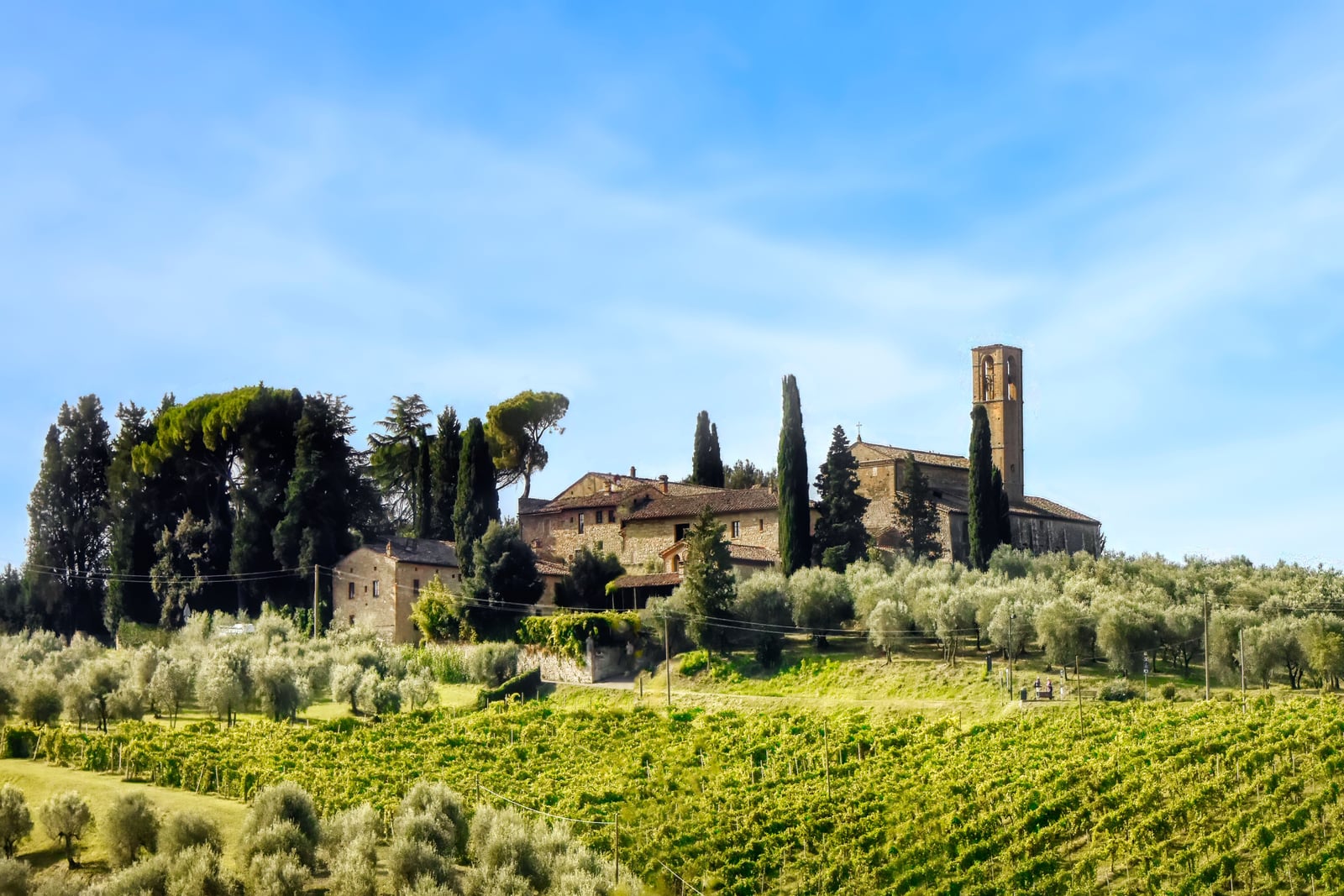
With a car, the other answer to where to stay in Tuscany opens up: the countryside. The Val d'Orcia is where a car earns its keep. A farm stay (an agriturismo, in Italian) is the same deal: most aren't near a train station. Out there, a night can mean an old hamlet turned into a hotel or an estate in the middle of the vineyards, and it is the part of the trip worth protecting when the plan gets cut, even if something famous has to go. Which hill town to sleep in is its own decision, further down.
Then count the days honestly. Six days barely make a start on Tuscany, especially if Florence is part of the trip, and a plan that races through a town a day is exhausting in a way that defeats the purpose: the slow pace is the thing you came for, and it doesn't survive a packed schedule. So cut the list to the half that fits your car answer, and accept that the other half is a reason to come back. One base, plus a night or more in the countryside, is the shape the rest of this article follows.
I did my own Tuscany with a car, a small automatic picked up at Florence's airport so I never had to drive into the city past its ZTL cameras. Out in the Val d'Orcia, the towns sat twenty-odd minutes apart on quiet back roads, and the car bought what no bus timetable would: pulling over at a row of cypresses, an out-of-the-way cheese farm, the hot springs at Bagni San Filippo, a long lunch in a village as small as Monticchiello. It also took two things away. Every hill town's center is a ZTL, so the car never reached a hotel door: it stayed in a lot outside the old walls, and I walked up. And the driver doesn't really taste. There is no Uber to call out there, and a narrow, unlit road back after a bottle of Brunello is a poor end to dinner, so whoever had the keys stopped at a couple of sips.
A Chianti Wine Day: Who Drives Home?
A Chianti wine tour from Florence works best when nobody in your group has to drive back. Distance is not the problem with wine tours in Tuscany, Italy, from Florence: Greve in Chianti is only about 30 km (about 19 miles) south of the city by road. On the wine day, the car is the hard part.
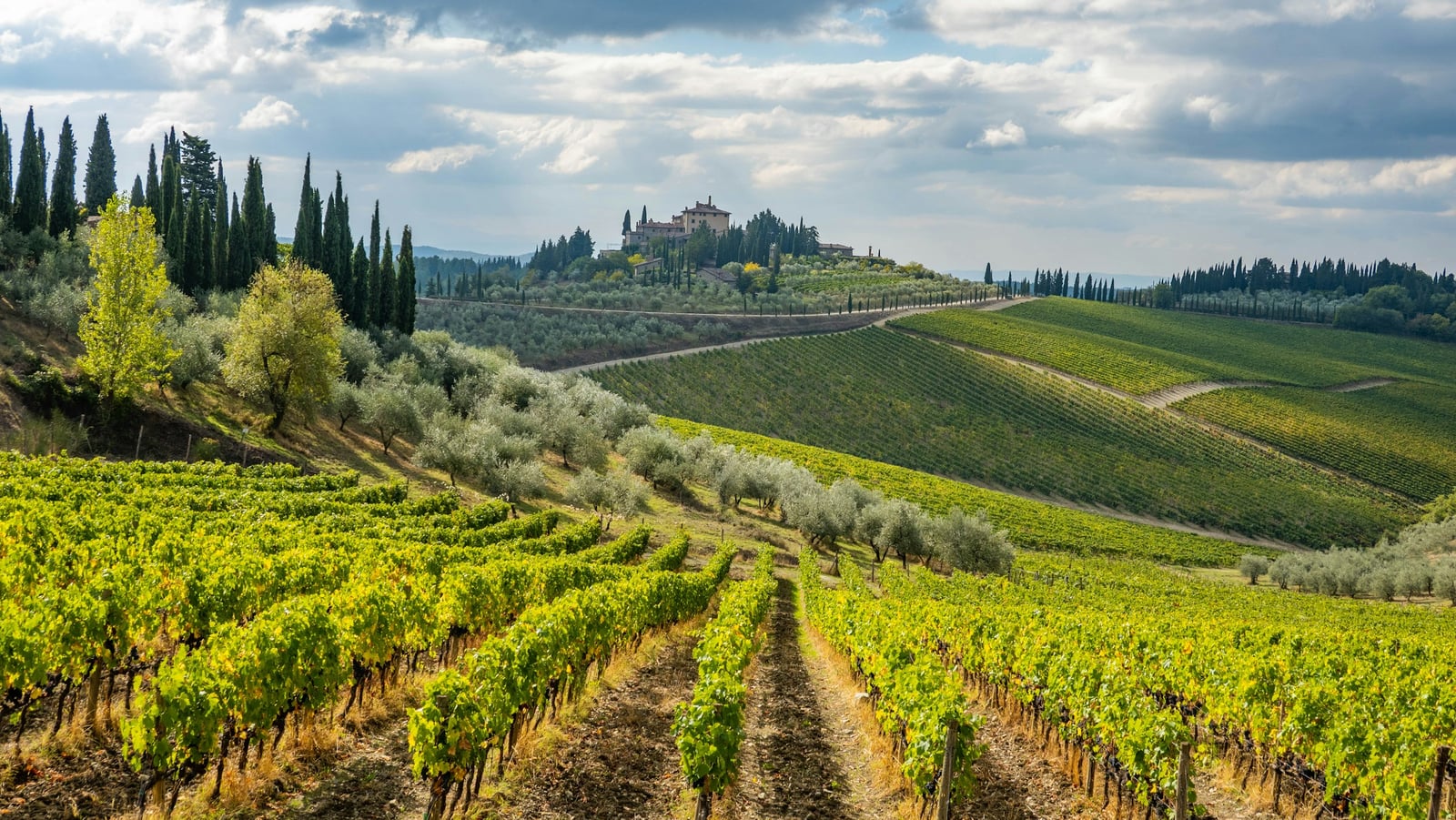
A tasting is not a sip, and a day of several estates adds up to a lot of wine, so settle who drives before the first pour, not at the third winery. Either book a tour, where part of what you pay for is not being in charge of anything, or book the estates direct with one sober driver.
Antinori nel Chianti Classico is the estate near Bargino in San Casciano in Val di Pesa. On its four visits in the table below, you join a group, pay by credit card when you book, and can't get the money back, so pick a date you'll actually keep. The Antinori rows all book on the estate's own experiences page. The last two rows are Brolio Castle (Castello di Brolio), home of the Ricasoli Winery.
| Visit | What you get | Price | Time |
|---|---|---|---|
| Antinori, Tinaia ("vat room") or Bottaia ("barrel cellar") | Estate visit, in Italian or English | €50 or €75 | About 1.5 or 2.5 h |
| Antinori, Cru | Visit and lunch; not for children or teens | €190 | About 2.5 h, then lunch |
| Antinori, Tuscan Stories | Four wines in a private room, no tour, 18+ only | €30 | About 45 min |
| Castello di Brolio, gardens | Gardens and one wine at the wine shop; no booking except groups of 10 or more; children up to 12 free | €7.50 | About 1 h |
| Castello di Brolio, Classic Tour | Gardens, winery, three wines; by reservation; no children 12 and under | €55 | About 2.5 h |
Castello di Brolio's gardens open every day from mid-March to December 31 and close from January 1 to March 2027. The Classic Tour runs daily from March to December, starting at 10:30 (meet at the castle ticket office at 10:15). The catch: you get from the castle to the wine shop in your own car, so even the tour needs a driver. Reserve the tour on the Ricasoli estate's Classic Tour page.
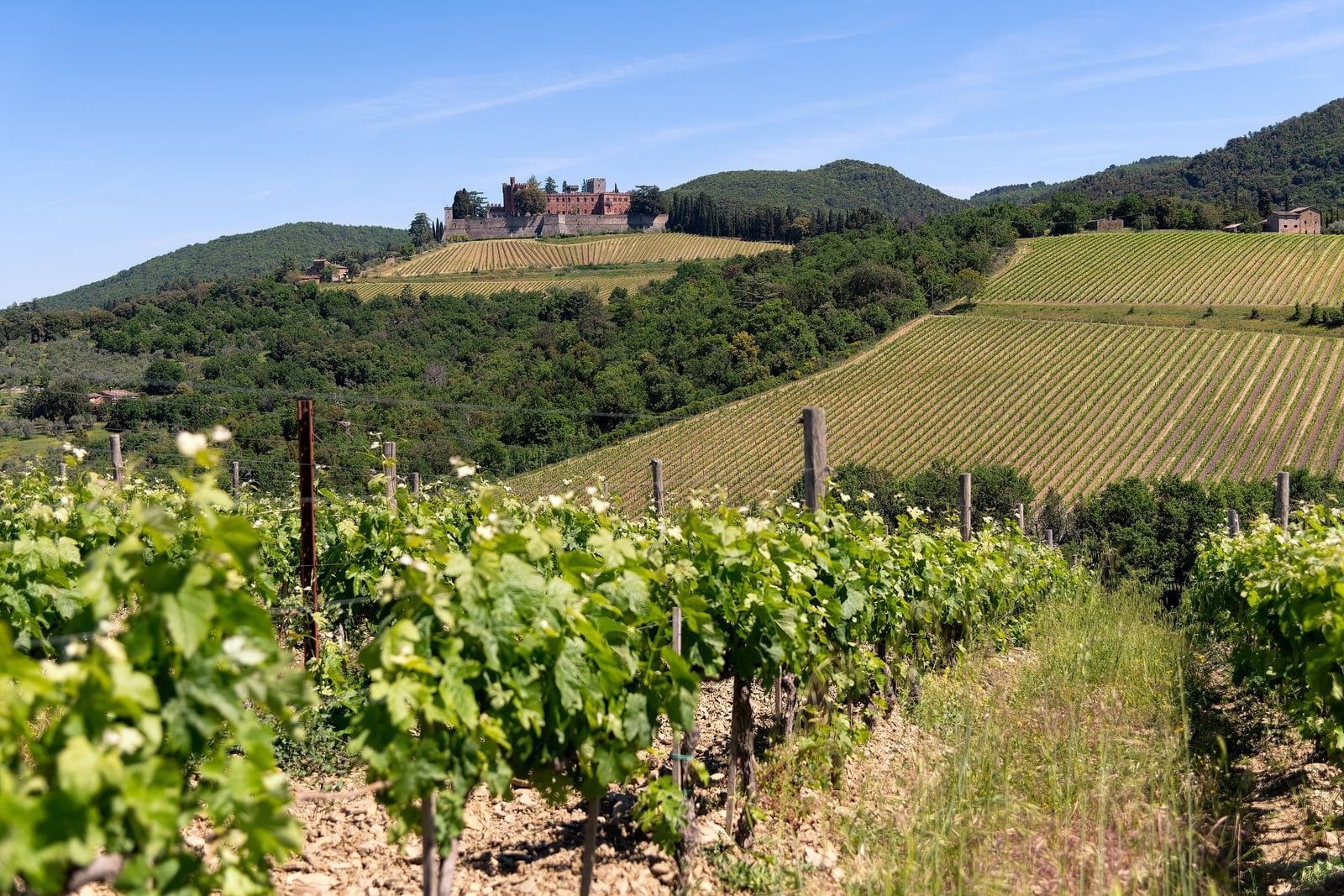
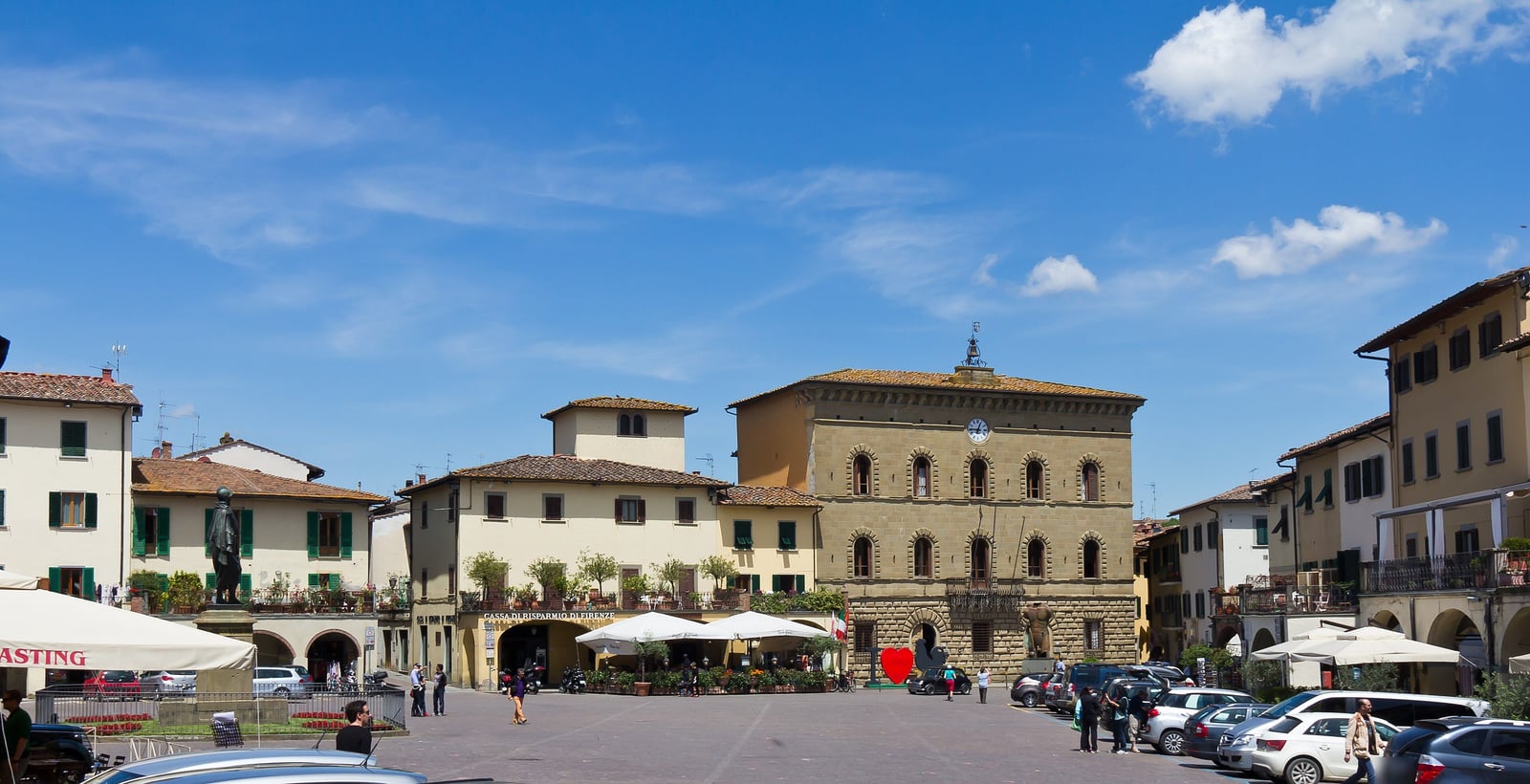
Greve in Chianti makes the town stop of the day, built around a triangular main piazza where a market has run, more or less continuously, for centuries. For the sober driver: parking in the center is paid, Piazza Matteotti included. Away from the wine entirely, a cooking class in someone's home is worth a slot somewhere in the trip.
For several estates in one day, take the tour. The best wine tours from Florence keep the group small, stop at a few wineries, and sit you down to lunch, and the wine turns out to be only part of the day. On the listing, check that lunch is included, where it picks up in Florence, and how many tastings the price covers.
Book a Chianti wine tour with lunch from Florence
A few wineries and lunch - check where it picks up in Florence
The Val d'Orcia: A Car and a Night
The Val d'Orcia, a UNESCO World Heritage site since 2004, is the valley that runs from the hills south of Siena to Monte Amiata, and the landscape most people are picturing when they say "Tuscany." It is also where the car question stops being theoretical.
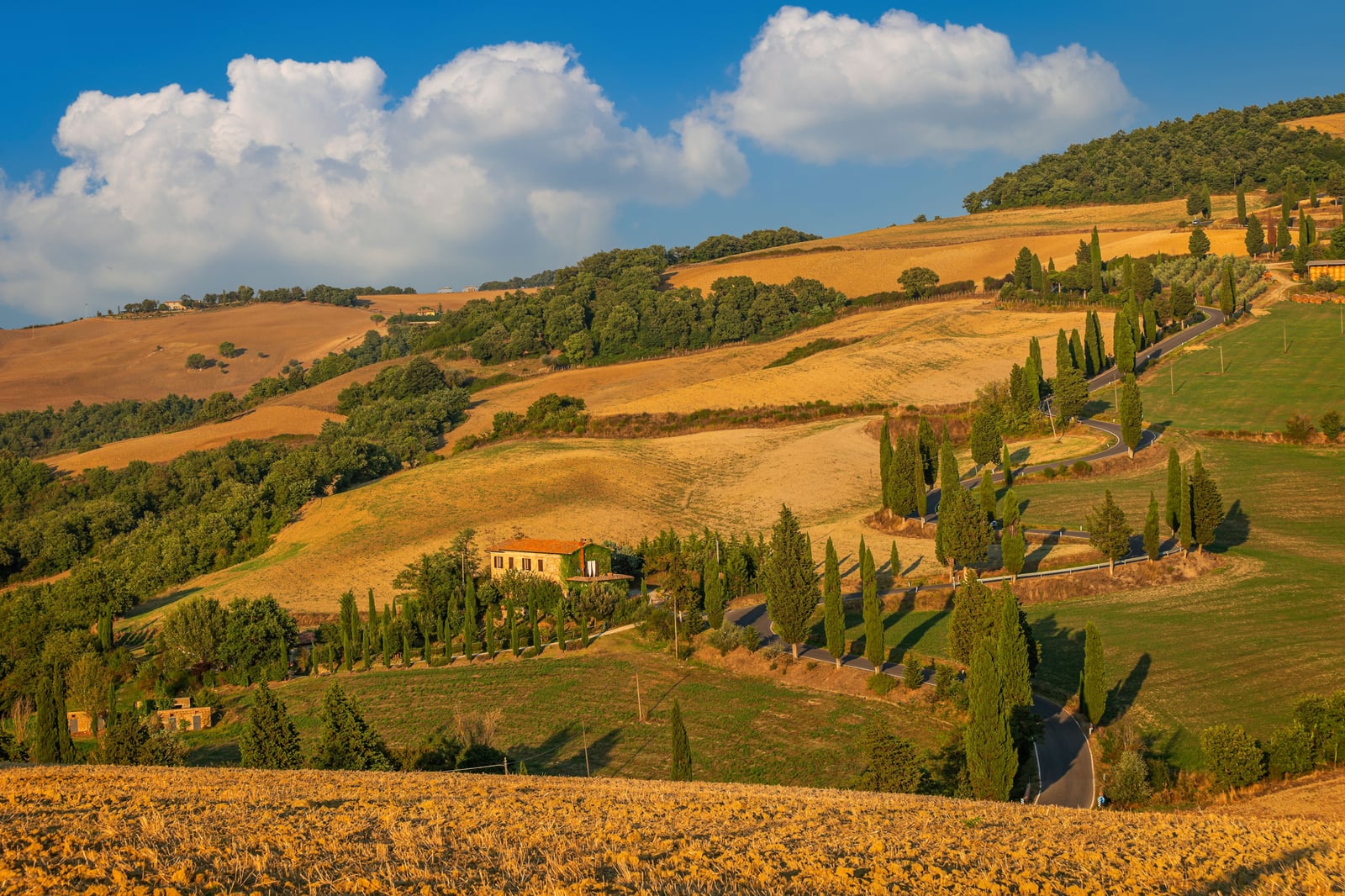
This is country that wants a car, and what the car gets you is long open views and small towns scattered across the hills. Rural Tuscany simply wasn't built around buses. The ones that do run out here are routes, not a plan for a day, and they sit with the rest of the mechanics near the end of this article. So does the no-car answer, which is a guided day tour.
With a car, you can base yourself out here, and the night is what the car really buys: a day trip sees the valley at noon, a night keeps it into the evening.
There are natural hot springs in and around the valley, too. They make a trip of their own, and I've written up Tuscany's hot springs as a winter trip separately.
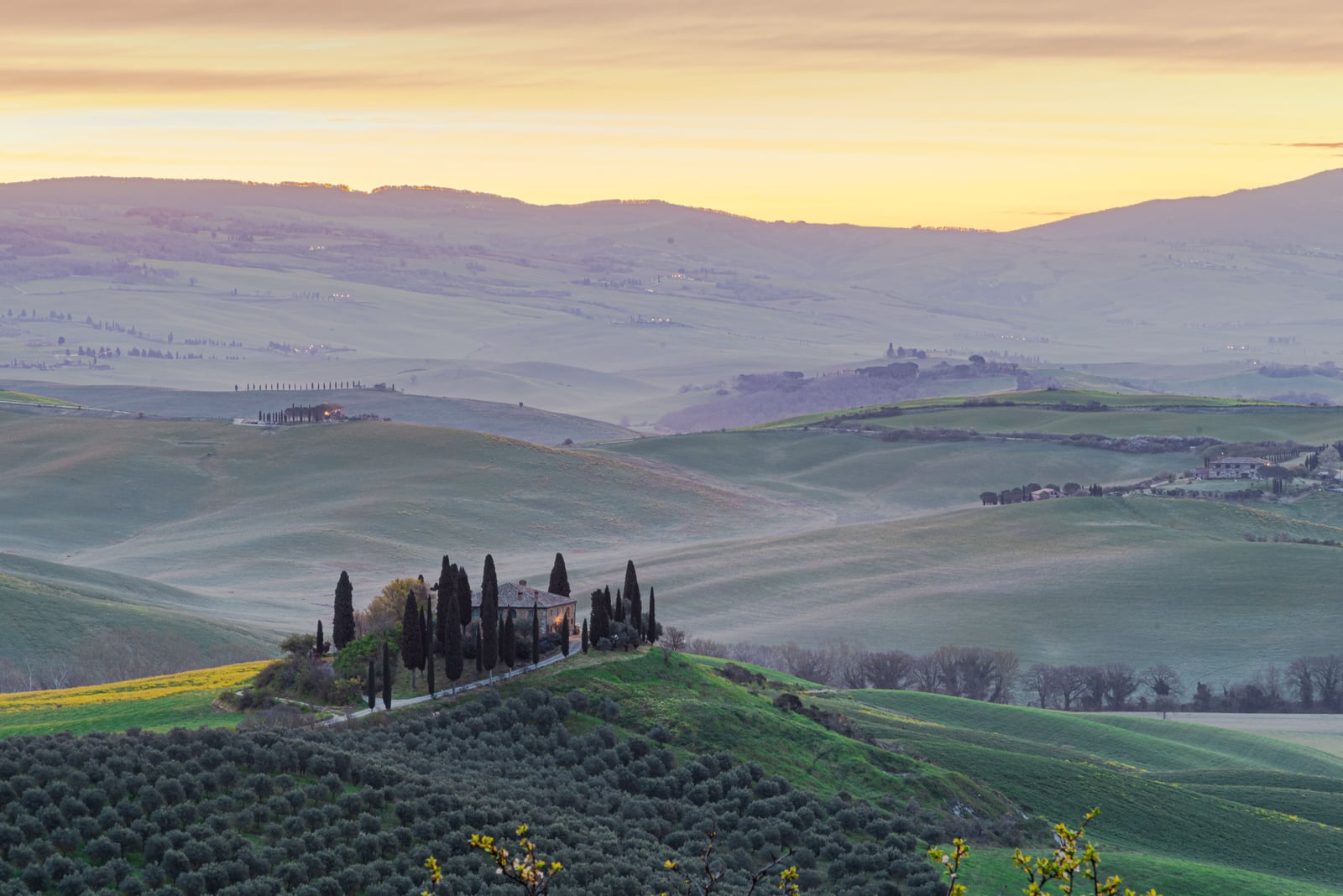
Then the end of the day. You stand at the edge of town with nowhere left to be, and the Val d'Orcia sweeps away below you toward Monte Amiata, with tiny towns sitting on their own hills across it. A few hours ago they were names on a map; now they are the neighbors. It is the view you drove all this way for, and tonight nothing asks you to leave it. Dinner is a walk away.
The practical lesson is a dull one: in this valley, stay longer at each stop, because the towns are small and the best hour in a small town is usually the one after you have finished seeing it.
Pienza, Montalcino, or Montepulciano: Which Town to Sleep In
Pienza, Montalcino, and Montepulciano, three hill towns of the Val d'Orcia area, each keep one paid sight worth the stop. Which one gets your night comes after all three: a bed is easier to choose once you know what's outside the door.
Between November and March, read the winter column before you plan a day around any of them: each one pauses for weeks or cuts its hours.
| Town | Sight | Ticket | Winter |
|---|---|---|---|
| Pienza | Palazzo Piccolomini (the Piccolomini palace) | €7 | 10:00 - 16:30, closed Tuesdays and Dec 25; shut Nov 16 - 30 and Jan 7 - Feb 14 |
| Montalcino | The Fortezza (the fortress) | €4 | Daily 10:30 - 18:00 to Jan 10, 2027, except Dec 25; Jan 11 - Feb 28, weekdays close at 16:30 |
| Montepulciano | Contucci's cellars, guided | €40; book 15+ days ahead | Mon, Tue, Fri, Sat at 11:00 and 15:30 until Jan 6; resumes Apr 1 |
Pienza was rebuilt as an "ideal town" in the 15th century under Pope Pius II, and the view over the valley from the edge of town is reason enough to come. Its Palazzo Piccolomini stays open longer, daily 10:00 - 18:00, over December 5-8 and December 26 - January 6, except the morning of January 1, and children up to 5 go free.
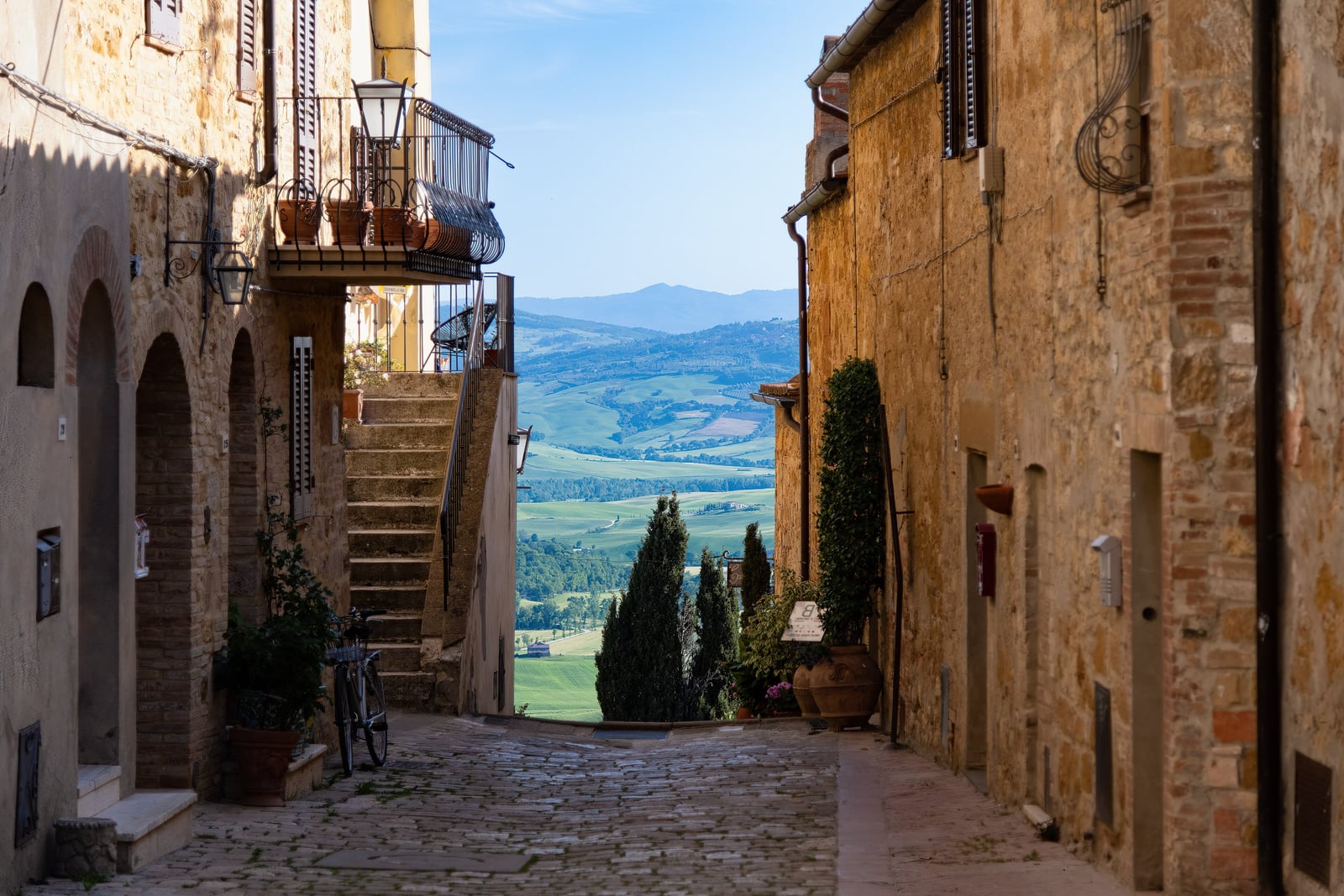
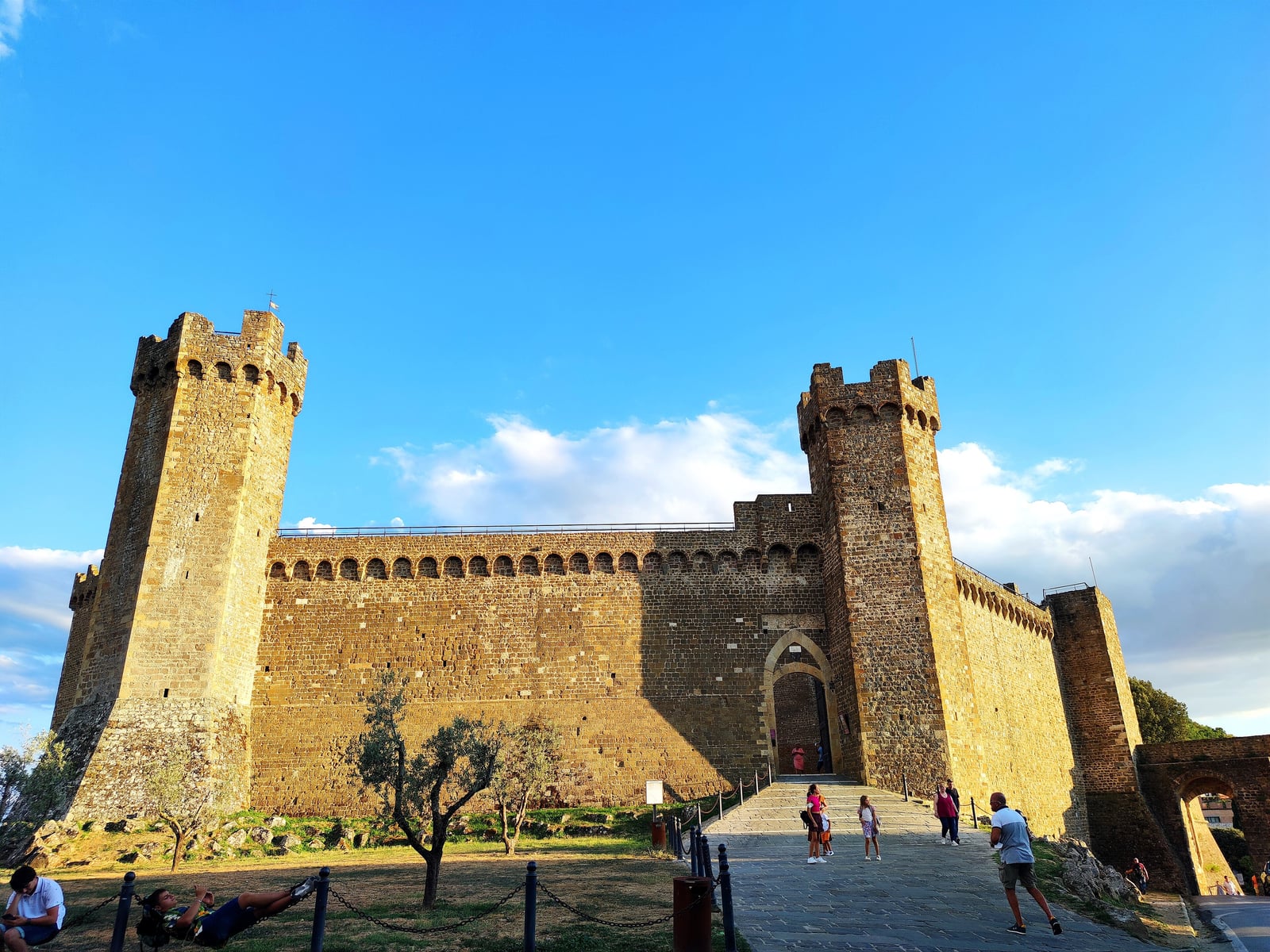
Montalcino is the town of Brunello, the red wine made from the vineyards around it. The Fortezza takes its last entry 30 minutes before closing and may shut for frost, snow, or an alert from Italy's civil-protection agency (the Protezione Civile), so on a cold day, don't build the afternoon around it. Children up to 6 go free; ages 7 to 12 pay €2.
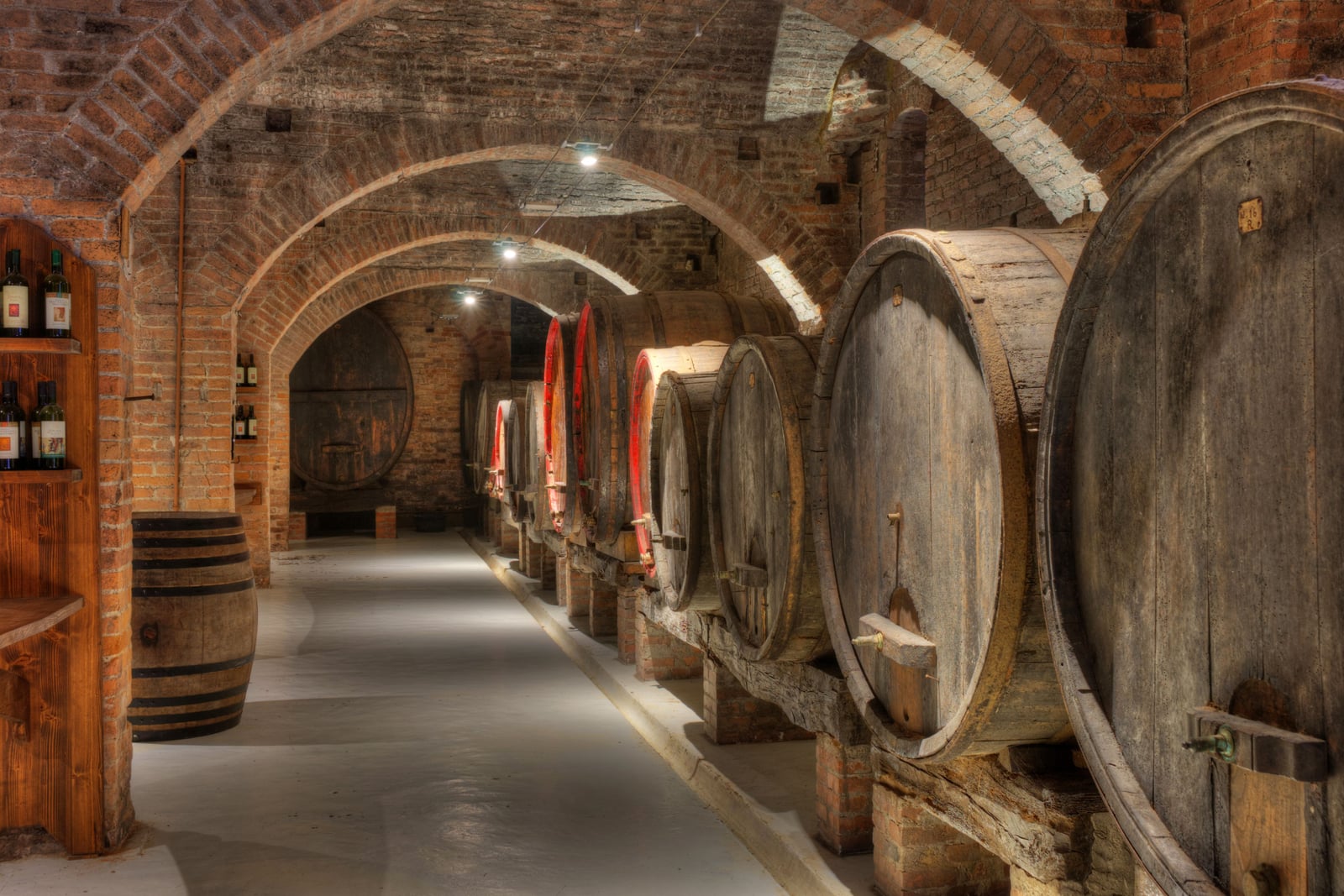
Of the things to do in Montepulciano, Tuscany, the wine comes first, and the historic cellars sit right in town: Contucci's, at Via del Teatro 1, spread over three floors. For a wine tour there, the guided Contucci Experience takes about 2 hours for up to 20 people, and swapping its plate of local products for snacks drops the price to €25. Book it through Contucci's own page for the visit.
Now the night. Pick by what you want outside the door: Pienza for the view, Montalcino for the Brunello and the Fortezza, Montepulciano for the cellars in town. Or split the difference with a farm stay between Montalcino and Montepulciano.
My own pick is Montepulciano, in the old center up top near Piazza Grande or right by one of the gates, so the car gets parked once and forgotten until morning. Pienza and Montalcino are lovely by day, but they empty soon after sunset, and each takes about half an hour to walk end to end. Montepulciano still has a pulse at dinnertime, with more trattorias and the old cellars cut into the rock under its palaces, so you can order the town's own red, Vino Nobile di Montepulciano, and walk home. Walk is the word: the streets climb and drop hard.
Book the room once the town is chosen, and ask the hotel where you'll park: in Pienza and Montepulciano, parking is a question to settle with whoever is expecting you, not one to guess at on arrival.
Find a room near Montepulciano's Piazza Grande
The old center up top, near Piazza Grande - ask the hotel where you'll park
Volterra: A Hill Town Worth the Evening
Volterra is a walled hilltop town that rewards an evening more than a quick stop. Treat it as a pause on the way to somewhere else and you leave just before it gets good. For things to do in Volterra, Tuscany, start on the main square and the Palazzo dei Priori, the town hall.
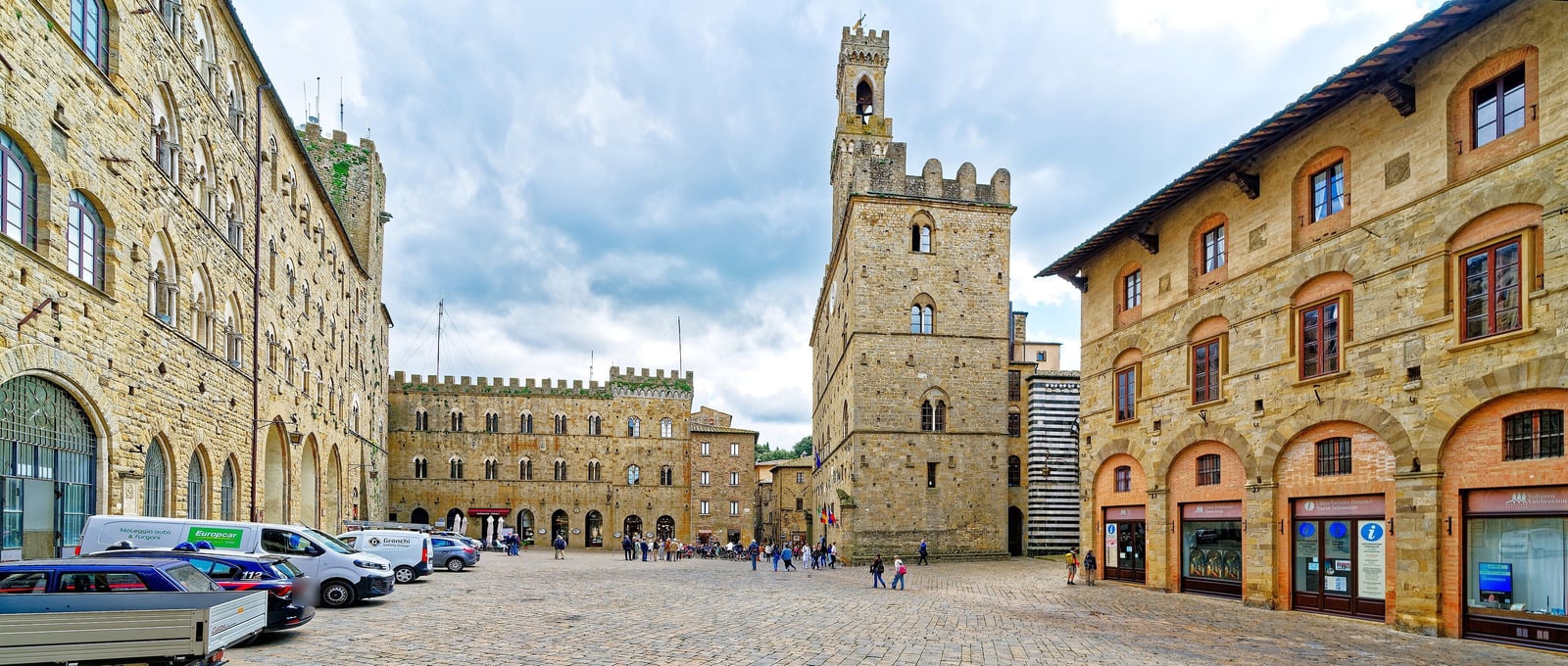
Entry to the palace is €10 (€8 reduced). In winter it keeps shorter weekday hours and closes on Tuesdays, so look up the current hours on the town museums' Palazzo dei Priori page before you plan around it. Give the afternoon to a walking tour or a wine tasting, then stay for the evening, when a young, lively crowd can come out into Volterra's old streets. The evening costs nothing, which makes it the best-value sight in town.
If you drive, Volterra's ZTL is active 10:00 - 17:30 from November 2 to March 20 and 10:00 - 20:00 from March 21 to November 1, so a summer evening arrival can still land inside it. Park outside and walk in; the fine sits with the rest of the driving, further down.
Volterra often gets paired with San Gimignano in a single loop. San Gimignano is the busier, more touristed of the two, and pairing them in one loop mostly means walking through both and seeing neither. Keep them apart: reaching San Gimignano from Florence makes a better plan than squeezing it into the Volterra day.
If Cortona is on your list, its reason to stop is the MAEC, its Etruscan museum: €12, or €3 under 19. In winter (November 1 to March 31) it opens 10:00 - 17:00, last entry 16:30, and closes on Mondays except December 7 and 28, 2026; it is also closed December 25.
Lucca and Pisa by Train: Give Lucca the Day
Lucca and Pisa make one western day by train, and Lucca deserves the bigger share of it. Lucca's station sits close to the old town, with trains toward Florence and toward Pisa.
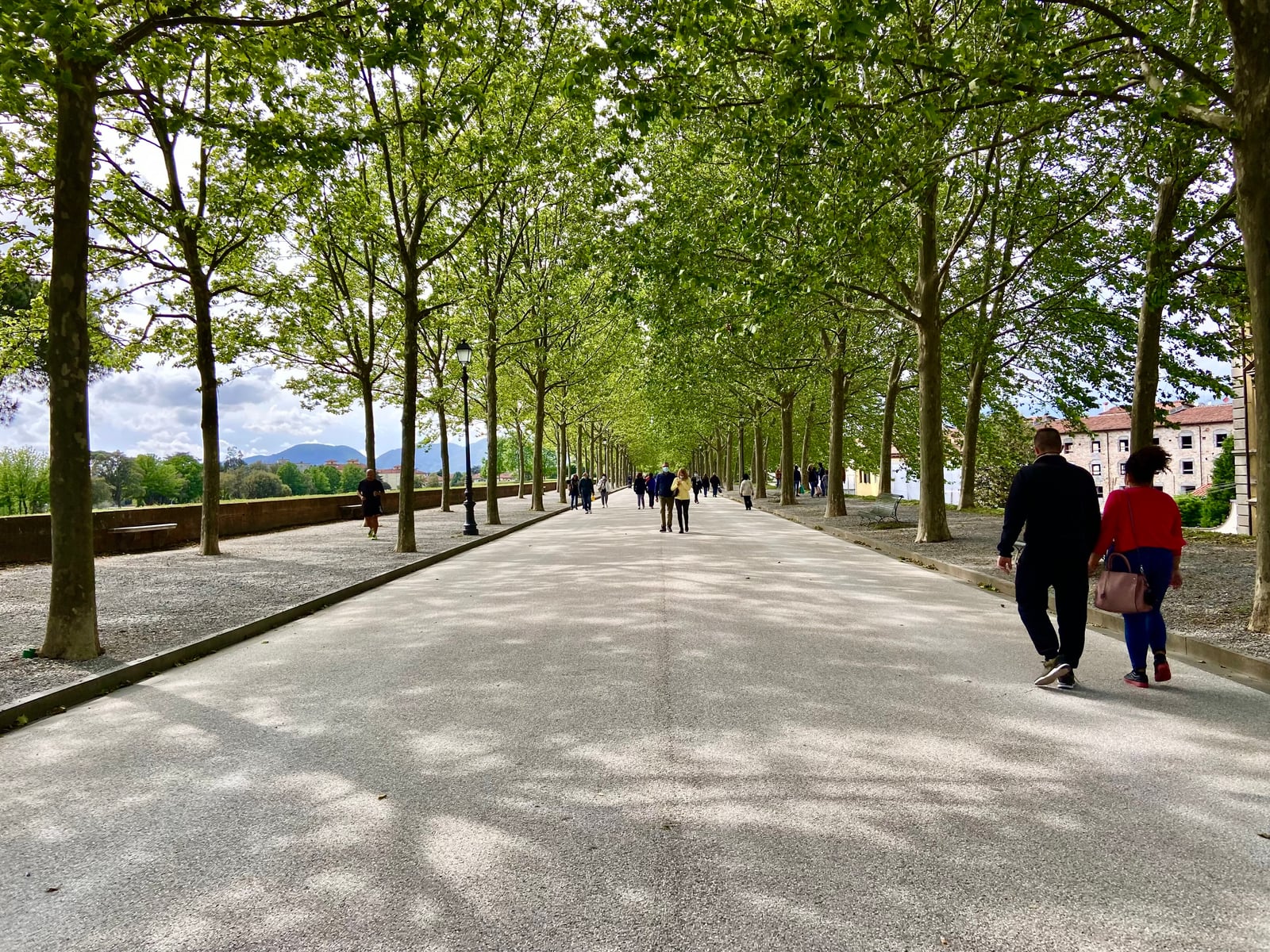
Start with the walls: 4.2 km long, six gates, entirely walkable, free, and open to everyone. A brisk walk does the loop in about 45 minutes; allow about an hour anyway, because nobody comes to Lucca's walls to set a time. Shared bikes are the other way around town: €1 to unlock plus €0.25 a minute, and inside the walls they can be left only at dedicated stalls.
The historic center is one wide pedestrian zone, so if you drive, park outside the walls, as the town advises. Lucca fills with day-trippers even in ordinary weeks, and its big comics festival in the fall swamps it, so check the festival's dates before you plan a Lucca day then.
In Pisa, the Leaning Tower is climbed on foot, 251 steps in a visit of about 30 minutes. Its tickets are timed and limited in number: online sales open 90 days ahead on the official Piazza dei Miracoli ticket page, the ticket offices on site start 15 days ahead, and any ticket also gets you into the Cathedral, at no fixed time. For the Tower, there are no reduced tickets: under-18s need a regular one and an adult with them, children must be 8 or turn 8 before the year is out, and staff may ask for ID.
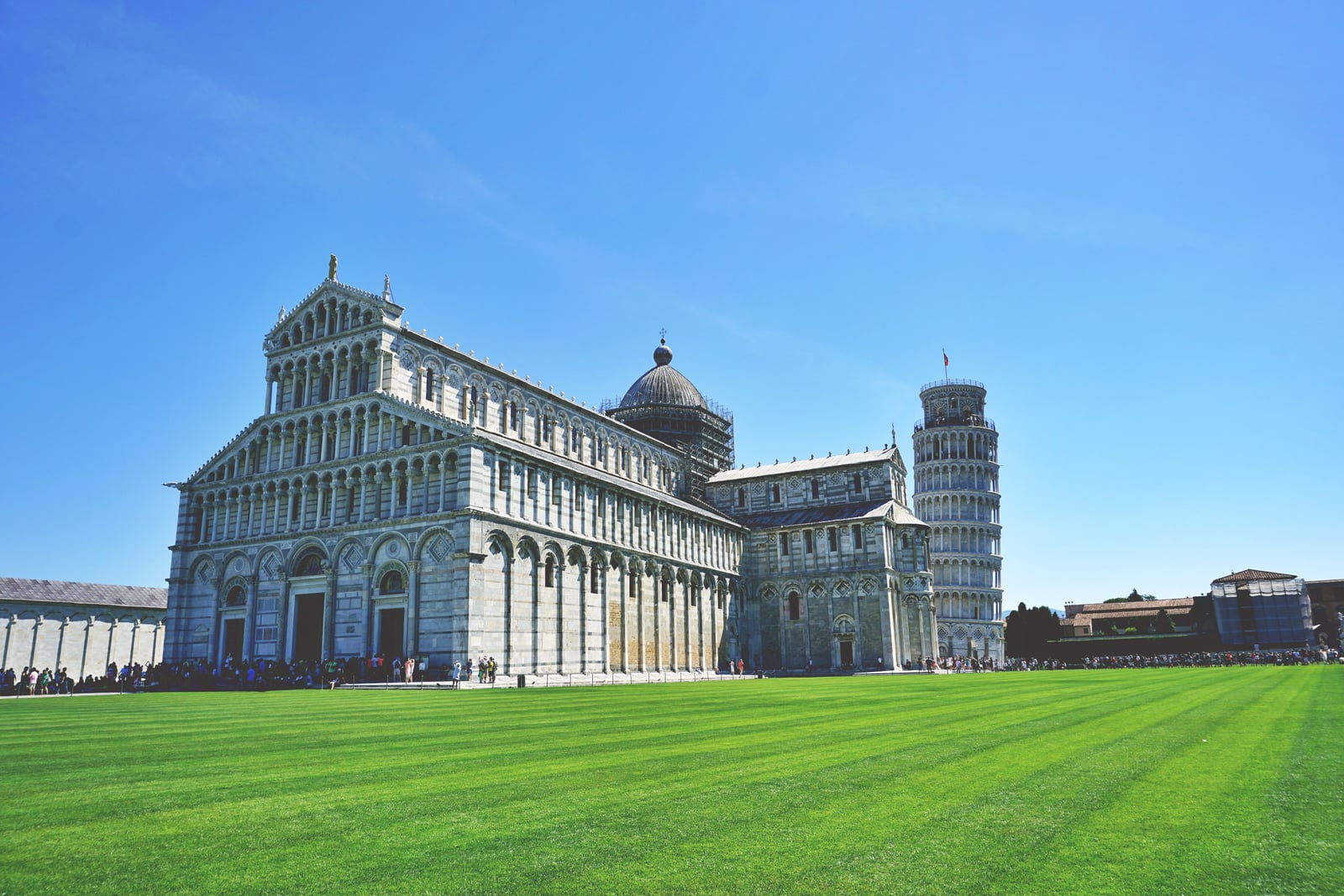
If you're climbing the Tower, your bags, handbags included, go to its free cloakroom, so arrive about 15 minutes before the time on your ticket to leave them; suitcases and large luggage aren't allowed in any of the monuments. Through December 3, 2026, the Tower opens daily 9:00 - 18:00, with entry up to 30 minutes before closing. If you bought online, show the official PDF, on your phone or printed: a ticket in any other form may not be accepted.
⚠️ Warning
Your Tower time slot is fixed. Arrive late, for any reason, and you're not let in and not refunded. Plan the rest of the day around the slot, not the other way around.
Give Pisa the Tower and the Cathedral as a train hop from Lucca on the Lucca day, not a day of its own. That's my verdict rather than a law, but a whole day there is a day taken from somewhere better, and the streets around the Tower are no place to eat. If the west is your half of Tuscany, Lucca works as the base, too, with Florence as the day trip from it.
Without a Car or Renting One: Buses, Day Tours, the ZTL
Without a car, the Val d'Orcia has buses, but they are routes to look up, not a day to build on. With a car, two rules come first: the ZTL, and the permit for a license from outside the EU and the European Economic Area (EEA). Both are cheaper to learn here than from a fine.
The routes belong to Autolinee Toscane: the 112 is the Siena - Buonconvento - Montepulciano line, with Pienza and San Quirico among its stops, and the 114 is Siena - Buonconvento - Torrenieri - Montalcino. Read the operator's own timetable before you count on either one, starting with the 112's line page.
That makes the car-free Val d'Orcia a guided day, and the shape worth paying for is a full one: Brunello wineries, lunch at one of them, and a short walk around Montalcino. Before you book, check on the listing where the tour departs.
Book a small-group Brunello wine day from Siena
Brunello wineries, lunch at one of them and a walk around Montalcino
If you rent, rent for the countryside days, not for the Florence and train days, when a car does nothing but cost you. Pick a small car, not a large van: a small Tuscan town is no place for one. Parking is the part of driving here that wears you down.
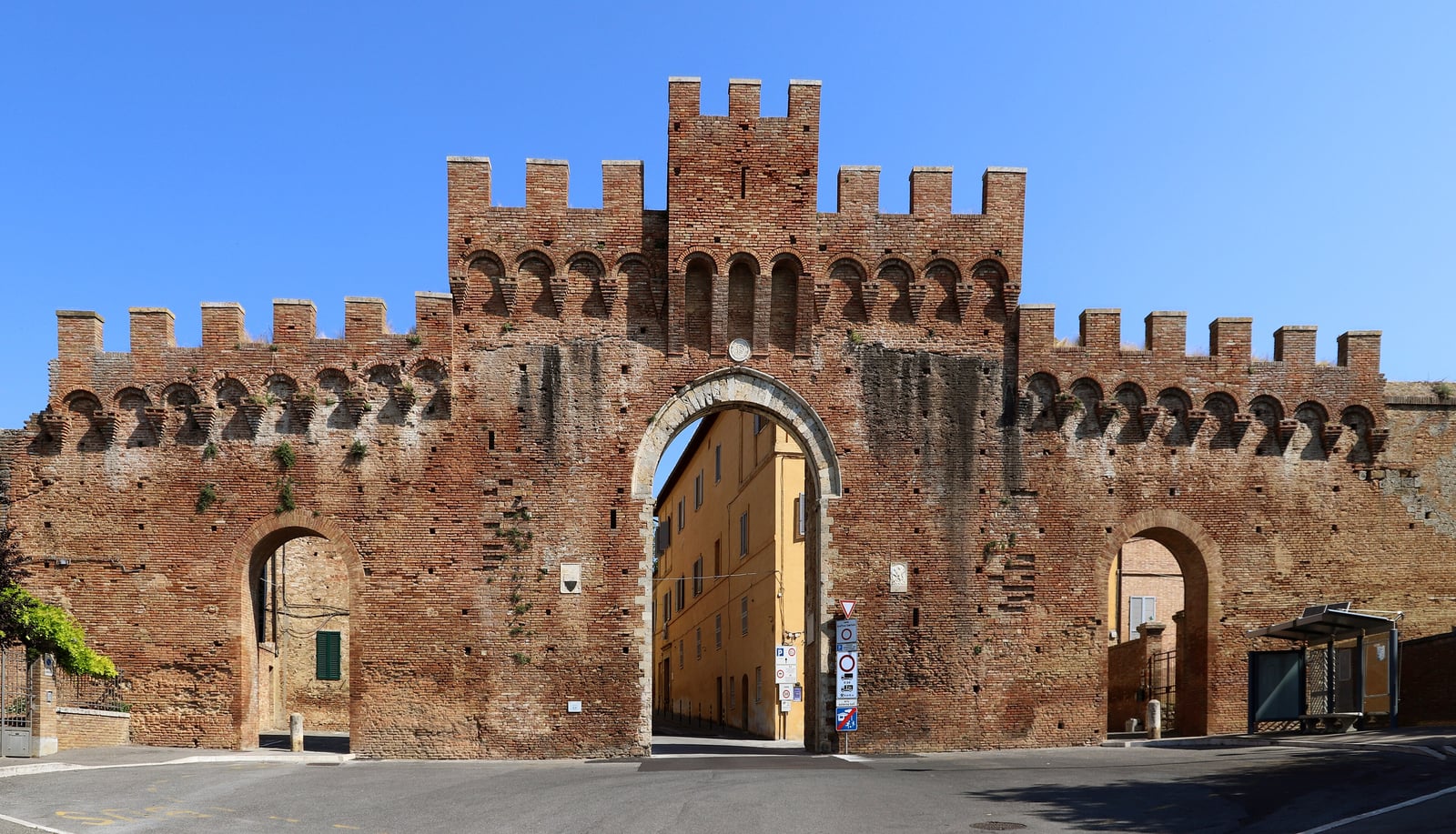
The rule that saves the most money is simple: treat the center of any walled town as a ZTL (zona a traffico limitato) until you know otherwise, and leave the car outside the walls. Volterra's ZTL hours are back in its own section.
⚠️ Warning
Drive past a ZTL sign without authorization and the fine is €83 - €332. It can reach you by letter months after the trip, and the rental company usually adds an admin fee of its own.
When you book, set the pickup for the morning your countryside days begin, at Florence's airport rather than in town, so you never drive into the city past its ZTL cameras. Then sort out the paperwork before you fly. Unless an international agreement says otherwise, anyone driving on a license from outside the EU and the EEA, and not resident in Italy for more than a year, must carry an international driving permit or an official Italian translation together with that license, both valid. Driving without one can cost €408 - €1,634.
Compare rental cars at Florence airport
A small car, picked up at the airport the morning your countryside days begin
When to Go: Busy Early Summer, Short Winter Hours, Fixed Dates
Late May into June already falls in Tuscany's high season: the well-known places are busy, and probably hot. The Val d'Orcia area's hill towns can still be sleepy in March, and winter brings short hours and weeks-long closures to the hill-town sights in this article. Every season charges you something; only the currency changes.
In the busy weeks, reach the famous places early, before the crowds show up. For the cold months, the dates and hours sit above: Brolio's season in the Chianti wine-day section, the hill-town table, Volterra's winter pattern (and the page that carries its hours), the Cortona line, and the Leaning Tower's hours into early December in the Lucca and Pisa section. Check them before you fix a day.
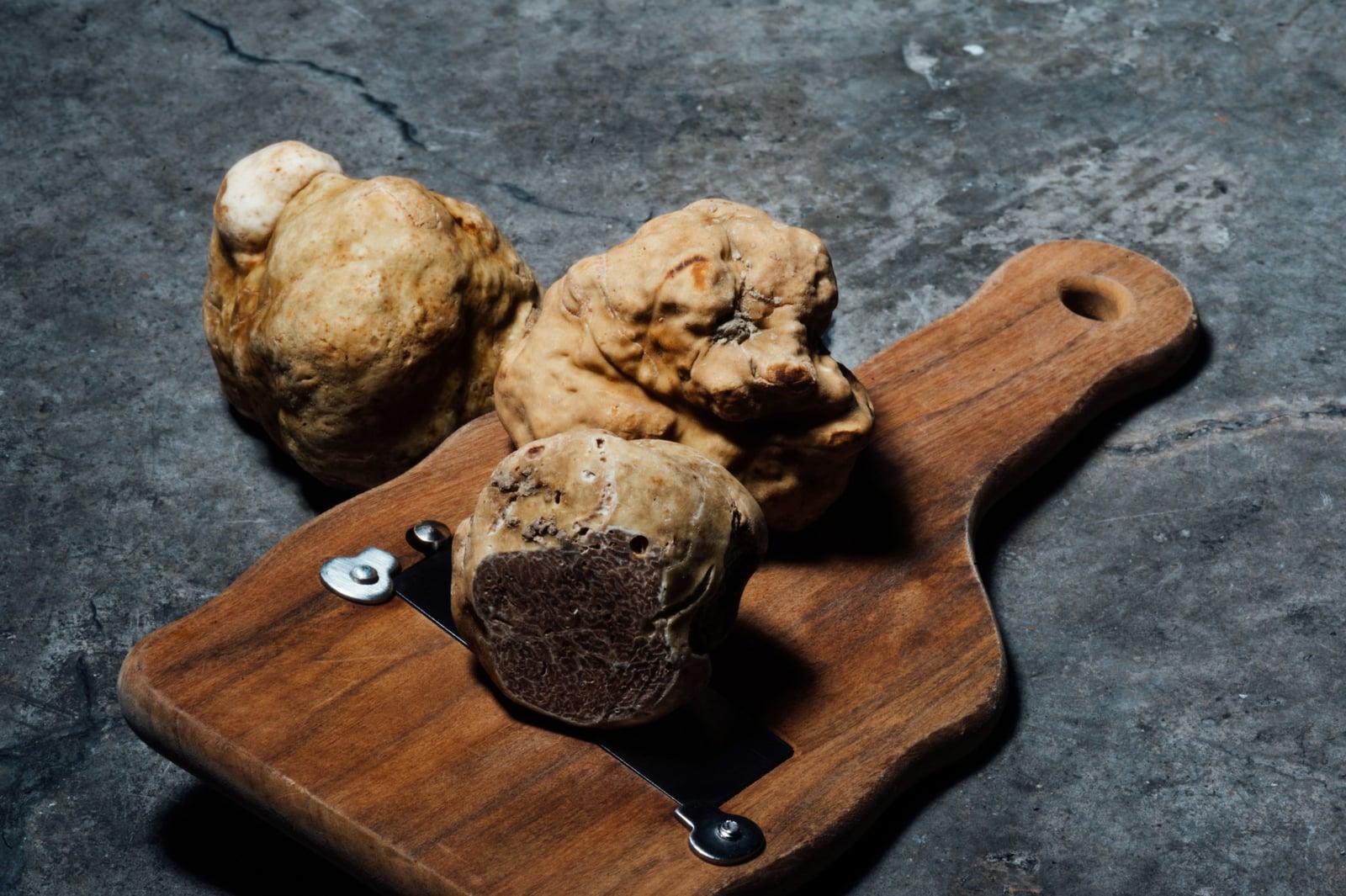
Two events are worth planning around. San Miniato's white-truffle fair runs over the last three weekends of November 2026: November 14-15, 21-22, and 28-29, as listed on the organizer's fair page.
Siena's Palio, the horse race around the Piazza del Campo, is held on July 2 and August 16, though a race can be postponed: in 2026 they ran July 3 and August 18. If either one is your reason for coming, build the trip around the date, and for the Palio, keep it loose enough to survive a postponement.
Things to Do in Tuscany: Common Questions
- Do you need a car in Tuscany?
- Not for Florence, Lucca, Pisa, or a Chianti wine tour. For the hill towns of the Val d'Orcia area, you want a car and a night out there, or a guided day tour instead.
- Chianti or the Val d'Orcia: which should you choose?
- Val d'Orcia or Chianti: two different days. Chianti is the wine day near Florence, best with someone else driving; the Val d'Orcia is the landscape, and wants a car and a night or a day tour.
- Can you visit Chianti wineries without a tour?
- Yes: book the estates direct. At Antinori nel Chianti Classico, the Tuscan Stories tasting is €30, paid at booking and nonrefundable; Brolio's gardens need no booking except for groups of 10 or more. Someone still has to stay sober and drive.
- Is Pisa worth a day?
- As a stop with Lucca, yes; as a day of its own, no. The Tower visit takes about 30 minutes on a timed ticket, and the Cathedral comes with it.
- How many days do you need in Tuscany?
- Six days barely make a start, especially if Florence is part of the trip. Whatever you have, pick the half that fits your car answer and, if you can, spend at least one night in the countryside.