 George Mandrovny
How Many Days in Rome: Count the Booked Mornings
How many days you need in Rome depends on what you have to book: one morning for each big timed booking (the Colosseum, the Vatican Museums, the Galleria Borghese), plus one day left open, plus the day you land.
- Two full days: the Colosseum one morning, the Vatican the next, and little else.
- Three full days: the same two mornings, plus a day left open for the Pantheon, the Trevi Fountain and Castel Sant'Angelo.
- Four or more: the Galleria Borghese's two-hour slot, the Colosseum and the Forum split across neighboring days, a slower pace, or a day out of Rome.
- Plus the arrival day: after an overnight flight it counts, but book nothing on it.
- The trap: a booked morning on a day the door is shut. The Vatican Museums close on Sundays except the last one of the month (and that one too on the dates in the table below), the Borghese is not open on Mondays, and Castel Sant'Angelo is shut on Mondays, except for one first-Monday afternoon a month in 2026.
The sights worth a morning sit in four parts of the city: ancient Rome, the Vatican, the streets around the Pantheon and the Trevi, and the Borghese.
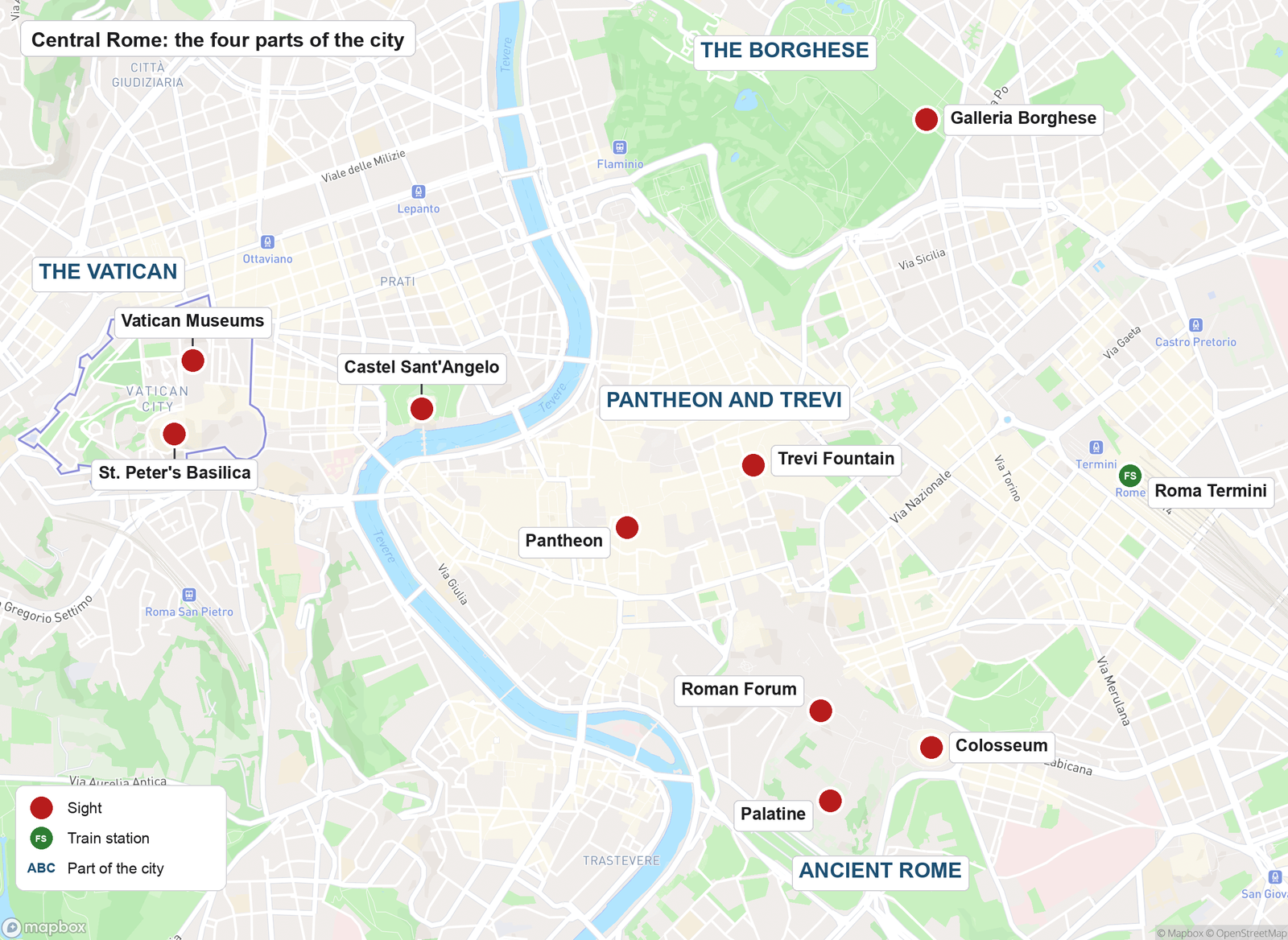
The big ones are timed doors: a booked time at the Colosseum, a booked day at the Vatican Museums, a booked shift at the Borghese. Give each its own morning, and call two or three things a full day, with room to sit down and eat. Booking every hour is the mistake; that plan looks magnificent at the kitchen table and loses pieces at the first long lunch. Leave the afternoons loose. The week decides which morning each can take, and the sellers decide when you can book.
Count the arrival day, but leave it unbooked. After an overnight flight you land tired, and the room may not be ready until the afternoon, so spend the day outdoors, on foot in the center, and let Rome keep you awake. If the arrival day has to carry a booked sight, that only works if you actually slept on the plane.
Rome's Week: Plan Around Sunday, Monday, and the First Sunday
In Rome the day of the week decides which sight a morning can hold: Castel Sant'Angelo is shut on Mondays (in 2026 the first Monday of each month opens only in the afternoon), the Galleria Borghese doesn't open on Mondays, and the Vatican Museums open on one Sunday a month at most, the last.
| Sight | Open | Shut |
|---|---|---|
| Colosseum | Oct 25 - Feb 28: 8:30 - 16:30, last admission 15:30; Forum and Palatine from 9:00 | Dec 25, Jan 1 |
| Vatican Museums | Mon - Sat 8:00 - 20:00, final entry 18:00; last Sunday of the month 9:00 - 14:00, final entry 12:30, free | Other Sundays; the last one too on Easter Sunday, Jun 29, Dec 25, 26 or 31; closure days on its calendar |
| St. Peter's Basilica | Oct 26 - Mar 28: 7:00 - 19:00 | Check the basilica's site |
| Pantheon | 9:00 - 19:00, last individual entry 18:30 | Dec 25, Jan 1 |
| Castel Sant'Angelo | Tue - Sun 9:00 - 19:30, last entry 18:30 | Mondays (in 2026 each first Monday opens 14:00 - 20:00, €5 at the door only); Dec 25, Jan 1 |
| Galleria Borghese | Tue - Sun 9:00 - 19:00, last entrance 17:45 | Not open Mondays; Dec 25, Jan 1 |
| Trevi Fountain (inner perimeter) | 9:00 - 22:00 (Mon and Fri from 11:30), last entry 21:00 | No weekly closing day |
The Colosseum and St. Peter's rows are winter hours, through early 2027. Hours shift on some days (Trevi exceptions, Pantheon services, the Vatican's calendar), so check each site's official page before you go.
So a Monday morning belongs to the Colosseum or the Vatican, and on Mondays and Fridays the Trevi is not your first stop.
The first Sunday of the month makes several doors free, with conditions. The Pantheon is free, with no online booking and one line at the entrance. Castel Sant'Angelo is free on the same terms: no online booking, one line at the ticket desk. The Borghese waives admission but not the booking or its fee, with tickets released 10 days ahead and none sold last-minute. The Trevi perimeter still charges.
⚠️ Warning
The Colosseum is free on the first Sunday too, but those tickets can't be booked online. You collect them in person, in order of arrival, at the ticket office on Piazza del Colosseo, and they are valid only that day. On its free first Sundays the Colosseum keeps the panoramic elevator, the upper levels, the arena and the Underground closed.
In summer the heat can be brutal and the crowds heavy: put the booked sight in the morning, then give the middle of the day to shade and a nap.
What to Book in Rome, and When Each Booking Opens
Colosseum tickets in Rome go on sale 30 days before the visit, the Pantheon's in the middle of the month before, and the Galleria Borghese makes booking mandatory for every ticket. Buy each one from its official site.
| Ticket | Price | What it buys | When to book |
|---|---|---|---|
| Colosseum, Roman Forum and Palatine (24 hours) | €18 | One timed Colosseum entry, first and second levels, no arena, 75 minutes inside; the Forum and Palatine the same day or within 24 hours either side of the booked time | 30 days before |
| Full Experience Underground and Arena | €24 | One timed Colosseum entry, 90 minutes inside, Underground and arena subject to availability; one Forum and Palatine entry that day, the day before or the day after | 30 days before |
| Full Experience Attic | €24 | One timed Colosseum entry with the attic (only by steep steps), 90 minutes inside; one Forum and Palatine entry that day, the day before or the day after | 30 days before |
| Vatican Museums | €20, plus €5 to book online | The Museums and the Sistine Chapel, good only on its day | As soon as your Vatican day is set |
| St. Peter's Basilica | Free; €7 for the optional timed entry | The timed entry: a guaranteed time band and an audio guide | No booking needed |
| Pantheon | €7 | Entry in a booked time slot | Mid-month, for the next month |
| Castel Sant'Angelo | €18 | A named entry ticket | Recommended on regular days, especially weekends and holidays; bookable now for visits through December 2026 |
| Galleria Borghese | €16, plus €2 booking fee | Entry by mandatory reservation | Book ahead |
Full prices as of November 2026; the Borghese's can rise during temporary exhibitions.
For a first visit to the levels and the view, the Colosseum, Roman Forum and Palatine ticket does the job; its time inside is a maximum, not a suggestion. For the Underground and the arena, take the Full Experience Underground and Arena. The attic has its own ticket, the Full Experience Attic, and the attic itself is reached only by steep steps; the panoramic elevator is kept for visitors with documented reduced mobility, you report to the meeting point 30 minutes after the time on your ticket, and latecomers are not admitted. Whichever you hold, the ticket is in your name, you keep an ID visible at the entrance, and you can't go in at any time other than the one you booked. Arrive 15 minutes early: the Colosseum park recommends it on the €18 ticket, and it costs nothing on the others.
All three Colosseum tickets sell on the park's official ticket shop.
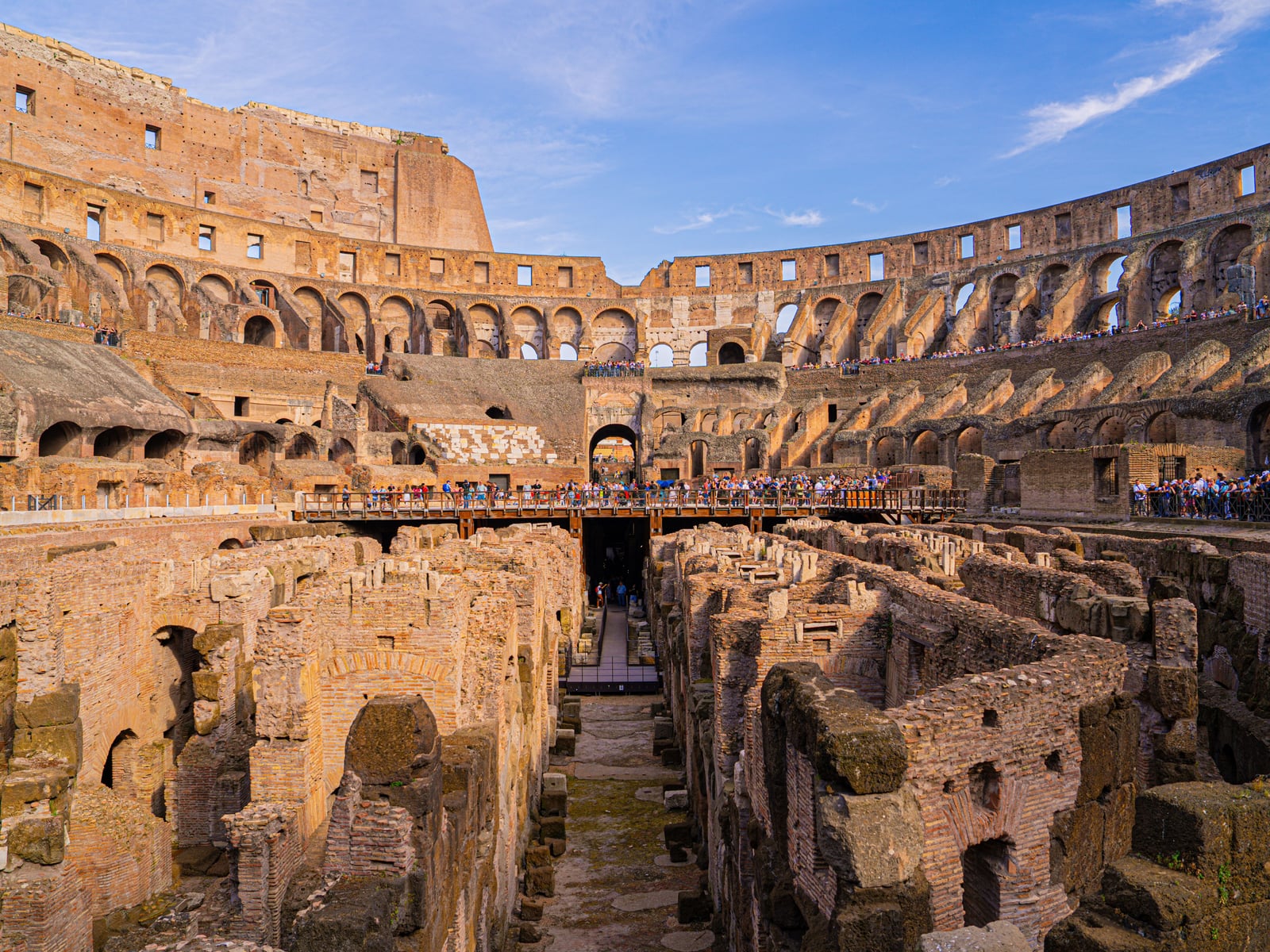
On a two-day trip, ancient Rome gets one morning, and that is where a guide earns the fee: someone who leads you through the Colosseum, its Underground and the arena. In the listing, look for the Underground (the hypogeum) named outright, Colosseum entry on your date included, and the start time in writing. Skip any "tour" that is only the plain entry ticket resold; buy that from the Colosseum's own ticket site.
Book a guided tour of the Colosseum Underground and arena
Check that the booking names the Underground, with Colosseum entry on your date and the start time in writing
The Vatican Museums' own site is the only official one selling their tickets online, and those tickets can't be refunded, so pick your Vatican morning from the week above first, then pay.
The address to look for before you pay is tickets.museivaticani.va.
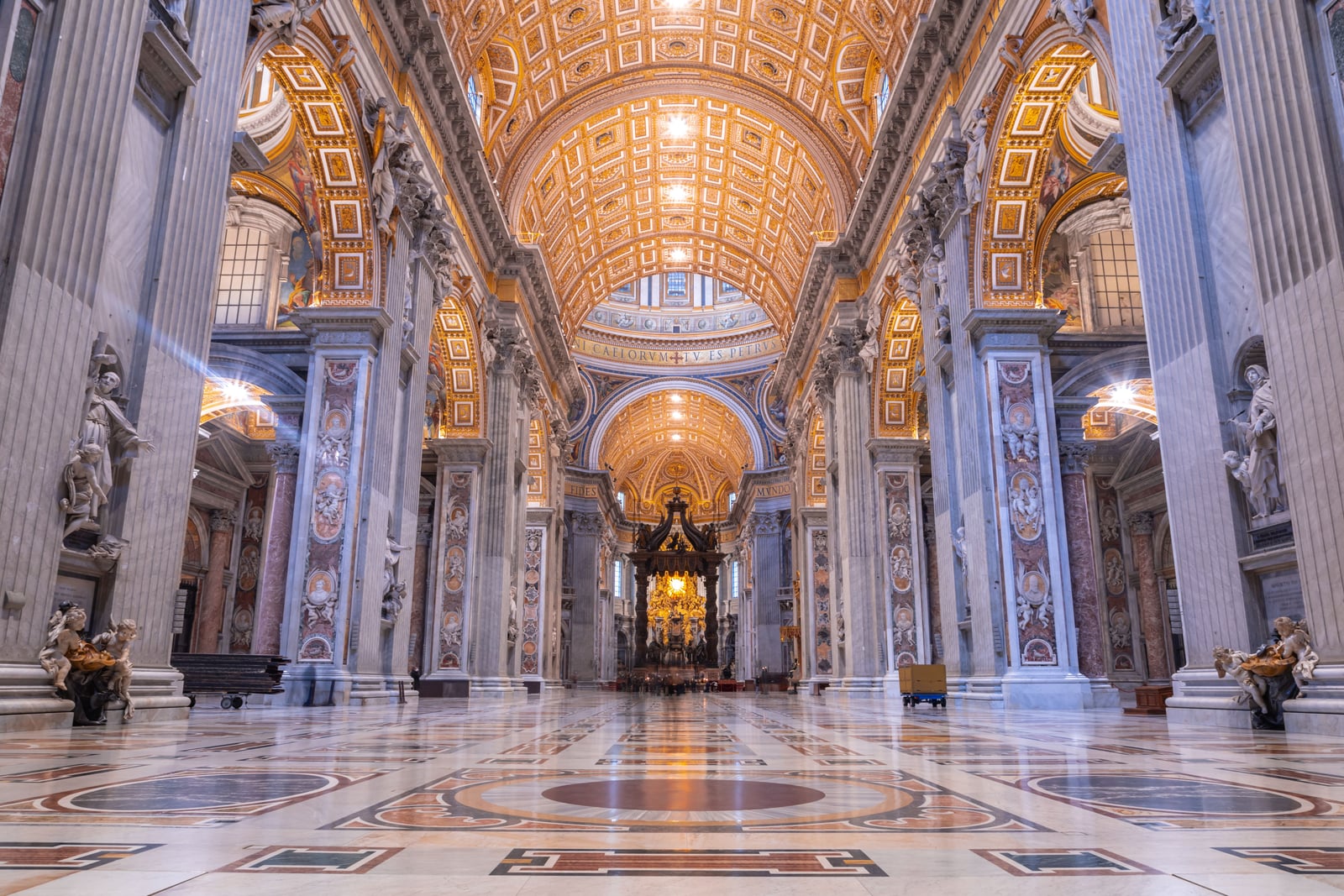
At St. Peter's, the timed booking also comes with its own entry route, sent later by email, but it does not let you skip the line: everyone still goes through security. The booking can't be refunded or moved to another date.
The timed entry is the "Basilica" ticket on St. Peter's own booking site.
Two Days in Rome: The Colosseum One Morning, the Vatican the Next
Two days in Rome hold the city's two booked anchors: the Colosseum with the Forum and Palatine one morning, the Vatican the next, and the afternoons on foot in the center. Little else fits, and that is easier to accept at home than on the second afternoon, when your feet start filing complaints.
Day 1: ancient Rome
Book the Colosseum for a morning on any day the week table allows except a first Sunday (see the callout above). In winter, keep well clear of its 15:30 last admission. The Forum and the Palatine follow on the same ticket, the same day. Eat lunch between them and the Colosseum, sitting down, a few streets back in the Monti neighborhood rather than on the big sights' doorstep, and walk past any place with a waiter out front collecting people by the sleeve. Then let the afternoon go loose, on foot in the center if your legs have anything left; the Pantheon and the Trevi perimeter run on tickets of their own, set out in the three-day plan below.
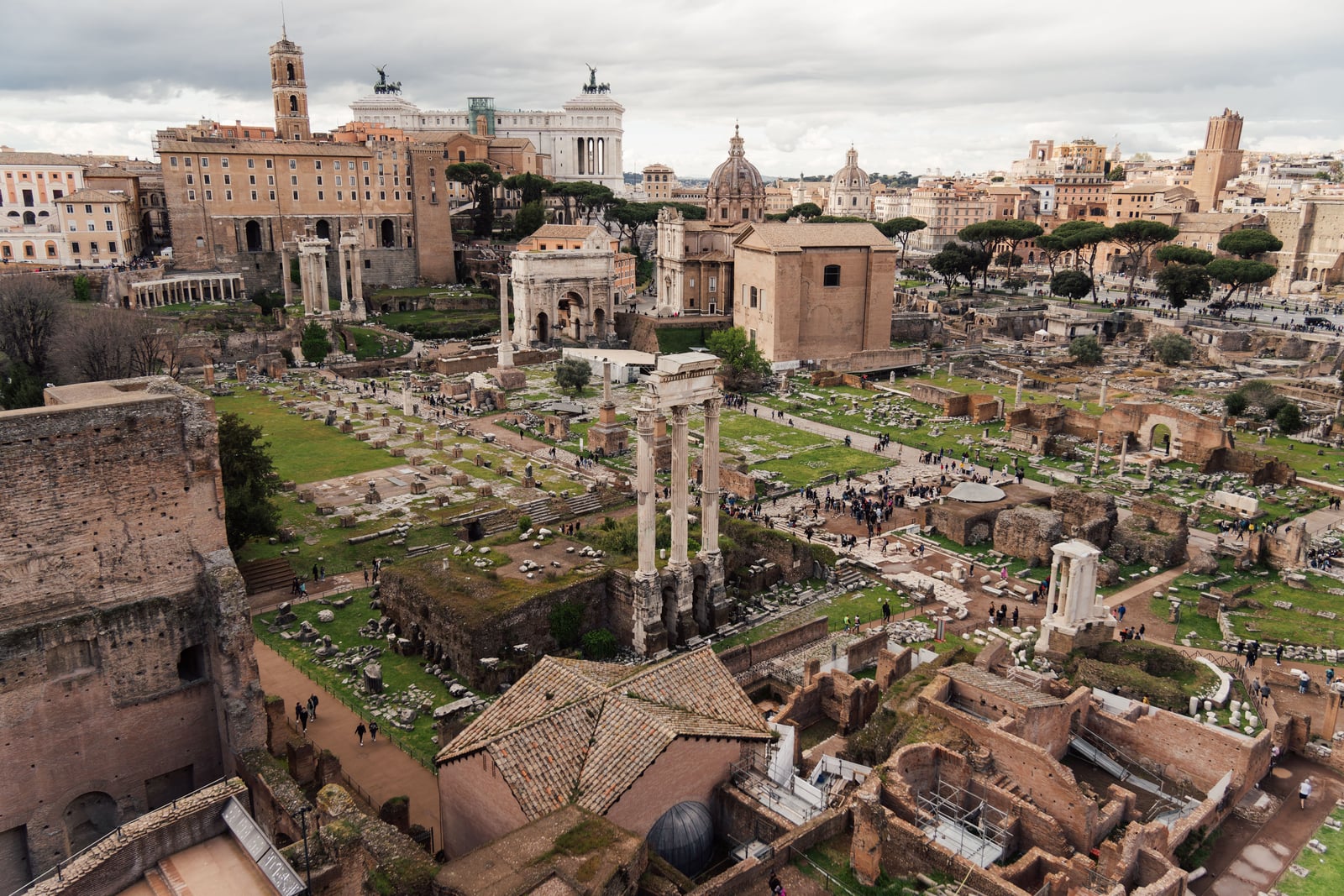
Allow two and a half to three hours for the Forum and the Palatine on top of the Colosseum. I did all three back to back one May on the 24-hour ticket, from the first Colosseum slot, and by the climb up the Palatine my legs were done and the ruins had stopped registering: little shade, few benches, uneven ancient paving. That was too much for one day. With four days or more, split the Colosseum and the Forum across neighboring days; the four-day plan below shows how.
Day 2: the Vatican
Start Day 2 at St. Peter's Basilica at its 7:00 opening, or on the earliest timed entry, and sort out clothes that get you through the door at the hotel, not in the line. Entry to the Vatican Museums, the Sistine Chapel, St. Peter's and the Vatican Gardens is only for appropriately dressed visitors: sleeveless or low-cut clothes, shorts above the knee, miniskirts and hats are not permitted.
At that hour the security line should be short.
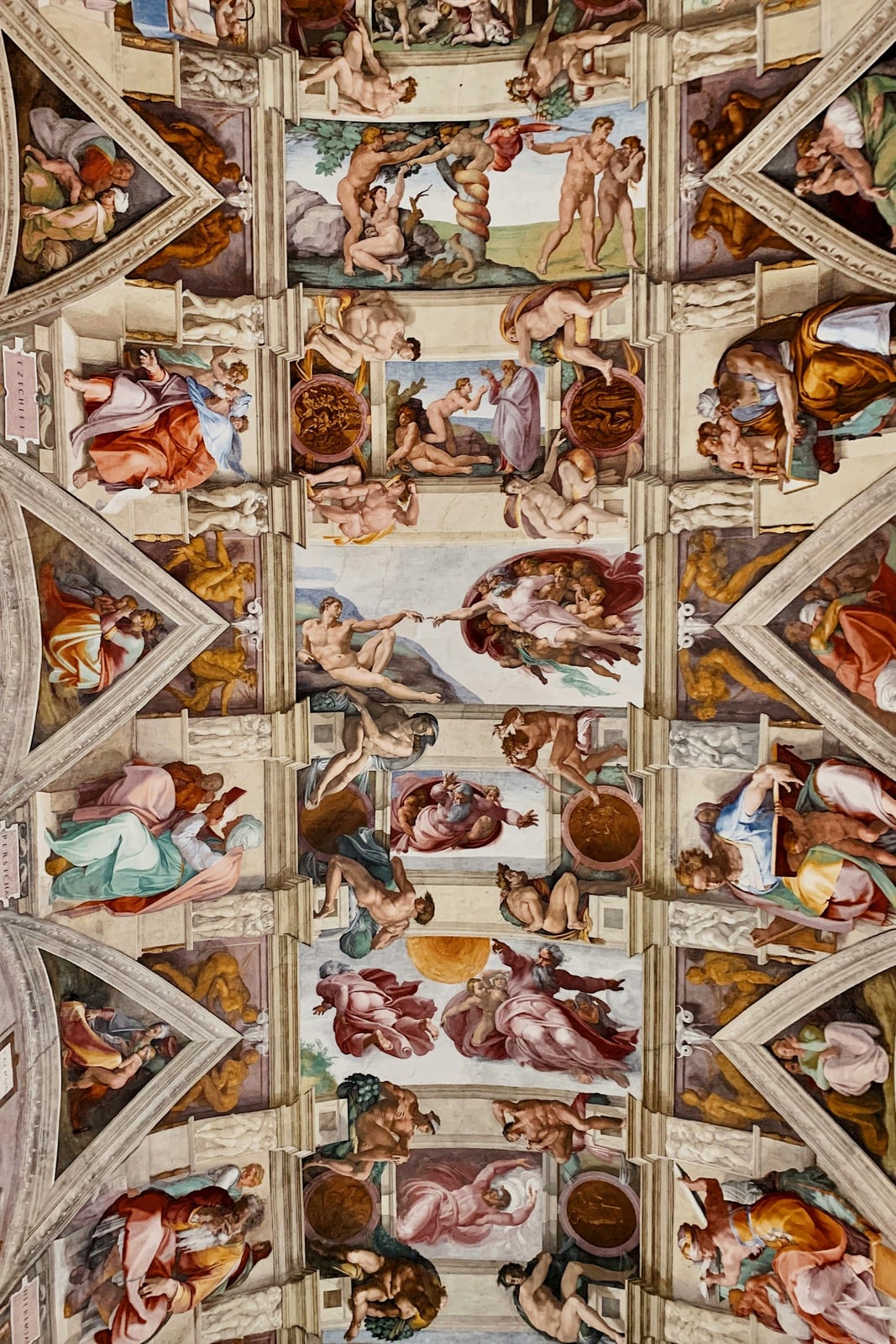
Then the Vatican Museums, the same morning, on a ticket from the Museums' own site booked for that date; put Day 2 on a Monday to Saturday the week table leaves open.
One spring I went in exactly that order: the basilica a little after 8:00 with no line at security, up the dome, then around to the Museums for an 11:00 slot. Allow three to three and a half hours for the Museums and the Sistine Chapel, and an hour and a half to two for St. Peter's, two and a half with the dome.
Want the Museums explained rather than just walked through? A small-group guided visit costs a good deal more than the ticket, and it can be worth it. In the listing, check that museum entry on your date is included and that the start time and the group size are stated. If the listing turns out to be just the entry ticket, close the tab; that one comes from the Museums' own site.
Book a small-group guided visit of the Vatican Museums
Museum entry on your date included, with the start time and the group size stated before you pay
So is two days in Rome enough? For the two anchors, yes. But two booked mornings plus the open day make three, and two days hold both anchors only by giving that open day up, and with it the inside of Castel Sant'Angelo.
Three Days in Rome: Leave the Third Day Open
Three days in Rome give you the two booked mornings plus a day with no fixed anchor: the Pantheon, the Trevi Fountain, Castel Sant'Angelo, and whatever the first two days made you want more of. Days 1 and 2 run exactly as in the two-day plan; Day 3 is where Rome gets a say.
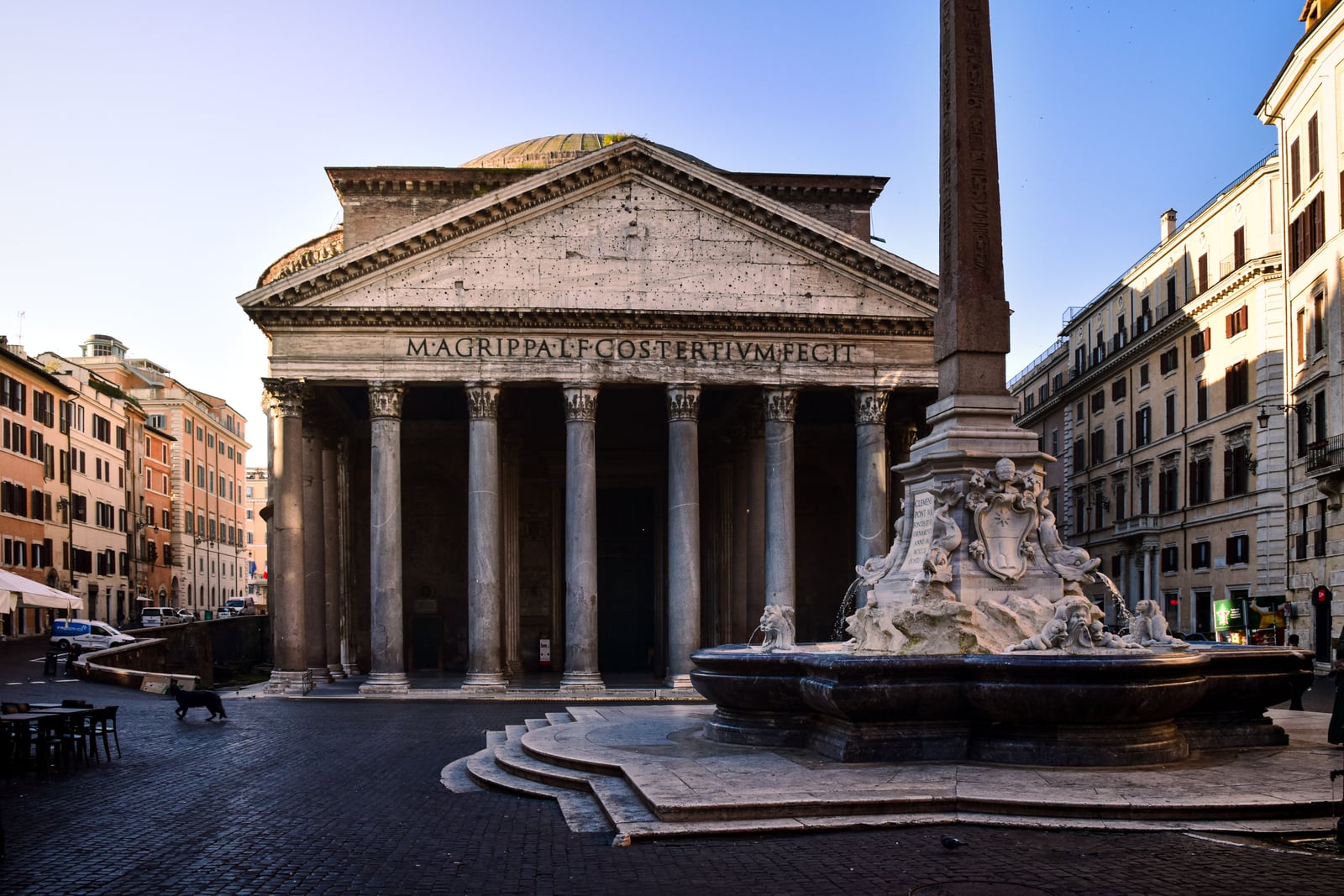
The Pantheon sells entry by time slot from a monthly calendar; the booking table above shows when each month goes on sale. Inside your slot, entry is in order of arrival, with no skip-the-line option, so the slot is a window rather than an appointment. Ticket sales stop an hour before each service, and the service itself is open free to worshipers: Mass at 17:00 on Saturdays and the day before a holiday, 10:30 on Sundays and holidays.
Pick your slot on the Pantheon's official ticket calendar.
Since February 2, 2026, the Trevi Fountain's inner perimeter costs €2 in opening hours. The ticket only gets you inside it; from outside, the fountain costs nothing to look at, in those hours or after 22:00. A ticket bought ahead carries no date or time and can't be refunded, so all it commits you to is the price. At the entrance it's card only. Residents of Rome and its metropolitan area go free, and so do children under 6.
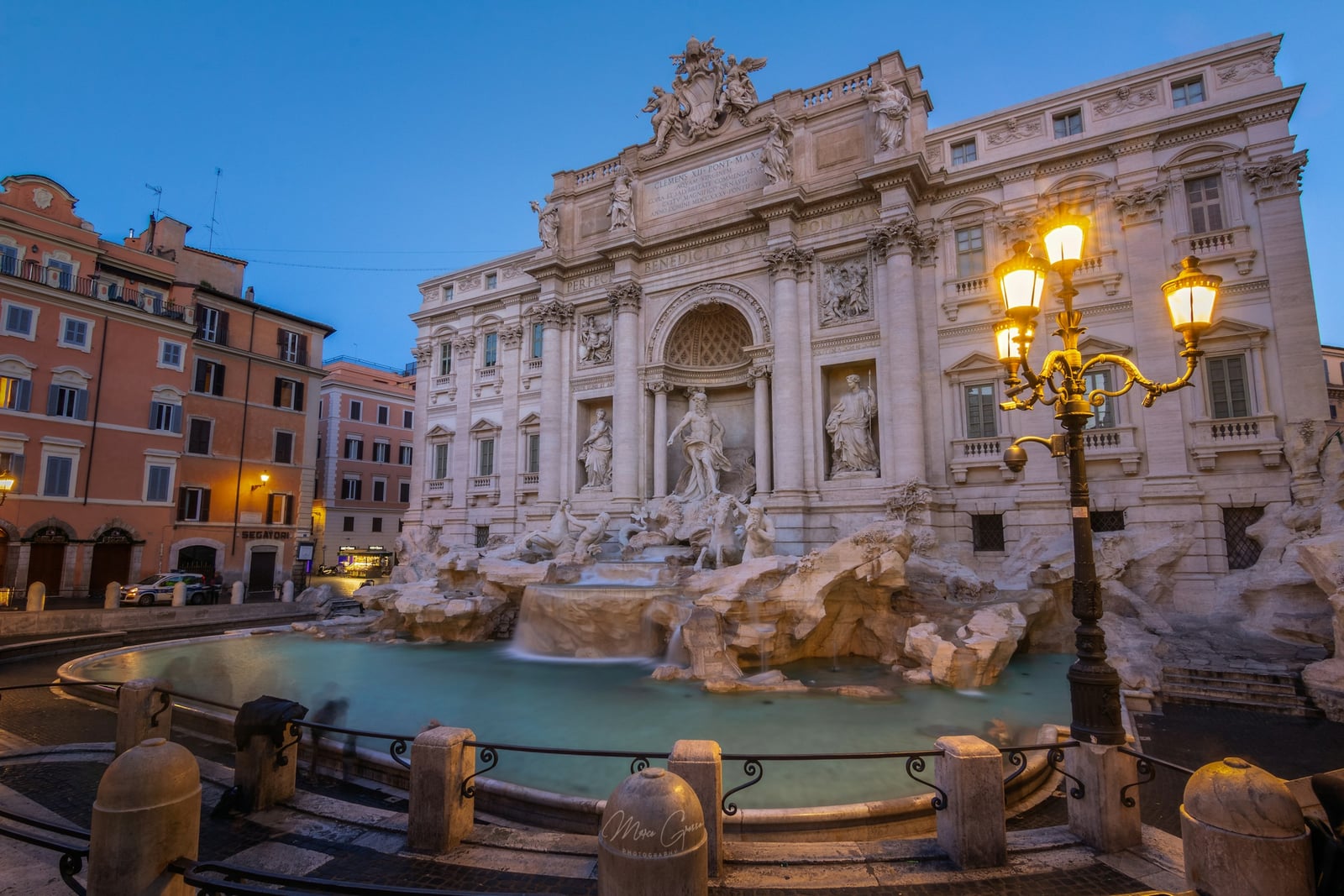
Buy the perimeter ticket ahead on the fountain's official site.
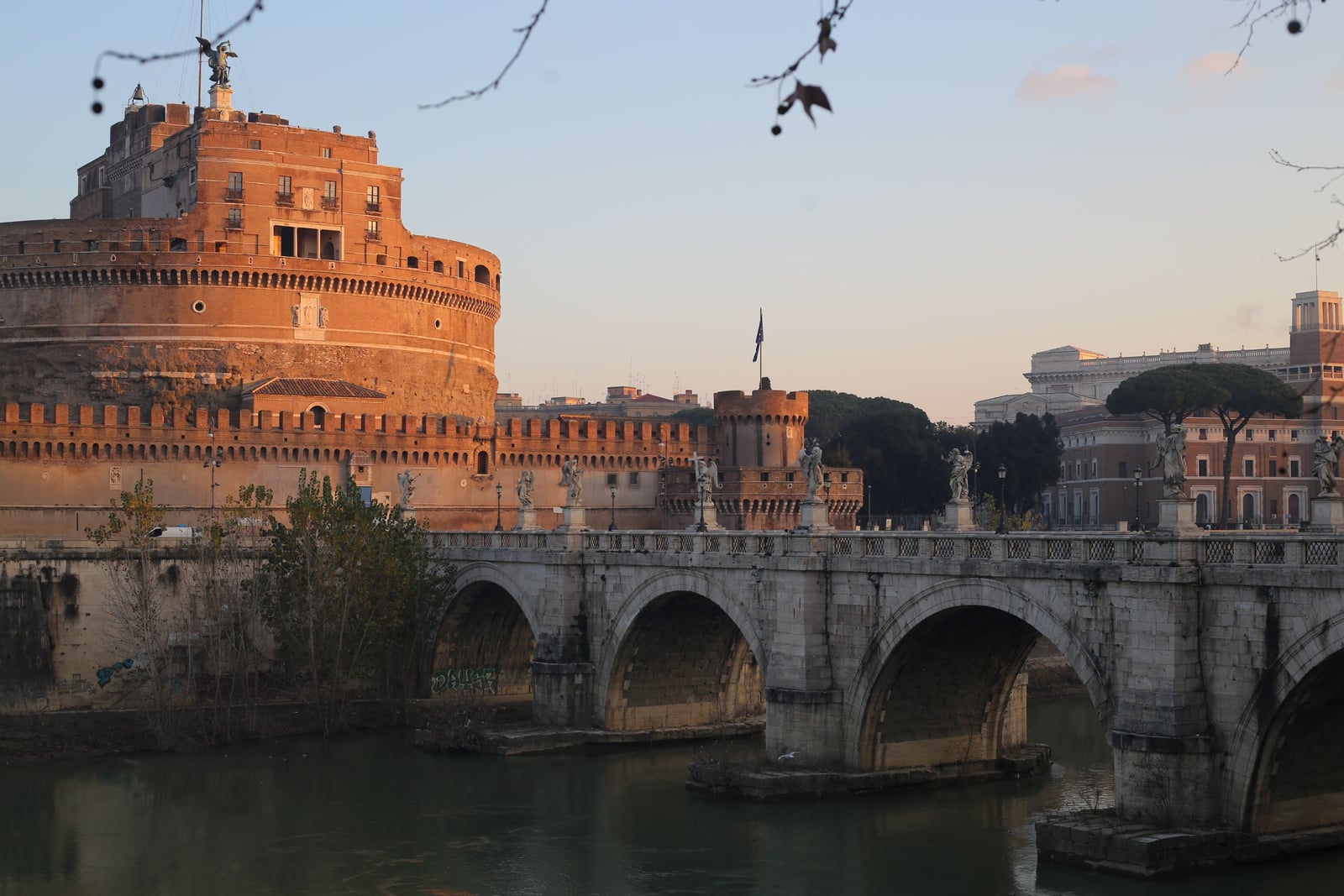
Don't let the open day lose Castel Sant'Angelo; it takes any day the week table leaves open. Give it an hour and a half to two hours: the ancient spiral ramp up to Hadrian's burial chamber, the frescoed papal rooms, a coffee at the café partway up with St. Peter's dome in view, and the top terrace under the bronze angel. The Pantheon takes 30 to 45 minutes inside, the Trevi Fountain 15 to 25. Then leave the rest of the day unbooked, on purpose. It is the day that catches a missed slot, a museum you want more of, or a lunch that quietly becomes the afternoon. Unbooked hours are the cheapest insurance in the plan; they pay out the first time a morning goes sideways.
Four Days or More: The Borghese, a Slower Pace, or a Day Out
Four days or more in Rome give the Galleria Borghese a morning, let you split the Colosseum and the Forum across neighboring days, or free a whole day to leave the city. With only three days, spend them in Rome.
A Borghese booking buys a shift. Entry happens only at the start of each hour, the visit lasts two hours, and 180 people go in per shift. The last shift breaks both rules: it starts at 17:45 and ends at 19:00. Go for the Bernini marbles, in rooms the cap keeps from jamming the way the Vatican Museums do. Book it for a morning on a day the week table leaves open.
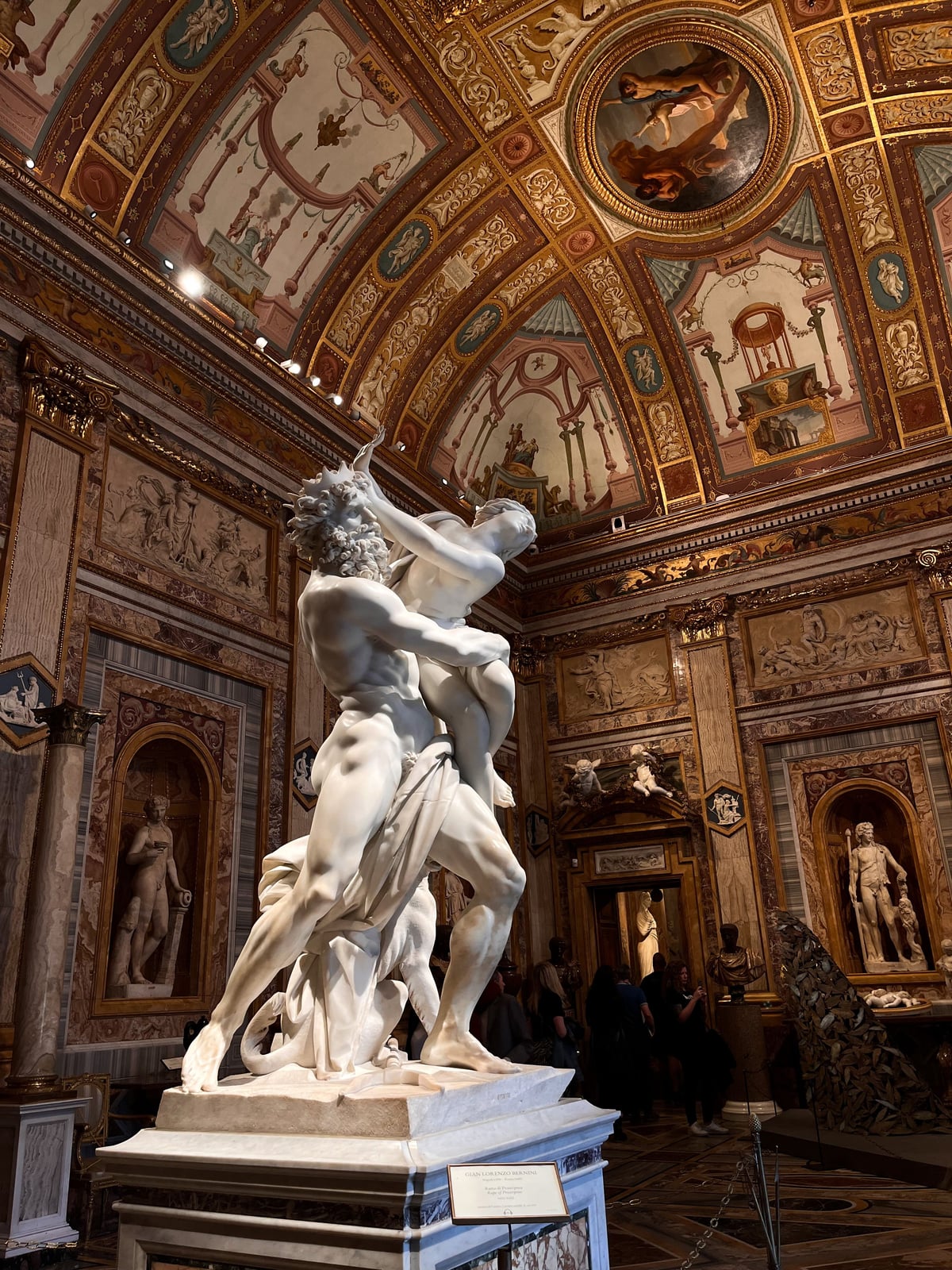
Prices, booking rules and the buy button sit on the Galleria Borghese's own ticket page.
The extra day can also split ancient Rome in two. On the Full Experience Underground and Arena or the Full Experience Attic ticket, the Forum and Palatine can take the morning before or after your Colosseum morning, inside the window in the booking table. Past four days, more time mostly buys slack rather than sights: longer lunches, slower streets, afternoons that end in a chair.
Or a day goes out of Rome. A Monday not already spent on the Colosseum or the Vatican suits it; the week table shows which doors a Monday shuts. Which trip fits comes down to the weekday and the way back; start with the trips that really fit into one day. Florence is better with a night than as a day trip.
Where to Sleep in Rome: Near Your Mornings, or Near Termini
In Rome, sleep within walking distance of your booked mornings; a room by Roma Termini station is convenient for the airport train, less so for the city you came to see.
- The walk to your mornings: if they sit in different corners, sleep nearest the one you care most about; central Rome is smaller than its reputation.
- Termini: the Leonardo Express from Fiumicino airport ends there in about 32 minutes, for €14, and city bus and metro tickets aren't valid on it. The area is fine with common sense, if rough around the edges.
- The taxi evens it out: a taxi from Fiumicino to anywhere inside the Aurelian Walls (Rome's ancient city walls) is a flat €55 (€40 from Ciampino airport) either way on a direct ride with no stops, every supplement included except the one charged for each passenger from the fifth on. A room inside the walls is no harder to reach on landing day.
- The building and the rate: an elevator if stairs are a problem, and a rate you can cancel until the plan is set.
The center works on foot, over cobbles that look charming at breakfast and feel personal by dinner; pack shoes for the evening, not the photos.
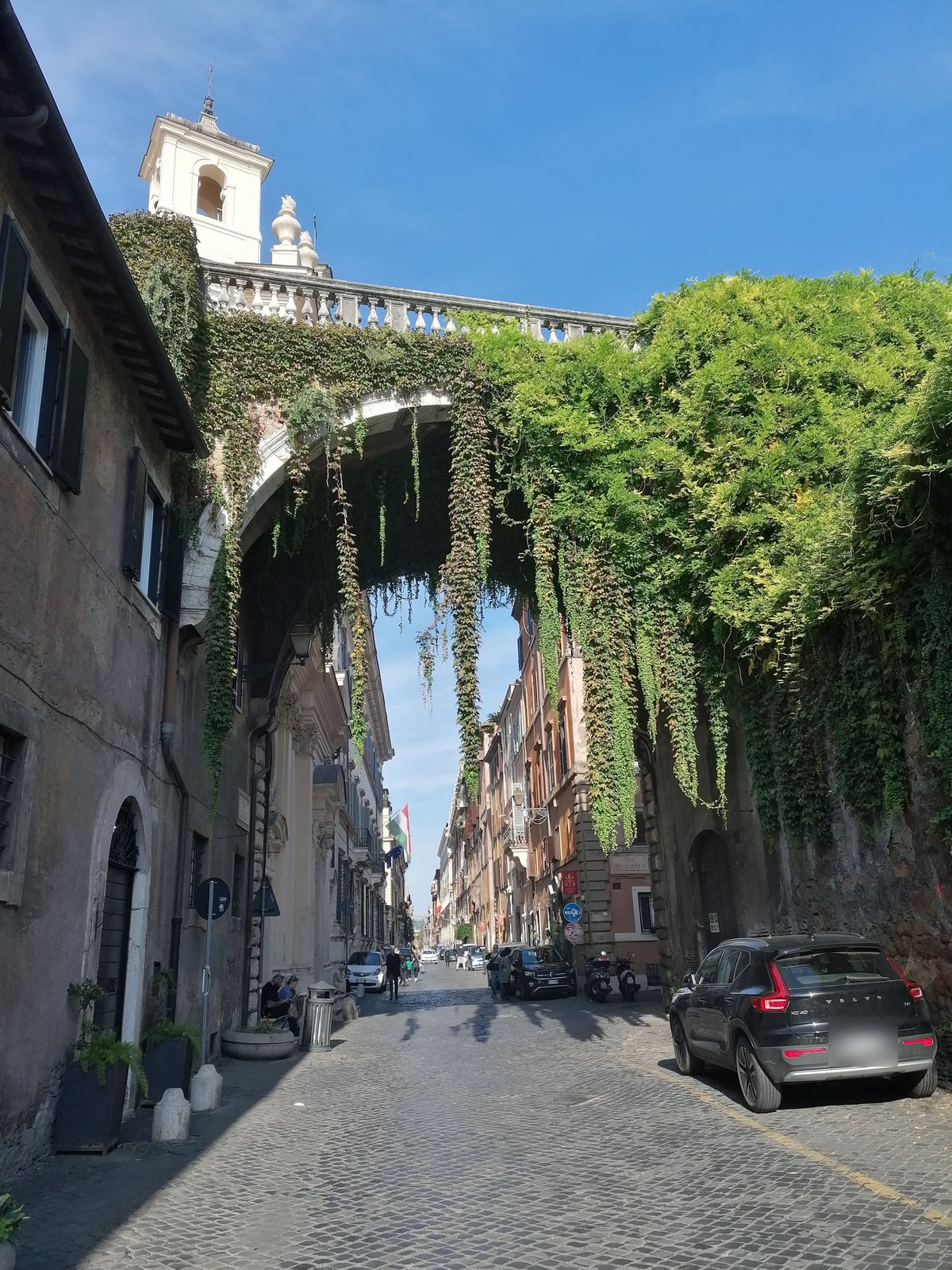
Save buses and the metro for the longer hops. A single ticket costs €1.50 and lasts 100 minutes from validation; passes cost €8.50 for 24 hours, €15 for 48 and €22 for 72. A walking day runs on single tickets: the 24-hour pass only comes out cheaper once you'd buy six single tickets inside its 24 hours. On the metro and buses, keep bags zipped and valuables out of loose pockets.
Whichever area you pick, look for free cancellation stated outright in the listing, with its deadline, and, if you need one, an elevator named in the amenities rather than guessed from the photos. Then measure the walk to your first booked morning on the map before you pay.
Free cancellation stated with its deadline, an elevator in the amenities if stairs are a problem, and a short walk to your first booked morning
How Many Days in Rome: Common Questions
- How many days do you need in Rome?
- Two full days cover the Colosseum and the Vatican; three add a day left open; four or more make room for the Galleria Borghese, a slower pace or a day out of Rome. Then add the day you land, with nothing booked on it.
- Is two days in Rome enough?
- For the two big anchors, yes, if you accept the cuts: no Borghese, no open day, and no visit inside Castel Sant'Angelo. Two booked mornings plus the open day make three, so two days hold both anchors only by giving that open day up.
- Can you do the Vatican and the Colosseum on the same day?
- On paper, yes, if one of them takes the afternoon: in winter the Colosseum's last admission is 15:30, and the Vatican Museums' final entry is 18:00, Monday to Saturday. This plan gives each its own morning instead, so neither one is racing the clock.
- What is closed in Rome on Sundays and Mondays?
- Of the sights in this plan: on Sundays, the Vatican Museums, except on the last Sunday of the month, unless that falls on Easter Sunday, June 29, or December 25, 26 or 31. On its free first Sundays, the Colosseum keeps the panoramic elevator, the upper levels, the arena and the Underground closed. On Mondays, the Galleria Borghese is not open, and Castel Sant'Angelo is shut except for one afternoon a month in 2026: the first Monday, 14:00 - 20:00.
- Do you have to pay to see the Trevi Fountain?
- No. The fountain is free to look at from outside, at any hour. The €2 ticket, charged since February 2, 2026, is for going inside its inner perimeter during opening hours.
List the mornings you'd hate to lose, set each on a day its door is open, book it as soon as its sale opens, and leave one day loose. Rome fills that one by itself, usually starting at lunch.