 George Mandrovny
Matera in a day or a night: what each one buys
- A day shows you the Sassi, the old cave quarters; the evening, as the lights come on, shows you Matera. A night adds a short morning across the ravine for the view back.
- A day trip is easiest by car, and a car lets you stay for the lights and drive out after dark. Give Matera a night if you can, two for a full day at the ravine and the Crypt of Original Sin.
- Matera is in Basilicata, not Puglia, about an hour by road from both Bari and Bari airport (mapping estimates).
- The trap: no Trenitalia train (Italy's national railway) runs into Matera. FAL, the regional railway from Bari, runs trains Monday to Saturday, usually with a change at Altamura; buses replace them on Sundays and holidays.
Matera, Italy, is a town in Basilicata, just over the border from Puglia, whose two cave quarters, the Sassi, have been UNESCO World Heritage since 1993. It rewards a night more than a day: the day shows you the stone, and the evening, when the lights come on, shows you a town.
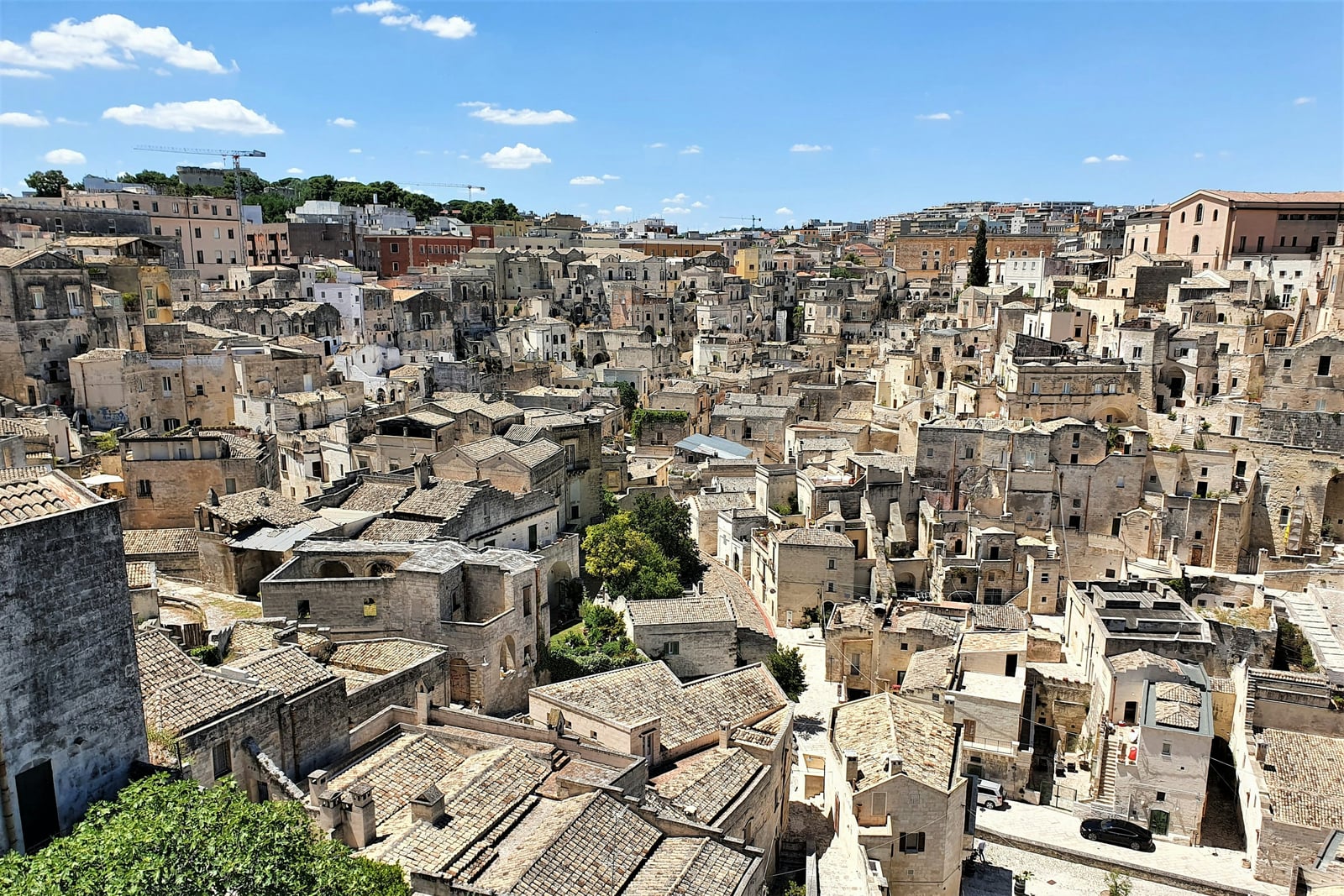
A day is enough to walk the Sassi by daylight, and it goes best with a car and a bed in a nearby town. Without a car, check the day of the week first; the getting-there section explains why. One night buys an afternoon walk, the evening, and a short morning across the ravine for the view back, but no full day (nights minus one is your count of full days), so the crossing feels rushed. Two nights buy a full day for the ravine, the Crypt, and the ticketed sights. A day for the Sassi, a night for the lights.
I gave Matera two nights, driving in from Bari as part of a loop around Puglia, and a quick daytime stop would have cost me the better half. By day the white stone belonged to the tour groups and the midday heat; the evening, at the upper town's edge as the Sassi lit up below, was what I'd come for. I slept in a cave room down in the Sassi and left the car in a lot up in the new town. What I'd do differently: I hauled full-size suitcases down the stone steps, when the big bag could have stayed in the trunk.
A cave room in the Sassi puts the evening at your door; in a cheap one, ask about daylight and damp, and whether you can reach the door with a bag - some are on foot only. The upper town around Piazza Vittorio Veneto is the other base: neighborhoods a walk away, and plenty of places to look down into the Sassi. A heavy suitcase points there, or to a stay outside town with a car; better, pack one bag you can carry up stairs. Driving? Read the traffic-zone rules in the getting-there section before you book.
Before you book, ask the host how far the door is from the nearest road, and look at the listing's photos of the way in: steps show up there before they show up under your suitcase.
A cave room in the Sassi, or the upper town around Piazza Vittorio Veneto
Walking the Sassi: no route, and a lot of stone steps
The best of the things to do in Matera, Italy, needs no plan: walking the Sassi, the two cave quarters of Sasso Caveoso and Sasso Barisano, and the Civita, the hill where the city began. There is no route through them. You take a lane because it goes down and a stair because it goes up, and somewhere around the third dead end you notice the town itself is the sight.
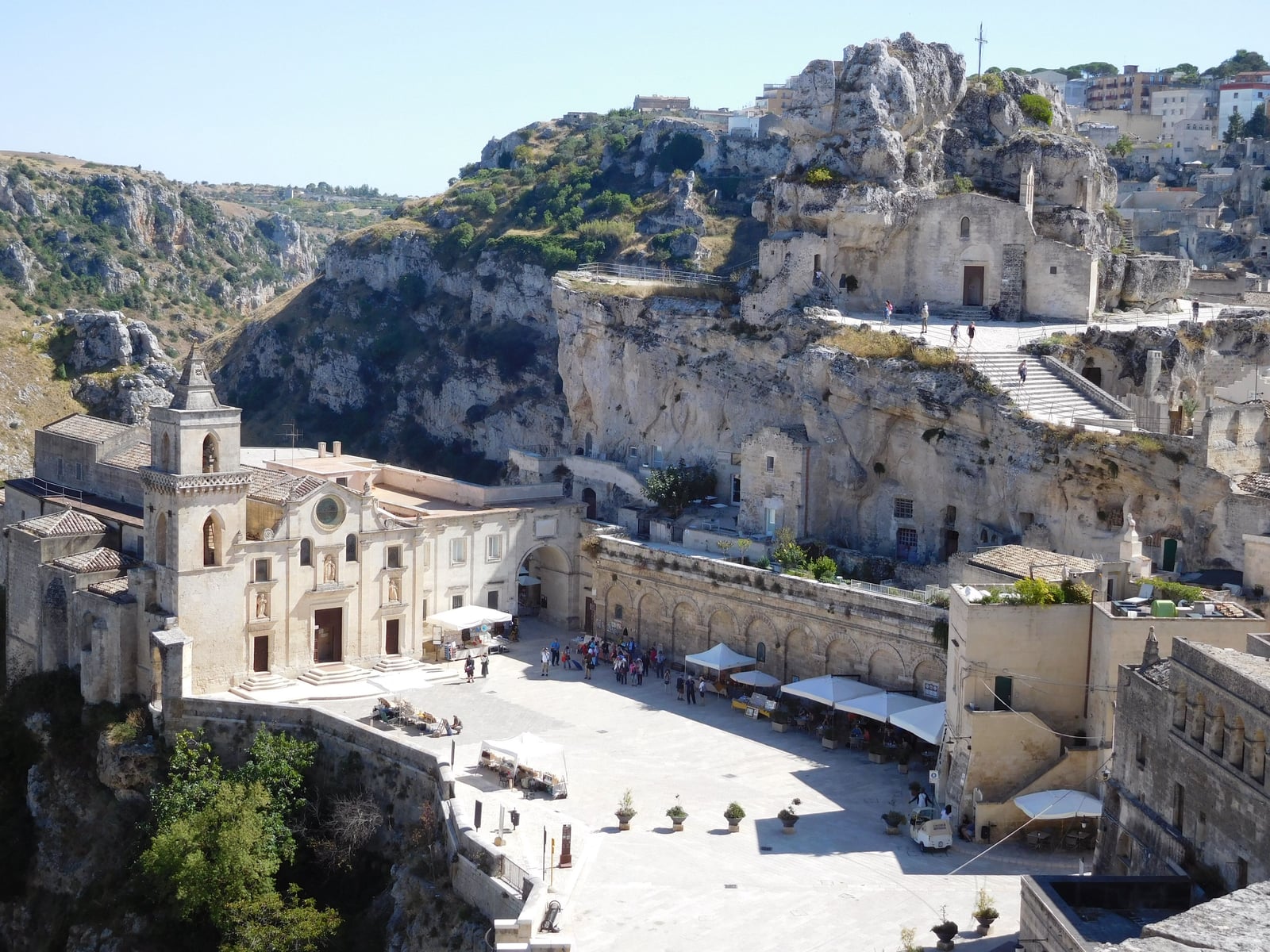
A 1952 law provided for moving the residents of the cave homes into new districts and rural villages (La Martella and Venusio among them), and over the years that followed the cave homes emptied into the newer districts. Law 771 of 1986 then set out the Sassi's conservation and recovery. The conditions people lived in were bleak, and the beauty now is haunting; the same doorways carry both.
The Sassi also have a screen career. The Passion of the Christ (Mel Gibson, 2004) used them as Jerusalem, with the Civita for the Way of the Cross and Vico Solitario in the Sasso Caveoso for the market scenes, and No Time to Die was shot in Matera too.
Going down into the Sassi means stairs, lots of them, most of them polished stone steps or ramps. The area is small and walkable, if hilly, and the stairs keep strict accounts: every one you go down, you climb back up later, usually at the end of the day, when you would least like to.
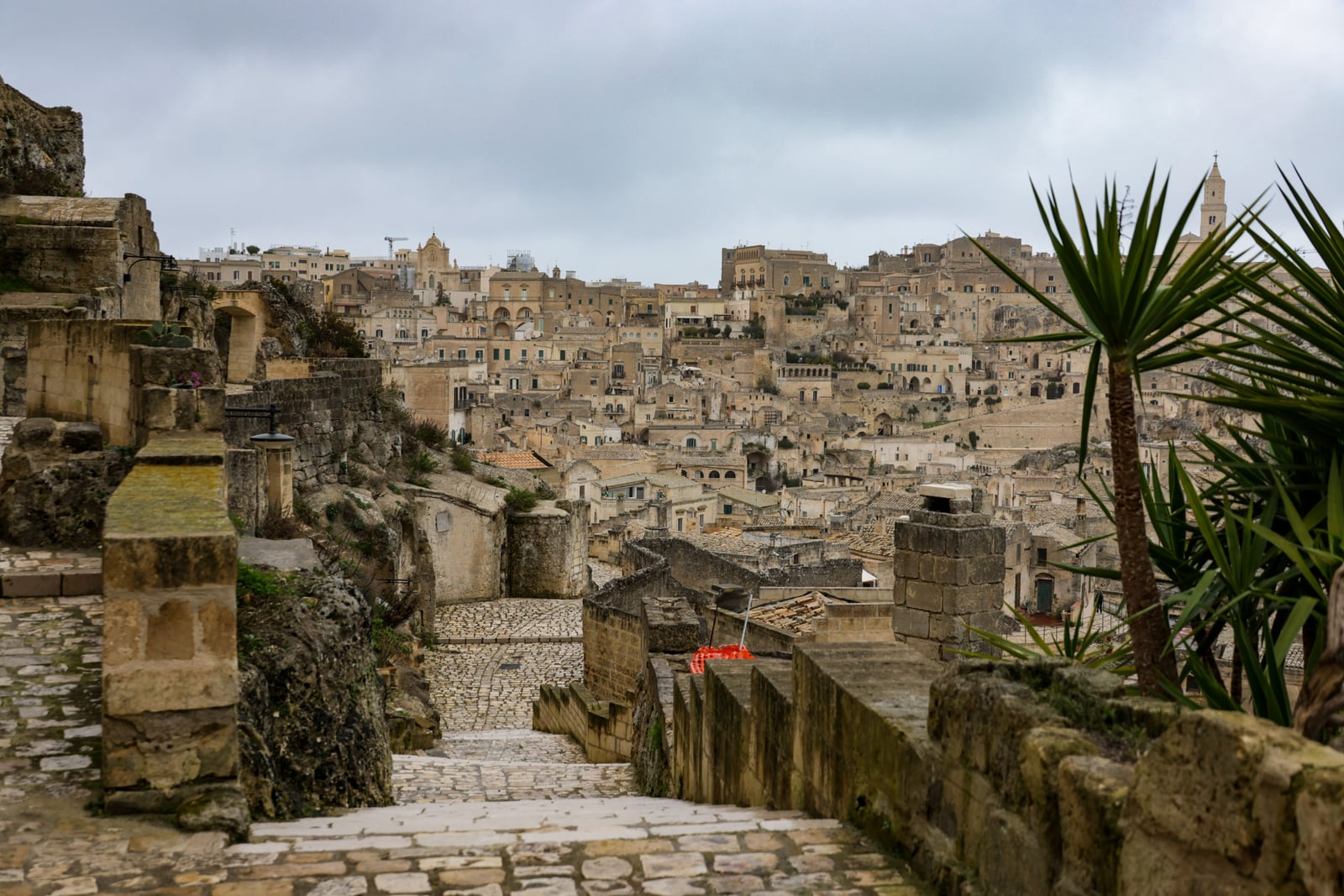
If stairs are the problem, the lower Sassi can be seen almost entirely from the rim above them, and many areas of Matera are flat or sloped; the section on Matera at night says where to stand.
⚠️ Warning
Some of the Sassi's streets and stairways turn slippery when wet, and polished stone gives no warning. Wear shoes with real grip, and take the way down slowly after rain: going down is where the stone wins.
With a good map and some reading done first, you can walk the Sassi on your own. A guide opens doors, literally: the inside of the cave homes, a church or two, and where the films were shot. FAI, the Italian nonprofit heritage foundation that runs Casa Noha, has its own guides for small-group itineraries booked on request, a Sassi visit among them: €20 per person, minimum four adults, about two and a half hours on average, site tickets extra.
For a booked tour, pick a walk that includes entry to a cave house, and check the group size and the length on the listing before you pay.
Book a guided Sassi walk with cave-house entry
The inside of the cave homes, and a church or two
Four doors worth a ticket: a cave house, a film, sculpture, and a cistern
Four sights in Matera are worth a ticket: a furnished cave house, a film on the town's history, a sculpture museum, and a cistern under Piazza Vittorio Veneto. Each opens a door the walk leaves shut.
| Door | Inside | Adult ticket | Open |
|---|---|---|---|
| Casa Grotta | a furnished cave house, plus three more stops | €8 | every day; hours by season, longest Jul - Aug (09:00 - 20:30) |
| Casa Noha (FAI) | an immersive film, then the house (30 - 40 min) | €7 | closed Wednesdays Mar - Dec, and December 25; in February, Thu - Sun from the 14th; hours by month, for January check FAI's page |
| MUSMA | sculpture, late 1800s to today | €10 | every day except Dec 25, Jan 1 and Jul 2, 10:00 - 18:00 Oct - Mar, 10:00 - 20:00 Apr - Sep |
| Palombaro Lungo | a water cistern, about 15 min | €3, minors free | every day, 10:00 - 13:00 and 15:00 - 18:00, no booking |
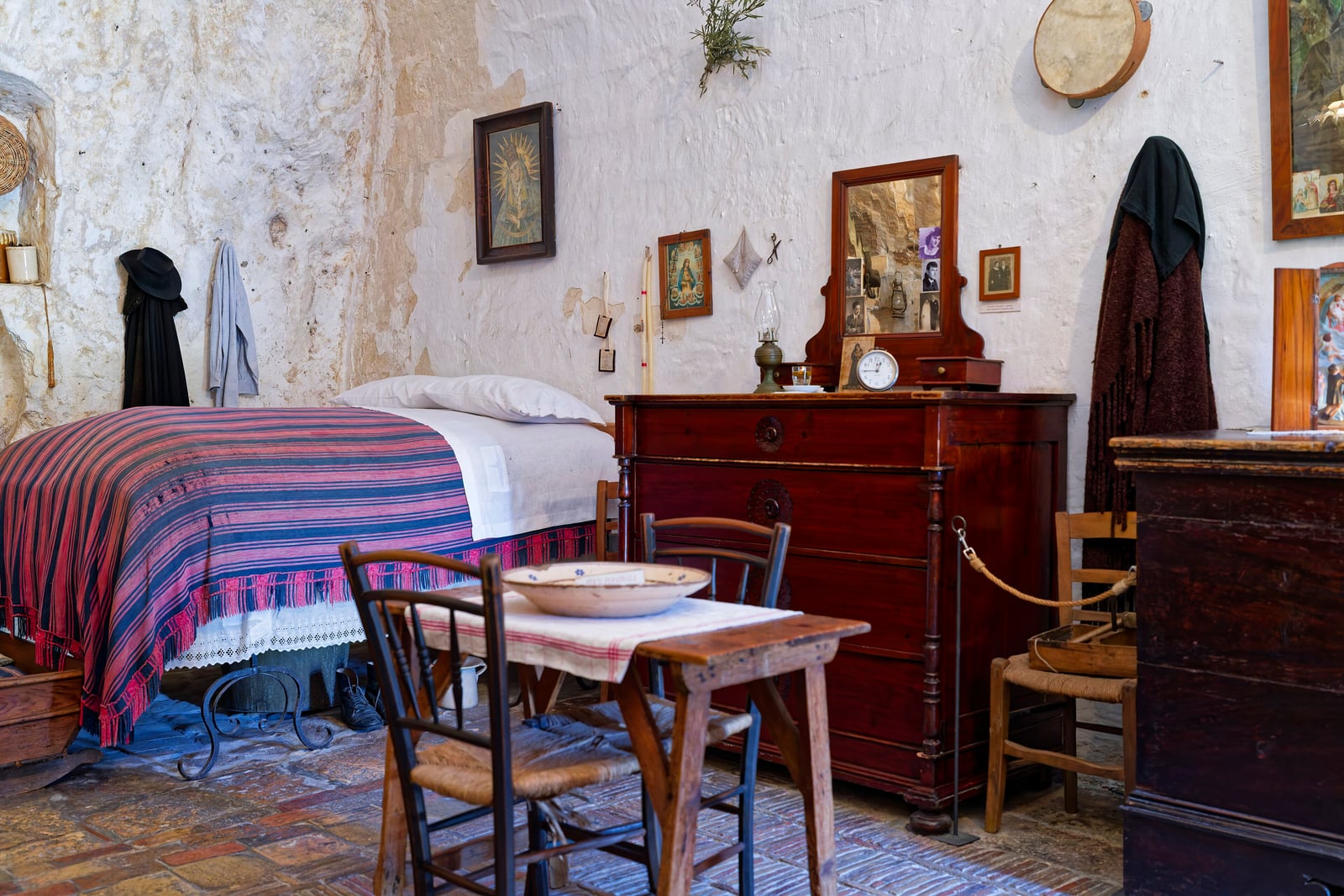
Casa Grotta di Vico Solitario is a cave house turned museum, fitted out with the real furniture and tools from the years when people lived in it. One ticket also covers the Neviera (the snow store), a natural cave, and the rock church of Sant'Agostino al Casalnuovo.
See Casa Noha early, before the walk if you can: the film tells the history the Sassi only show, and the stone reads differently afterward. Last entry is an hour before closing, and the month-by-month hours are on FAI's Casa Noha page, in Italian.
MUSMA keeps its collection in Palazzo Pomarici, a 16th-century palace in the Sassi, and hosts exhibitions on the palace's piano nobile, its formal reception floor, and in seven underground rooms. It bills itself as the only museum in a cave in the world. Guided visits can be booked, also in English; last entry is an hour before closing.
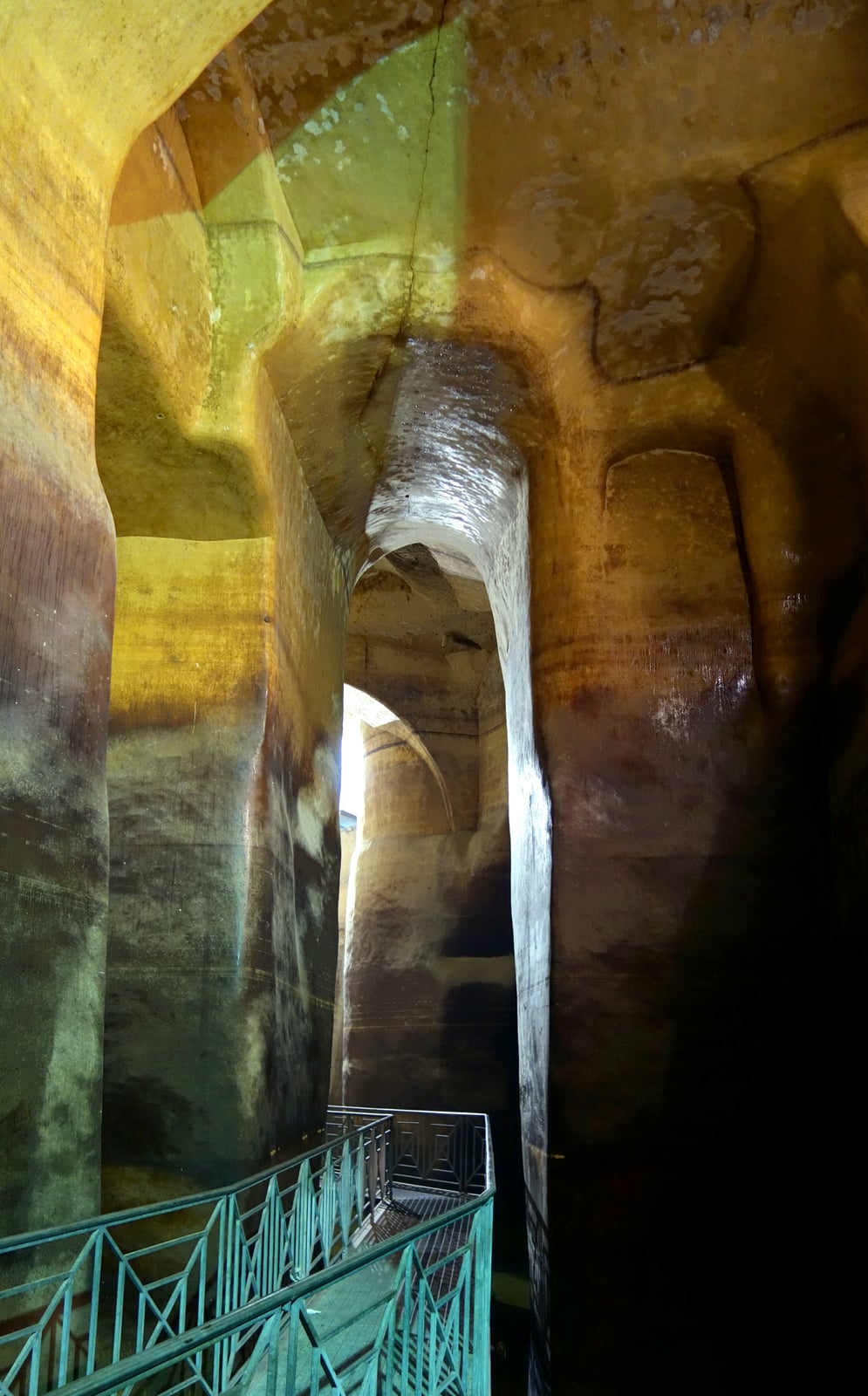
The Palombaro Lungo is a great water cistern, 16 meters deep and 50 long, that you walk through on your own with a leaflet in English. Pay at the desk, cash or credit card; at capacity, the wait is a few minutes. Watch for the midday break.
Matera at night: the upper town above the lit Sassi
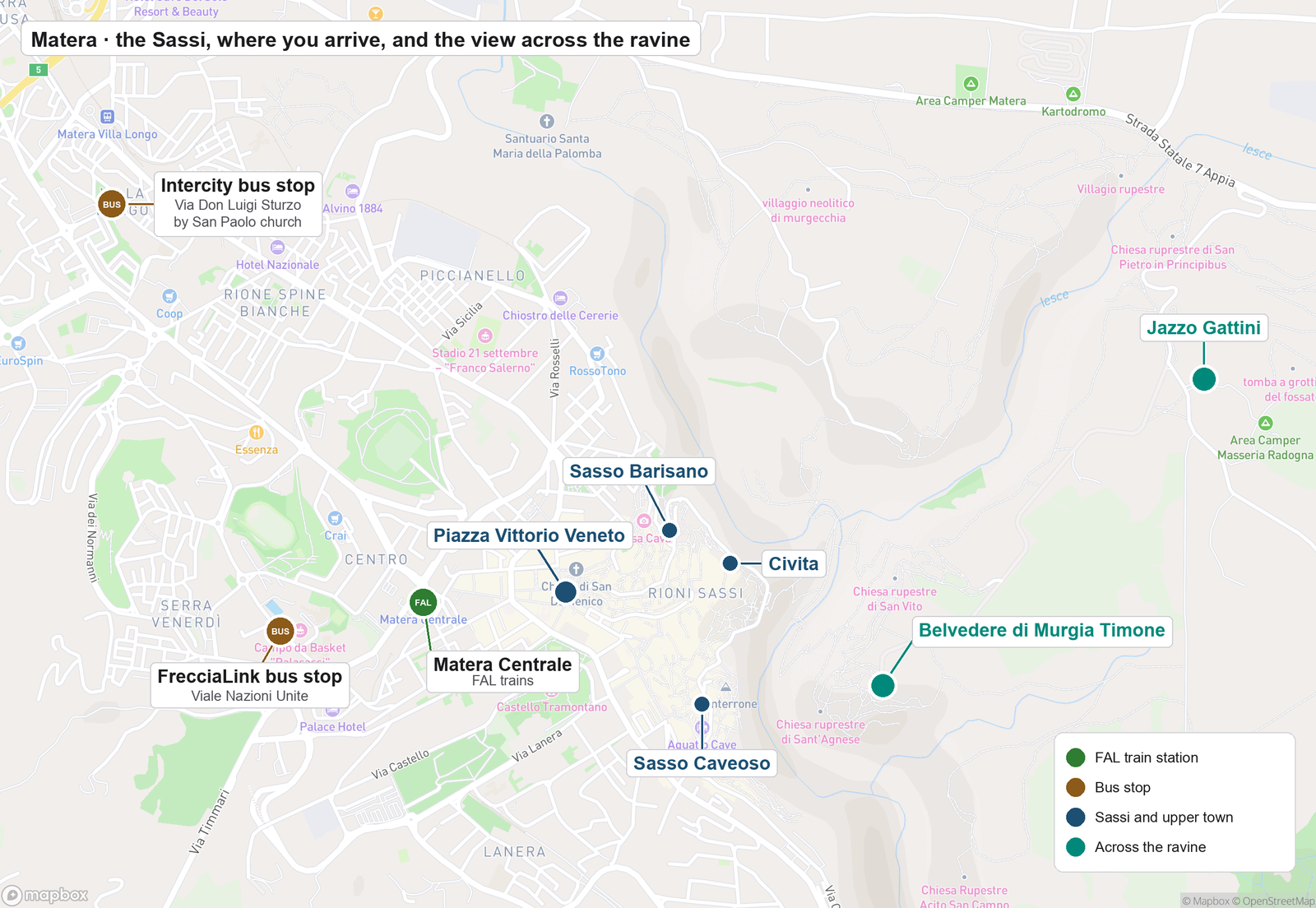
Matera at night is best watched from above: from the upper town around Piazza Vittorio Veneto, where the belvederes, the town's lookouts, give you the Sassi spread out below. If stairs rule out the walk down, this is where to stand, with no climb back. Don't treat the upper town as the stretch between the station and the view; the main piazza and the food market are worth time of their own. Pick your spot by daylight, on the way in or out of the Sassi, so you are not hunting for one in the dark.
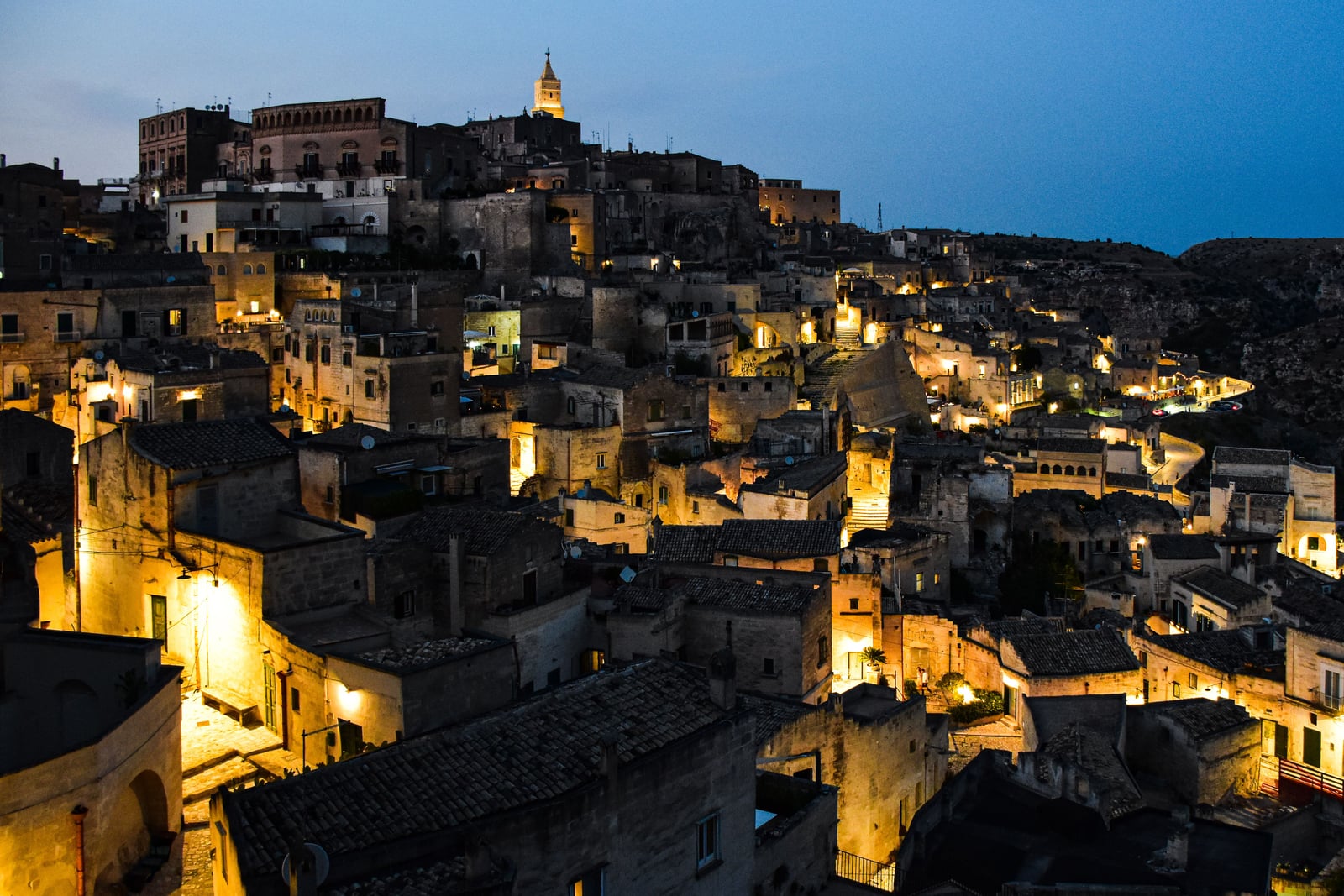
Be at your spot before sunset and stay there. The light goes off the stone first. Then the lights come on below you, across the cave quarters you spent the afternoon lost in, and the maze becomes a lit town. Go back down into it after dark, by the same lanes and stairs, and wander inside what you were just looking at.
That hour, and a short morning after it across the ravine, is what a night in Matera buys. A day trip gets the same Sassi and usually leaves before anyone switches them on. With a car, stay for the hour anyway and drive out after dark.
The morning across the ravine: Murgia Timone and the Crypt of Original Sin
Across the ravine from the Sassi, the Murgia park (Parco della Murgia Materana) holds rock churches, a Neolithic village, and the Belvedere di Murgia Timone, the lookout facing the town. Matera and the land around it count about 150 rock places of worship, and this park is where to give them time. The belvedere stood in for Golgotha in The Passion of the Christ.
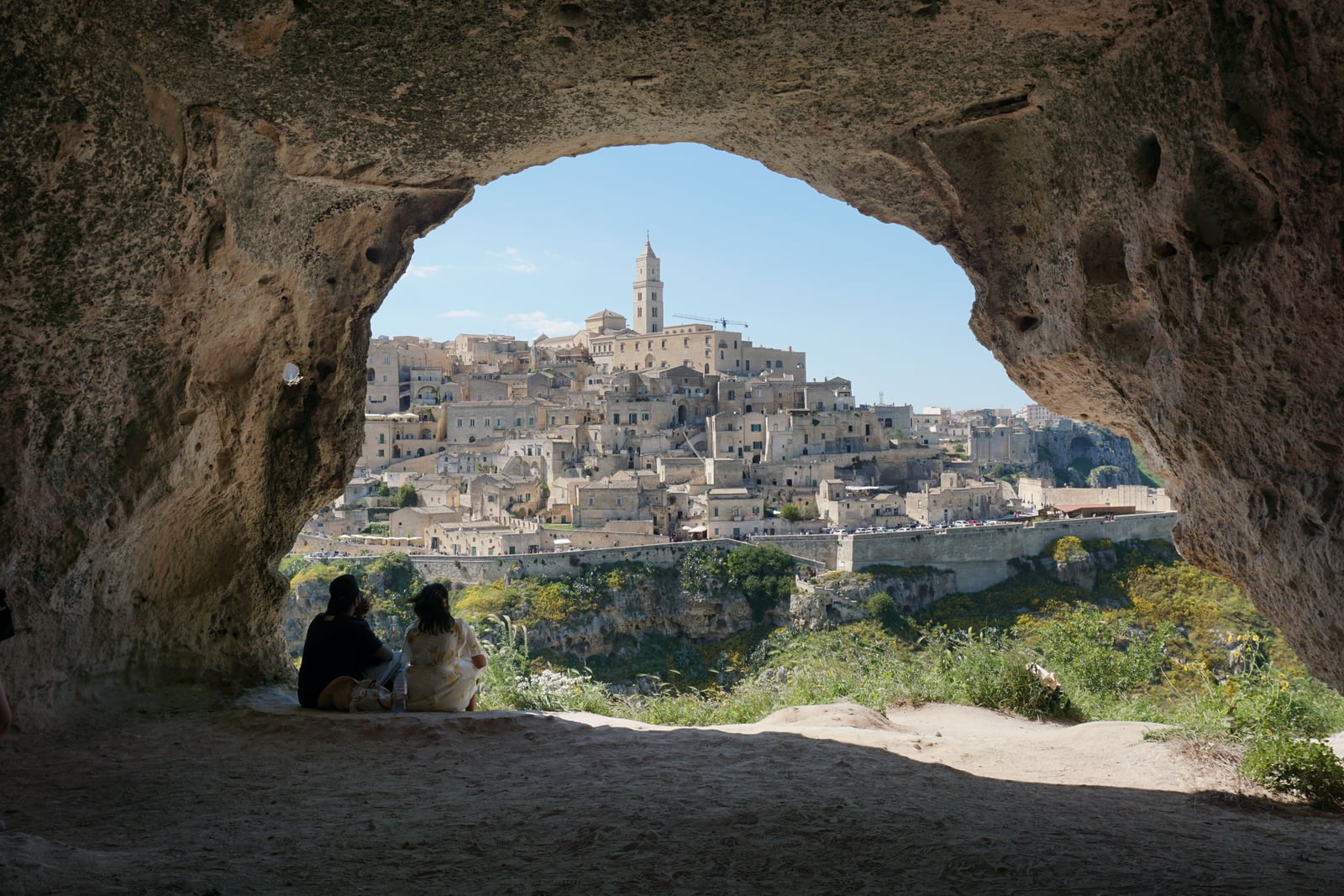
On foot, the way across is trail 406, from Porta Pistola down to a suspended footbridge over the Gravina stream. Since 2026 the crossing takes a ticket: €15 from April to October, €10 from November to March, half price under 25, and the same ticket covers the Murgia Timone trails and a shuttle to the belvedere: the park's ticket page, in Italian. The park closed that stretch, footbridge included, for works from November 3 to 25, 2026, so check its notices before you set out and look for chiusura (closure) on the park's news page, in Italian. During that closure it let visitors in from Jazzo Gattini instead, about 6.6 km and 12 minutes by car from Piazza Vittorio Veneto (a mapping estimate). With a car, the belvedere also makes a last stop on the way out of town, and from the far rim the Sassi you got lost in yesterday lie open like a map, dead ends and all.
The Crypt of Original Sin (Cripta del Peccato Originale), the rock church of a Benedictine cave monastery, with frescoes dated to the 8th and 9th centuries, is seen by booking only: book at least 90 minutes before your shift, and the ticket is non-refundable. Shifts run daily, six from April to September, four from November to February, five in between. Be at the ticket office, at the Dragone farm in Contrada Petrapenta, 30 minutes early; it is about 15 minutes by car from Matera, with free but unattended parking. The ticket includes no shuttle from Matera, so without a car, sort out the ride before you book: the Crypt's official booking page, in Italian.
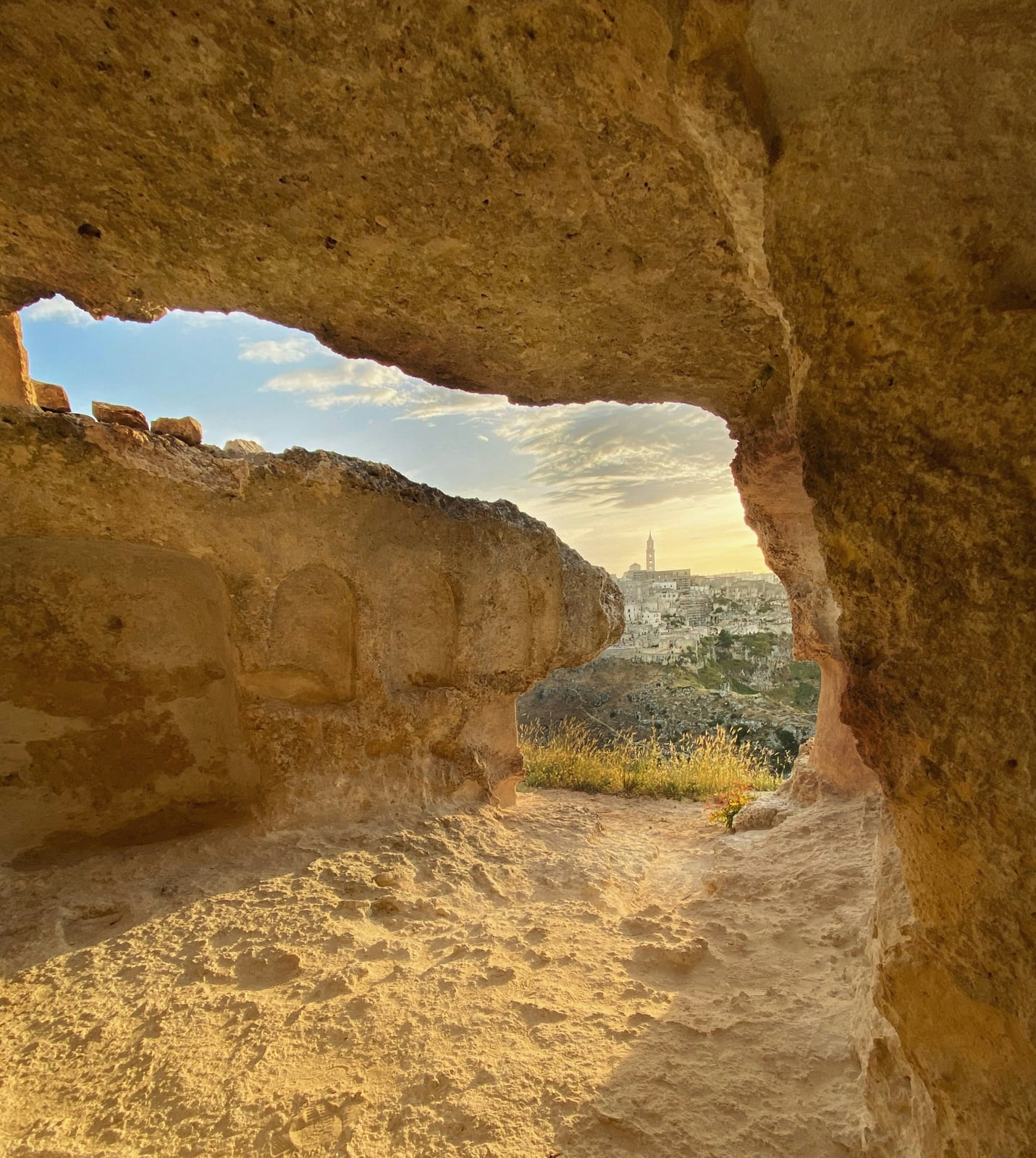
From the ticket office, the Crypt is about 700 m on, on foot or in your own car, following the staff. The visit takes about 30 minutes with an audio guide, in groups of 2 to 12; no photos, video, or food, and wear rubber-soled shoes. An access staircase and uneven paving at the entrance may make the visit impossible or difficult with limited mobility, so contact the office well ahead. A lot of arranging for half an hour, and worth it, religious or not.
Getting to Matera: FAL from Bari, Sunday buses, and the ZTL if you drive
Matera is about an hour by road from both Bari and Bari airport (mapping estimates), but no Trenitalia train runs into Matera: the national-network line is due in 2028. For a longer trip, see how Matera fits a Puglia itinerary, drive by drive.
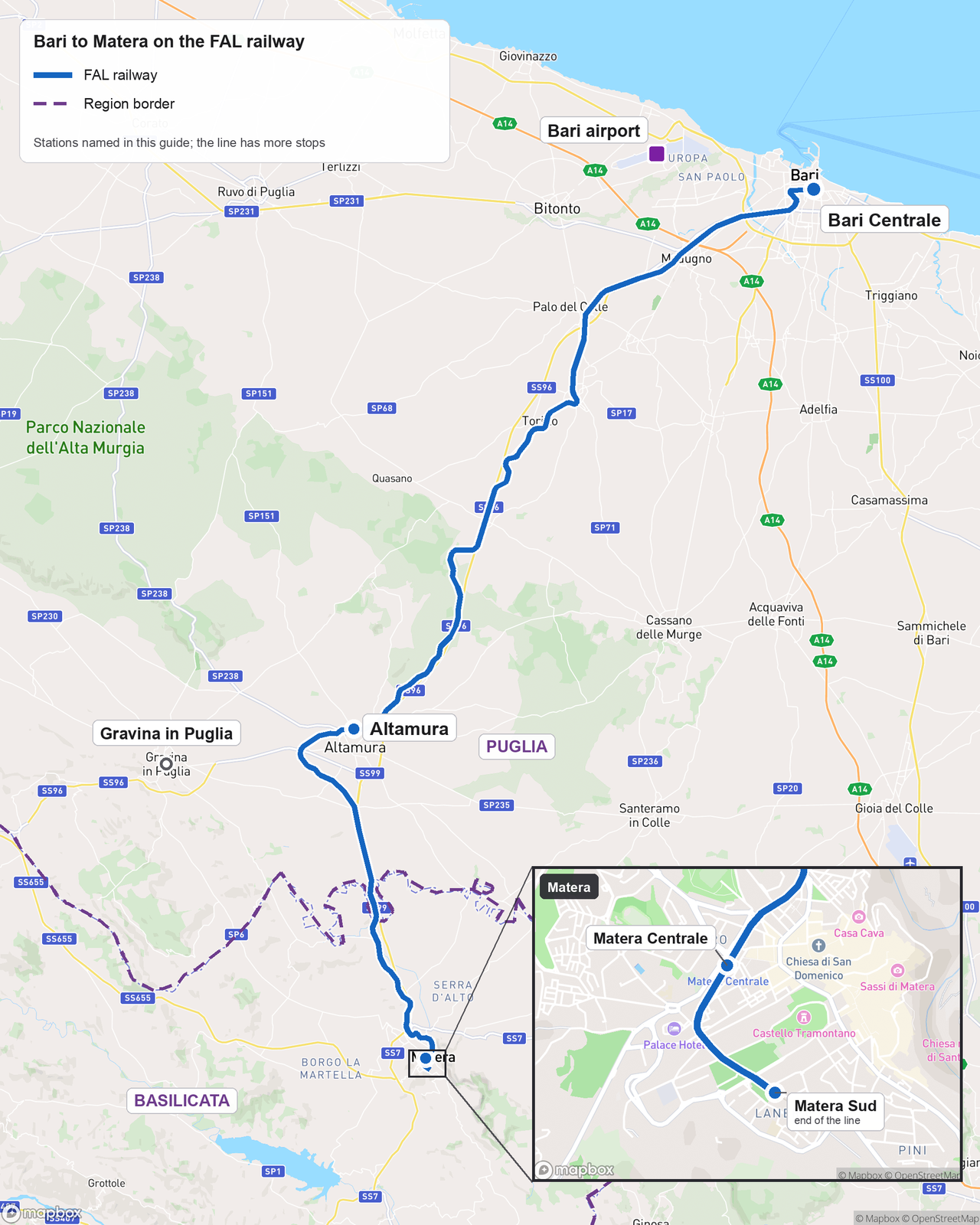
FAL's trains leave Bari Centrale Monday to Saturday, usually with a change at Altamura, and arrive at Matera Centrale, about a 10-minute walk from Piazza Vittorio Veneto. On Sundays and holidays FAL runs buses instead, from Via Capruzzi by the FS bus terminal (FS is Italy's state railway group), and rail tickets are valid on them. Check the day you come back, not just the day you go: the expensive way to learn the Sunday rule is a taxi back to Bari. Timetables: FAL's timetables and fares page, in Italian.
From Bari airport, one FlixBus a day runs to Matera, leaving at 14:00 per the operator's page, November 2026. It stops on Via Don Luigi Sturzo by the San Paolo church, outside the old center: about a half-hour walk to Piazza Vittorio Veneto, or a short bus or taxi ride.
After a late landing, on a Sunday, or with a heavy bag, a private transfer from the airport or Bari Centrale is the simpler ride; ask where it can drop you.
Pre-book a transfer from Bari to Matera
The center is a limited-traffic zone, so settle the drop-off point when you book
From Rome, Itabus and MarinoBus run to the same Via Don Luigi Sturzo stop; from Naples, FlixBus and MarinoBus. Or Trenitalia's FrecciaLink sells one ticket: a Frecciarossa (its train from Italy's main cities) to Salerno, then a bus to Matera's stop on Viale Nazioni Unite, every day except December 25, 2026 and January 1, 2027: Trenitalia's FrecciaLink Matera page, in Italian.
Or come down from Rome by train and change to the FAL in Bari: which train and fare to buy.
⚠️ Warning
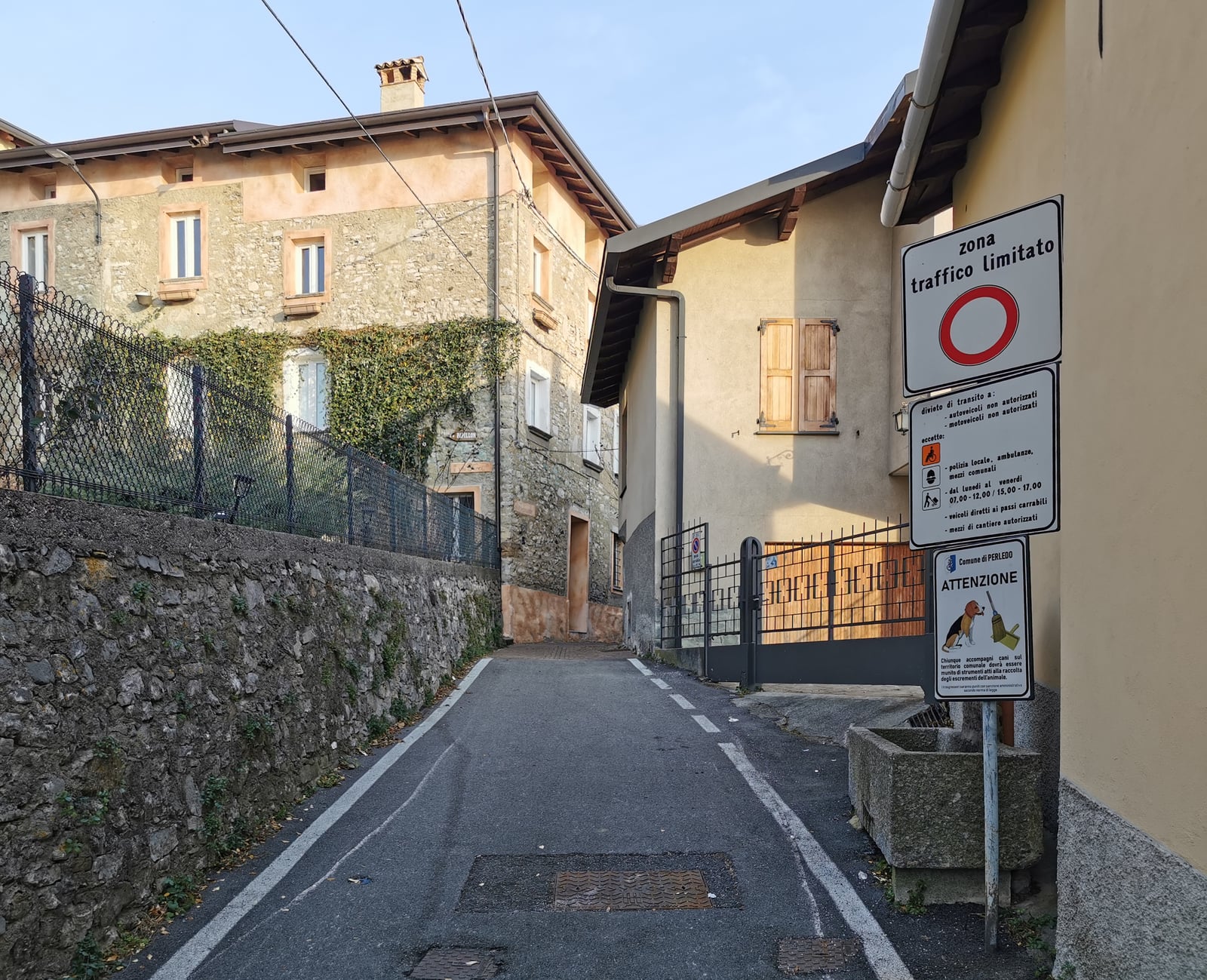
Matera's ZTLs are limited-traffic zones watched by cameras. The Sassi gates at Via D'Addozio and Via B. Buozzi are closed to traffic every day, 10:00 - 20:30 from September 16 to June 30 and 10:00 - 24:00 from July 1 to September 15, authorized vehicles excepted. The center's ZTL streets, Via del Corso and Via Duomo among them, are closed around the clock.
Park outside the ZTLs and walk in; retractable bollards guard the ways into Piazza Vittorio Veneto, and other central streets keep their own hours. Pick the bed first, then the parking nearest it, since lots near the Sassi fill. If the bed is inside a ZTL, ask the host before you drive to the door, and check that they register your plate: lodgings report a guest's transit on the city's portal no later than the day after you drive in. The city's rules are on its ZTL page, in Italian.
For Matera plus the Puglia towns, or the second day below, a car does what the trains can't. Pick it up at Bari airport and the FAL question never comes up.
Compare rental cars at Bari airport
Then park outside Matera's limited-traffic zones and walk in
A second day with a car: Craco, Altamura, Gravina, and the zip line
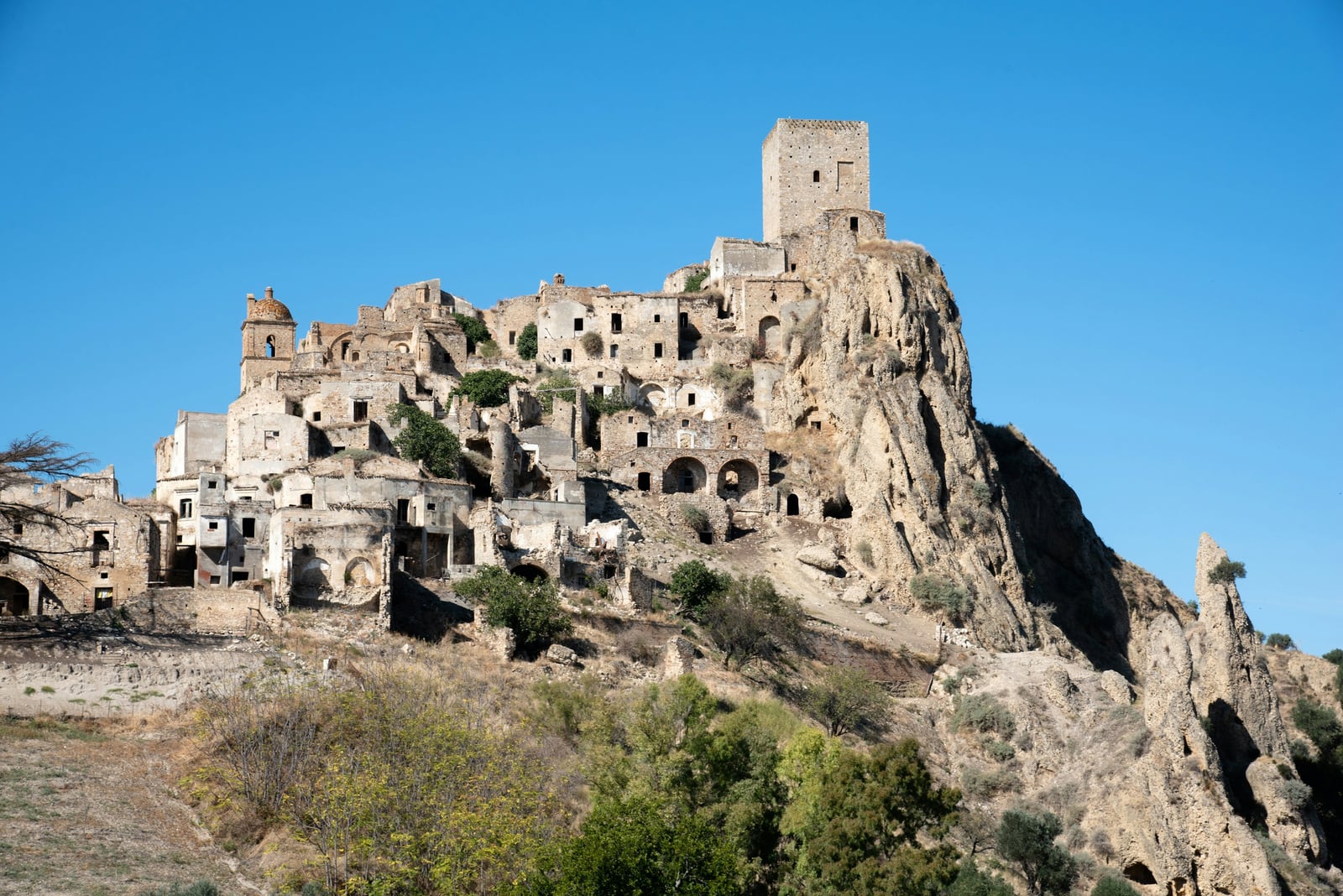
With a car, a second day from Matera goes north to Altamura and Gravina in Puglia, or south and west to the abandoned hill town of Craco and the Volo dell'Angelo (the Angel's Flight), a zip line between Castelmezzano and Pietrapertosa.
| Hop | Drive from Matera (mapping estimate) | What | Check first |
|---|---|---|---|
| Altamura, then Gravina | about 21 min; Gravina about 32 min | a Neanderthal fossil's museum; Gravina's Ponte Acquedotto, an aqueduct bridge over the town's canyon | the museum's hours |
| Craco | about 1 hour | the empty old town, walked as a museum park | Apr - Oct daily, from 09:30; Nov - Mar Fri - Sun and holidays, 10:00 - 15:00 |
| Volo dell'Angelo | about 1 hour 24 min (to Castelmezzano) | a flight on a cable between the two villages' peaks | its 2026 calendar of open days, May 1 - December 8 |
Craco's museum park, the Parco Museale Scenografico, is run by the cooperative Oltre l'Arte and reachable only by car. The Passion of the Christ filmed Judas's death here. Tickets: Oltre l'Arte's Craco site, in Italian.
The zip line's 2026 price for a single flight is €36 on weekdays in July and September and €46 on weekends, holidays, and the other open days from May to November. Calendar and tickets: the Volo dell'Angelo calendar, in Italian.
Altamura's museum, in Palazzo Baldassarre, tells the fossil's story with panels, replicas, and a full-size copy of the part of the Lamalunga cave where the skeleton still lies. Hours and tickets: the museum's page on the Altamura town site, in Italian.
When to go to Matera: July 2, the living nativity, and cold evenings
The time to visit Matera turns on two events as much as on the weather: July 2, the town's patron feast, and the living nativity over the Christmas season.
The feast is the Festa della Bruna, with its triumphal float, the Carro Trionfale. That day Casa Grotta keeps short hours, 09:00 - 13:30, so see it in the morning or on another day.
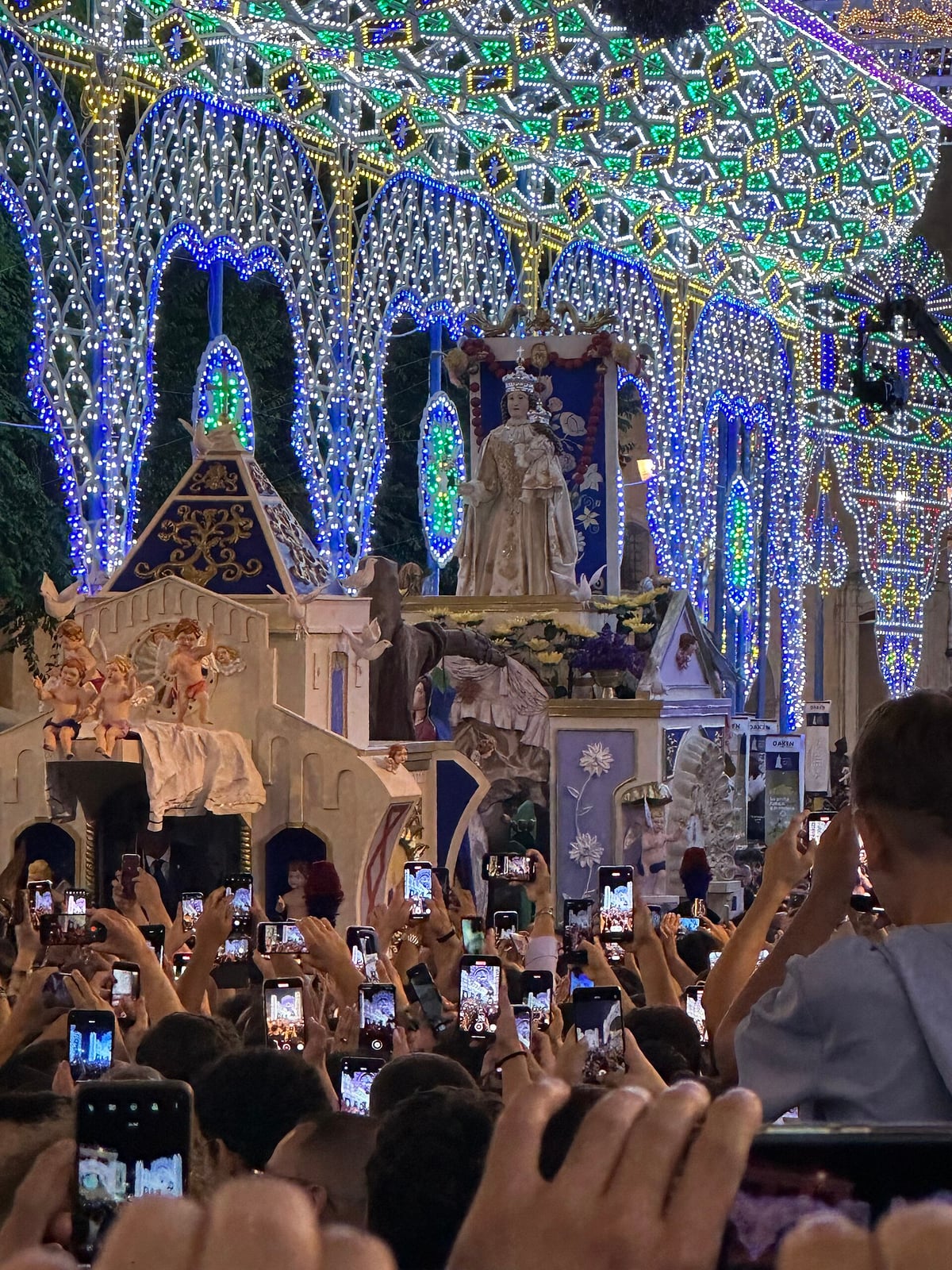
The presepe vivente (a living nativity) follows a 1.5 km route through the Sasso Caveoso. The 2026-27 edition runs on December 5-6, 12-13, 19-20, and 26-27, 2026, and January 2-3, 2027: the Bruna gives you one day, the nativity ten. Entry at Piazza San Francesco is timed and booked online; tickets are €12, or €7 for ages 5 to 10, plus booking fees: the nativity's ticket page, in Italian.
Winter evenings are cold, in a town best seen after dark, so bring a warm layer. Summer days run hot: walk the Sassi in the morning and the evening. In rain, watch your footing on the stone steps.
Matera FAQ
- Is Matera worth a day trip, or should you stay overnight?
- A day covers the Sassi by daylight, best with a car, which also lets you stay for the lights and drive out after dark. A night gives you the lights without the drive, plus a short morning across the ravine; give it two nights if you can, for a full day at the ravine and the Crypt of Original Sin.
- Is Matera in Puglia?
- No. Matera is in Basilicata, just over the border from Puglia, about an hour by road from Bari, by mapping estimates.
- Do you need a guide in Matera?
- No: with a good map and some reading first, you can walk the Sassi on your own. A guide adds the inside of the cave homes and a church or two.
- Can you get from Bari to Matera by train on a Sunday?
- Not by train. FAL's trains run Monday to Saturday; on Sundays and holidays FAL runs buses instead, and rail tickets are valid on them.
- Is Matera hard to walk with limited mobility?
- The Sassi are: stone steps, many polished, some slippery when wet. But many areas of Matera are flat or sloped, and the lower Sassi can be seen almost entirely from the rim above them.