 George Mandrovny
The Puglia map: three trips, not one strip
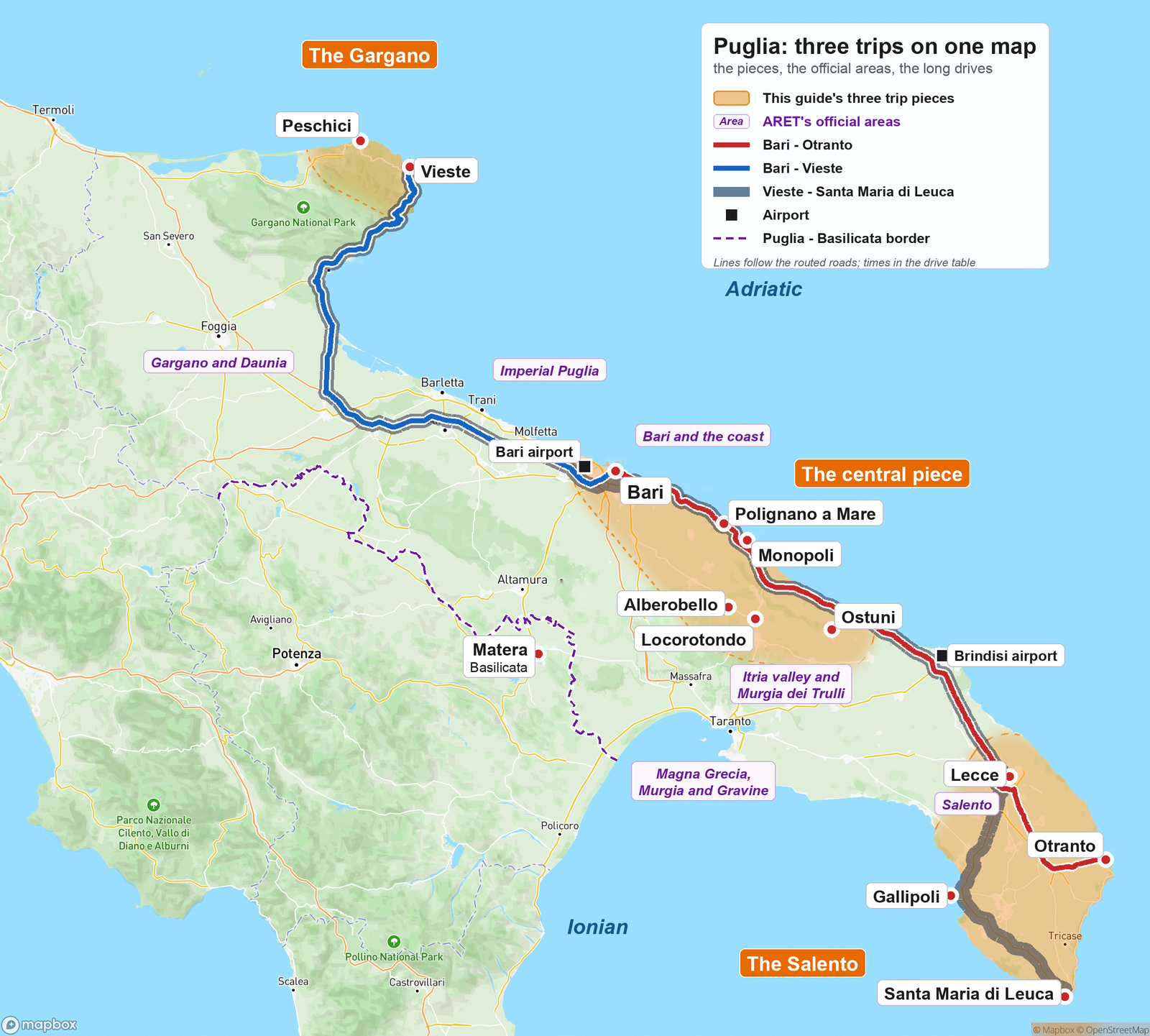
Puglia is three trips on one map: the central piece (Bari's coast and the Itria valley towns), the Salento around Lecce, and the Gargano in the north. With a car, one base in the middle reaches the whole central piece, Matera and Lecce; the Salento past Lecce (Otranto, the Leuca end) wants a second base; the Gargano is its own trip. The trap is reading the map as one short strip: end to end, Vieste to Santa Maria di Leuca routes at about 5 hours 53 minutes.
Four things a road map of Puglia does not show:
- What every crossing costs in hours, not kilometers
- How many bases the pieces ask for
- Where the trains stop and the car takes over
- The gates of the ZTLs, Italy's limited-traffic zones, in old towns and town streets, and when they bar your car
How to read it. Puglia's tourism agency, ARET, splits the region into six official areas, and my three pieces are built from four of them. "Bari and the coast" and "Itria valley and Murgia dei Trulli," whose towns include Ostuni and Alberobello, make the central piece. Salento is the second. The Gargano, inside "Gargano and Daunia," is the third. The other two, "Imperial Puglia" (Trani, Barletta, Bisceglie) and "Magna Grecia, Murgia and Gravine" around Taranto, are points on the map that no piece is built around.
The Salento sits between two seas, the Adriatic and the Ionian. Which beach suits which day is its own question, and my sand-or-rock guide to Puglia's beaches settles it.
Two more kinds of point change the plan. Matera is not in Puglia at all - it sits across the regional border in Basilicata - but it is close enough to the central piece to belong on this map. And the airports at Bari and Brindisi do not sit equally close to every piece.
None of the seams between the pieces shows on an ordinary map as a line. You meet them as hours in the car, a train that stops short, or a gate that reads your license plate.
Drive times a Puglia map leaves out
A map of Puglia, Italy, shows the distance. It does not show the drive. On a phone screen the three pieces sit a thumb's width apart, and on the road the gaps between them are where the days go. These are the crossings that decide the plan:
| Drive | Road distance | Time (routed) | What it means |
|---|---|---|---|
| Polignano a Mare - Lecce | 115 km | about 1 h 26 min | Lecce, a day out from the central base |
| Bari - Lecce | 152 km | about 1 h 57 min | The coast seam, which the train also runs |
| Bari - Otranto | 199 km | about 2 h 41 min | The Salento past Lecce, from Bari |
| Bari - Vieste | 188 km | about 2 h 49 min | Into the Gargano |
| Polignano a Mare - Vieste | 223 km | about 3 h 16 min | The Gargano from the central base |
| Lecce - Vieste | 337 km | about 4 h 37 min | The Gargano from the Salento |
| Vieste - Santa Maria di Leuca | 419 km | about 5 h 53 min | End to end |
The first row is a day out: Lecce sits within reach of a base on the central coast. From Bari, the Otranto row, doubled for the drive back, runs past five hours - the Salento past Lecce is where the road outgrows the day. Vieste is closer to Bari than Otranto by the odometer and farther by the clock, and none of the table's Gargano rows works as a day trip. The last row is a full day of Puglia seen through a windshield.
These are a routing engine's estimates for an empty road, town center to town center: no traffic, no circling for parking, no stop for coffee or a view. A real day runs longer. Add slack for the Gargano, where the road in from Bari is long and winding in parts.
So plan Puglia in pieces, not in kilometers.
One base, two, or three: what each piece of the map asks
The number of bases is the number of pieces your trip holds, and two things decide it: whether you drive, and whether the Salento past Lecce or the Gargano is on the list. My rule for a day out: double the table's time to count the drive back. Around three hours in the car still leaves the day to the place; past five, the day belongs to the road.
The central piece: one base reaches all of it. With a car, one base in the middle - a coast town like Polignano a Mare or Monopoli, or one of the Itria towns inland - covers the rest of the piece and Matera's old cave quarters besides. From Polignano a Mare, by the same routing, Alberobello is about 32 minutes, Ostuni about 44 minutes and Matera about 1 hour 31 minutes. Lecce, the table's first row, sits in the same range. Without a car, the base belongs on the coast line, in a town where the train stops close to the center, and how a car-free stay in Monopoli works is worth a read first.
The countryside alternative to a town base is a masseria, a farm estate turned lodging, and it needs a car. A car-free trip stays in towns, where restaurants, bars and the evening piazza are a walk away. Whether a masseria is worth trading the town for is its own decision.
Pick the town by how you will move. Without a car, check the walk from the door to the station before anything else; with one, settle parking with the host before you book, not on arrival.
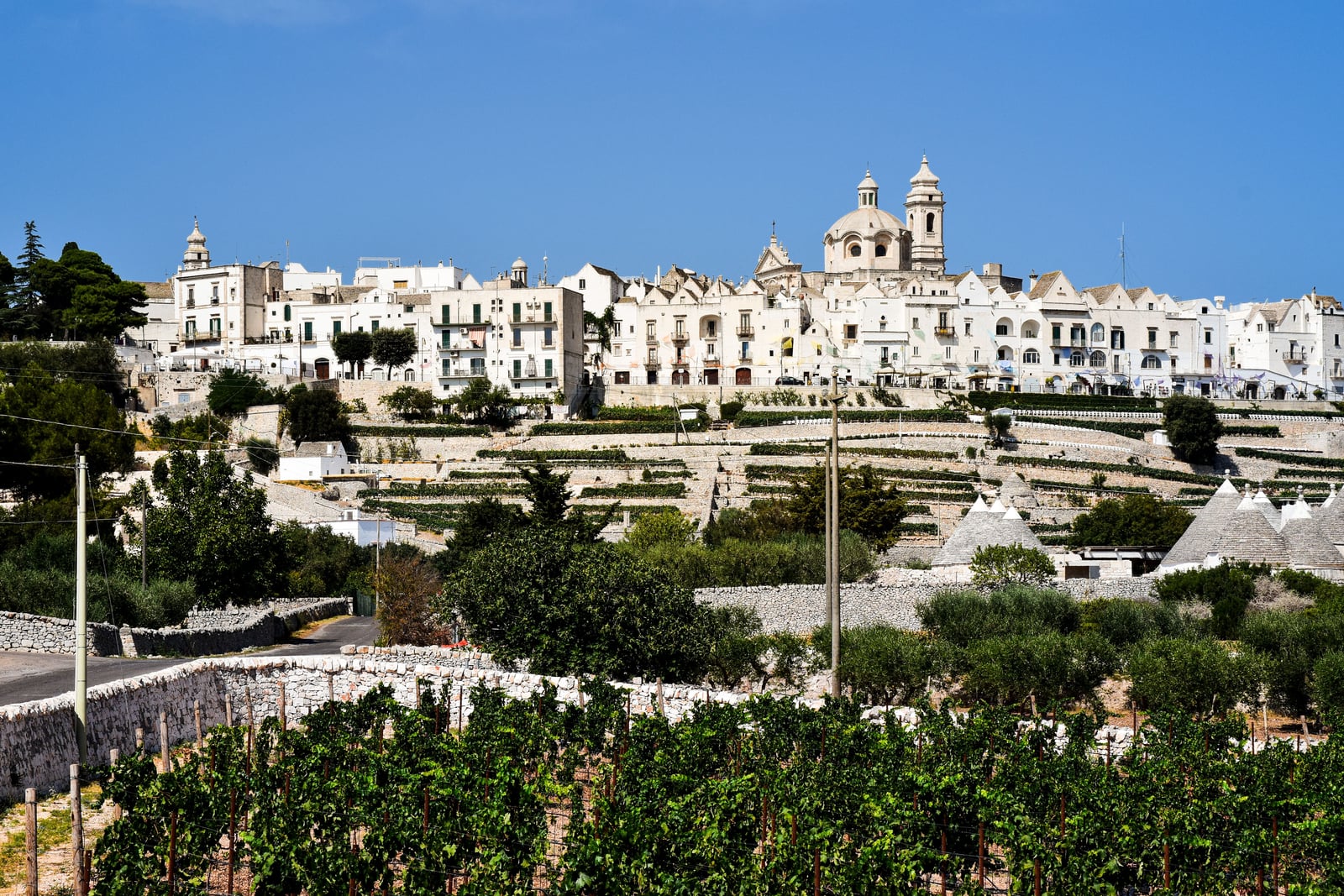
The Salento past Lecce: a second base. What earns the second base is the Salento's spread, not Lecce. The trigger is wanting what lies beyond it: Otranto, the Leuca end, the beaches on both seas. From Bari that is the Otranto row in the table, there and back, and the fix is to move south instead of commuting. Lecce is the natural base. From it, Otranto is about 46 minutes and Santa Maria di Leuca about 1 hour 18 minutes, and the town itself, with sights and day trips of its own, is no hardship to come home to.
With a car, Lecce asks one thing: a place with its own parking, or one that deals with the old town's limited-traffic gates for you.
Hotels with parking in Lecce
Outside the old town and its gates, with parking at the place.
About five minutes' walk from the old town, with a parking space you book along with the room, or you look for a spot in the streets. Check-in ends at 20:00.
Adds both at once: free parking at the door that needs no booking, and the old town a few minutes' walk away.
On an avenue just outside the old town, a few minutes' walk through one of its gates and about 600 m from the station. Check-in ends at 20:00.
Adds a room inside the old town, with parking at the hotel and a rooftop to end the day on.
A restored old mansion by Piazza del Duomo, with a roof garden that looks out over the old town and parking in its own courtyard, its guests' cars cleared through the gates for the whole stay. The spaces are few and the entrance is narrow, so book one with the room and bring a small car; check-in ends at 18:00.
At the edge of the old town, with breakfast on the rooftop and a small plunge pool up there; staff park your car in the hotel's garage next door. It sits inside the gates, so have them register your plate before you drive in, and check in by 22:00.
Without a car, stay in the old town or a short walk from it, and check the walk from the station with your bags before you book.
Hotels in Lecce's old town
At the edge of the old town, a few minutes from its lanes.
About 10 minutes on foot from the station, with check-in until midnight. Breakfast is fresh pastries the host brings round in the morning.
On the avenue just outside the old town, about 15 minutes on foot from the station: through the big wooden doors of an old palazzo, into a quiet garden courtyard. Check-in ends at 19:00, and the A/C can struggle to keep the room cool.
Adds a room in the heart of the old town. Check-in ends in the evening, so check the hour against your train.
A block from the cathedral, in an old palazzo with an elevator and a host full of tips on where to eat. Check-in ends at 20:00.
A couple of minutes from Piazza Sant'Oronzo, with breakfast up on the roof terrace. There's no elevator, the street can be loud at night, and check-in ends at 21:00.
Adds a front desk staffed late into the night, for a late train.
A few minutes from Piazza del Duomo, with breakfast and dinner out in a shady garden courtyard. Check-in runs until 23:00.
By Porta Rudiae, a gate at the old town's edge, in a quiet spot, with a big breakfast spread, sweet and savory. The desk is open around the clock, so you can check in at any hour.
The Gargano: its own trip, or the next one. Getting there is the cost. From the Salento, Vieste is the second-longest row in the table, and from the central base the drive runs past three hours each way. Without a car, the promontory is hard going: fine if the plan is to reach Vieste and stay on the beach, poor for anything that needs moving around, though once there a taxi from Vieste will drop you at the trailheads. On the drive in, the GPS has a taste for dirt lanes through olive groves, so ask for directions as soon as you turn into the Gargano from the south.
However many pieces make the cut, fewer and longer stays beat a trip spent on the move. A move day is a cost of its own, though the drive between bases can carry a stop or two.
Car or train in Puglia, piece by piece
With a car, every piece of the map is easy going. Without one, the answer depends on the piece, because Puglia's railways come as separate lines from several operators, and they link towns, not the countryside between them:
| Piece | The railway | Without a car |
|---|---|---|
| Central coast | Trenitalia's Bari - Lecce coast line: Polignano a Mare, Monopoli, Ostuni station, Brindisi | Works |
| Itria towns | FS Sud Est's Bari - Taranto line: Alberobello, Locorotondo, Martina Franca | The towns, yes, though for now many runs there are replacement buses, not trains; the countryside between, a car |
| Matera | Ferrovie Appulo Lucane's narrow-gauge line from Bari through Altamura | Works: trains Monday to Saturday, usually changing at Altamura; buses on Sundays and holidays |
| Salento | FS Sud Est from Lecce: trains to Gallipoli; to Otranto, train, then bus on working days | Both towns, yes; the coast between and beyond, a car |
| Gargano | Ferrovie del Gargano: ends at Peschici Calenella, not Vieste; its far end can run as a bus | Hard going: fine to reach Vieste and stay on the beach, poor for moving around |
On the coast seam the train beats the car: Trenitalia's fast regional covers Lecce to Bari in 1 hour 27 minutes by its own count, faster than the routed drive for the same pair. The countryside between the trulli towns (the Itria towns; trulli are the area's cone-roofed dry-stone houses), the Salento's coast between and beyond FS Sud Est's lines to Gallipoli and Otranto, and the Gargano are where the car pays for itself. On the coast line and Matera's line, it is a convenience rather than a need, as long as you accept that the train's timetable becomes yours. The trulli towns themselves are reachable on FS Sud Est's own line from Bari, though for now many runs on that stretch are replacement buses, not trains; on Sundays and holidays it is trains.
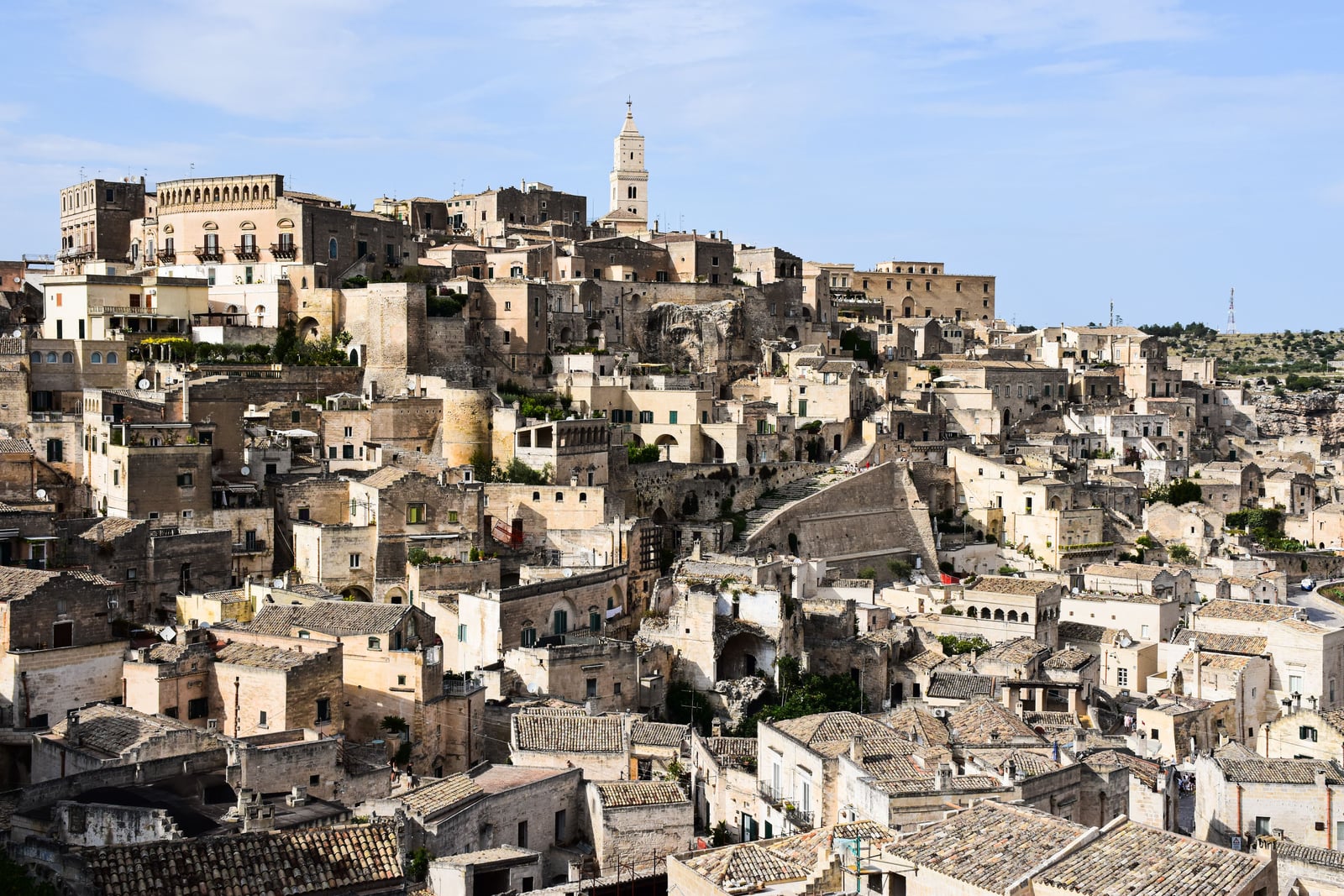
Which airport to fly into follows from the first base. By the same routing, Bari airport is the near one for Polignano a Mare (about 50 minutes), Matera (about 1 hour 3 minutes) and the Gargano (Vieste, about 2 hours 51 minutes). Brindisi airport is the one for the Salento and Ostuni: Lecce about 41 minutes, Ostuni about 42. Alberobello is about even between the two.
Coming by train from Rome, you arrive at Bari Centrale; from a stop inside Bari airport, a train runs there too, into the airport line's own station beside the main one. The Rome-to-Bari leg, fares and late landings included, has its own guide.
If the answer is a car, pick it up at the airport nearer your first base rather than in central Bari, which is not a friendly city to start driving in. Before you book, check whether the rental desk is in the terminal or a shuttle ride away.
Driving in Puglia: ZTL gates, parking, and Bari
Driving in Puglia is the easy part. The highways are good, outside the old towns parking is mostly free and easy to find, and anyone who has driven in Tuscany will feel at home. The fines come from the ZTL gates.
Lecce's old town is a ZTL with electronic gates. In season, an electronic gate at the bridge into Gallipoli's island old town reads plates going in and out. Otranto runs summer ZTLs with two electronic gates that work from evening to morning. Ostuni's ZTLs, in some areas of town, have camera gates working at set hours.
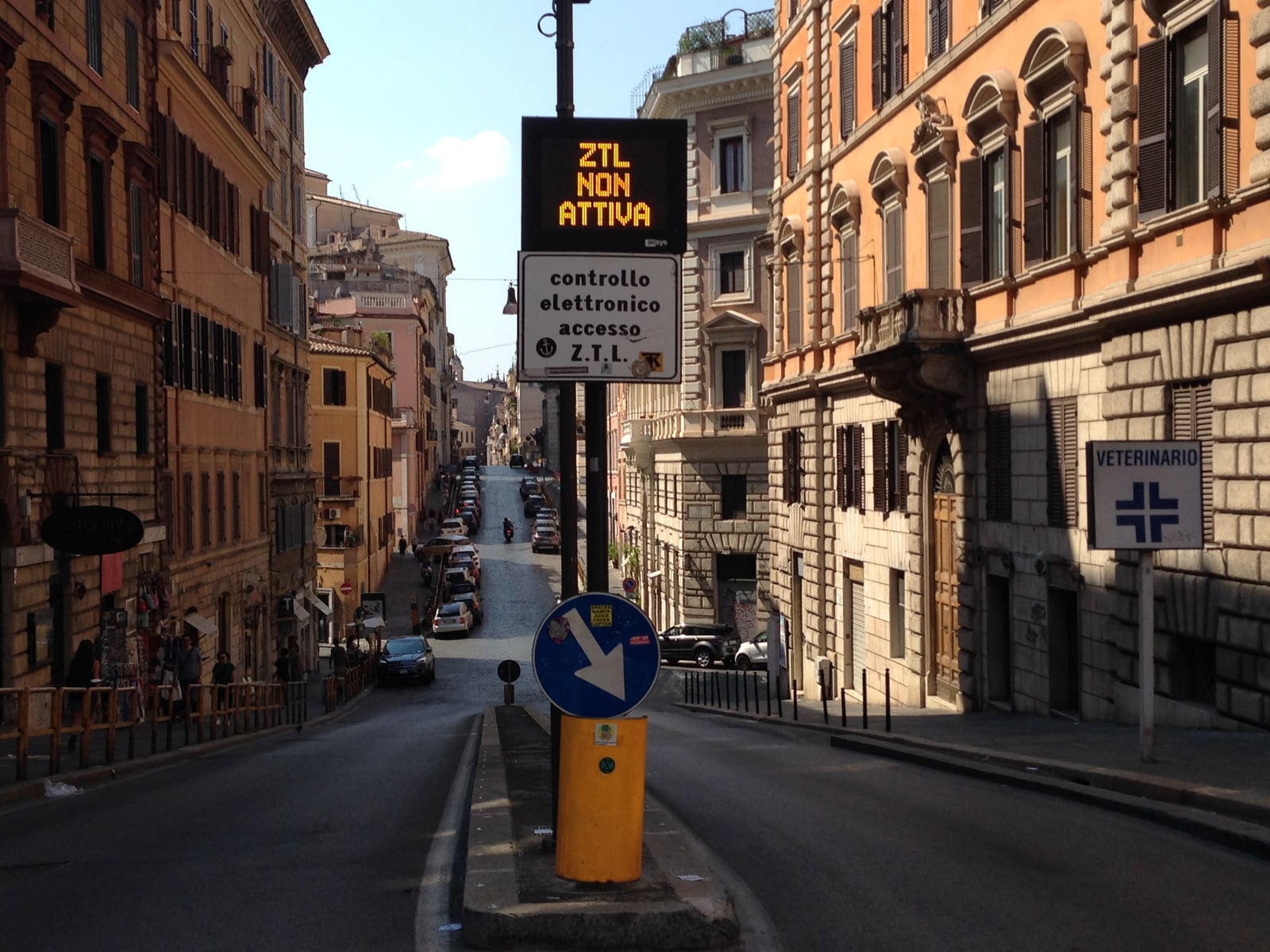
ZTL ATTIVA on the panel above the gate sign means the ban is on. Not every gate has a panel, and one without is safest read as closed. Everything else about the gates and the curb - the sign itself, what each parking line color means, and the camera fine that reaches a renter by mail months later - is in my guide to driving in Italy.
⚠️ Warning
Park outside the ZTL in every gated town. In Lecce, drive into the old town only if your lodging inside it registers your plate, and only on check-in and check-out days, for a bag-unloading stop of 20 minutes at most with a parking disc (a dial set to your arrival time) - never into the pedestrian areas. A lodging with its own parking gets you in for the whole stay.
If the car stays for the whole trip, base yourself somewhere smaller than Bari; parking in its center is a hunt or a bill. On the minor roads, give the big trucks room; they will not pull over for you.
Puglia map FAQ
- How long does it take to drive across Puglia?
- End to end, Vieste to Santa Maria di Leuca is about 419 km of road, and routing puts the drive at about 5 hours 53 minutes before a single stop.
- Can you see all of Puglia from one base?
- Not all of it. With a car, one central base covers Bari's coast and the Itria valley towns, Matera, and Lecce as a day out. The Salento past Lecce (Otranto, the Leuca end) wants a second base, the Gargano its own trip.
- Do you need a car in Puglia?
- Not for the towns on the coast line between Bari and Lecce, for Matera, or for Gallipoli and Otranto on FS Sud Est's lines from Lecce, though Otranto's last leg is a bus on working days. Nor for the trulli towns on FS Sud Est's own line from Bari, where for now many runs on that stretch are replacement buses, not trains. You do need one for the countryside between the trulli towns, the Salento's coast between and beyond those lines, and the Gargano, unless the plan is to reach Vieste and stay on the beach.
- Is Matera in Puglia?
- No, it is in Basilicata, a day trip from Bari: Ferrovie Appulo Lucane's narrow-gauge trains run Monday to Saturday, usually with a change at Altamura, and buses replace them on Sundays and holidays. By car from Bari, routing puts it at about 1 hour 4 minutes.
- Should I fly into Bari or Brindisi?
- Whichever is nearer your first base: Bari for Polignano a Mare, Matera, and the Gargano; Brindisi for Lecce, the Salento, and Ostuni.
Before you look at a single hotel, circle the pieces you want - the Salento only if your list runs past Lecce - and count the circles: that is your number of bases, each extra one paid for in hours.