 George Mandrovny
What's different from driving at home
Driving in Italy as an American is not hard, but a handful of rules work differently from home, and most of them bill you by mail, sometimes months later.
- Before you fly: an International Driving Permit, carried with your US license.
- At the desk: check the card, deposit and cover on your voucher. Sixt takes credit or debit cards, never prepaid; Hertz and Avis make theft protection mandatory in Italy.
- Autostrada (toll highway): you usually take a ticket going in, and the yellow "T" lanes are for toll tags only.
- Speed: camera posts must be signaled in advance, and the Tutor clocks your average speed between two gantries.
- In town: never drive through a ZTL (limited-traffic zone) gate whose display reads ZTL ATTIVA or VARCO ATTIVO ("active") unless your plate is authorized. A hotel inside may get your plate a permit; ask first.
- After the trip: fines reach the rental company, then you. The ZTL camera is the classic sender.
The roads themselves are the easy part: country roads run small and winding but manageable, and a coast road cut into the cliffs runs narrow and slow; some drivers find it intimidating, others an amusement-park ride, the good kind.
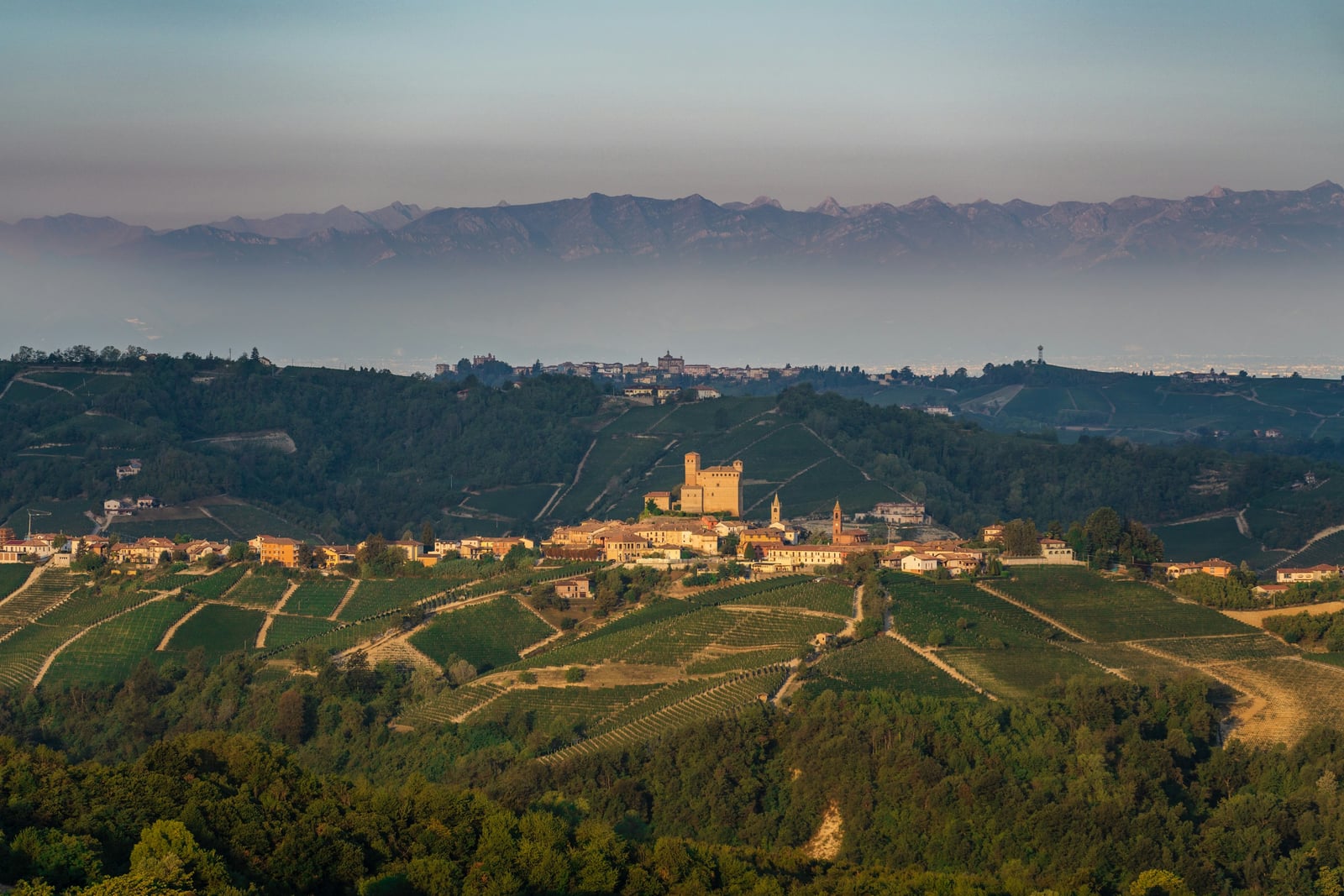
I have driven three corners of Italy: South Tyrol in the Dolomites, Tuscany's Val d'Orcia, and a loop from Bari through Matera, the Itria Valley and Lecce. All three I'd drive again. South Tyrol has smooth asphalt and clear markings, the Val d'Orcia only really opens up from your own car, and in Puglia a car ties the white towns inland to the coast far better than the local trains.
Not every rental ends in a letter. The ones that do come from ZTL and highway cameras, unpaid tolls and parking, and each has its section below - cheaper to learn here than from the envelopes.
Before you fly: the permit the desk and the police check
As a visitor, you can drive in Italy on your US license only if it travels with an International Driving Permit or an official Italian translation, and the license and the permit must both be valid. Driving without either currently costs €408 - €1,634.
Get the permit before you leave the States; the translation route needs a certified translator, which is more errand than most trips want. Only AAA and the American Automobile Touring Alliance (AATA) are authorized to issue it. At an AAA branch it costs $20, plus sales tax where it applies (the branch confirms the exact fee), with two passport photos and your license. Online adds a $10 photo fee and shipping, and takes about five business days plus the mail.
Apply on AAA's International Driving Permit page.
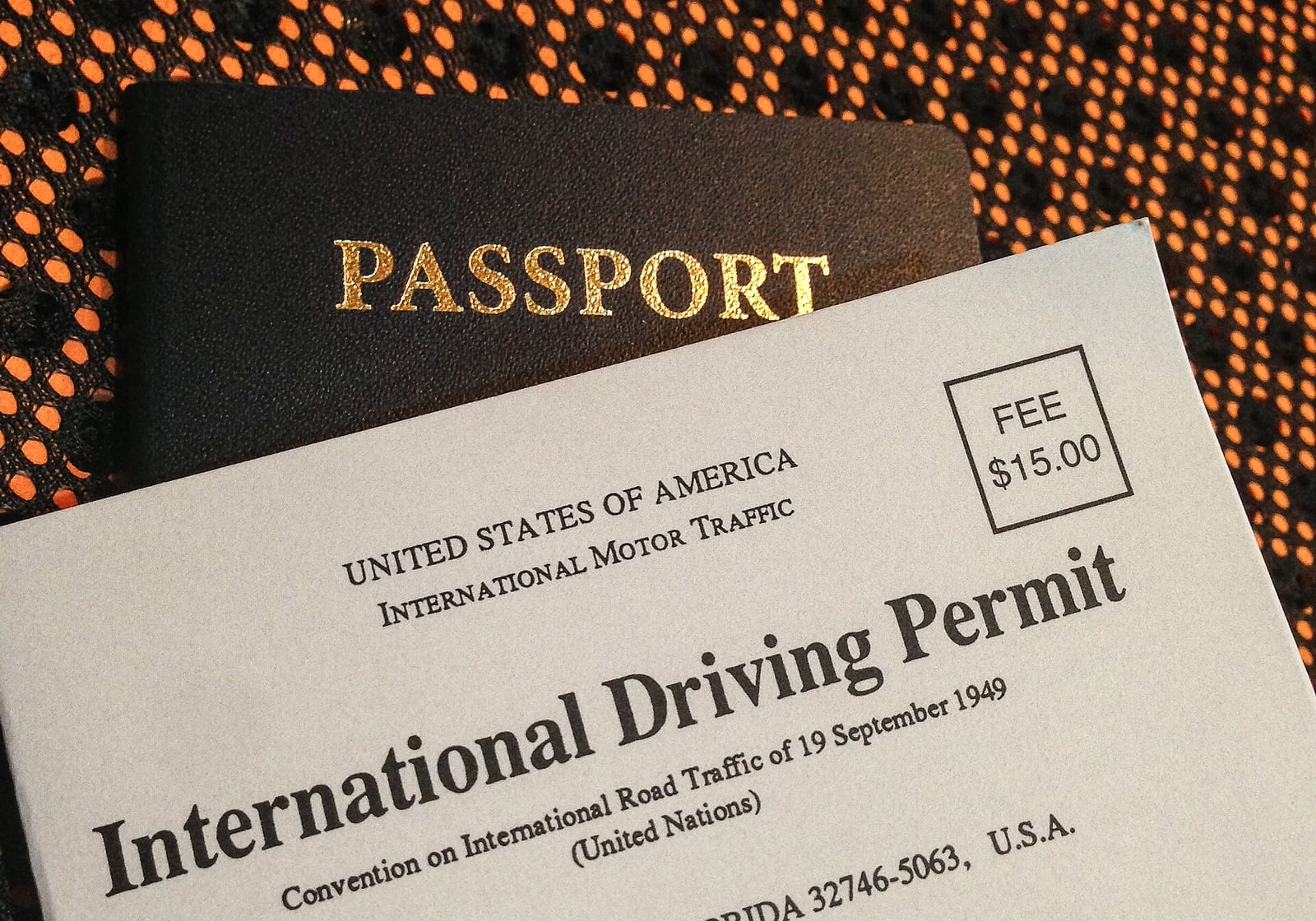
The rental desk is where the permit gets its first look, and in my experience that look is a coin toss: at one airport the agent wanted the paper booklet on the counter beside my license and passport before handing over the keys, and on another trip nobody mentioned it. The police have never stopped me, so no one has checked it on the road. But some desks refuse the car to a renter who arrives without one, and next to losing a car you've already paid for, a permit bought before the flight is the cheap side of the bet.
⚠️ Warning
AAA's permits are printed and mailed; there is no digital version. A paid-for "digital" permit has already been refused at a desk, and permits are sold online and in person by sellers the State Department never authorized.
AAA won't issue a permit more than six months before the date it takes effect, and it is valid for one year from that date. Make sure that year covers the whole trip: an expired permit can get the same no at the desk as none at all.
At the rental desk: the card, the hold and the cover
At Sixt, the desk wants your license, a payment card and an ID, and the card must be a credit or debit card on an international network; prepaid cards of any kind are refused. A credit card must stay valid until at least 30 days after the scheduled return, and the deposit, set by the car group, comes back within 30 days of the rental's end. Other suppliers write their own rules, so read your voucher at home, not at the desk with a line behind you.
Then the cover. Hertz's and Avis's terms both make theft protection mandatory in Italy. Avis puts it and a basic Collision Damage Waiver (CDW) in the rate, yet at both a deductible (the excess, on your voucher) stays with you until you buy the supplier's own waiver. Avis's Super Collision Damage Waiver (SCDW) cuts it to zero for approximately €23 - €44 a day, windshield, windows, tires, rims and underbody excluded; under Hertz's Rome Fiumicino terms, the theft-protection excess on a Fiat 500-class car is €2,000.
Before you decline the desk's cover on the strength of a credit card, read the card's benefit guide: American Express's rental loss and damage benefit excludes Italy by name. My Sicily car-rental guide weighs the desk's zero-excess offer against a separate excess policy, and what each does to the deposit.
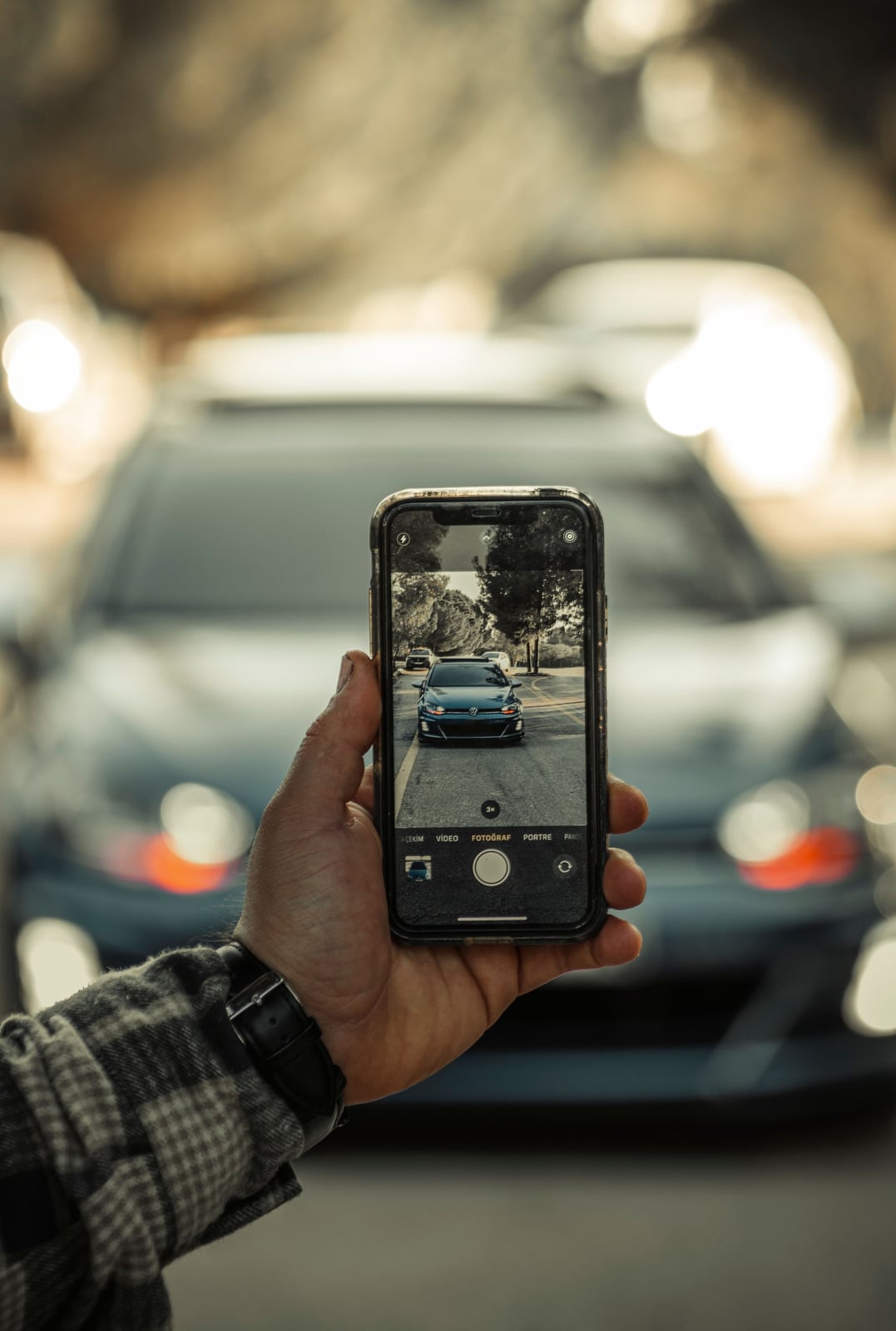
Then film the car before you drive off: every panel and the fuel gauge, in daylight, not in a garage's gloom where dents keep their secrets. Film it even if the agent says it already has a lot of damage. That line, and the photos skipped because of it, once ended in a bill for hundreds of dollars on a car kept under a day.
Book a small car, since the roads get narrow, and filter for an automatic if you don't drive stick. At Sixt, a one-way drop is an extra whose cost you see when booking, and depending on the car category and the booking, some countries abroad may be off limits; the contract lists them. Then read three things on the voucher: the deposit, the cover in the rate and the excess left with you.
Compare rental cars for your Italy trip
Filter for a small car and an automatic; the voucher shows the deposit and the excess
On the autostrada: the ticket and your lane
Most autostrade charge tolls, and though the system can vary from road to road, you generally take a ticket going in and pay at the exit. At the entry, toll-tag lanes have yellow signs overhead; every other lane hands you a ticket.
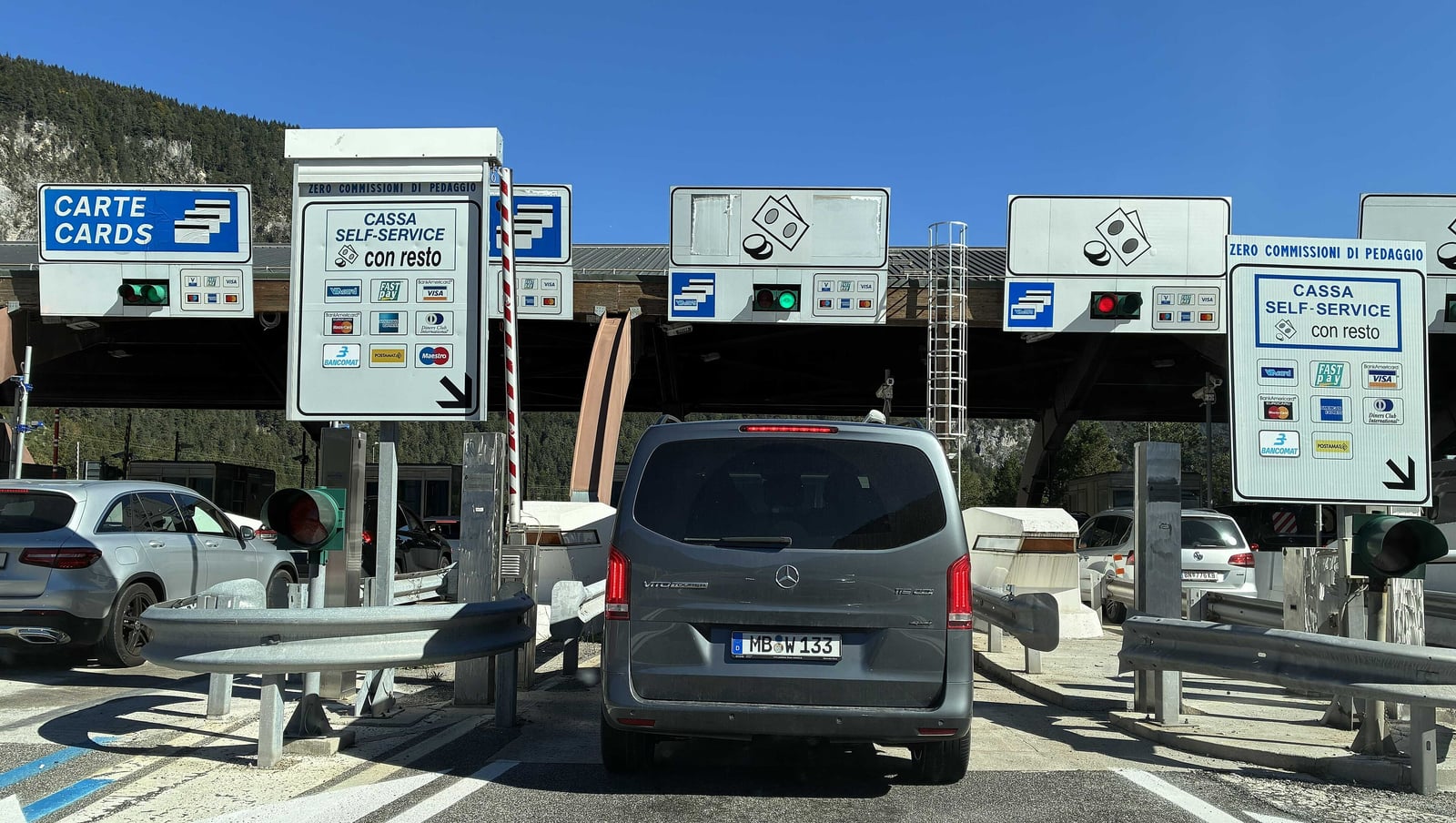
At the exit, pick your lane by the signs over the booths while still in the approach lanes - the operator's own safety rule - rather than with a last-second swerve across the plaza.
| Lane sign | What it takes |
|---|---|
| Yellow, with a "T" | Toll tags (Telepass) only |
| Blue | Cards only; where the three-card sign shows: Visa, Mastercard, American Express and some debit cards, no PIN |
| White, with a hand | Cash, to an attendant |
| White, self-service | Cash at a machine that gives change, or cards |
The card list names brands, not issuing countries, so keep some euros for the white lanes.
On Autostrade per l'Italia's network, if a toll goes unpaid, in full or in part, the booth issues a receipt saying so. Pay it online from 24 hours after the transit; it's free within 15 days of the receipt's date, then administration fees are added. A toll still unpaid 15 days after the transit brings a reminder letter by mail to the car's owner - in a rental, the rental company. Left unpaid, it may become a fine, currently €87 - €344, plus 2 points on the license. No entry ticket? Self-certify your entry on Autostrade's form.
Settle the receipt on Autostrade per l'Italia's Pay online page.
The Autostrada Pedemontana Lombarda breaks the pattern: no booths at all, so there is no stop where you pay. Gantries log the car as it passes, with no need to brake or slow down, and each day's transits must be paid within the following 15 days. In a rental car, pay on Pedemontana's site: its "Pay the toll" option has a box to tick for rentals and asks for the rental's start and end dates.
The rental box is on Pedemontana's Pay the toll page.
Speed limits, cameras and the Tutor
Italy's limits step down from 130 km/h on the autostrada to 50 in towns, unless a sign says otherwise, and the two fastest road types drop a notch when it rains.
| Road | Limit | In rain |
|---|---|---|
| Autostrada | 130 km/h (81 mph) | 110 km/h (68 mph) |
| Main roads out of town | 110 km/h (68 mph) | 90 km/h (56 mph) |
| Other roads out of town | 90 km/h (56 mph) | Same |
| Towns | 50 km/h (31 mph) | Same |
Speed cameras come with a warning: by law, every speed-check post must be signaled in advance and clearly visible, by a sign or a lit panel. The sign tells you a camera is ahead, not where it stands. Average speed over a set stretch counts as evidence too. And keeping pace with faster traffic is how a speeding fine ends up in the mail anyway: the camera reads your speed, not the mood of the road.
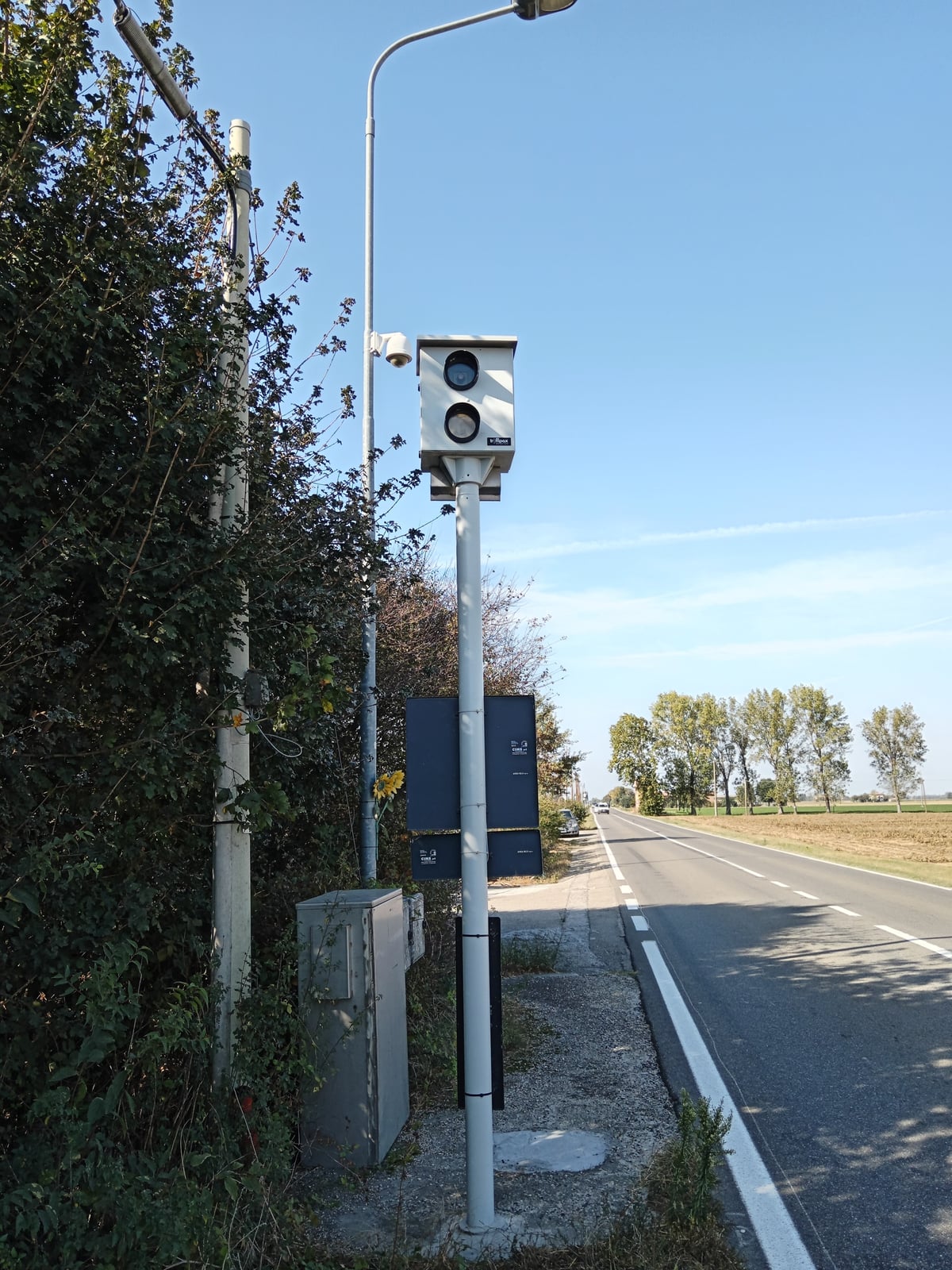
On the autostrada, the Tutor measures exactly that average: one gantry records the car's time going in, a second farther on records it again, and the system works out the speed between them. It covers about 200 stretches, not every autostrada. On Autostrade per l'Italia's network, which carries most of them, green signs near and under the gantries mark each Tutor stretch, and the Tutor works whether or not the overhead panel mentions it. In rain, its limit drops with the autostrada's. The Traffic Police check each violation before it goes out by mail, traced to a rental's driver through the company's records.
The fines, currently: up to 10 km/h over, €42 - €173; more than 10 and up to 40 over, €173 - €694.
On the road: keep right, and let the locals pass
Italian law keeps you to the right, even on an empty road. On the autostrada and other roads out of town with two or more lanes each way, the left lane is for passing only, unless signs say otherwise. Signal, pass on the left and move back right as soon as you can; passing on the right is currently fined €83 - €332, except where the law allows it. In town, you may take whichever lane suits your next turn.
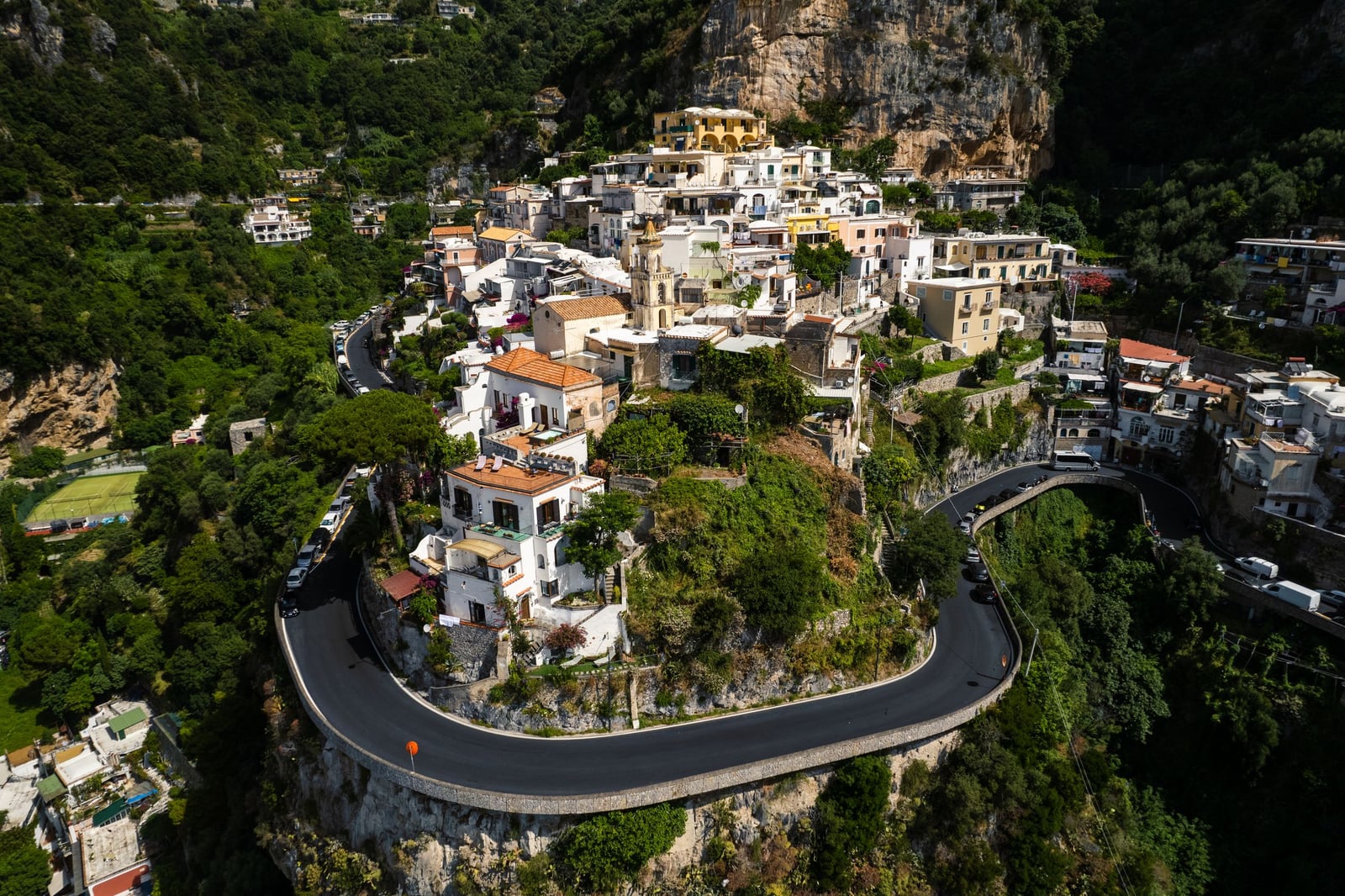
Rural roads run narrower than at home, with smaller shoulders, and the locals who know every bend drive them faster than you will. Let them by: pull over where there is room, and the line in your mirror is gone. On a coast road like the Amalfi Coast's, fold the mirrors in, expect a bus backing up for a second try at a hairpin, and accept that two big vehicles sometimes do not fit side by side. For a confident driver it is intimidating rather than dangerous. Staying there rather than driving through? Leave the car out: an Amalfi Coast stay runs on buses and boats.
At a roundabout, signs or road markings can set who goes first; where there are none, yield to traffic coming from the right. Road signs come color-coded: green for the autostrada, blue for the other roads out of town, white in town. They name towns more often than road numbers, so know the next town on your route, not just the road.
Three more rules, each easy to miss:
- Headlights: outside towns, low beams or daytime running lights stay on, day included; in tunnels, low beams.
- Alcohol: the limit is 0.5 g/l (0.05% blood alcohol), zero for drivers under 21 and for anyone who has held a license less than three years.
- Emergencies: 112 works anywhere in Italy; where a region has no single call center yet, the Carabinieri (a national police force) answer it. 113 (police), 118 (ambulance) and 115 (fire) still work too.
From November 15 to April 15, wherever signs or a local ordinance require it, you need winter tires fitted or chains on board. Check the road you plan to take, since local rules can set other dates, especially on mountain roads, and ask the desk whether your car has either.
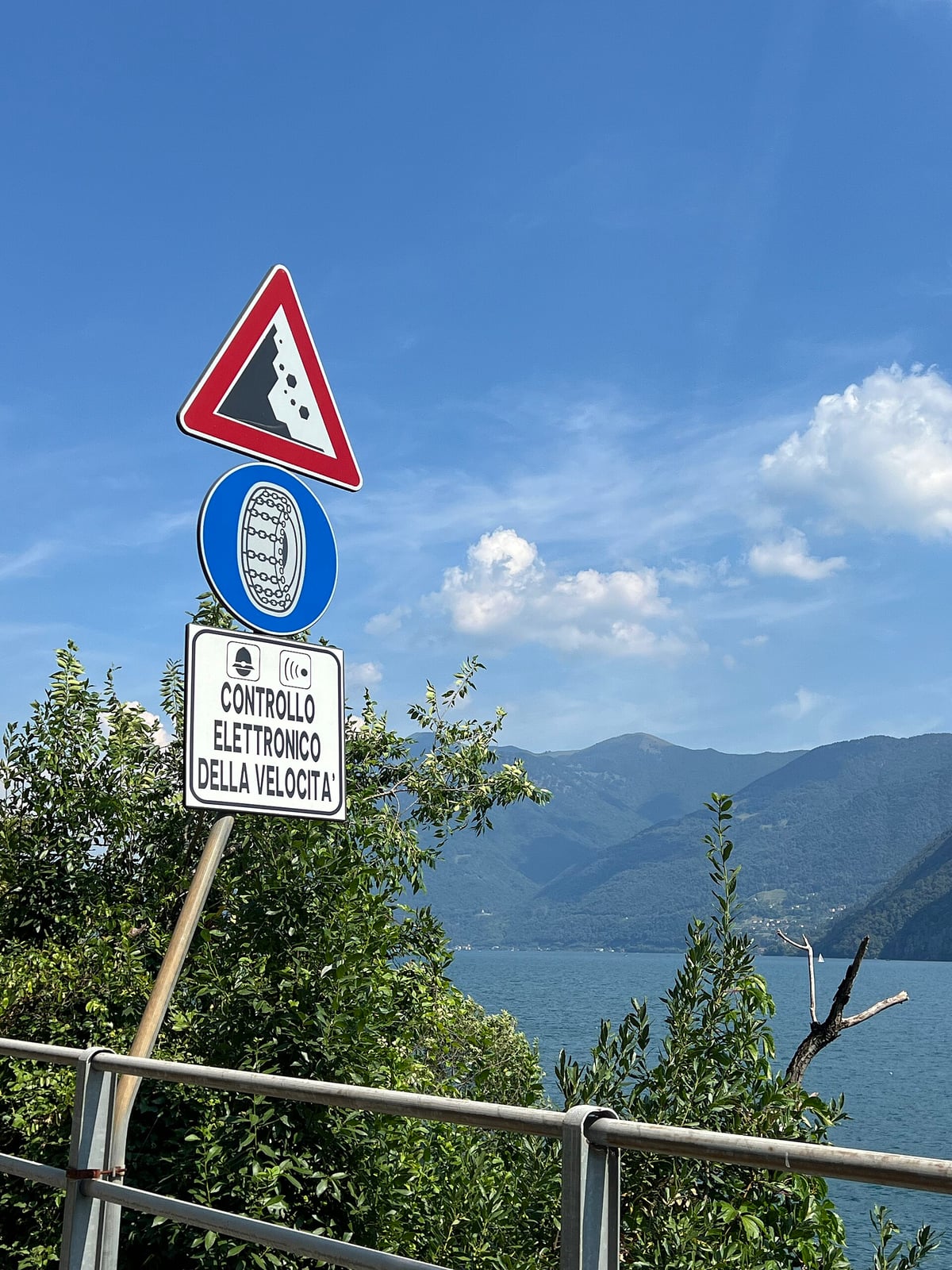
The ZTL gate, and where to park instead
A ZTL is a limited-traffic zone, mostly a historic center, closed to unauthorized cars during the hours its sign shows. Cameras photograph every plate going in or out and send the picture straight to the municipal police. Days and hours vary from town to town.
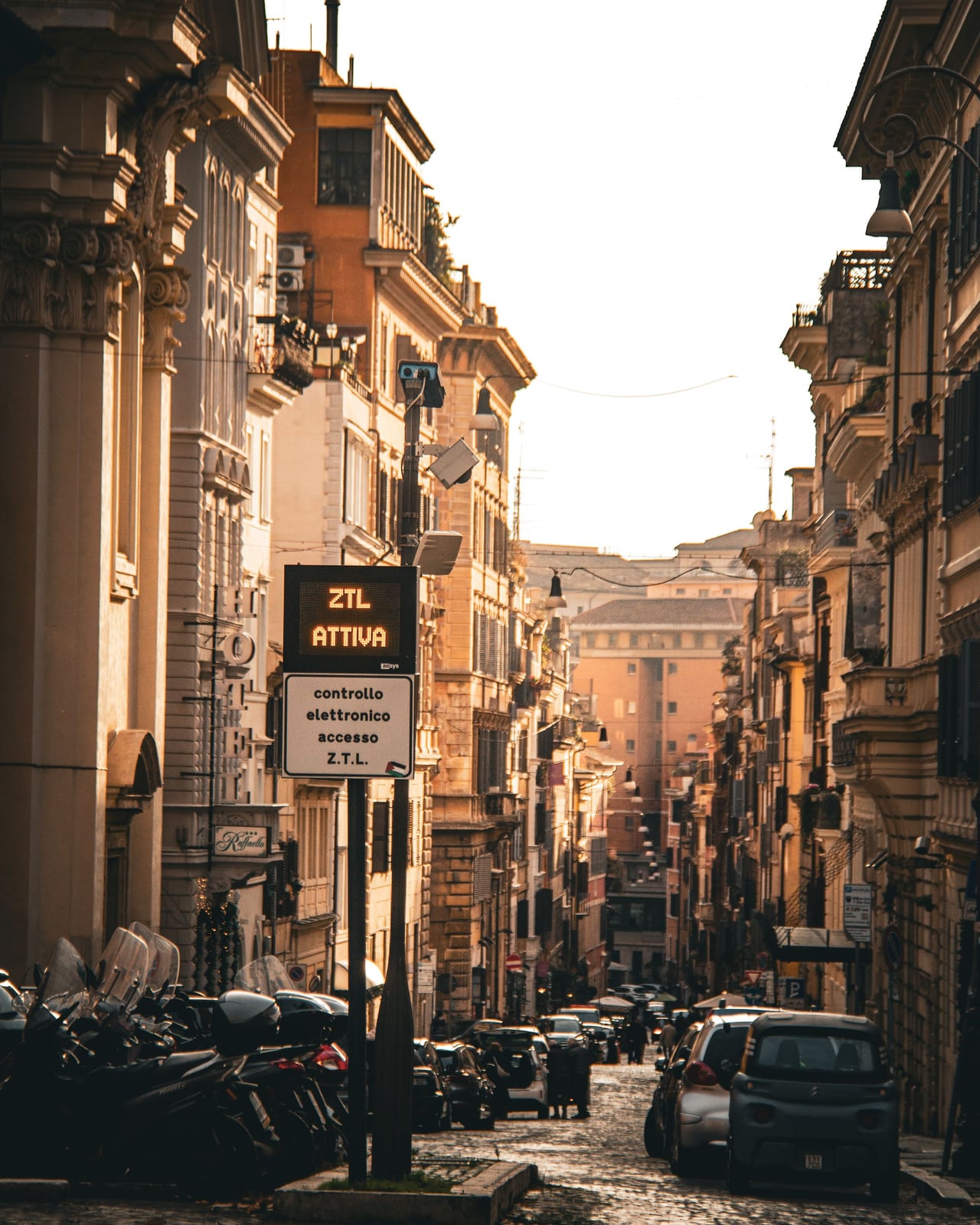
The gate's sign carries a white circle with a red border and the hours when entry is barred. Lanes marked with yellow signs belong to buses and taxis, and they are off limits too.
⚠️ Warning
ZTL ATTIVA on the gate's display, or ZTL CLOSED in English, means only authorized vehicles may enter, so don't drive through; on a color panel it shows in red. ZTL NON ATTIVA or ZTL OPENED, in green, means the zone is open. Some gates say the same with VARCO ATTIVO and VARCO NON ATTIVO. The fine, currently €83 - €332, goes to the car's owner - in a rental, the rental company - and on to you.
Don't count on your navigation app here. It can steer you through the gate and into the tangle of lanes inside the old walls without a word of warning, the kind of drive that ends with a vow never to take a car into a hill town again. Once you know the circle, the signs are clear, so stop short of them: park outside and walk in. Save two or three parking areas per town in the app, since a busy town can run short of spaces and the first lot may be full when you arrive.
Staying at a hotel inside the zone? Before you drive in, ask whether the hotel can get your plate a permit, and send it the plate number. And if you do blunder through, the law offers one small mercy: several camera-recorded entries into the same ZTL on one calendar day, for the same breach, count as one fine, outside the exceptions it spells out.
Street parking runs on line colors. Blue lines are paid: buy hourly coupons at a tabaccheria (tobacco shop) or pay at the machine in or near the parking area. White lines are free, and yellow ones are reserved. Whatever the color, read the sign beside the bays before you walk away.
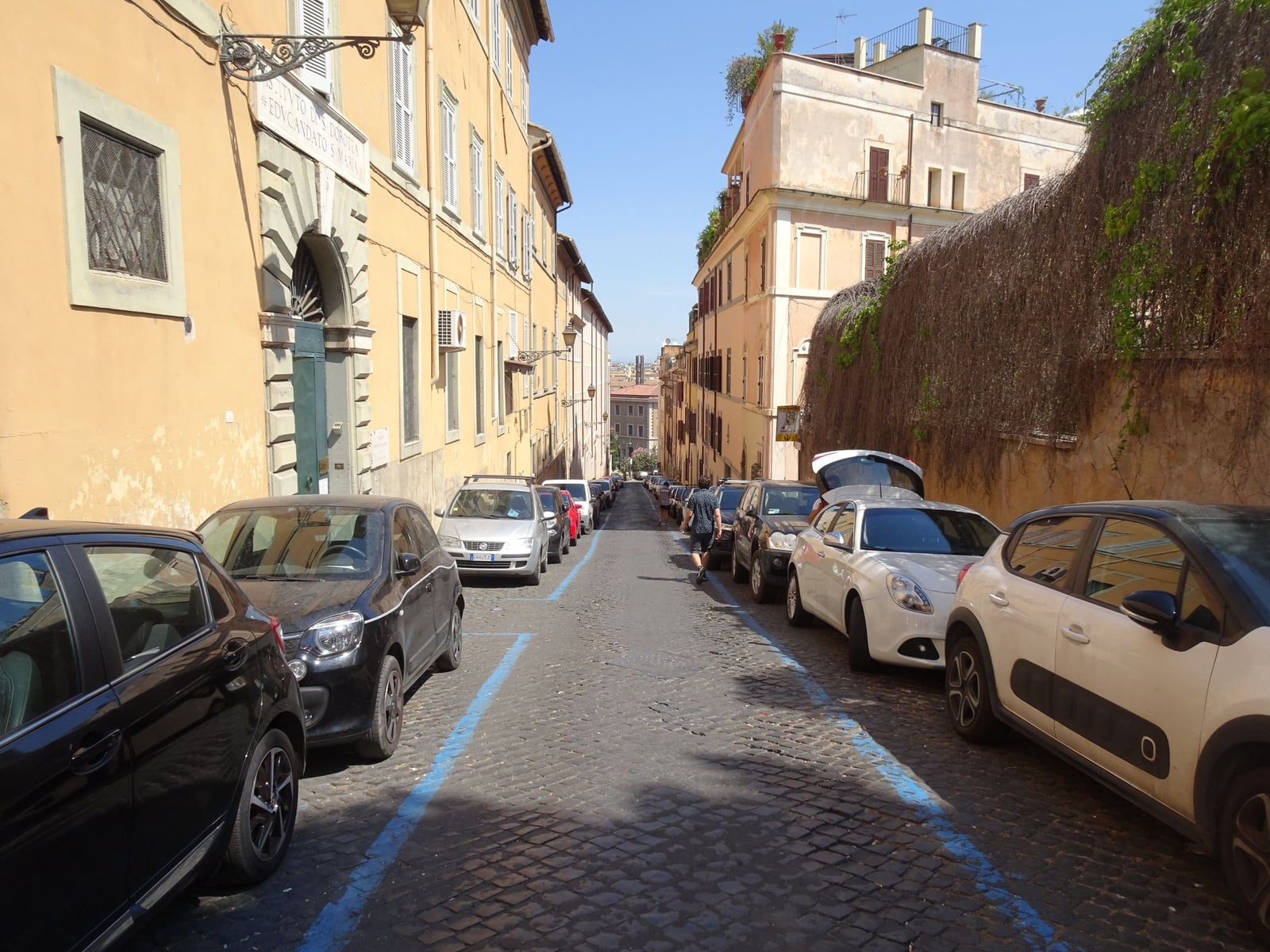
Returning the car, and the letter that comes later
Bring the car back with the tank the way your voucher says. At Sixt that means full; return it short and you pay for the refueling service and the fuel at its rates, so fill up on the way back. Then photograph the car again. A damage claim can reach you after you've left the country, as a message with a photo of a gouged bumper; your own picture of the same bumper, unmarked, is the whole reply. Europe's car-rental conciliation service is no fallback here: it takes only EU and UK residents.
A drop-off can sometimes be moved mid-rental with an email and a phone call; ask the price first.
For a renter, a camera fine arrives in two parts: first an advance notice from the rental company, then the fine itself from the Italian police or a collection agency, with instructions for paying or contesting it. It may reach your US address months after you're home, and the US Embassy can't help you contest or pay it. Whether the rental company adds a handling fee of its own sits in your contract's fines clause.
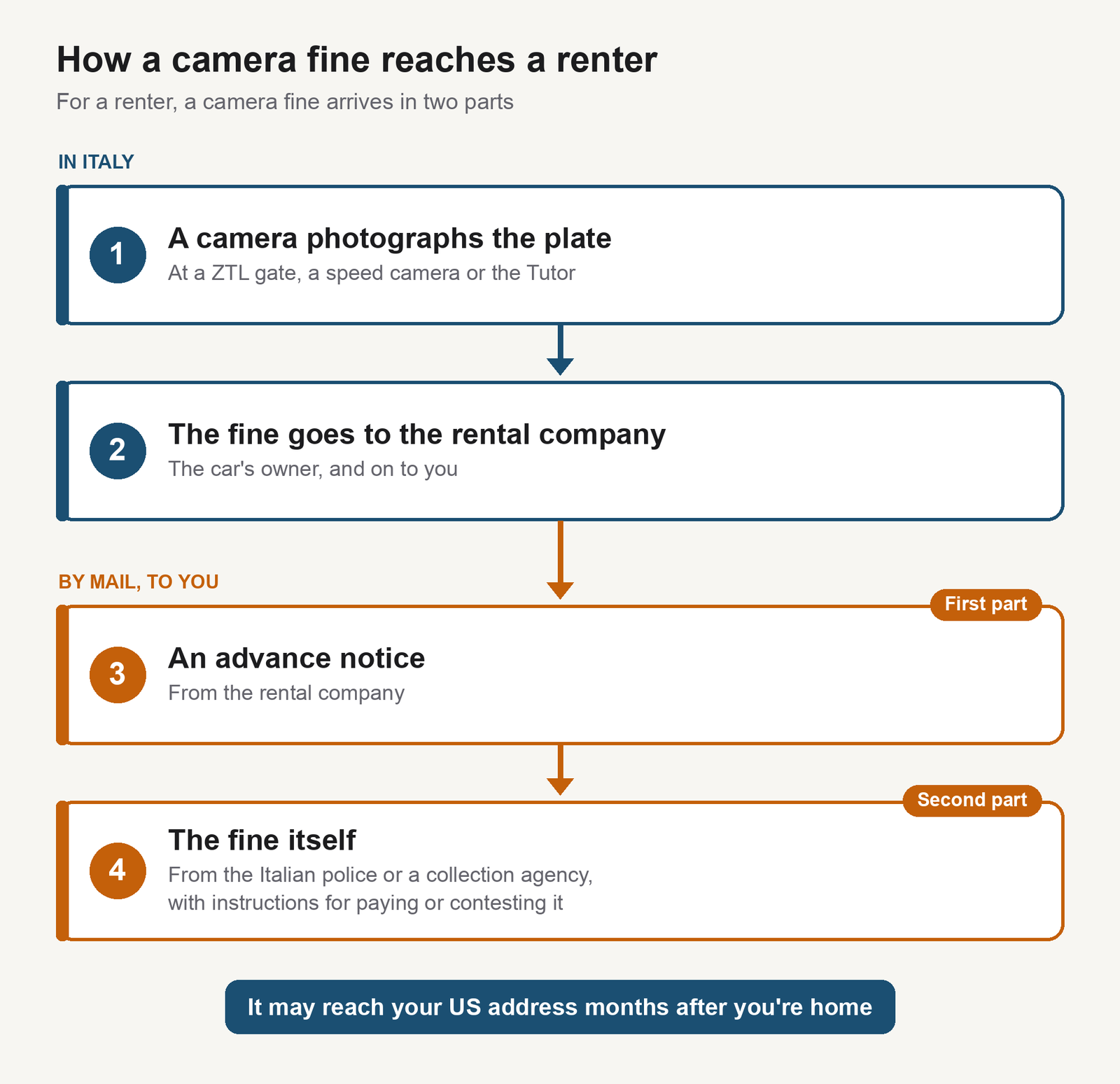
Italian law allows 360 days from the violation's ascertainment to serve notice on a driver living abroad. Letters have landed a year after one trip and more than two years after another. Keep every parking and toll receipt as your proof of payment. If the fine is yours, pay it: ignoring it cancels nothing, and an unpaid fine is not worth the worry.
Mine came from a ZTL in Tuscany, in exactly those two parts. About two months after I got home, the rental company charged roughly €50 to my card for passing my details to the local police, with no word on what I had done. The municipality's registered letter arrived nine months after the trip. Paying online within five days of delivery took 30% off the fine, and since then I check any shortcut the navigator offers near old town walls for a ZTL before I take it.
Do you need a car in Italy at all?
For the countryside, yes. Piedmont's hill towns and Umbria's day trips are car country, and three or four nights in the Langhe without one can feel isolated, however good the view. Move base rather than commute from one hotel. In Sardinia, trains and buses get you around, but a car buys the freedom to explore, and a Sardinia trip planned around its coasts is built on one.
The train can do the moving. Ride it to the edge of the countryside, pick up a car near the station and head out onto country roads, then drop it at another station and ride on: Rome to Perugia by train, a car around Umbria, the train back from Terni. In Tuscany, plan the week from the car's two ends.
In South Tyrol, a stay at a participating accommodation includes a guest pass for buses, regional trains and selected cable cars, which reopens the Dolomites car question. Puglia reads as three trips with the drives between, and the car pays in the gaps: driving up the coast past Brindisi, you can stop at the church of Santa Maria del Casale, ringed by parking lots and what look like barracks.
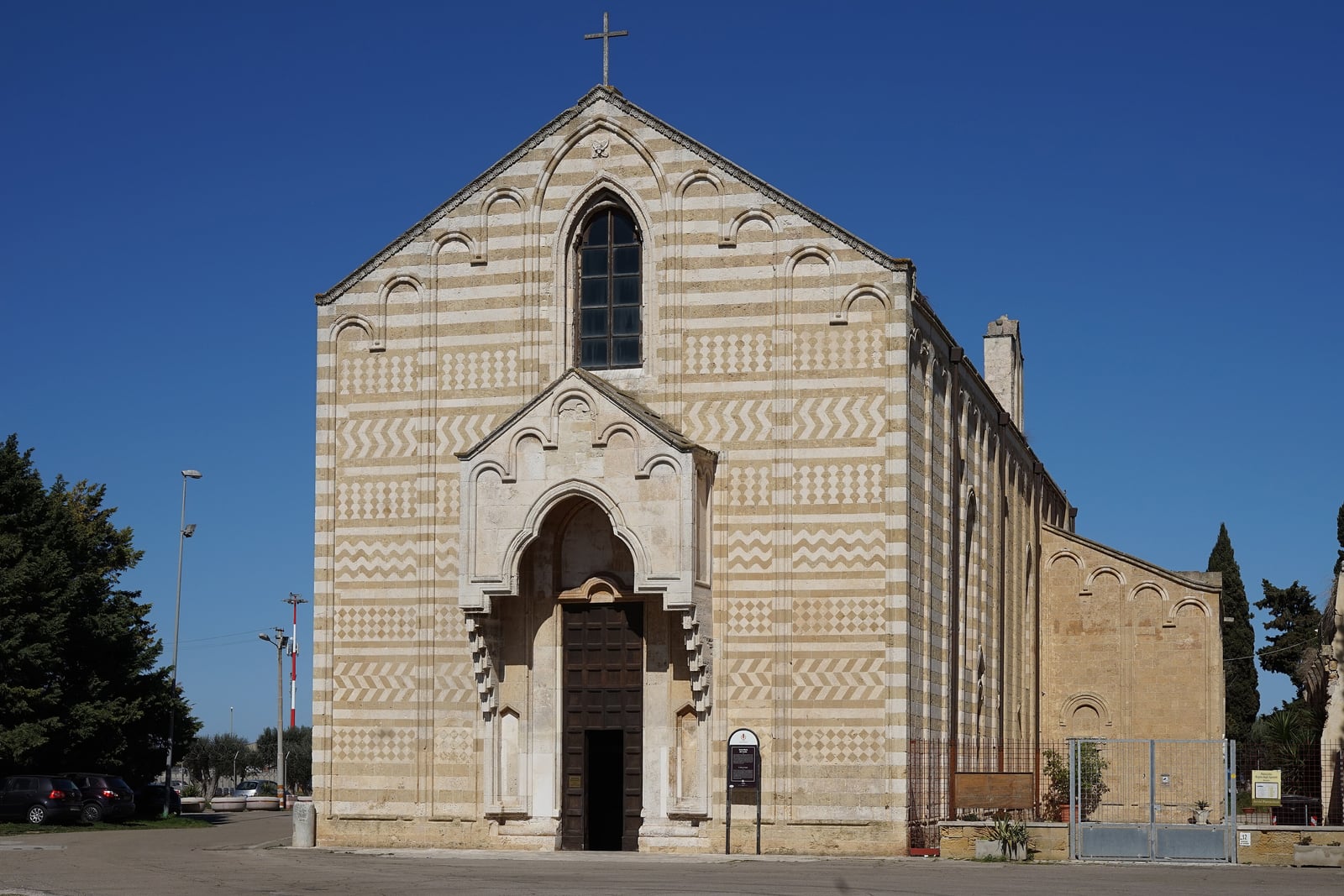
Elsewhere, skip it. Naples is a firm no, and I left the car out of my Naples and Amalfi Coast trips from the start. Driving into the historic centers of Rome, Florence or Milan is nothing like those country roads, and I won't do it again. The Ligurian Riviera does fine without one, and in the Cinque Terre a car reaches the villages but cannot drive through them: narrow streets, stairs, steep inclines.
FAQ: driving in Italy
- Do Americans need an International Driving Permit in Italy?
- Yes. For a visitor, a US license is valid in Italy only with an International Driving Permit or an official Italian translation, and driving without either currently costs €408 - €1,634. Get the permit from AAA or AATA before you fly.
- What is a ZTL in Italy?
- A limited-traffic zone, mostly a historic center, closed to unauthorized cars at the hours its sign shows, and cameras photograph every plate going in or out. ZTL ATTIVA (ZTL CLOSED in English) or VARCO ATTIVO on the gate's display means only authorized vehicles may enter; ZTL NON ATTIVA (ZTL OPENED) or VARCO NON ATTIVO means the zone is open.
- Will my credit card's rental car insurance cover me in Italy?
- Not necessarily. Read your card's benefit guide first: American Express's car rental loss and damage benefit excludes Italy by name. Whatever your card covers, Hertz's and Avis's terms both make theft protection mandatory in Italy.
- How long after the trip can an Italian traffic fine arrive?
- Italian law gives 360 days from the violation's ascertainment to serve notice on a driver living abroad. Letters have arrived a year and more than two years after a trip. Ignoring one cancels nothing.
- Are speed cameras signed in Italy?
- Yes. By law, every speed-check post must be signaled in advance and clearly visible, but the sign tells you a camera is ahead, not where it stands. On Autostrade per l'Italia's network, the Tutor's average-speed stretches carry green signs near and under the gantries.
Know these rules before you pick up the keys, and the likeliest mail from this trip is a postcard you sent yourself.