 George Mandrovny
The Short Answer: Settle the Car, Then the Town
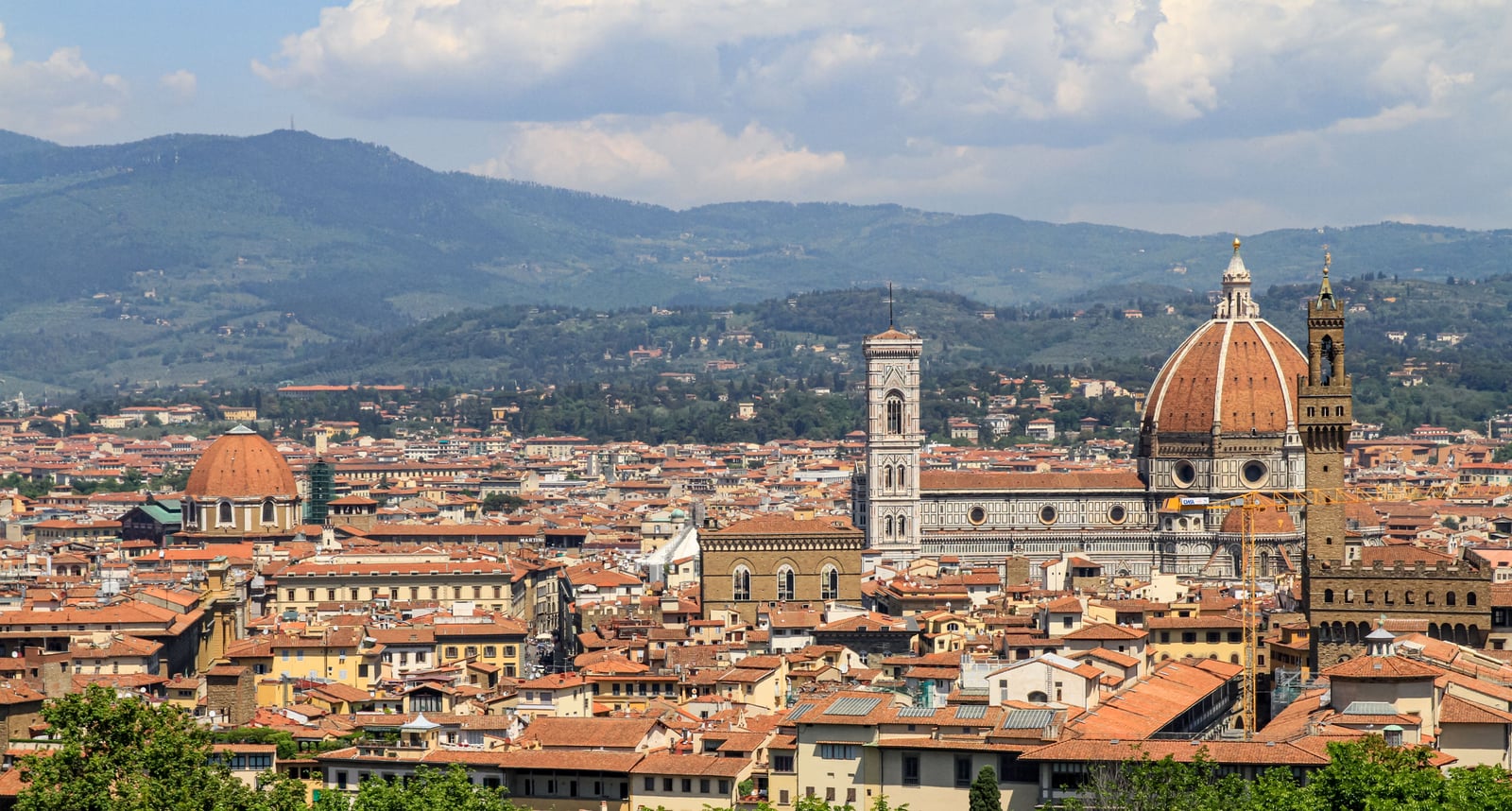
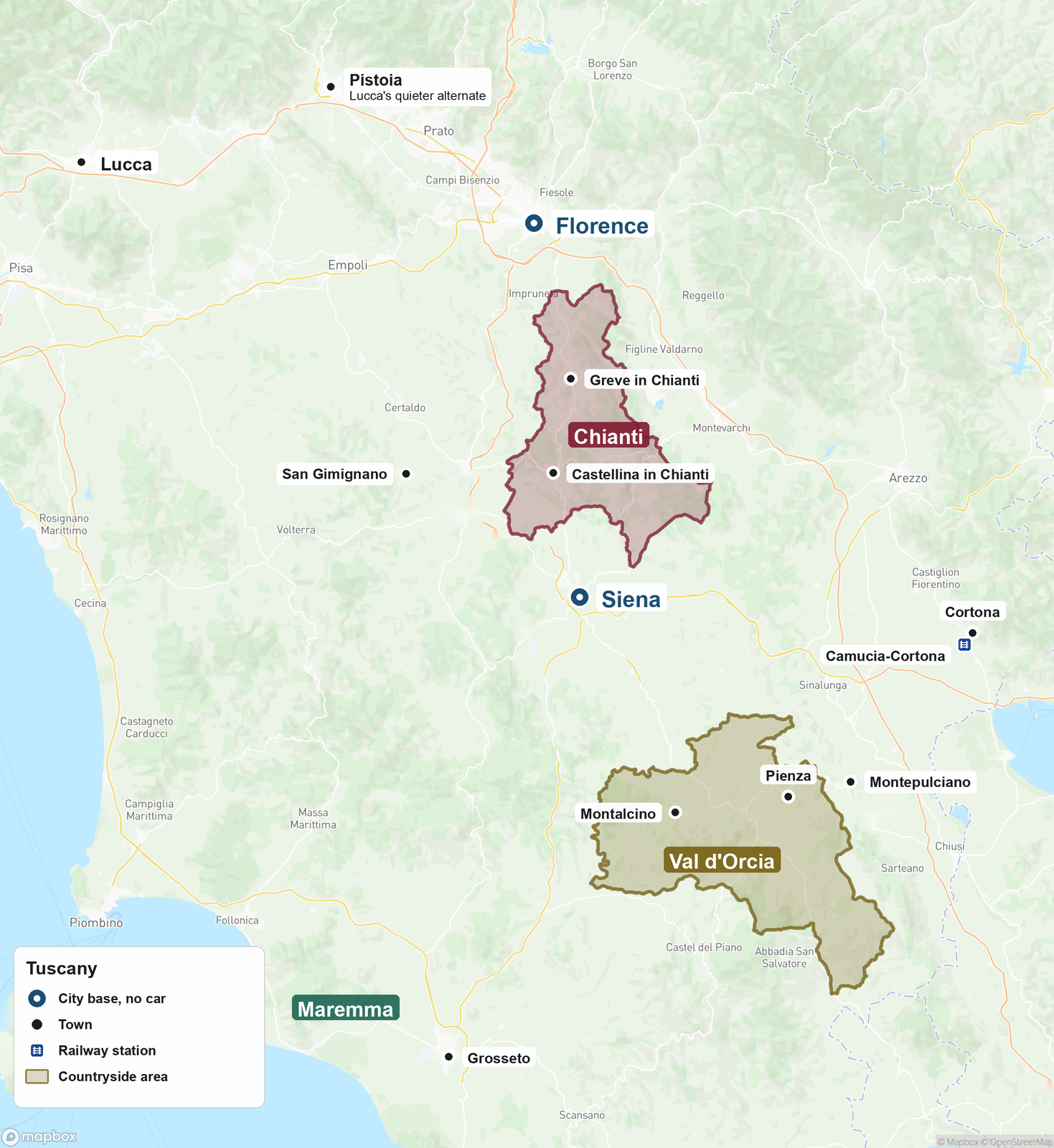
Where to stay in Tuscany, Italy, comes down to the car. Without one, sleep in Florence: the most going on, and trains west to Lucca and Pisa. Or sleep in Siena for the hill towns, though on direct buses Montalcino works as a half day and Pienza and Montepulciano don't fit a day trip. With a car, sleep in the countryside: Chianti, between Florence and Siena, or the Val d'Orcia, south of Siena. The one trap is a farmhouse booked as the base for a trip with no car.
- A week, with a car for part of it: two beds. Florence or Siena first, then a few nights in the countryside, with a car rented for just those days.
- No car at all: Florence or Siena, picked by the day trips you want most.
- A car the whole way: one countryside base, in one area.
- Wine country: Chianti. The landscape on the postcards: the Val d'Orcia.
- Tempted by a third hotel: don't. Two beds, not three.
The farmhouse in the pictures is the night most people come to Tuscany for, and a poor base for the city days. Without a car it is a lovely place to be stuck; with one, each of those days begins and ends with a drive. The city has the opposite flaw: a fine place to sleep, and a poor place to see the countryside from. So most trips get both, city first. Everything below picks each bed by what it reaches and the driving it costs.
Without a Car: Florence or Siena
Without a car, the best place to stay in Tuscany is a city: Florence for the trains and the bigger city, Siena for the hill towns. The 131R bus runs between the two cities in about 1 hour 15 minutes, so neither choice locks you out of the other.
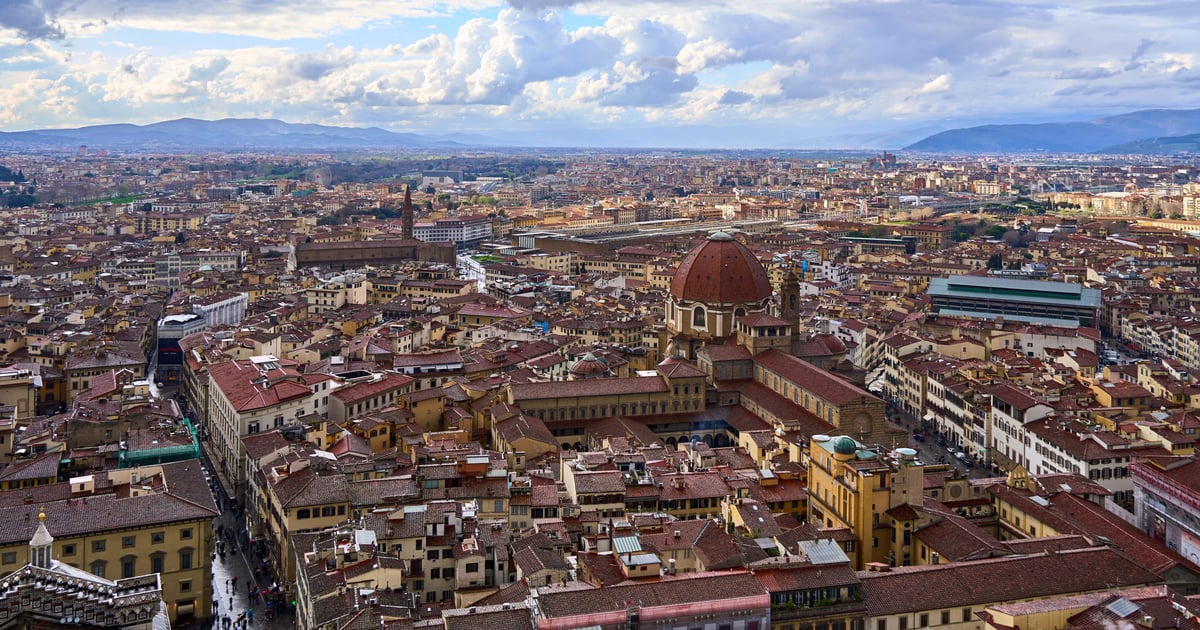
Lucca and Pisa both have trains from Florence and make easy day trips. Siena is an easy day trip without a car and San Gimignano a manageable one; most of the smaller hill towns are another matter. Florence also has more going on: more varied restaurants, and more museums than a short trip can use. The one thing not to bring is a car: the center is a ZTL, a limited-traffic zone. Which part of Florence to sleep in is a separate question, best answered by what you want within walking distance.
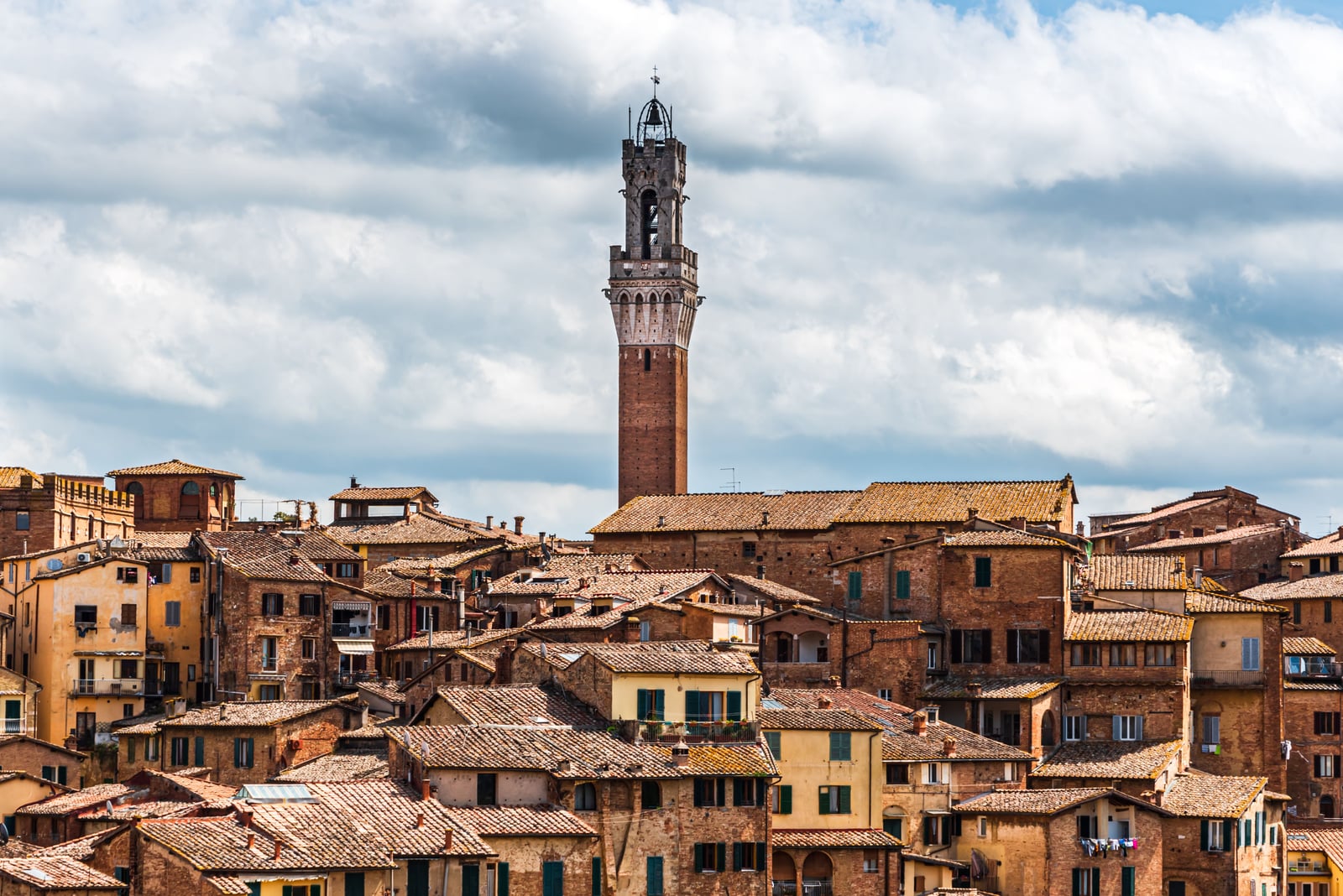
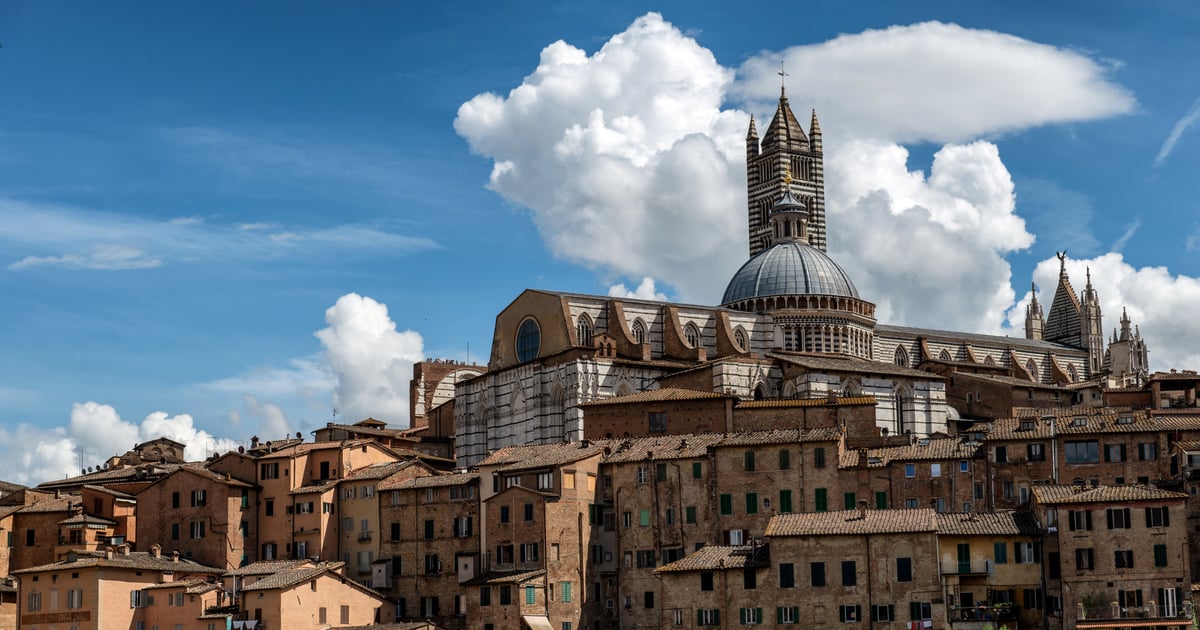
Siena is the pick when the hill towns are the point. Without a car, sleeping in one of the small towns themselves rarely works. Siena also feels like the heart of Tuscany, and it is a real city rather than a village. By bus, Montalcino works as a half day: on Autolinee Toscane's line 114, the 07:22 (07:30 on Sundays and most holidays) from the stop the operator calls Siena Autostazione gets there at 08:35. Autostazione is Italian for bus station; the stop is not the 131R's Via Tozzi, so find it on the operator's line map beforehand. The last direct bus back that runs every Monday to Saturday leaves at 13:55, and the last on Sundays and most holidays at 12:25.
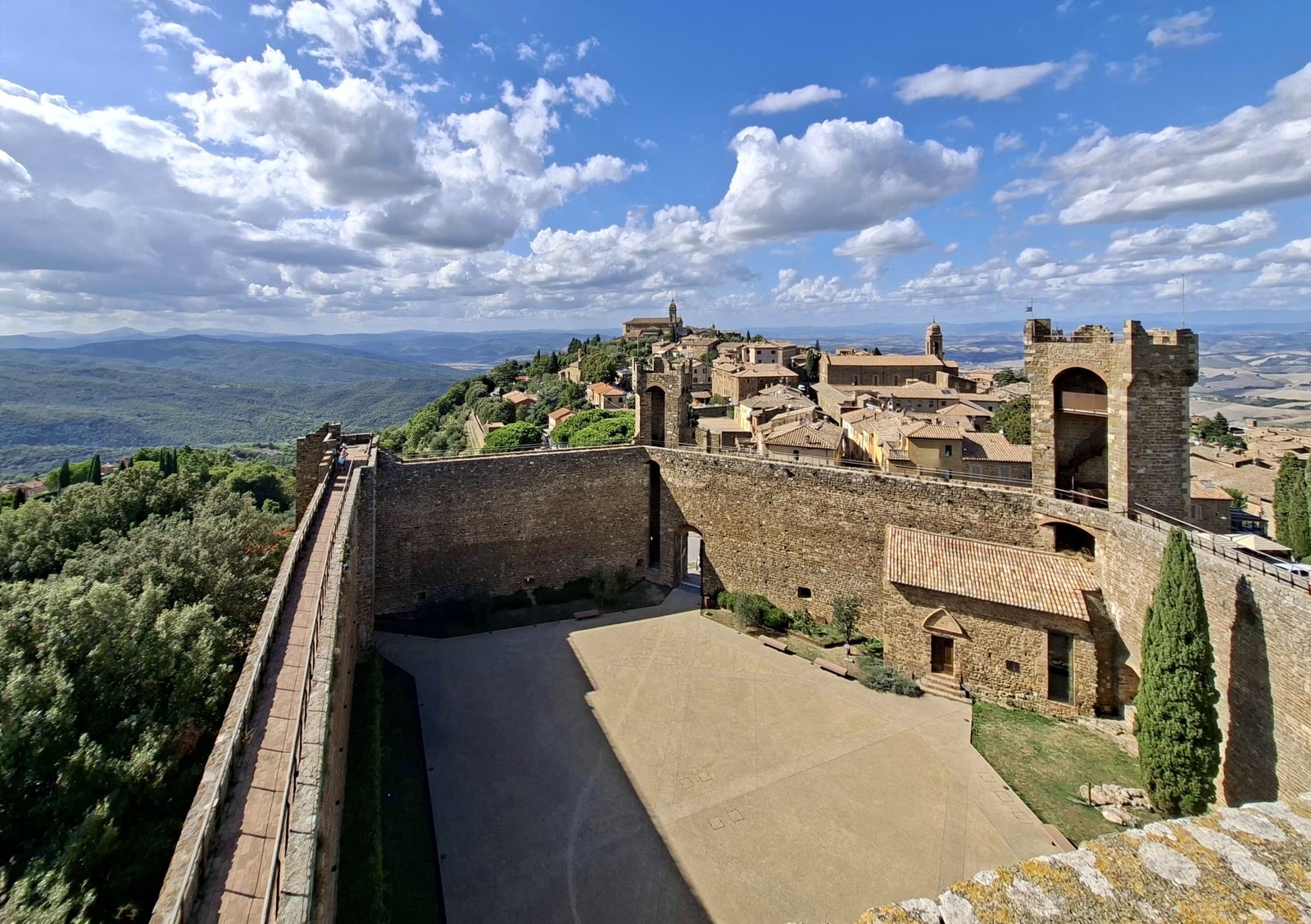
Pienza and Montepulciano, on line 112, are another story: the first direct bus out reaches Pienza at 14:35 and Montepulciano at 14:55, and the last direct one back leaves Montepulciano at 14:50 and Pienza at 15:10. That's barely half an hour in Pienza, and no direct ride back from Montepulciano the same day. For the trip down from Florence, the bus-or-train choice is laid out step by step.
The catch is the clock, and the calendar. The buses are slower than a car, and the two lines keep different days: line 114 runs every day, Sundays and most holidays included, while line 112 runs Monday to Saturday only, with no buses on Sundays or public holidays. Look both up before you plan a trip around either. Pienza and Montepulciano are better by car: save them for the countryside days in the next section, with a car rented for just those days. And next to Florence, Siena can feel a bit lacking: you trade some of Florence's variety for a base nearer the hill towns.
Book inside the historic center, and check the walk from wherever you'll arrive. The 131R stops at Via Tozzi, about a 9-minute walk from Il Campo, the main square; the train leaves you at the station below the center, with escalators up. Bags make both feel longer. If a car joins the trip later, ask now whether the hotel has its own garage or courtyard.
Find a hotel in Siena's historic center
Check the walk from the bus stop or the station, and ask about a garage
One Base or Two: City Nights First, Then the Farm
For a week in Tuscany with a car for only part of it, two bases beat both one and three: the city nights first, in Florence or Siena without a car, then the countryside nights, with a car rented only for those days.
The order is the point. A city is best done on foot, before there's a car to worry about; the quiet comes after, once you've had your fill of it. Mix the urban and the rural, but don't try to do too much with either, and treat the farm as the place you end up rather than the place you commute from. Stop at two: a third hotel isn't worth the move. With a car for the whole trip, one countryside base can carry the week on its own, and the only question left is which countryside.
The countryside share stretches either way. Six nights at one farm, planned as the home base, anchors a full week; a couple of nights after the city is the short version, and it still gets you the farm. (How many nights Florence itself deserves is a question for my Florence itinerary.) My own trip split three and three. Three nights in Florence with no car at all: the Uffizi, the Accademia, and the Oltrarno on foot, with no garages and no camera fines to think about. Then the car on the way out, a stop in Siena on the drive south, and three nights by the Val d'Orcia, which beats any number of day trips to it from Florence.
If Florence is your city bed, pick the car up at Florence's airport rather than in town, so you never drive into the ZTL. That's how I did it, in a small automatic, and I never once drove into the city. From Siena, what matters is the timing below. Get the paperwork right before you fly: a visitor not resident in Italy for more than a year, driving on a license from outside the EU and the EEA, must carry an international driving permit or an official Italian translation together with that license; the license and the permit must both be valid.
Book the pickup for the day you leave the city and the return for the day the countryside nights end, so you never pay for a car that sits parked through the city days. Make it a small car; the hill towns are kinder to one.
Compare rental cars at Florence airport
A small car, picked up the day you leave the city and returned when the countryside nights end
With a Car: Chianti or the Val d'Orcia
With a car, where to stay in the Tuscan countryside comes down to two areas: Chianti, wine country within easy reach of Florence and Siena, or the Val d'Orcia, south of Siena, the landscape from the pictures and farther from everything else.
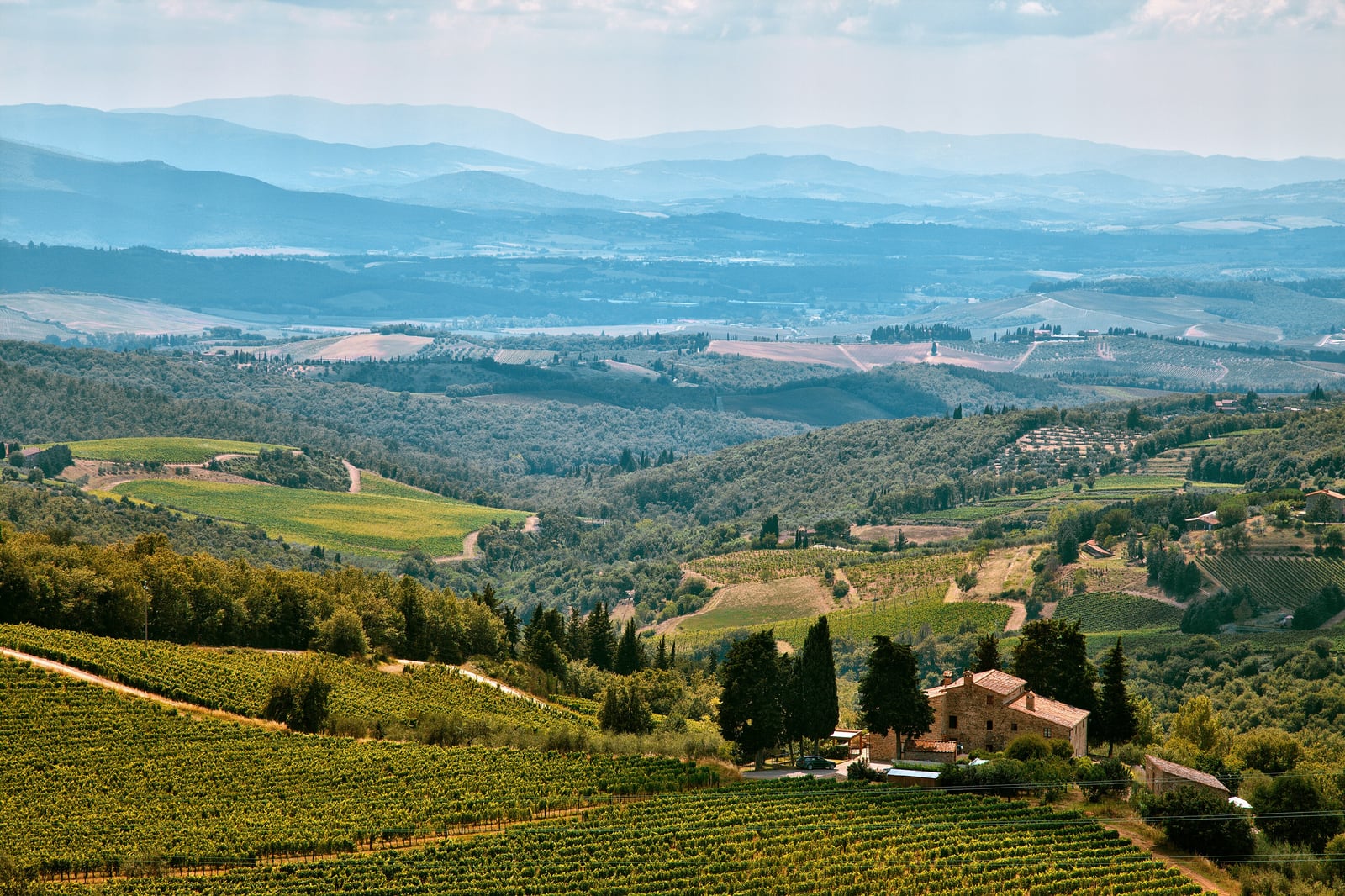
Chianti fills the hills between the two cities. Greve in Chianti sits about 30 km (19 miles) south of Florence by road, and a farm near it makes a fine home base for days out to Florence and to Volterra. A week among the vineyards outside Castellina in Chianti is this area at its best. The catch is in the name: if wine isn't really your thing, you may not need to sleep here at all. And a tasting day needs someone at the wheel who isn't tasting; planning that day is a job for my Tuscany things-to-do guide.
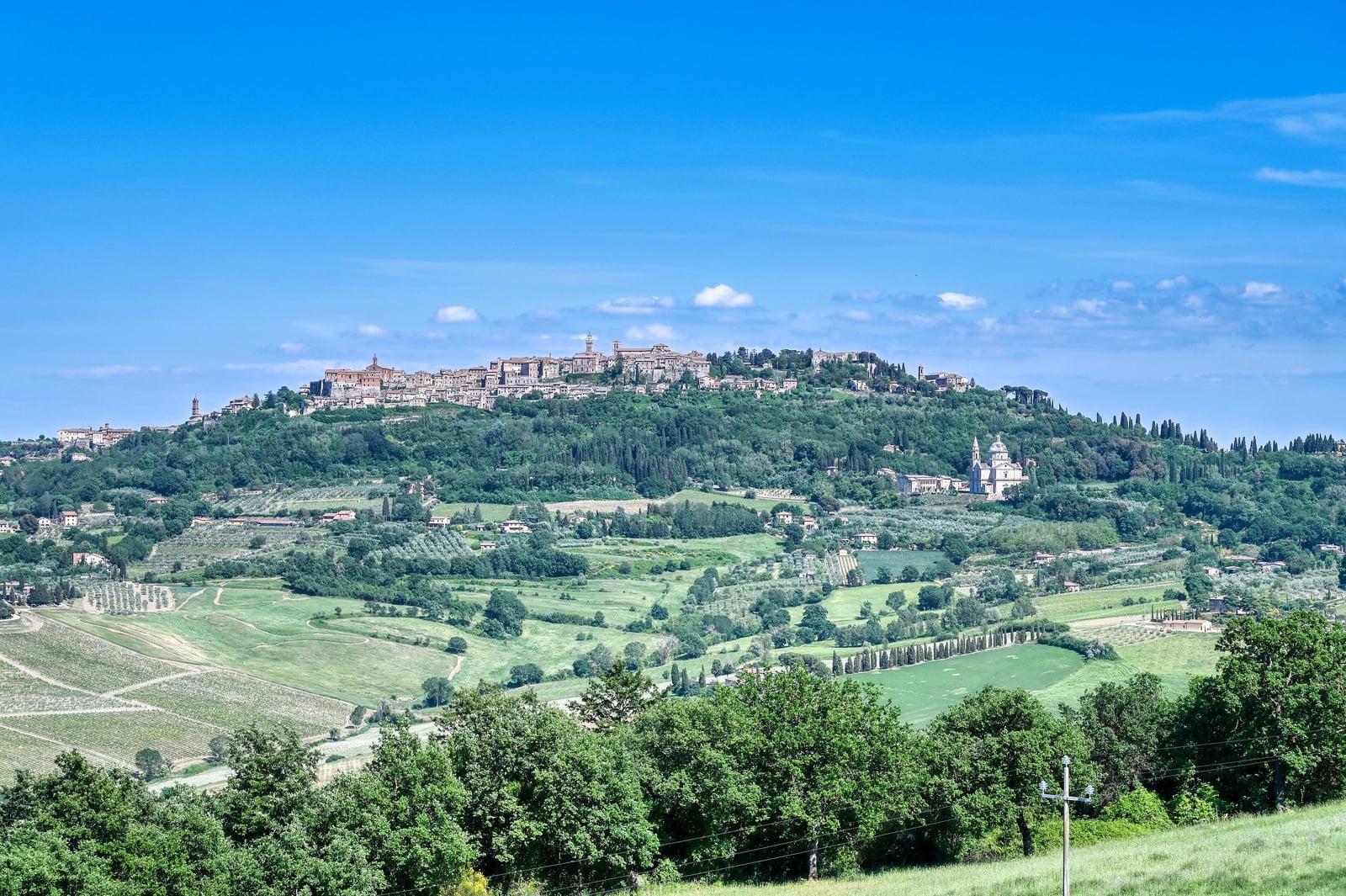
The Val d'Orcia, in the hills south of Siena, is the Tuscany people picture before they've been. To sleep out here, a car is the price of entry; what it buys is sweeping country and tiny towns. East of Pienza, a farmhouse at the foot of Montepulciano leaves the town a hearty walk uphill, and in season you may catch the farm harvesting its olives. Or sleep in a hill town instead, in the valley or beside it; choosing between Pienza, Montalcino, and Montepulciano comes down to what you want outside the door.
The other price is distance. Pienza, in the Val d'Orcia, is about an hour and a half from Florence by car and nearly two and a half hours from Lucca, before traffic and parking. Drives in Tuscany take longer than they look on the map. Pick the area that holds most of your list and stay in it.
| From | To | Distance | Drive (before traffic and parking) |
|---|---|---|---|
| Florence | Pienza | About 116 km | About 1 h 36 min |
| Siena | Pienza | About 69 km | About 1 h 13 min |
| Siena | Lucca | About 141 km | About 1 h 51 min |
| Pienza | Lucca | About 194 km | About 2 h 23 min |
Mind the calendar too. Late August can be very hot in the Val d'Orcia, and in March the hill towns around it can be sleepy. For late summer, the Maremma, around Grosseto, where the countryside runs down to the sea, is the alternative: farm country with good farm stays of its own, and the coast within reach when the heat gets serious.
San Gimignano or Lucca: Who Each Base Suits
San Gimignano suits a central countryside base, and Lucca a flat, train-connected trip in the northwest. Each is a good base for a narrower trip than Florence or Siena.
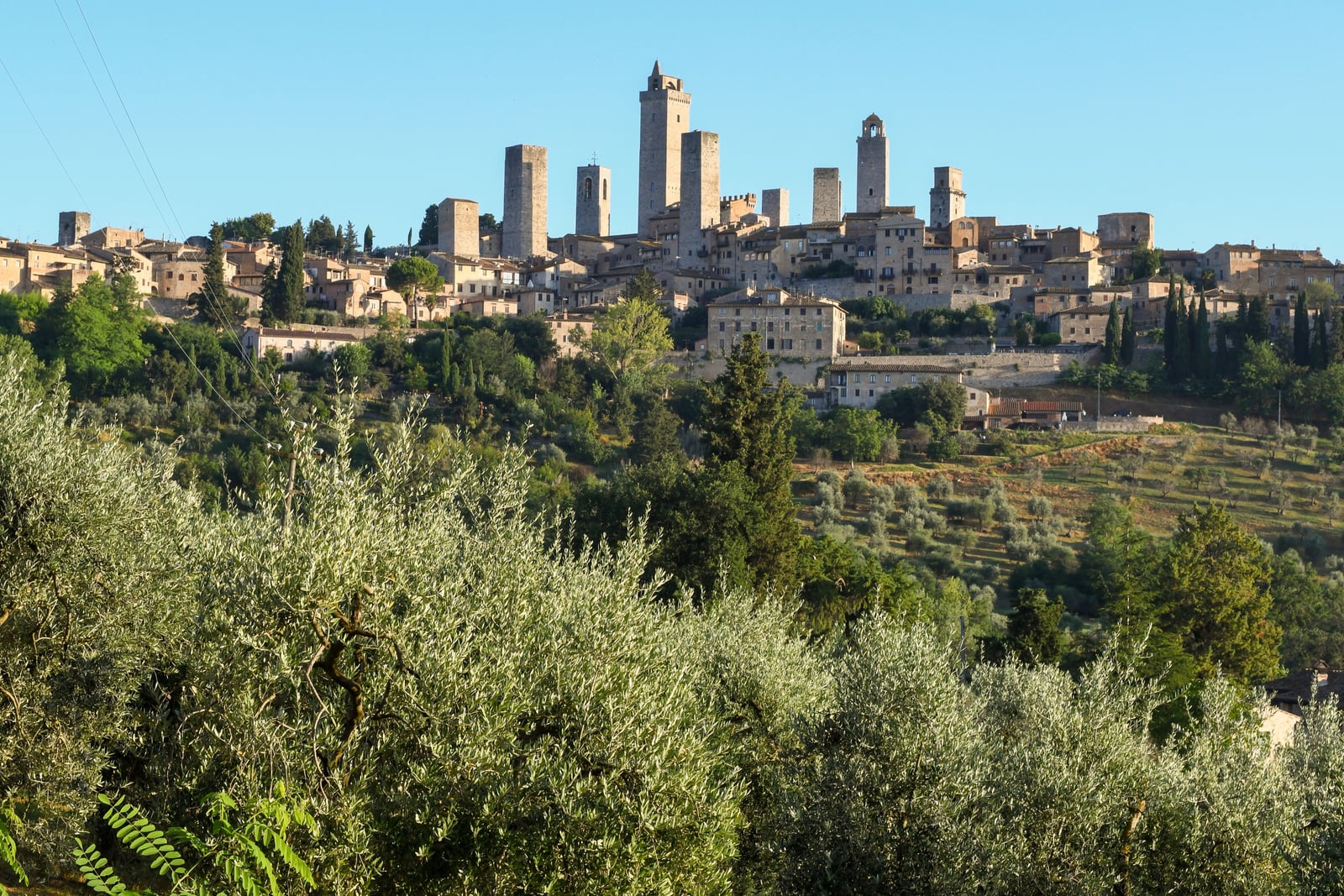
San Gimignano is a small walled medieval hill town in the province of Siena. Whether or not the town itself charms you, as a base its strength is position: it sits near the middle of the Tuscany most people come to see, a very practical spot to explore from. Without a car it works, if slowly: the train runs to Poggibonsi-S. Gimignano station, then a bus takes you on to the center. Volterra pairs with it, though both are easier by car. The catch is the daytime, when the town is full of tourists. Sleep there and you can spend those hours on your own day trips, then have the streets back once the day-trippers leave.
Book inside the walls if the evening is the point; a farm or vineyard just outside suits a trip with a car. If you're driving, ask the hotel before you book whether its guests can drive in under the town's ZTL cameras, and where to park; the rules come further down.
Inside the walls for the evening - if you're driving, ask where to park
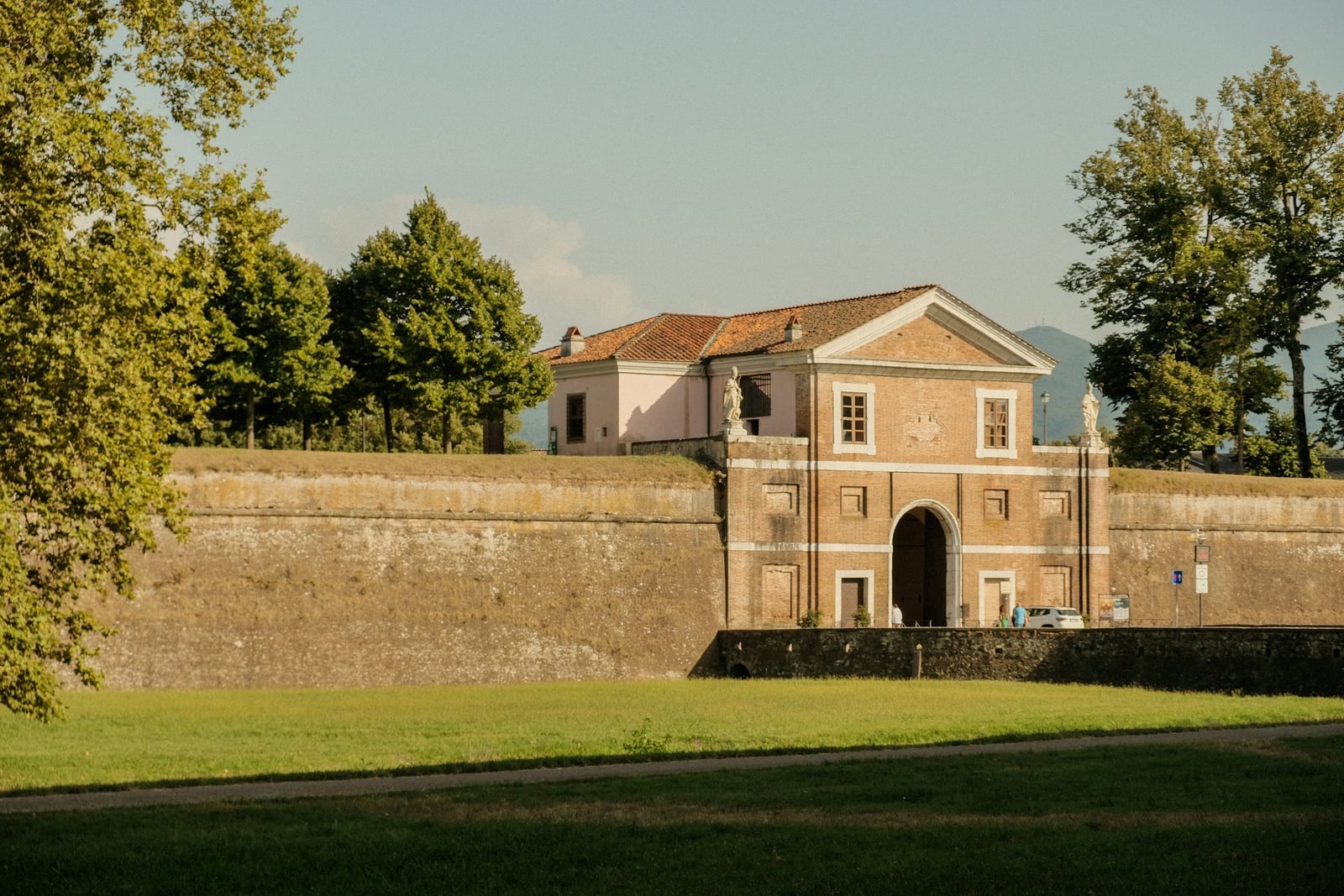
On paper, Lucca has everything a home base needs. Its historic center sits inside the walls that ring the central city and is one broad pedestrian zone, and the station is close by, with trains toward Florence and toward Pisa. The catch is the rest of Tuscany: Lucca sits far from the hill towns (the drive table above shows how far it is from Siena and from Pienza), and its trains do little for them. It fills with day-trippers even in an ordinary week, and its comics festival swamps the town outright, so check the festival's dates before you book; in the days right after it ends, the town goes very quiet. If Volterra appeals more, weigh it as the bed instead. Pistoia is the quieter alternate base, with less English spoken and fewer services for tourists than Lucca.
Cortona lies out east; its station, Camucia-Cortona, sits at the foot of the hill on the main Florence-Rome line.
Farm Stay or Town Hotel: Where Dinner Happens
In Tuscany an agriturismo is a farm stay, and by law a working farm runs it. It suits a trip with a car; a hotel inside a hill town suits a trip where you want to walk to dinner.
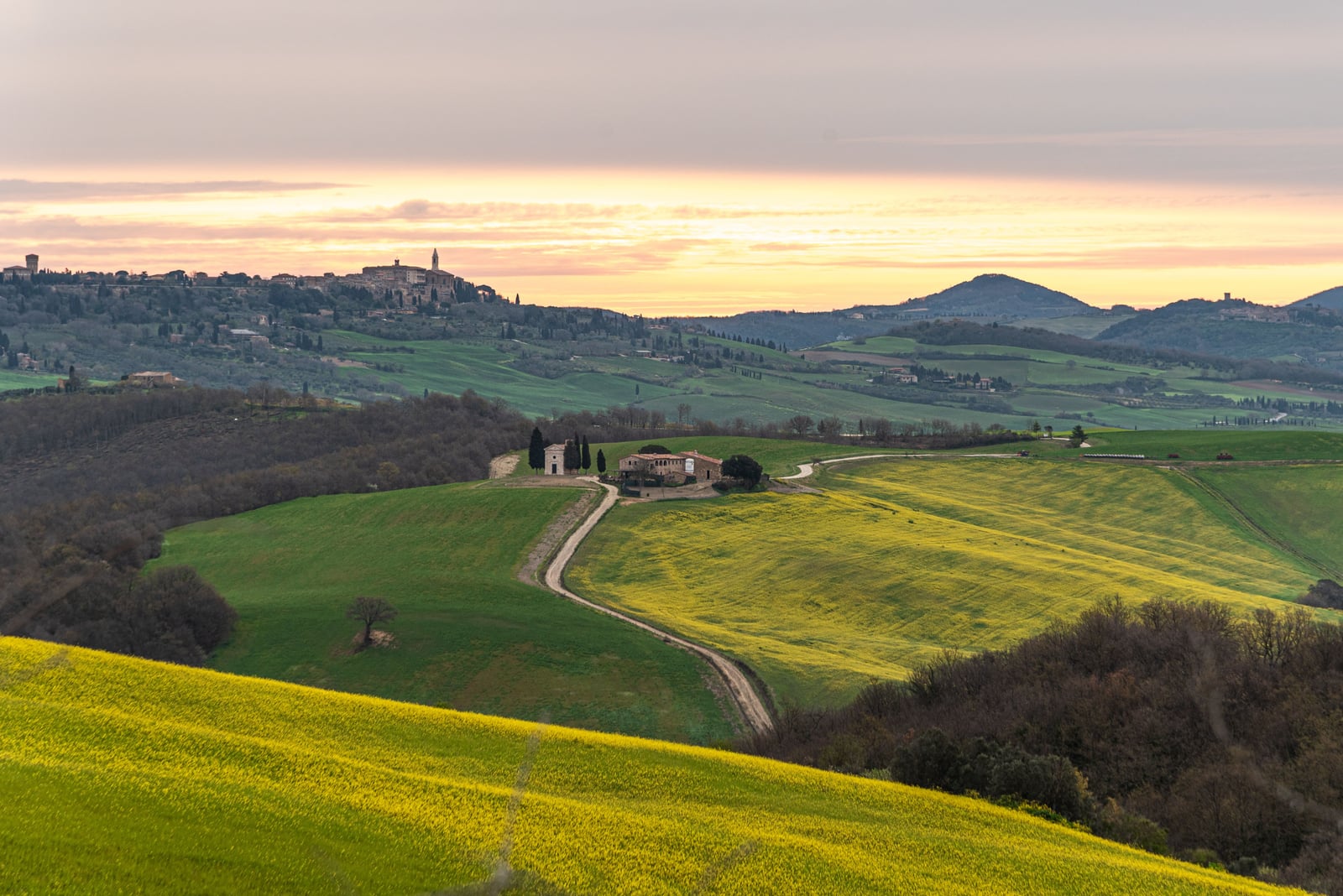
You get either rooms or apartments, and each farm is classified from one to five sunflowers, the girasoli: level one comes with the permit to operate, and levels two to five are self-certified by the farm. Whatever the count, a farm stay assumes a car. Pick one near the towns you'll actually use, because a remote farm makes every day out a longer drive; a farm close enough to a town for the grocery store can still feel rural and secluded. With kids, a farm is generally more accommodating than a hotel or apartment in Siena.
Dinner is the other half of the choice. Many farms cook it; yours may even have it ready on the night you arrive, and one of the joys of a good one is eating well without leaving the property at night. Not every farm does, though: the law lets a farm serve meals but doesn't require it, so ask before you book. It matters because of the drive. In Italy the general blood-alcohol limit is 0.5 grams per liter (g/l), which is 0.05% in the way US limits are written. For drivers under 21, and for anyone in their first three years with a category B license (the license class for ordinary cars), it is zero: no alcohol at all before driving. Dinner off the farm means someone drives back sober.
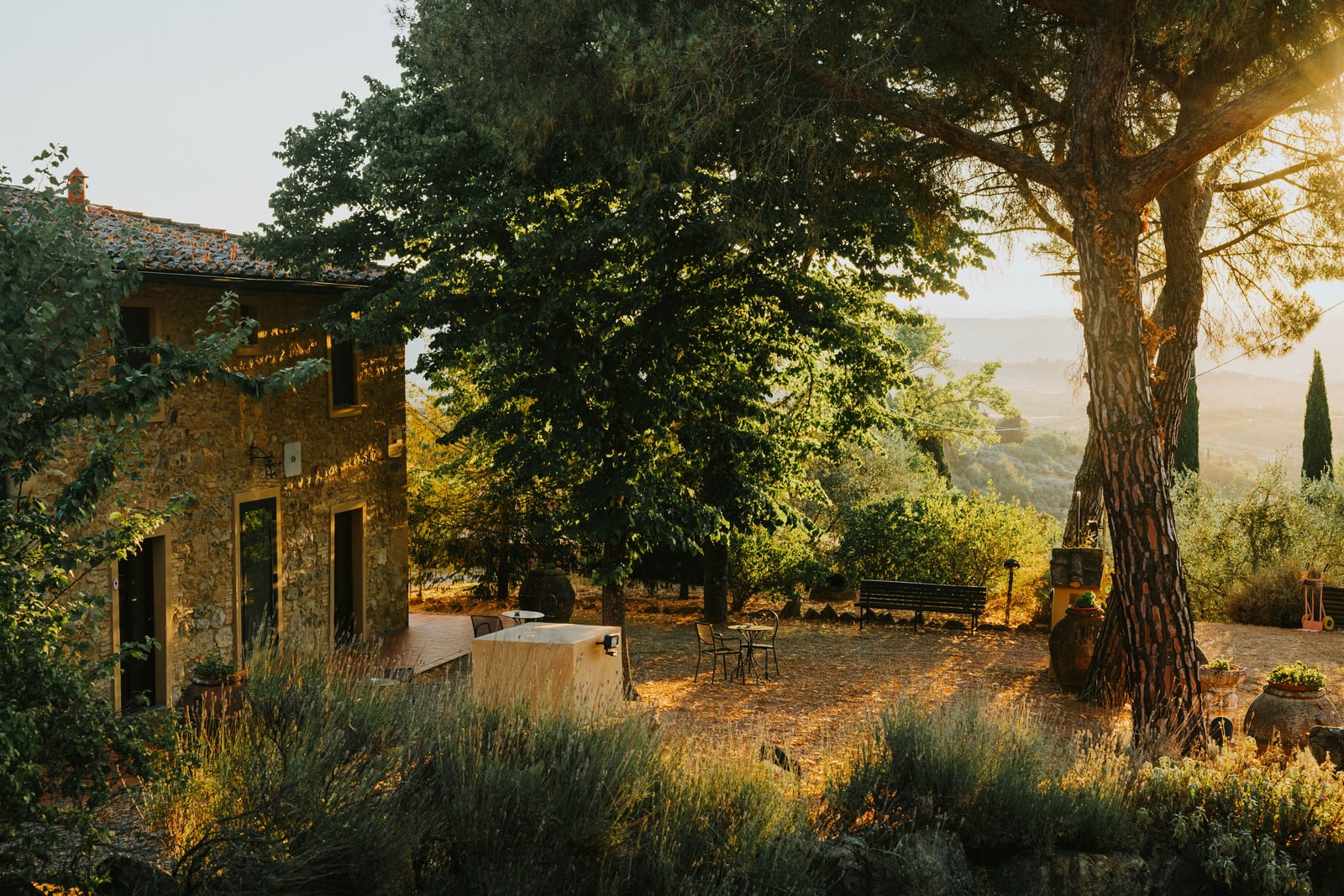
If you'd rather walk to dinner, then to a wine bar, then back to your room, sleep right in a town instead. Nobody needs a designated walker. Around the Val d'Orcia, that means one of the three hill towns named above.
My Val d'Orcia nights were in Montepulciano, just east of the valley: a small guesthouse at the edge of the old center, with the car in a lot outside the walls, and I would book the same again. The days were six or seven hours at the wheel anyway, through Pienza, Montalcino, and the wineries, so the countryside never ran short. By five in the evening the car was parked and the keys forgotten until morning: down into the cellars under the town for a glass of Vino Nobile, the local red, then dinner at a trattoria with no argument over who drives the dark lanes back. In the morning, an espresso and a pistachio cornetto, the Italian croissant, on the terrace of Caffè Poliziano before the first tour bus pulled in. A farm with a pool is the better pick only for a full week in July heat, with half of each day spent by the water.
Before you book a farm, ask whether dinner is served and on which nights, and how far it is by car to the nearest town. In Chianti, start around Greve in Chianti or Castellina in Chianti.
Find a farm stay near Greve in Chianti
Ask whether dinner is served, and how far the nearest town is by car
For the Val d'Orcia, ask both questions, plus how long the walk or drive is up to the hill town; look around Pienza, or just east of the valley around Montepulciano.
Ask about dinner, the nearest town, and the walk or drive up to the hill town
Bringing the Car to the Hotel: Florence, Siena, and the Hill Towns
In Siena, a hotel inside the ZTL can register your plate so your drive in counts as authorized; in Florence, ask your hotel whether it does the same before you drive in. In Tuscany's other old towns, park outside the walls and walk in.
Inside Florence's ZTL you can park only in hotel parking or a private garage. Before you book a hotel inside the zone, ask whether it registers guests' plates for the ZTL, and drive in only once it has confirmed it will register yours.
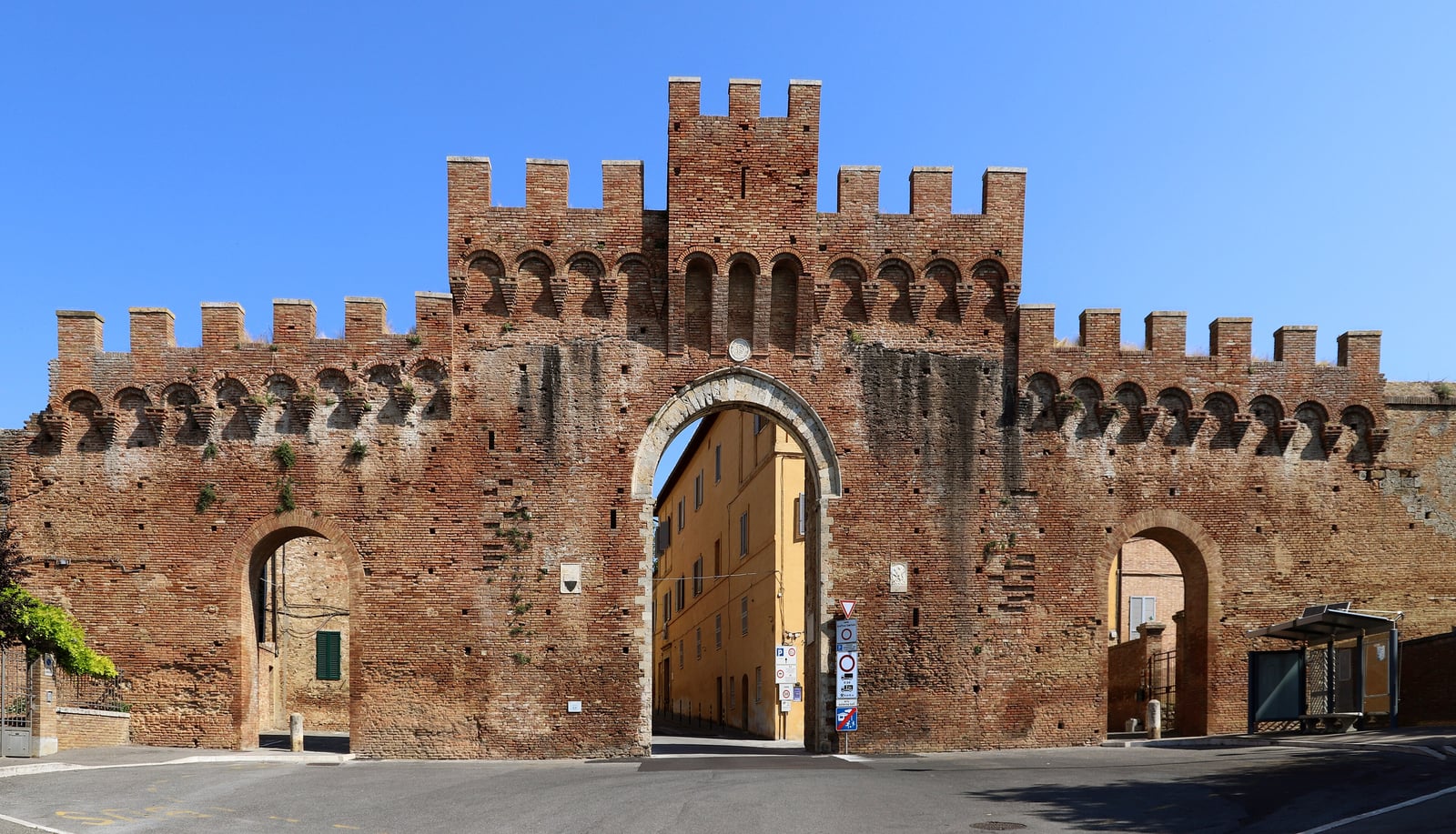
Siena's ZTL runs around the clock, every day, behind camera-monitored gates. A hotel inside it registers your plate for free, for up to two entries a day, each to load or unload bags and at most 45 minutes. A hotel with its own garage or courtyard isn't held to the two-a-day count; hence the earlier advice to ask. For the rest of the stay, Sigerico's Campo, Duomo, San Francesco, and Santa Caterina parking garages list a hotel rate capped at €25 a day; ask your hotel whether it applies.
⚠️ Warning
In Florence and Siena, don't drive through a ZTL gate until the hotel has told you, in writing, that it will register your plate. Then, in Siena, take the shortest route in; the registration there covers no other.
In the hill towns, I left the car in a lot outside the walls every time and walked in. Lucca itself advises parking outside its center. San Gimignano's ZTL cameras run generally every day from 09:30 to 05:30 the next morning, and the free early window in between is for residents only. Driving into any ZTL without authorization costs €83 - €332.
Siena's page on how hotels register their guests' plates for the ZTL (comune.siena.it, in Italian)
Where to Stay in Tuscany: Common Questions
- Where should you stay in Tuscany without a car?
- In a city. Florence is the pick for train day trips, Lucca and Pisa among them, and for the most going on: more varied restaurants and more museums. Siena is the pick when the hill towns are the point. From there, on line 114, Montalcino works as a half day: the last direct bus back that runs every Monday to Saturday leaves Montalcino at 13:55, and the last on Sundays and most holidays at 12:25. On direct buses from Siena, Pienza and Montepulciano don't fit a day trip; they're better by car, on the countryside days.
- Is it better to stay in Florence or the Tuscan countryside?
- For a week with a car for only part of it, both, in that order: a few nights in Florence or Siena without a car, then a few in the countryside with a car rented for just those days. Two beds is enough; a third hotel isn't worth the move. Without a car, stay only in the city; with a car the whole way, one countryside base can carry the week.
- Can you stay at an agriturismo without a car?
- Rarely well. A farm stay assumes a car, so without one every day out depends on someone driving you, most likely a private driver. If the farm is the night you want rather than the base, rent a car for just those nights.
- Is Lucca a good base for Tuscany?
- For the flat northwest by train, yes: the station is close to the center, with trains toward Florence and toward Pisa. For the hill towns, no. Lucca sits far from them, and its trains do little to close the gap.
Settle the car first, and the rest mostly follows: a city bed you can walk from, a farm bed you can drive to, and a dinner you don't have to drive home from.