 George Mandrovny
The Short Answer: Florence on Foot, Then a Car for the Hills
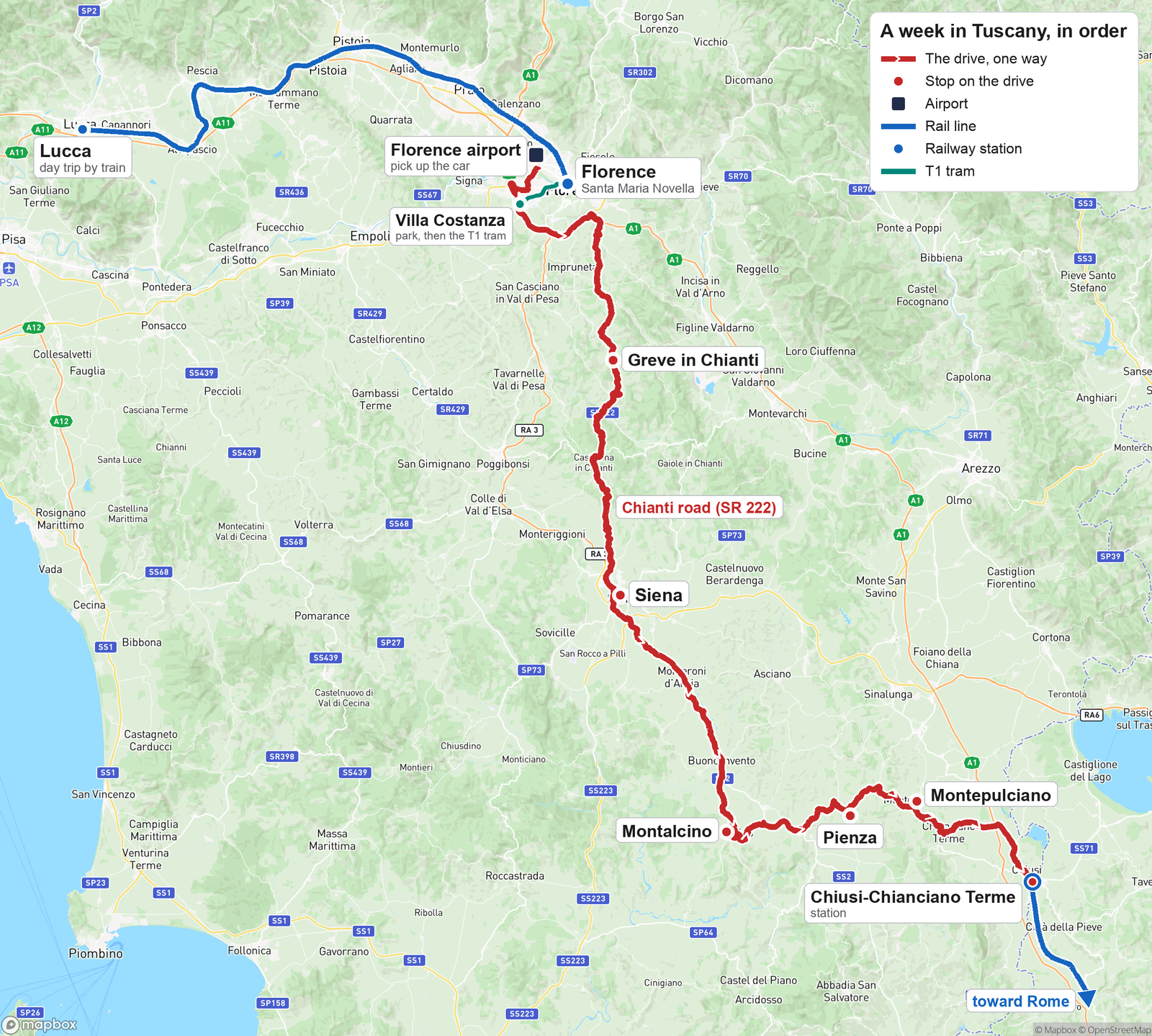
A Tuscany itinerary for a week runs one way: three nights in Florence on foot, a car picked up at Florence's airport the morning you leave (a Monday is best), a drive south, through Chianti if you like, with a stop in Siena, then three or four nights in the Val d'Orcia. The one trap is booking everything else before you know where the car ends: back at the airport, or at Chiusi toward Rome, if your rental company takes it back there.
- 3 or 4 nights: Florence, plus one countryside day by bus, train or tour. No car.
- 5 or 6 nights: Florence, then one countryside area, with a car for those nights only.
- 7 nights: the week above. The seventh night is your choice: Siena, or a fourth night in the countryside.
- 10 nights or more: three or four in Florence (the fourth buys a day in Lucca by train), about three in a second countryside area with its own base, then three or four in the Val d'Orcia. Never a hotel a night.
Florence is a city you see on foot, where a car is luggage with an engine. The hill towns sit apart across open country, and the walking happens inside their walls, not between them. So this is two trips joined by one moving day. Settle the car's two ends first, and the days in between fall into place. Everything below runs in the order you'll live it.
How Many Nights in Tuscany, and What 3, 5, 7 or 10 Hold
Count nights, not days. How many days Tuscany needs turns out to be a question of how often you pack. Three nights in one place give you about two and a half days there. A move costs more than it looks: going from Chianti to Rome, count on losing a good half day, if not more. That's why this plan changes beds once at its core, Florence and then one countryside area, and adds a change only for an extra you chose: a Siena night on a seven-night trip, or a second countryside area from ten nights on. A hotel a night is not a way to see Tuscany. It's a way to see its parking lots.
| Nights | Florence | Out of Florence | The car |
|---|---|---|---|
| 3 - 4 | All of them (3 or 4) | One countryside day: Siena by bus or train, or a guided day | None |
| 5 - 6 | 3 nights | 2 or 3 nights in one countryside area | For the countryside nights only |
| 7 | 3 nights | A Siena stop on the drive south, 3 Val d'Orcia nights, and a seventh in Siena or the valley | Days 4 to 8 |
| 10+ | 3 or 4 (the fourth buys a Lucca day by train) | About 3 nights in a second area with its own base (San Gimignano and Volterra), then 3 or 4 in the Val d'Orcia | For the countryside nights |
The seven-night row is this plan's backbone, and the sections below walk it day by day. Ten nights is the same trip with two additions. A Lucca day costs a fourth Florence night, never the second area. That second area goes before the Val d'Orcia, on the way south, so the car still starts and ends where it would anyway. That makes two bed changes after Florence, which is as much packing as I'd ask of anyone.
An extra night buys depth, not another town. Staying longer in fewer places beats covering more ground in a day, and the countryside is where that pays off: a valley you have time to sit in rather than drive through. For a shorter trip, cut nights from the countryside end, and never squeeze in an extra bed to see more. If Rome is in the same trip, the Tuscany share is still what the table shows. Rome changes only where the car ends, and that gets its own decision further down.
Days 1 to 3: Florence First, and Leave It on a Monday
Florence goes first, while you still have the energy for a big, crowded city. The other order has a price: after a long spell of quiet hills, a big city lands like a dropped tray, all scooters and ticket lines and other people's elbows. In this order the trip slows down as it goes, which is the right direction for the end of a vacation. So it opens with three nights in Florence and no car. Land, sleep, start walking. The car waits for the morning you leave, and the calendar picks that morning for you.
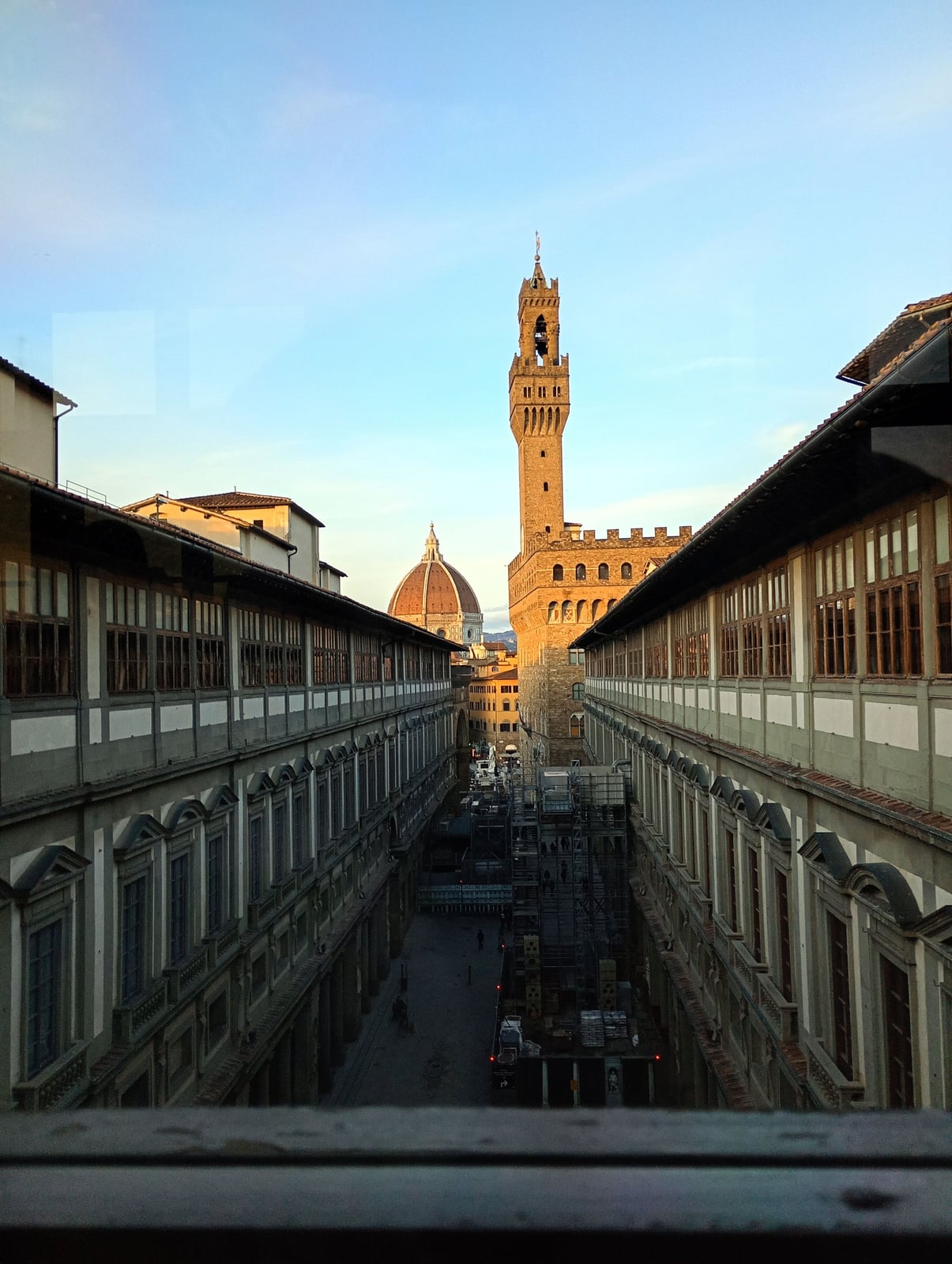
The Uffizi and the Accademia are usually closed on Mondays, so Monday is the day to leave Florence and drive: the city's two big museums take the day off, and so does your need for them. Usually, because a holiday Monday can open, which is a pleasant surprise rather than a plan. Arrive on a Friday, spend Friday to Sunday in the city, and pick the car up Monday morning. The cathedral, the Duomo, closes on a different day: Sundays, and for religious celebrations too, so put it on Friday or Saturday. And keep to one big museum a day. Somewhere into the second, the paintings start running together, and no amount of espresso separates them.
💡 Tip
Book the Duomo's dome before anything else in Florence. The climb runs on a booked time slot that can't be changed once issued, and it has to land inside your three city days. Fix that date, then build the week around it.
What fills those three days, and which tickets to book in what order, is my day-by-day plan for Florence. All this trip asks of it is to finish by Monday morning.
Sleep central. Until day 4 your feet are the whole transport plan, so where the bed sits matters more than anything in the room. Which Florence neighborhood to pick comes down mostly to the walk back at night.
Where the Car Starts and Ends: the Airport, or Chiusi for Rome
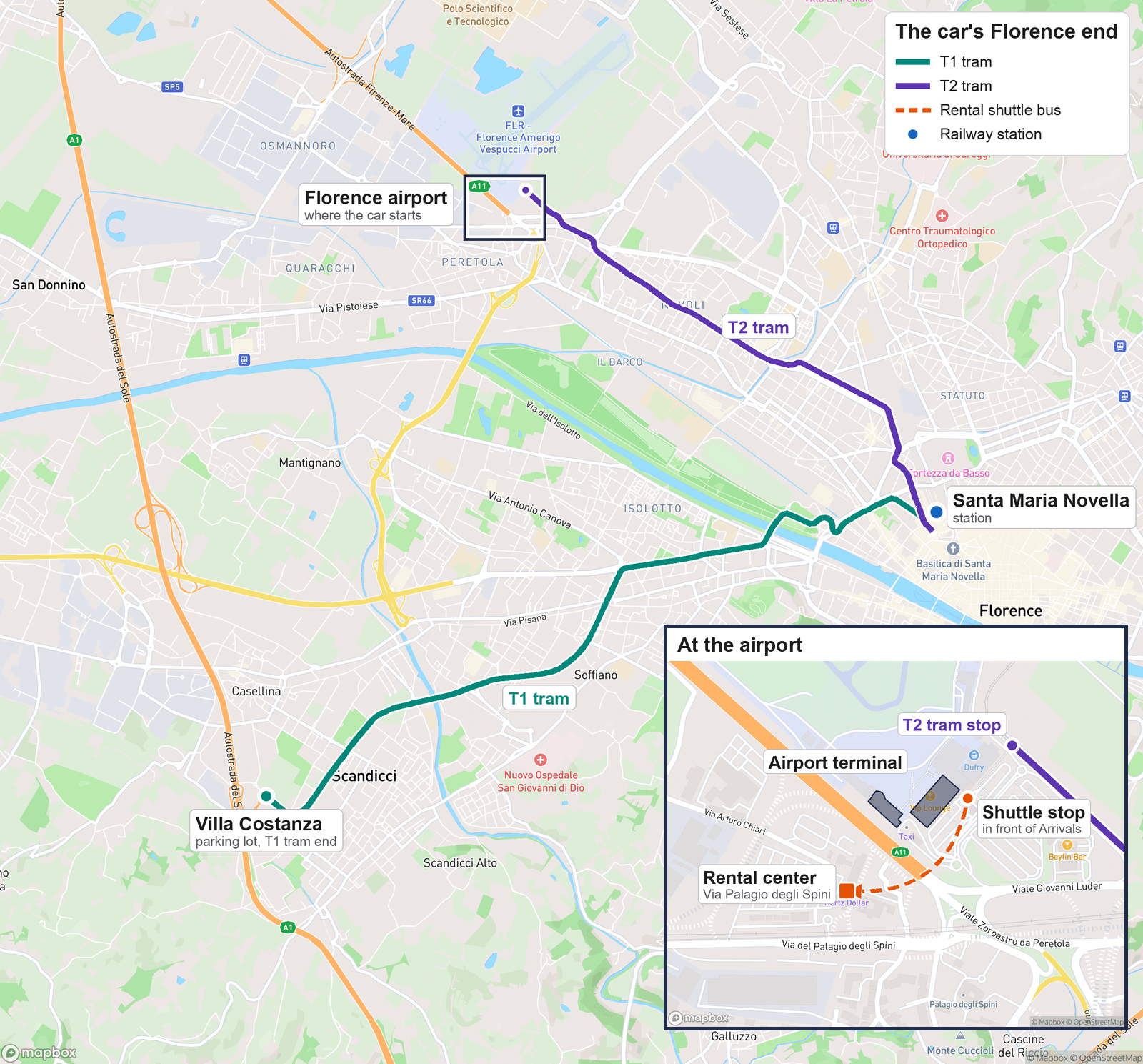
The car starts at Florence's airport, and reaching it takes two moves. First the T2 tram from Santa Maria Novella station to the airport: about 20 minutes, on a €2 ticket good for 90 minutes on trams and buses (the fare since August 2026). Then the shuttle. Hertz and National hand cars over not in the terminal but at a rental center on Via Palagio degli Spini, a short shuttle ride (about 10 minutes) from the stop in front of Arrivals, and the rental center is not a walk from the tram stop, whatever your optimism says. Collected out at the airport on that day-4 morning, the car starts outside the historic center and never has to go in.
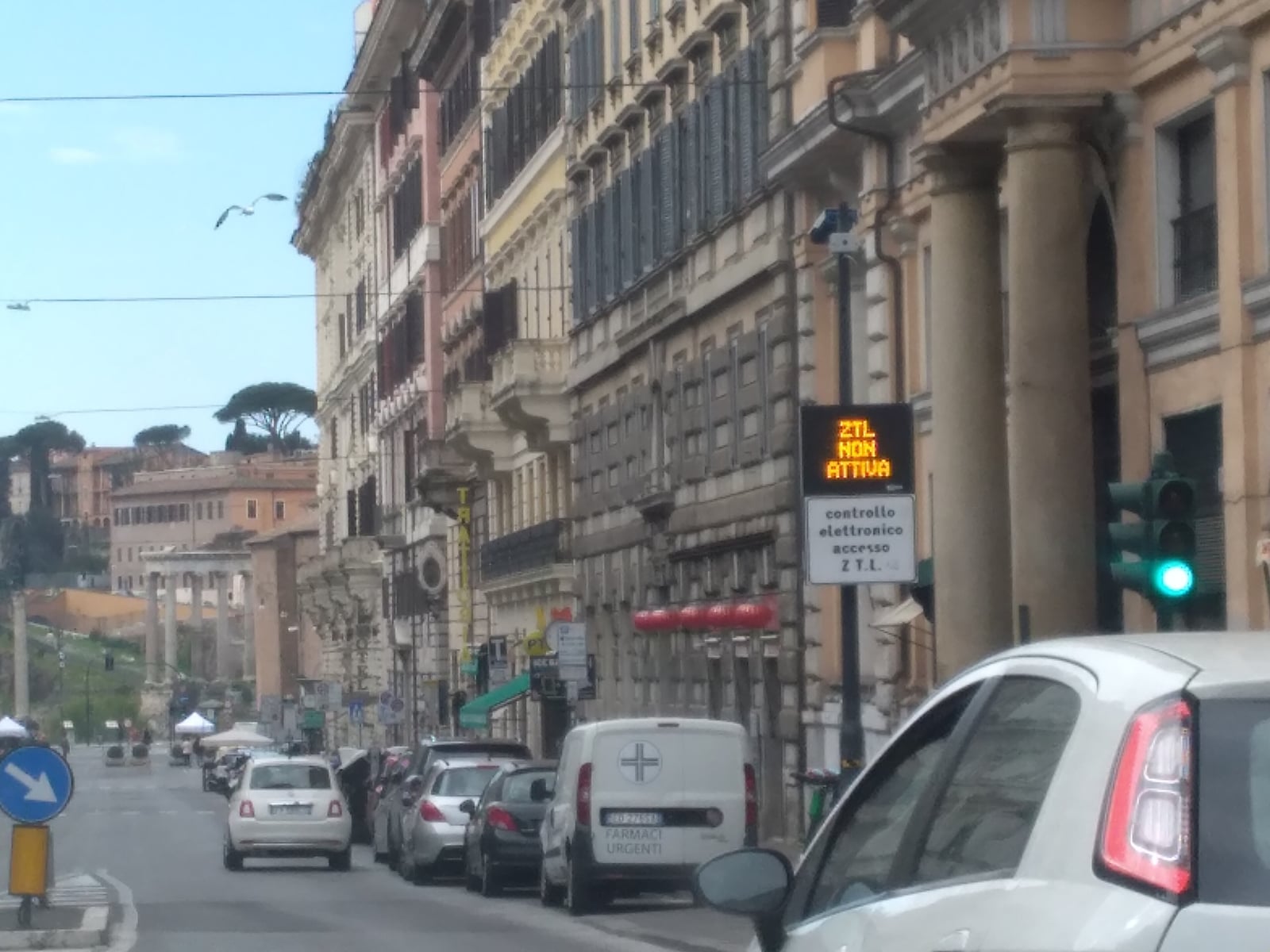
Why out there? Florence's center has a ZTL, a limited-traffic zone, and a driver meets it as an electric sign that shows green when access is allowed and red when it's forbidden. That sign is a poor place to start learning the rules of the road here, from the gate signs to the speed cameras, in a car you met that morning.
The plan also never asks you to drive on the day you land, jet-lagged, on roads you have never seen. What it does ask is paperwork, sorted at home before that pickup: if your license was issued outside the EU and the EEA, Italian law wants an international driving permit or an official Italian translation carried with it, never instead of it, and the license and the permit must both be valid.
⚠️ Warning
Don't drive into Florence. Large parts of the historic center are a ZTL. Pick the car up at the airport on your way out, and leave the center to your feet.
Where the car ends is the one road-trip decision to make before anything is booked, and there are two good answers. Back at Florence's airport suits a trip that ends in Florence or flies home from there, since the T2 carries you back into town. From Montepulciano that drive is about an hour and 40 minutes before traffic. If Rome comes next, Chiusi-Chianciano Terme station is about 38 minutes from the same town and sits on the Florence-Rome line, with regional trains to Rome. Either way, confirm in the booking itself that the company takes the car back where you mean to leave it.
Set the search up the way the trip runs: pickup at Florence airport on your moving day (day 4), checking that the booking's pickup address is the rental center on Via Palagio degli Spini; the drop at the end you chose, with a company whose booking shows it there; and a small car.
Compare rental cars at Florence airport
Pickup on day 4 at the rental center - check the drop shows at the end you chose
Day 4: The Drive South, and Siena on the Way
Day 4 is the hinge of the trip, where the city ends and the southern Tuscany itinerary begins. Start the move in the morning. There are two ways south to Siena, both measured here from the airport, since that's where the car comes from. One is the direct road. The other goes by way of Greve in Chianti and takes more than half an hour longer, before you stop for anything. Take it if you want the drive to be part of the day, and the direct road if the hours belong to Siena. Greve and Castellina are villages on the Chianti road, the SR 222, which runs from Florence's southern edge down to Siena.
| Leg | Distance | Drive (before traffic and parking) |
|---|---|---|
| Florence airport to Greve in Chianti | about 40 km | about 50 min |
| Greve to Siena | about 42 km | about 57 min |
| Florence airport to Siena, direct | about 80 km | about 1 h 10 min |
| Siena to Montalcino | about 43 km | about 1 h 05 min |
Read those as floors: an empty road, no parking, no walk in from a lot. Real drives here take longer than they look. The country roads run two lanes and curving, and sooner or later you'll be behind a farm tractor with nowhere to pass and plenty of time to study the cypresses. So the moving day holds the drive and one stop, never two. A second stop doesn't add a town so much as subtract the evening.
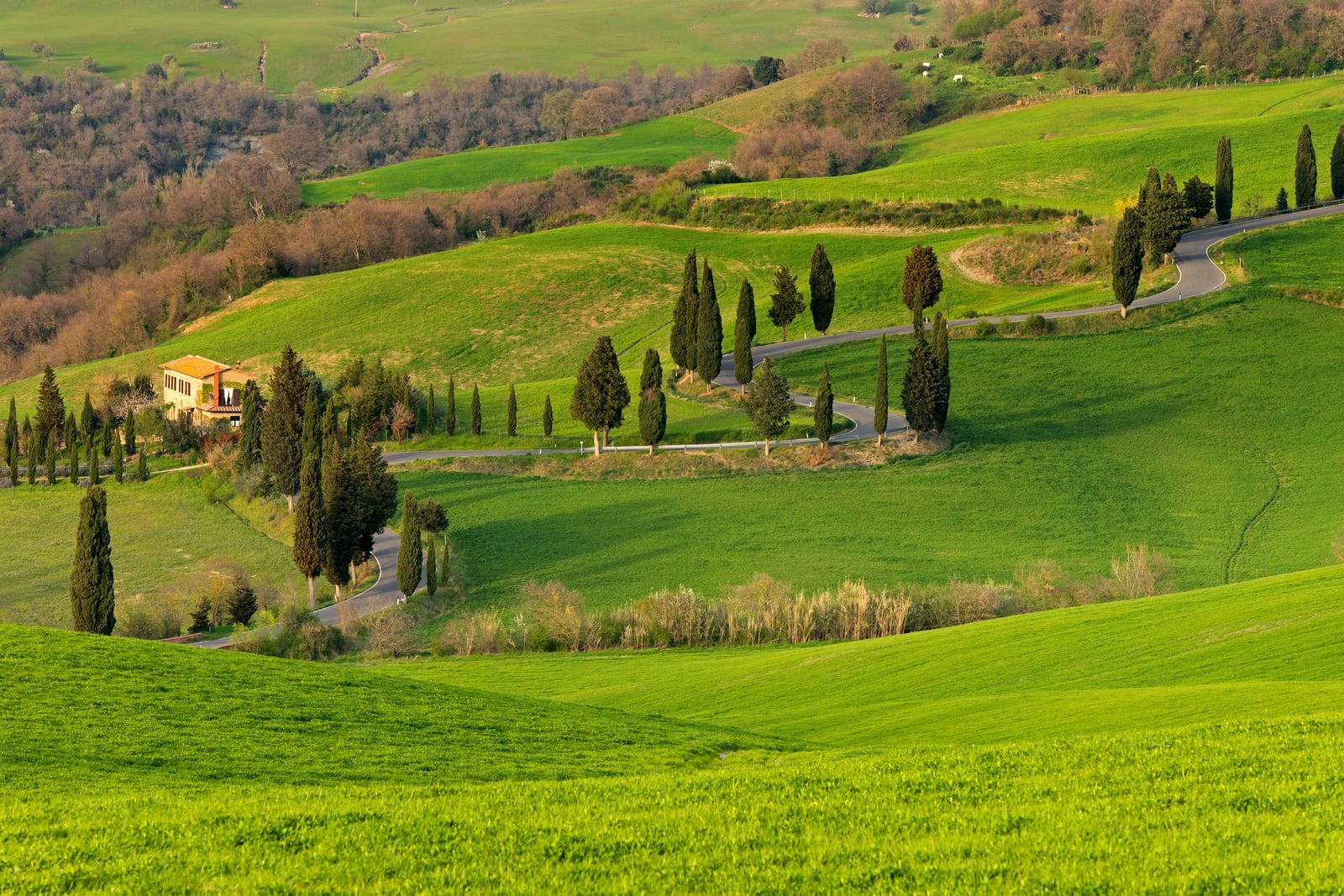
That one stop is Siena, and the decision is whether it stays a stop or becomes a night. Keep it a stop if the countryside base is the point of the trip: a few hours in the city, then on into the Val d'Orcia. Make it a night if Siena is to get the whole day it deserves, because a lunch-and-a-walk stop doesn't give it that. The night then counts as your seventh, and the valley keeps its three. And Siena is not a compulsory love. If hill towns are what you came for, Montepulciano, Pienza and Montalcino are where the car is heading anyway.
My seventh night goes to a fourth night in the Val d'Orcia, and Siena stays a stop. On my drive down, four or five hours covered the sloping Piazza del Campo, the striped marble Duomo with its Piccolomini Library and lunch in a side lane. Three nights in the valley came out short: two full days took in Montepulciano, Pienza, Montalcino and two wineries with one eye on the clock, and the hot-spring pool that fills Bagno Vignoni's square never fit. Park in a covered garage outside Siena's ZTL, so the bags in the trunk aren't a worry.
If Siena gets the night, sleep inside the historic center, so the evening is a walk rather than a drive, and ask how the hotel handles the car before you book.
Find a hotel in Siena's historic center
One night in the historic center on the drive south - ask how the hotel handles the car
Days 5 to 7: One Countryside Area, Short Hops, the Car Outside the Walls
Days 5 to 7 run from one bed. Unpack once and take the valley in short hops. On day 4 Montalcino was at most the way in, so day 5 gives it the morning, then moves on to Pienza, about 34 minutes away. Day 6 is Montepulciano, about 20 minutes from Pienza. Day 7 is the day out: Cortona, about 43 minutes from Montepulciano. One or two towns a day is the right dose; add a third and the day becomes mostly windshield. Here the towns are only the ends of a drive, and what's worth the walk up in each of them has a page of its own.
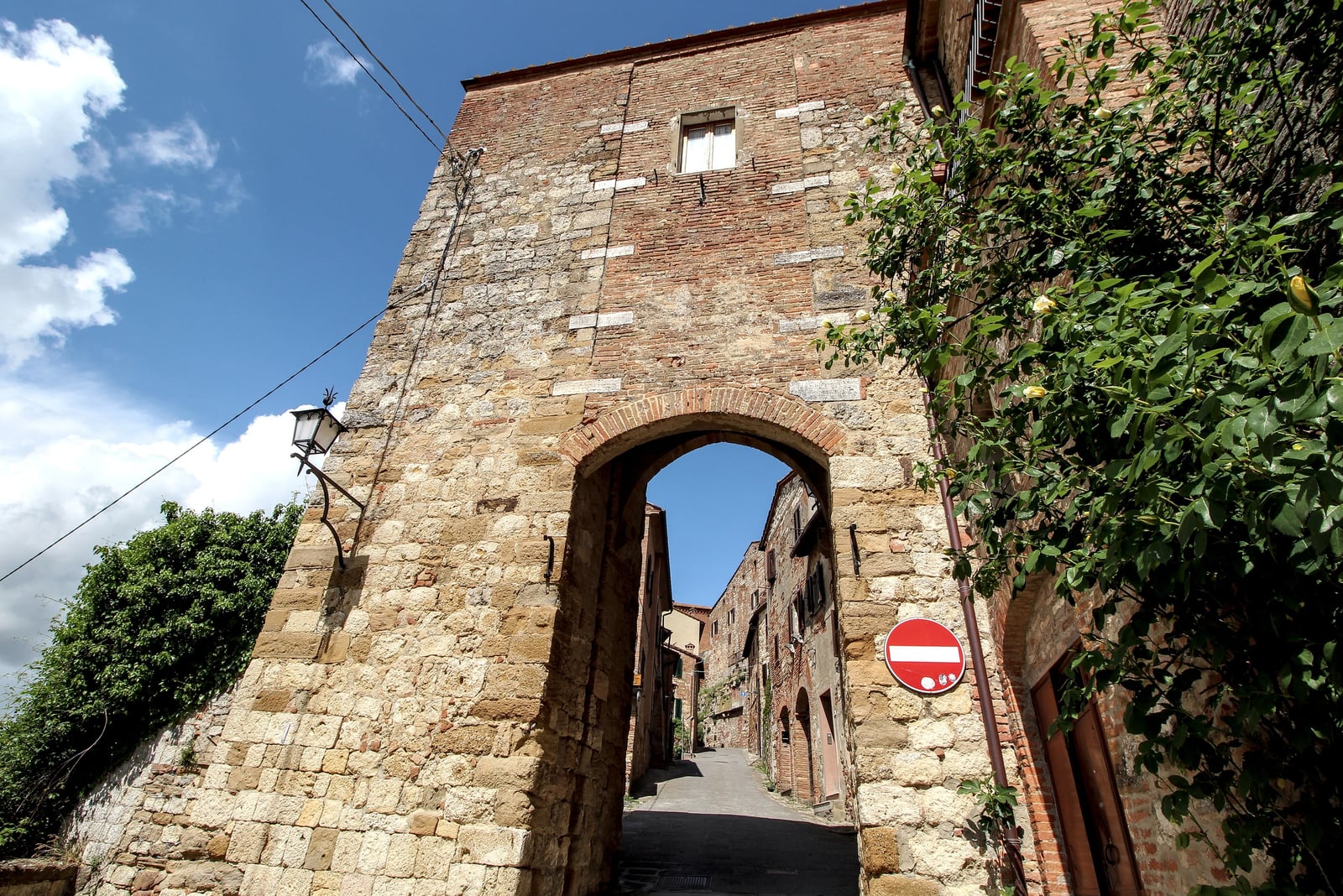
The car's share of each day is short: a lot outside the town walls, then the walk up on foot. Book tastings before you go, rather than trusting the gate at the end of a country road to be open when you arrive.
⚠️ Warning
Any day with a tasting needs a driver who isn't tasting. Italy's limit is 0.5 grams per liter, and it's zero for drivers under 21 and for anyone in their first three years with a category B license, the ordinary car license.
A second area means a second base and another moving day. San Gimignano and Volterra make their own pair: about an hour from Florence to San Gimignano, then about 37 minutes on to Volterra, but just under two hours from San Gimignano to Pienza. That gap is why the ten-night plan gives them a base of their own, never a day trip from the valley.
With the car along for the whole trip and the countryside first, Florence can be the day trip, but from the Val d'Orcia it's a long one: the valley's towns sit nearly two hours from Florence by car, and the day carries that drive both ways. Leave the car at the Villa Costanza parking lot and ride the T1 tram to Santa Maria Novella station, about 20 minutes, with a tram every few minutes in the daytime.
Farm or town, Chianti or the Val d'Orcia: choosing the countryside base is a decision of its own, and this plan sleeps in the valley.
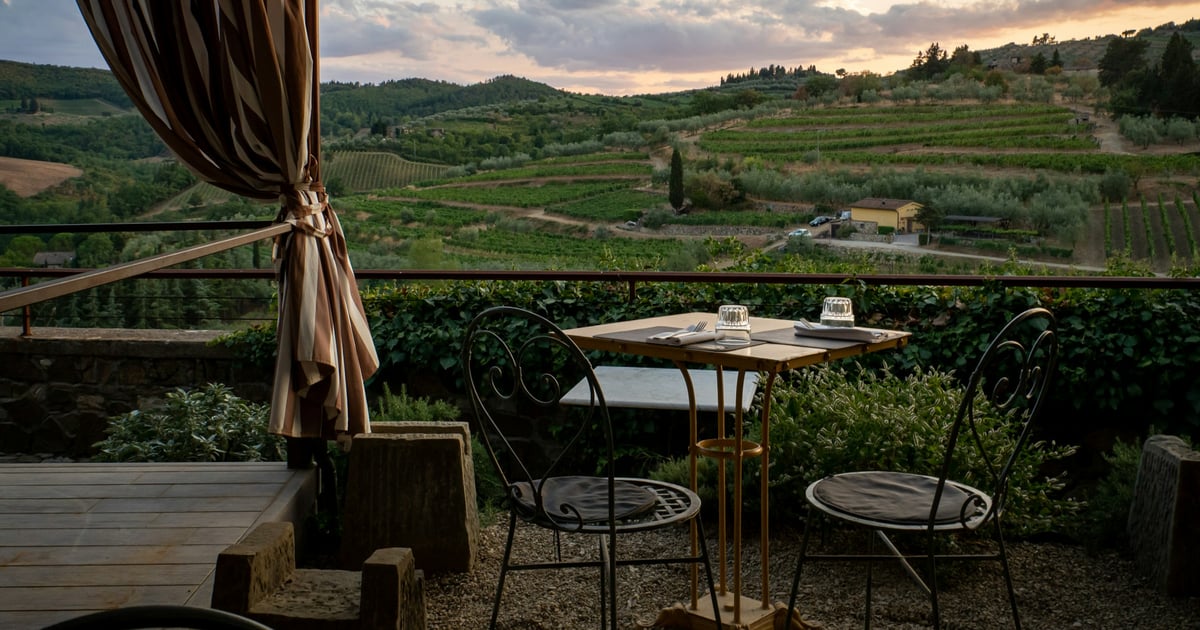
For a farm stay, check how far the drive is to the nearest town you'll eat in at night, and whether the access road suits a small car.
The countryside nights - check the drive to dinner and the access road
For a bed in town, ask the hotel where the nearest lot outside the walls is and how long the walk up takes with bags.
A town bed instead of a farm - ask about the lot outside the walls
The Same Week Without a Car
Without a car, the core week never changes beds. Florence stays the base, and after the three city days the countryside comes to you one day at a time: Lucca on the Monday, when the big museums usually close, then Siena, then the valley. Lucca is the easy one: flat and on the railway, and a Pisa morning fits in before it. The regional train between Santa Maria Novella and Lucca takes about 1 h 10 min to 1 h 45 min depending on the run, about 1 h 20 min on the faster ones. The last train back leaves Lucca about 22:30 every day (except December 5 and 6), and it may leave up to 10 minutes late, which is a cushion to enjoy, not to plan on. These times run to December 12, 2026, so check table 256 of Trenitalia's Tuscany regional timetable for your dates.
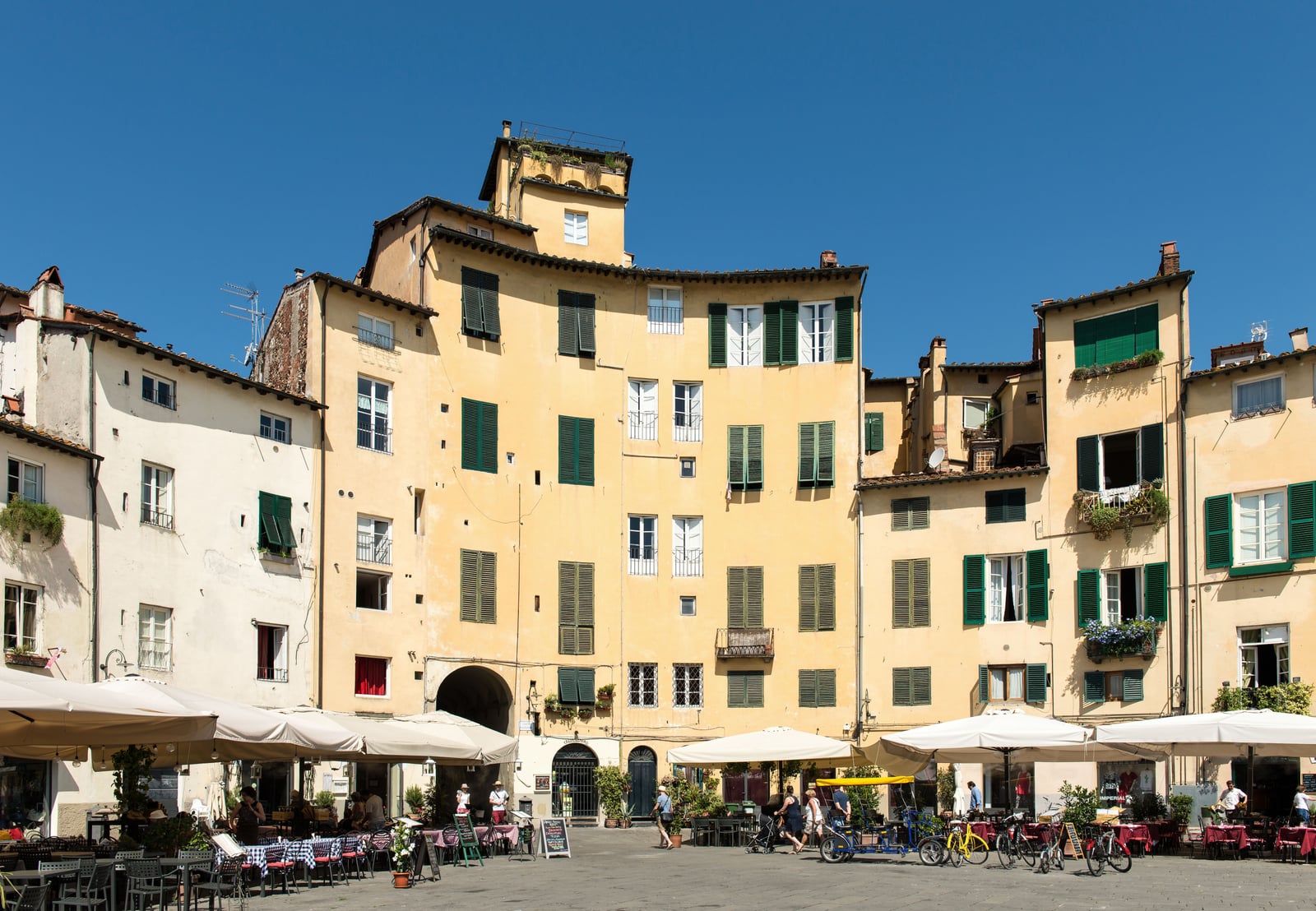
Siena is a day out by bus or train, and which of the two to take from Florence depends mostly on where in Siena you want to step off. Weekend buses run thinner, so check the times before giving Siena a Sunday; in this order it lands on a Tuesday anyway. Or swap the base instead: Siena for four nights, no car, and guided days out to Montalcino.
The Val d'Orcia is the day a car would have bought. The valley is far from Florence, and the drive through it is half of what you came for, so this is the day to hand to a guide. Wine country here, done on your own, needs a car and a working knowledge of the estates, and a guided day brings both. Pick one that spends real time on the valley's roads, not only in a cellar, and check where it picks you up.
Book a guided Val d'Orcia day from Florence
The valley's roads, not only a cellar - check where it picks you up
If the farm nights matter more than touring the towns, you can still have them without renting: a driver booked from Florence to the farm stay turns the hardest leg of a car-free week into one door-to-door trip. Without a car on the farm, the days there are for staying put, which on a good farm is the whole point. Treat it as a ride, not a tour: a transfer driver drives, and the guiding is someone else's job. Agree on the fixed price when you book, and give the farm's full address, not just the nearest town.
Book a fixed-price driver from Florence to the valley
Door to door from Florence - give the farm's full address
How the Season Bends the Days
The season bends this plan hardest on the moving day. Over Siena the sun sets around 21:00 in late June and around 16:40 in mid-December. In December, that's the real reason day 4 starts in the morning: a Siena stop that drifts into the afternoon puts the last leg into the valley after sunset, on country roads you've never driven, toward a farm gate you've only seen in photos. In June the same day has light to spare, and the long evenings carry the hops.
From late May to the end of August it's high season and often hot, the Val d'Orcia very much included. Let the heat shape the day: the famous places early, while the stone is still cool, and the middle of the day for the farm, the shade and a lunch that takes as long as it likes.
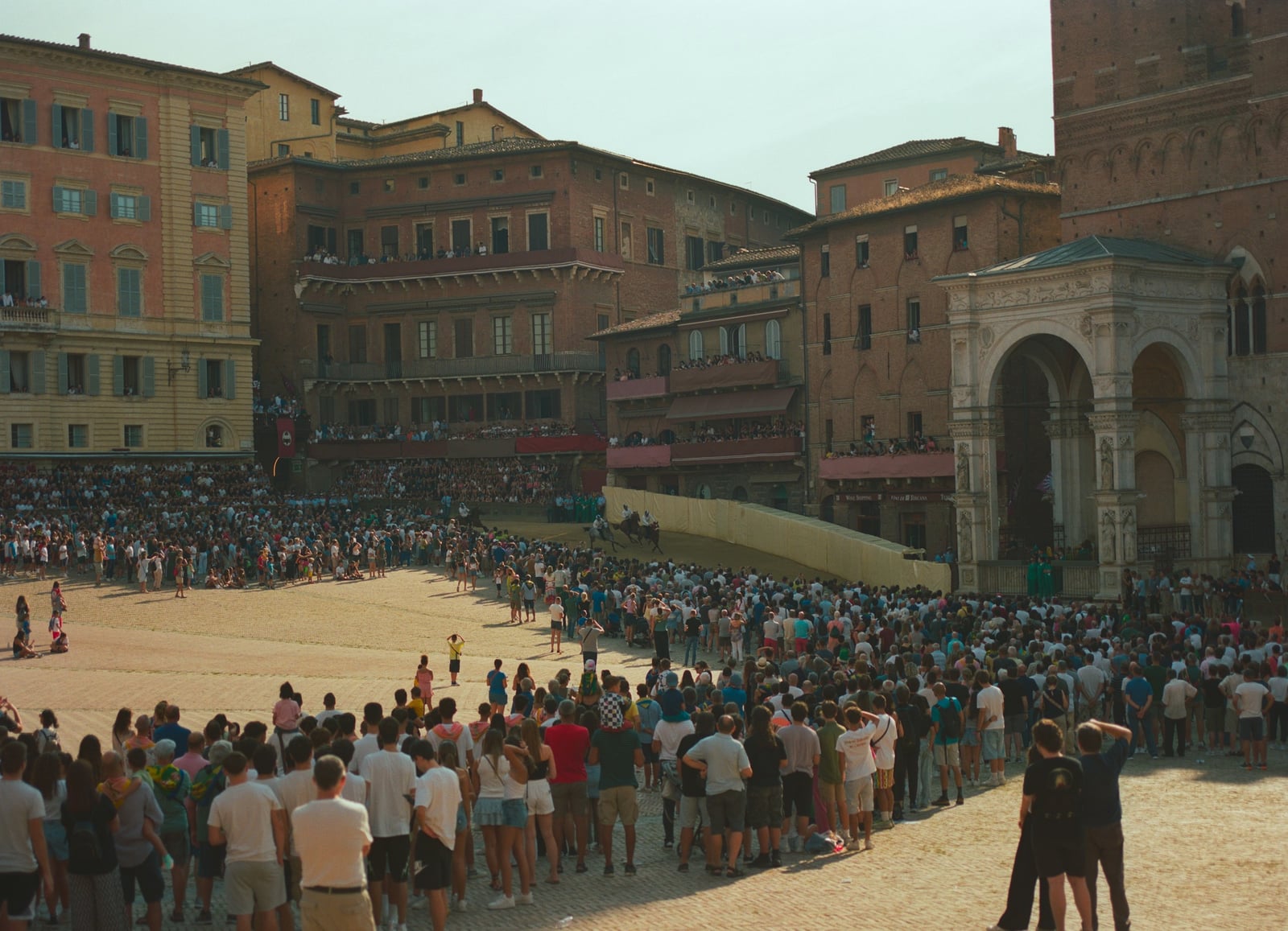
Siena's Palio, the race in the Campo, the city's main square, runs on July 2 and August 16, and a race can be postponed (in 2026 they ran July 3 and August 18). If the seventh night is a Siena night in July or August, set it against those dates on purpose, one way or the other. Earlier in the year, in March, the valley's small towns can still be half asleep, which a plan built on doing less can live with. Winter is a different trip altogether.
Tuscany Itinerary: Common Questions
- What does a 7-day Tuscany itinerary look like?
- Counted in nights, seven days hold six: three in Florence on foot, then the car on day 4, a stop in Siena on the drive south, and three nights in the Val d'Orcia. A seventh night, in Siena or the valley, makes it eight days.
- Should you see Florence first or the countryside first?
- Florence first, on foot, while you still have the energy for a big, crowded city. Coming down from the quiet hills into its crowds is the harder way around.
- Where should you pick up and drop off a rental car for a Tuscany road trip?
- Pick it up at Florence's airport the morning you leave the city. Return it there, or at Chiusi if Rome comes next, but only once the booking itself shows the company takes cars back at Chiusi.
- Can you do a Tuscany itinerary without a car?
- Yes, from one Florence base: Lucca by train, Siena by bus or train, and the Val d'Orcia on a guided day. A booked driver can still get you to a farm stay for the countryside nights.
- How do you combine Rome and Tuscany in one trip?
- Put Tuscany first and Rome last, and take the train south from wherever the car ends (see the car question above).
So the first decision on this trip isn't a hotel. It's where the car goes back, and once that's settled, the week stops being a puzzle and becomes a list.