 George Mandrovny
The short answer: book the town for what it reaches
Where to stay in the Dolomites, Italy, comes down to what the town reaches. Without a car, sleep in Val Gardena (Ortisei, Santa Cristina or Selva): many hotels there give guests a free valley bus pass, and Ortisei's lifts leave from town. For the bigger eastern hikes and views, book Cortina d'Ampezzo once its lifts and summer buses run. With a car in July or August, either town works and the view decides. The trap is booking on photos or price: a hotel far from any lift or bus, or, on a short trip, Bolzano, down in the main valley.
- Three or four nights: one town, on the side that holds what you came for.
- A week for both sides: Val Gardena, then Dobbiaco for the east; with a car in July or August, Cortina works too.
- May or early June: Val Gardena, car or not. Its first lift opens in early May, weeks before Cortina's and Alta Badia's.
- A tighter budget: widen the search one village along the bus line; on a long or rail-first trip, to a valley town.
- Quiet: the Alpe di Siusi plateau, Val di Funes, or a bed near Lago di Braies.
The hotel matters less than the town, and the town matters for what you can reach from it before breakfast has gone cold: the lift, the bus, the trailhead. A beautiful room two valleys from everything is, in practice, a very scenic place to leave every morning. Everything below picks the town by that test.
Ortisei or Cortina: which trip each town is for
If you're deciding where to stay in the Dolomites, Italy, the two famous towns split by trip: Ortisei for a first or car-free trip, Cortina d'Ampezzo for the bigger eastern hikes and views once its lifts and summer buses run. With a car in July or August, either works, and the view decides.
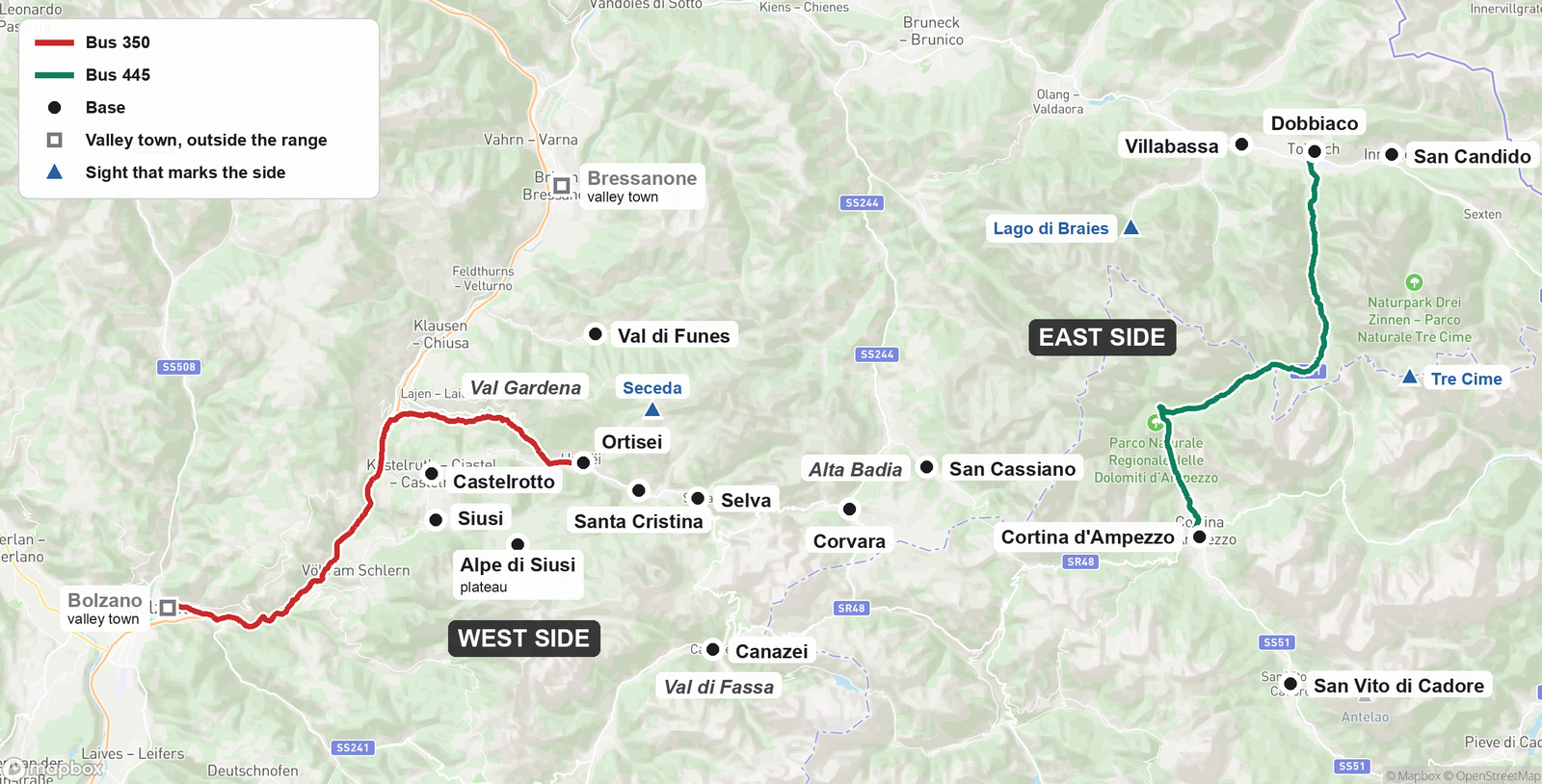
Both answers rest on one rule: the town follows the side of the range, and the side follows what you came to see. Seceda and the Alpe di Siusi are on the west side, Tre Cime and Lago di Braies on the east. Settle which side of the range your hikes are on first; the town inside it is the smaller decision.
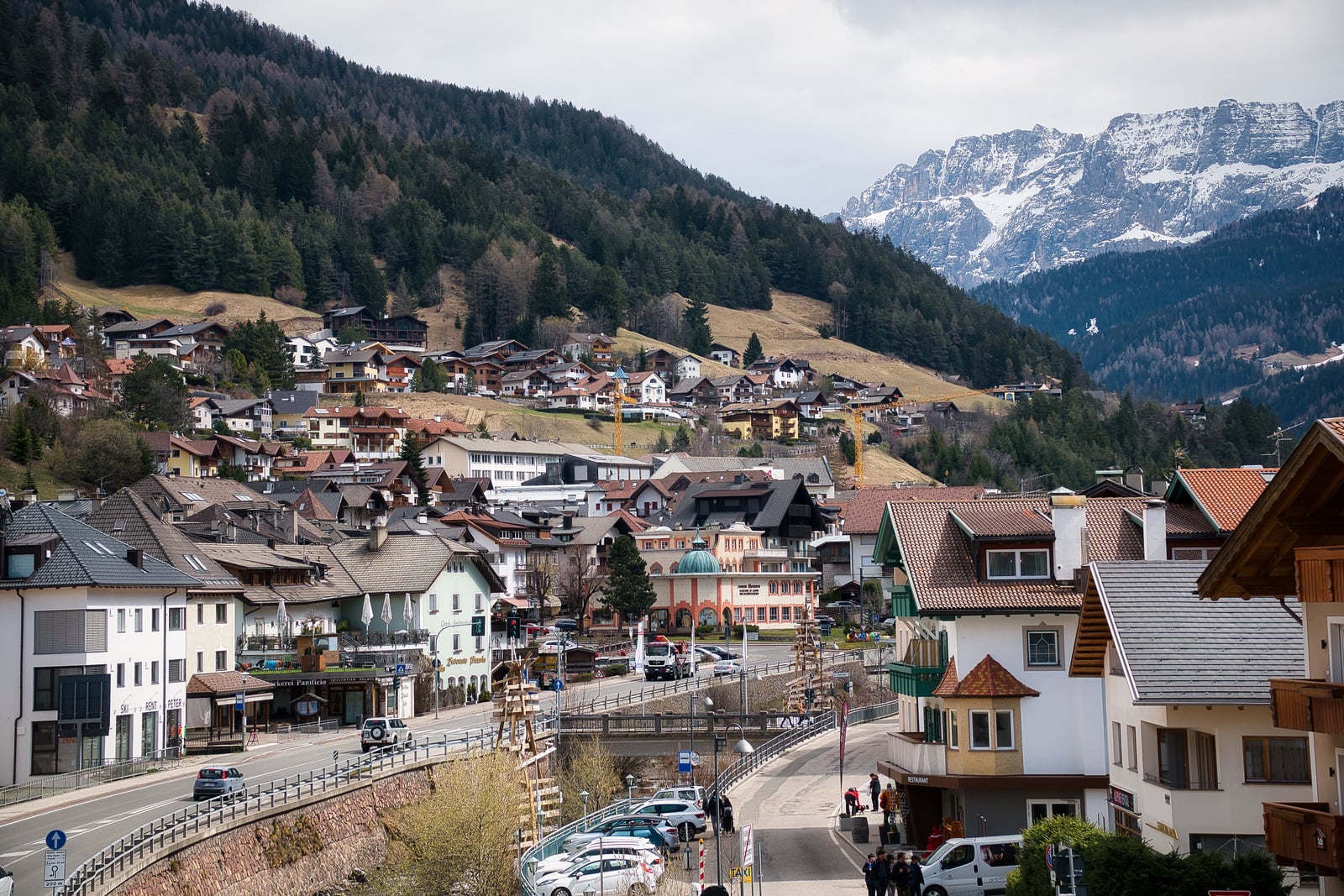
Ortisei. The lift up to the Alpe di Siusi and the first leg of the ride up to Seceda both leave from town, so a car-free day starts at the hotel door. Many hotels give guests the valley's bus pass (details in the card table below). The town is compact and walkable, easy with kids. It is also touristy, its room prices read high, and it sits in a green valley with softer views: Selva, at the far end of Val Gardena, gets the rugged ones.
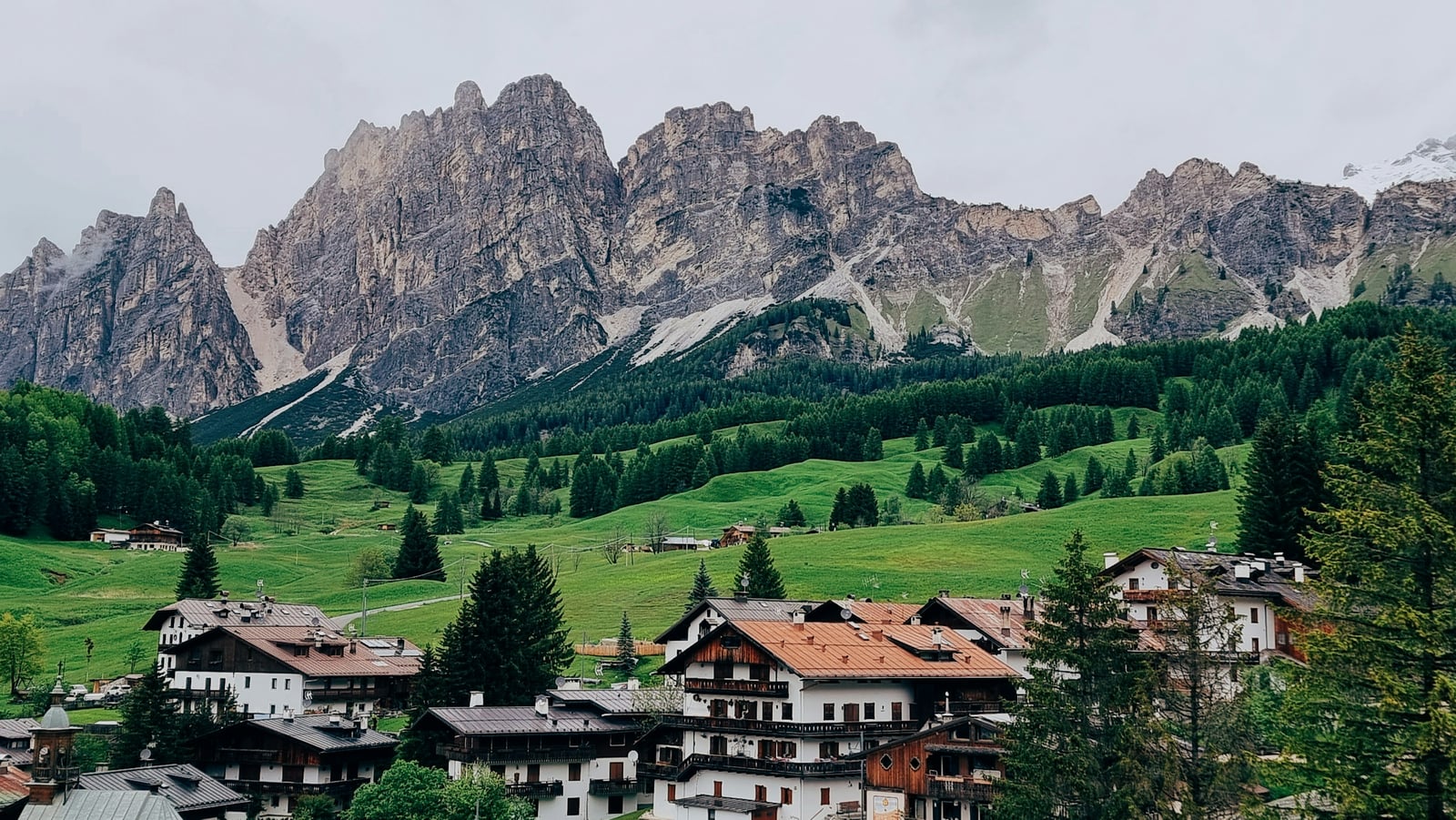
Cortina d'Ampezzo. More big days sit around it, Cinque Torri and Lago di Sorapis among them, and the views are bigger. The pull is the mountains more than the town, though the town is small enough to walk everywhere. Without a car it works inside the summer bus season: in 2026, Dolomiti Bus lines 51, 52 and 53 to the passes and trailheads ran from June 8 to September 9, out of the Cortina Scuole terminus, line 51 hourly from 08:00 to 18:00. You ride them on ordinary tickets from the Dolomiti Bus app or website, a reseller, or on board with a surcharge. Lines 51 and 52 then kept a thinner timetable to October 4. The free valley pass is a South Tyrol (and Val di Fassa) thing, so ask a Cortina hotel what it gives. My Cortina guide covers the day hikes and which part of town to sleep in.
With a car in July or August, the differences above mostly stop mattering: both summer seasons are running, and the car covers what the buses don't. What's left is the view you want from the window. Even with a car, I'd book Ortisei again: I like leaving the car parked for a couple of days, walking from the center to the lifts up to Seceda and the Alpe di Siusi, and coming back in the evening to a cozy Tyrolean village rather than a loud, see-and-be-seen resort.
Before you book in Ortisei, check that the hotel belongs to the valley's tourism associations, because that is what gets you the bus pass, and ask how far it is on foot to the lift you came for.
Compact and walkable, easy with kids, and the lifts leave from town
In Cortina the questions change. Ask whether the hotel has its own parking and, if you are coming without a car, how far it is on foot to the Cortina Scuole terminus.
Find a room in Cortina d'Ampezzo
The free valley bus pass is a South Tyrol thing - ask what the hotel gives instead
One base or two: how to split the nights
For three or four nights in the Dolomites, you don't need two bases: one town is the plan. A week that wants the famous sights on both sides splits west then east, with one moving day between the two towns.
One base buys you room to dodge the weather. Same bed every night, and when the forecast turns you swap Tuesday's ridge for Thursday's and lose nothing but the plan you wrote at home. Families especially tend to plant themselves in one village and stay put, and a short trip without a car is one valley anyway. For a week, give about four nights to the side that holds most of your list and two or three to the other.
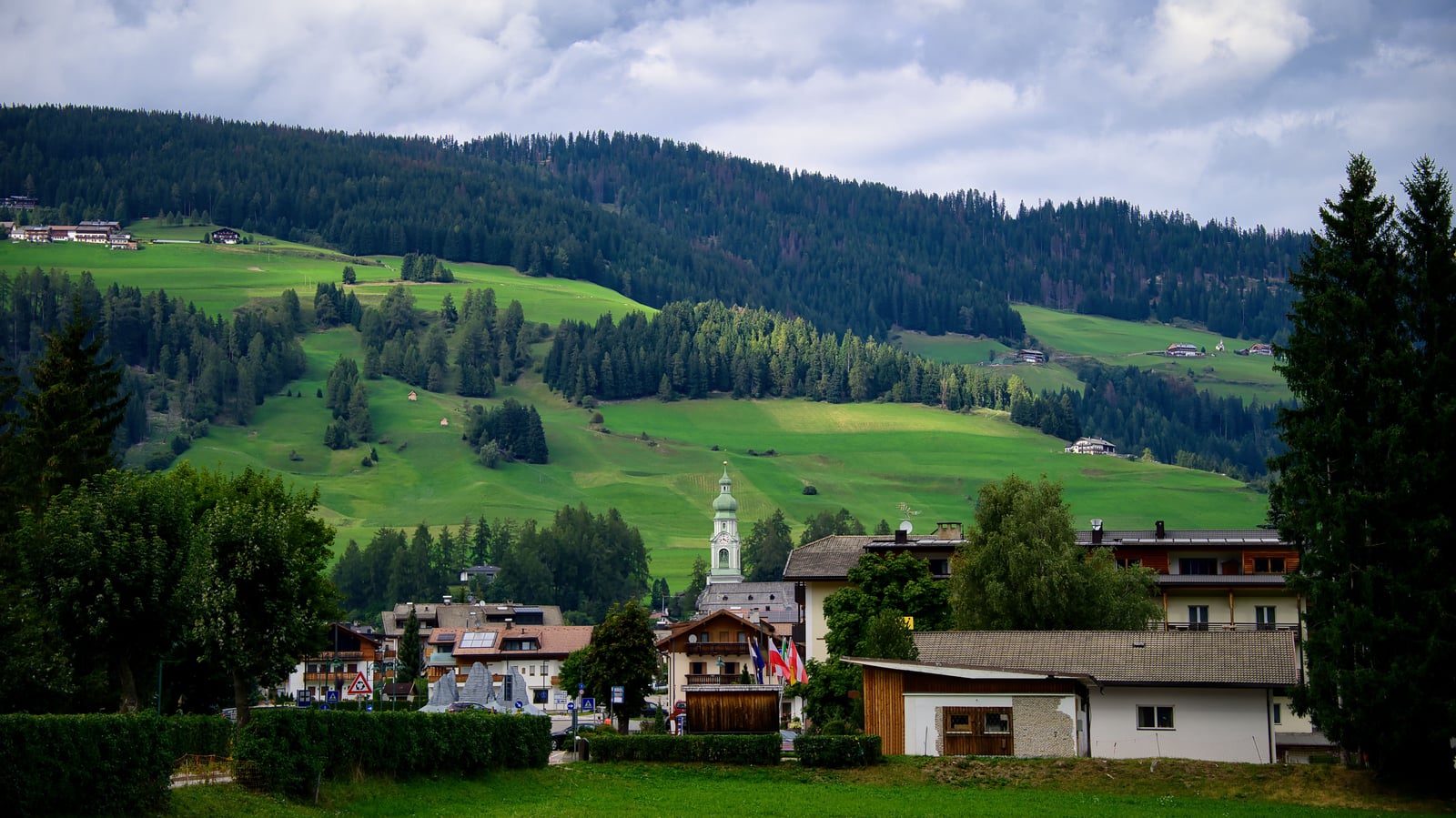
Without a car, the pair is Val Gardena for the west and Dobbiaco for the east, with San Candido and Villabassa as Dobbiaco's neighbors. You can arrive by train, a bus to Lago di Braies and the Tre Cime shuttle both leave from there, and line 445 runs to Cortina in about 50 minutes, six times a day in the summer timetable. The guest pass that a Dobbiaco host in the local tourism association emails you covers that ride, so Cortina's days come within reach without sleeping there. If Tre Cime is the reason you're here, settle your Tre Cime day before you book the room: the shuttle is a summer service, booked and paid online in advance. With a car in July or August, Cortina works as the east base too.
The move is the price of two bases. West to east by train and bus is a half day of changes, not a morning, so you make the crossing once, with your luggage, rather than as a day trip from the west. Check the connections for your date in the südtirolmobil journey planner. By car the crossing shrinks: I drove from Ortisei to Cortina over the Gardena and Falzarego passes in September, an hour and a half at the wheel and just over two hours with a stop at a viewpoint on the pass.
The short second leg is also where a minimum stay can bite. In peak weeks some hotels want one, so check before you fall for a room with a one-night gap in its calendar.
For the Dobbiaco half, pick a place you can walk to from the bus station and the train station with your bags, and check that it belongs to the local tourism association: membership is what sends the guest pass to your inbox.
In peak weeks, check the minimum stay before you book the short second leg
Without a car: pick the town by the pass its rooms come with
Without a car in the Dolomites, sleep where the room comes with a free bus pass and a lift you can walk to. In South Tyrol, many hotels give guests the Südtirol Guest Pass for buses and regional trains.
That pass belongs to the room, not to you: only participating hosts issue it, valid from 00:00 on arrival day to 24:00 on departure day. So ask about membership before you book, not at the check-in desk, where the only possible surprise is a bad one. Validate the pass at the blue machine at the start of every journey. In Val Gardena, start from the tourism board's accommodation search.
| Base | The card | What it adds | What it leaves out |
|---|---|---|---|
| Val Gardena | Val Gardena Guest Pass | Most public transport: line and ski buses | The lifts (a separate card) |
| Castelrotto, Siusi | Südtirol Guest Pass | South Tyrol buses and regional trains | Seiser Alm (Alpe di Siusi) cable car from Siusi, Seiser Alm Express bus |
| Alta Badia | Südtirol Guest Pass | All South Tyrol public transport | Tre Cime shuttle, summer Braies buses, Fischleintal shuttle |
| Dobbiaco side | Südtirol Guest Pass, sent by email | All South Tyrol public transport, 445 to Cortina included | Tre Cime shuttle, Braies buses 439 and 442 (442: Jul 1 - Sep 15, 2026) |
| Val di Funes | Südtirol Guest Pass Slow Dolomites Card | Regional trains, local buses, some cable cars | Seasonal shuttles |
| Bolzano | Bolzano Bozen Card | All South Tyrol public transport | Check with the hotel |
| Bressanone | Brixen Südtirol Guest Pass | Buses, regional trains to Trento, some cable cars | Details vary by season |
| Val di Fassa | Val di Fassa Guest Card | Trentino buses and regional trains, line 180 to Bolzano | Summer lifts (a separate pass) |
| Cortina | Ask the hotel | Ask the hotel | Summer lines: ordinary tickets |
The operator's Guest Pass page has the current coverage and exclusions.
The pass gets you to the trailhead; the lift is the other half. A car-free base has one you can walk to, which is what puts Ortisei, for its lifts, and Corvara, where several lifts converge, ahead of a village one bus away. A guesthouse on the edge of town still works if the bus into the center takes a few minutes and the pass pays for it.
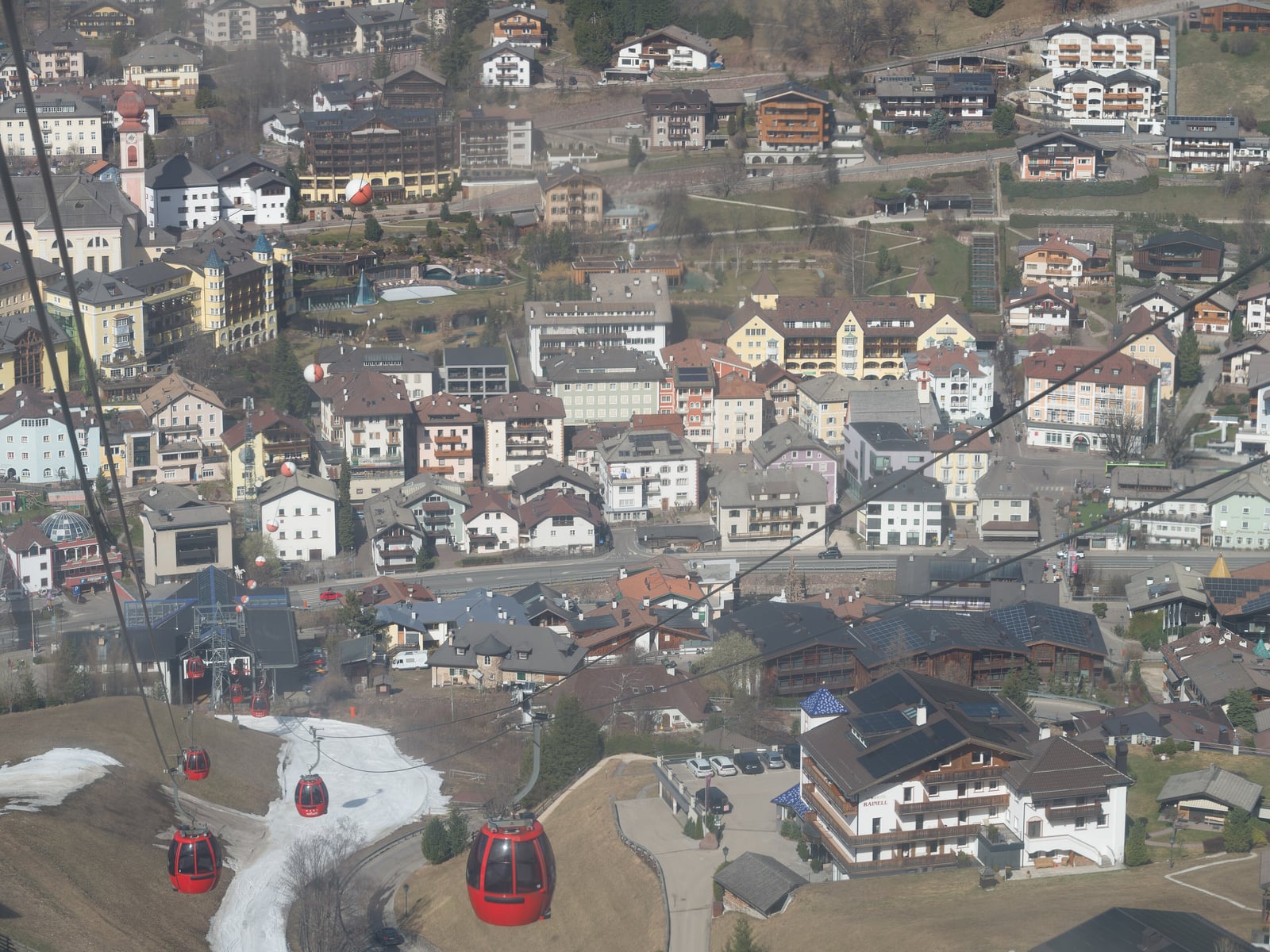
The Südtirol passes belong to South Tyrol's network. Cortina sits over the provincial border in Belluno, and Val di Fassa runs on Trentino's buses. South Tyrol tickets reach a few routes past the border, Selva to Canazei and to Passo Pordoi among them, but a ticket rule is not a guest-pass promise. The borders make more sense on a map of where the provinces and their bus networks meet.
A private apartment outside the scheme leaves you buying a Mobilcard: €52 for seven consecutive days at 2026 fares, the number to hold against a hotel that includes the pass. Ask an apartment anyway; mine in Ortisei came with the guest pass. The valley buses are good enough that a car-free August in Val Gardena, on buses and lifts alone, is an ordinary plan rather than a brave one. Getting there is a separate job: the train-and-bus way in from Venice, Milan or Innsbruck.
With a car: pick the view, then ask where the car sleeps
With a car in July or August, almost anywhere is a good place to stay in the Dolomites, so pick the town for its views and the trailheads you'll drive to, then pick the room for where the car spends the night.
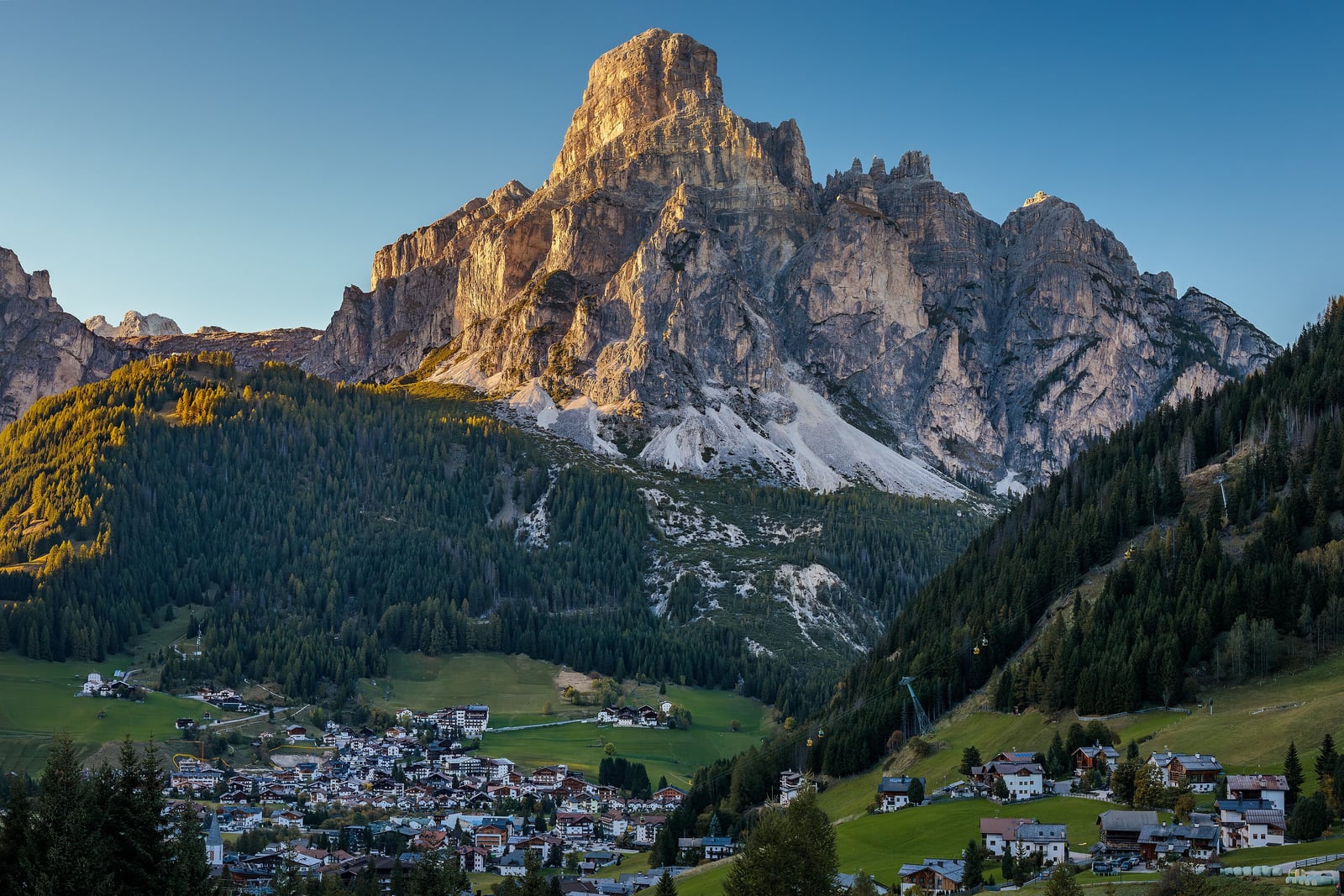
That opens up Alta Badia, the valley of Corvara, Colfosco and San Cassiano. Corvara already made the car-free list; with a car, the drive in over a mountain pass, all bends and pull-offs for the view, stops being the commute and becomes part of the day. San Cassiano is the pick for food and cafes, and it still feels like a mountain village.
In high summer the hard part of a driving day is not the driving. It's finding somewhere to park at the far end. So sleep near the trailheads you'll use most and start early. Distance on the map isn't what a far-off base costs you; the morning is.
Then put three questions to the hotel before you book. Where does the car sleep: in the hotel's own lot, in a garage, or in a coded lot a block away? How big are the spaces? Rent the smallest car that fits, because a wide rental and a village garage are rarely a happy couple. And is the hotel inside a pedestrian zone, and will it register your plate for the zone? Ask now, not from the driver's seat at the edge of a street you may not be allowed into. In Cortina the same trade comes down to the town center against the edge of town, which the Cortina guide above weighs properly.
May, June or October: which valleys are running
In May and early June, base in Val Gardena: in 2026 its lift from Ortisei to the Alpe di Siusi ran from May 1, Cortina's earliest dated lift openings were June 6, and Alta Badia's June 13.
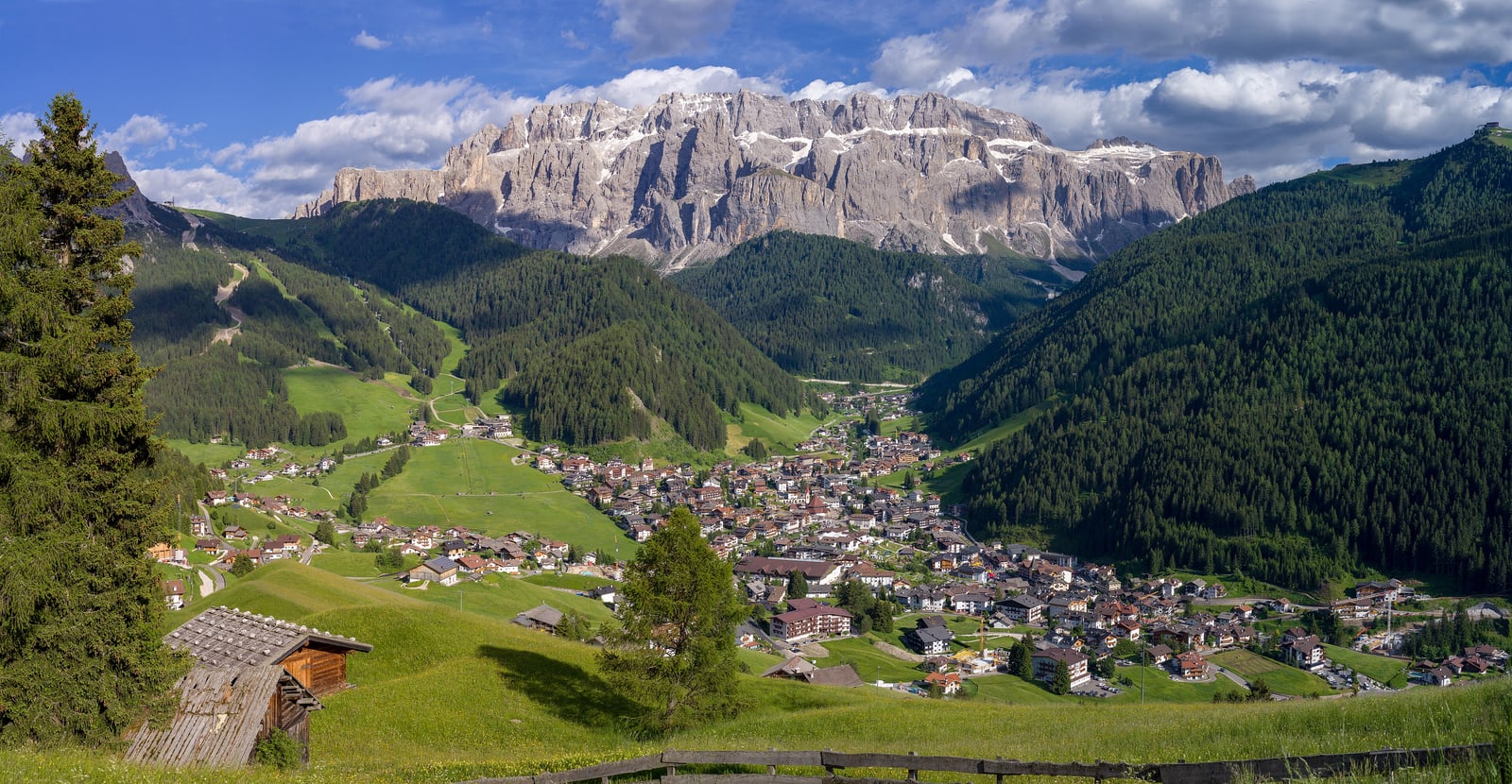
Snow in late May is nothing unusual up there, and the opening is staggered, not a switch: Val Gardena's lifts start one after another from May into mid-June. By early June, though, Ortisei has enough running that filling the days is the easy part.
October tips the other way. In 2026 Alta Badia's lifts closed between September 20 and October 4, most on the 4th, and Cortina's summer lines 51 and 52 to the passes ran to October 4. Val Gardena outlasts Alta Badia, with some of its lifts running into early November, so a late-season trip leans west again. Cortina's 2026 announcement dated its openings but not its closings: check what is still running before you book it for October. Late November is not a quiet version of summer, either. By then the summer lift seasons in Val Gardena and Alta Badia are over, and winter is its own trip.
Winter is a different base question altogether: skiing, winter hiking, or neither. If it's neither, a valley town can suit you better than a ski village. Sort out what a Dolomites winter holds with skis or without before you pick the room.
For a ski week, the village decides your runs. In Val Gardena that means which village to base in for the Sellaronda. In Cortina it comes down to which side of town you wake up on, and where the ski areas sit around Cortina settles it.
Bolzano, Bressanone or the next village over: when a base outside the famous towns makes sense
Is Bolzano a good base for the Dolomites? For a long, budget or rail-first trip, yes; for a short one, no: it sits in the main valley outside the range, about an hour from Ortisei each way on bus 350.
Bolzano is where the trains arrive, and on the map it looks central. On a short trip the hour is the problem: nearly two hours a day on a bus, while a guest in Ortisei walks to the lift. The city is warmer and busier than any mountain village, being lower down, and in December its Christmas markets make it the natural valley town for a non-skier. If that's your trip, plan around the market's dates and whether to stay the night. A partner hotel's Bolzano Bozen Card covers the bus.
⚠️ Warning
On a Bolzano base, 19:01 is the last daily bus 350 from Ortisei that runs through to Bolzano (2026 timetable, valid to December 12, 2026). The later bus 350 departures from Ortisei in that timetable all end short of Bolzano. Plan dinner around it.
Bressanone (Brixen) is the gentler city base: small, easy to like, on the train line, and better placed than Bolzano for day trips by bus. In 2026 its guest pass also included one ride up and down a day on the lift up the Plose, May 23 - July 10 and September 6 - November 1.
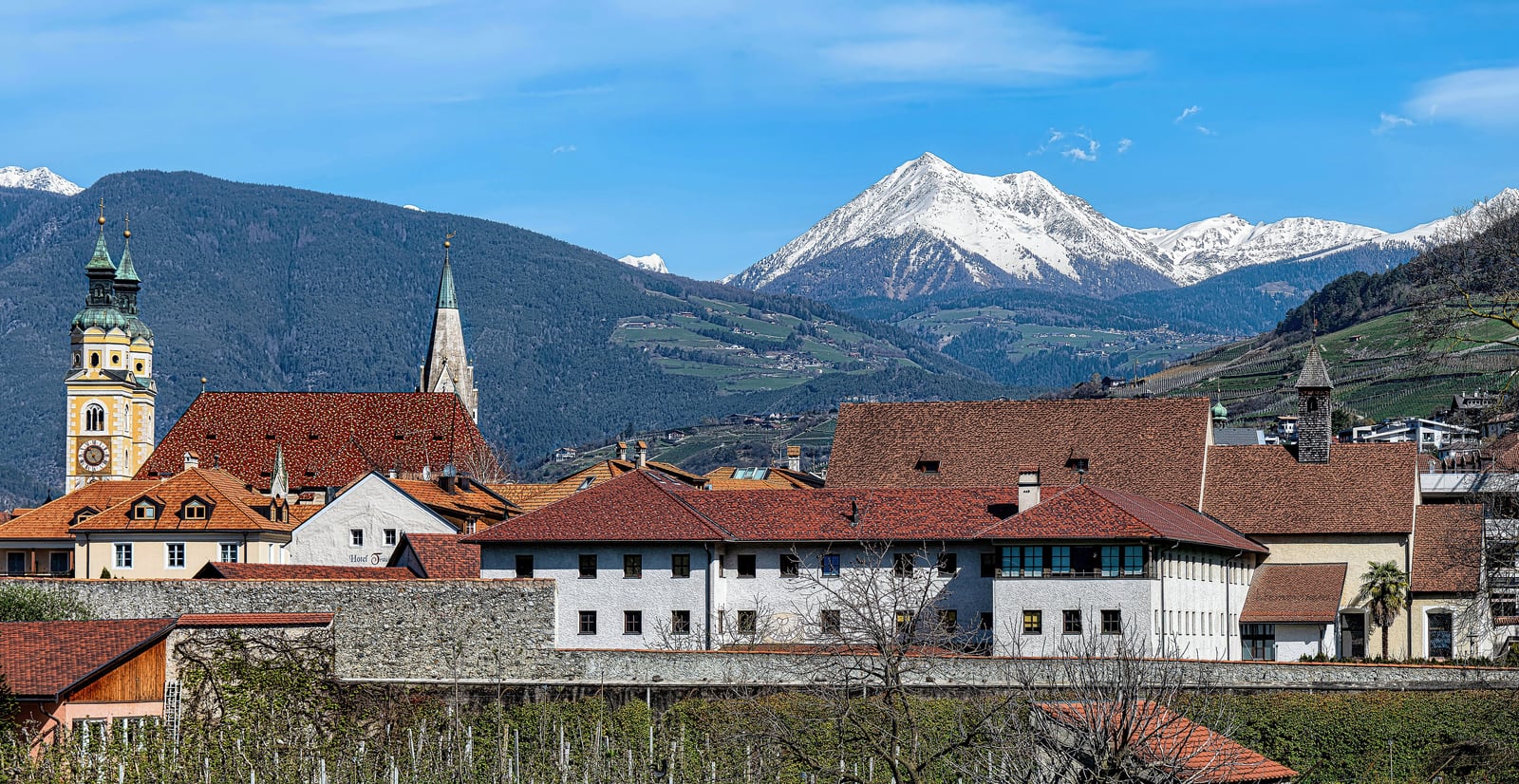
Widening the search one village over pays off only when the bus stops near the room and the lift is one ride away; otherwise every added bus is one more that can run late. Castelrotto, at the foot of the Alpe di Siusi, divides people. Without a car it works for some: buses run to Ortisei and around the area, and walks start from the village itself. Near Cortina, the next village to look at is San Vito di Cadore, linked to Cortina by bus; there the bus timetable sets your day.
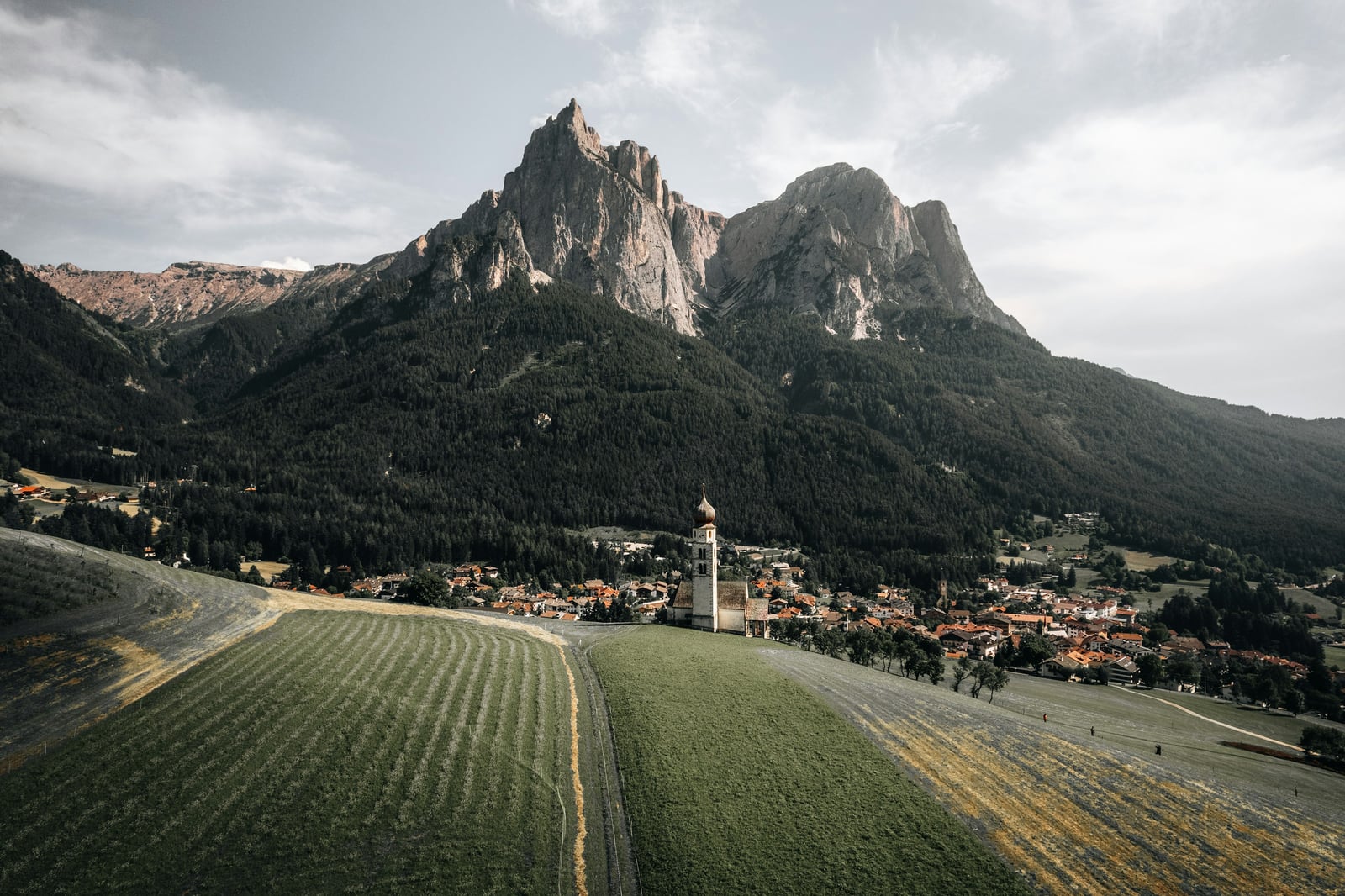
Before you book in Castelrotto or Siusi, ask the host how far the walk is to the nearest bus stop and whether they issue the Südtirol Guest Pass. The card table above shows what it leaves out.
Find a room in Siusi or Castelrotto
At the foot of the Alpe di Siusi, with walks that start from the village itself
Wherever you book, the room rate leaves out the tourist tax: in South Tyrol, a few euros per person per night, paid at the desk by every guest 14 and over. Cortina charges its own, per person per night, for up to five consecutive nights. Many hotels also sell half board (breakfast and dinner in the rate). I've stayed both ways, in an apartment and in a half-board hotel, with the bus pass included each time, and the hotel is what I'd book again: after a full day on the trails and an hour in the sauna, walking downstairs to a four-course dinner beats cooking or hunting for a table in town, and it's worth every euro.
The quiet bases: on the plateau, in Val di Funes, beside Braies
Three Dolomites bases trade convenience for quiet: a hotel on the Alpe di Siusi plateau, a room in Val di Funes, a bed near Lago di Braies. Each comes with one catch to settle before you book.
On the Alpe di Siusi plateau. While the Seiser Alm cable car runs, the road up to Compatsch is closed to private cars from 09:00 to 17:00. A plateau hotel guest may drive up on arrival day anyway, with the driving permit the host issues in advance: ask for it when you book, not at 11:00 on a closed road. A stay up here can give you days that start at the door, long walks from the hotel and quiet around it. A day visit among the huts and grazing cows can easily end in wishing you'd stayed longer. Day visitors need the plateau's lifts and parking rules sorted first.
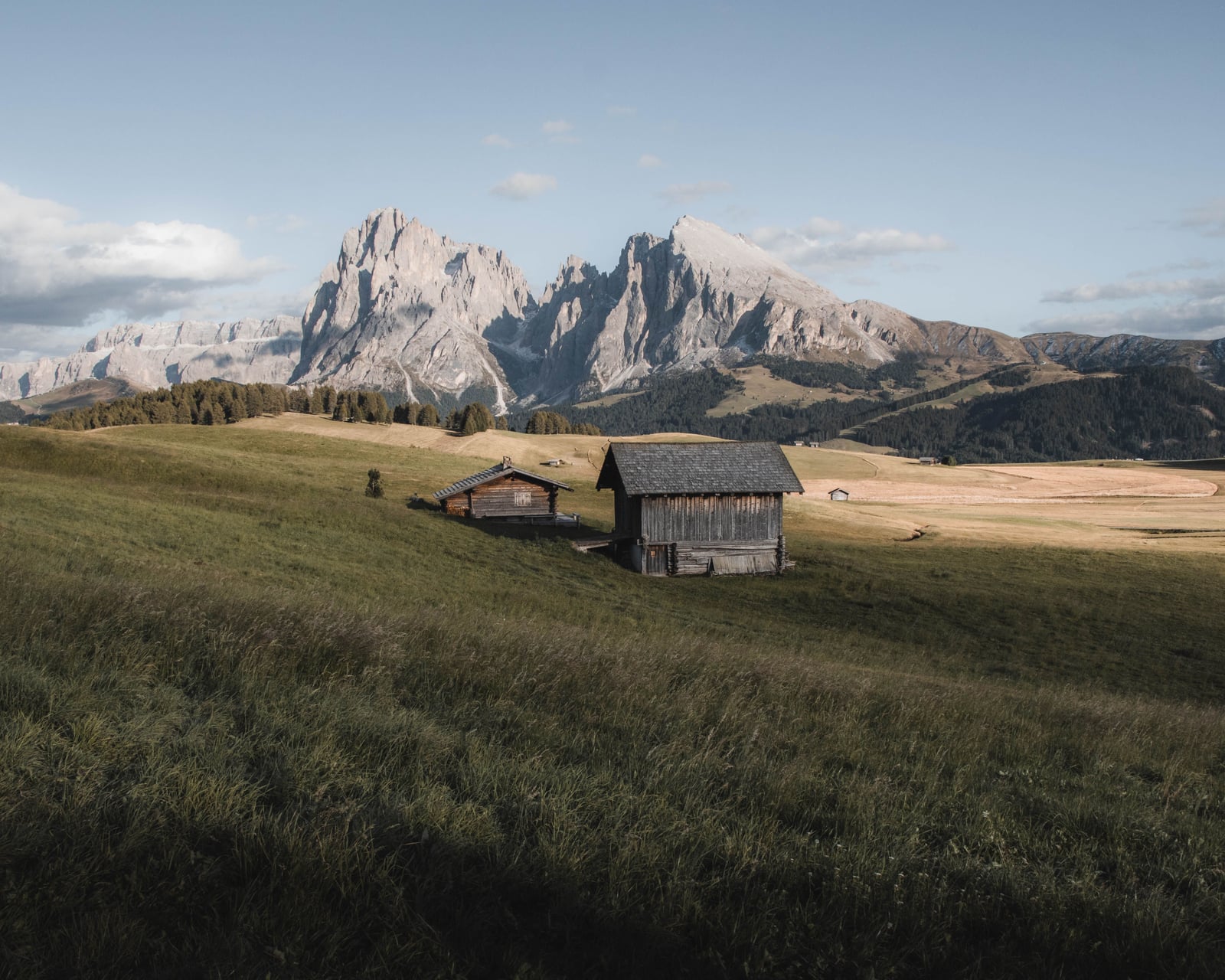
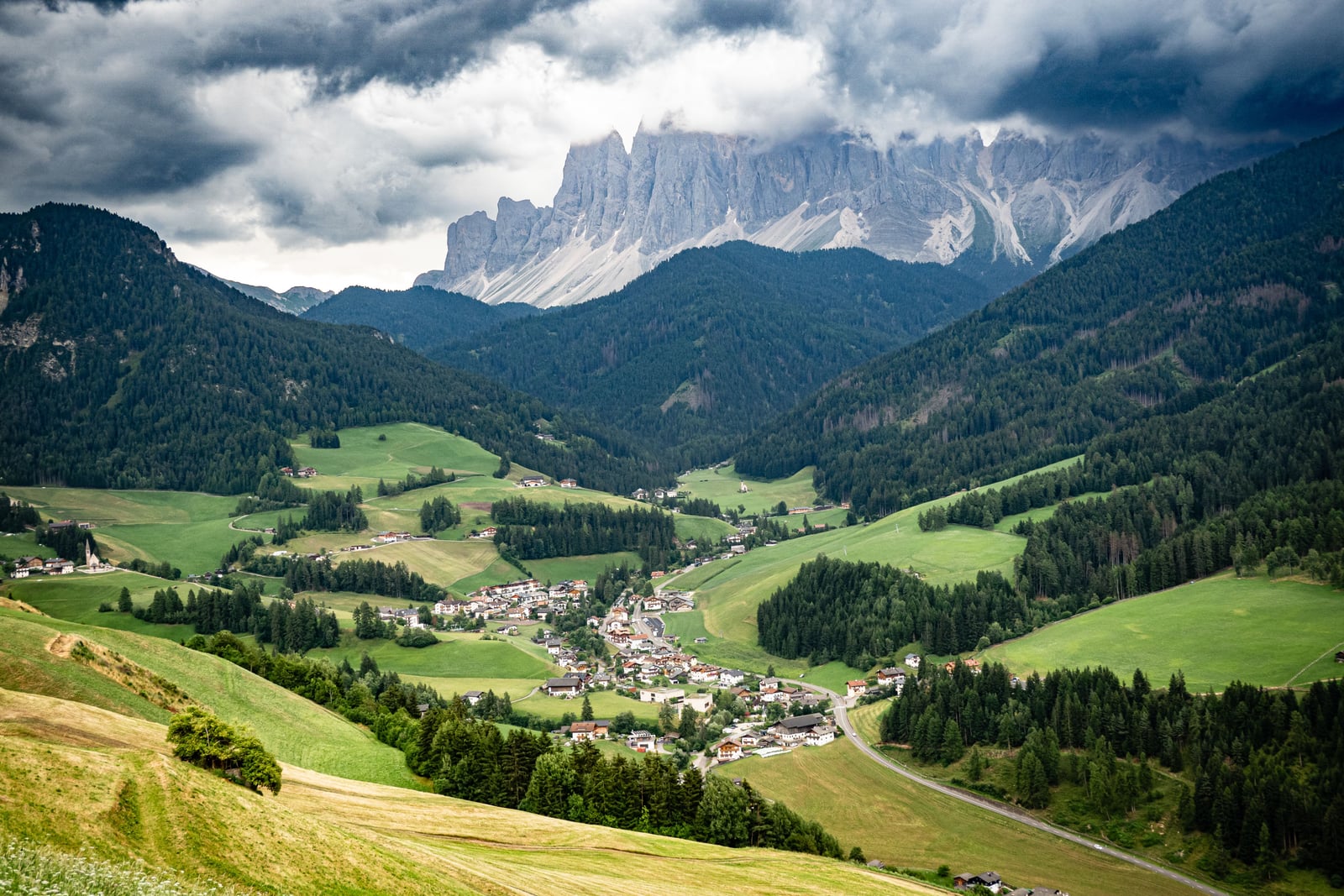
Val di Funes. Here you book the view itself: look for a room with the valley and the Odle peaks in sight and Santa Maddalena close enough to walk to, and ask the host how long that walk really is. The valley's own guest card, in the table above, covers the local buses. Be clear about the trade, though: this is one valley and slow days, not a base for the whole range. For the church, the trails and the views, start with Santa Maddalena and the hike under the Odle.
Beside Lago di Braies. Sleep near the lake and you can walk over at first light, before the first bus, with only a handful of people on the shore. The catch: the summer Braies buses are off the guest pass (see the card table), so those rides are on you, not the room. Getting to Lago di Braies in summer is the bigger puzzle if you're not sleeping beside it.
Frequently asked questions
- Is Ortisei or Cortina the better base for the Dolomites?
- Ortisei for a first or car-free trip: lifts leave from town, and many hotels give guests the valley bus pass. Cortina for the bigger eastern hikes and views, once its lifts and summer buses run. With a car in July or August, either works and the view decides; in May or early June, Ortisei either way.
- Which two towns should I book for a week in the Dolomites?
- Val Gardena first, then Dobbiaco for the east: one move, west then east. With a car in July or August, Cortina works for the east half too.
- Where should I stay in the Dolomites without a car?
- Val Gardena: Ortisei, Santa Cristina or Selva, in a member hotel that gives you the Val Gardena Guest Pass. In Ortisei the lifts leave from town. For the east side, Dobbiaco, which you can reach by train.
- Is Bolzano a good base for the Dolomites?
- For a long, budget or rail-first trip, yes. For a short one, no: Ortisei is about an hour away each way on bus 350, and in the 2026 timetable (valid to December 12, 2026), 19:01 is the last daily bus 350 from Ortisei that runs through to Bolzano. The later bus 350 departures from Ortisei in that timetable all end short of Bolzano.
- How far ahead should I book a hotel in the Dolomites?
- Months ahead: the cheapest rooms are in high demand, and for a June stay, the previous November is not too early. In peak weeks, check the minimum stay before you plan a short second leg.
Get the town right - the lift you can walk to, the pass that comes with the room, a valley whose lifts are running that week - and the hotel is the easy part. By then you're mostly choosing a balcony.